

Sage green and blue bring instant calm with just enough color to keep things interesting. Think spa day meets coastal breeze, minus the sand in your sheets. These ideas make your bedroom feel polished, intentional, and ridiculously soothing. Ready to mix serene hues with smart styling for a room you’ll never want to leave?
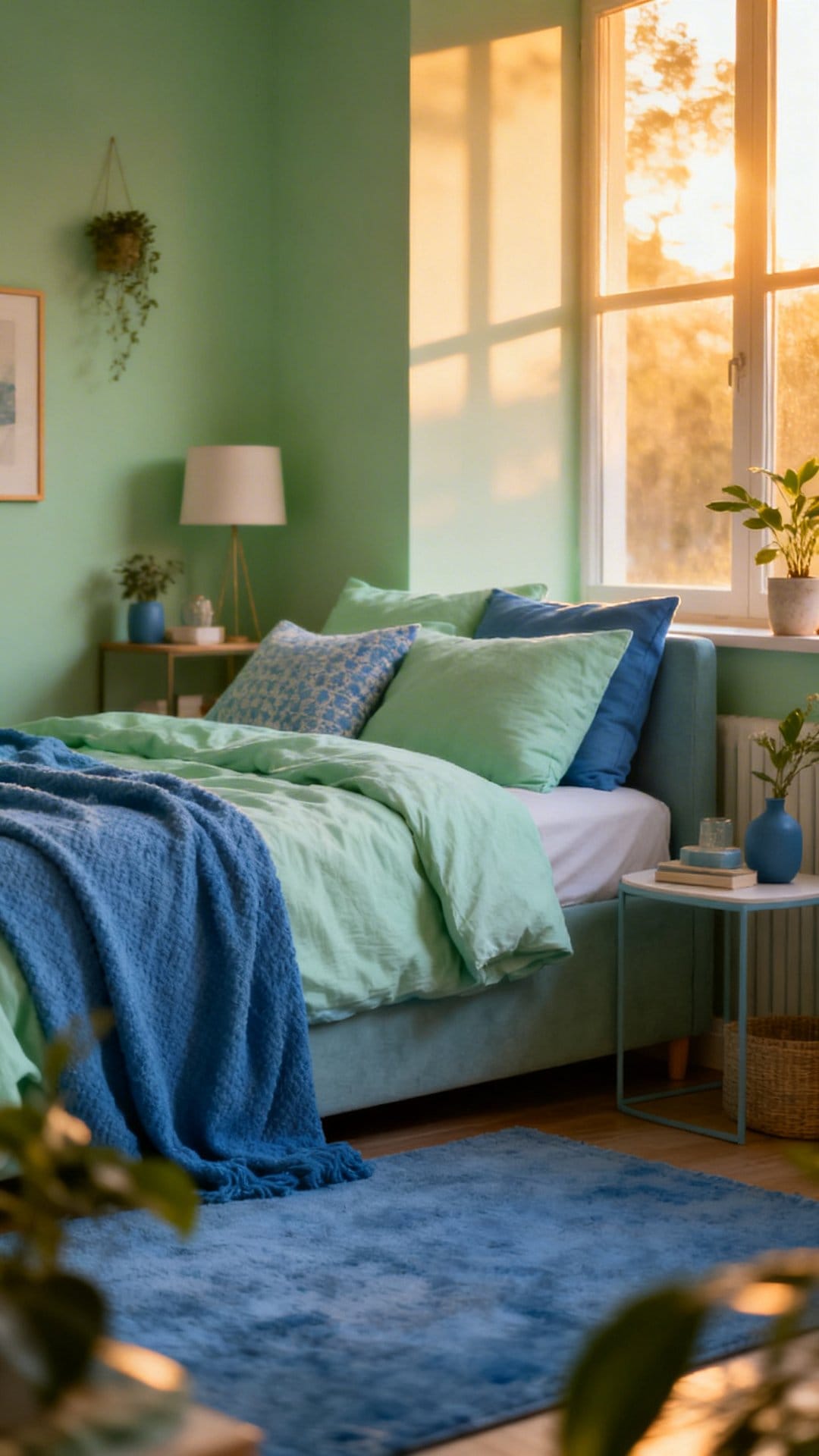
1. Paint With Two Tones For Instant Depth
 Shop this look: a bedding set on Amazon
Split your walls with sage on the bottom and a soft blue up top for natural balance. The contrast adds architectural interest even if your walls are as flat as a pancake. It also helps low ceilings look taller.
Tips
- Use a crisp white chair rail or clean tape line to separate colors.
- Pick a muted blue with gray undertones to keep things restful.
- Test swatches at different times of day since light shifts everything.
Use this when you want dimension without adding decor clutter.
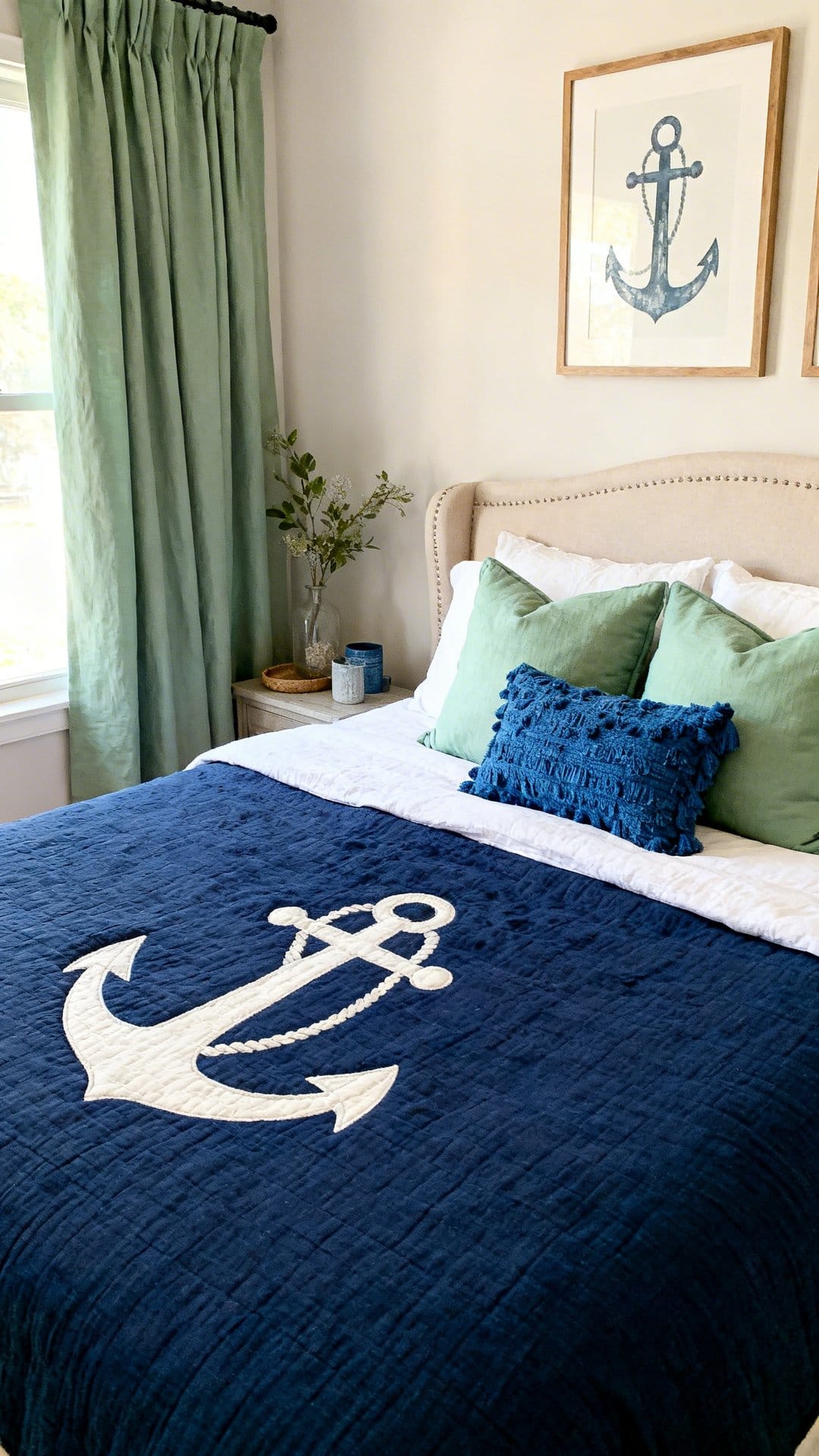
2. Anchor With A Navy Or Indigo Bed
 Shop this look: throw pillows on Amazon
A deep blue upholstered headboard grounds all that softness from sage. It creates a focal point and frames your bedding like a pro. The richer tone also hides scuffs, which your headboard will thank you for.
Key Points
- Choose velvet or performance linen for texture and durability.
- Pair with sage sheets or a quilt to soften the contrast.
- Add brass or black reading lamps for crisp definition.
Use this if your room needs visual weight and a little drama.
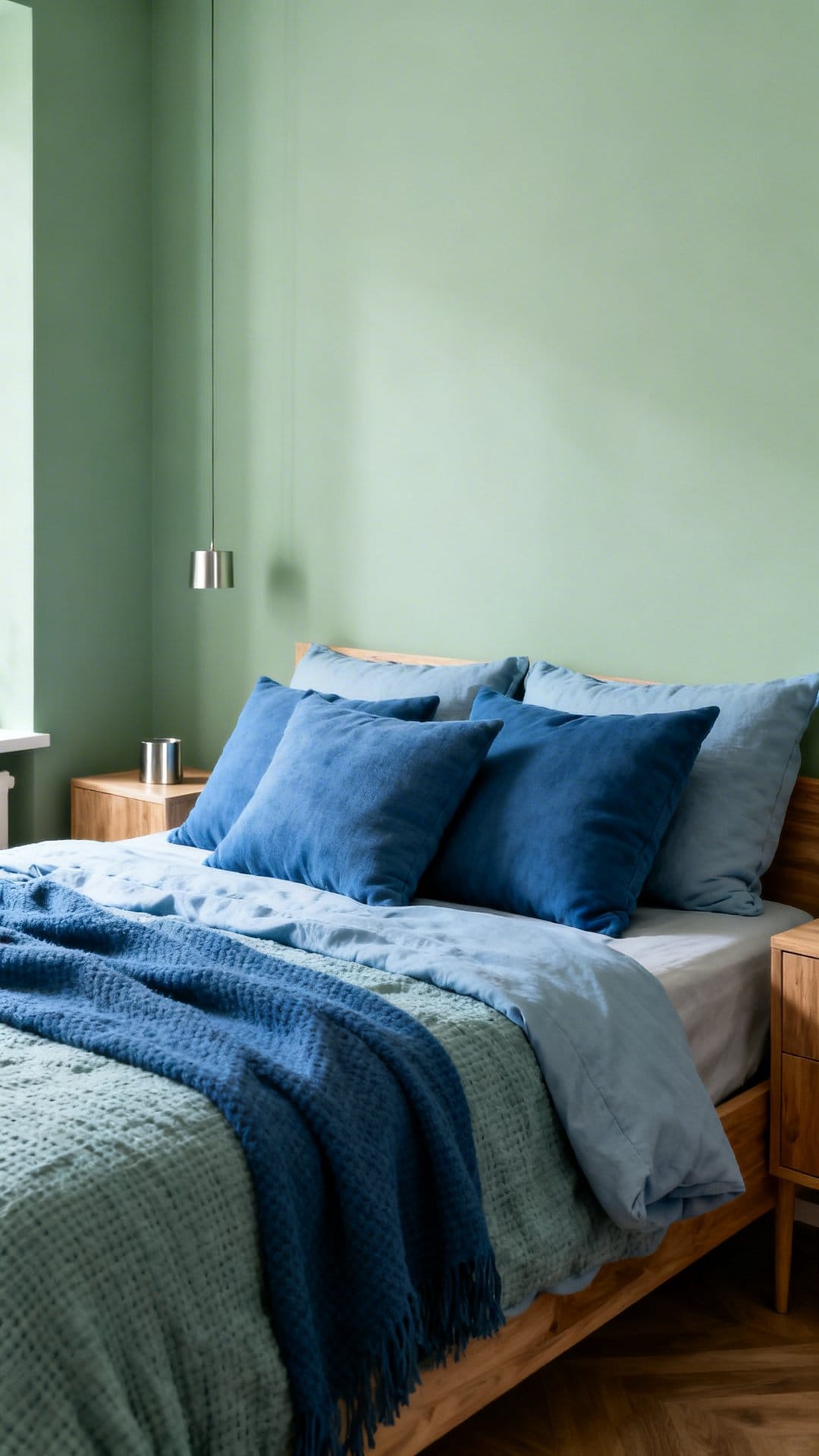
3. Go Monochrome Sage, Then Layer Blue Accents
 Shop this look: curtains on Amazon
Start with all-sage walls, curtains, and bedding. Then sprinkle in sky-blue pillows, art, or a ceramic lamp. The result feels curated, not chaotic.
Where It Shines
- Small bedrooms where fewer competing colors keep things airy.
- Rooms with limited natural light—sage reflects warmth beautifully.
Perfect for calm seekers who still like a pop of color.
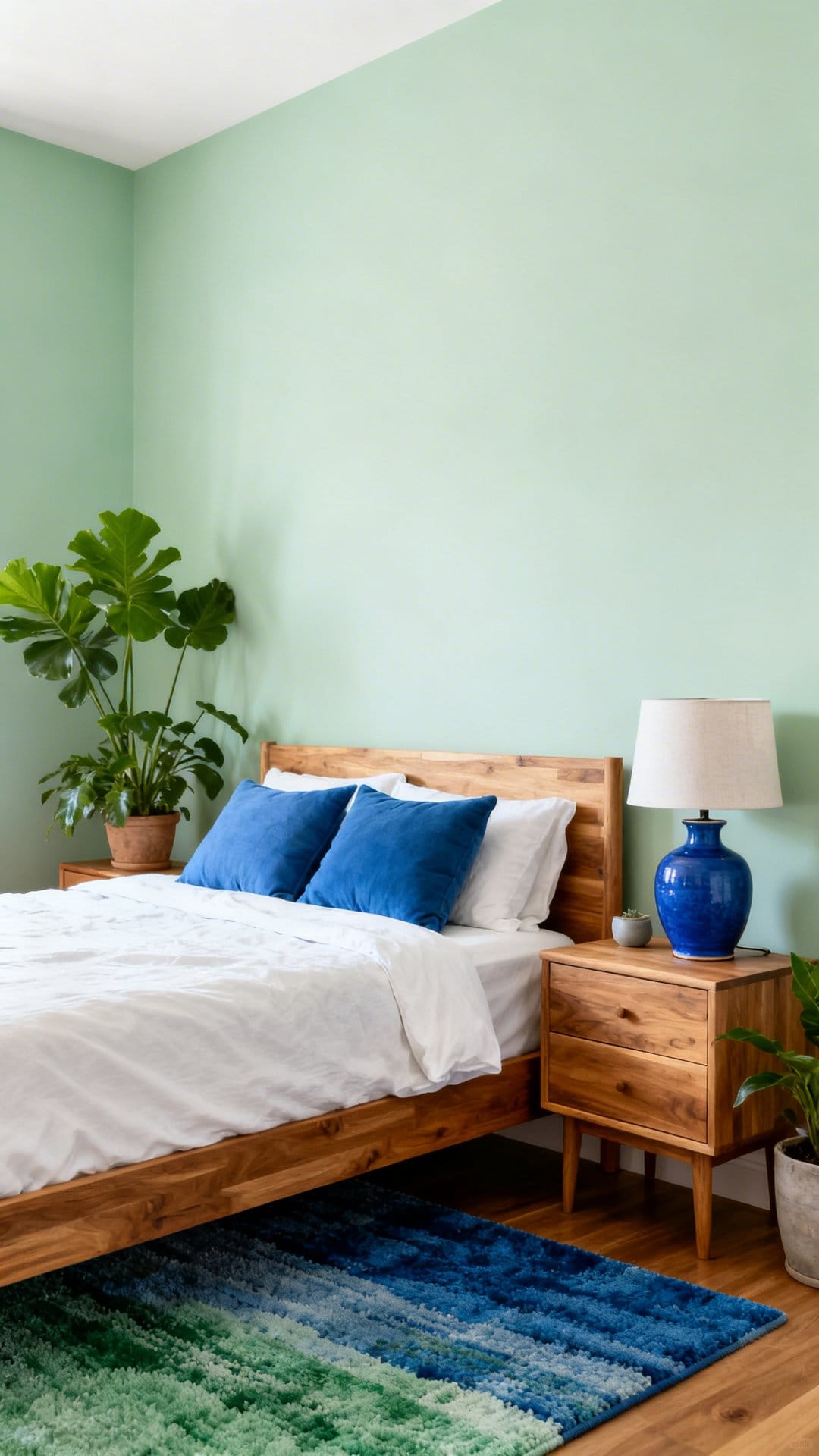
4. Mix Natural Wood With Cool Hues
 Shop this look: an area rug on Amazon
Warm wood tones balance the chill of blue and sage. Think oak nightstands, a walnut dresser, or rattan accents. The combo reads organic and modern, like a boutique eco-hotel.
Quick Wins
- Swap metal pulls for leather or wood knobs.
- Layer a woven bench at the foot of the bed.
- Add a jute or sisal rug to ground the palette.
Great when you want warmth without more color. If warm metallic tones alongside sage appeal to you, sage green and gold bedroom ideas build on the same nature-meets-warmth palette.
5. Statement Wallpaper Behind The Bed
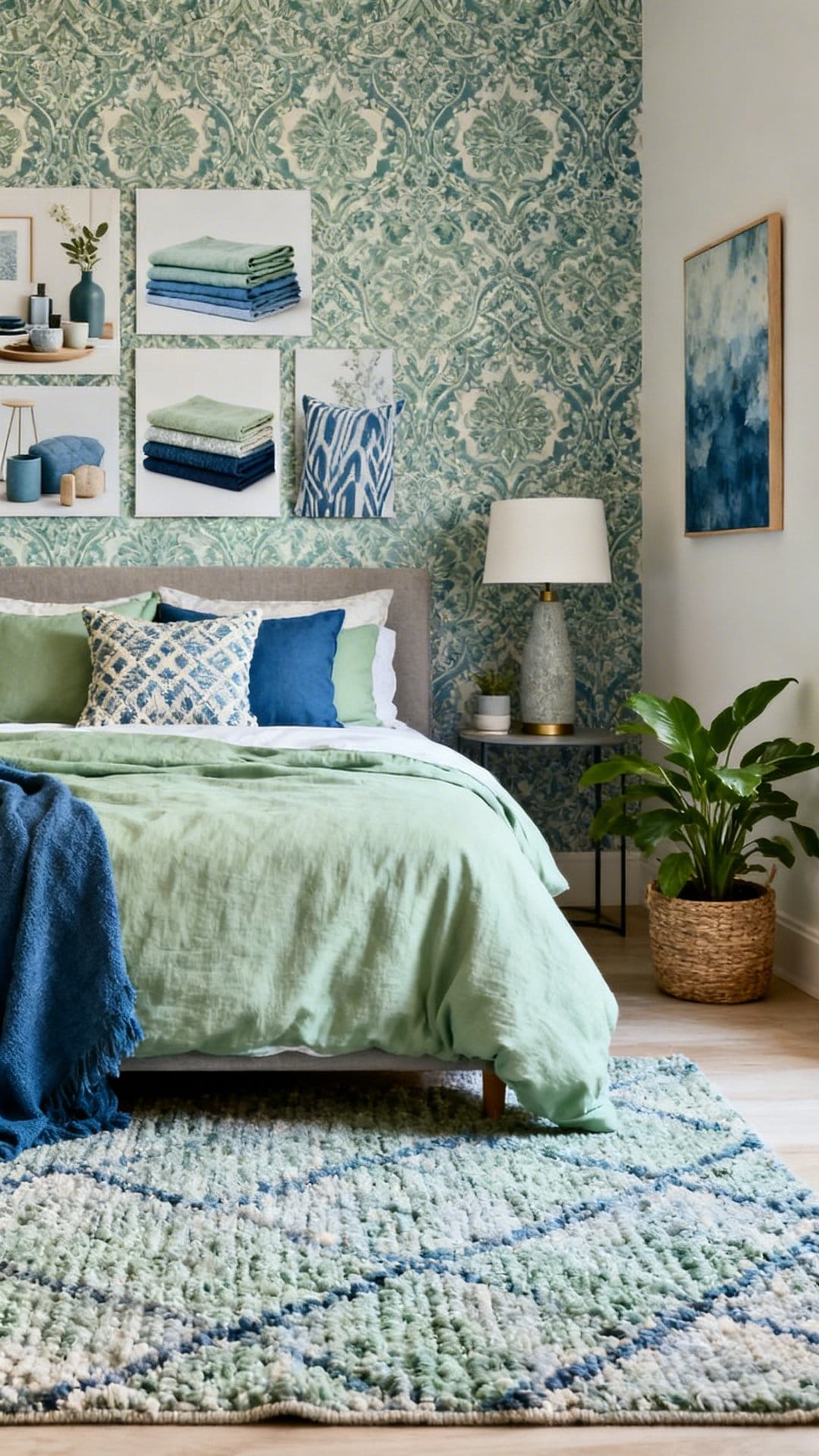 Shop this look: wall art on Amazon
Pick a botanical or abstract print in sage and blue to create a wow-worthy backdrop. A single accent wall keeps it bold but not busy. Every morning will feel like waking up inside a design magazine.
Materials
- Peel-and-stick wallpaper for commitment-phobes.
- Traditional paper for crisp seams and rich color.
- Smoothing tool and sharp blade for clean edges.
Use this to add personality fast with minimal furniture changes.
6. Layer Textures: Linen, Bouclé, And Quilts
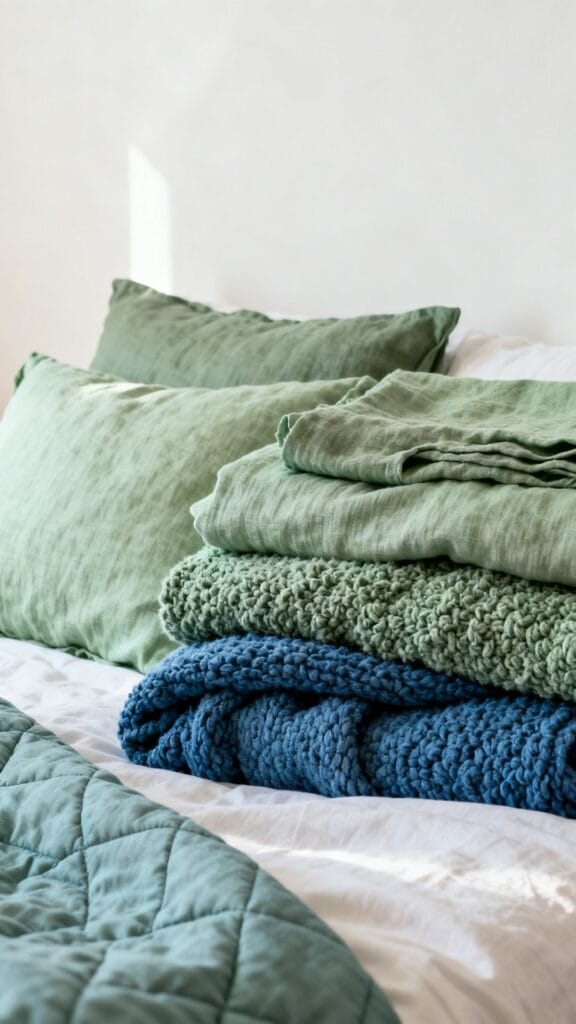
Texture is what makes serene colors feel rich, not flat. Mix breezy linen, nubby bouclé, and hand-stitched quilts in both sage and blue. You’ll get that cozy-but-chic look instantly.
Key Elements
- Linen for breathability and casual elegance.
- Bouclé for plush pillows or a bench cushion.
- Quilts for pattern and subtle color shifts.
Ideal if you want a high-end vibe without adding more color.
7. Blue Rugs + Sage Bedding (Or Vice Versa)
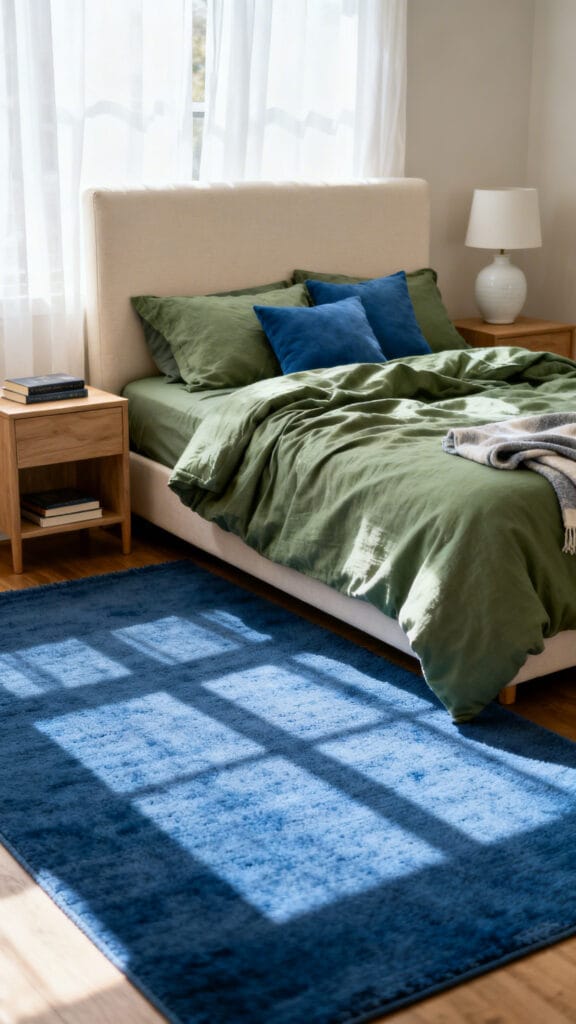 Shop this look: 5×7 Area Rugs for Living Room, Boho Washable… · 8×10 Area Rugs Washable Abstract Rug for Living… · chakme Bathroom Rugs Mat 59×17, Ultra Thin Non…
Balance color placement: if your floor reads blue, keep your bed mostly sage. The contrast defines zones and keeps the look intentional. It also helps your eye travel across the room naturally.
Pro Tip
- Choose low-pile rugs in small rooms to avoid bulk.
- Echo rug tones in throw pillows for cohesion.
Perfect for renters who can’t paint but still want polish.
8. Bring In Sea Glass And Ceramic Accents
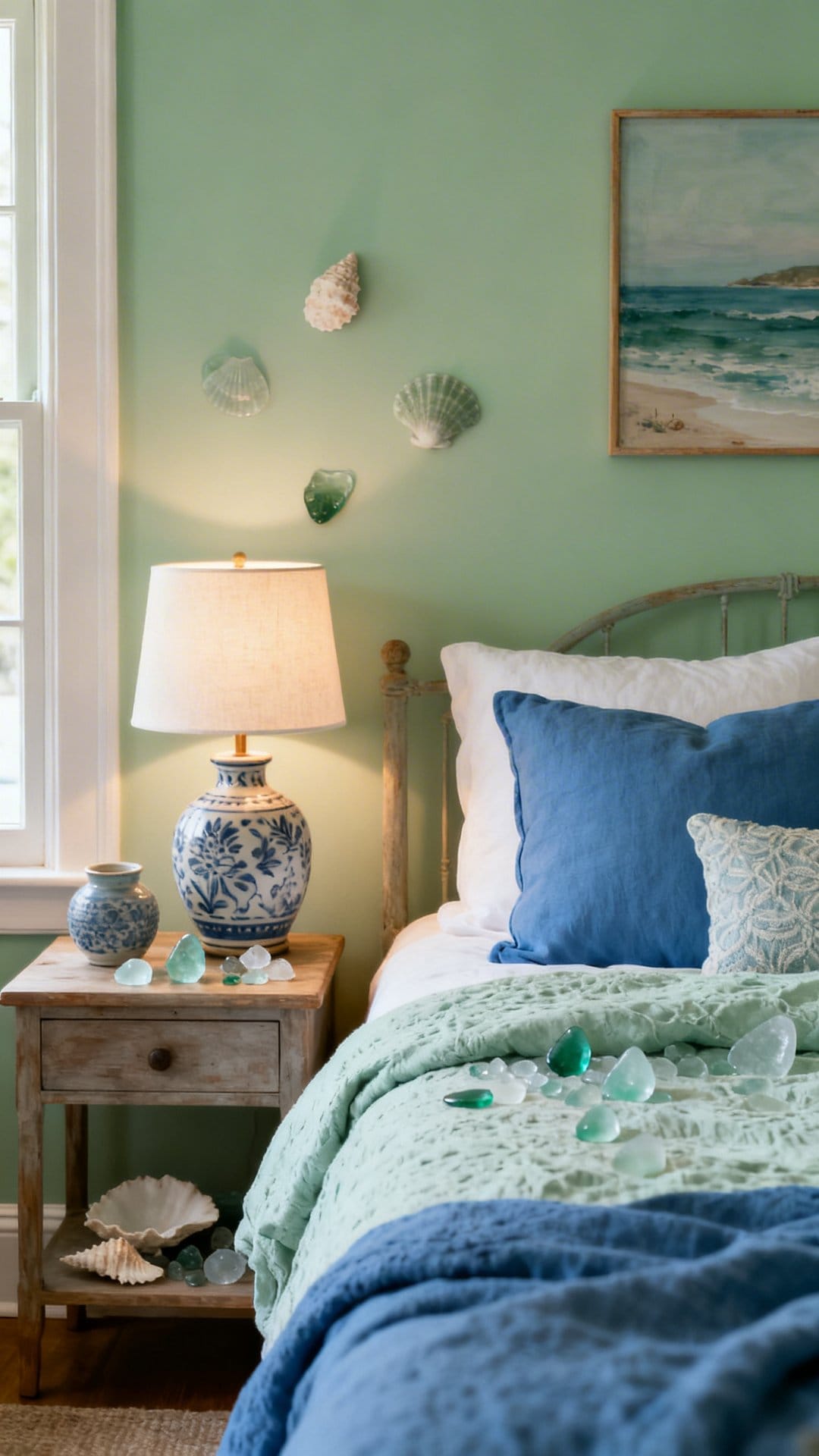
Small decor pieces can make the palette sing. Sea glass vases, ceramic bowls, and marbled trays in sage and blue reflect light and add finesse. Group them in odd numbers for a designer look.
Styling Ideas
- Arrange on nightstands or a dresser with a single leafy stem.
- Mix matte and glossy finishes for depth.
Great when you’re close to finished and just need that last 10%.
9. Sage Curtains, Blue Blackout Liner
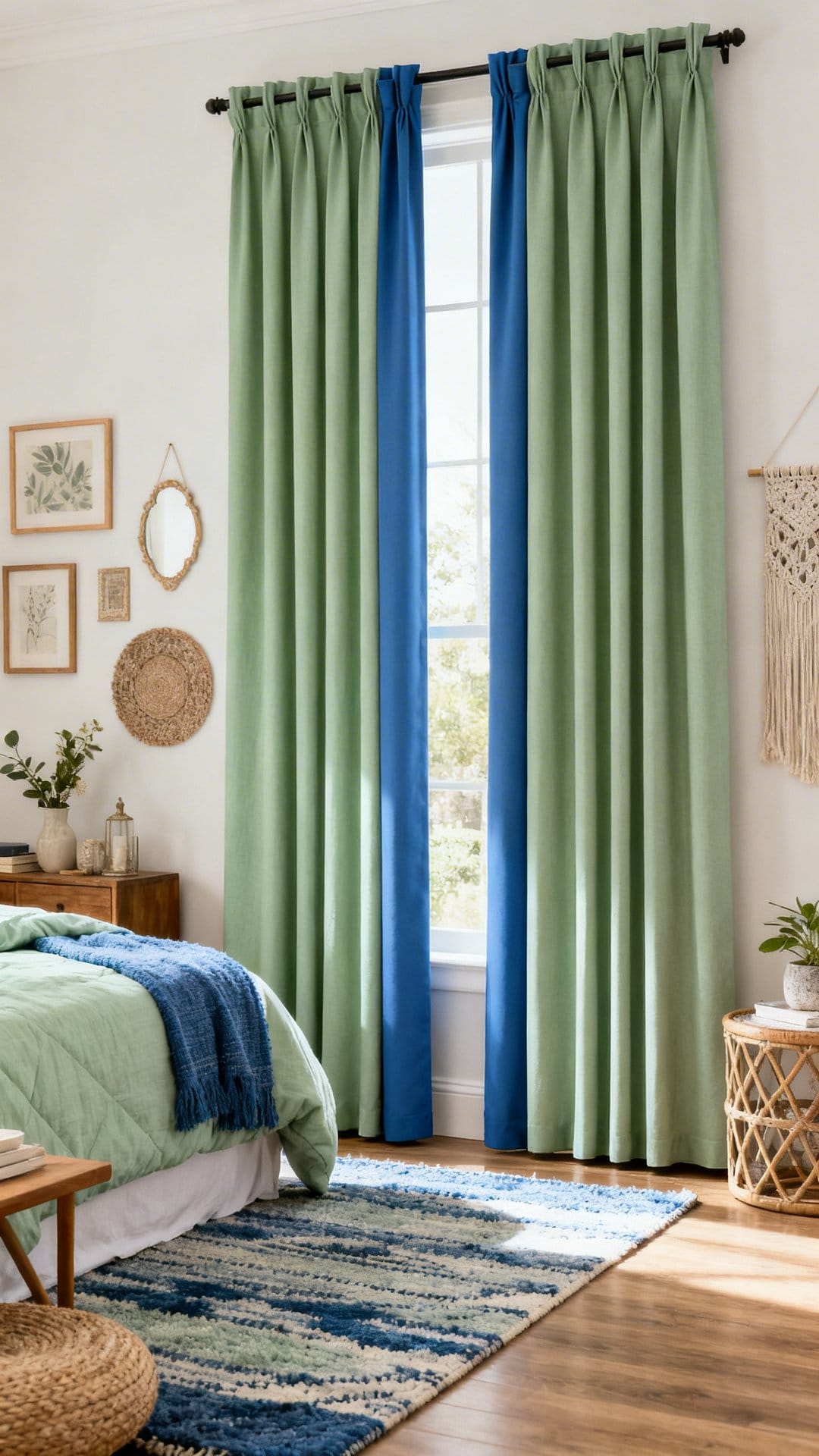 Shop this look: CUCRAF Navy Blue Blackout Curtains 63 Inches,… · 100% Blackout Linen Textured Curtains 95 Inch…
Yes, even the lining can be a design moment. Sage drapes with a navy or slate-blue blackout liner look refined from the outside and luxe inside. Plus, better sleep = better mood.
Benefits
- Improves light control and insulation.
- Adds a barely-there blue reveal when the curtains move.
Use if you’re sensitive to light and love subtle details.
10. Tone-On-Tone Art With Texture
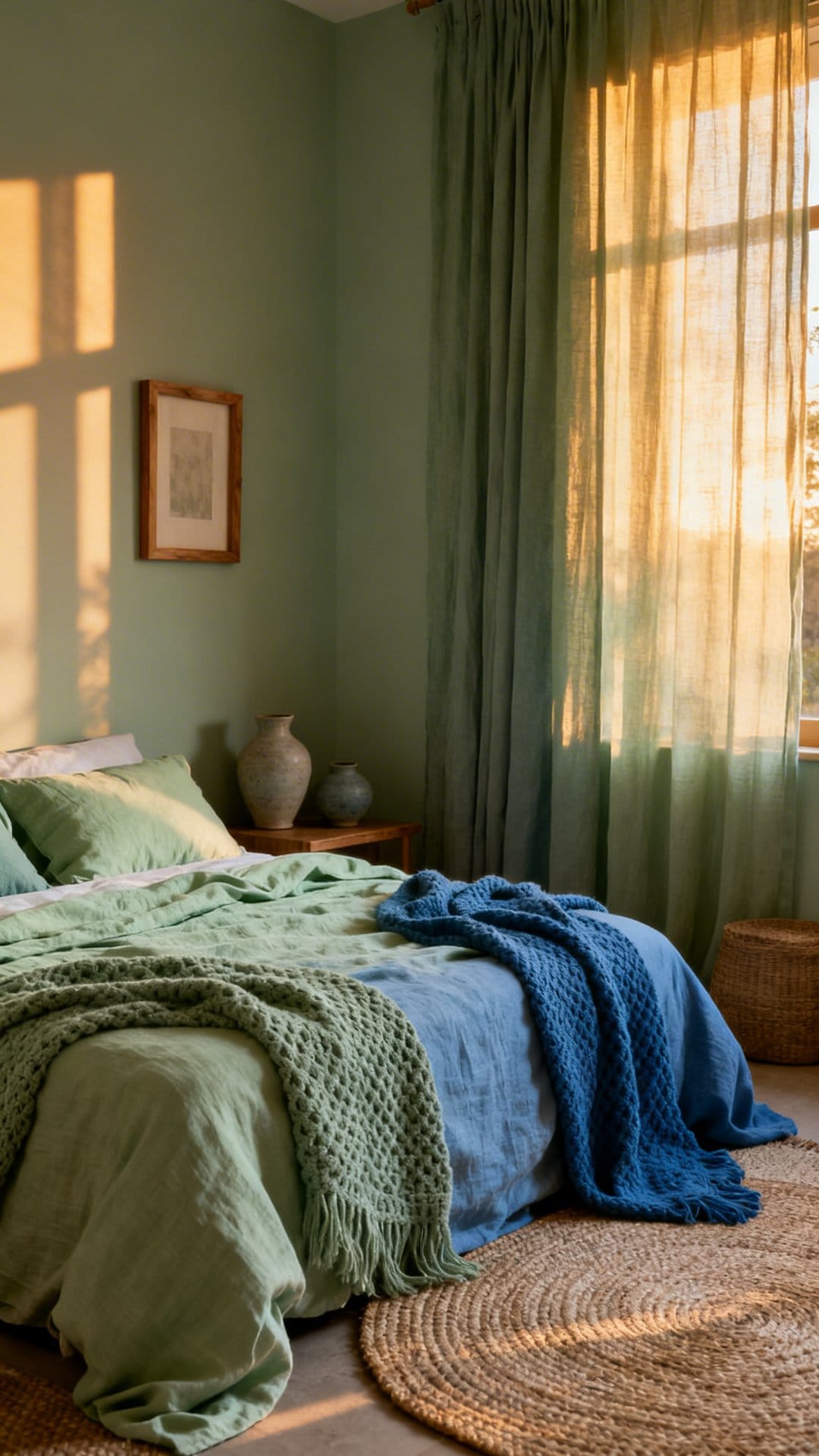
Create a calming gallery using textured canvases in muted blues and sages. Think plaster, fabric, or thick brushstrokes instead of loud prints. It feels custom without shouting.
Tips
- Stick to 2–3 frame finishes max: wood, white, or brass.
- Vary sizes to avoid a sterile grid.
Perfect for keeping walls interesting while staying zen.
11. Add Black Accents For Contrast
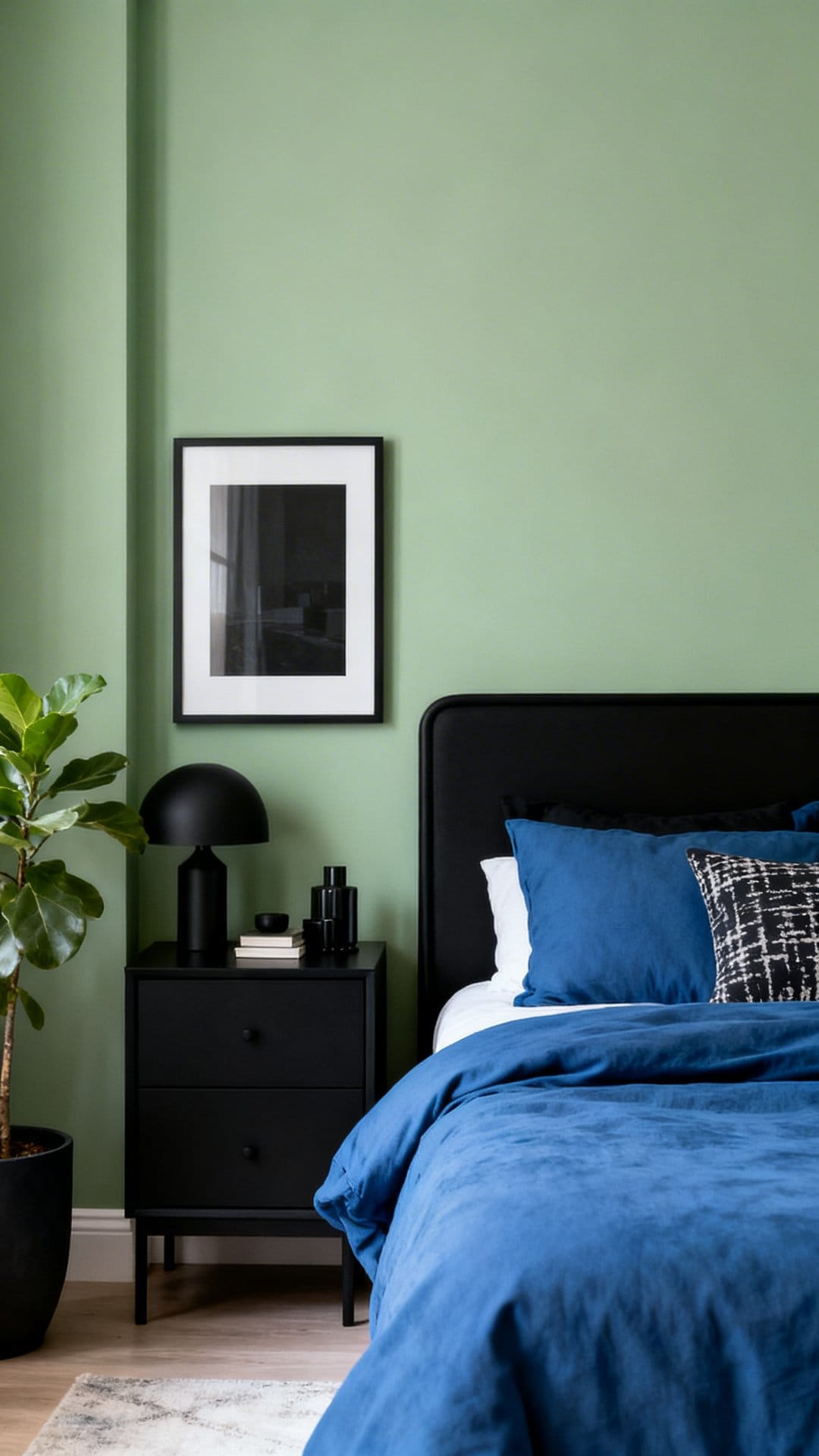
A little black sharpens soft colors instantly. Picture thin black lamps, a framed mirror, or sleek pulls against sage and blue. The room looks more intentional and less pastel.
Matte black curtain rods, metal picture frames, and minimalist bedside sconces are all you need—any of these sharpens the palette without introducing another color.
Use this if your palette feels too sweet—black cuts the sugar.
12. Embrace Botanical Prints (But Keep Them Stylized)
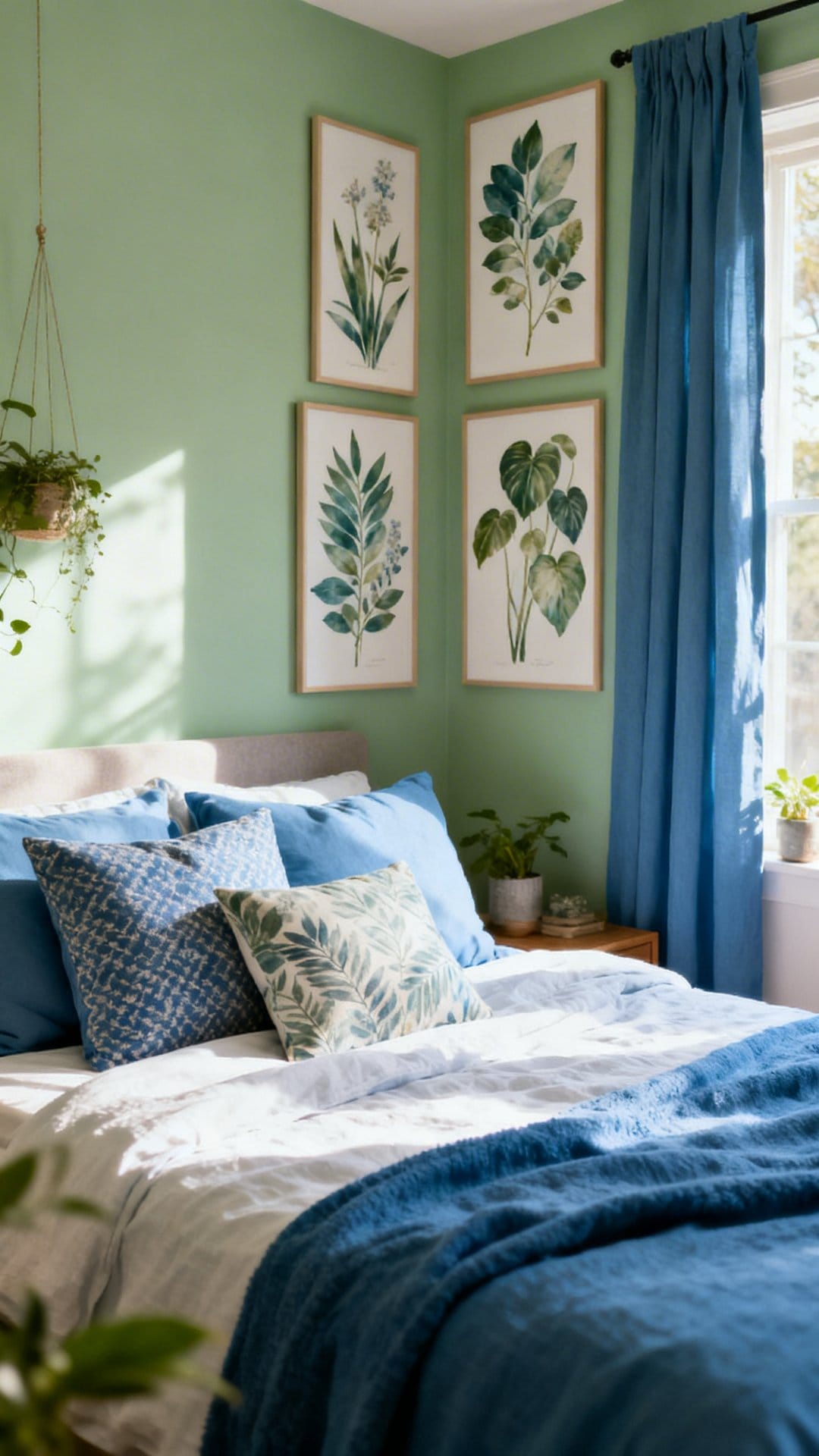 Shop this look: Vintage Framed Botanical Canvas Wall Hanging…
Leafy motifs in muted greens and dusty blues echo nature without turning your room into a jungle. Go for watercolor or line-art styles for a grown-up feel. Scale matters—bigger prints feel calmer.
Where To Use
- Pillow covers and bed throws
- Wall art and lampshades
- Subtle wallpaper or fabric headboards
Great for adding movement and life while staying relaxed. For a deeper dive into the nature-forward direction, our botanical green bedroom decor ideas take this approach much further.
13. Create A Reading Nook In Soft Blues
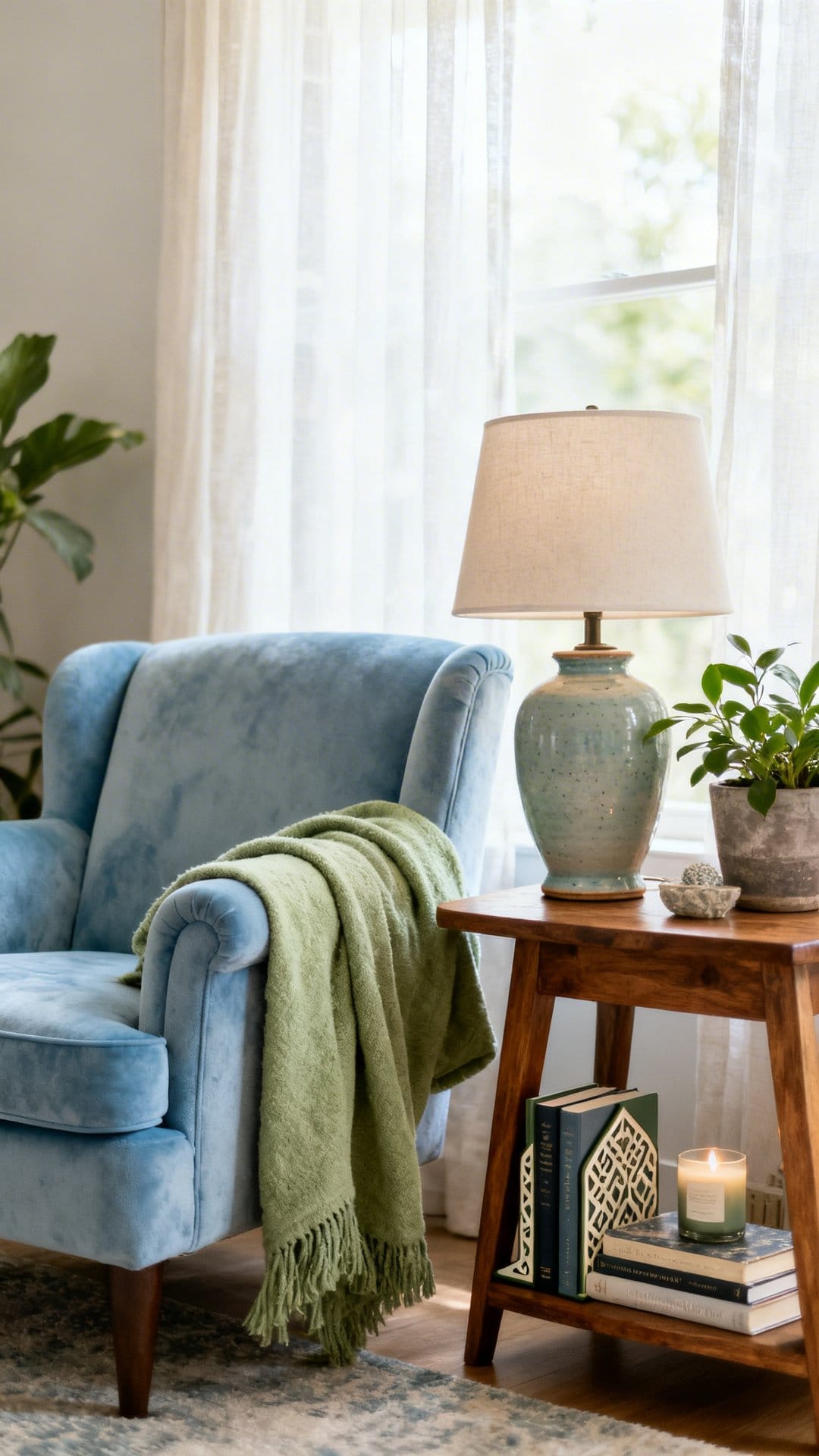
A corner chair in powder or slate blue turns wasted space into a retreat. Add a sage throw and a tiny side table for tea and books. You’ll actually use this zone—promise.
Essentials
- Comfy chair with supportive back
- Adjustable task light
- Textured throw and a small cushion
Ideal for winding down without scrolling yourself to sleep.
14. Use Metallics: Brass, Aged Gold, Or Brushed Nickel
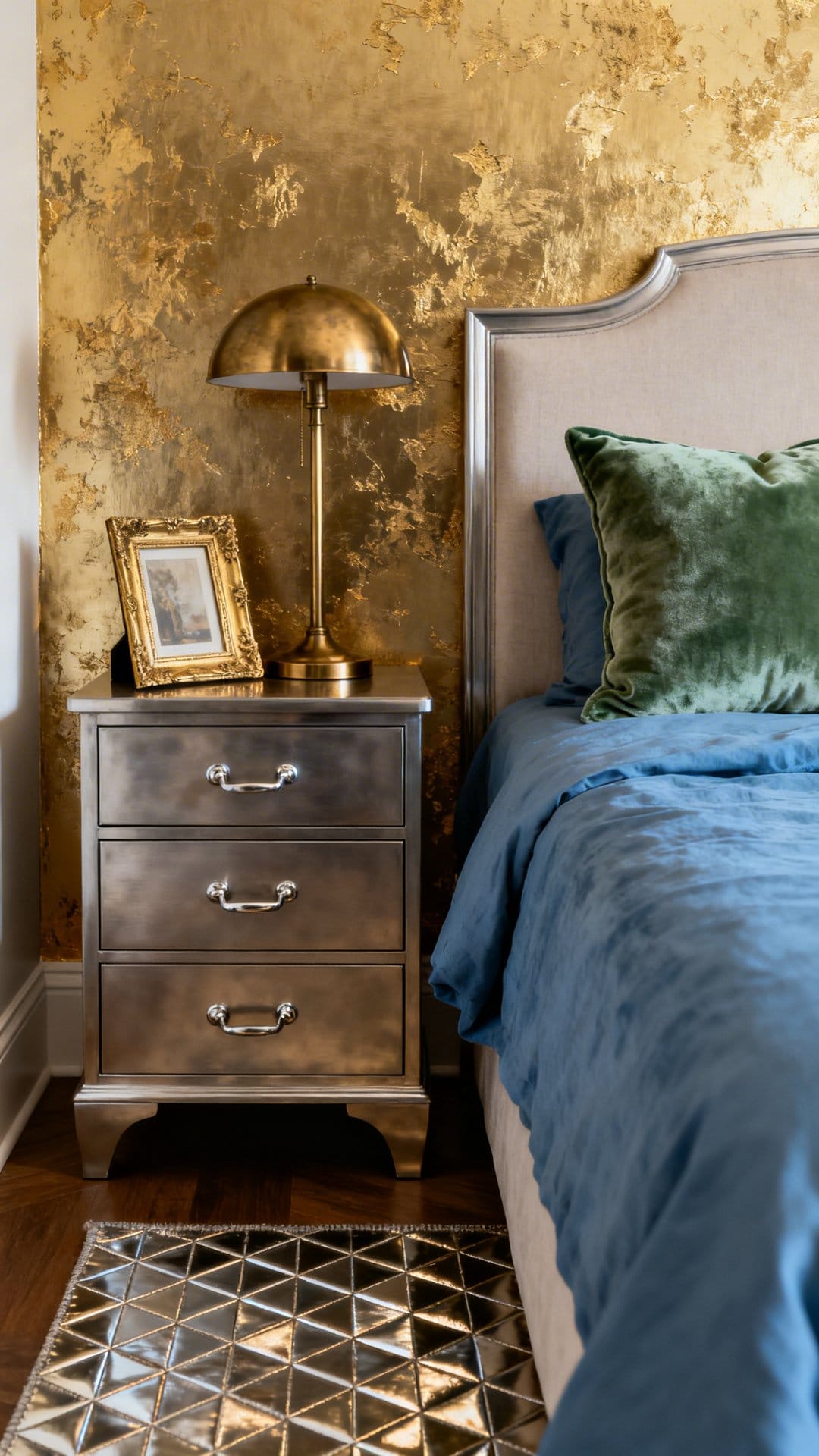
Metal finishes elevate soft hues. Brass warms up blue, while brushed nickel cools down sage—the mix looks intentional and layered. Keep metals consistent within a zone for cohesion.
Mixing Guide
- Brass with navy or indigo elements
- Brushed nickel with paler sages
- Antique gold for vintage charm
Use metals to add sophistication without adding more colors.
15. Play With Stripes And Checks
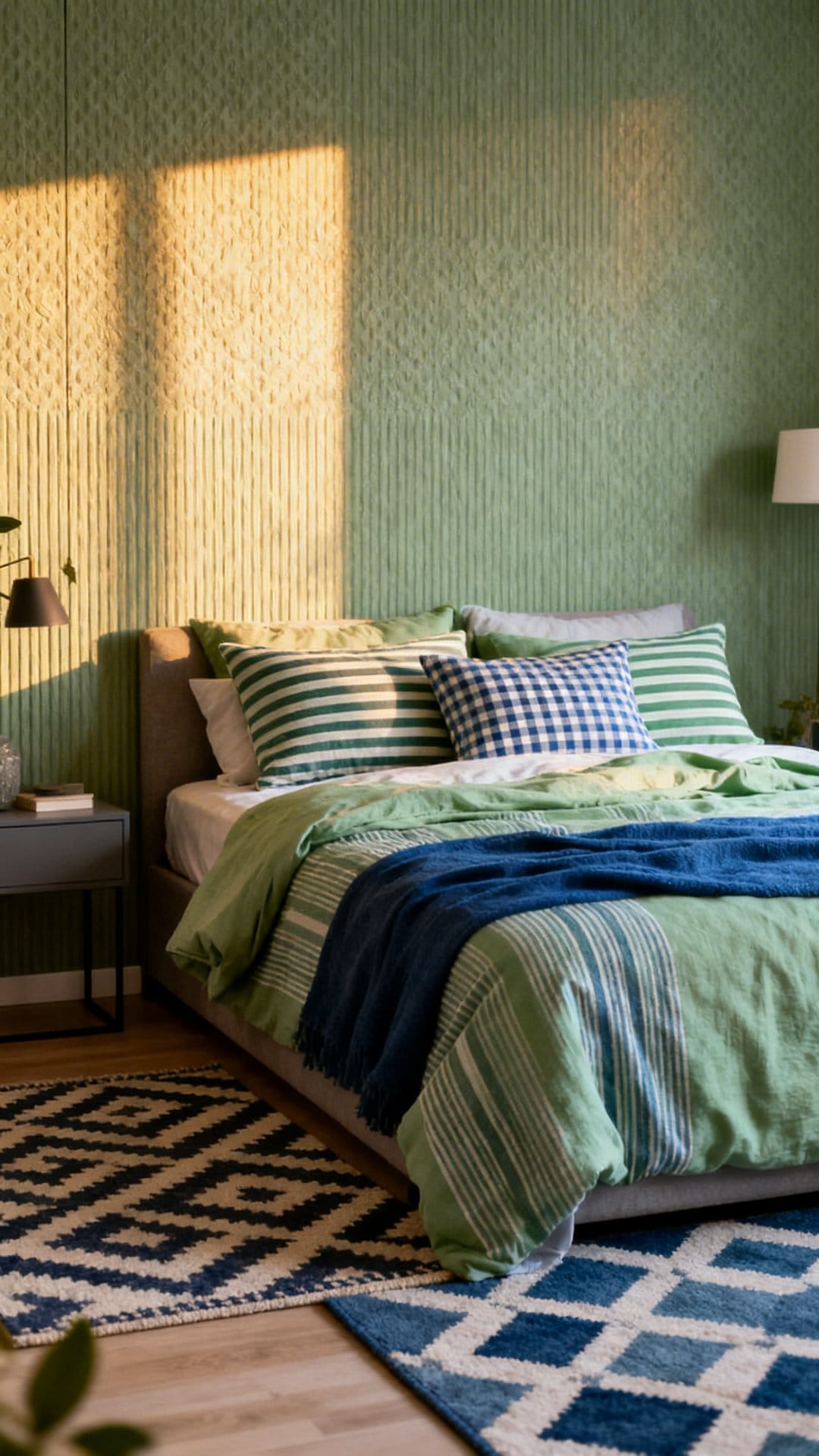
Patterns bring energy in a controlled way. Narrow blue-and-white stripes on sheets, plus a sage checked throw, look playful without going full cottagecore. Keep everything muted to stay restful.
Pattern Rules
- Vary scale: one small, one medium.
- Stick to 2–3 patterns total in the room.
Perfect when solids feel a bit too safe.
16. Lean Into Coastal, Not Nautical
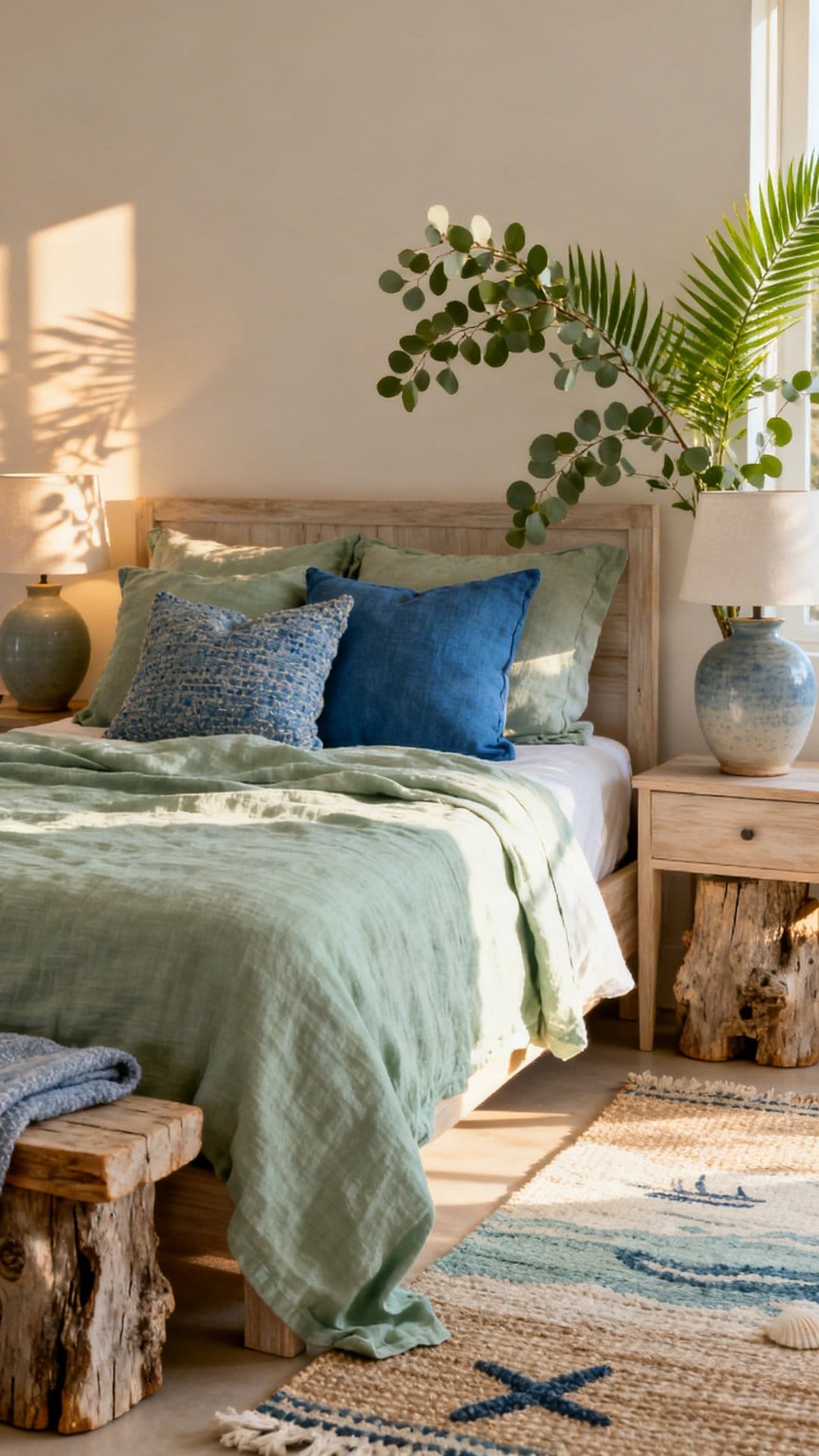
Soft blues and sage can nod to the sea without anchors and rope everywhere. Think driftwood frames, linen bedding, and sandy neutrals. The vibe: breezy, not theme park.
Do This, Not That
- Do: woven textures, organic shapes, sea-glass hues.
- Skip: bold navy stripes and literal nautical motifs.
Great for anyone who loves the ocean but not clichés.
17. Add A Sage Mural Or Color-Washed Wall
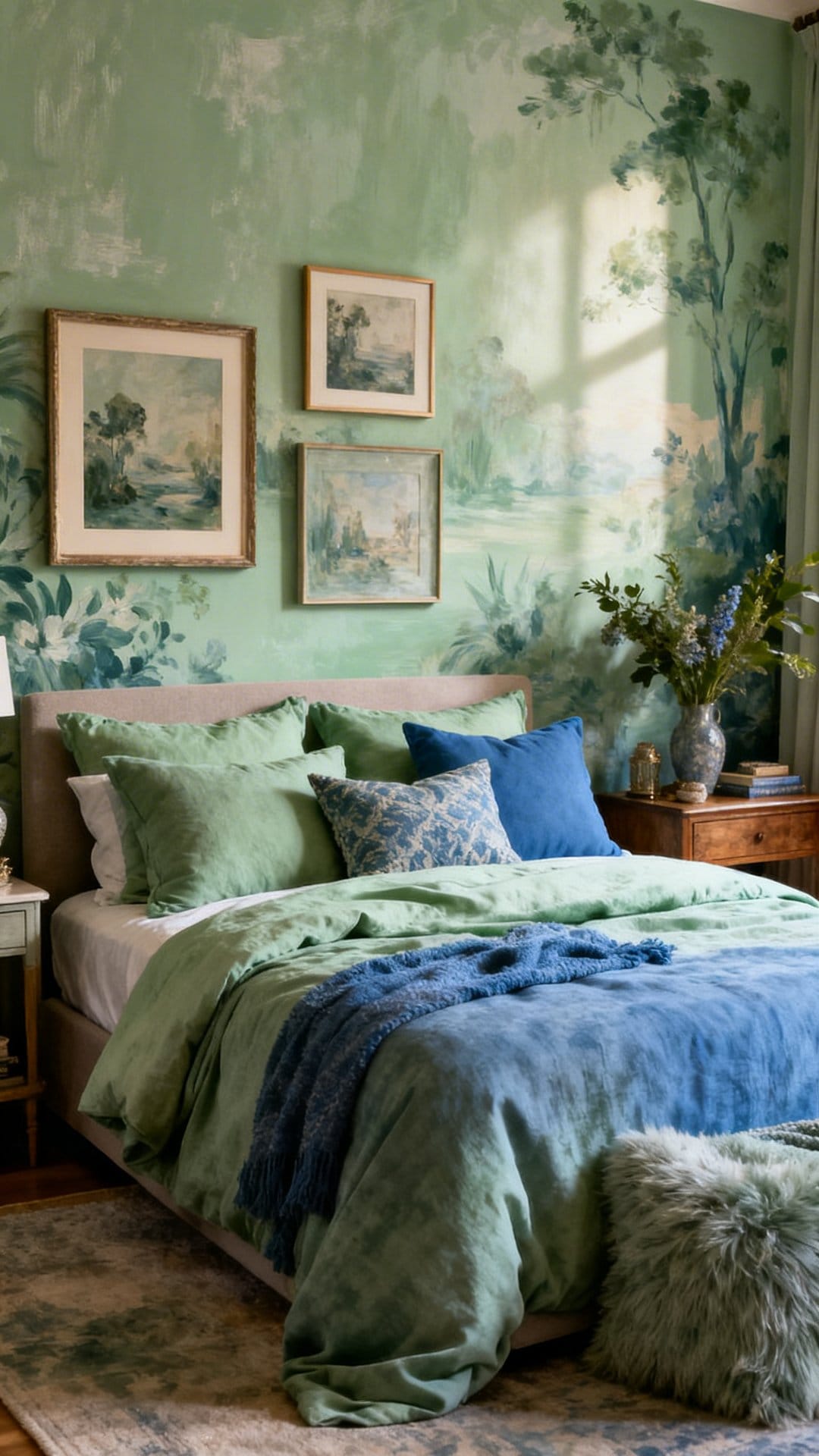
A hand-painted color wash in soft sage gives walls movement and softness. It’s like living inside a sunrise—gentle and diffused. Pair with blue bedding for balance.
How-To Snapshot
- Thin paint with glaze or water.
- Use wide brushes and crisscross strokes.
- Work in sections for even blending.
Use when you want artful walls without busy patterns—this effect lands especially well in compact rooms.
18. Style A Minimal Nightstand In Blue And Green
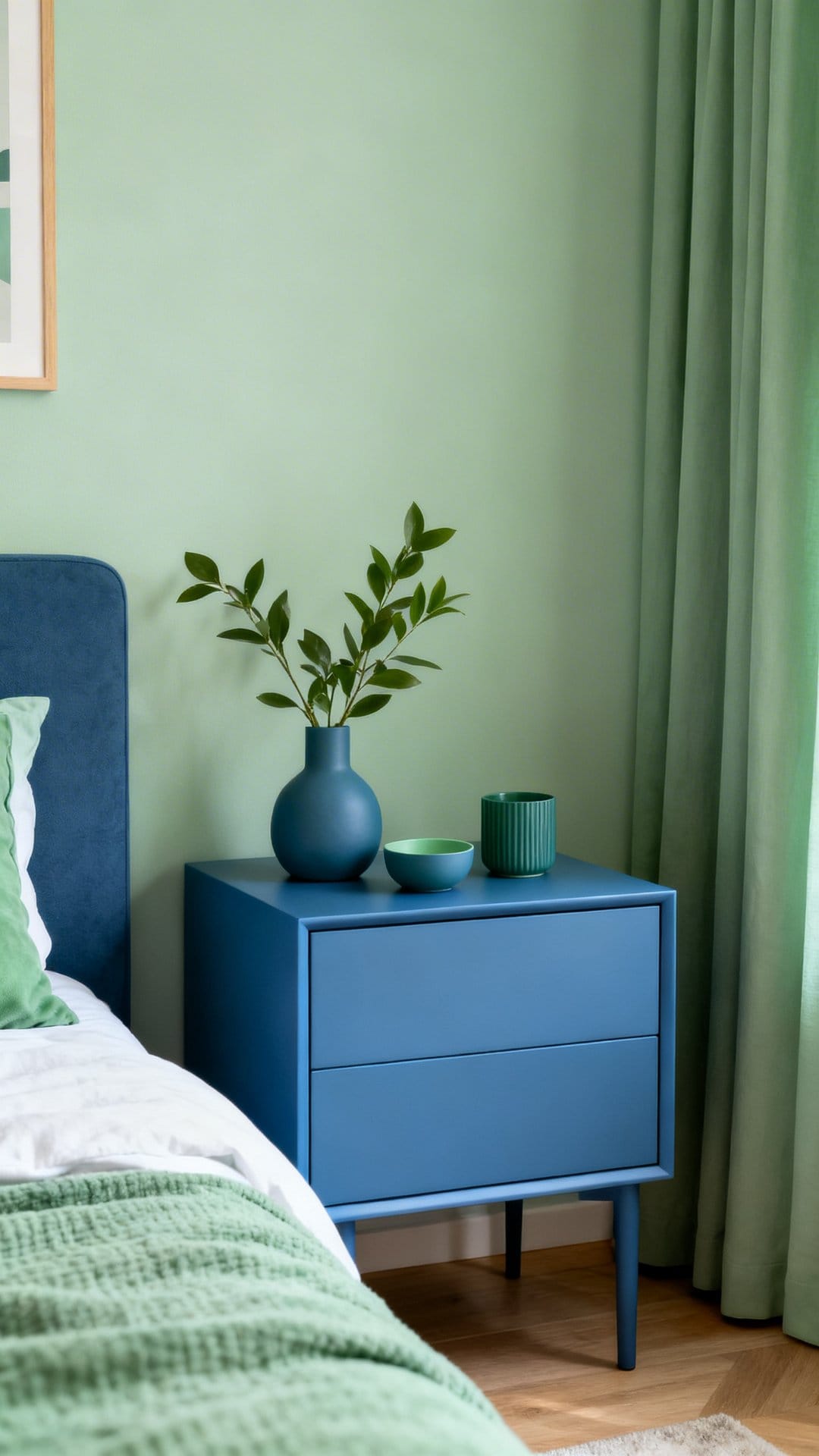
Clutter kills calm. Keep a small stack of books, a glass carafe, and a sage ceramic dish on a blue or wood nightstand. Edit often so your surfaces breathe.
Checklist
- Closed storage for chargers and odds-and-ends
- Soft, dimmable lamp light
- One plant or stem for life
Ideal for sleep-friendly habits and quick morning resets.
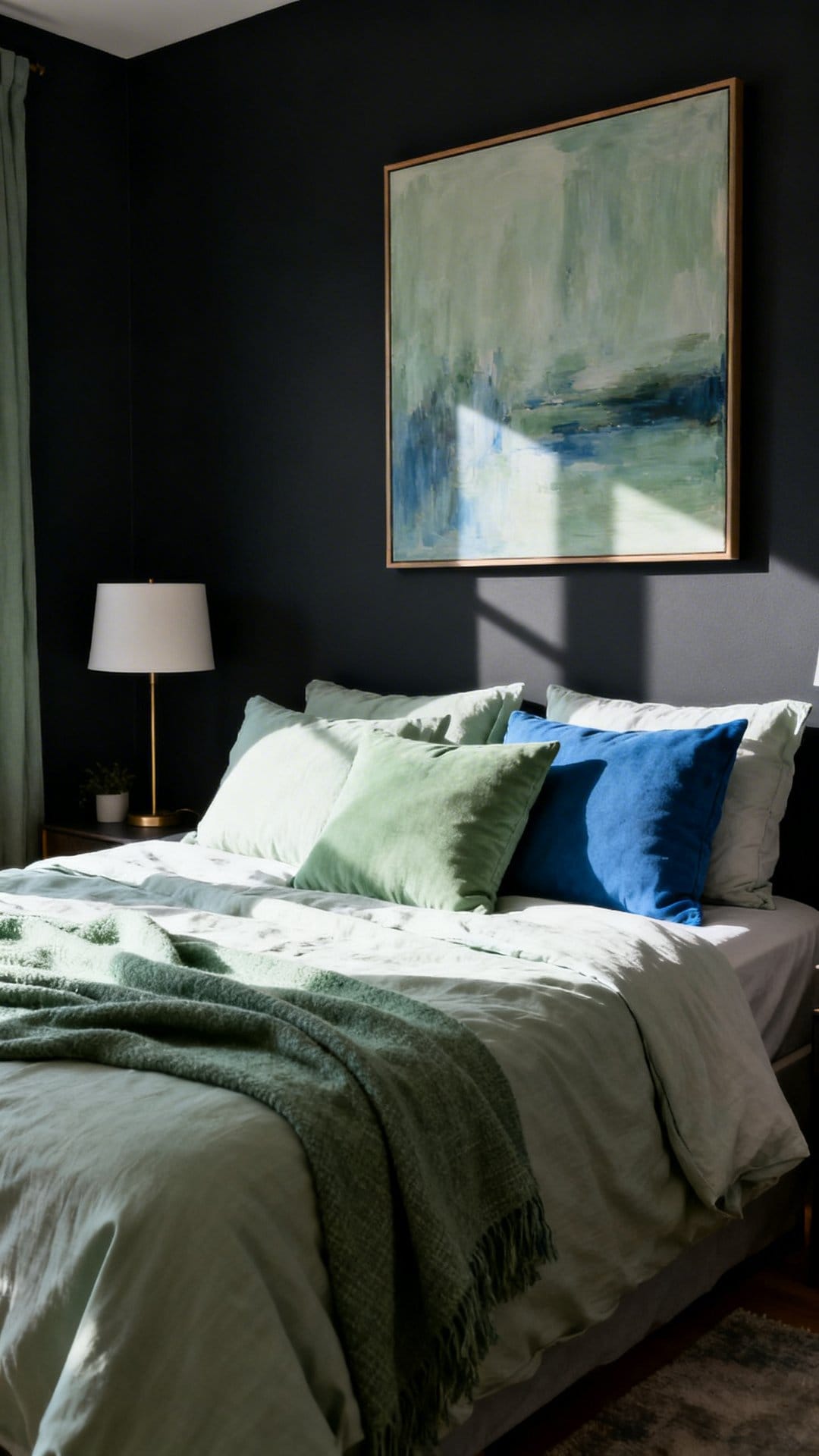
19. Go Moody With Dark Walls, Light Bedding
 Shop this look: DAPU Linen Duvet Cover Set – French Linen… · DAPU 100% French Linen Sheets 4Pcs Set, 170GSM…
Flip the script: paint walls in deep blue-green and keep bedding airy with pale sage and white. The contrast feels luxe and cocoon-like. Add warm bulbs so it reads intimate, not cave-like.
Lighting Tips
- 2700K bulbs for warmth
- Layer ceiling, sconce, and task lights
- Use dimmers for evening routines
Best for big rooms or anyone who loves a moody sanctuary. If that deeper, layered look is calling you, dark boho bedroom ideas show how far this direction can go.
20. Bring In Plants That Love Low Light
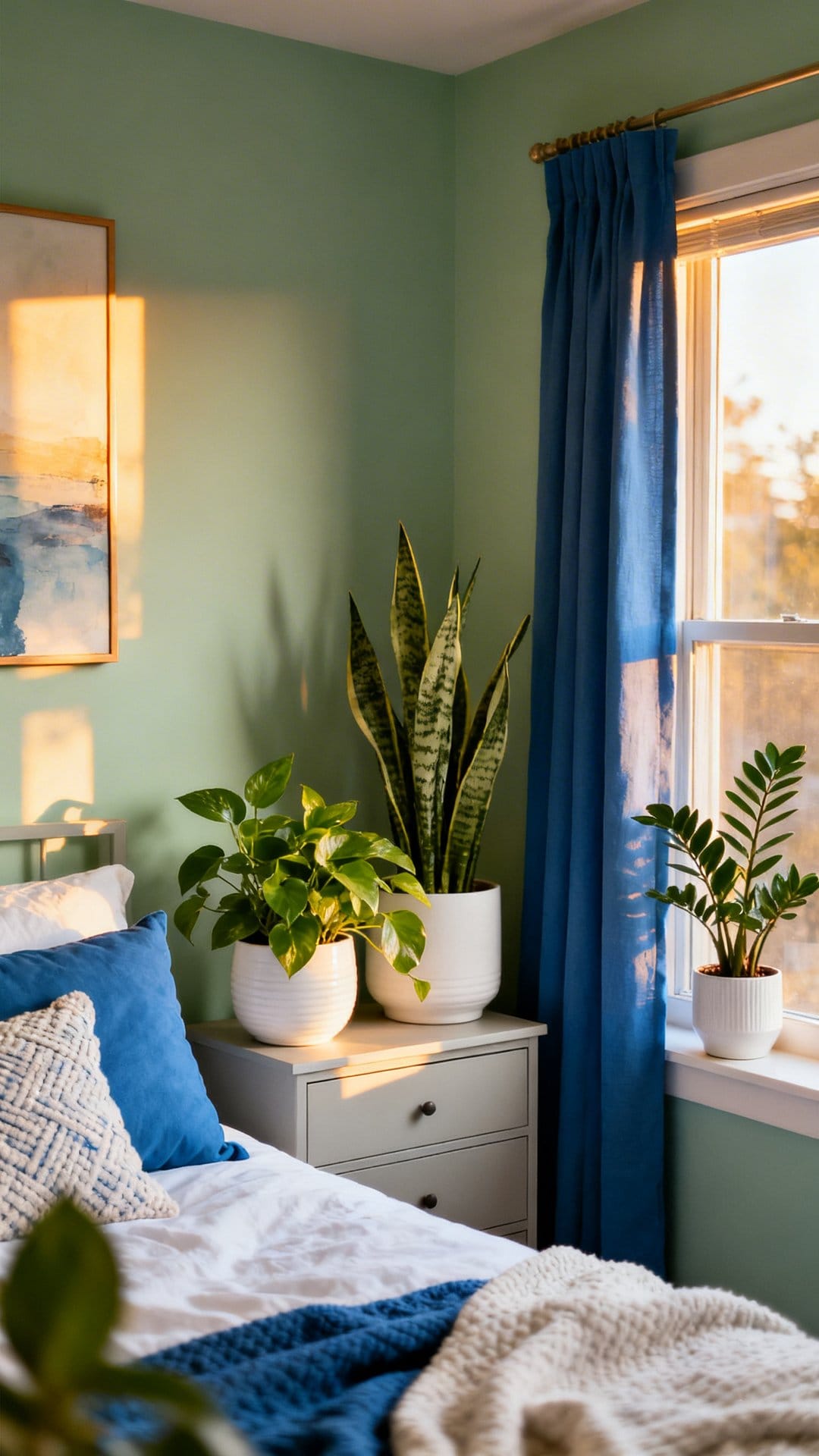
Greenery amplifies the sage tones and plays nicely with blue. Go for easy-care plants like ZZ or snake plants that don’t demand a greenhouse. Their sculptural forms add movement.
A ZZ plant tolerates low light and stays glossy with minimal care, a snake plant adds vertical structure without taking up floor space, and trailing pothos softens shelves and corners with almost no effort.
Great for renters and busy people who still want life in the room.
21. Curate Scent And Sound To Match The Palette
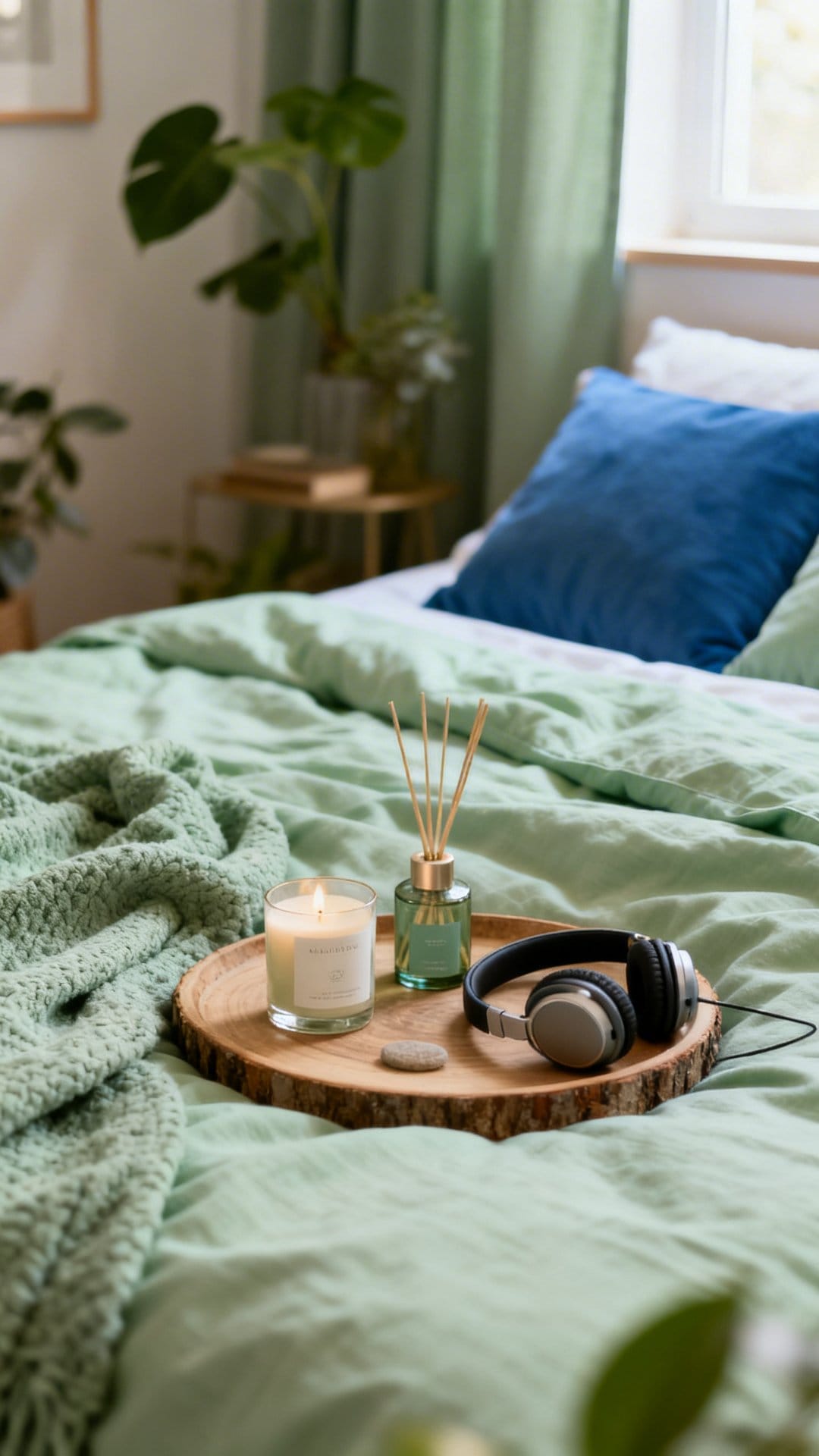
Design isn’t just visual. Add a lavender or eucalyptus diffuser, a soft white-noise machine, and lightweight curtains that move with the breeze. Your brain will link these cues to relaxation.
Small Upgrades
- Fabric spray in herbal notes for linens
- Soft playlist on a hidden speaker
- Textured sage bed throw to signal “wind-down”
Use this to make the whole experience cohesive, not just the look. Small rituals—a specific scent, a soft playlist—are what make a room feel genuinely yours.
Ready to give your bedroom that serene-but-stylish refresh? Sage and blue do the heavy lifting while textures, patterns, and small details seal the deal. Start with one idea, then layer a couple more—trust me, the calm will follow fast.
If you’re building on this palette, the sage green bedroom ideas covers the full spectrum of sage green bedrooms. sage green and white bedroom ideas share the same clean, airy energy and work well as a complement. For a softer mood, sage green and lavender bedroom ideas move in a similar dreamy direction. sage green and cream bedroom ideas offer a warmer, cozier version of the same calm, and the sage green bedroom aesthetic guide captures the overall feel in one place.
Frequently Asked Questions
Sage green and blue are both cool, calming hues that promote relaxation while still offering visual interest. Their muted, nature-inspired tones layer easily, creating a serene, cohesive space that feels polished rather than busy.
Paint the lower half of the wall in sage green and the upper half in a soft, gray-leaning blue, separated by a crisp white chair rail or clean tape line. This adds architectural interest, balances the palette, and can make low ceilings appear taller.
Choose a muted blue with gray undertones, such as a soft slate or dusty sky. Test large swatches at different times of day to see how natural and artificial light affect the undertone balance.
Anchor the room with a deeper blue element like a navy or indigo upholstered bed or duvet to ground the palette. Keep accessories minimal and repeat the core colors in textiles to maintain a clean, cohesive look.
Limit the palette to a few soft tones and add texture through linens, knits, and natural materials. Use white or off-white accents to brighten, and rely on layered lighting to keep the mood calm and inviting.