
📌 Love these ideas? Follow us on Pinterest for daily home decor inspiration! Follow @SeasonalHomeMagic →
I’ve always been drawn to spaces that feel alive, and plants deliver that in the best way. But figuring out how to use them intentionally took me a while. These 25 Botanical Home Decor Ideas to Liven Up Your Space grew out of trial, error, and a few crispy-leafed disasters. Some are easy. Some take a weekend. All can bring a calm, grounded energy that feels good to come home to.
1. Layered Greenery on Open Shelves
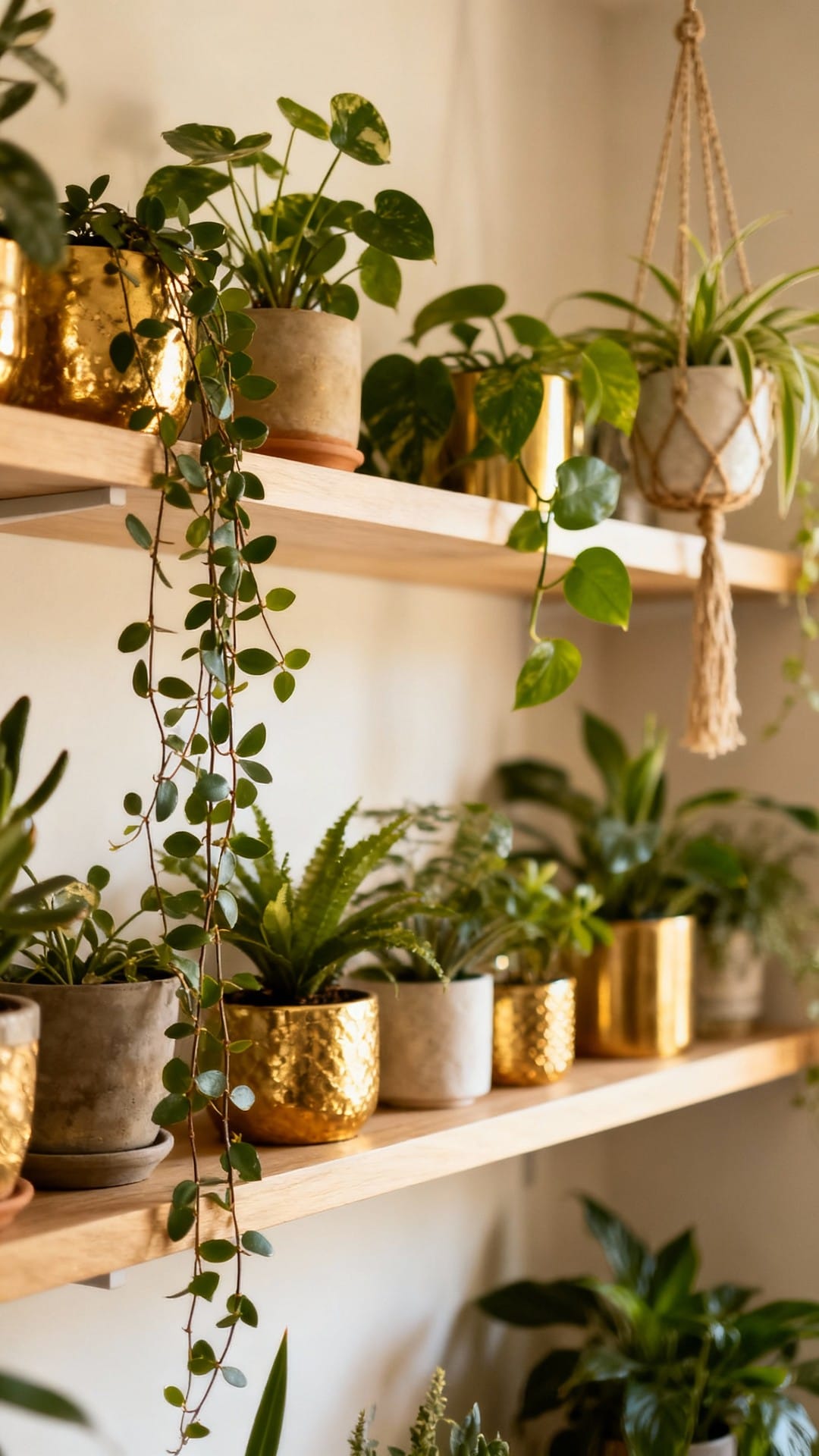
Open shelves can look cold if they’re only dishes or books. Add staggered plants to soften the lines. Mix trailing varieties like pothos with upright ones like snake plants or ZZ plants for contrast.
I learned this the hard way when I lined up five identical plants. It looked like a tiny army. Vary pot sizes and textures, and leave negative space so your shelves don’t feel cluttered. A few well-chosen pieces beat a jungle crammed into a single shelf.
2. An Herb Nook by the Kitchen Window
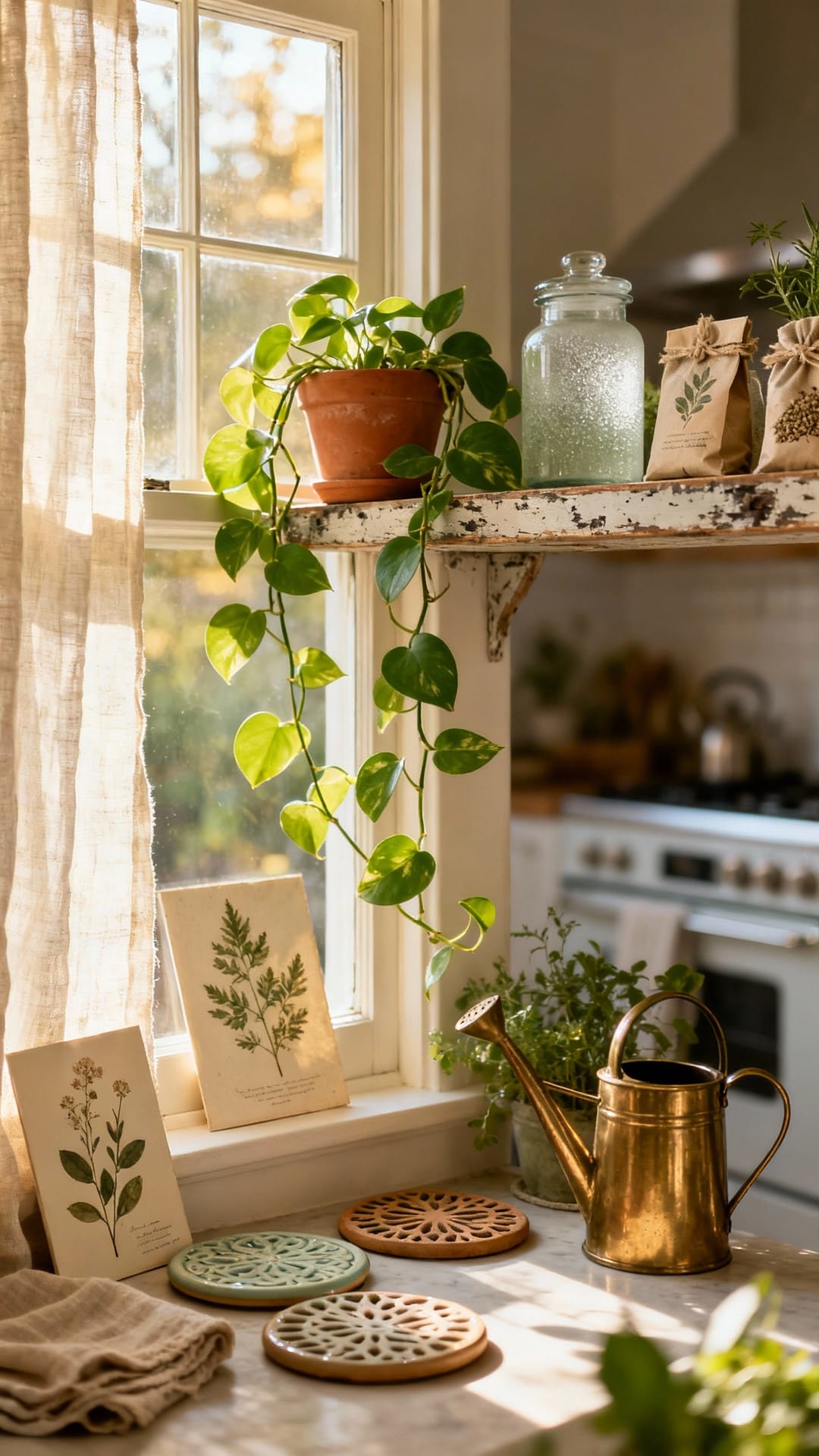
Nothing feels more useful than a window ledge full of basil, thyme, and mint. It smells fantastic when the sun warms the leaves. And it nudges you to cook fresher meals without a big production.
Self-watering planters keep herbs happier if you’re forgetful. I still struggle with overwatering the basil in enthusiasm. If you have space, add a small hook for scissors to make snipping easy.
3. A Statement Tree in the Corner
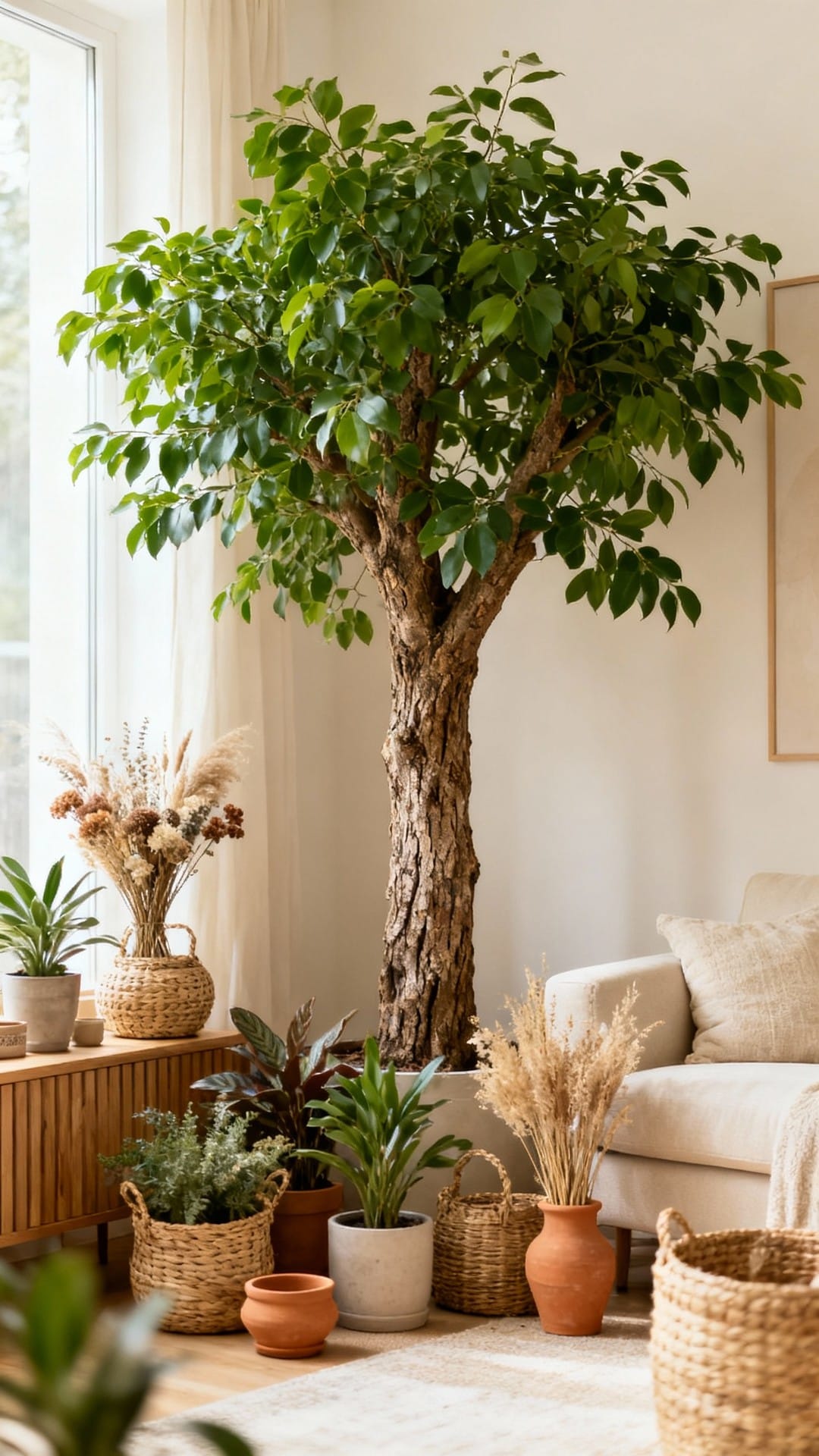
One tall tree, like a fiddle-leaf fig or rubber plant, can anchor a room and balance heavy furniture. Corners often feel like dead zones; a tree fills that void with height and movement.
This one surprised me because it changed how the light looked across the floor. Use a sturdy pot with a bit of texture and raise the tree slightly on a stand to protect the baseboard. Rotate it every few weeks so it grows evenly.
4. Trailing Plants as Soft Room Dividers
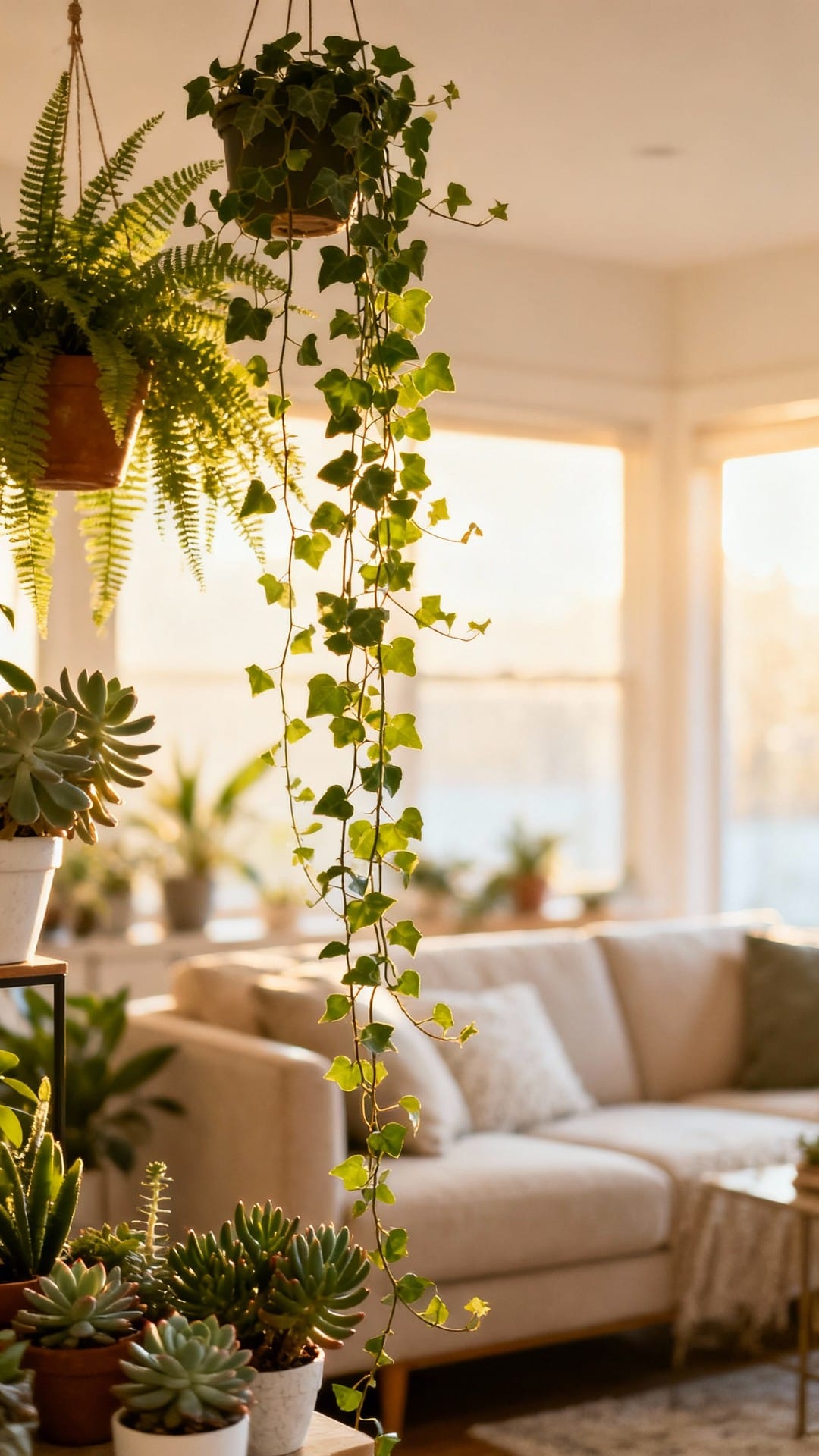
If you live in a studio or open-plan space, hang trailing plants to suggest zones without building a wall. A row of philodendron micans or string of hearts can create gentle separation between a living area and a workspace.
Use ceiling hooks rated for weight and chain extenders to get the height right. I made the mistake of hanging them too low and repeatedly walked into them. Now they sit just above head height, catching air and light.
5. Botanical Prints That Echo Real Leaves
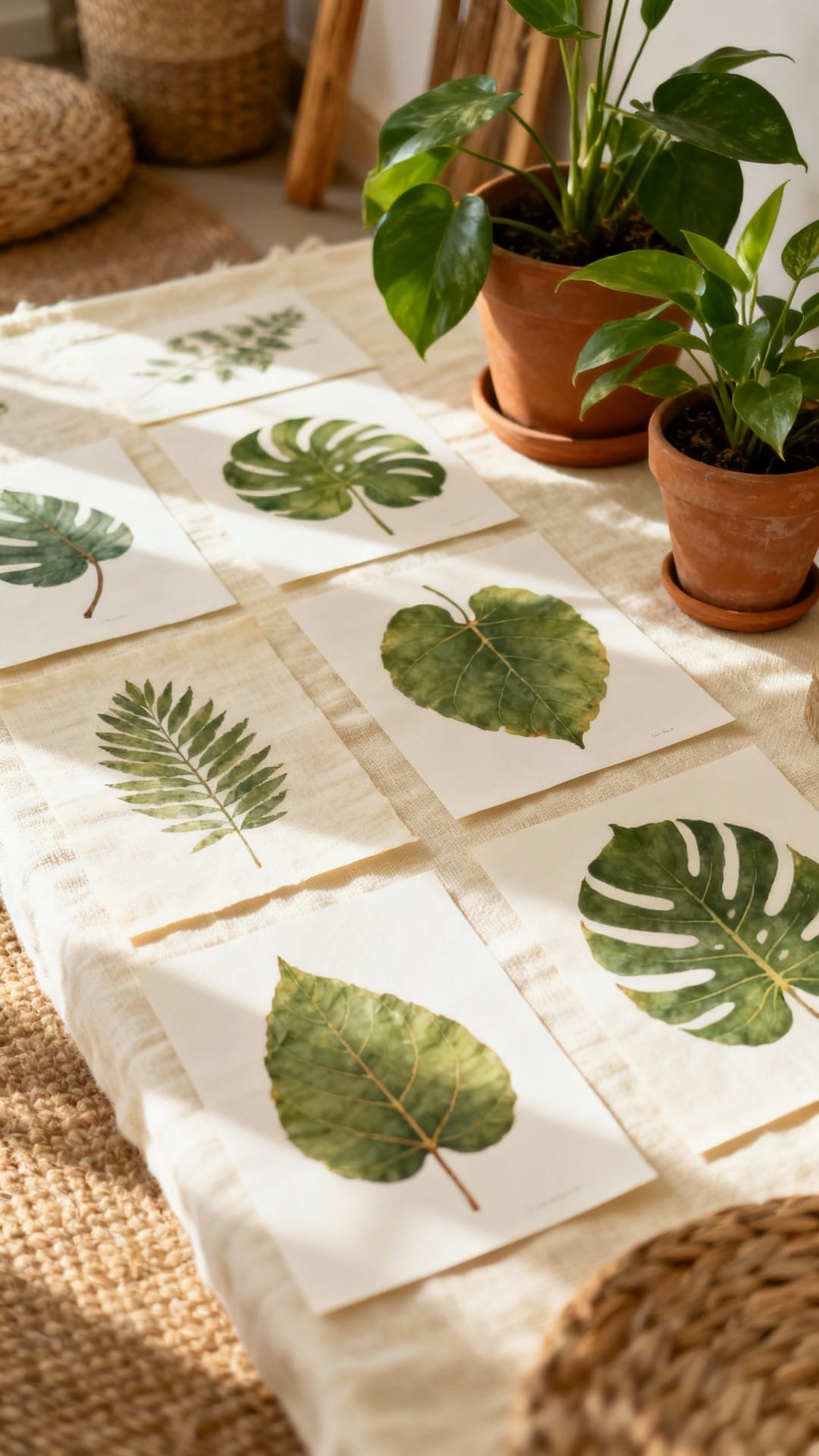
Framed botanical art adds structure where plants can’t thrive. Choose prints that complement the foliage you already have, like fern illustrations alongside your actual ferns. It feels cohesive, not random.
Keep frames simple. Black, white, or natural wood tends to let the art breathe. And hang them at eye level—too high and they feel disconnected from the room.
6. A Mini Propagation Bar
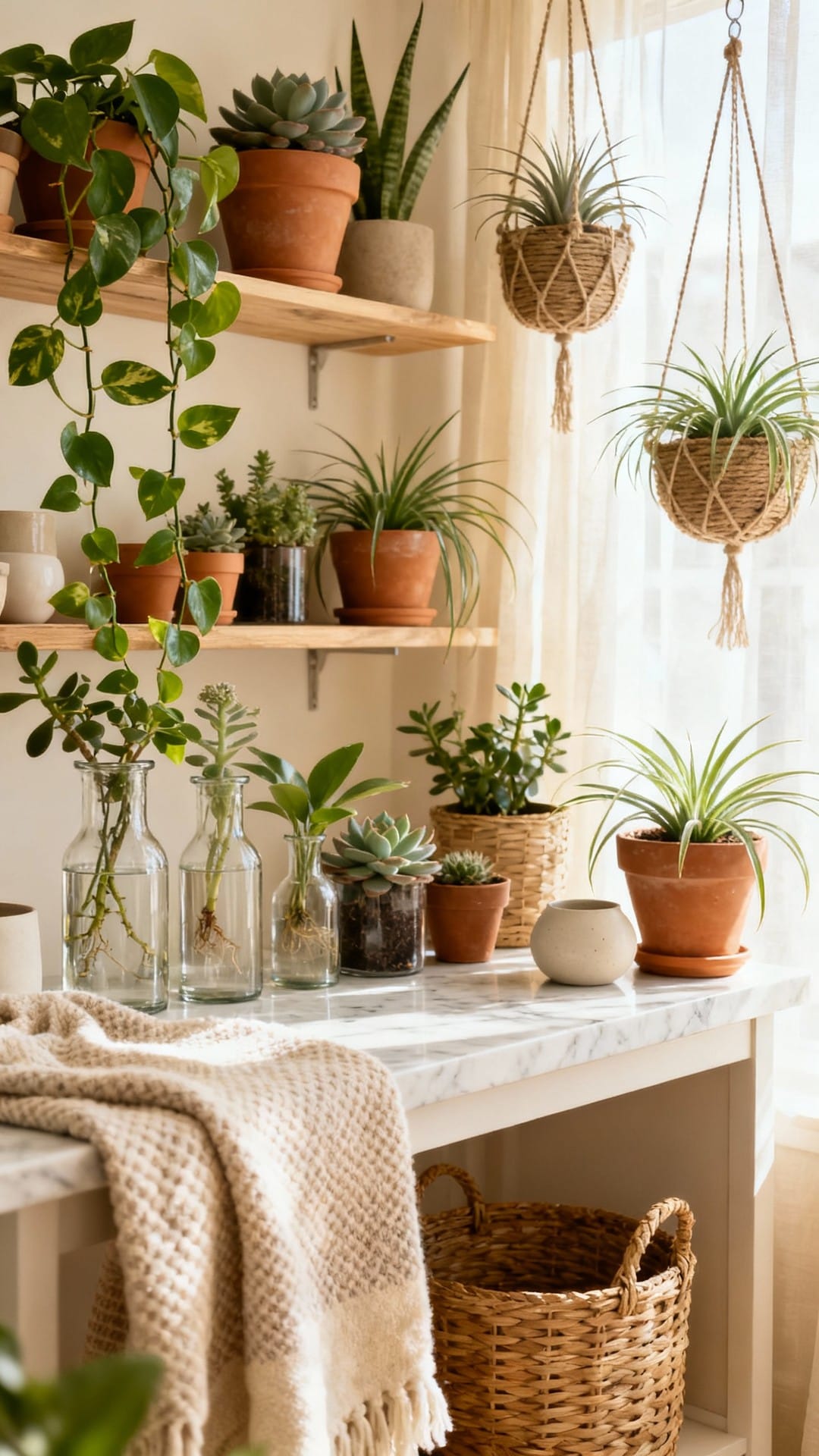
Glass tubes or mini vases with water and plant cuttings create a delicate, almost scientific vibe. It’s part decor, part low-stakes experiment. And those tiny roots are strangely satisfying to watch.
I started with pothos cuttings and now keep a rotating cast. Place the bar near bright indirect light. Fresh water weekly keeps it from getting cloudy, and you’ll soon have new plants to pot or gift.
7. Mossy Accents in Quiet Corners
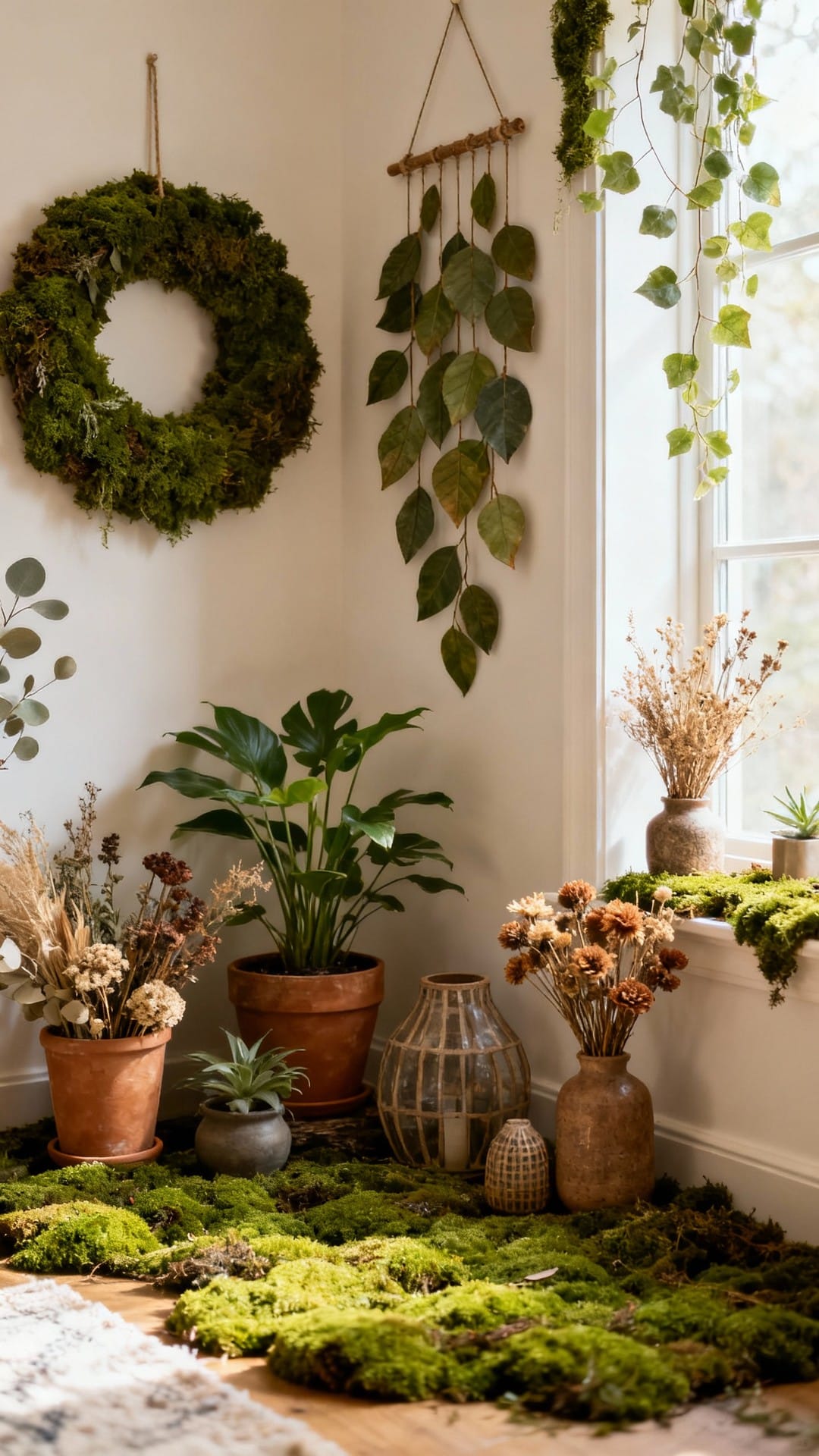
Preserved moss bowls or moss frames bring a deep, calm green to dim corners that live plants dislike. They don’t need watering or light, which feels like cheating in the best way.
Pair moss with stone or clay to reinforce a grounded mood. I’ve found that one moss accent does more than five fussy objects. It’s simple and unexpectedly rich.
8. Subtle Botanical Textiles
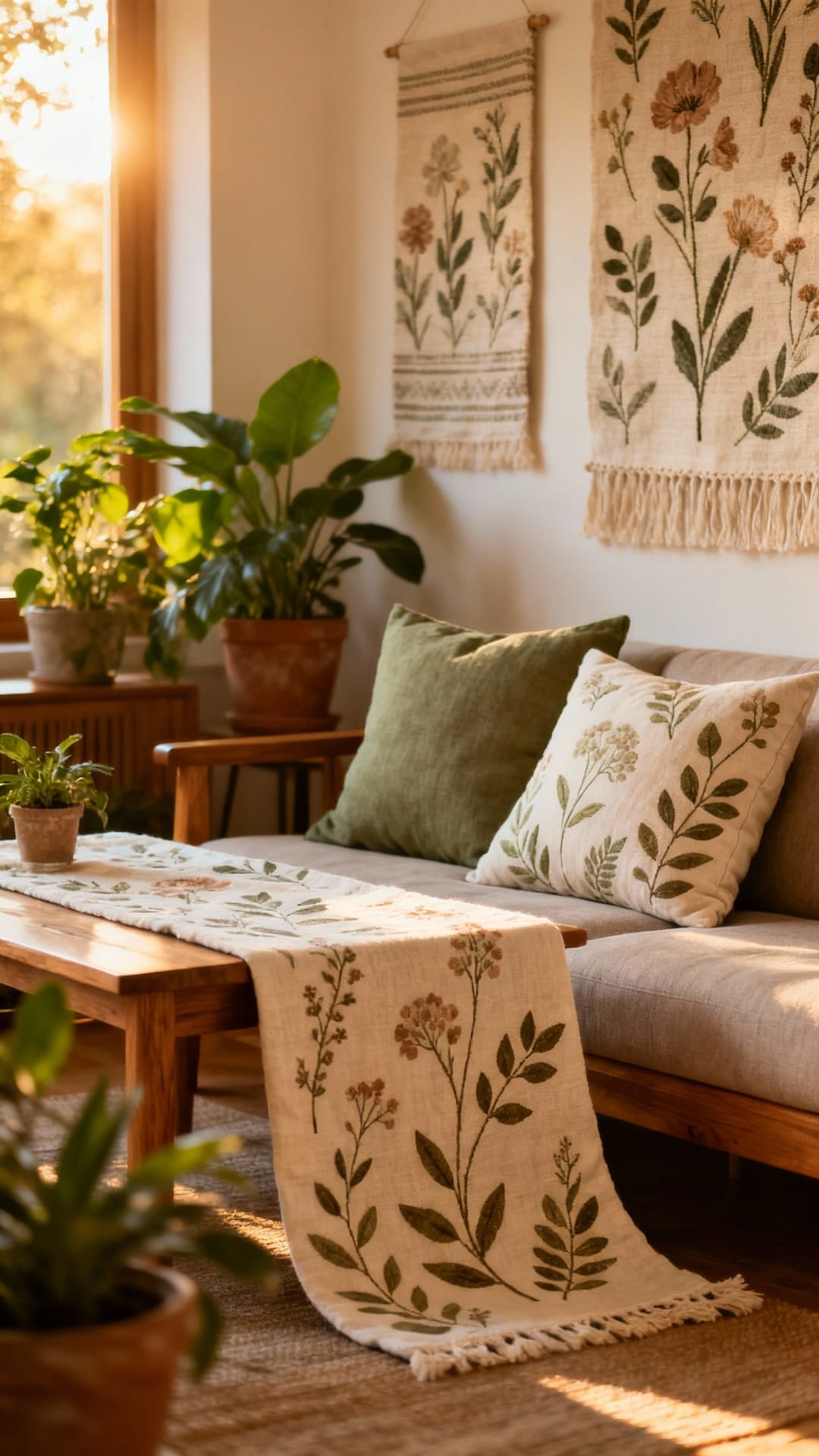
Curtains, throw pillows, or a runner with leaf motifs add plant energy without adding maintenance. The trick is to choose prints that are either small and detailed or large and abstract—mid-scale patterns can look busy fast.
Keep colors in the same family so the room doesn’t feel chaotic. I like pairing deep green prints with oatmeal linens for a quiet, natural palette.
9. A Clustered Plant Coffee Table
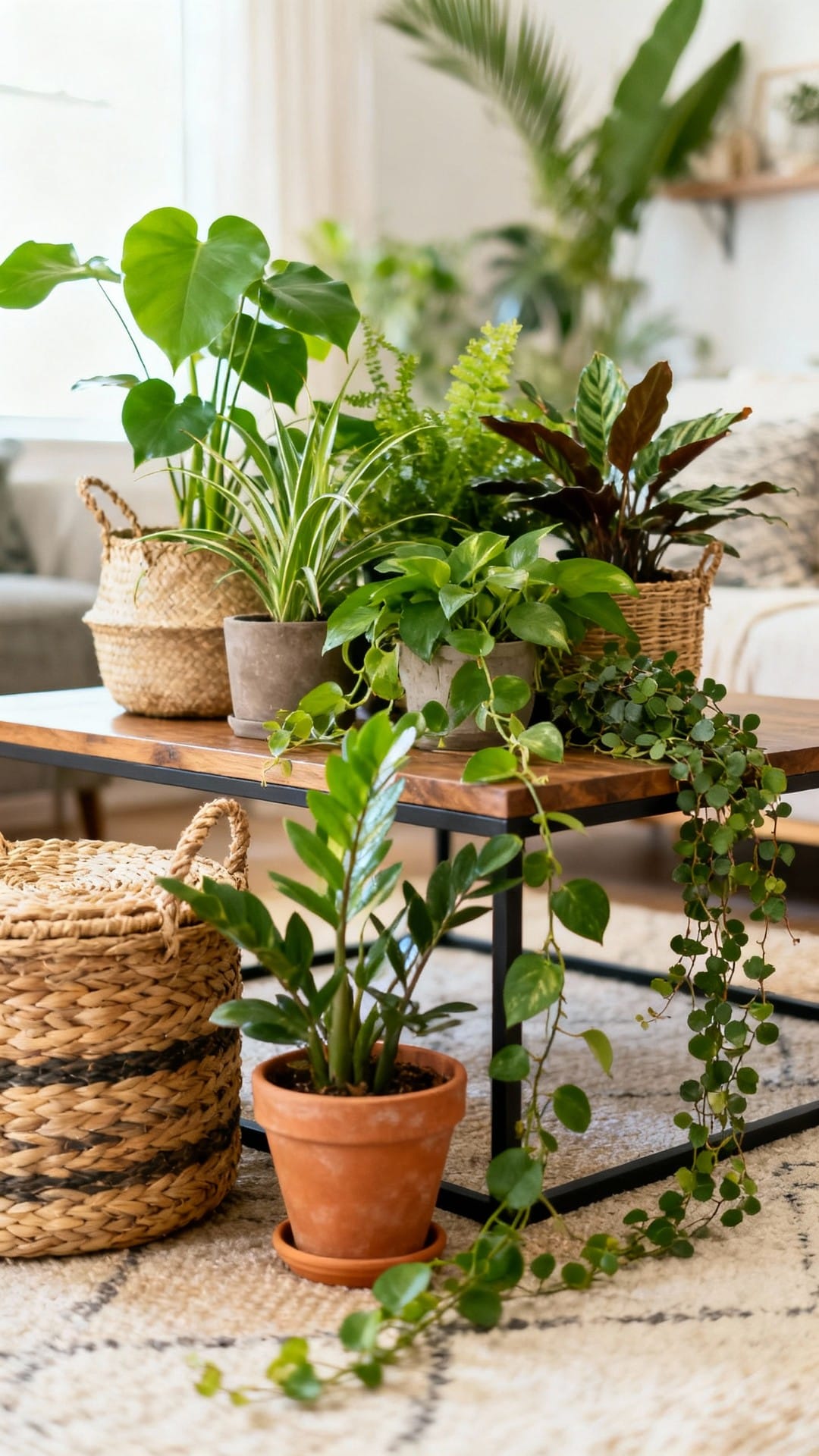
Arrange a few small plants on a tray for an easy centerpiece. Mix heights and leaf shapes, and include one quirky pot for personality. It invites conversation without blocking sightlines.
I rotate this cluster with the seasons. In warm months I add a small flowering plant. In winter, sculptural succulents do the heavy lifting and ask for little in return.
10. Botanical Book Stacks With a Living Topper
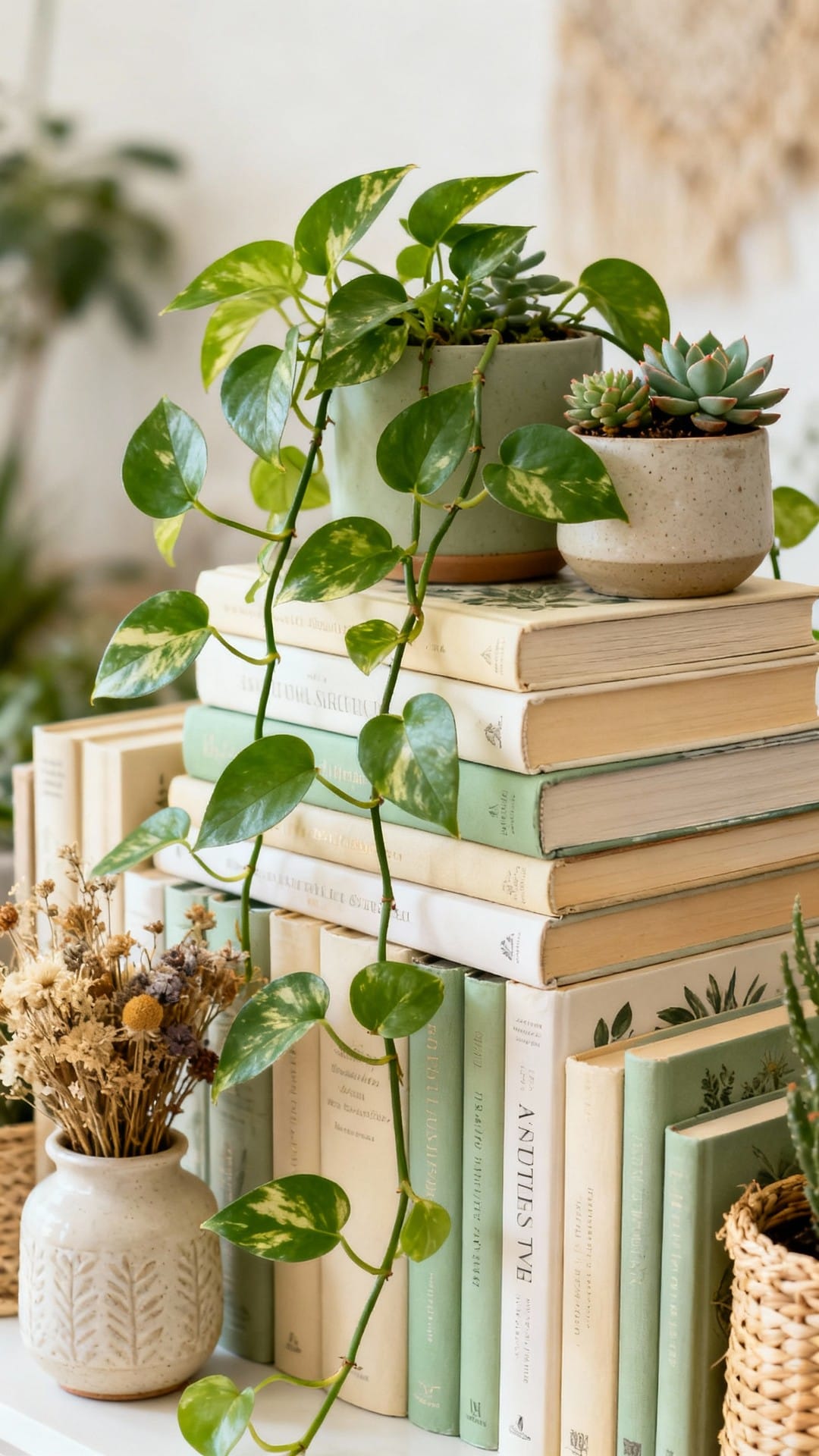
Stack a few coffee table books and top them with a small plant in a low dish. It adds height and keeps the surface from looking flat. Choose books with spines you actually like; they become part of the look.
A shallow ceramic pot with a tiny jade or haworthia works well. I tried a taller plant once and it toppled at the slightest nudge. Low and steady wins here.
11. A Green Entry Landing Zone
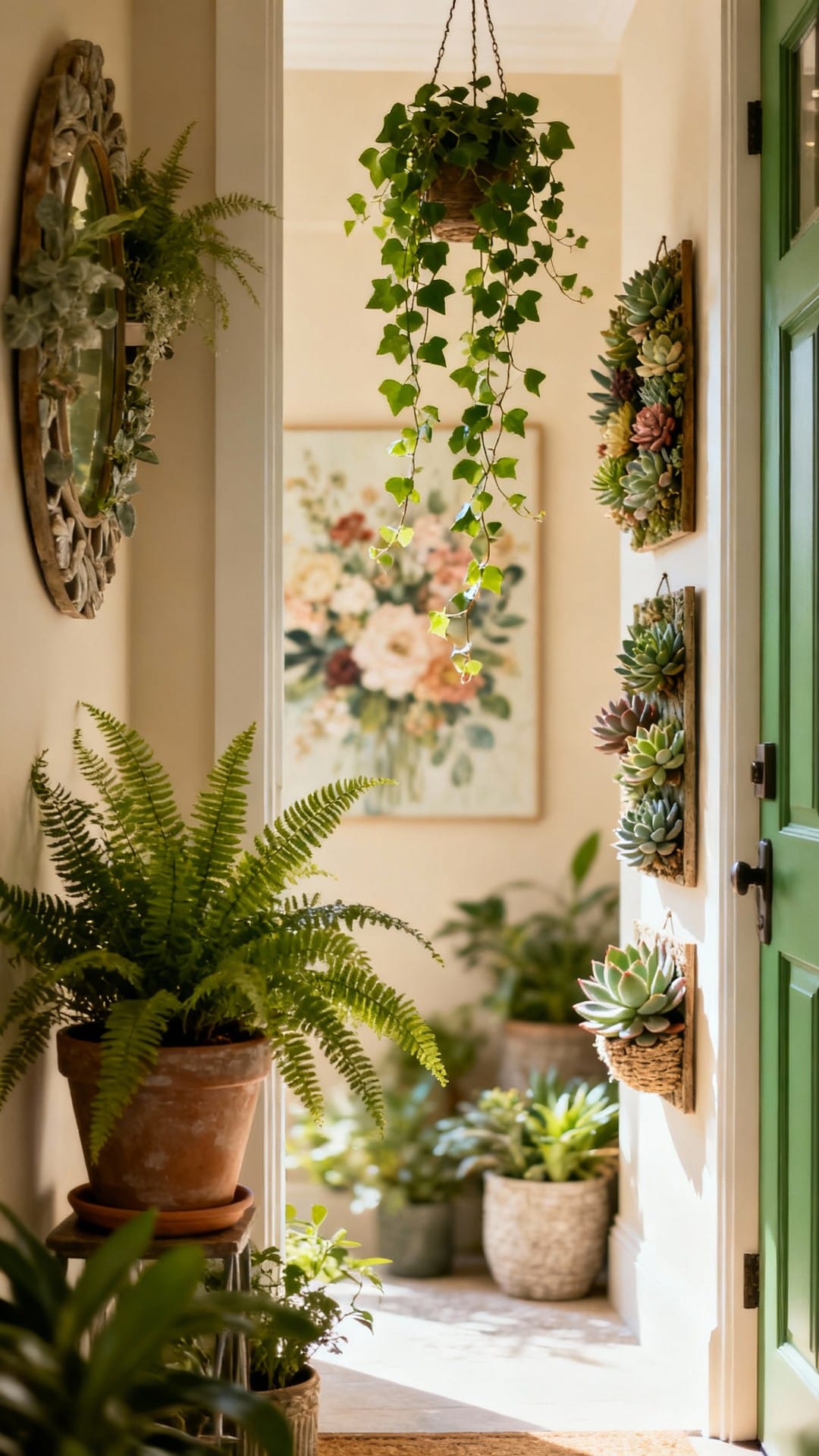
Place a sturdy plant by the door, something that can handle drafts and sporadic attention. Snake plants and cast-iron plants are ideal. It’s a soft greeting when you step inside.
Pair it with a small bowl for keys and a tray for shoes so the entry stays tidy. I noticed guests instinctively touch the leaves on the way in, which seems to reset the tone after a busy day.
12. Ferns in the Bathroom (If You Have Steam)
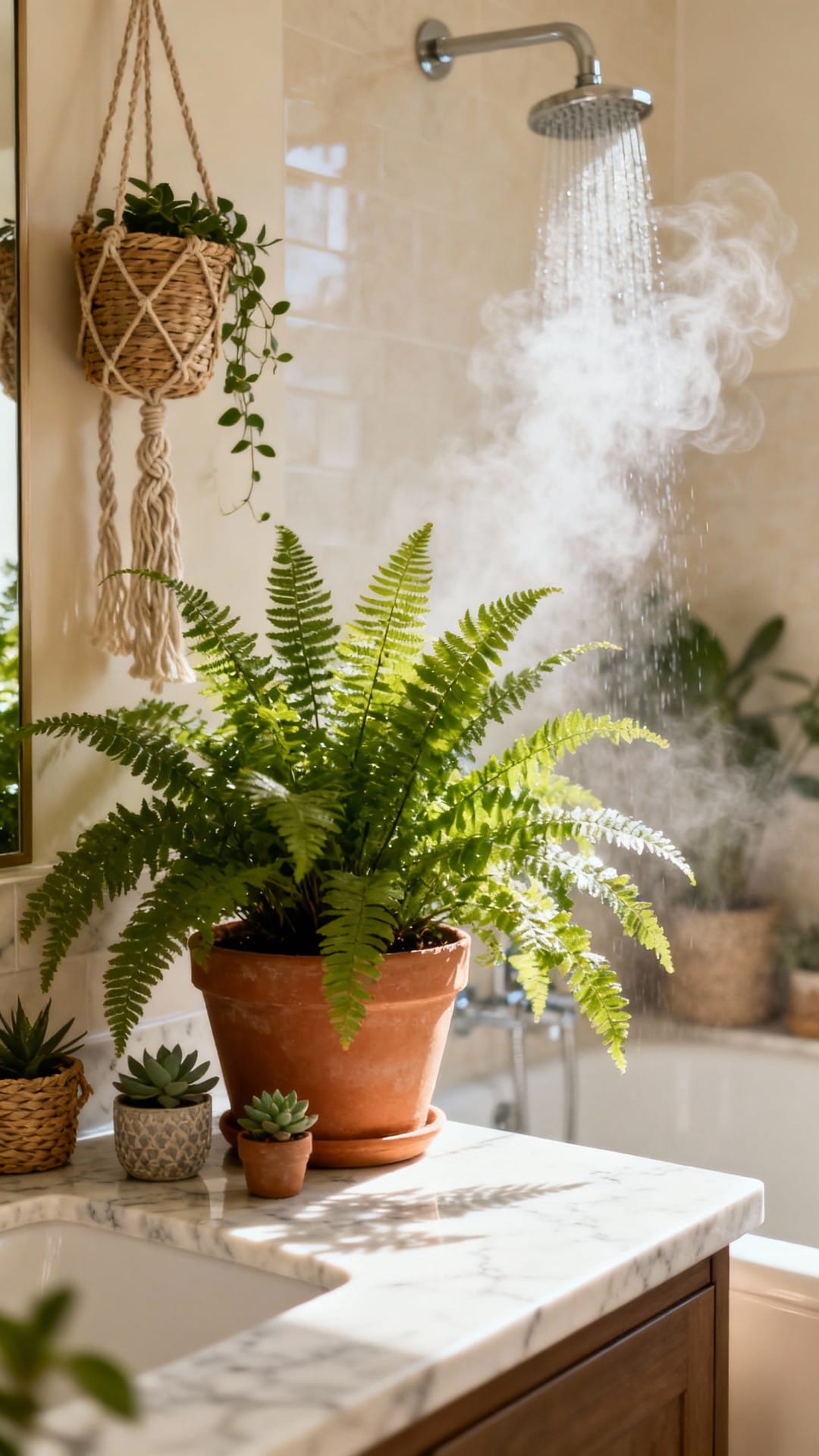
Bathrooms with good light and regular showers can be fern heaven. Boston ferns or maidenhair ferns love humidity. They turn a basic bath into a tiny spa.
But if the light is weak, skip it. I pushed it in a windowless bath and watched the fern slowly crisp. If light is limited, a preserved eucalyptus bundle still adds scent and softness.
13. A Botanical Mantelline
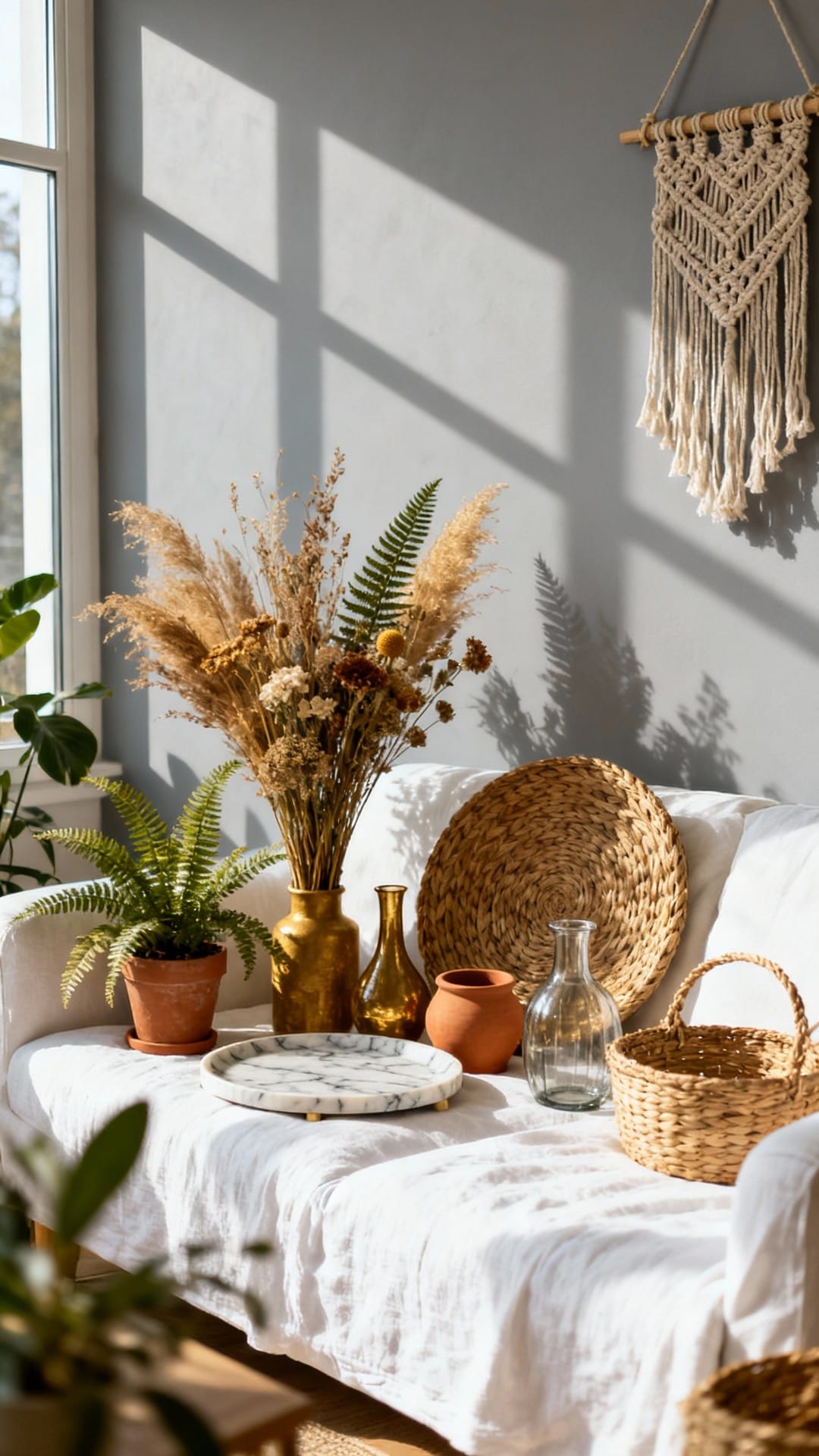
If you have a mantel, treat it like a seasonal stage for greenery. Eucalyptus garlands, small bud vases with cuttings, and a trailing plant at one end create rhythm and movement.
Candles mixed in add warmth at night. I keep the overall palette tight—greens, whites, maybe one rusty brown—so the mantel doesn’t fight the rest of the room.
14. Terrariums as Tiny Worlds
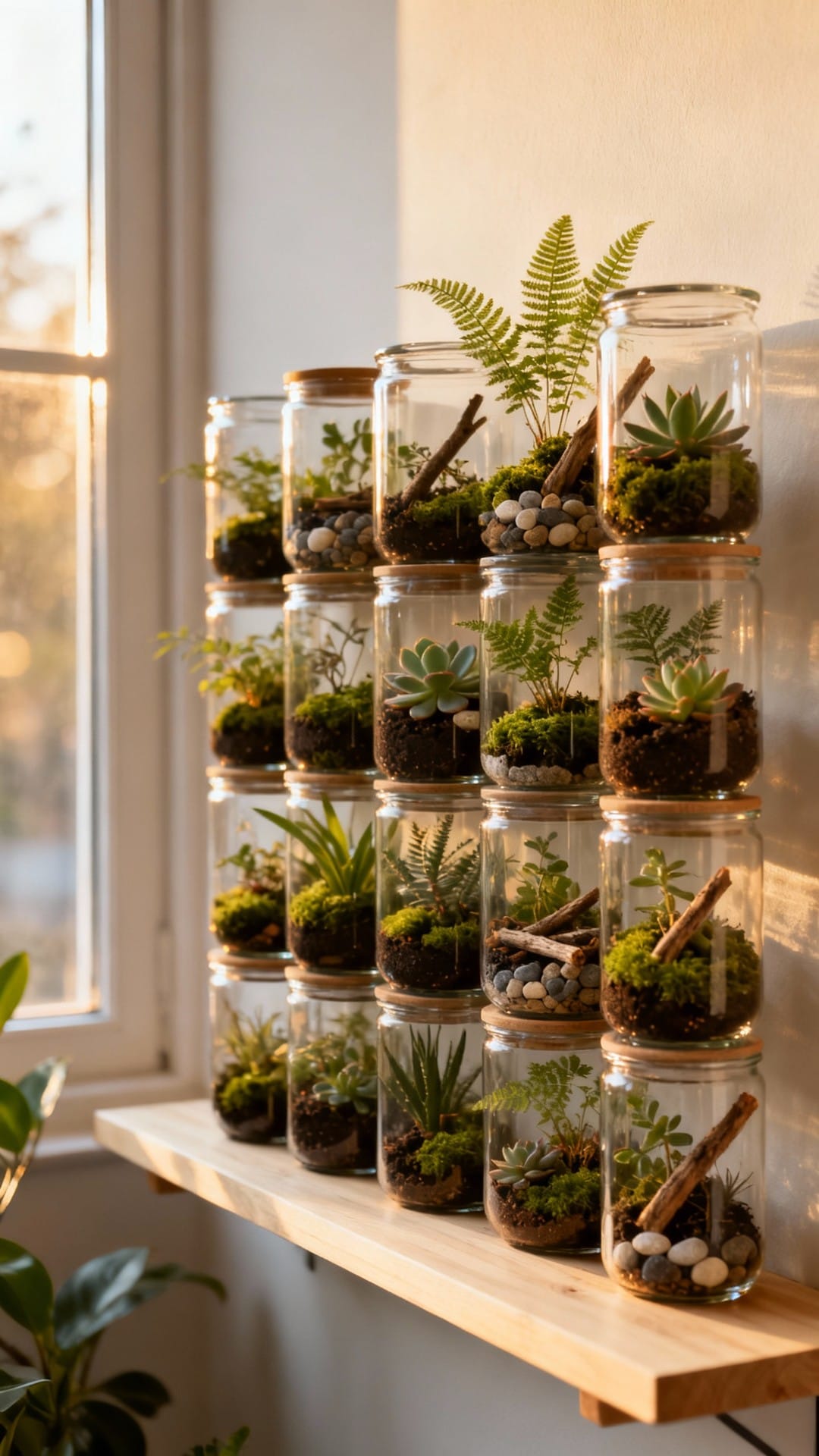
Closed or open terrariums act like living sculptures. They’re perfect for small apartments and desks. Choose slow growers and keep soil and stones layered neatly so it looks intentional.
These need restraint. My first terrarium was overcrowded and turned into a damp jungle. Fewer plants, more air space, and occasional airing out keep it balanced.
15. A Green Headboard Moment
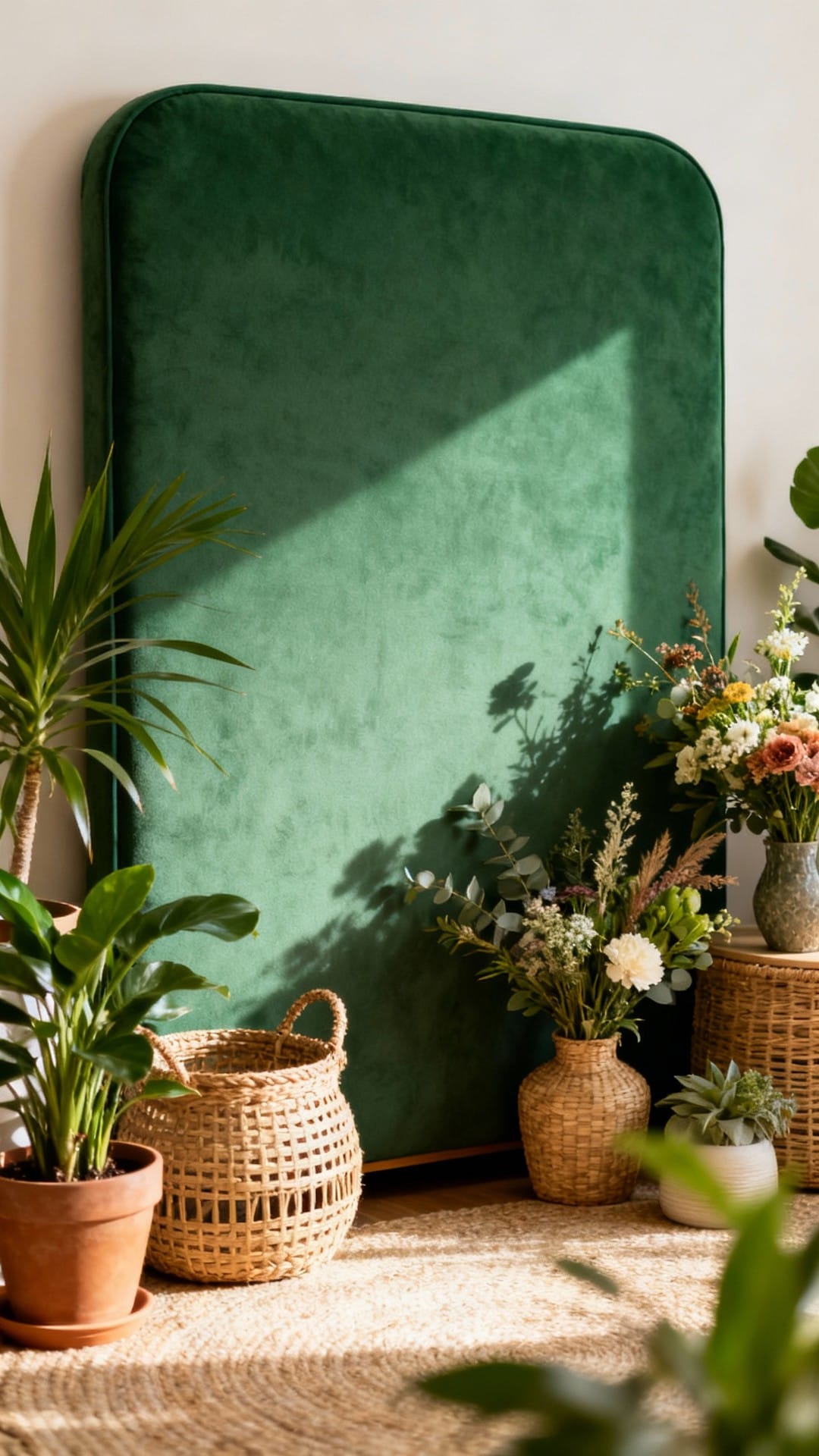
If your bedroom gets decent light, place two medium plants on either side of the headboard. It frames the bed and softens hard lines. Peace lilies or rubber plants can handle low to medium light, which is common in bedrooms.
Keep leaves from brushing the pillows to avoid dust and allergies. I also use saucers to protect nightstands because water rings are no joke when you’re tired and careless.
16. trailing Plants Over a High Cabinet
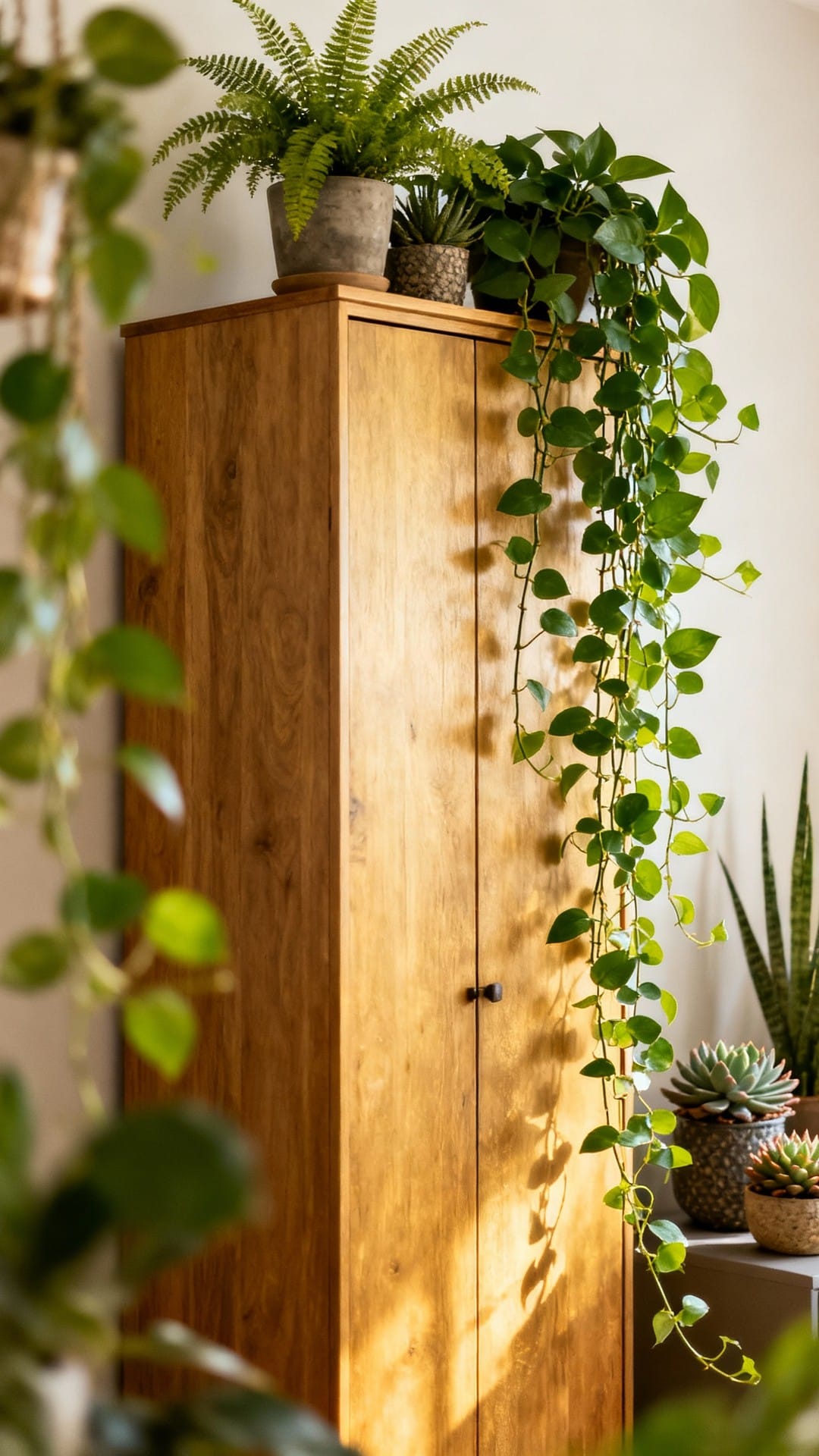
Those awkward spaces above cabinets or wardrobes can look forgotten. Set trailing plants up high and let them cascade. It turns dead space into a living accent.
Watering is the challenge. I keep a long-spout watering can and a microfiber cloth nearby. A quick wipe after watering saves you from dusty leaves and drips.
17. Monochrome Green Zone
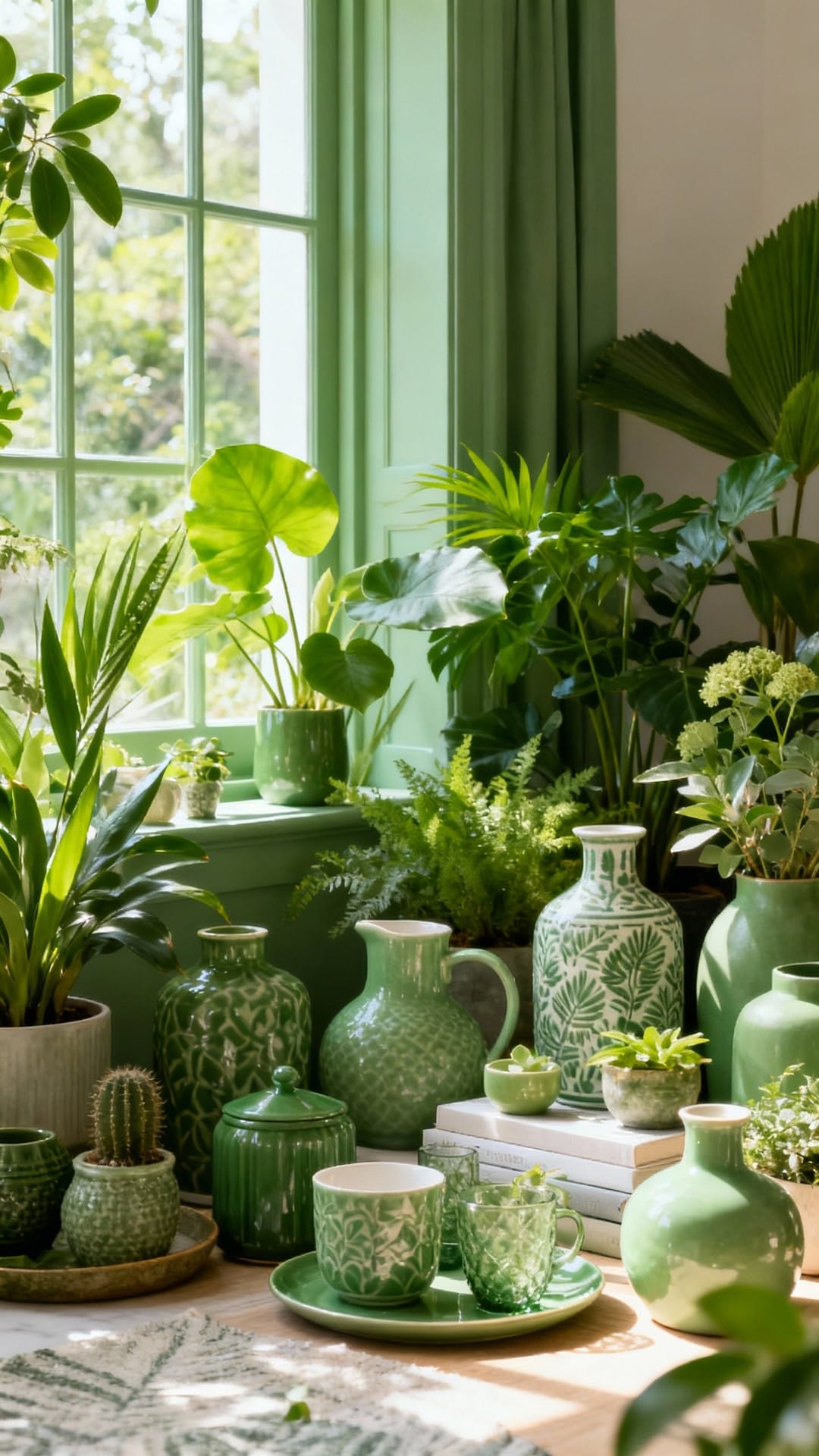
Choose one spot—a windowsill, console, or bar cart—and keep the color palette strictly green with varied textures. Think glossy, velvety, and matte leaves all together. It calms the eye and still feels rich.
One ceramic style repeated in different sizes helps unify it. This approach rescued a chaotic corner in my living room that had too many styles competing for attention.
18. Botanical Sconces or Lamp Bases
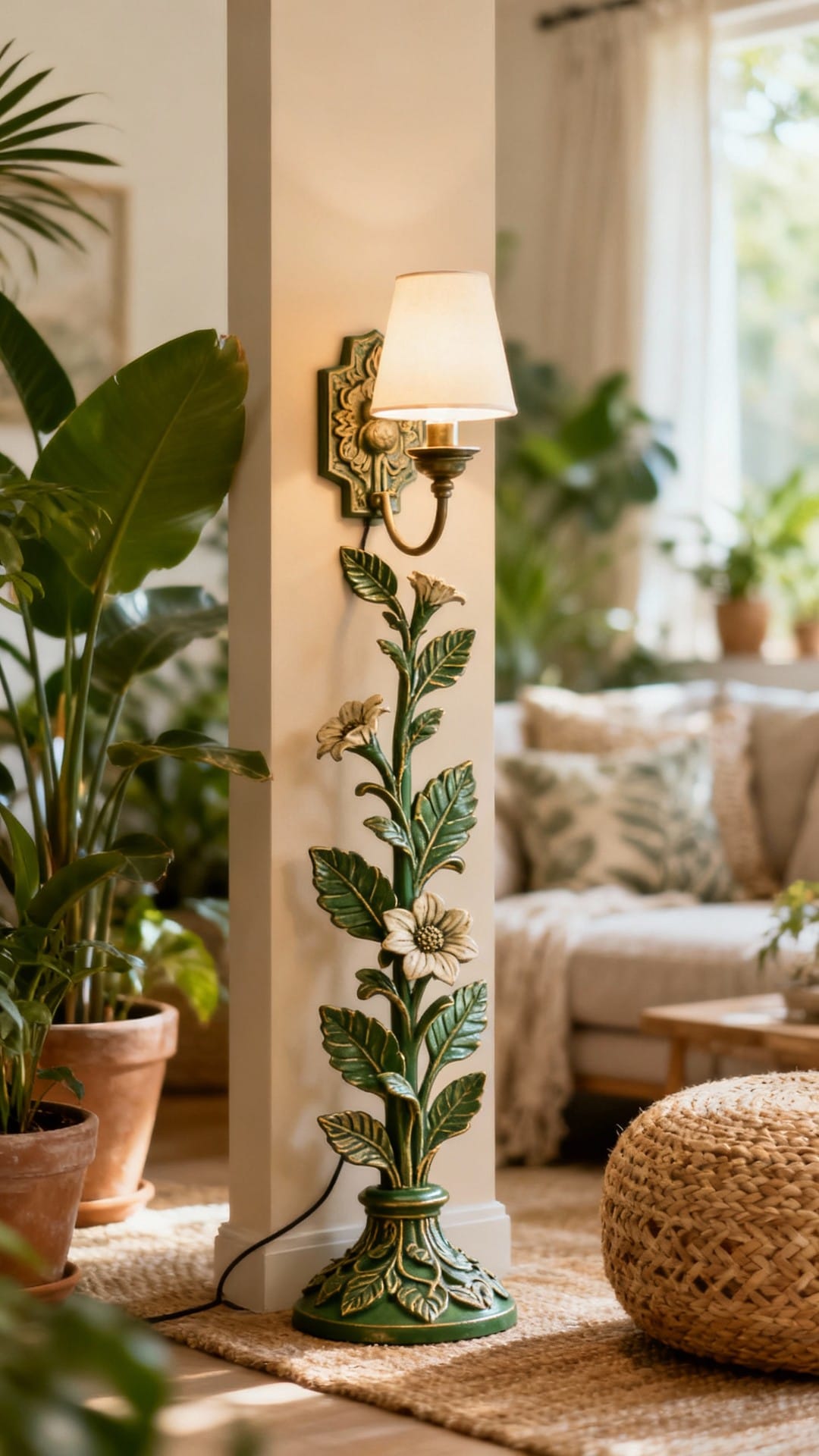
Lighting with botanical motifs can look tasteful if you skip the overly literal. Think leaf-shaped metal sconces or ceramic lamp bases with subtle relief. They add depth even when the plants are resting for the night.
Warm bulbs make green tones look healthier. I tried cool bulbs once and everything turned a strange gray. The fix was immediate: switch to warmer light and the room softened.
19. A Porch or Balcony Green Screen
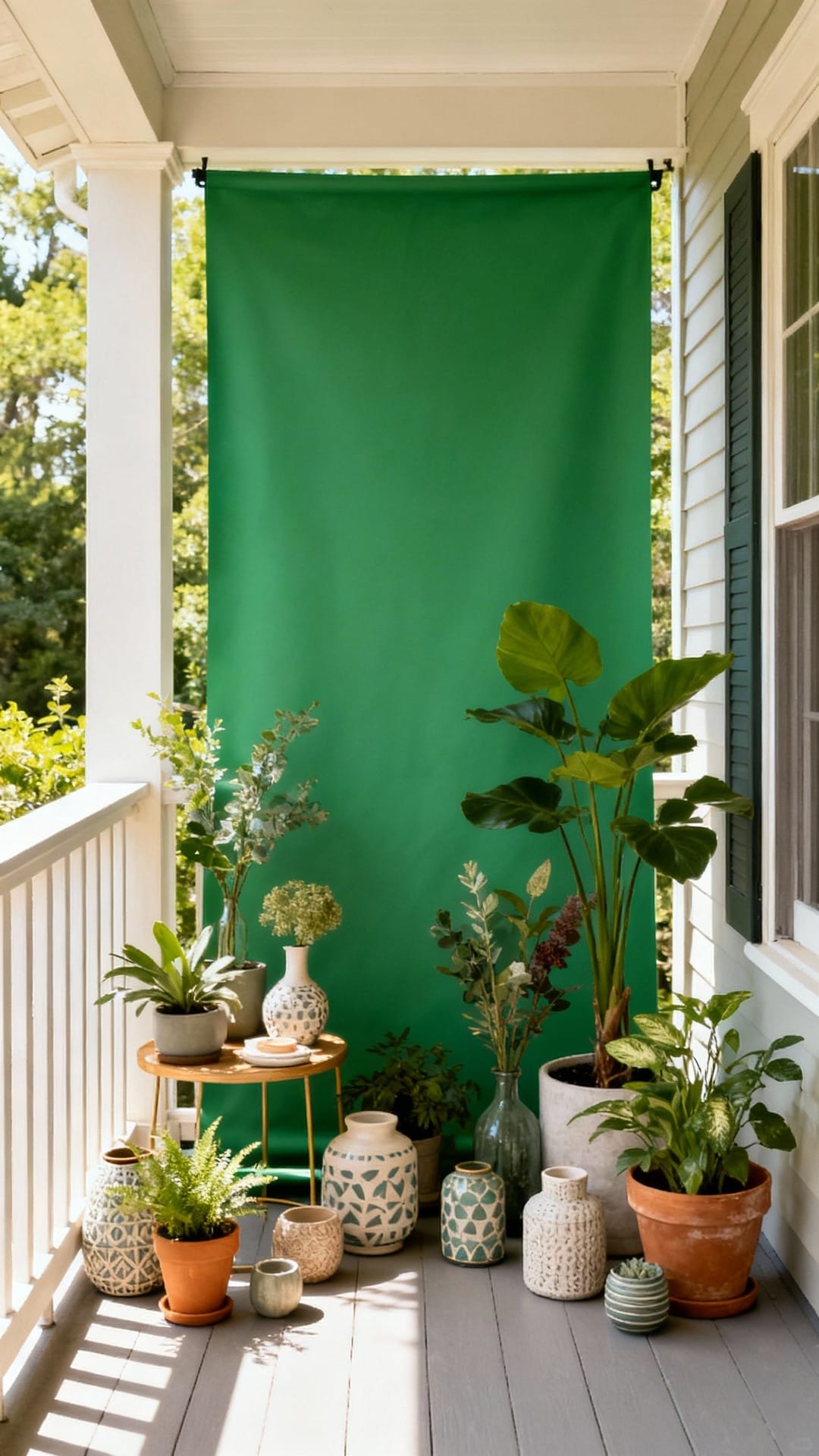
Outdoors, use planters to create privacy and soften harsh railings. Climbing jasmine, ivy, or honeysuckle can form a living screen. The scent alone makes evenings feel special.
Use lightweight fiberstone planters if weight is a concern. I underestimated balcony load once and had to downsize. Even smaller pots can create a lush effect if you cluster them tightly.
20. Botanical Table Runner With Live Bud Vases
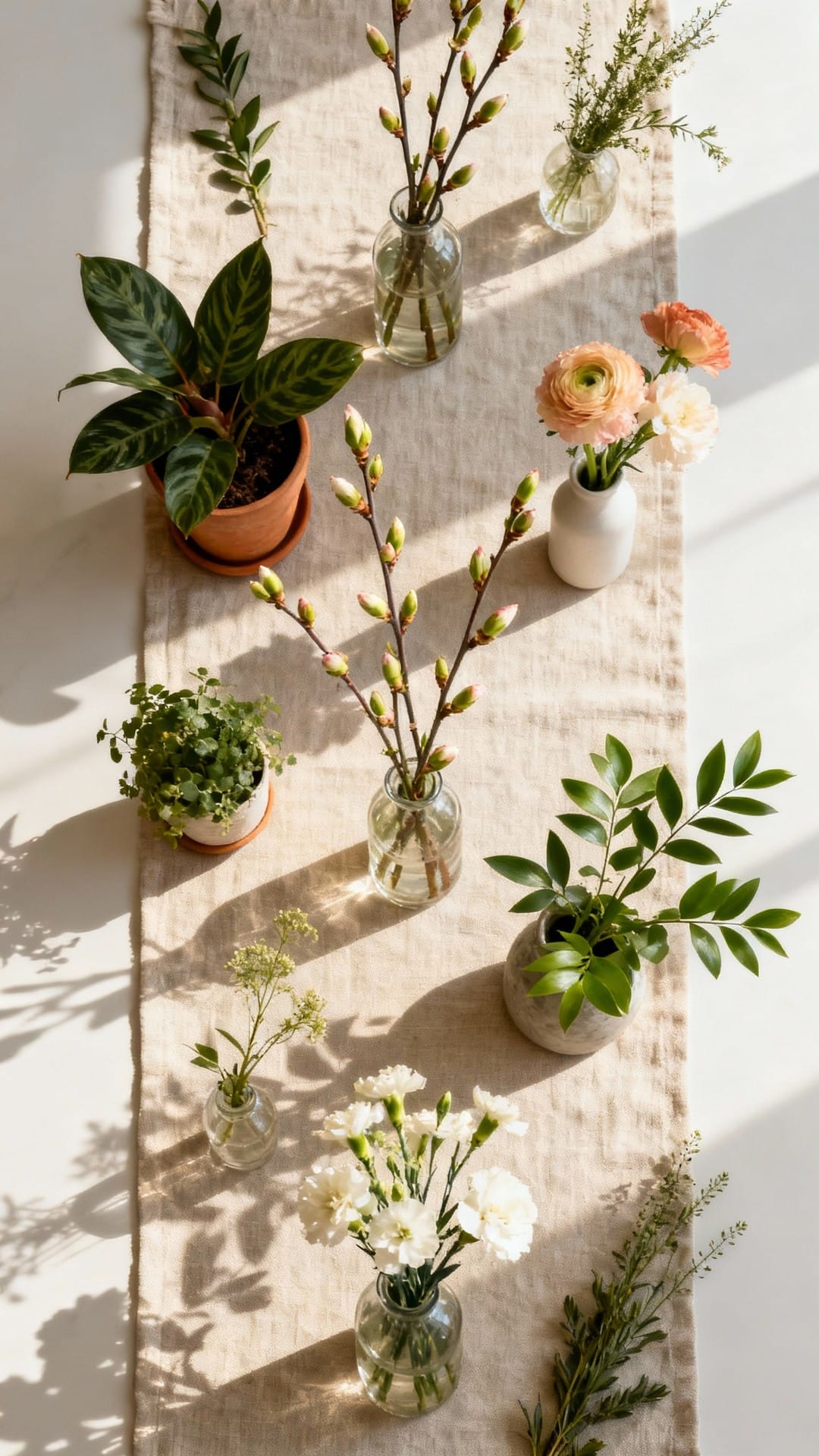
For dining tables, skip large centerpieces that block conversation. Use a simple neutral runner and line up small bud vases with a few stems each—eucalyptus, monstera cuts, or seasonal flowers. It reads fresh without dominating.
Rotate stems weekly to keep it from feeling stale. I’ve found it’s an easy way to track the seasons at home, even if you’re mostly indoors.
21. The Meditative Shelf: One Plant, One Object
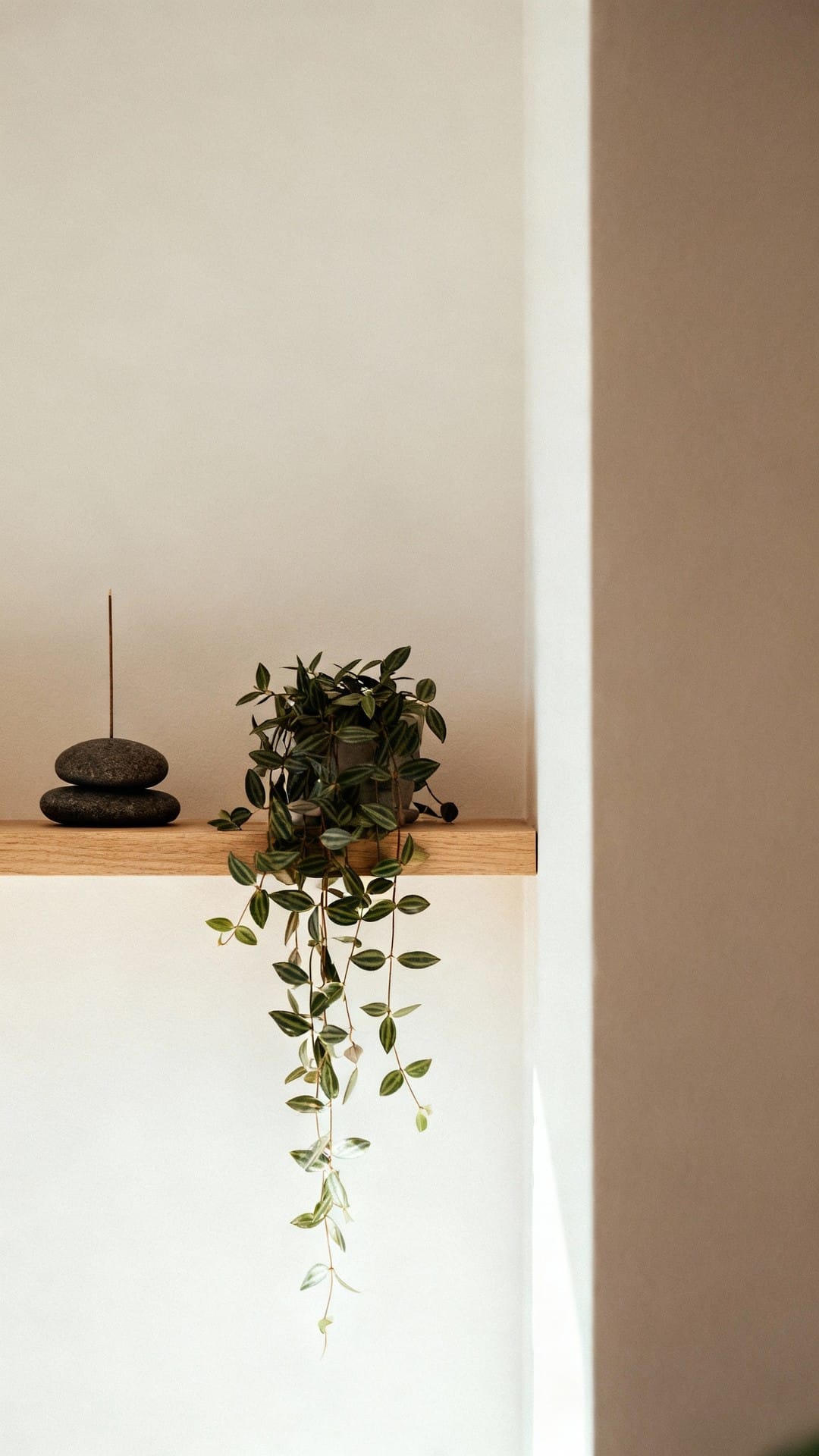
Create a small shelf with just one plant and one meaningful object—a stone, a piece of wood, or a handmade bowl. It acts like a pause button in the room. Simple and calm.
When you reduce visual noise, the room feels larger. I resisted minimal plant moments for years, but now this quiet shelf is my favorite spot to land with a cup of tea.
22. Botanical Room Scent, Subtle and Natural
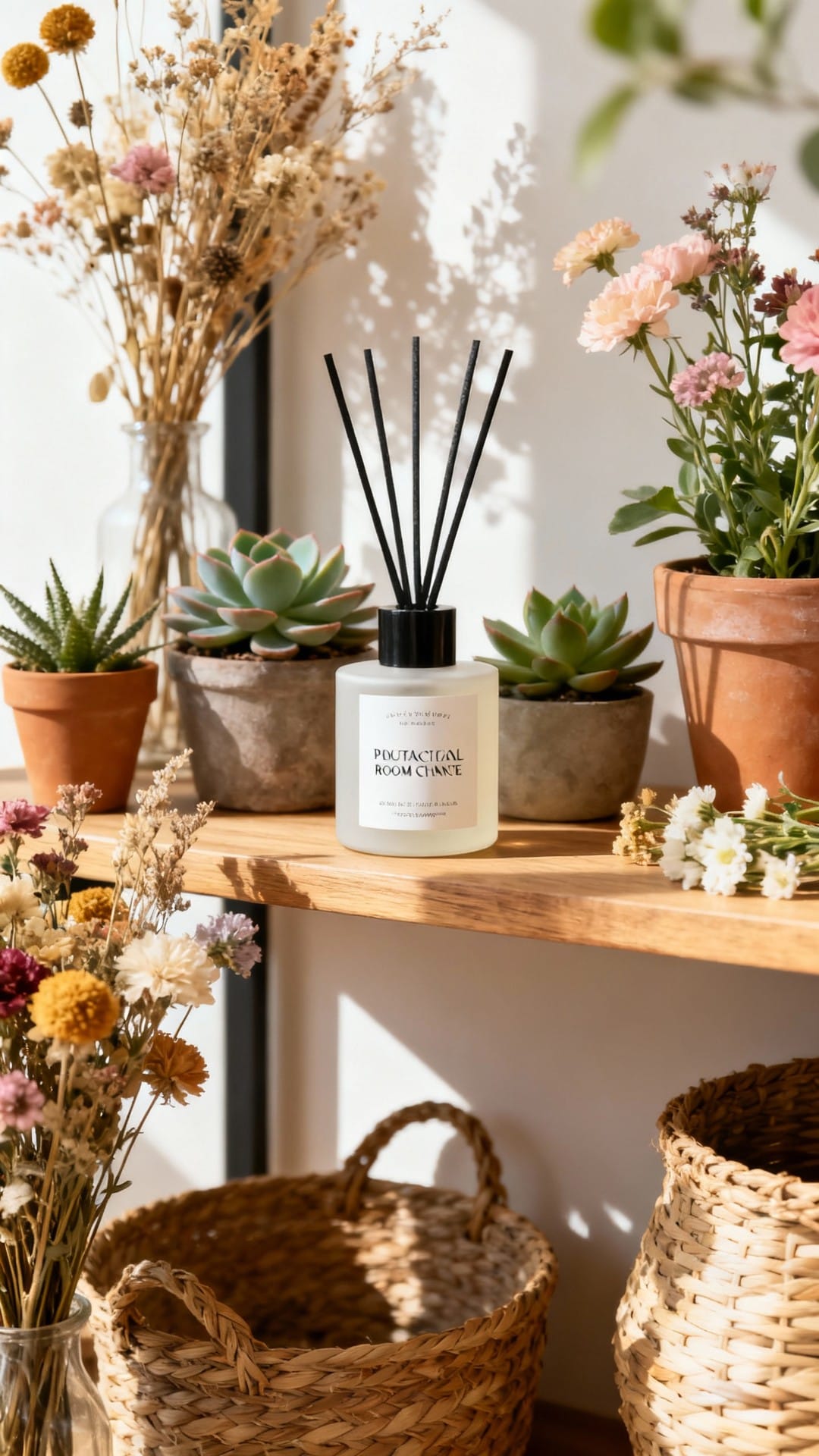
Not all greenery has to be visual. A diffuser with essential oils like vetiver, cedarwood, or basil adds a grounded scent that ties the space together. It complements the plants you have without competing.
Go light. Heavy fragrance can fight dinner or distract from conversation. I keep it barely there—enough to notice, not enough to announce itself.
23. Ceiling-Hung Planters in Odd Spaces
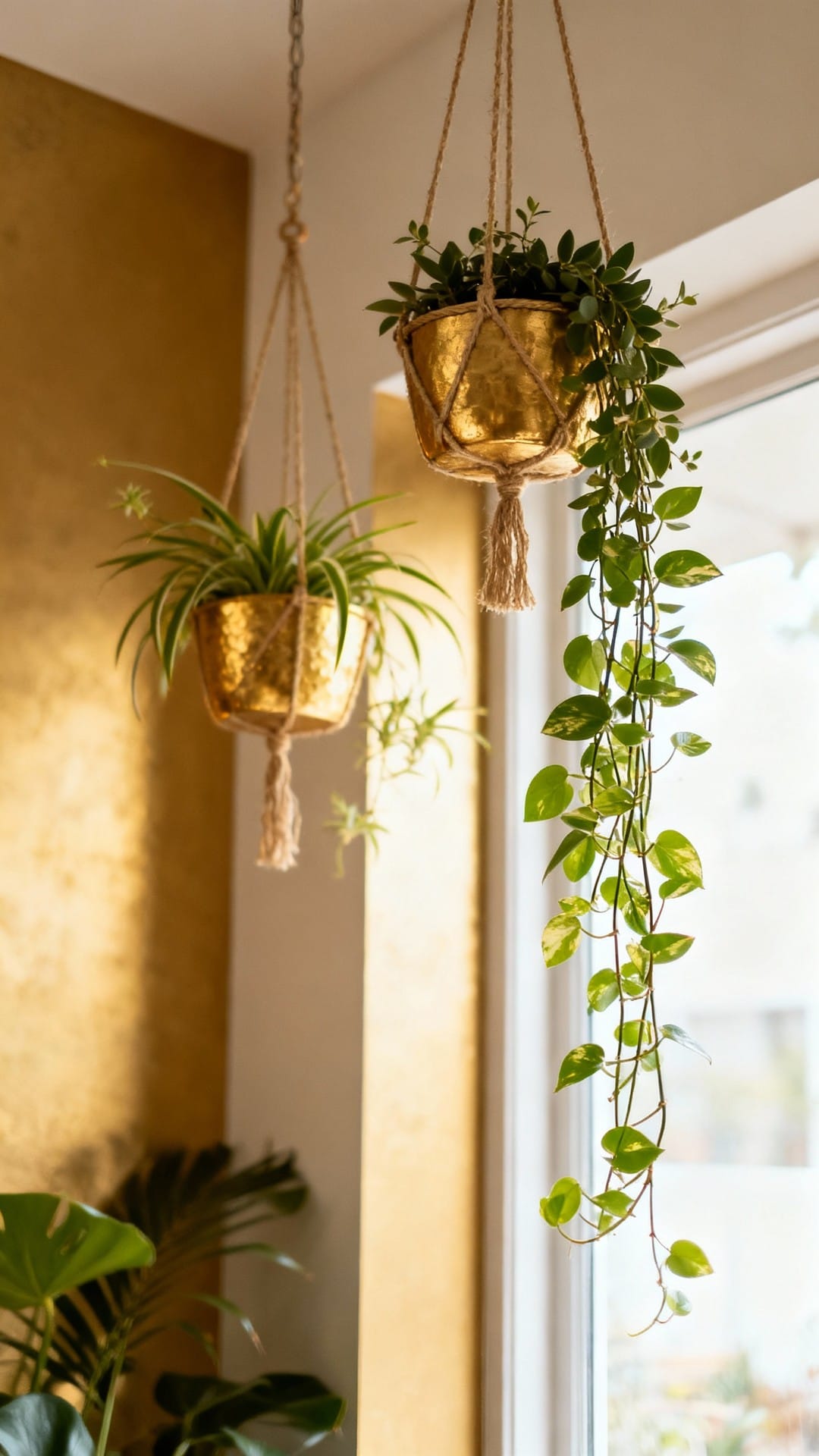
Some corners are too narrow for stands or tables. Hang small planters at staggered heights. The vertical movement draws the eye up and makes the room feel taller.
Use sturdy anchors and braided cord that matches your trim or hardware. I once used thin twine and it frayed in months. Not worth the anxiety. Strong hardware keeps your peace.
24. A Botanical Color Story
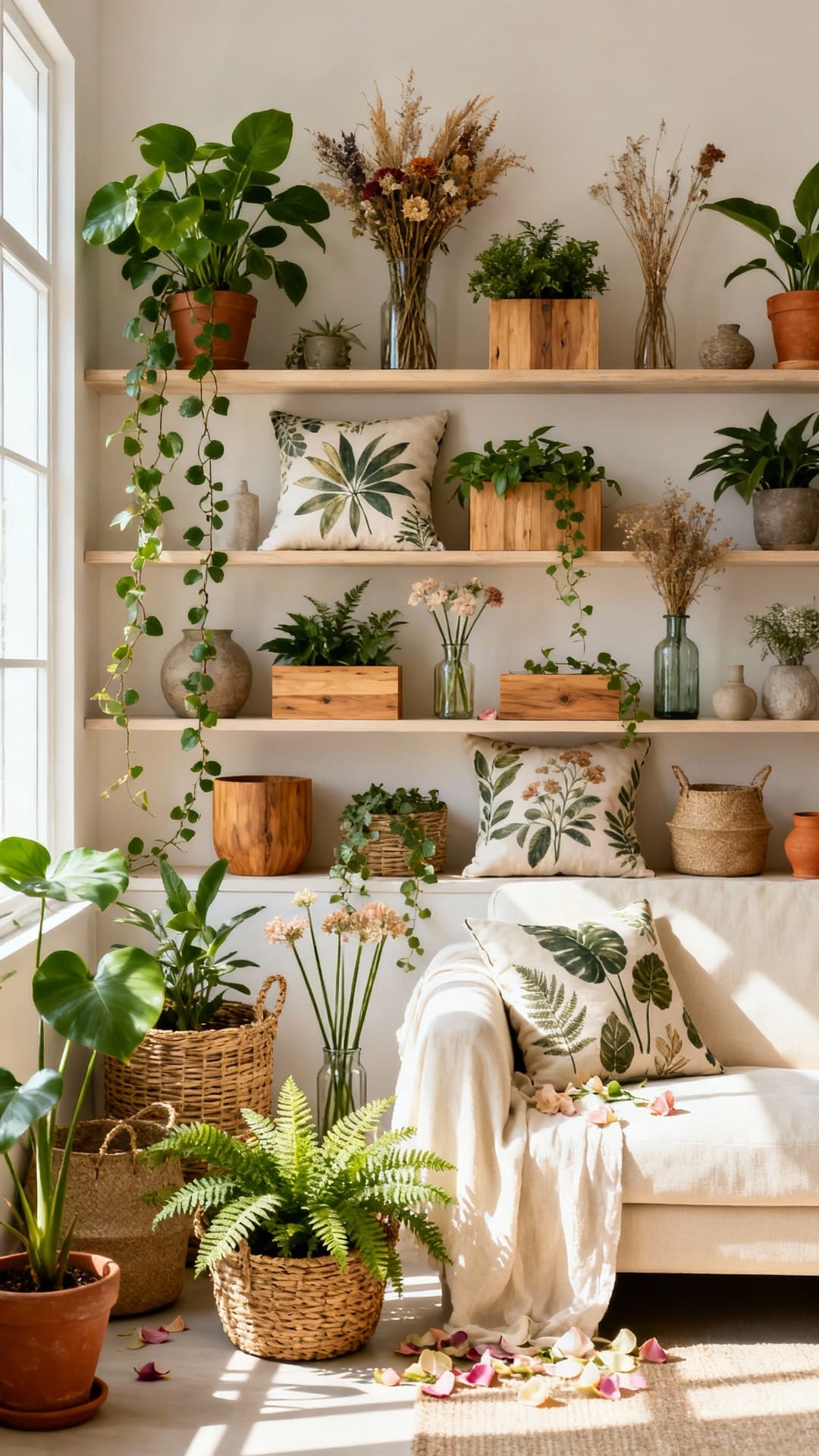
Choose two or three greens and repeat them across the room—in plants, textiles, and art. Maybe deep forest, a mid-tone leaf green, and a pale sage. The room feels intentional, not accidental.
Test paint samples near your plants because greens shift in different light. I learned this the hard way with a paint that looked mint in the store and hospital-scrub green at home. Samples save time and sanity.
25. Seasonal Swaps, Not Constant Change
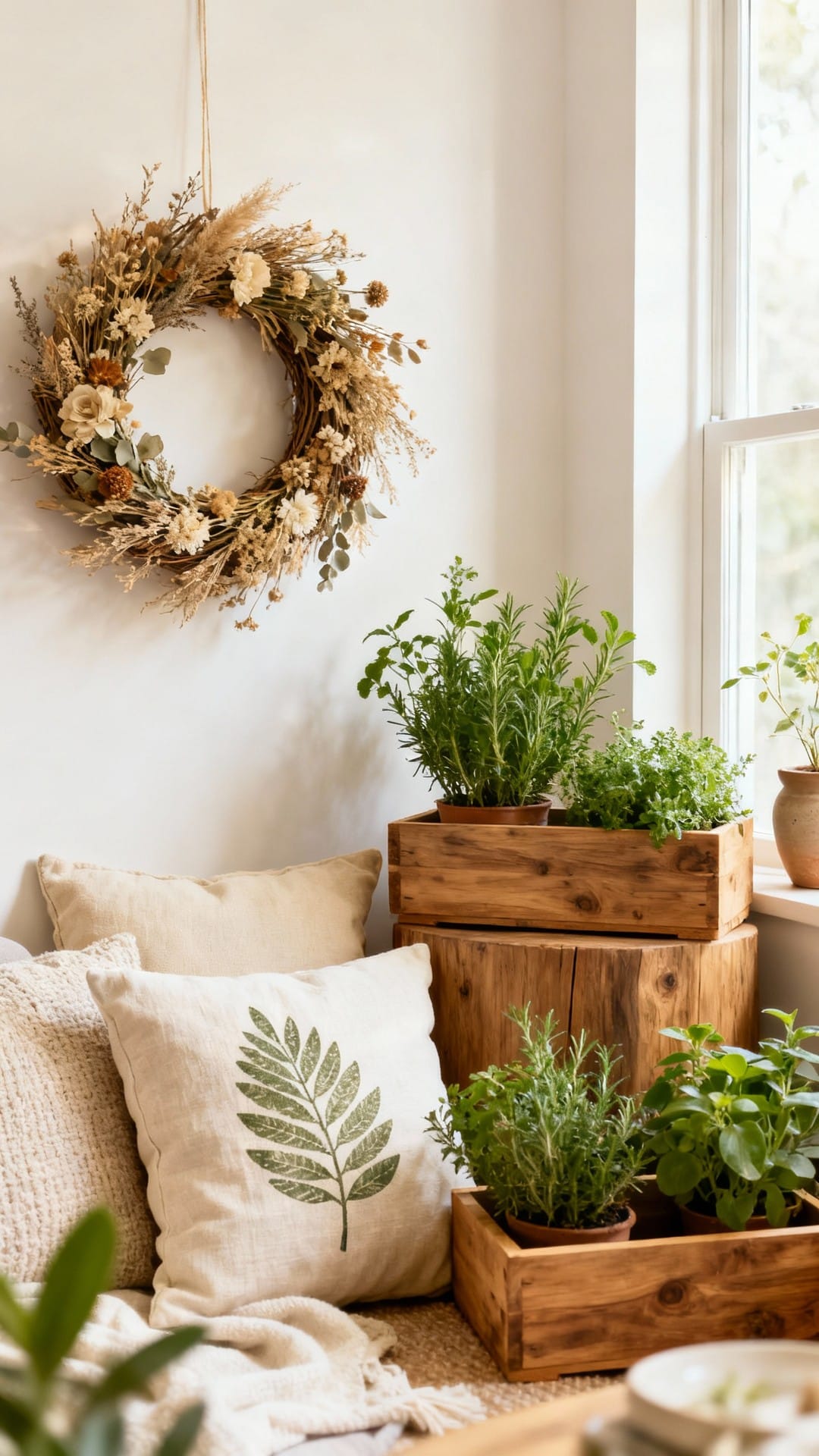
Plants respond to seasons, and your decor can, too. In winter, lean into evergreens, moss, and sculptural branches. In spring and summer, bring in lighter leaves and fresh cuttings.
So you’re not always rearranging, keep a small storage bin for off-season vases and runners. I always thought I needed constant novelty, but gentle seasonal shifts feel better and cost less.
Bringing plants into a home isn’t about filling every surface. It’s about choosing a few spots where life, texture, and light can do their quiet work. Start small, stay curious, and let your home grow with you.