
📌 Love these ideas? Follow us on Pinterest for daily home decor inspiration! Follow @SeasonalHomeMagic →
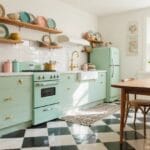
70S Inspired Kitchen styles are becoming popular again, and many people are genuinely curious about how to bring retro warmth into a modern home without making it feel outdated. The 70s Kitchen Aesthetic has this soft, familiar charm that blends surprisingly well with today’s clean lines and lighter palettes. There’s also something fun about that Groovy 70s Kitchen energy—it adds a playful shift that makes even an ordinary space feel a bit more alive. Sometimes all it takes is one change: a new lamp, a bold textile, or a single vintage-inspired detail. I often see people wonder whether Terrazzo Countertops belong in this look, and the truth is that they do; their natural pattern helps balance the warmer, more nostalgic elements. What makes the 70s vibe so appealing today is that it isn’t loud or overwhelming anymore—just cozy, warm, and full of character. In this article, you’ll find simple, practical ideas to help you choose the version of this style that feels right for your space.
Now let’s take a look at these 10 ideas.
1. Warm Earth Tones, But Make It Chic
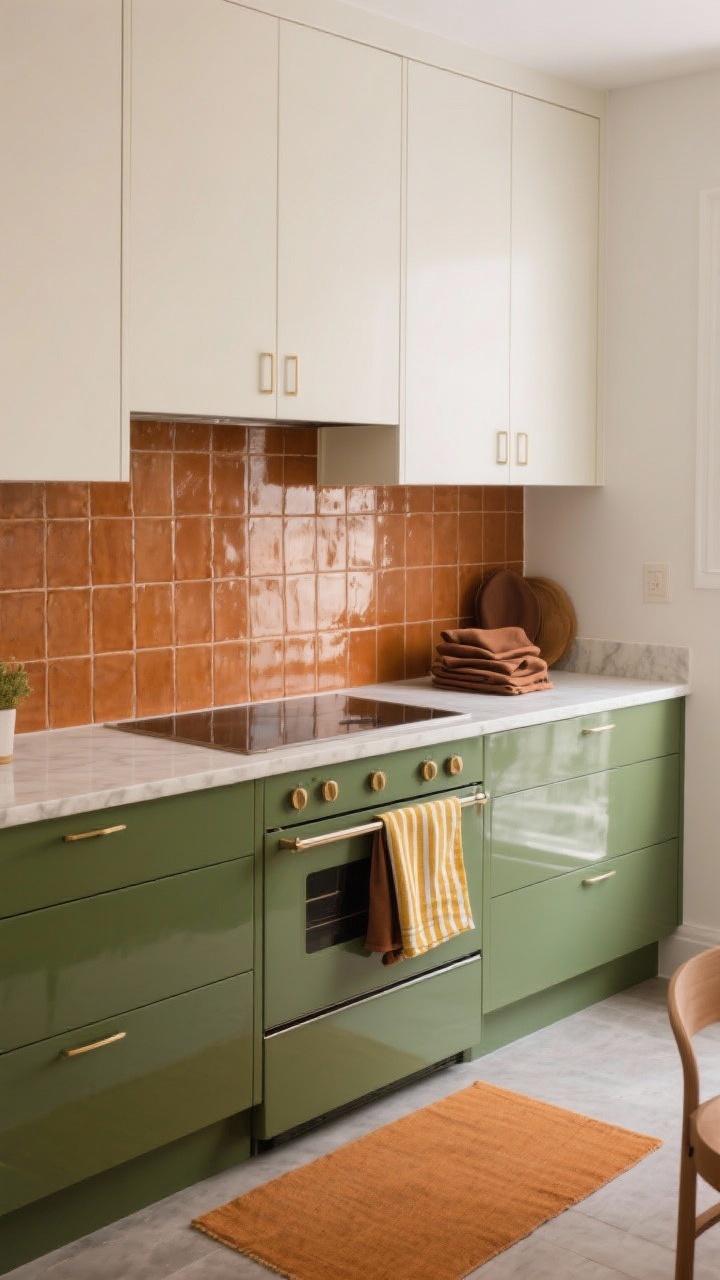
The 70s loved a cozy palette: burnt orange, avocado green, mustard, chocolate brown. Don’t panic—done right, these colors feel modern and luxe. Use them as accents against creamy white or soft greige, so your kitchen reads “intentional vintage,” not “basement rec room.”
How To Use It
- Lower cabinets in olive or rust with white uppers. Instant balance.
- Tile backsplash in a warm caramel or terracotta glaze for that subtle shine.
- Textiles: Bring in mustard-striped tea towels, cocoa napkins, or an ochre runner.
Pro tip: If you’re commitment-shy, try paintable items first—stools, art frames, a standalone pantry cabinet.
2. Wood Grain Everything (But Keep It Refined)
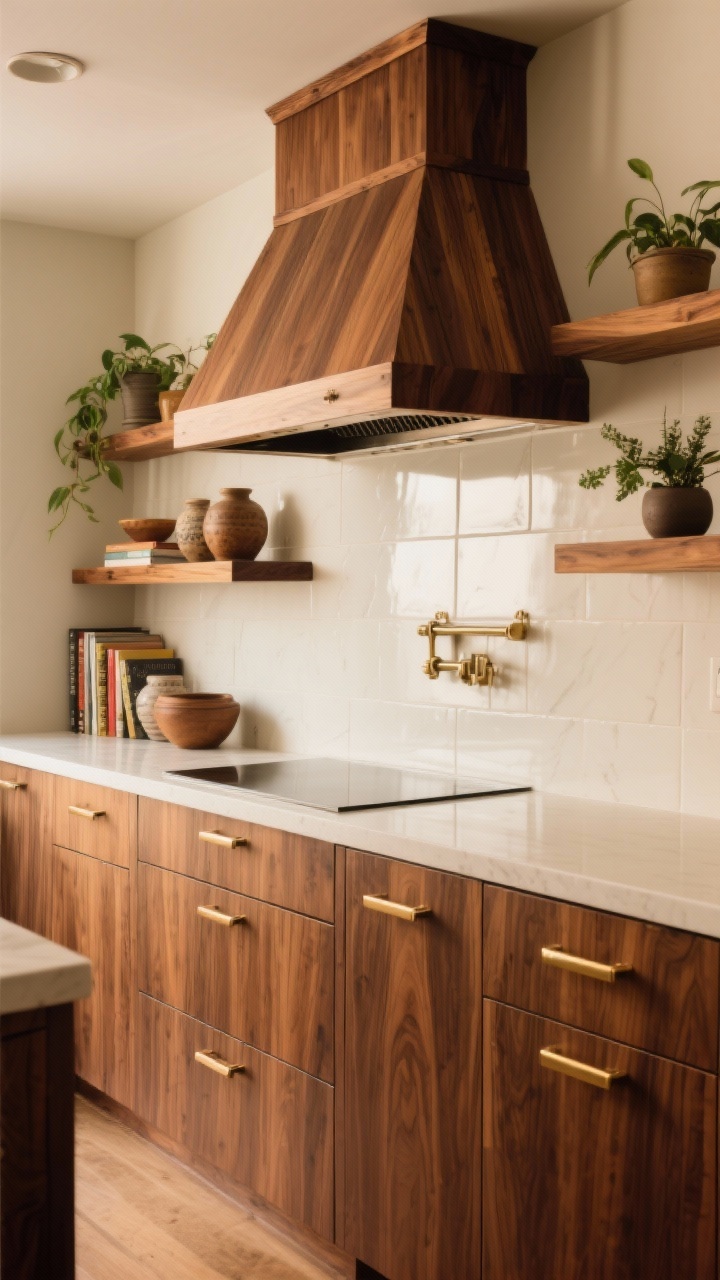
Wood is the backbone of 70s style. Walnut, teak, and honey oak add instant warmth and depth. The key is keeping the grain visible but the lines clean, so your space feels retro-glam, not rustic lodge.
Where To Add Wood
- Flat-front cabinets in walnut veneer with slim black or brass pulls.
- Open shelving in teak for plants, pottery, and cookbooks.
- Wood-wrapped range hood—small detail, huge payoff.
Balance the wood with light countertops or a glossy backsplash so the space doesn’t get visually heavy.
3. Curves, Arches, And Groovy Lines
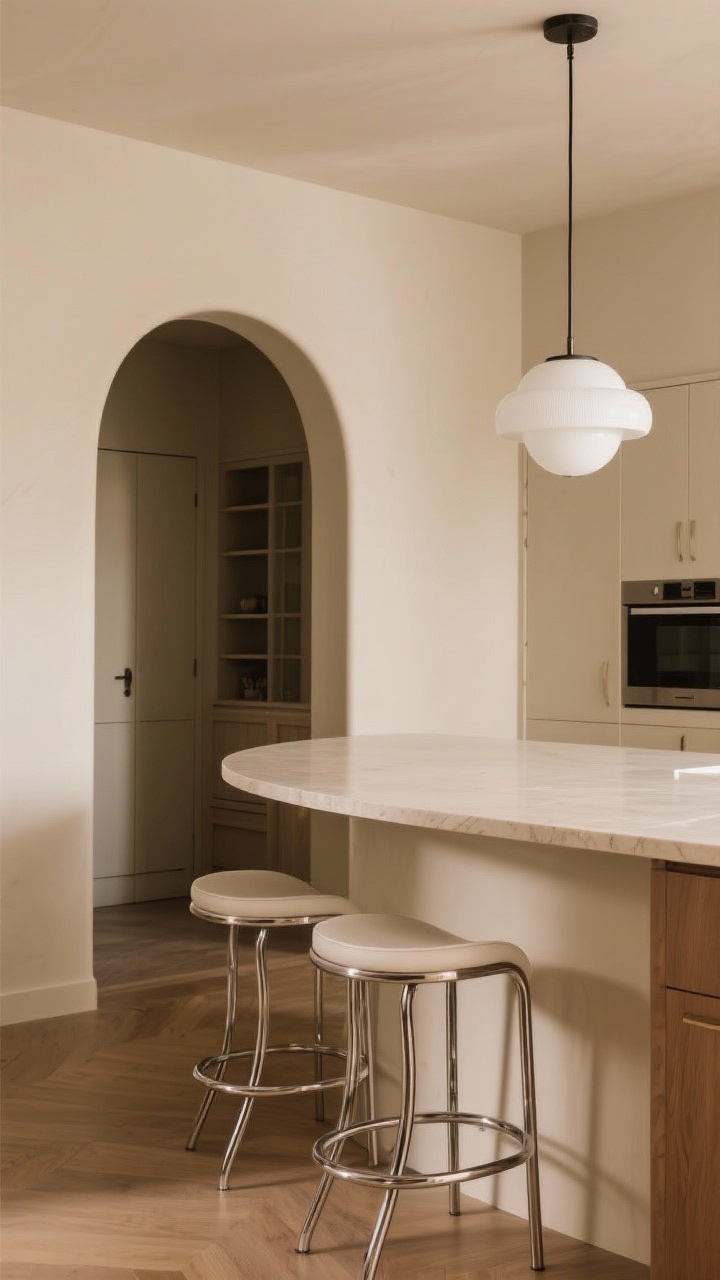
The 70s were allergic to sharp corners. Curved shapes—arches, rounded edges, tubular profiles—instantly soften a kitchen and make it feel more inviting. It’s form-meets-fun, and your countertops will thank you.
A few years ago I tried adding rounded edges to a small kitchen island, and it instantly made the space feel softer. It’s surprising how much calmer a room becomes when sharp corners disappear.
Easy Ways To Add Curves
- Rounded island corners or a bullnose countertop edge.
- Arched doorway or pass-through for architectural drama.
- Curvy bar stools with tubular chrome or bentwood frames.
Even swapping a rectangular pendant for a globe or dome shape can nudge the whole room into retro-cool territory.
4. Patterned Tile That Plays
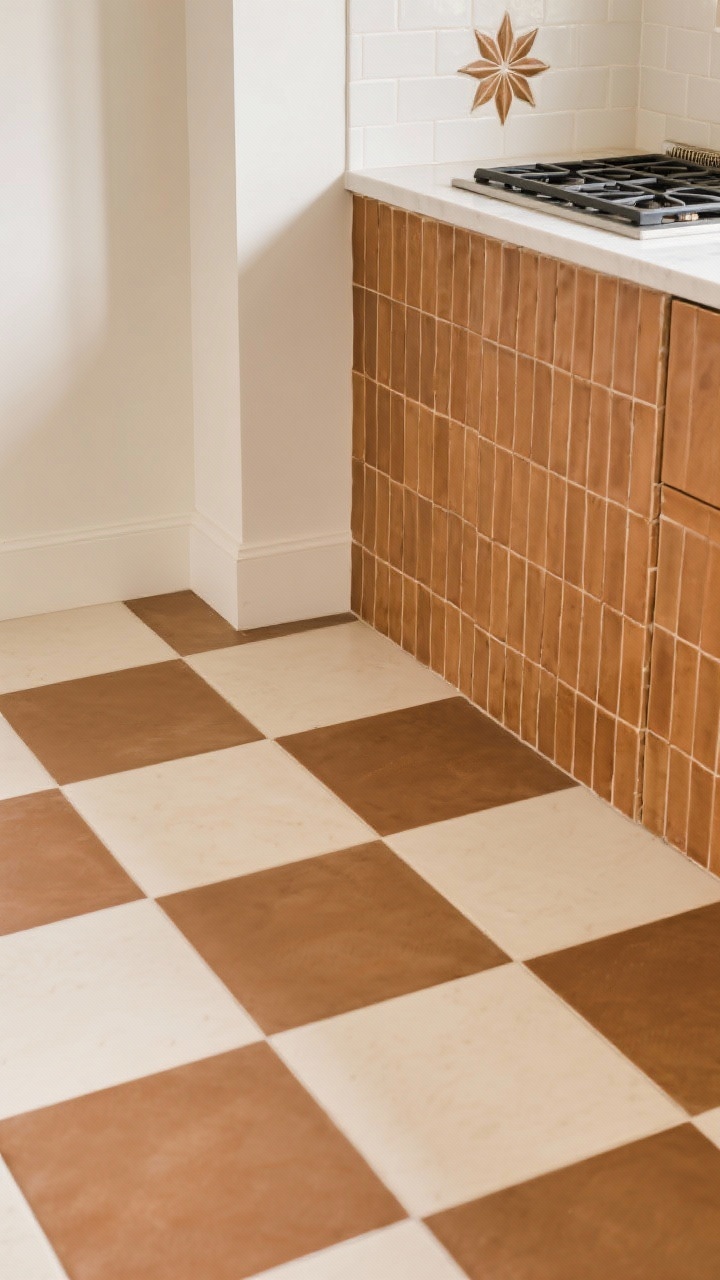
From geometric mosaics to checkerboard floors, 70s pattern is a total vibe. The trick? Keep it within a tight color story so the patterns play nice with your cabinets and counters.
Try These Patterns
- Checkerboard floors in cream and cocoa for a softer spin on black-and-white.
- Vertical stack bond tiles in warm glaze for a subtle linear look.
- Flower-power or starburst motifs as a focal backsplash behind the range.
FYI: Matte floor tiles hide dirt better than glossy. Your future self will be grateful.
5. Retro Appliances, Smart Tech
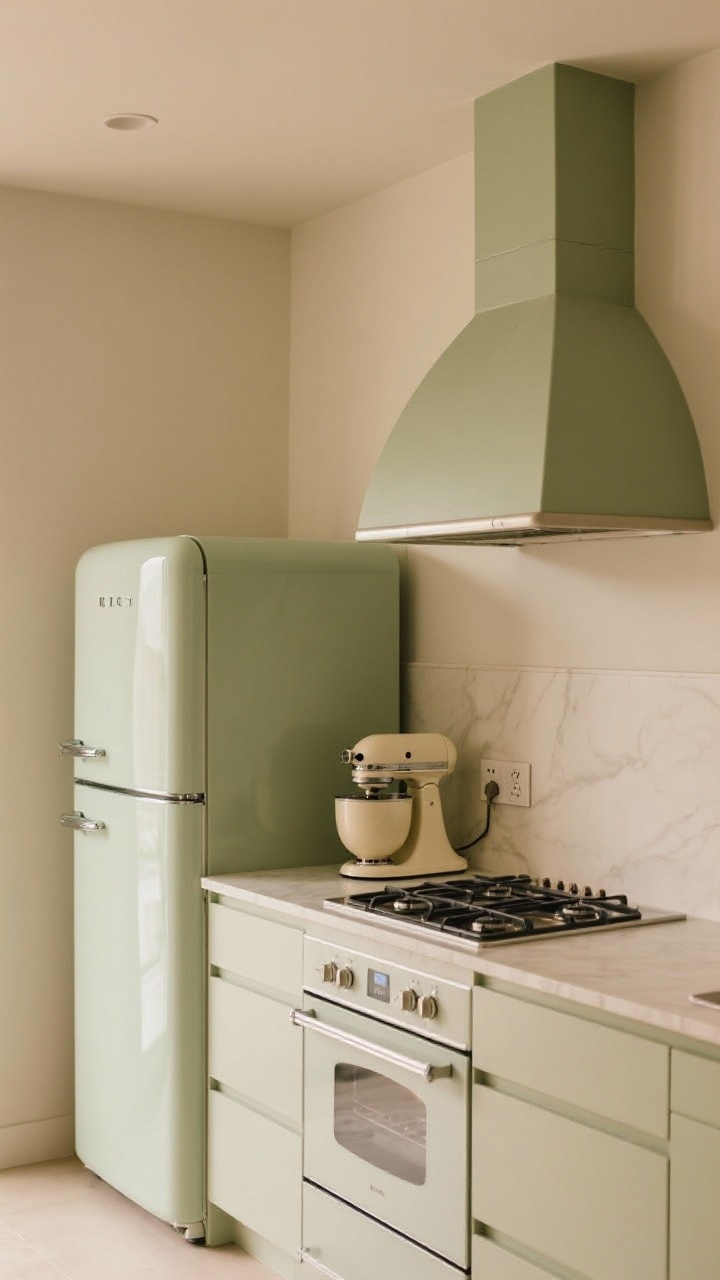
Yes, you can have vintage-style appliances that don’t cook like it’s 1974. Retro silhouettes with modern innards give you the best of both worlds—cute knobs, smooth performance.
What To Look For
- Rounded fridges in cream, sage, or soft orange—instant statement.
- Range hoods with a sculptural arc or color-matched powder coat.
- Small appliances (toasters, mixers) in retro hues if you’re on a budget.
Pair with seamless, hidden tech—under-cabinet outlets, smart bulbs, and induction tops—to keep the look tidy and the function modern.
6. Statement Lighting With Globe Energy
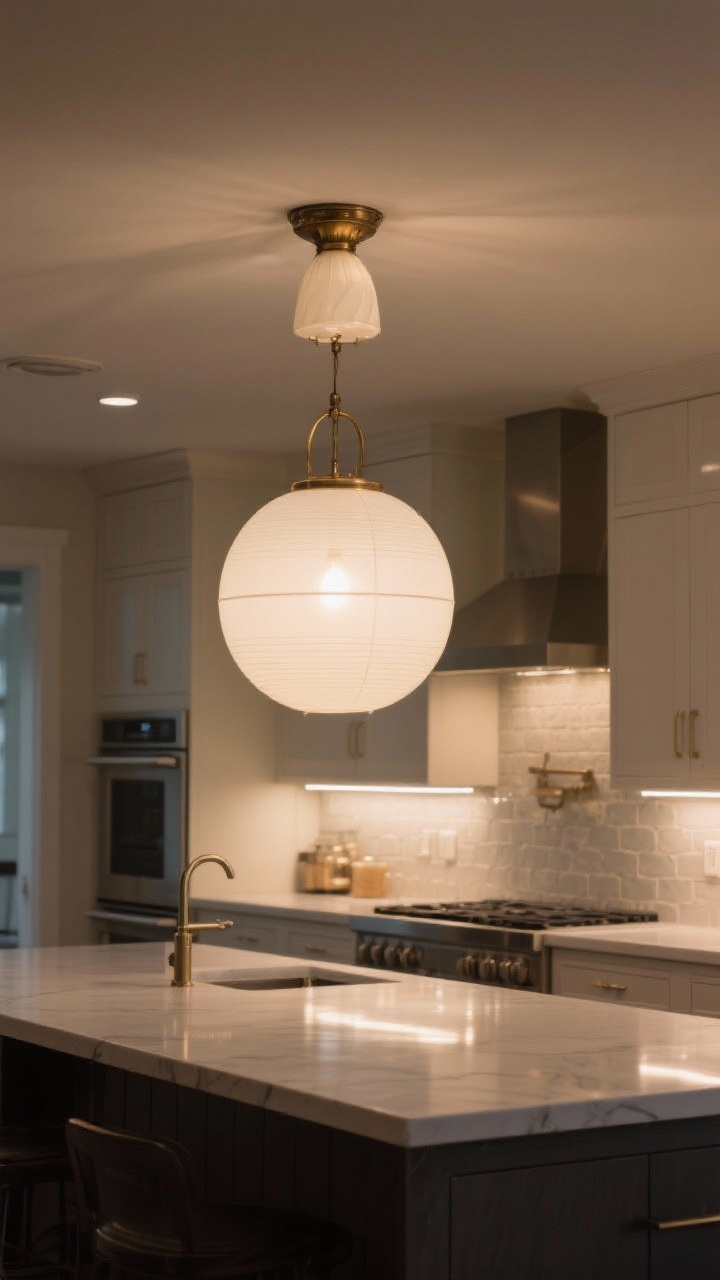
Lighting is where the 70s really flexed. Think globe pendants, smoked glass, and brass highlights. It’s glamorous without being fussy—and makes every countertop selfie look better.
I’ve found that warm globe lighting works especially well on dark winter afternoons. The glow is gentle but still bright enough for cooking, and it creates a completely different mood compared to simple LED strips.
Layer Your Lighting
- Big globe pendants over the island—one oversized or two medium.
- Under-cabinet LEDs for task lighting that doesn’t kill the mood.
- Flush mounts with milk glass and aged brass for ceiling warmth.
Choose warm bulbs (2700–3000K). Cool light kills the vibe faster than overcooked pasta.
7. Terrazzo, Stone, And Shiny Moments
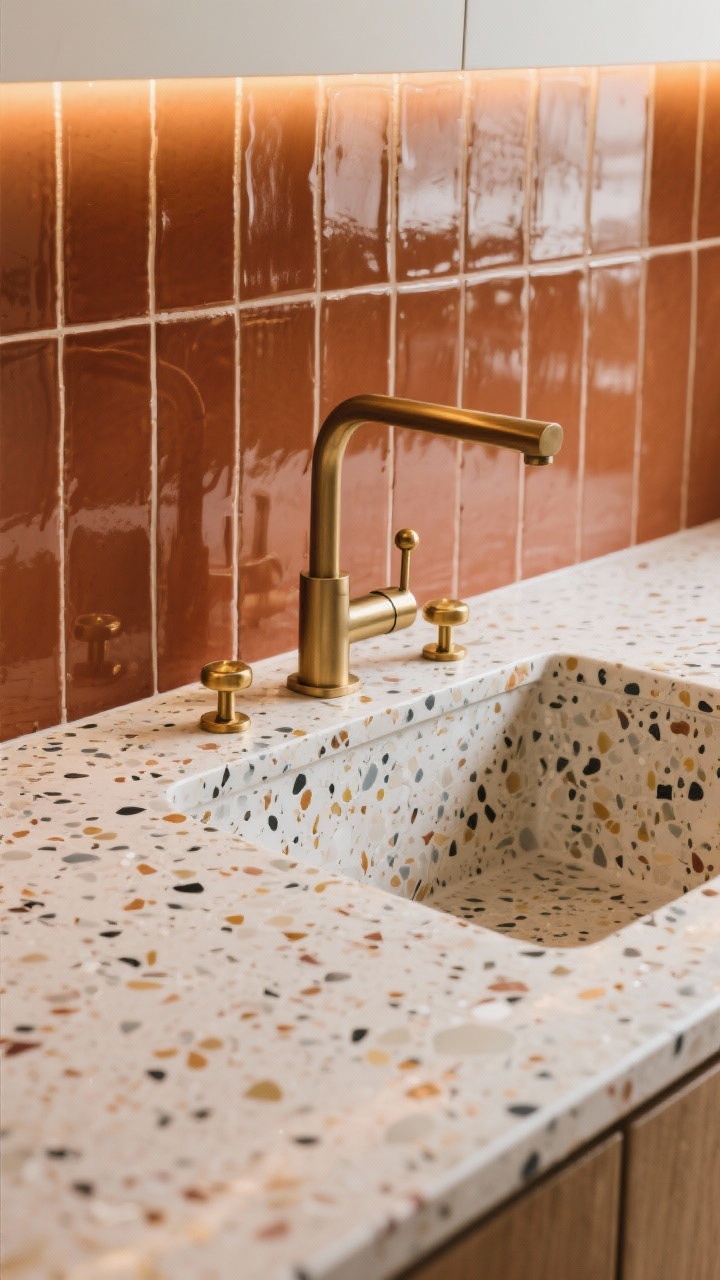
The 70s loved materials with personality—terrazzo, marble, and glossy tile. You don’t need to go full disco ball; just add a few reflective touches to bounce light and keep things lively.
Material Mix That Works
- Terrazzo counters or backsplash with warm speckles—so fun, so durable.
- Glossy ceramic tiles in caramel, rust, or forest for subtle sheen.
- Brass hardware and faucets to echo that vintage glam.
Keep your palette consistent. If your counters are busy, choose a quiet backsplash, and vice versa.
8. Plants, Rattan, And Textured Accents
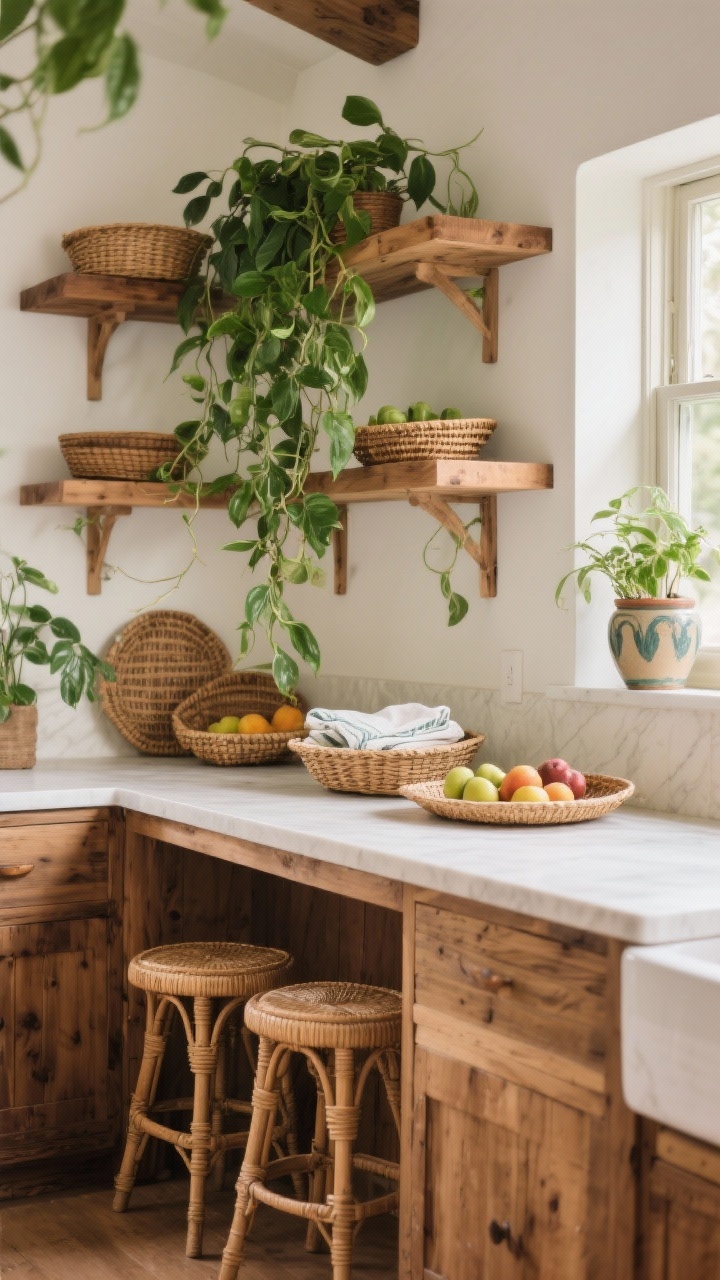
The 70s were basically the origin story of the houseplant obsession. Layering organic textures makes your kitchen feel alive and layered—no renovation required.
I’ve added rattan accents a few times over the years, and they always brought an easy, natural warmth to the kitchen. Even a single woven basket can make the shelves feel more intentional.
Bring In The Greenery
- Trailing plants like pothos on open shelves for that “groovy jungle” look.
- Rattan or cane stools to add airiness and texture.
- Woven trays and baskets for fruit, linens, or corralling utensils.
IMO, a plant on the windowsill instantly upgrades the whole space. Bonus points if it’s in a retro ceramic pot.
9. Funky Art, Pottery, And Vinyl Moments
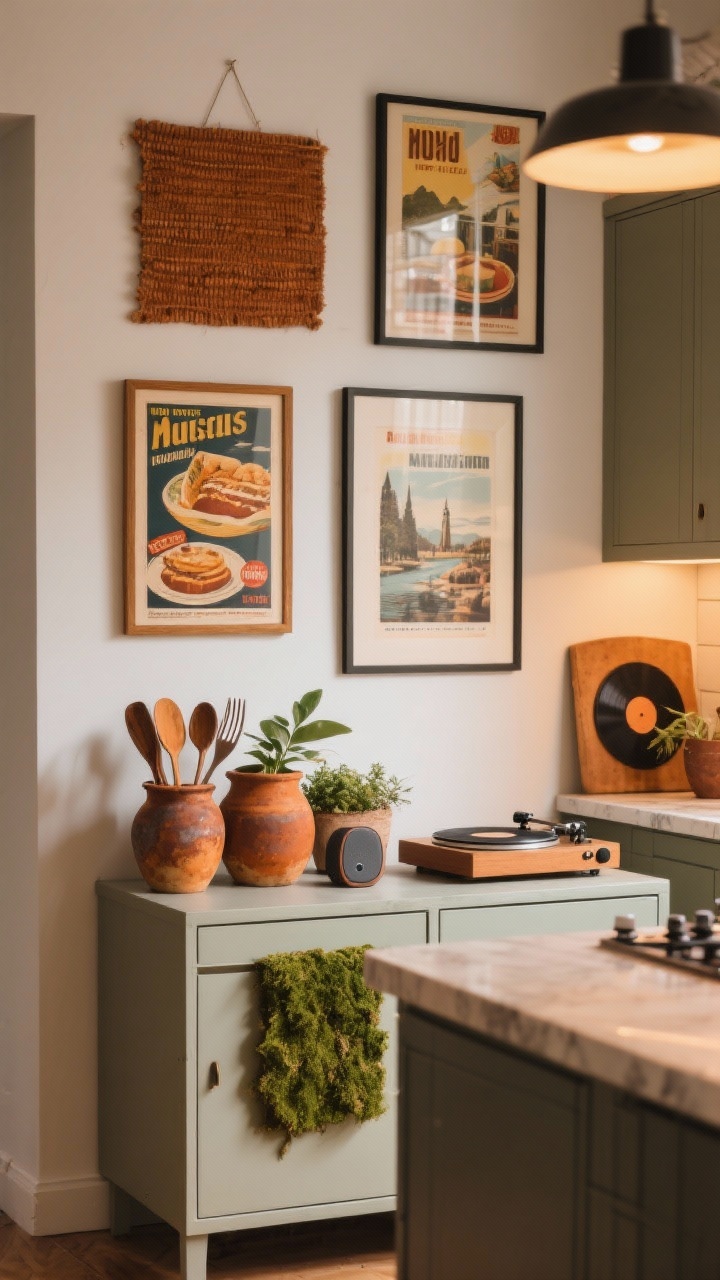
A 70s-inspired kitchen needs personality. Add graphic prints, hand-thrown ceramics, and a little music corner if you have the space. It should feel like your favorite person cooks here—even if it’s just you and your air fryer.
Style It Like A Pro
- Framed vintage posters (food ads, travel prints) with warm-toned mats.
- Chunky pottery in ochre, rust, and moss for utensil crocks or planters.
- Mini record player or Bluetooth speaker on a small sideboard for weekend tunes.
Keep the counters functional; cluster decor in zones so it feels curated, not cluttered.
10. Mix-N-Match Seating And Cozy Nooks
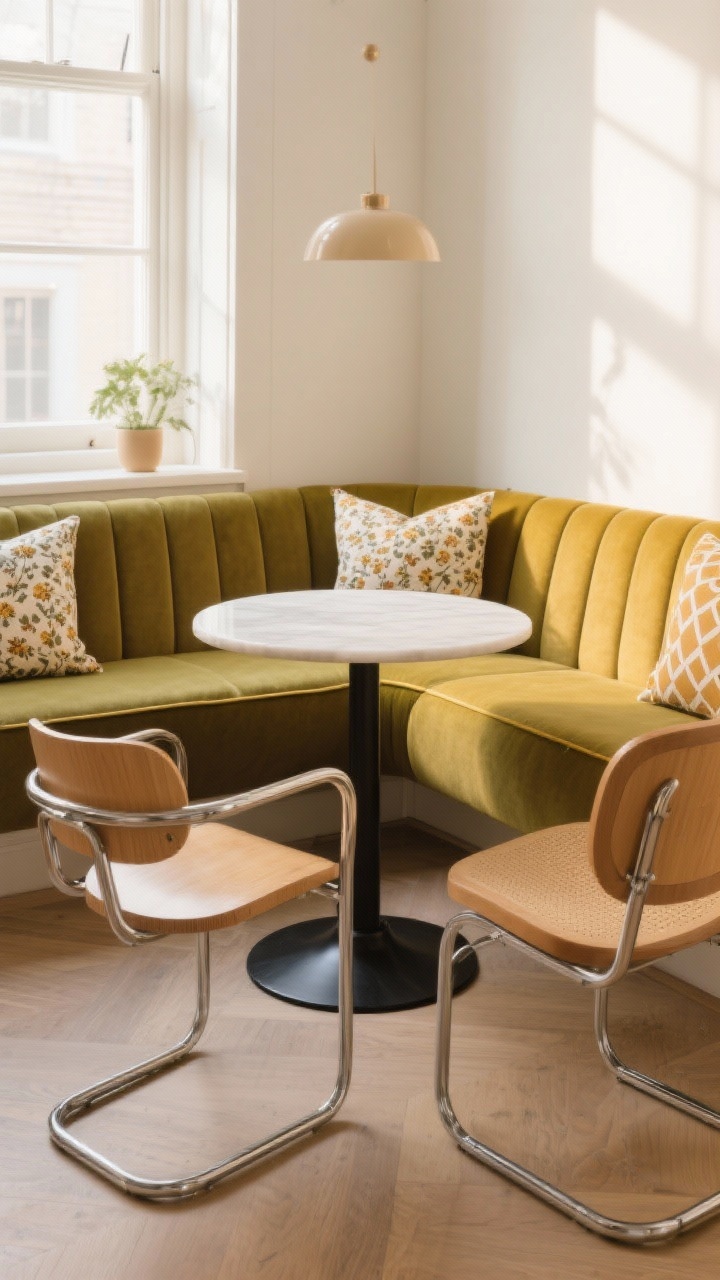
70s kitchens were social. Create a spot that invites conversation, coffee, and late-night snacking. Mix materials, add cushions, and let the shapes be a little playful.
Nail The Seating Vibe
- Bentwood or tubular chrome chairs around a round pedestal table.
- Banquette seating with mustard or olive upholstery and piping detail.
- Patterned cushions—think micro-florals or geometrics—to tie in your palette.
FYI: A round table instantly feels more 70s and makes small kitchens flow better.
Quick Styling Checklist
- Choose a warm color palette anchored by cream or white.
- Bring in wood grain and curved shapes.
- Layer patterned tile or checkerboard floors with restraint.
- Add globe lighting and brass accents.
- Finish with plants, rattan, and art for personality.
Bringing a touch of that 70s charm into your kitchen doesn’t have to be complicated, and it certainly doesn’t require a full renovation. Sometimes the smallest updates make the biggest difference, especially when warm colors, soft curves, or a textured surface shift the whole mood of the room. What I love about this style is how flexible it is—you can go bold or stay subtle, and both can feel equally inviting. If one or two ideas stood out to you, try them first and see how your space responds. A kitchen should feel personal, comfortable, and a little inspiring, and these retro-modern touches can help you get there in an easy, enjoyable way.
FAQ
1. What colors work best in a 70s inspired kitchen?
2. How can I make my kitchen look retro without renovating?
3. Are retro appliances worth adding to a modern kitchen?
4. What materials were popular in 70s kitchen design?
5. Can a small kitchen pull off a 70s inspired design?
If you enjoyed these retro kitchen ideas, you might also love taking a look at some of my other retro-inspired kitchen posts as well!