
📌 Love these ideas? Follow us on Pinterest for daily home decor inspiration! Follow @SeasonalHomeMagic →
Designing a tiny nursery? Same. You don’t need a spare wing of the house to make it gorgeous and functional. With a few clever moves, your small space can feel cozy, organized, and—dare I say—chic enough for Instagram.
Let’s dive into nine smart, stylish ideas that work hard in tight quarters and still feel soft and sweet. Bonus: most of these won’t require a full weekend or a full paycheck.
1. Choose a Crib That Works Overtime
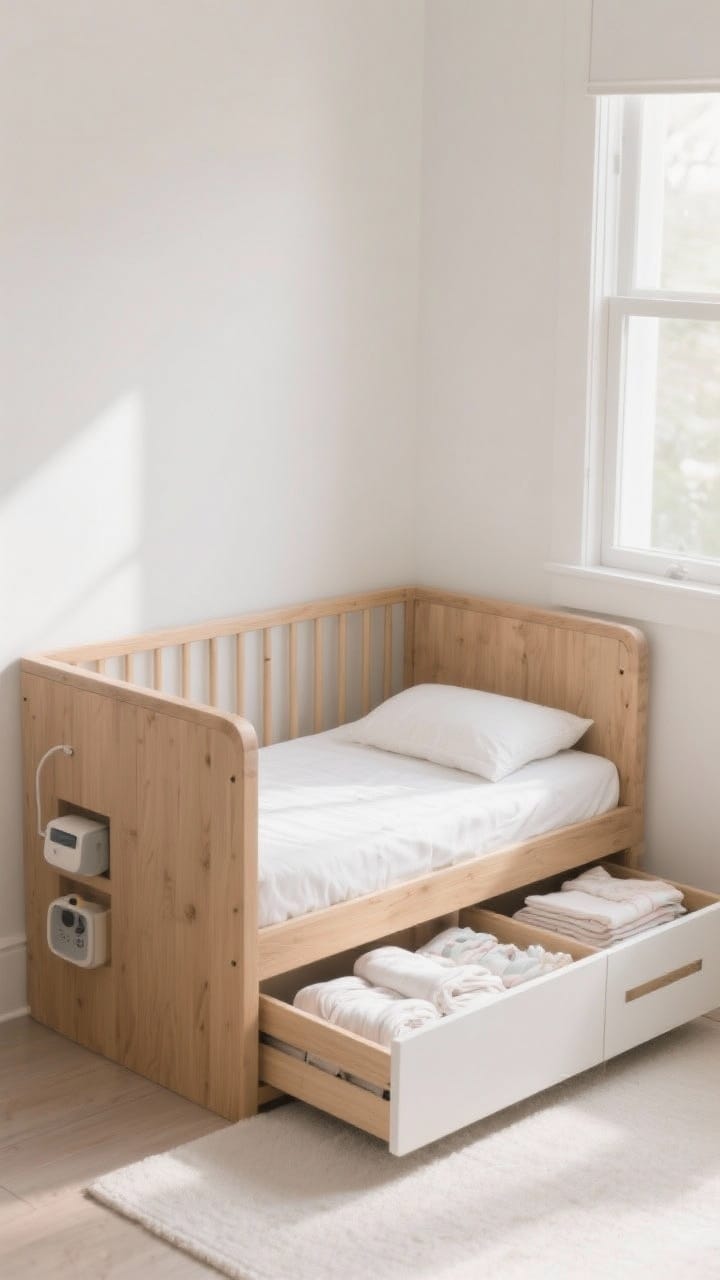
The crib is the star, so pick one that multitasks. A mini crib or a crib with built-in drawers saves precious inches and gives you a home for sheets, swaddles, and mystery baby gadgets.
A few years ago, I noticed how much easier life felt with built-in storage under the crib. Having essentials close by made late-night changes far less stressful.
Smart Crib Options
- Mini cribs: Same look, smaller footprint (usually 24–28 inches wide). Great for room-sharing or small nurseries.
- Convertible cribs: Grow from newborn to toddler bed, so you avoid buying twice.
- Storage cribs: Drawers underneath = diapers and sheets within arm’s reach.
FYI: Keep a 12–18 inch clearance around the crib if you can. You’ll thank yourself during midnight sheet changes.
2. Swap a Dresser for a Changing-Top Console
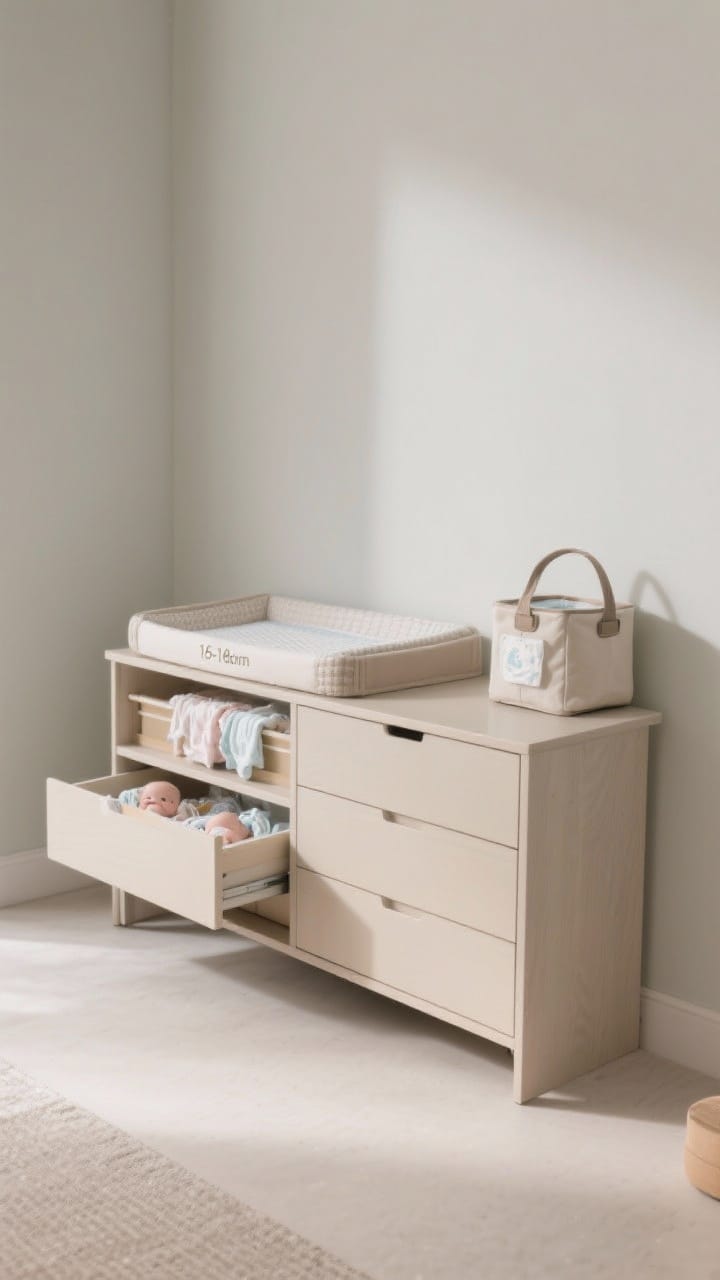
You don’t need a separate changing table. A slim dresser or console with a changing topper gives you storage and a changing station in one clean line.
What to Look For
- Shallow depth: 16–18 inches deep keeps walkways clear.
- Topper or non-slip mat: Secure that changing pad so it doesn’t slide.
- Drawer dividers: Tiny clothes need tiny compartments. Don’t fight it.
Bonus move: Add a diaper caddy with a handle. Pull it out for changes, tuck it away when company comes over and pretends your house is always this tidy.
3. Go Vertical: Shelves, Peg Rails, and Picture Ledges
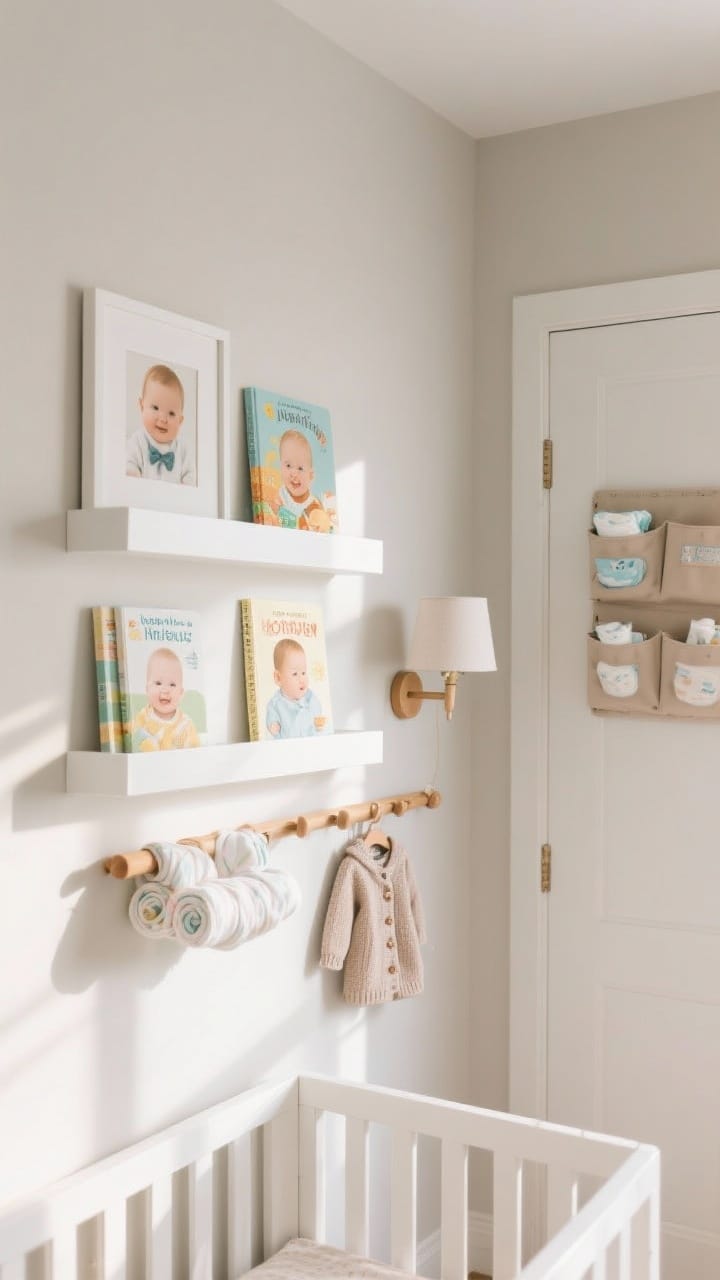
When floor space is tight, walls become your best friends. Think picture ledges for books, peg rails for swaddles, and a wall-mounted lamp instead of a floor lamp.
Vertical storage has surprised me more than once. Even a single picture ledge can completely change how organized a small nursery feels.
Vertical Storage Ideas
- Picture ledges: Display books face-forward so they double as art.
- Floating shelves: Keep them higher than the crib to avoid grabby hands.
- Over-door organizers: Sneak in extra storage for diapers, wipes, or extra onesies.
Keep heavy stuff out of reach and secure everything to studs. We love a cute shelf, but not if gravity gets involved.
4. Pick a Light, Layered Color Palette
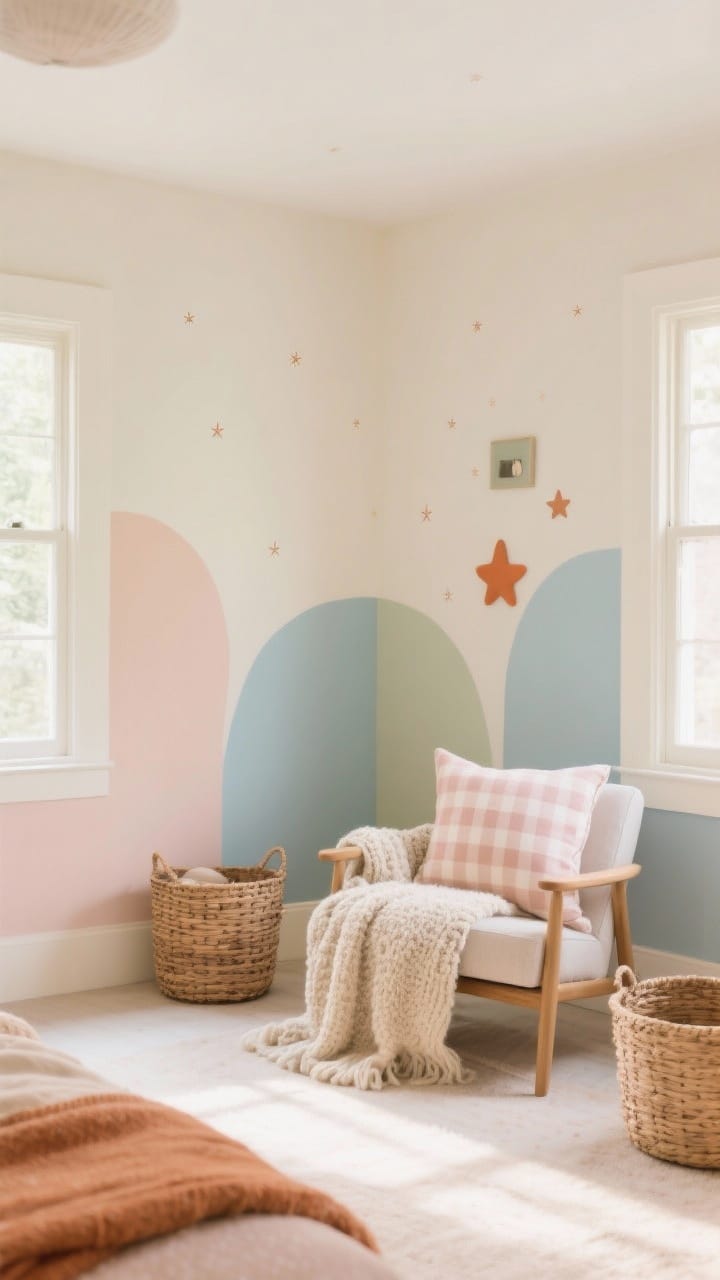
Color can make or break a small room. Lighter tones bounce light, calm the chaos, and feel bigger. Add hits of deeper color to keep it from veering into “doctor’s office beige.”
Palette Tips
- Base: Soft white, warm ivory, or pale greige—something that flatters natural light.
- Accent: Muted sage, powder blue, terracotta, or blush to bring personality without noise.
- Texture: Woven baskets, knitted blankets, boucle pillows—texture is your “color” in small rooms.
Paint the ceiling the same color as the walls for a cocoon vibe. If you want pattern, keep it small-scale and light—think tiny stars, soft gingham, or micro florals.
5. Use Mirrors and Lighting to Fake More Space
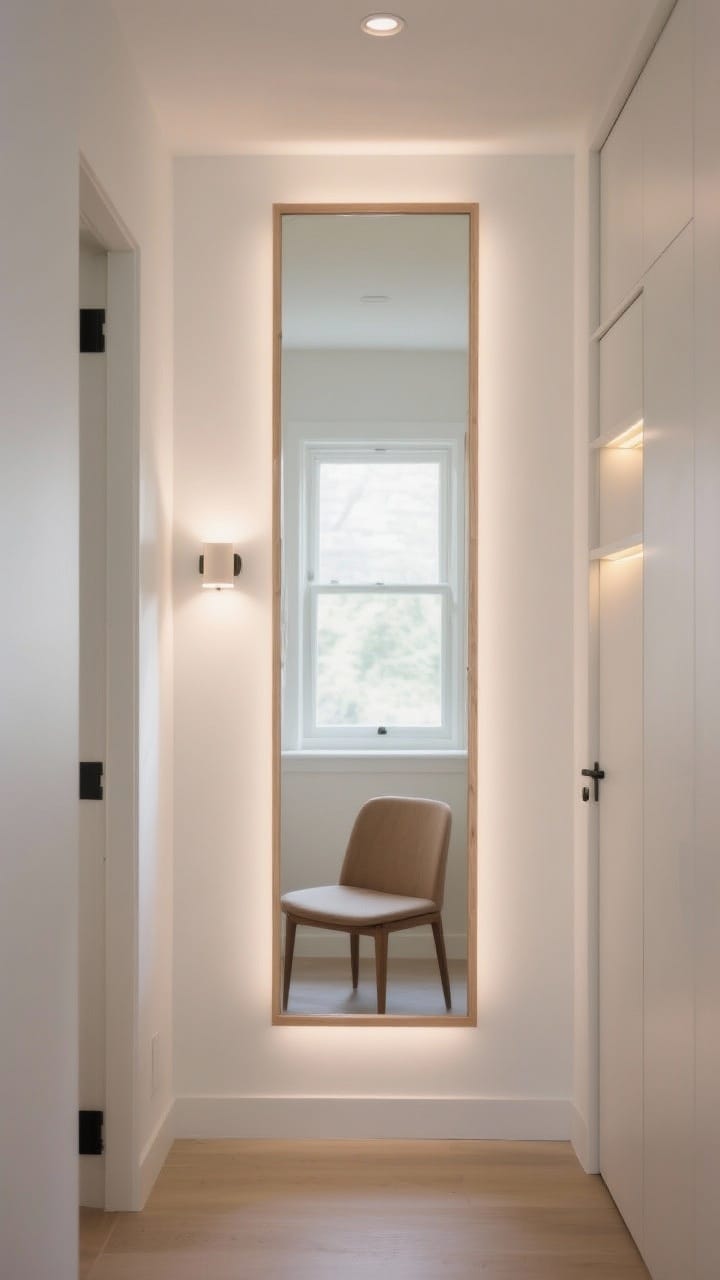
Mirrors are basically magic. They bounce light, make corners disappear, and turn one window into two. Combine that with good lighting and your tiny nursery instantly feels bigger.
Lighting Formula That Works
- Ambient: Soft overhead or flush-mount (no harsh downlights, please).
- Task: Dimmable sconce or table lamp by the chair for late-night feeds.
- Accent: A small nightlight or LED strip inside a closet for easy 3 a.m. access.
Place a mirror opposite a window or behind a door. Keep frames light and simple to avoid visual clutter.
6. Optimize the Closet Like a Tetris Master
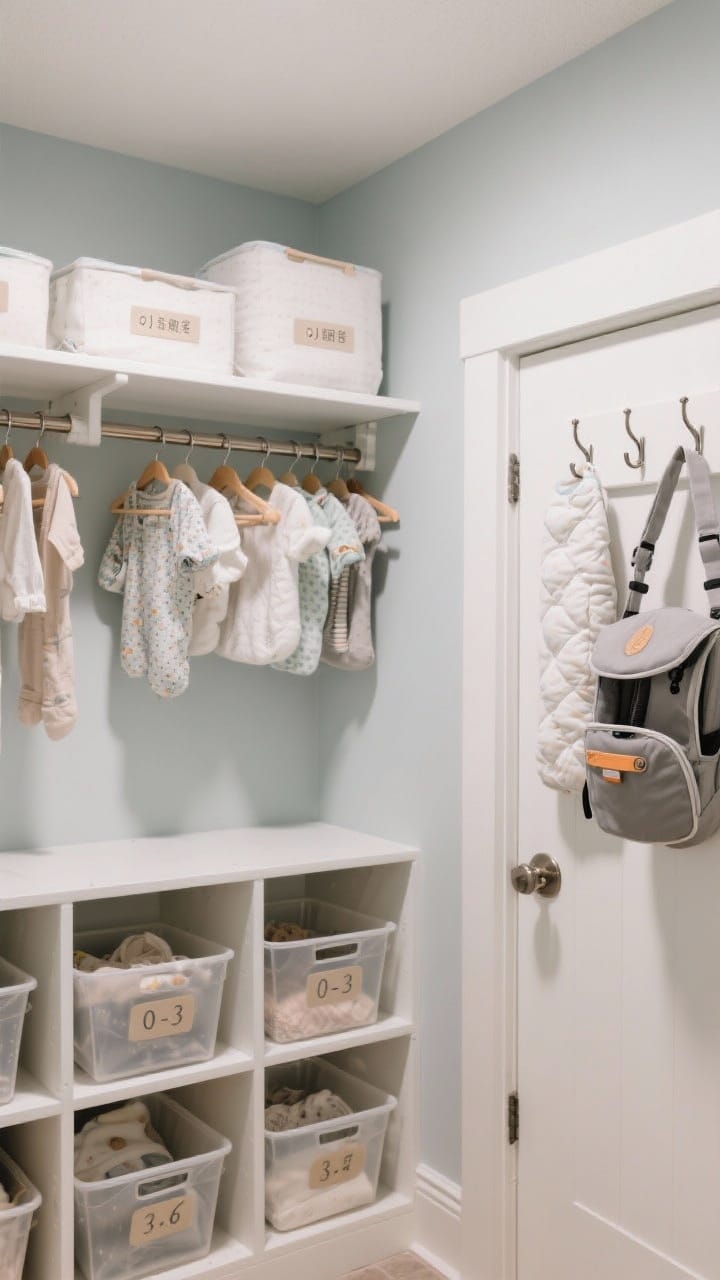
Closets are your secret storage workhorse. Baby clothes are tiny, which means you can stack, double-hang, and still have room for the 14 swaddles you somehow own.
Closet Upgrades
- Double hanging rods: Tops on top, bottoms on bottom—no wasted space.
- Cubby bins: Label for sizes (0–3, 3–6, etc.) so you don’t lose track.
- Overhead shelf: Store out-of-season or the next size up. Label, label, label.
- Door hooks: Sleep sacks, carriers, and baby wraps live here now.
IMO: Clear bins are better for quick visual checks. Add cute labels if you’re fancy—or just a Sharpie if you’re tired (so… always).
7. Choose a Chair That Fits (And Feels Good)
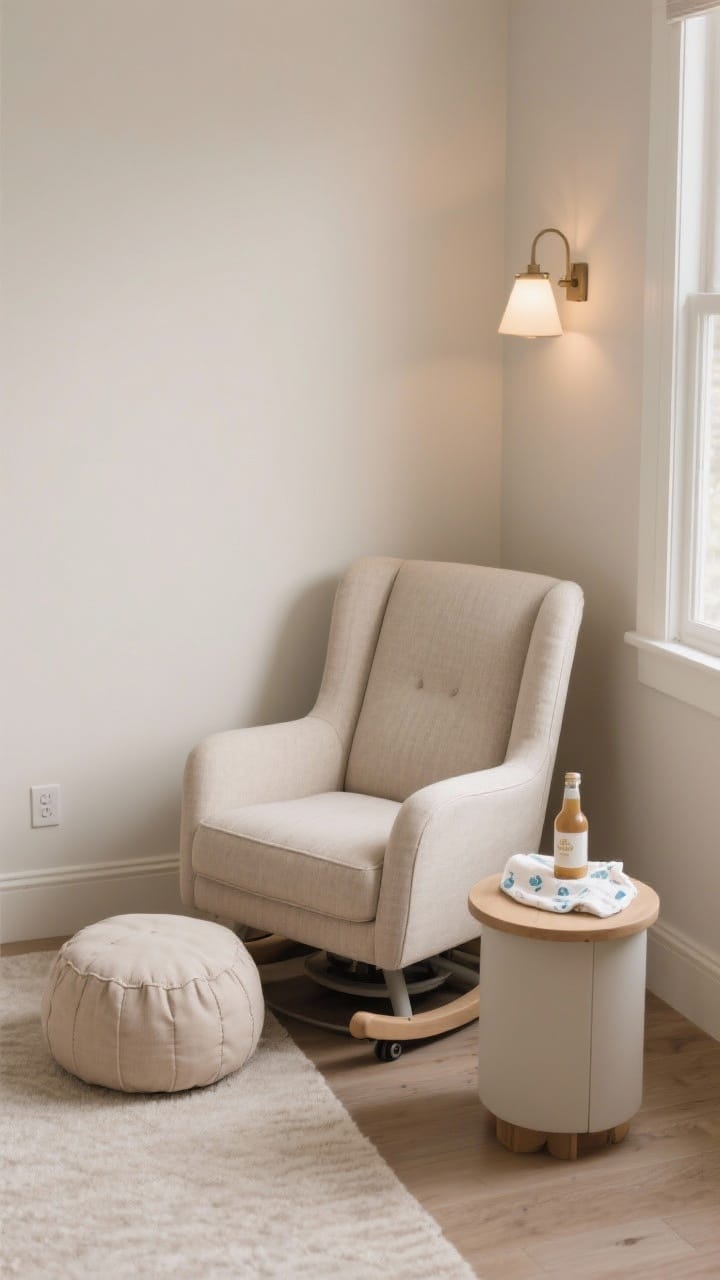
You’ll spend a lot of time in that chair, so make it comfy. But in a small nursery, oversized gliders can bulldoze the layout. Go for a slim swivel glider with a tight back and narrow arms.
I’ve learned that a slim, supportive chair matters more than size. Comfort without bulk makes the room feel calmer and easier to move around in.
Chair Checklist
- Swivel + glide: Easy to move without scraping the floor or your sanity.
- Compact footprint: 28–32 inches wide is the sweet spot.
- Support: High enough back for head support during dozing. Because you will doze.
Skip the ottoman if you’re short on space. A small pouf tucks under the chair when not in use. And consider a side table with a lip or raised edge—less chance of bottles rolling off at 2 a.m.
8. Embrace Multipurpose Rugs and Curtains
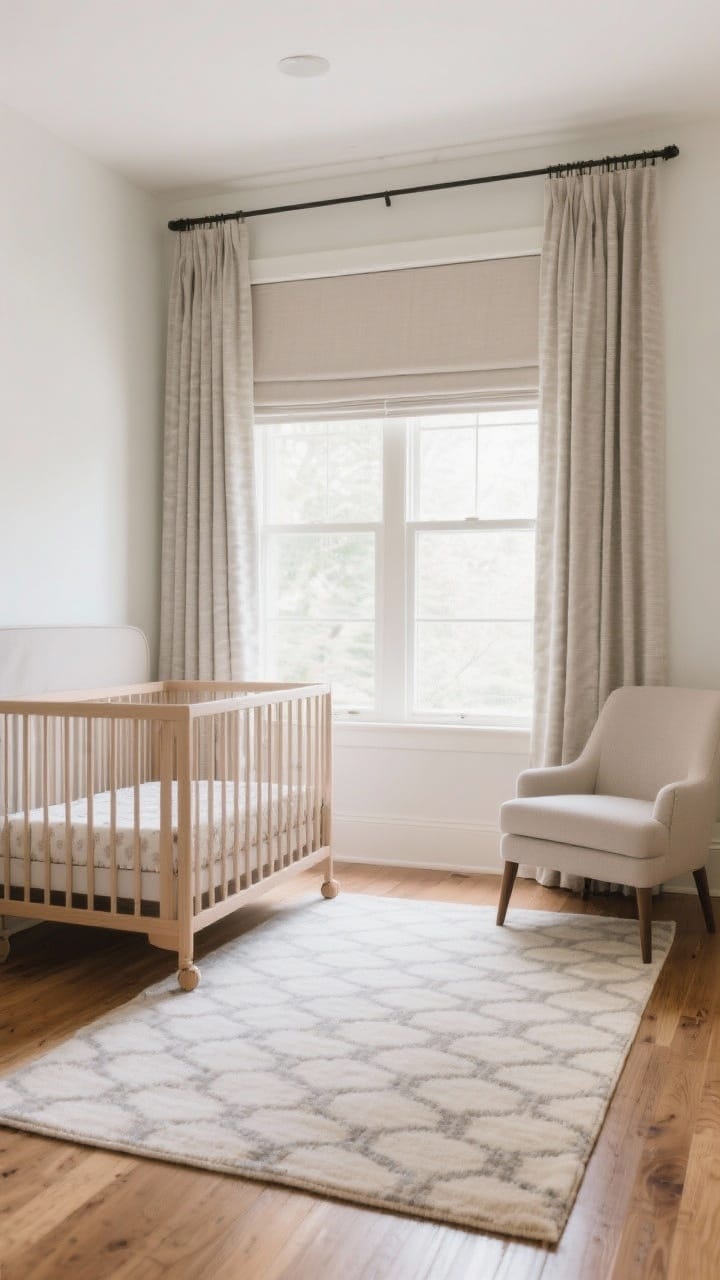
Textiles do triple duty: soften acoustics, warm up hardwoods, and bring the whole design together. Pick pieces that look cute and clean easily, because, well, babies.
Soft Goods That Work Hard
- Rug: Low-pile or washable. Size matters: at least the front legs of the crib and chair should sit on it to anchor the layout.
- Blackout curtains: Layer over a light-filtering shade for naps. Mount high and wide to make windows feel bigger.
- Color + pattern: Subtle repeats hide stains and toys, but won’t overwhelm the room.
Choose cordless window treatments for safety. And secure curtain rods into studs or use heavy-duty anchors—babies grow into tugging toddlers faster than you think.
9. Curate Decor With Purpose (And Keep Surfaces Clear)
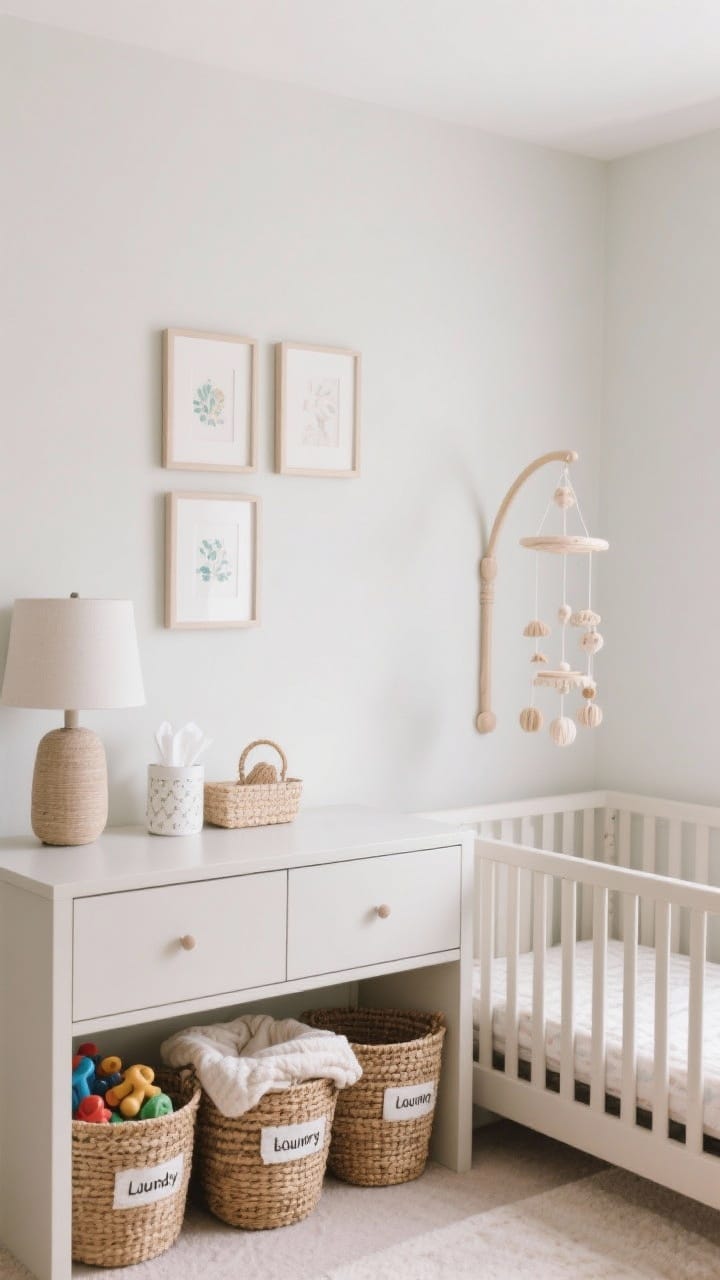
Small spaces feel chaotic fast. Keep decor intentional: a few special art pieces, one statement mobile, and practical baskets that look good sitting out.
Style Without Clutter
- Wall art set: Two or three pieces hung as a grid to add structure.
- Mobile: Light and airy over the crib or changing area—instant whimsy.
- Baskets: One for toys, one for laundry, one for blankets. Done.
- Memory box: Corral keepsakes so they don’t live on every surface.
Keep the top of the dresser as clean as possible: lamp, wipes, a small caddy, and maybe one cute thing. That’s it. You’ll appreciate the breathing room, promise.
Space Planning Quick Guide
- Crib wall: Center it if possible; avoid placing under windows.
- Chair corner: Tuck into a corner with a lamp behind or a wall sconce.
- Changing zone: Near the closet for easier outfit changes.
- Walking paths: Aim for 24–30 inches of clearance where you move the most.
Safety Essentials (Because We’re Responsible Like That)
- Secure furniture: Anchor dressers and shelves to studs.
- Crib rules: Firm mattress, fitted sheet only—no pillows or bumpers.
- Cords: Keep blind cords and lamp wires out of reach; go cordless where possible.
- Monitors + sound machines: Keep cables off the crib and mount safely away.
FYI: A small nursery can still be big on personality. Mix in a meaningful color, a vintage find, or a family heirloom to make it feel uniquely yours.
You’ve got this. With smart furniture, vertical storage, and a calm palette, your small nursery will feel cozy, intentional, and seriously cute. And when your baby finally sleeps? You can sit in that perfectly sized chair, sip something warm, and admire your design skills. You earned it.
FAQ
1. What are the best small nursery ideas for limited space?
2. How can I make a small nursery look bigger?
3. Is a mini crib better for a small nursery?
4. What colors work best in a small nursery?
5. How much clearance should I leave around a crib in a small nursery?
If you enjoyed these neutral nursery ideas, you might also love exploring some of my other cozy and stylish kids’ room inspirations too!
- 9 Neutral Nursery Ideas for a Calm, Chic Baby Room
- 8 Boy Nursery Ideas That Feel Stylish Cozy and Totally Doable
- 10 Baby Boy Nursery Room Ideas That Feel Fresh Cozy and Cute