
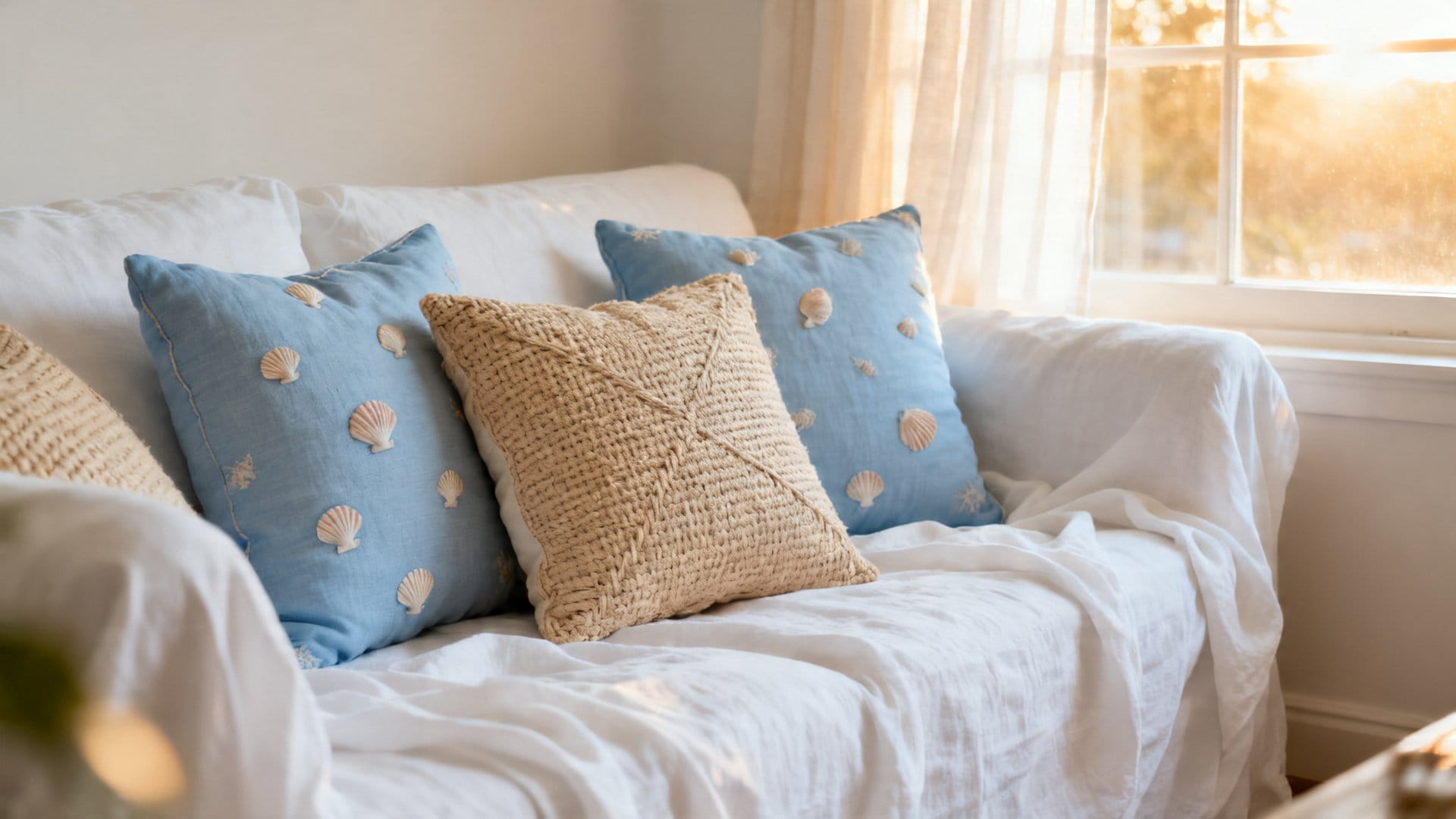
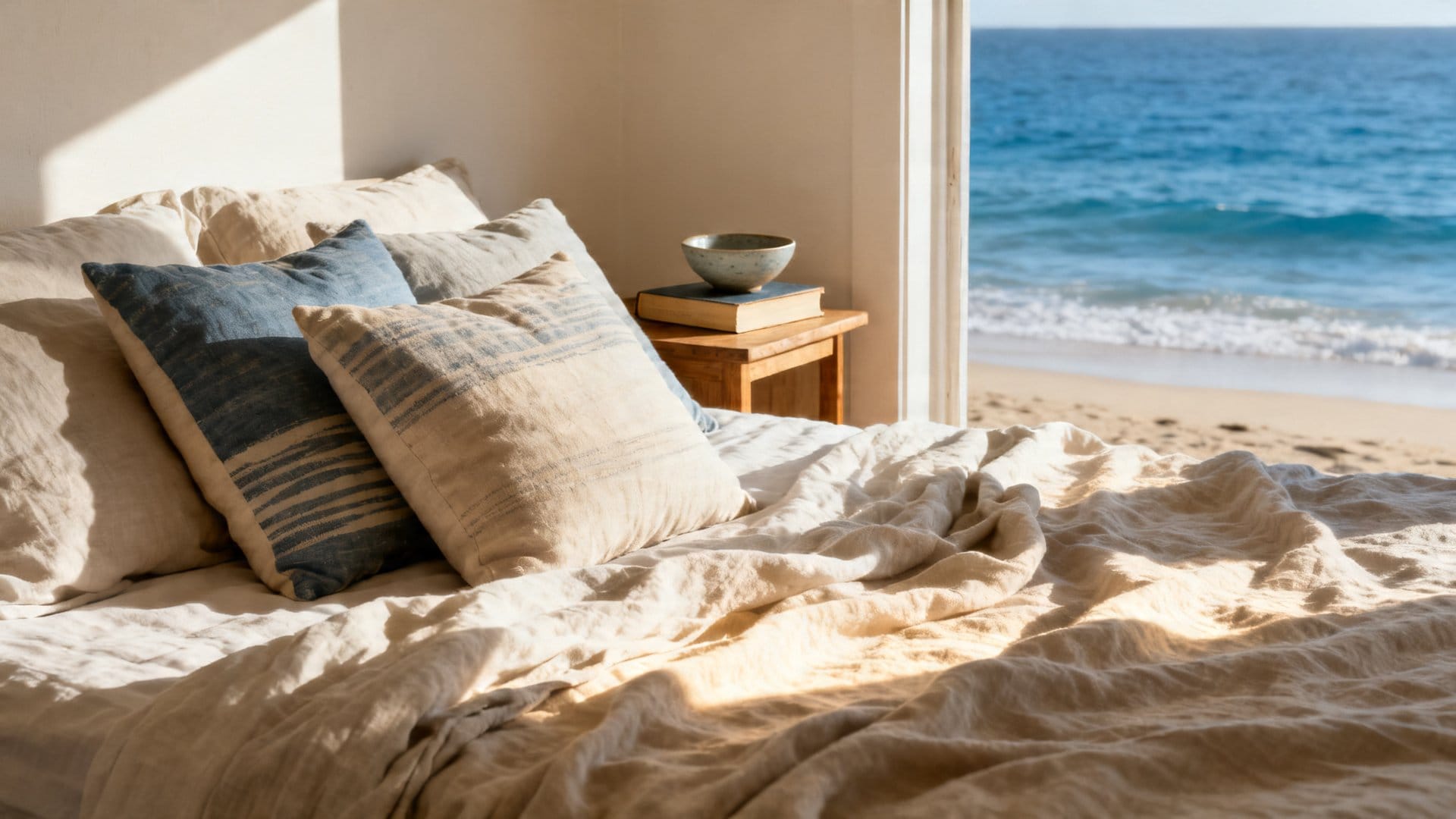
There’s something about the way a beach house feels, that easy, breezy mix of soft blues, sandy textures, and light pouring through open windows, that makes you want to bottle it up and take it home with you. The good news is that you absolutely can, and it doesn’t require a major renovation or a trip to a designer showroom. These coastal summer pillow ideas beach lovers will recognize instantly are one of the simplest, most affordable ways to shift the entire mood of a room. A few well-chosen pillows on a sofa or bed can instantly conjure that relaxed, sun-warmed feeling you’ve been chasing all year. This article walks you through exactly how to pull it off with real texture, color, and layering ideas that feel genuinely lived-in and lovely.
Why Are Pillows the Secret Weapon of Coastal Decorating?
Pillows are the secret weapon of coastal decorating because they deliver texture, color, and warmth in one small, swappable package. No other single element lets you shift a room’s entire mood as quickly or affordably.
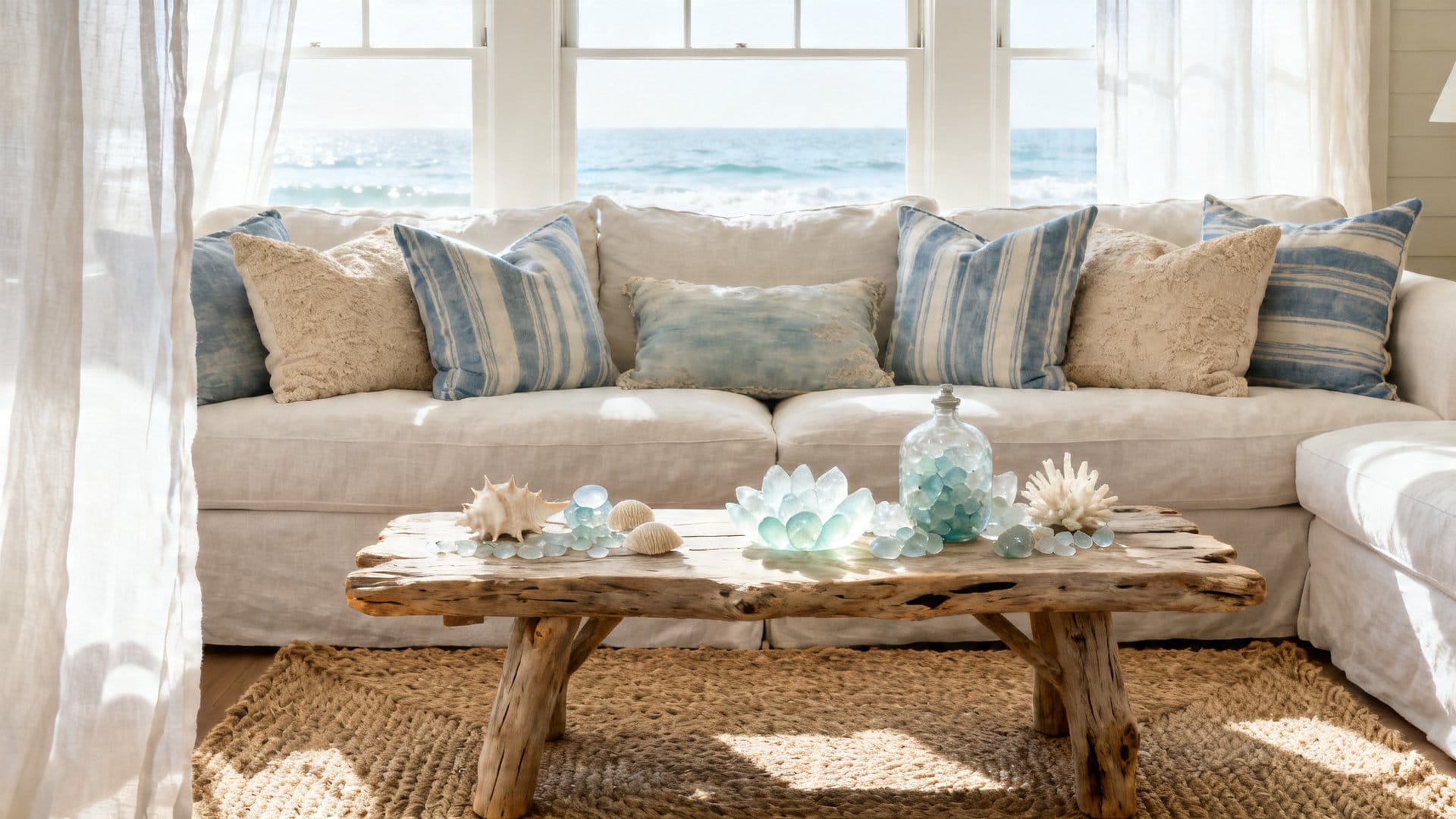
When you think about what makes a beach house feel so inviting, it’s rarely one dramatic statement piece. It’s the accumulation of small, sensory details, the soft weight of a linen cushion, the subtle shimmer of a sea-glass-toned fabric, the way natural light bounces off a textured weave. Pillows do an enormous amount of quiet work in a room, and in coastal decorating especially, they carry the whole visual story.
One thing I’ve noticed is that the rooms that feel most authentically coastal aren’t the ones stuffed with seashell motifs on every surface. They’re the rooms where texture and color do the talking, where a faded indigo stripe or a nubby jute-blend pillow feels like it arrived naturally, not like it was ordered from a themed catalog.
Why It Works
Pillows are low-commitment and highly changeable, which means you can experiment freely without a big investment. They also layer beautifully, mixing sizes, shapes, and textures creates that effortlessly select look that coastal style is known for. Start with two or three pieces and build from there.
What Is the Coastal Color Palette That Actually Works in Real Homes?
The coastal color palette that works in real homes goes well beyond navy and white. It includes soft sage greens, warm sandy taupes, faded coral, sea-glass aqua, and dusty blues, tones that feel relaxed because they are never too saturated or too sharp.
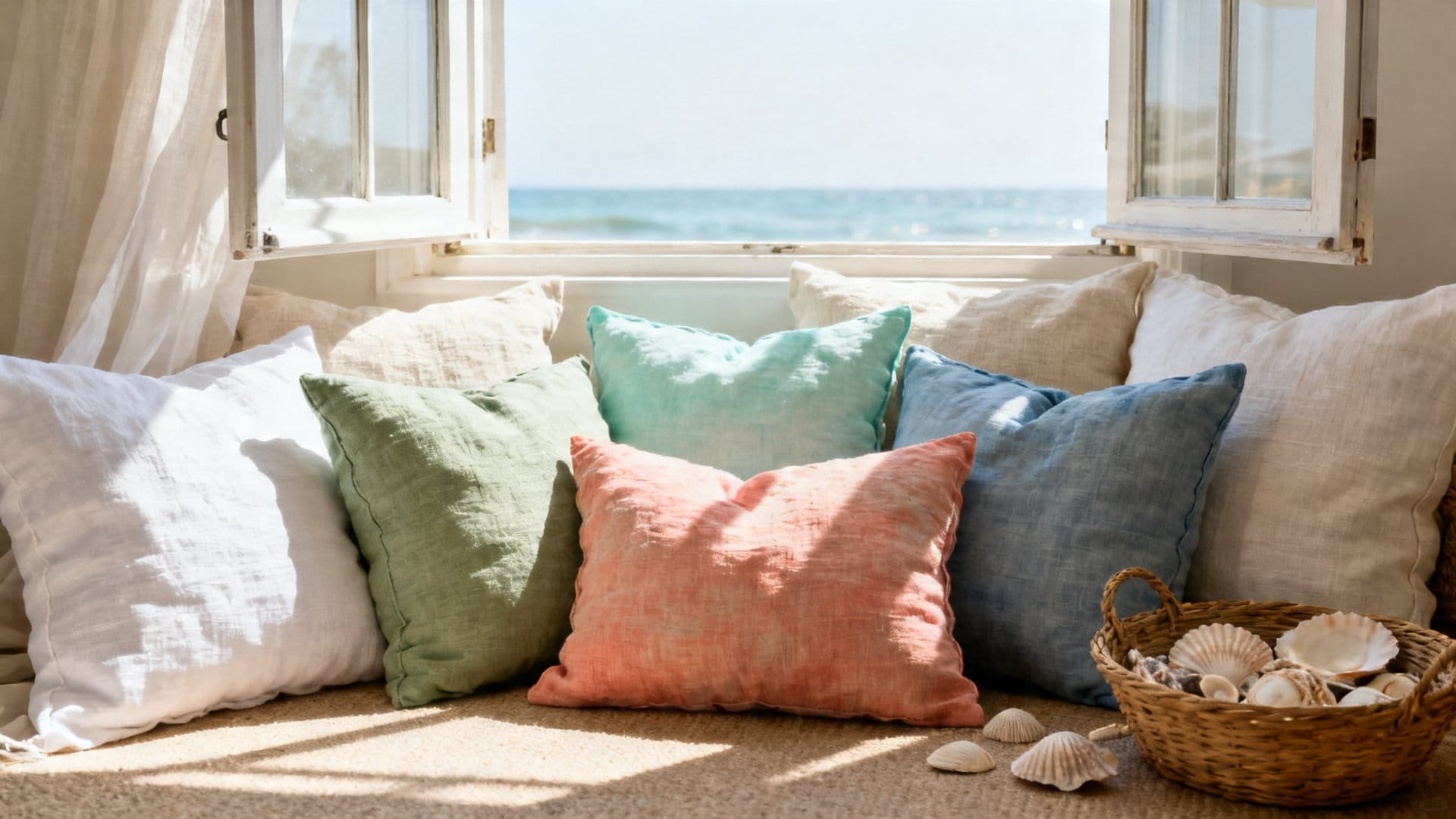
Coastal color isn’t just navy and white stripes, though those are classics for good reason. The palette that really captures beach house style runs much wider, think soft sage greens, warm sandy taupes, faded coral, sea-glass aqua, and the kind of dusty blue that looks like it’s been washed by salt air. These colors feel relaxed because they’re never too saturated or too sharp.
When you’re building a pillow collection for a coastal summer look, start with a neutral base, natural linen in oatmeal or warm white works beautifully, and then layer in two or three accent tones from that wider coastal palette. A sandy taupe pillow next to a soft aqua one next to a faded coral creates a collected, unhurried look that feels genuinely beachy without screaming “ocean theme.” This is the heart of good coastal summer pillow ideas for beach house style at home: restraint and warmth working together.
Pro tip: Avoid going all-cool with your palette. Mixing warm sandy neutrals with cool ocean blues keeps the room from feeling cold or clinical, it mirrors the actual beach, where warm sand and cool water live side by side.
With your color palette in place, the next step is choosing the right textures to bring that palette to life.
Which Textures Carry the Coastal Feeling?
&# 128064; Keep exploring:The ultimate room-by-room summer throw pillow style guide→The textures that carry the coastal feeling most effectively are natural, tactile materials like washed linen, loosely woven cotton, rope-style knits, and weathered canvas. These fabrics bring the organic, sensory quality that makes a room feel like a beach house rather than just look like one.
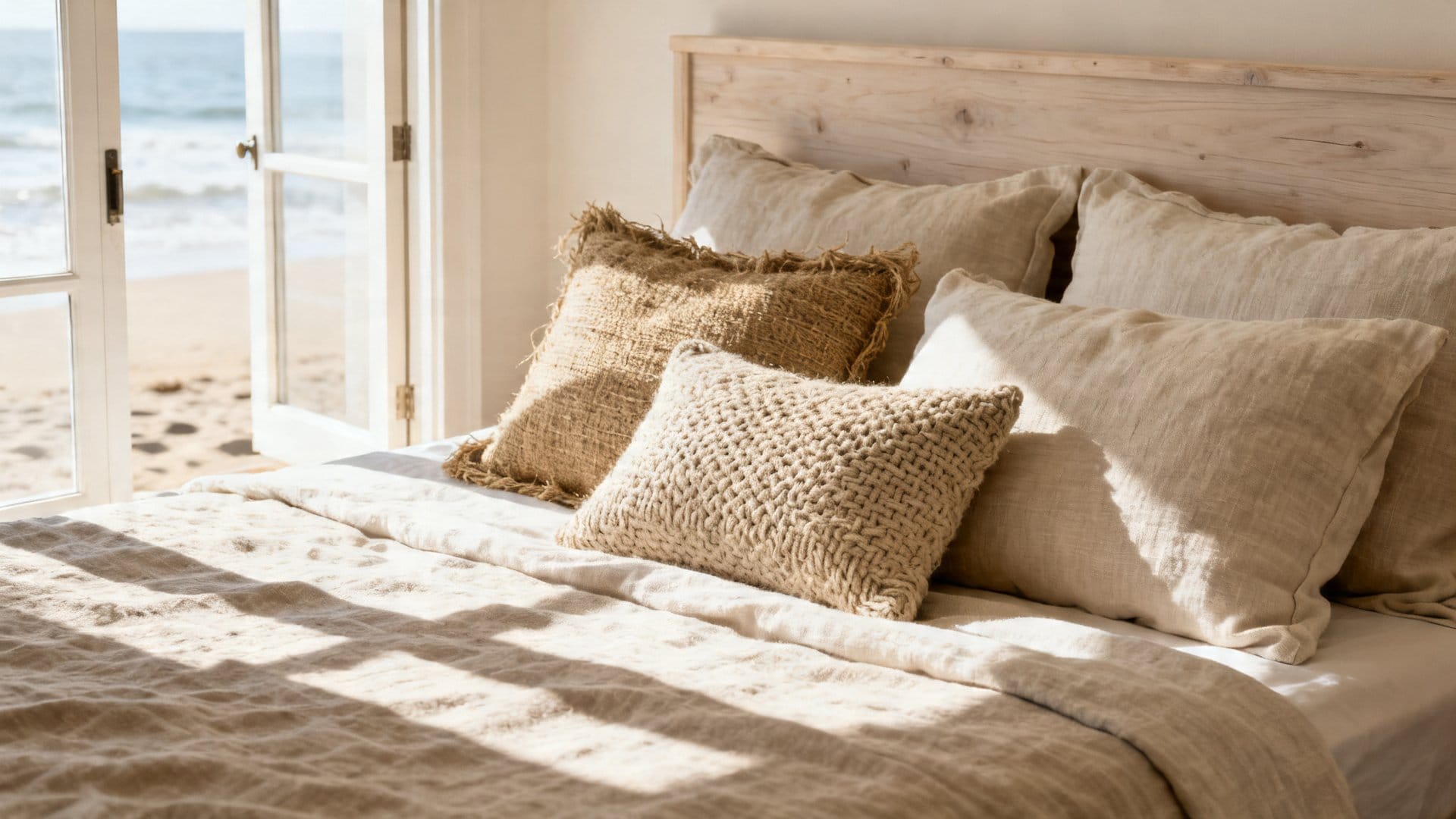
Color gets most of the attention in coastal decorating, but texture is what makes the difference between a room that looks like a beach house and one that actually feels like one. The right textures bring in that tactile, natural quality that coastal spaces are famous for.
Think about the materials that belong near the ocean: washed linen, loosely woven cotton, soft rope-style knits, slubby burlap blends, and weathered canvas. These are the fabrics that work hardest in coastal pillow styling. A chunky cotton-rope knit pillow next to a smooth, faded-linen lumbar creates that contrast that makes a sofa feel layered and interesting rather than matchy. I love how a slightly nubby woven pillow catches light differently throughout the day, it adds a quiet aliveness to the room that solid-color smooth fabrics just can’t replicate.
Materials That Work
Washed linen is probably the single most versatile coastal pillow fabric, it softens beautifully over time, wrinkles in an appealing way, and comes in every coastal color imaginable. Cotton canvas is another great choice for a slightly more casual, nautical feel. For texture contrast, look for loosely woven jute blends or cotton rope styles, which add dimension without competing with patterned pieces. If your sofa leans blue or leather, these pairing ideas for a blue couch make textured coastal covers feel right at home.
How Do You Mix Patterns the Easy Way?
The easiest way to mix patterns in coastal style is to vary the scale of your prints while keeping the color family consistent. Pair one large-scale pattern with one medium-scale pattern and one solid or near-solid texture, all drawn from the same coastal palette.
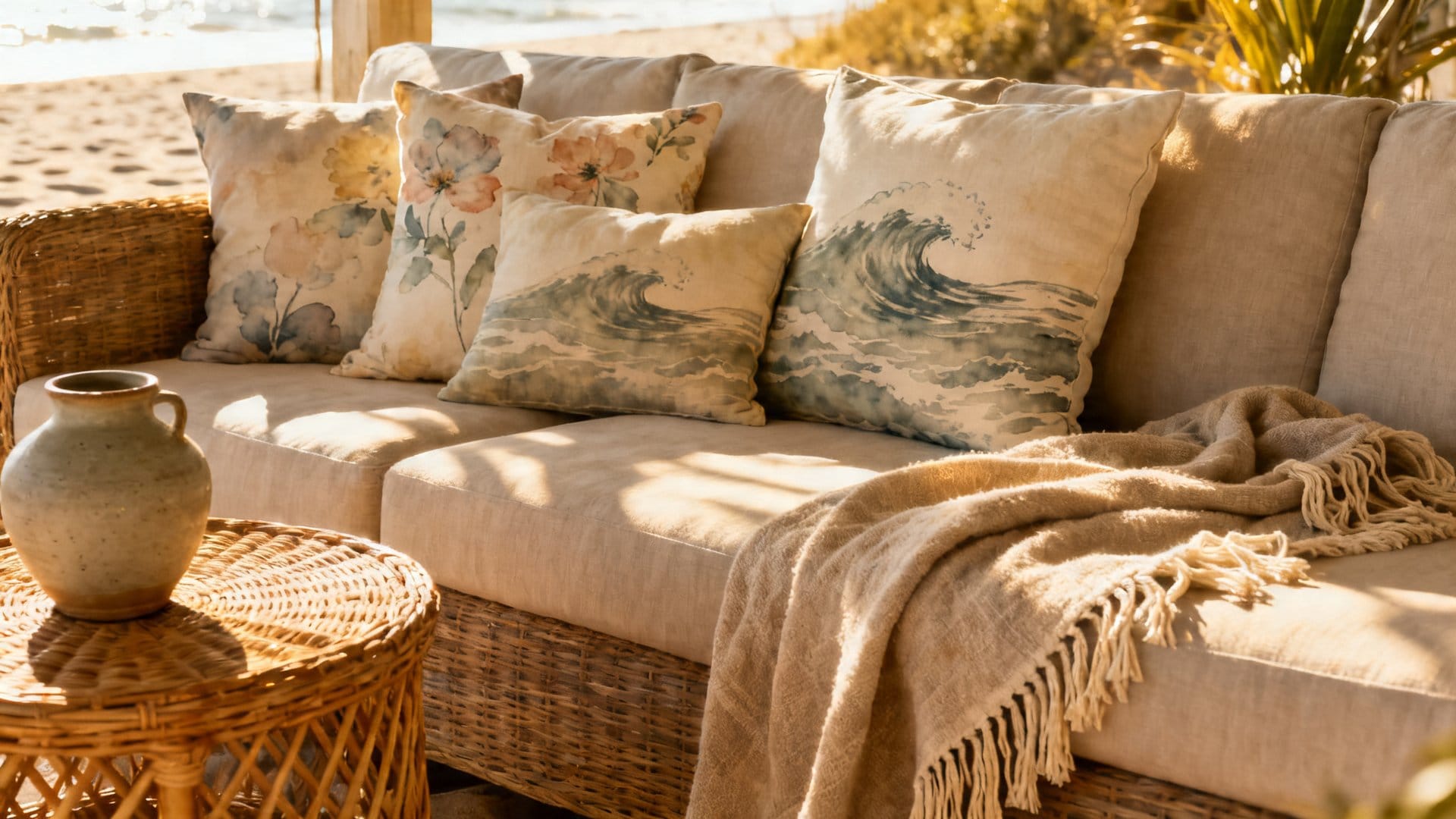
Pattern mixing is where a lot of people freeze up, but coastal style is actually one of the most forgiving aesthetics for layering prints. The key is keeping your scale varied and your color family consistent. You don’t need to be a designer to get this right, just follow a simple rhythm.
Try this combination: one large-scale pattern (like a wide stripe or an oversized abstract wave print), one medium-scale pattern (a classic ticking stripe or a simple geometric), and one solid or near-solid texture (a nubby linen or a subtle tone-on-tone weave). All three should pull from the same color family, say, blues and whites with a touch of warm sand. A friend of mine tried something similar in her living room last summer and said it completely changed how the room felt, suddenly it had depth and personality instead of looking like a furniture showroom.
Pro tip: When in doubt, odd numbers work better than even. Three pillows on a sofa almost always look more natural than two or four, it mimics the casual, collected feel of a real beach house rather than a staged one.
What Are the Best Pillow Arrangements for Sofas, Beds, and Reading Nooks?
The best coastal pillow arrangements vary by space but share one principle: layer sizes and shapes rather than matching them. On a sofa, two large squares at the back, two smaller accents in front, and a centered lumbar pillow creates a relaxed, beachy look that feels effortless.
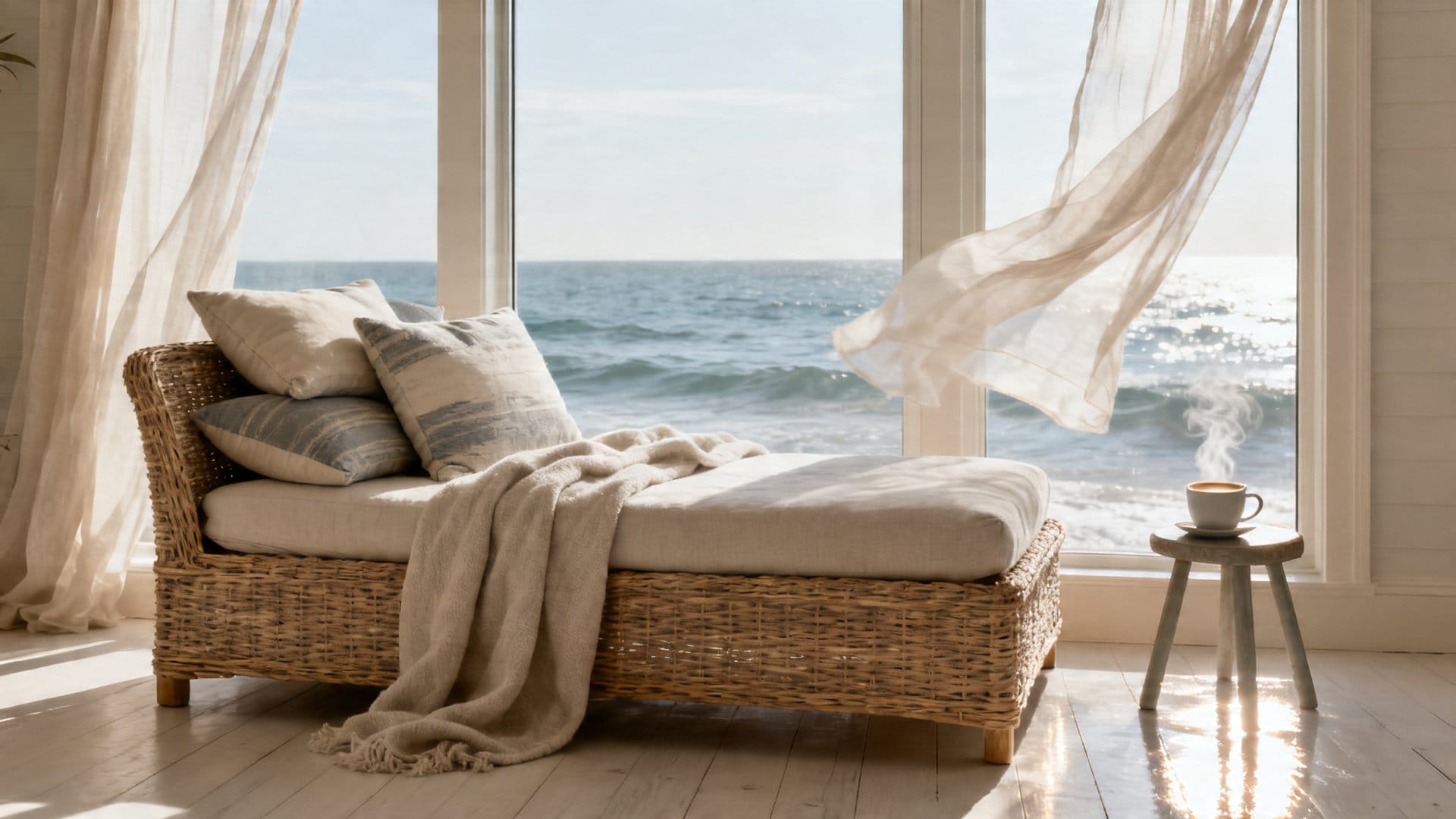
Where and how you arrange your coastal pillows matters just as much as which ones you choose. Different spaces call for different approaches, and getting the arrangement right is what makes the whole look land. If your sofa is the centerpiece, these sofa styling ideas pair nicely with a breezy coastal palette.
Layout Ideas
- On a sofa, layer two large square pillows (22×22 inches) at the back, then two smaller accent pillows (18×18) in front, finishing with one lumbar pillow centered for a relaxed, beachy arrangement
- For a bed with coastal summer style, use two Euro shams in a washed linen, two standard pillows in a stripe or soft print, and one or two smaller accent pillows in a contrasting texture like cotton rope or slubby weave
- In a reading nook or window seat, pile three to four pillows of varying sizes freely, this is where you can be most playful, mixing a bold stripe with a solid and a small pattern without it feeling overdone
- Lumbar pillows (approximately 14×36 inches) are underused in coastal styling but are incredibly effective, they add a horizontal anchor that keeps layered arrangements from looking chaotic
- Don’t be afraid to leave a little space; overstuffing a sofa with eight pillows loses the relaxed, airy quality that makes coastal style so appealing
This works especially well in rooms with light-colored furniture or natural wood frames, the pillows become the focal point without competing with heavy upholstery.
Once your pillow arrangement feels right, a few carefully chosen room details can tie the whole coastal look together.
How Do You Bring in Coastal Summer Details Beyond the Pillow Cover?
&# 128218; Read next:23 colorful beach house living room ideas for coastal charm→You bring in coastal summer details beyond the pillow cover by surrounding your pillows with natural materials that echo the same relaxed mood. Think driftwood-toned tables, woven baskets, smooth stones, and dried grasses, simple additions that make the whole room feel intentional.
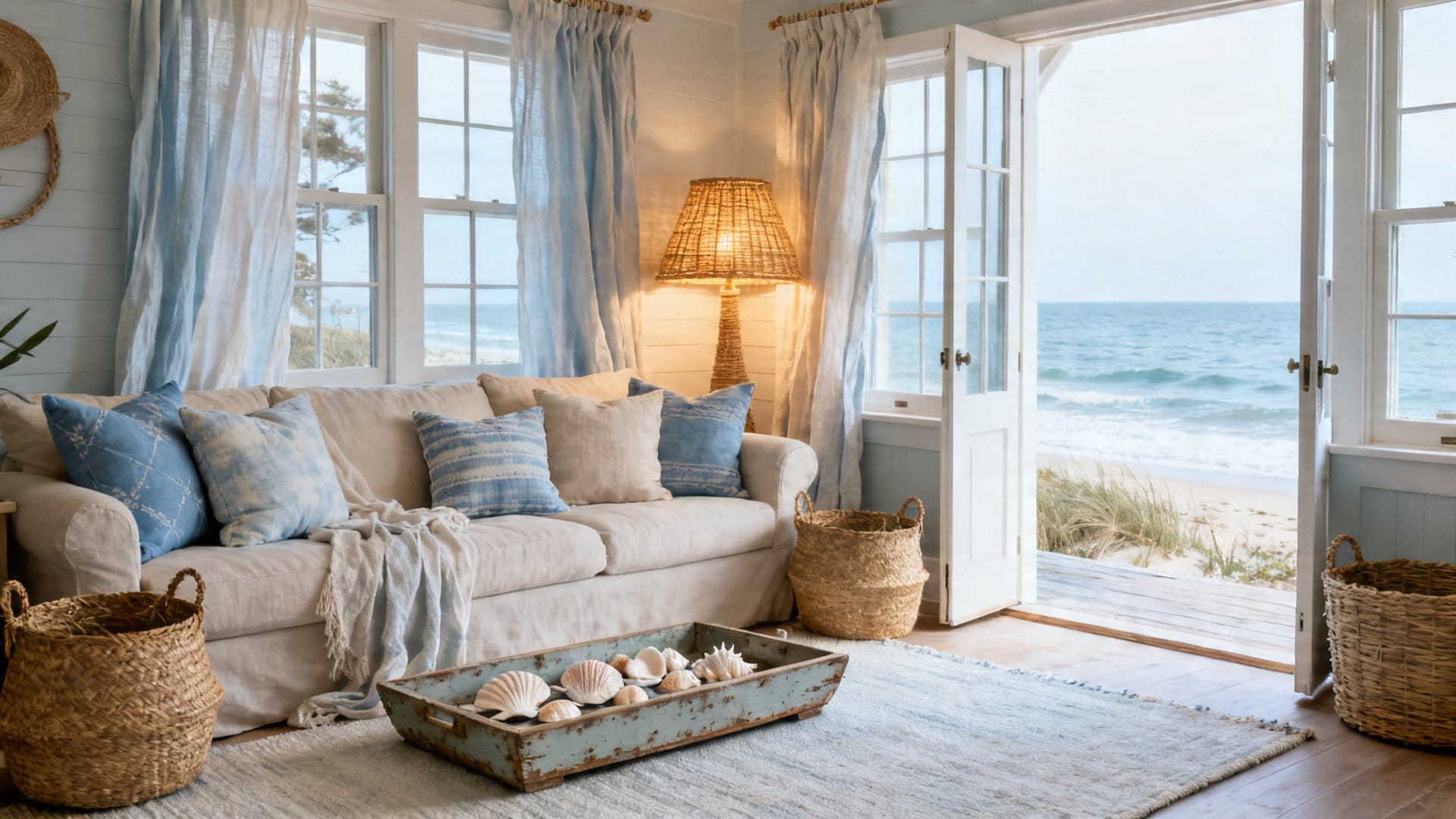
Once you have your pillow palette and arrangement dialed in, a few surrounding details can really complete the beach house feeling. Coastal summer pillow ideas for beach house style at home don’t exist in isolation, they work best when the room around them echoes the same relaxed, natural mood.
Consider what’s nearby: a driftwood-toned side table, a simple woven basket holding a throw, a small cluster of shells or smooth stones on a tray, or a low vase with dried pampas grass or sea oats. These elements don’t need to be elaborate or expensive. From what I’ve gathered, the easiest approach is to think in terms of natural materials, wood, rattan, cotton, stone, rather than plastic or synthetic accessories. The more natural the surroundings, the more the pillows read as intentional rather than decorative afterthoughts.
Pro tip: Swap out your pillow inserts for a slightly overstuffed option, one size up from the cover size. A pillow that’s properly full looks luxurious and inviting, while an under-stuffed one looks deflated and sad, no matter how beautiful the fabric is.
How Do You Keep the Look Fresh Through the Whole Summer Season?
&# 10024; You might also love:Spring to summer pillow swaps for an easy seasonal refresh→You keep the coastal look fresh all summer by swapping one or two accent pillows as the season shifts. Start with cooler aquas and crisp whites in early summer, then introduce warmer corals, sandy tones, and golden neutrals as August approaches.
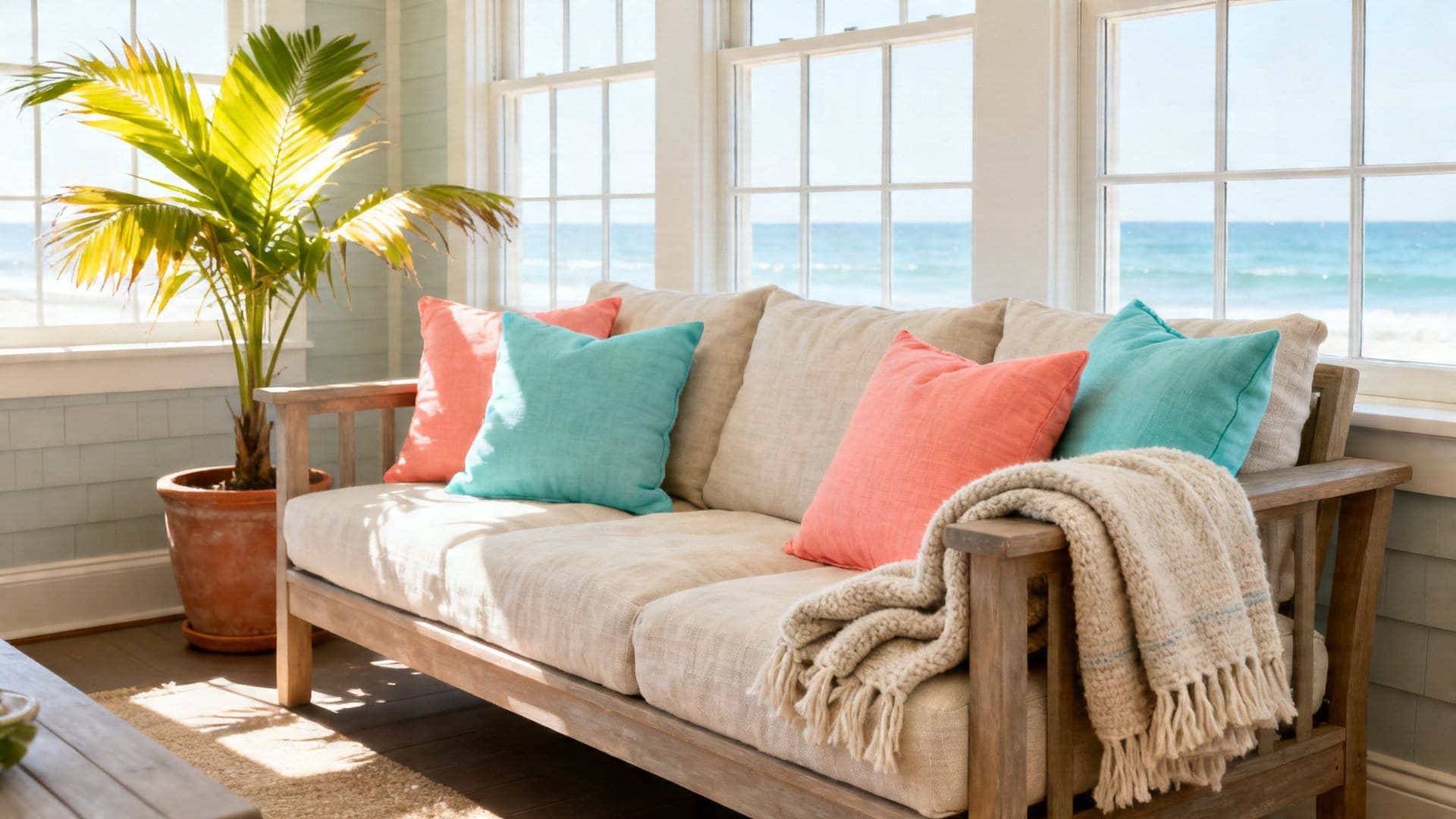
One of the best things about building a coastal pillow collection is that it’s easy to refresh as the summer goes on. You don’t need to replace everything, just swapping one or two accent pieces can shift the mood from early-summer breezy to late-summer warm and golden.
At the start of summer, lean into cooler tones, soft aquas, crisp whites, pale blues, to capture that fresh, open-water feeling. As the season moves toward August, introduce warmer tones: faded coral, warm sand, soft terracotta, and golden-tinged neutrals that feel like late afternoon sun on the beach. I keep coming back to this approach because it makes the home feel alive and in tune with the season outside, not frozen in one single aesthetic from June through September. A few well-chosen pillow swaps cost very little but make a real difference in how a room feels.
Final Thoughts
Bringing the beach home doesn’t require a complete redesign, it just requires a little intention and a willingness to play with color, texture, and layering. The best coastal summer pillow ideas for beach house style at home are the ones that feel personal and relaxed, not perfectly coordinated or over-themed. Trust your instincts, mix what you love, and let the natural materials and soft coastal palette do the work. Your home deserves to feel like a little summer escape, no matter how far you are from the ocean. Happy decorating!
Frequently Asked Questions
The most effective coastal pillow colors draw directly from the natural beach environment, including soft ocean blues, seafoam greens, sandy beiges, warm whites, and sun-bleached corals. These tones work beautifully together because they mimic the palette you’d actually find at the shore, creating an effortless, cohesive feel. You can also introduce deeper navy or driftwood gray as grounding accent colors to keep the overall look from feeling too light or washed out.
Natural, breathable fabrics like linen, cotton canvas, jute, and washed muslin are ideal for coastal summer pillows because they reflect the relaxed, organic quality of beach house living. Textured weaves, slubby linens, and even indoor-outdoor performance fabrics all contribute to that layered, lived-in aesthetic that makes coastal decorating feel authentic rather than themed. Mixing smooth and nubby textures across your pillow arrangement adds visual depth and keeps the display from looking flat or overly coordinated.
For a sofa, a grouping of three to five pillows in varying sizes typically strikes the right balance between styled and comfortable, allowing you to mix patterns, solids, and textures without overcrowding the space. On a bed, layering two to three euro shams behind two standard pillows and finishing with one or two accent pillows creates a full, resort-inspired look that feels intentional but not stiff. The key is to vary the sizes and shapes so the arrangement looks select rather than matchy-matchy.
Absolutely, coastal summer pillows are actually one of the most budget-friendly ways to redecorate because you can achieve a big visual impact with just a few well-chosen pieces. Browsing home goods stores, online marketplaces, or handmade linen pillow covers can yield beautiful results without a significant investment. Buying pillow covers separately from inserts and swapping them seasonally is another smart strategy that lets you refresh your look without spending a lot each time.
Classic coastal patterns include stripes, particularly wide cabana stripes or thin ticking stripes in navy, white, and sky blue, as well as subtle botanical prints featuring sea grasses, palms, or coral motifs. Geometric patterns in soft, sun-faded tones also work well because they add visual interest without competing with the relaxed coastal mood you’re trying to create. The trick is to mix one or two patterned pillows with solid-colored companions so the arrangement feels balanced and easy on the eye rather than busy or overwhelming.