
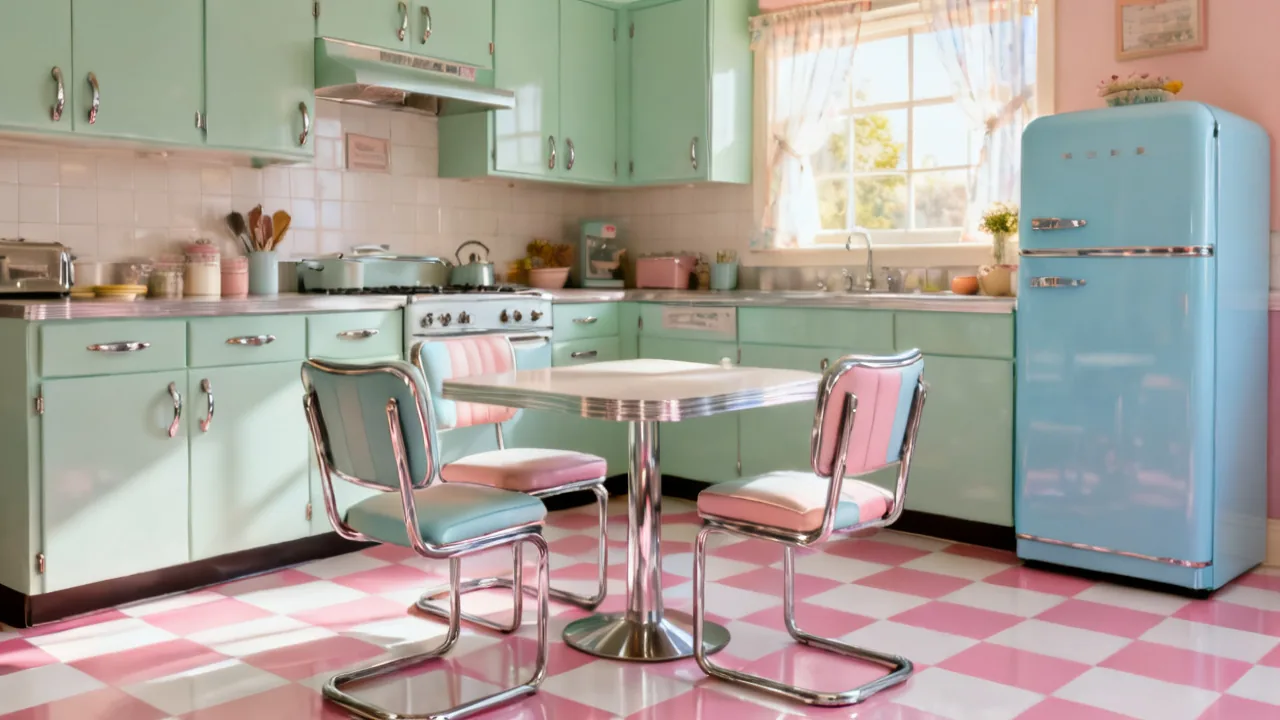
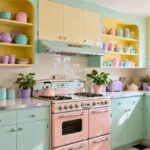
There’s something about a 1950s kitchen that makes people smile the moment they walk in. The pastel colors, the chrome trim, the cheerful patterns, it all feels warm, optimistic, and a little nostalgic. Whether you grew up with a kitchen like this or just love the look in old photos, the style is surprisingly easy to bring home today.
Quick answer: To get a 1950s kitchen look, start with a pastel color (mint, yellow, or pink), add a chrome-trimmed dinette set and a checkerboard floor, then layer in retro details like cafe curtains, a pastel fridge, milk glass, and a sunburst clock. You can fake most of it affordably with paint, vinyl tile, and a few thrifted finds.
&# 10024; New here? Start with the big picture:our favorite retro kitchen ideas→1. Start With a Cheerful Pastel Color Palette
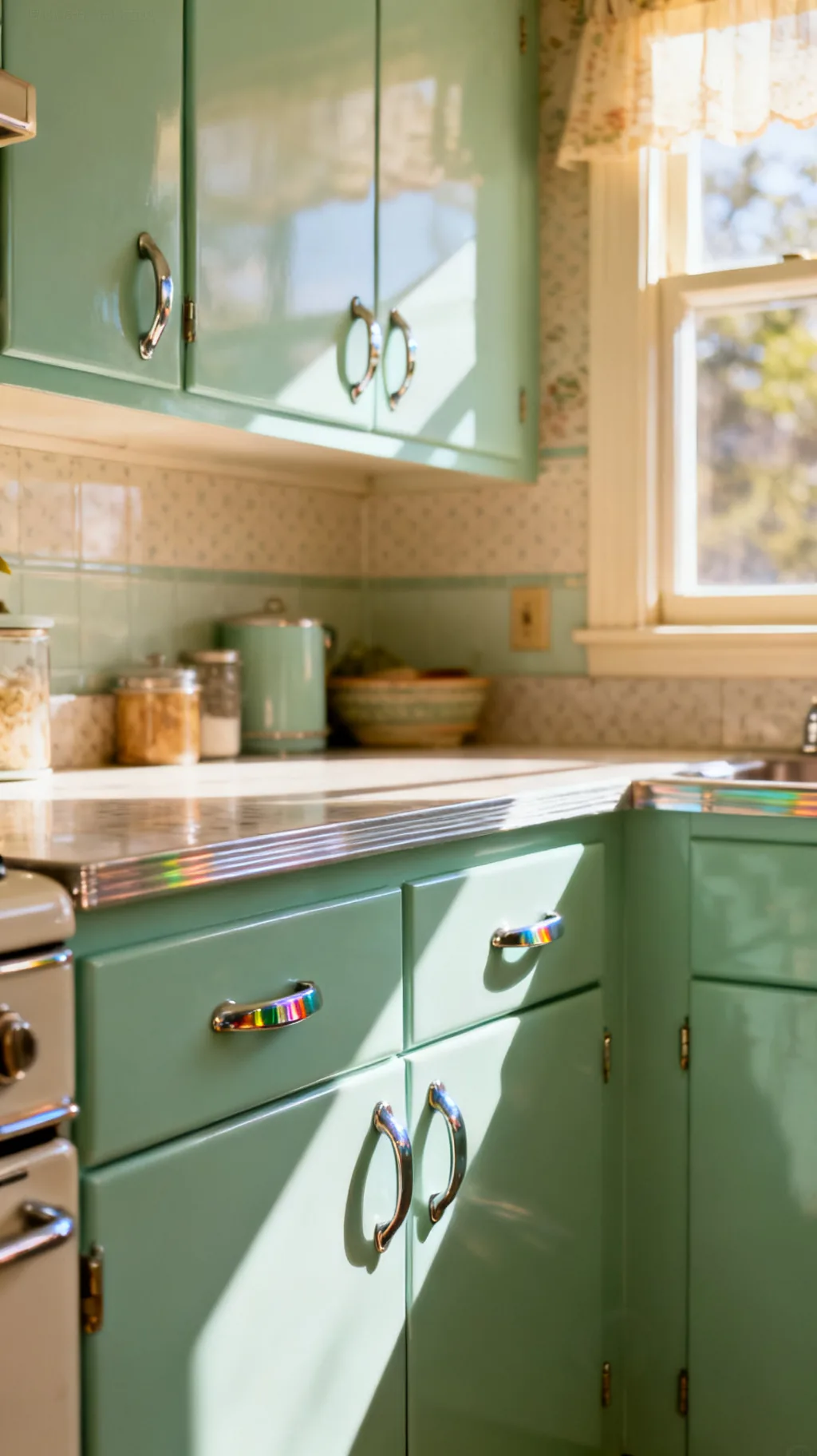
Nothing says 1950s kitchen quite like a soft wash of color. Think mint green, buttery yellow, powder blue, and the famous flamingo pink. You don’t have to paint every wall, I’ve seen a single pastel accent, like a painted hutch or a row of cabinet fronts, carry the whole room.
How to Choose Your Pastel
- Mint green: the most iconic, and it pairs with almost any wood tone.
- Buttery yellow: warm and sunny, great for north-facing rooms.
- Powder blue or pink: sweet, soft, and very period-correct.
Pick one pastel as your hero and let white and chrome do the rest, that’s how it stays charming instead of busy.
2. Add a Chrome-Trimmed Dinette Set to Your 1950s Kitchen
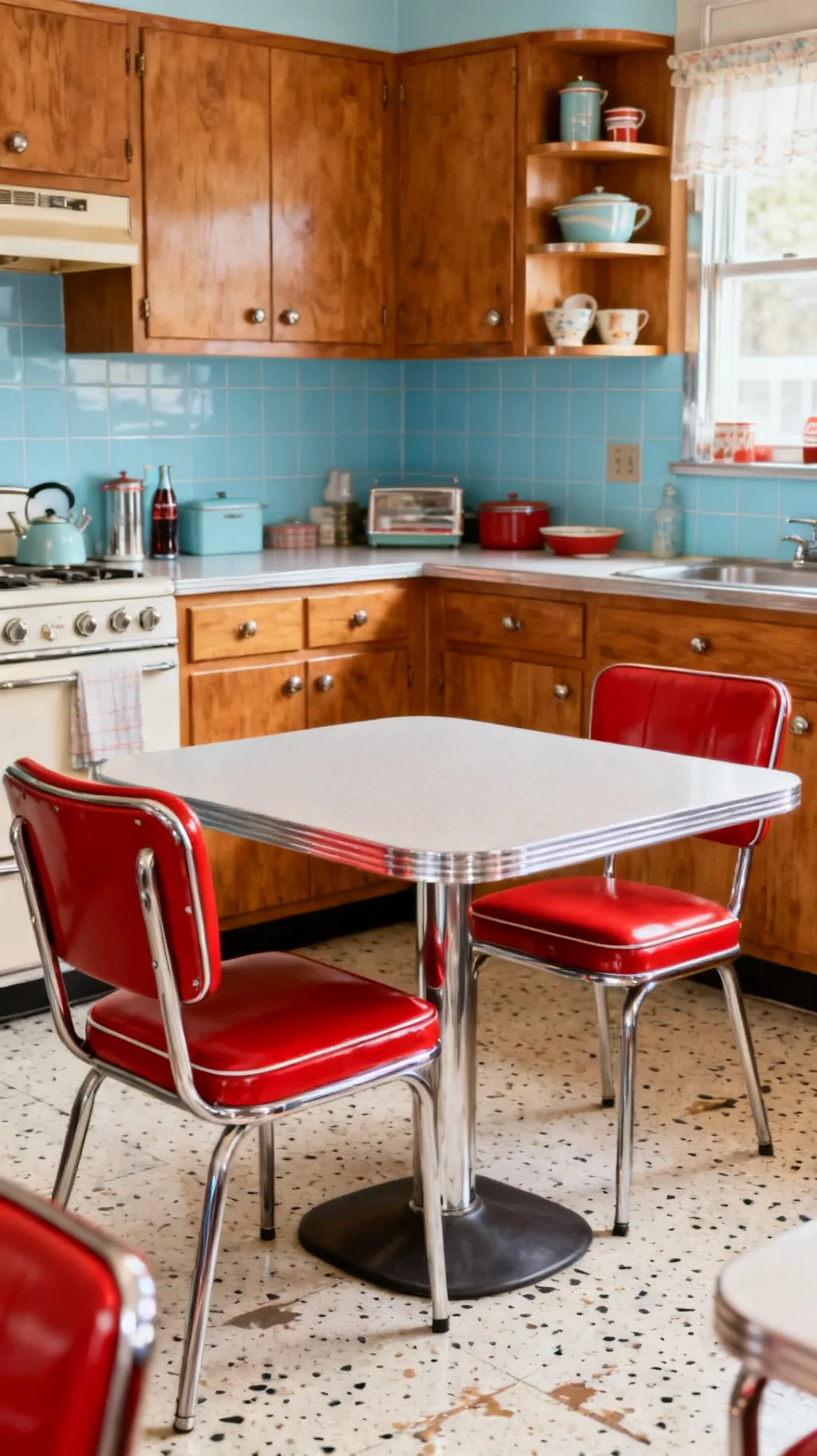
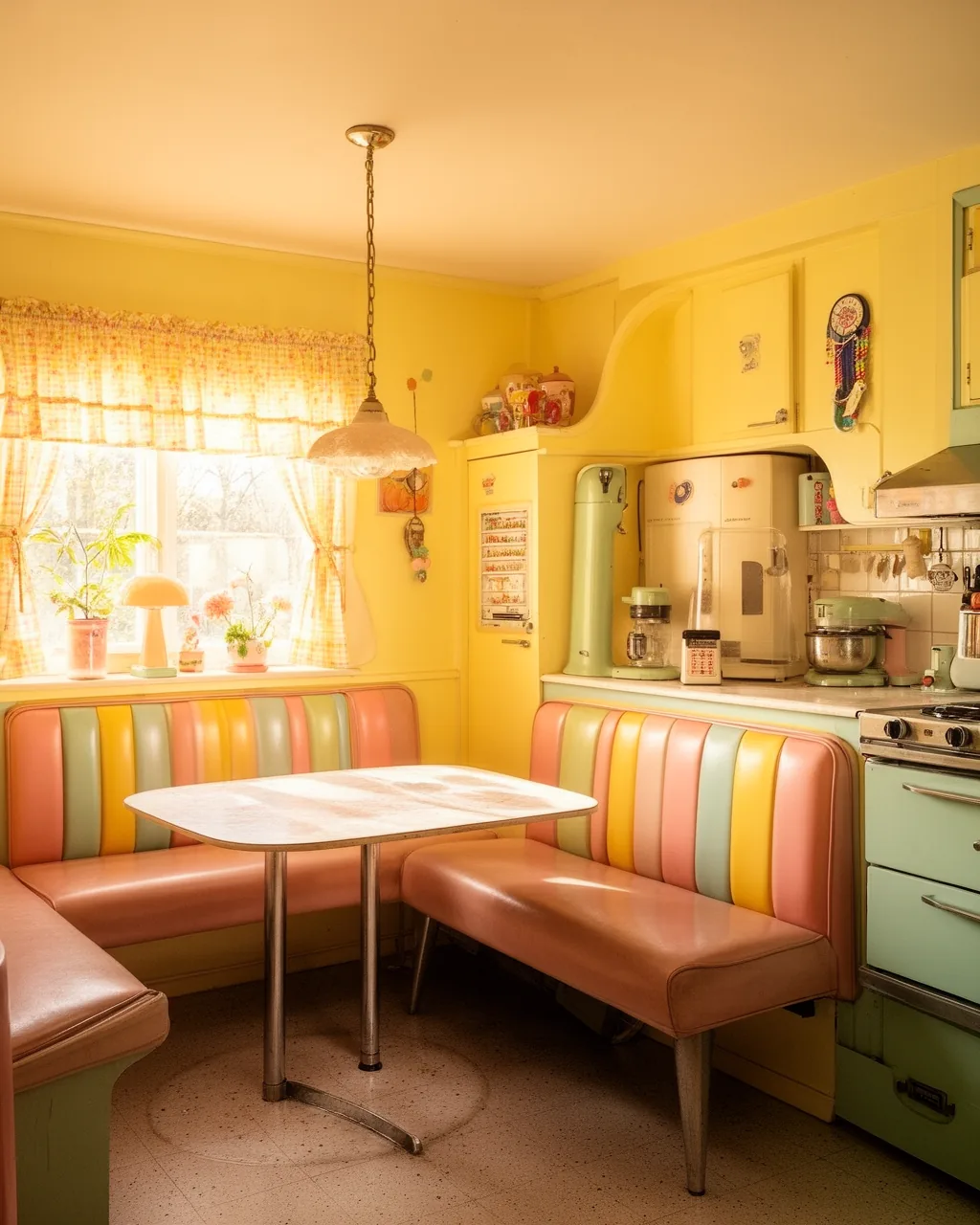
A Formica-top table edged in shiny chrome is the heart of a fifties kitchen. Pair it with vinyl chairs in a punchy color and you instantly get that soda-shop feeling. Round tables work beautifully in smaller spaces, since there are no sharp corners to bump into.
What to Look For
- Boomerang laminate: the classic speckled pattern reads instantly retro.
- Chrome legs and edging: the shinier the better for that diner glow.
- Vinyl chairs: red, turquoise, or yellow add a cheerful pop.
Estate sales and flea markets are great hunting grounds, and a wobbly chrome set is usually an easy fix.
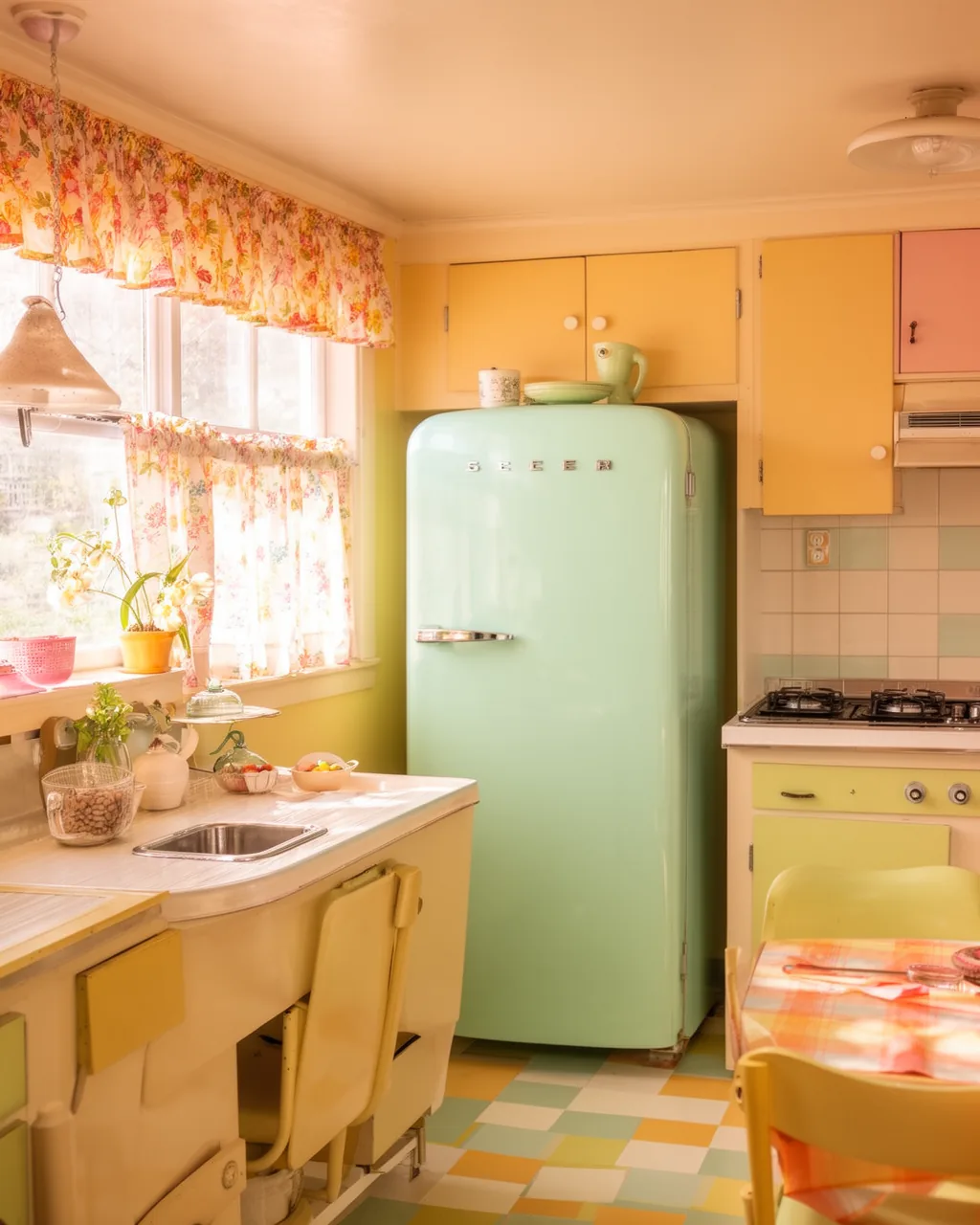
3. Bring In a Pastel Retro Refrigerator
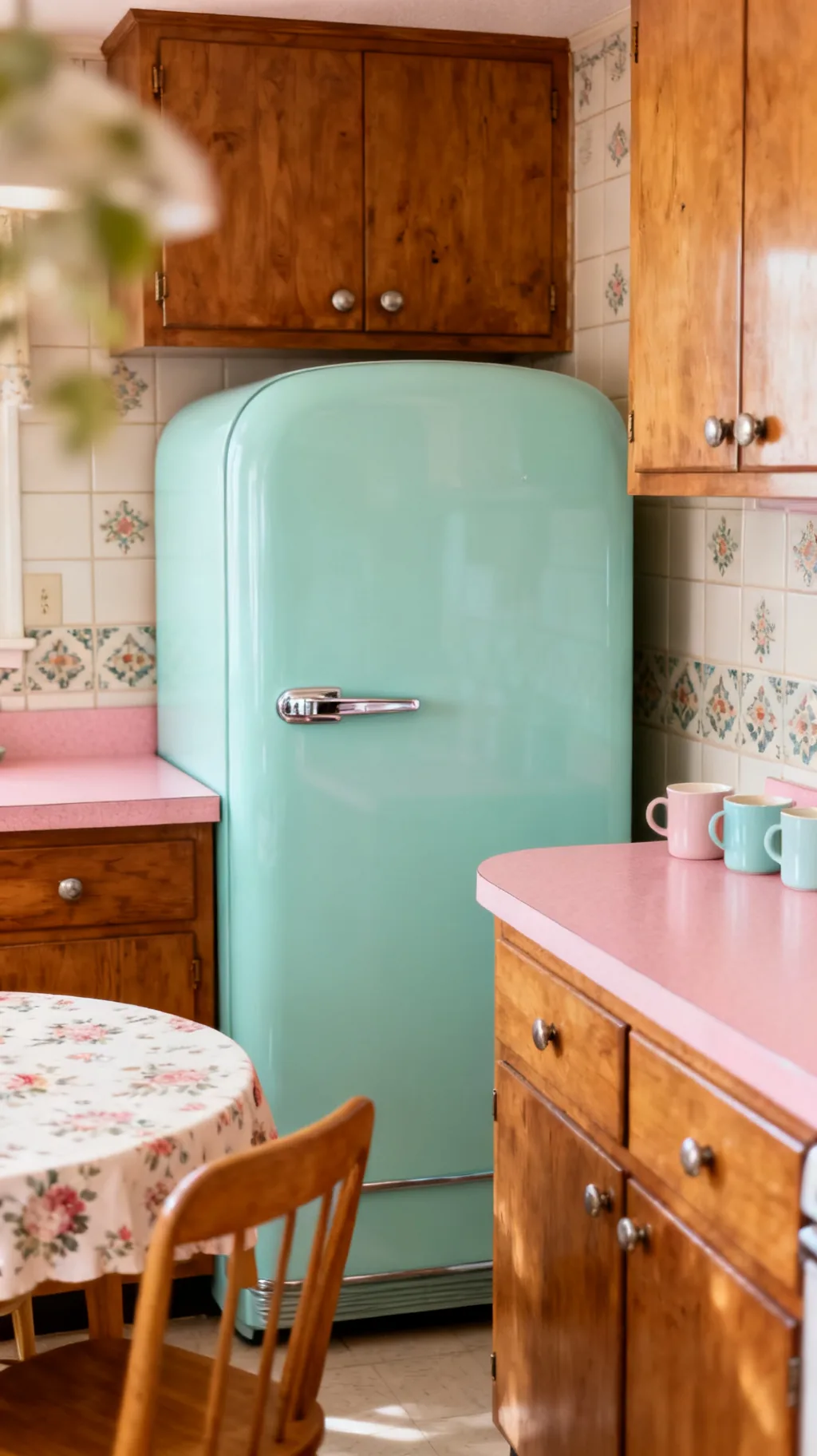
A rounded, pastel fridge is the showpiece almost everyone remembers from this era. Modern brands now make retro-look models with real freezers and energy-efficient guts, so you get the charm without the headaches. A friend of mine put a mint one in her galley kitchen and guests comment on it every single time.
Make It Work in Your Space
- Go bold: a single colored fridge can be the whole room’s focal point.
- Match the era: rounded shoulders and a chrome handle sell the look.
- Keep the rest calm: let the fridge be the star, not the competition.
If a new retro fridge is a splurge, a vintage-style decal or a thrifted working model can bridge the gap.
4. Lay Down a Checkerboard Floor
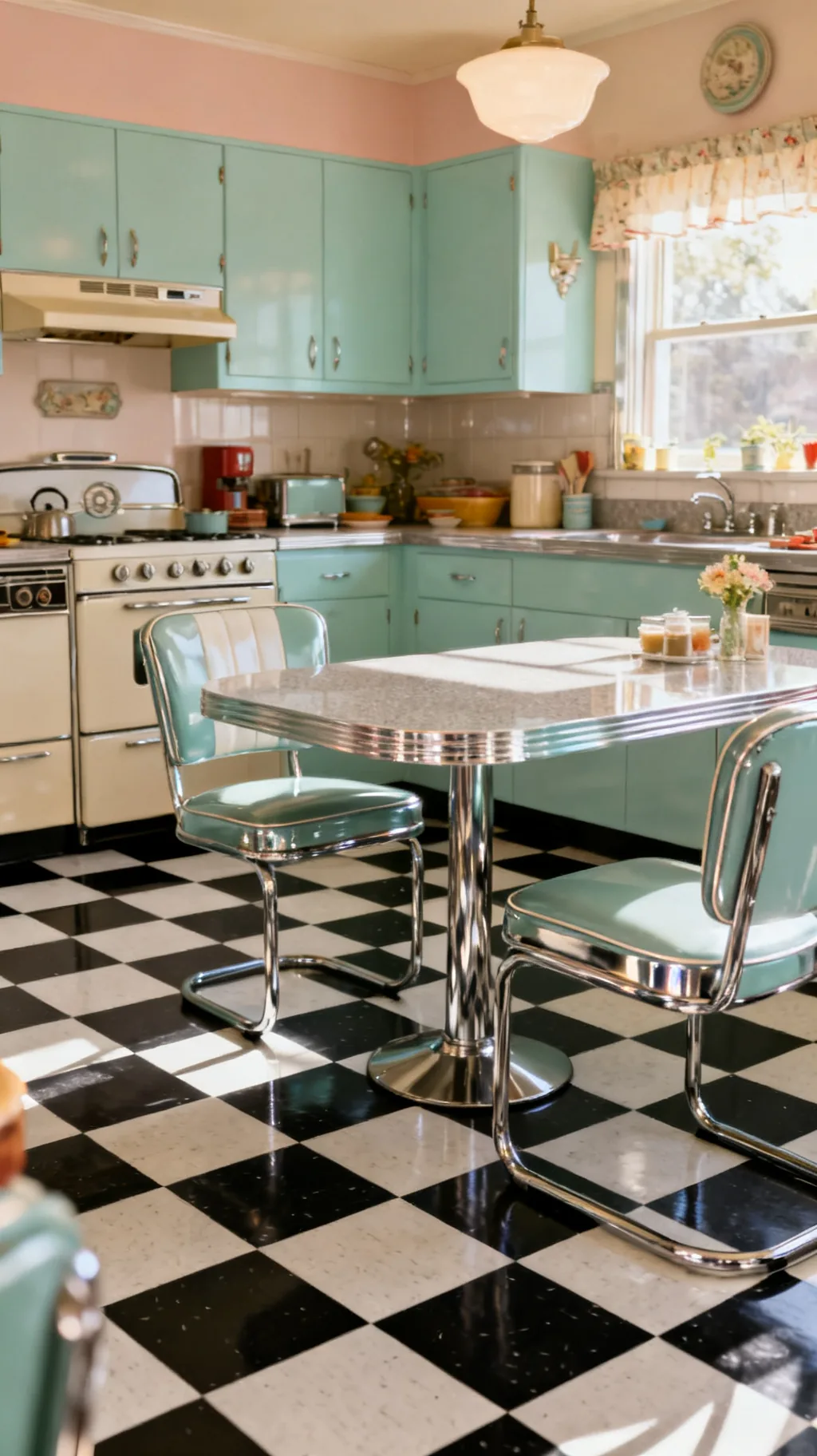
Black-and-white checkerboard flooring is the quickest shortcut to instant retro. Vinyl tiles keep it budget-friendly and warm underfoot. If full checkerboard feels like a lot, try it in a small entry zone or in front of the sink as a playful nod.
Ways to Try It
- Classic black and white: timeless and high-contrast.
- Soft pastel check: pink-and-white or mint-and-cream feels gentler.
- Peel-and-stick vinyl: renter-friendly and easy to swap later.
Lay it on the diagonal to make a small kitchen feel wider, a tiny trick with a big payoff.
5. Hang Ruffled Cafe Curtains
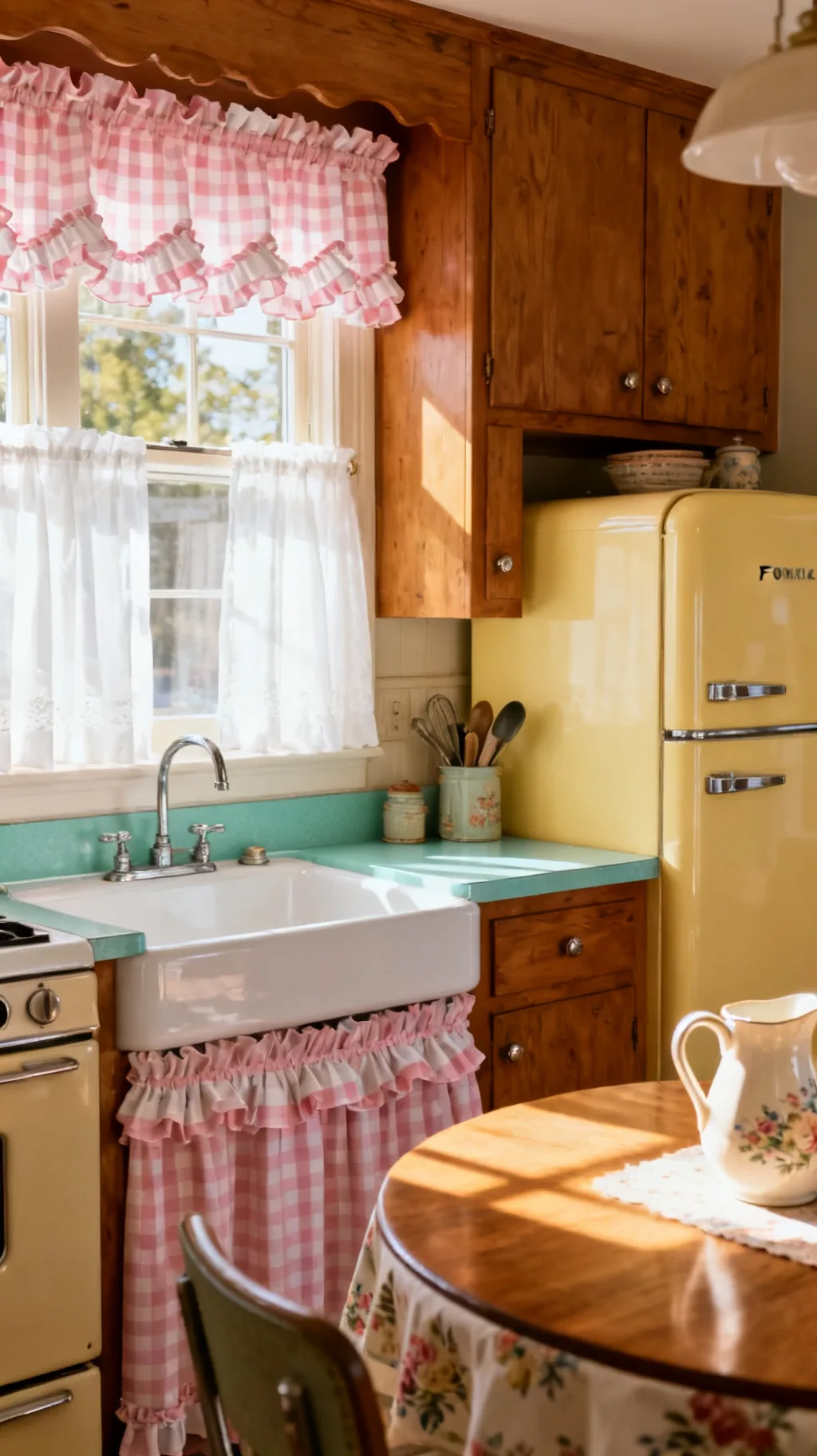
Half-height cafe curtains let light pour in while still softening the window. Gingham, tiny florals, and cherry prints all feel right at home here. They’re an easy weekend sew if you like a little project.
Prints That Fit the Era
- Gingham: red, blue, or yellow checks are pure fifties.
- Cherry or fruit prints: cheerful and kitchen-appropriate.
- Tiny florals: soft and sweet without overwhelming.
A simple tension rod makes these no-commitment, so you can change them with the seasons.
Swipe through these for a little inspiration.
 1 / 5
1 / 5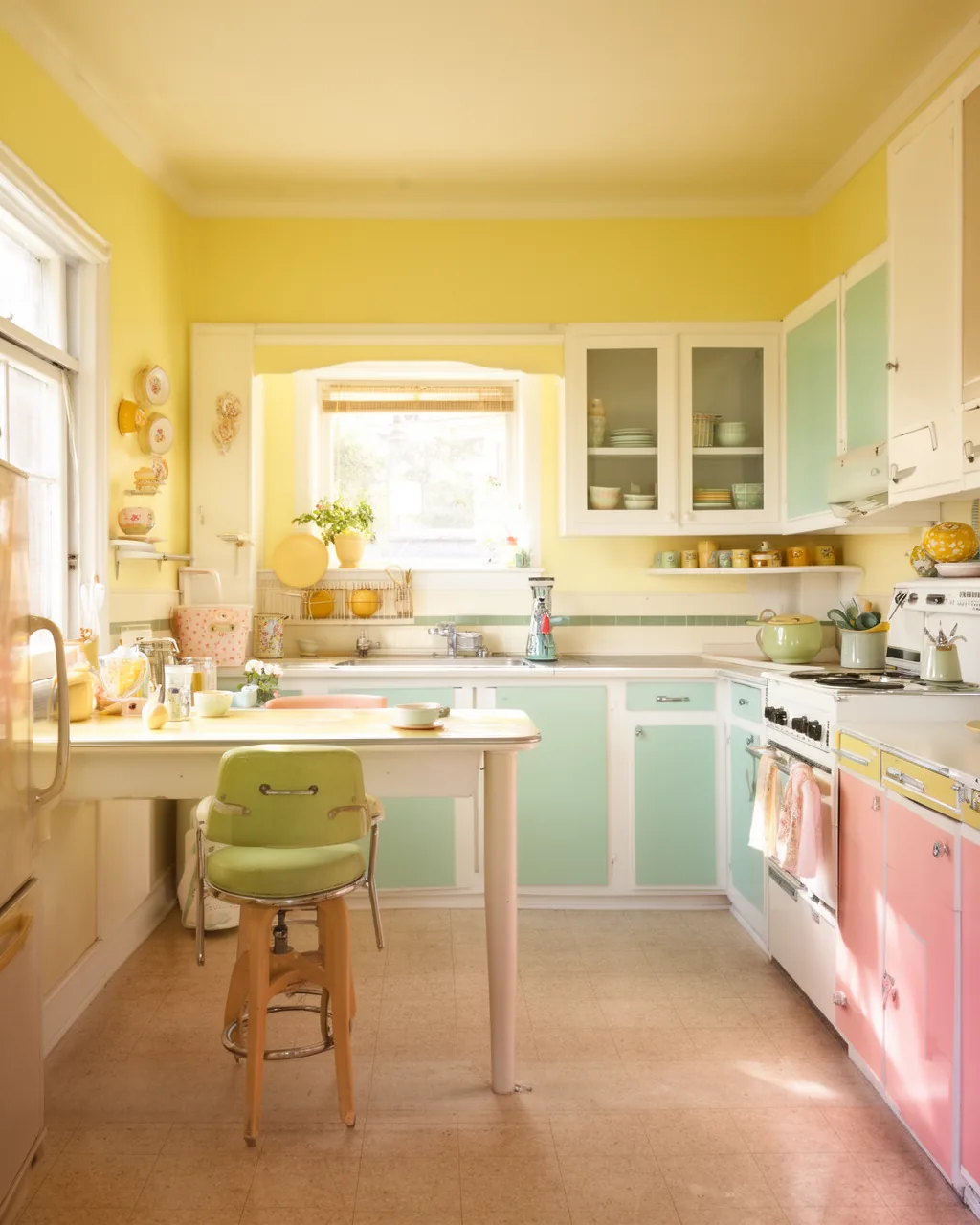 2 / 5
2 / 5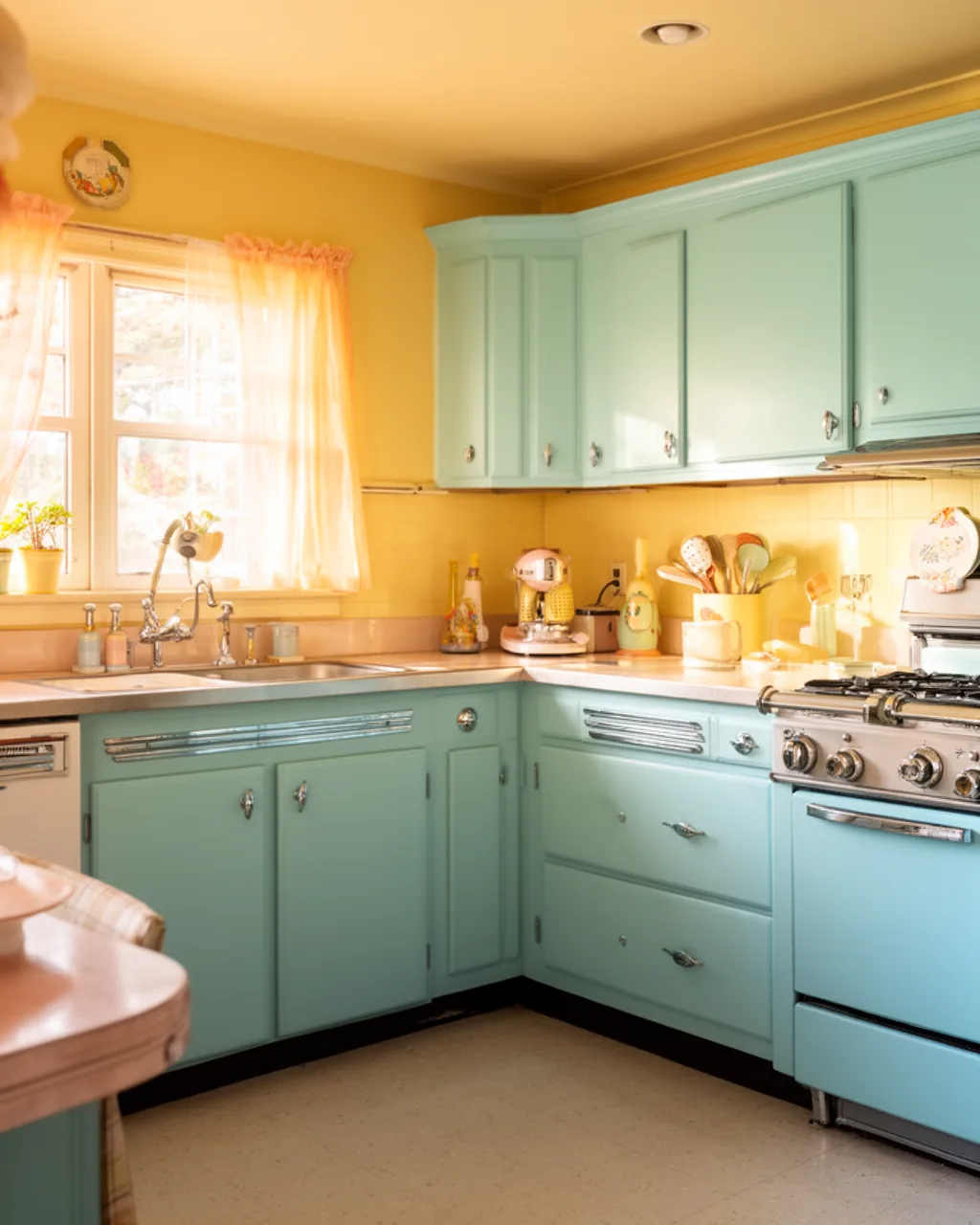 3 / 5
3 / 5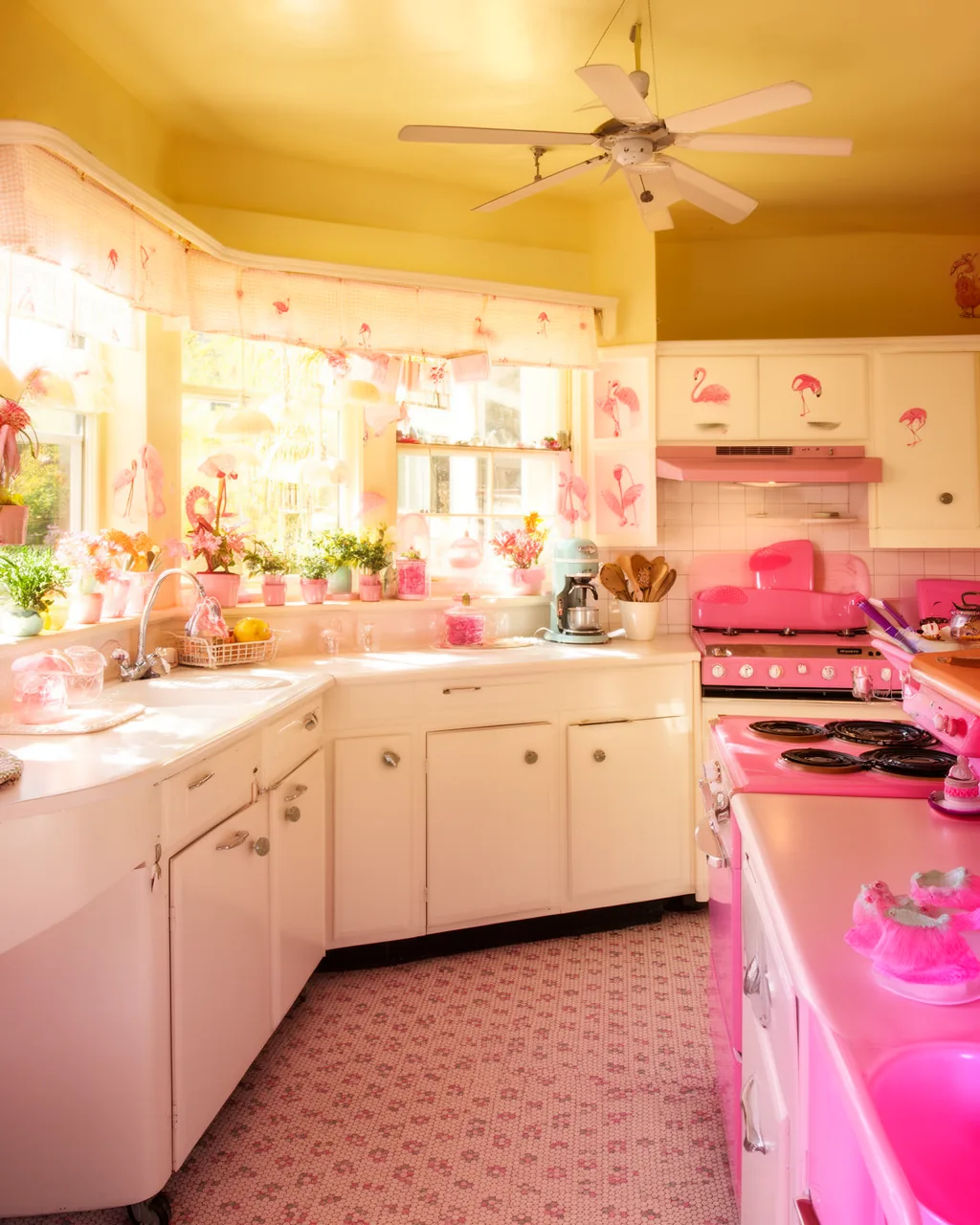 4 / 5
4 / 5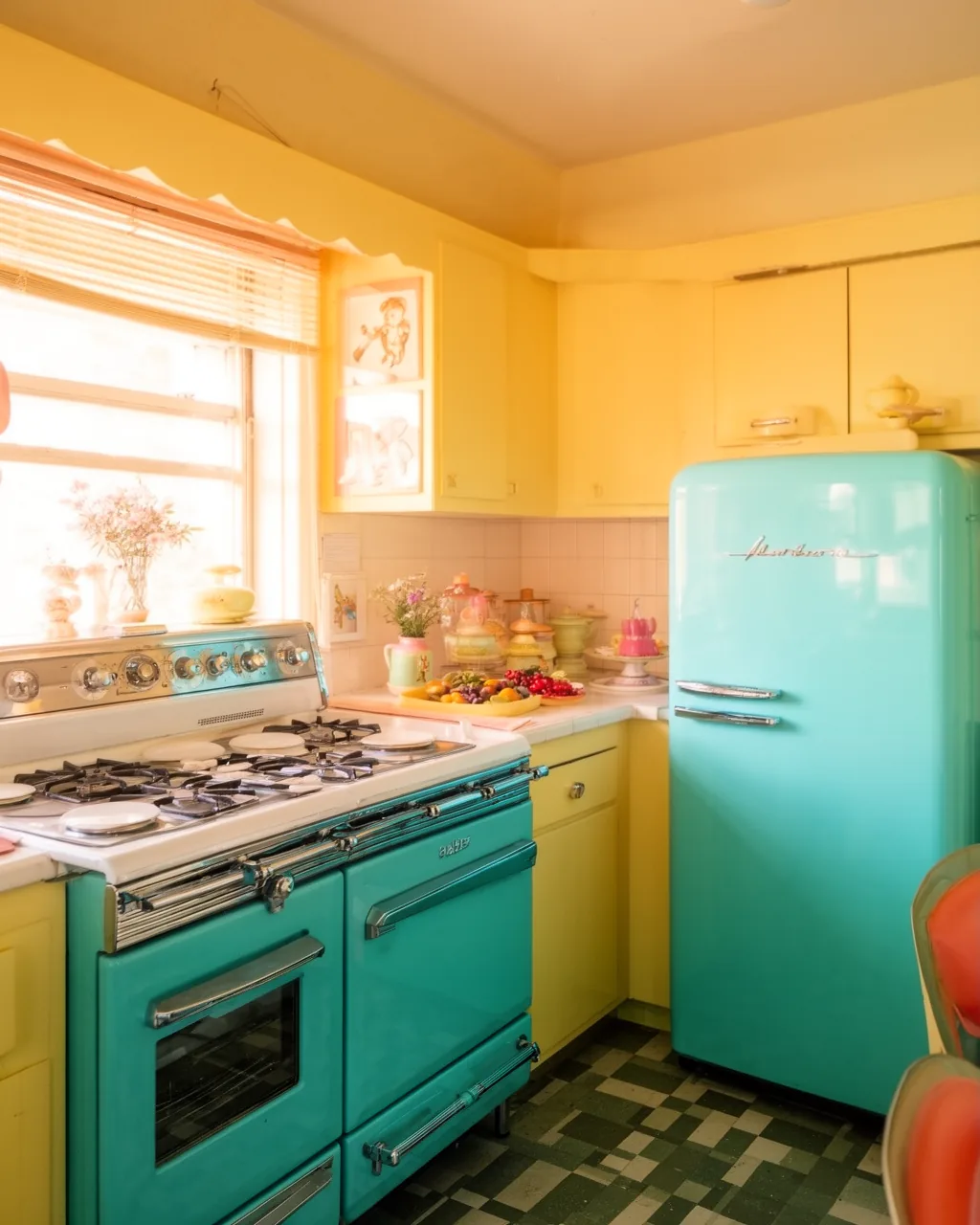 5 / 5
5 / 56. Choose Metal Cabinets With a Glossy Finish
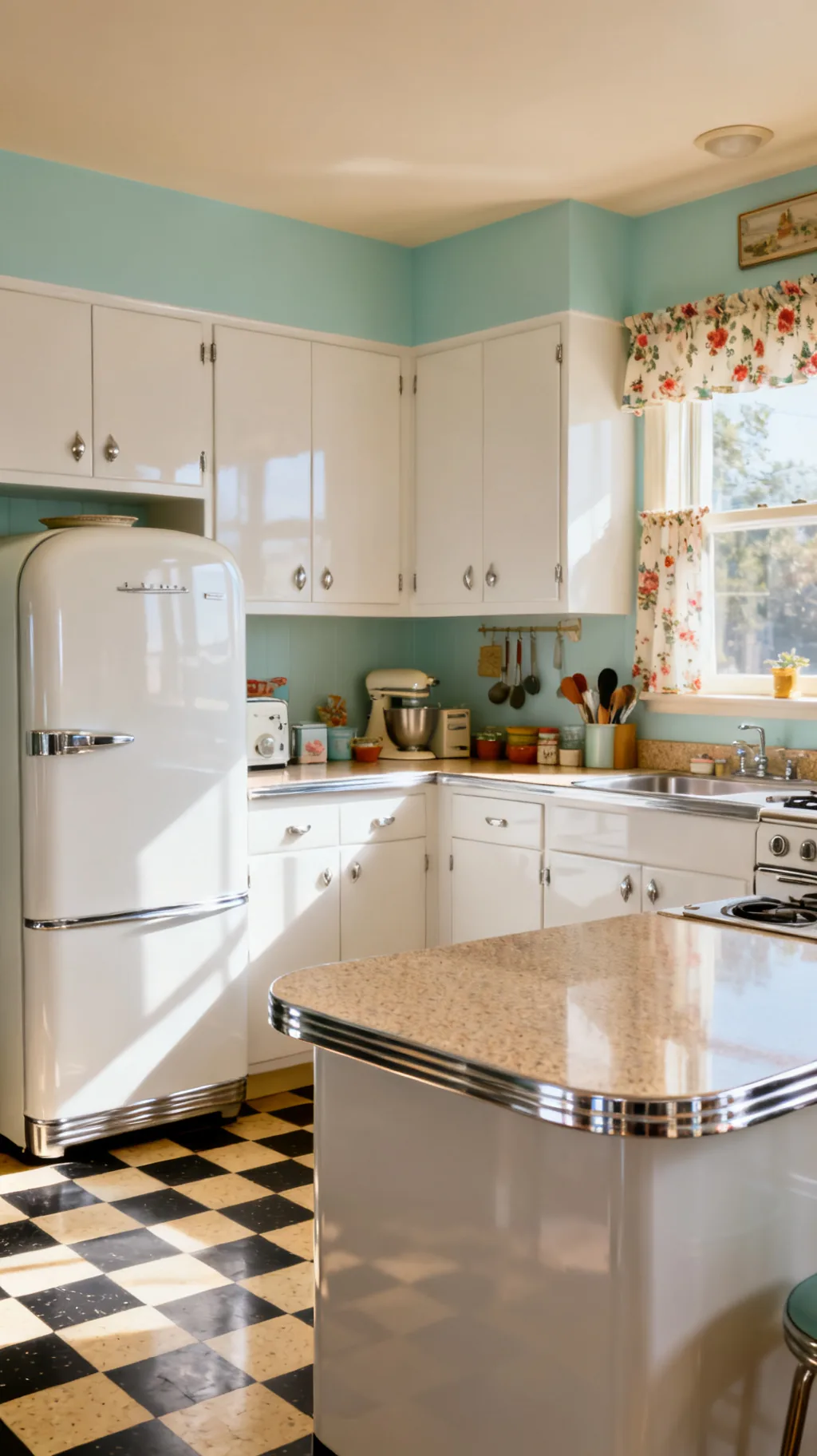
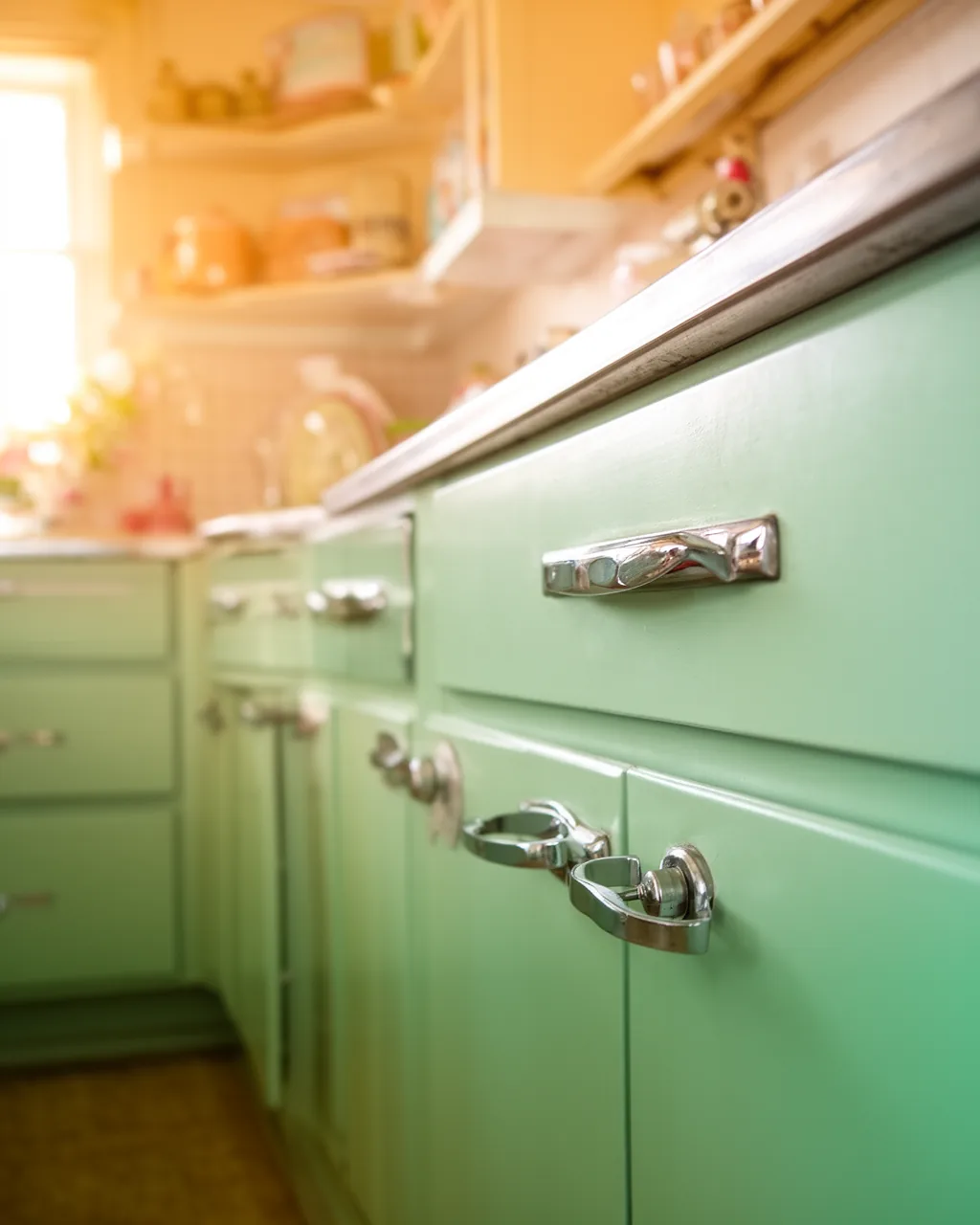
Steel cabinets were everywhere in the fifties, prized for being sturdy and easy to wipe down. Original sets are a vintage-hunter’s dream, but a glossy painted finish on existing cabinets fakes the look convincingly. A chrome pull or two seals the deal.
Get the Look
- High-gloss paint: a semi-gloss or lacquer finish mimics enameled steel.
- Chrome or nickel pulls: the small detail that sells the decade.
- Restore originals: vintage steel sets often just need fresh paint.
If you find a real metal set, grab it, they are tanks and last for generations.
7. Display a Vintage Formica Table
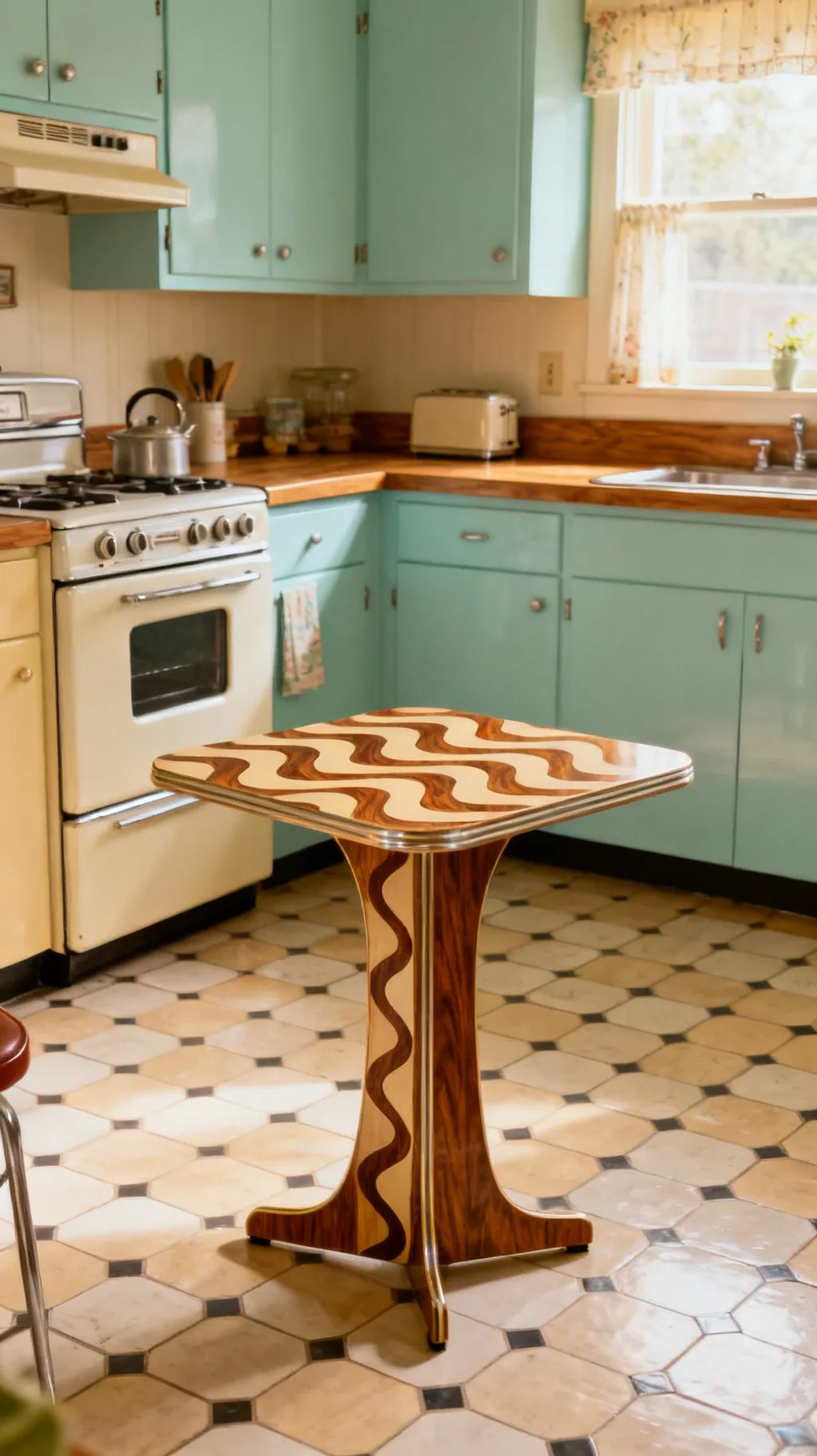
Beyond the dinette, a small Formica side table or rolling cart adds usable surface and period flair. Boomerang and starburst patterns in the laminate are worth hunting for. I remember a yellow one at my grandmother’s that doubled as a baking station.
Where to Use One
- As a coffee station: a rolling cart keeps mornings tidy.
- As extra prep space: wipeable laminate is endlessly practical.
- As a bar cart: retro glassware looks perfect on top.
Look for the speckled atomic patterns, they are the detail that instantly dates it to the fifties.
8. Mix In Atomic-Era Patterns
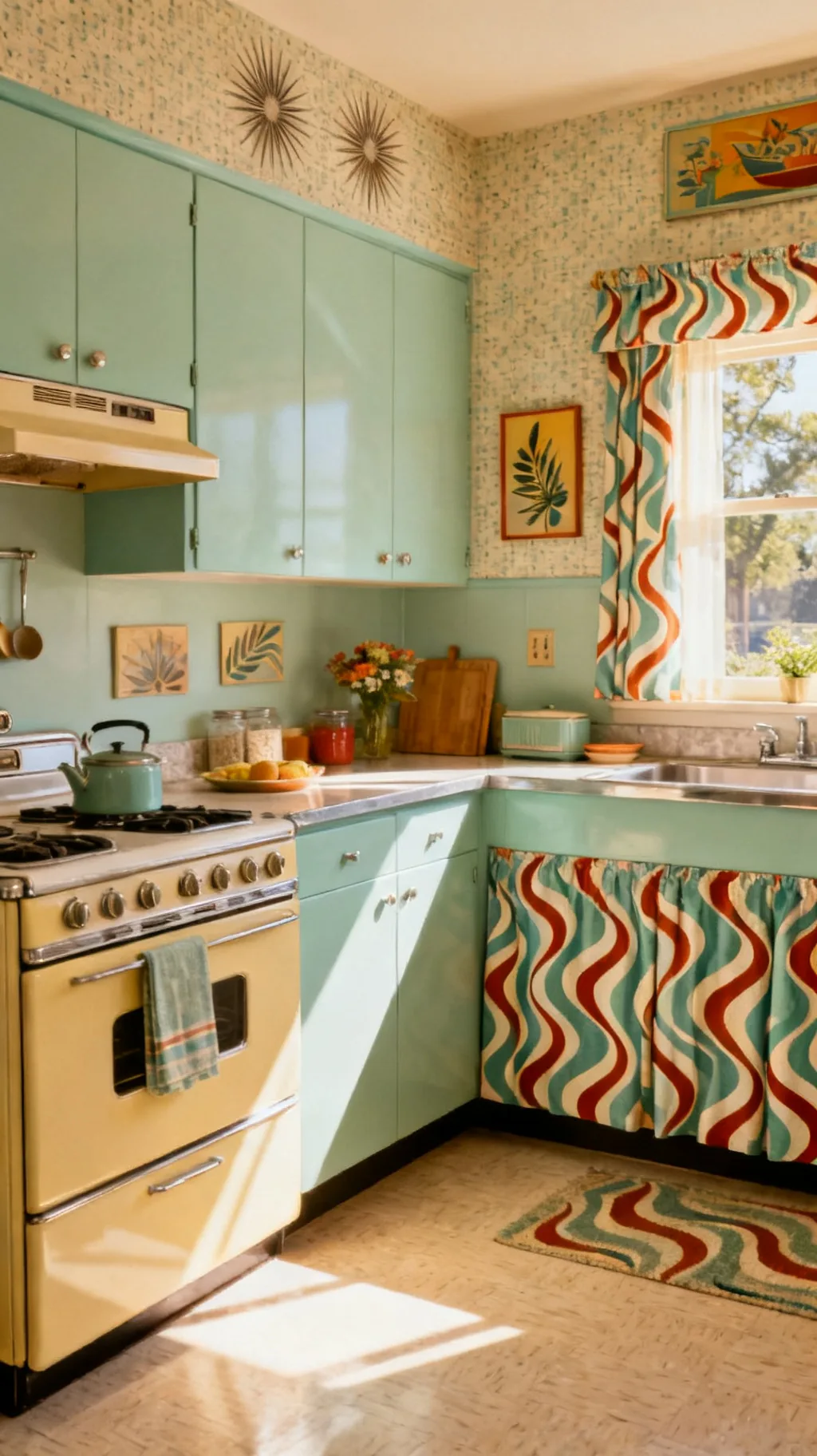
Atomic motifs, boomerangs, starbursts, and tiny geometric repeats, defined mid-century style. Sprinkle them across tea towels, a backsplash detail, or a single piece of wall art. A little goes a long way, so let one pattern lead.
Easy Places to Add Them
- Textiles: tea towels, seat cushions, and curtains.
- Wall art: a single framed atomic print is plenty.
- Backsplash accent: a few patterned tiles among plain ones.
Keep one bold pattern as the lead and let everything else stay calm around it.
&# 10024; More vintage flavor:vintage kitchen aesthetic ideas with a 70s vibe→9. Pick a Bold Single-Color Appliance Suite
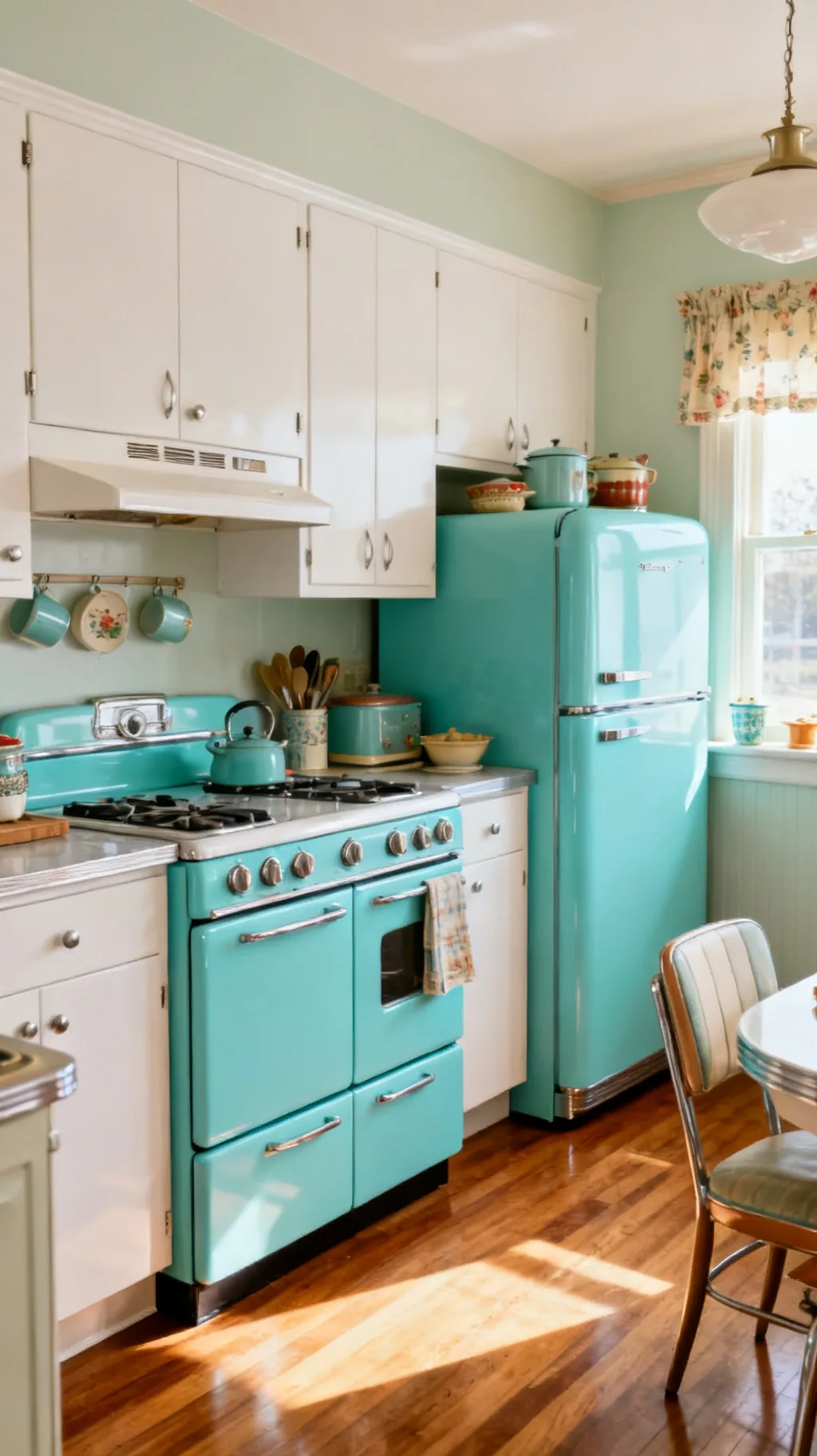
Matching your range, fridge, and small appliances in one cheerful color reads as intentional rather than mismatched. Turquoise and red were fifties favorites that still feel fresh. Keep the rest of the room calm so the color gets to shine.
Make a Suite Work
- Commit to one color: turquoise, red, or buttercream throughout.
- Echo it in small stuff: a kettle or canister ties it together.
- Neutral backdrop: white cabinets let the color sing.
You don’t need every appliance to match, two or three pieces in the same tone already feel curated.
10. Style Open Shelves With Milk Glass
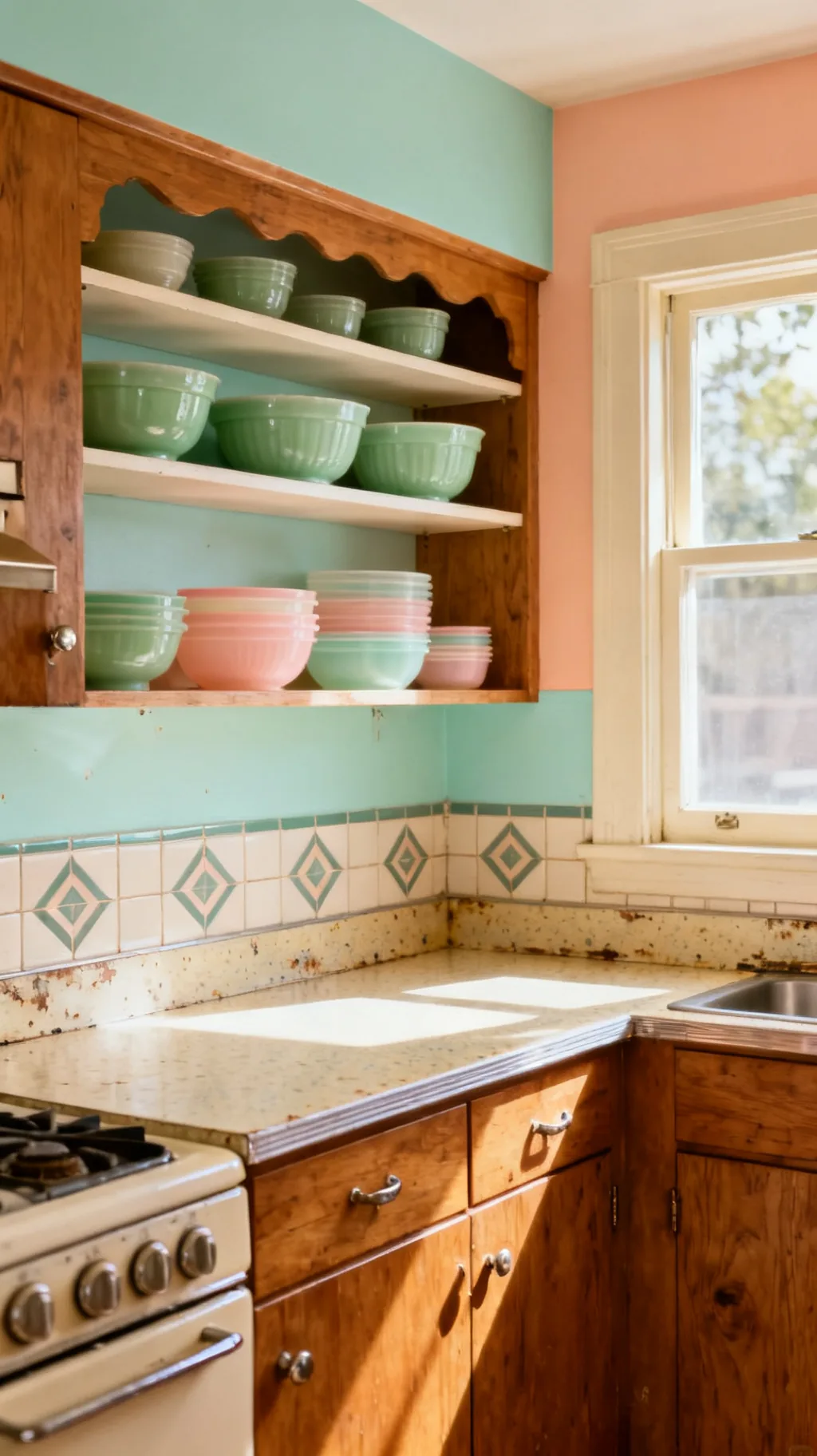
Milk glass, jadeite, and Pyrex in soft hues look wonderful lined up on open shelves. They’re functional too, so your prettiest pieces earn their keep. Thrift stores and estate sales are gold mines for these.
What to Collect
- Jadeite: that soft green glow is unmistakably mid-century.
- Pyrex bowls: nesting sets in pastels are both useful and pretty.
- Milk glass: creamy white pieces catch the light beautifully.
Group by color or shape so the shelf looks collected, not cluttered.
Take a peek at a few of these looks.
 1 / 5
1 / 5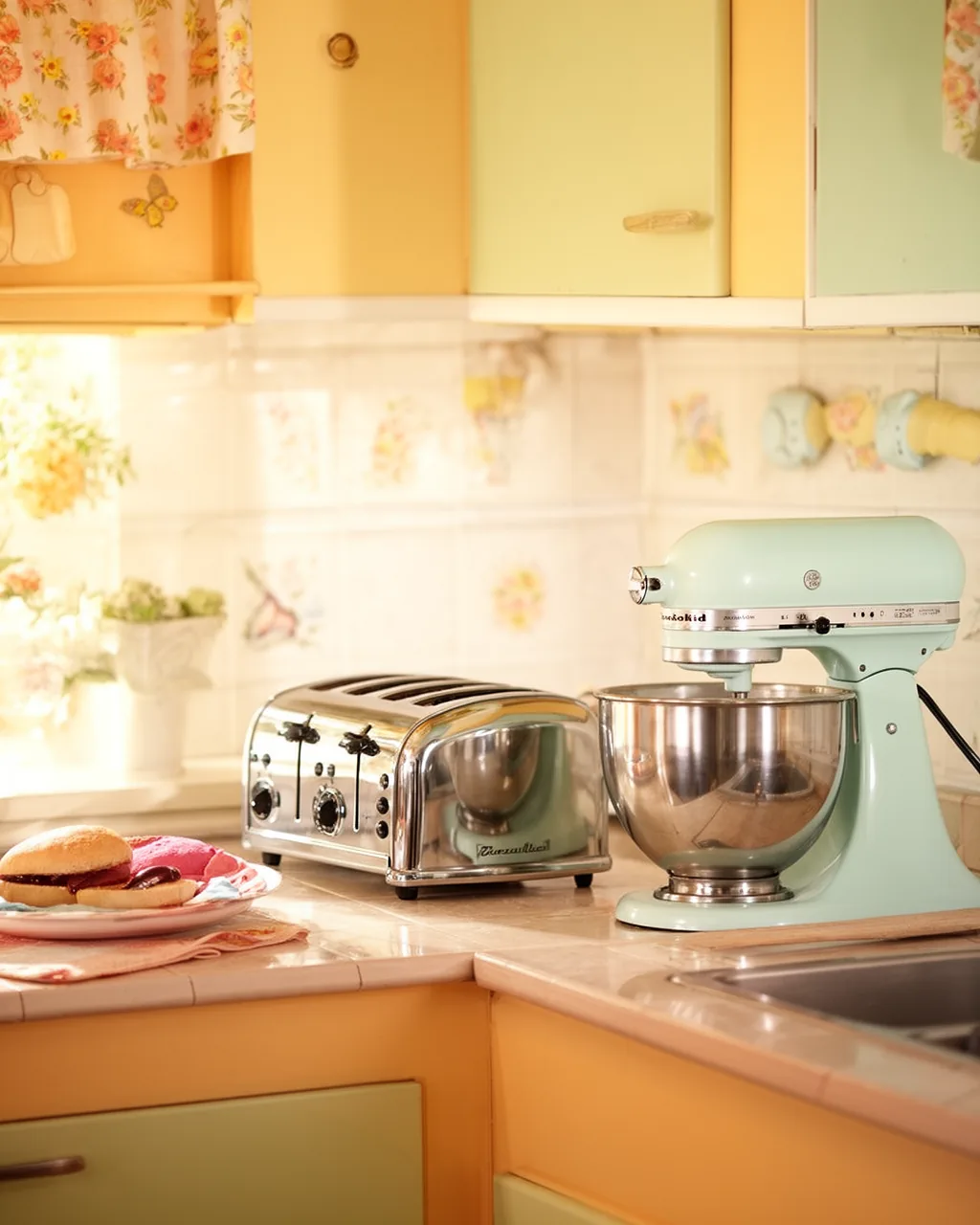 2 / 5
2 / 5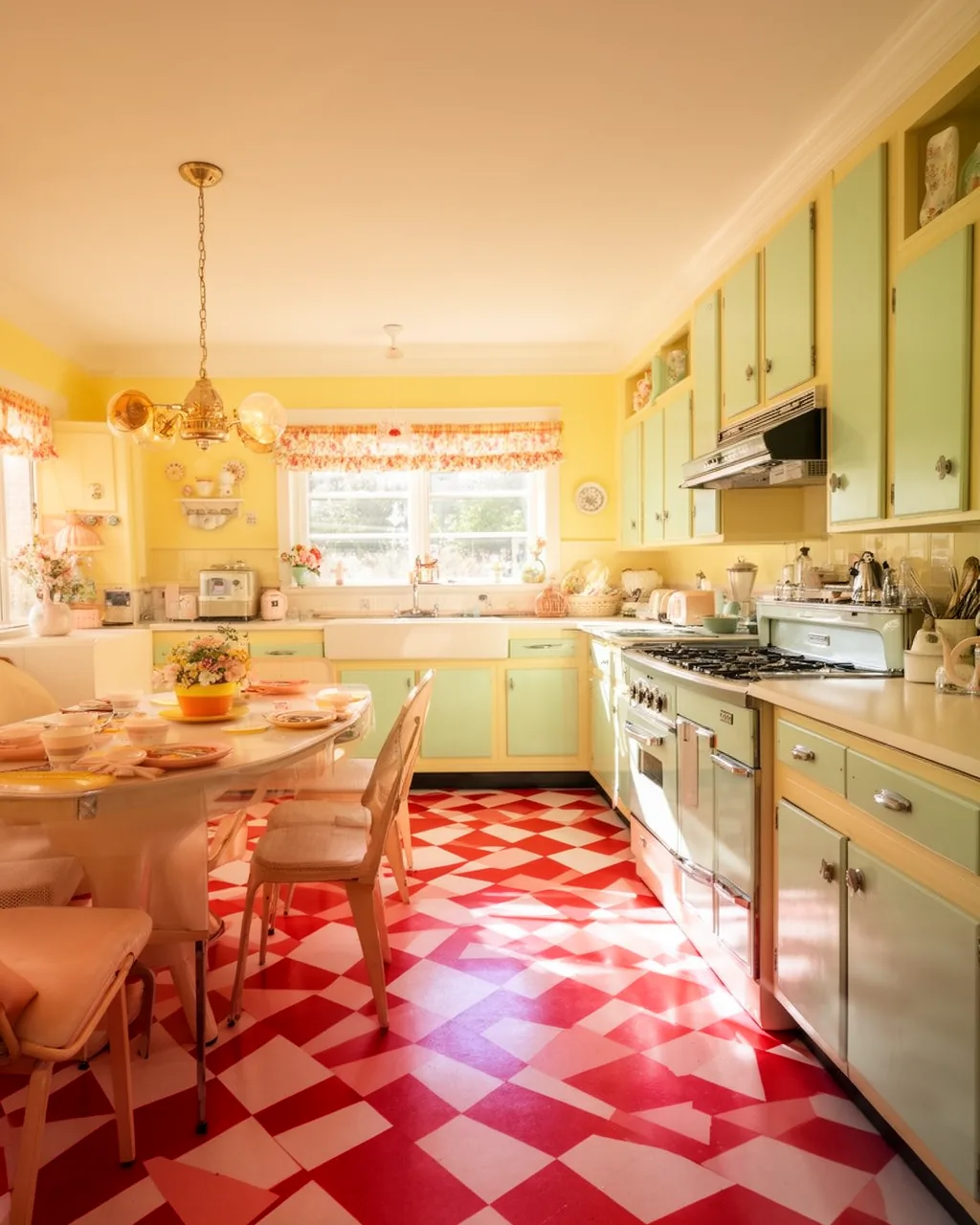 3 / 5
3 / 5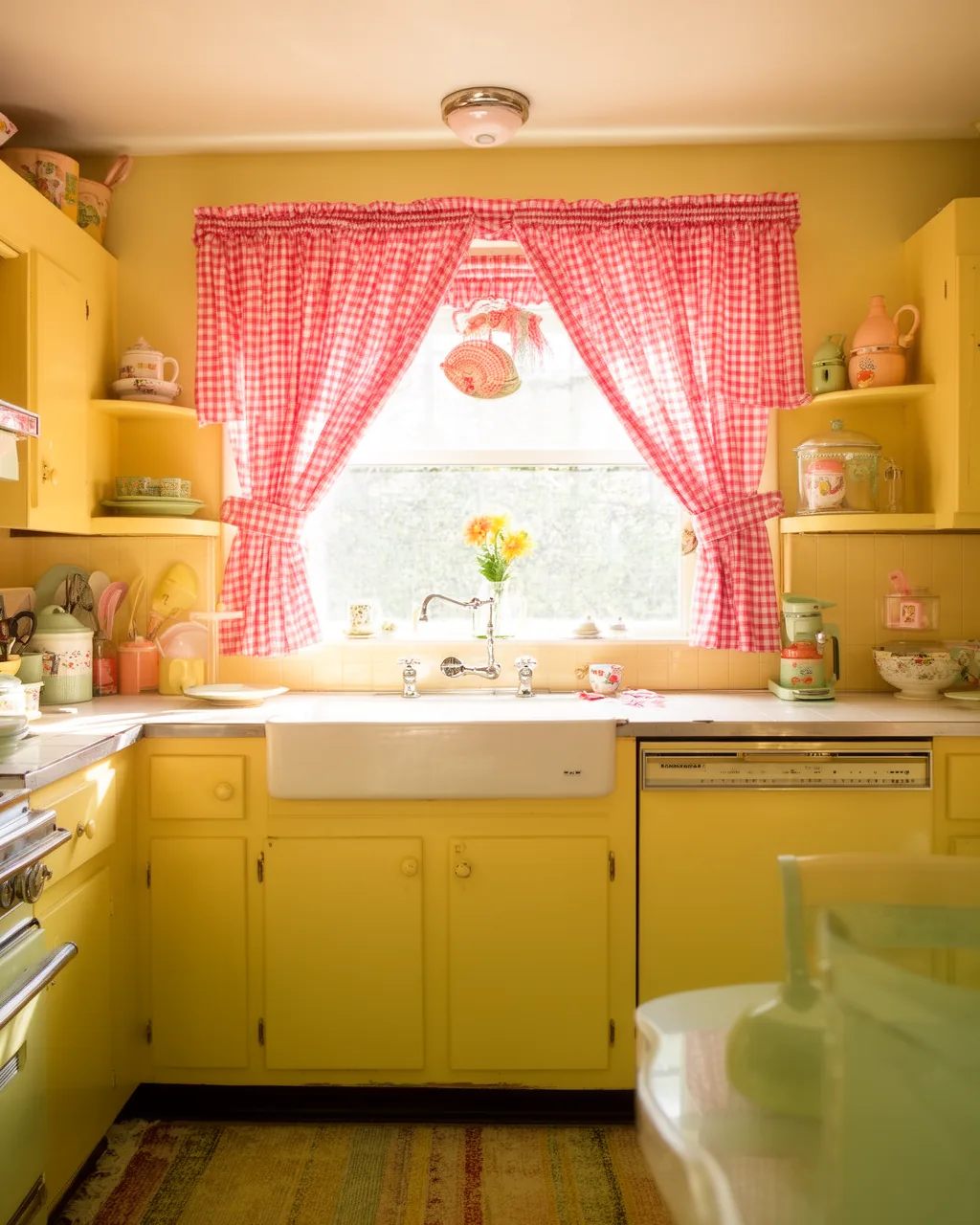 4 / 5
4 / 5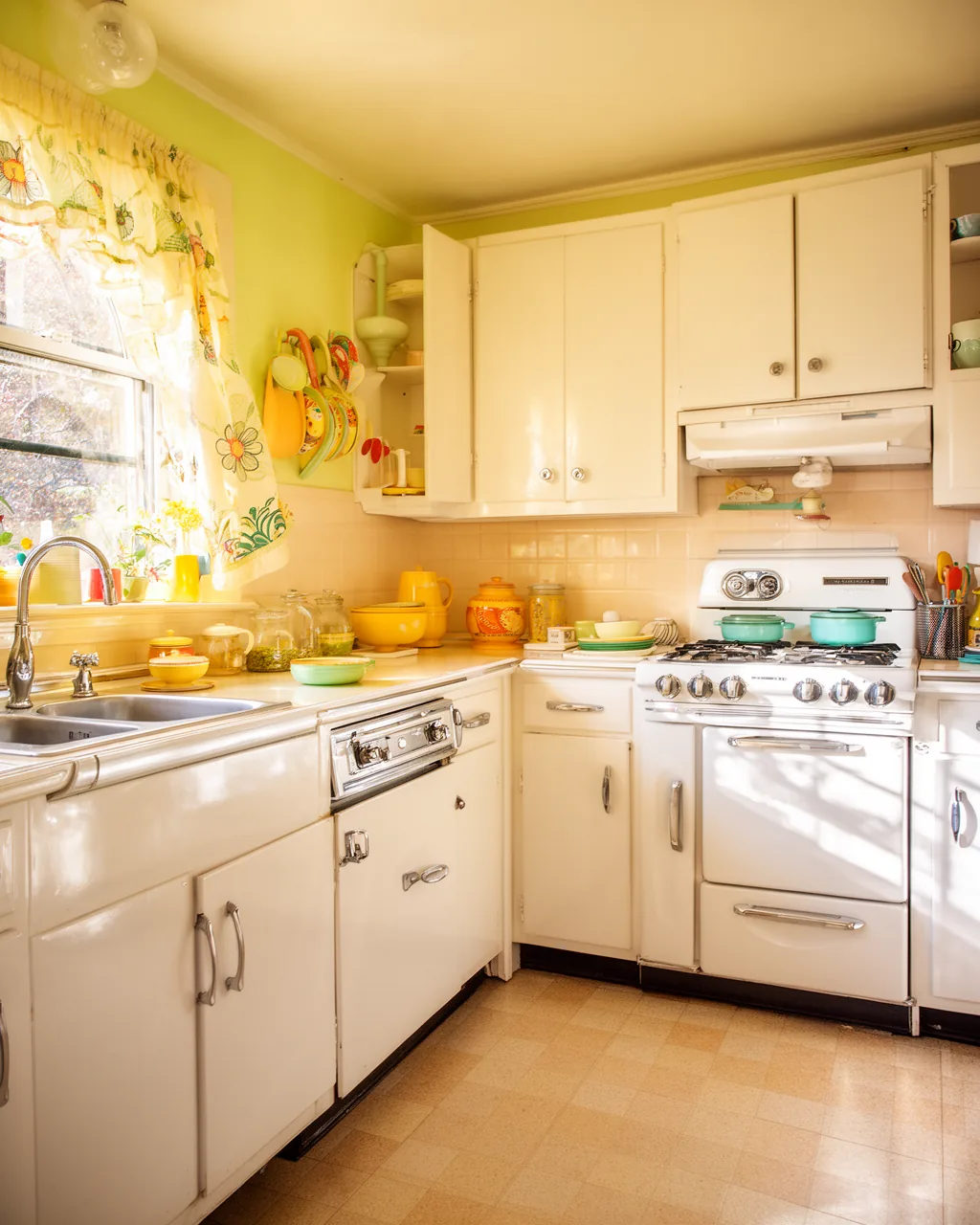 5 / 5
5 / 511. Add a Sunburst Clock
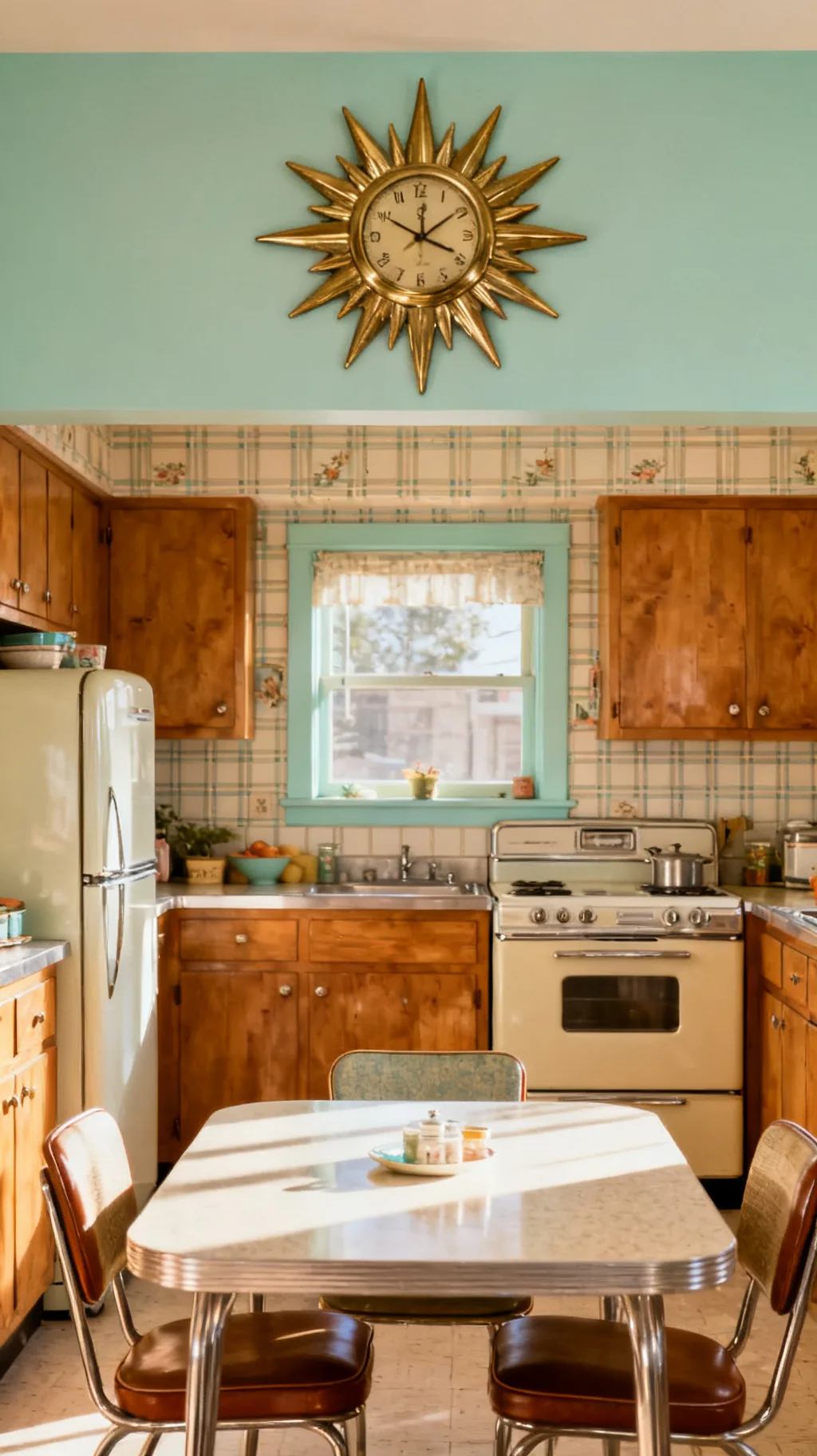
A starburst or sunburst wall clock is small but mighty as a focal point. Hang it on an empty wall above the table or near the doorway. It’s one of those pieces that quietly tells everyone the decade you’re channeling. I’ve seen a single sunburst clock pull a plain wall together better than a whole gallery of frames.
Placement Tips
- Above the table: anchors the dining zone.
- On a blank wall: instant personality where there was none.
- Near the entry: a charming first impression.
Brass and black versions both work, choose whichever plays nicer with your hardware.
12. Use Subway or Penny Tile Backsplash
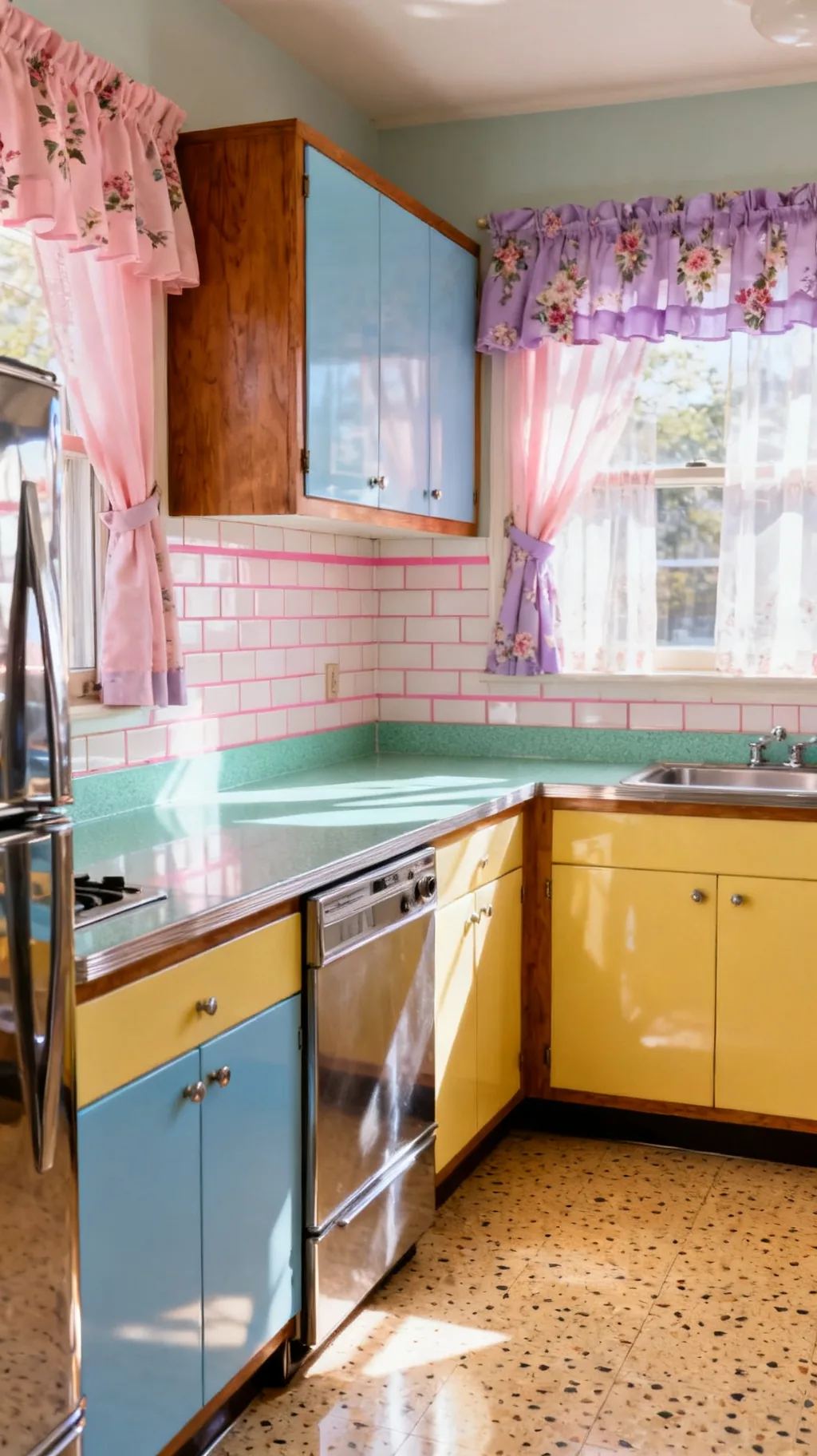
Glossy subway tile and tiny penny rounds both have real mid-century roots. A colored grout line, soft pink or mint, pushes it further into the era. These tiles are easy to find and forgiving to install.
Period-Right Choices
- Glossy subway: classic, bright, and budget-friendly.
- Penny rounds: playful and very period-correct.
- Tinted grout: a pastel grout line adds subtle character.
A glossy finish bounces light around, which makes a small fifties kitchen feel airier.
13. Showcase a Retro Toaster and Mixer
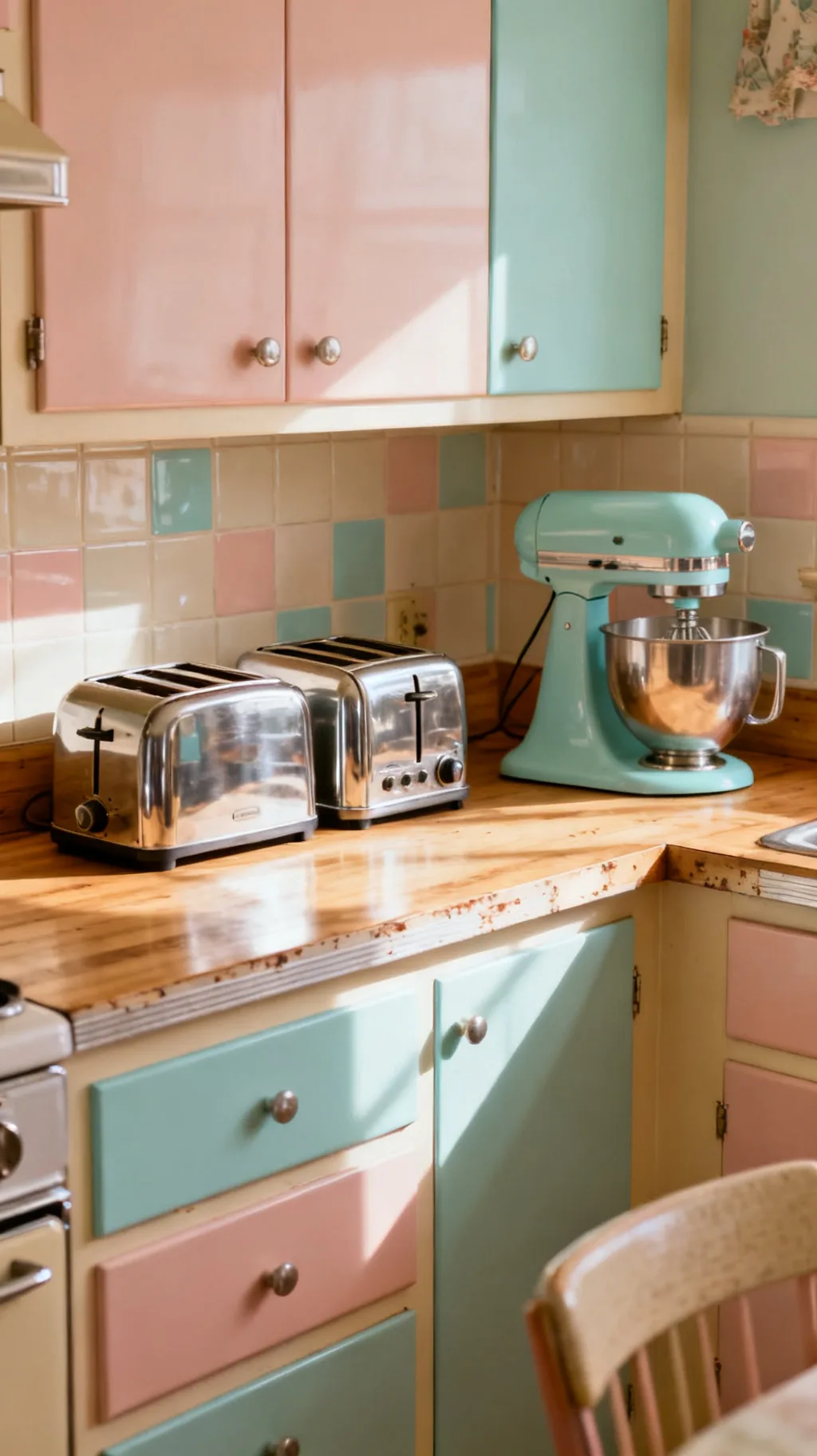
Countertop appliances in chrome or pastel double as decor. A gleaming two-slice toaster and a stand mixer in robin’s-egg blue add instant personality. Keep them out on the counter where they can be admired and used.
Choosing Counter Pieces
- Chrome toaster: the shine reads vintage at a glance.
- Pastel stand mixer: pretty enough to leave out.
- Matching kettle: a small echo that ties the look together.
Function meets charm here, these are the pieces you actually reach for every morning.
14. Hang Vintage Advertising Signs
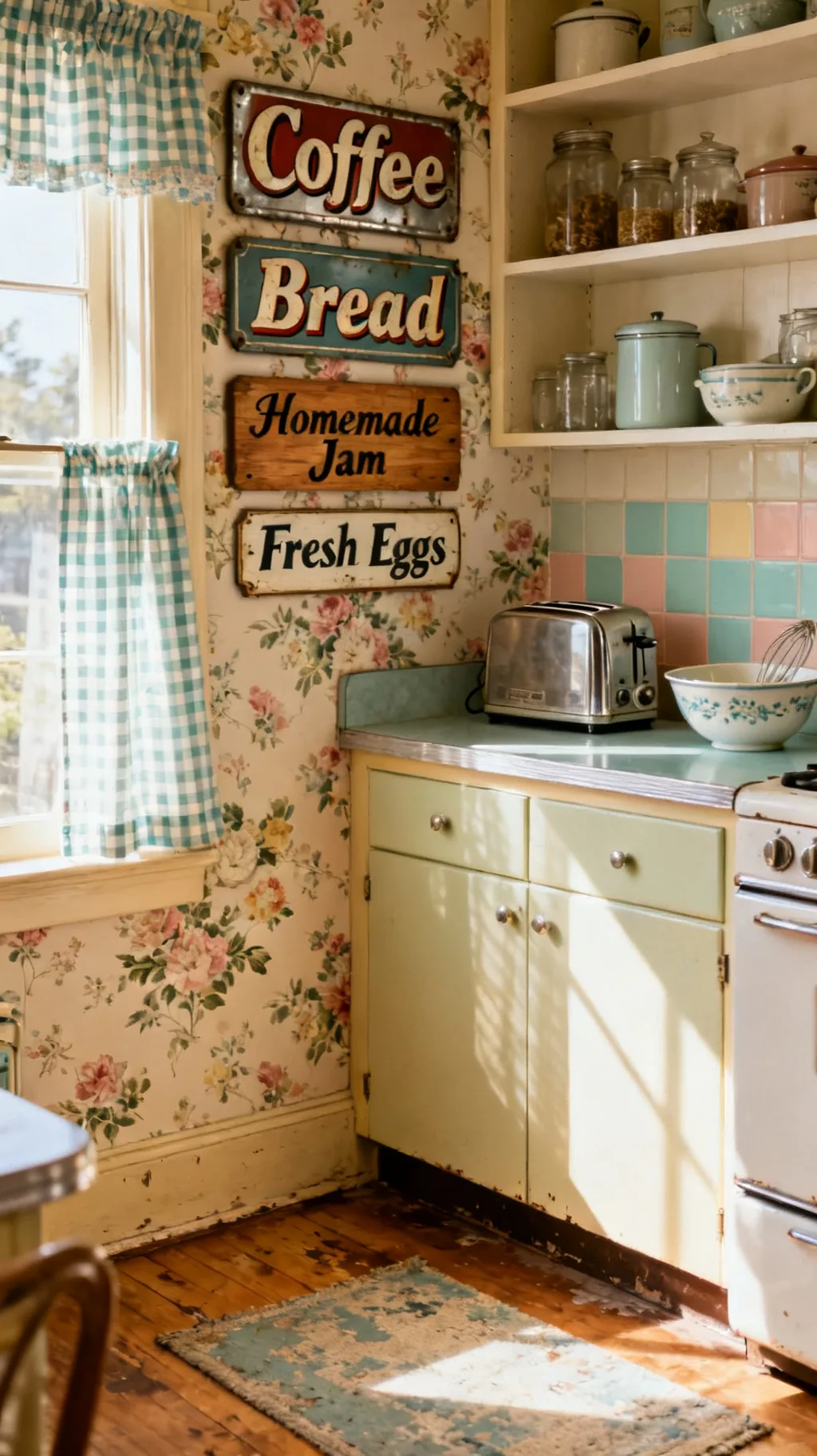
Old soda, coffee, and grocery signs bring warmth and a bit of storytelling to the walls. Reproductions are widely available if originals are out of reach. Cluster two or three for a collected, lived-in feel.
How to Style Them
- Cluster a few: two or three signs feel intentional.
- Mix sizes: one larger anchor with smaller pieces around it.
- Keep the palette tight: tie signs to your room colors.
Look for soft, faded graphics rather than glossy new prints, the patina is the whole point.
15. Add a Cozy Breakfast Nook
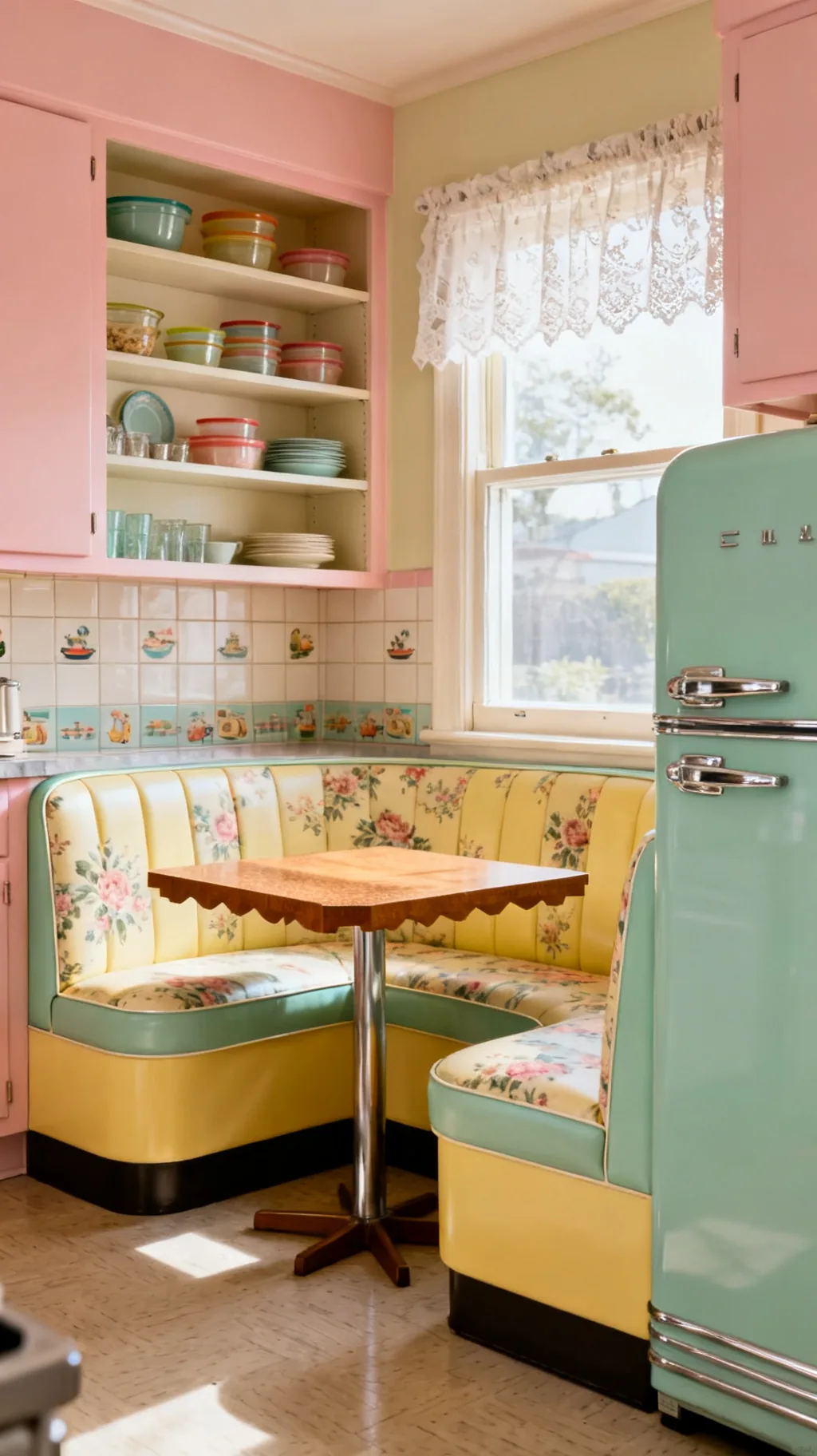
A built-in banquette with a small table makes mornings feel special and saves floor space. Upholster the bench in a wipeable vinyl for true fifties practicality. Tuck a few throw pillows in coordinating prints for comfort. A friend of mine turned an awkward corner into a nook like this and it quickly became everyone’s favorite seat in the house.
Build a Better Nook
- Wipeable vinyl: practical and period-correct.
- Storage bench: lift-up seats hide everyday clutter.
- Soft pillows: gingham or floral for a cozy touch.
A corner you’d otherwise waste becomes the sweetest spot in the house.
Scroll through and see which one speaks to you.
 1 / 5
1 / 5 2 / 5
2 / 5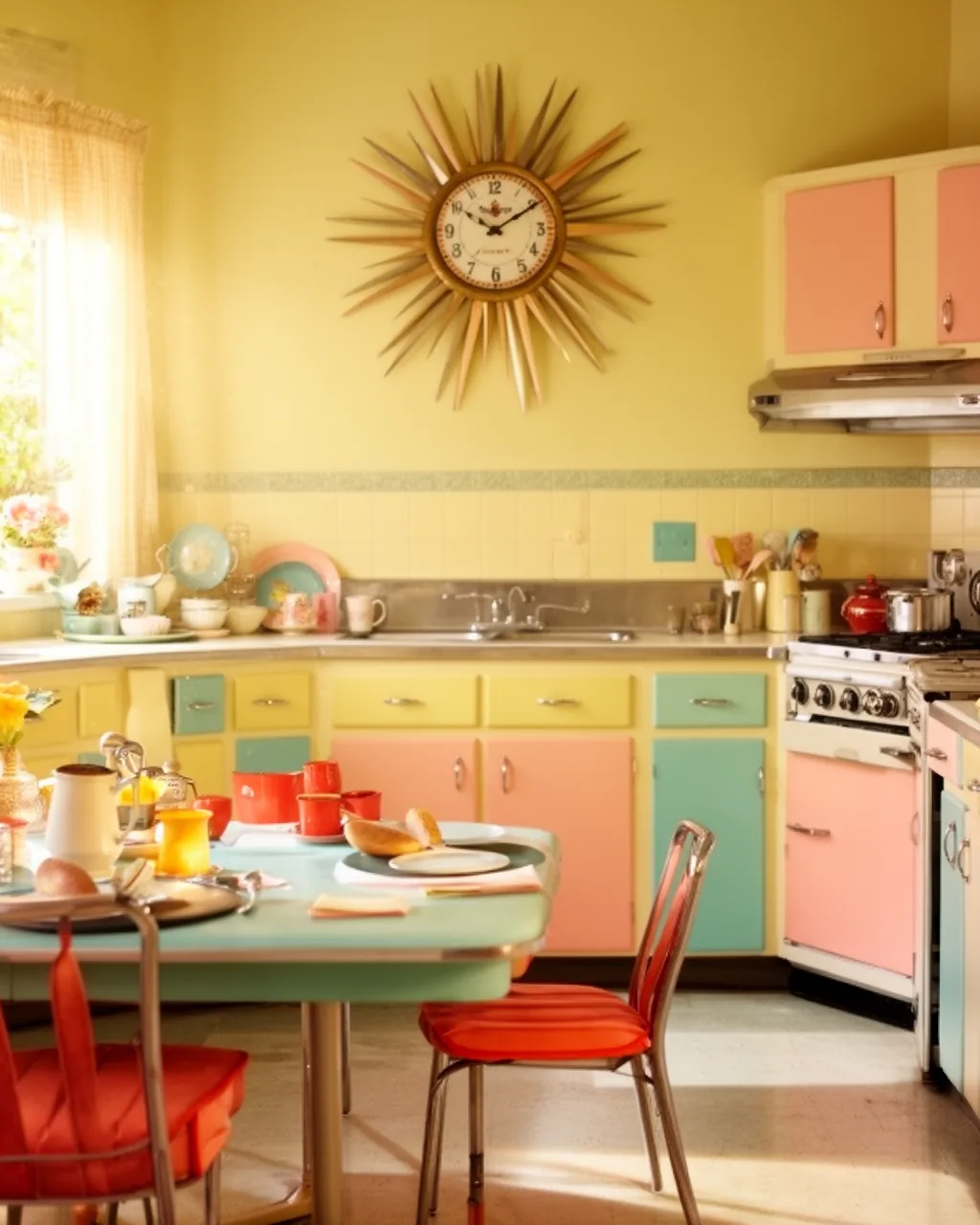 3 / 5
3 / 5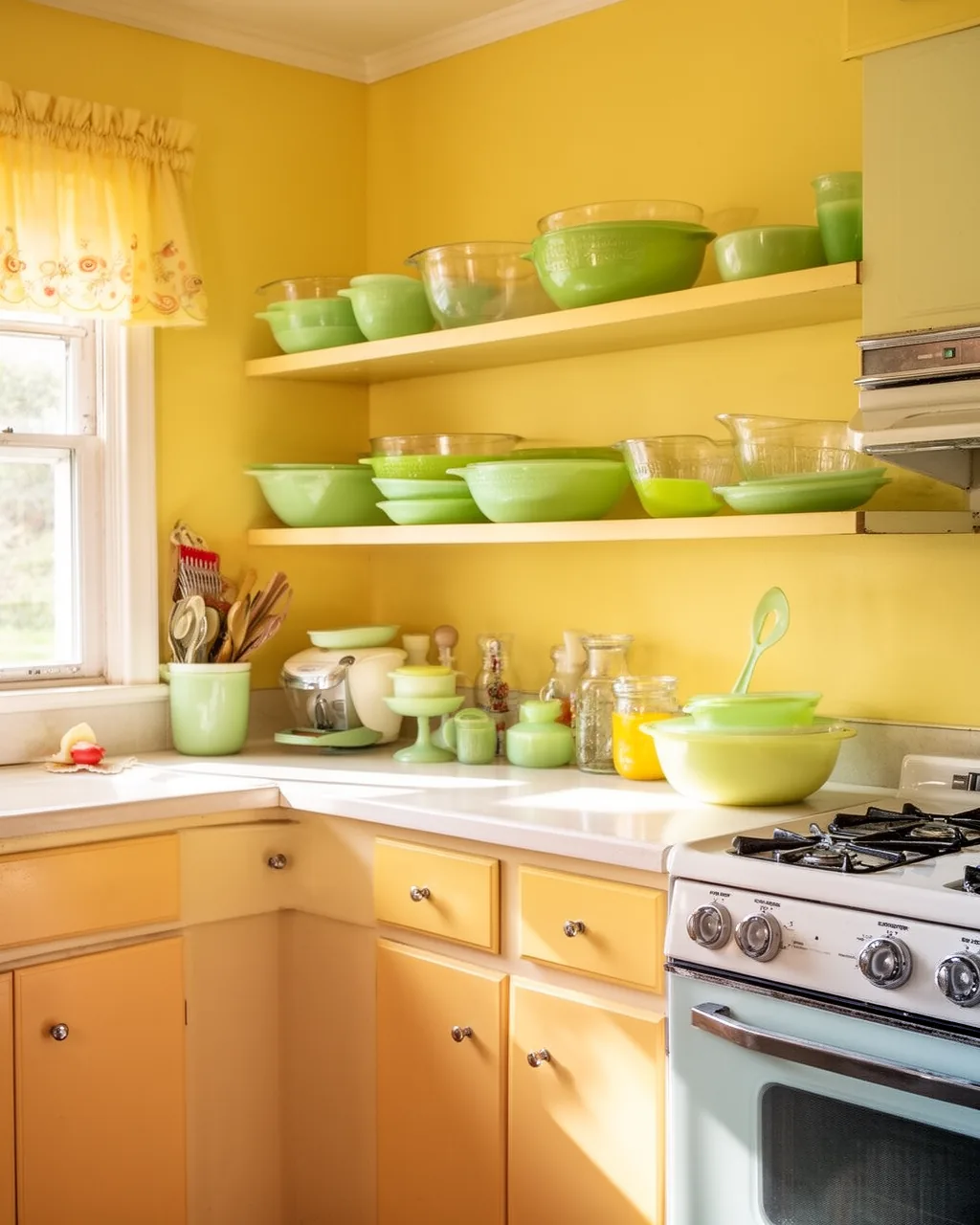 4 / 5
4 / 5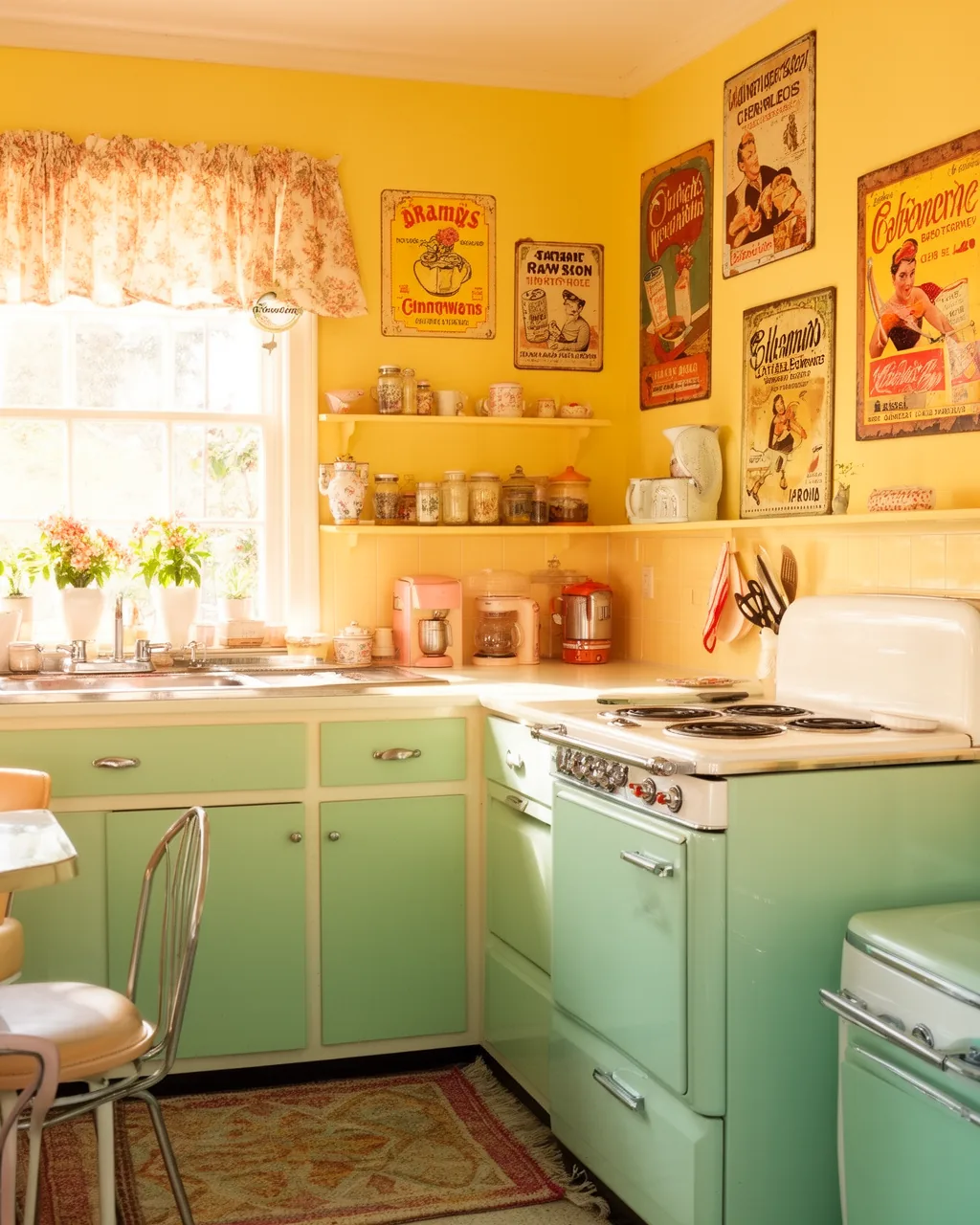 5 / 5
5 / 516. Layer In Patterned Wallpaper
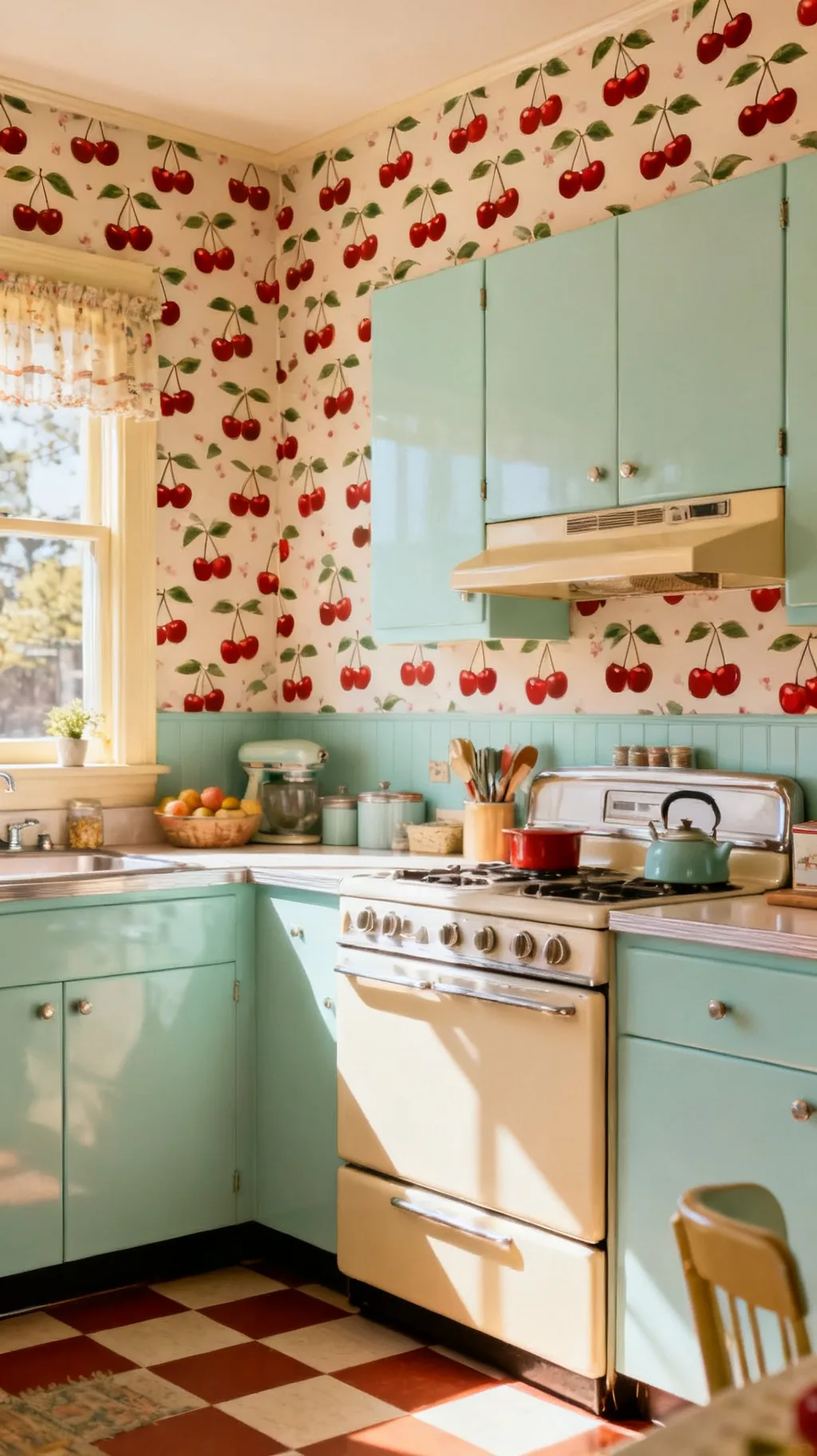
Cheerful wallpaper, think cherries, feathers, or tiny florals, was a fifties staple. A single papered wall or the inside of a cabinet keeps it from overwhelming. Peel-and-stick versions make it renter-friendly.
Where to Put It
- One accent wall: impact without commitment.
- Inside glass cabinets: a sweet surprise of pattern.
- Behind open shelves: frames your prettiest pieces.
Peel-and-stick means you can test a bold print and change your mind without regret.
&# 10024; Love a specific decade?see our 70s inspired kitchen ideas→17. Choose Schoolhouse or Globe Lighting
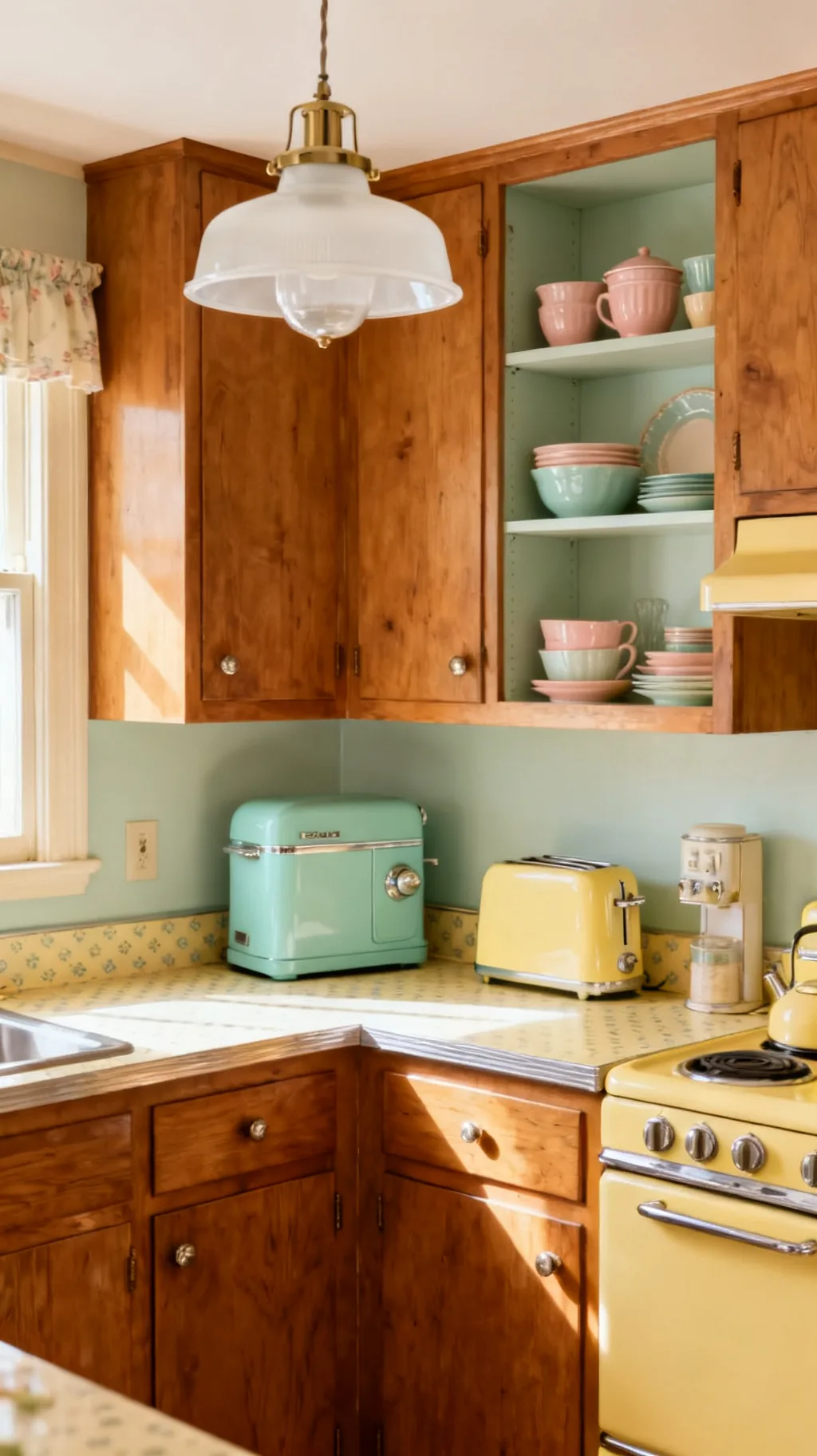
Round schoolhouse pendants and milk-glass globes cast that soft, nostalgic glow. They suit both ceiling fixtures and over-sink spots. The simple shapes blend with almost any cabinet color.
Lighting That Fits
- Schoolhouse pendant: the classic rounded milk-glass shade.
- Globe fixture: soft, even light with a retro shape.
- Brass or chrome accents: match to your hardware.
Warm-white bulbs keep that gentle, lived-in glow rather than a harsh modern white.
18. Add Canisters and Storage Tins
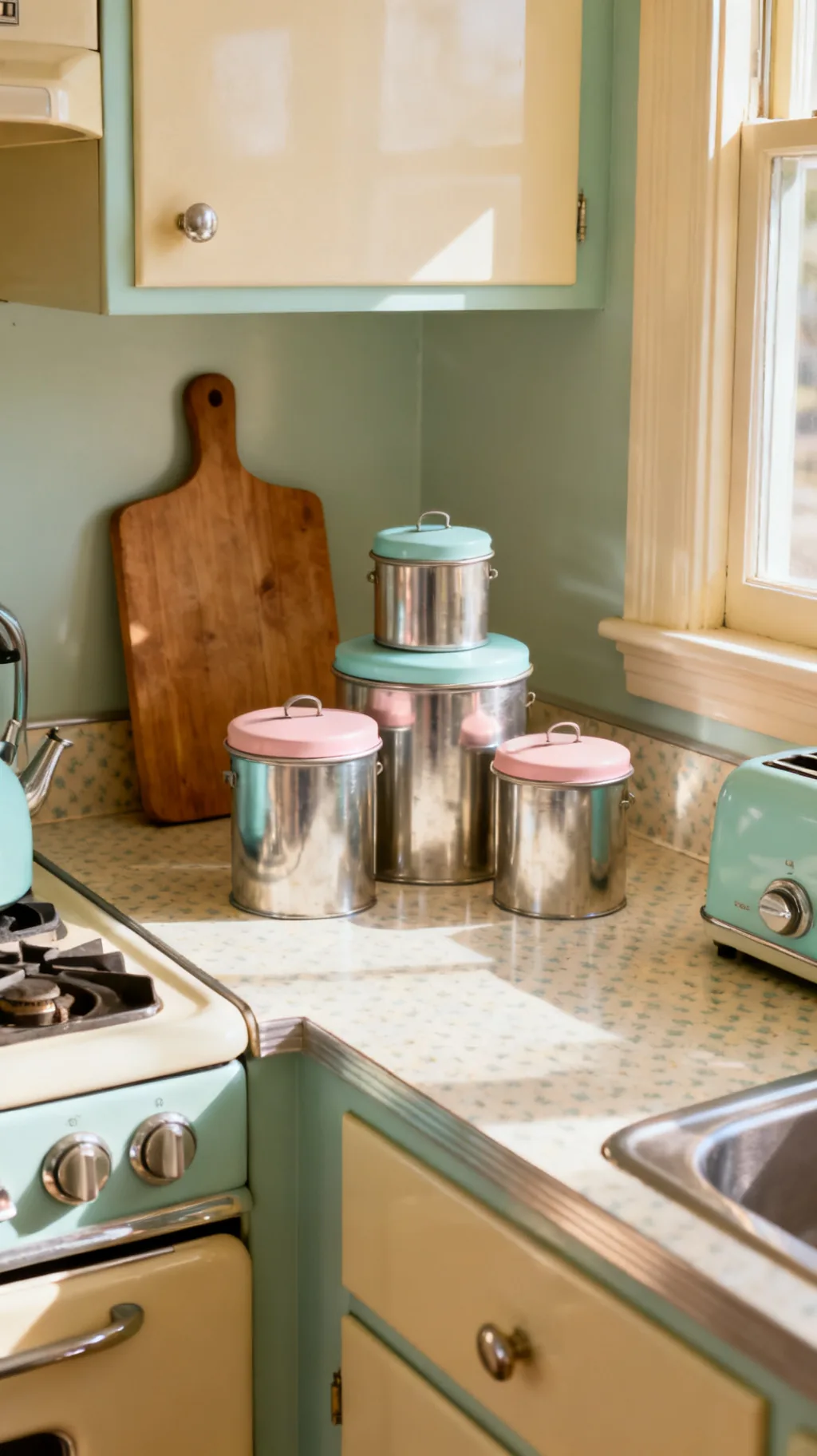
A nesting set of metal canisters labeled Flour, Sugar, Coffee, and Tea is pure fifties function and charm. Look for pastel lids or atomic graphics. Line them up on the counter where they pull double duty.
Styling the Set
- Match the lids: pastel tops tie into your palette.
- Graduated sizes: tallest to shortest looks tidy.
- Keep them useful: fill them with what the label says.
Thrifted tins with a little wear feel more authentic than a shiny new set.
19. Bring Warmth to a 1950s Kitchen With Wood Accents
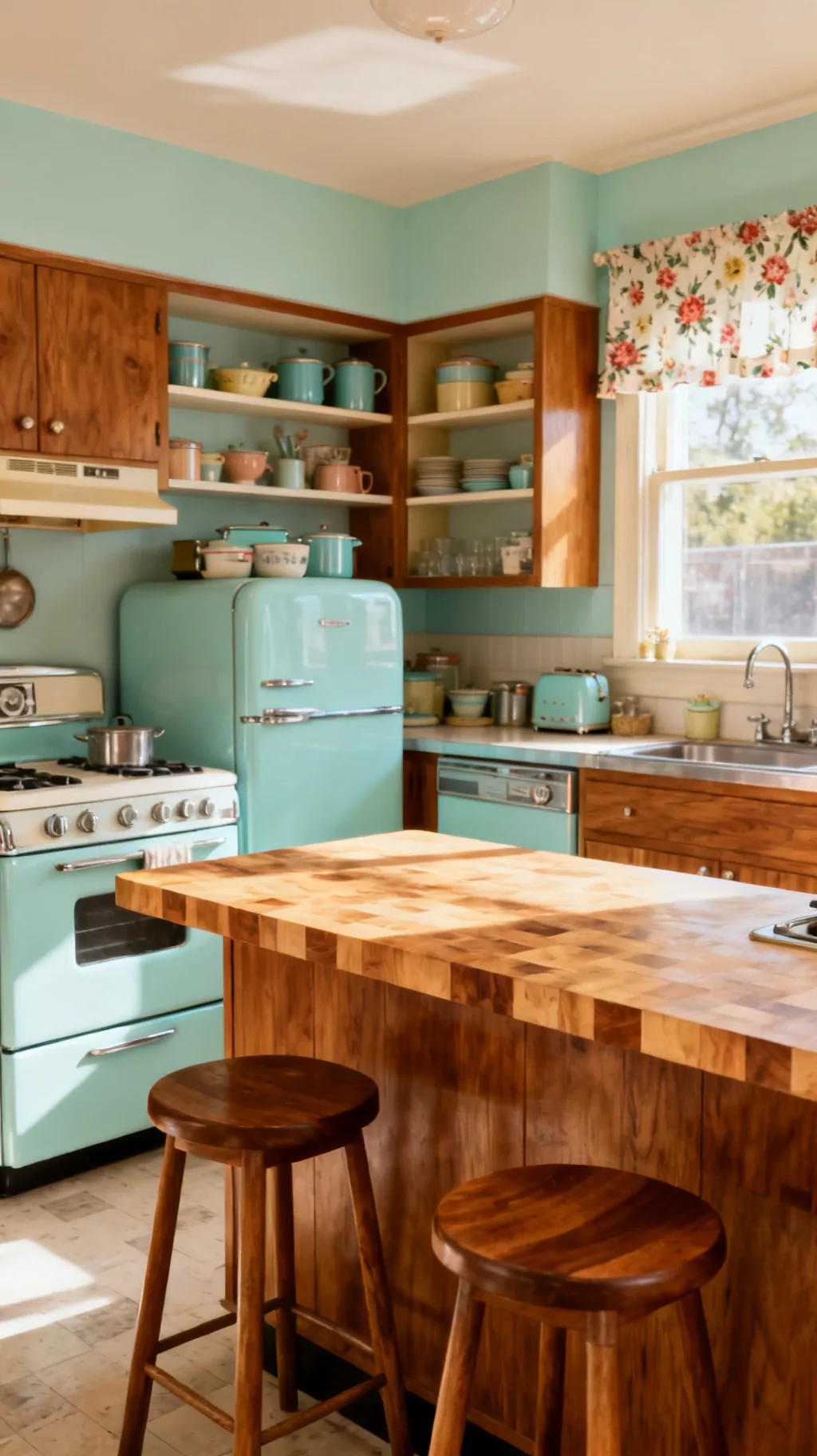
All that chrome and color needs a grounding element, and warm wood does the job. A butcher-block counter, wooden stools, or a bread box softens the palette. It keeps the room feeling cozy rather than clinical.
Easy Wood Touches
- Butcher-block counter: warm, practical, and timeless.
- Wooden stools: a soft contrast to chrome and vinyl.
- Bread box or board: small accents with big warmth.
A little natural wood is the quiet ingredient that makes the whole palette feel balanced.
20. Mix Old and New for a Modern Retro Look
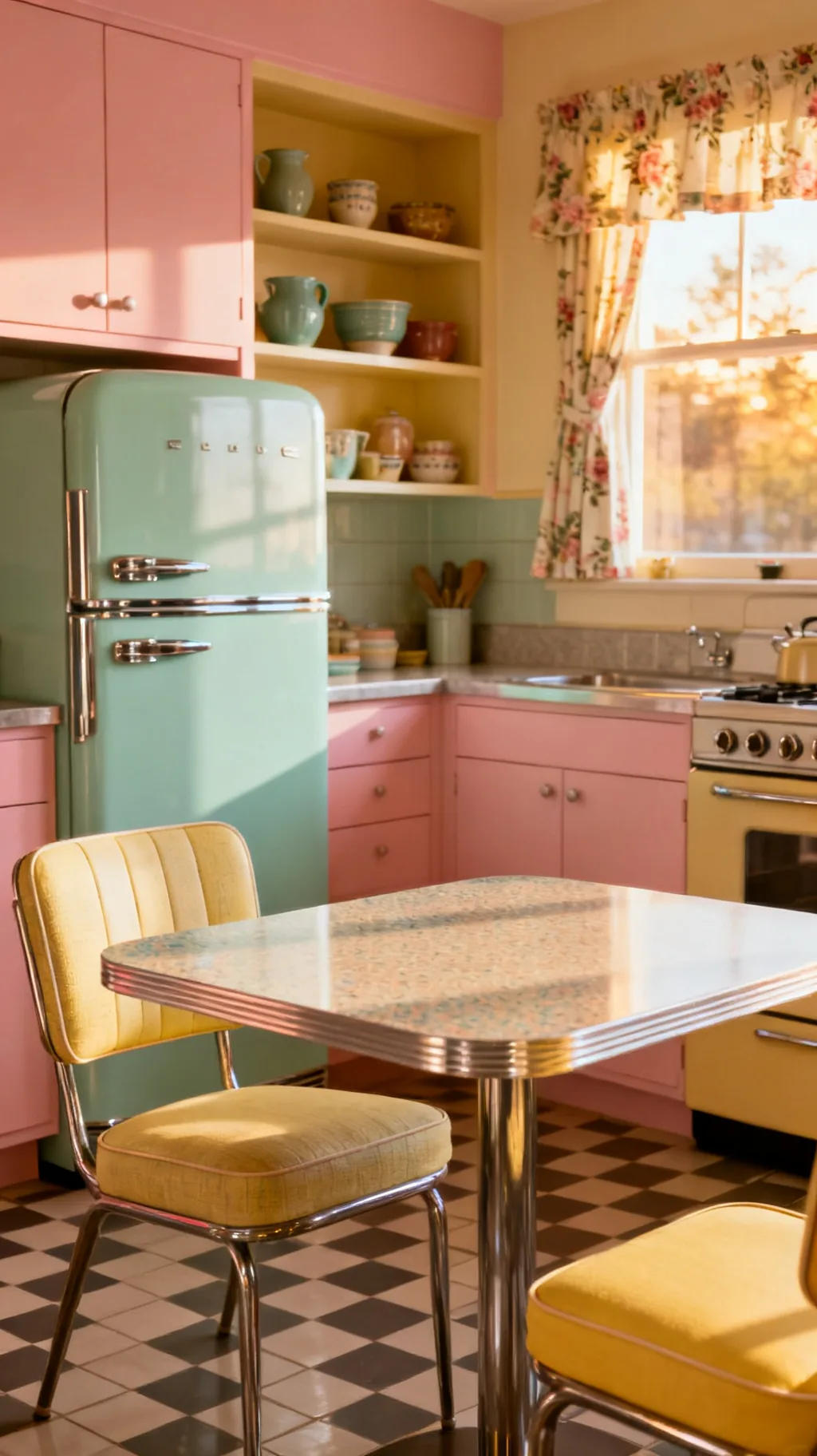
You don’t have to live in a time capsule to love this style. Pair a vintage dinette with modern lighting, or a retro fridge with quiet contemporary cabinets. I keep coming back to this balance because it feels personal instead of staged.
Strike the Balance
- One vintage anchor: a fridge or dinette sets the tone.
- Modern conveniences: keep the appliances you actually need.
- Edit ruthlessly: a few real pieces beat a themed overload.
The goal is a kitchen that nods to the fifties but still works for how you live now.
A few more to spark your imagination.
 1 / 5
1 / 5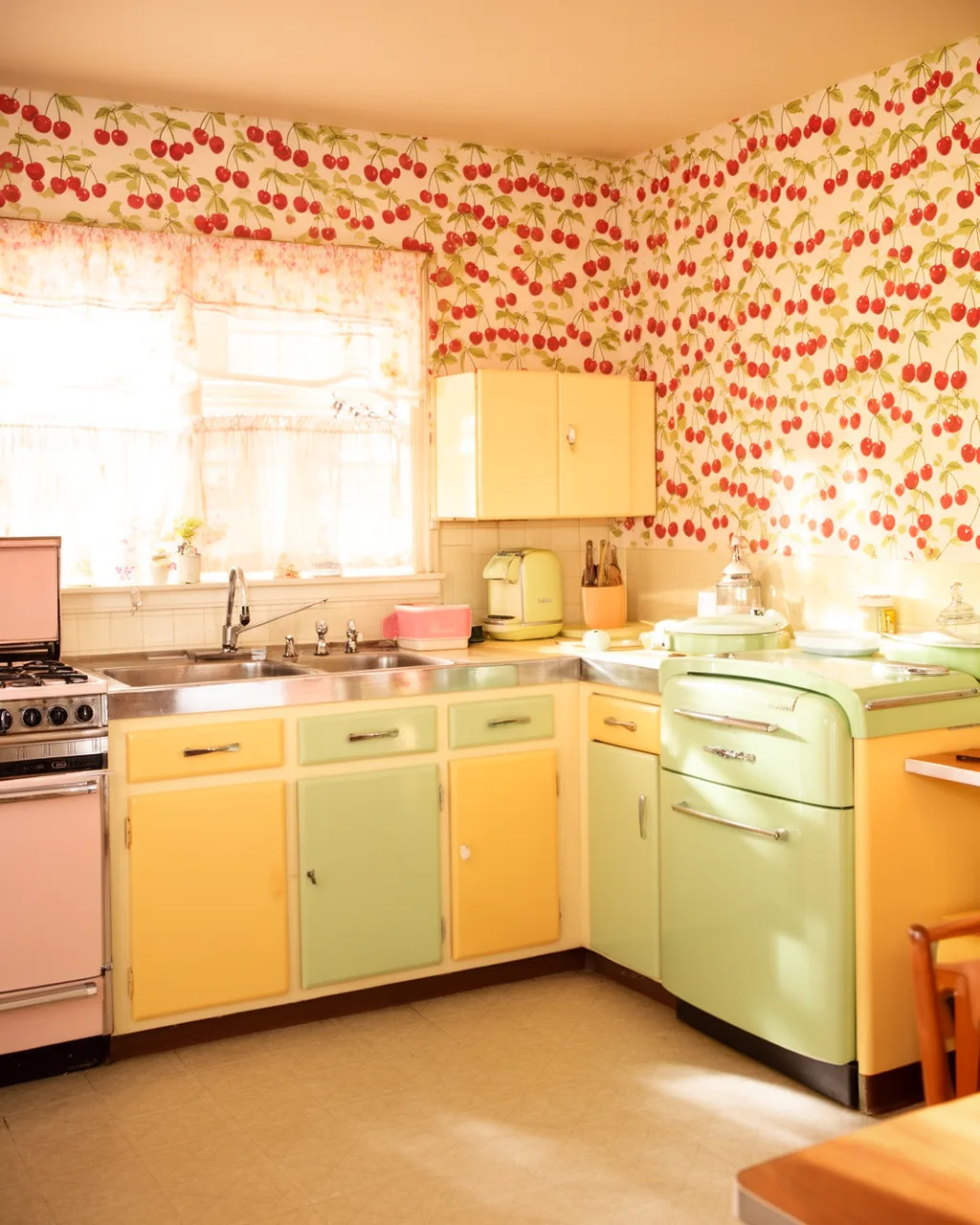 2 / 5
2 / 5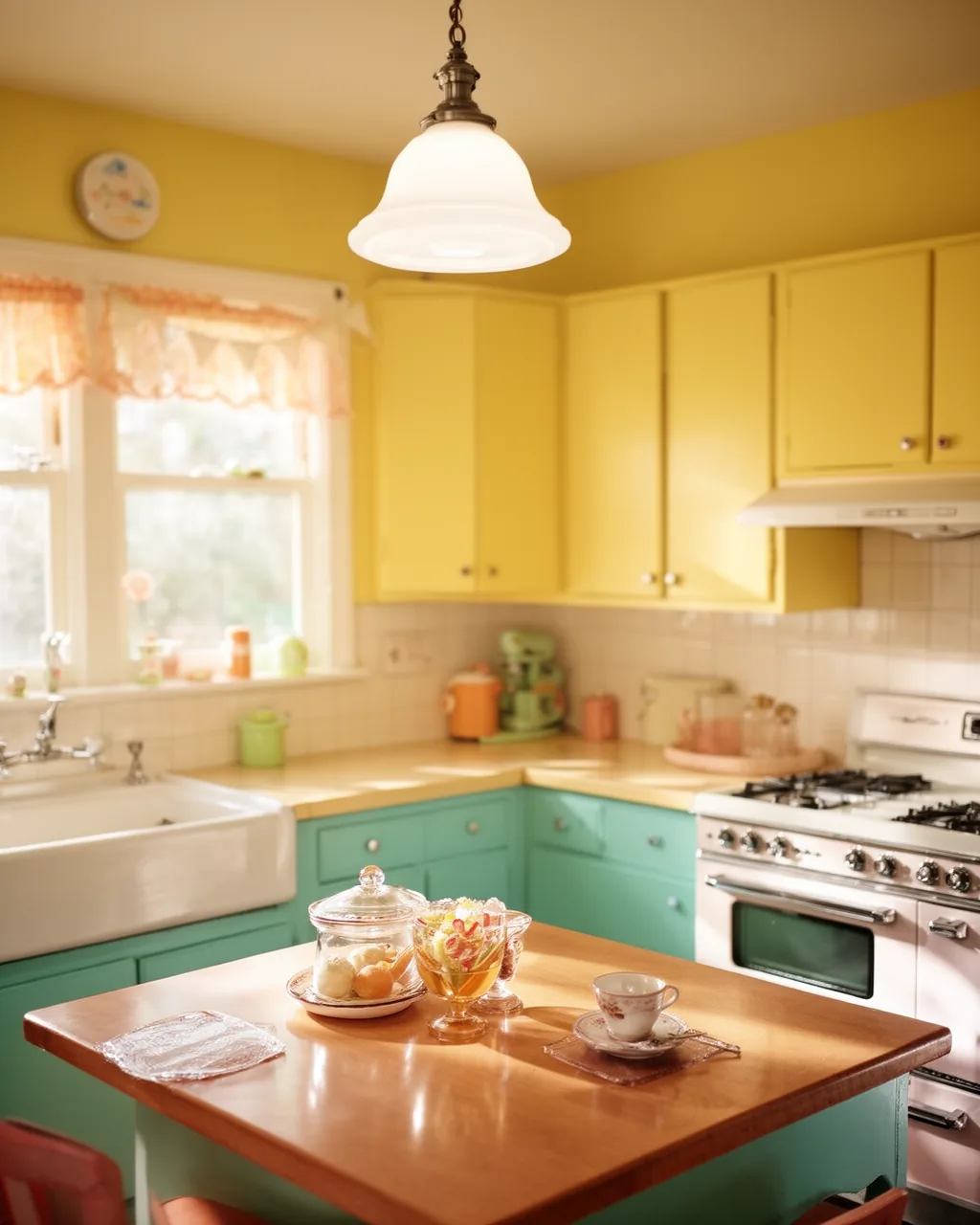 3 / 5
3 / 5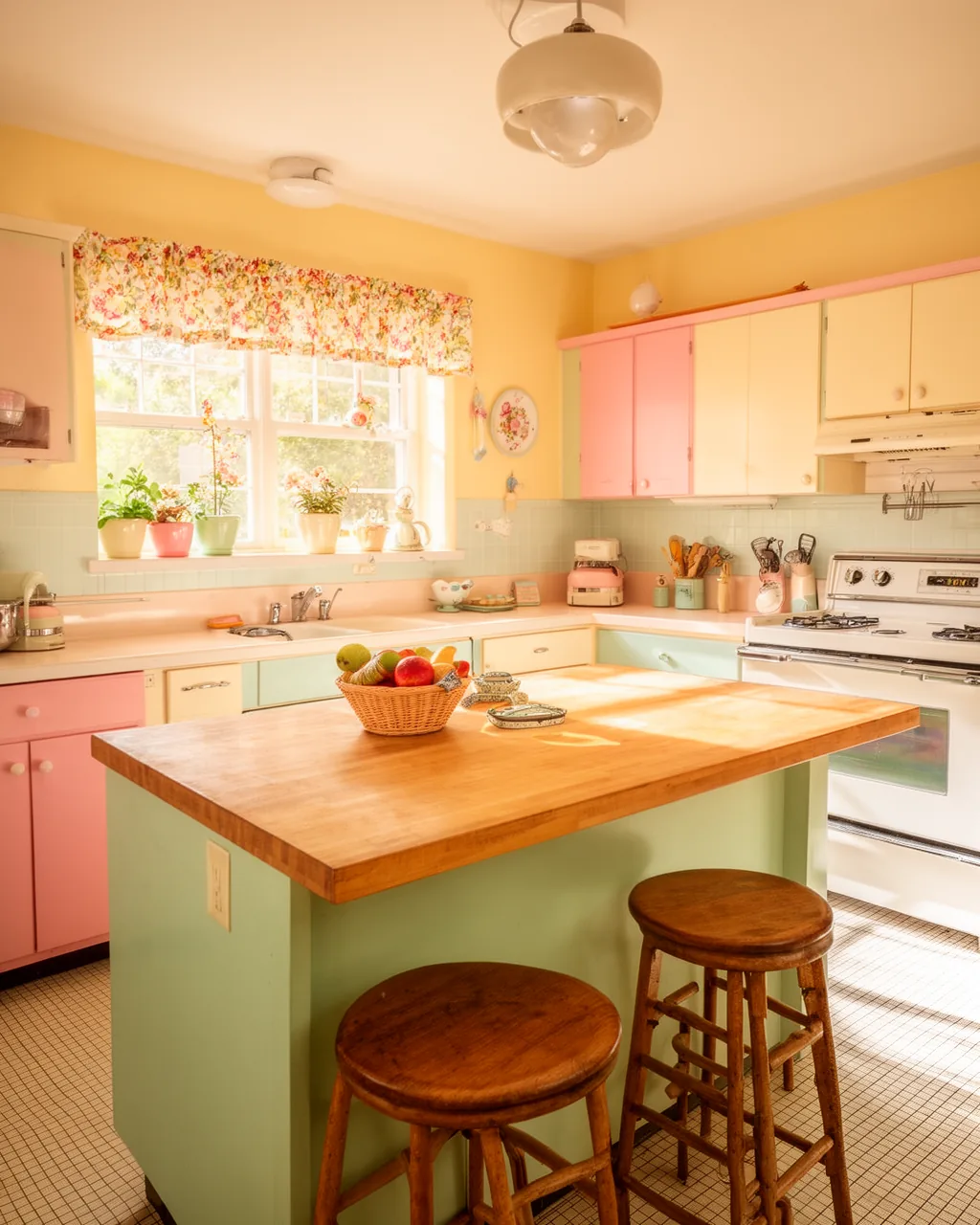 4 / 5
4 / 5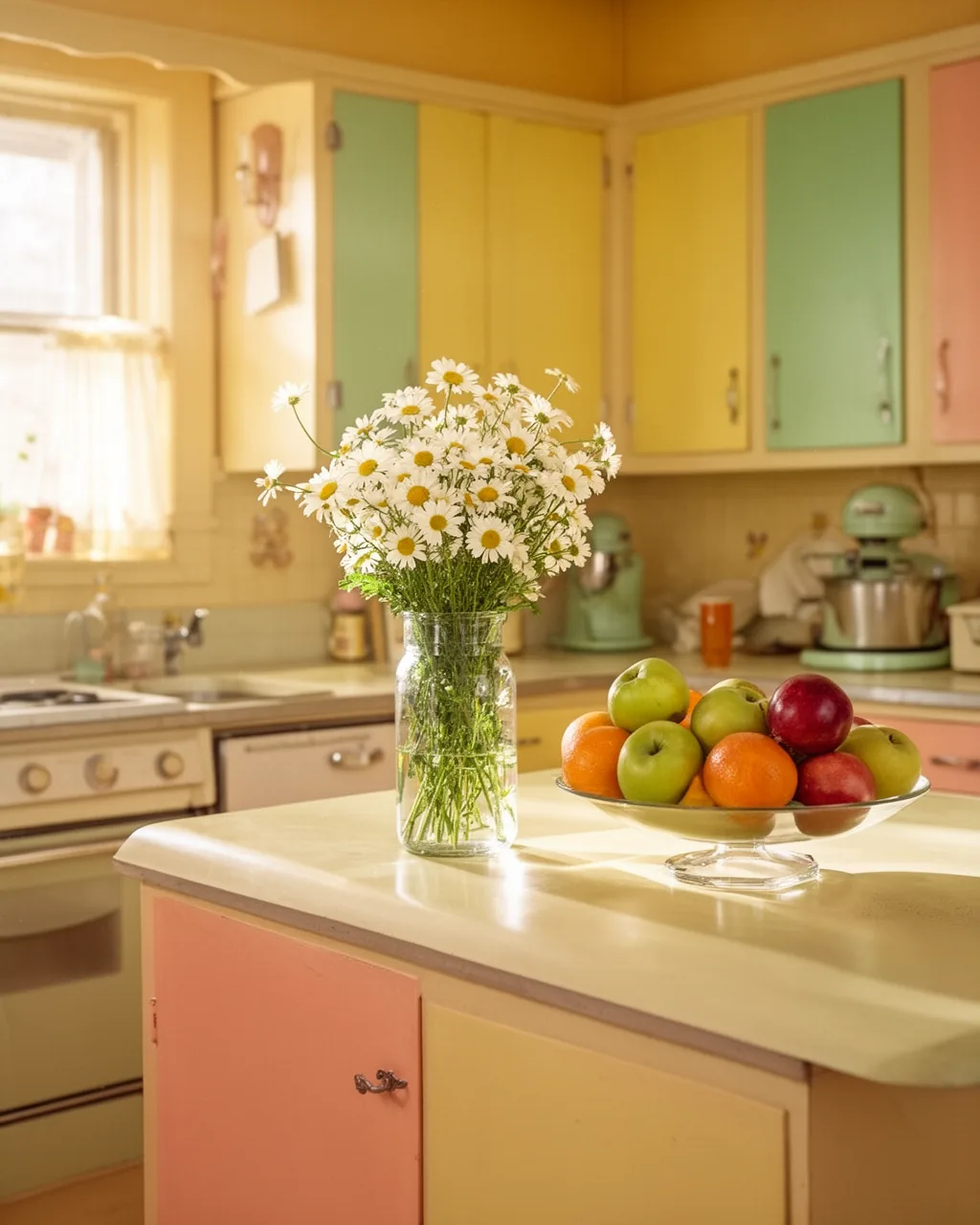 5 / 5
5 / 521. Finish With Fresh Flowers and Everyday Charm
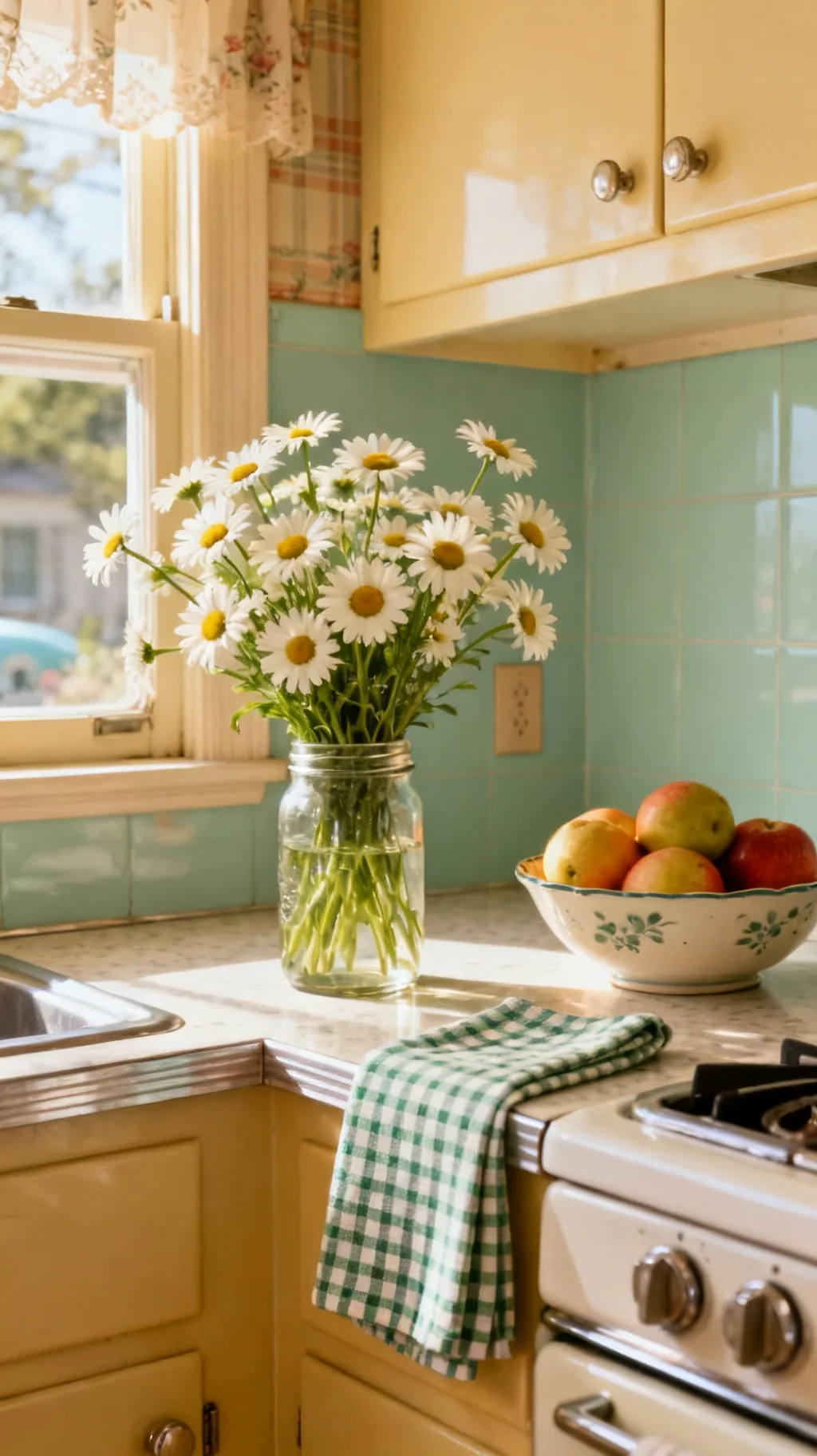
A simple jar of daisies, a fruit bowl, and a folded gingham towel are the finishing touches that make a fifties kitchen feel alive. These small, everyday details are what visitors actually remember. Keep it relaxed, a little imperfect, and genuinely yours.
Final Touches
- Fresh flowers: daisies or carnations in a milk-glass jar.
- A fruit bowl: color and life on the counter.
- A folded towel: gingham or a cheerful print.
These tiny touches cost almost nothing and bring the whole nostalgic look to life.
Frequently Asked Questions
What were kitchens like in the 1950s?
A 1950s kitchen was cheerful and color-forward, with pastel cabinets, chrome-trimmed dinette sets, checkerboard floors, and rounded appliances. Patterns like boomerangs and starbursts showed up on laminate, curtains, and wallpaper. The overall feeling was bright, tidy, and optimistic.
What color were 1950s kitchen cabinets?
The signature 1950s kitchen cabinet colors were mint green, buttery yellow, powder blue, turquoise, and flamingo pink, usually paired with white and chrome. Steel cabinets in these soft, happy tones were a hallmark of the era.
How do you make a kitchen look 1950s?
Add a pastel color, a chrome-trimmed table, and a checkerboard floor, then layer in details like cafe curtains, milk glass, a sunburst clock, and chrome small appliances. You can fake the look affordably with paint, vinyl tile, and a few thrifted finds rather than a full remodel.
What is a 1950s style kitchen called?
A 1950s style kitchen is often called a retro or mid-century kitchen, and sometimes a diner-style or atomic-era kitchen, depending on how bold the colors and patterns are.
What appliances were in a 1950s kitchen?
Common 1950s kitchen appliances included rounded refrigerators in pastel colors, freestanding ranges, chrome toasters, and stand mixers. Matching color suites, like a turquoise fridge and range, were a popular sign of a modern home.
Were 1950s kitchens small?
Many 1950s kitchens were compact and efficient, designed around a tidy work triangle. Smart touches like built-in breakfast nooks, round tables, and plenty of canisters helped small kitchens feel organized and welcoming.
Final Thoughts
Recreating a 1950s kitchen is really about capturing a feeling: bright, friendly, and a little playful. Start with one or two ideas that make you happy, a pastel fridge here, a checkerboard mat there, and let the look grow from your favorites. The best retro kitchens feel collected over time, so have fun with it and let your personality show. Happy decorating!
You Might Also Like
Get cozy seasonal ideas in your inbox
Seasonal decor, recipes & home inspiration — straight to you. No spam, unsubscribe anytime.