
Let’s be honest: your bedroom should feel like a retreat, not a storage closet with a mattress. Whether you’ve got a tiny city nook or a sprawling sanctuary, the right layout can make everything feel bigger, calmer, and way more intentional. These 12 bedroom layout ideas are equal parts practical and pretty—so you can actually sleep, store, and style like a pro. Ready to rearrange?
1. Float The Bed For Better Flow
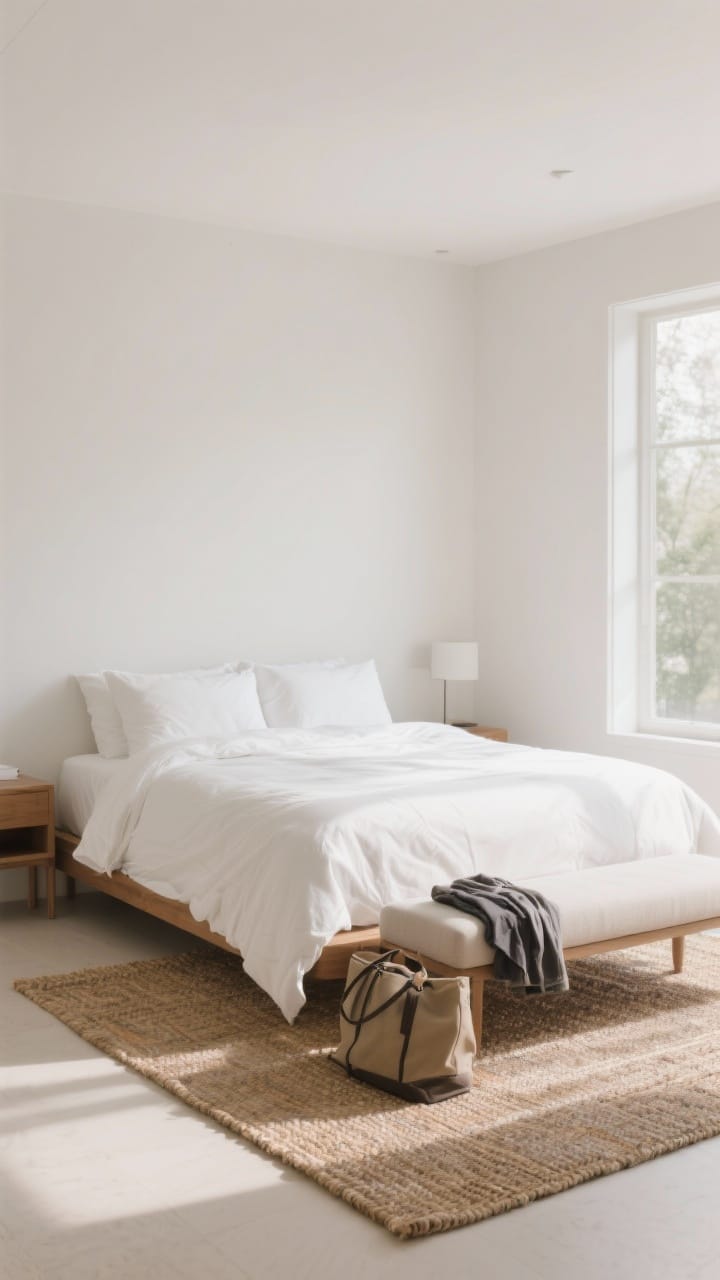
Not all beds have to live against a wall. Sometimes pulling your bed a few inches—or even a foot—off the wall creates a breathing zone that instantly feels luxe. It also lets your bedding drape properly, which is the quickest cheat for “hotel vibes.”
I tried floating the bed years ago in a narrow room, and it instantly improved the flow. Even a small gap made the space feel calmer and more balanced.
Try This
- Leave 24–30 inches of clearance around the sides so walking feels effortless.
- Add a low bench at the foot for socks, bags, or a landing zone for tomorrow’s outfit.
- Use a rug to anchor your bed “island” and visually define the sleep zone.
2. Go Symmetrical—Or Purposefully Not
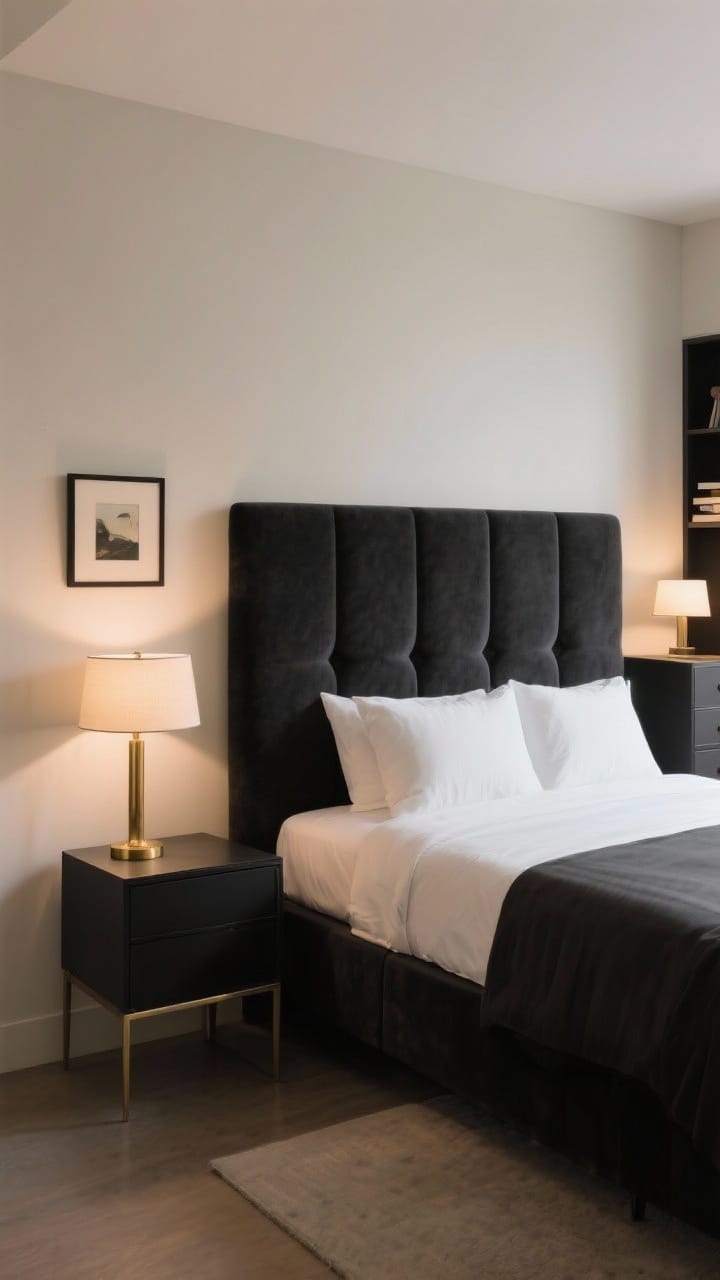
Symmetry is soothing, especially in bedrooms. Two matching nightstands and lamps instantly tidy up visual chaos. But if storage is tight, go asymmetric on purpose and make it look intentional.
Layout Tips
- Symmetry: Two identical lamps, same-height nightstands, matching art. Easy elegance.
- Asymmetry: One slim nightstand + one tall dresser or bookshelf. Balance with a larger lamp on the smaller side.
- Keep the headboard centered even if the sides differ—your eye reads “calm.”
3. Build A Smart Wall Of Storage
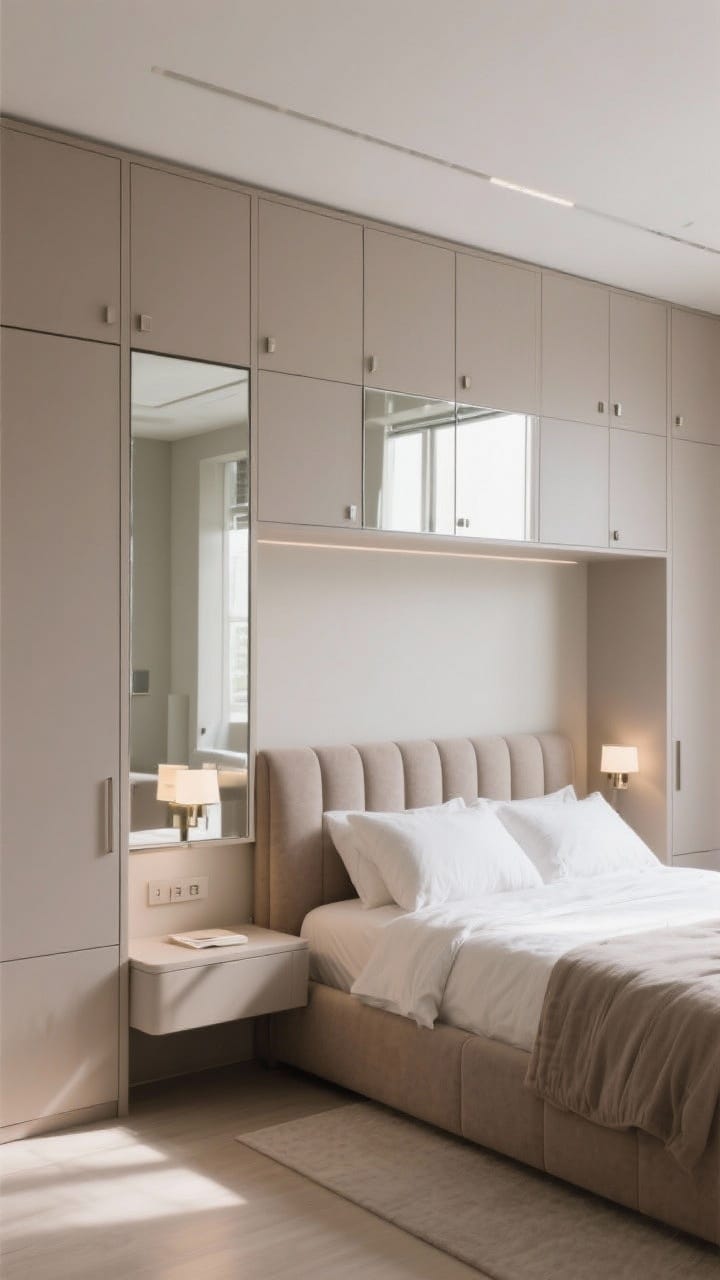
If closet space is scarce, create a storage wall behind the bed. Think wardrobes flanking the headboard with overhead cabinets bridging across. It’s basically a built-in look without calling a contractor.
How To Pull It Off
- Use shallow wardrobes (14–20 inches deep) to avoid crowding your walkway.
- Choose closed doors for visual calm; mirrors double as vanity space and bounce light.
- Add sconces to the headboard if cabinets limit table lamps.
4. Create Zones In A Multipurpose Bedroom
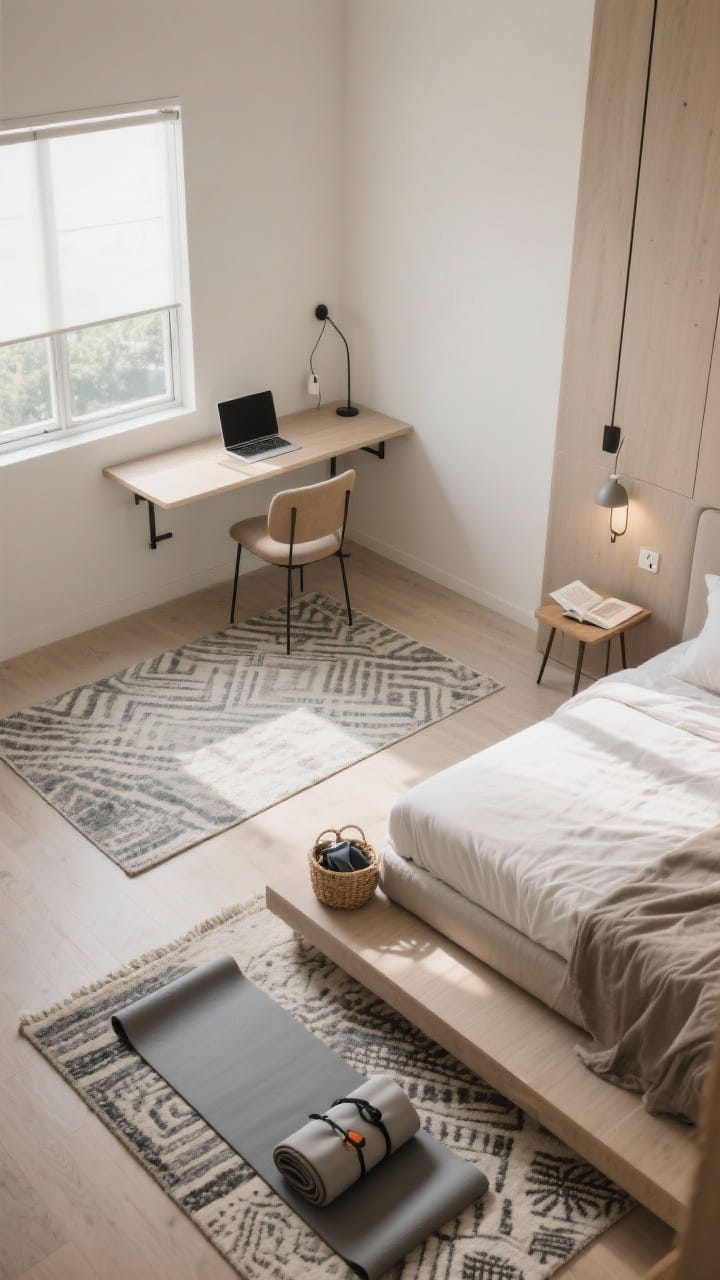
Your bedroom sometimes has to moonlight as an office, a reading nook, or a mini home gym. Zoning keeps it from feeling chaotic. Think: one wall per function, with clear boundaries.
I’ve used zoning in multipurpose bedrooms several times, and it really helps mentally separate work from rest. A simple rug can make a surprisingly big difference.
Zone Ideas
- Work zone: A wall-mounted desk and a slender chair near natural light.
- Reading zone: A compact armchair, plug-in sconce, and small side table.
- Wellness zone: A folding mat stored under the bed and a small basket for gear.
Use a rug or room divider to define each area—visual lines = instant organization.
5. Corner The Bed (Strategically)
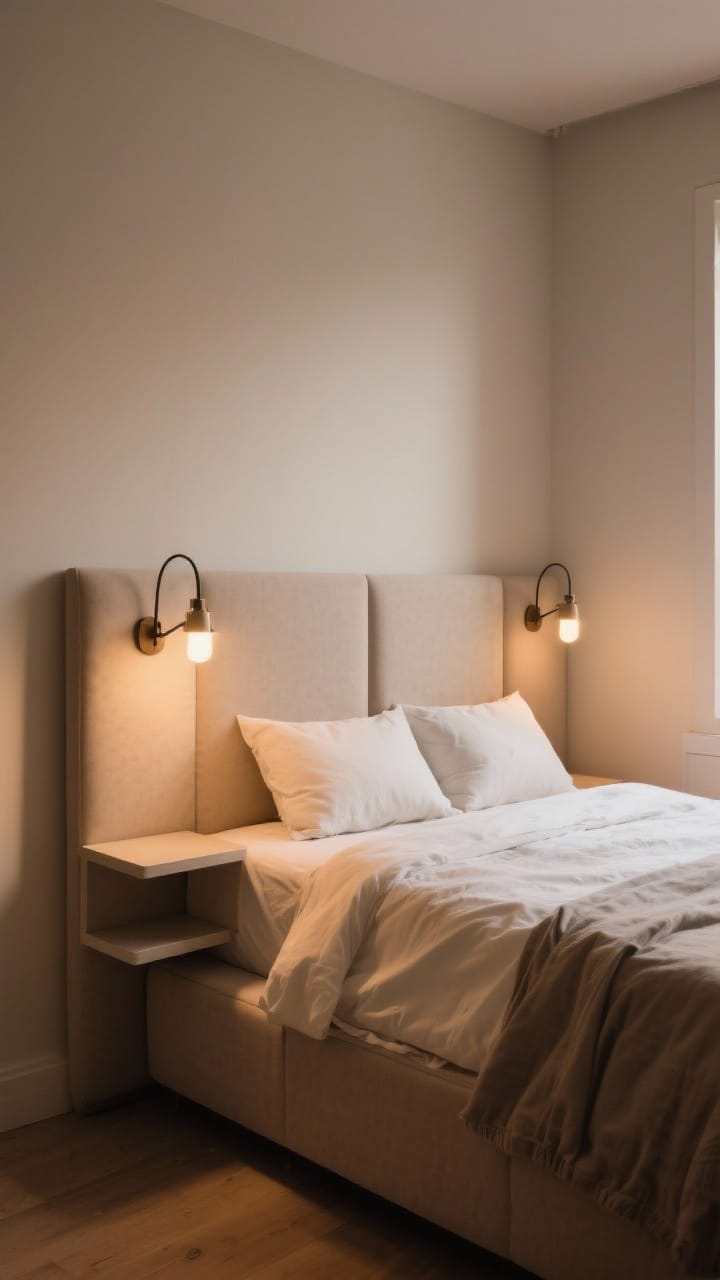
Small room? Corner the bed. Yes, designers do this on purpose, especially for full and queen sizes. It frees up the center of the room, which makes everything feel larger.
Make It Chic, Not Dorm-Room
- Use a wraparound headboard or a pair of panels to frame the corner.
- Mount a swing-arm sconce on each wall to handle lighting without bulky tables.
- Place a floating shelf near the pillow side as a micro-nightstand.
6. Choose Nightstands That Actually Fit
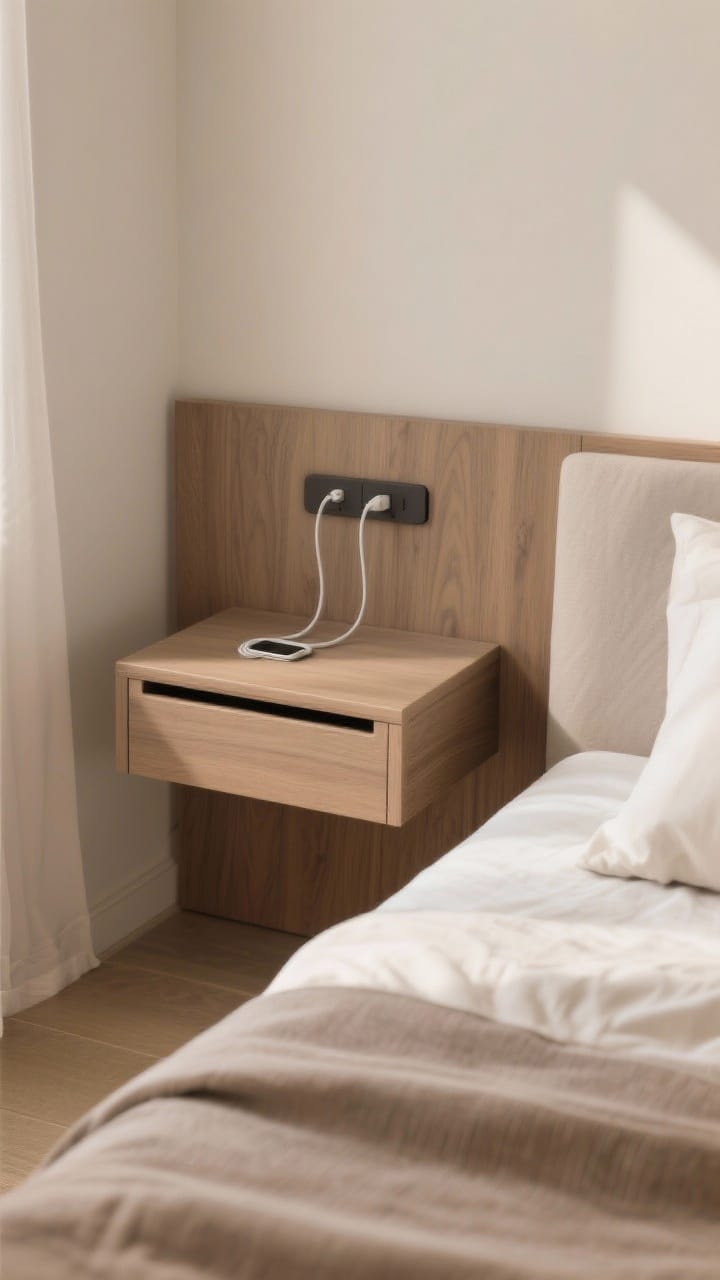
Nightstands are often too bulky for the space. Scale matters. When pieces are properly sized, the whole room breathes.
Sizing Cheat Sheet
- Width: 18–24 inches for most rooms; go slimmer (12–16 inches) in tight spaces.
- Height: Top should be level with the mattress for easy reach.
- Depth: 14–18 inches keeps walkways comfortable.
No floor space? Try wall-mounted nightstands or picture ledges with cable cutouts. FYI: a tidy charging zone = instant serenity.
7. Maximize Under-Bed Storage (Without The Clutter Vibe)
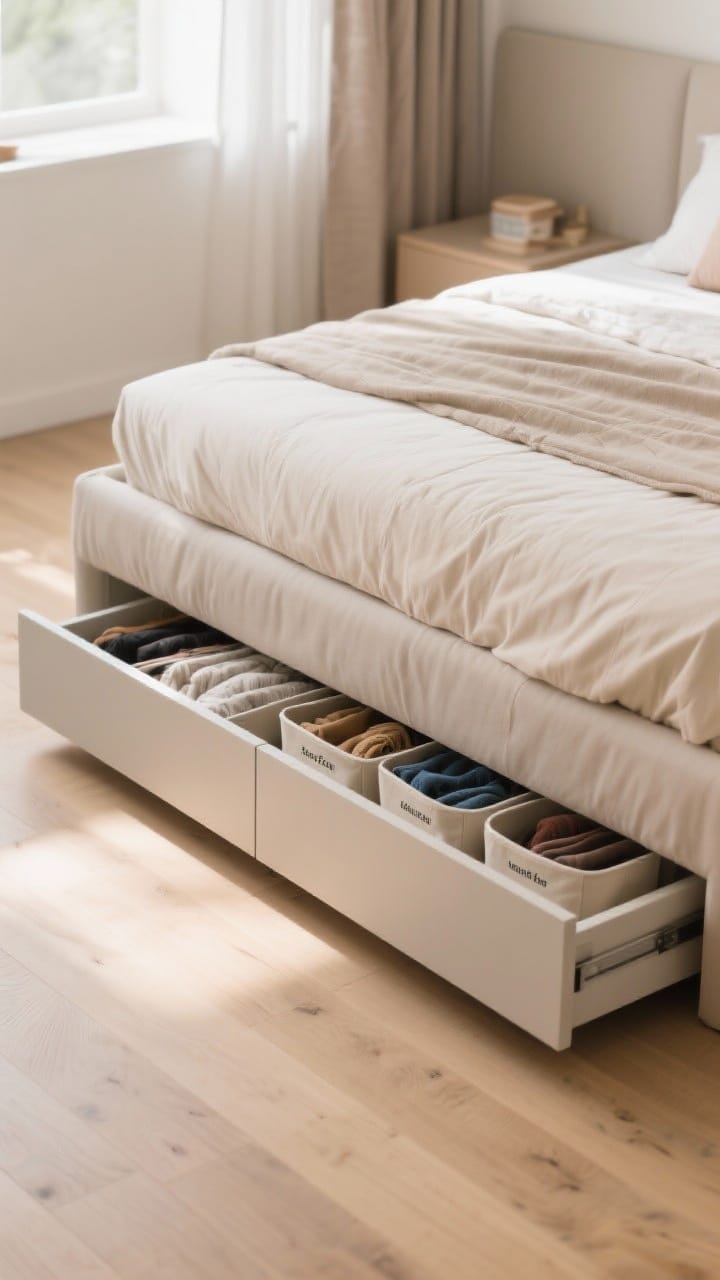
Under-bed space is prime real estate. The trick is using it without making your room feel like a storage unit. Enter drawers, bins, and lift-up platforms.
Smart Storage Moves
- Pick a storage bed with drawers—no dust bunnies, just extra linens.
- Use low-profile bins with labels for seasonal clothes and shoes.
- Choose a bedskirt or extended coverlet to keep it visually calm.
8. Use Scale And Height To Your Advantage
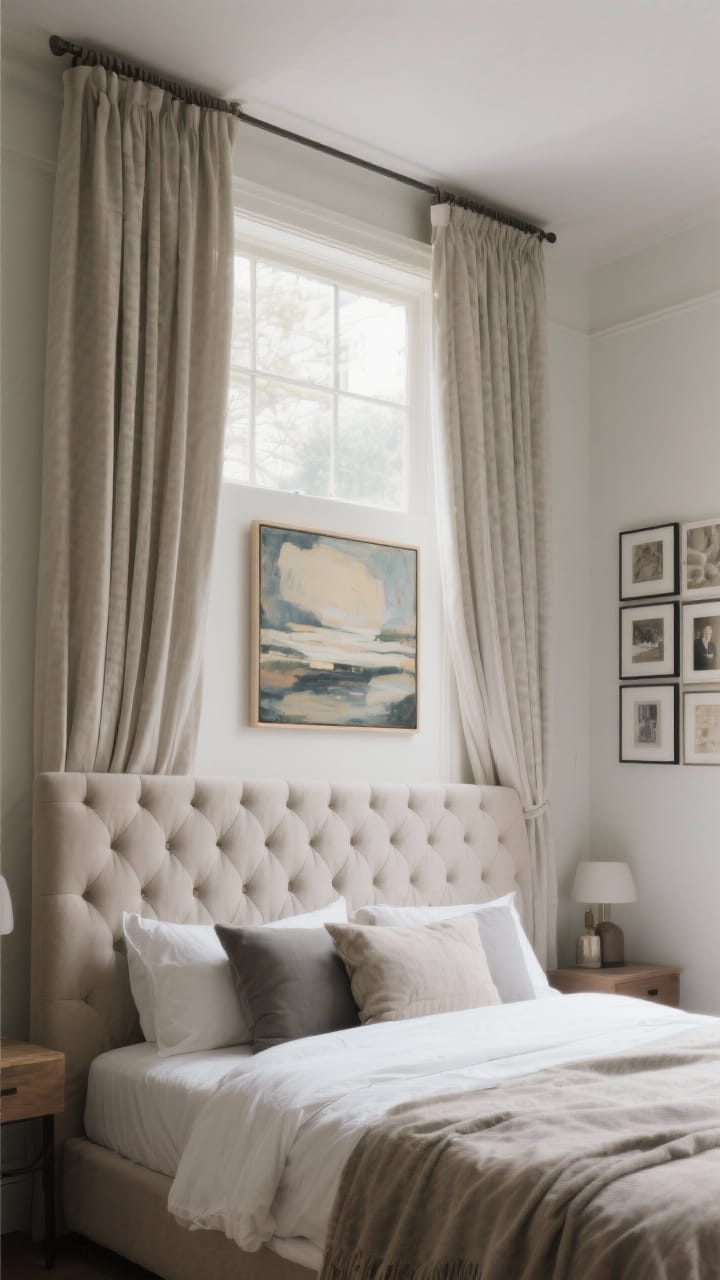
In small rooms, go vertical. In larger rooms, go big. Scale creates drama and balance—no weird in-between.
Design Playbook
- Tall headboard draws the eye up and makes ceilings feel higher.
- Ceiling-height drapes, hung wide, make windows look expansive.
- Oversized art above the bed beats a gallery wall if the room is small (less visual noise).
9. Layer Lighting Like You Mean It
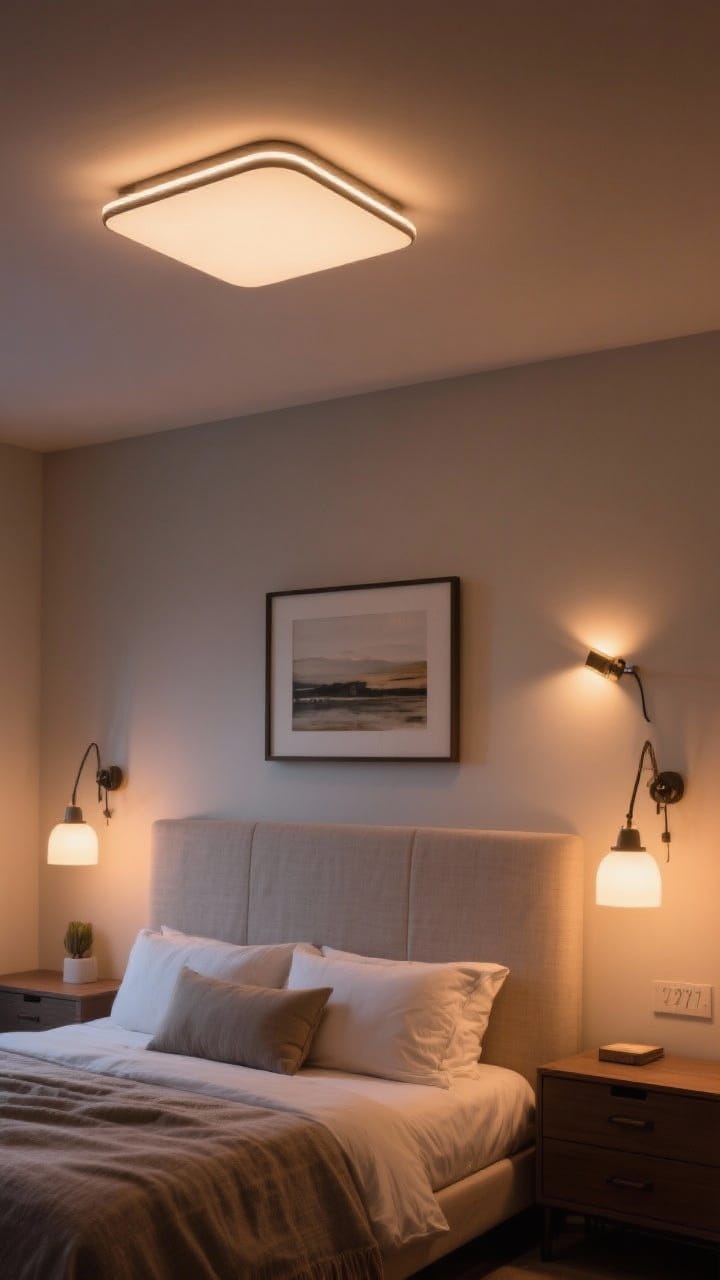
Overhead light is great for finding that one black sock. But for actual ambiance? You need layers. Mix task, ambient, and accent lighting so the room can shift from reading to relaxing to “I fell asleep at 9.”
Lighting Layout
- Ambient: Flush mount or a pendant with a dimmer.
- Task: Wall sconces or swing-arm lamps for reading, especially in small rooms.
- Accent: A picture light over art or a small lamp on a dresser.
Use warm bulbs (2700–3000K). Your future sleepy self will thank you.
10. Anchor With The Right Rug Size
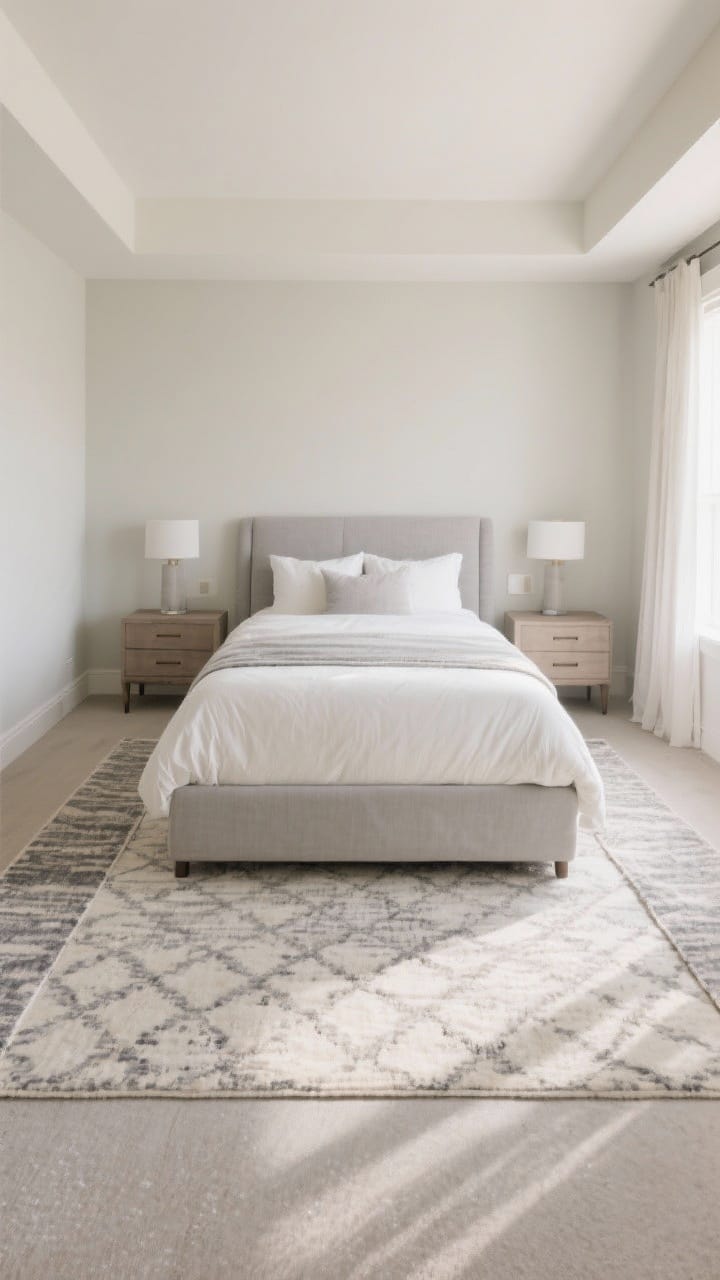
Rugs make or break a layout. Too small and your room looks like it shrank in the wash. Aim for generous coverage so the bed feels grounded.
Going up one rug size has never failed me. Each time, the room felt more finished and visually balanced afterward.
Size Guidelines
- Queen bed: 8×10 rug (at minimum) with the rug starting under the nightstands or a few inches in front.
- King bed: 9×12 rug for balanced proportions.
- In tight rooms, try runners on either side to preserve walkway space.
Pattern helps hide wear, but keep tones soft to maintain a calm vibe. IMO, this is the easiest upgrade for instant style.
11. Sneak In A Dresser Without Crowding
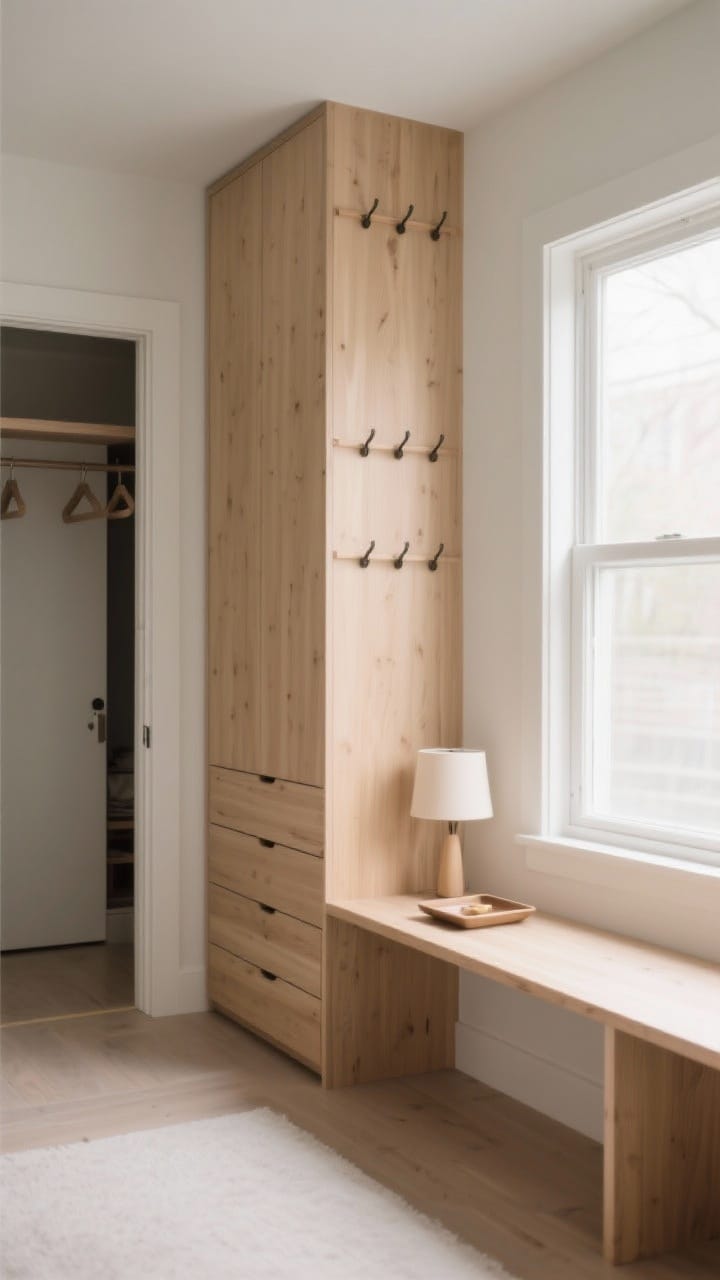
No space for a full dresser? There’s always a workaround. Slim profiles and vertical pieces keep the room airy while storing tons of stuff.
Space-Savvy Options
- Tallboy dresser instead of a wide one—same storage, smaller footprint.
- Under-window console for a low, long storage and surface combo.
- Closet door backs with hooks or shallow shelves for accessories.
If you do have room, a long dresser opposite the bed doubles as a TV stand and vanity. Add a mirror above and you’ve got a two-for-one.
12. Style A Calm, Functional Bedside Setup
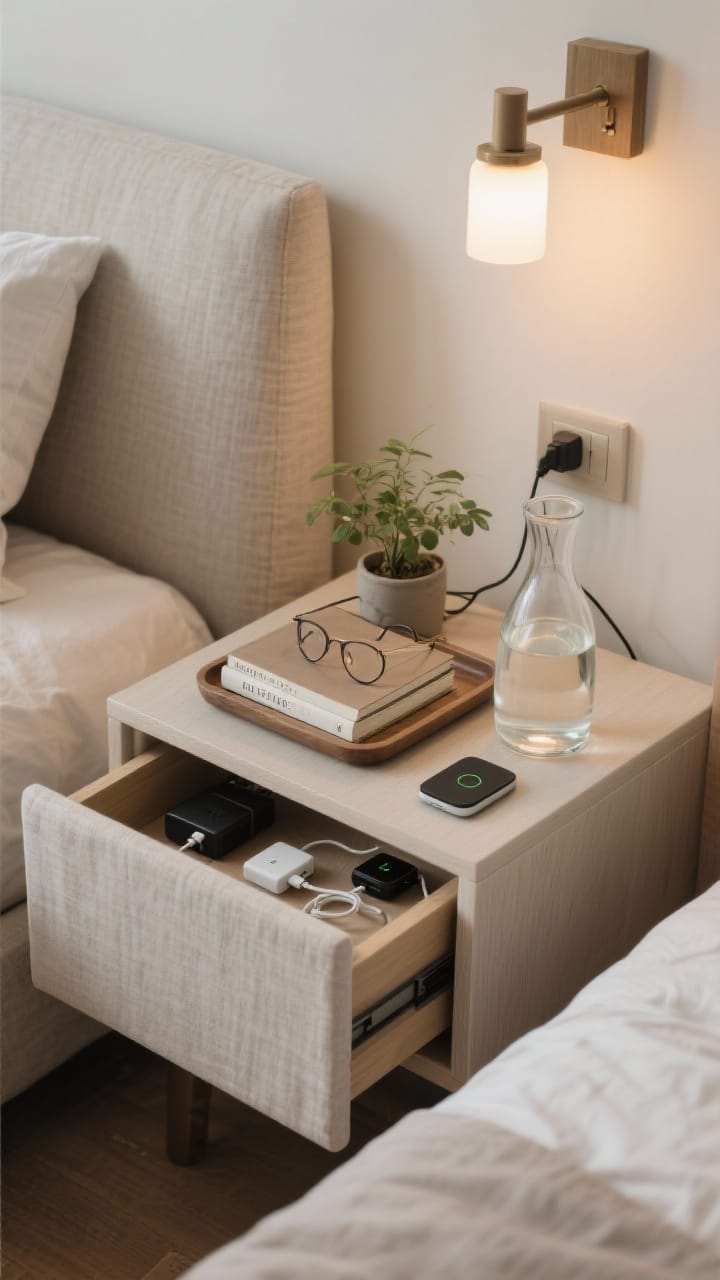
Your nightstand is a tiny command center. Keep it beautiful and brutally practical. If it’s messy, the room feels messy—science probably backs that up.
Nightstand Essentials
- Closed storage for chargers, lip balm, and random bits.
- Tray to corral the nightly rotation (book, glasses, water).
- Small plant or photo to add warmth without cluttering.
Bonus move: add a hidden cable box or grommet in the back to keep cords from staging a hostile takeover. FYI: wireless chargers = chef’s kiss.
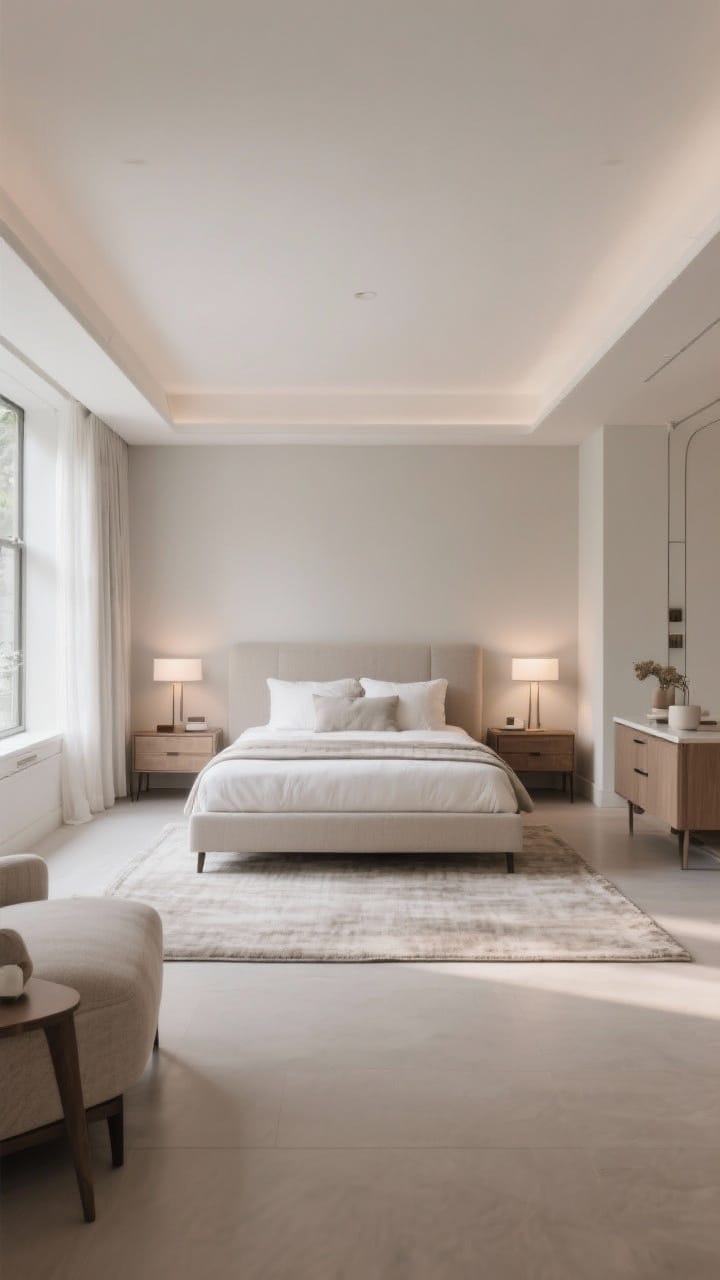
Great bedroom layouts aren’t just about where the bed goes—they’re about creating a flow that supports how you actually live. Mix symmetry with smart storage, layer your lighting, and pick pieces that fit your space (not the other way around). Tweak one idea or try a few; either way, you’re about to sleep in a room that looks and feels like you’ve got it all figured out—because you do.
FAQ
1. What are the best bedroom layout ideas for small bedrooms?
2. How much space should you leave around a bed?
3. Can a bedroom have multiple functions without feeling cluttered?
4. What rug size works best in bedroom layouts?
5. Is it okay to place a bed in the corner?
If you enjoyed these bedroom ideas, be sure to check out my other cozy bedroom posts too!
- 11 Dark Bedroom Ideas for a Cozy and Stylish Retreat
- 10 Minecraft Bedroom Ideas for a Modern Kids Space
- 11 Witchy Bedroom Decor Ideas for a Moody Magical Retreat