📌 Love these ideas? Follow us on Pinterest for daily home decor inspiration! Follow @SeasonalHomeMagic →
I still remember the first night I sat inside my newly bought camper, staring at the cramped space and asking myself, what have I done? It felt cozy but chaotic — every inch mattered. That’s when I started looking into how to make it functional and beautiful at the same time. If you’re wondering how to decorate a small camper: creative space-saving ideas can truly transform your tiny home on wheels. It took me a lot of trial, error, and a few bruised elbows to figure out what actually works in such limited quarters.
Think Vertical: Use Every Inch from Floor to Ceiling
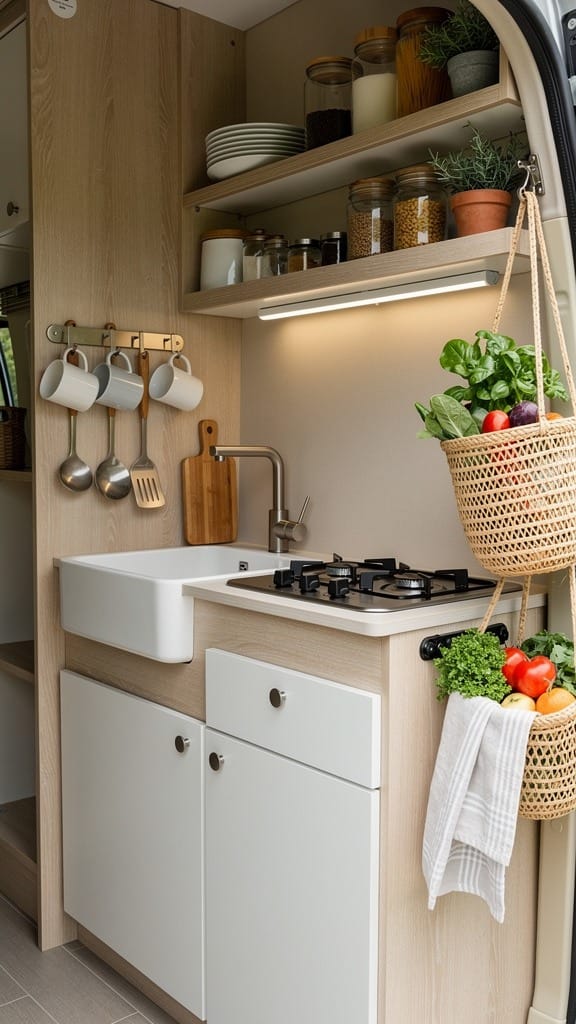
Most people look around their camper and only see the floor plan. But the trick is to look up. Walls in a camper aren’t just walls — they’re storage waiting to happen. I learned this the hard way when I spent weeks tripping over cooking utensils that had no real home. A few adhesive hooks fixed that problem immediately.
Installing shallow shelves was another lesson in resourceful decorating. They don’t have to be deep, just enough to hold spices, small plants, or travel souvenirs. Magnetic strips under cabinets can also hold knives or even metal mugs. You’d be shocked at how much vertical space stays unused because it’s above eye-level. Hanging storage baskets for fruit or toiletries can also keep the counters clear and make the space feel tidy rather than cluttered.
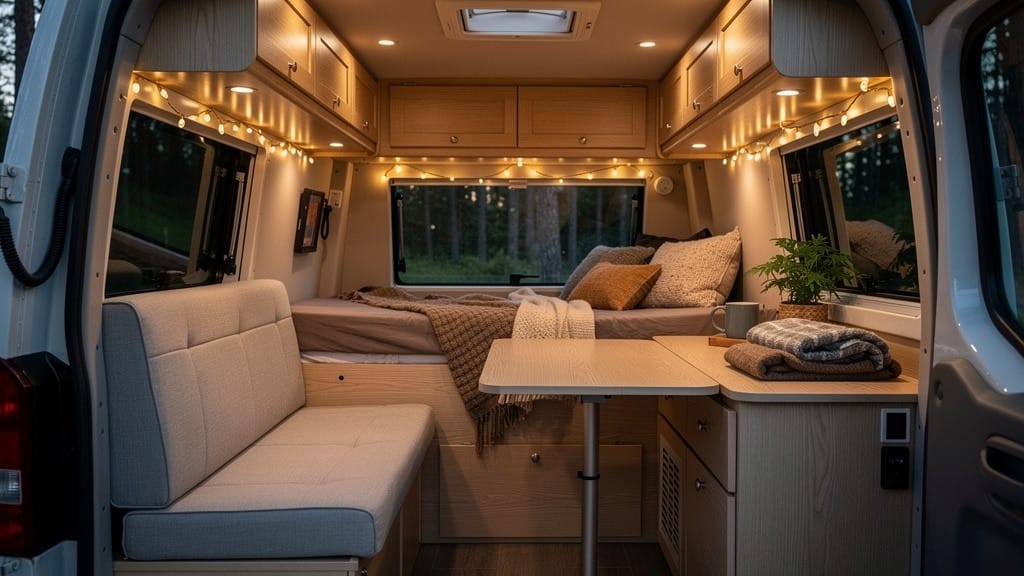
Lighting plays a role here too. Wall-mounted or under-shelf lights free up counter space and make the ceiling seem higher. I once tried a clip-on light that ended up slipping off during a bumpy ride — lesson learned. Stick-on battery lights are safer and stay put no matter how rough the road gets.
Make Furniture Do Double (or Triple) Duty
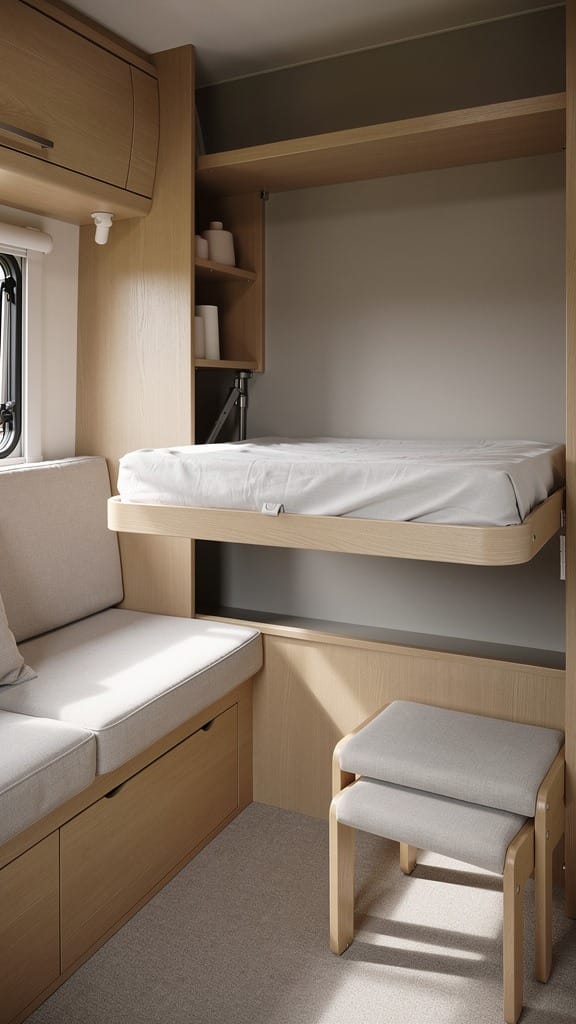
In a camper, every item should earn its spot. A bench with built-in storage? Yes. A bed that folds into a couch? Even better. I didn’t realize how much could fit into a small space until I found furniture designed for multiple purposes.
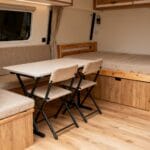
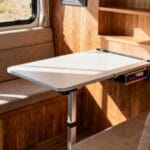
One camper I saw had a table that dropped down at night to form part of the bed base. Another had drawers under the seating area, perfect for storing shoes and extra blankets. My own favorite hack is using nesting stools — they act as seats, side tables, or step stools depending on the need of the moment. Multifunctional pieces mean fewer items overall, which keeps things more breathable and less chaotic.
When considering these ideas, always measure carefully. I once bought a storage ottoman online that looked tiny in photos but practically took over half my floor space. Keeping mobility in mind is crucial — small camper aisles don’t forgive bulky setups.
Pick Colors and Textures That Expand the Space
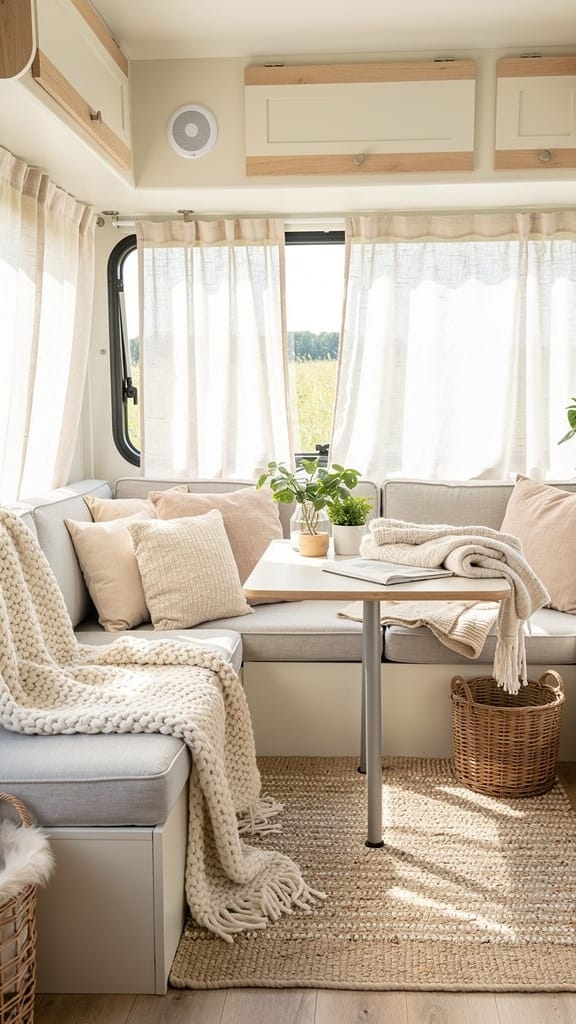
Decorating isn’t just about what you put in; it’s also about what your eyes perceive. Lighter tones tend to make small campers feel bigger. Soft white walls, pale gray curtains, or beige cushions reflect light and give the illusion of openness. When I painted my cabinets a matte off-white, the sense of space immediately doubled.
Textures can add warmth without bulk. Thin woven throws or lightweight macramé hangings work beautifully because they create visual depth without crowding the area. A small patterned rug helps define the space under a table or in front of the bed without overwhelming the room. I used to think patterned textiles were off-limits in small spaces, but subtle geometric prints actually make the spot look curated rather than cramped.
Mirrors are another trick that really works. Mount one on a closet door or behind a counter. The reflection makes your camper feel wider and more inviting. Just secure it well before hitting the road — I still remember the sound of one sliding down mid-trip and shattering my illusion of a “perfect setup.”
Organize with Intention, Not Random Bins
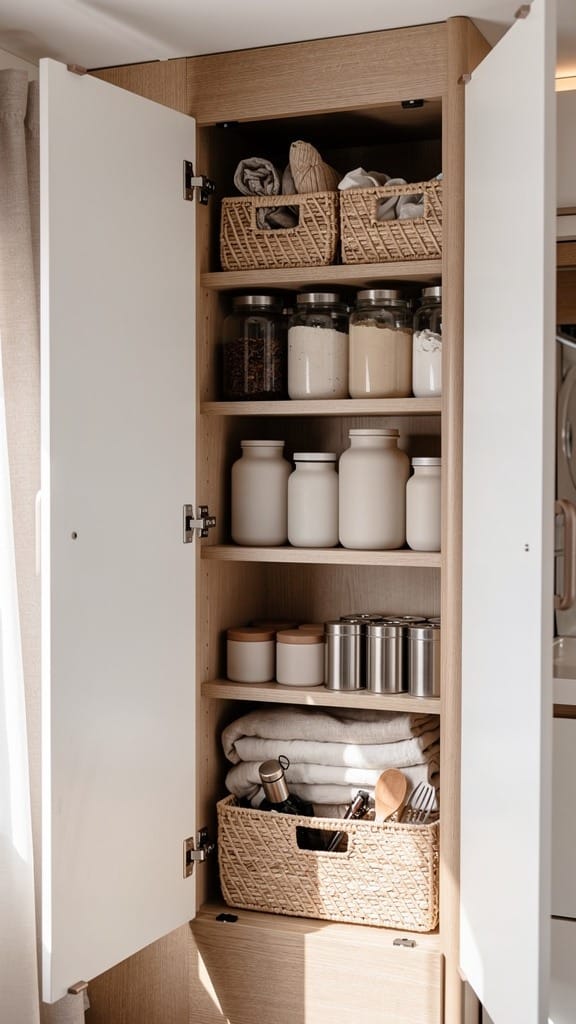
I used to think organizing meant stuffing everything into bins. It didn’t. It just meant I had hidden chaos instead of visible chaos. What truly works is intentional organization — grouping items by function and accessibility. Daily essentials like coffee mugs or toiletries should be within arm’s reach. Seasonal things like winter jackets or spare parts can go under the bed or in higher storage.
Clear containers help a lot. Seeing what’s inside prevents unnecessary rummaging. I once wasted an hour searching for a flashlight buried in a dark box behind my shoes. Never again. Labeling small containers or using color codes saves time and frustration when you’re trying to cook or fix something on the go.
Here’s a quick list of intentional organization methods that actually stick:
- Use collapsible fabric bins for linens or towels — lightweight and easy to tuck away.
- Install small drawer dividers for utensils or craft supplies, so each item has its place.
It’s all about habit. When you commit to putting things back where they belong, the camper feels cleaner, calmer, and more livable almost instantly.
Bring Personality with Compact Decor
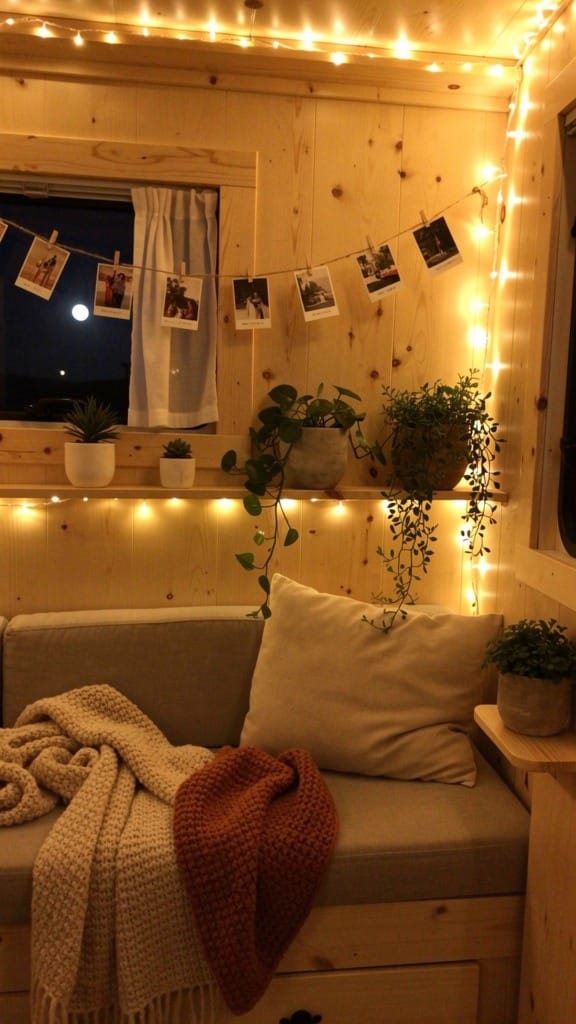
A small camper doesn’t have to be sterile or purely functional. Personality makes it feel like home. I like hanging a few photos on a string with small clips — they barely weigh anything but spark joy every time I notice them. Removable wall decals are another flexible idea. They add color or pattern and peel off easily if you ever change the theme.
Plants, surprisingly, work well too. Tiny succulents or air plants survive most road conditions and brighten up even the tightest corners. I was skeptical at first, thinking they’d fall or make a mess, but securing them in lightweight holders kept everything intact through long drives. Fabric banners or small framed art pieces can also make a big difference. Choose items that mean something to you, not just what matches the trend.
Scents count more than you’d think. A simple essential oil diffuser or beeswax candle changes the entire atmosphere. I once had a synthetic air freshener that made the small space smell like chemicals for days — never again. Subtle, natural scents make the camper feel like a living space, not a storage unit on wheels.
Rethink the Kitchen Area for Space and Sanity
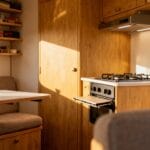
Camper kitchens are usually the most crowded spots. Mine was always cluttered until I thought differently about the layout. Hanging racks for utensils, collapsible dish racks, and magnetized spice jars instantly cleared the small counter. Even a fold-down cutting board that attaches to the wall can create workspace when you need it, then disappear when you don’t.
Using nesting pots and pans also changed my cooking routine completely. No more digging through piles just to reach the one skillet I actually use. Storing dry goods in tall, skinny containers instead of wide ones makes shelves feel deeper. You can see every item at a glance, and there’s less shifting during travel.
One surprising improvement came from switching my heavy ceramic mugs to lightweight enamel ones. I loved the old ones for nostalgia, but I realized every ounce counts in a camper. The lighter gear also means fewer breakages when you hit an unexpected pothole. Sometimes it’s the smallest swaps that make the difference between chaos and comfort.
Small Bathroom, Big Ingenuity
Tiny bathrooms may seem impossible to decorate, but even here there’s room for clever change. I used to think there was no space for beauty, just function. Then I tried a few adjustments that actually turned it pleasant. Compact corner shelves, for example, use wasted space above the toilet or in the shower. A tension rod can hold baskets for toiletries or cleaning supplies.
Swapping bulky towels for quick-drying microfiber ones freed up surprising space in the cabinet. Hanging mesh bags keep personal items off damp counters and help them dry faster. For a little color, waterproof decals or peel‑and‑stick backsplashes bring personality without taking room. And yes, even a tiny plant can survive in there if it doesn’t need much direct sunlight.
One trick that surprised me the most: a small mirror with a fold-out section that stores toothbrushes behind it. It felt extravagant at first, but once I used it, I couldn’t imagine going back. Sometimes a small space feels luxurious not because it’s big, but because every corner has been thoughtfully planned.
Tiny Outdoor Touches that Extend Your Living Space
Even if your camper interior remains compact, the outdoors can act as an extension of your living space. Setting up a foldable outdoor rug or a set of lightweight camping chairs creates a natural “porch.” It encourages you to use the area outside as your dining or relaxing zone. I underestimated this idea until I tried it during a long summer trip. Suddenly, the camper felt twice as big.
Simple string lights strung from the awning can make evenings feel warm and welcoming. And portable storage bins that double as side tables keep items handy without adding more clutter inside. When you blur the boundary between interior and exterior, living small stops feeling restrictive. You start feeling resourceful instead.
Conclusion
Decorating a small camper means balancing comfort, personality, and practicality every single day. Some ideas sound great until you actually hit the road — trust me, I’ve tested enough to know. But when you use space wisely and design around your real habits, the result feels surprisingly freeing. Small doesn’t mean cramped; it just means intentional. And that can feel bigger than any house on wheels.
Frequently Asked Questions
Focus on multifunctional furniture, foldable pieces, and using walls and ceilings for storage. Vertical organization helps free up valuable floor space while keeping items within easy reach.
Use warm lighting, compact textiles like throws and cushions, and a consistent color palette to create a sense of calm. Choose decorative elements that also serve a purpose, such as baskets or hooks with style appeal.
Yes, many budget-friendly tricks work wonders—adhesive hooks, collapsible kitchenware, and storage bins that fit under seats are inexpensive yet highly effective. Repurposing household items can also stretch your budget further.
Install shallow shelves, magnetic spice racks, and hooks for utensils to keep counters clear. Consider vertical stacking containers and wall-mounted organizers to make every inch count.
Light and neutral shades expand visual space, making the camper feel larger and brighter. You can accent with pops of color through small decor pieces to add personality without overwhelming the compact area.