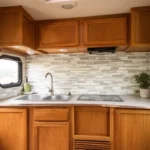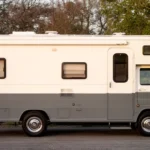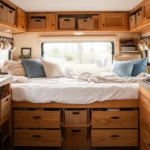

The first time we squeezed a whole weekend into a camper barely wider than a hallway, we figured out fast that a tiny home on wheels lives or dies by its layout. You don’t need a tour bus to live well on the road. With a few smart moves, the right small camper interior ideas can make your space look pulled-together, calm, and genuinely functional. We’ve gathered the touches that helped most, so every square inch works hard and still feels good to come home to.
1. Go Light And Layered With Color
Light, layered color is one of the quickest small camper interior ideas for making a tight space breathe. Warm whites, soft grays, and sandy neutrals bounce daylight around and instantly make the camper feel bigger, while swappable accents let you change the mood in minutes.
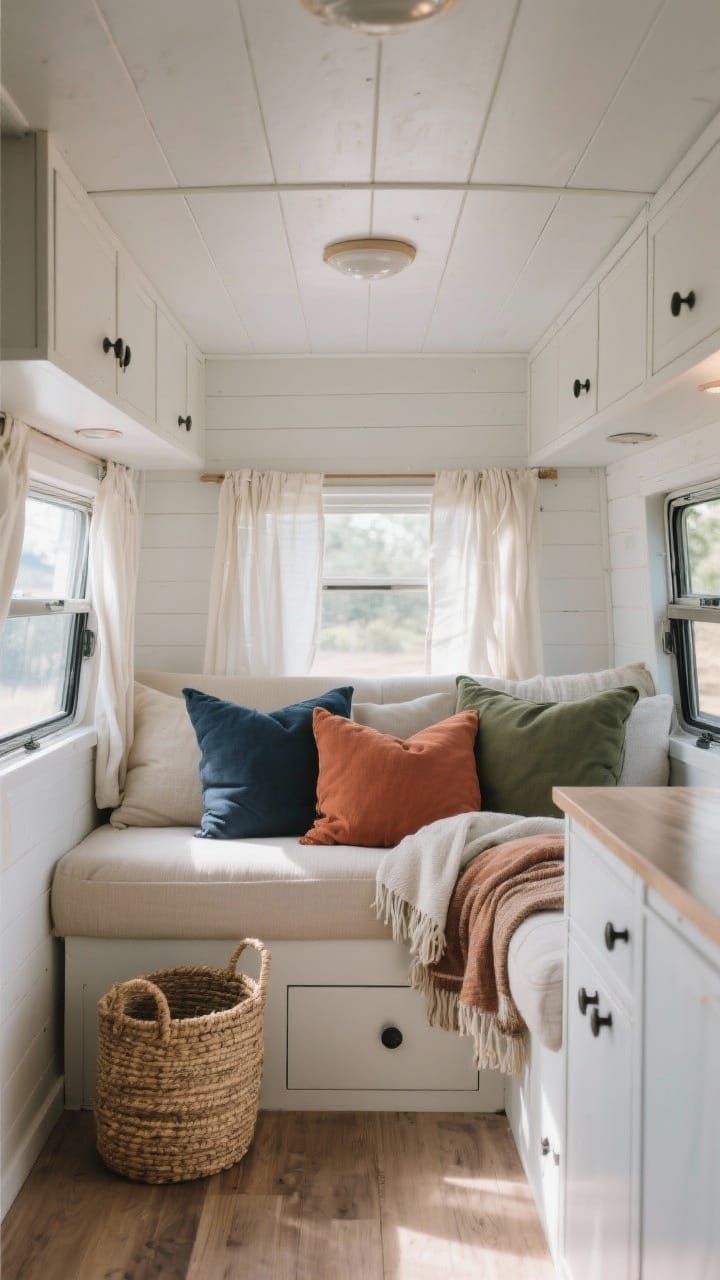
Small campers love light, bright palettes. We keep the big surfaces warm and neutral, then add pops of color we can swap out with the seasons through pillows, throws, and small art. The vibe stays cohesive, but the energy changes in five minutes. If a brighter look is your goal, our roundup of white camper interior ideas takes this even further.
- Walls: Off-white or pale greige in eggshell keeps things airy and wipeable.
- Accents: Navy, olive, or rust for cozy sophistication that’s not loud.
- Textures: Mix matte, linen, and woven finishes for depth without visual weight.
2. Mount It Or Lose It
When floor space is precious, vertical space becomes your best storage trick. Mounting lights, rails, and hooks on the walls keeps counters clear, which makes a small camper feel calmer and gives you fewer things to knock loose on bumpy roads.
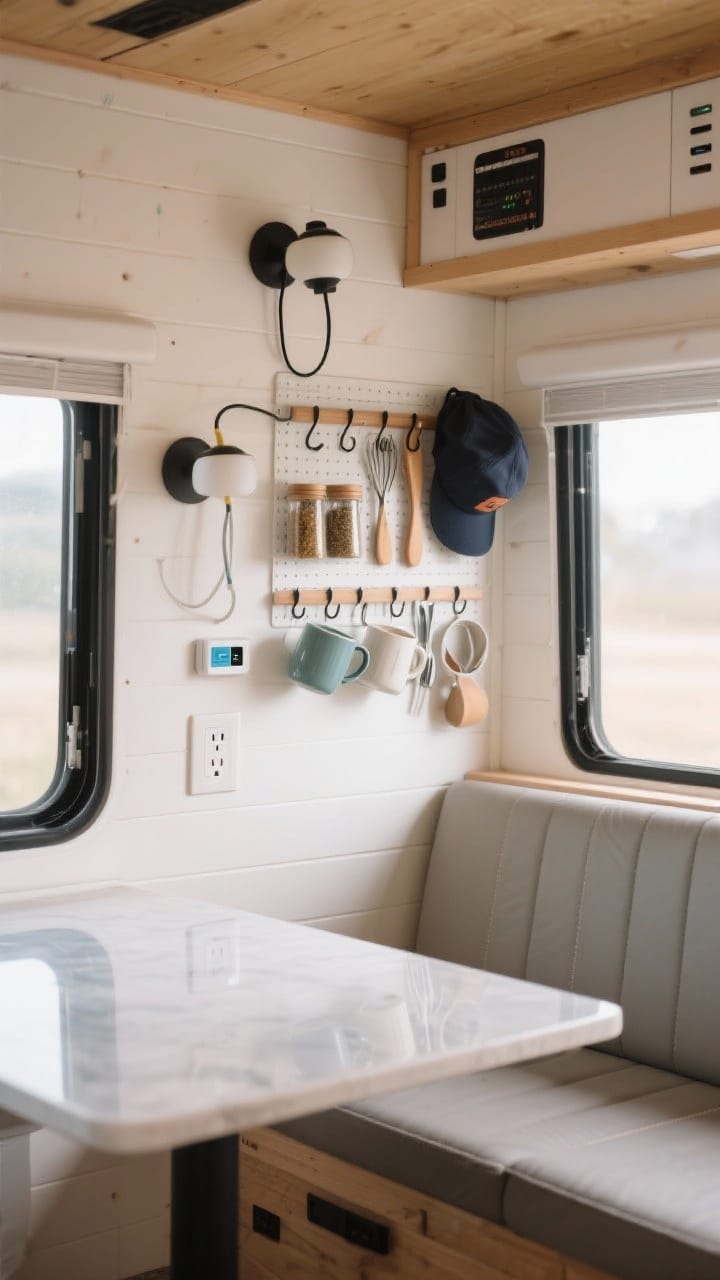
We added wall-mounted hooks and rails a few years ago and were surprised how much calmer the space felt right away. Mount everything you reasonably can: lights, organizing rails, even the paper towel holder. Clear counters make a huge difference, and if storage is your weak spot, these small camper storage ideas pair perfectly with going vertical.
- Lighting: Plug-in sconces with cord covers look custom and don’t hog surfaces.
- Rails & Hooks: Think magnetic spice strips, peg rails, and adhesive hooks.
- Chargers: Add a mounted USB hub near the dining banquette to tame cable chaos.
3. Double-Duty Furniture Or Bust
In a small camper, every piece of furniture should earn its keep. Designs that store, fold, or convert let one item do the job of three, which is the real secret to a clean, functional layout that never feels crowded.
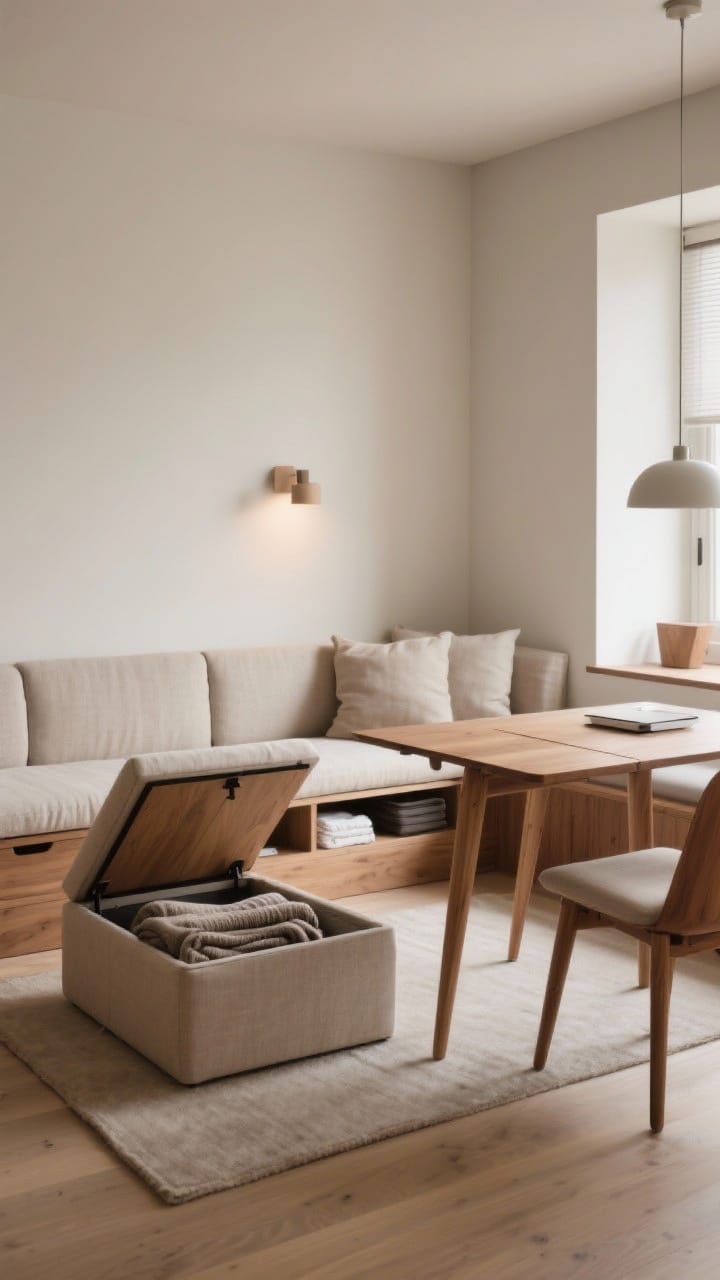
If a piece doesn’t store, fold, or convert, we leave it behind. Bonus points for furniture that hides mess and converts fast, because nobody wants to rebuild a bed like a puzzle every night. For more ideas built around this rule, our guide to multi-functional furniture for small campers is a great next stop.
- Ottomans: Storage inside, seating on top, footrest when you need it.
- Benches: Hinged tops for linens, tools, or bulky kitchen gear.
- Tables: A drop-leaf table that goes dining-to-desk-to-vanity in seconds.
4. Layer Lighting Like A Designer
Harsh overhead lights make small spaces feel sterile and flat. Layering three kinds of light, ambient, task, and accent, gives a small camper depth and warmth, so you can shift from meal prep to movie night without one bright bulb taking over.
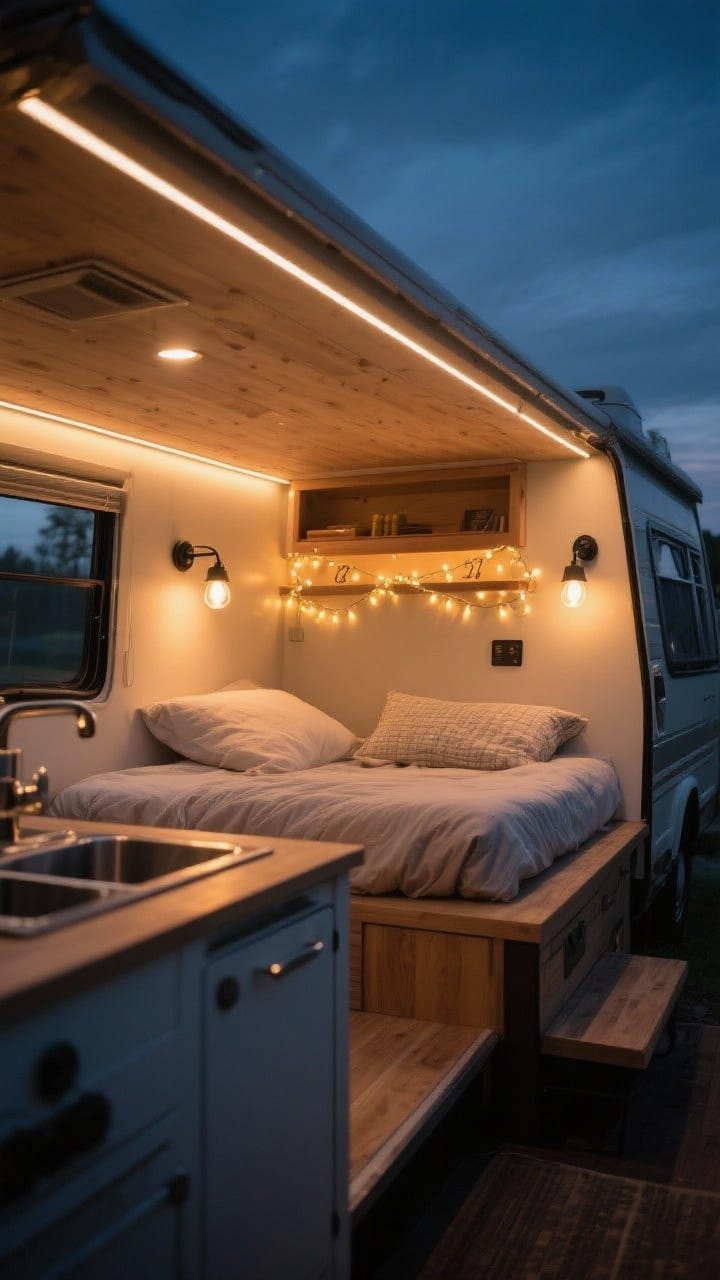
Layered lighting has worked for us more than once in small spaces. We lean on warm bulbs (2700K to 3000K) and add dimmers so evenings feel cozier without changing anything else. If lighting is your main project right now, our small camper lighting ideas go deeper on fixtures and placement.
- Ambient: Low-profile LED strips or puck lights for overall glow.
- Task: Swiveling sconces over the bed and kitchen.
- Accent: Tiny battery-powered lamps or fairy lights for cozy corners.
5. Create Micro-Zones
In a tiny footprint, rooms are more about intention than walls. Using rugs, lighting, and small furniture shifts to define an entry, a dining spot, and a lounge nook makes the whole camper feel organized instead of chaotic, even when your entire home is roughly 120 square feet.
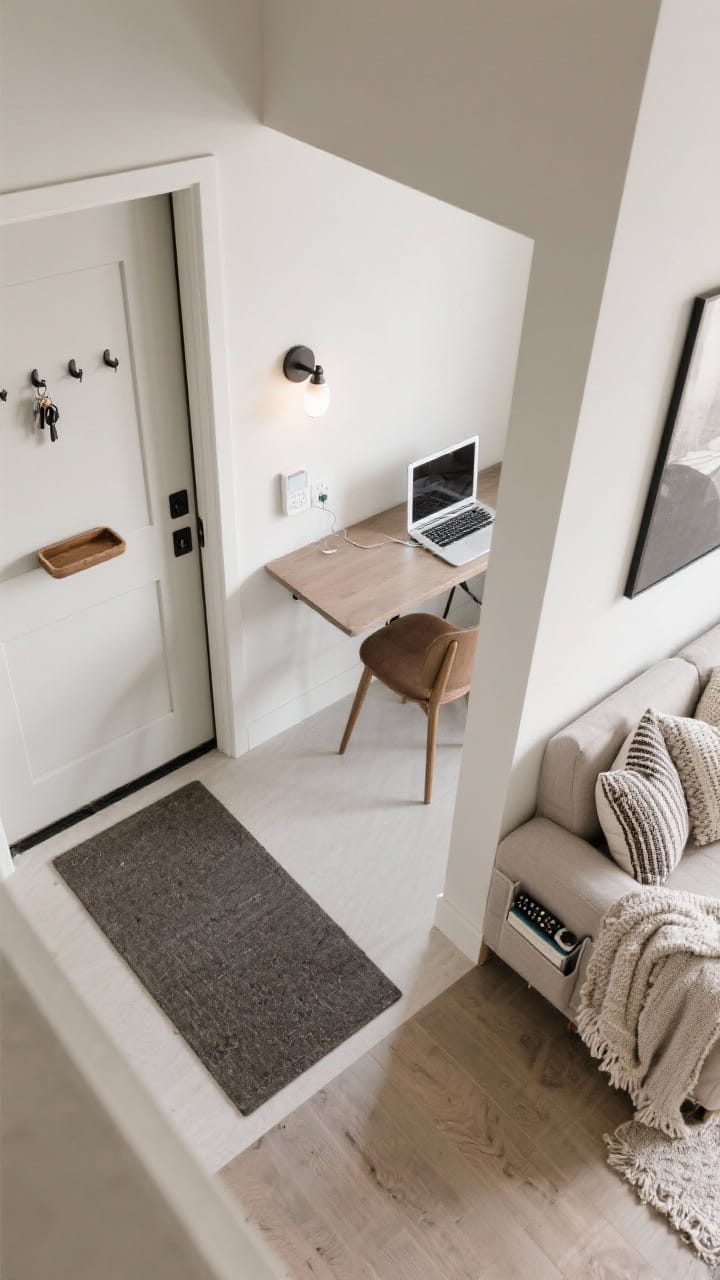
Zoning helps the space feel calm even when it is doing a dozen jobs at once. We give each function its own little anchor: a tray here, a rug there, a dedicated light overhead. For a lounge-focused version of this idea, our cozy small camper living room ideas show how to carve out a comfy seating zone.
- Entry: Slim tray, hooks, and a narrow mat to catch shoes and keys.
- Dining/Work: One compact table with a dedicated light and charging station.
- Lounge: Cushions plus a throw plus a side pocket for remotes and books.
6. Use Soft Partitions For Privacy
Permanent walls eat up precious space in a small camper. Soft partitions like curtains, sheers, and thin sliding panels give you privacy and a sense of separate zones without stealing square inches, and they add cozy texture at the same time.
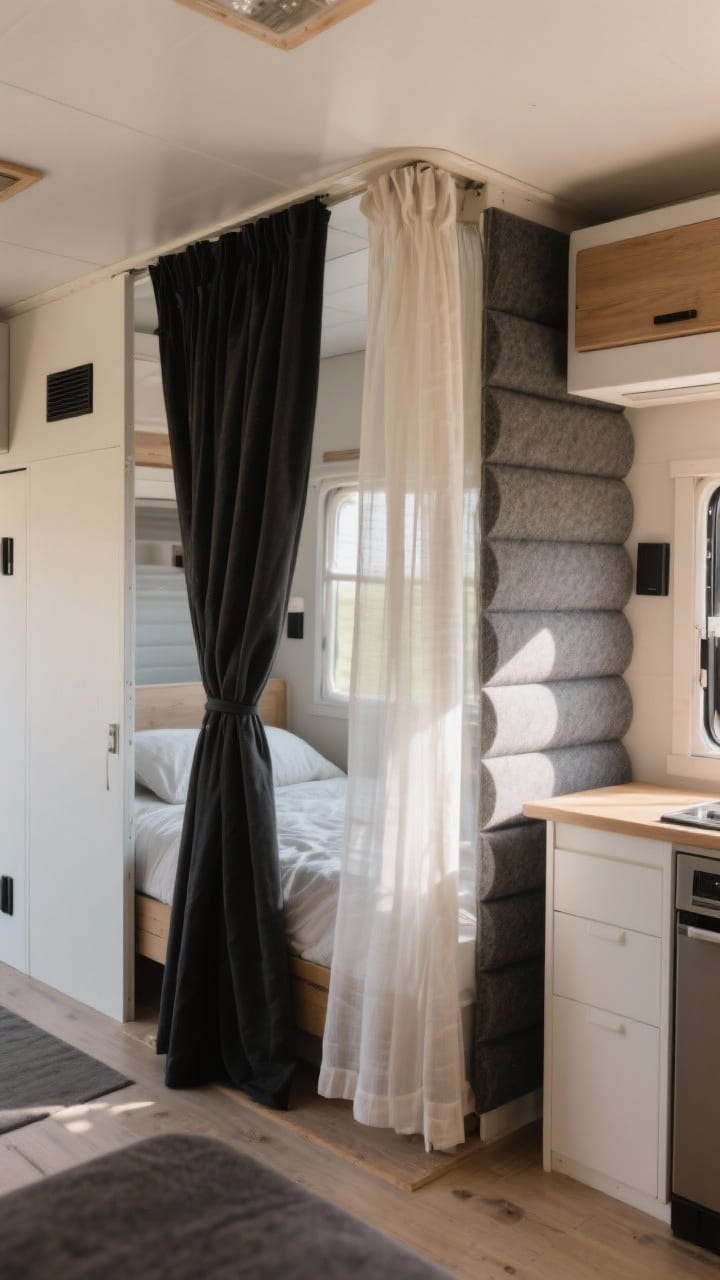
We love that soft partitions add softness and warmth that make a camper feel more like a boutique retreat than a moving box. A blackout curtain around the bed buys you real privacy, while a sheer between the galley and lounge keeps light flowing.
- Blackout Curtains: Separate the sleeping area and block early sun.
- Sheers: Between living and kitchen for a subtle boundary that still lets light through.
- Acoustic Panels: Thin felt sliders add sound control and a modern look.
7. Upgrade Fabrics For Durability And Style
High-traffic fabrics are non-negotiable in a camper that travels. Performance upholstery, stain-resistant slipcovers, and washable linens hold their shape through real life, so your small space stays cozy instead of looking tired after a few trips.
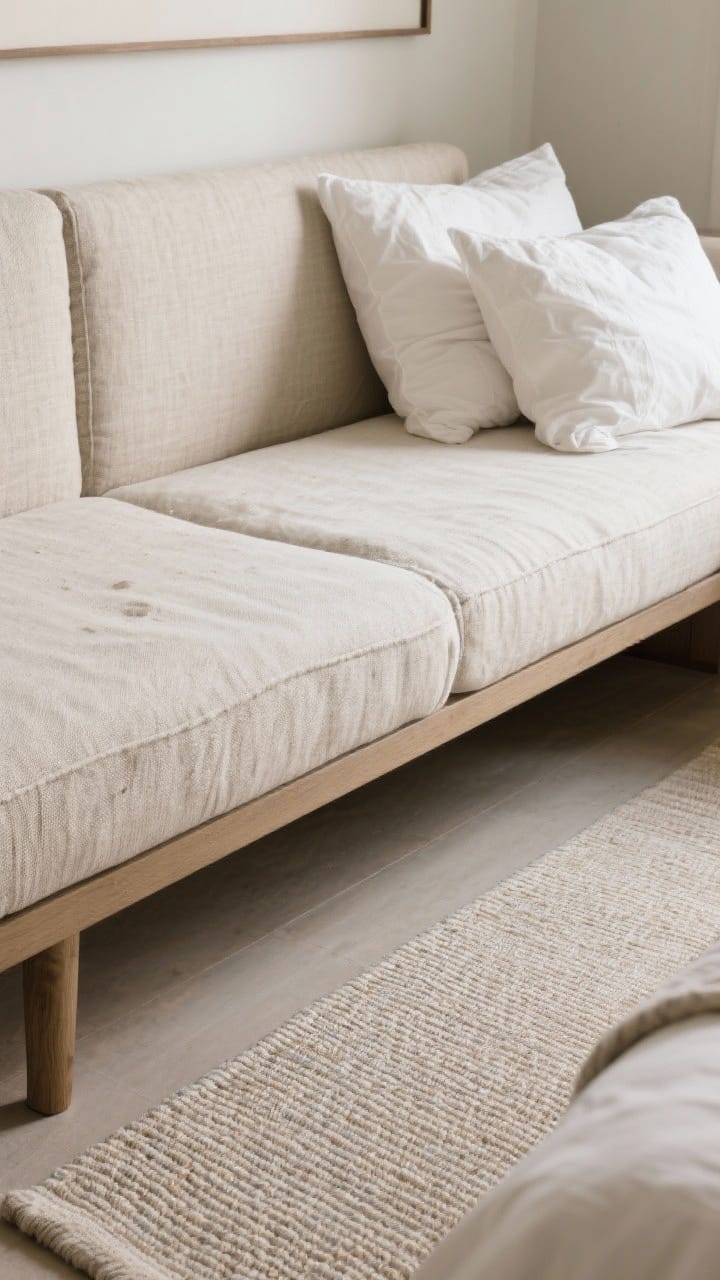
We keep it cozy, not fussy, and lean on subtle pattern to hide life’s little messes. A washable runner and a couple of durable cushion covers do a lot of quiet heavy lifting.
- Upholstery: Performance canvas or Crypton-style fabrics.
- Bedding: Layer breathable cotton or linen and add a quilt for texture.
- Rugs: Low-pile indoor/outdoor or washable woven runners.
8. Max Out Tiny Kitchens With Smart Storage
A tiny galley can still cook big if you use every inch, especially the awkward vertical spaces and dead corners. Racks on cabinet doors, labeled stacking bins, and a sink-covering board turn a cramped kitchen into one of the most efficient corners of a small camper.
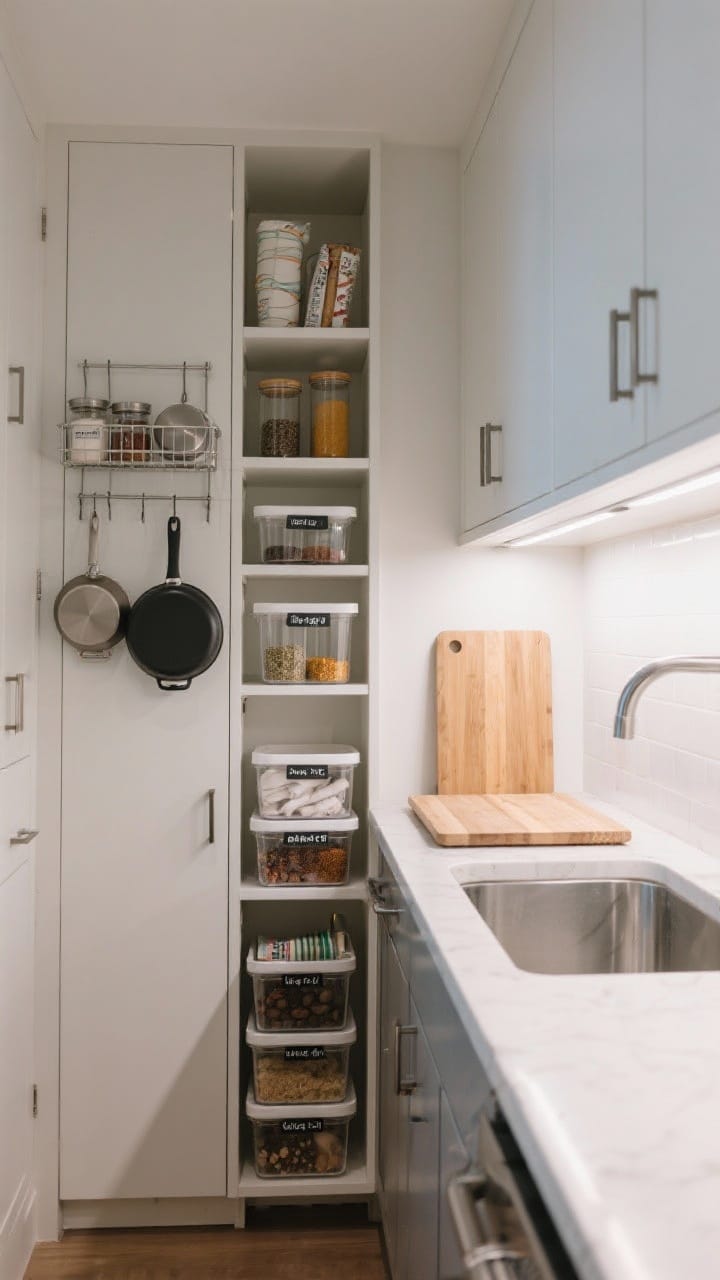
We streamline our gear down to what we actually use, because if you never bake on the road, those muffin tins are just taking up a cabinet. For a kitchen-specific deep dive, our RV kitchen organization ideas break down every drawer and shelf.
- Inside Cabinet Doors: Add racks for lids, spices, and wraps.
- Stacking Bins: Clear, labeled bins make it easy to grab and go.
- Counter Control: A cutting board that covers the sink equals instant prep space.
9. Mirrors And Glossy Surfaces For Space Magic
Mirrors are one of the oldest small camper interior ideas for a reason: they bounce light and visually double your space. Place one across from a window or near a light source, then add a few glossy accents to keep that bright, open feeling going.
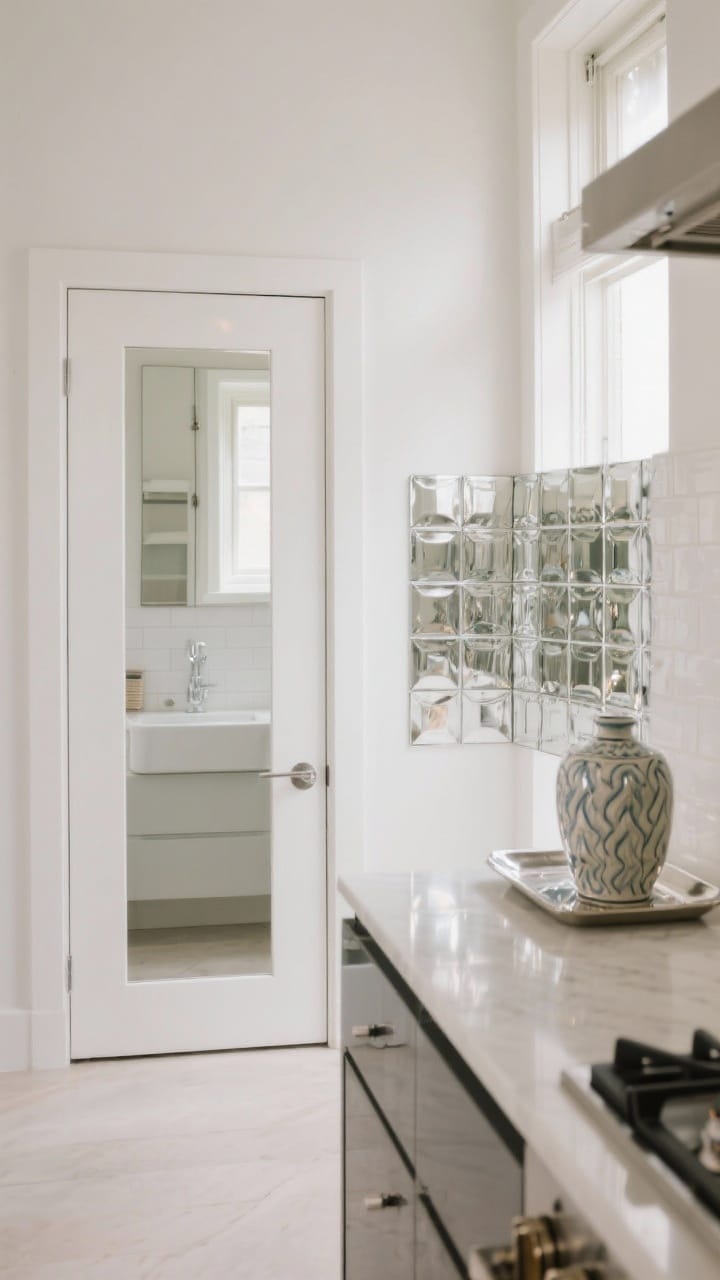
Glossy accents like lacquer trays or glazed tiles create that bright, reflective moment without feeling cold. We mount a full-length mirror on a closet or bathroom door so it works hard and reflects window light back into the room.
- Full-Length Mirror: Mount on the bathroom or closet door.
- Mirrored Backsplash: A small panel behind the stove instantly brightens.
- Glossy Decor: Trays, frames, or vases to catch the light.
10. Curate A Capsule Collection Of Decor
In a small camper, every object shows, so a tight, repeated palette reads as intentional instead of cluttered. Choosing one main neutral, one accent, and one metallic across textiles, art, and accessories keeps the whole space calm and pulled together.
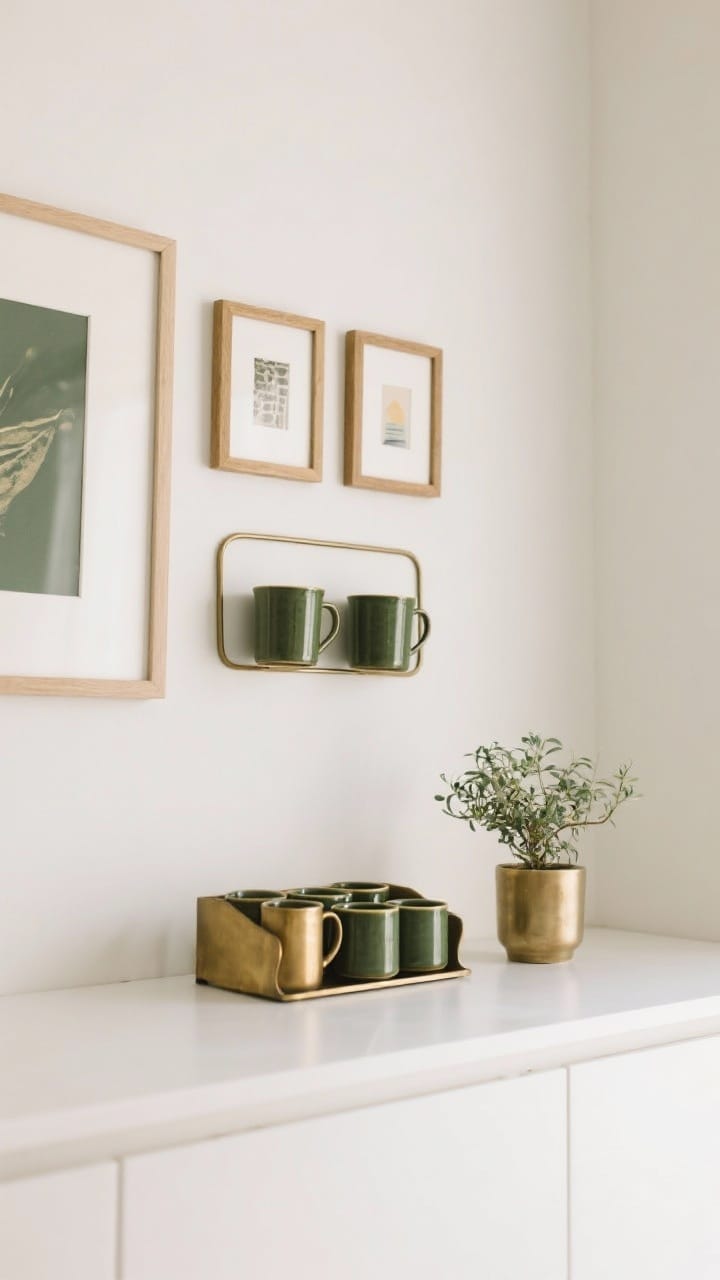
Less stuff, more impact. We even let the everyday items pull their weight: a few pretty mugs on display, the rest tucked away. For a softer, nature-led version of this palette, take a look at our earth tone camper decor ideas.
- 3-Color Rule: One main neutral, one accent, one metallic or wood tone.
- Art: Small frames grouped intentionally, never scattered.
- Plants: A few hardy, compact plants add life without clutter.
11. Add Texture To Walls Without Bulk
Bare RV walls can feel flat and unfinished. Lightweight, removable treatments like peel-and-stick wallpaper, faux beadboard, and thin wood slats add depth and warmth without drilling into your rig or stealing any floor space.
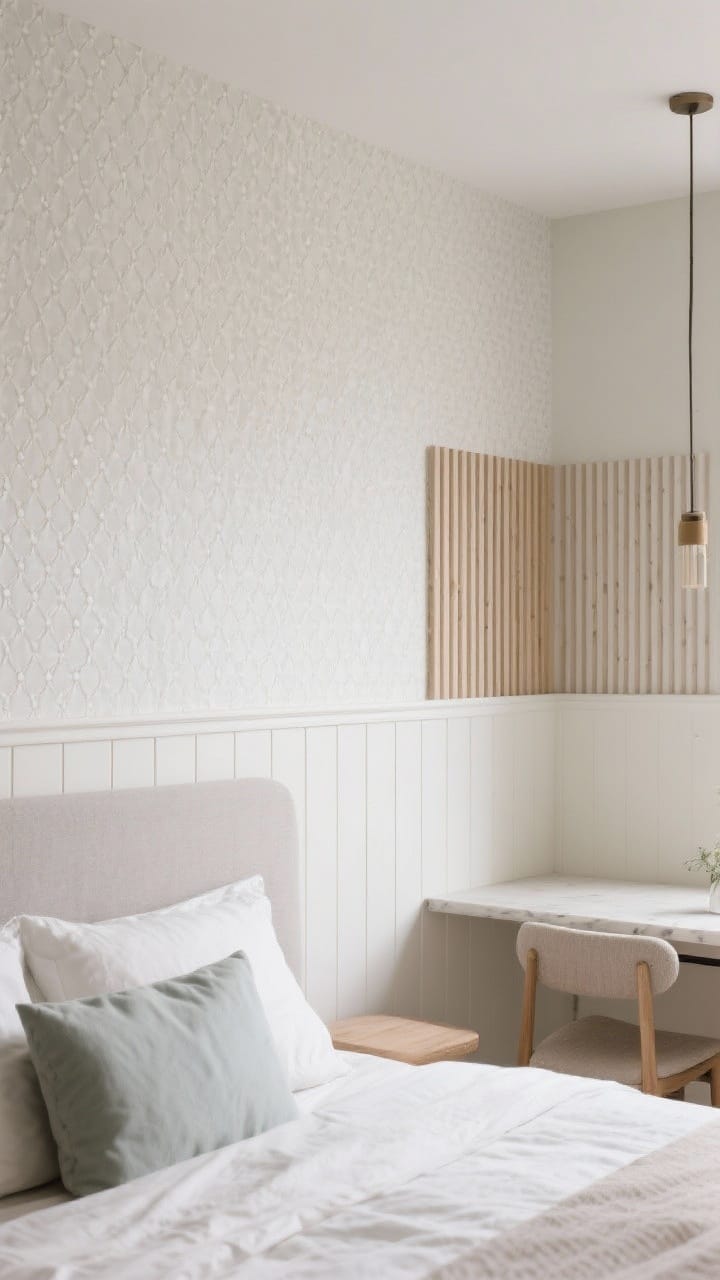
We keep patterns subtle and tactile to avoid a closed-in feeling. Think calm, not carnival. An accent wall behind the bed or along the dining nook is usually all it takes.
- Peel-and-Stick Wallpaper: Accent a headboard or dining nook.
- Faux Beadboard: Peel-and-stick panels or beadboard wallpaper for classic texture.
- Wood Slat Strips: Thin, lightweight slats for a modern, cozy finish.
12. Build A Bed That Works Hard
The bed is the main real estate in most small campers, so it should store, support, and soothe all at once. Under-bed drawers, a lift mechanism, and a shallow headboard shelf turn dead space into storage while keeping nightly setup simple.
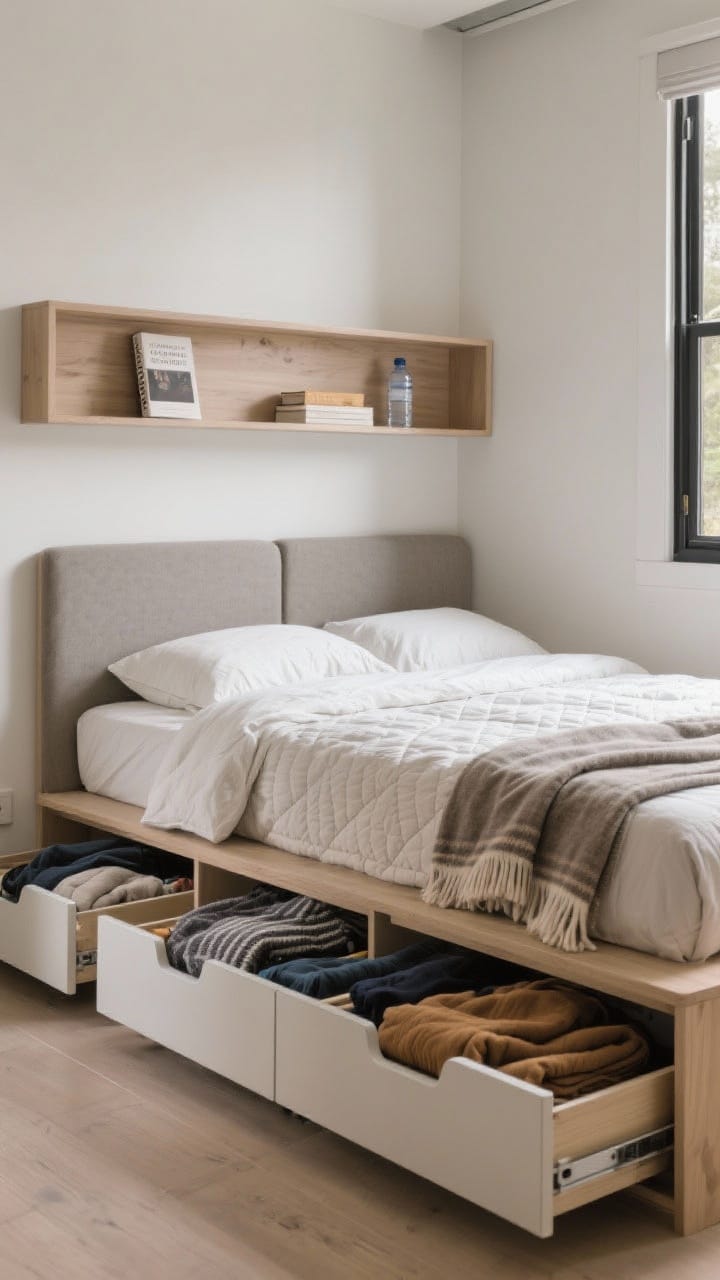
We use lift mechanisms or drawers so storage is easy to reach, then keep bedding to layers we can actually manage in tight quarters. For a whole article on getting this corner right, see our cozy camper bedroom ideas.
- Under-Bed Drawers: Perfect for off-season clothes or extra blankets.
- Headboard Storage: Shallow shelf with a lip for books and a water bottle.
- Bedding Strategy: Fitted sheet plus quilt plus two throws equals tidy and flexible.
13. Choose Slim, Space-Smart Hardware
Bulky knobs and clunky handles steal walkway space and snag your hips in a narrow camper. Swapping them for slim finger pulls, soft-close hinges, and lipped shelves is a small change that quietly modernizes the whole interior.
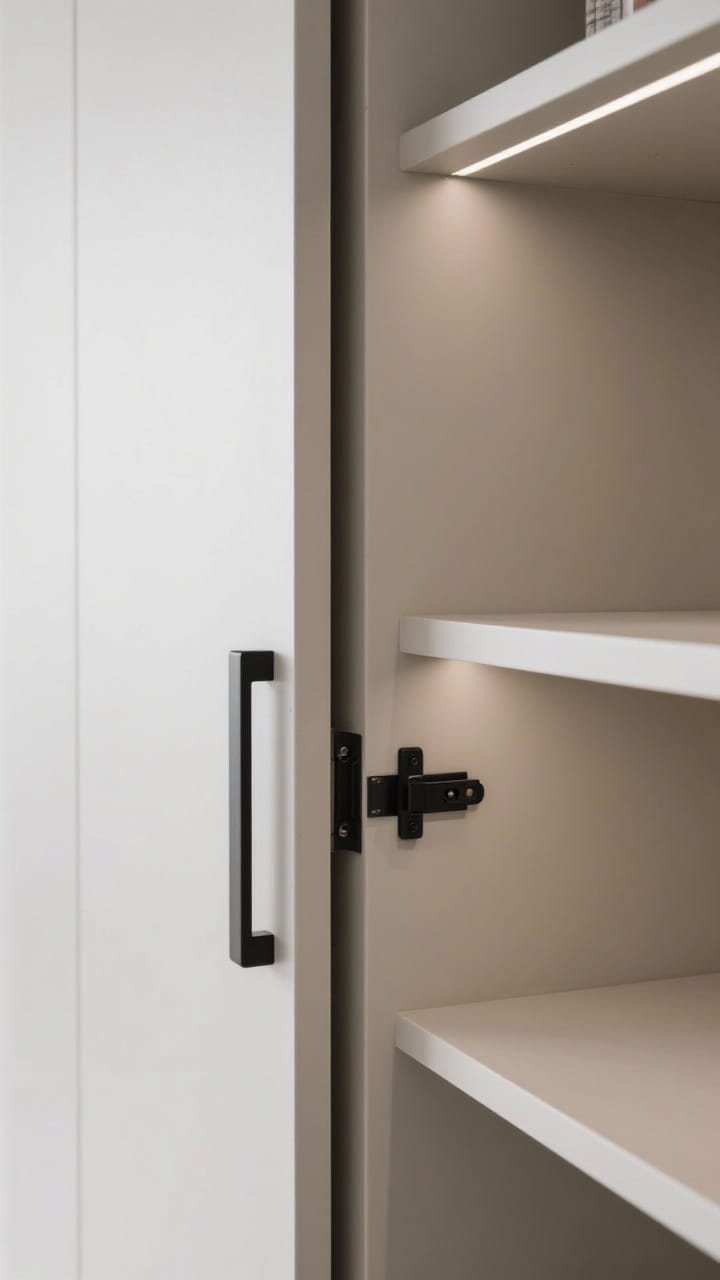
Matte black, brushed brass, or warm nickel instantly update even basic cabinetry, and you get fewer hip bruises in the bargain. Lipped shelves are the quiet hero here, keeping your things from launching while you drive.
- Finger Pulls: Minimalist and great in narrow walkways.
- Soft-Close Hinges: Quieter rides and fewer slams.
- Lipped Shelves: Keep items from sliding off while driving.
14. Corral The Chaos With Hidden Systems
Visual clutter is the real enemy in a small camper, since everything is in sight. Giving every category a home, then hiding it behind drawer dividers, soft bins, and a shallow command center, keeps surfaces clear and the whole space feeling calm.
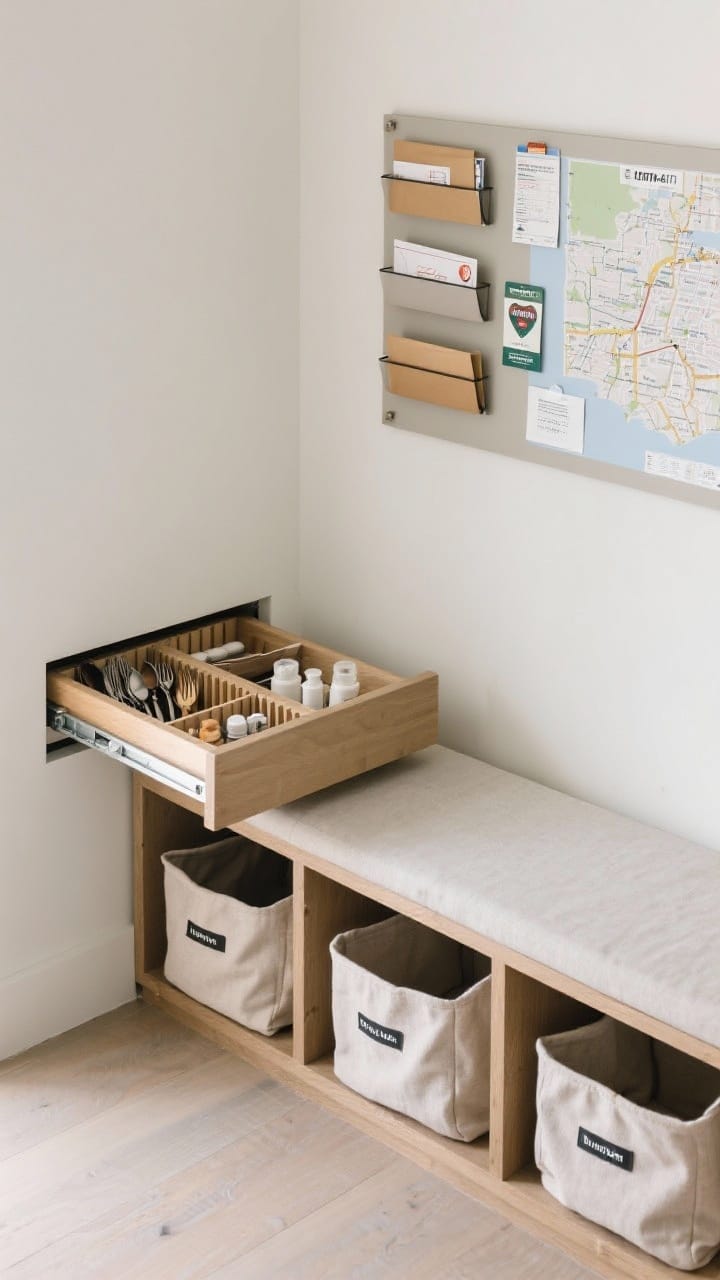
Labeling isn’t just for the super-organized; it saves real time when your brain is in vacation mode. We tuck soft fabric bins under benches and keep a slim command center by the door for mail, maps, and park passes.
- Drawer Dividers: For utensils, toiletries, and toolkits.
- Soft Bins: Fabric cubes for flexible storage under benches.
- Command Center: A shallow wall organizer for mail, maps, and park passes.
15. Treat Your Entry Like A Tiny Mudroom
The first two feet inside the door set the tone for your whole small camper. A simple drop zone with layered mats, a slim shoe tray, and key hooks traps dirt and corrals essentials, so coming and going stays smooth even after a muddy hike.
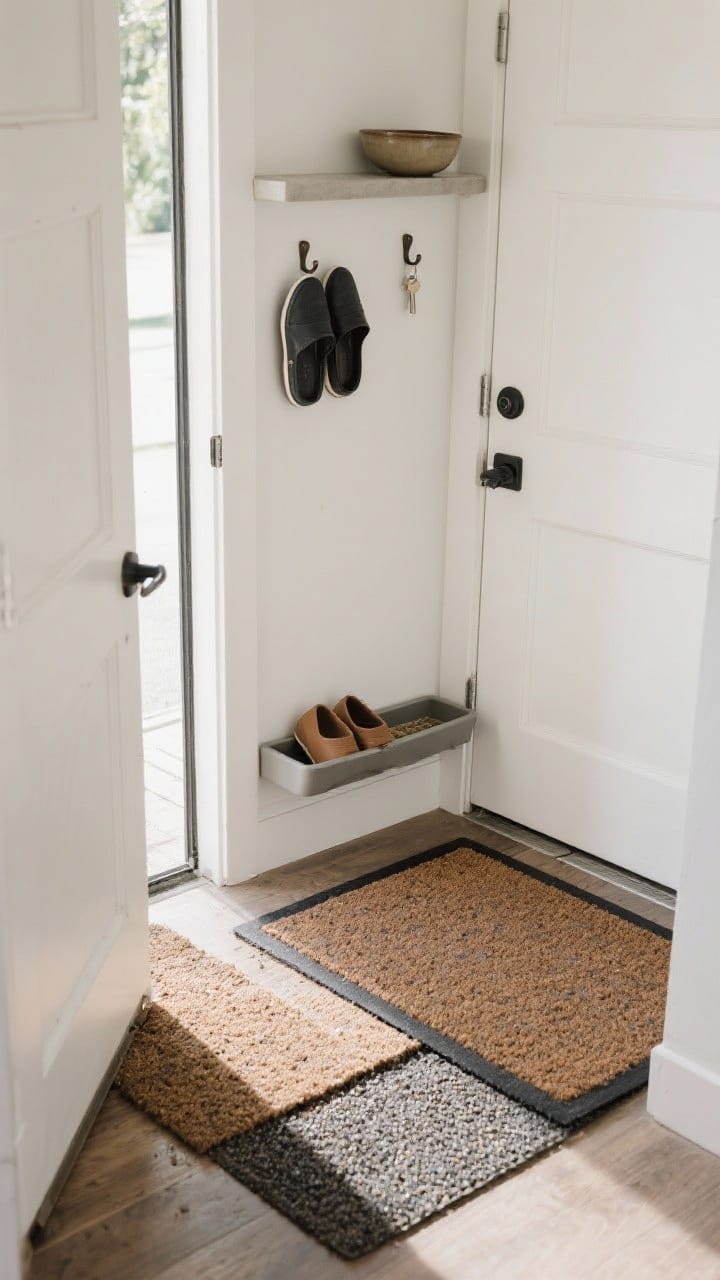
Setting up a small drop zone near the door saved us a lot of daily frustration. Even a tiny system makes coming in and out much smoother, so keep it fast, intuitive, and easy to reset.
- Layered Mats: Scraper outside, absorbent inside.
- Slim Shoe Tray: Tucks under a bench or sits by the door.
- Key Hooks & Bowl: One habit, zero lost keys.
Final Touches To Tie It All Together
- Scent: A diffuser or linen spray for that fresh, just-cleaned feeling.
- Sound: A compact Bluetooth speaker mounted out of the way.
- Routine: A 5-minute tidy ritual before bed keeps mornings bright.
You don’t need a giant rig to live beautifully on the road. With these 15 small camper interior ideas, you can pull real style and function from every square inch, and your space will still feel calm, personal, and totally yours. Now go pour a coffee, open the windows, and enjoy your tiny, cozy home on wheels. Happy nesting!
FAQ
Small camper interior ideas rely on light colors, layered lighting, and smart storage to reduce visual clutter. These choices help reflect light and create a more open feeling.
Light neutrals like warm white, soft gray, and pale greige work best. They bounce light and keep the space from feeling closed in.
Yes, multifunctional furniture is essential. Pieces that fold, store, or convert help save space and keep the camper organized.
Use vertical storage, hidden compartments, and under-furniture solutions. Keeping surfaces clear makes the space feel calmer and larger.
Mirrors reflect light and visually double the space. Placing them near windows or light sources has the biggest impact.