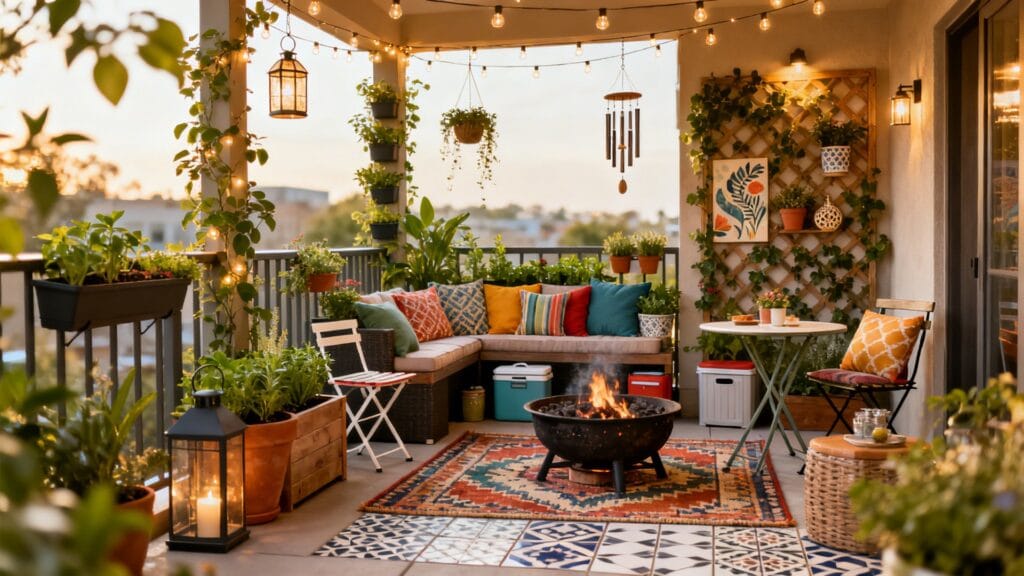
Your patio may be small, but it can still make a real statement. 18 Small Patio Decor Ideas for Apartments That Wow shows that great small patio decor ideas for apartments come down to smart choices, not square footage. People assume a narrow balcony or a compact patio can’t look put-together or feel worth spending time in. That assumption is wrong. The right furniture, a bit of lighting, and some intentional greenery turn even the most modest outdoor corner into a place you genuinely want to be. These 18 ideas are practical, renter-friendly, and genuinely good-looking. No major renovation required, and no unlimited budget either.
1. Go Vertical With a Living Wall
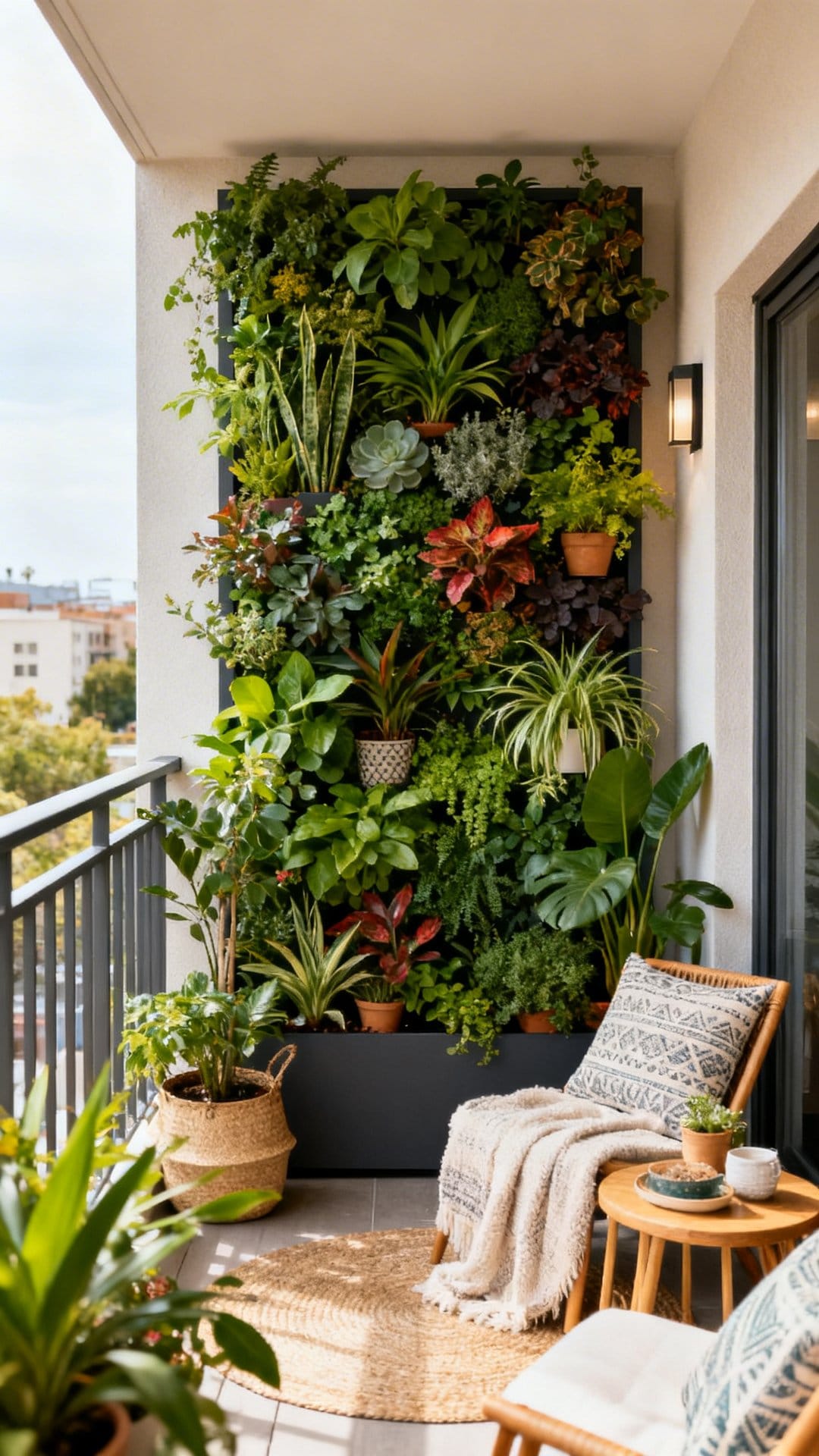
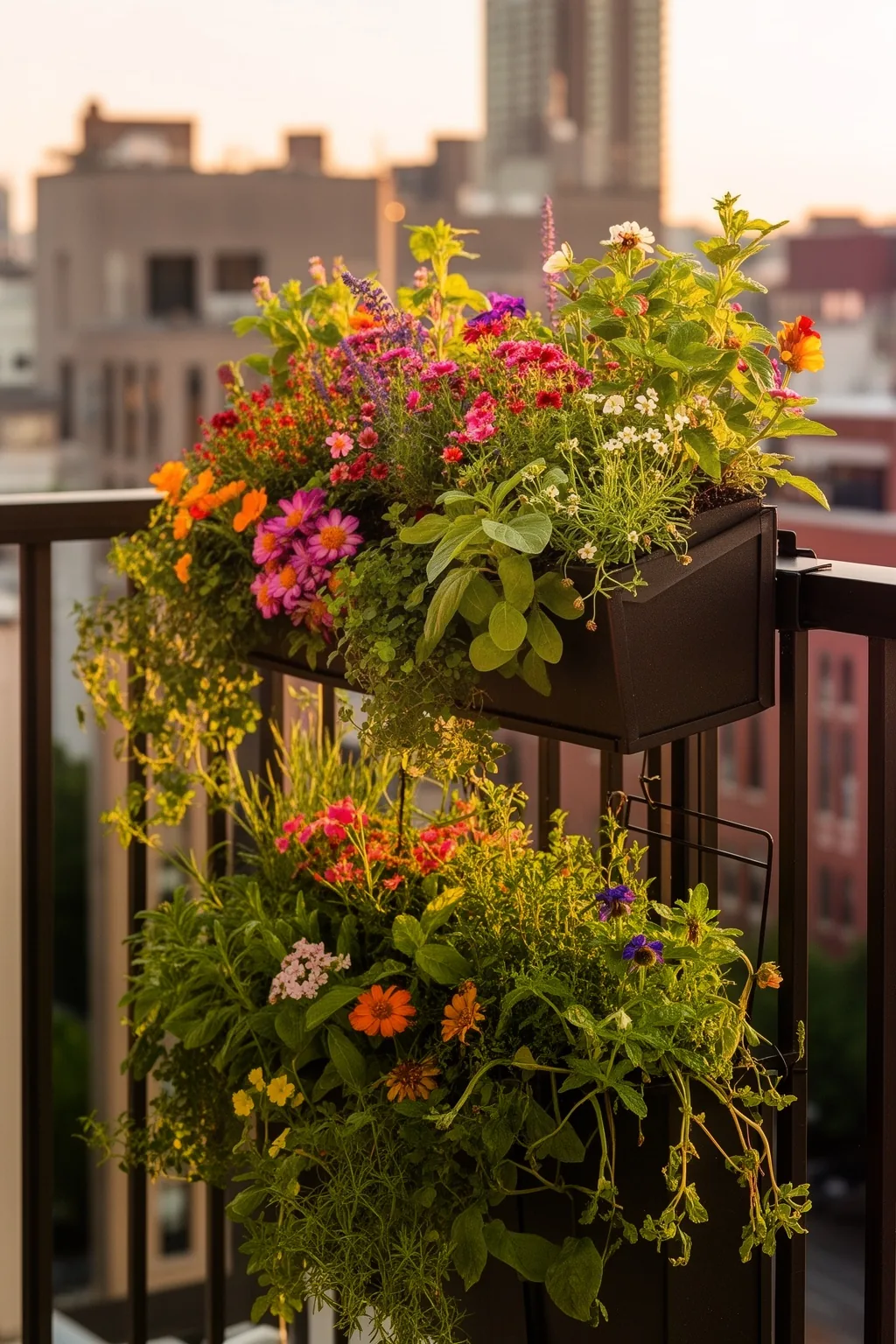
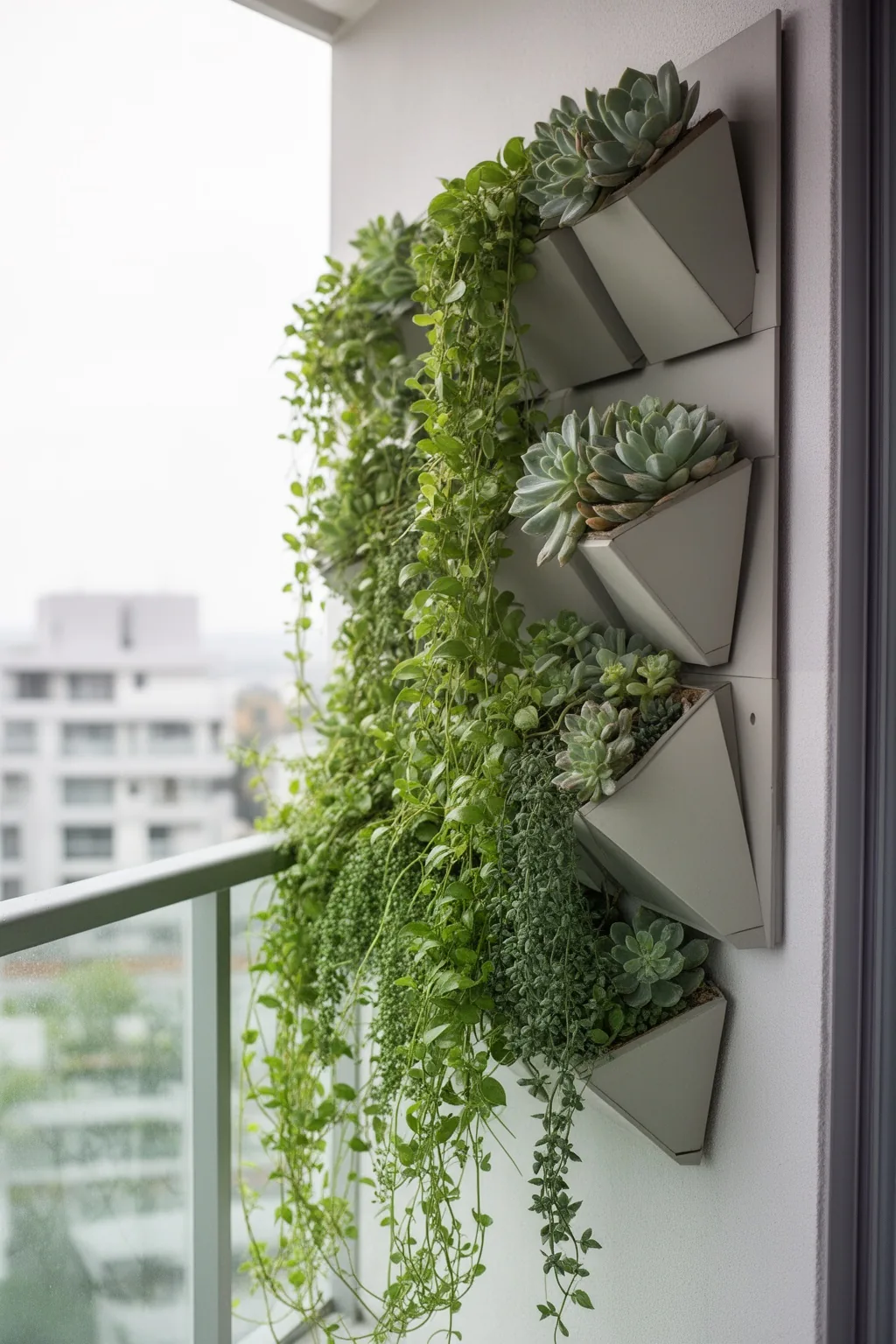
When floor space runs out, your walls step up. A vertical garden adds color, texture, and fresh air, all without sacrificing a single square inch of walking room. It feels lush and pulled-together in a way that a few scattered pots never quite manages.
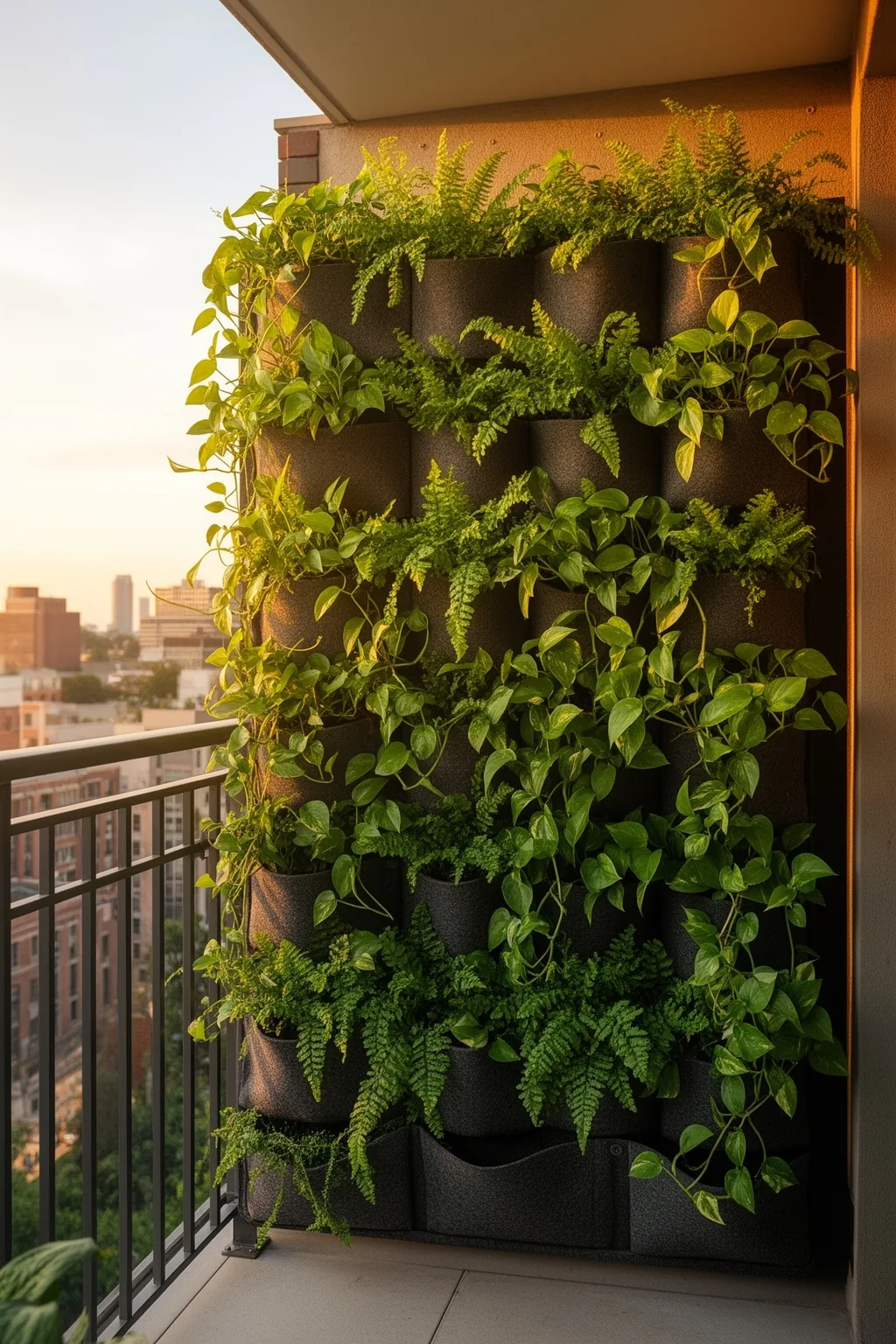
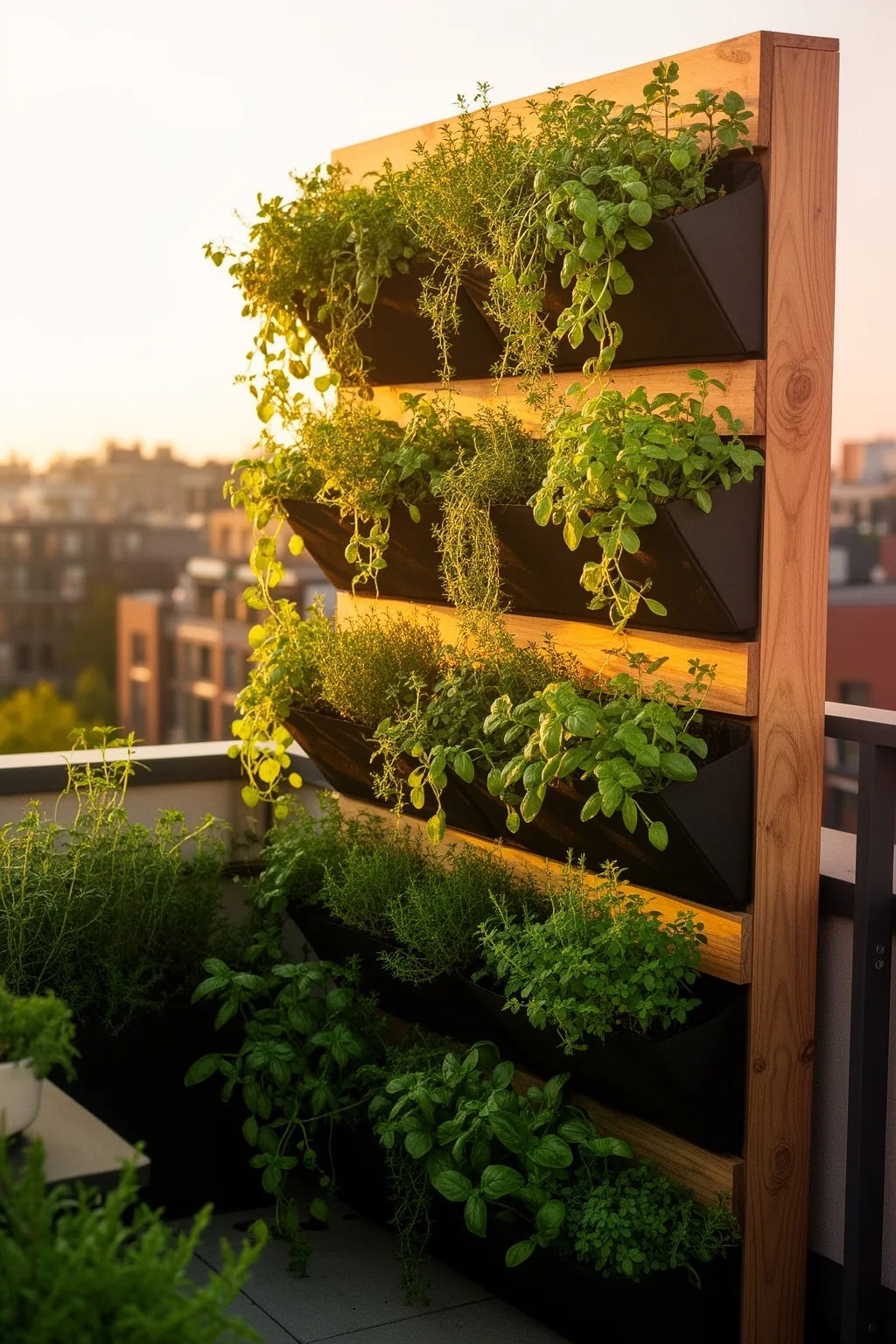
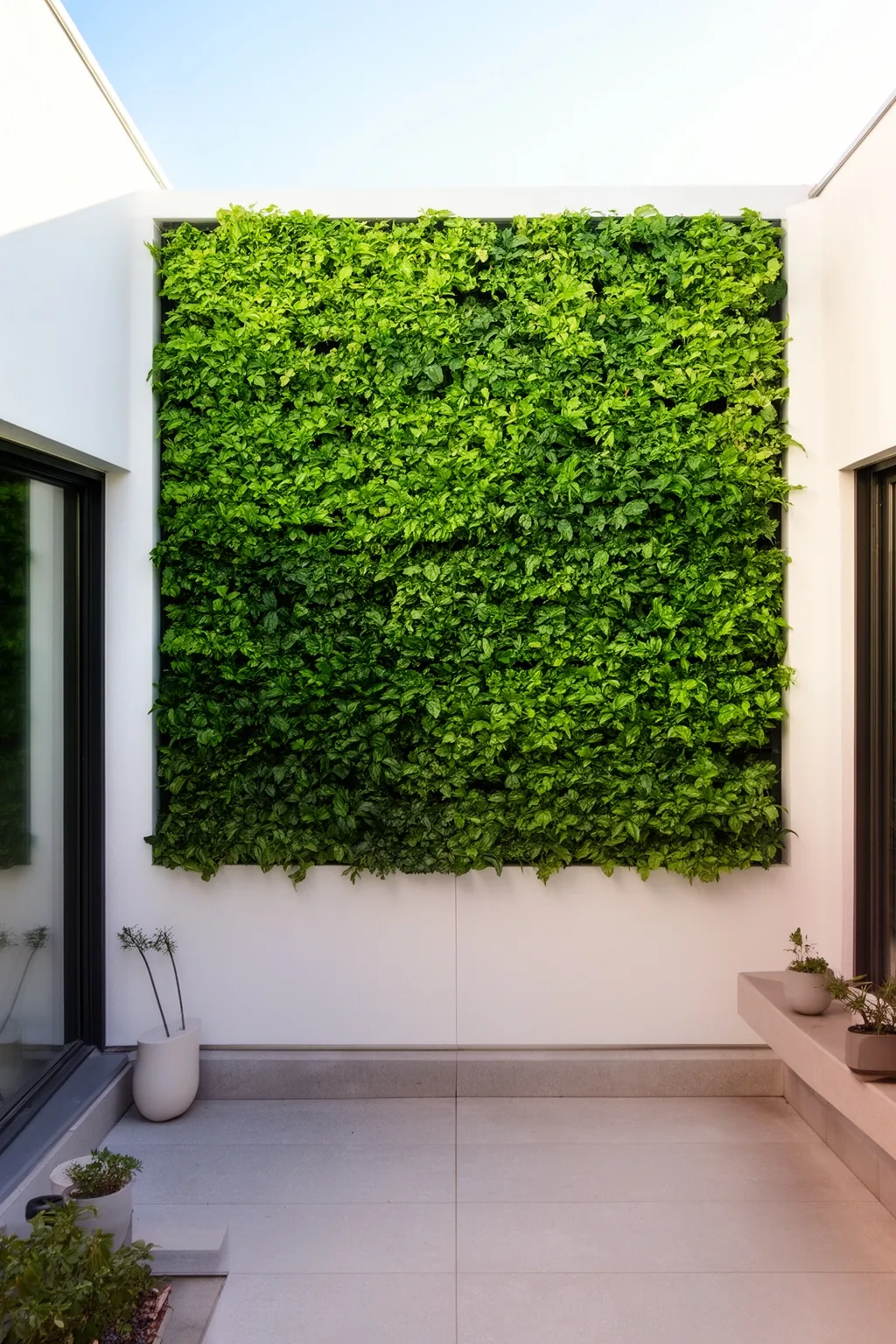
Vertical gardens work especially well on apartment patios where the square footage ends at the railing. When you treat walls and fences as planting surfaces, you instantly double your growing area. The visual effect is striking: a panel of cascading greenery draws the eye upward and makes a narrow space feel taller and more layered. Even a single panel of pothos covering half a fence makes the whole area feel intentional.
Tips
- Use modular planters or a pocketed felt wall.
- Choose low-maintenance plants like pothos, philodendron, ferns, or herbs.
- Add a simple drip or self-watering system to keep it easy.
From what I've gathered, starting with a pocketed felt panel from a garden center is the easiest first step. Fill each pocket with a small plant and hang the whole thing on fence hooks or wall anchors. Within a few weeks, the plants fill in and the wall looks intentional. The trick is cohesion: stick to one or two plant families so it reads as a single piece rather than a collection of random green things.
The benefits go beyond looks. A dense planting absorbs some street noise and creates a natural buffer. On warm days, the moisture from soil and leaves cools the immediate area slightly. For a small patio that can feel exposed, a living wall quietly handles multiple problems at once.
Perfect if you want maximum green with minimal clutter. Bonus: it doubles as a privacy screen.
2. Choose a Bistro Set That Folds
 Shop this look: a folding bistro set on Amazon
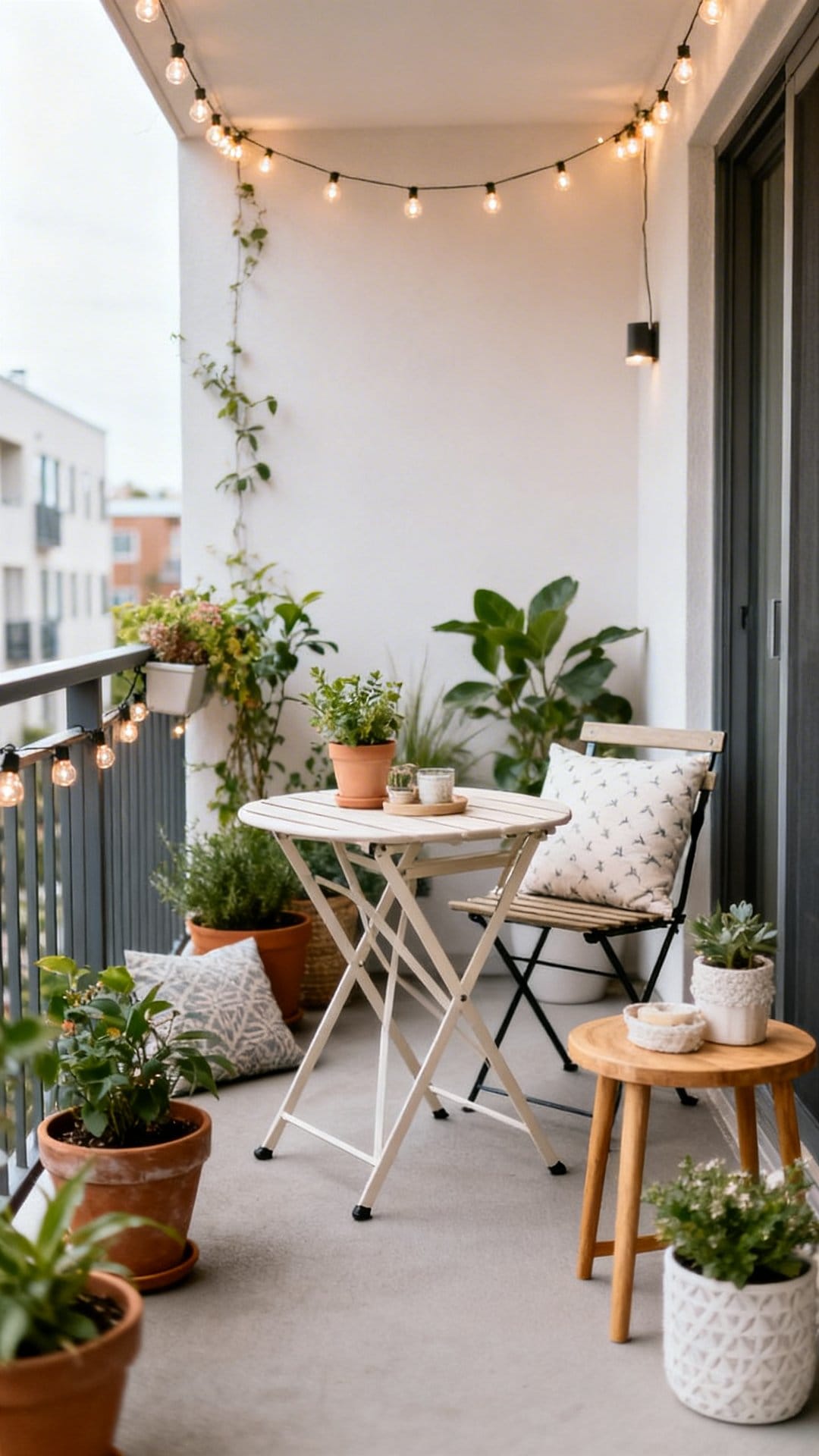
Small patios need furniture that moves with your mood. A foldable bistro table and chairs look cute, tuck away quickly, and keep the layout flexible. Coffee spot at 8 am, yoga zone at 9. Done.
The great thing about a foldable bistro set is that it gives you permission to use your patio in different ways on different days. One morning it's a coffee station, the next afternoon it's cleared away so you can stretch out or let kids run around. That kind of flexibility matters more than you'd expect in a small space, and it's something fixed furniture can never deliver. If you're working with a tight budget, these apartment patio ideas on a budget pair nicely with a foldable set.
Key Points
- Pick weather-resistant materials: powder-coated metal or treated wood.
- Round tables feel less crowded and safer in tight corners.
- Add thin seat cushions for extra comfort without bulk.
When shopping, pay attention to weight. A table and chairs you'll actually fold and move need to be light enough that doing so doesn't feel like a chore. Powder-coated steel is durable but can be heavy. Aluminum frames hit a good balance between sturdiness and ease of movement. If weight is a real concern, resin furniture works well and comes in clean, minimal designs that don't look cheap.
One detail worth checking: how easily the chairs stack or hang. Some models fold flat to about two inches wide and hang neatly on a wall bracket. That kind of storage turns a narrow patio into a genuinely multi-use space rather than just a furniture storage area with a view.
Use this when you entertain occasionally and don't want furniture hogging space 24/7.
3. Layer an Outdoor Rug For Instant Warmth
 Shop this look: an outdoor rug on Amazon · Ckorzen Fall Plaid Rug Orange White Buffalo… · JONATHAN Y Border Stripe Indoor Outdoor Area…
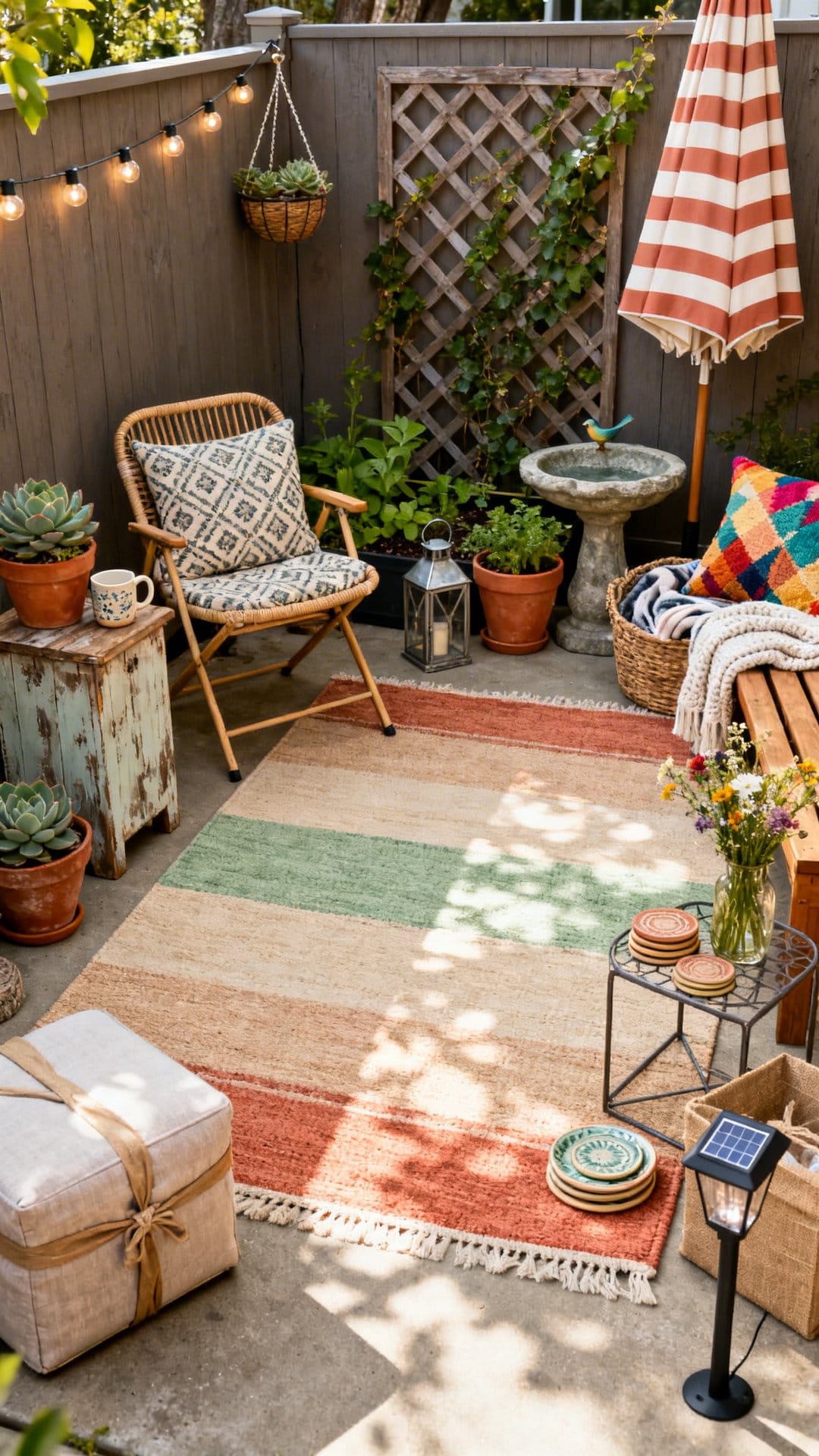
A rug anchors your patio and makes it feel like a real room. It softens concrete, covers stains, and adds color or pattern without commitment. Plus, it keeps bare feet happy.
A good outdoor rug does more design work per dollar than almost any other purchase for a small patio. It defines the space and makes plain concrete feel like it was chosen rather than just poured. The Spruce put together a thorough outdoor rug guide that covers options across price ranges and materials, worth reading before you buy since the difference between a rug that holds moisture and one that dries fast matters much more outdoors than it does inside.
What To Look For
- Flatweave, polypropylene, or recycled plastic rugs for durability.
- Patterns to hide dirt and visually expand the area.
- Size that fits under all furniture legs to unify the layout.
I've seen an outdoor rug change a plain concrete balcony almost instantly. The whole space reads as grounded and finished in a way that no amount of furniture rearranging quite manages on its own. A flat-weave polypropylene piece is the safe pick, since it's easy to shake out and dries quickly after rain. Rugs that hold moisture go musty fast, which defeats the whole point.
Sizing matters more outdoors than indoors. Go bigger than you think you need. A rug that only sits under the table legs looks like an afterthought. Ideally, all furniture legs should sit on the rug, which creates a cohesive floor plane and makes the area read as a unified room rather than a collection of objects on concrete.
Great for renters who want immediate coziness without permanent changes.
4. String Lights = Automatic Ambience
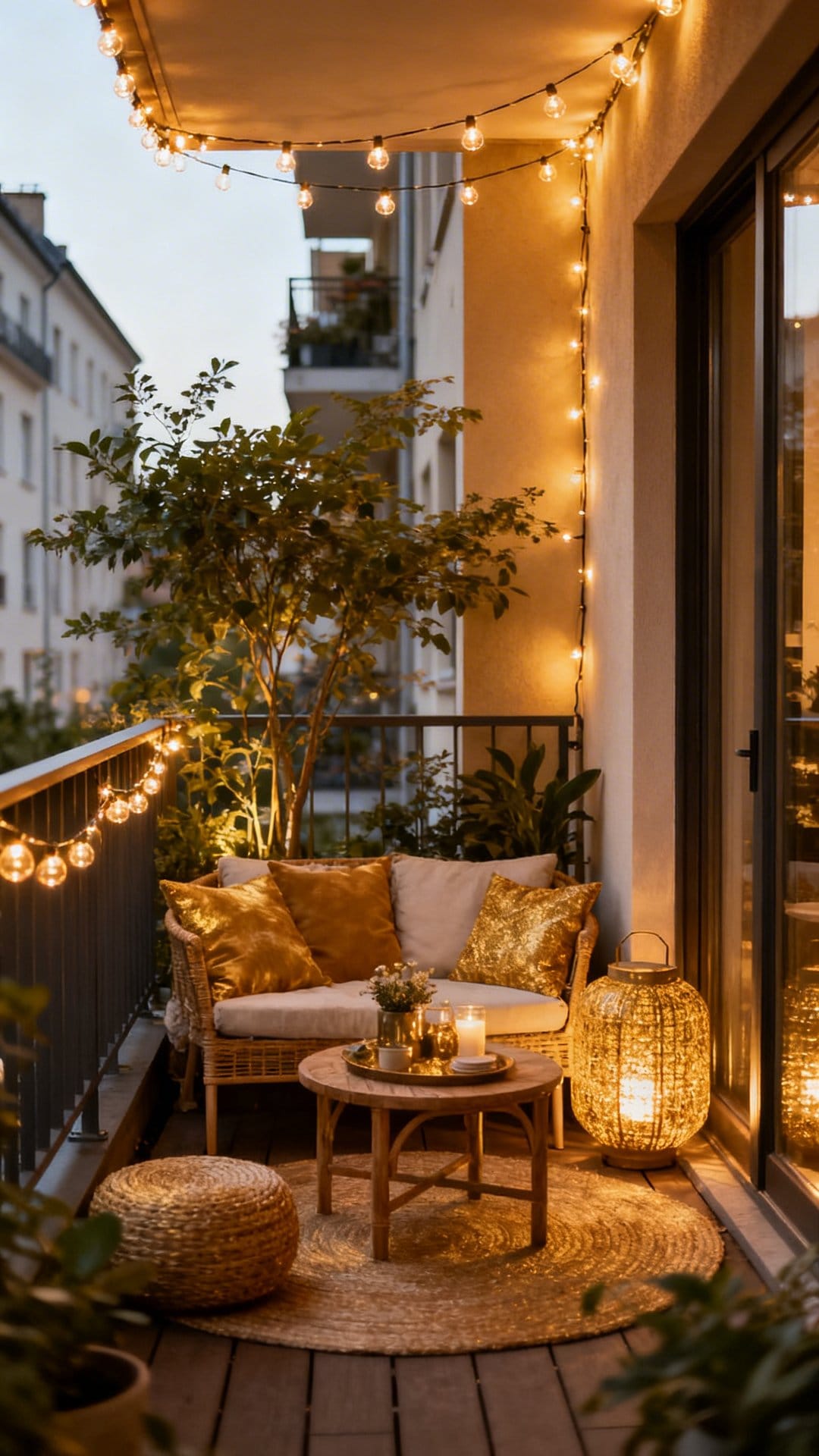
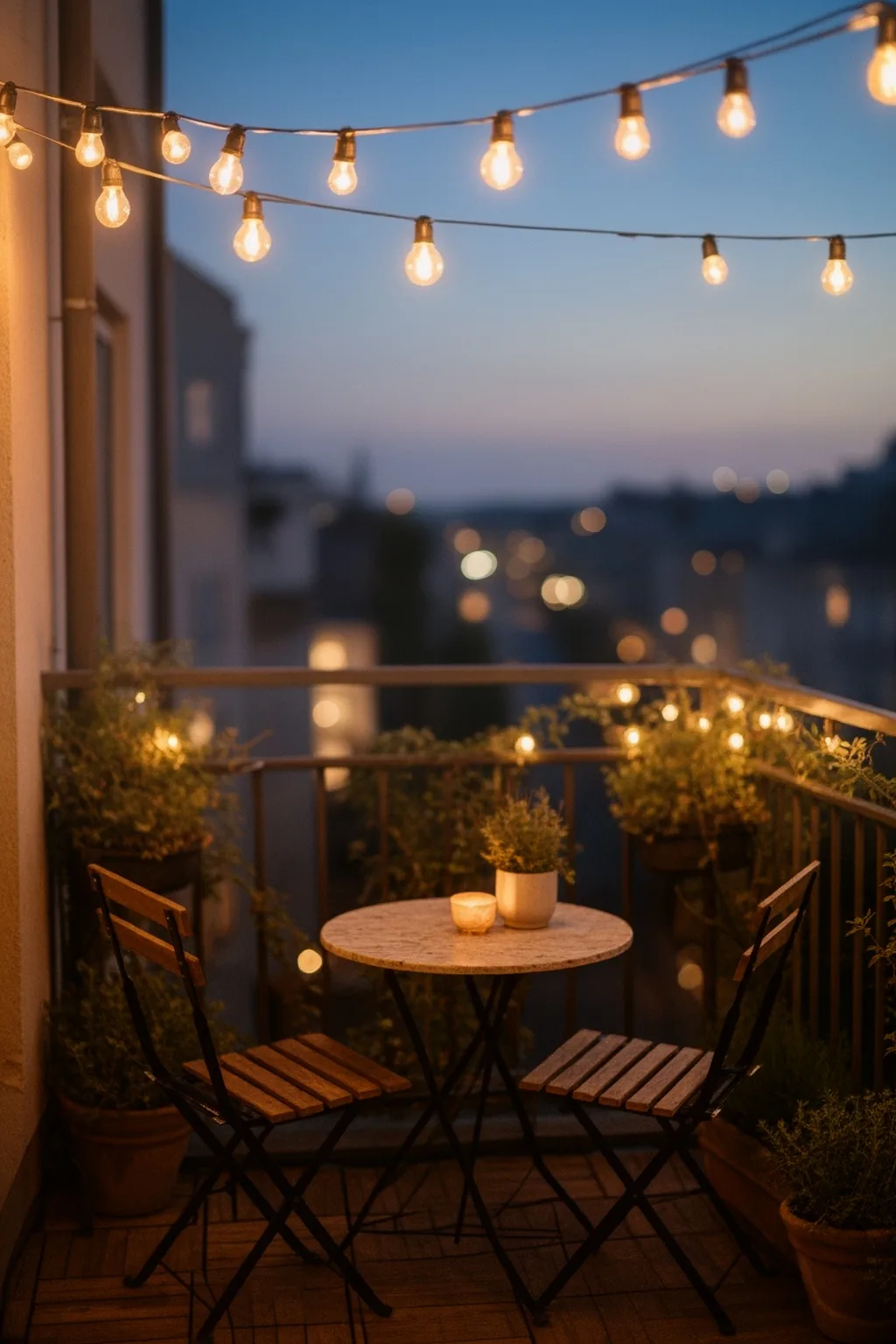
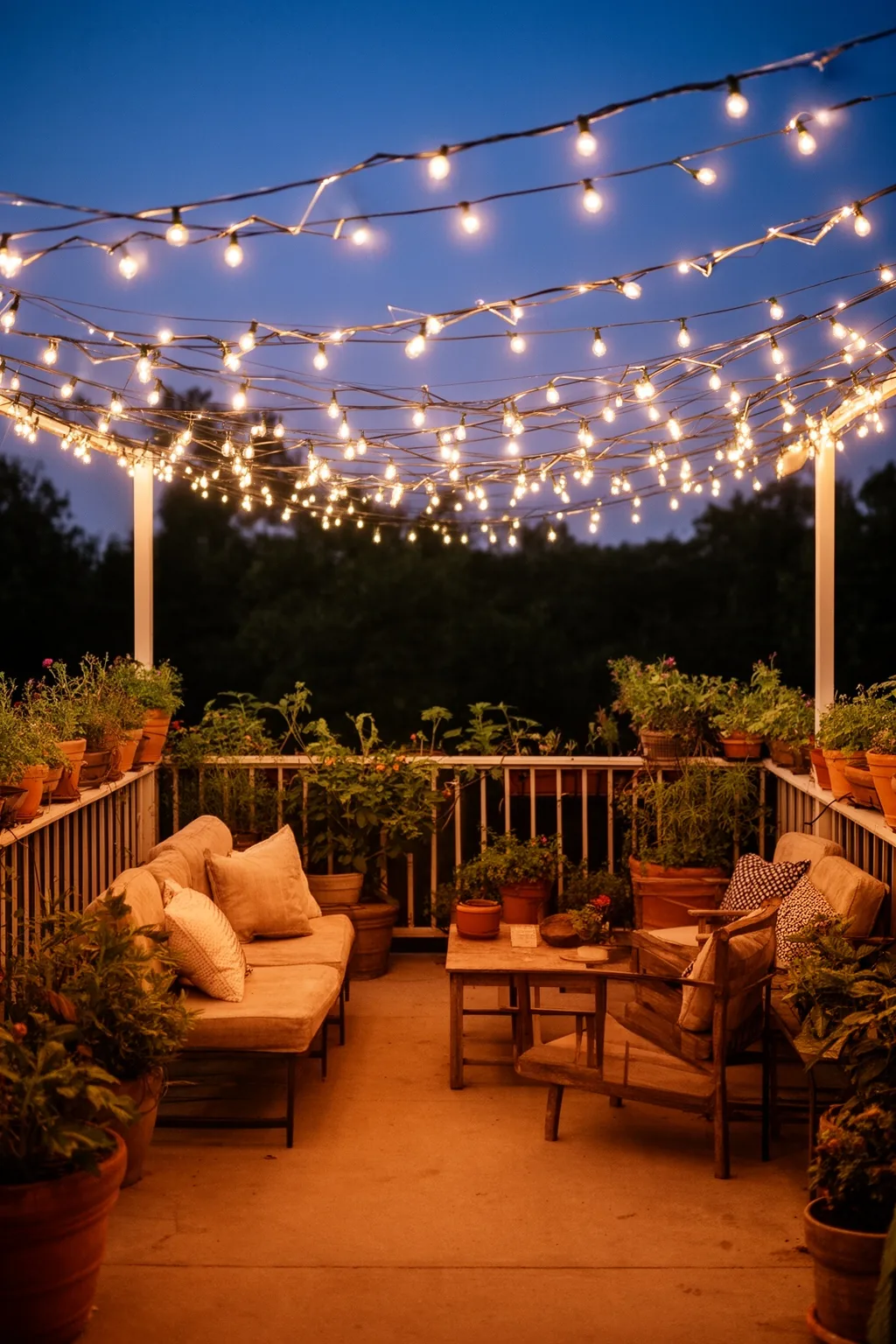
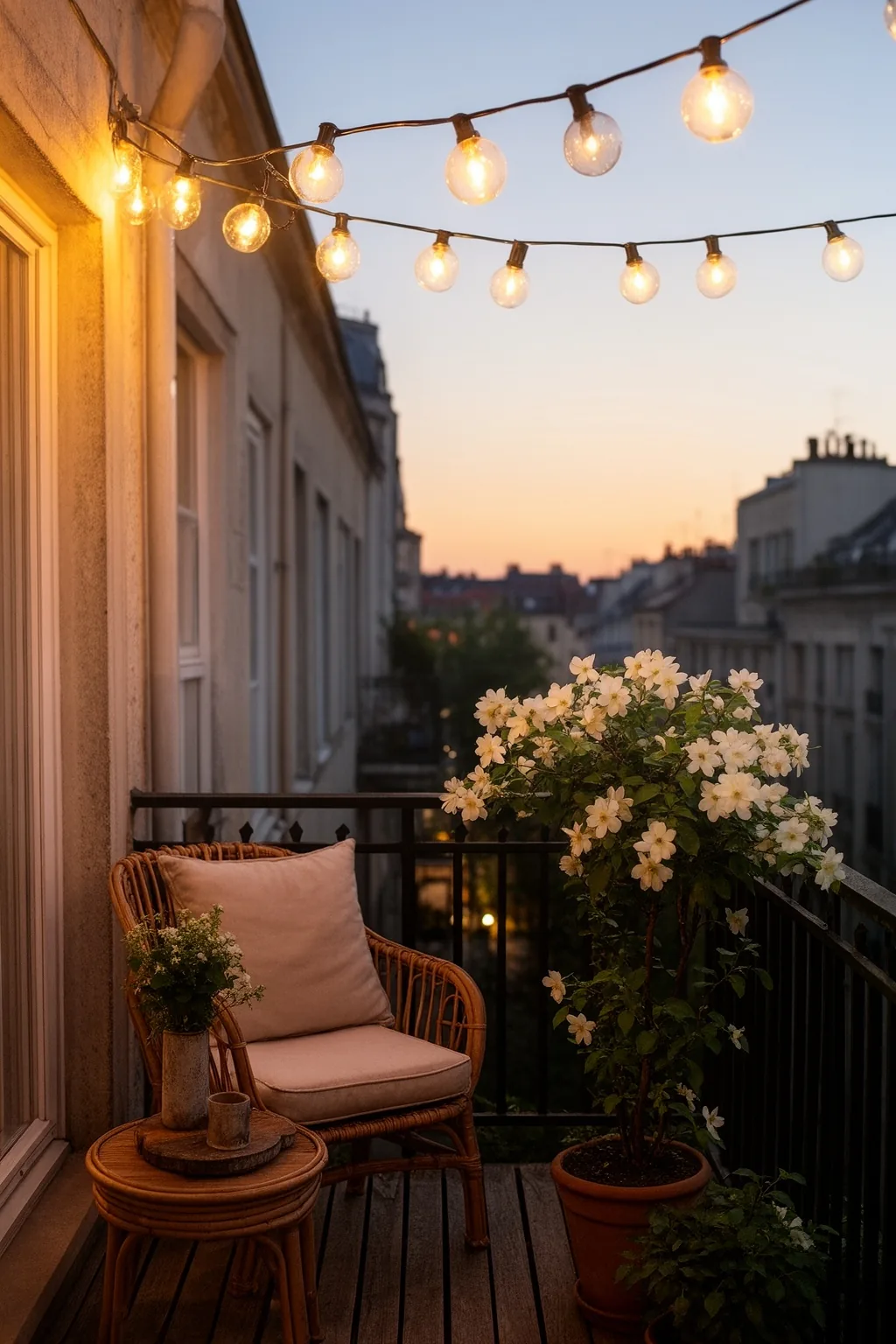
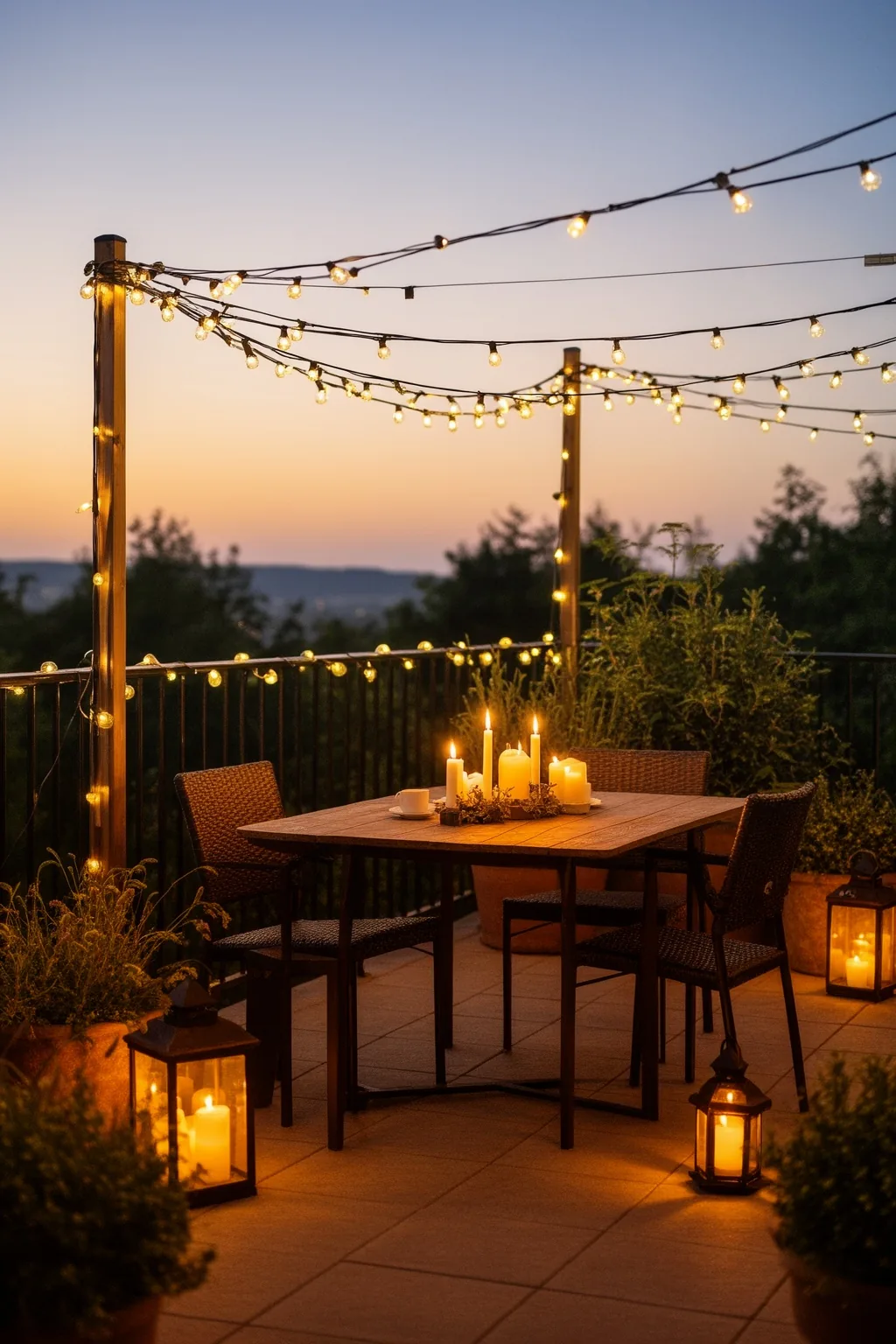
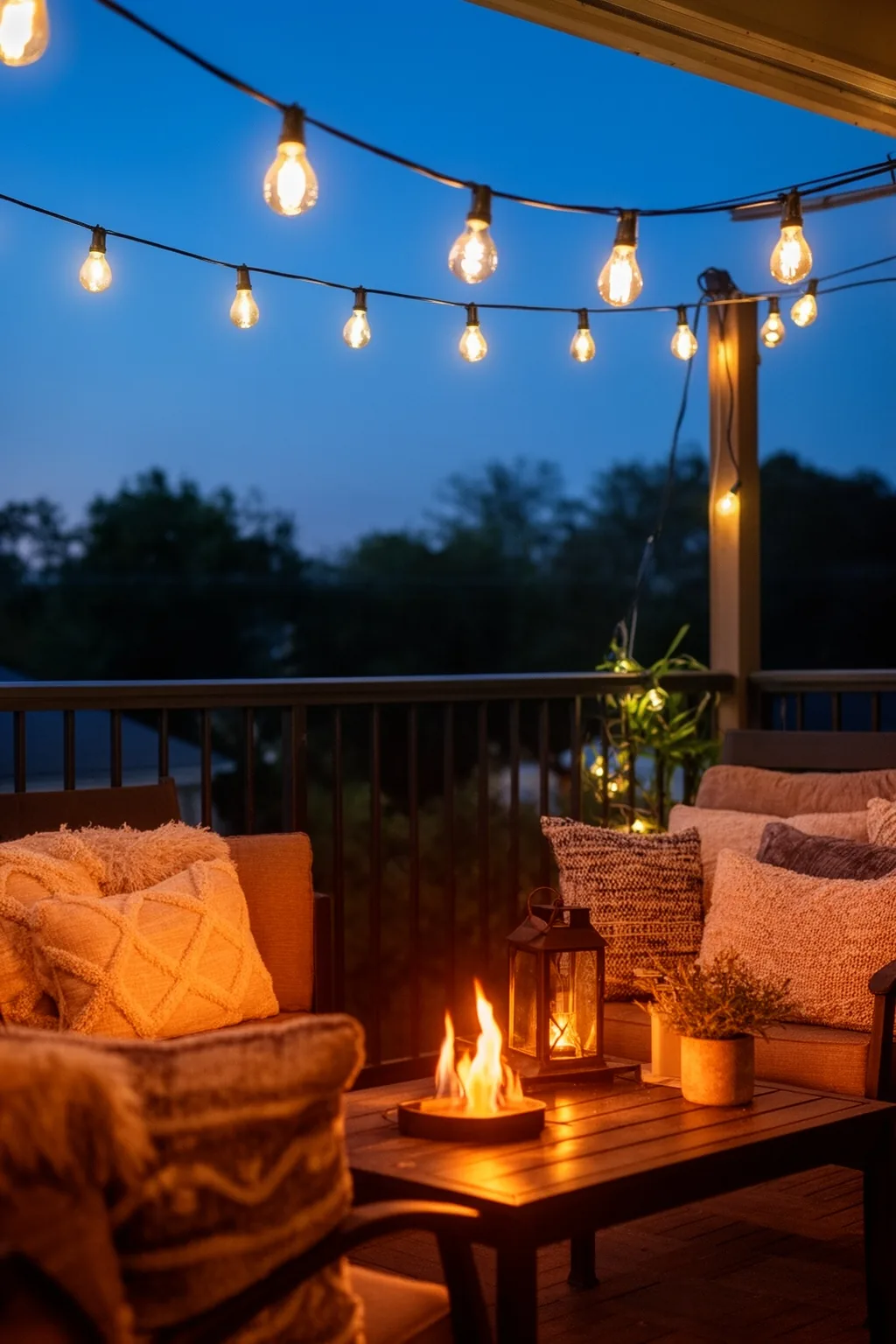
String lights make everything feel like a charming cafe, and that's not an exaggeration. Warm bulbs add glow, soften harsh edges, and set the mood for easy evenings outside. Something about the diffused light from small bulbs overhead slows everything down and makes a small patio feel like a destination.
The secret to making string lights feel designed rather than temporary is the hang. Run them along the perimeter from railing post to railing post, or across the patio at a gentle diagonal. Avoid drooping them directly down a wall the way holiday decorations go up. The goal is a soft canopy of light that wraps the space rather than just illuminating one corner. String lights fit naturally into the layered approach you'd find in any guide to cozy patio decor, where multiple light sources work together at different heights to make a small area feel dimensional.
Install Smarts
- Use weatherproof, shatter-resistant bulbs (Edison-style if you love vintage).
- Hang with removable adhesive hooks or zip ties to protect walls.
- Add a smart plug for easy on/off or scheduling.
Solar string lights have gotten genuinely good in the past few years. A full day of sun gives you eight or more hours of warm glow without touching an outlet. That solves the cord problem on patios without exterior power and makes the whole setup completely self-contained. If sun isn't reliable, a smart plug on an outdoor-rated extension cord works just as well.
Best when your patio feels flat during the day and needs nighttime magic.
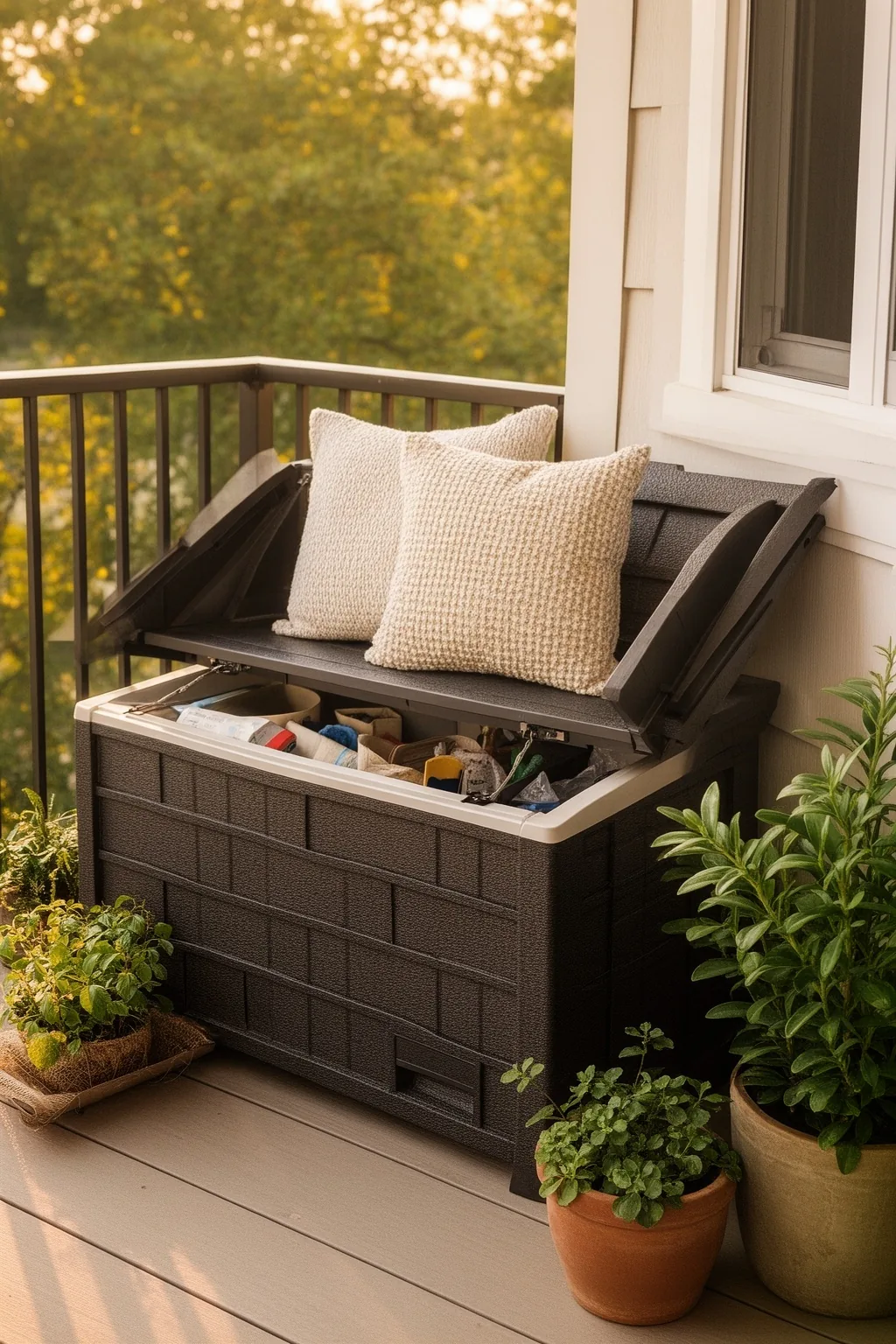
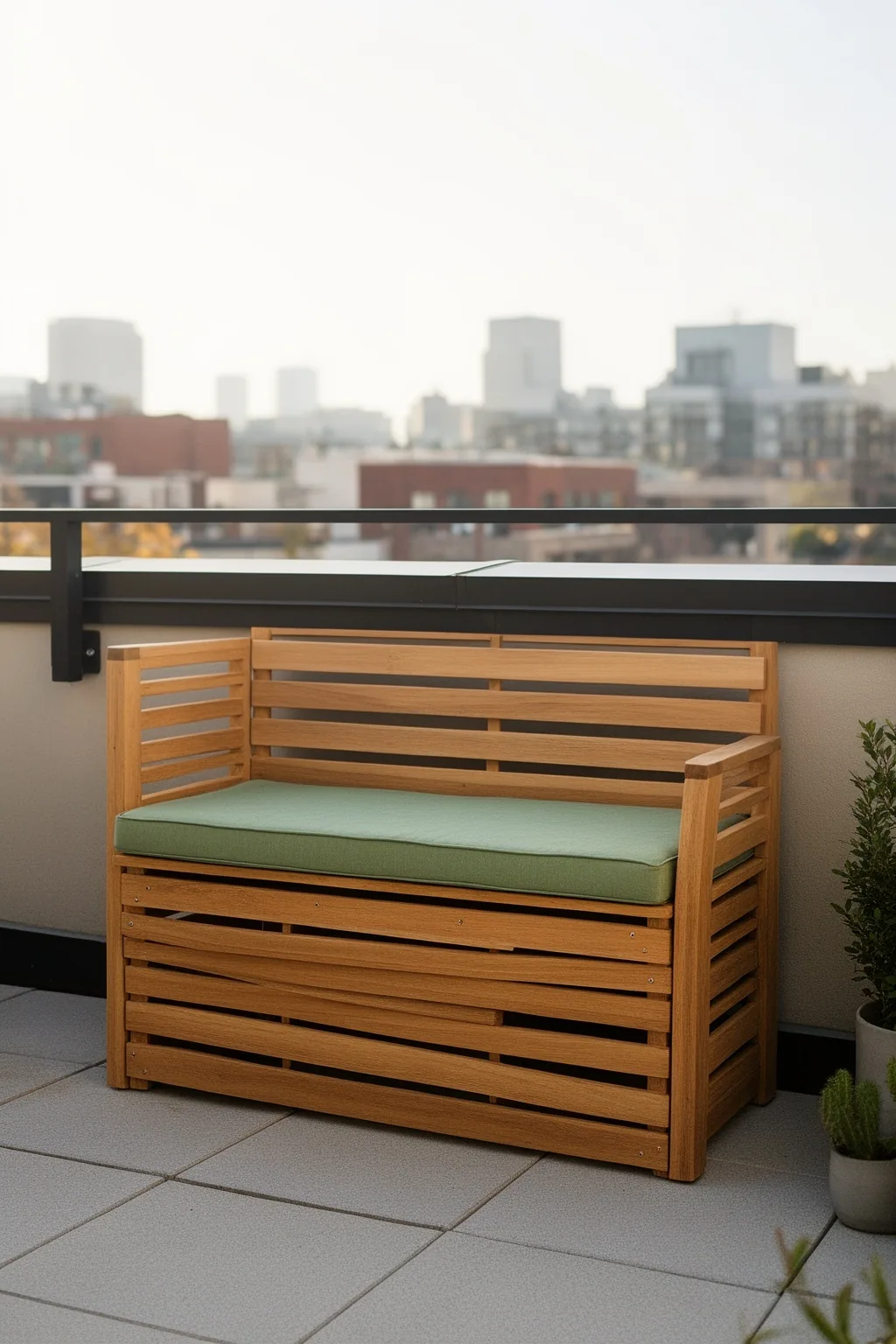
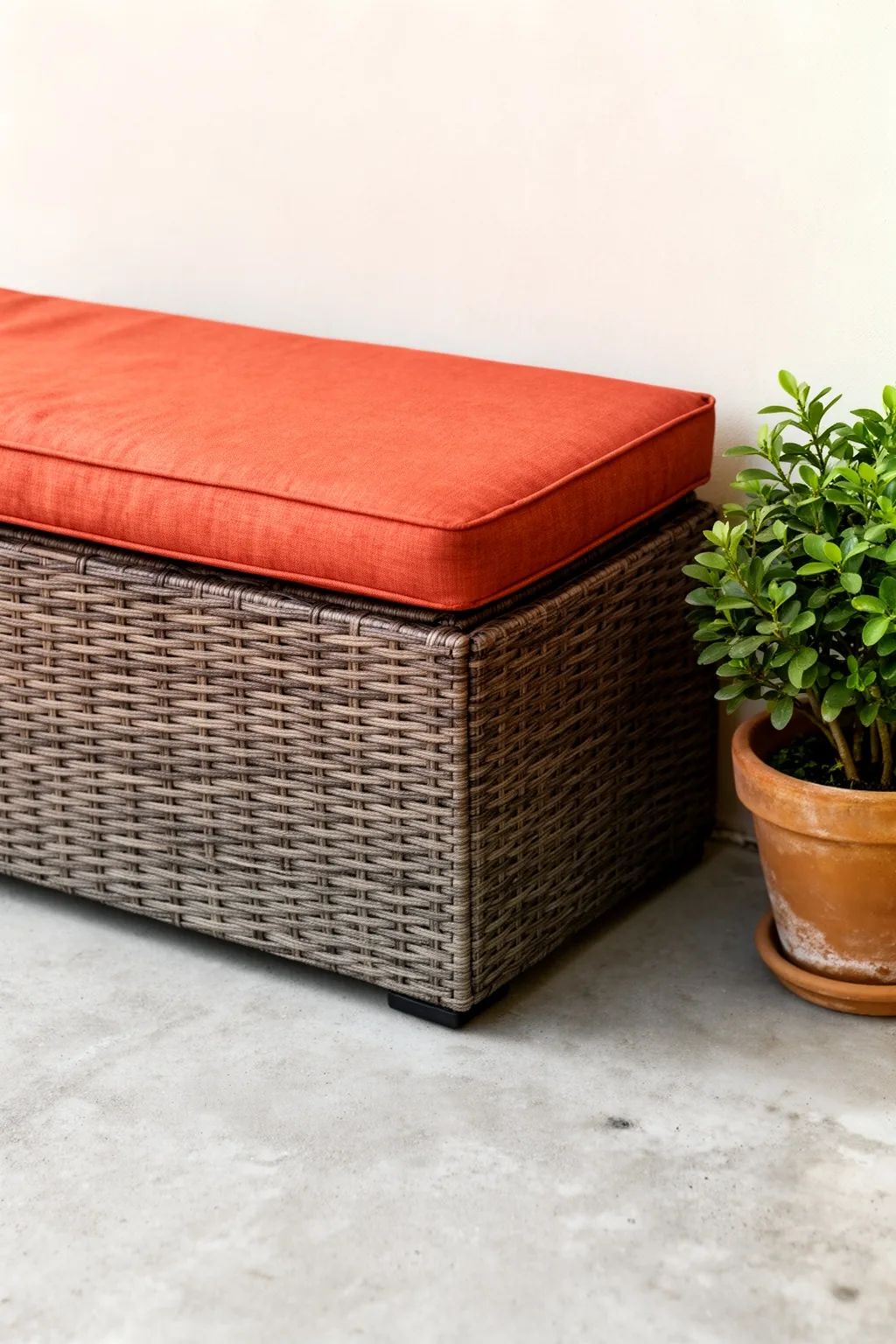
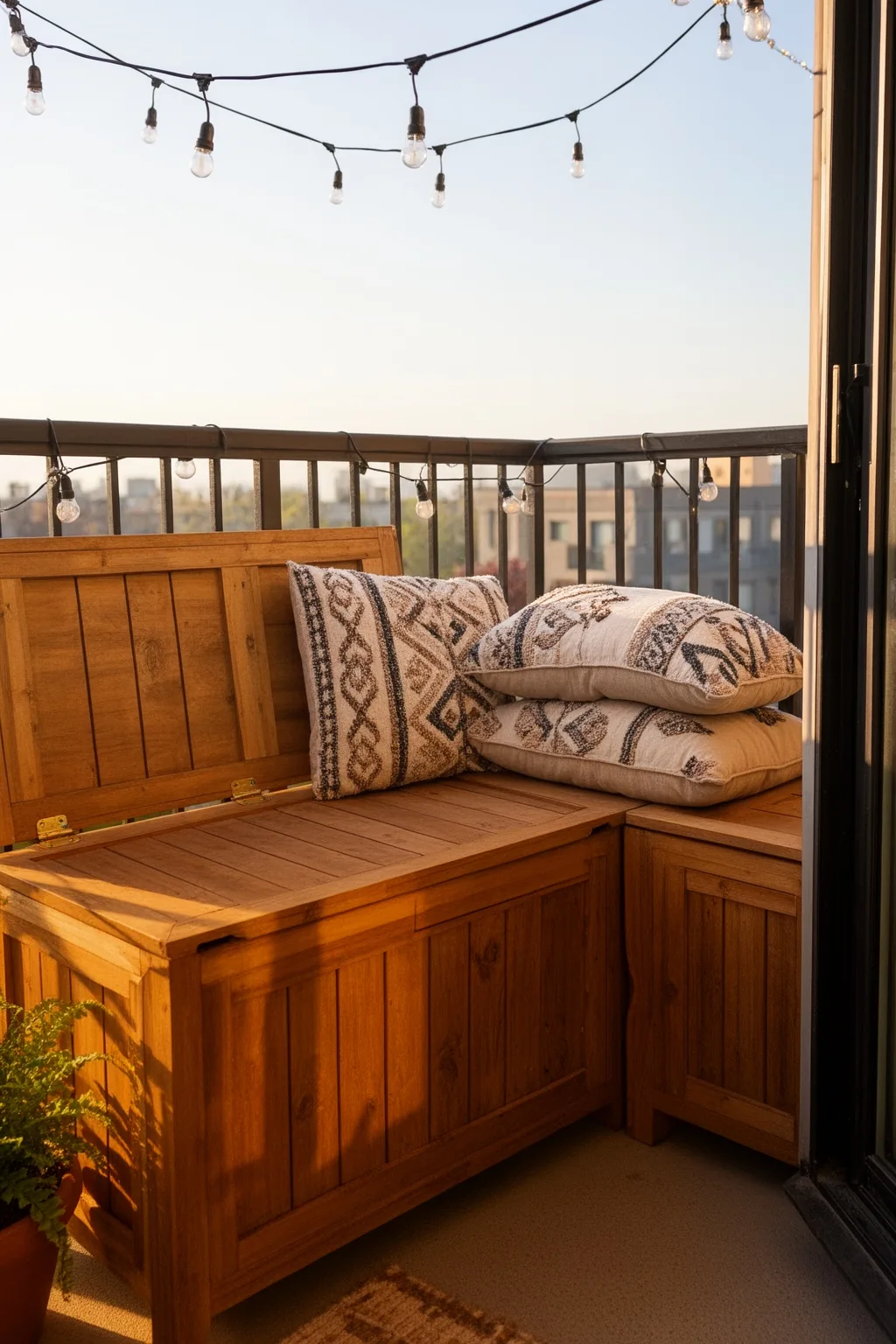
5. Add a Slim Storage Bench
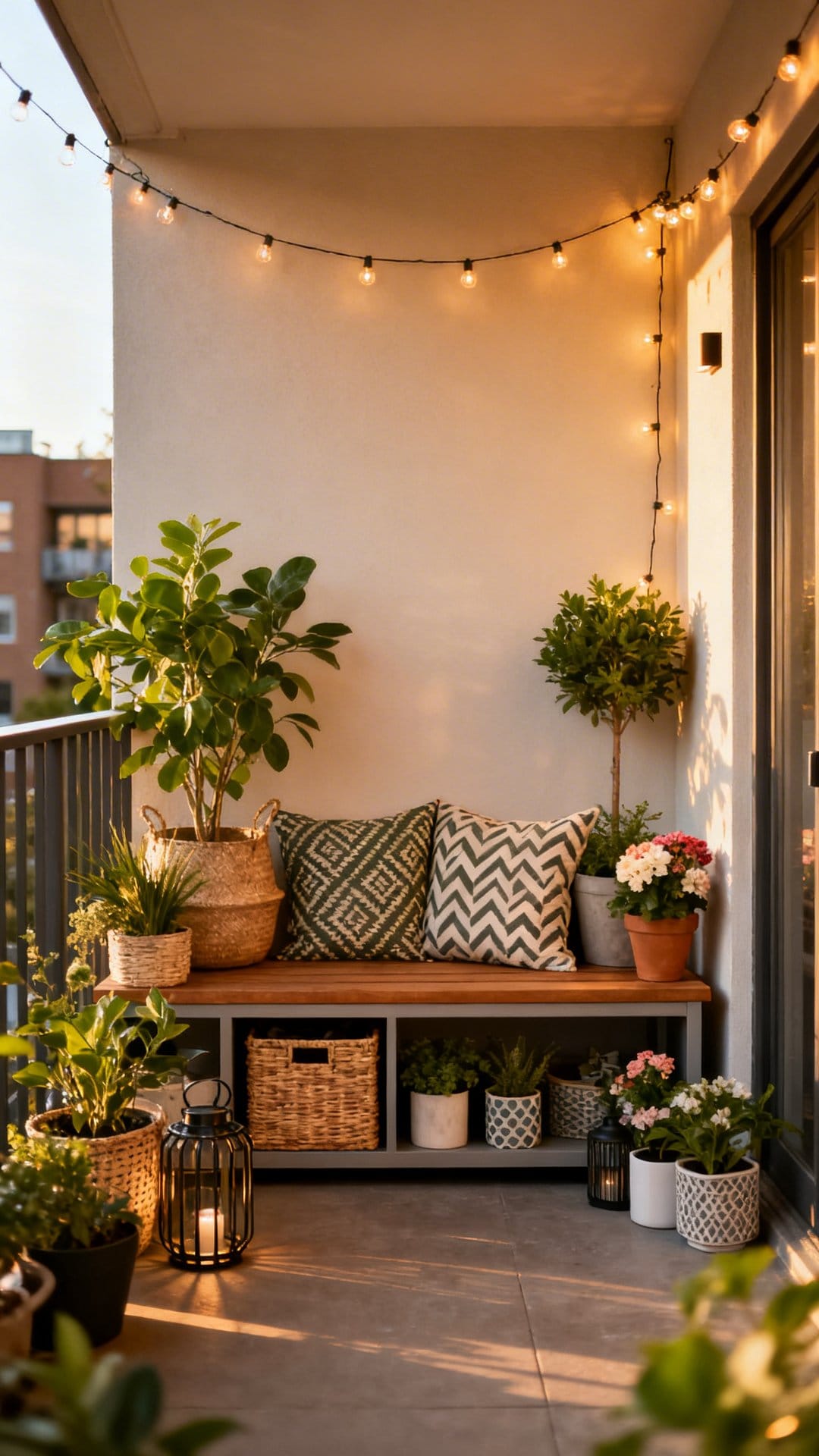
Storage benches do double duty: seating on top, stash zone inside. Hide cushions, gardening tools, or even a mini bar setup. It keeps your patio tidy without sacrificing style.
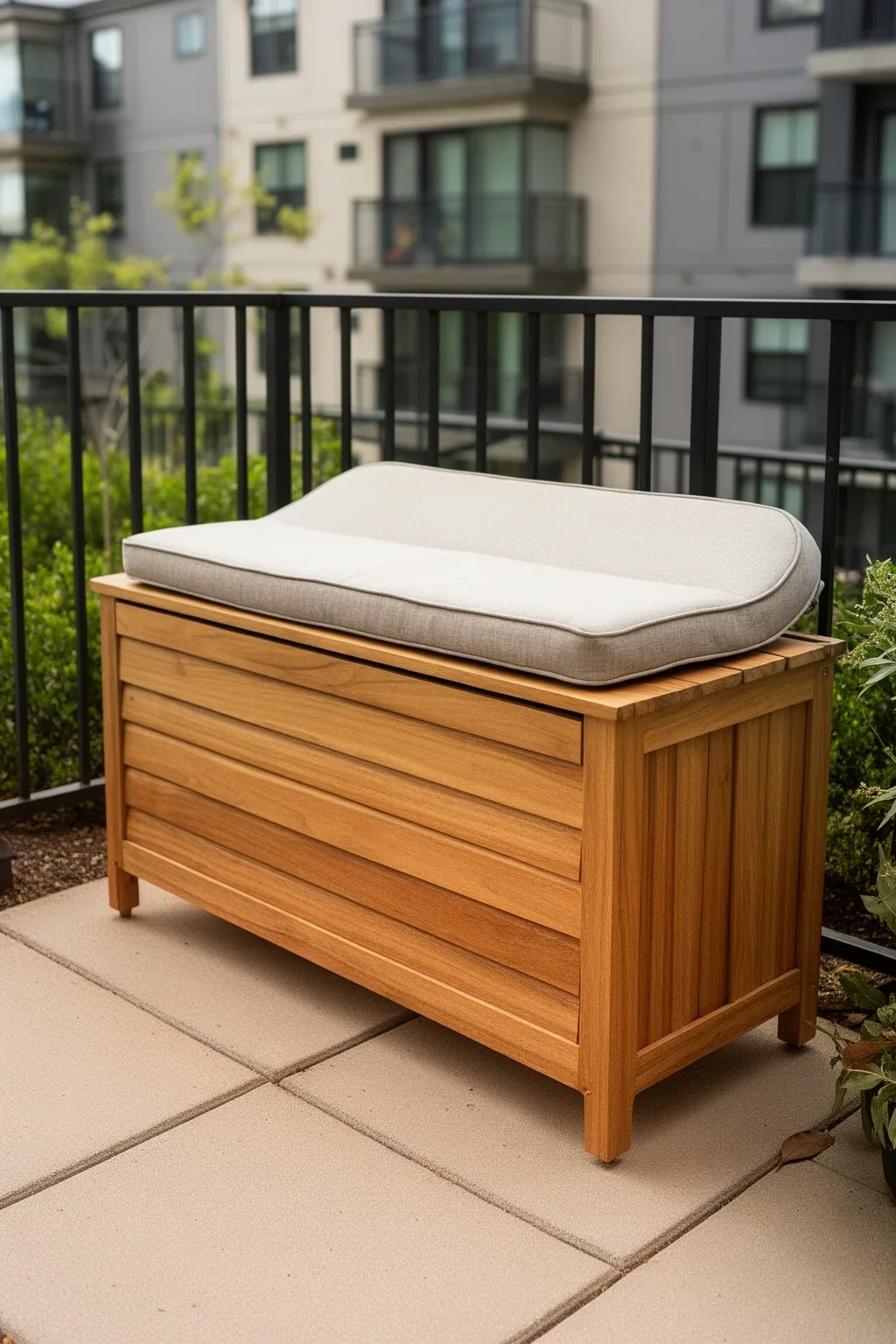
The storage bench solves a problem that almost every small patio runs into: where do things go when the space has to do double duty? Cushions need to come inside when it rains. Tools have nowhere to live. A bottle opener, citronella spray, a few extra candles: all homeless. A storage bench gives them an address without adding a shed to the visual footprint of the space. It's one of the smartest moves in any roundup of tiny patio decorating ideas, since it earns its place twice over.
Good Picks
- Resin or eucalyptus wood for durability.
- Lift-top lids with soft-close hinges for safety.
- Cushion in a weather-resistant fabric like solution-dyed acrylic.
The most useful benches run about 48 to 52 inches long, wide enough to seat two people comfortably or serve as a low coffee table when chairs are pulled up on either side. Anything shorter feels cramped for seating. Anything longer starts eating into the floor area you're protecting. That length also tends to match the width of most standard balcony railings, which looks intentional.
Position it along the wall with the longest flat surface, usually against the building or back fence. From there it becomes the anchor of the layout: seating, storage, and visual weight handled by one piece. Add two throw pillows for color and you have a proper seating area without any additional furniture crowding the space.
Perfect for small patios that easily tip into clutter. Tidy space, calmer mind.
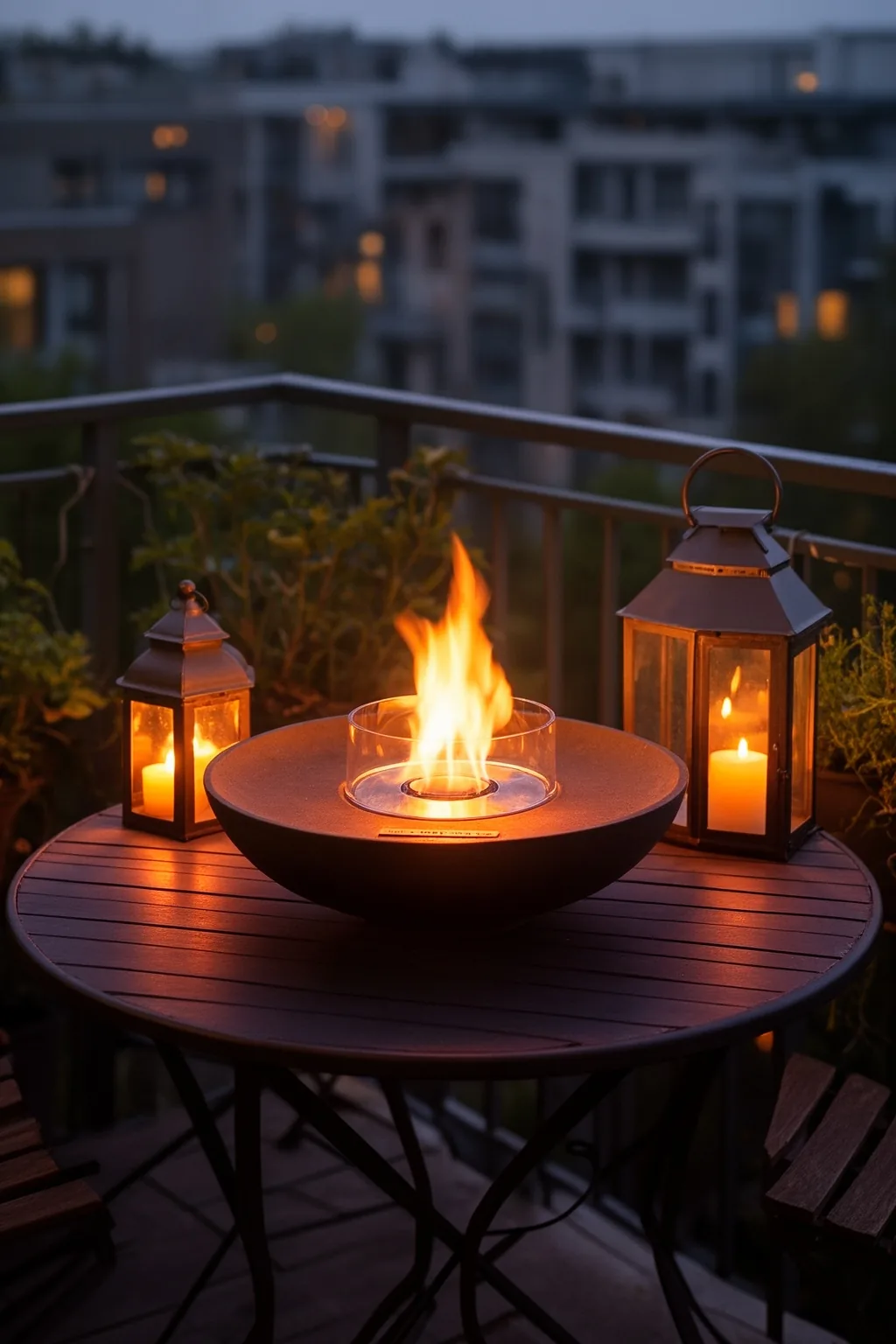
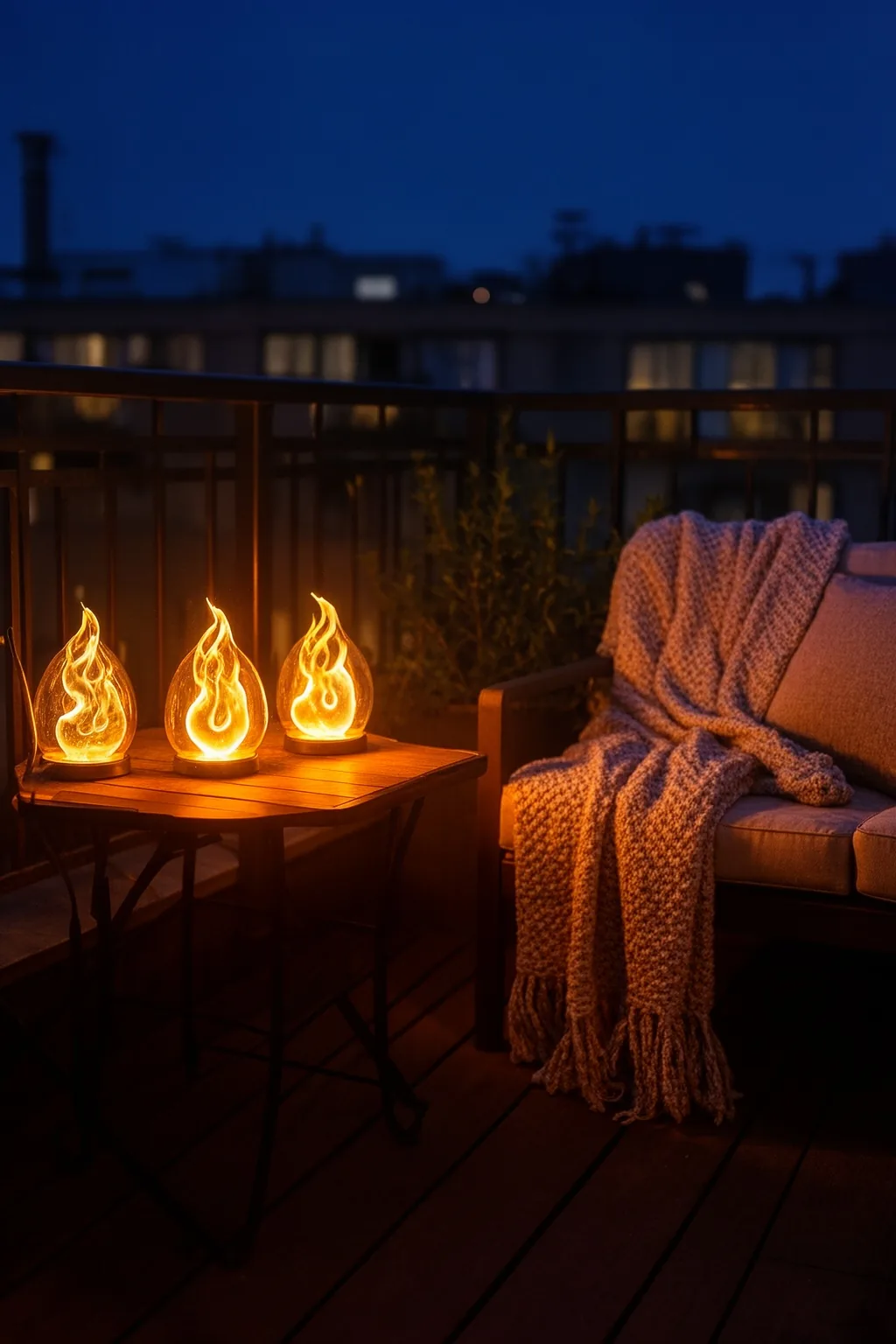
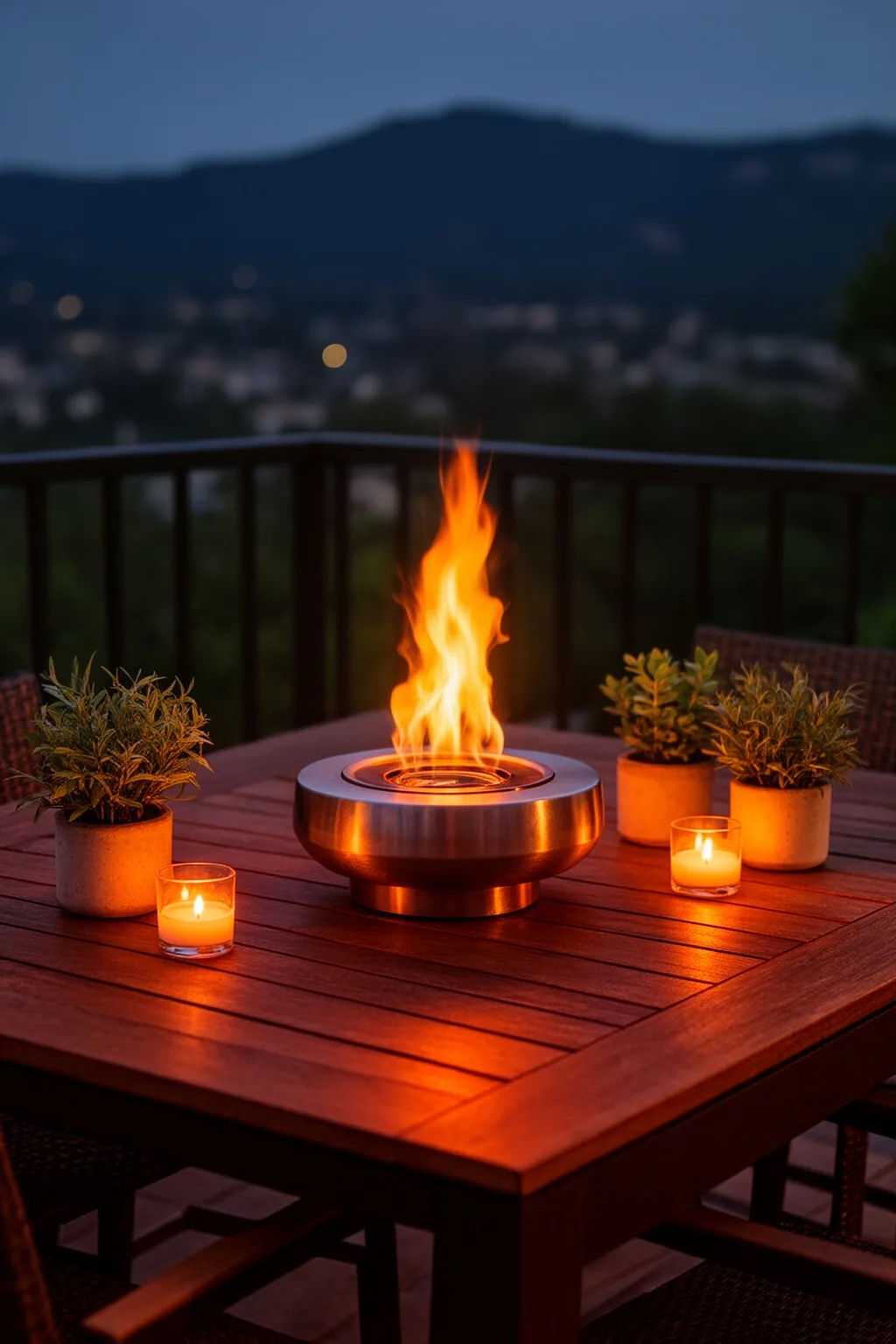
6. Try a Petite Fire Feature (No Flames Required)
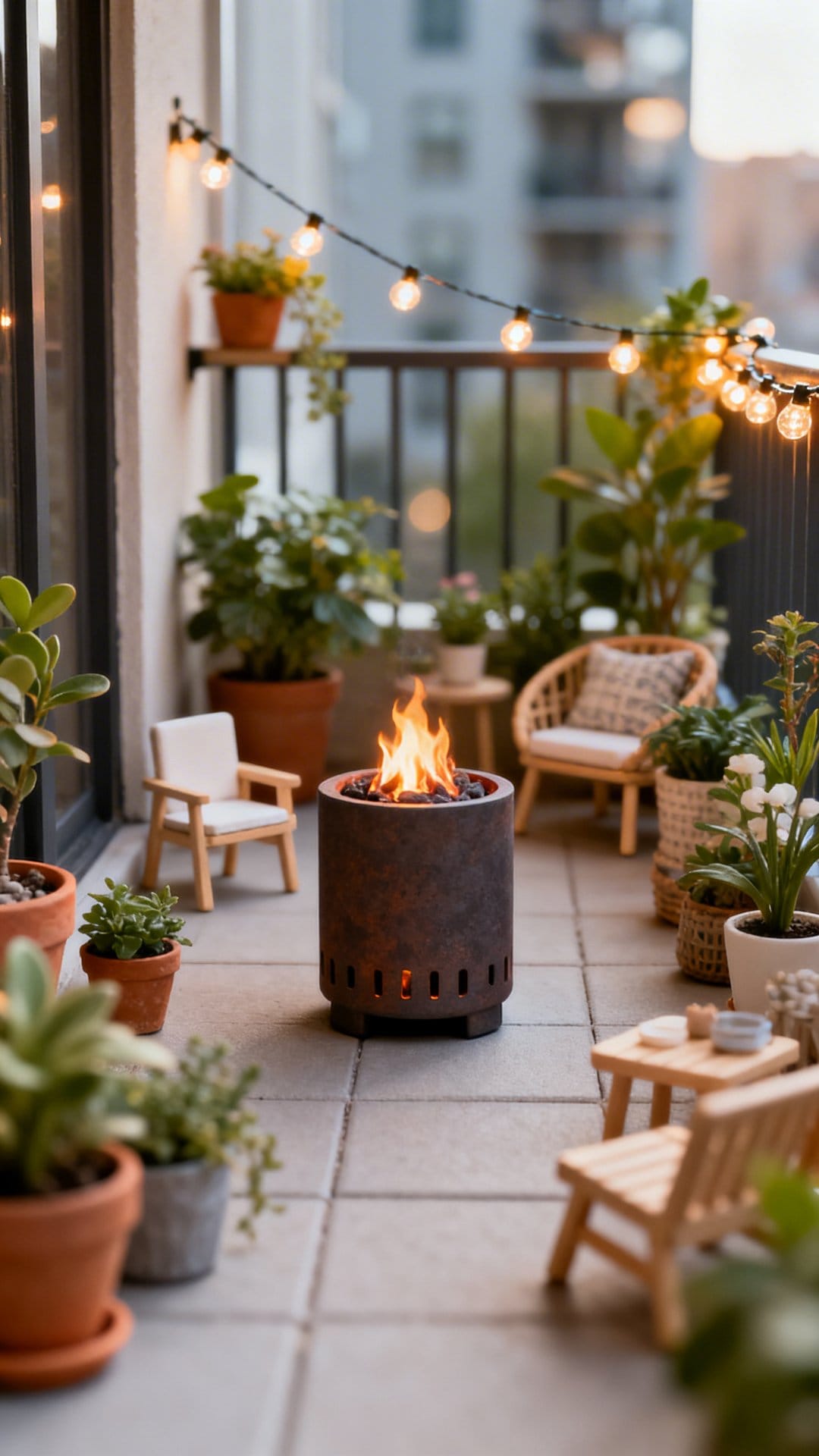
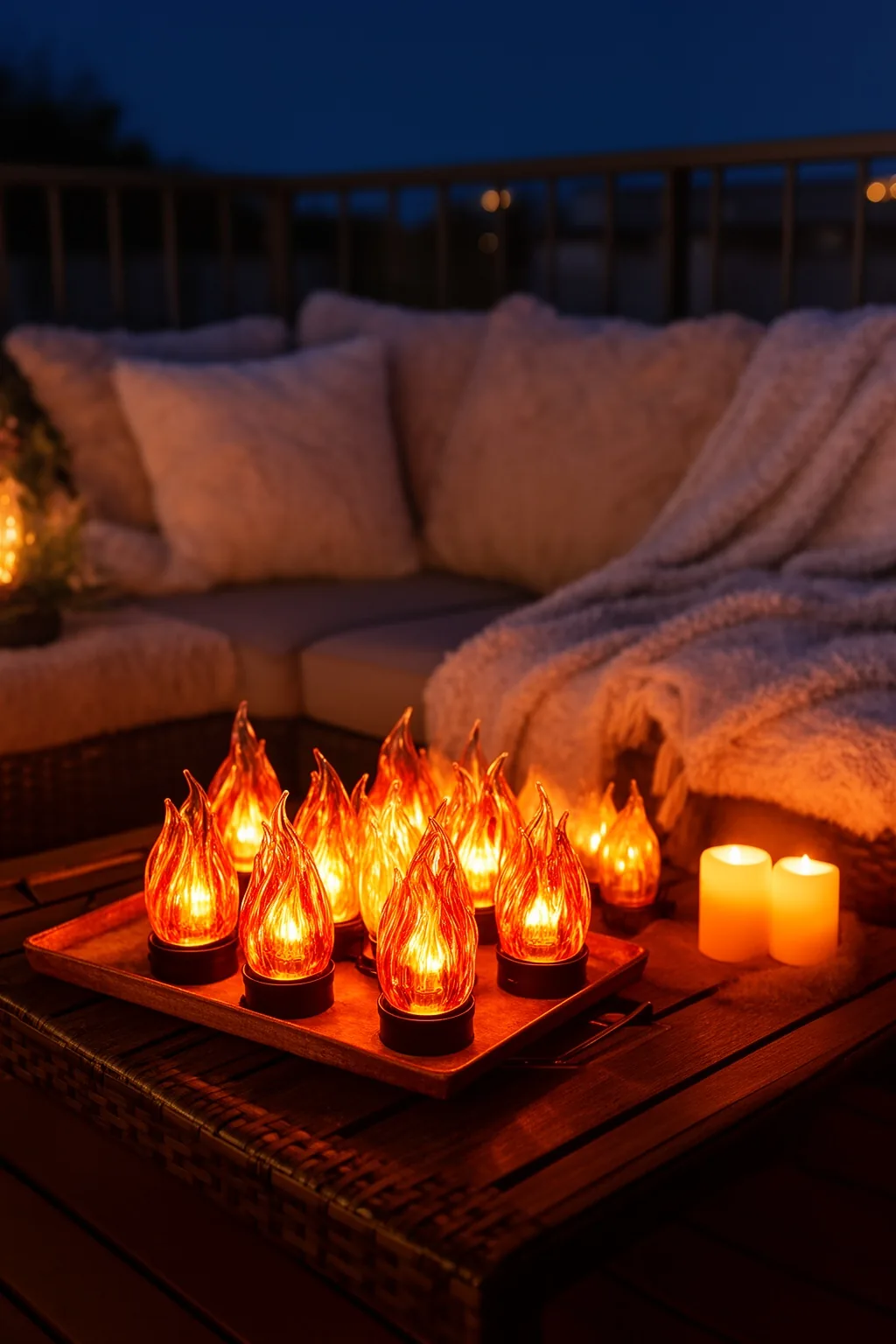
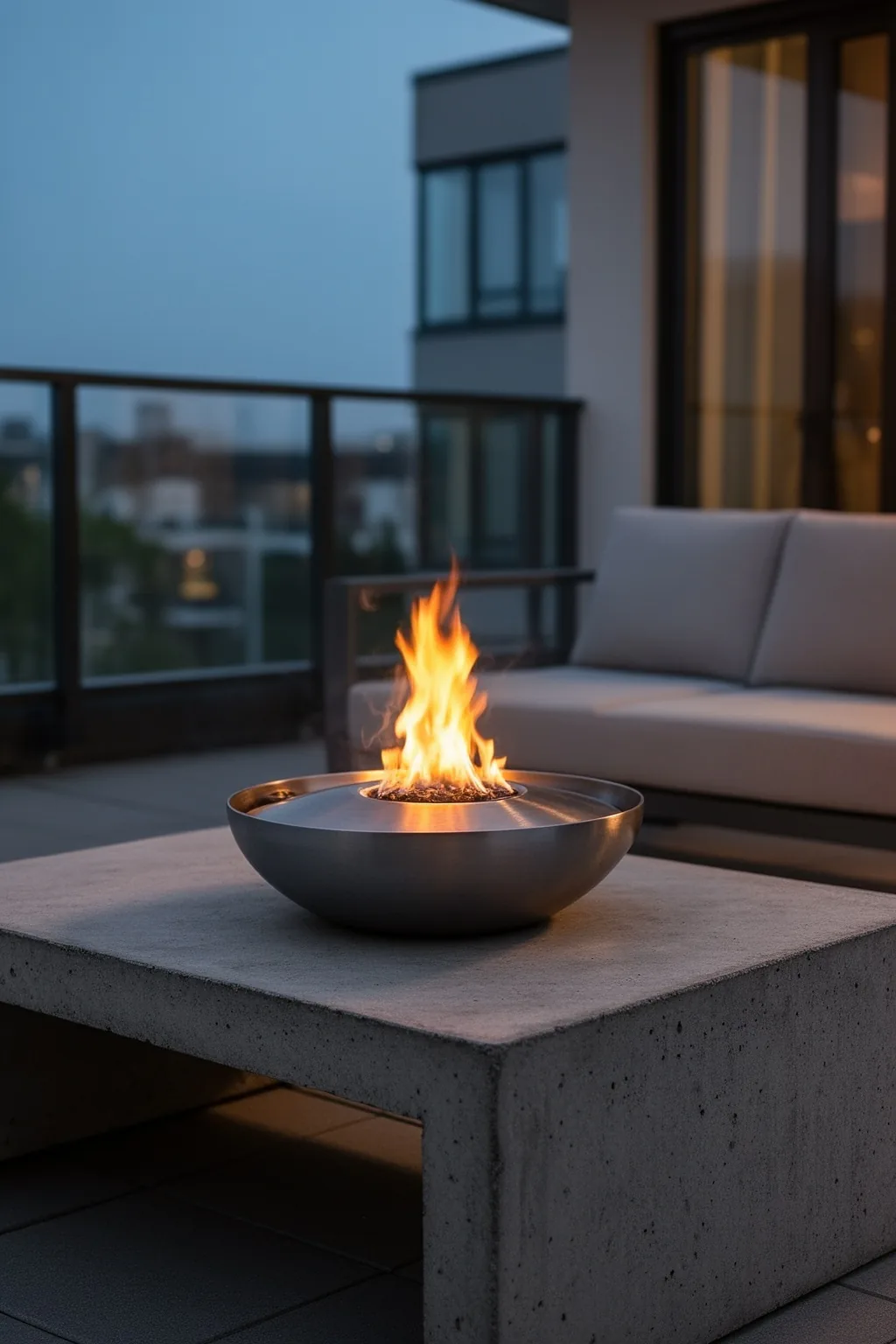
You can get cozy without violating lease rules. Tabletop ethanol burners, LED "flame" lanterns, or smokeless bioethanol bowls deliver that campfire glow without smoke or sparks. It's the vibe, not the risk.
The main reason people skip fire features on apartment patios is lease anxiety, and that's fair. Most leases restrict open flames on balconies. Reading your lease before buying anything here is genuinely important. But the options that work within typical restrictions have gotten much better. For ideas on how fire features fit into a broader design scheme, browsing modern patio decorating inspiration can help you see where these pieces land in a complete outdoor space.
Safety First
- Check building rules before buying anything with real flame.
- Place on heat-resistant surfaces and away from fabric.
- Consider battery-operated candle clusters for zero fuss.
Battery-operated flame lamps use flickering LED technology that's convincing enough to genuinely set a mood. They come in lantern shapes, pillar candle shapes, and tabletop bowl forms. Some have a remote control so you can switch them on from inside before heading out. For entertaining, a cluster of three different-sized battery lanterns on a tray does the work of a centerpiece without any fire risk at all.
If your building allows small tabletop ethanol burners, they produce real flame and real warmth with almost no smoke. The burn time per fill is usually two to four hours, which is about as long as you'd want to sit outside on a cool evening anyway.
Use this if you want hygge energy on cool nights. No bonfire needed.
7. Create Zones With Planters
 Shop this look: tall outdoor planters on Amazon · HERDUK 8 Inch Terracotta Abstract Face Planter… · 24in Tall Urn Planter for Outdoor Plants Black…
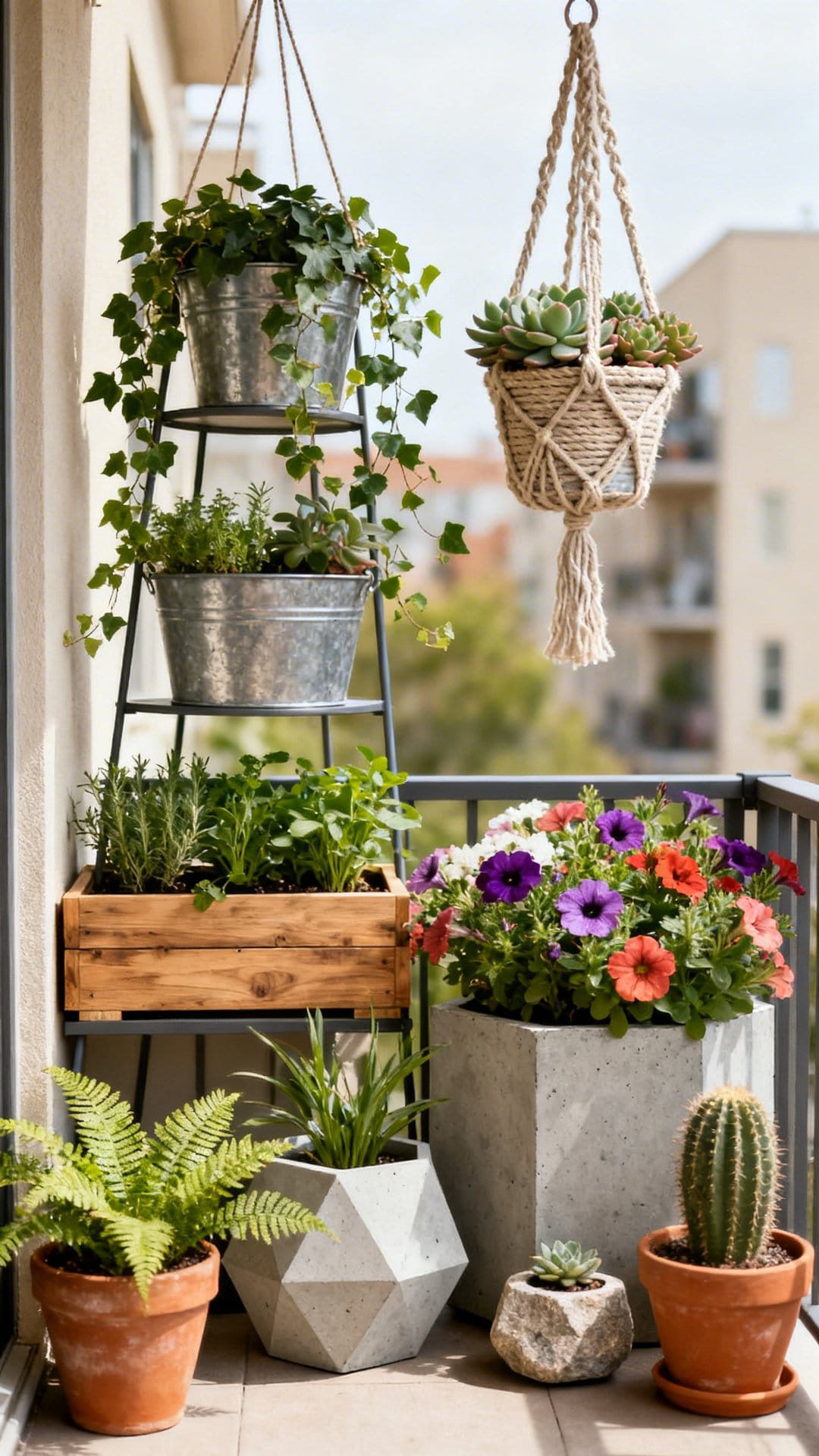
Planters can frame your seating and guide the eye, which makes a small patio feel intentional. Use them like room dividers: soft and green. Instant structure, instant calm.
Zoning is the design concept that makes small spaces feel organized rather than cramped. Instead of scattering furniture and plants at random, you use physical markers to suggest distinct areas. Planters are the easiest zoning tools for outdoor spaces because they're movable, they look natural, and they don't require permanent changes. The same approach works for a compact small backyard oasis as much as it does for a patio off an apartment.
Design Moves
- Group planters of varying heights for depth.
- Repeat one color or material to avoid visual chaos.
- Use tall grasses or bamboo for privacy and gentle movement.
I remember walking onto a narrow patio styled with three large cylindrical planters, and the effect was surprising. The planters created a soft boundary at the open end of the balcony that made the seating area feel enclosed and private without blocking the view or the breeze. Same patio, same furniture. Suddenly it read as a destination instead of a stretch of concrete. The key was height variation: two mid-height planters flanking the seating and one taller planter at the back corner.
For the most pulled-together look, keep the planter material consistent even when the sizes vary. All terracotta, all matte black, all raw concrete: pick one and stick with it. The plants can vary in shape and texture. Cohesive containers pull the composition together and make the variation look deliberate.
Especially helpful if your balcony overlooks neighbors and you crave a cocoon effect.
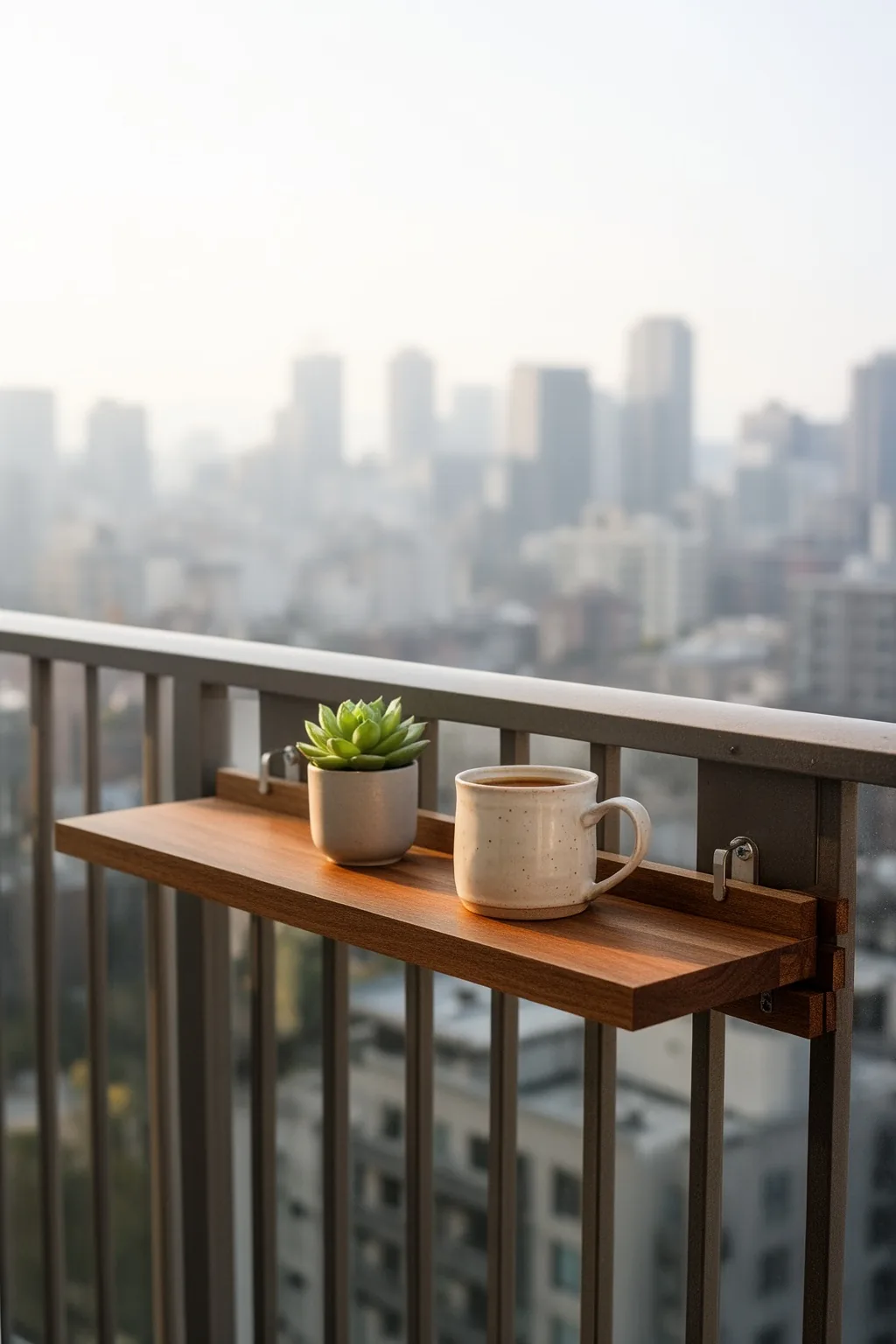
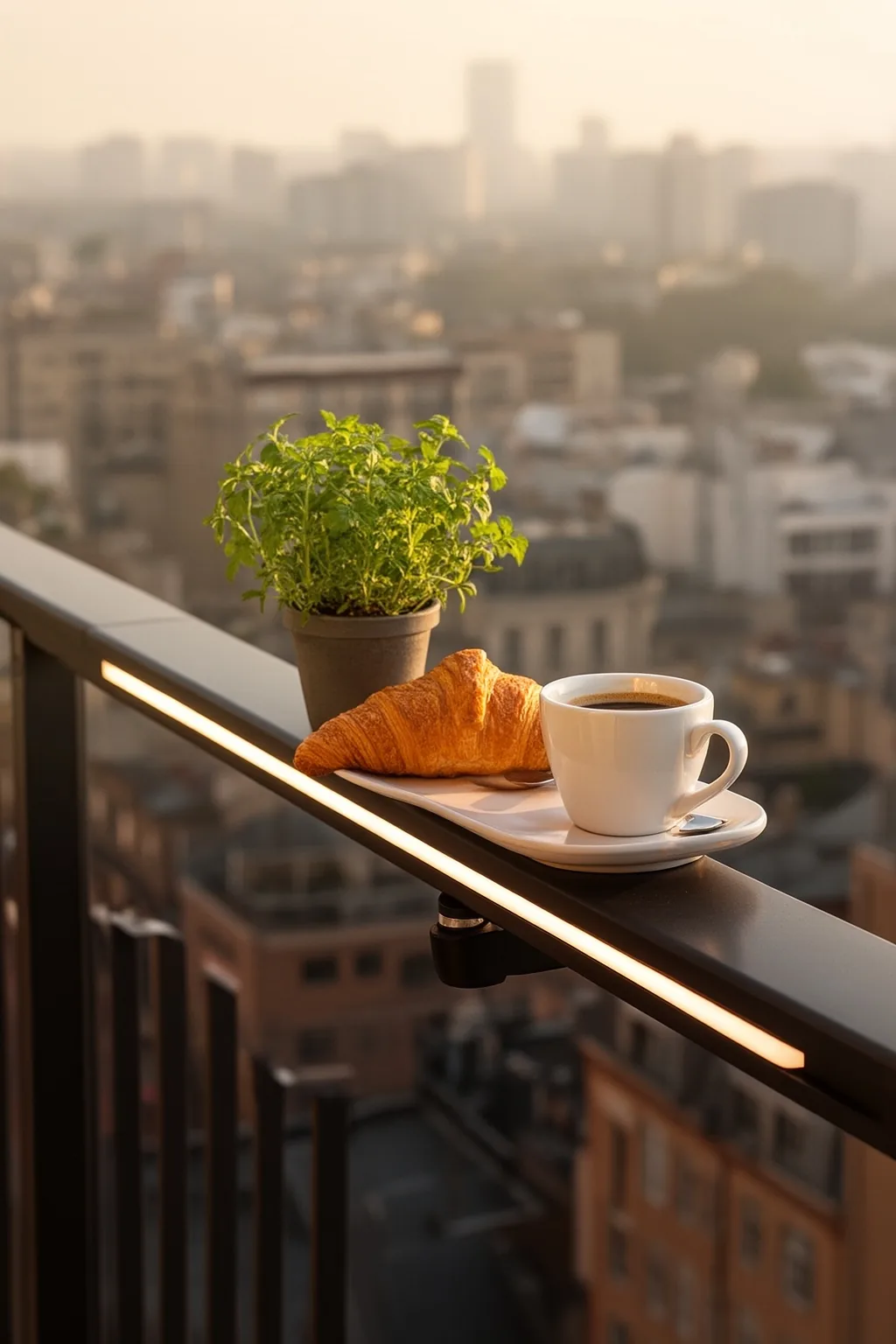
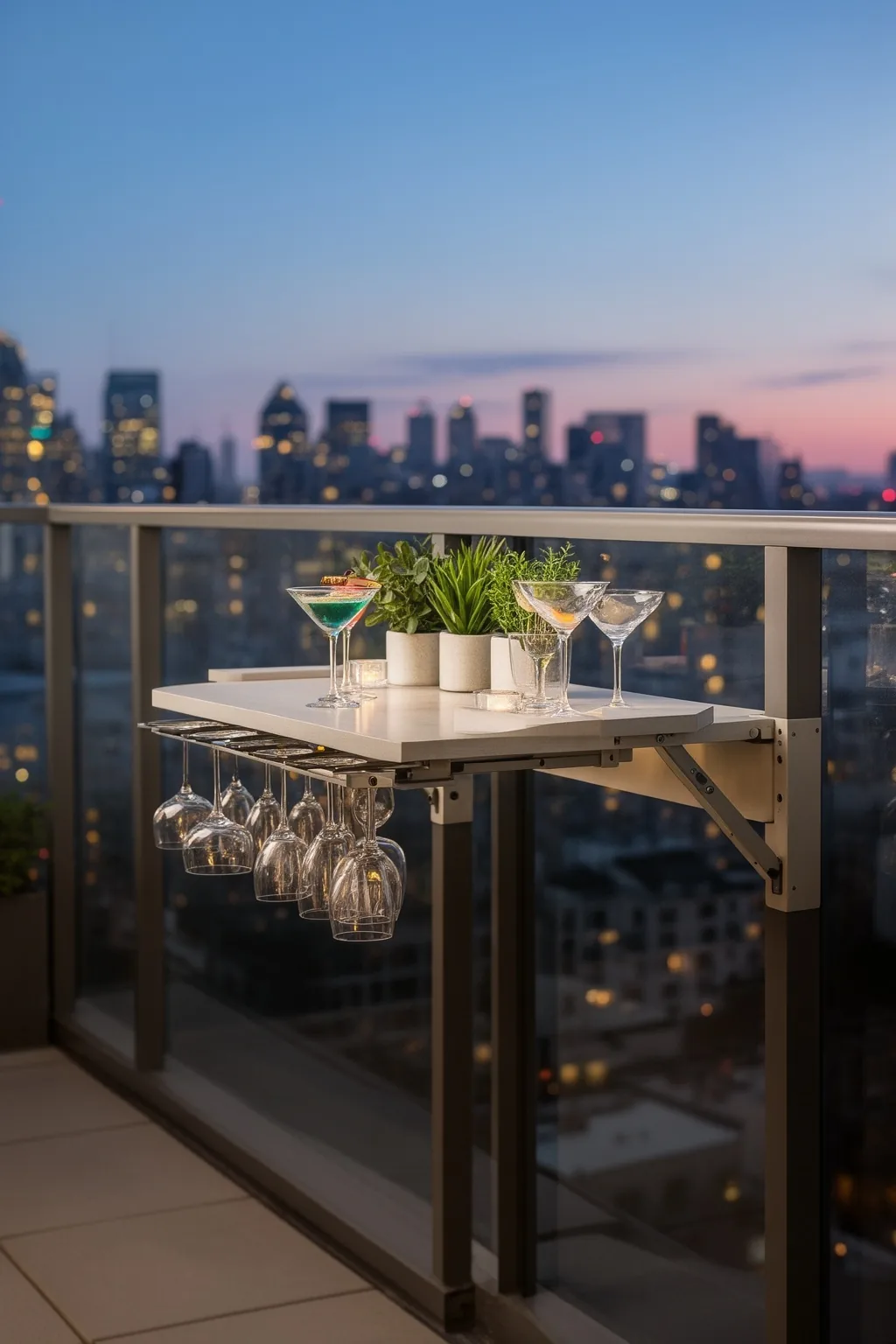
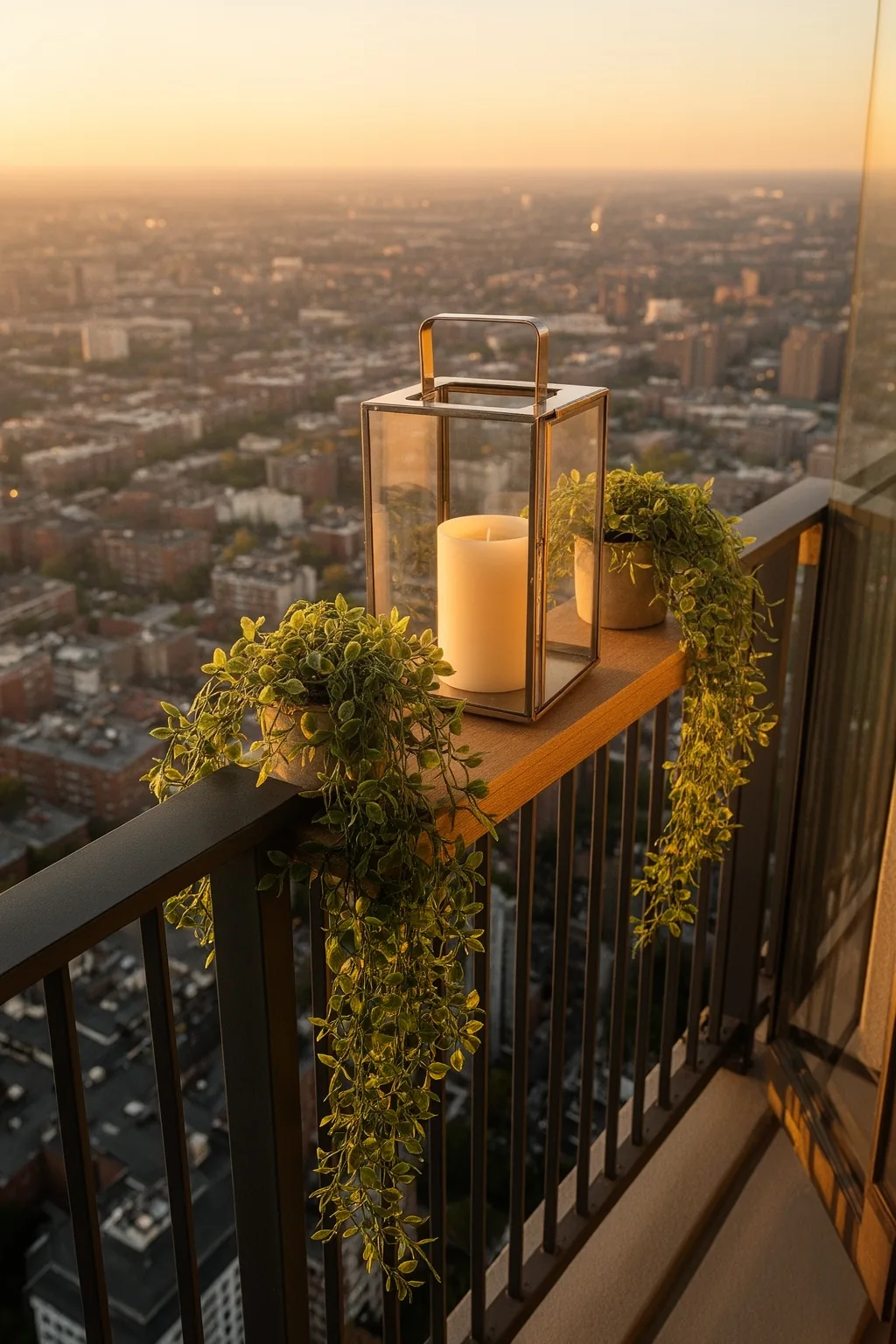
8. Mount a Narrow Ledge or Rail Bar
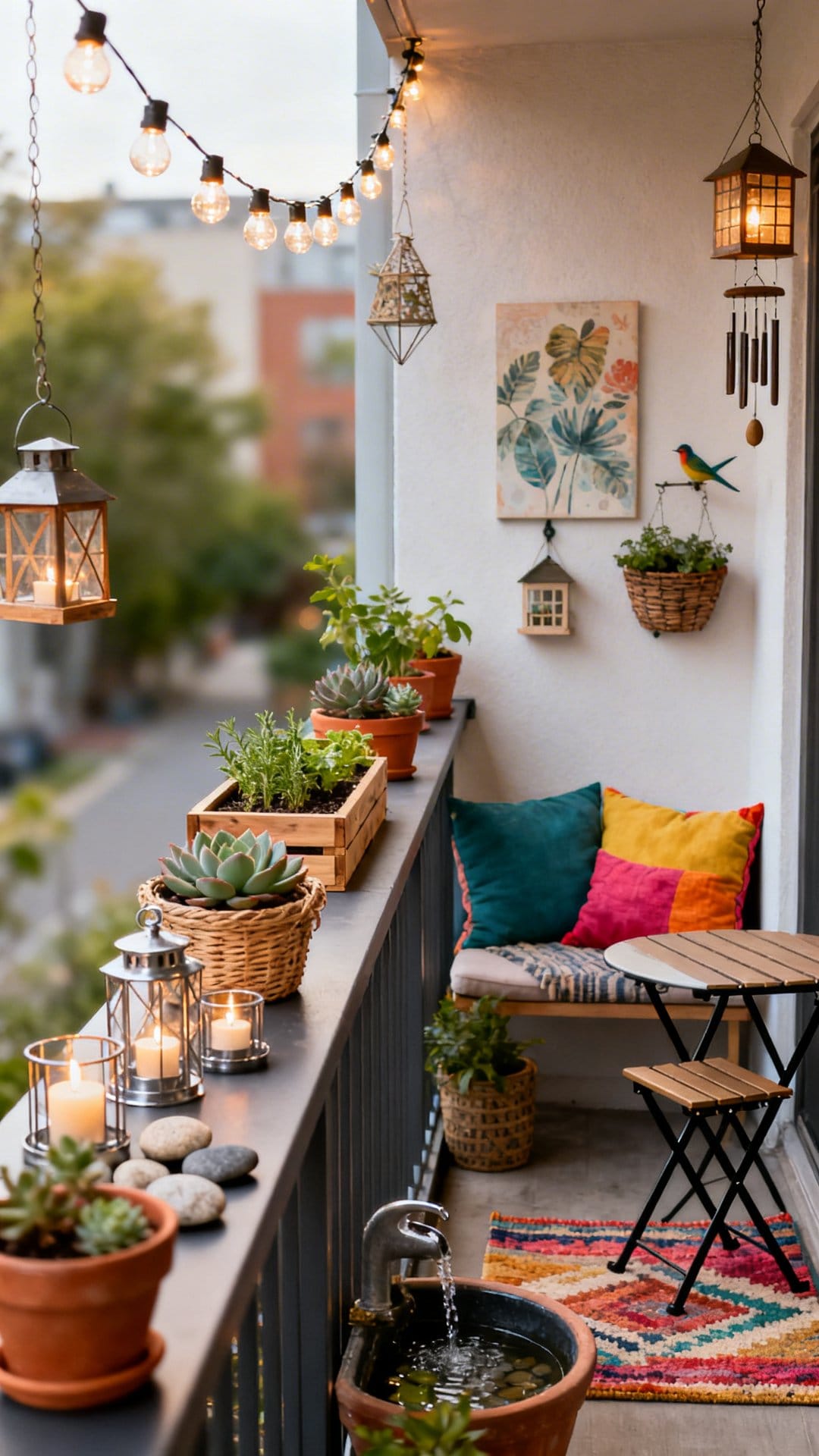
No room for a full table? Attach a slim bar to the railing or wall. Suddenly, you have a coffee perch, laptop station, or cocktail counter without eating floor space.
What makes the ledge or rail bar work so well is that it operates on space that was already unusable. The railing exists anyway. The wall exists anyway. Attaching a slim surface to either doesn't consume any floor area, which means you gain real function without a trade-off. That's a rare situation in a small patio, and worth taking advantage of.

Materials
- Weatherproof wood, composite decking boards, or stone slab.
- Brackets that clamp to rails (no drilling needed).
- Stool that tucks fully underneath.
The most practical setup uses a clamp-based bar that attaches to round or square railing pipes without drilling. These typically hold 100 to 150 pounds, which is plenty for a laptop, coffee, or a tray of drinks. They come off in two minutes if you need to access the railing for something else, so there's no commitment involved.
If your lease allows minor wall modifications, a fold-down version attached to the building wall is even better. It lies flat when not in use and flips horizontal to become a narrow standing bar or desk when needed. Pair it with a tall folding stool that stores flat against the same wall and you've created a proper outdoor workspace in about six inches of depth.
Ideal for city balconies where every inch matters. It also makes breakfast outside actually workable.
9. Go Bold With One Big Statement Plant
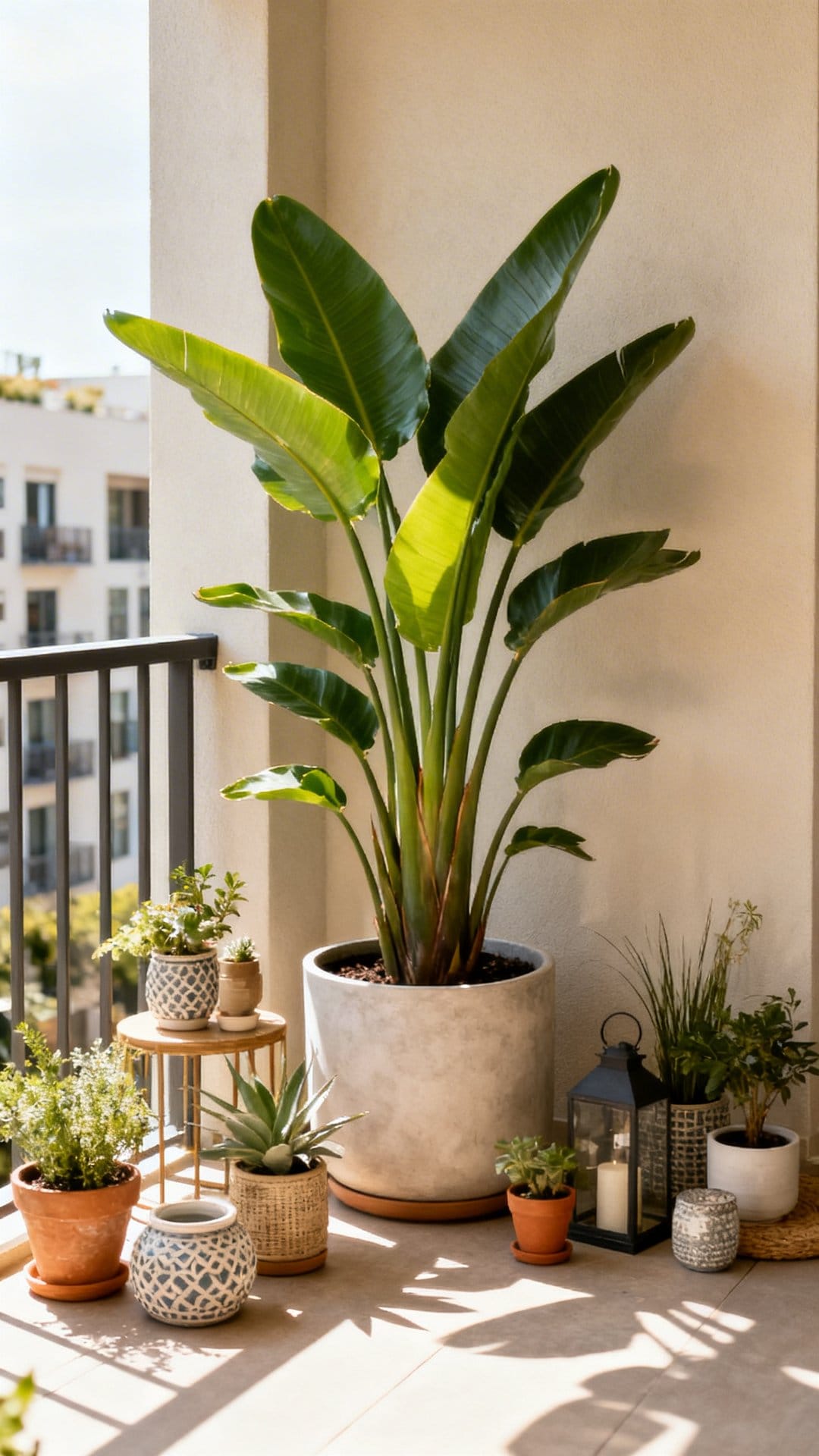 Shop this look: NicBex 24" Tall Planters for Outdoor Plants Set… · NicBex 24" Tall Planters for Outdoor Plants Set… · Succulent Pots 4 Inch, Ceramic Plant Pots,…
One oversized plant looks chic and reduces maintenance. Instead of ten tiny pots, choose a hero: a fiddle-leaf fig, olive tree, rubber plant, or palm (pick your sun level honestly). It brings drama without clutter.
The argument for one large plant over several small ones comes down to visual noise. A collection of small pots in different shapes and colors reads as busy in a tight space. One dramatic plant in a beautiful container reads as intentional. You're saying this plant is good enough to stand alone, and the space is better for it. That confidence in restraint is one of the marks of good design.
Care Tips
- Use a lightweight, self-watering planter to cut watering stress.
- Set on a rolling stand to shift it for cleaning or storms.
- Match the pot to your palette for a sleek look.
Choosing the right plant means matching its light needs to your actual conditions honestly. A fiddle-leaf fig needs several hours of bright indirect light and won't thrive on a north-facing balcony that gets two weak hours of morning sun. A rubber plant handles low light and irregular watering better than almost anything else. Getting this right means you actually keep the plant alive, which matters because a dead statement plant looks worse than no plant.
The container matters nearly as much as the plant. Terracotta breathes well for roots but is heavy. Lightweight fiberglass pots that mimic stone or concrete look just as good at a fraction of the weight. For a balcony with structural weight limits, this is worth factoring in before buying a thirty-gallon planter.
Perfect when you love a minimalist, editorial vibe.
&# 127807; More green inspiration:17 boho patio decor ideas you'll love→
10. Layer Textures With Throws and Pillows
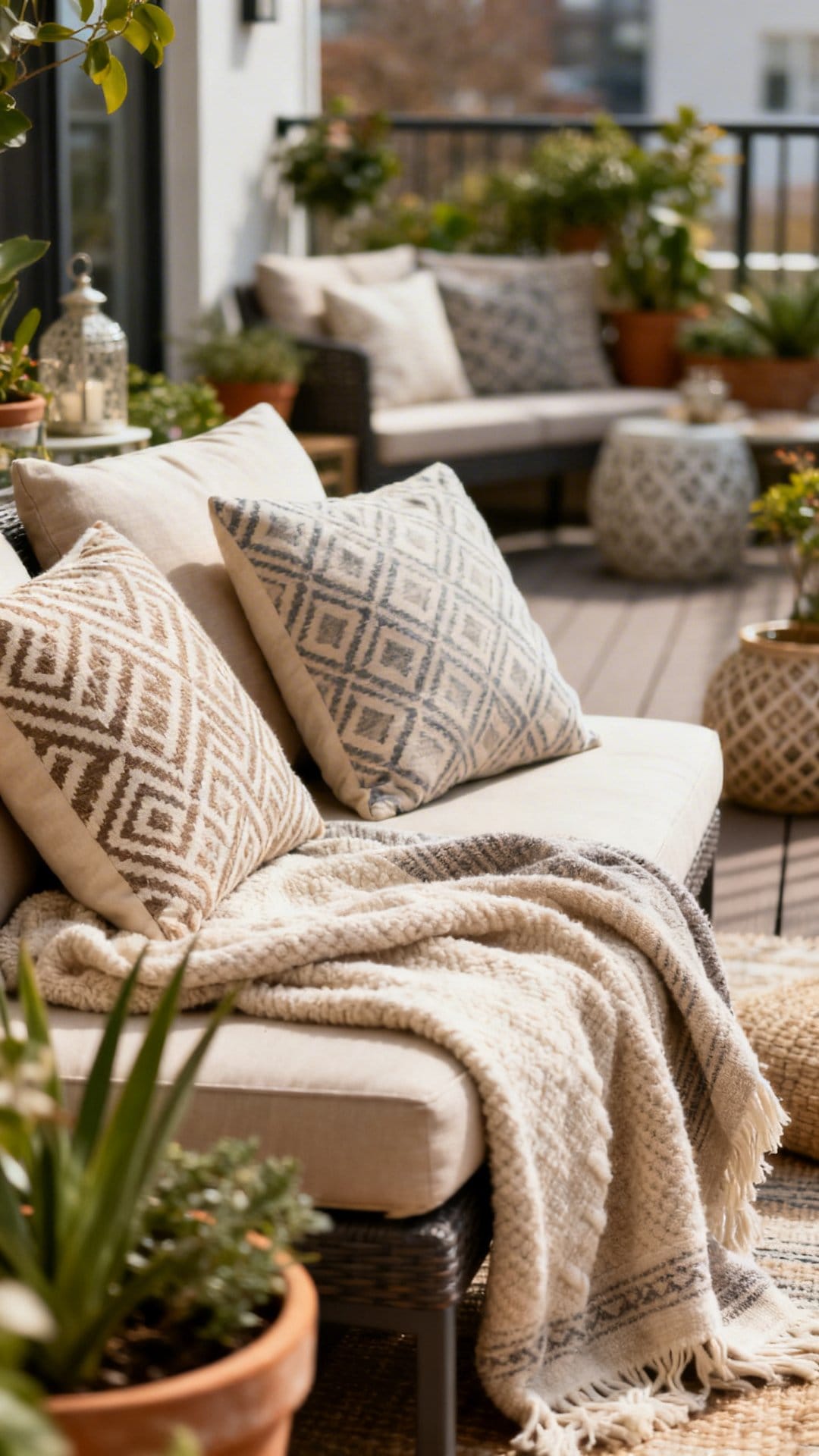 Shop this look: Set of 2 Chenille Throw Pillow Covers… · Luxury 3D Vintage Floral Throw Pillow Covers… · decorUhome Textured Cream White Chenille Throw…
Textiles crank up the cozy and help your patio read like a living room. Mix nubby weaves, smooth canvas, and soft knits for eye-catching depth. It looks expensive without being fussy.
The psychology behind layering textiles outdoors is simple: soft surfaces read as comfortable in a way that hard materials can't replicate. A bare concrete balcony with metal furniture feels clinical even if the furniture is well-designed. Add a rug, two throw pillows, and a folded blanket over the back of a chair, and the same space suddenly feels like somewhere you'd want to stay for an hour rather than a quick coffee.
IMO Moment
IMO this works especially well in small spaces because it tricks the eye into seeing "designed" instead of "cramped." Keep a storage basket nearby for quick in-and-out weather changes.
- Pick removable covers you can toss in the wash.
- Stick to three colors max for cohesion.
- Add one pattern for personality: stripes are timeless.
From what I've gathered, the one detail worth getting right with outdoor textiles is the zipper: choose cushion covers with full-length zippers. A friend of mine learned this the hard way with beautiful covers that had no zip closure, and after one rainy week they were holding moisture and starting to smell. Removable zip-closure covers let you pull the inserts out and air them separately. It's a small thing that saves real frustration over time.
Seasonal swaps are where this approach really pays off. Keep the same furniture year-round and just change the textiles: lightweight cotton for summer, wool-blend throws for fall. The patio feels refreshed without any major investment, and the process takes about ten minutes.
Use when you want seasonal swaps without buying new furniture.
11. Install a Compact Privacy Screen
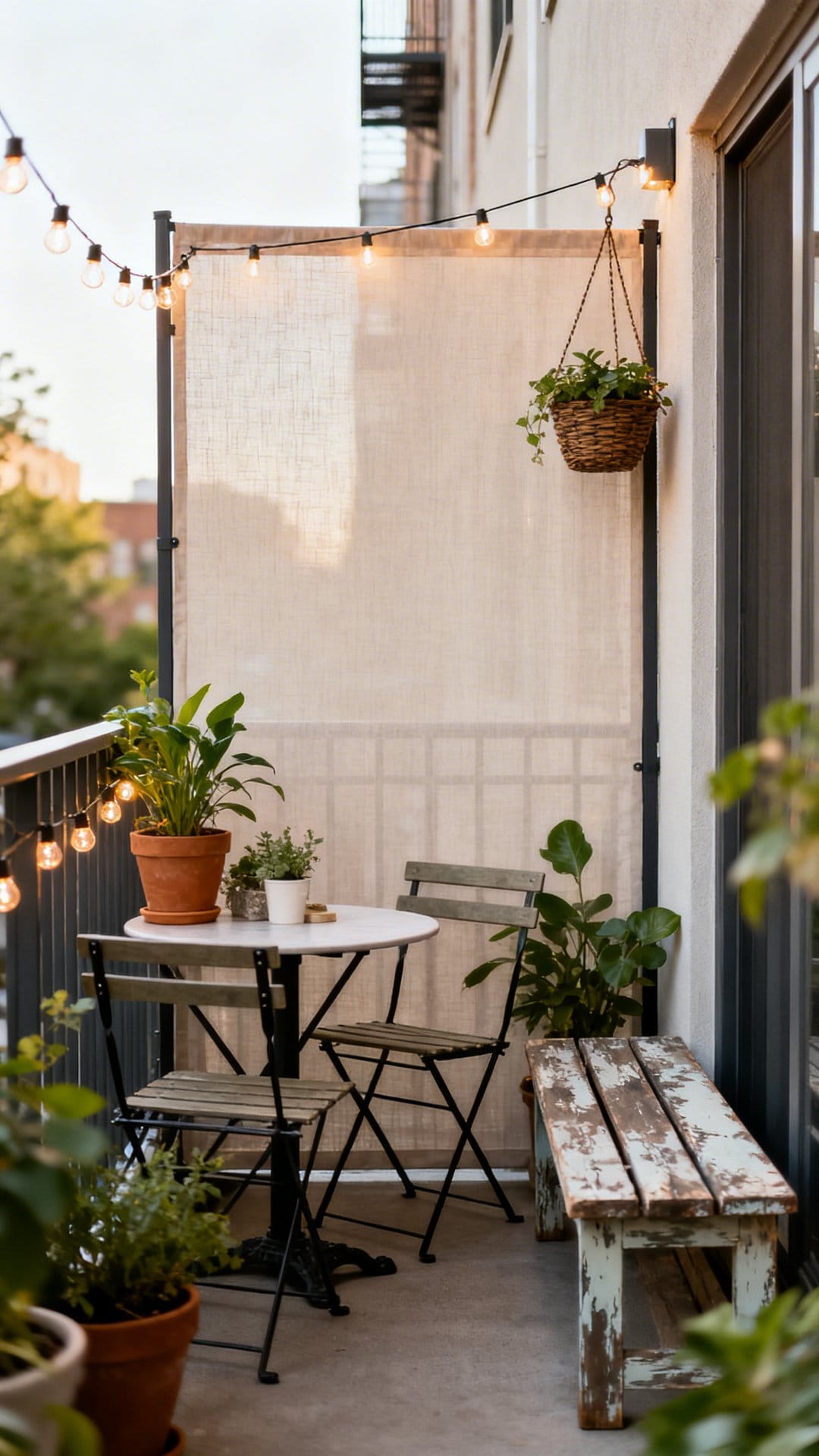 Shop this look: a privacy screen on Amazon · SUNNY GUARD 3' x 10' Balcony Privacy… · 4' x 50' Brown Fence Privacy…
Privacy changes a balcony from "meh" to sanctuary. A slim lattice, bamboo roll-up, or outdoor curtain creates separation without blocking all the light. Suddenly, nosy neighbors vanish.
Privacy changes how you actually use a space. Without it, you're always a little aware of being observed, which keeps you from really settling in. On a balcony that overlooks neighbors or a busy street, installing even a partial screen can be the single change that makes the space feel genuinely usable for reading, relaxing, or just sitting without the sense that you're on display. A screen also sets the stage for the rest of your balcony decor to shine.
Easy Options
- Zip-tie bamboo fencing to the railing.
- Hang outdoor curtains on a tension rod or wire.
- Plant climbing vines on a trellis for a living screen.
The bamboo roll-up option is the most practical for renters. It attaches with zip ties to the existing railing without drilling, comes in rolls wide enough for most standard balcony lengths, and costs twenty to forty dollars per roll. Dark espresso-stained bamboo looks cleaner than natural bamboo, which can go gray unevenly over time.
Outdoor curtains on a tension rod or wire are the more polished option when the structure of your balcony supports it. They can be pulled back during the day to maximize light and airflow, then drawn closed for privacy in the evenings. Sheer outdoor fabric lets light through while obscuring the view from outside. Heavier canvas blocks more completely. Either works depending on how much sun your patio gets and how much privacy you need.
Great for renters who need discretion but want airflow and sun.
12. Add Multi-Height Lighting Layers
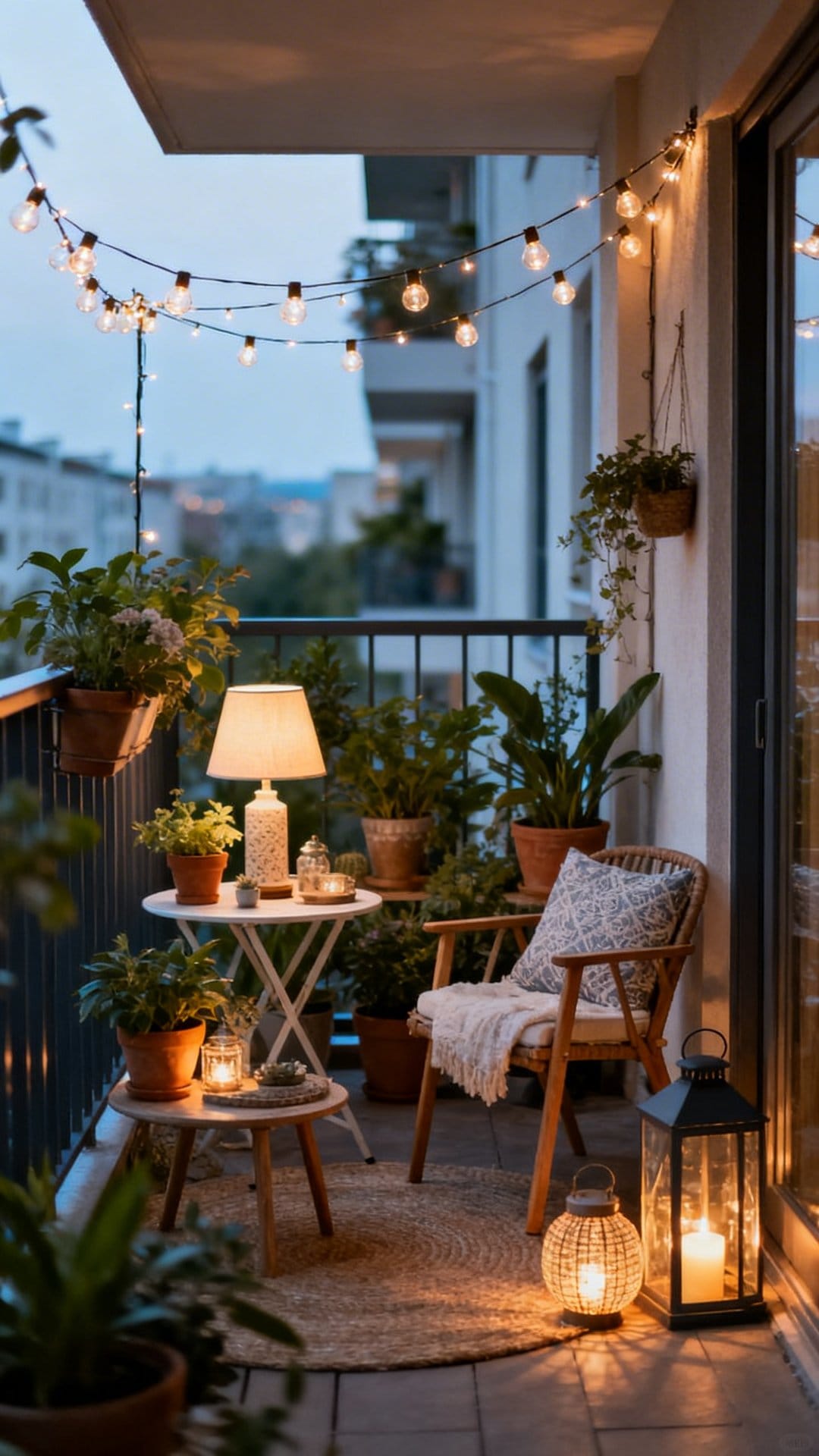
Light at different heights makes a small space feel bigger and more dynamic. Mix string lights up top, lanterns at table height, and ground-level solar stake lights. You'll get depth and soft shadows that flatter everything.
Lighting is the feature most people set up once and never revisit, which is a missed opportunity. Most patios have one light source: whatever fixture is attached to the building. That single overhead source creates flat, unflattering light that drains the atmosphere from even well-furnished spaces. Layering changes the character of the whole space, often for less money than a new piece of furniture.
Lighting Mix
- Warm white (2700-3000K) for coziness.
- Solar options to avoid cords.
- Dimmer-capable fixtures for date-night mood.
The ground level is the easiest layer to overlook. Solar-powered stake lights along the perimeter create a gentle edge glow that makes the space feel larger after dark. They charge during the day and turn on automatically at dusk, so there's no maintenance involved. For a hard surface like concrete, weighted base versions sit without staking.
Combining all three layers creates something that feels designed rather than assembled. One tip worth following: use all warm white sources at around 2700K rather than mixing warm and cool color temperatures. Mixed temperatures look confused. Commit to one and the effect is immediately more cohesive.
Use this if your patio looks flat after sunset. Layers = magic.
13. Embrace a Monochrome Palette
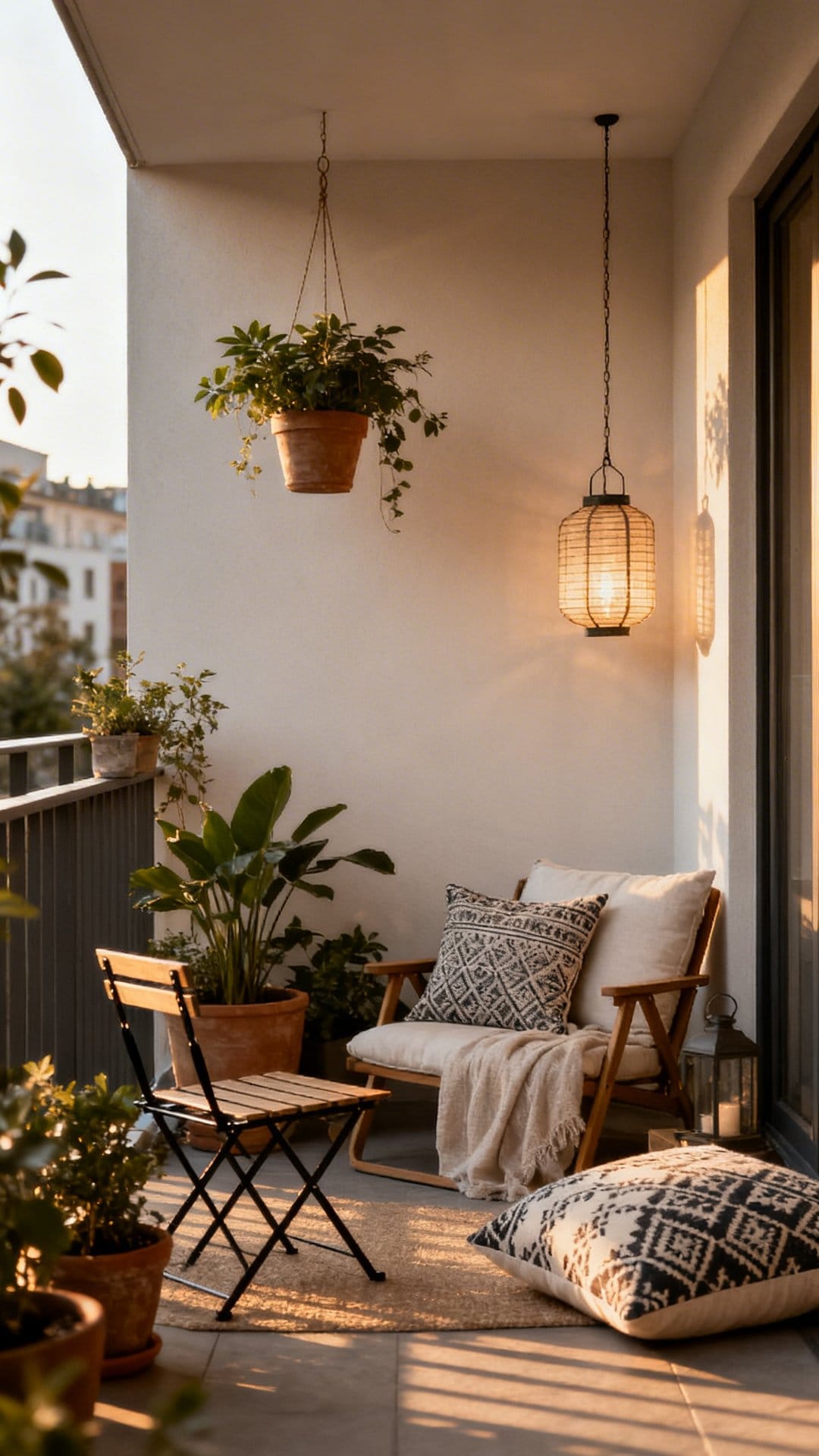
Pick one main color and run with it. Sticking to shades of a single hue calms visual noise and makes tight quarters feel intentional. Think all-greige, black-and-wood, or blues with white accents.
Monochrome doesn't mean boring. It means disciplined. The reason it works specifically in small spaces is that visual complexity competes for attention, and in a tight area, that competition creates a sense of chaos. When everything belongs to the same color family, the eye does less work sorting out what goes together. The space feels calmer as a result, which is what most people actually want from an outdoor retreat.
How To Pull It Off
- Start with your rug and seating tone, then match planters and textiles.
- Add one metallic accent (brass or black) for polish.
- Let greenery be your "pop" so it never clashes.
The most reliable version of this for outdoor spaces is neutral monochrome: taupes, warm grays, and natural woods in the same tonal range. Green plants serve as the accent color by default. This palette photographs well, ages well, and doesn't require replacing anything if you change your mind about a shade.
A dusty blue-and-white combination works well for patios with coastal sensibilities. Terracotta monochrome (rusts, ochres, warm creams) looks especially rich on south-facing patios that get strong afternoon light, because the warm tones deepen in direct sun. Whichever palette you choose, commit to it across every object in the space: planters, hardware, and small accessories included.
Perfect when you crave serenity and hate the cluttered look.
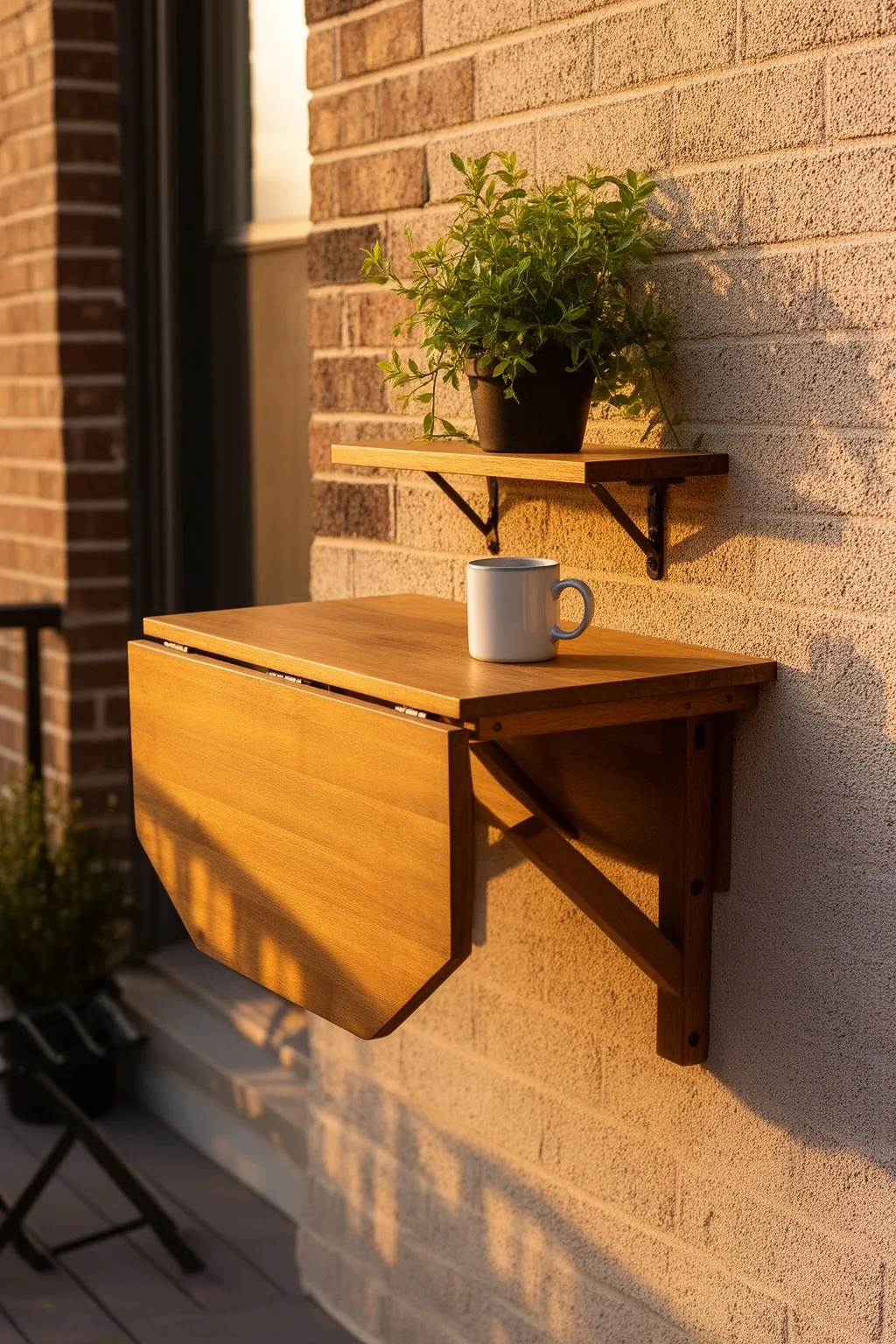
14. Use a Fold-Down Wall Table
 Shop this look: Walnut Folding Coffee Table, No Assembly… · Walnut Folding Low Coffee Table for Small… · Lexicon 20 Inch Wooden Round End Table for…
A wall-mounted drop-leaf table gives you space only when you need it. Fold it out for brunch or board games, fold it back to reclaim the floor. It's the Swiss Army knife of tiny patios.
The fold-down wall table is the piece that makes people say "I should have done this years ago" because the concept is so obvious in retrospect. Mount a hinged surface to the wall at table height. It folds flat against the wall when stored, projecting maybe three or four inches. When open, it extends to full table depth, usually twelve to fourteen inches, which is enough for a coffee setup or a light breakfast.
Smart Setup
- Find studs or use masonry anchors for safety.
- Choose a surface with weatherproof finish.
- Pair with stacking stools to keep footprints small.
This works best on the building's exterior wall rather than on a railing panel, where the structural backing is stronger. Find studs or use masonry anchors rated for the weight you plan to use. For a coffee and laptop setup, thirty pounds is a reasonable maximum. For meals with plates and drinks, add a safety margin and use heavy-duty hardware.
The setup that works best pairs the fold-down table with two folding stools on wall hooks directly below. In the stored position, table and stools occupy about two square feet of wall space. When deployed, you have a workable dining or work surface with no floor footprint beyond the stools themselves.
Best for narrow balconies where standard tables feel like obstacles.
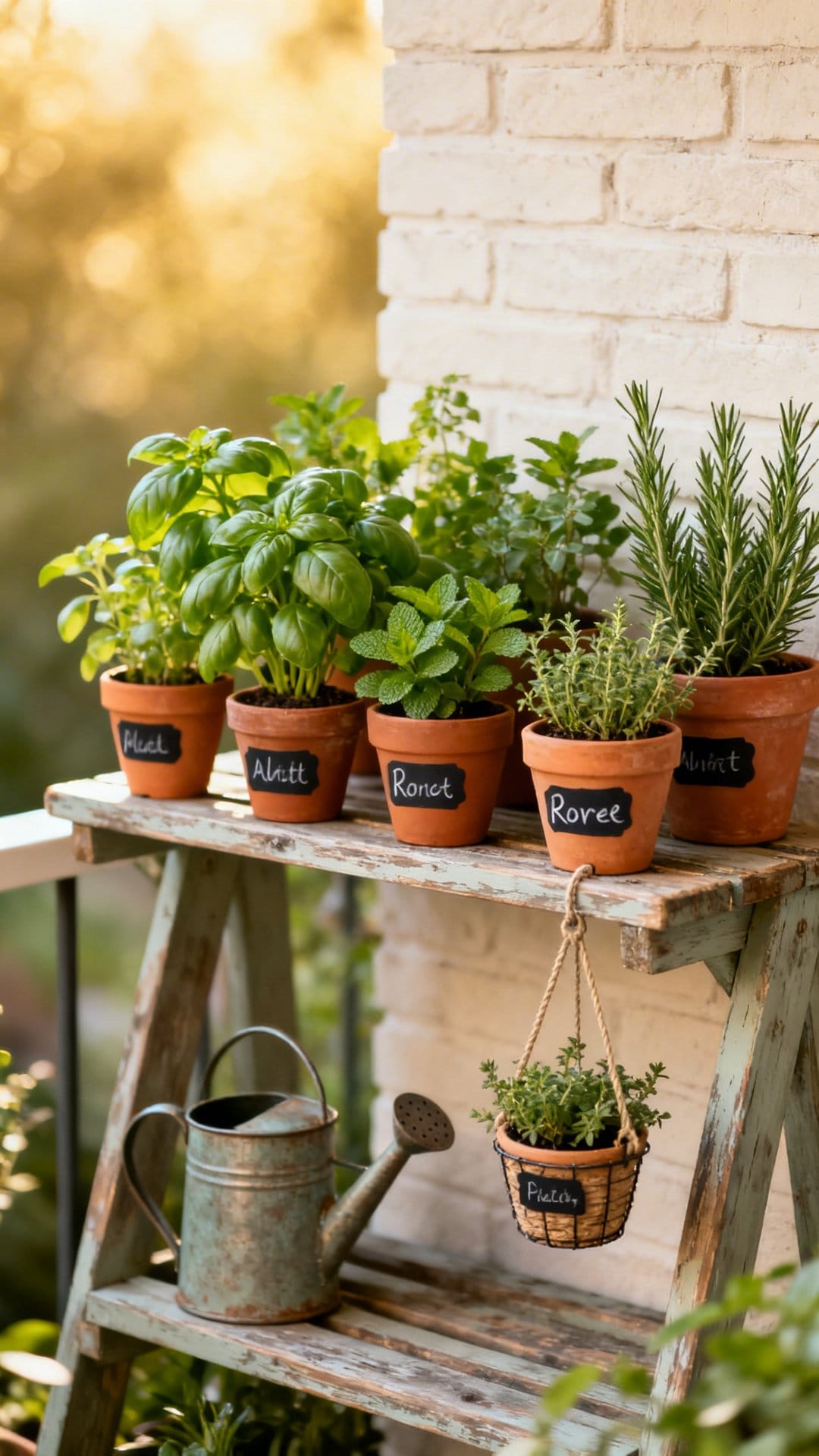
15. Grow a Mini Herb Garden
 Shop this look: a rail herb planter on Amazon
Fresh basil on pizza, mint in your mocktail, rosemary in your potatoes: yes please. Herbs thrive in small planters and love sunny spots. They smell amazing and look charming.
Herbs earn their place on a patio in a way that ornamental plants can't quite match. You walk past them and they smell good. You brush against the rosemary while reaching for something and the scent stays on your fingers. You snip a few leaves for dinner and feel unreasonably accomplished about it. The combination of sensory experience and actual utility makes a small herb setup worth maintaining even if you're not a devoted gardener.
Easy Wins
- Start with basil, mint (pot it solo), chives, thyme, and parsley.
- Use a shallow trough planter along the rail.
- Harvest often to keep growth compact and bushy.
The practical setup that works best for small patios is a shallow trough planter along the inside of the railing. It takes no floor space, gets good light in most orientations, and makes harvesting easy when you're cooking just inside the door. Fill it with four or five herbs you'll actually use. Keep mint in its own container because it spreads aggressively and will outcompete everything else given the chance.
The maintenance is lighter than most people expect. Water when the top inch of soil is dry, harvest regularly to encourage bushy growth rather than leggy stems, and fertilize lightly once every few weeks during the growing season. Most herbs prefer to be slightly root-bound, so there's no rush to repot unless the plant looks genuinely stressed.
Use if you cook even a little, or just love the scent when you brush past.
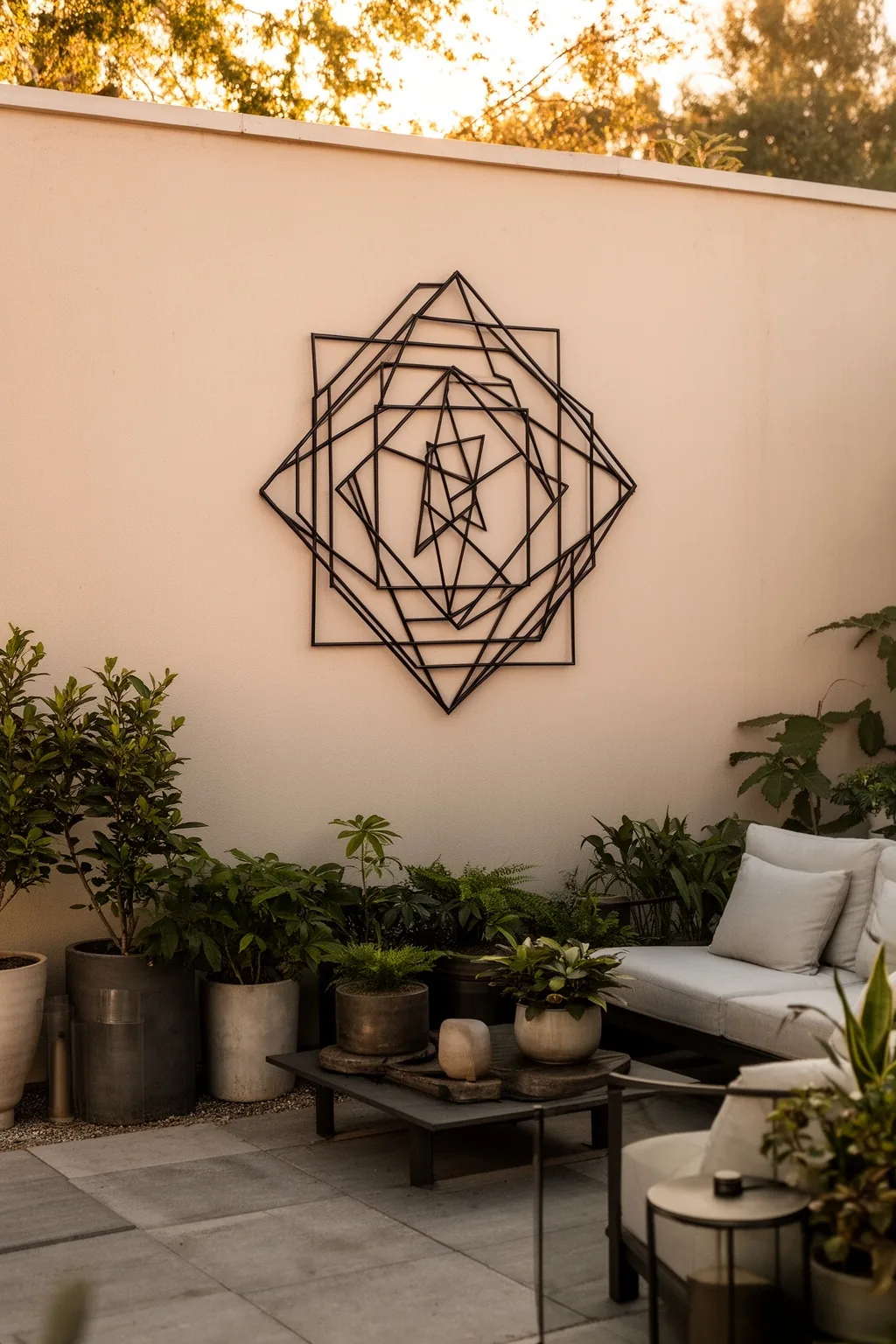
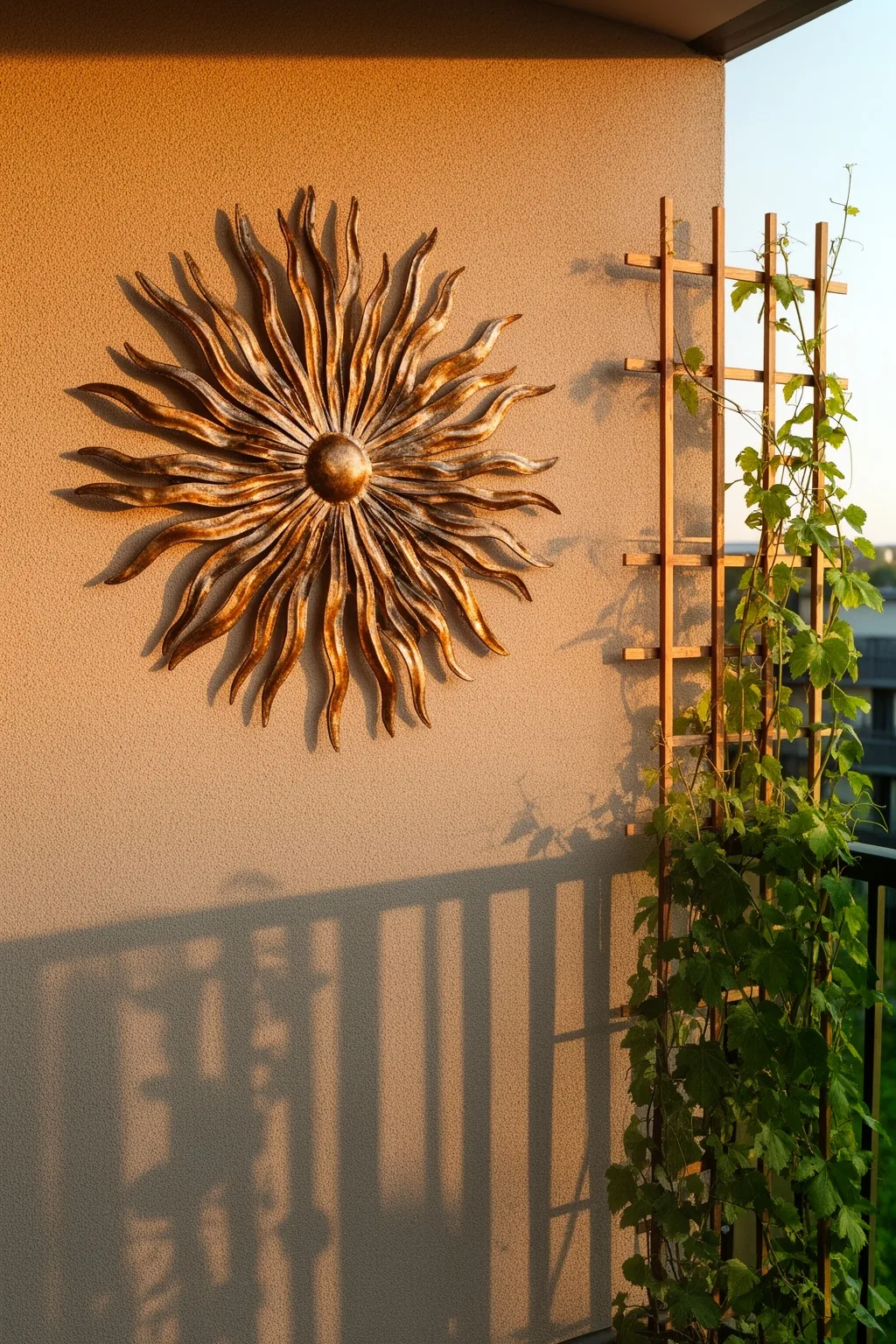
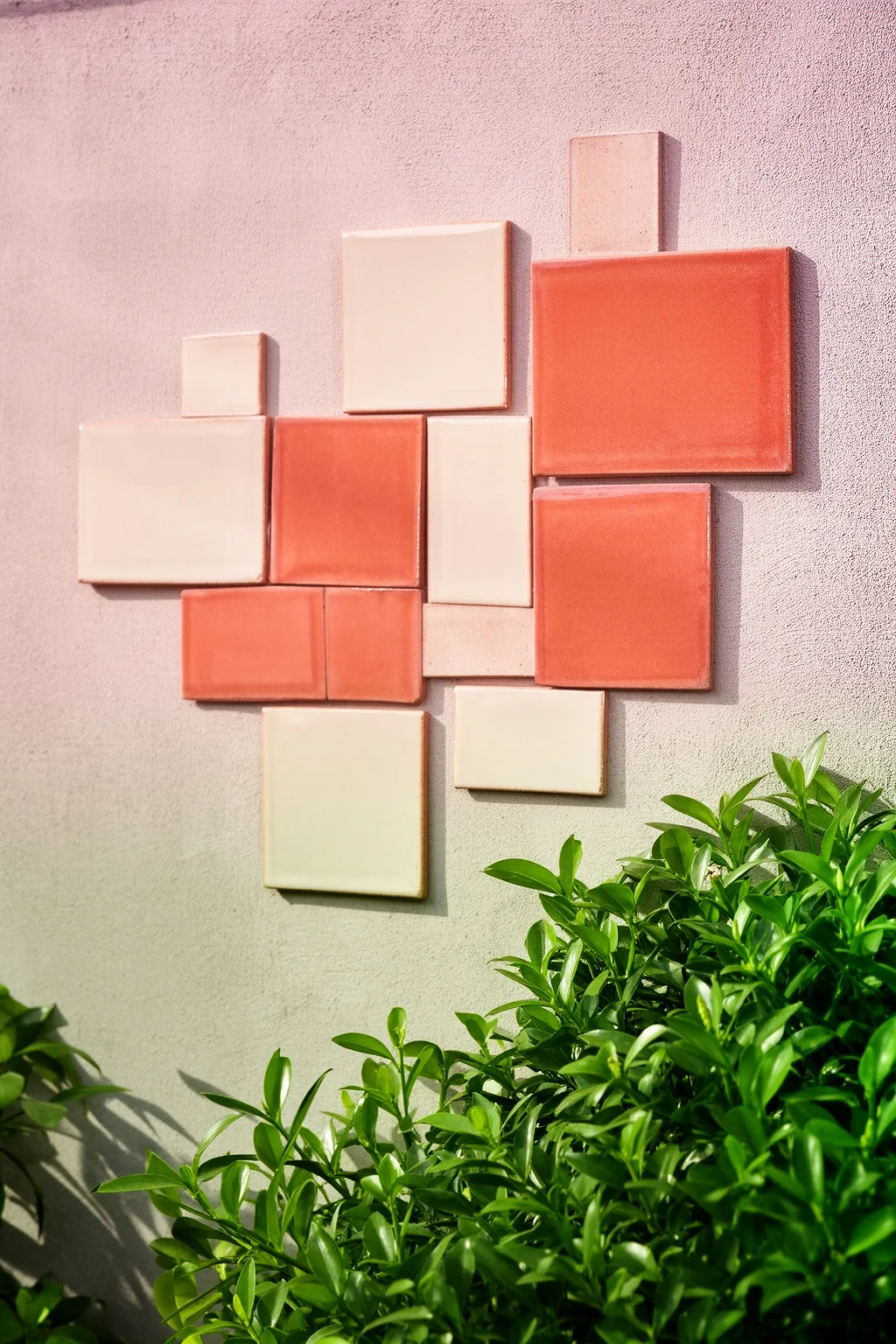
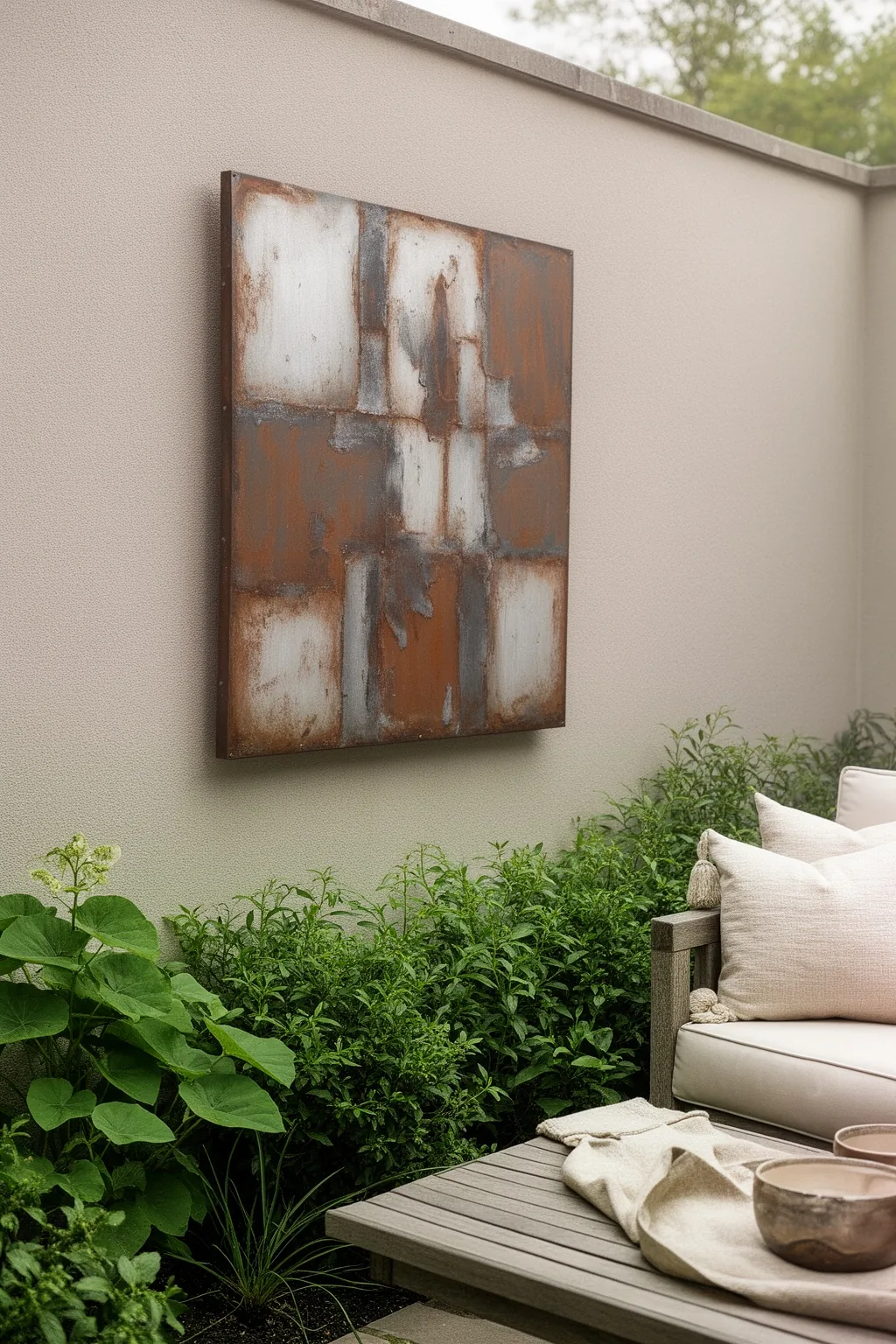
16. Add Art That Can Handle Weather
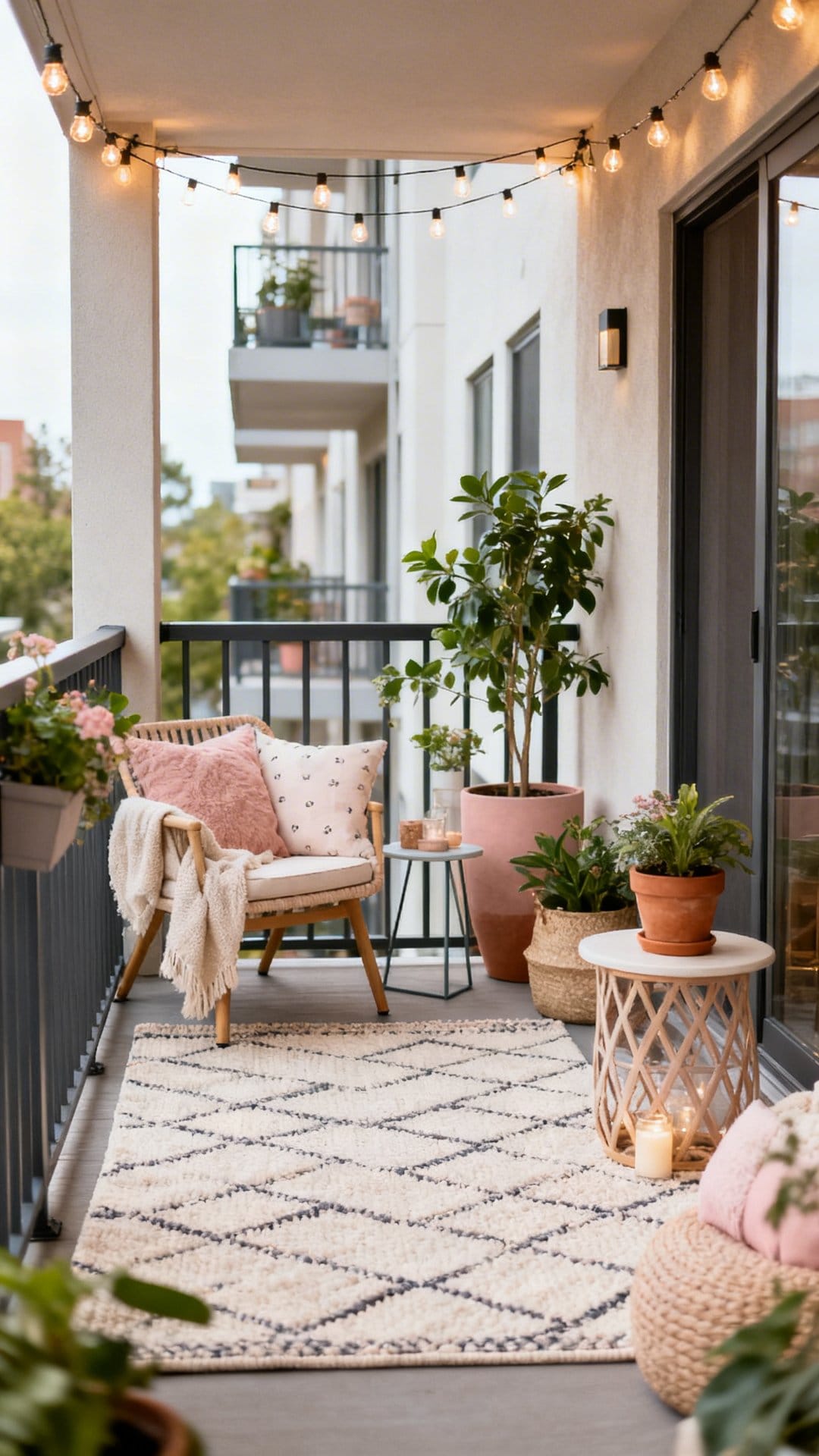
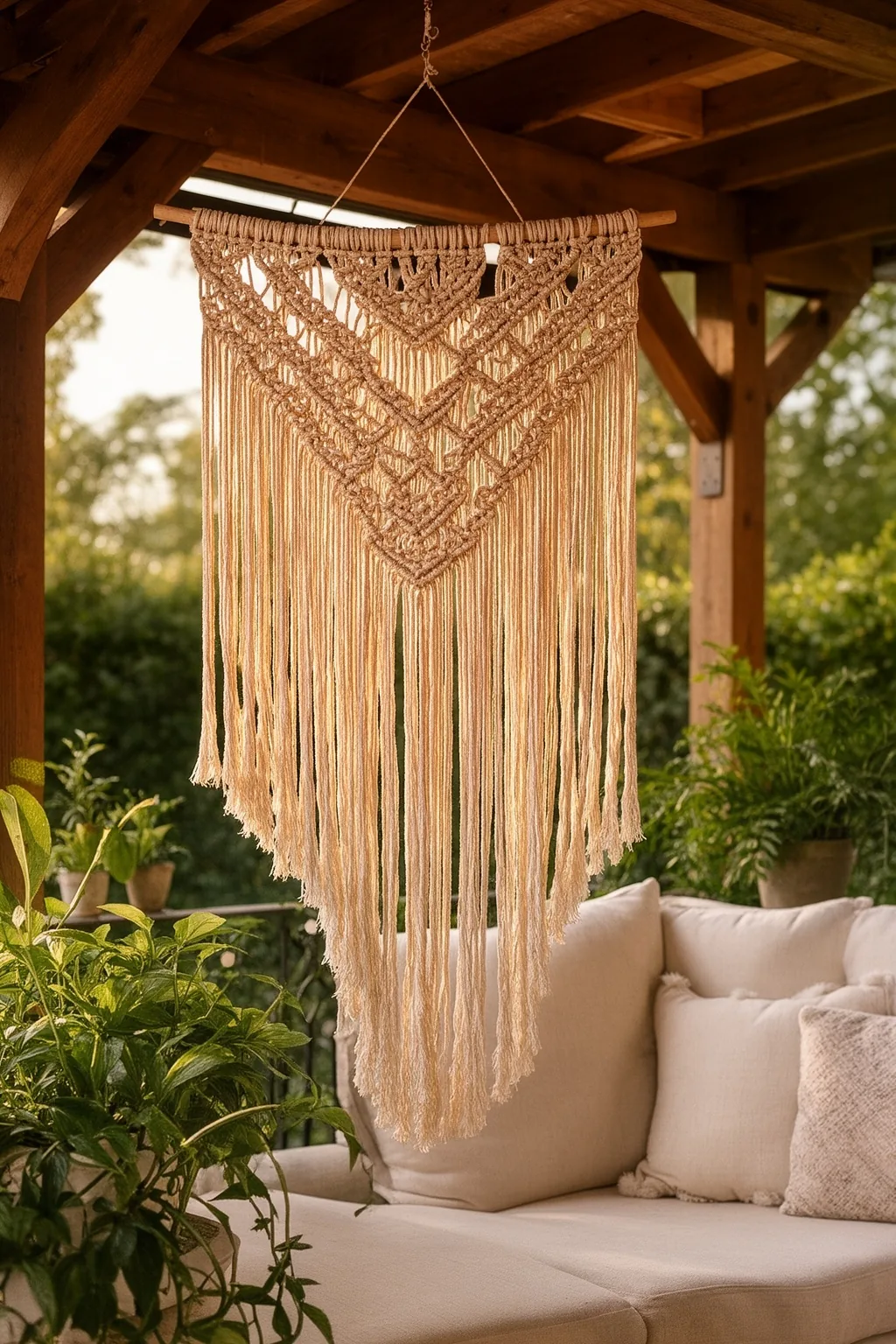
Outdoor-safe art brings personality beyond plants and furniture. Think metal wall pieces, ceramic tiles, or framed fabric under acrylic. It's unexpected and instantly "designed."
Outdoor art is one of those small-patio moves that reads as unexpectedly sophisticated. Most people don't think to add art to an outdoor space, which is exactly why it works so well when you do. A single well-chosen piece on a bare exterior wall becomes the focal point of the whole patio and anchors everything else around it. It signals that someone thought carefully about the space.
Guidelines
- Stick to UV-resistant finishes to avoid fading.
- Use Command outdoor strips or screws with rubber washers.
- Echo colors from your rug or cushions for cohesion.
Metal wall art is the most weather-durable option. Powder-coated iron or aluminum pieces hold their finish through years of sun and rain without flaking or rusting. Abstract geometric designs tend to age better than representational pieces because they don't date as quickly. A matte black geometric piece on a light wall is clean and works with almost any furniture style or plant arrangement.
Ceramic wall tiles are worth considering for more eclectic spaces. A cluster of three to five hand-glazed tiles in related tones looks intentional and artisanal. Attach them with waterproof adhesive or masonry hardware. For renters who can't touch walls permanently, a heavy-gauge wire panel leaned against the wall and weighted with planters achieves a similar effect with no wall damage at all.
Great when your patio walls feel bare and you want a focal point without adding clutter.
17. Sneak In Hidden Power
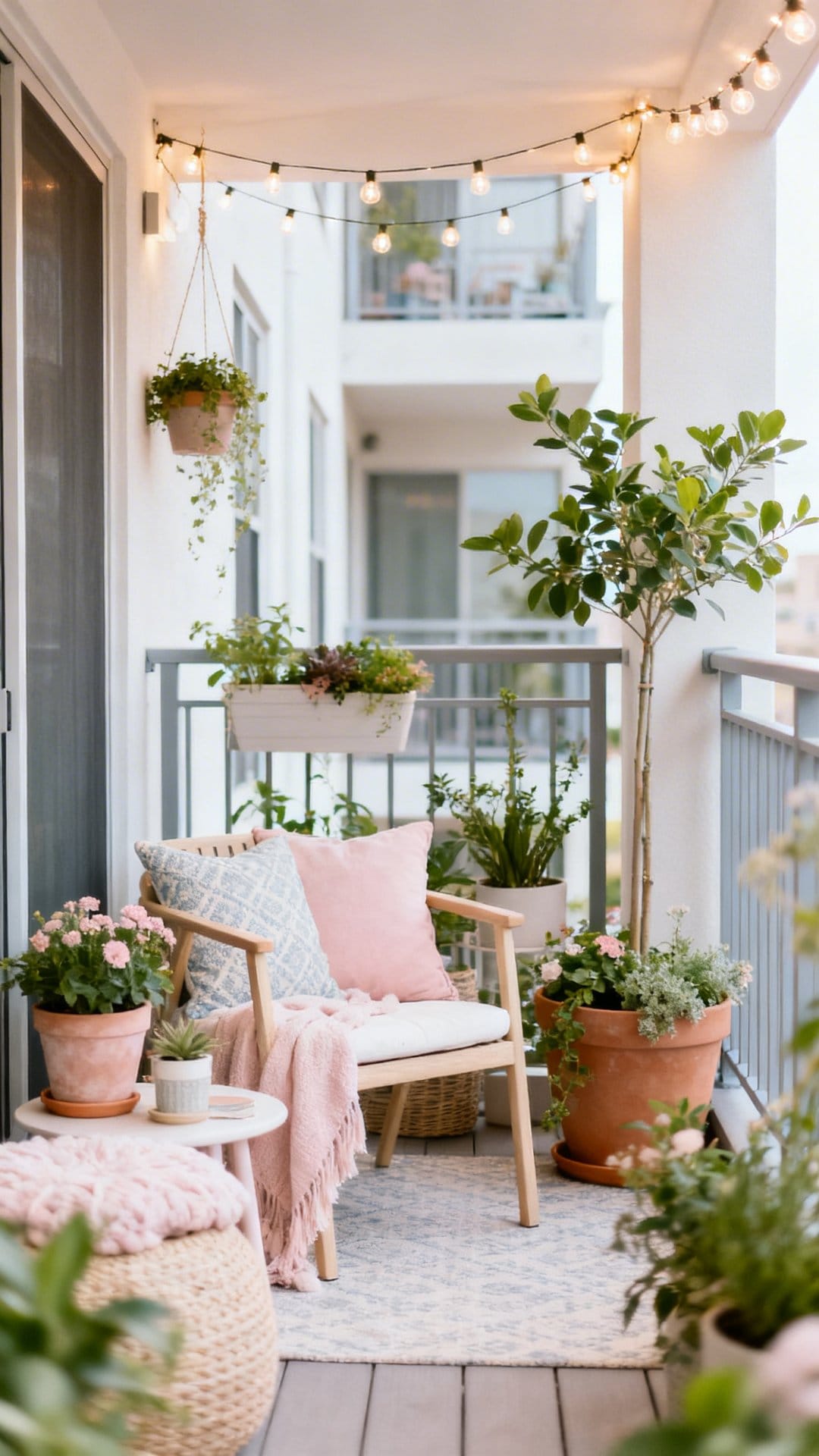
A discreet outdoor outlet or weatherproof power strip opens up everything: lights, speakers, fans, heated throws. You'll use your patio more when it supports your actual lifestyle. Convenience means more time outside.
Outlets on patios are common in new construction but most apartment patios, especially older buildings, don't have them. This matters more than it seems. Without power, every lighting setup requires batteries or solar, every speaker is Bluetooth-only, and every evening outside ends when something runs out. A single exterior outlet changes the whole calculus and makes the patio feel like part of the living space rather than an adjunct to it.
Setup Ideas
- Use a weatherproof box for plugs and keep cords along edges.
- Consider a rechargeable lantern or speaker if outlets aren't possible.
- Add a small clip-on fan for hot days.
I've seen a single rechargeable lantern instantly lift the mood on a patio: no cables, no fuss. It charges during the day and gives four or five hours of warm light in the evenings, which is more than enough. That kind of solution works perfectly when wired power isn't practical, and it keeps the aesthetic clean without any cord management.
If adding an exterior outlet isn't possible, a long heavy-duty outdoor-rated extension cord running from an interior outlet through a weatherproof pass-through works well. Keep the cord rated for the wattage of everything you plan to plug in, run it along the wall rather than across the floor, and use a cord cover to make it look like a deliberate part of the setup.
Perfect when you want a clean look and easy ambiance.
18. Style a Tray Table For a Mobile "Moment"
 Shop this look: Walnut Folding Coffee Table, No Assembly… · Walnut Folding Low Coffee Table for Small… · Lexicon 20 Inch Wooden Round End Table for…
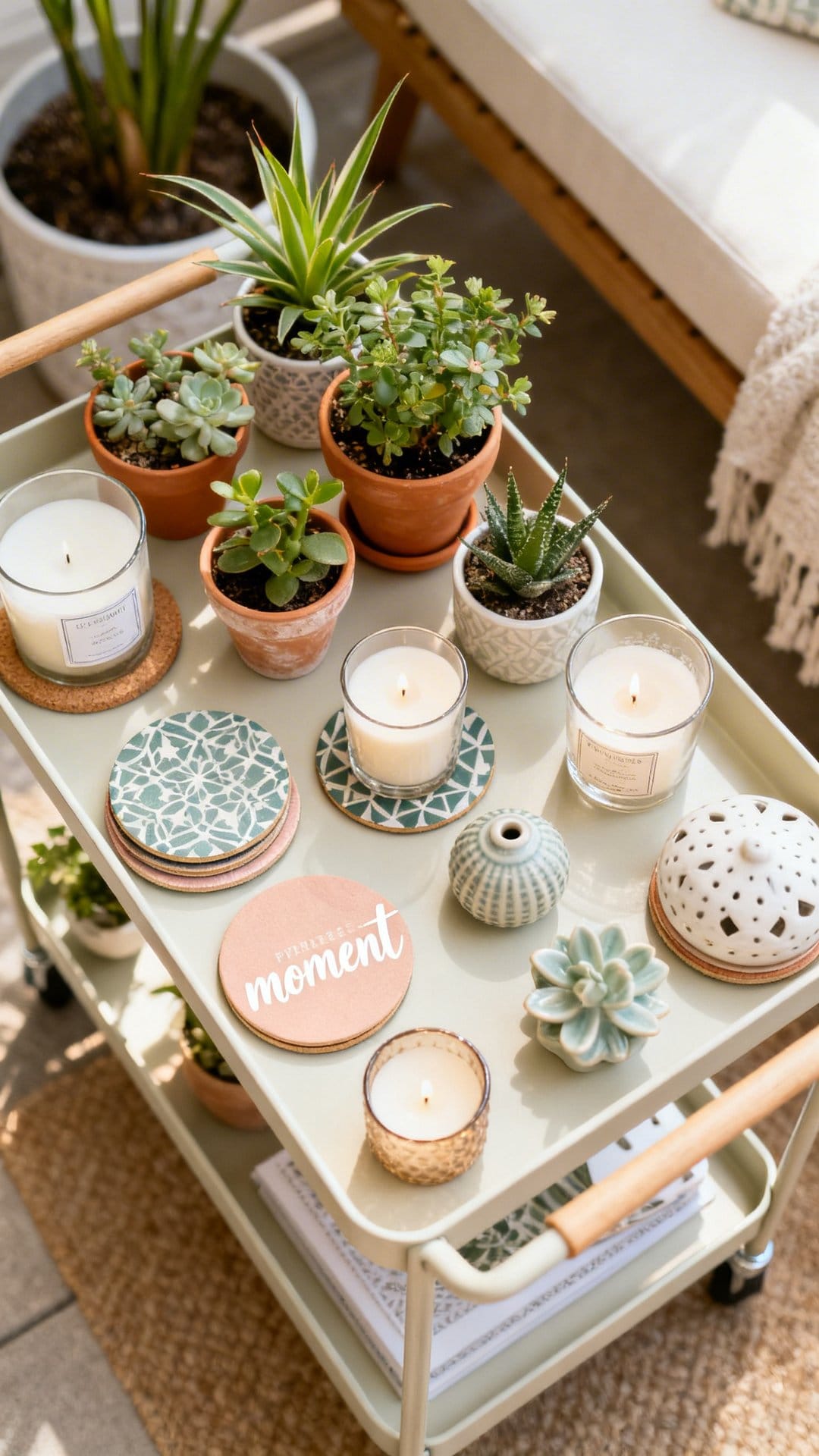
A lightweight tray table works as a bar cart, snack station, or plant stand wherever you need it. You can carry it inside during rain or bring it out for guests. It's small but does a lot.
The tray table is underrated in outdoor decorating because it doesn't announce itself. It shows up wherever it's needed, does its job, and carries away without ceremony. That quality is genuinely useful in a small space where every object that stays in one permanent spot becomes a commitment.
How To Style
- Top with a small vase, a candle, and coasters for a pulled-together look.
- Keep a lidded jar of matches and a bottle opener handy.
- Choose nesting tables if you host: space-saving win.
The styling part is where people sometimes overthink it. The best tray table setup is a spare one: a small potted plant, one or two candles, a small tray for glasses, and nothing else. The restraint is the point. A cluttered tray table looks messy. A spare one looks like a conscious decision. Three objects is usually the right number.
The mobility means you can shift where the focal point of the space sits from day to day. Pushed against the railing, it becomes a bar cart for entertaining. Pulled next to a lounge chair, it becomes a side table for reading. Placed at the center of the seating arrangement, it serves as the coffee table. Nesting versions that stack into each other store in almost no space at all.
Use this when you want flexibility and quick polish without rethinking your whole layout. Trust me, the versatility pays off fast.
One or two of these ideas is enough to change the feel of a small patio completely. Start with a rug and some lighting, then add layers as you find pieces you love. Small outdoor spaces reward patience and restraint more than big spending. The best-looking patios tend to be the ones where every object has a reason to be there.
Final Thoughts on Small Patio Decor Ideas for Apartments
Small doesn't have to mean compromised. The small patio decor ideas for apartments collected here work because they respect the constraints of the space rather than fighting them. Foldable furniture, vertical planting, layered lighting, and a cohesive palette all make a small space feel more considered and more livable than trying to cram in everything a larger space might hold. For even more inspiration, these small patio ideas on a budget show how far a thoughtful corner can go.
The most important thing is to start somewhere. Pick the idea that addresses your biggest current frustration: not enough seating, no place to put anything, a space that doesn't feel welcoming after dark, or just a patio that never became the spot you hoped it would be. Fix that one thing well, and the rest of the space usually follows. Momentum matters more than having a complete plan from the start.
Come back to this list as your needs shift or the seasons change. What works in summer might need adjusting for fall evenings. What you set up when you first moved in might not suit how you actually use the space now. Small patio styling is an ongoing process, and it doesn't need to be finished to be good.
Frequently Asked Questions
Go vertical with a living wall to pull the eye up and free floor space. Use slim, foldable furniture and limit your color palette so the area feels cohesive and airy. Keeping one strong focal point, like a statement plant or a piece of wall art, also helps draw attention away from the size of the space.
Low-maintenance options like pothos, philodendron, ferns, and common herbs thrive in modular or pocketed felt planters. Pair them with a simple drip or self-watering system to keep care easy. Herbs are a solid choice if you cook regularly because they do double duty as decoration and ingredients.
Yes. Dense vertical plantings double as a natural privacy screen while softening noise and adding texture. Choose trailing or bushy plants like pothos or ferns to increase coverage. Tall grasses or ornamental bamboo in ground planters can extend the screen further.
A foldable bistro set is ideal because it is compact, lightweight, and can be stored when not in use. Look for durable, weather-resistant materials like powder-coated aluminum to maximize longevity without adding weight. A wall-mounted fold-down table paired with stackable stools works even better in very tight spots.
Focus on multi-functional pieces and easy-care greenery supported by self-watering solutions. Add a few high-impact accents like textiles or lighting to deliver personality without crowding the space. Sticking to a consistent color palette across all items keeps the look cohesive with minimal ongoing effort.