
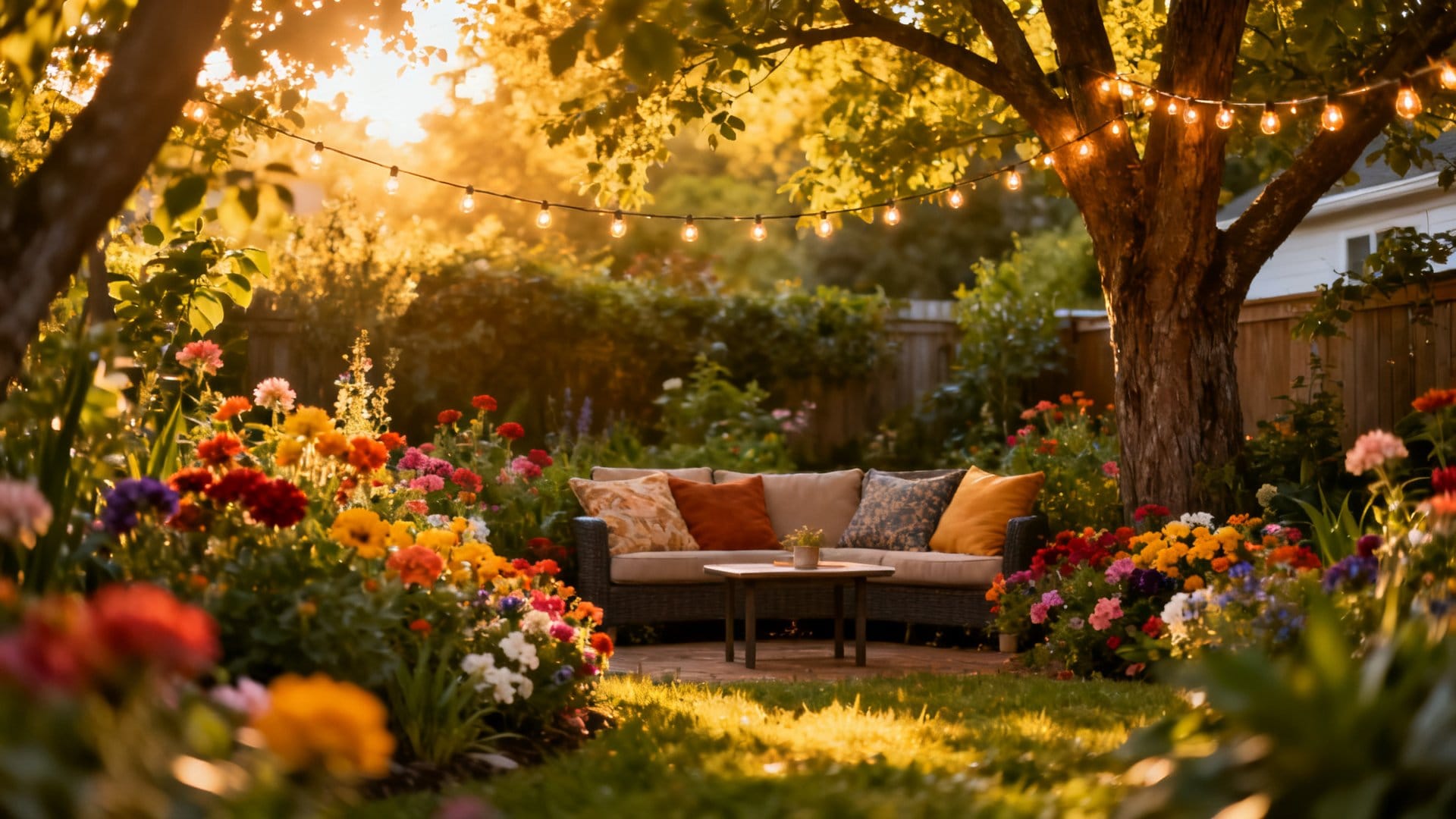
There’s a particular feeling that comes with the first truly warm weekend of summer, when you step outside with your morning coffee, squint into the golden light, and suddenly see your yard not as it is, but as it could be. That feeling is exactly where great outdoor spaces begin. This collection of summer garden decoration ideas to change your yard is packed with inspiration for every kind of outdoor space, from sprawling backyards to cozy urban patios. Whether you’re starting fresh or just looking to refresh what you already have, these ideas will help you create a garden that feels like a genuine extension of your home.
What makes this list different is the range. You’ll find ideas that work for tight budgets and small spaces right alongside ideas that feel a little more special and considered. Every suggestion is meant to feel achievable, personal, and genuinely beautiful, not like a page ripped from a catalog. So let’s get outside.
1. String Lights That Actually Set the Mood
String lights have become a summer staple, but the way you hang them makes all the difference between a yard that feels magical and one that just looks like a parking lot. The key is in the drape, loose, slightly uneven lines of warm-toned bulbs create a much more inviting atmosphere than perfectly straight rows.
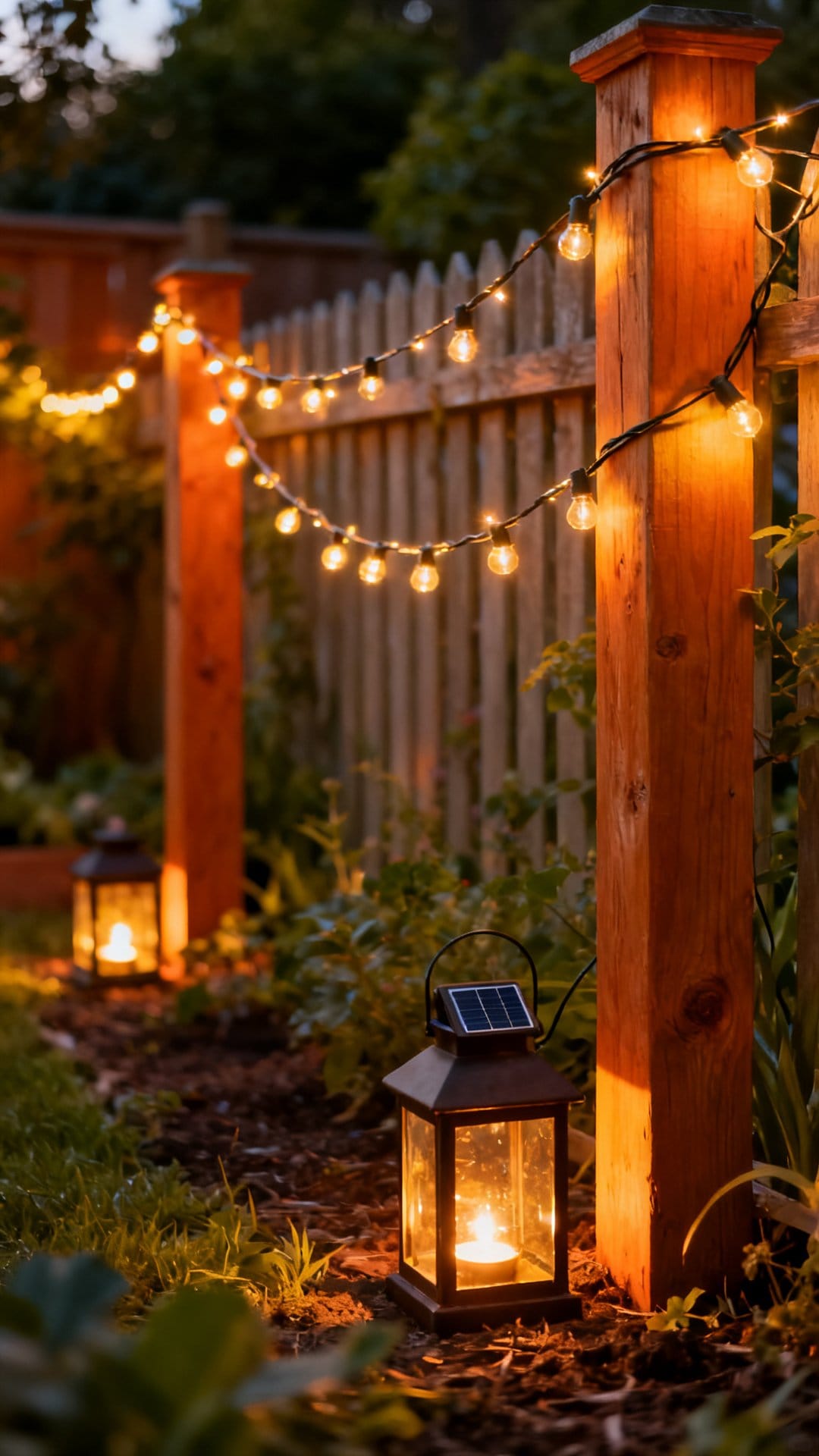
Opt for Edison-style bulbs with a warm amber glow rather than cool white LEDs, which tend to feel clinical outdoors. Hang them between wooden posts, along a pergola beam, or zigzagged between the eaves of your house and a garden fence. Layer them with solar-powered lanterns at ground level for depth. The combination of overhead glow and low candlelight-style illumination creates a layered warmth that’s hard to replicate with any single light source.
Pro tip: Use weatherproof clips to attach the strand to a fence or structure at irregular intervals, slightly varied heights create a more organic, festive feel than ruler-straight lines.
2. A Defined Seating Area With Outdoor Rugs
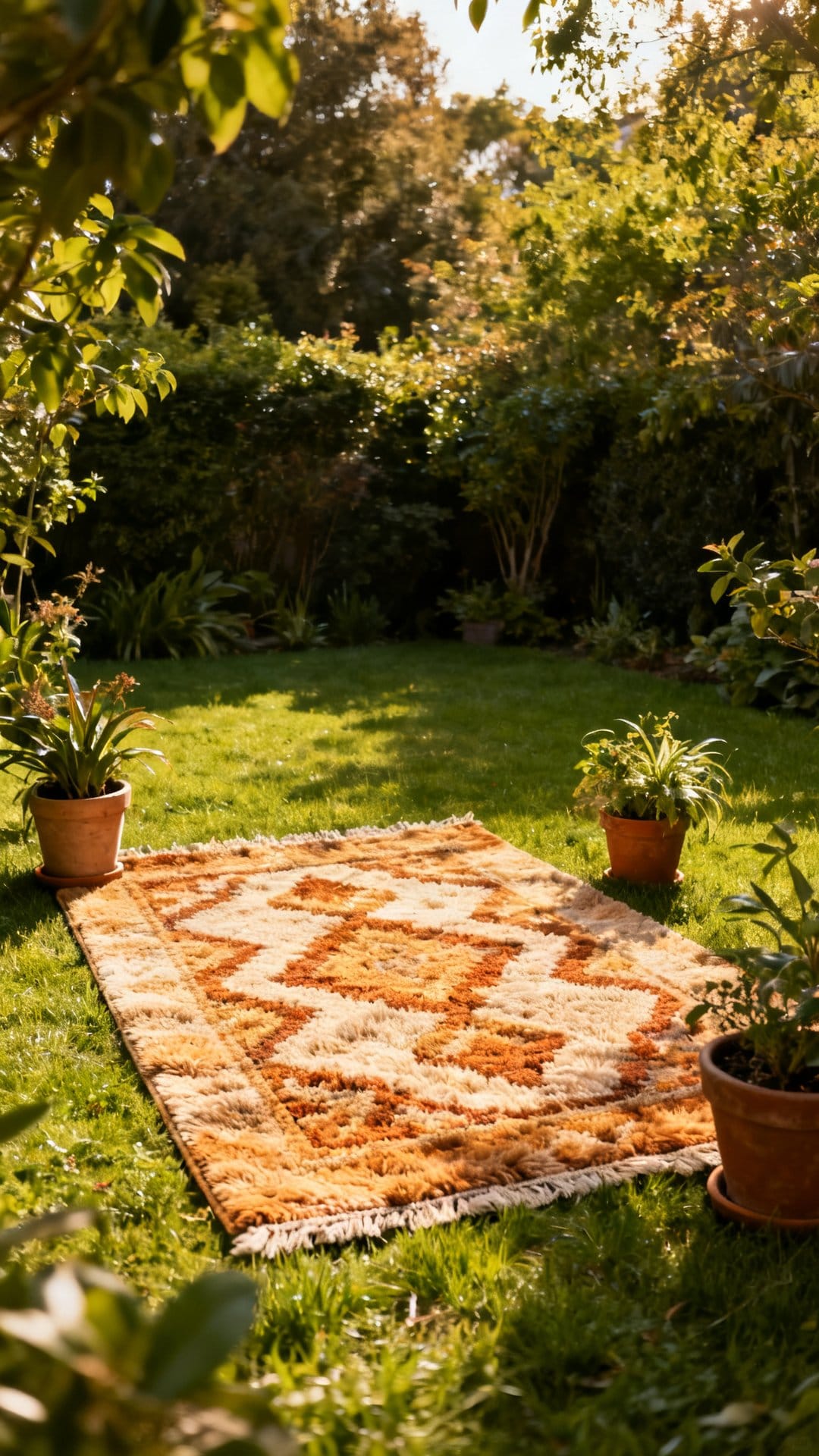
One of the most common mistakes in yard decorating is scattering furniture without anchoring it. An outdoor rug instantly creates a “room” in your garden, giving your seating area a sense of intention and coziness even in a wide-open space.
Key Design Elements
- Choose a flat-weave polypropylene rug in a warm stripe or geometric pattern, these resist mildew and hold up beautifully through summer rain
- Size up: a rug that’s too small makes furniture look like it’s floating; aim for all chair legs to sit fully on the rug
- Layer a smaller jute or woven accent rug on top for texture if your main rug is plain
- Anchor the rug with potted plants at the corners to keep it from shifting in the wind
This is one of those changes that looks simple in photos but feels completely different when you’re actually sitting in the space, suddenly it’s a room, not just a yard.
3. Vertical Garden Walls for Small Spaces
If your outdoor space is on the smaller side, going vertical is one of the most creative moves you can make. A vertical garden wall, whether it’s a repurposed pallet, a mounted planter grid, or a series of hanging terracotta pots, draws the eye upward and makes even a narrow patio feel lush and full.
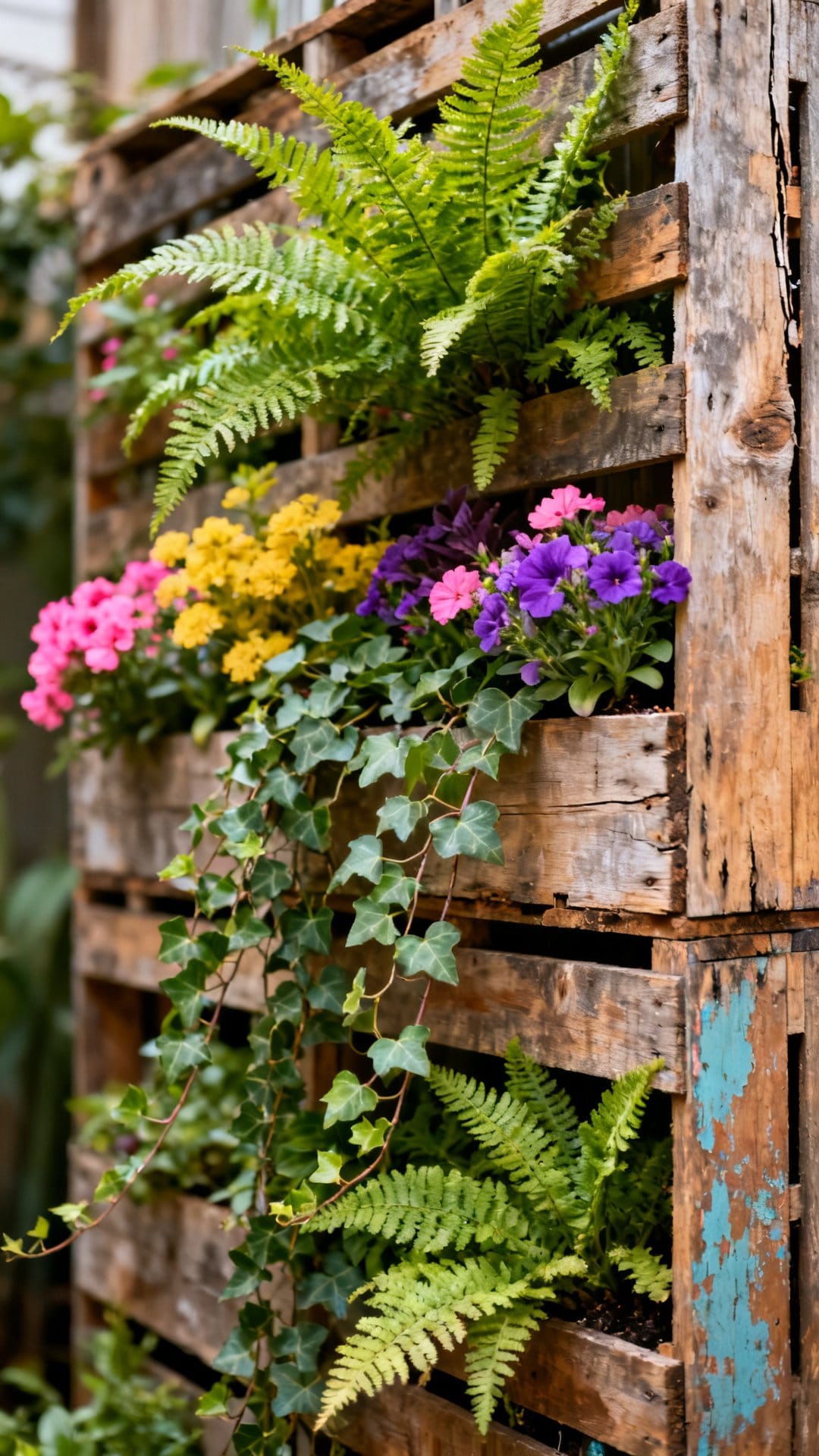
I love how vertical planters can do double duty: they add greenery and privacy at the same time. Fill the pockets with trailing plants like sweet potato vine, bacopa, or cascading petunias for a waterfall effect. For a more structured look, mix herbs like basil, thyme, and mint alongside compact flowering plants, it’s beautiful and functional at the same time.
Pro tip: Mount your vertical planter on a south-facing fence wall to maximize sunlight exposure, and line the back of each pocket with a thin layer of coco coir to help retain moisture between waterings.
4. Lanterns in Clusters Along Pathways
There’s something quietly elegant about a garden pathway lined with lanterns. It’s one of those summer garden decoration ideas that works in almost every style, from boho to farmhouse to modern minimalist, depending on the lantern you choose.
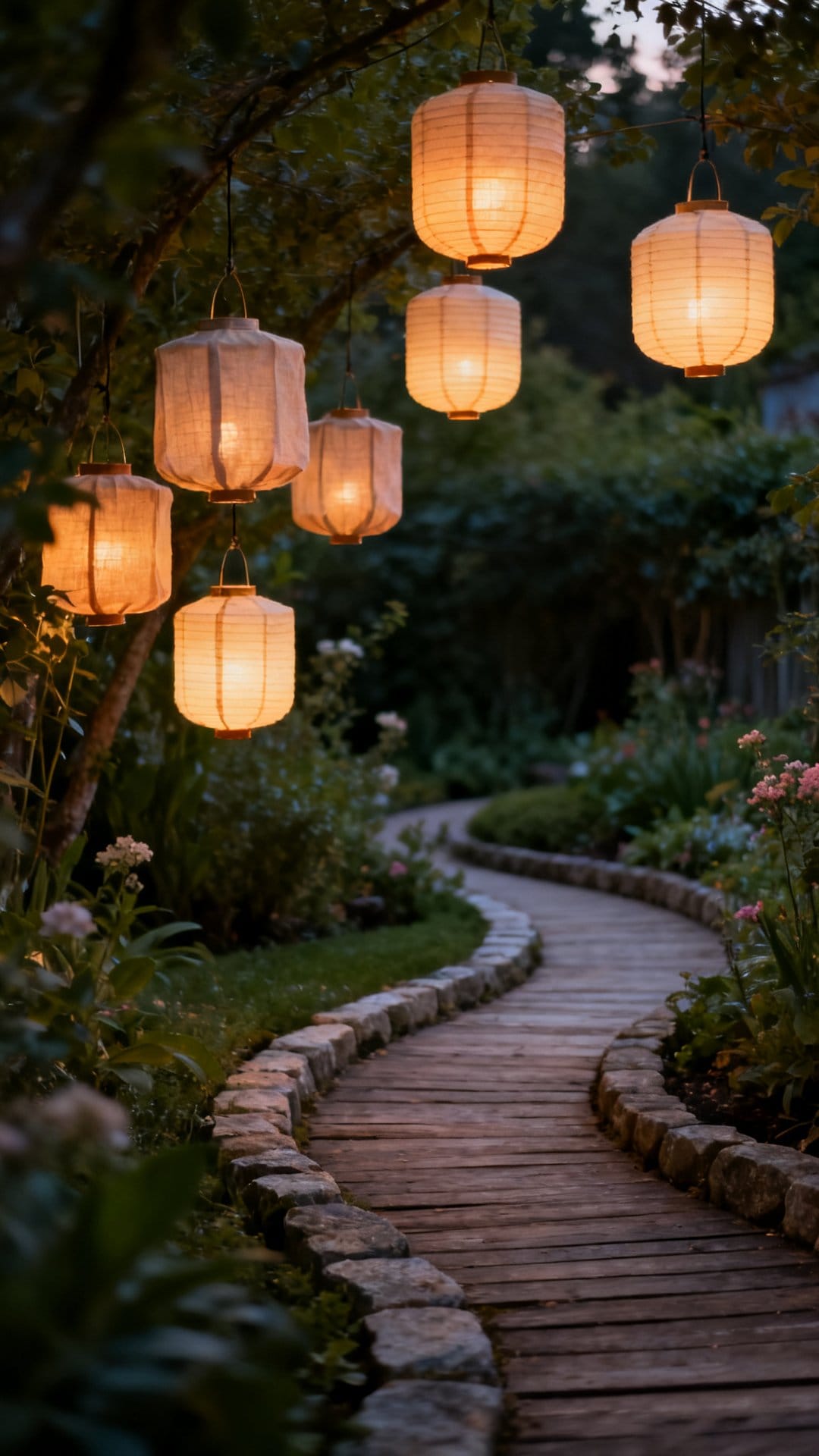
Style Notes
- Black iron lanterns with glass panels suit a modern or industrial aesthetic and hold up beautifully outdoors
- Whitewashed wood lanterns with rope handles lean coastal or cottagecore and look especially lovely among greenery
- Hammered brass or copper lanterns add warmth to a Mediterranean or bohemian garden style
- Group lanterns in odd numbers, threes and fives, for a more natural, select look
- Mix heights within a cluster: one tall, one medium, one short, for visual interest
Solar-powered candle inserts eliminate the need for real flames, making these both safe and low-maintenance throughout the season.
5. A Hammock Nook Tucked Into the Corner
Few things signal “summer” more completely than a hammock. But rather than just stringing one between two trees and leaving it there, think about creating a whole nook around it, a destination within your yard that feels intentional and inviting.
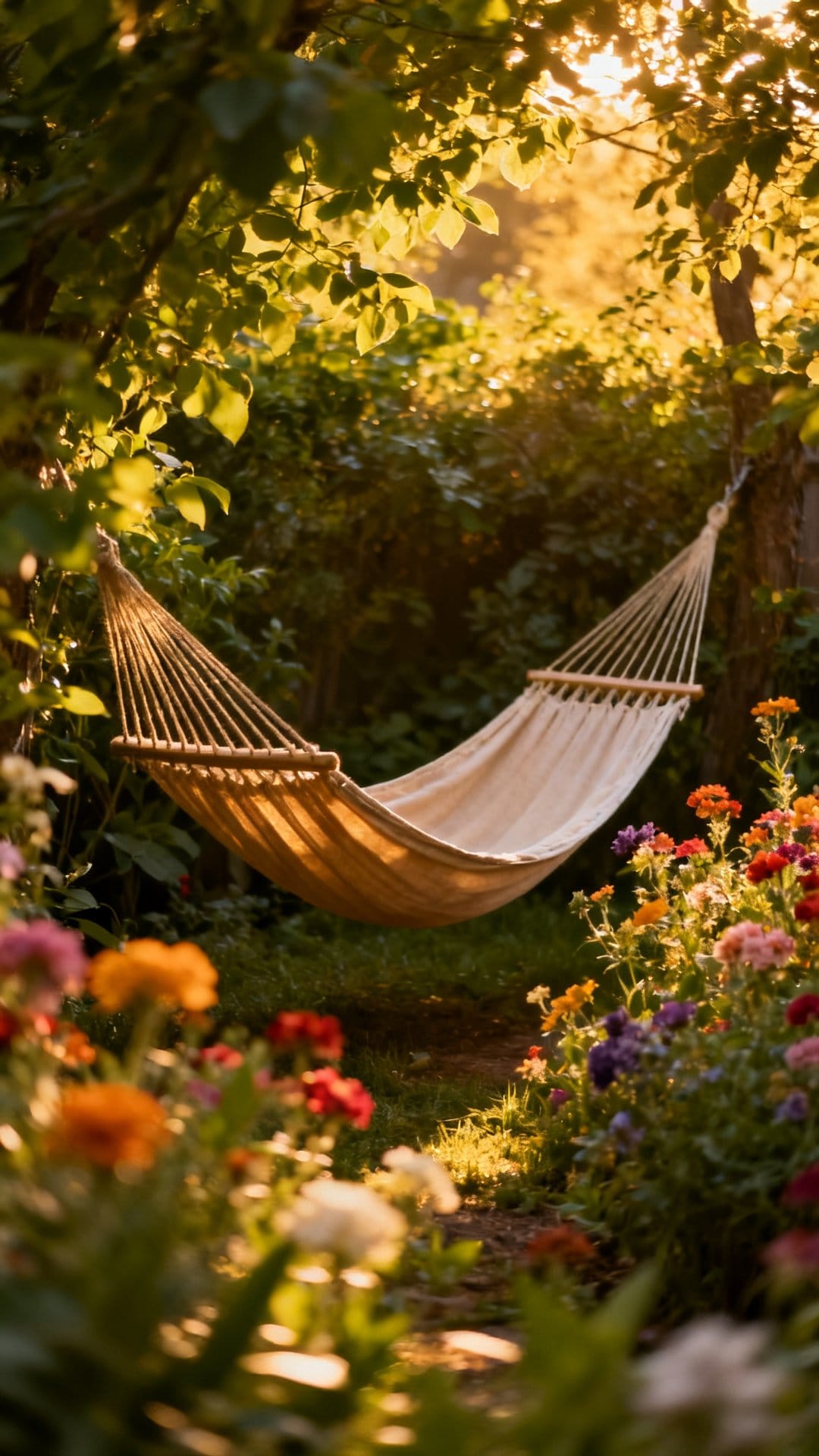
Frame the hammock area with two or three tall potted plants or ornamental grasses on either side to create a sense of enclosure. Add a small side table or a flat-topped stump nearby for a glass of iced tea. Hang a few macramé pieces or wind chimes from the same branches to add texture and sound. A weather-resistant throw draped over one end of the hammock completes the picture and makes the space feel lived-in rather than staged.
Why it works: Humans are naturally drawn to spaces that feel sheltered on at least two sides, it’s a concept called “prospect and refuge” in environmental psychology. Creating a sense of enclosure around a seating spot makes it feel more restful and inviting without physically closing it off.
6. Terra Cotta Pots in Unexpected Arrangements
Terra cotta is having a well-deserved moment, and it’s easy to see why. The warm, earthy tones look beautiful against summer greenery, and the material itself has a lovely aged quality that feels both timeless and organic.
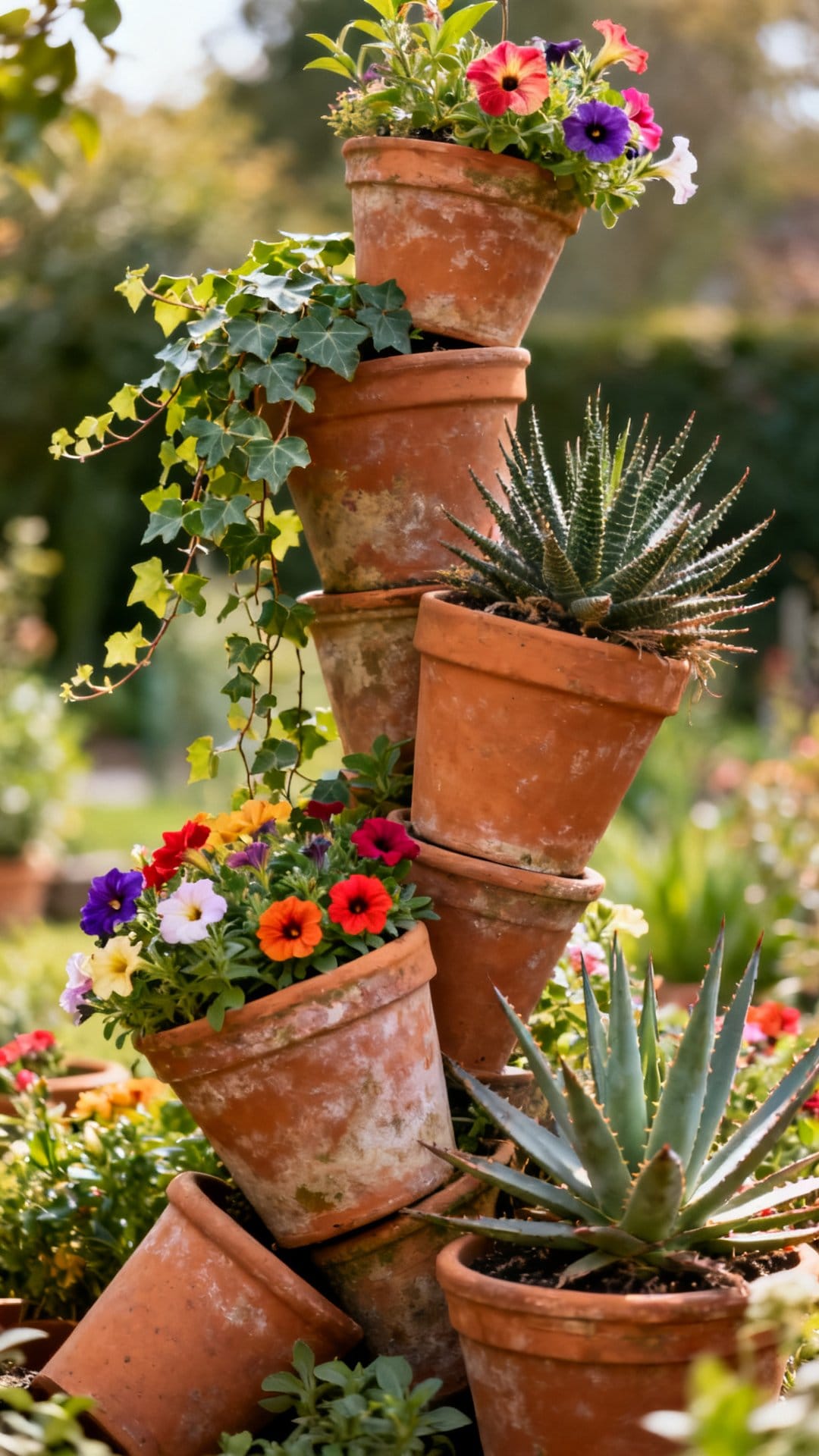
Decorating Details
- Cluster pots of varying sizes, from tiny 3-inch herbs to large 18-inch statement planters, in a loose grouping near an entry or patio corner
- Paint the rims of a few pots in a single accent color (dusty terracotta orange, sage green, or warm cream) for a cohesive but varied look
- Stack two smaller pots on top of an upturned larger one to create a tiered display without buying a formal plant stand
- Mix glazed and unglazed terra cotta for texture contrast, the sheen of glazed pottery catches light differently
One thing I’ve noticed is that terra cotta arrangements always look better when they’re slightly imperfect, a pot that’s slightly off-center or a plant that’s trailing over the edge gives the whole grouping life.
7. A Dining Table Set Up for Long Summer Evenings
An outdoor dining area is one of the most used and most loved features of a well-decorated summer yard. The goal isn’t just furniture, it’s creating a table that makes people want to linger long after the meal is over.
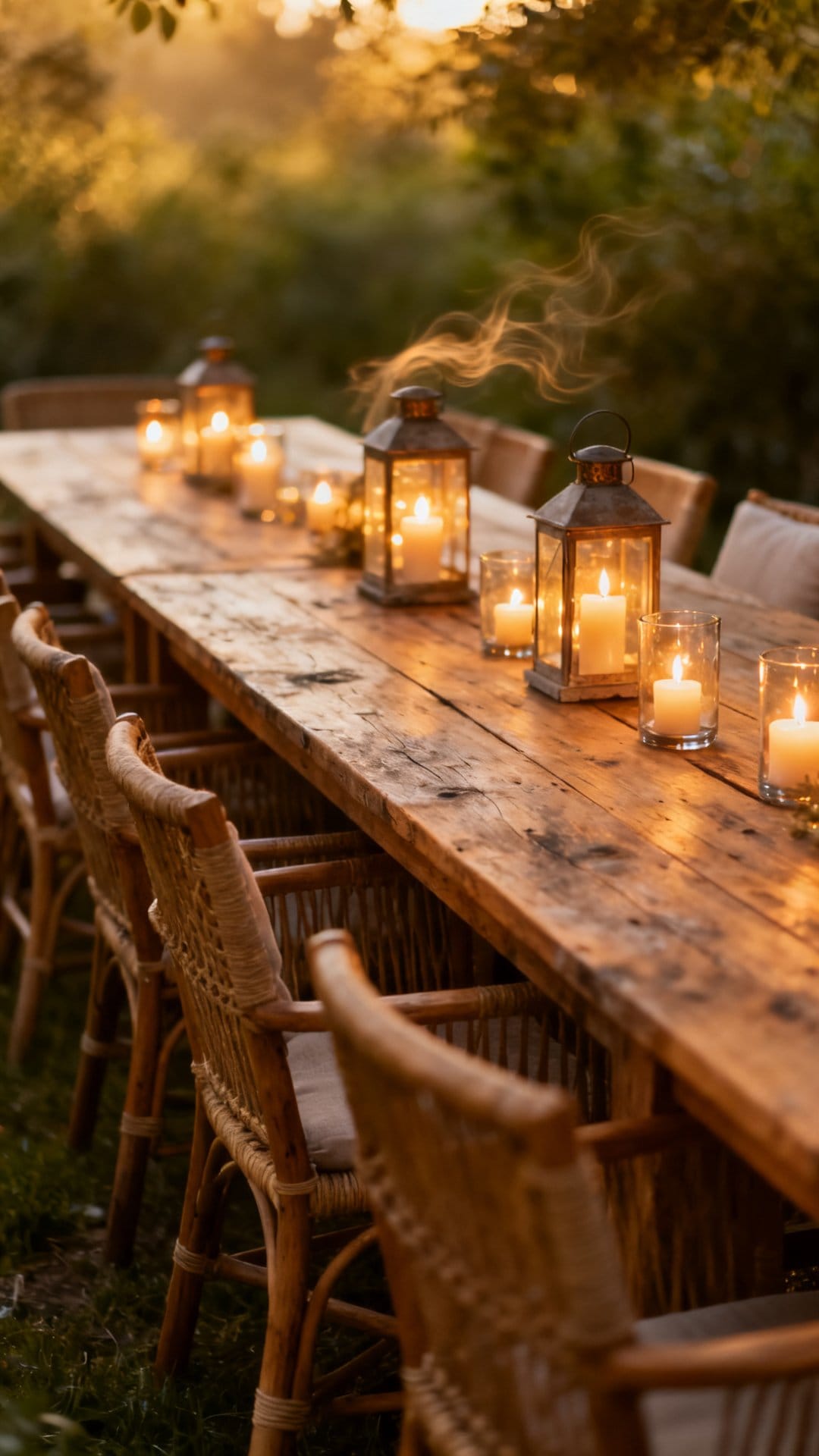
Choose a table with a natural material surface: teak, acacia, or even a weathered concrete top all age beautifully outdoors. Dress it simply with a linen or cotton runner in a muted stripe, and add a low centerpiece, a cluster of potted herbs, a few pillar candles in varying heights, or a shallow bowl of seasonal flowers from the garden. Keep the look relaxed rather than formal: mismatched chairs in complementary colors, woven placemats, and simple glassware all contribute to that easy, unhurried summer dinner feeling.
Pro tip: Add a citronella candle or two within the centerpiece arrangement, they blend in visually while keeping mosquitoes at bay, so your guests can actually enjoy the evening.
If you’re looking to add color at a larger scale, moving beyond containers and into the garden beds themselves opens up some of the most rewarding possibilities of the season.
&# 128218; Read next:Summer Flowers for Your Garden: The Ultimate Planting Guide→8. Wildflower Borders Along Fence Lines
A wildflower border is one of the most effortlessly beautiful summer garden decoration ideas you can try, and it requires far less maintenance than a traditional flower bed once it gets going. The trick is choosing the right seed mix for your region and letting nature do most of the work.
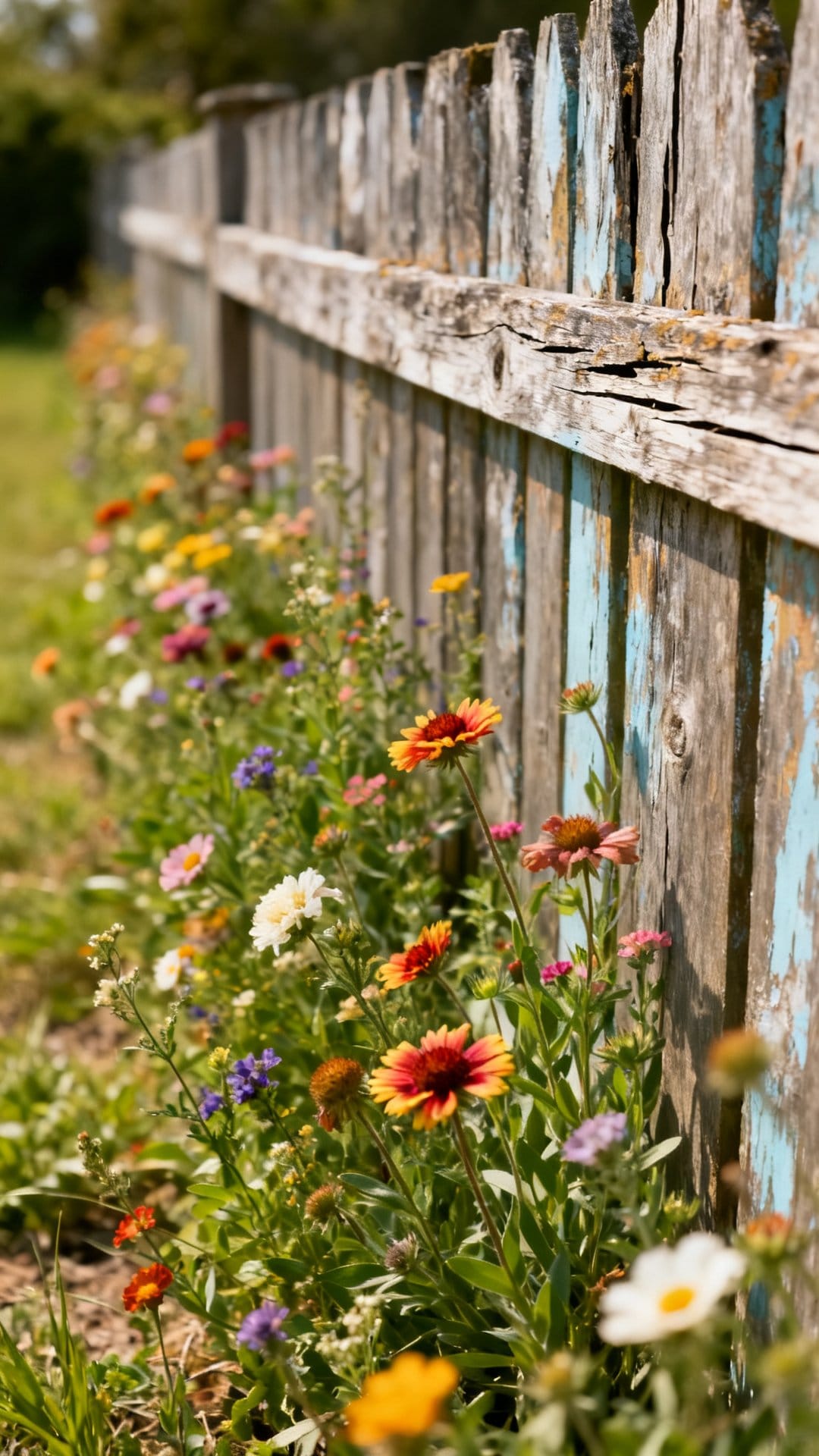
Look for seed mixes that include cosmos, black-eyed Susans, zinnias, and bachelor’s buttons, these are reliable performers in most American summer climates and bloom in cheerful waves of orange, yellow, pink, and purple. Sow them along a fence line or at the back of a garden bed where their slightly wild, loose growth habit looks intentional rather than unkempt. The layered, informal quality of a wildflower border softens hard edges like fences and walls beautifully.
Why it works: Wildflower borders create a sense of abundance and natural beauty that more formal plantings can’t replicate. The slight randomness of the blooms signals that the garden is alive and thriving, not just maintained.
They also attract pollinators in numbers that will delight you all summer long, watching butterflies and bees move through a border like this is one of the quiet pleasures of a well-planted yard.
9. A DIY-Style Herb Garden in Raised Beds
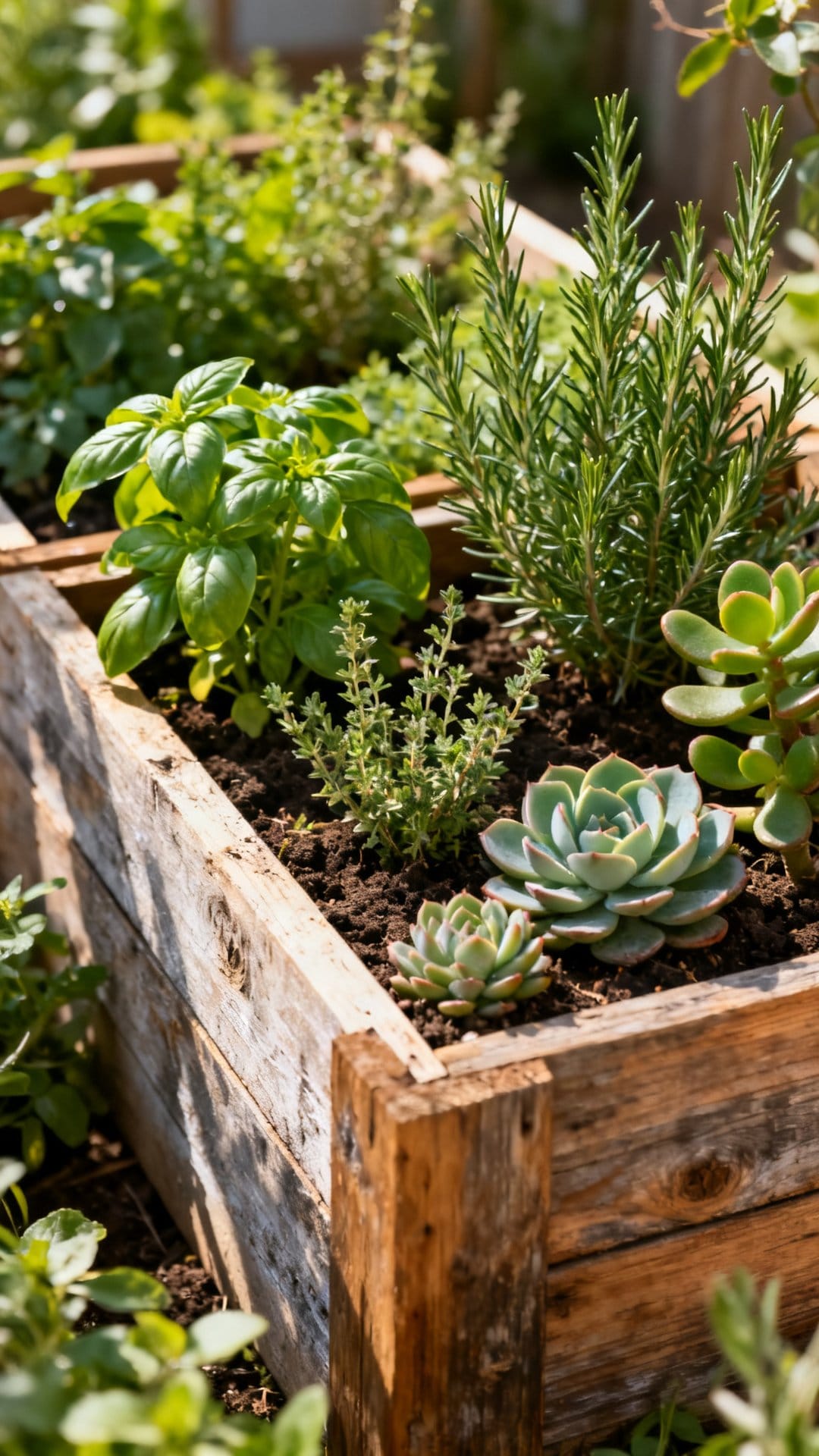
Raised herb beds are both practical and genuinely beautiful when styled with a little intention. The height of a raised bed draws the eye and gives structure to a garden that might otherwise feel flat.
Layout Suggestions
- Build or source a simple rectangular raised bed in cedar or pine, the natural wood tones complement almost every garden style
- Plant in loose groupings rather than rigid rows: tall basil at the back, mid-height rosemary and sage in the middle, low creeping thyme at the front edges
- Add a small handwritten or stamped plant marker for each herb, these tiny details make the whole bed feel select and personal
- Tuck a few edible flowers like nasturtiums or calendula between the herbs for unexpected color
- Place the bed near your kitchen door or patio so harvesting feels effortless during summer cooking
A friend of mine tried something similar with a narrow raised bed along her back fence and said it completely changed how she cooks in summer, suddenly fresh herbs felt accessible rather than an afterthought.
10. Outdoor Throw Pillows in Summer Color Palettes
Outdoor throw pillows are one of the fastest, most affordable ways to shift the entire mood of a seating area. The key is going beyond the safe navy-and-white stripe and choosing a palette that actually feels like summer.

Think warm terracotta paired with dusty mauve and natural linen. Or a combination of deep mango orange, soft chartreuse, and cream for a bold, tropical-adjacent feel. Layer pillow sizes, two large square pillows at the back, one lumbar pillow in front, and mix patterns with solids in the same color family. Choose covers made from Sunbrella-style fabric or solution-dyed acrylic, which resist fading through months of direct sun far better than standard outdoor fabric.
Pro tip: Buy one extra set of pillow covers in a complementary but slightly different palette so you can refresh the look midseason without buying new furniture, the same chairs can feel completely different with a color swap.
11. A Garden Water Feature for Sound and Serenity
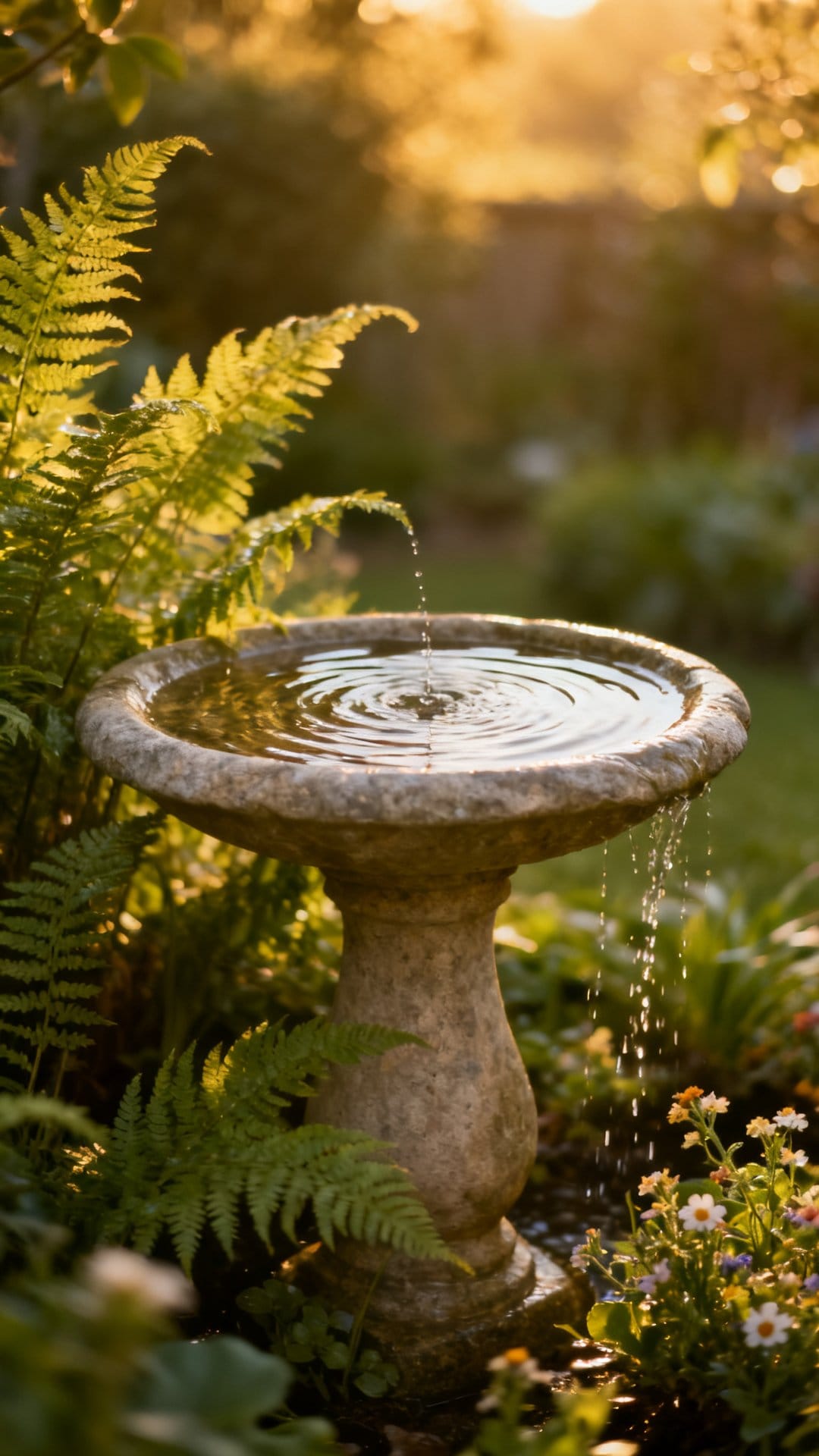
The sound of moving water does something remarkable to an outdoor space, it creates a sense of calm that no amount of beautiful furniture or flowers can quite replicate on its own. Even a small tabletop fountain can shift the entire atmosphere of a patio.
What to Look For
- A self-contained solar-powered fountain requires no wiring and can be placed anywhere that receives adequate sunlight
- Stone or concrete basins look more natural and age beautifully, avoid plastic, which can look cheap in an otherwise thoughtfully styled space
- A simple tiered birdbath-style fountain adds both sound and wildlife interest, birds will visit throughout the day
- Place the fountain where you’ll hear it from your primary seating area, not just see it from across the yard
This works especially well in urban or suburban yards where background noise from streets or neighbors can be distracting, the white noise of a small water feature naturally masks ambient sound and creates a more private-feeling atmosphere.
12. Hanging Planters at Varying Heights
Hanging planters add a dimension to garden decor that ground-level pots simply can’t, they bring color and life to eye level and above, filling what would otherwise be empty vertical space with texture and movement.
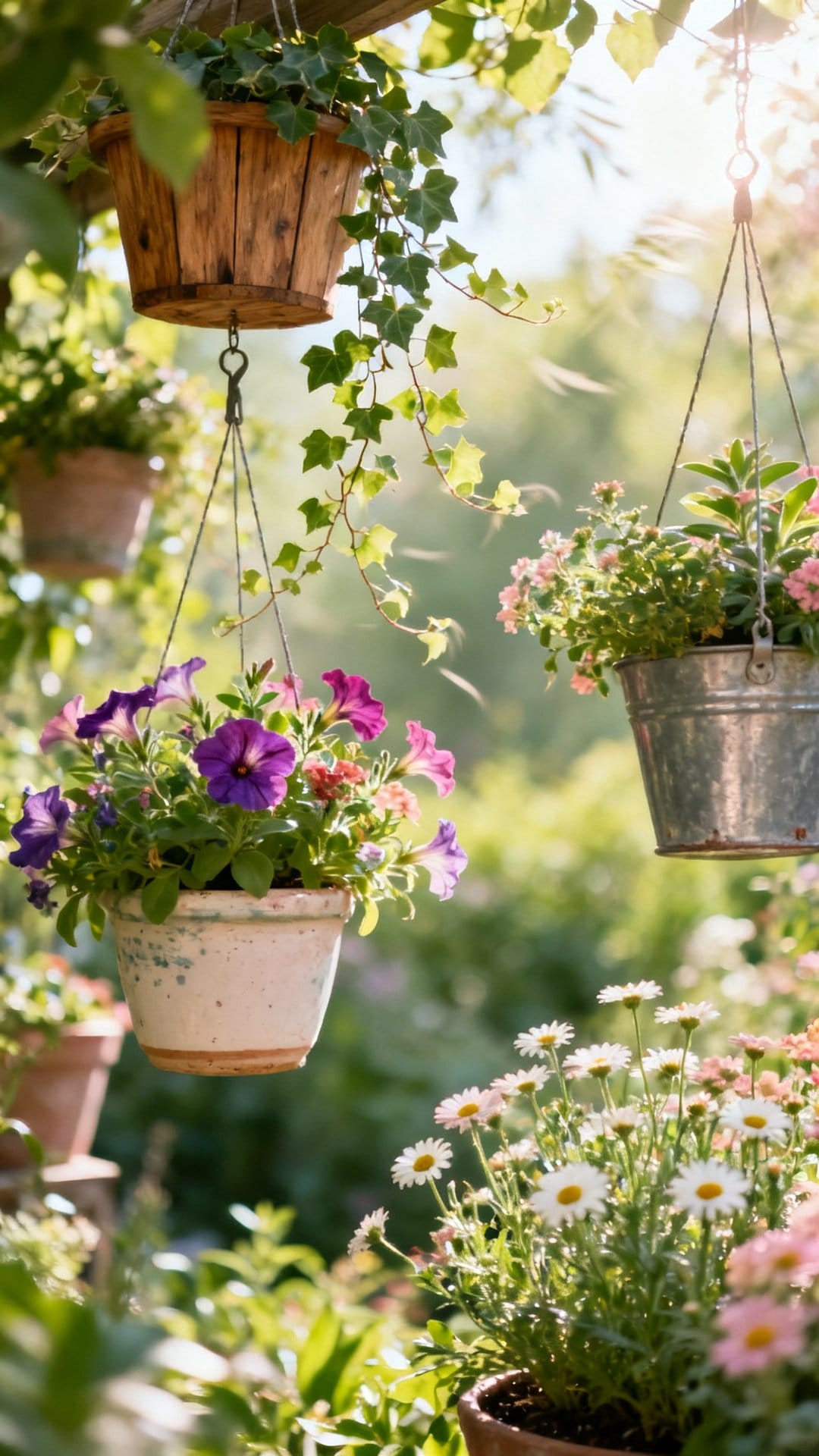
I keep coming back to this approach because it works beautifully in spaces where ground square footage is limited. Hang macramé plant holders from a pergola or porch beam at two or three different heights, perhaps 5 feet, 3.5 feet, and 2 feet from the ground, and fill them with trailing plants like string of pearls, ivy, or cascading fuchsia. Mixing the holder materials adds interest: a woven macramé piece alongside a simple metal ring hanger and a painted wooden basket creates a collected, layered look rather than a matching set.
Pro tip: Use swivel hooks when hanging planters from wooden beams, they allow you to rotate the plant easily so all sides receive even light, keeping the growth full and symmetrical.
&# 128064; More ideas:19 Small Backyard Oasis Ideas That Feel Luxurious→
13. A Cozy Reading Corner With Outdoor Furniture
A dedicated reading corner in the garden is one of those ideas that sounds indulgent but is actually very simple to create. All it takes is one comfortable chair, a small side table, and a sense of partial enclosure to make the spot feel like a true retreat.
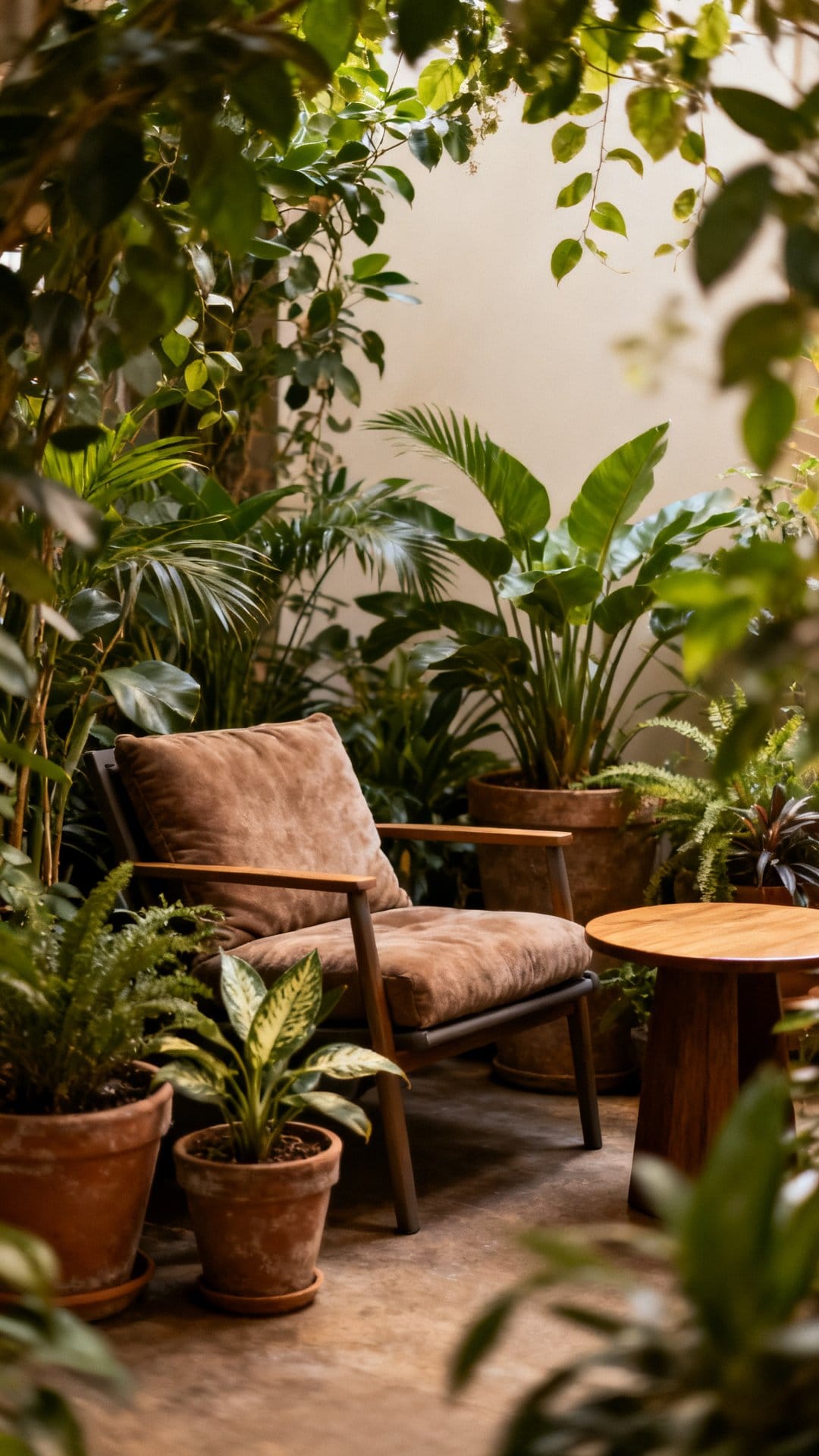
Cozy Touches
- A deep-seated Adirondack chair or a cushioned rattan armchair with a wide, sloping back invites you to actually settle in rather than perch
- A small teak or metal side table at arm height holds a drink, a book, and a small potted plant without crowding the space
- A weather-resistant cotton throw draped over the arm of the chair adds warmth for cooler summer evenings
- Position the chair to face a pleasant view, a flower bed, a water feature, or even just a beautiful tree, rather than a fence or wall
- Add a solar-powered reading light clipped to a nearby stake or branch for evening use
The magic of a reading corner is in the specificity of it, it’s a spot that exists for one purpose, and that intentionality makes it feel luxurious.
14. Mosaic Stepping Stones Through the Garden
Stepping stones serve a practical function, guiding foot traffic through a garden bed, but they can also be genuinely beautiful decorative elements in their own right. Mosaic stepping stones in particular have a handcrafted, artisanal quality that suits cottage, boho, and eclectic garden styles especially well.
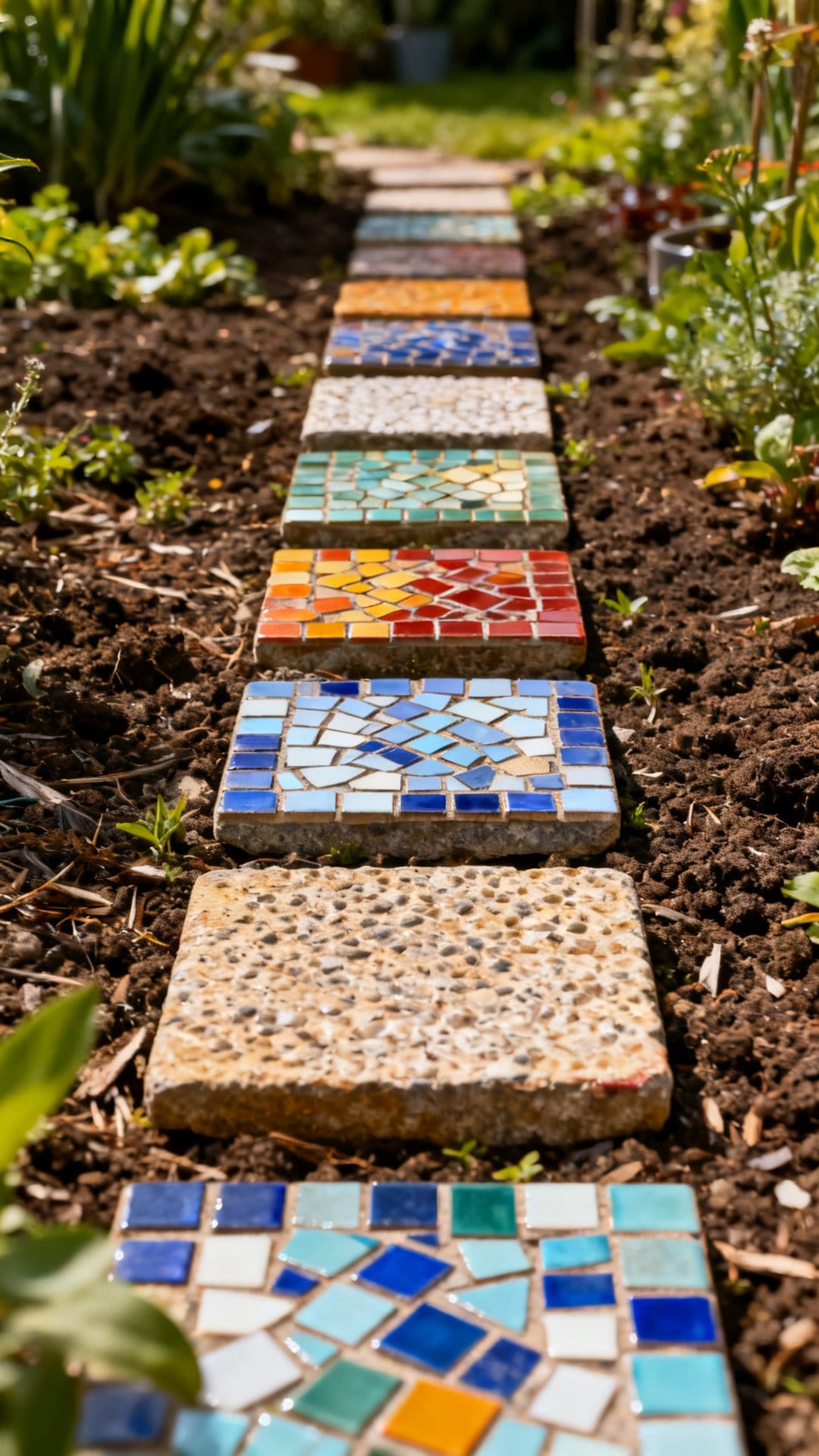
Look for pre-made mosaic stones at garden centers or home goods stores, or use plain concrete pavers as a base and press broken tiles, sea glass, or smooth river stones into a wet concrete topping to create your own pattern. Space them at a natural walking pace, roughly 18 to 22 inches apart from center to center, and let low-growing groundcovers like creeping thyme or Irish moss fill in the gaps between them. The combination of stone and soft green growth creates a pathway that feels like it’s been there for years.
Pro tip: Choose stones in a warm color family, amber, rust, cream, or sage, rather than cool grey, which can look stark against summer greenery.
15. A Pergola or Shade Sail for Defined Outdoor Living
Shade is one of the most underrated elements of summer garden design. A yard without shade is a yard that goes unused during the hottest part of the day, no matter how beautifully it’s decorated.
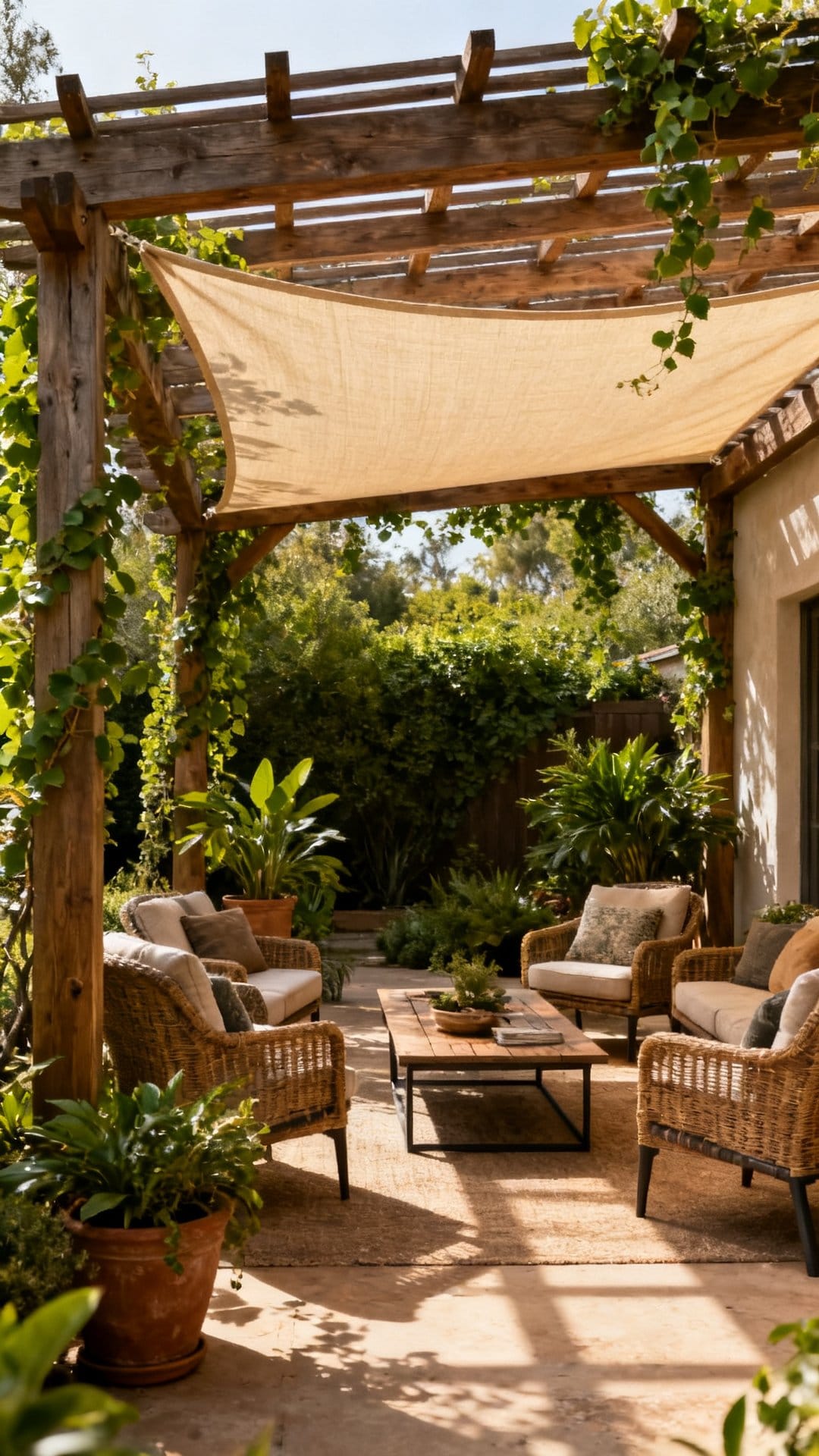
A pergola creates structure, shade, and a natural anchor for string lights, hanging plants, and climbing vines all at once. If a permanent structure isn’t feasible, a triangular or rectangular shade sail mounted between posts or attached to the house and a fence post achieves a similar effect with far less investment. Choose a shade sail in a natural canvas tone, warm sand, or a muted terracotta rather than bright primary colors, these tones age gracefully and complement garden greenery far better.
Why it works: Defined overhead structure creates a psychological sense of “room” in an outdoor space, making it feel more intimate and purposeful. It signals that this is a place designed for spending time, not just passing through.
Once you have a pergola or shade sail in place, everything else, furniture, lighting, plants, arranges itself more naturally around it.
16. Colorful Window Boxes on Fences and Walls
Window boxes aren’t just for windows. Mounted along a fence rail, attached to a garden wall, or hung from a porch railing, they bring a cottage-garden charm to almost any outdoor surface and create a ribbon of color at exactly the right visual height.
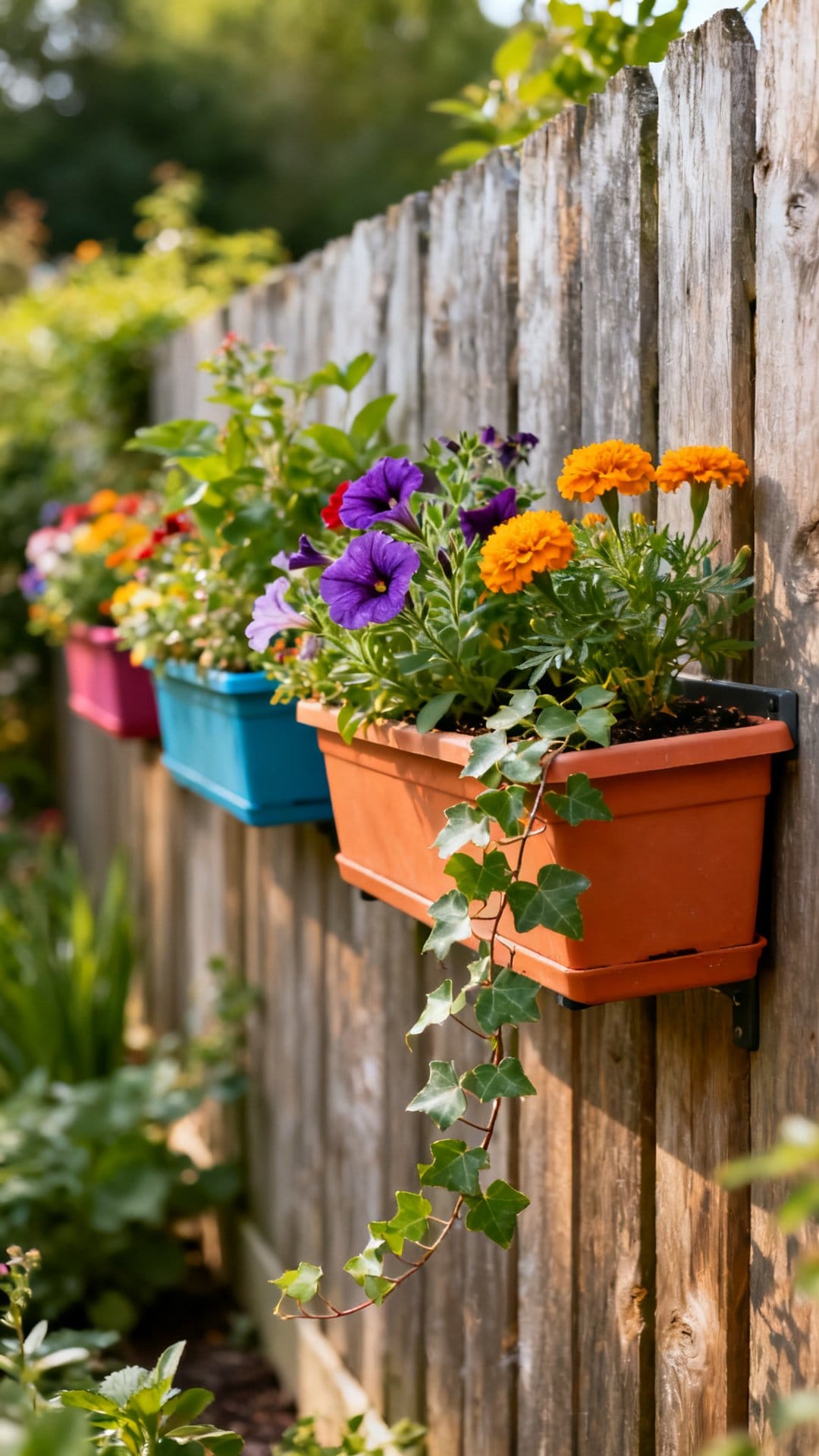
Color Palette Ideas
- A warm summer palette: deep red geraniums, trailing golden creeping Jenny, and dusty miller for silver contrast
- A cool coastal palette: blue lobelia, white alyssum, and soft lavender verbena with grey-green foliage
- A bold tropical palette: orange lantana, purple fountain grass, and bright yellow calibrachoa for high-impact color
- Paint the boxes themselves in a color that complements your house, a soft sage green or warm white reads as intentional rather than accidental
Window boxes look especially beautiful when the trailing plants are allowed to spill generously over the edges, resist the urge to trim them too neatly, as the overflow is part of the charm.
Once your daytime garden is looking its best, it’s worth turning attention to how the space performs after dark, and nothing does that more effectively than a well-placed fire pit.
17. A Fire Pit Area for Summer Evenings
A fire pit extends summer evenings in a way that nothing else quite does. There’s something deeply social about gathering around a fire, conversation slows down, people linger, and the yard becomes a place for genuine connection rather than just outdoor dining.
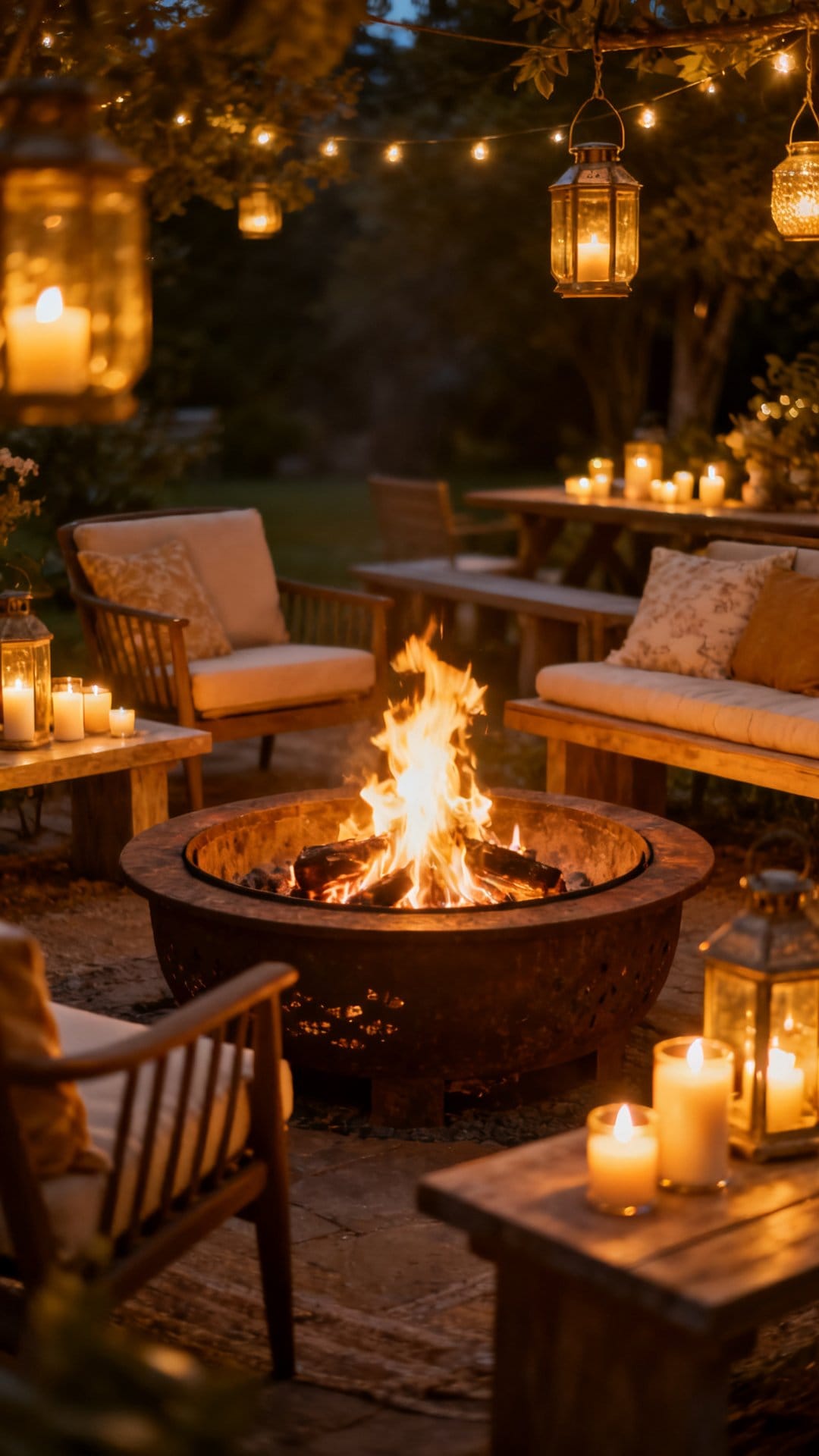
Arrange seating in a loose circle around the fire pit, a mix of Adirondack chairs, low wooden benches, and a few large floor cushions creates an informal, welcoming arrangement that accommodates different group sizes. Keep a small stack of firewood in a metal log holder nearby for easy access. Add a few hurricane lanterns on the ground around the perimeter of the seating area to extend the warm glow beyond the fire itself. A low coffee table or a flat-topped stump at the center of the arrangement (safely away from the fire) gives people a place to set drinks and plates.
Pro tip: Place the fire pit seating area at least 10 feet from any structures, overhanging trees, or wooden fences, this is both a safety requirement and a design win, as it creates a natural destination within the yard rather than crowding everything against one wall.
18. Climbing Vines for Natural Privacy Screens
A fence covered in climbing vines is one of the most beautiful natural privacy solutions available, and it gets better every year as the plants mature. In summer, a well-established vine turns a plain wooden or chain-link fence into a living wall of texture and color.
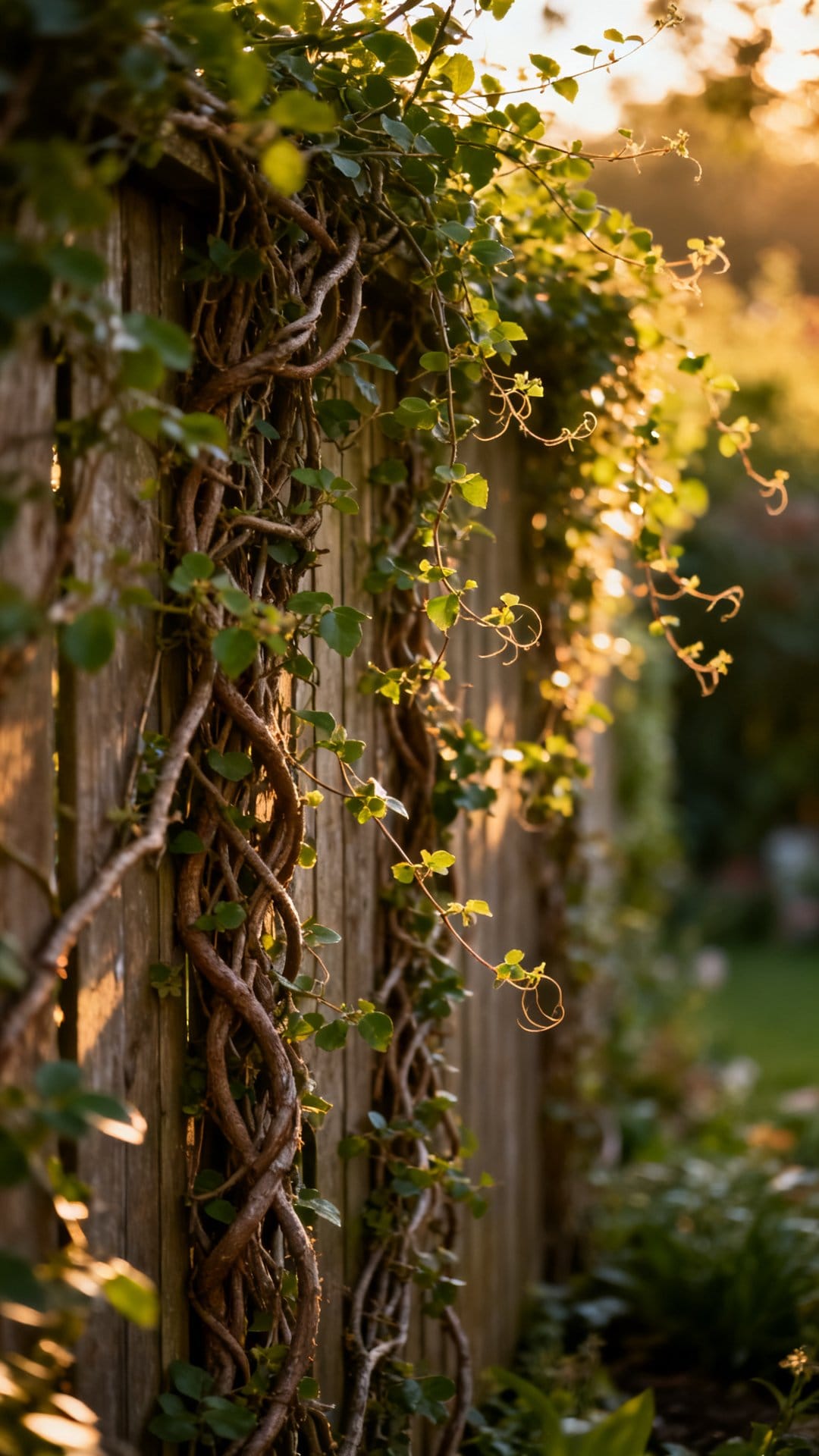
Materials to Try
- Climbing roses in soft blush, cream, or deep red add romance and fragrance, choose disease-resistant varieties for less maintenance
- Clematis comes in an extraordinary range of colors and climbs quickly, making it ideal for covering a new fence within a season or two
- Passionflower vine produces exotic-looking blooms and is surprisingly hardy in most American climates
- Trumpet vine attracts hummingbirds throughout summer with its vivid orange-red tubular flowers
- Install a simple wire trellis or a grid of wooden lattice to give the vines something to grip as they grow
A living privacy screen feels far more inviting than a solid fence, it softens the boundary between your space and the world beyond it without closing it off completely.
19. Outdoor Art and Wall Decor for Fences and Walls
Garden walls and fences are essentially blank canvases, and treating them as display surfaces rather than just boundaries opens up a whole new dimension of garden decorating. Outdoor art has come a long way, there are beautiful options in weather-resistant metal, ceramic, and sealed wood that hold up beautifully through an entire summer season and beyond.
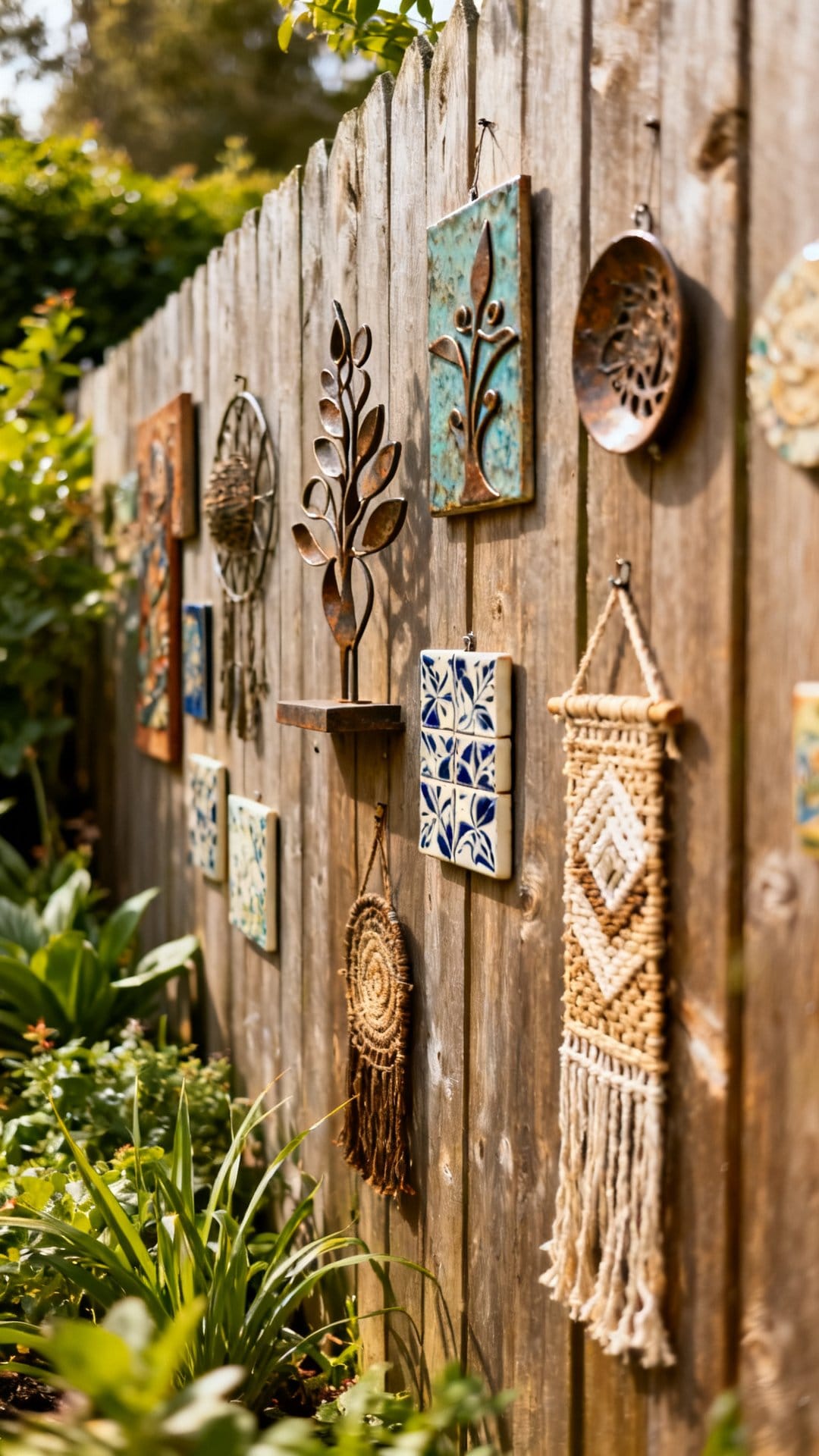
A large metal sunburst or abstract botanical sculpture mounted at the center of a fence wall creates a focal point that anchors the whole garden. Smaller ceramic tiles in geometric or floral patterns can be grouped in a loose cluster for a more eclectic, collected feel. Woven wall hangings made from weather-resistant jute or synthetic rattan add texture and a bohemian warmth to an outdoor wall. The key is treating the fence like an interior wall, thinking about scale, balance, and focal points rather than just filling space.
Pro tip: Mount outdoor art at eye level when seated, not when standing, since most time in the garden is spent sitting, this ensures the pieces are actually enjoyed rather than looming overhead.
20. A Potting Bench Styled as a Garden Vignette
A potting bench doesn’t have to live in a shed, styled thoughtfully, it can become one of the most charming features in a summer garden. Think of it as a garden vignette: a surface that tells a small story about the season and the space.
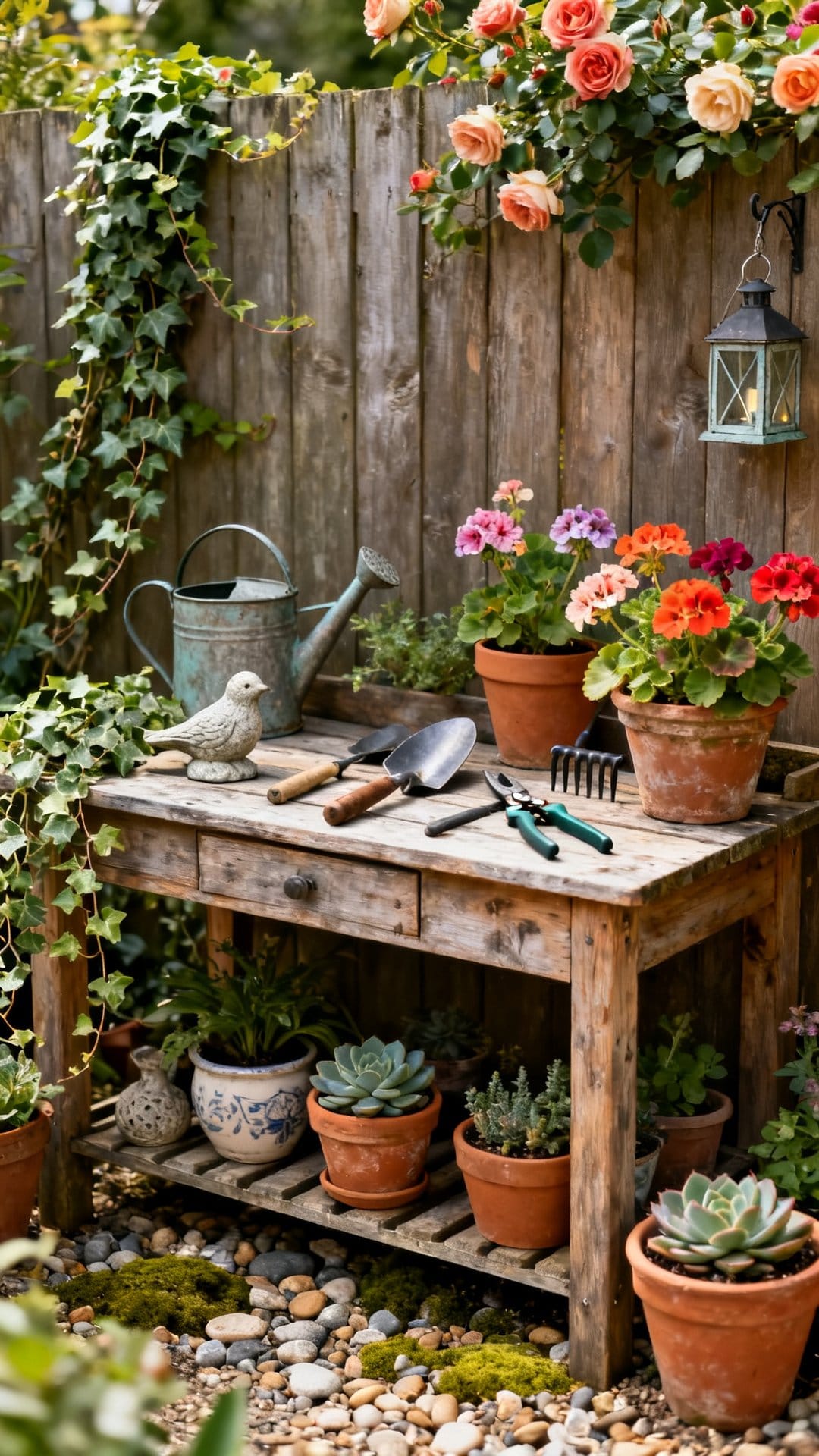
Finishing Touches
- Display a collection of terra cotta pots in varying sizes, some planted and some empty, arranged in a loose grouping on the bench surface
- Hang small hand tools on hooks along the back of the bench, a trowel, a hand fork, a pair of pruners, for a functional but beautiful display
- Add a small chalkboard sign with a seasonal message or simply the name of a favorite plant for a personal touch
- Keep a glass jar or old enamel pitcher filled with fresh-cut garden flowers or herbs on one corner of the bench
- Let some moss or weathering develop on the wood surface, the patina is part of the charm
A styled potting bench signals that this is a garden that’s actively loved and tended, which adds a warmth that purely decorative elements can’t replicate.
21. Colorful Outdoor Poufs and Floor Cushions
Floor-level seating is one of the most relaxed and inviting ways to furnish a summer patio or garden space. Outdoor poufs and oversized floor cushions invite people to sit low, slow down, and actually settle in, which is exactly the feeling you want in a summer garden.
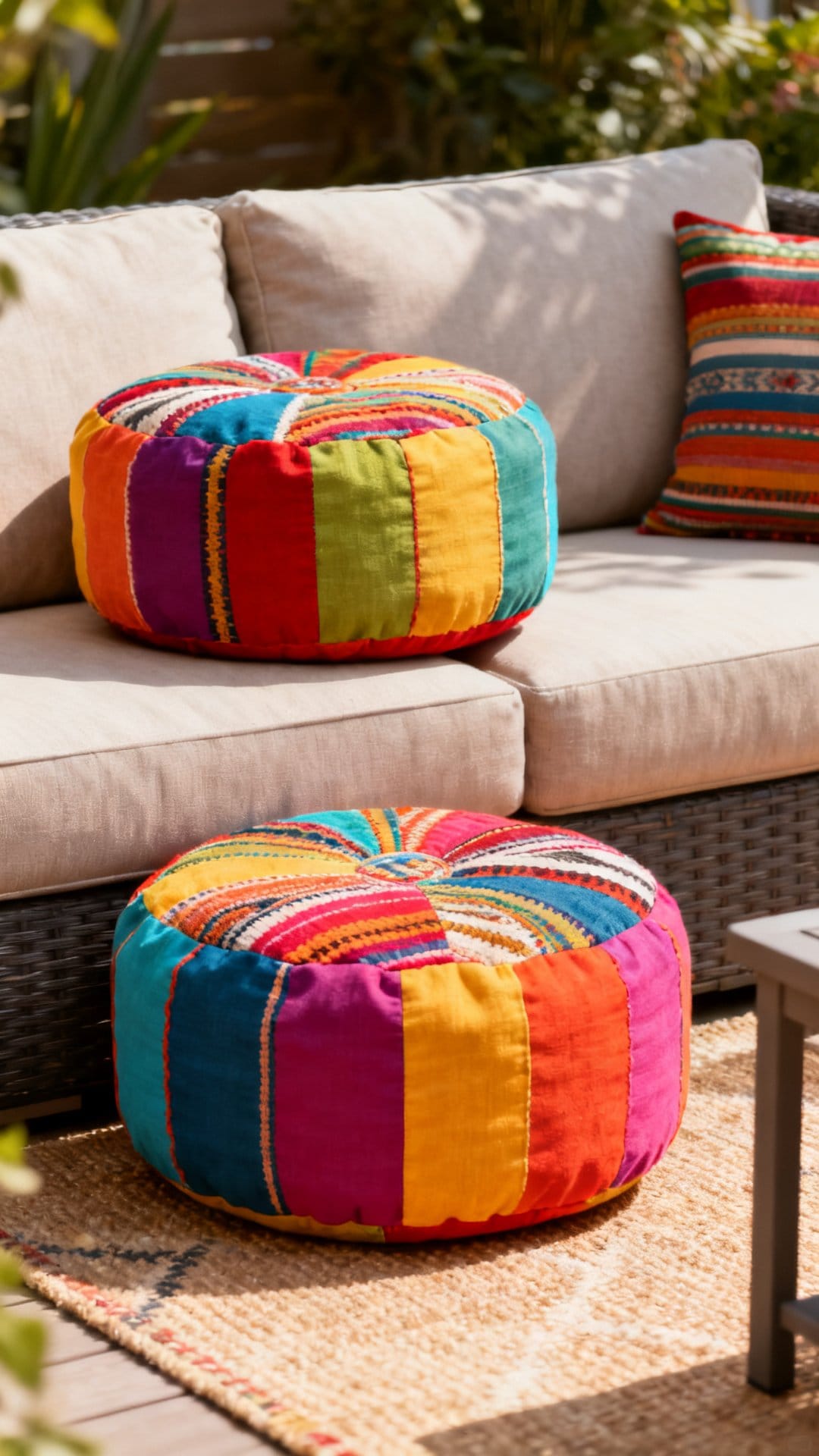
Choose poufs in weather-resistant fabric in warm, saturated tones, deep mustard, burnt sienna, or dusty teal all look beautiful against natural wood or stone surfaces. Pair them with a low coffee table or a large flat tray on the ground for drinks and snacks. Layer two or three floor cushions with a pouf for a loose, bohemian seating arrangement that’s both practical and visually interesting. Store poufs and cushions in a weatherproof deck box when not in use to extend their life through the season.
Pro tip: Fill outdoor poufs with polystyrene beads rather than foam, they’re significantly lighter to move around the garden and dry out much faster after rain.
22. A Birdhouse Village for Whimsy and Wildlife
A collection of birdhouses, varying in style, size, and height, brings a whimsical, storybook quality to a summer garden that’s genuinely hard to achieve with any other single element. Beyond the decorative appeal, they invite birds into your yard throughout the season, adding movement and song to the space.
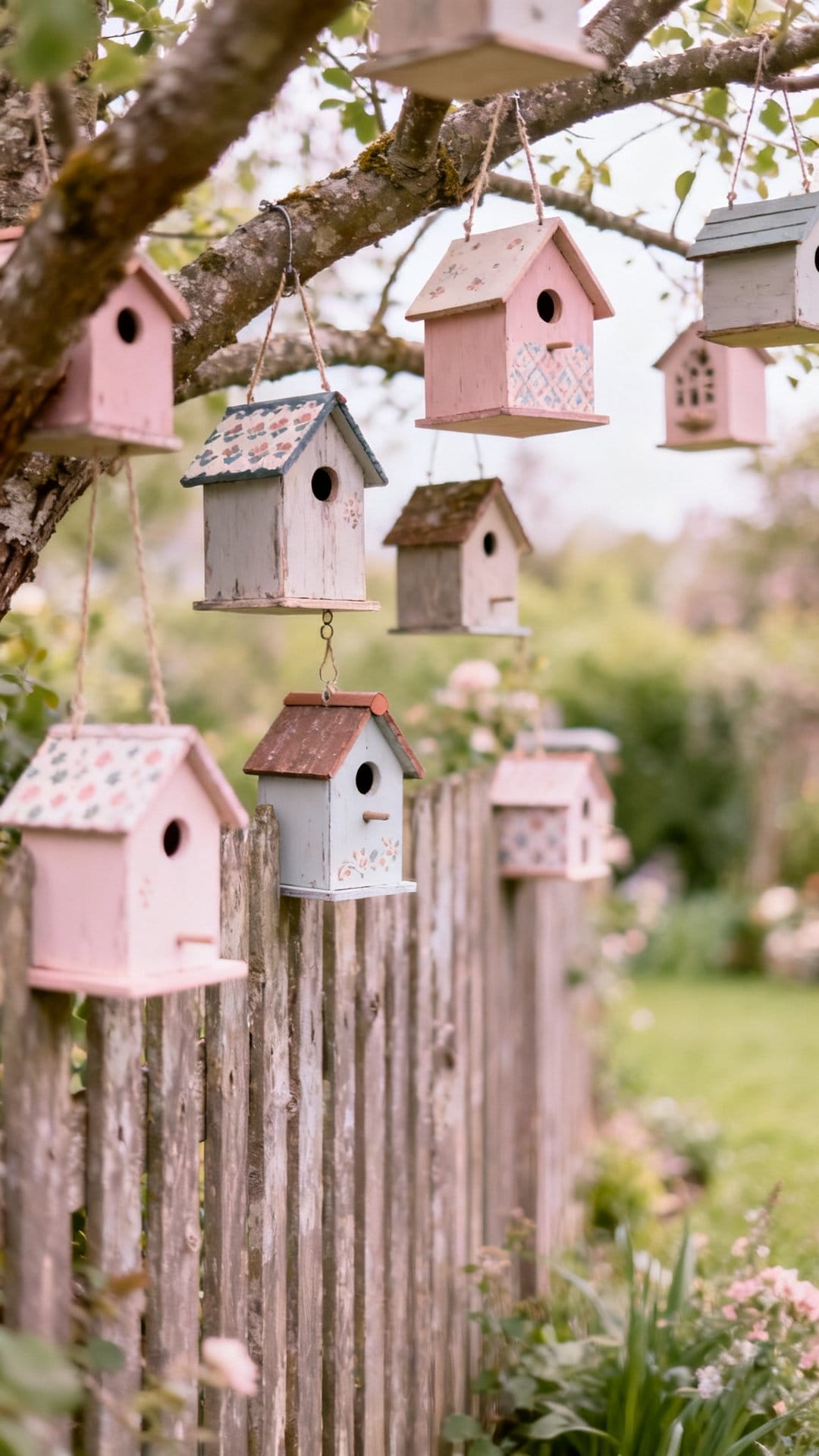
Mount birdhouses on wooden posts at varying heights throughout a garden bed, or cluster them along a fence at staggered intervals. Choose a mix of styles, a classic painted cottage house, a simple unpainted cedar box, and a more ornate Victorian-style house, for a collected, select look rather than a matching set. Paint a few in soft, muted tones that complement your garden’s color palette: sage green, pale yellow, and white all look beautiful against summer foliage. Space the houses at least 5 to 6 feet apart to reduce territorial competition between nesting birds.
Pro tip: Face birdhouse openings away from prevailing winds and direct afternoon sun to make them more attractive to actual nesting birds, a house that’s used is far more charming than one that’s purely decorative.
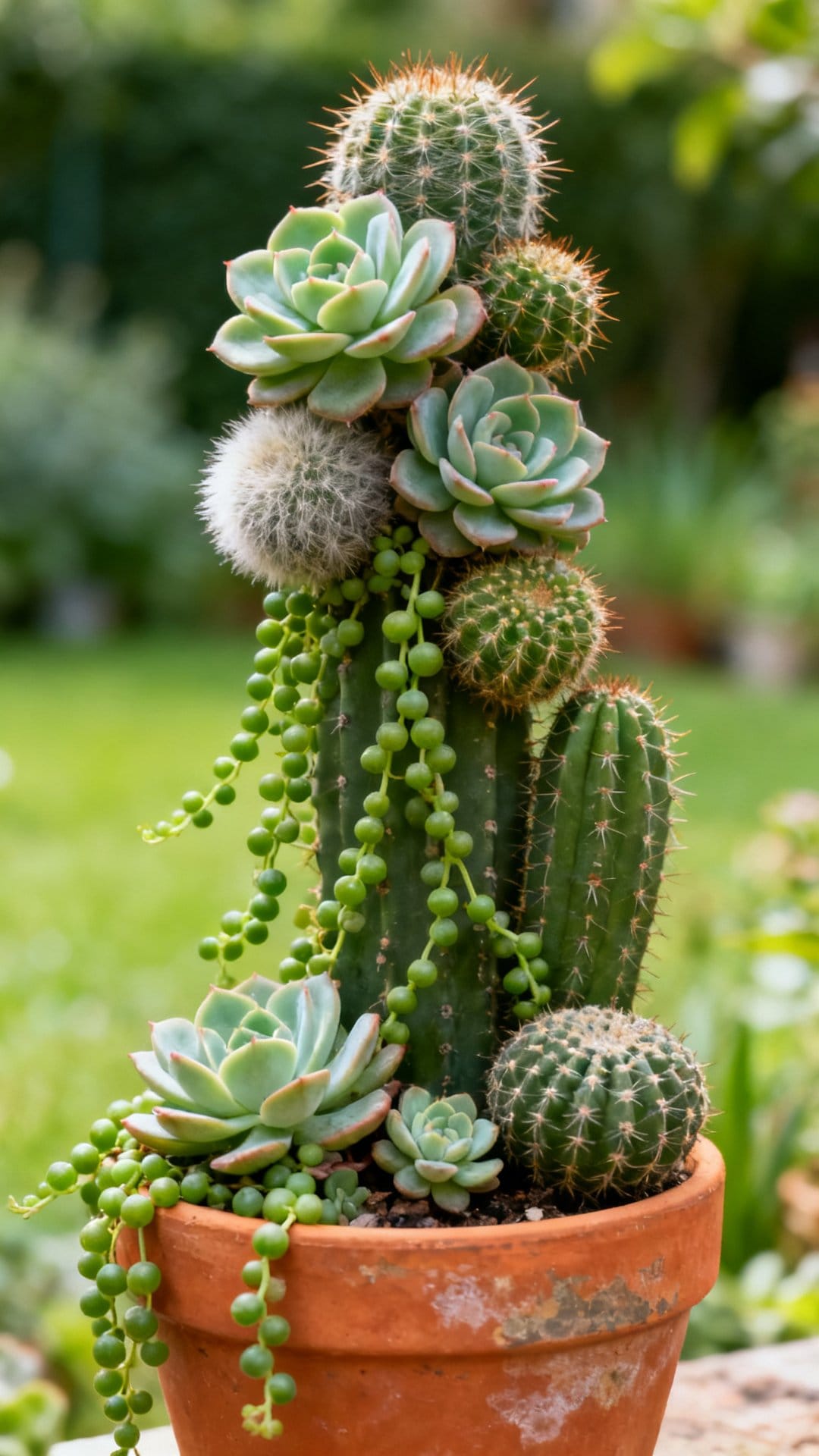
23. A Succulent and Cactus Display for Low-Maintenance Beauty
Succulents and hardy cacti are among the most forgiving and visually striking plants you can work with in a summer garden, especially in warmer, drier climates. Grouped together in a thoughtful arrangement, they create a sculptural, almost architectural display that requires very little care.
Texture Combinations
- Pair the smooth, geometric rosettes of echeveria with the spiky texture of a small barrel cactus for strong visual contrast
- Add a trailing sedum or string of pearls at the edge of a container to soften the arrangement and create movement
- Use a wide, shallow container, a terracotta bowl, a wooden crate, or a vintage enamel basin, to display multiple varieties together as a single composition
- Top-dress the soil with fine gravel, crushed granite, or white sand for a clean, finished look that also improves drainage
- Cluster three or four containers of varying sizes together on a garden bench or low wall for a display that reads as a single styled moment
This approach works especially well in modern, Southwestern, or Mediterranean garden styles where clean lines and textural contrast are central to the aesthetic.
24. Garden Lanterns Nestled Among Plants
Rather than placing lanterns on tables or hanging them overhead, try tucking them directly into garden beds and plant groupings, nestled among the foliage at ground level. This creates a magical, firefly-like effect after dark that’s completely different from conventional outdoor lighting.
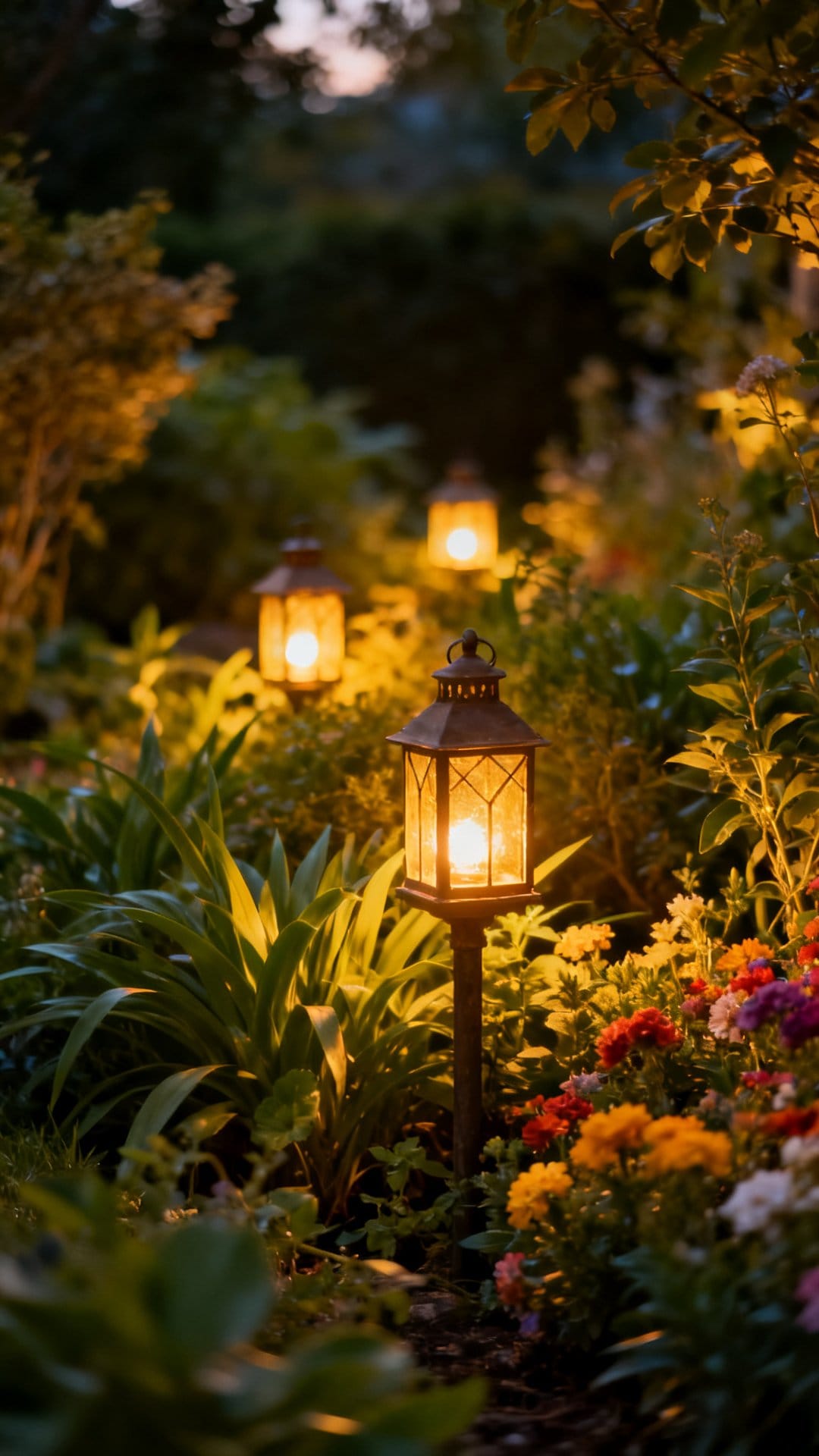
Use small glass or metal lanterns with LED tea lights inside and place them at the base of larger plants, along the edge of a garden path, or half-hidden among low-growing groundcovers. The way the light filters through surrounding leaves and petals creates a warm, dappled glow that looks entirely natural. This technique is especially beautiful in cottage gardens or wildflower borders where the planting is already lush and layered, the lanterns simply add a new dimension after the sun goes down.
Why it works: Light at ground level creates a sense of depth and mystery that overhead lighting alone can’t achieve. It draws the eye downward and inward, making a garden feel larger and more layered after dark.
For maximum effect, combine ground-level lanterns with overhead string lights, the two levels of illumination work together to create a fully dimensional evening garden.
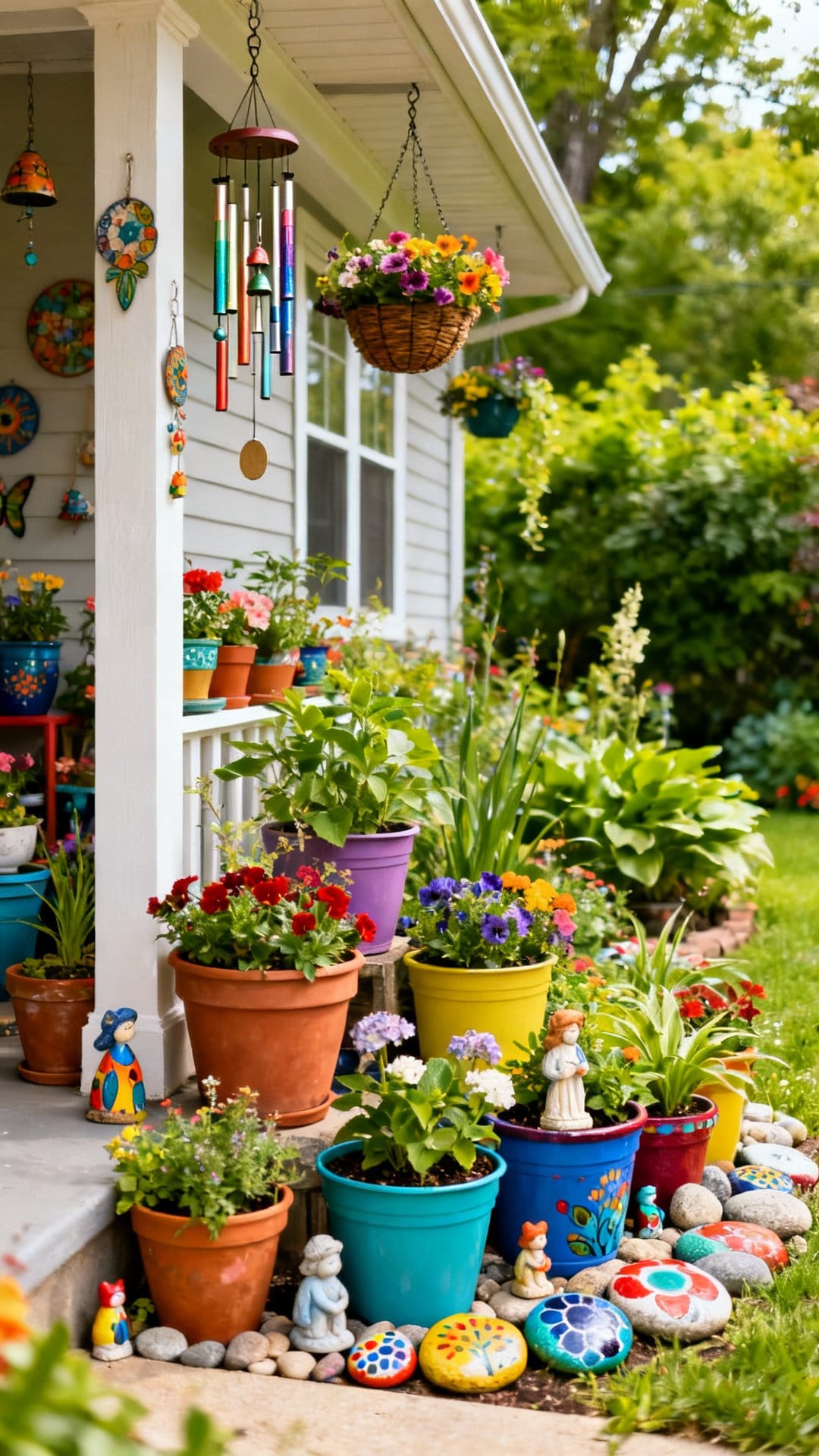
25. A Colorful Front Yard Welcome With Container Gardens
The front yard sets the tone for everything, it’s the first impression your home makes, and a beautifully arranged container garden near the front door signals warmth and welcome before anyone even steps inside.
Small Space Tricks
- Flank the front door with two large matching containers planted with a “thriller, filler, spiller” combination, one tall dramatic plant, several mid-height fillers, and something trailing over the edge
- Use containers in materials that complement your house: glazed ceramic for a more formal or colorful look, weathered zinc or terracotta for a farmhouse or cottage feel
- Add a third, smaller container slightly offset from the pair for a less symmetrical, more relaxed arrangement
- Choose plants in colors that pick up on accent tones already present in your house, window trim color, door color, or brick tones
- Refresh the “spiller” plants midseason if they become leggy, petunias and sweet potato vine both benefit from a light trim to encourage fresh growth
Even the simplest pair of well-planted containers by a front door makes a house feel genuinely cared for and inviting, it’s one of those small touches with an outsized impact.
26. A Zen-Inspired Gravel and Stone Garden Corner
A small gravel and stone garden corner brings a sense of calm and intentionality to a summer yard that’s completely distinct from the lush, flowering aesthetic of more traditional garden styles. It’s an especially good choice for a corner of the yard that’s difficult to grow grass or plants in, dry, shaded, or heavily trafficked areas.
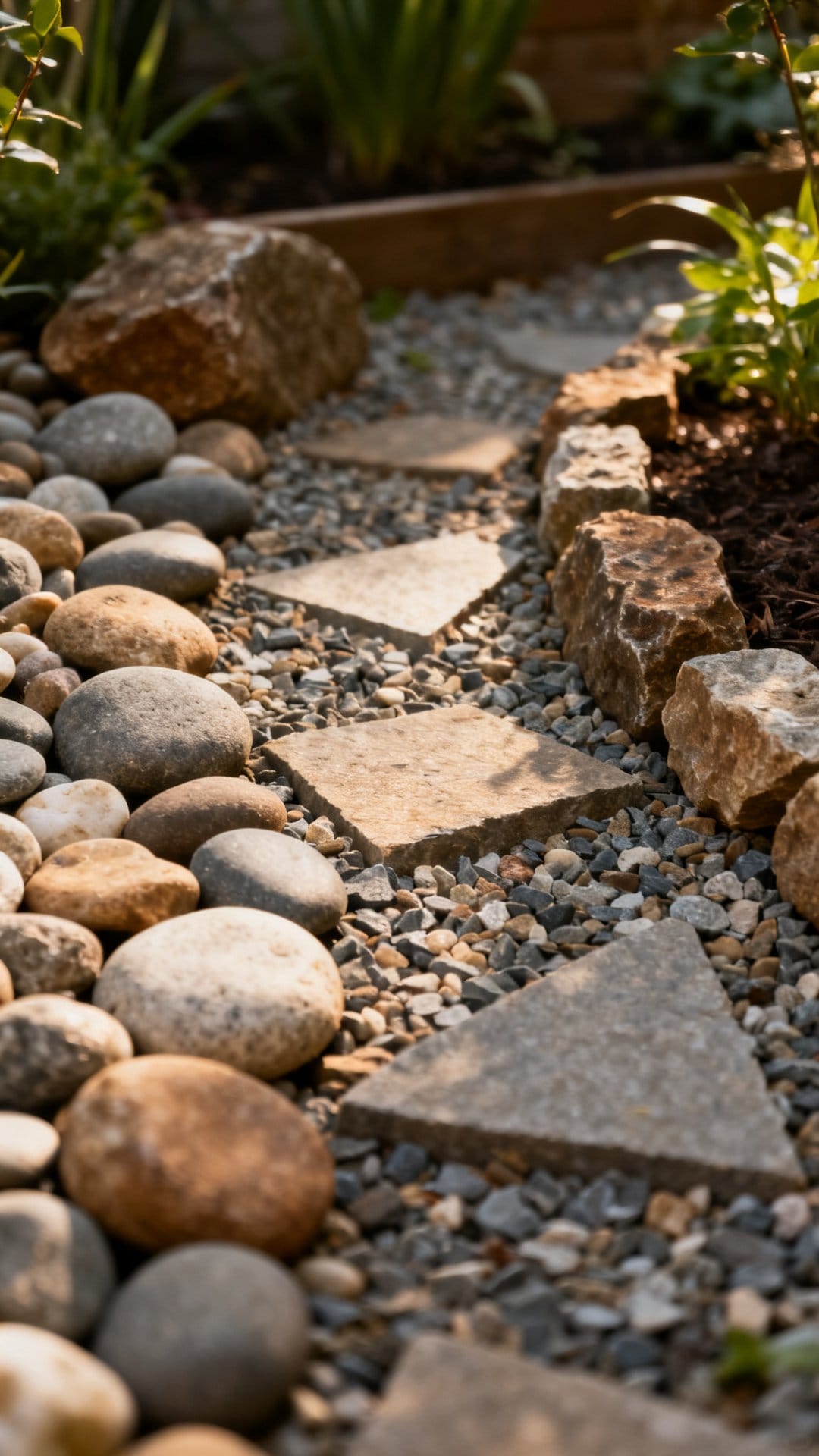
Rake fine pea gravel or decomposed granite into gentle patterns and arrange a few carefully chosen smooth river stones or larger flat boulders within the space. Add one or two architectural plants, a single ornamental grass, a compact Japanese maple, or a dwarf bamboo in a contained planter, for living contrast against the stone and gravel. Keep the palette restrained: grey, white, and warm buff tones with one note of green. The restraint is the point, this kind of garden corner works because of what’s left out as much as what’s included.
Pro tip: Lay a weed barrier fabric beneath the gravel before installation to dramatically reduce maintenance, this is one of those behind-the-scenes details that makes the whole feature sustainable long-term.
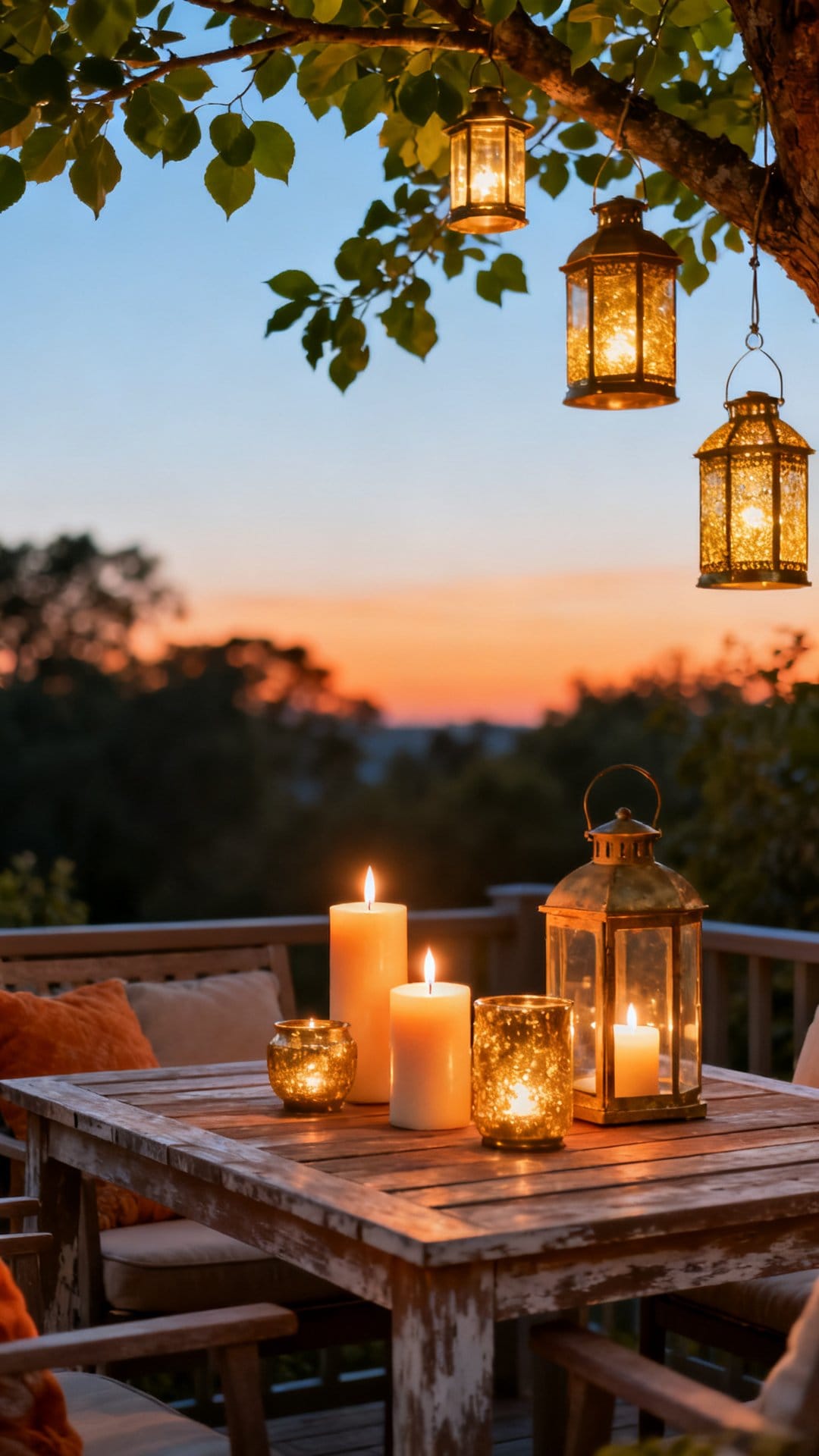
27. Outdoor Candles and Lanterns for Twilight Ambiance
The transition from afternoon to evening in a summer garden is one of the most beautiful moments of the day, and candles and lanterns are the perfect tools for making it feel special. The warm, flickering quality of candlelight is something no electric light can fully replicate outdoors.
Lighting Ideas
- Cluster three to five pillar candles in varying heights on a flat garden stone or a weathered wooden tray as a low centerpiece for outdoor dining
- Use wide-mouthed hurricane lanterns to protect candle flames from summer breezes, the glass also amplifies the glow beautifully
- Place a line of votive candles in small glass holders along the edge of a retaining wall or garden step for a simple, elegant effect
- Choose citronella candles in natural beeswax or soy formulations, they tend to have a cleaner, less chemical scent than standard citronella
- For safety and ease, switch to high-quality LED flameless candles in outdoor lanterns, the best ones flicker realistically and are indistinguishable from real flames at a glance
Candles and lanterns are among the most accessible of all summer garden decoration ideas, they require almost no setup and can be brought out and arranged in minutes.
&# 10024; Keep exploring:Summer Garden Guide: Tips for Your Best Season Yet→
28. A Kitchen Garden Bed That’s Also Beautiful
A kitchen garden, one that grows food alongside flowers, is one of the most satisfying and visually rich approaches to summer garden design. The combination of edible plants with ornamental ones creates a layered, abundant aesthetic that’s deeply appealing and endlessly interesting.
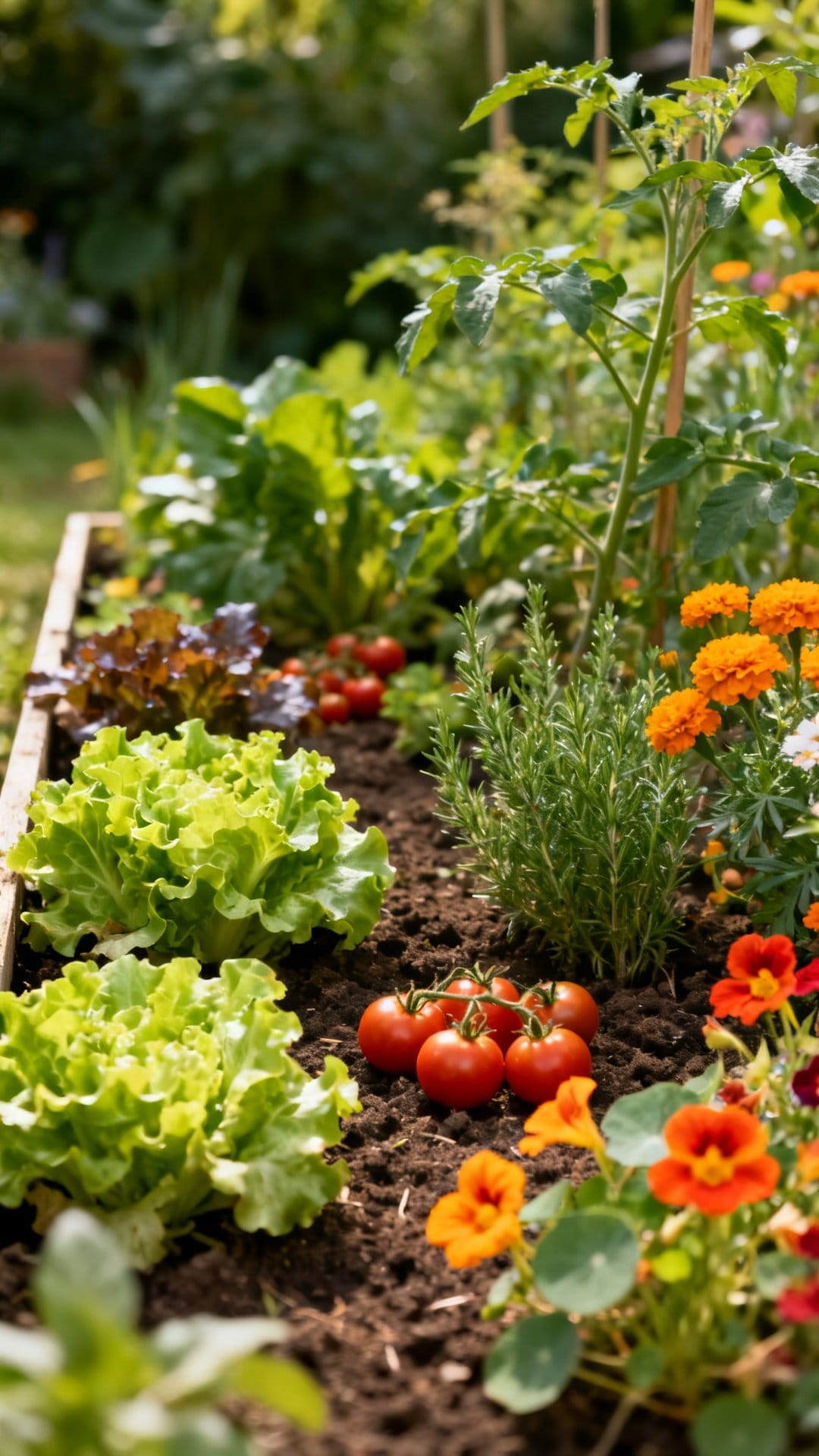
Interplant tomatoes, peppers, and climbing beans with tall zinnias, marigolds, and snapdragons for a garden that looks as beautiful as it is productive. Use the marigolds strategically, they’re natural pest deterrents and their warm orange and yellow tones look gorgeous against the deep green of vegetable foliage. Add a small wooden trellis or a simple bamboo tepee for climbing beans or cucumbers, and let the structure itself become a garden feature. A kitchen garden designed with beauty in mind tends to be more lovingly maintained than a purely utilitarian one, which means better harvests and a more enjoyable space all season long.
Pro tip: Plant tall sunflowers along the back edge of a kitchen garden bed, they act as a natural windbreak, attract pollinators, and create a dramatic backdrop that makes the whole bed feel more intentional and designed.
29. Personalized Garden Signs and Markers
Small personal touches are what separate a beautifully decorated garden from one that simply looks like a catalog page. Personalized garden signs and plant markers are an easy, affordable way to add character and warmth to any outdoor space.
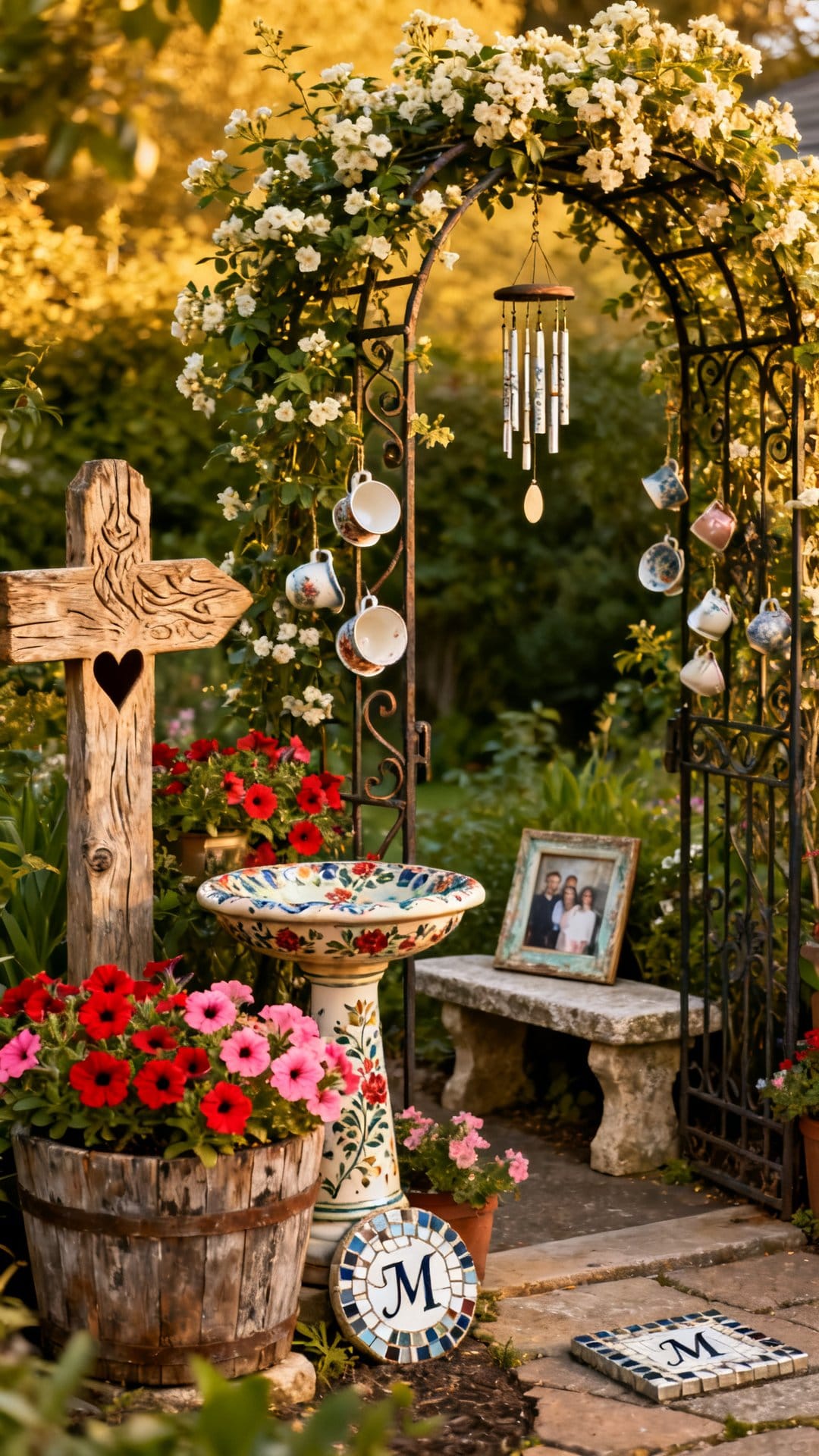
Hand-lettered wooden stakes with plant names, a painted river stone with a favorite quote, a small chalkboard sign near the herb garden, or a weathered metal address plaque near the front gate, these are the details that make a garden feel genuinely loved rather than just styled. You can find beautifully made versions of all of these at garden centers, craft fairs, and online marketplaces, or keep it simple with a paint pen and a smooth flat stone from the garden itself. I love how these small, personal elements give a garden a sense of story and personality, they hint at the person who tends it and make visitors feel genuinely welcomed into a real, lived-in space. These finishing touches are what make a collection of summer garden decoration ideas feel cohesive and truly your own.
Pro tip: Use exterior-grade chalk paint or outdoor enamel for any hand-painted signs or markers, standard craft paint will fade or wash away within a few weeks of summer rain and sun.
What Are the Best Ways to Pull Your Summer Garden Together?
The best way to pull your summer garden together is to choose two or three ideas that suit your space and lifestyle, then layer in personal details that make the space feel genuinely yours rather than styled for a catalog.
Your yard is one of the most personal spaces you have, and these summer garden decoration ideas to change your yard are just a starting point, the real magic happens when you layer in the details that reflect your own taste, your climate, and the way you actually want to spend your summer days. You don’t need to tackle all 29 ideas at once; even two or three thoughtfully chosen changes can completely shift how your outdoor space feels and functions. Whether you’re creating a cozy reading nook, a wildflower border, or a lantern-lit dining area, the most important thing is that the space feels like yours. Happy gardening!
Frequently Asked Questions
Some of the easiest starting points include string lights, potted plants, and outdoor rugs, all of which require zero installation expertise and can be set up in an afternoon. These simple additions instantly make a yard feel more intentional and inviting without any permanent changes. If you’re just getting started, focus on one area at a time, like a patio corner or a garden pathway, rather than trying to change the entire yard at once.
Many of the 29 ideas in this article are specifically suited for compact outdoor spaces, including vertical planters, hanging lanterns, and foldable furniture arrangements that maximize limited square footage. The key is to think vertically and layer your décor, walls, railings, and overhead spaces are all fair game when floor space is tight. Even a small balcony can feel like a lush summer retreat with the right combination of string lights, trailing plants, and a couple of well-chosen accessories.
Budget-friendly options highlighted in the article include DIY planters made from repurposed containers, solar-powered lights that eliminate ongoing electricity costs, and thrifted outdoor furniture refreshed with a coat of weather-resistant paint. Natural elements like gravel pathways, wildflower seeds, and foraged branches for decorative arrangements can also add serious visual impact for very little money. The goal is to be creative and intentional rather than expensive, many of the most beautiful outdoor spaces rely on simplicity and personality over price tags.
Start by looking at the architecture and interior style of your home, since your outdoor space will feel most natural when it echoes the aesthetic already present inside. From there, choose two or three anchor pieces, like a statement planter, a furniture set, or a color palette, and let everything else build around them. The article emphasizes that the best outdoor spaces feel personal rather than catalog-perfect, so don’t be afraid to mix styles as long as there’s a consistent thread of color, material, or mood tying things together.
For entertaining, the article recommends focusing on lighting, seating, and atmosphere, specifically string lights or lanterns for ambiance, comfortable and plentiful seating arrangements, and features like an outdoor bar cart or a fire pit that naturally draw people together. Adding a defined rug or pergola can help create a sense of a dedicated ‘room’ outdoors, which makes guests feel more settled and comfortable. Layering these elements together turns a plain backyard into a space that genuinely invites people to linger long after dinner.