

There’s something about a warm summer evening when the light turns golden and the garden feels like it belongs to another world, softer, quieter, a little bit enchanted. If you’ve ever wandered through a garden and felt that tug of wonder, like something magical might be living just beneath the leaves, then these enchanting summer fairy garden ideas for your yard are going to feel like coming home. This collection covers everything from tiny container gardens to full backyard nooks, with ideas that work whether you have a sprawling lawn or a modest patio corner. What makes this list different is that every idea here is grounded in real materials, real plants, and a real sense of whimsy that doesn’t require a design degree to pull off.
1. Start With a Mossy Stone Pathway
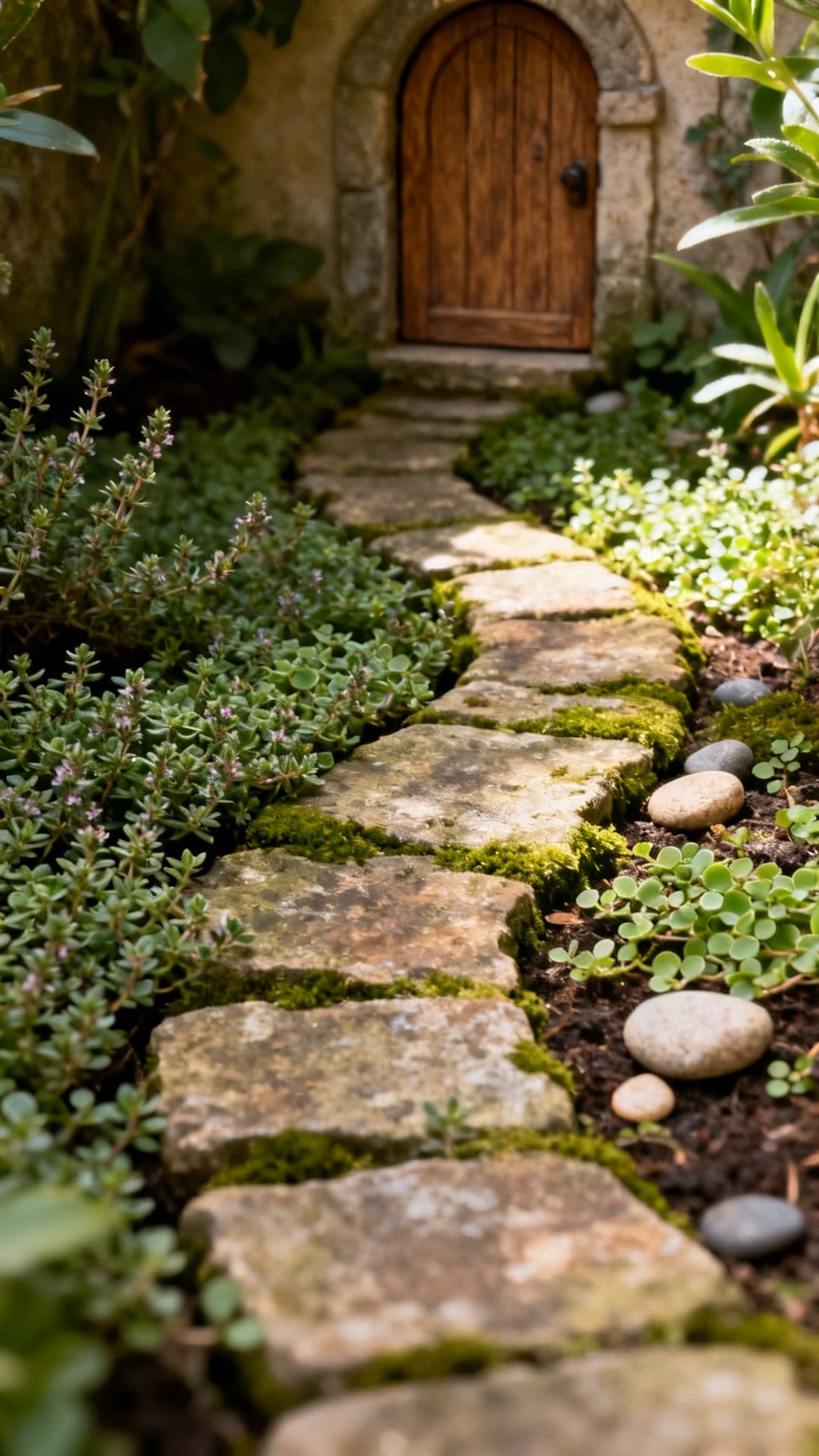
A pathway is the first invitation into any magical space, and when it’s made from weathered stepping stones dusted with soft moss, it immediately signals that something special lies ahead. The uneven texture of moss-covered stone gives your yard an ancient, storybook quality that no painted surface can replicate. I love how a simple winding path like this can completely change the feeling of a garden, even before you add a single decoration.
Key Design Elements
- Use irregularly shaped flat stones rather than uniform pavers, imperfection adds authenticity and organic charm
- Encourage moss growth by misting stones with diluted buttermilk and placing them in partial shade
- Space stones just slightly apart so creeping thyme or baby’s tears can fill the gaps with soft greenery
- Curve the path gently rather than running it straight, curves create mystery and a sense of discovery
This approach works especially well in shaded garden corners where the light is dappled and soft, making the moss glow a rich, deep green throughout the summer months.
2. Tuck a Tiny Fairy Door Into a Tree Base
One of the most beloved touches in any fairy garden is the suggestion that tiny magical residents actually live there, and nothing says that more clearly than a miniature door nestled at the base of an old tree. The beauty of this idea is how little it takes to make it feel completely believable. A small wooden door, painted in faded sage or dusty rose, with a tiny brass knocker, creates a focal point that children and adults alike will stop to admire.

Look for unfinished wooden fairy doors at craft supply stores or online marketplaces, then customize them with outdoor-safe paint in muted, nature-inspired tones. Surround the door with a tiny stone threshold, a miniature welcome mat made from a slice of bark, and a few scattered pebbles to suggest a well-worn entrance. Tuck in a tiny lantern or a cluster of small mushroom figurines just beside it for extra storytelling detail.
Pro tip: Seal your painted fairy door with an outdoor-rated matte varnish so it survives rain and summer humidity without peeling, a weathered look is charming, but flaking paint isn’t.
3. Create a Miniature Fairy Cottage Garden Bed
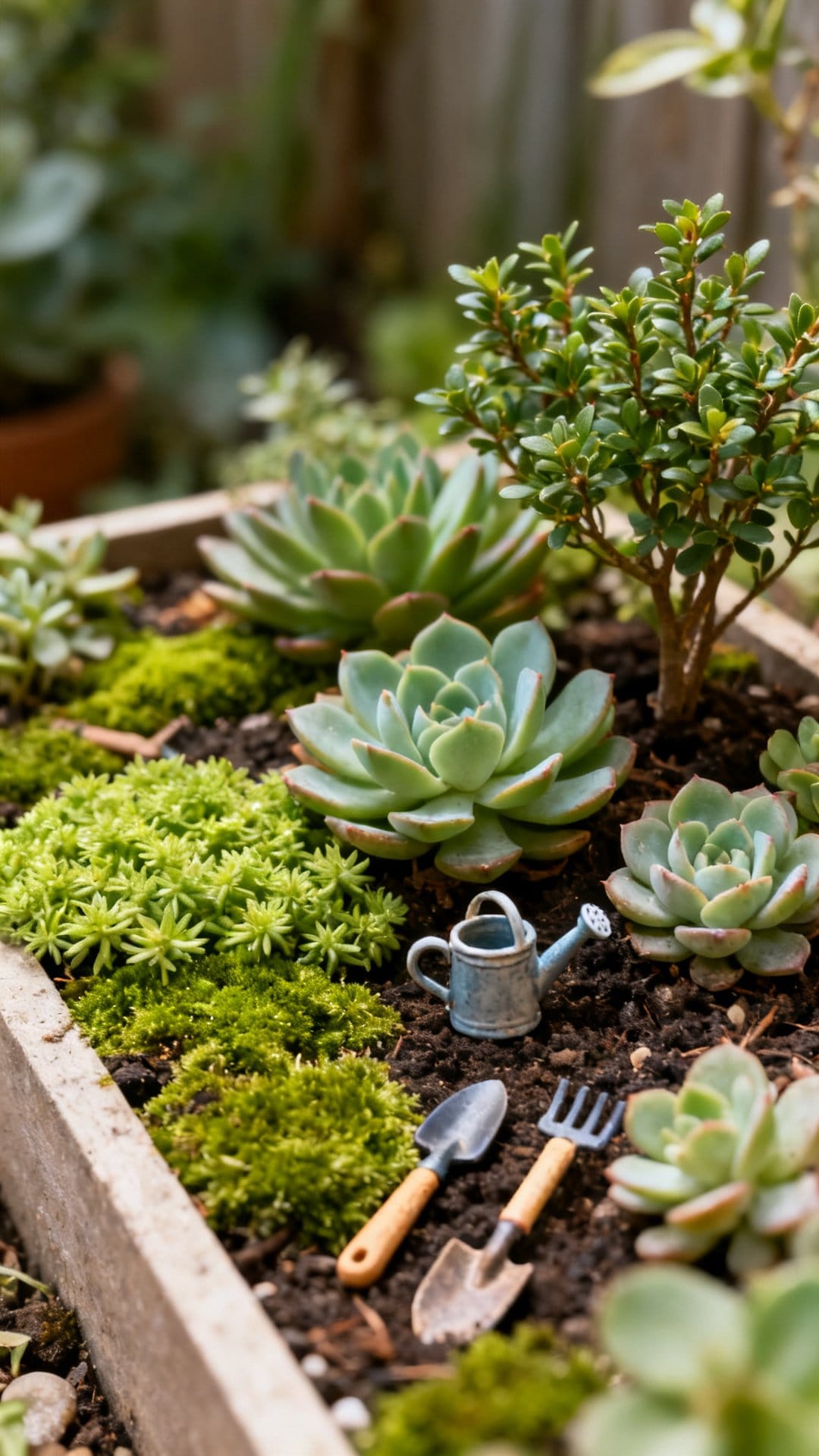
Dedicate a small raised bed or ground-level planting area entirely to the fairy garden aesthetic, layering plants of varying heights to mimic a tiny woodland village. This is one of those ideas that rewards patience, as the plants fill in over the summer, the garden takes on a life of its own. Choose plants with delicate textures and small blooms that feel in proportion to the miniature world you’re building.
Cozy Touches
- Plant dwarf astilbe for feathery plumes of pink and white that look like tiny fireworks above the garden floor
- Add creeping Jenny as a ground cover, its chartreuse color and trailing habit creates a lush, magical carpet effect
- Tuck in miniature hostas with their broad, sculptural leaves to create a sense of scale and depth
- Use a small terracotta pot turned on its side as a “cave” entrance, surrounded by pebbles and moss
- Place a tiny birdbath or shallow dish of water among the plants to attract real visitors like butterflies
One thing I’ve noticed with this style of planting is that the magic really intensifies once the plants start to intermingle naturally, it stops looking designed and starts looking discovered.
4. String Solar Fairy Lights Through Low Shrubs
Summer evenings in a fairy garden deserve their own kind of light, soft, warm, and slightly flickering, like fireflies caught in the branches. Solar fairy lights threaded through low shrubs or along a garden border do exactly that, and the best part is they charge themselves all day and glow for hours after dusk without any wiring or electricity costs. The warm white or amber varieties are far more magical than cool white, which can feel clinical rather than enchanting.

Weave the lights loosely through the branches of boxwood, lavender hedges, or ornamental grasses, letting them drape naturally rather than spacing them evenly. A few strands pooled at the base of a garden statue or wound around the trunk of a small ornamental tree creates a luminous, glowing effect that feels genuinely otherworldly. For maximum impact, combine two or three different strand lengths so the light has depth and variation.
Pro tip: Choose solar lights with a warm 2700K color temperature, this mimics candlelight and creates that golden, dreamy glow that makes a fairy garden feel truly alive after dark.
5. Build a Pebble-Bordered Fairy Ring
In folklore, a fairy ring is a circle in the grass where fairies are said to dance, and recreating this idea in your yard is one of the most evocative and simple things you can do. The concept is straightforward: arrange a circle of smooth river pebbles or white quartz stones in a patch of lawn or garden bed, then plant low-growing flowers or mushroom figurines within the ring. The result is a garden feature that feels ancient, intentional, and genuinely magical.
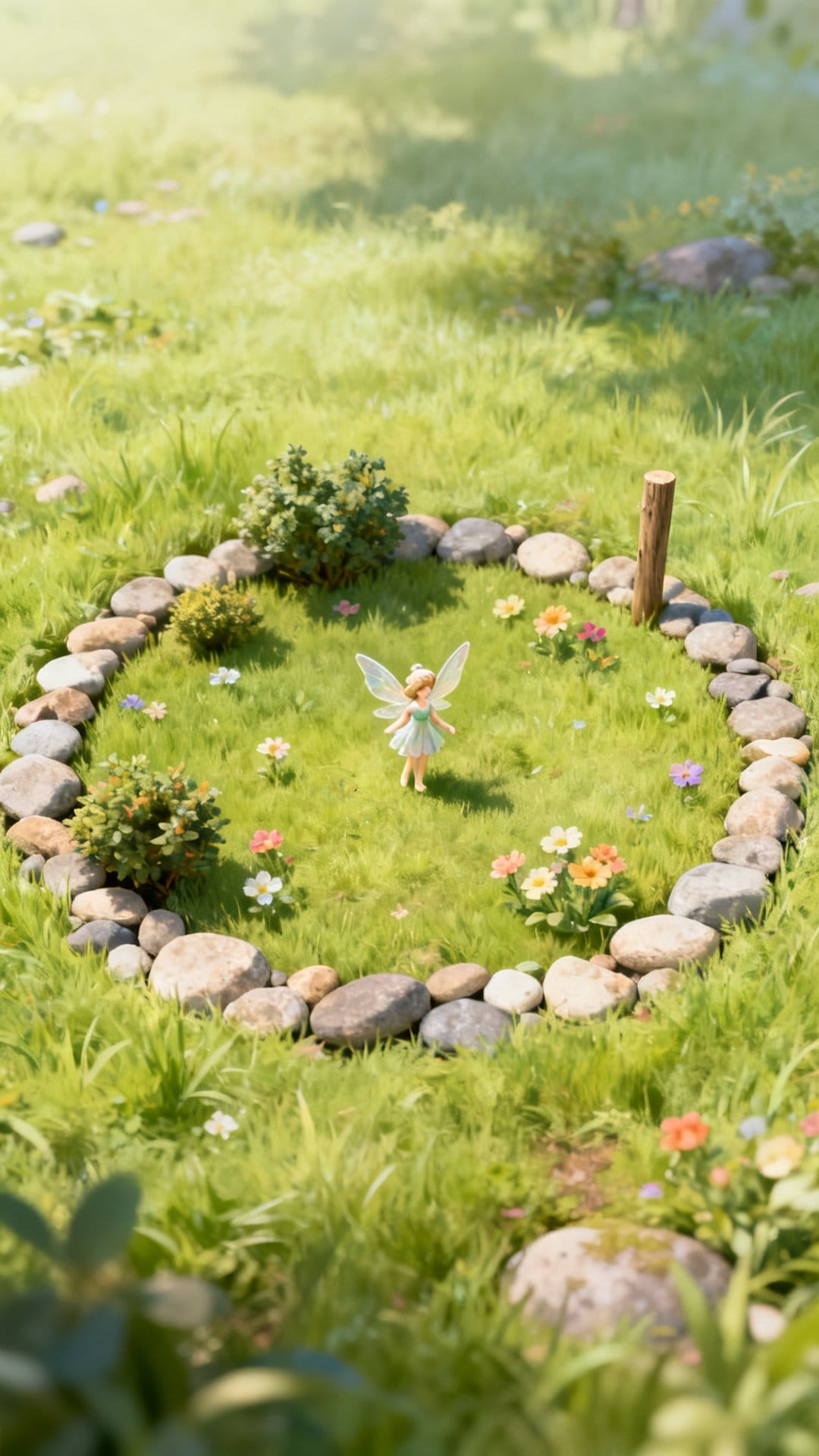
Why it works: Circles are inherently eye-catching in a garden setting because nature rarely produces perfect geometry, the contrast between the organic surroundings and the deliberate ring draws the eye and creates a sense of significance, as if marking something sacred or special.
Fill the center of the ring with a mix of white alyssum and pale lavender lobelia for a soft, dreamy color palette, or scatter a collection of hand-painted ceramic mushrooms among the blooms for a more whimsical, storybook feel. The ring works beautifully as a standalone feature in the center of a lawn or tucked into a garden corner where it feels like a secret discovery.
6. Use a Hollowed Log as a Fairy Home
A hollowed-out log is one of nature’s most perfect fairy garden props, it looks completely at home in a garden setting while immediately suggesting a tiny, hidden world within. If you have a fallen branch or old log on your property, this costs nothing at all. Otherwise, look for weathered logs at garden centers, nurseries, or even roadside spots after a storm. The more moss-covered and textured, the better.

Decorating Details
- Line the hollow with a small patch of sheet moss to create a soft, inviting interior visible from the opening
- Add a tiny wooden door painted in forest green or barn red at the entrance of the hollow
- Surround the base with miniature ferns, wood sorrel, and scattered acorn caps for an authentic woodland floor
- Place a tiny lantern just inside the opening so it glows softly at night, battery-operated tea lights work perfectly
- Tuck a few small crystal or glass stones near the entrance to catch and scatter light during the day
This works especially well in shaded garden areas where the log looks completely natural, as if it simply fell there and the fairies moved in of their own accord.
7. Plant a Lavender Hedge as a Fairy Border
Lavender is practically magical on its own, the scent alone can stop you in your tracks on a warm summer afternoon. Planted as a low border hedge along a garden path or fairy garden perimeter, it creates a sensory boundary that feels like stepping through a portal into a different world. The silvery-purple color, the soft fuzzy texture of the stems, and that unmistakable fragrance all work together to create an atmosphere that is genuinely enchanting.
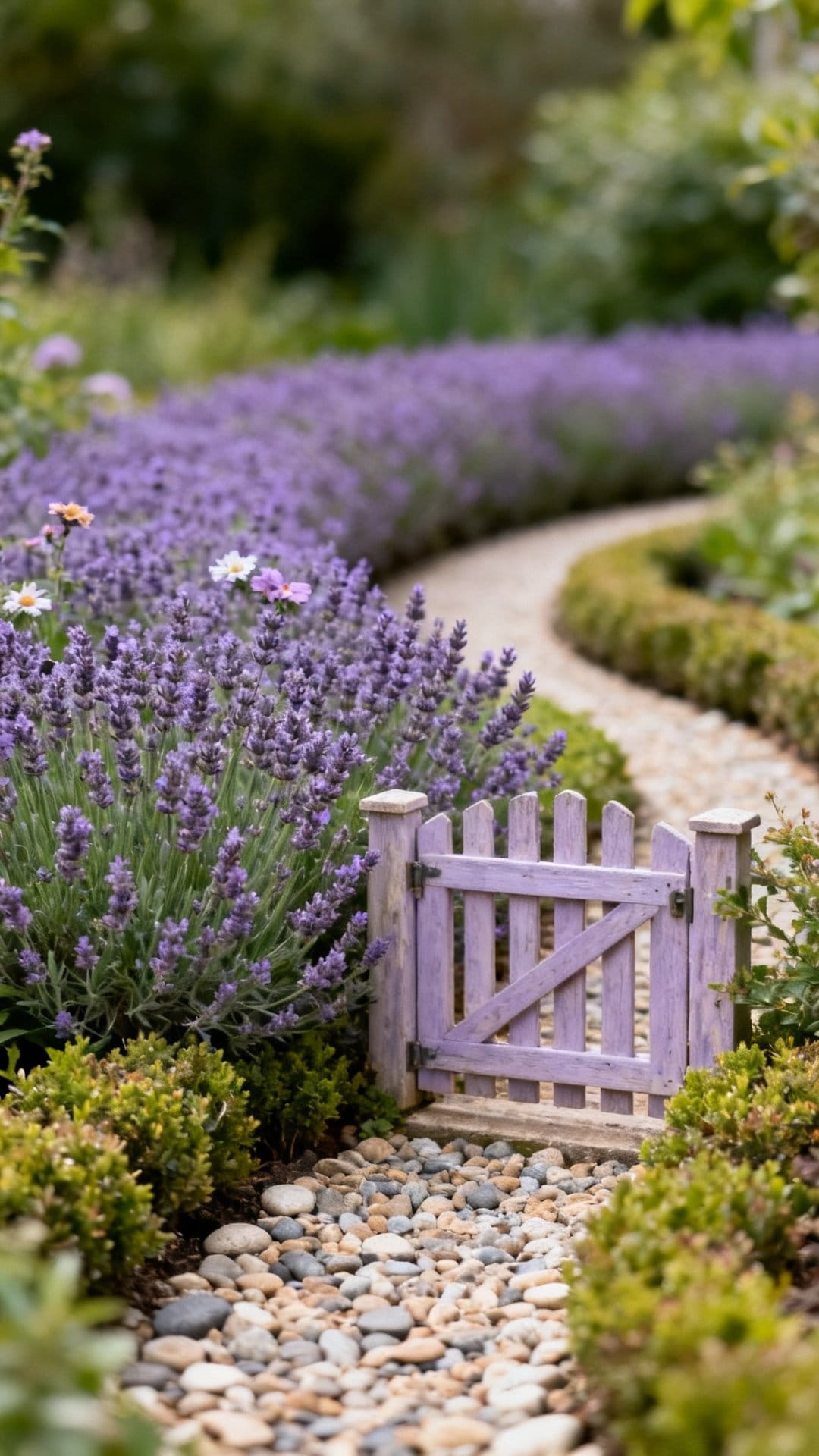
Choose a compact variety like ‘Hidcote’ or ‘Munstead’ for a tidy border that stays low and full throughout the summer. Plant in full sun with well-drained soil, and allow the plants to grow slightly informal rather than clipping them into rigid shapes, the gentle, billowing habit of lavender is part of its magic. Pair it with white or pale pink roses behind the border for a color palette that feels like it belongs in a fairy tale.
Pro tip: Brush your hand gently along the lavender tops each time you walk past, releasing the scent intentionally makes every visit to your fairy garden feel like a full sensory experience, not just a visual one.
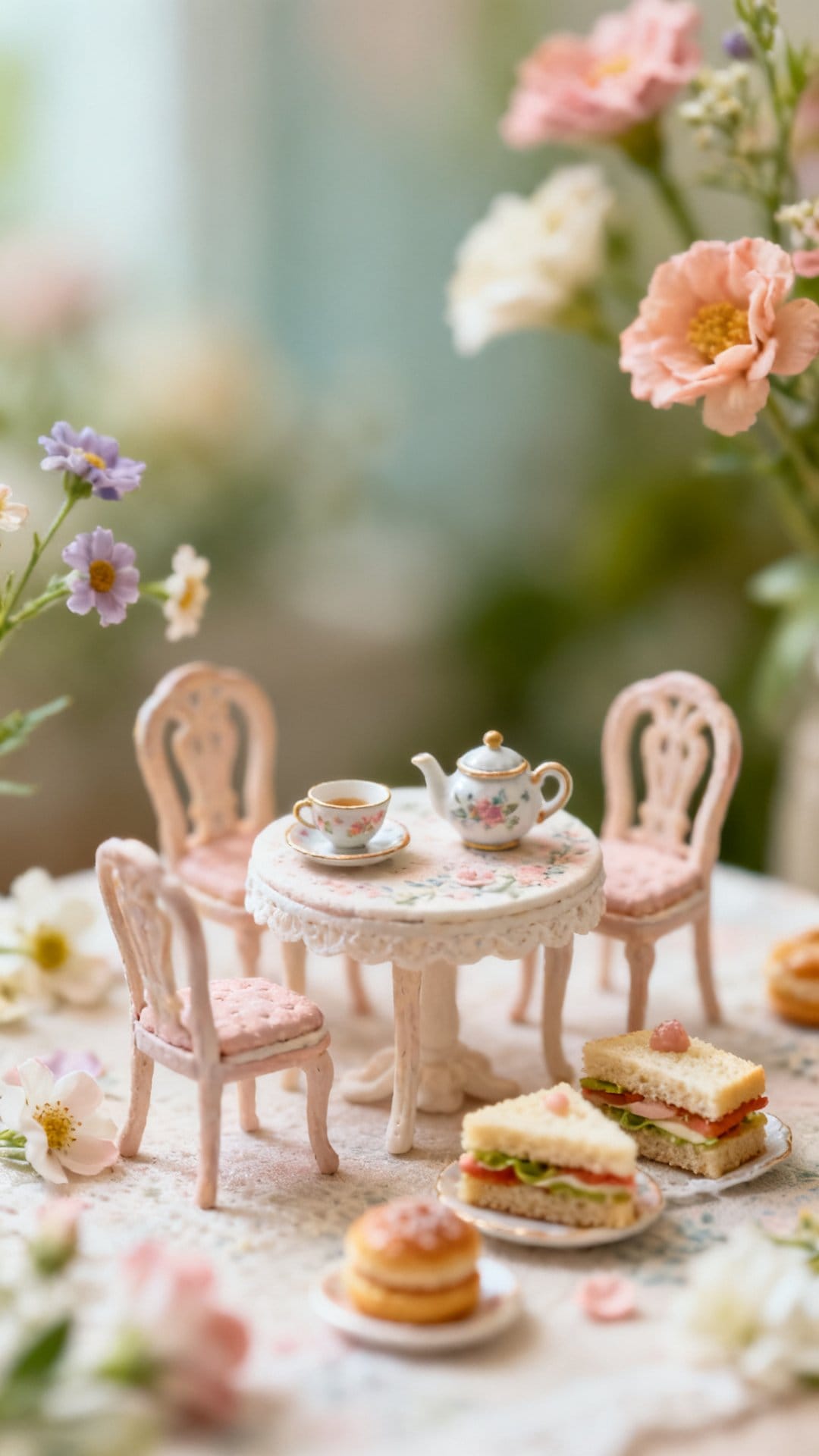
8. Arrange a Miniature Fairy Tea Party Scene
A tiny tea party set up among the flowers is the kind of detail that makes people do a double-take and then break into a genuine smile. This is one of those ideas that bridges the gap between garden decor and pure storytelling, and it works beautifully whether your yard caters to children or simply to adults who haven’t forgotten how to be charmed. I keep coming back to this approach because it costs very little but delivers an enormous amount of personality.
Layout Suggestions
- Use a flat mossy stone or a small slice of wood as the “table” surface, natural materials keep the scene grounded and realistic
- Arrange miniature ceramic or resin teacups and a tiny teapot around the table, slightly imperfectly placed as if mid-party
- Add tiny “chairs” made from acorn caps, small wooden spools, or flat pebbles arranged around the table
- Scatter a few dried flower petals across the table surface as if the fairies have been using them as plates
- Tuck the whole scene into a low planting of white impatiens or sweet alyssum for a soft, blooming backdrop
The imperfection of the arrangement is what makes it feel real, resist the urge to make it too tidy, because a slightly lived-in tea party is far more convincing than a perfectly staged one.
9. Hang Tiny Wind Chimes From Garden Branches
Sound is one of the most underused elements in garden design, and in a fairy garden, it can be the detail that makes the whole space feel genuinely alive. Tiny wind chimes hung from tree branches or garden arbors add a delicate, musical quality to summer breezes that change an ordinary afternoon in the yard into something that feels a little bit enchanted. The key is choosing chimes that are small and light, producing a high, soft tone rather than a loud, heavy clang.
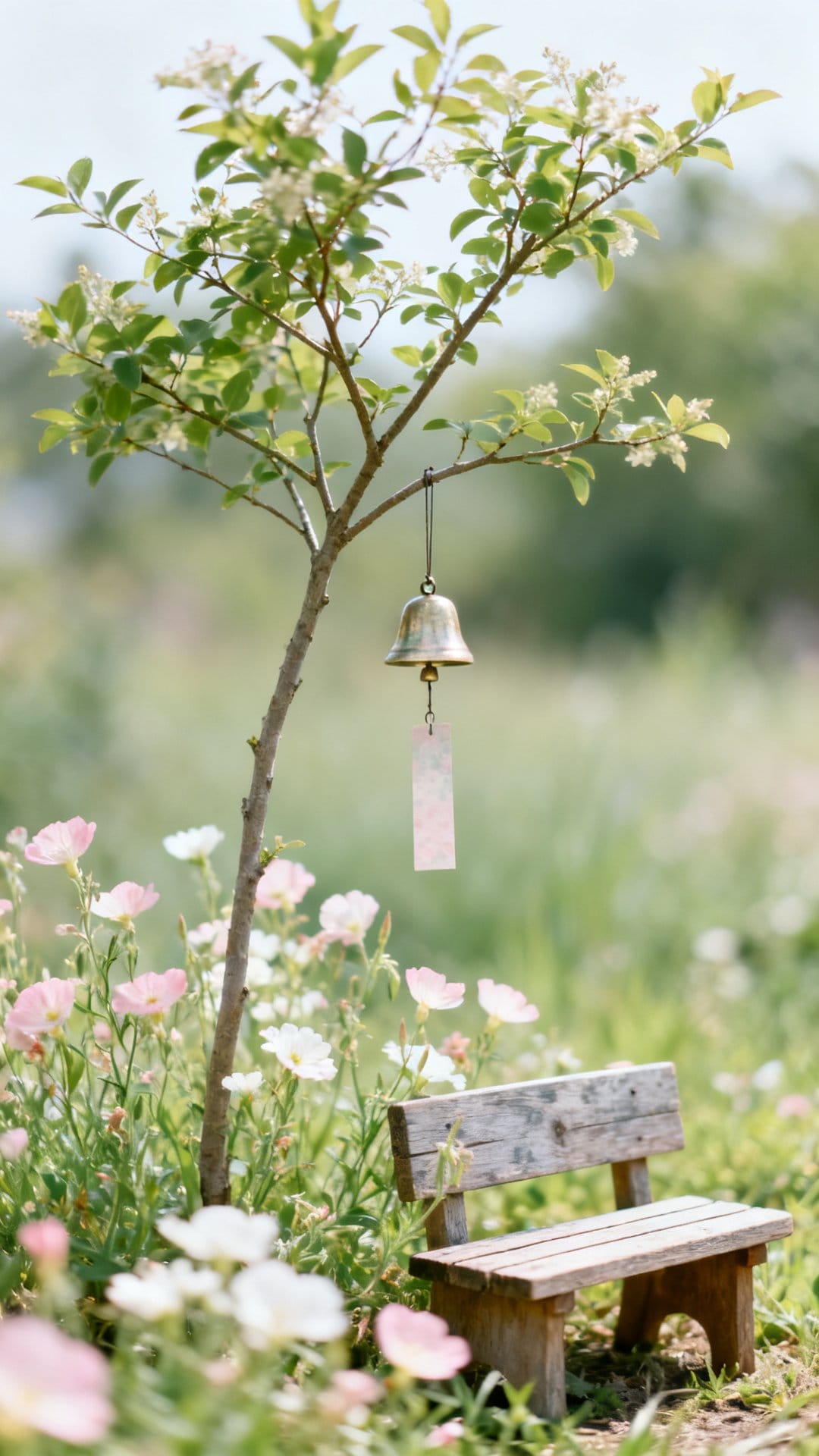
Look for chimes made from small shells, sea glass, or thin metal tubes in silver or copper finishes. Hang them at varying heights from the same branch so they interact with each other in the breeze, creating overlapping tones. A cluster of three or four different small chimes grouped together is more interesting than a single large one, and the layered sounds they produce feel genuinely musical rather than just decorative.
Pro tip: Hang chimes where they’ll catch the prevailing breeze in your yard, usually near an open corner or along a garden edge, rather than in sheltered spots where the air is still and they’ll rarely sound.
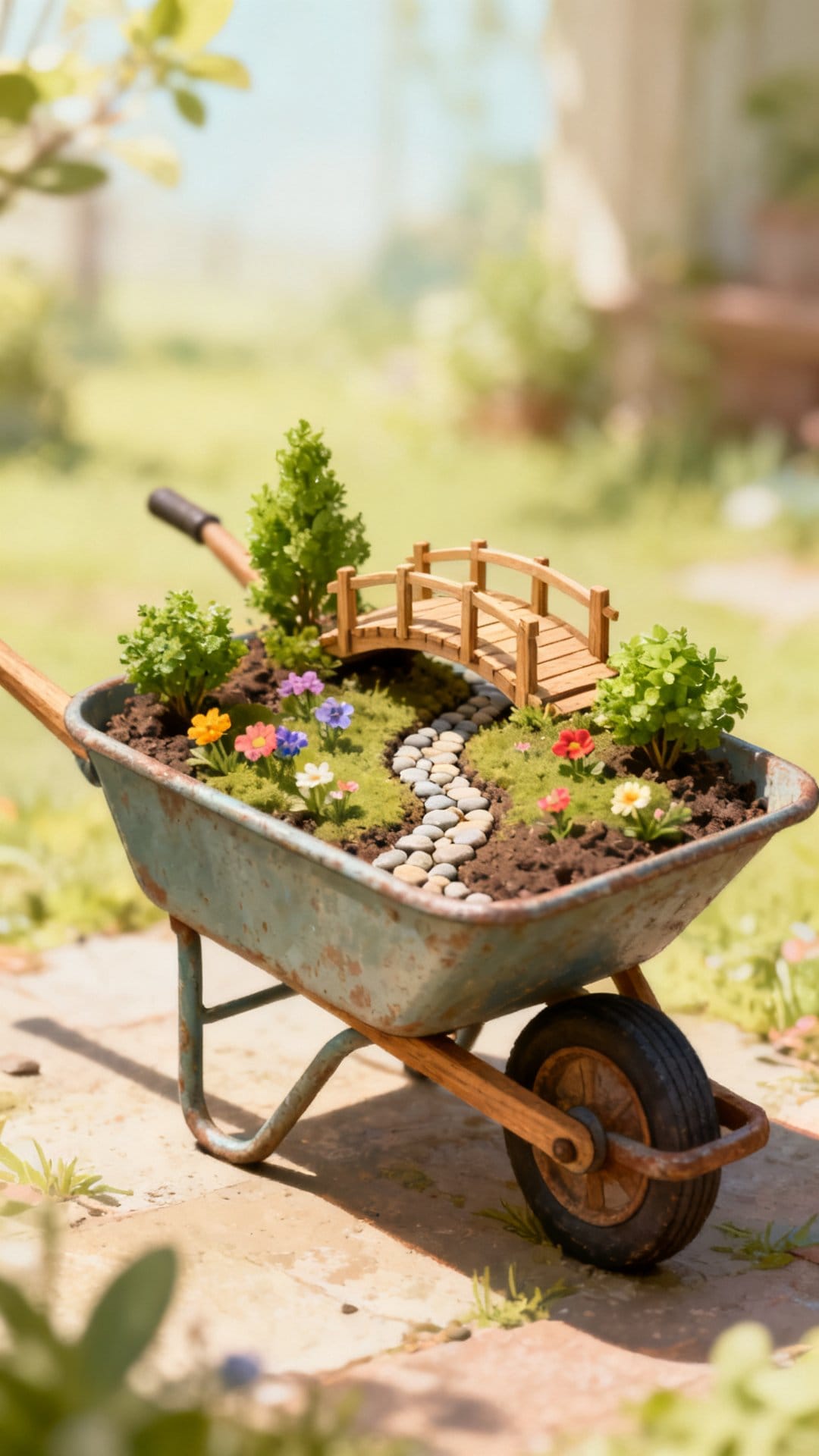
10. Create a Fairy Garden in a Vintage Wheelbarrow
Container fairy gardens are a wonderful option when you’re working with a small yard, a patio, or a space that doesn’t lend itself to in-ground planting. A vintage wheelbarrow is one of the most charming containers you can use, it has instant character, a moveable base, and enough depth to plant a real layered garden scene. A friend of mine tried something similar with an old wooden wheelbarrow she found at an estate sale, and it became the most talked-about feature in her entire backyard.
Materials to Try
- Fill the base with a well-draining potting mix amended with perlite to prevent waterlogging in summer rain
- Plant a small ornamental grass or dwarf conifer at the back as the “tree” anchor of your miniature scene
- Add a layer of fine gravel or decomposed granite across part of the soil surface to create a “path” effect
- Use miniature succulents like echeveria or sedum as low-growing “shrubs” that stay in proportion
- Tuck in small resin fairy figurines, a tiny bench, and a miniature lamppost for storytelling detail
The wheelbarrow can be moved to a shaded spot during the hottest part of the day if you’re growing plants that prefer cooler conditions, which gives you a flexibility that in-ground gardens simply can’t offer.
11. Add a Miniature Wooden Bridge Over a Dry Creek Bed
A dry creek bed made from smooth river stones creates the illusion of a gentle stream running through your fairy garden, and a tiny arched wooden bridge spanning it is the kind of detail that makes the whole scene feel like an illustration from a beloved storybook. The creek doesn’t need to be long, even three or four feet of carefully arranged stones creates a convincing effect. The bridge itself can be purchased as a garden ornament or assembled from a few small pieces of weathered wood.

Arrange the stones in a slightly winding channel, using larger flat stones at the edges and smaller rounded pebbles in the center to suggest water flow. Plant creeping phlox or blue star creeper along the banks to soften the edges and add color. Position the bridge at a gentle curve in the creek rather than at a straight section, which makes it feel more naturally placed and less like a prop that was simply set down.
Pro tip: Place a few pieces of blue or clear sea glass among the pebbles in the creek bed, they catch light in a way that genuinely mimics the sparkle of moving water, especially in afternoon sun.
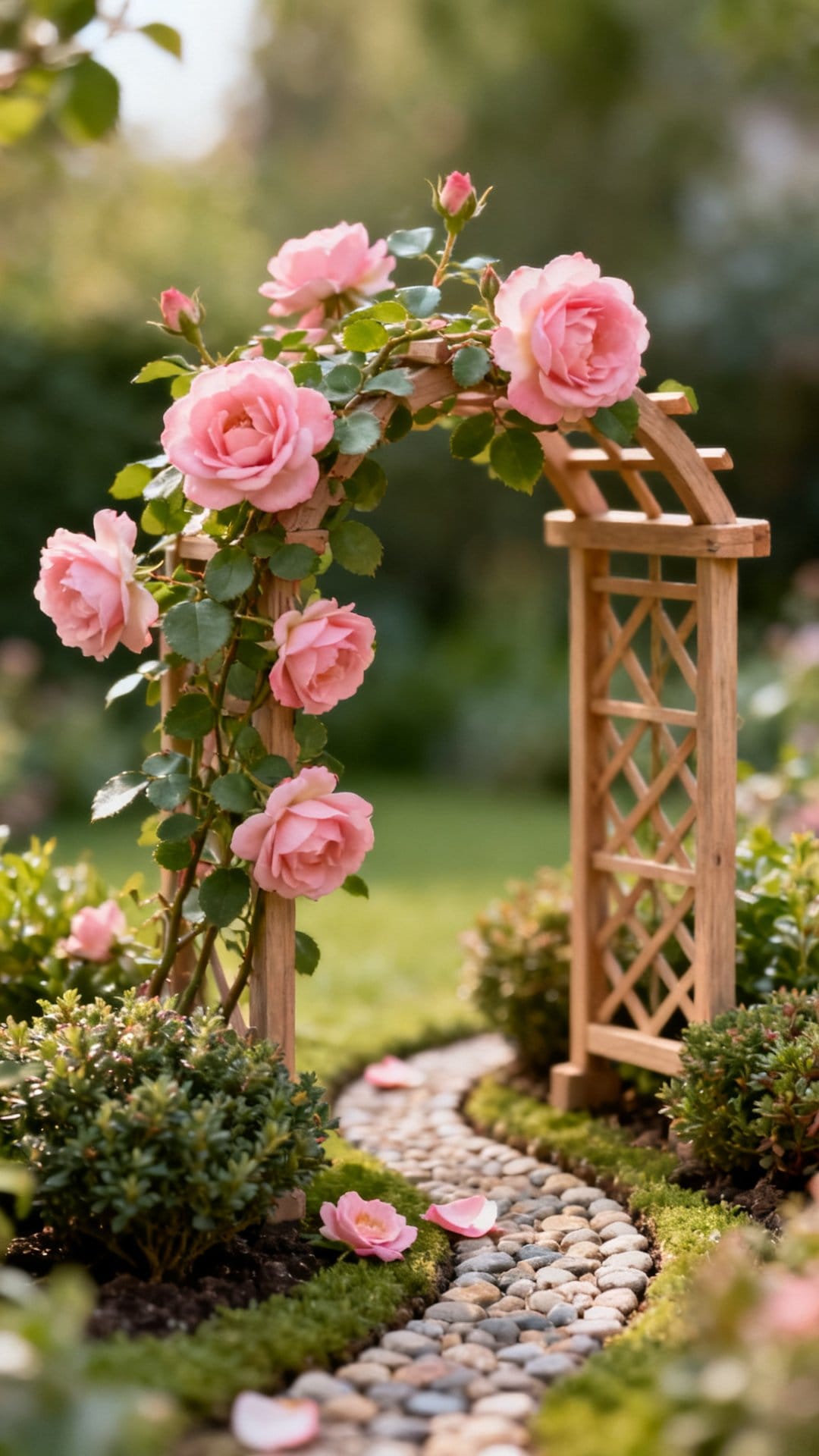
12. Grow a Climbing Rose Over a Tiny Arbor
A miniature garden arbor draped with a climbing rose is one of the most romantic and enduring images in garden design, and it translates beautifully into the fairy garden aesthetic at any scale. Even a small, two-foot-tall wooden arbor placed at the entrance to a garden bed creates a sense of arrival and passage that feels genuinely magical. The roses soften the structure over the summer months, turning a simple wooden frame into something that looks like it grew there naturally.
Style Notes
- Choose a climbing rose in soft blush pink, creamy white, or pale apricot, these colors feel most at home in a fairy garden setting
- Look for disease-resistant climbing varieties that bloom repeatedly through summer rather than just once
- Train the canes loosely over the arbor with soft garden twine, allowing some to drape naturally rather than tying every stem
- Underplant the base of the arbor with white sweet alyssum or blue lobelia to frame the entrance with a carpet of color
- Add a small sign or letter tile to the arbor post, something simple like a single initial or a tiny painted mushroom
This feature works as a beautiful transition point between two areas of your garden, making even a simple backyard feel like it has distinct rooms and destinations worth exploring.
13. Float Candles and Flowers in a Shallow Garden Basin
Water features don’t have to involve pumps, electricity, or significant expense to create a magical effect in a summer fairy garden. A wide, shallow ceramic or stone basin filled with clean water, floating candles, and flower heads becomes a still, reflective pool that looks like something from a midsummer night’s dream. The reflection of the sky and surrounding plants in the water surface adds depth and movement to the garden without any effort at all.

Choose a basin with a matte or rough-textured finish rather than a shiny glaze, it looks more natural and less like a decorative bowl that was simply placed outdoors. Float a mix of tea light candles in small glass holders alongside the heads of roses, peonies, or gardenias cut at the stem. Add a few smooth dark stones to the basin floor for contrast, and tuck the whole arrangement into a shaded corner where the water stays cool and the candles glow most visibly in the evening light.
Pro tip: Refresh the water and flowers every two to three days during summer heat, stagnant water and wilting blooms will undermine the magic quickly, but fresh arrangements take only minutes to reassemble.
14. Use Terracotta Pots as Stacked Fairy Towers
Stacked terracotta pots of graduating sizes create charming little towers that look like something a fairy architect might have designed, slightly irregular, wonderfully textured, and completely at home in a garden setting. This is one of those ideas that uses materials you might already have, and the result looks far more intentional and whimsical than the effort involved. I love how the warm, earthy color of aged terracotta fits so naturally into a summer garden palette.
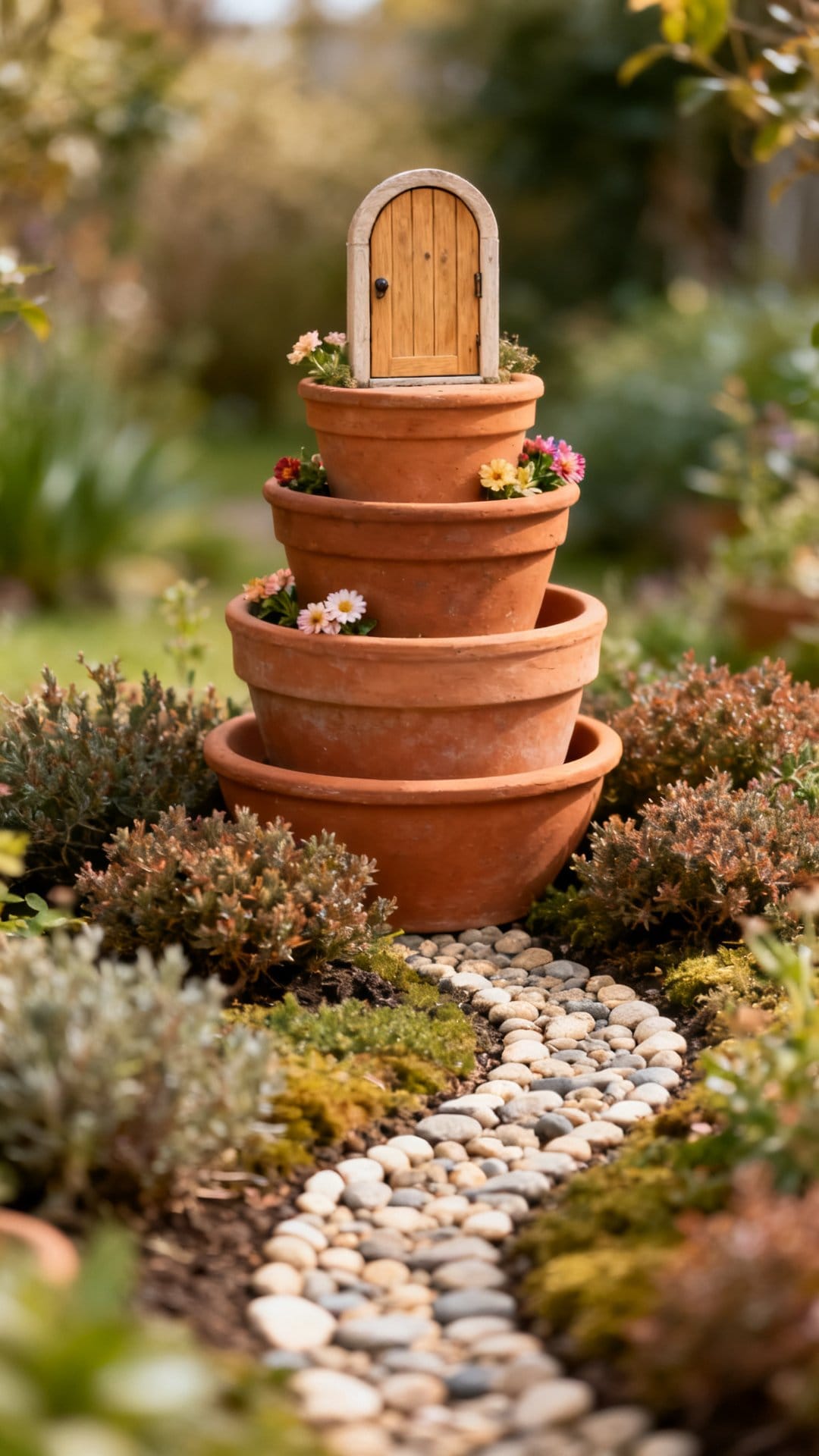
Small Space Tricks
- Stack three pots in descending sizes, large at the base, medium in the middle, small at the top, securing each with a wooden dowel through the drainage holes
- Plant trailing succulents or creeping thyme in the gaps between stacked pots so greenery spills down the sides
- Paint tiny windows, doors, or climbing vine details onto the pots using outdoor-rated craft paint in earthy tones
- Top the smallest pot with a moss-covered stone or a tiny pointed roof cut from a piece of slate
- Arrange two or three towers of different heights together to create a miniature village skyline effect
These towers are particularly effective in small spaces because they add vertical interest without taking up ground space, making them ideal for balconies, patios, or narrow garden borders.
If lighting and atmosphere are what draw you most to the fairy garden aesthetic, the next idea takes that magic in a completely different and deeply beautiful direction.
15. Plant a Moon Garden Corner With White Night Blooms
A moon garden, a planting scheme built entirely around white and pale silver flowers and foliage, is one of the most quietly magical things you can add to a summer yard. In daylight, it’s soft and serene. At dusk and into the evening, the white blooms seem to glow from within, catching every last bit of available light and creating an ethereal, luminous corner that feels genuinely otherworldly. This is something I find myself returning to as one of the most underused ideas in summer garden design.

Plant white nicotiana, which releases a sweet fragrance after dark, alongside silvery lamb’s ear for texture contrast. Add white moonflower vine climbing a simple trellis, and underplant with pale silver artemisia for a frosted, moonlit ground cover effect. Keep the surrounding area simple and dark, deep green boxwood or dark mulch, so the white plantings stand out as dramatically as possible against the background.
Pro tip: Position your moon garden corner near a seating area or a path you walk in the evenings, the experience of sitting beside glowing white flowers in the warm summer dark is genuinely one of the most magical things a garden can offer.
16. Scatter Hand-Painted Fairy Garden Stones
Painted stones are one of the simplest and most personal touches you can add to a fairy garden, and the results can be surprisingly beautiful when the designs are kept small, detailed, and nature-inspired. Think tiny painted mushrooms, miniature ladybugs, delicate flowers, or simple geometric patterns in earthy tones. Scattered throughout a garden bed or arranged along a path, they create a sense of discovery, as if the garden has small treasures hidden everywhere you look.
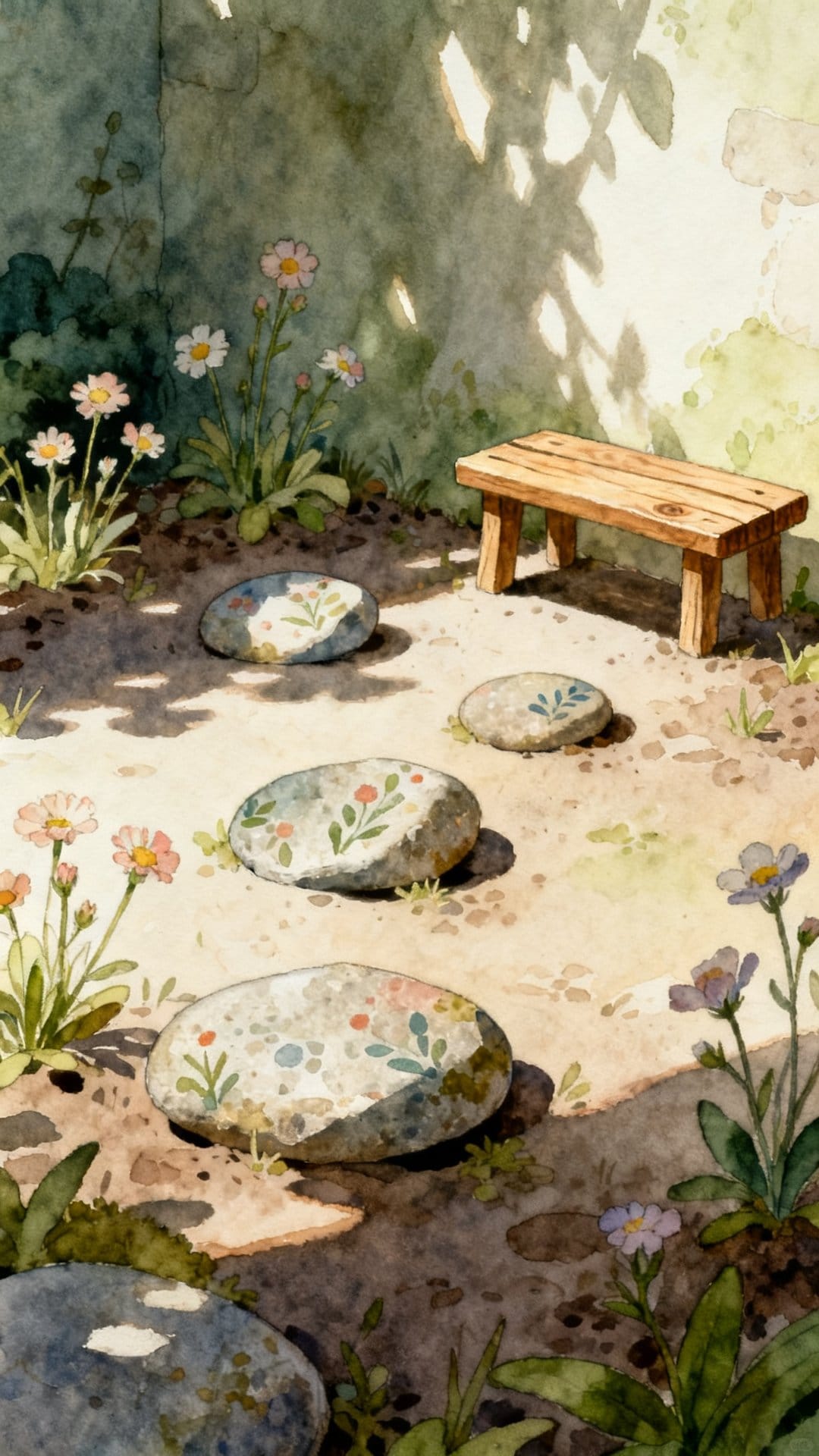
Color Palette Ideas
- Use earthy terracotta, forest green, dusty rose, and cream as your base palette, these colors disappear naturally into the garden rather than looking garish
- Paint tiny toadstools with white-spotted red caps on smooth, rounded stones for the most classic fairy garden motif
- Try a simple wash of soft gold paint on flat stones to create the effect of sunlight-dappled pebbles
- Write tiny words like “magic,” “wonder,” or “wish” in small script on pale stones using a fine-tipped paint pen
- Seal finished stones with outdoor matte varnish to protect the paint through summer rain and heat
These stones also make beautiful, personal gifts for friends who love gardening, a small collection of hand-painted fairy stones tied with twine is a genuinely thoughtful present that costs very little to put together.
17. Grow a Herb Garden With a Fairy-Scale Signage
A herb garden with tiny handwritten or carved signs for each plant is both practical and completely charming in a fairy garden context. The signs give the garden a storybook quality, as if a tiny herbalist lives there and has carefully labeled their collection. Rosemary, thyme, mint, chamomile, and lavender are all solid choices, they’re fragrant, low-maintenance, and have a natural, wild beauty that fits the fairy garden aesthetic beautifully.
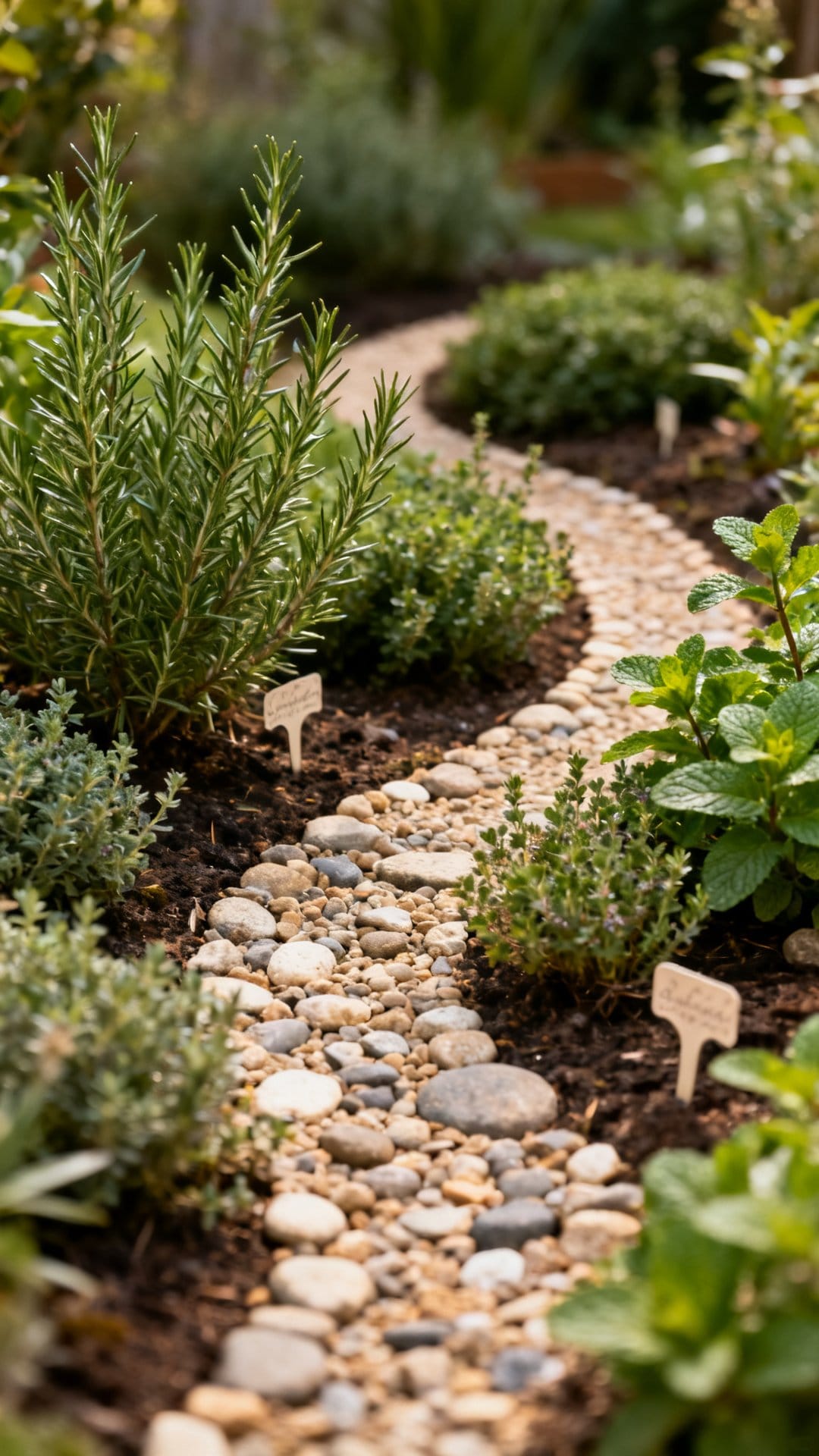
Make the signs from small pieces of driftwood, flat stones, or thin slices of branch, writing the herb names in simple lettering with a waterproof marker or woodburning tool. Push the signs into the soil at a slight angle, as if they’ve been there a while and settled naturally. Arrange the herbs in a loose, informal cluster rather than in rigid rows, the slightly wild, overgrown quality of an informal herb planting is far more magical than a tidy, geometric layout.
Pro tip: Plant lemon thyme at the front edge of your herb fairy garden, it releases a bright, citrusy scent when brushed against, adding an unexpected sensory layer every time someone walks close to the garden.
18. Build a Fairy Garden Terrarium for the Patio
Not every fairy garden needs to live in the ground, a large glass terrarium on a patio table or garden bench creates an enclosed, jewel-box version of the same magic that works beautifully in smaller outdoor spaces. The glass walls allow you to see every detail of the miniature world inside, and the enclosed environment creates its own microclimate that keeps moisture-loving plants happy even in the summer heat. This is one of the most popular enchanting summer fairy garden ideas for your yard when space is limited.
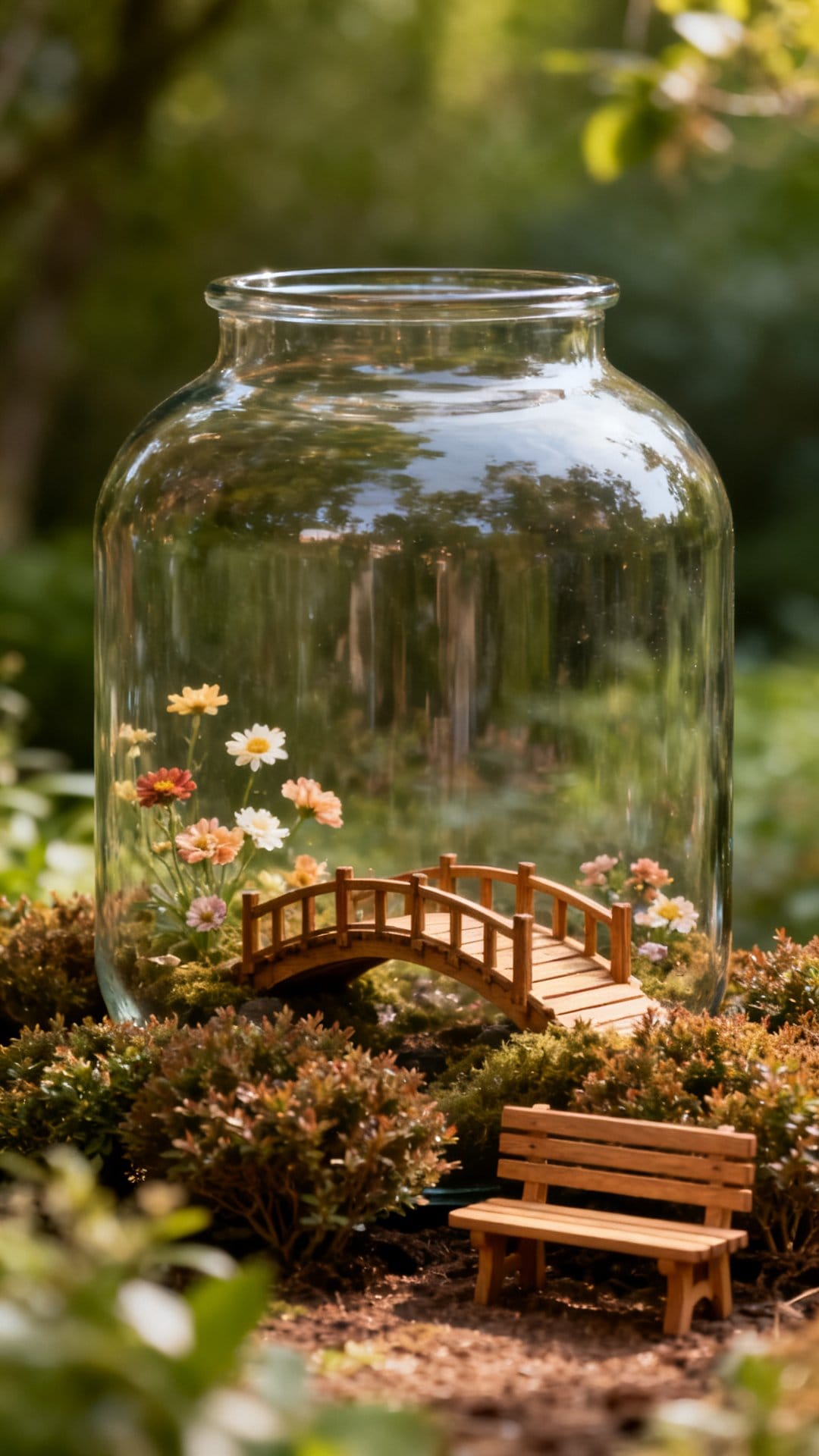
Finishing Touches
- Use an open-top terrarium or wide-mouthed glass vessel, closed terrariums can overheat in direct summer sun
- Layer the base with drainage pebbles, activated charcoal, and then a rich, fine-textured potting mix
- Plant miniature ferns, baby tears, and a single small air plant as the main greenery
- Add a tiny resin fairy figurine, a small mirror shard as a “pond,” and a few pieces of tumbled quartz for sparkle
- Place the terrarium in bright indirect light rather than full sun to prevent overheating and scorching
The terrarium approach is also wonderfully low-maintenance, once established, the plants need very little water and the enclosed environment keeps things looking lush and green throughout the summer months.
19. Line a Garden Fence With Hanging Jar Lanterns
A garden fence strung with hanging glass jar lanterns is one of those ideas that looks like it took hours to put together but actually comes together in an afternoon. The warm, flickering light of candles or LED tea lights inside glass jars creates a golden, intimate atmosphere along any fence line, turning a simple boundary into a magical, glowing feature. This works beautifully as a backdrop for a fairy garden bed planted along the fence base.
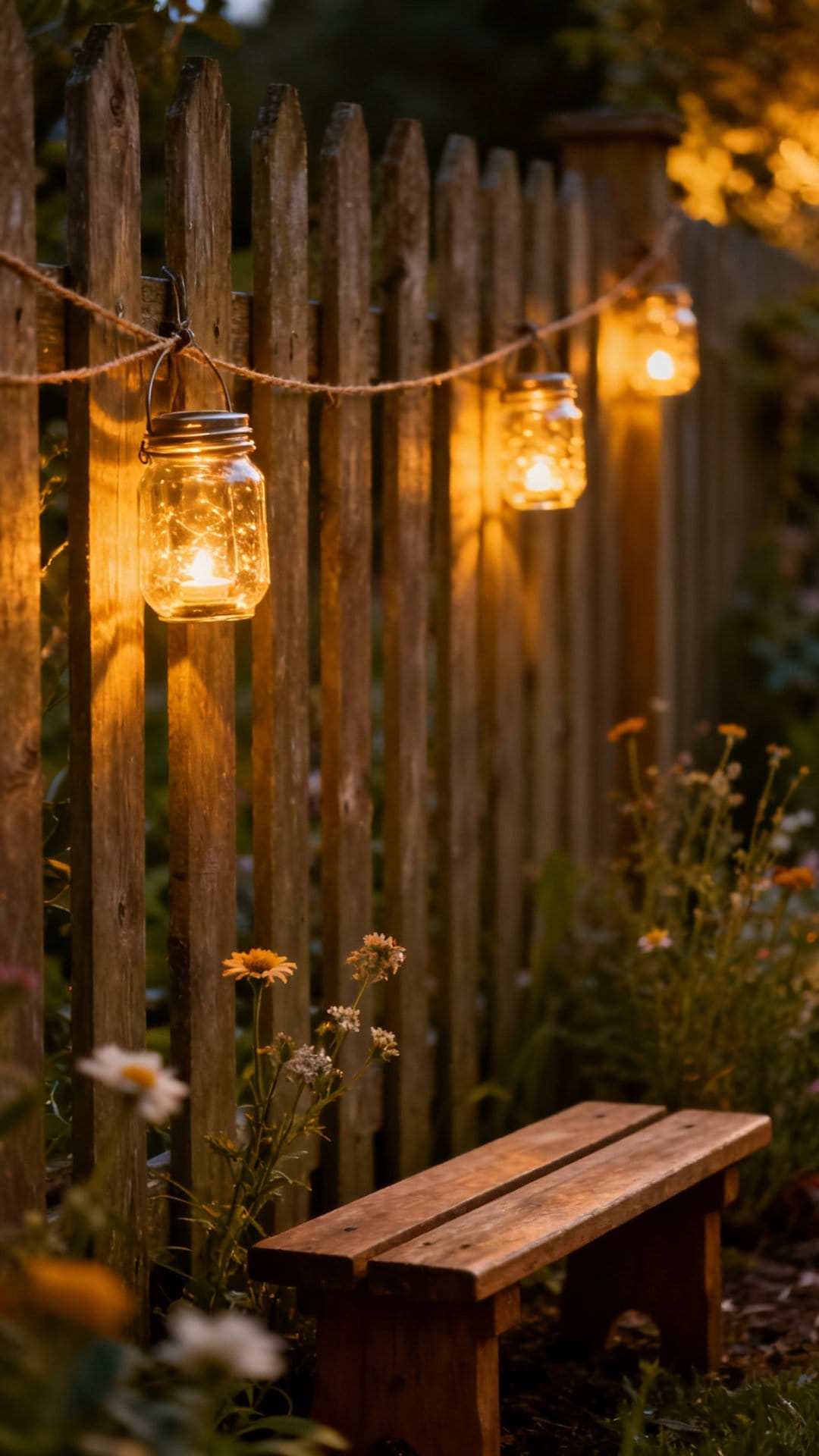
Use jars of varying sizes, small, medium, and large, hung at slightly different heights to create a layered, organic look rather than a perfectly uniform row. Tie them with natural jute twine, leaving enough slack so they sway gently in the breeze. Fill the jars with a layer of sand or small pebbles in the base before adding the candle, which prevents tipping and adds a warm, golden layer of color at the bottom of each jar when lit.
Pro tip: Tuck a single stem of dried lavender or a small sprig of rosemary into the twine knot of each jar, it adds a botanical detail that ties the lanterns visually to the garden below them and releases a faint fragrance in the warmth of summer evenings.
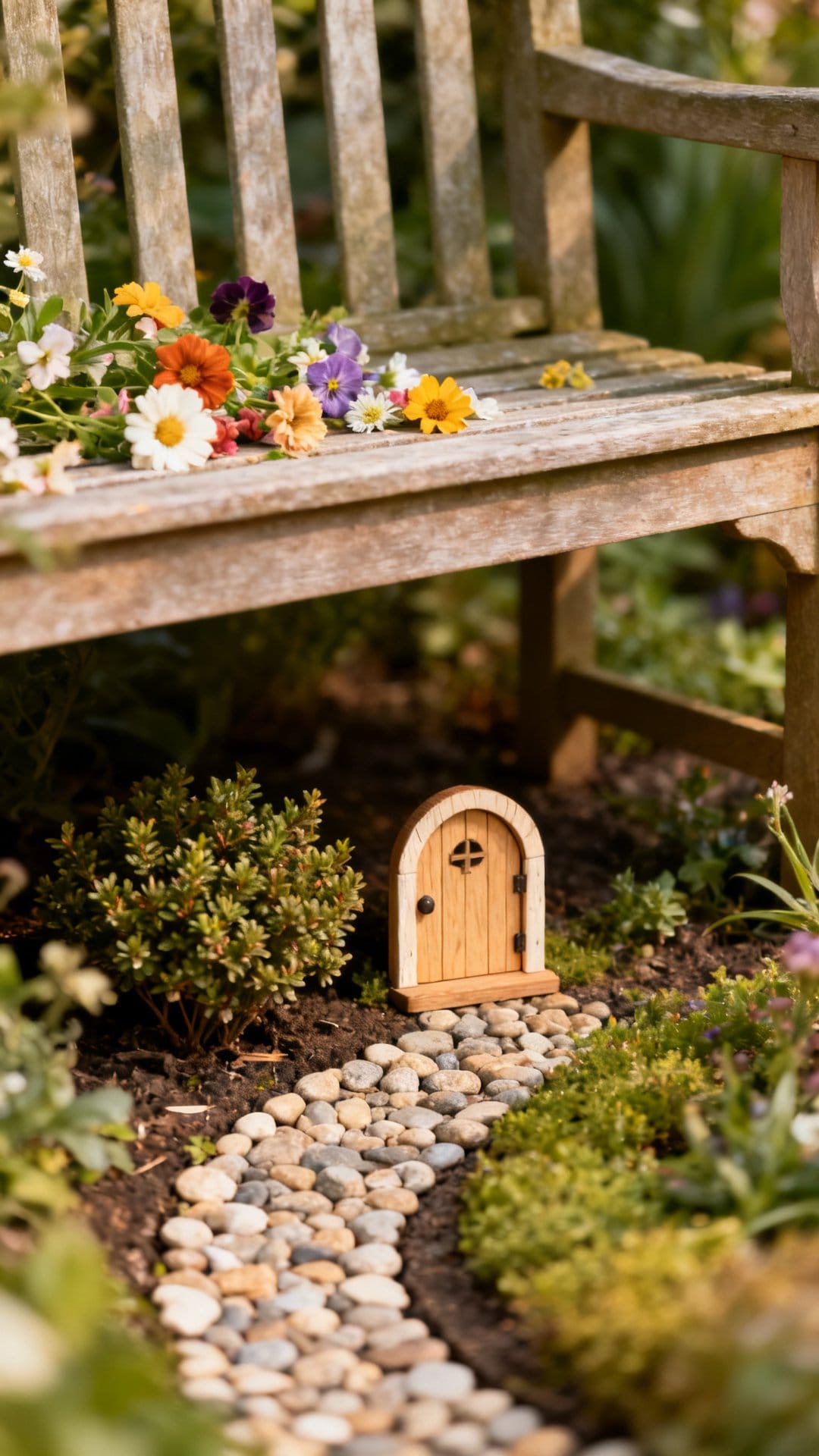
20. Create a Fairy Garden Nook Beneath a Garden Bench
The space beneath a garden bench is one of the most overlooked and most perfectly proportioned spots for a fairy garden, it’s low, sheltered, and naturally framed by the bench legs in a way that creates an instant sense of enclosure and intimacy. Tucking a miniature scene into this space gives the bench a second layer of meaning and change a simple piece of garden furniture into a feature worth stopping to look at carefully.
Texture Combinations
- Lay a base of fine green moss across the ground beneath the bench to create an instant lush “lawn” for the fairy scene
- Add a miniature stone cottage, a tiny well, and a few small figurines arranged as if in mid-activity
- Plant a small container of baby ferns or miniature hostas at the back of the nook to create a leafy backdrop
- Use a small piece of mirror or blue-tinted glass as a “pond” in the front of the scene, surrounded by tiny pebbles
- Hang a tiny string of battery-operated lights from the underside of the bench slats to illuminate the scene at night
This is a wonderful project to involve children in, the low, accessible height of the space makes it feel like it was designed specifically for smaller hands and curious eyes to explore up close.
After all the carefully arranged miniature details, sometimes the most powerful fairy garden element is one that you simply let nature create on its own.
21. Plant a Wildflower Meadow Patch as a Fairy Habitat
A small patch of wildflowers left to grow freely in a corner of your yard creates the most natural and authentic fairy habitat of all, and it requires almost no maintenance once established. The mix of colors, textures, and heights in a wildflower patch has an effortless, untamed beauty that no carefully planted border can fully replicate. Butterflies, bees, and birds are drawn to it naturally, which adds real, living movement to the scene.

Choose a seed mix that includes cornflowers, poppies, ox-eye daisies, black-eyed Susans, and bachelor’s buttons for a color palette that ranges from deep blue to warm gold. Sow directly into prepared soil in spring and let the plants find their own arrangement through the summer. Edge the patch with a simple border of small stones or a low wicker fence to define it as an intentional feature rather than an overlooked corner, and place a small fairy figurine or painted stone just inside the border as if it’s standing at the edge of an enchanted meadow.
Pro tip: Resist the urge to deadhead or tidy the wildflower patch too aggressively, the seed heads that form in late summer are beautiful in their own right and provide food for birds through the fall months.
22. Add a Copper or Verdigris Fairy Garden Birdbath
A small birdbath in a fairy garden serves double duty, it’s a beautiful decorative element and a genuinely functional piece that attracts real birds and butterflies to your garden space. The most magical-looking options are those with a weathered copper or verdigris finish, which develops a soft, blue-green patina over time that looks like it belongs in an ancient, enchanted garden. Even a small, pedestal-style birdbath standing just twelve to eighteen inches tall creates a lovely focal point.
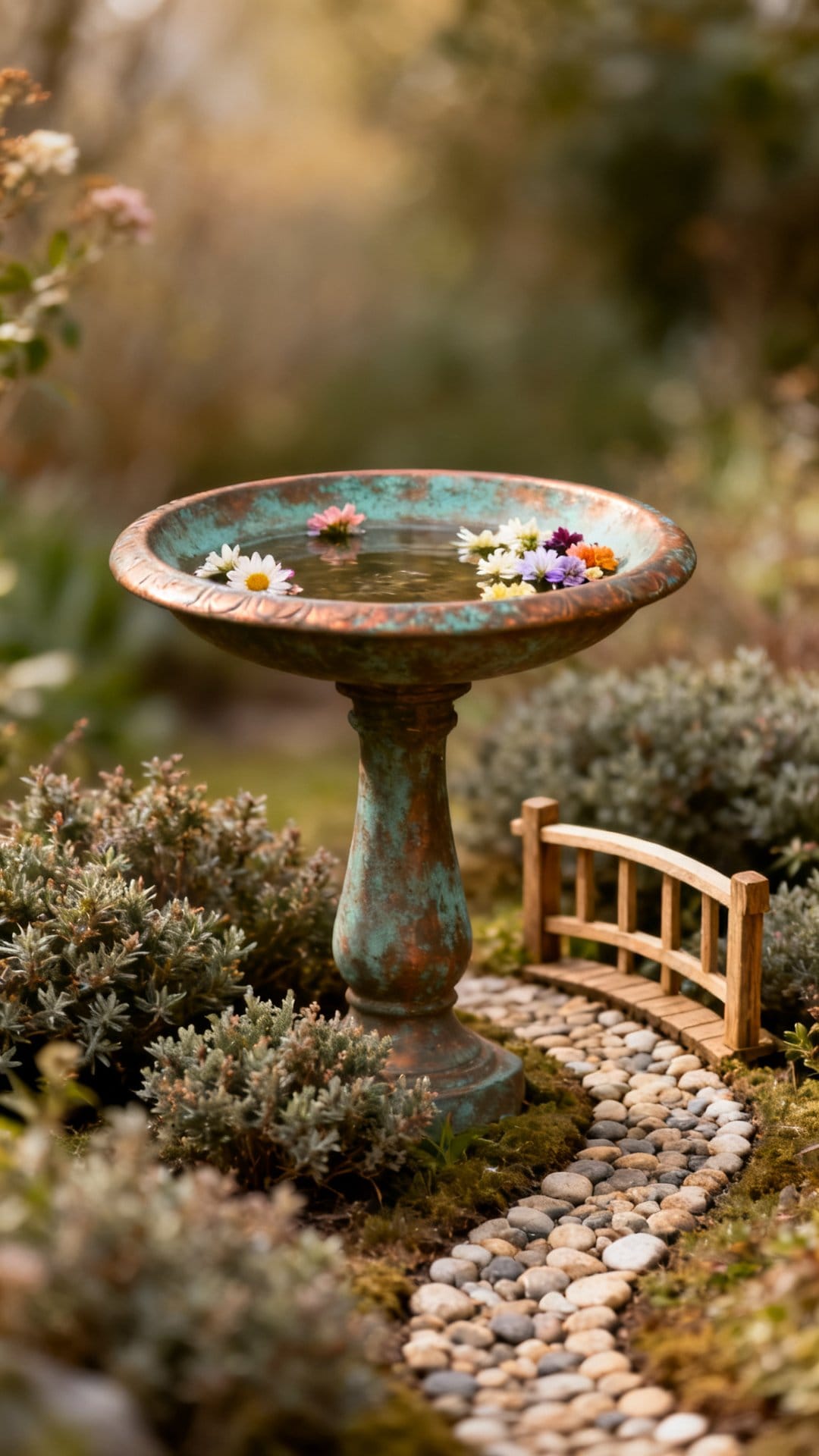
Why it works: The combination of the reflective water surface, the organic patina of aged metal, and the living visitors it attracts creates a dynamic, ever-changing focal point that no static decoration can match, it’s beautiful, functional, and genuinely alive in the way that the best garden features always are.
Surround the base of the birdbath with a ring of creeping phlox or purple alyssum, and keep the water fresh and clean, a simple scrub every few days keeps algae at bay and ensures the birds keep returning. Position it where it can be seen from a seating area so you can enjoy watching the visitors it brings throughout the long summer days.
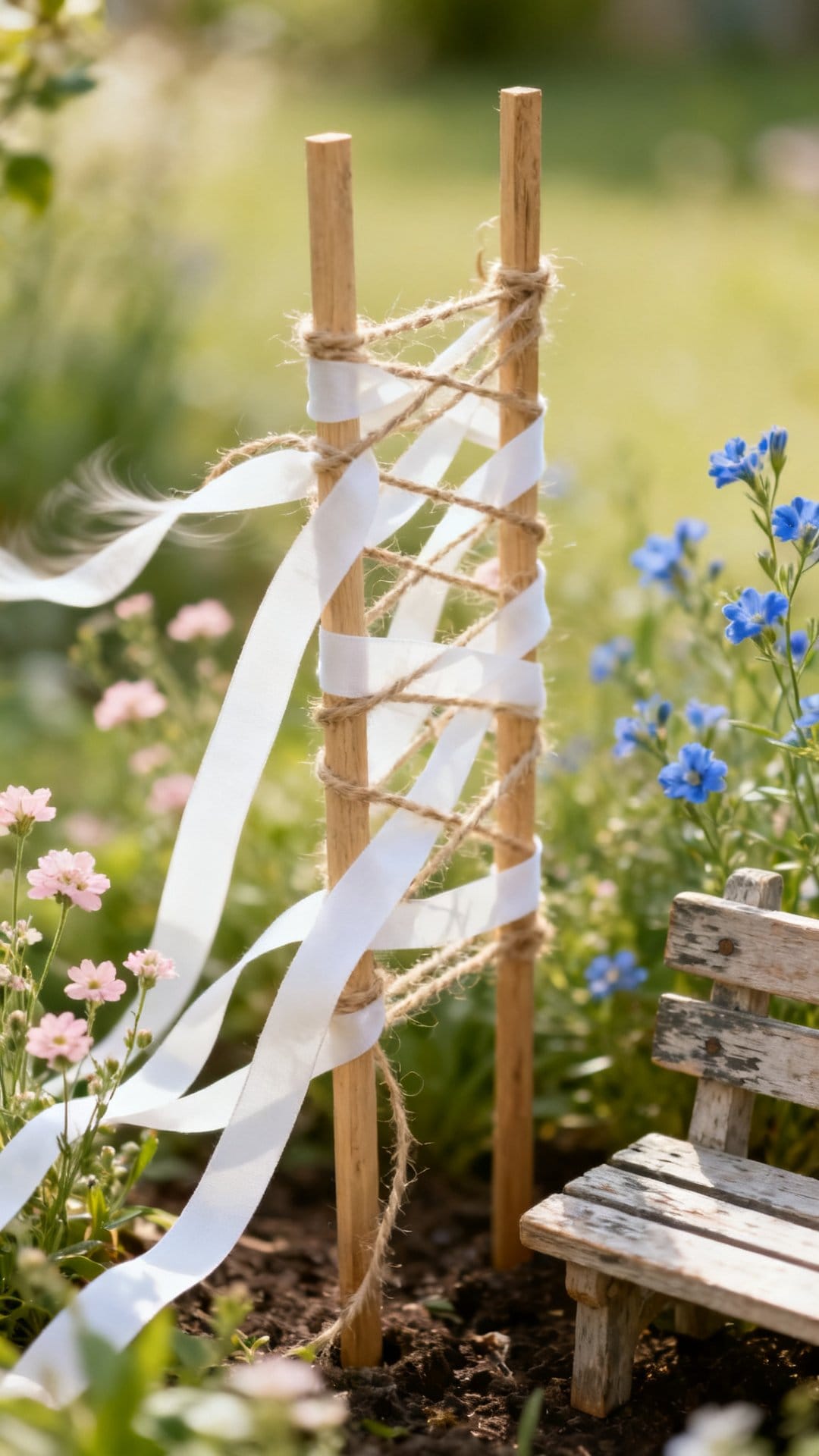
23. Weave Ribbon and Twine Through Garden Stakes
Soft ribbon and natural twine woven between garden stakes creates a delicate, textile quality in a fairy garden that feels genuinely handcrafted and intentional. Think of it as a kind of outdoor weaving, a soft barrier or decorative feature that moves gently in the breeze and catches light in a way that purely hard materials never can. This is a wonderfully budget-friendly idea that adds enormous visual interest for very little cost.
What to Look For
- Use natural jute twine alongside thin satin ribbon in soft blush, sage green, or pale gold for a color palette that feels organic rather than garish
- Weave loosely and irregularly rather than in a tight, uniform pattern, the imperfection is what gives it a handmade, fairy-crafted quality
- Tie small dried flower heads, tiny bells, or pieces of sea glass into the weaving at intervals for added texture and detail
- Use bamboo stakes or thin birch branches as the vertical supports, these look far more natural than metal or plastic stakes
- Create a short section of woven fence as a border for a fairy garden bed, or use it as a backdrop behind a miniature scene
This idea is especially beautiful in the late afternoon when the low summer sun catches the ribbon and makes it glow, it’s one of those details that photographs beautifully and looks even better in person.
24. Arrange a Fairy Garden in a Cracked or Mossy Urn
An old stone or ceramic urn, especially one with a crack, a chip, or a generous coating of moss, is one of the most characterful containers you can use for a fairy garden planting. The imperfection is the whole point: a perfect, pristine urn looks like a garden store display, but a weathered, mossy one looks like it has been sitting in an enchanted garden for a hundred years. Estate sales, flea markets, and thrift stores are wonderful hunting grounds for this kind of piece.
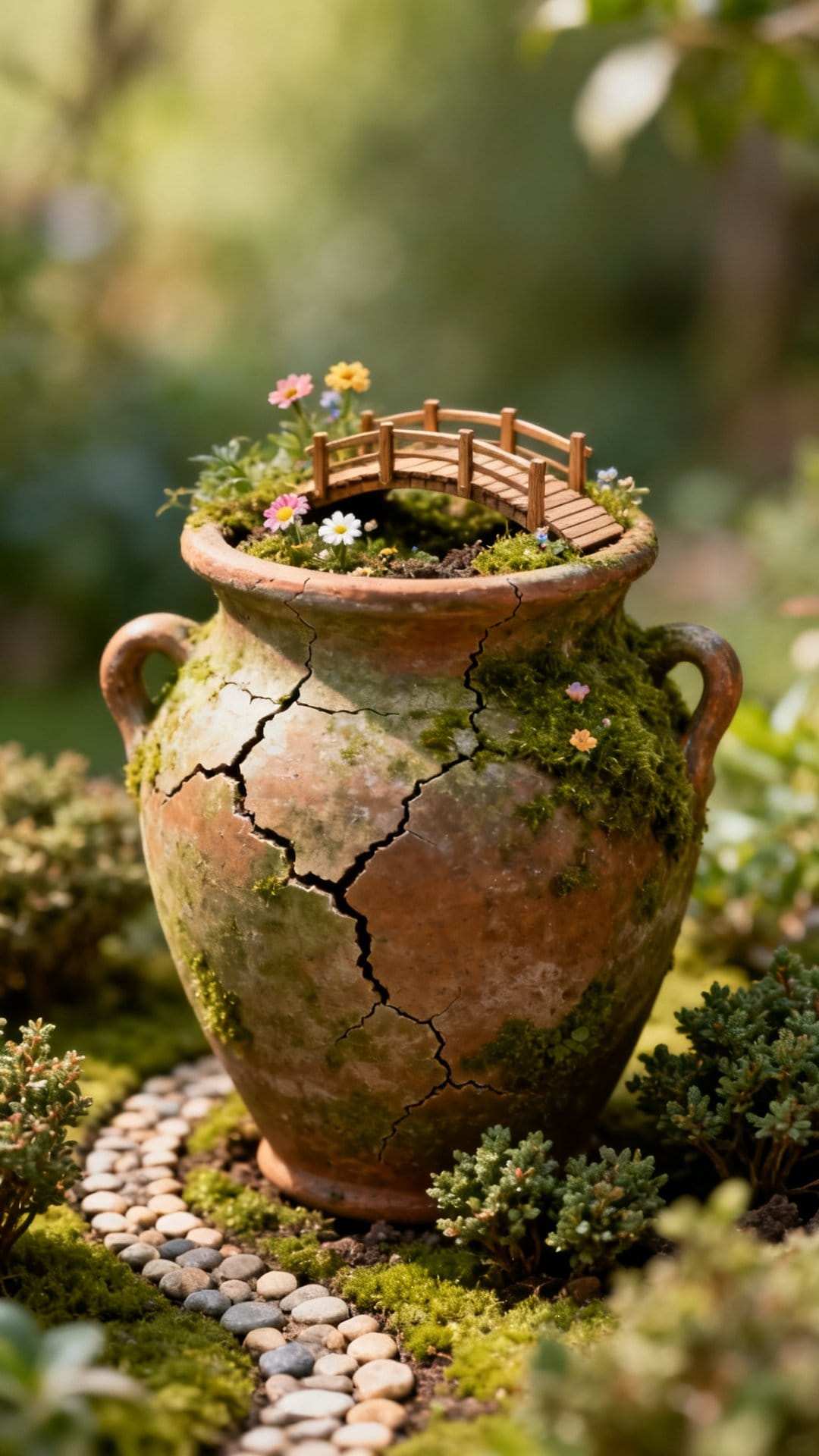
Plant the urn with a mix of trailing and upright plants, a small ornamental grass or dwarf conifer at the back for height, creeping Jenny or trailing rosemary cascading over the sides, and a few small flowering plants like miniature pansies or sweet William filling the middle. Tuck a tiny fairy figurine or a small painted stone into the planting, partially hidden by the foliage, as a detail that rewards careful looking. Place the urn on a slightly improve surface, a low stone wall, a garden pedestal, or a stack of flat stones, so the trailing plants can hang freely and the whole composition can be appreciated from multiple angles.
Pro tip: If your urn doesn’t have drainage holes, add a thick layer of gravel in the base and plant in a slightly smaller plastic pot that fits inside, this protects your plants from waterlogging while keeping the beautiful exterior of the urn intact.
25. Design a Full Backyard Fairy Garden Destination
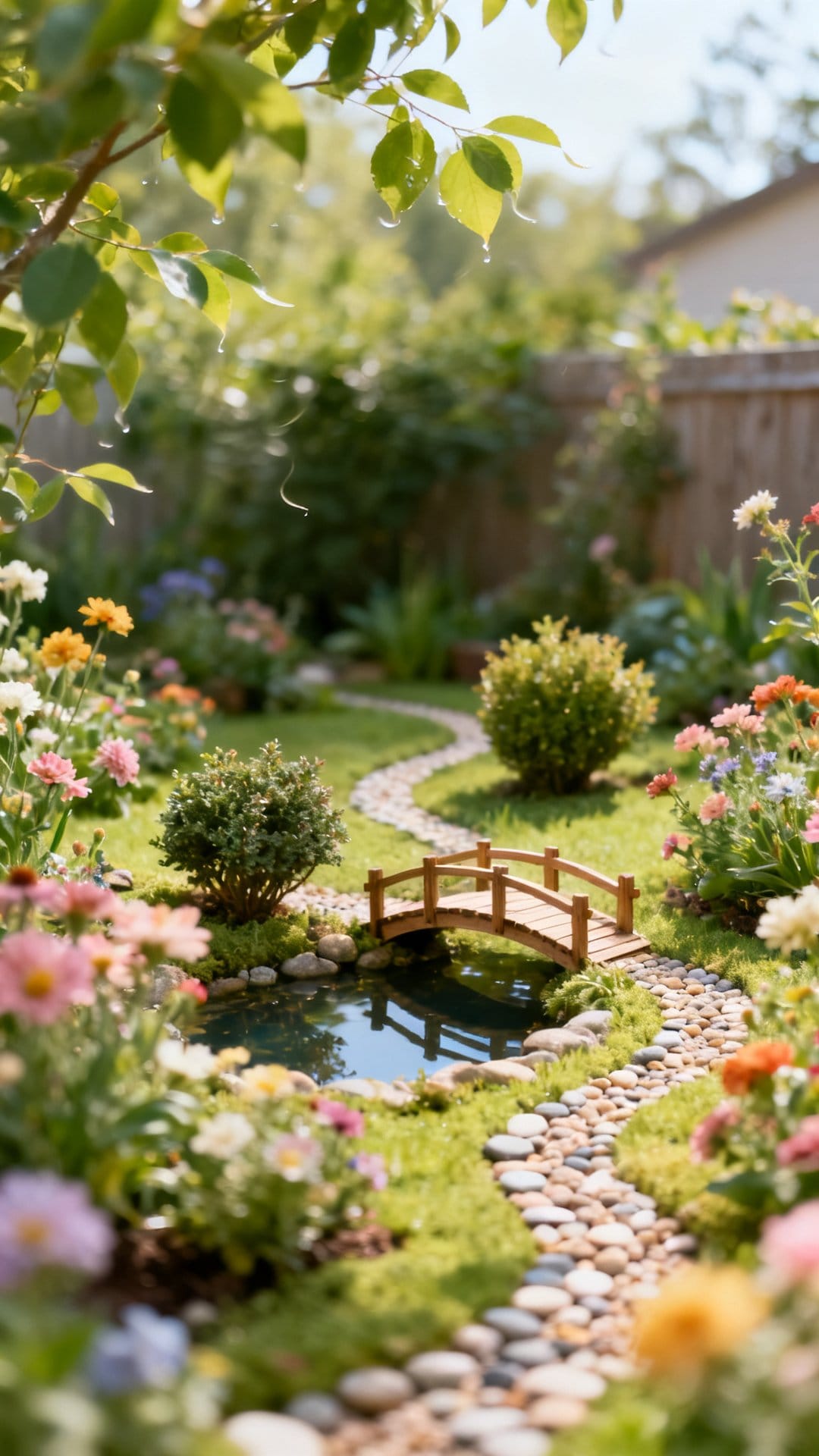
Bringing together all of the best enchanting summer fairy garden ideas for your yard into a single, cohesive backyard destination is the ultimate expression of this creative vision. This doesn’t mean doing everything at once, in fact, the most magical fairy gardens are built slowly and organically, adding one element at a time as the space evolves and reveals what it needs. The goal is a garden that feels discovered rather than designed, as if the magic was already there and you simply helped it become visible.
Layout Suggestions
- Start with a clear entry point, a mossy path, an arbor, or a simple gate that signals the transition into the fairy garden space
- Create distinct “rooms” or zones within the garden: a woodland corner, a flower meadow patch, a water feature area, and a seating nook
- Use height variation throughout, ground-level moss and stones, mid-level plantings and figurines, and vertical elements like climbing roses or hanging lanterns
- Ensure there are details at every scale: large enough to read from a distance, medium details that reward a closer look, and tiny elements that only reveal themselves when you crouch down to look
- Add a small seating area, even a single garden chair and a side table, so you can sit inside the fairy garden and experience it from within rather than just looking at it from outside
Someone I know spent an entire summer building her backyard fairy garden corner by corner, and by August she told me it had become her favorite place in the world to sit with her morning coffee, quiet, green, and full of small things that made her smile every single day. That, more than anything else, is the real point of all of this.
What Makes a Fairy Garden Truly Magical?
A truly magical fairy garden comes from layering personal touches, natural materials, and living plants in a way that feels discovered rather than designed. The most enchanting spaces reflect the imagination of the person who tends them, no matter the size or budget.
There is no single right way to bring enchanting summer fairy garden ideas for your yard to life, the most magical gardens are always the ones that reflect the personality and imagination of the person who tends them. Whether you start with a single painted stone tucked beneath a fern or commit to a full backyard fairy garden destination, every small step you take adds another layer of wonder to your outdoor space. Your yard, whatever its size or shape, has the potential to become something genuinely special this summer. Happy gardening!
Frequently Asked Questions
The best plants for a summer fairy garden are those with delicate textures, miniature proportions, or an otherworldly appearance, such as creeping thyme, Irish moss, miniature hostas, ferns, and dwarf conifers. Flowering plants like lobelia, alyssum, and miniature roses add pops of color that enhance the enchanted atmosphere. When selecting plants, consider your climate and light conditions to ensure your fairy garden stays lush and vibrant throughout the summer season.
Absolutely not, fairy gardens are incredibly versatile and can be created in almost any size space, from a sprawling backyard to a small apartment balcony or even a single container pot. Many of the most charming fairy garden designs are actually compact, using miniature elements and clever layering to create a sense of depth and wonder in a very small footprint. A simple whiskey barrel planter, a window box, or a tucked-away patio corner can be just as magical as a full garden bed.
A basic fairy garden can be built with just a few key materials, including a container or designated garden bed, quality potting soil or garden soil, small plants suited to your climate, and a handful of decorative elements like miniature figurines, tiny furniture, pebbles, and driftwood. Mossy stones, small mirrors to mimic ponds, and natural twigs for fencing are also popular low-cost additions that add authentic charm. The beauty of fairy gardens is that many materials can be repurposed from around your home or sourced inexpensively from craft stores and thrift shops.
Maintaining a summer fairy garden involves regular watering, occasional pruning to keep miniature plants from outgrowing their space, and checking that decorative elements haven’t shifted or weathered too severely. Choosing drought-tolerant or heat-resistant plants will reduce the maintenance burden during the hottest summer months and keep your garden looking lush with less effort. It also helps to refresh small decorative accents mid-season, swapping in a new figurine or adding seasonal flowers can instantly revive the enchanted feel.
Fairy gardens are one of the most child-friendly garden projects you can undertake, as they naturally spark imagination and encourage kids to engage with nature in a playful, creative way. Children can help choose plants, arrange miniature furniture, paint small stones, or craft simple accessories from natural materials like acorns, pinecones, and twigs. Just be mindful to avoid any plants that are toxic if ingested and supervise younger children around small decorative pieces that could be a choking hazard.
You Might Also Like



Get cozy seasonal ideas in your inbox
Seasonal decor, recipes & home inspiration — straight to you. No spam, unsubscribe anytime.