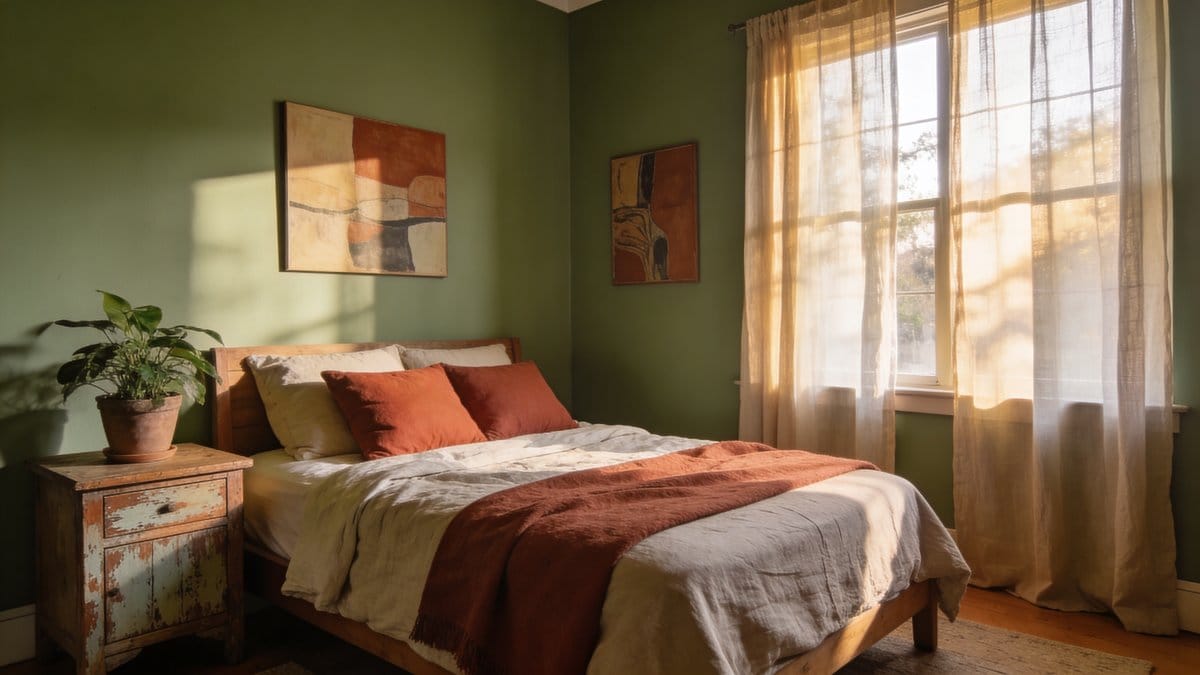
There’s a particular kind of light that spills into a bedroom in the late afternoon — golden, slow, and a little nostalgic — and few color pairings catch it quite like sage green and terracotta. Together they feel like a walk through a sun-warmed garden: one color cool and grounding, the other glowing with quiet heat. If you’ve been craving a space that feels calm but never cold, a sage green and terracotta bedroom might be exactly the refresh you’re after. This collection isn’t just a list of pretty rooms — it’s 30 genuinely different angles, from tiny-space tricks to seasonal swaps, so you can find the version that fits *your* room.
1. The Classic Pairing: Sage Walls With Terracotta Accents
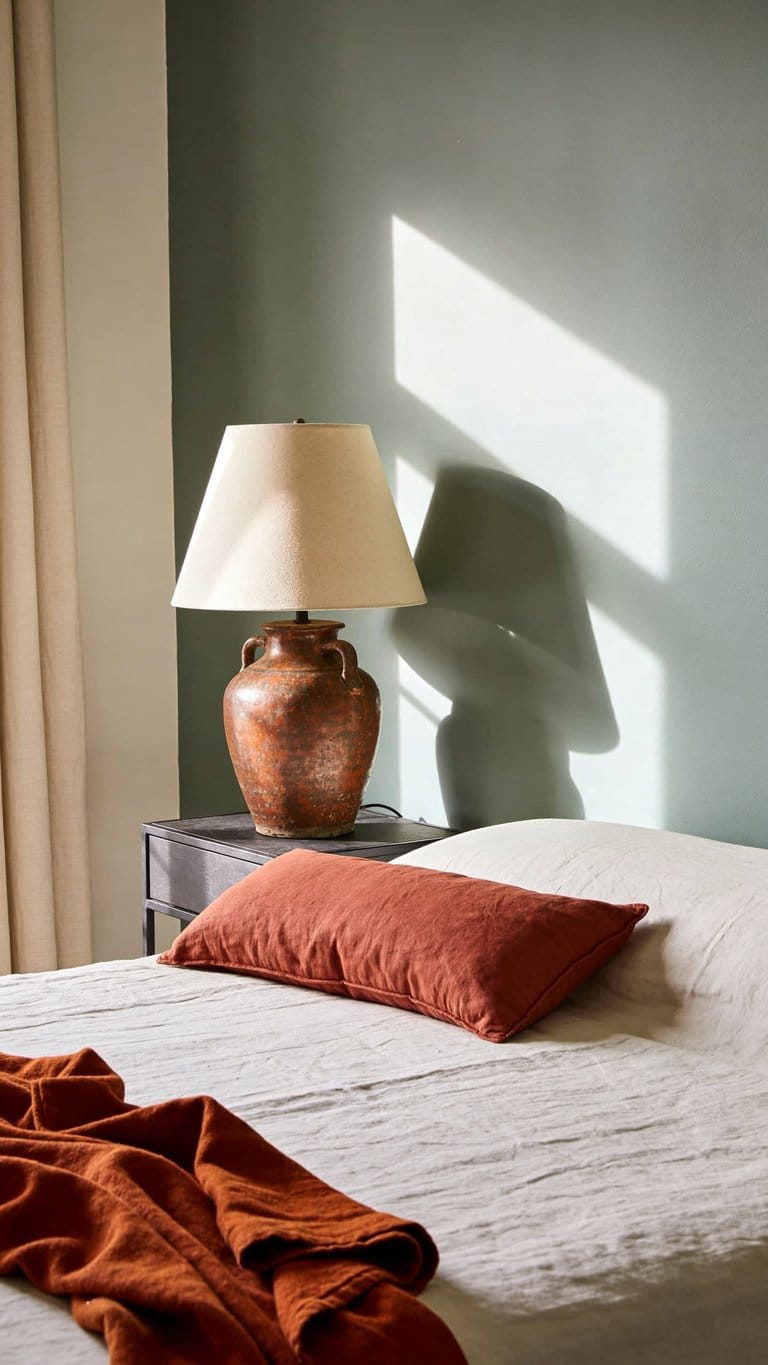 Shop this look: a terracotta table lamp on Amazon
If you’re not sure where to begin, start with the most foolproof combination: soft sage on the walls and terracotta sprinkled throughout in smaller doses. This lets the green do the calming work while the warm clay tones add personality. Honestly, this is probably my favorite starting point on the whole list, it works in almost any bedroom, regardless of size or style.
Why it works: Sage recedes visually, making walls feel like a gentle backdrop, while terracotta advances and draws the eye, so accents in the warmer shade feel intentional rather than busy.
Picture a muted sage painted wall behind the bed, then a terracotta lumbar pillow, a rust-toned ceramic lamp base, and a single burnt-orange throw folded at the foot of the bed. That’s it. Three or four warm touches against a green canvas is enough to make the whole room feel considered, layered, and unmistakably warm without you having to commit to anything bold or permanent.
2. Start With a Terracotta Headboard
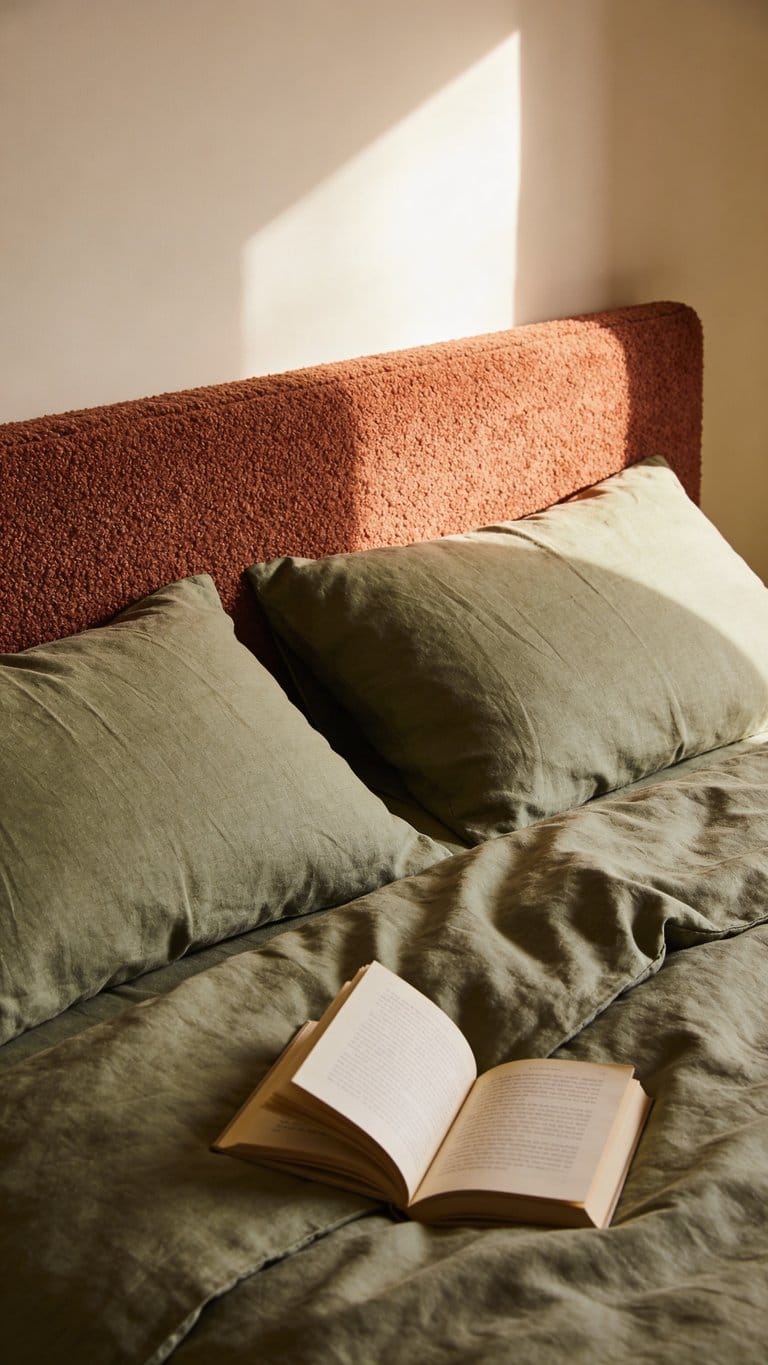 Shop this look: an upholstered headboard on Amazon
The fastest way to set this whole palette in motion is with the headboard. An upholstered piece in terracotta bouclé, clay leather, or burnt-orange velvet instantly anchors the room and tells the eye exactly where the warmth lives. Once it’s in place, everything else has something to lean against.
From there, balance is easy. Sage pillowcases in linen or cotton do the cooling work, the headboard warms the space, the bedding settles it back down. And if you can, skip painted metal in favor of a natural wood bed frame. Wood bridges the gap between your two main colors instead of competing with either one.
3. Layered Bedding in Earthy Tones
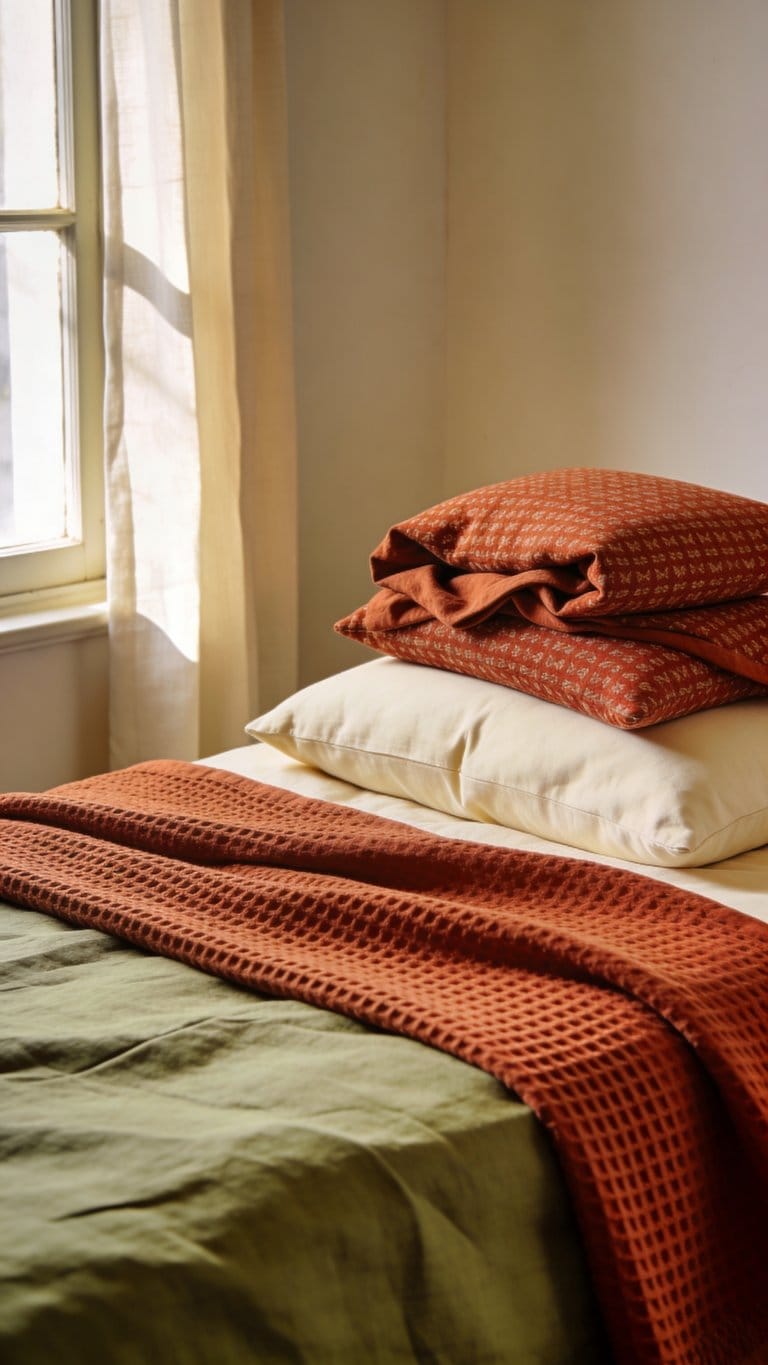 Shop this look: a sage green duvet on Amazon
Bedding is where most of us actually live with color, so it deserves real attention. The trick with sage and terracotta is to layer several tones rather than matching everything perfectly, that irregularity keeps the bed looking collected over time, not bought as one matching set.
Try a sage green linen duvet as your base, then add a terracotta waffle blanket folded across the lower third. Stack pillows from back to front in descending warmth: cream Euro shams, then sage standard pillows, then a pair of small rust-and-clay patterned cushions in front. A linen texture on top keeps everything soft and slightly rumpled, which reads cozy, not fussy.
Pro tip: Wash new linen bedding once before styling, that first wash relaxes the fibers and gives you the lived-in, gently crumpled drape that makes earthy bedrooms feel effortless.
4. A Sage Green and Terracotta Bedroom for Small Spaces
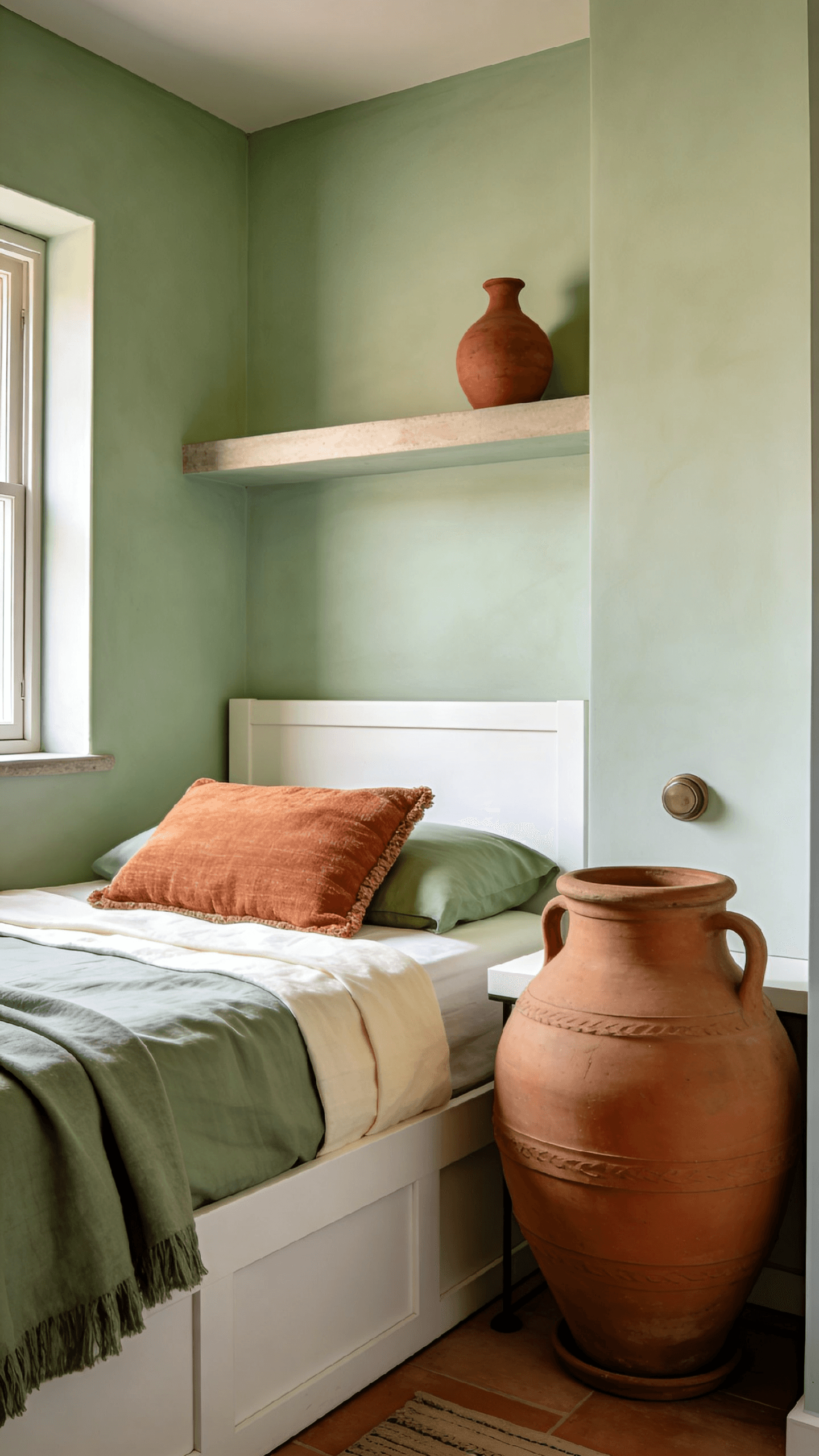 Shop this look: sage curtains on Amazon
Tight rooms can absolutely handle this palette, you just need to be strategic about where the warmth lands. The goal is to feel enveloped, not crowded.
Small Space Tricks
- Paint walls in a pale, chalky sage to keep the room feeling open and airy
- Reserve terracotta for textiles and ceramics you can move or swap easily
- Choose a low-profile bed frame in light wood so sightlines stay long and uninterrupted
- Hang curtains high and wide to add the illusion of height and breathing room
In a compact sage green and terracotta bedroom, a single terracotta vase or a small framed print can carry as much weight as a feature wall would in a larger space. Restraint is your friend here, let the green expand the room and the clay tones warm it from a few well-chosen spots.
5. Natural Wood as the Bridge
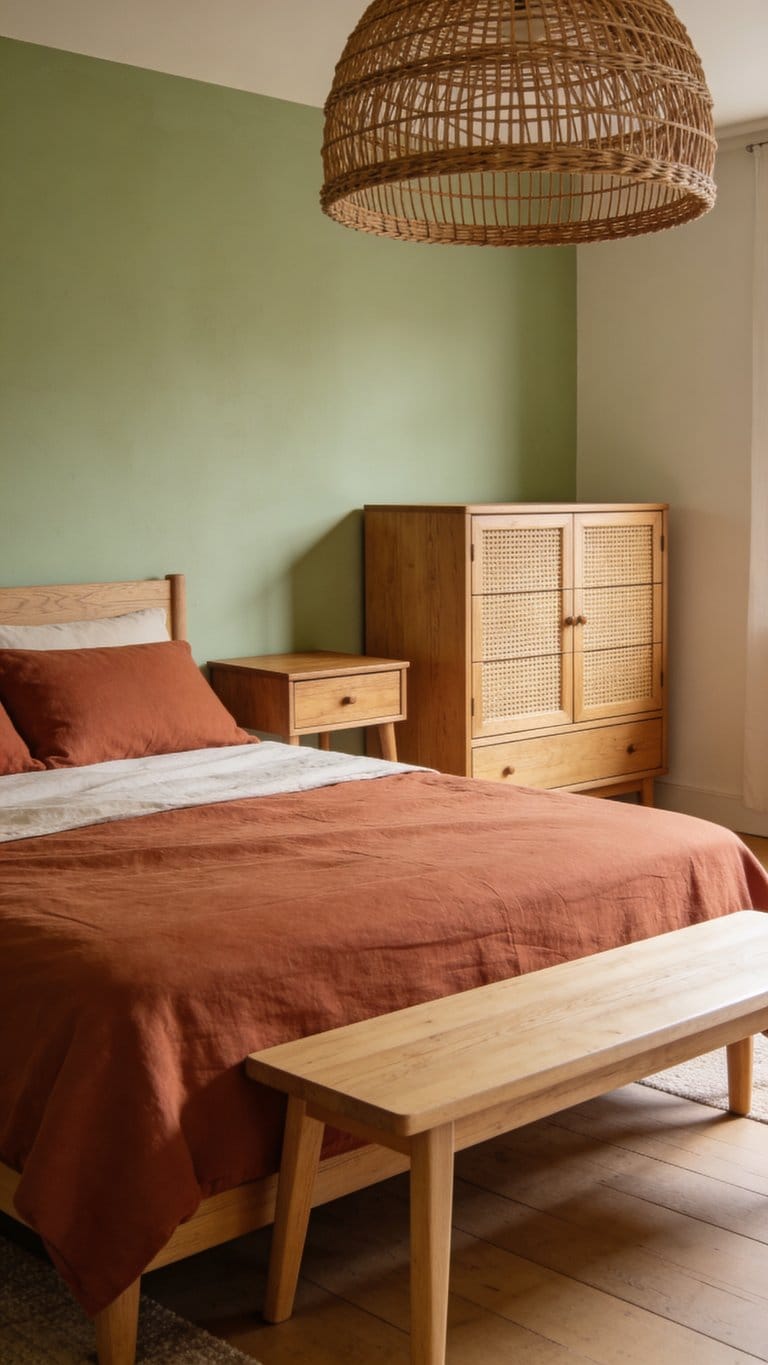 Shop this look: a wood nightstand on Amazon
Sage and terracotta are both lovely, but they truly sing when natural wood ties them together. Wood shares undertones with both, the green leaning organic, the clay leaning earthy, so it acts like a translator between them.
Bring in an oak nightstand, a cane-front dresser, or exposed ceiling beams if you’re lucky enough to have them. A woven rattan pendant or a wooden picture rail adds that mid-warmth glow that keeps the palette from splitting into two camps. My neighbor has a simple light-wood bench at the foot of her bed, and every time I visit I notice how quietly it pulls the entire scheme into focus.
Pro tip: Stick to one wood tone throughout, mixing pale and dark pulls the eye in too many directions. A consistent wood tone reads as a deliberate third color, while mismatched woods can make even a beautiful palette feel a little unsettled.
6. Terracotta Pots and Trailing Greenery
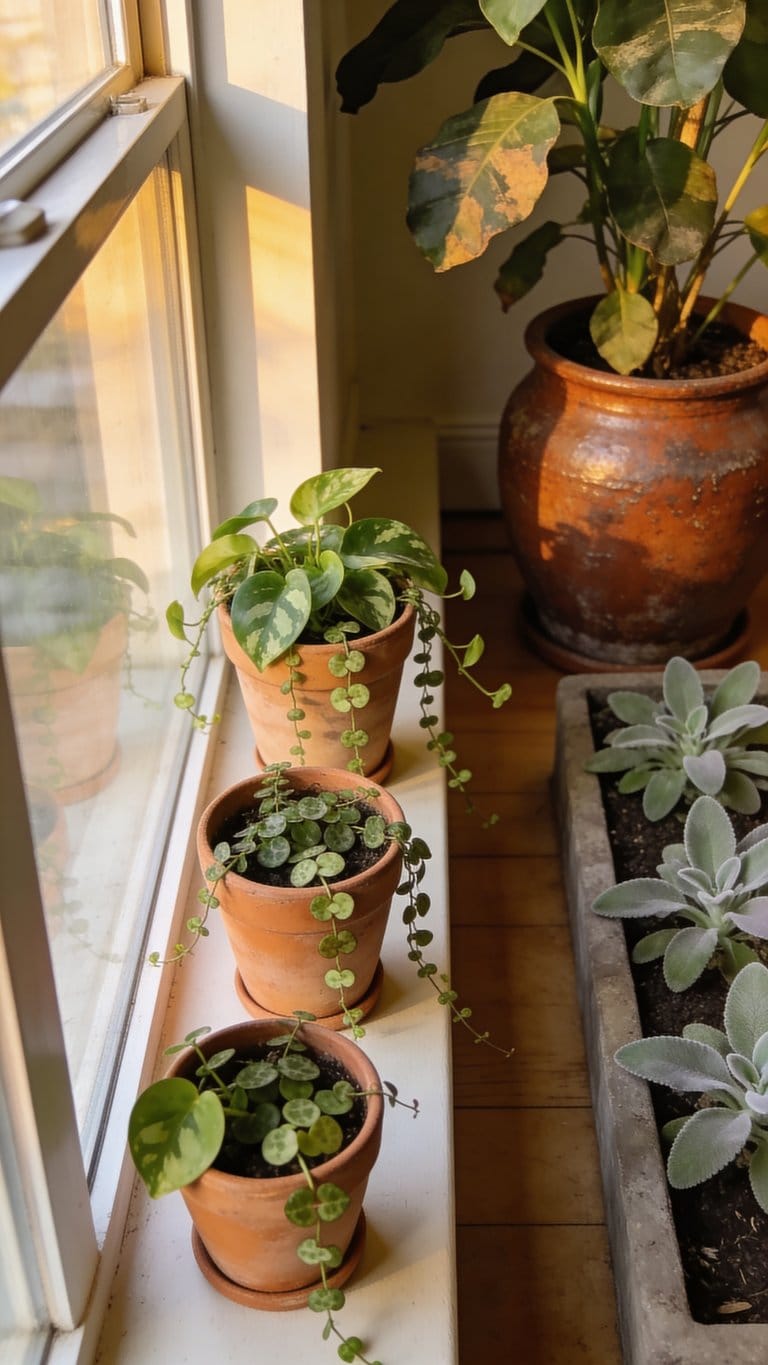 Shop this look: Orceler 6in Terracotta Clay Pots with Saucer
There’s a reason terracotta planters feel so at home in a sage room, the living green of the plants and the warm clay of the pot are the palette in miniature. It’s a low-effort way to make the theme feel rooted and alive.
Cozy Touches
- Cluster three unglazed terracotta pots of varying heights on a windowsill or dresser
- Choose trailing plants like pothos or string-of-hearts to soften hard shelf edges
- Add one large floor plant in a rust-toned ceramic planter beside the bed
Unglazed terracotta develops a chalky patina over time, which only deepens the lived-in feel. This idea works especially well if you want warmth without buying more décor, plants do double duty, adding texture, color, and a little softness to the air.
7. A Patterned Rug to Anchor the Room
 Shop this look: Sage Green Monstera 5×7 Area Rugs High-Low… · nuLOOM Rigo Hand Woven Farmhouse Jute Area Rug,… · Valenrug 8×10 Area Rugs for Living Room, Large…
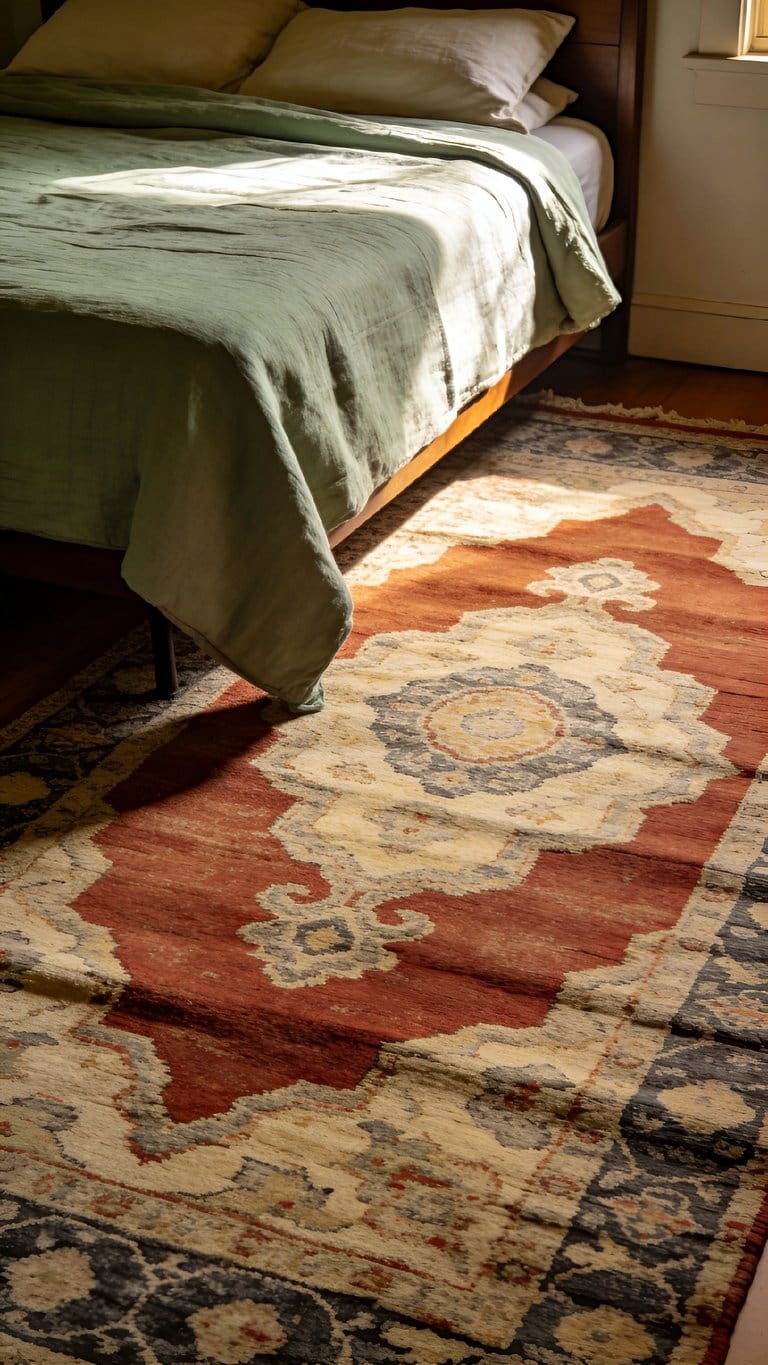
A rug is the unsung hero of a layered bedroom. When your walls and bedding stay fairly calm, a patterned rug becomes the place to let sage and terracotta dance together with a bit more energy. It also pulls warmth down to floor level, which makes the whole room feel grounded.
Look for a flat-weave or vintage-style rug that blends muted sage, rust, cream, and a touch of charcoal in a geometric or faded medallion pattern. Position it so a generous border extends past the bed on three sides, you want warm color underfoot the moment you step out of bed, not a small island marooned in the middle of the floor.
Pro tip: If your budget only stretches to a small rug, layer it diagonally over a larger natural jute one. The jute adds texture and size while the patterned rug delivers the color story.
8. The Power of a Terracotta Feature Wall
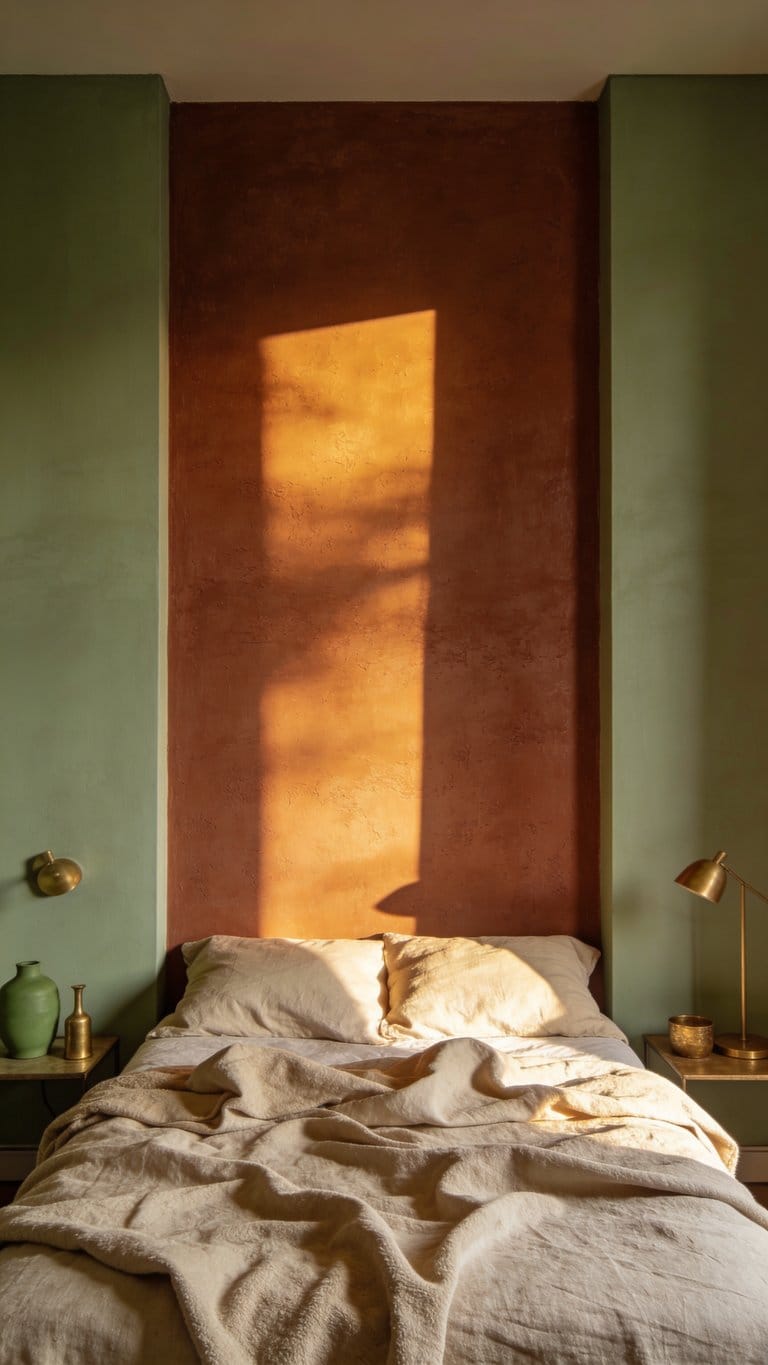
A terracotta feature wall sounds bold, and it is, but the trick is letting it stand mostly alone. Paint one wall a rich burnt-clay and keep the other three in soft sage, so the warm tone reads as a focal point, not a takeover.
Then quiet everything down around it. Cream or oat-toned bedding keeps that deep wall from overwhelming the room, giving your eye somewhere soft to land. Finish with sage and brass accessories, both pop crisply against the darker backdrop and pull the palette together.
9. Boho-Inspired Layers
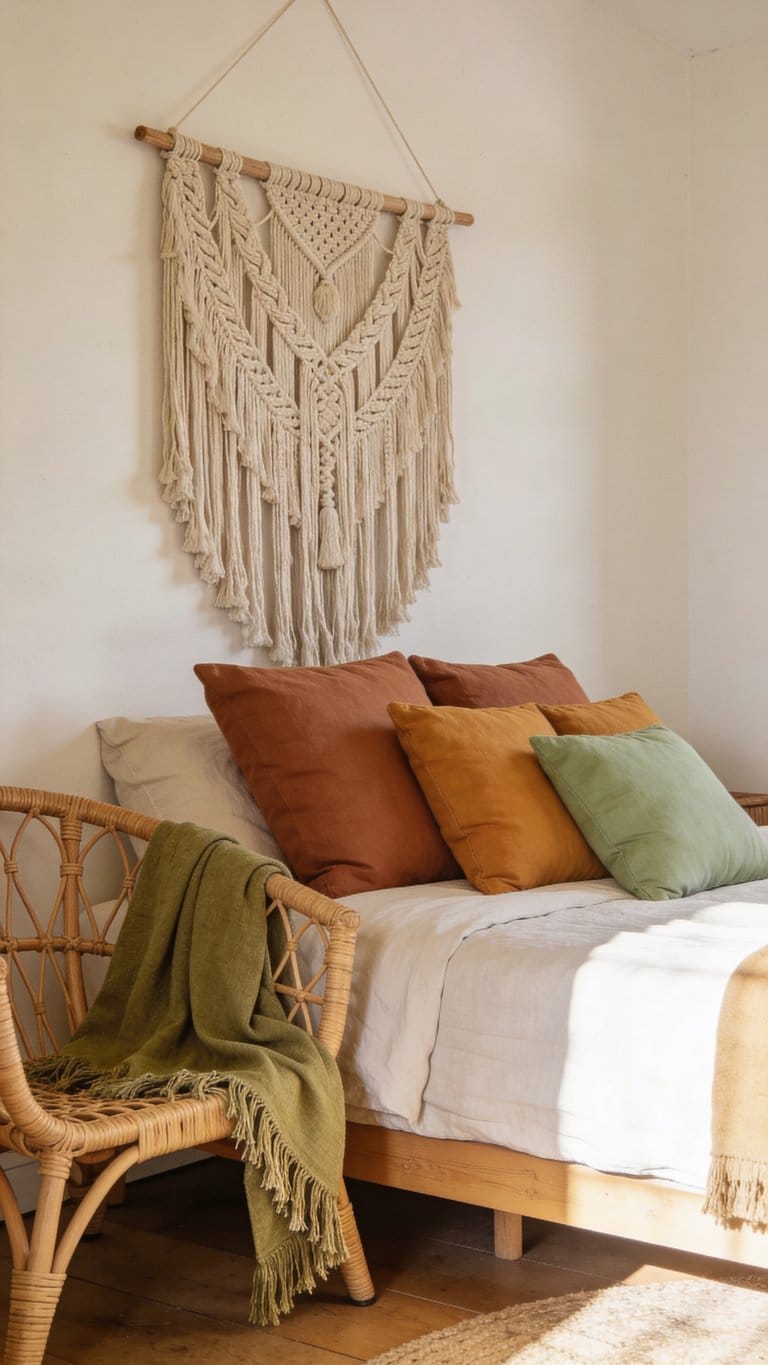
Sage and terracotta have a natural bohemian streak, and leaning into it gives you permission to mix freely. Think collected-over-years, not matched-in-a-day.
Why it works: Boho style thrives on tonal variation and tactile contrast, and this palette already lives in the warm, earthy family, so layering more textures only deepens the harmony instead of creating chaos.
Drape a fringed sage throw over a rattan chair, hang a macramé piece in undyed cotton above the bed, and pile on cushions in clay, ochre, and soft green. A few of these sage green boho bedroom ideas can help you find the right balance between relaxed and intentional. The secret is keeping the palette tight even as the textures multiply, that restraint is what separates curated boho from cluttered.
&# 128715; Style it further:Dark boho bedroom ideas→10. Textured Throw Pillows in Mixed Materials
 Shop this look: Bunliuys 2 Pack 18×18 Pillow Cover Velvet…
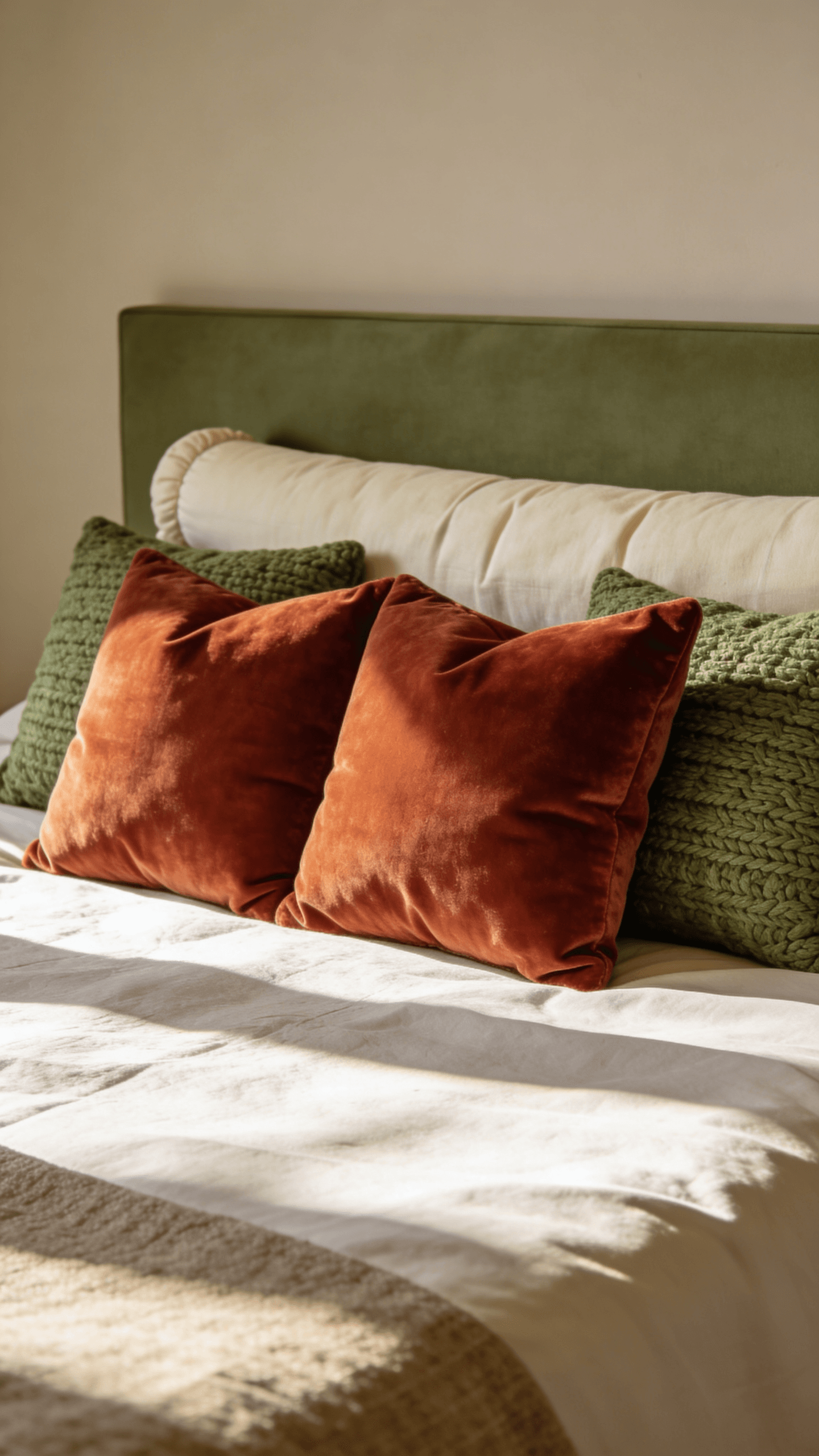
Throw pillows are where this color story gets fun, and texture matters just as much as color. Set a chunky sage knit cushion next to a smooth terracotta velvet one, the rough-against-soft contrast makes both feel more intentional.
Mix in a block-printed clay-and-cream pillow to break up the solid colors with a little quiet pattern, nothing loud. Then lay a linen lumbar pillow with a simple sage stripe across the front to tie the whole row together. If you want to go deeper on pillow layering, these decorative bed pillow ideas walk through the exact technique.
11. Lighting That Warms the Palette
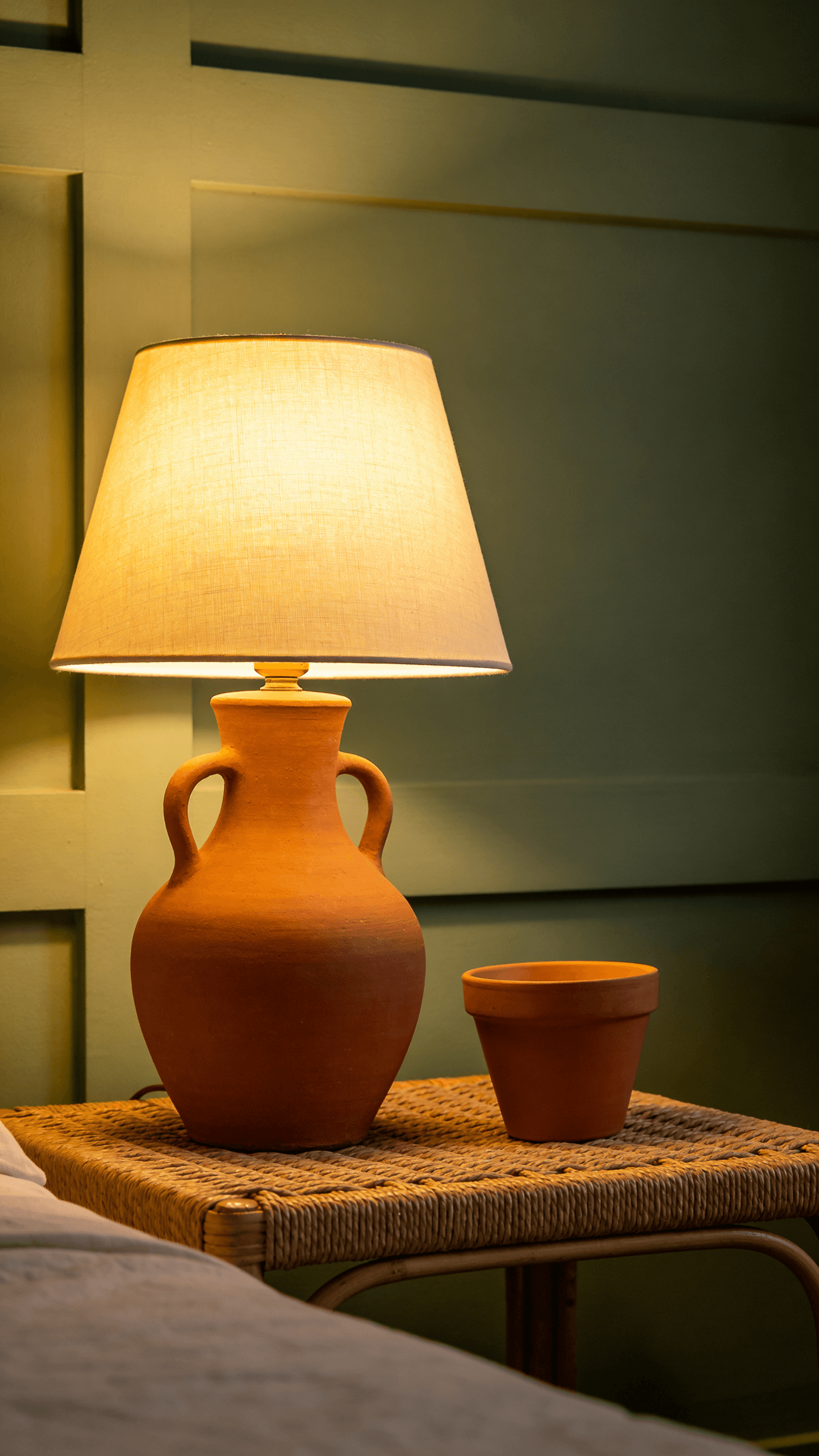
You can choose the perfect sage and terracotta, then undo it all with the wrong bulbs. Lighting is the quiet ingredient that decides whether your room glows or goes flat. Warm light flatters earthy tones the way late sun flatters a garden, deepening the clay and softening the green.
Swap any cool-white bulbs for warm ones in the 2700K range, and layer your sources instead of relying on one overhead fixture. A terracotta-glazed table lamp on the nightstand, a small brass picture light over art, and a string of warm fairy lights tucked behind the headboard each add a different pool of glow.
Pro tip: Put your main lamps on a dimmer or choose smart bulbs you can dim. Being able to drop the light to a low amber in the evening turns the whole palette golden and makes the room feel instantly more restful.
12. Mixing Matte and Glazed Ceramics
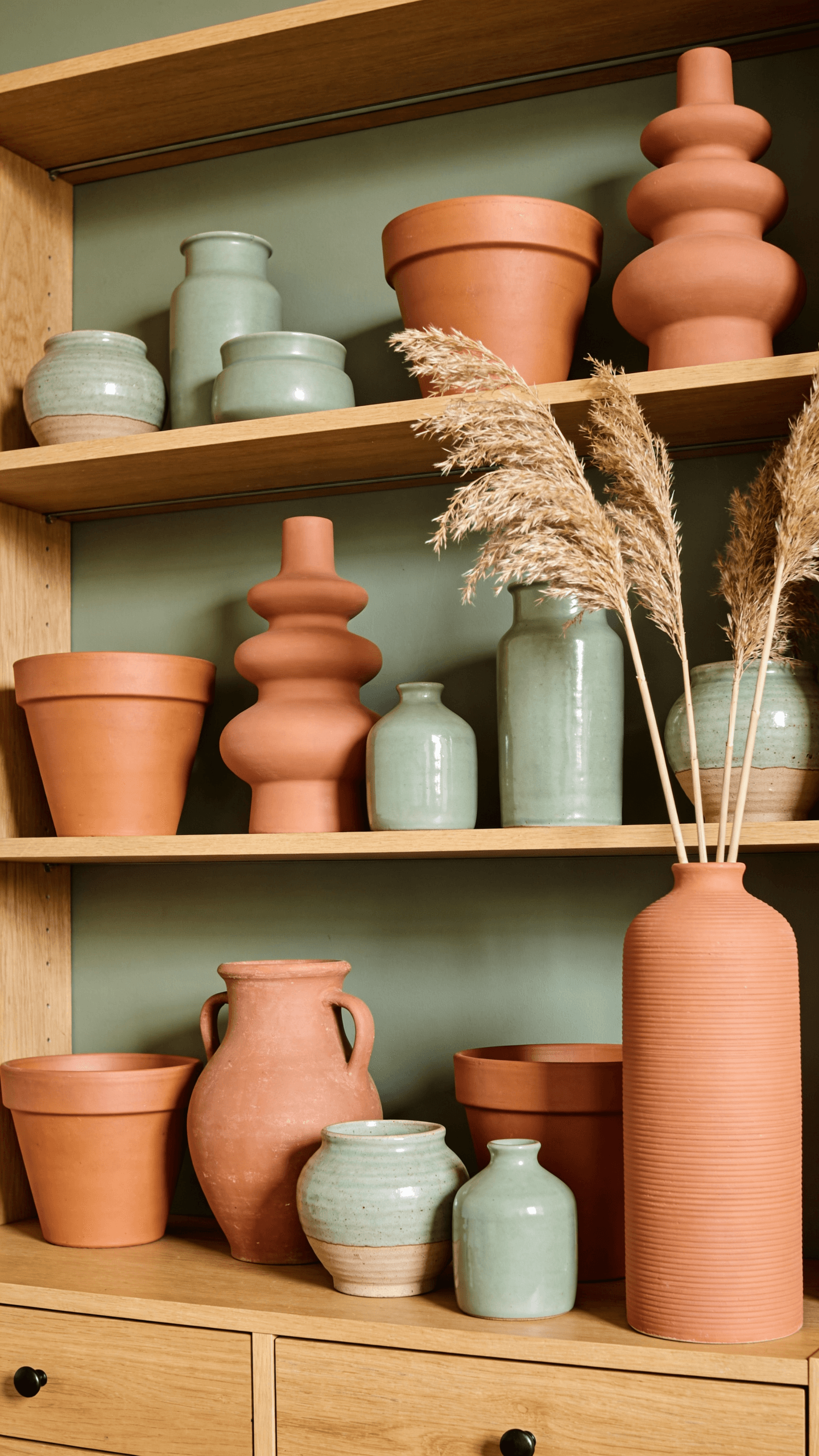
Ceramics are where sage and terracotta feel most at home, since both colors come straight from the earth. A shelf or dresser styled with pottery becomes a little still life that reinforces the whole scheme.
Materials to Try
- A matte, unglazed terracotta bud vase next to a glossy sage-glazed jug
- A speckled stoneware bowl in oatmeal to bridge the two main colors
- A tall hand-thrown vessel with visible throwing rings for handmade character
The contrast between chalky matte and reflective glaze is what gives the grouping depth. Vary the heights, let pieces overlap slightly, and leave a little empty space so the eye can rest. This styling works on a nightstand, a windowsill, or a floating shelf above the headboard.
13. A Reading Nook in the Corner
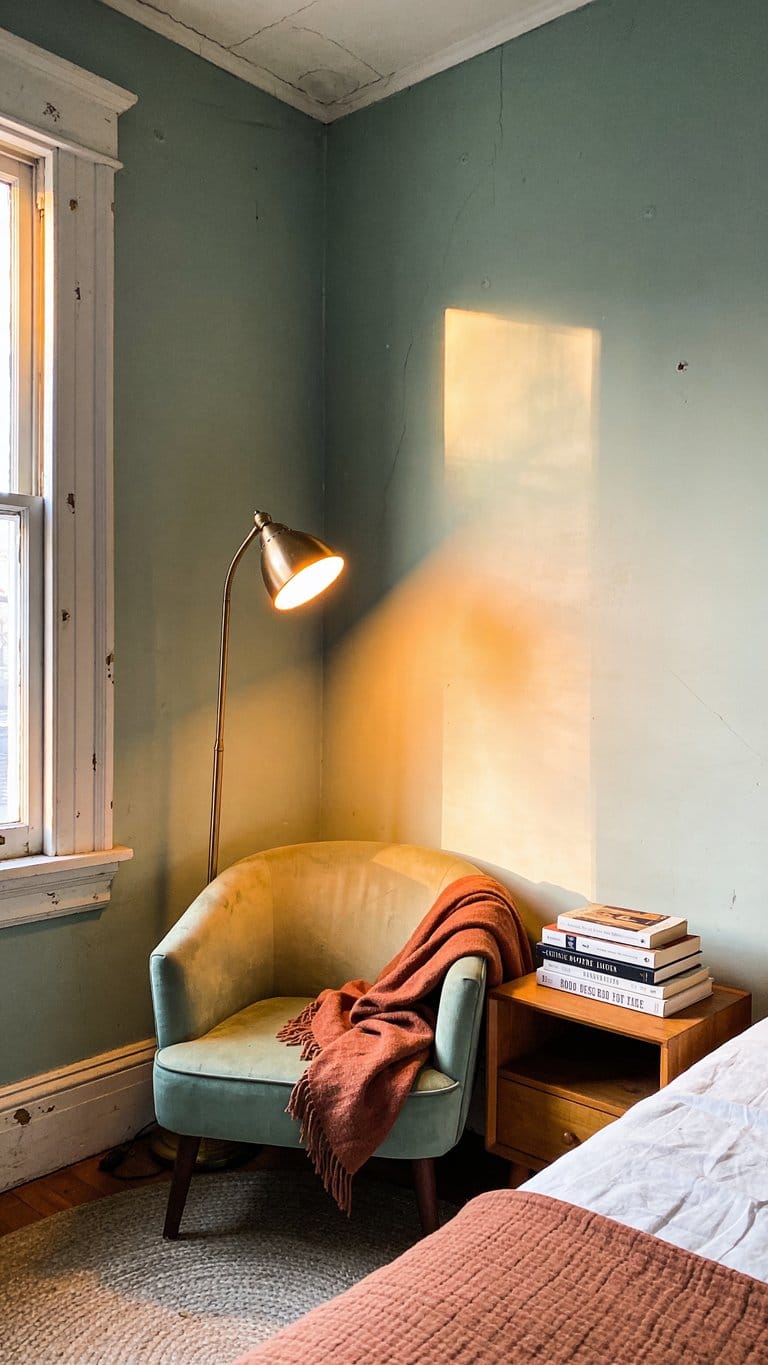
If your bedroom has a spare corner, a small reading nook is one of the most rewarding ways to use the palette. It carves out a second mood within the room, a pocket of warmth just for you. The corner doesn’t need much: a comfortable chair, good light, and a soft place to rest a mug.
Set a sage-upholstered armchair against the wall, add a terracotta velvet cushion and a draped knit throw, and place a small round side table within easy reach. A floor lamp arching overhead and a low basket of books complete it. I spotted a reading nook like this at a friend’s place and it stayed with me, even a modest bedroom suddenly feels like it has a little extra to give.
Pro tip: Angle the chair slightly toward the window, not flat against the wall. That small turn makes the nook feel inviting and intentional instead of like furniture pushed out of the way.
14. Sage Green and Terracotta With White Walls
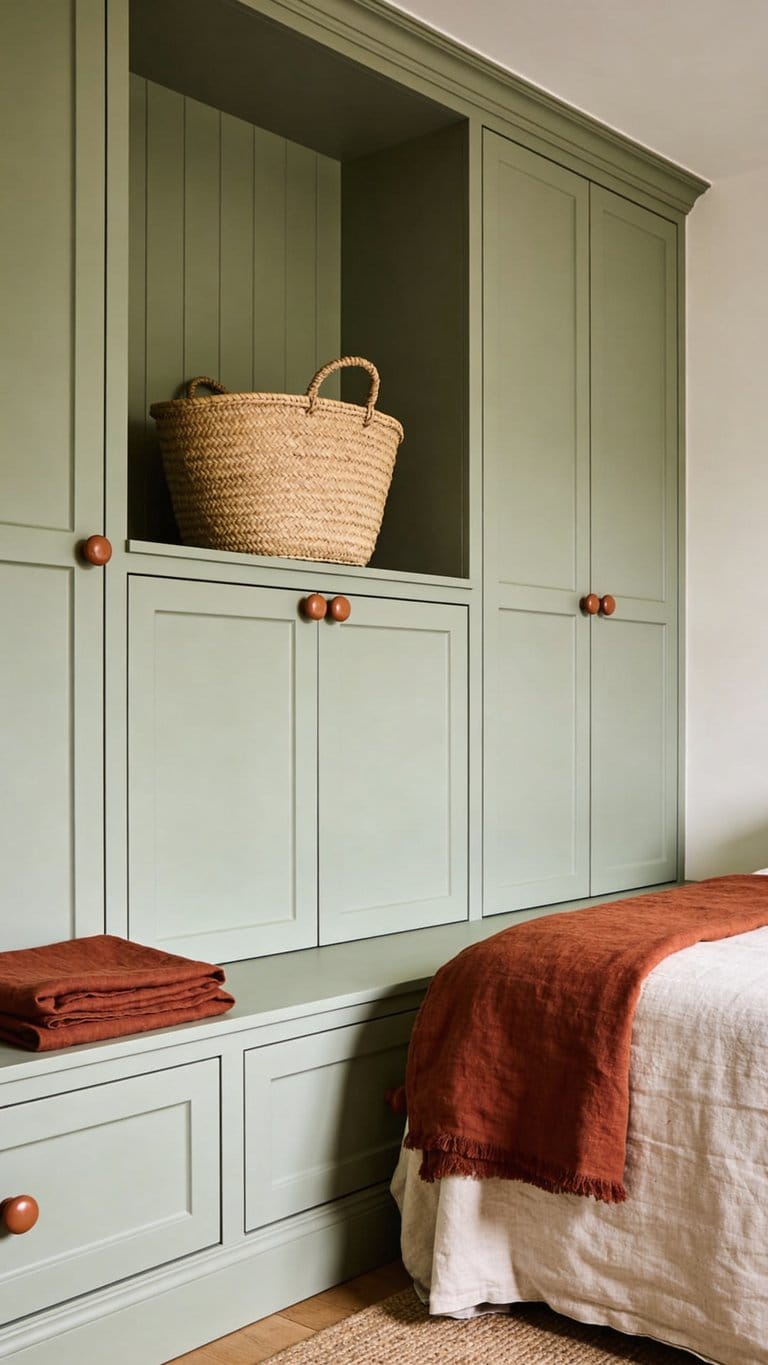
Not every room needs colored walls. Crisp white walls give a sage green and terracotta bedroom room to breathe, letting the two warm tones read as accents against a clean canvas.
Style Notes
- Choose a soft, warm white, not a stark blue-white, to keep the room from feeling clinical
- Let bedding, curtains, and a rug carry all the sage and terracotta color
- Add cream and oat textures so the palette transitions gently into the white walls
This approach is endlessly flexible, you can shift the room’s mood seasonally just by swapping textiles. If you love the airy, gallery-like feel, these sage green and cream bedroom ideas show how soft neutrals can extend the same calm. Or take it a step further with these sage green and white bedroom ideas for a crisp, minimal version. White walls also make a small room feel larger while still delivering that warm, earthy hug.
15. Arched Details and Soft Curves
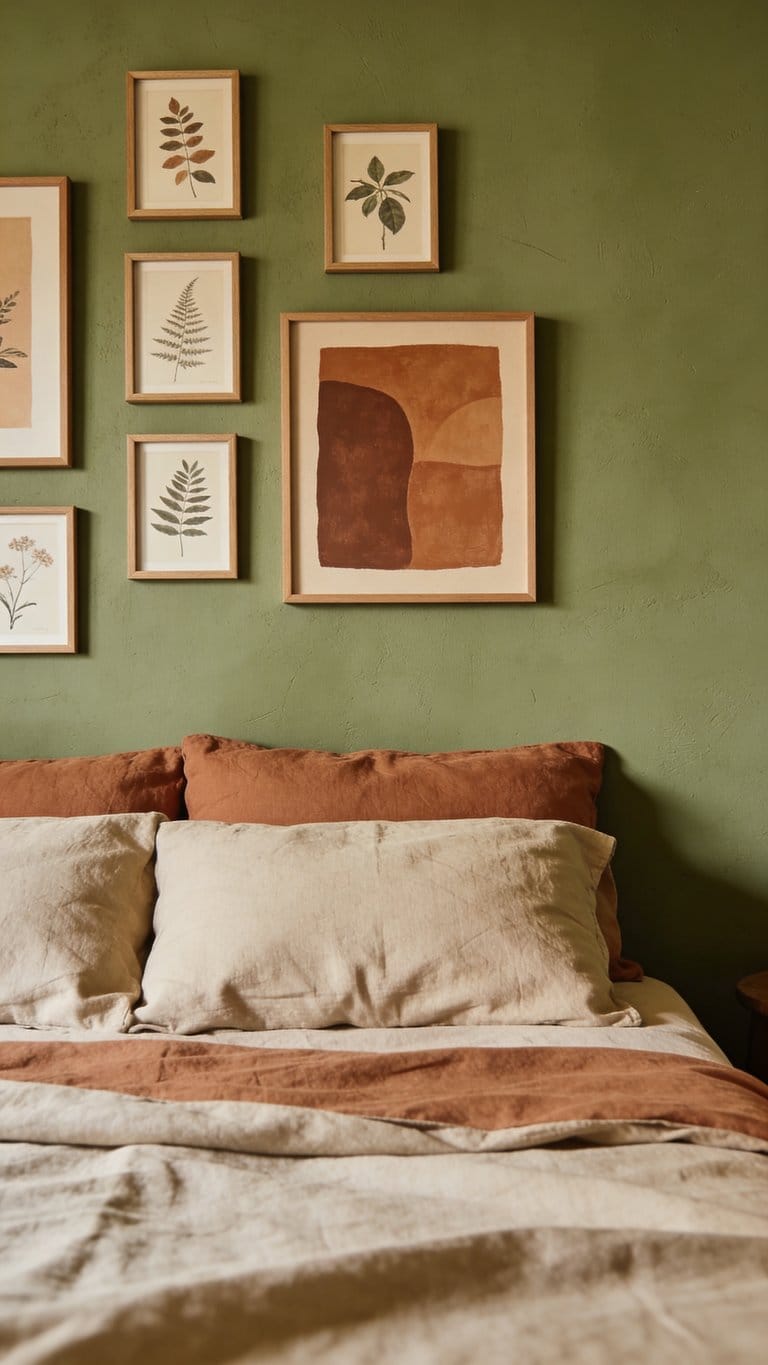
Earthy palettes pair beautifully with gentle, organic shapes. Hard right angles can make a warm room feel a little severe, so introducing curves softens the whole space and echoes the natural feeling of the colors.
Look for an arched mirror above a dresser, a curved-back headboard, or a round nightstand instead of a square one. Even small details count, a scalloped lampshade, a rounded terracotta vase, a circular jute rug layered under the bed. These curves catch light gradually, not abruptly, which keeps the room feeling soft and unhurried.
Pro tip: An arched wall niche, real or painted, makes a gorgeous home for one terracotta vessel. If you can’t build one, a tall arched mirror leaned against the wall gives a similar sense of graceful shape and bounces extra light around the room.
16. Vintage Finds and Gentle Patina
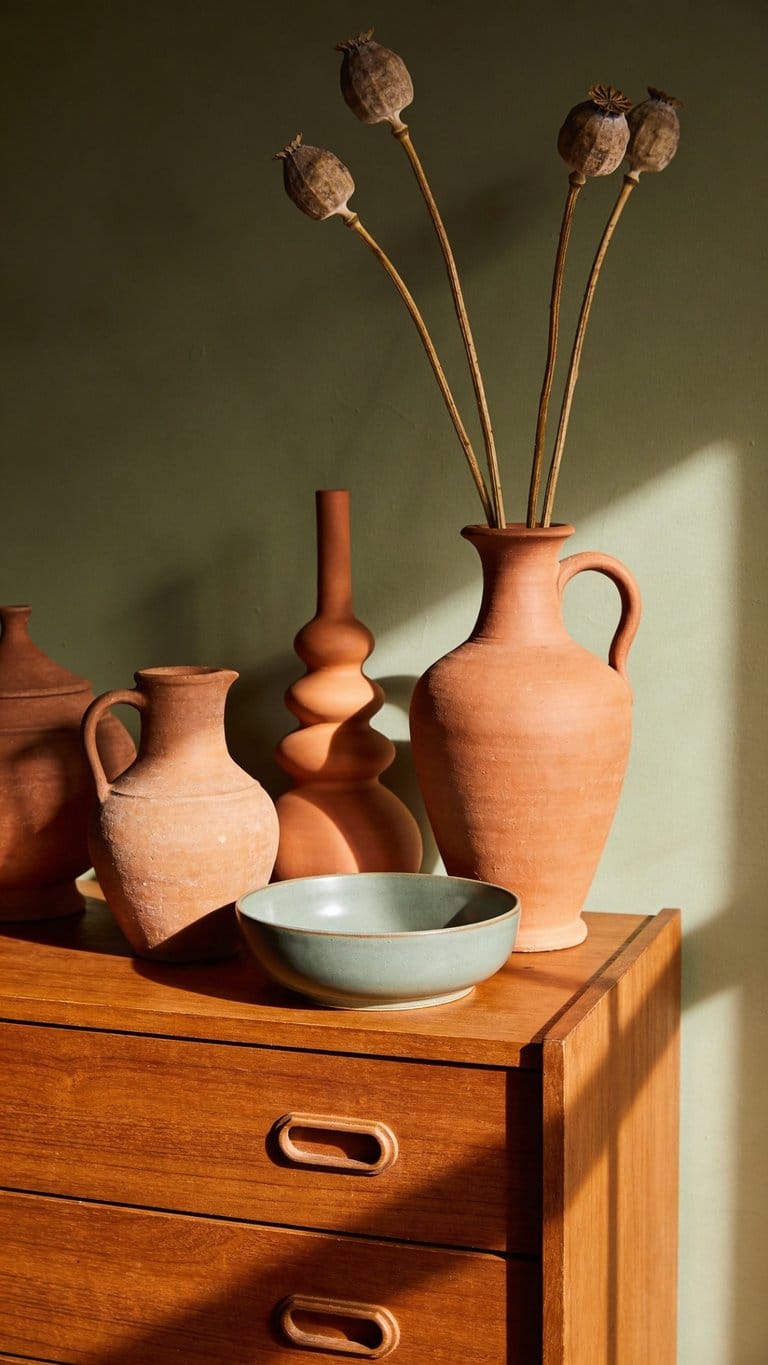
New furniture is convenient, but a few aged pieces give a sage and terracotta room the soul it deserves. Patina and wear add depth that a brand-new room simply can’t fake.
Why it works: Earthy colors are timeless, so they sit comfortably alongside objects from any era, and a worn surface scatters light unevenly, which adds the same gentle warmth as the colors themselves.
Hunt for a secondhand wood dresser with a soft, faded finish, an old woven kilim, or a weathered ceramic lamp. One thing I’ve noticed is that one genuinely old piece makes everything around it feel more collected, as though the room has gathered slowly over years. You don’t need many, one vintage anchor per room is often plenty.
&# 10024; Pairs well with:Earthy living room decor ideas→17. A Gallery Wall in Earthy Frames
 Shop this look: Vittanly 10 Pack Picture Frames Collage Wall… · Mixed Gallery Wall Frame Set 5pc Black/Gold · VIYYIEA Gold Framed Wall Art Canvas Print Home…
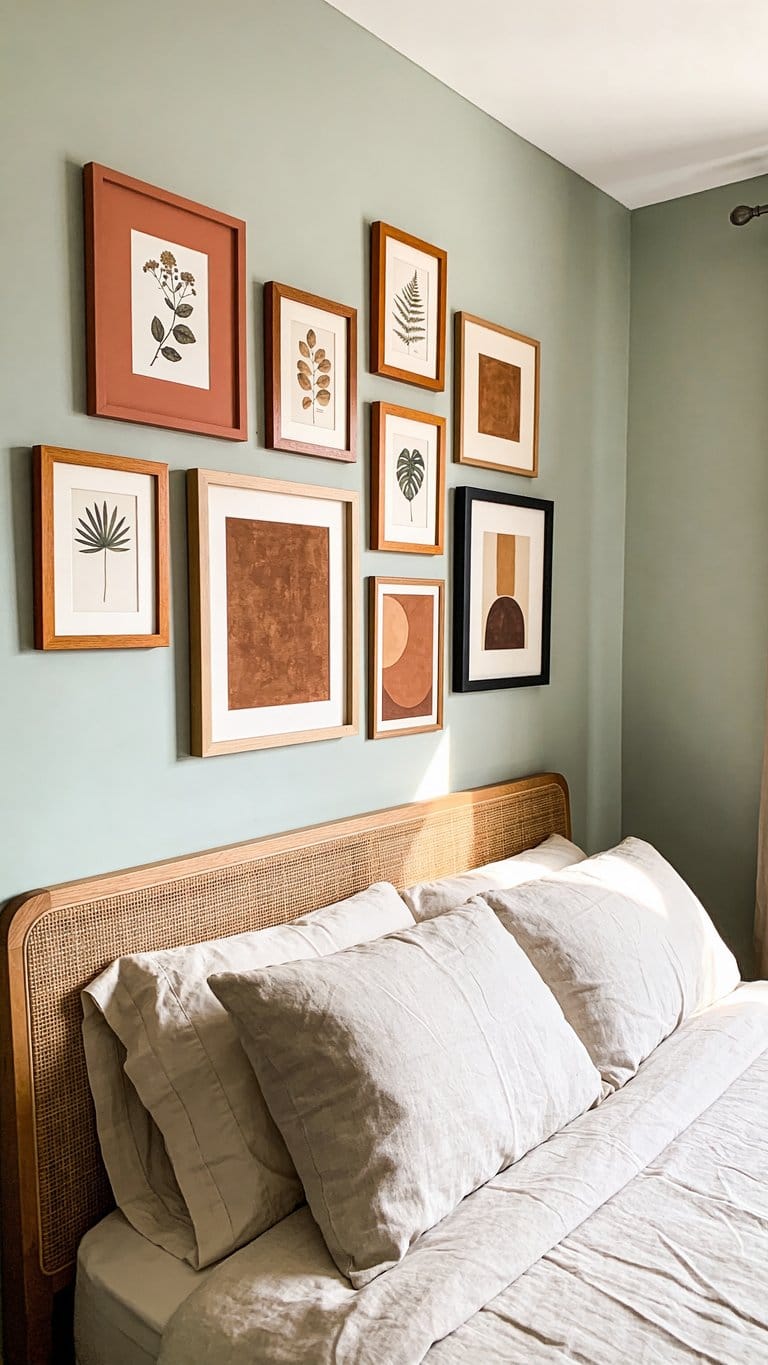
A gallery wall lets you reinforce the palette at eye level without adding a single piece of furniture. The key is treating the frames and art as part of the color story, not an afterthought.
Decorating Details
- Frames in warm wood tones, aged brass, or even matte terracotta-painted edges
- Botanical prints, abstract landscapes, and pressed-leaf art in sage and rust hues
- One textile piece, a small woven wall hanging, to break up the glass and add softness
Lay the arrangement out on the floor first and keep gaps even, around two to three inches. I’ve seen this at a few friends’ homes, a gallery wall above the bed draws the eye upward and makes the ceiling feel so much taller than it actually is. Keep the art palette restrained so the wall feels calm, not chaotic.
18. Terracotta Tile or Painted Floor Accents
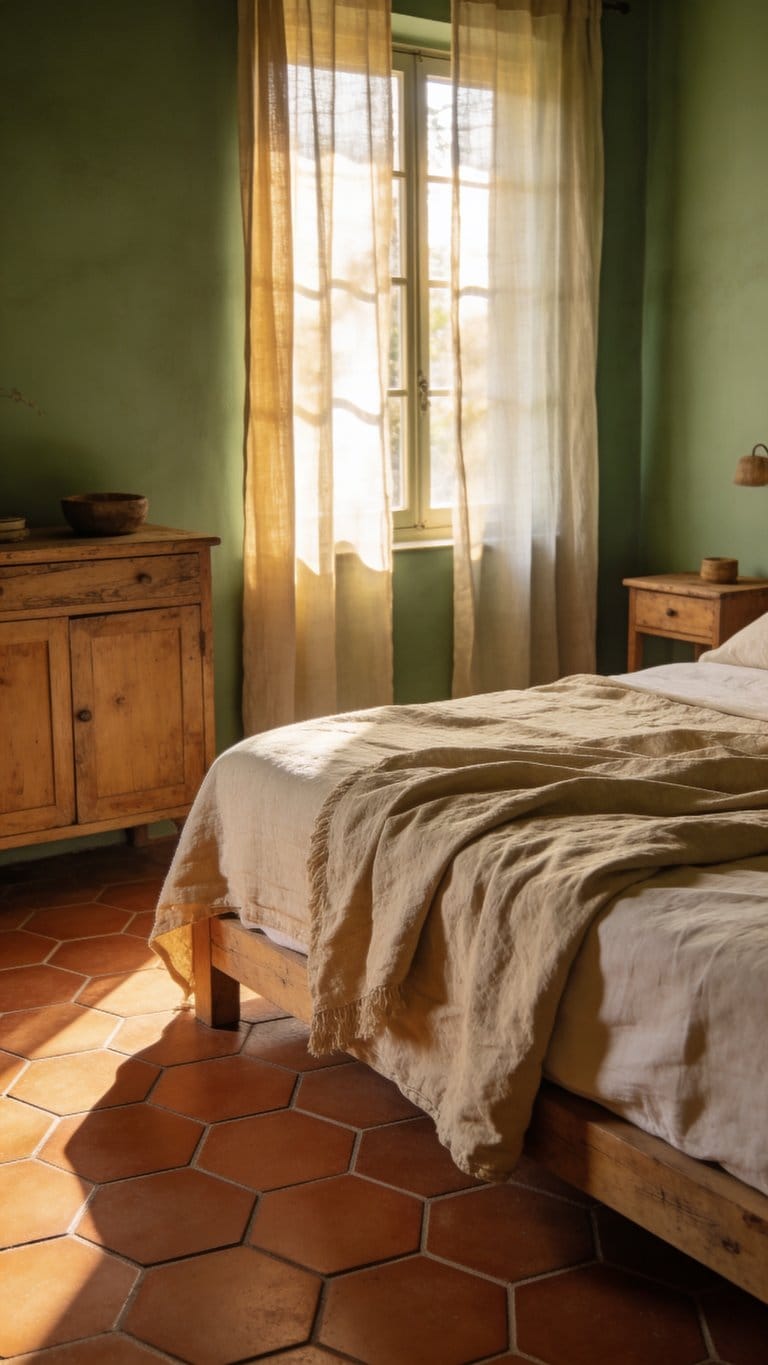
Most of us forget the floor entirely, but it’s a huge surface and a chance to ground the whole palette. If you’re renovating, terracotta floor tiles bring an authentic, sun-baked warmth that no rug can replicate.
For those not ready to retile, there are gentler routes. A painted floor border, a stenciled pattern near the bed, or simply a warm-toned wood floor all carry the idea. Against any of these, a sage rug feels cool and fresh underfoot, and the contrast keeps the room from leaning too warm.
Pro tip: If you have existing terracotta or warm-toned tile, resist covering it completely. Leave a generous margin of floor visible around your rug so the warm surface still reads as part of the design, not something to hide.
19. Bedding Layers for Cooler Months
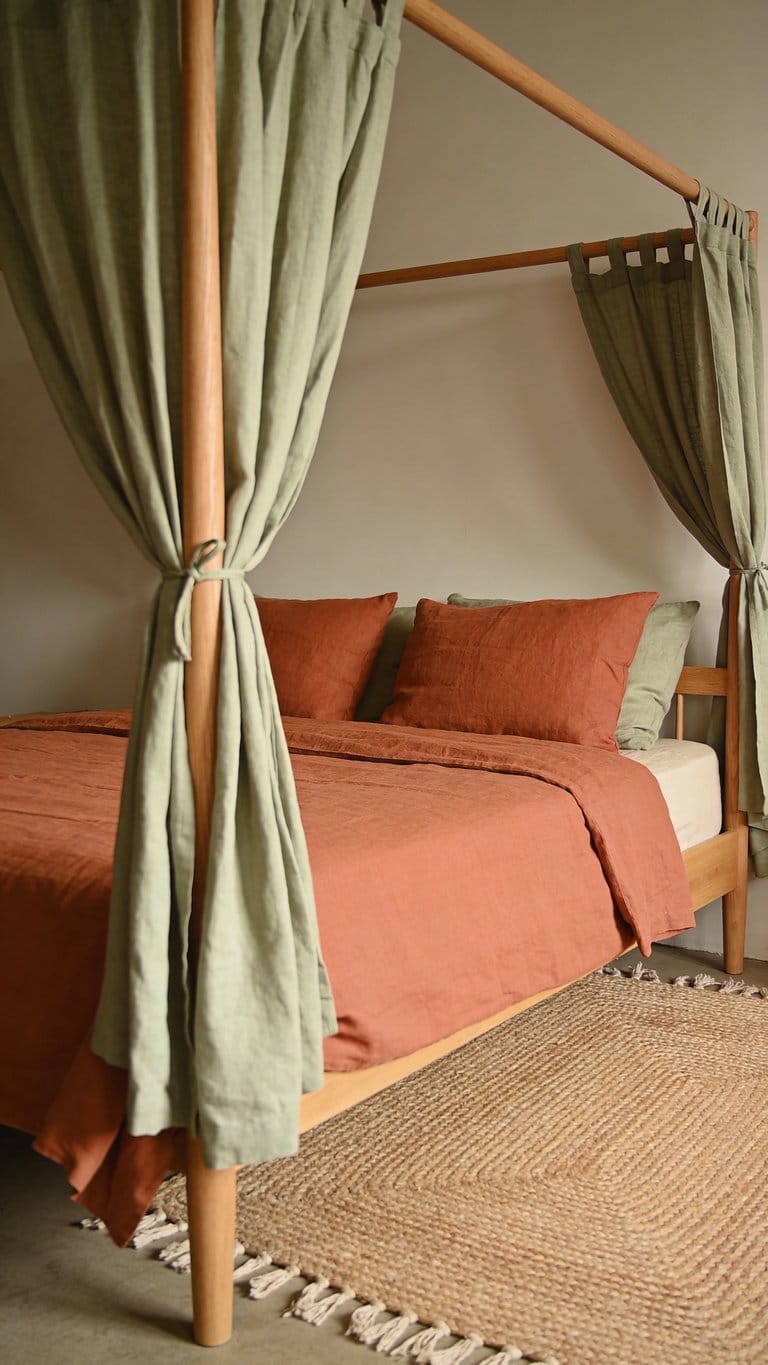
Cooler months are an invitation to layer, and a good bed builds from the bottom up. Start with a white or cream fitted sheet, a clean, neutral base that lets the colors above it do the talking.
In the middle, add a sage green waffle-weave blanket. The texture gives it visual weight without any bulk, so the bed feels substantial but not heavy. Finish with a chunky terracotta knit throw folded across the lower third of the bed, ready to be pulled up on the coldest nights.
20. Sage Cabinetry and Built-Ins
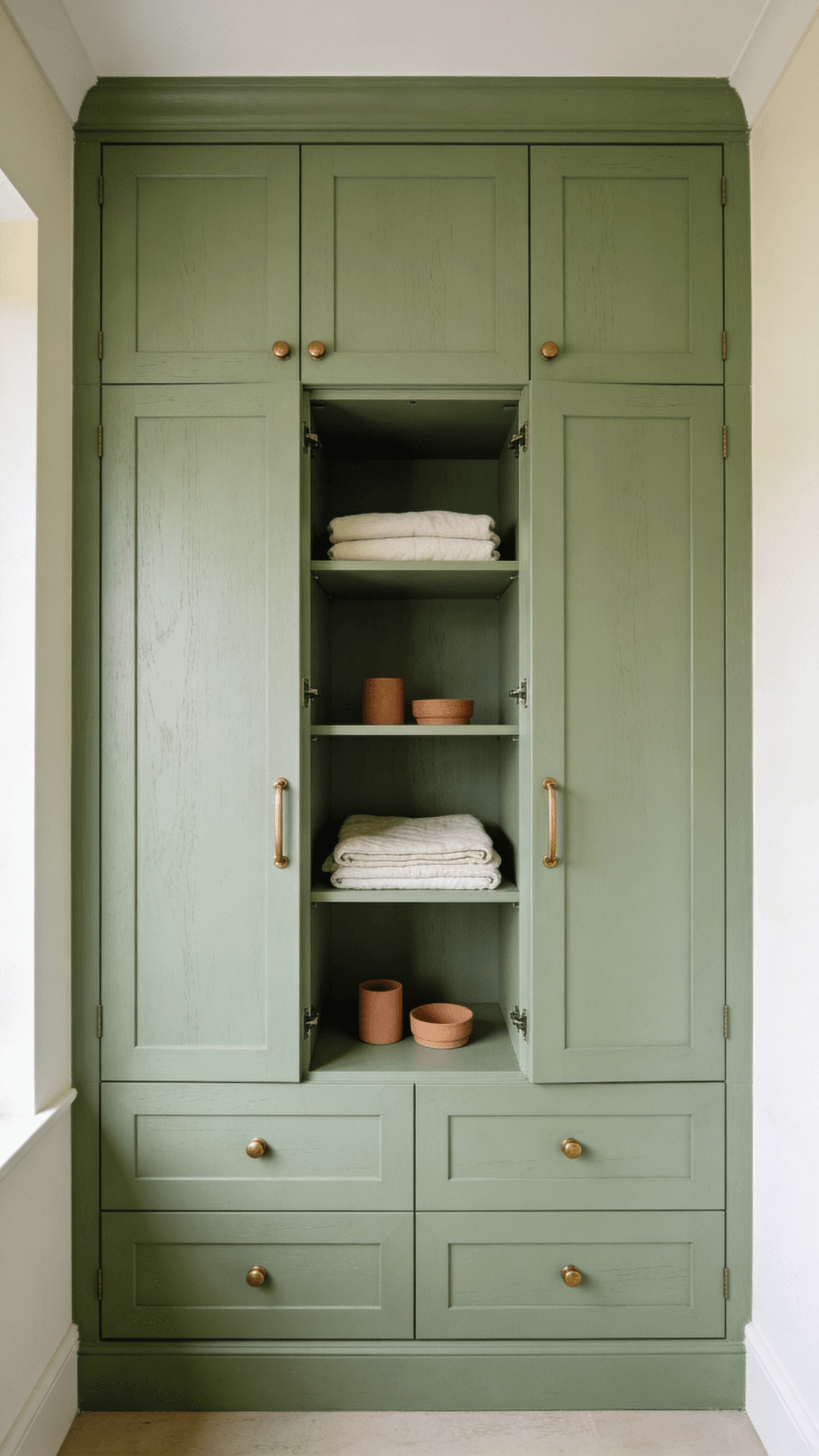
If your bedroom includes built-in wardrobes, alcove shelving, or a window seat, painting them sage green is a quiet way to commit to the palette. Built-ins read as architecture, so a soft green finish makes the color feel like it was always there, not added on.
Pair sage cabinetry with warm brass or leather pull handles, and style any open shelving with terracotta pottery, stacked books, and a trailing plant or two. A cushioned window seat in a clay-toned fabric turns built-in storage into a destination, somewhere to sit with coffee on a slow morning.
Pro tip: Choose a slightly grayed, muted sage for large built-in surfaces. Bright or yellow-leaning greens can feel overwhelming across big panels, while a dustier shade stays restful even when it covers a whole wall of cabinetry.
21. A Statement Ceiling
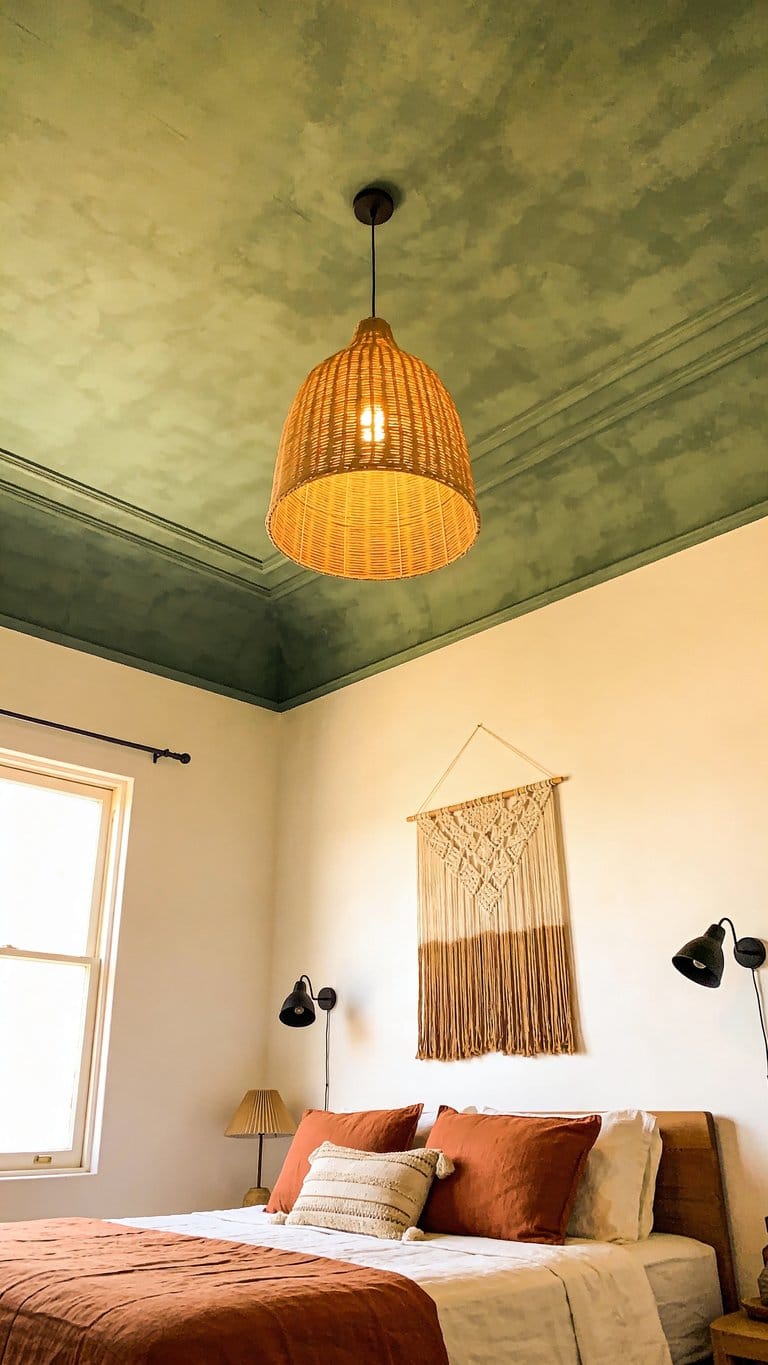
If you want a real moment of surprise, look up. Paint only the ceiling in a soft sage and leave all four walls white or cream, the color reads as a quiet little secret overhead, the kind of detail guests notice on their second glance.
A terracotta-toned pendant or flush-mount light hung against that sage ceiling ties your two colors together vertically, so the look feels deliberate. Keep the bedding simple and light, and let the ceiling be the statement with nothing else fighting for attention.
22. Plaster and Limewash Wall Finishes
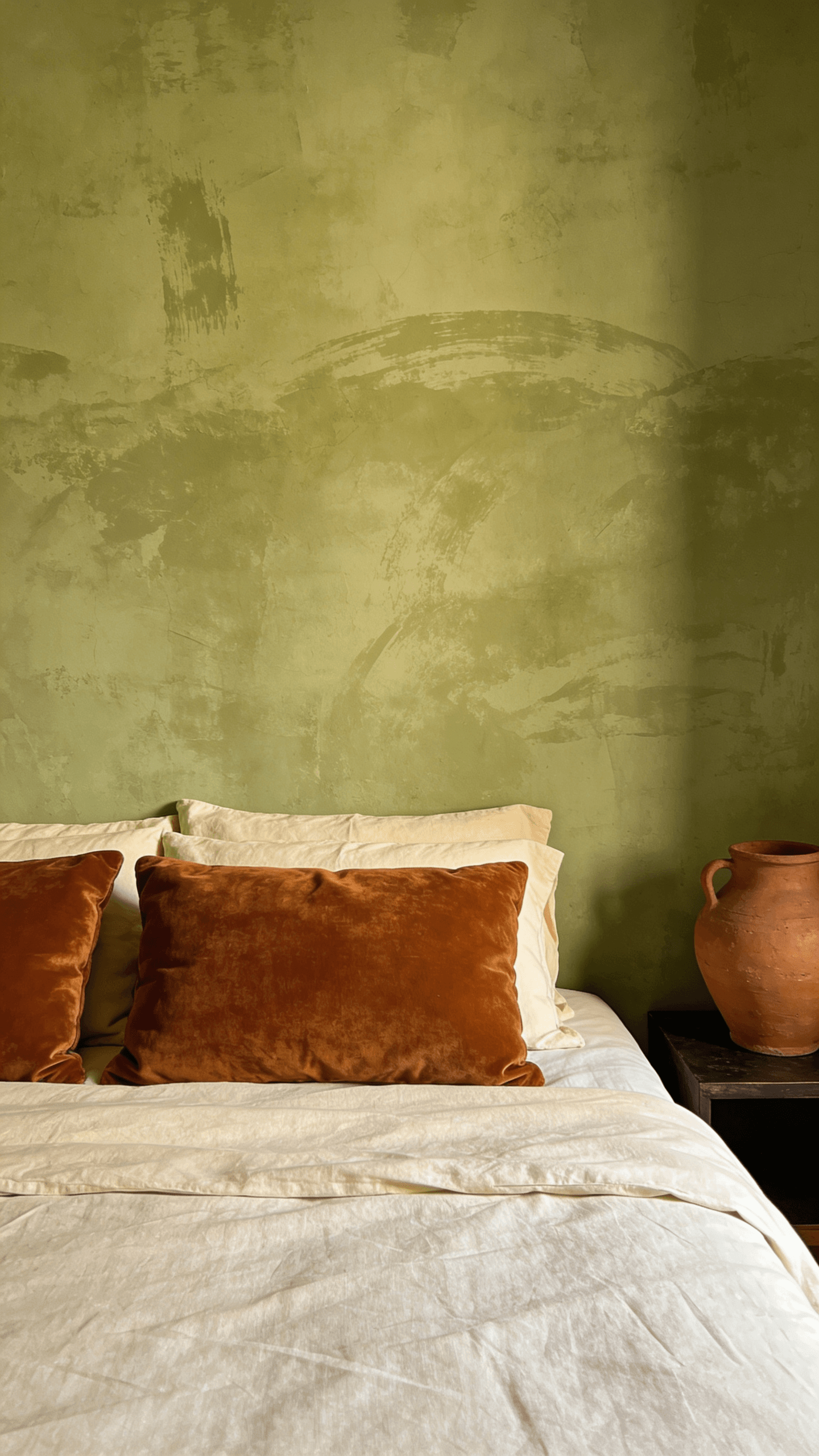
A flat painted wall is fine, but a textured finish takes a sage and terracotta room somewhere special. Limewash and plaster move with the light, shifting subtly through the day.
Why it works: These finishes create gentle tonal variation across the wall, so the color reads as alive and atmospheric, never flat, which echoes the natural, earthy spirit of the palette.
A limewashed sage wall has a soft, cloudy depth that flat paint can’t match, while a terracotta plaster finish glows almost like a sunset captured indoors. Even one accent wall in either treatment changes the feel of a room. The effect is subtle in photos but striking in person, especially as evening light slides across the surface.
23. The Minimalist Take
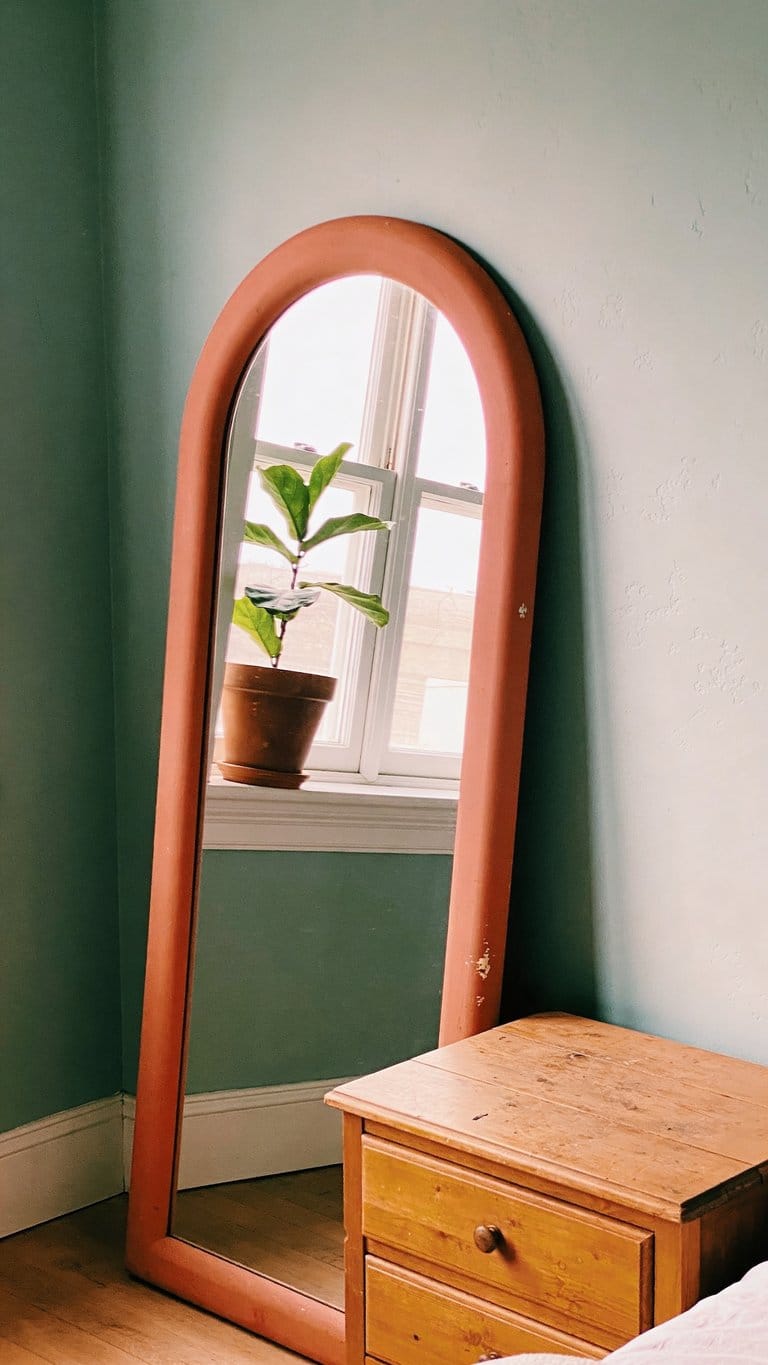
This palette doesn’t have to mean layers and pattern. A minimalist approach proves that sage and terracotta can feel just as warm with very little in the room.
Style Notes
- A simple platform bed in light wood with crisp sage linen and one terracotta pillow
- One oversized ceramic vessel as the room’s only decorative object
- Bare walls in soft sage, letting the color itself do all the work
The discipline here is restraint, every object earns its place, and empty space becomes part of the design. This works especially well for anyone who finds clutter stressful and wants the bedroom to feel like a genuine exhale at the end of the day.
24. Woven Baskets and Natural Storage
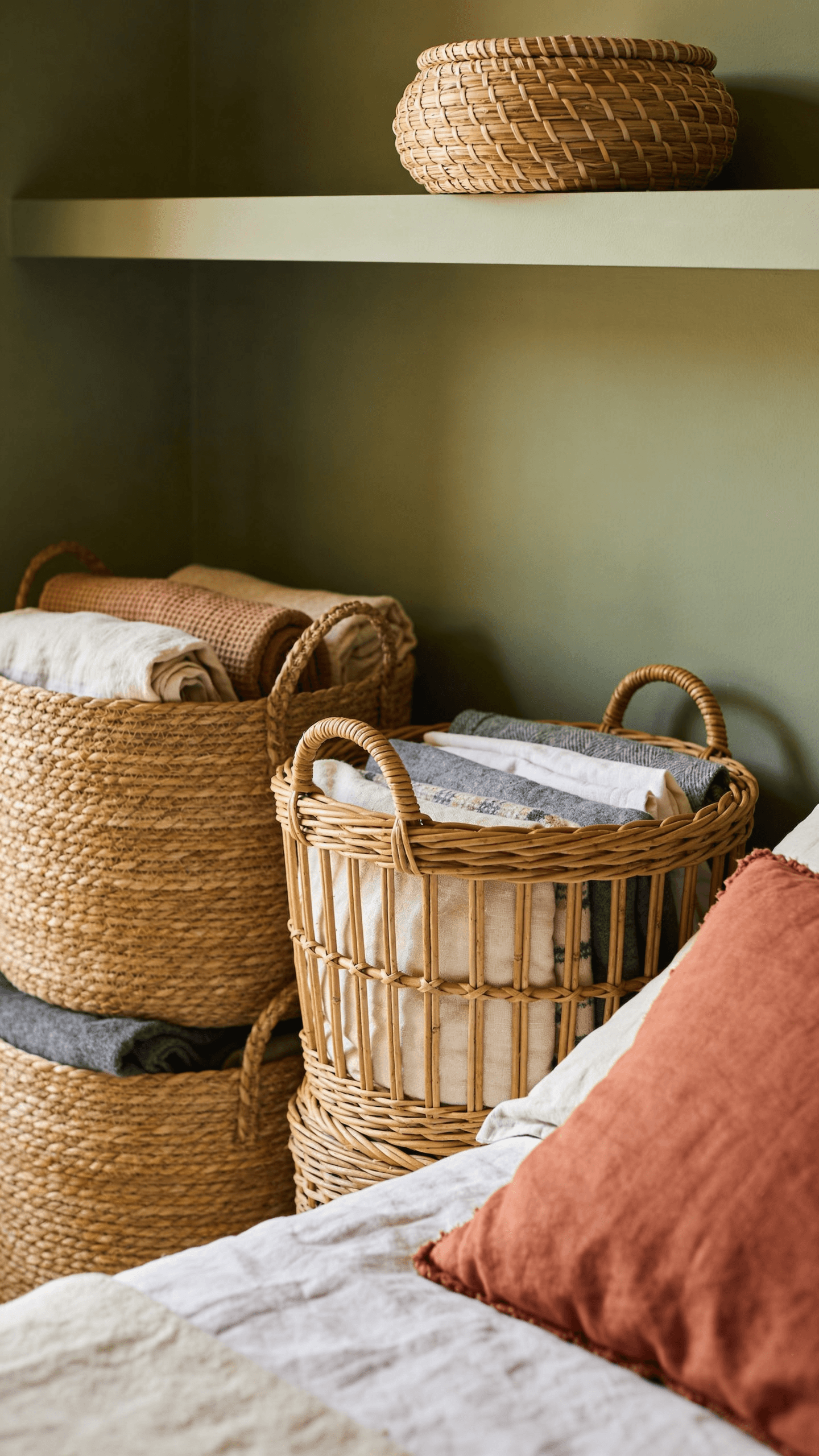 Shop this look: GIB Round Seagrass Storage Basket Woven Wicker · Large Wicker Storage Basket 16×14 Jute Woven… · KOKODO 16.5″Lx13″W Extra Large/Jumbo Wicker…
Storage usually fights against a calm bedroom, but woven baskets turn it into a feature. Natural fibers add a third earthy texture that sits perfectly between sage and terracotta.
Tuck a large seagrass basket beside the bed for spare blankets, line a shelf with smaller lidded baskets for clutter, and hang a flat woven tray or two on the wall as casual art. The pale, sandy tones of these fibers warm the room the same way the terracotta does, just more quietly.
Pro tip: Mix basket weaves and tones instead of buying a matching set. A jute basket next to a darker rattan one next to a pale seagrass tray gives the same collected, gathered-over-time feel that makes earthy bedrooms so welcoming.
25. A Canopy or Draped Bed
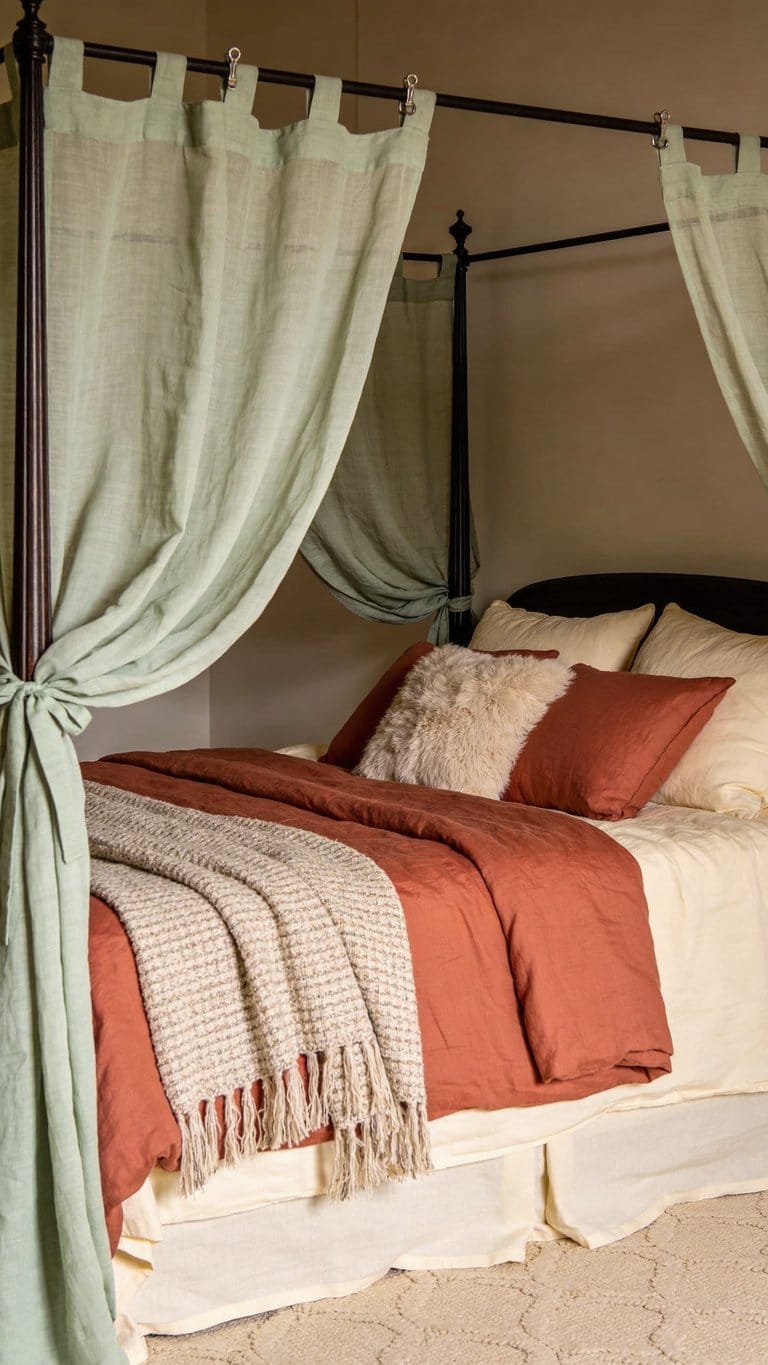
For pure romance, few things beat a draped bed. Soft fabric overhead frames the bed as the heart of the room and adds movement every time a breeze drifts through.
Cozy Touches
- Sheer sage curtains hung from a simple four-poster frame for a soft, filtered glow
- A lightweight terracotta canopy panel tied loosely at the corners
- A ceiling-mounted hoop with fabric falling behind the headboard if you have no frame
Keep the fabric light and airy so the effect feels dreamy and never heavy. A draped bed suits rooms with a little height to spare, and it instantly makes the bed feel like a retreat within the retreat, somewhere you actively want to climb into.
26. Seasonal Styling Swaps
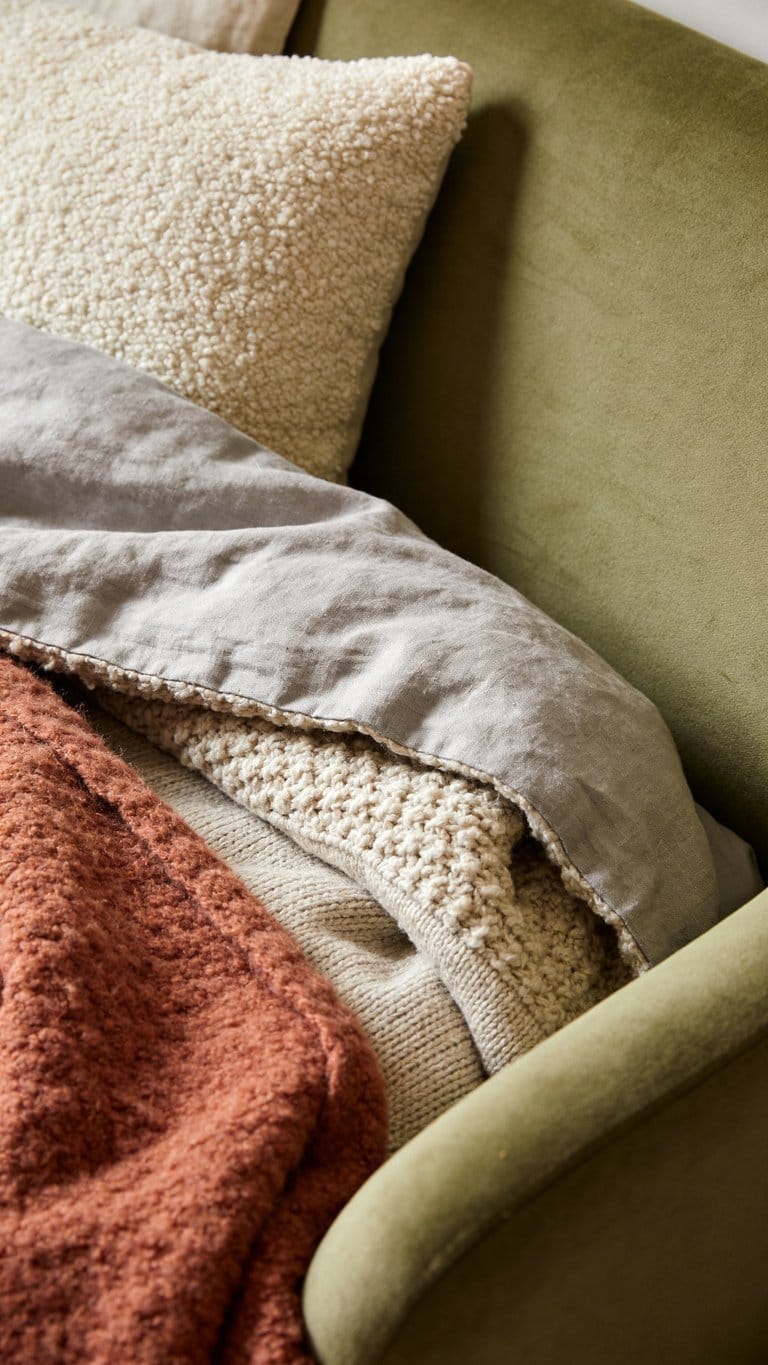
One of the joys of this palette is how easily it shifts with the calendar. You don’t need to redecorate, just rotate a few small things to match the season outside your window.
Why it works: Sage and terracotta both sit in nature’s year-round palette, so the base scheme stays steady while small swaps let the room echo whatever’s happening outdoors.
In spring, lean into fresh sage with cut greenery and lighter linens; in autumn, pile on terracotta throws, dried grasses, and a heavier quilt. A friend of mine tried something similar and kept her swap pieces in one labeled bin under the bed, switching the room over each season took barely twenty minutes. It’s a small ritual that keeps the space feeling current and cared for.
27. Bedside Styling Details
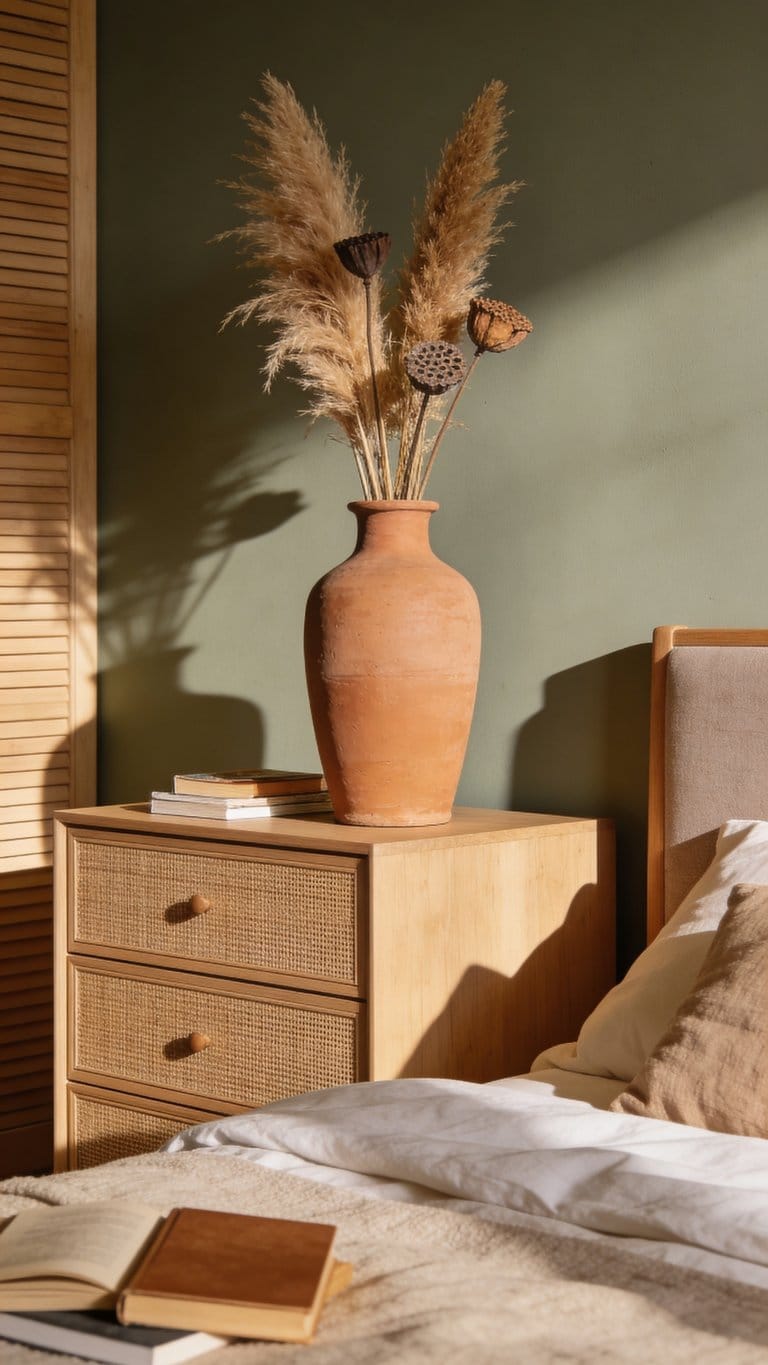
The nightstand is the last thing you see at night and the first thing you see in the morning, so it’s worth styling with care. Small surfaces reward thoughtful, restrained arrangements.
Finishing Touches
- A terracotta-glazed lamp with a warm linen shade as the anchor piece
- A short stack of books with a small sage ceramic dish resting on top for rings and keys
- One stem in a bud vase, eucalyptus or dried grass keeps the earthy theme going
Vary the heights so the eye moves up and down: tall lamp, medium books, low dish. Leave a clear patch of surface for a glass of water or a phone. A nightstand that’s both pretty and practical is the quiet detail that makes the whole room feel finished.
28. Mixing in Cream, Gold, and Soft Lavender
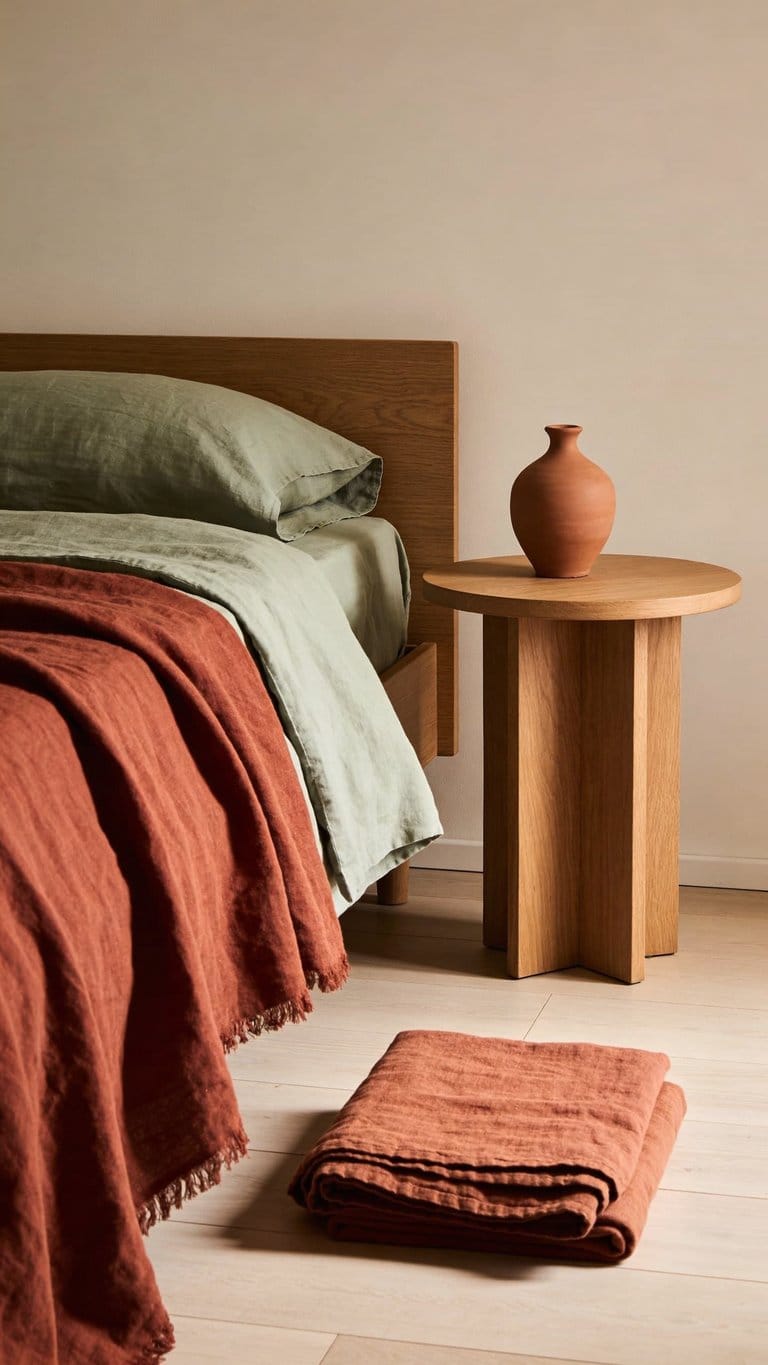
Sage and terracotta are a strong duo, but a carefully chosen third color can lift the whole scheme. The trick is keeping any addition gentle so it supports the palette without competing.
Cream calms the warmth and adds breathing room, while touches of aged gold or brass, a lamp base, drawer pulls, a mirror frame, bring a soft glow that flatters both main colors. For a cooler, more unexpected note, a hint of dusty lavender works beautifully; these sage green and lavender bedroom ideas show how a muted purple can deepen the palette. If you’d rather lean into shimmer, these sage green and gold bedroom ideas offer more warm-metal inspiration. For a fresh feminine twist, these pink and sage green bedroom ideas show how a blush accent can lift the whole scheme.
Pro tip: Limit any third color to roughly ten percent of the room. Beyond that, it stops being an accent and starts demanding a whole new color plan.
29. A Calm, Cohesive Color Story
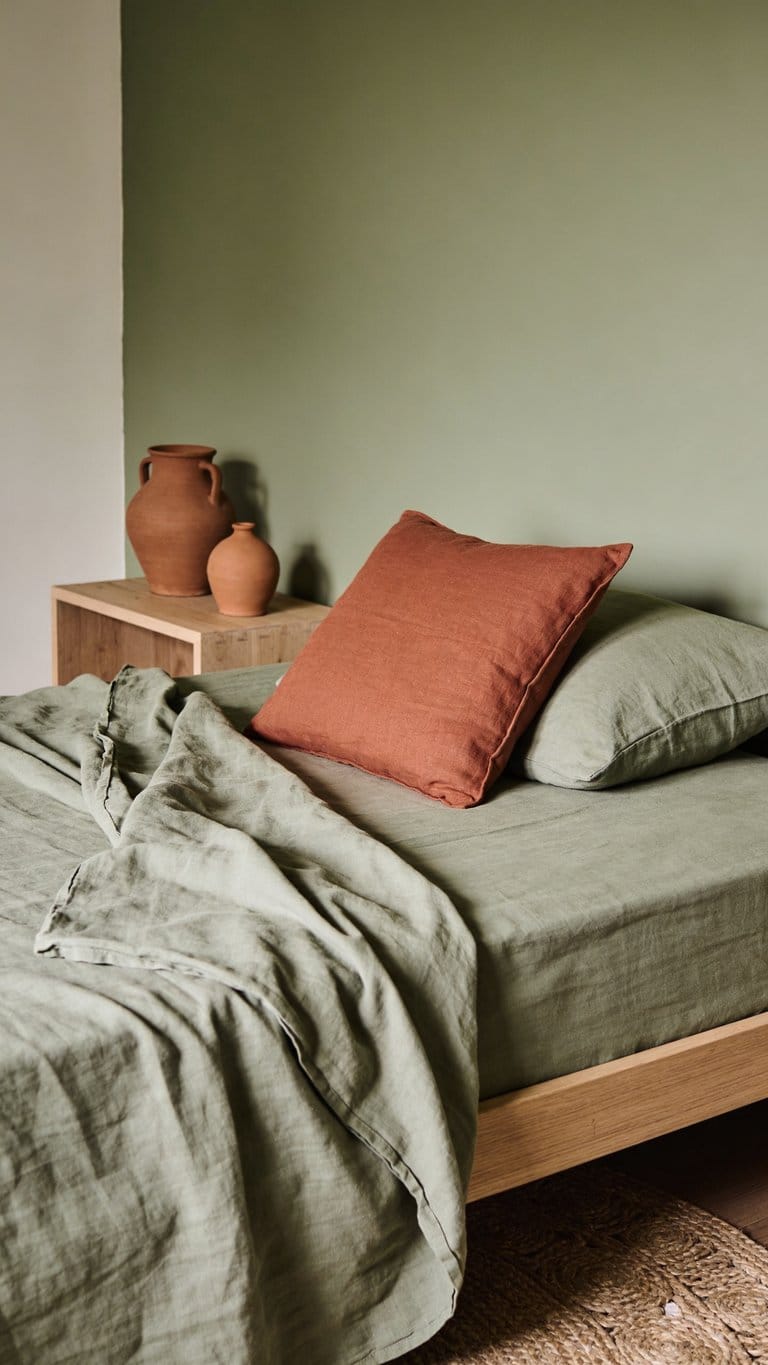
With so many ideas in play, the final step is making sure everything reads as one room. Cohesion is what separates a designed space from a collection of nice things.
What to Look For
- Repeat each main color at least three times around the room so nothing feels stranded
- Echo your terracotta in both a textile and a hard surface, like a pillow and a lamp
- Keep metals consistent, all brass or all black, so accents feel intentional
Step back and squint at the room; if your eye snags on one lonely color or finish, adjust it. A cohesive sage green and terracotta bedroom feels restful precisely because nothing fights for attention, every piece quietly belongs.
&# 128064; Worth a look:Cozy camper bedroom ideas→30. Bringing It All Together: Your Personal Retreat
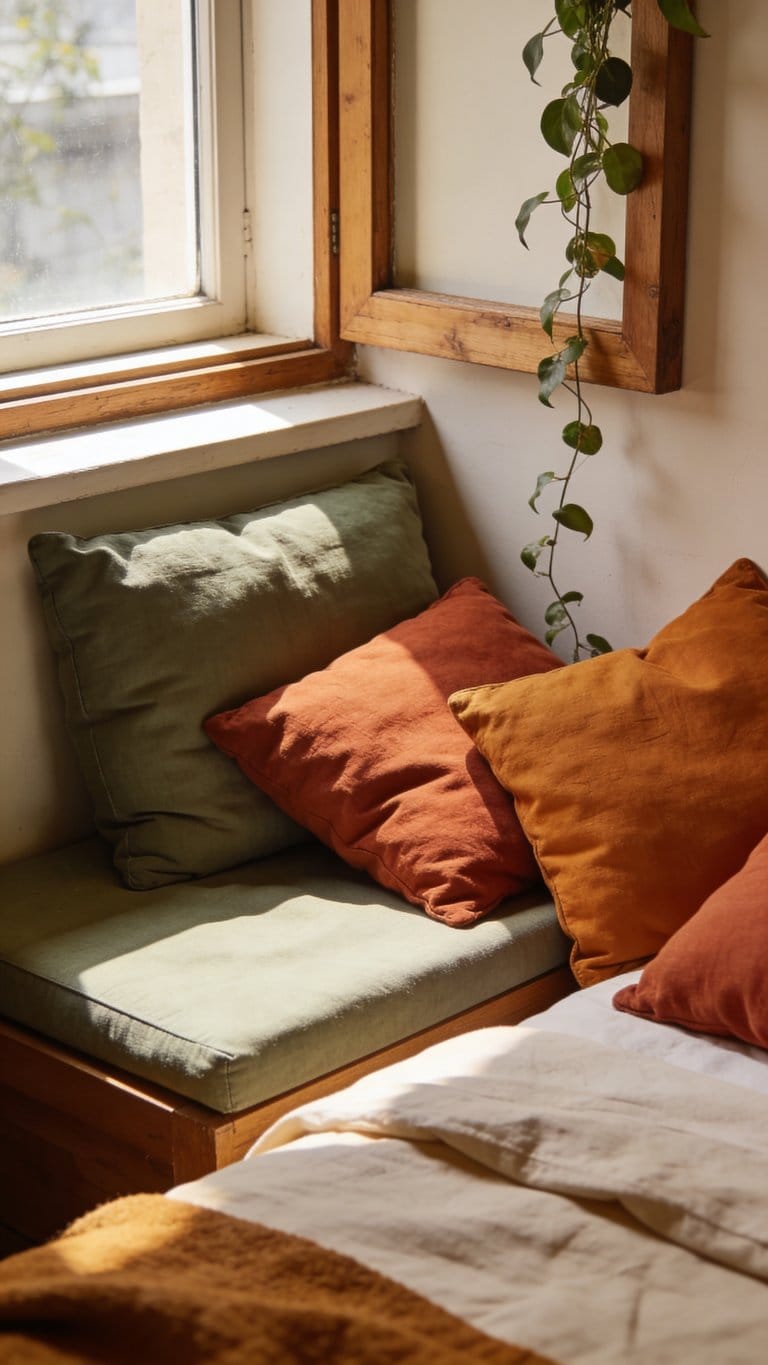
By now you’ve seen the palette stretch in dozens of directions, minimalist and boho, bright and moody, small-space and statement-making. The last idea is simply this: choose the handful that genuinely speak to *you* and let the rest go.
Maybe your version is a limewashed sage wall, a terracotta headboard, and a reading nook by the window. Maybe it’s white walls, earthy bedding, and a gallery of botanical prints. There’s no single correct formula, the palette is generous enough to hold many moods, and your favorites are the ones worth chasing. If you want to keep exploring the green side of things, these broader sage green bedroom ideas and these sage green and blue bedroom ideas offer plenty more directions to borrow from. Build the room slowly, trust your instincts, and let it become a space that feels like *yours*. And if you want even more inspiration to pull from, this broader sage green bedroom aesthetic guide covers the full mood in one place.
Final Thoughts
A sage green and terracotta bedroom isn’t about following rules, it’s about wrapping yourself in colors that feel like calm and warmth at the same time. Whatever the size or shape of your space, this earthy pairing meets you where you are, ready to grow and shift with the seasons and with you. Trust the ideas that made you pause, start with one small change, and watch the room slowly become a true retreat. Happy decorating!
Frequently Asked Questions
A good rule of thumb is to let one color lead and the other support, not splitting the room exactly in half. Try sage green on larger surfaces like walls or a headboard for a calming base, then bring in terracotta through accents like pillows, a throw, or a piece of art. This keeps the space feeling restful while still giving you that warm, earthy glow.
Absolutely, and they can actually make a small bedroom feel cozy in the best way. Stick to softer, lighter shades of sage on the walls to keep things airy, and use terracotta in smaller doses so it adds warmth without closing in the space. Plenty of natural light and a few mirrors will help the room feel open while the colors do their cozy work.
You do not need a full renovation to get this look, which is great news for your wallet. Painting one accent wall, swapping in new pillow covers, or styling thrifted terracotta pots and vases can refresh the feel of a room for very little money. A DIY framed print or a sage-toned throw draped over the bed are easy weekend projects that make a big difference.
These two earthy tones love natural, grounded companions, so think warm whites, soft cream, and gentle beige to keep things light. Wood tones, rattan, and woven baskets add texture that feels organic and lived-in. If you want a little contrast, a touch of black in picture frames or hardware gives the space a crisp, finished edge.
Layering is your friend here, so start with a neutral base like white or oatmeal bedding and build up from there. Add a sage green duvet or quilt for calm, then mix in terracotta through pillow shams, a knit throw, or a textured lumbar pillow. Linen and cotton in particular bring a relaxed, breathable feel that suits this warm, natural palette beautifully.