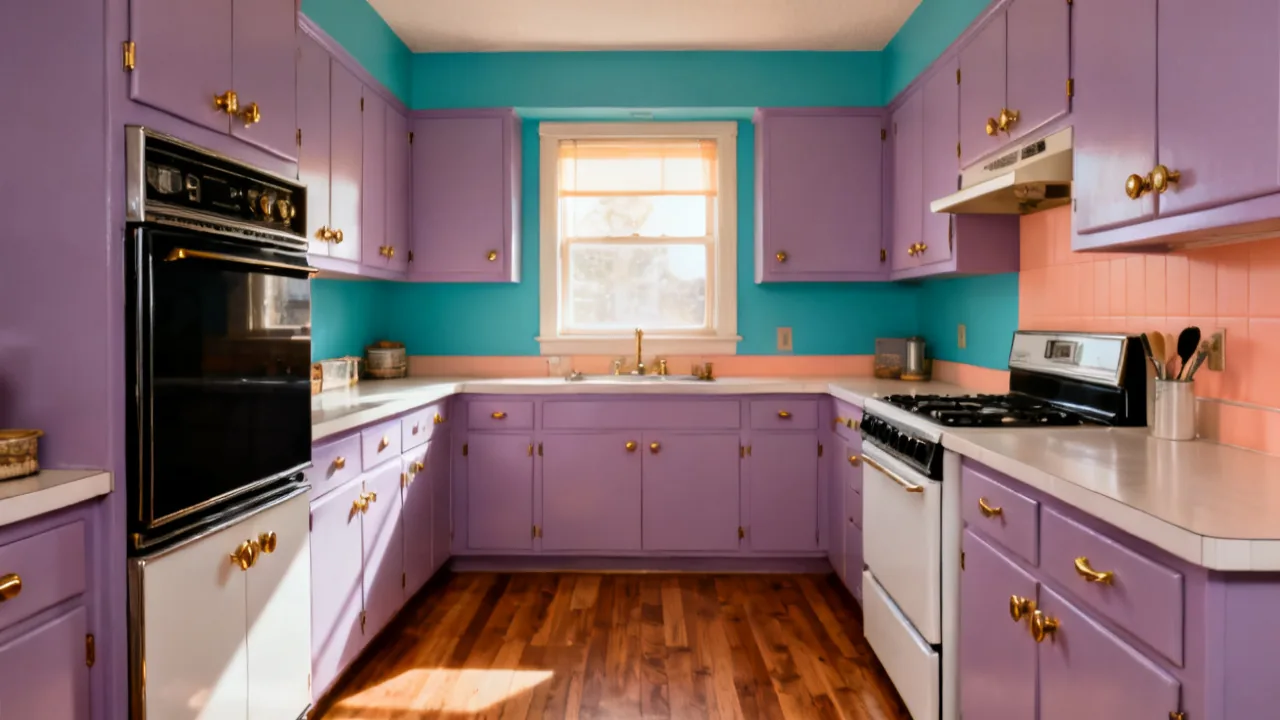
There is something about an 80s kitchen that just makes you smile. Maybe it reminds you of your grandma’s house, or that one neighbor whose kitchen always smelled like cinnamon and felt impossibly cheerful. After years of all-white, all-gray spaces, those bold colors and playful shapes are sneaking back into our homes, and honestly, it feels like a warm hug. If you have been craving a little more personality in your cooking space, this is your moment.
Quick answer: To capture an 80s kitchen look, lean into bold pastels like mauve and teal, add warm oak cabinets, mix in brass hardware and glass block accents, and finish with patterned laminate or tile countertops for that playful, retro charm.
&# 10024; New here? Start with the big picture:our favorite retro kitchen ideas→1. Mauve and Teal as Your Main Color Pair
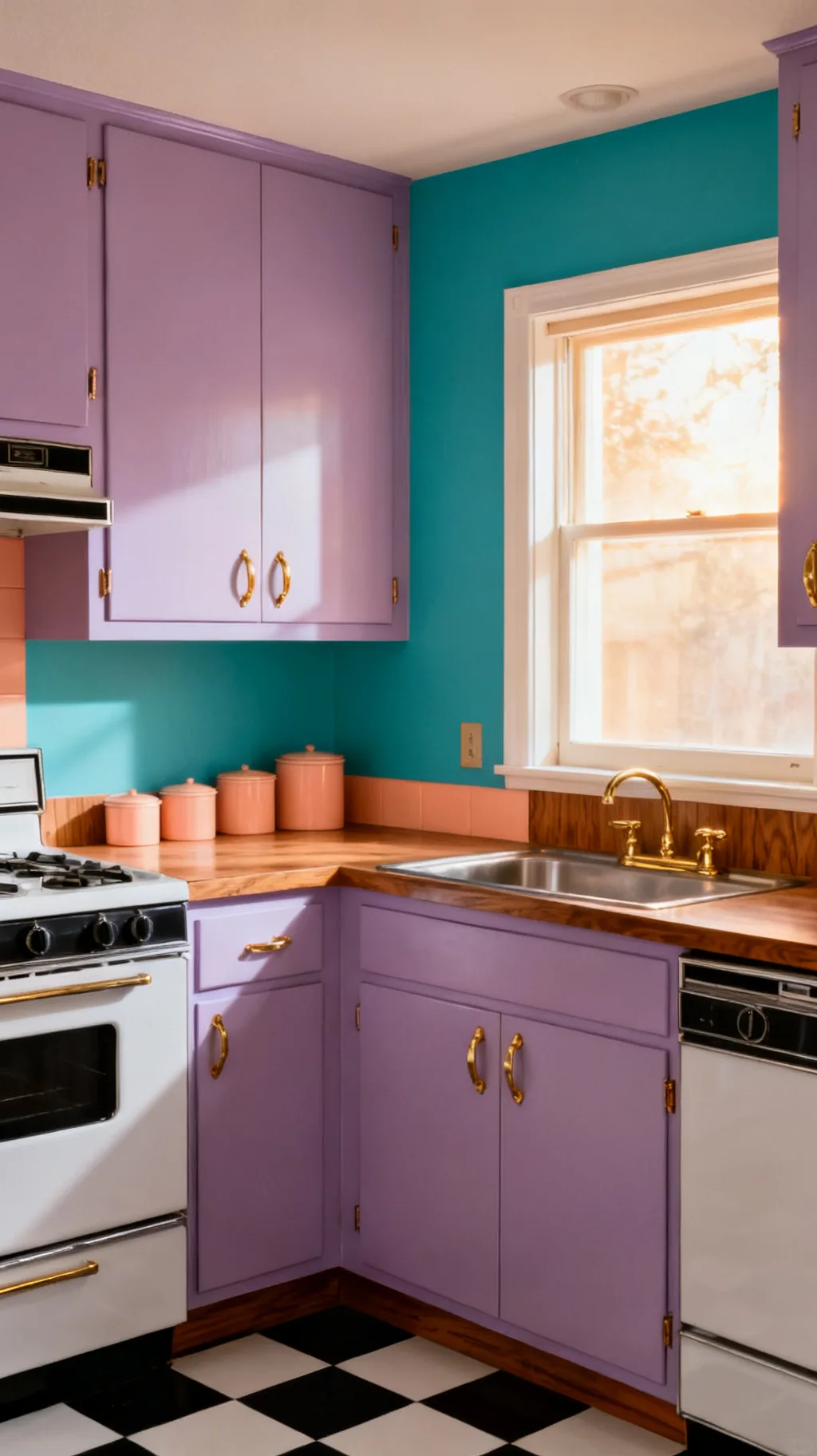 Shop this look: 80s kitchen decor on Amazon
Nothing says 80s quite like the soft, dusty pairing of mauve and teal. It feels both gentle and a little bold at the same time, which is exactly why it worked back then and works again now. You can use it on cabinets, walls, or even just your dish towels and stools if you want to start small.
Where to Start
- Pick your lead color: let mauve warm up the room and teal add a cool, refreshing pop.
- Balance it out: keep counters and floors neutral so the colors do the talking.
- Layer slowly: add the pair through textiles first if you are nervous about commitment.
Once you see these two together, you will wonder why we ever stopped.
2. Honey Oak Cabinets in All Their Glory
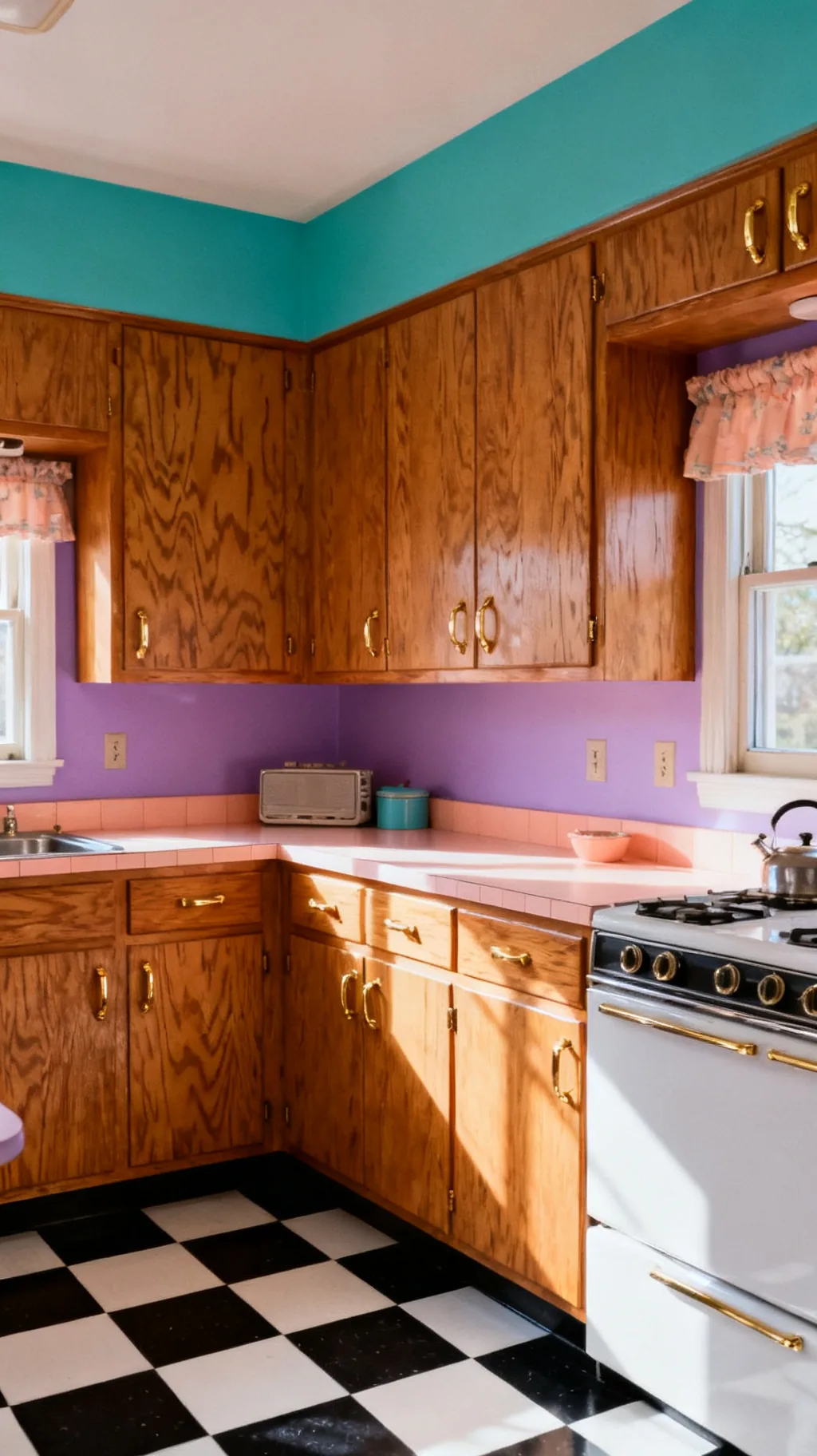 Shop this look: pastel accessories on Amazon
Warm honey oak cabinets were everywhere in the 80s, and they are quietly coming back for all the right reasons. That golden wood tone brings instant coziness and a lived-in feeling that painted cabinets sometimes miss. If yours are hiding under a layer of dated stain, a good clean and a fresh coat of oil can wake them right up.
What to Look For
- Visible grain: choose oak with bold, open grain for that authentic retro look.
- Rounded edges: softer cabinet profiles read as period-correct.
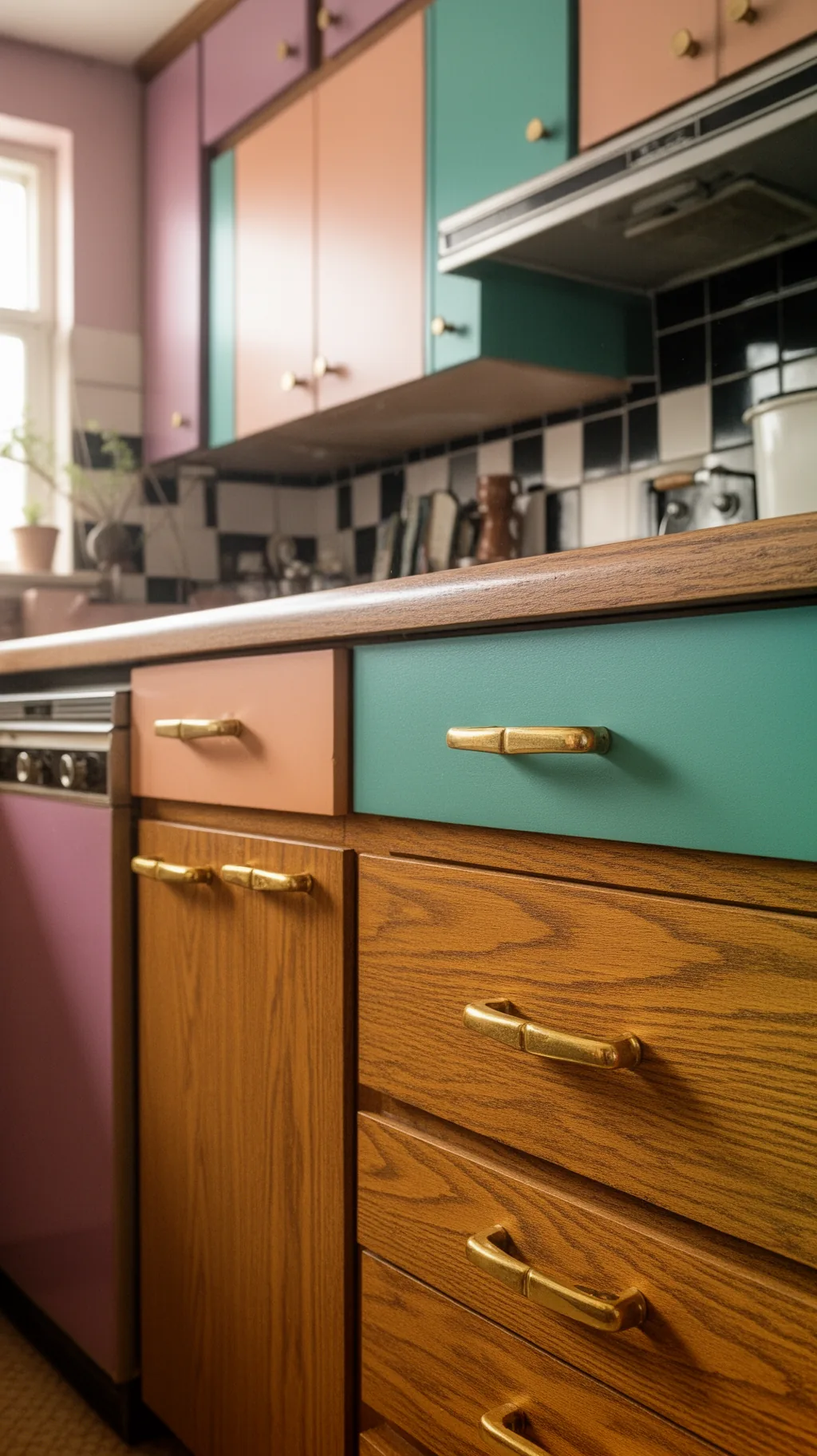
- Warm hardware: brass or bronze pulls flatter the honey tone beautifully.
Sometimes the cabinets you already have are closer to the trend than you think.
3. Memphis Design Color Pops Everywhere
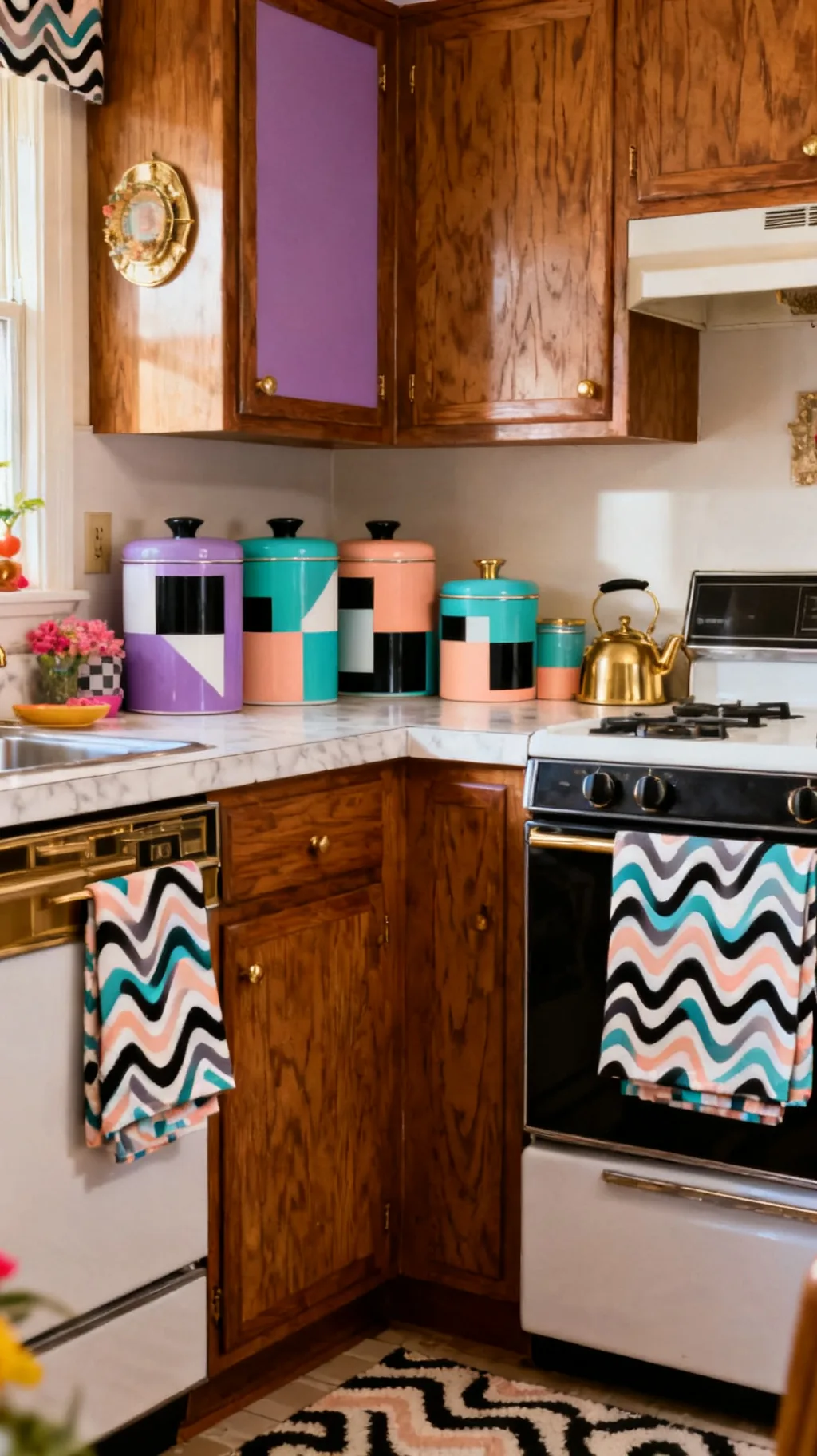 Shop this look: memphis decor on Amazon
Memphis design was the playful heart of the 80s, all squiggles, confetti shapes, and primary colors that refused to take themselves seriously. You do not need to redo your whole kitchen to nod to it. A few cheerful accents go a long way toward bringing back that joyful energy.
How to Pull It Together
- Squiggle prints: look for tea towels or art with those classic geometric squiggles.
- Primary pops: add red, yellow, and blue in small doses through canisters or stools.
- Keep it playful: mismatched shapes are the whole point, so do not overthink it.
A little Memphis goes a long way toward making a kitchen feel fun again.
4. Bold Patterned Laminate Countertops
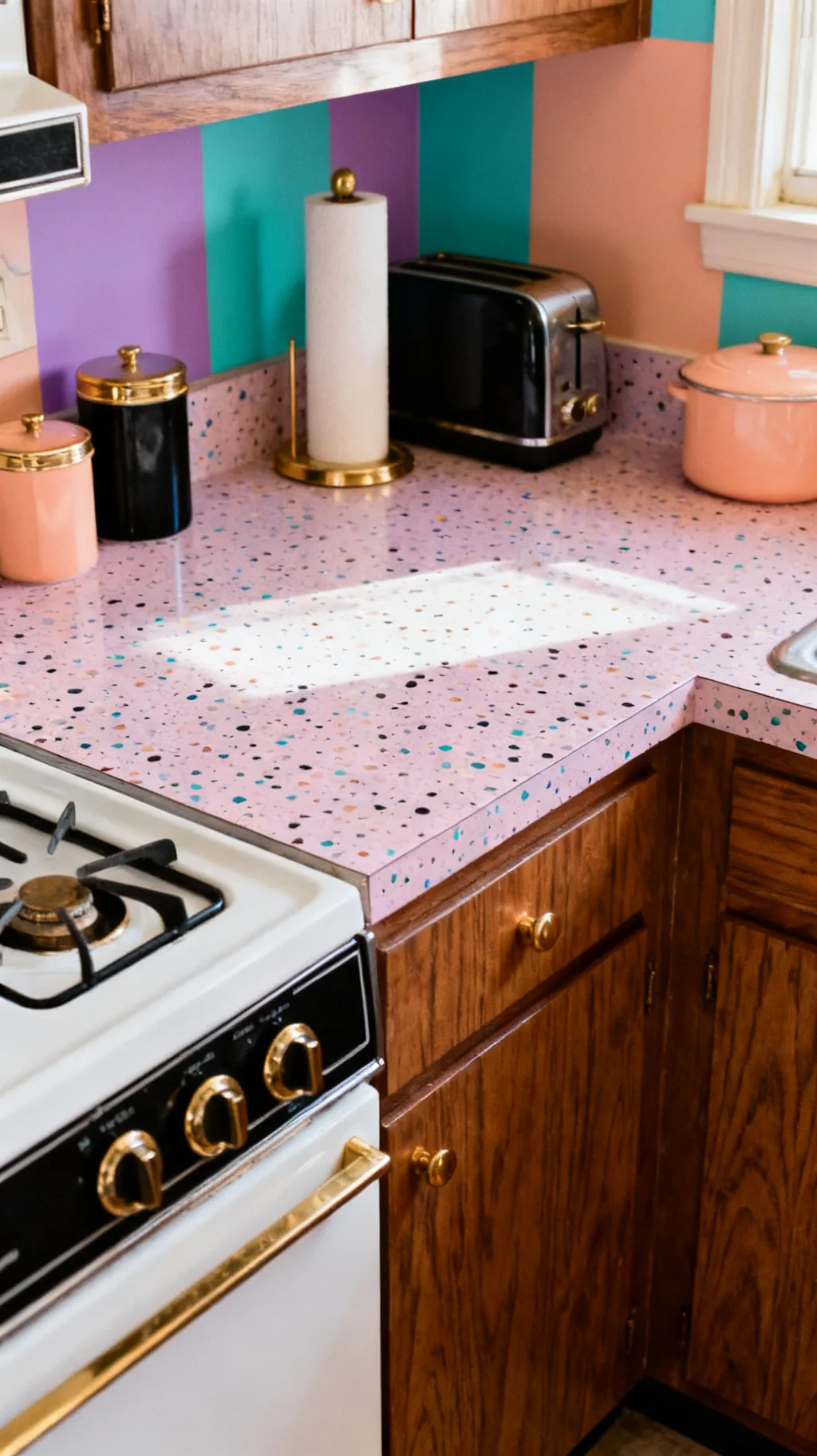 Shop this look: a retro wall clock on Amazon · White Vessel Sink Bowl 16″ x 12″ Bathroom Sinks… · Large Silicone Heat Resistant Mat 78.7” x…
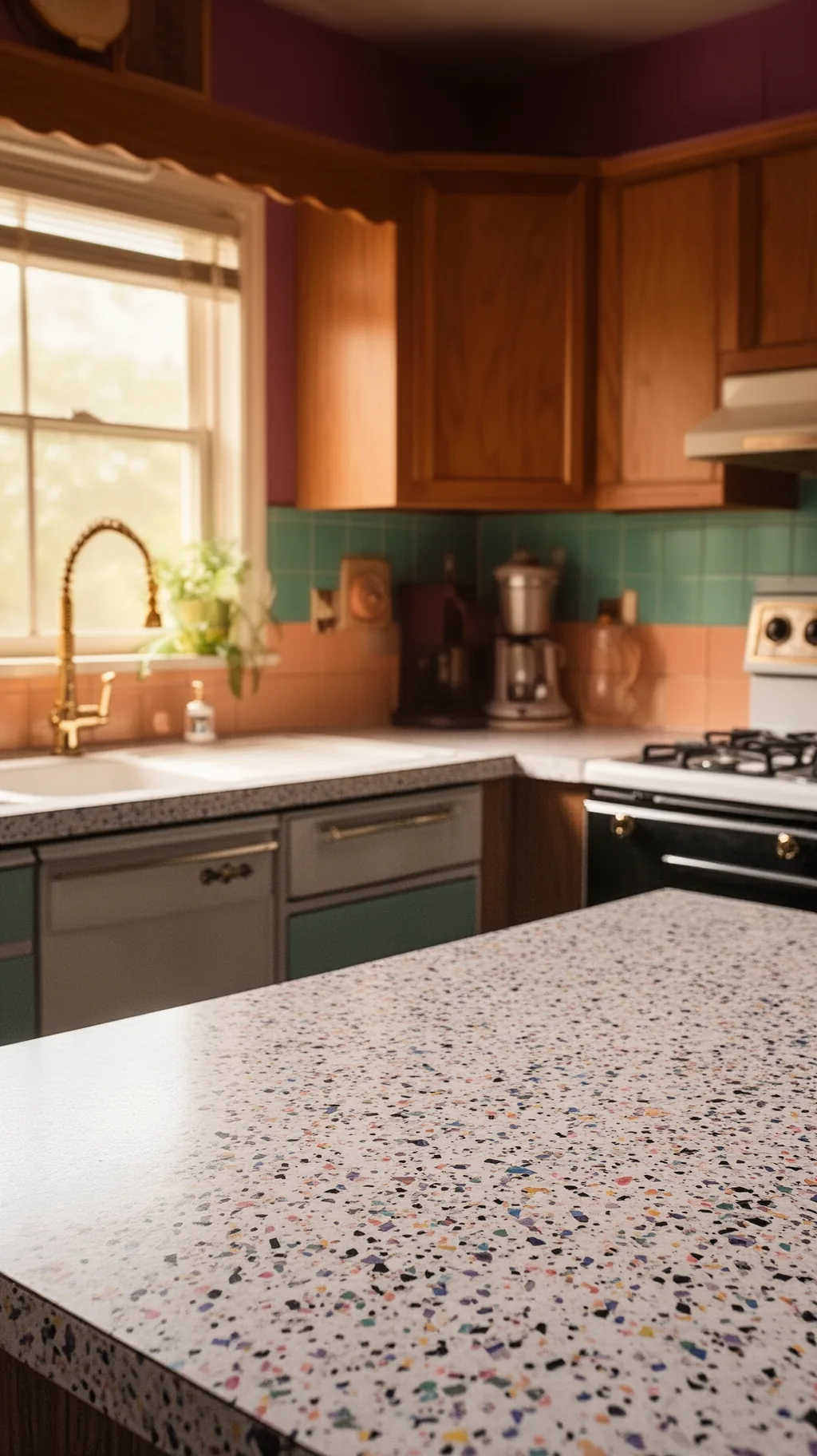
Laminate got a bad reputation for a while, but the 80s versions had so much personality with their speckles, confetti patterns, and soft pastels. The good news is laminate is budget-friendly and surprisingly durable, which makes it an easy way to test the look. A friend of mine swapped her plain counters for a speckled retro laminate and said it instantly made the whole room feel happier.
What to Look For
- Speckled patterns: the confetti or terrazzo-style flecks are pure 80s.
- Pastel bases: soft pink, mint, or cream backgrounds keep it light.
- Rounded edges: a curved bullnose edge feels period-correct.
Laminate lets you commit to bold without committing your whole budget.
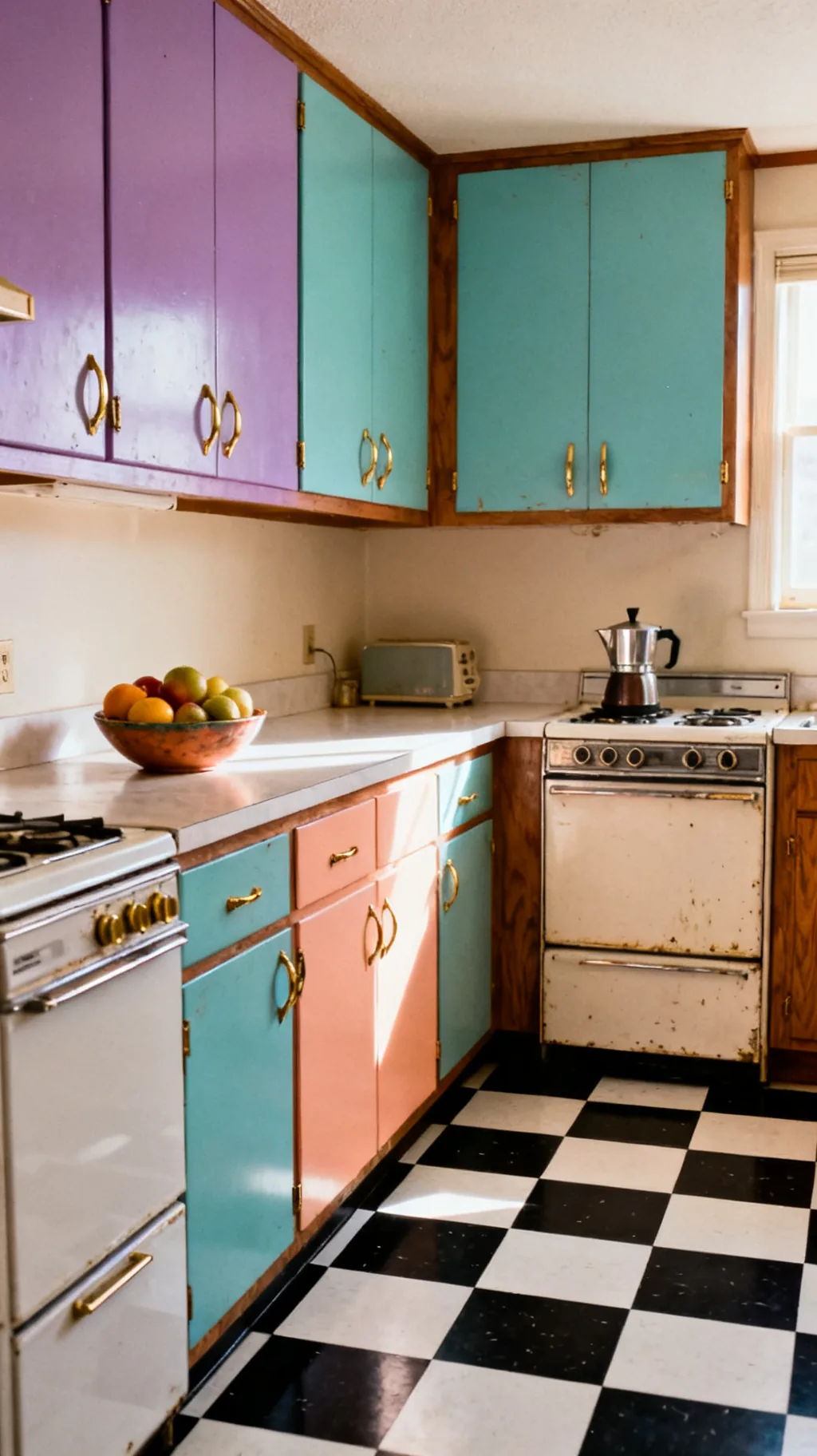
5. Black and White Checkerboard Floors
 Shop this look: canisters on Amazon
A black and white checkerboard floor brings that crisp, graphic punch the 80s loved. It works because it grounds all the softer pastels around it and adds a little drama underfoot. I keep coming back to this look because it feels timeless even while it feels retro.
How to Pull It Together
- Vinyl tiles: peel-and-stick versions make this an easy weekend project.
- Scale matters: larger squares feel modern, smaller ones feel classic.
- Pair with color: let pastel cabinets float above the bold floor.
It is the kind of floor that makes everything above it look intentional.
6. Glass Block Walls and Dividers
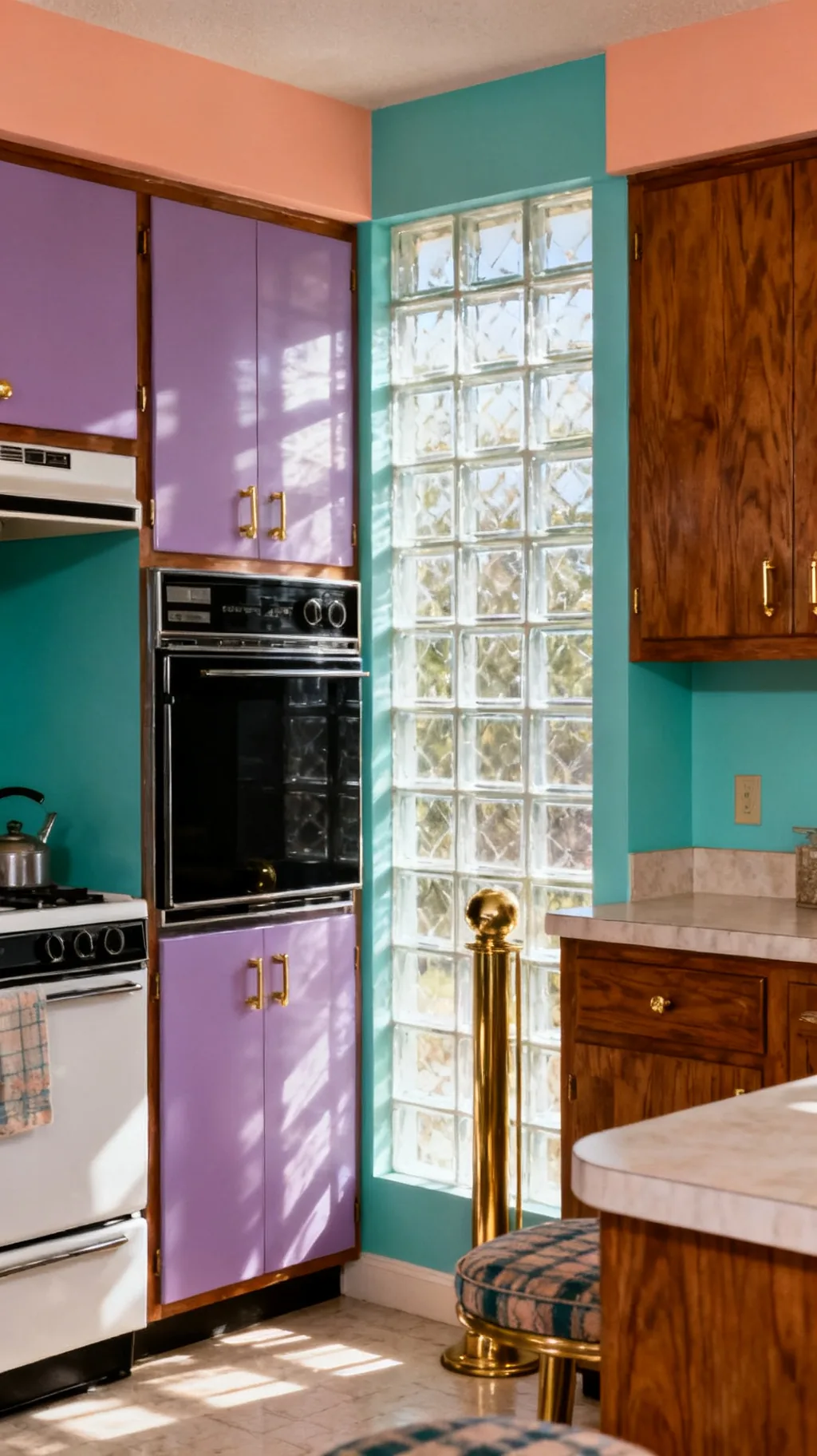
Glass block was the 80s answer to letting light flow while keeping a little separation. Those frosted, chunky blocks bring such a soft glow into a kitchen, especially in the morning. They feel nostalgic and practical at the same time, which is a rare combination.
Where to Start
- Small dividers: a short glass block wall by the sink adds light without losing privacy.
- Window swaps: a glass block window over the counter glows beautifully.
- Pair with brass: warm metal trim softens the cool glass.
Few things filter light as gently as a wall of glass block.
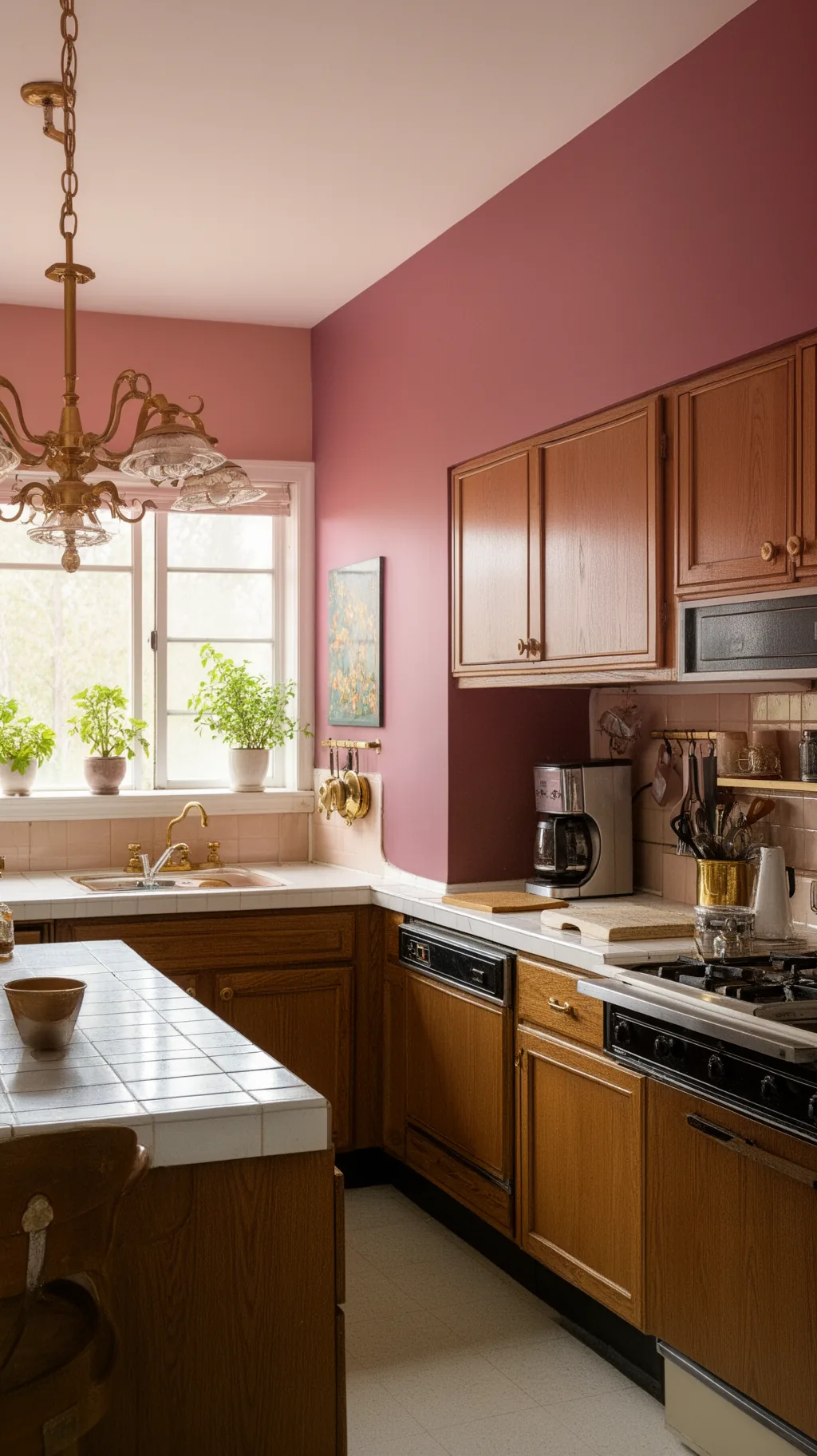
Swipe through these for a little inspiration.
 1 / 5
1 / 5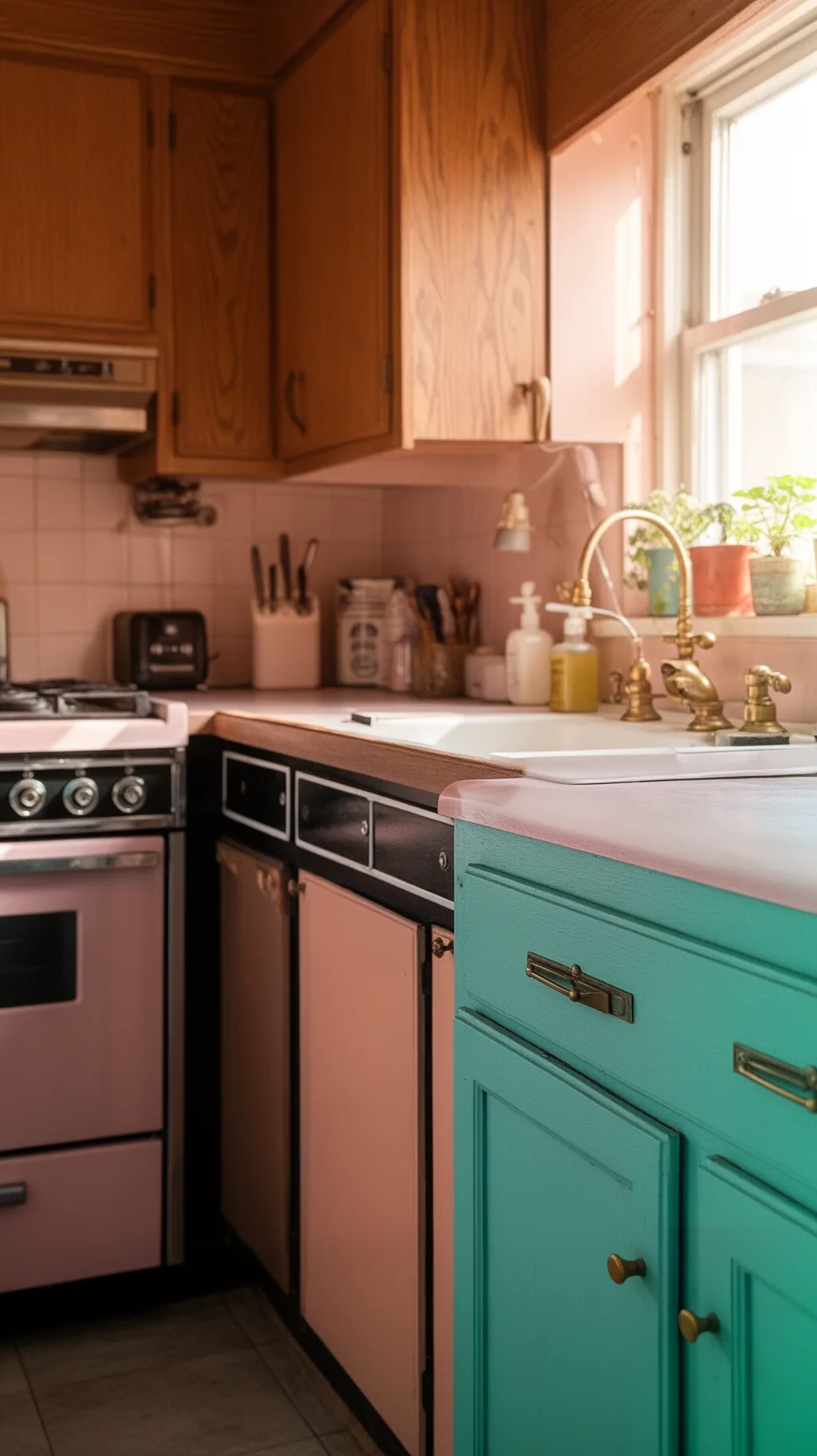 2 / 5
2 / 5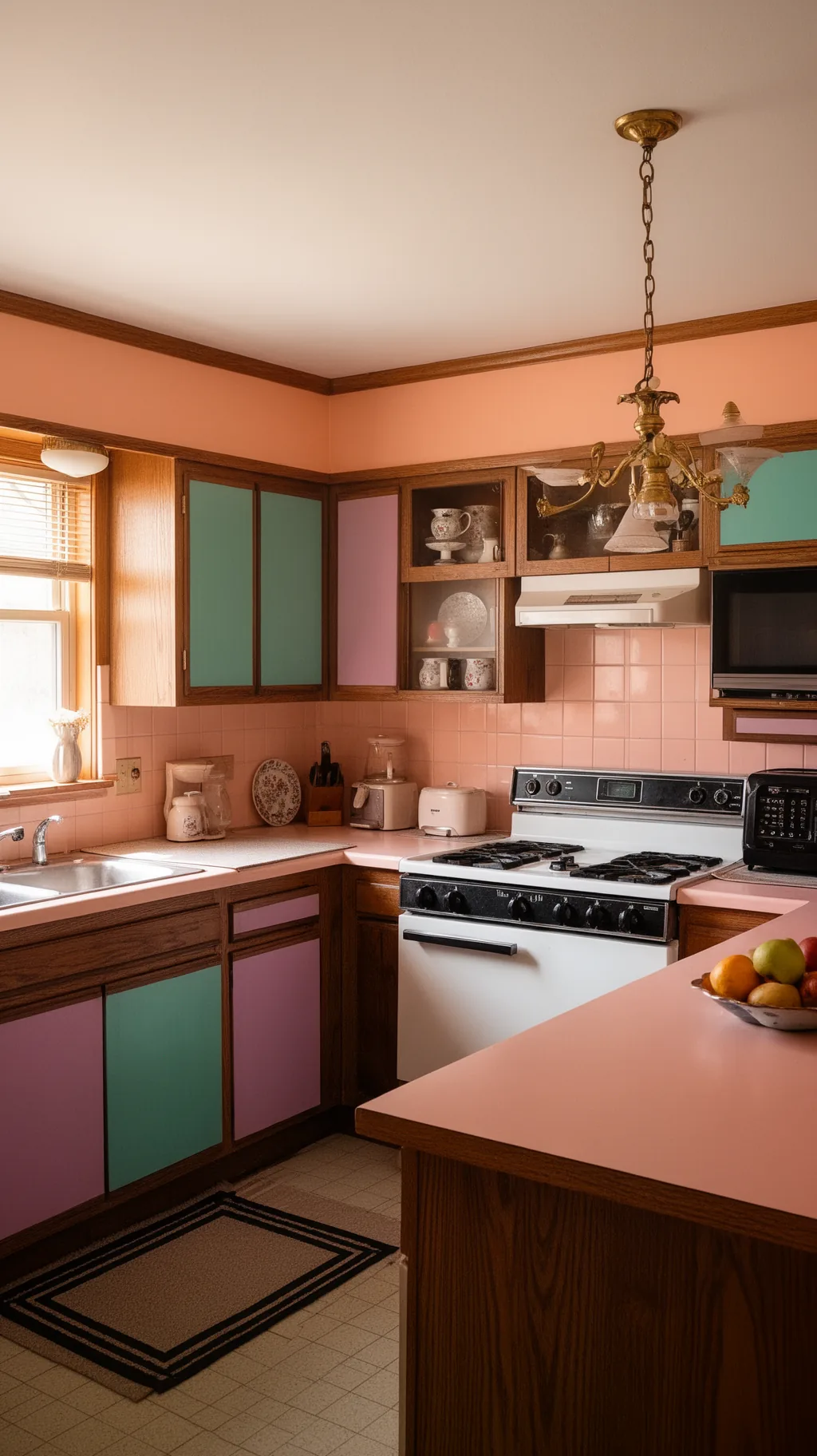 3 / 5
3 / 5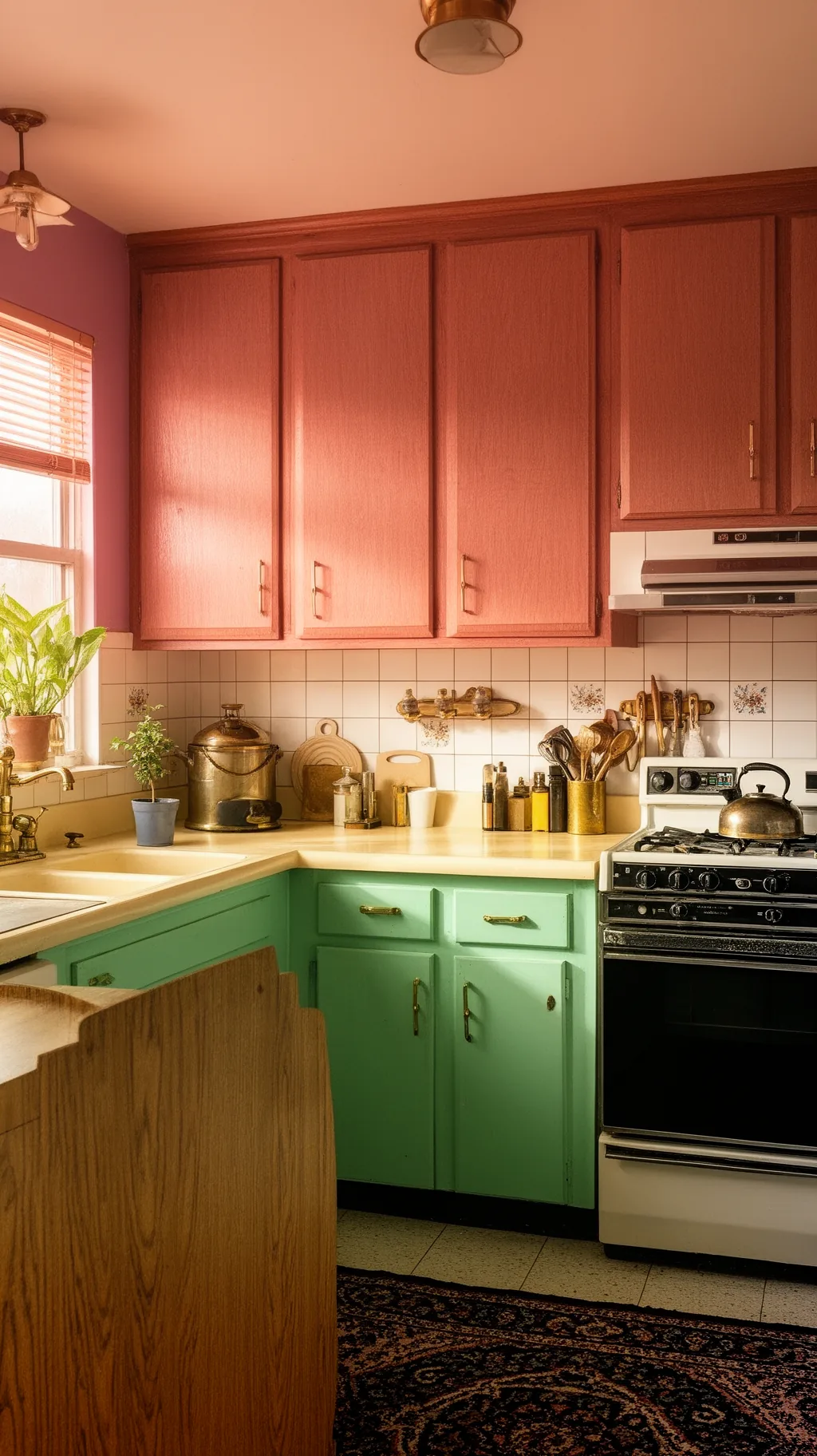 4 / 5
4 / 5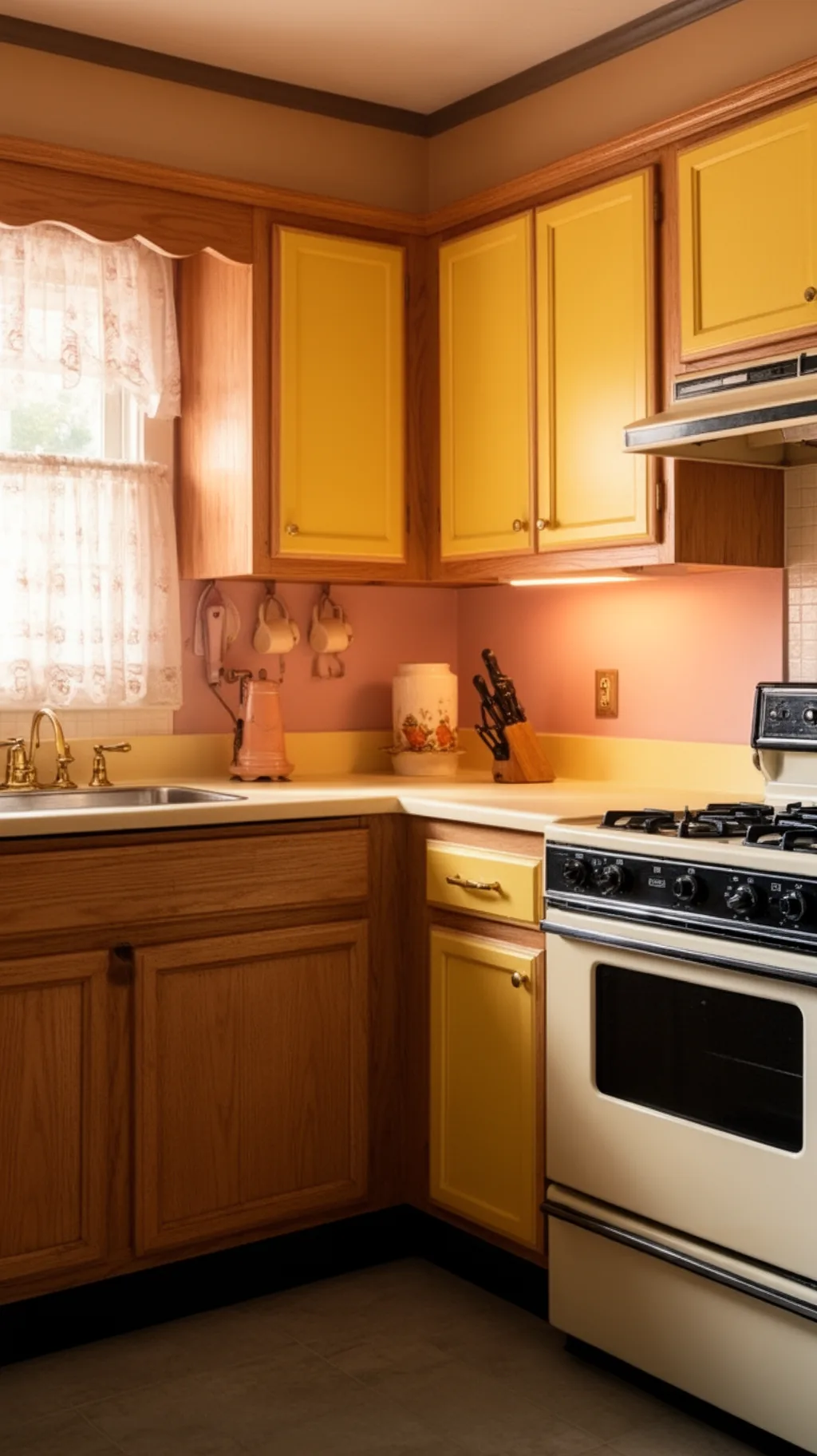 5 / 5
5 / 57. Brass Hardware and Fixtures
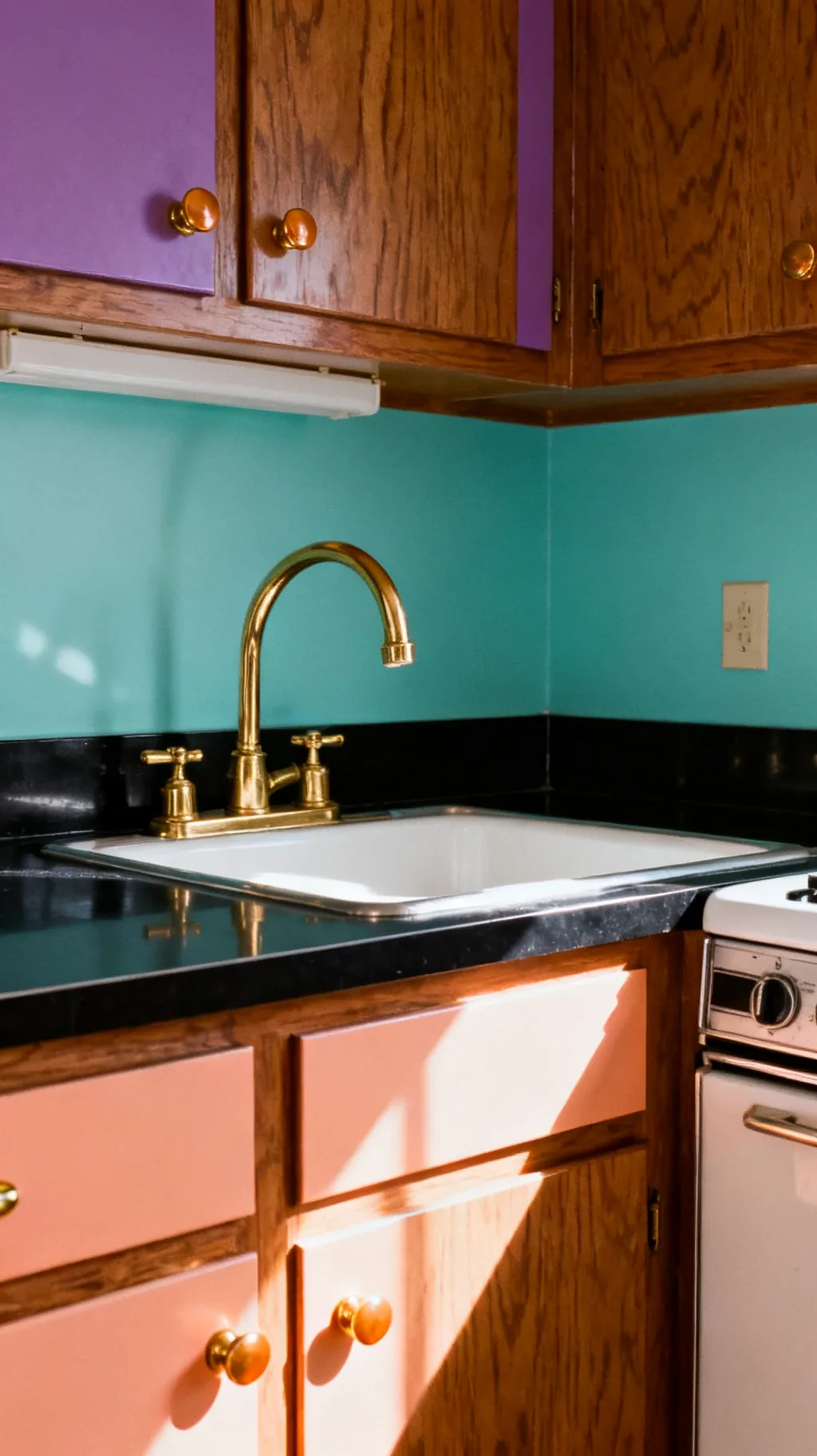
Brass is the warm metal that ties an 80s look together, from cabinet pulls to faucets to light fixtures. It adds a glow that cooler metals just cannot match. From what I’ve gathered, the easiest approach is to start with the hardware you touch most, like your faucet and a few handles.
What to Look For
- Warm tone: choose true brass over silvery finishes for that retro warmth.
- Mixed pieces: a brass faucet plus brass pulls reads as cohesive.
- Aged finish: a slightly antiqued look feels more authentic than shiny new.
Brass is the small touch that makes the whole kitchen feel pulled together.
8. Pastel Peach and Mint Accent Walls
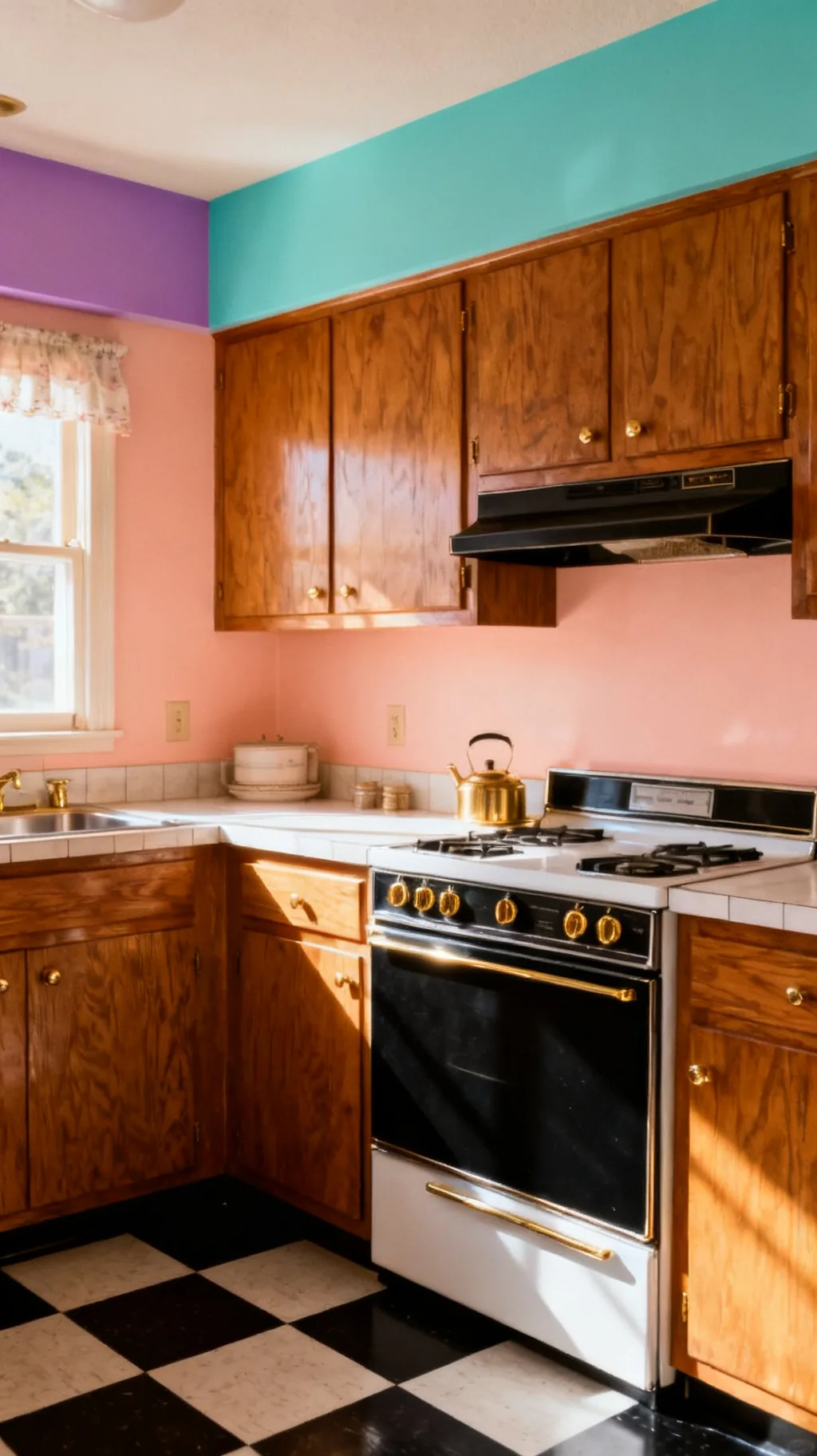
Soft peach and mint were the gentle backdrop colors of so many 80s kitchens. They feel fresh and calming without being cold, which makes them perfect for a room where you spend so much time. Even one accent wall in these shades can shift the whole mood.
How to Pull It Together
- One wall first: test the color on a single wall before going all in.
- Soft sheen: a low-gloss paint keeps these pastels looking modern.
- Pair with wood: warm oak keeps the pastels from feeling too sweet.
A pastel wall is a low-risk way to dip a toe into the era.
9. Tile Countertops with Contrasting Grout
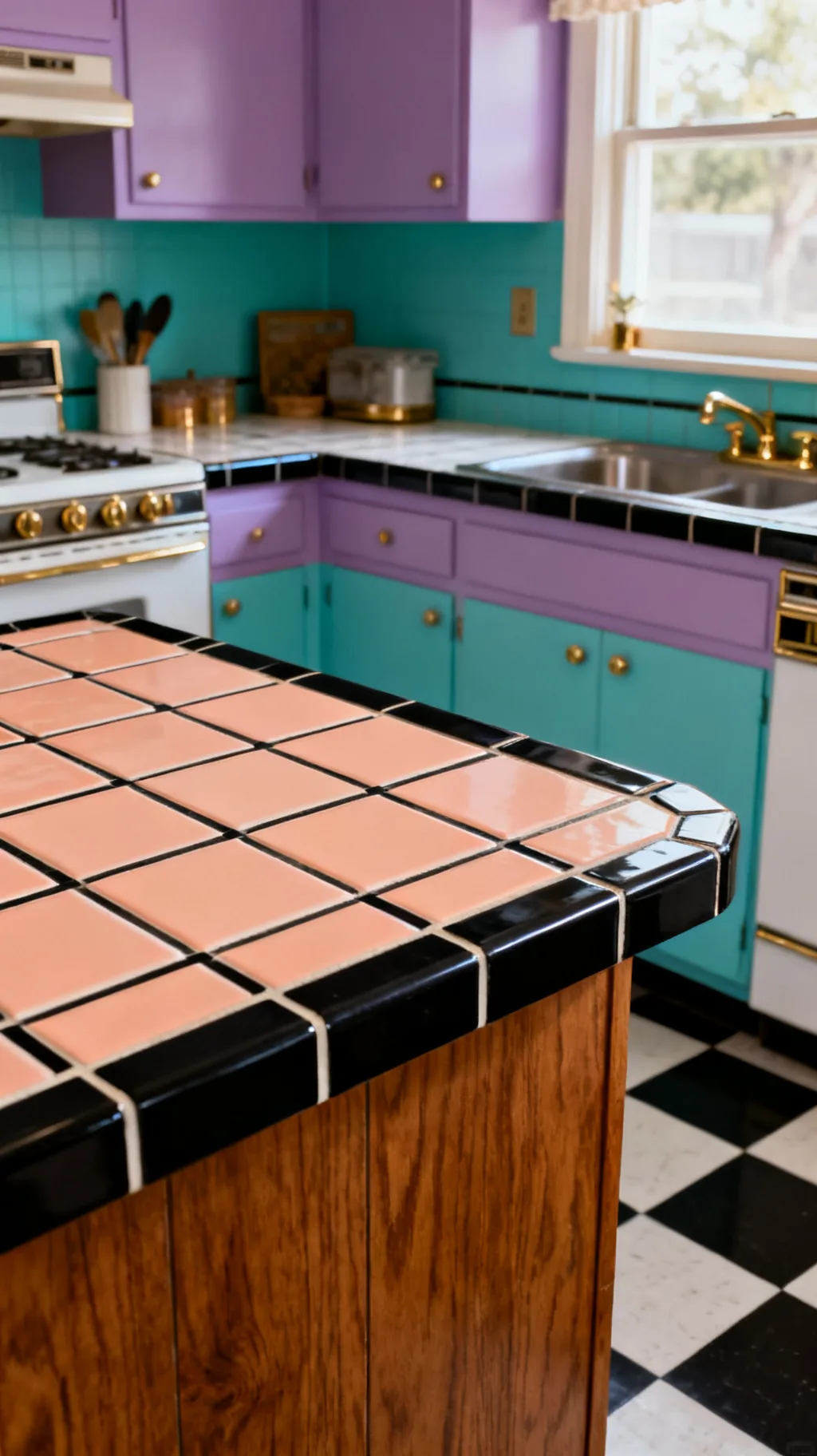
Tiled countertops were a hallmark of the 80s kitchen, often with bold contrasting grout that turned the counter into a graphic feature. They have a handmade, charming quality that smooth surfaces lack. I remember walking into a friend’s older home with peach tile counters and dark grout, and it felt so warm and welcoming.
What to Look For
- Square tiles: classic four-inch squares are the most period-correct.
- Contrast grout: a darker grout line makes the pattern pop.
- Bullnose edges: rounded edge tiles finish the look neatly.
Tile counters bring texture and personality you can feel.
10. Track Lighting That Actually Works
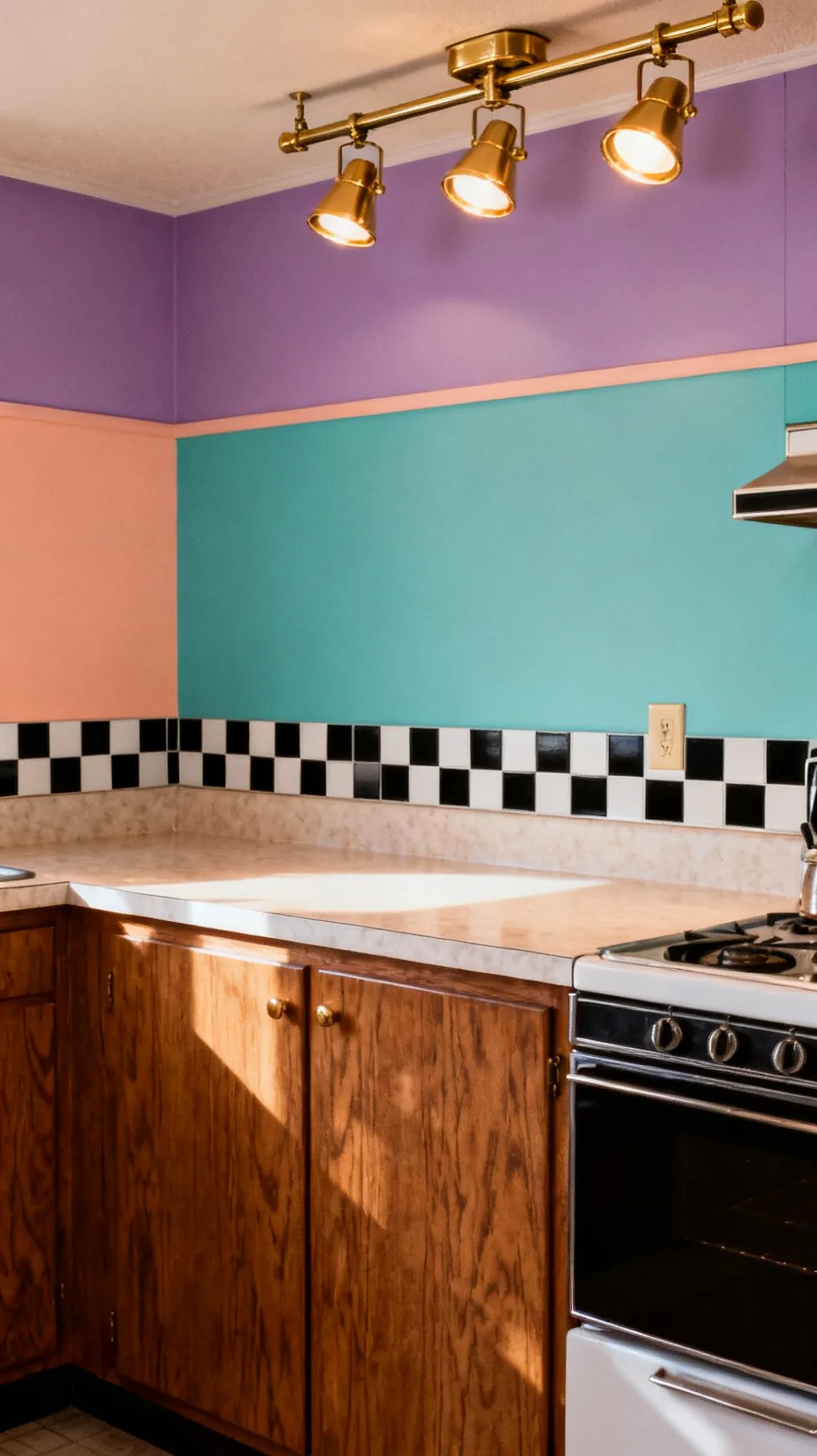
Track lighting was practically required in an 80s kitchen, and the newer versions are far more flattering than the old ones. They let you point light exactly where you need it, which is a gift when you are chopping or reading a recipe. The retro shape is a fun nod to the era too.
Where to Start
- Adjustable heads: choose movable fixtures so you can aim light at work zones.
- Warm bulbs: soft white bulbs keep the glow cozy, not clinical.
- Black or brass: match the track finish to your hardware.
Good track lighting is the rare retro feature that earns its keep daily.
&# 10024; More vintage flavor:vintage kitchen aesthetic ideas with a 70s vibe→11. Rounded Bullnose Edges Everywhere
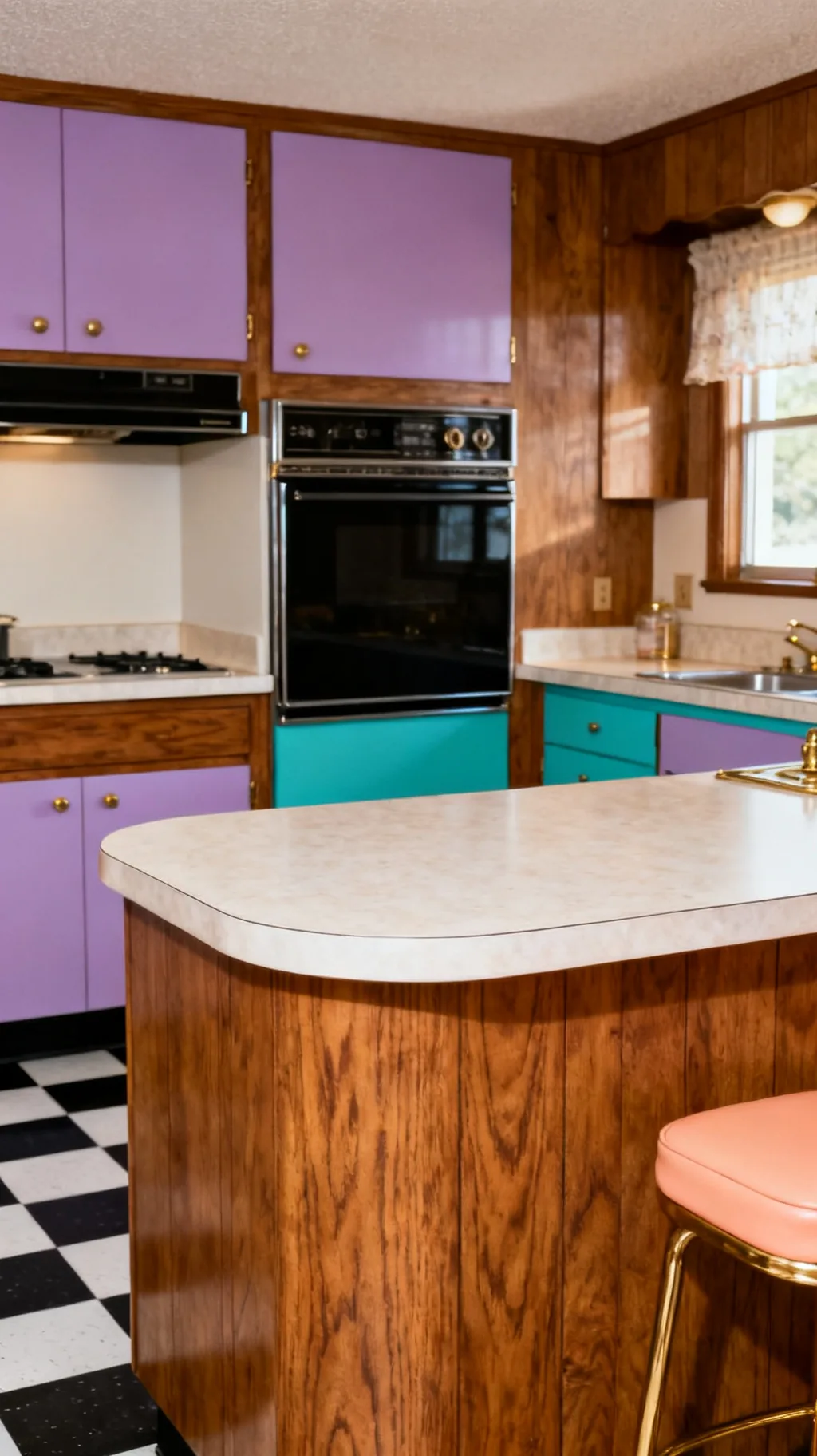
Sharp corners were out in the 80s, and soft rounded bullnose edges were in, on counters, islands, and even shelving. Those curves make a kitchen feel friendlier and a little safer when little ones are around. It is a subtle detail that quietly signals the era.
What to Look For
- Curved counters: rounded counter edges are gentle and on-theme.
- Soft shelf corners: rounded open shelving keeps the look consistent.
- Curved islands: a softly curved island end feels playful and practical.
Curves are an easy way to soften a kitchen and nod to the decade.
Take a peek at a few of these looks.
 1 / 5
1 / 5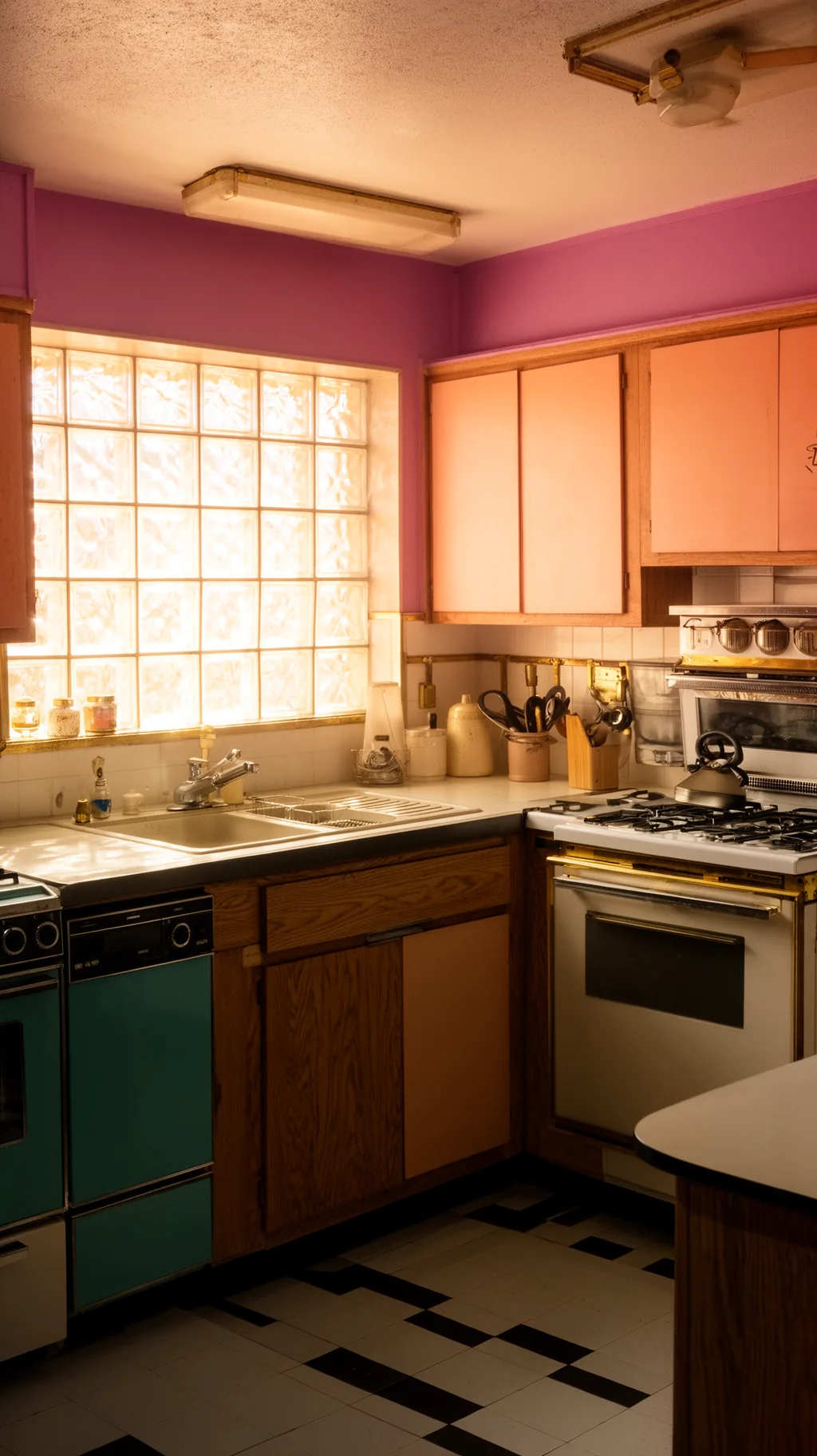 2 / 5
2 / 5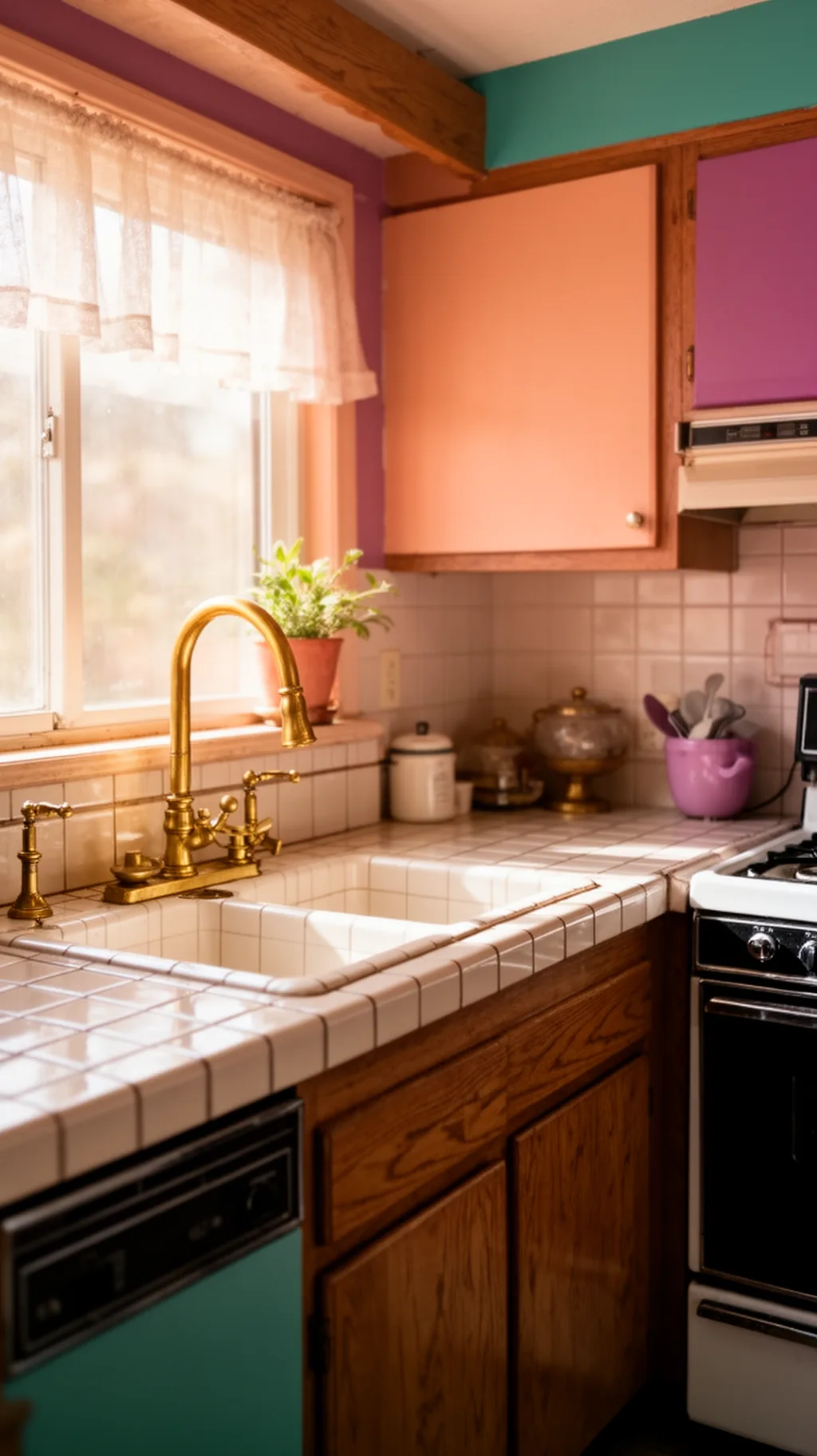 3 / 5
3 / 5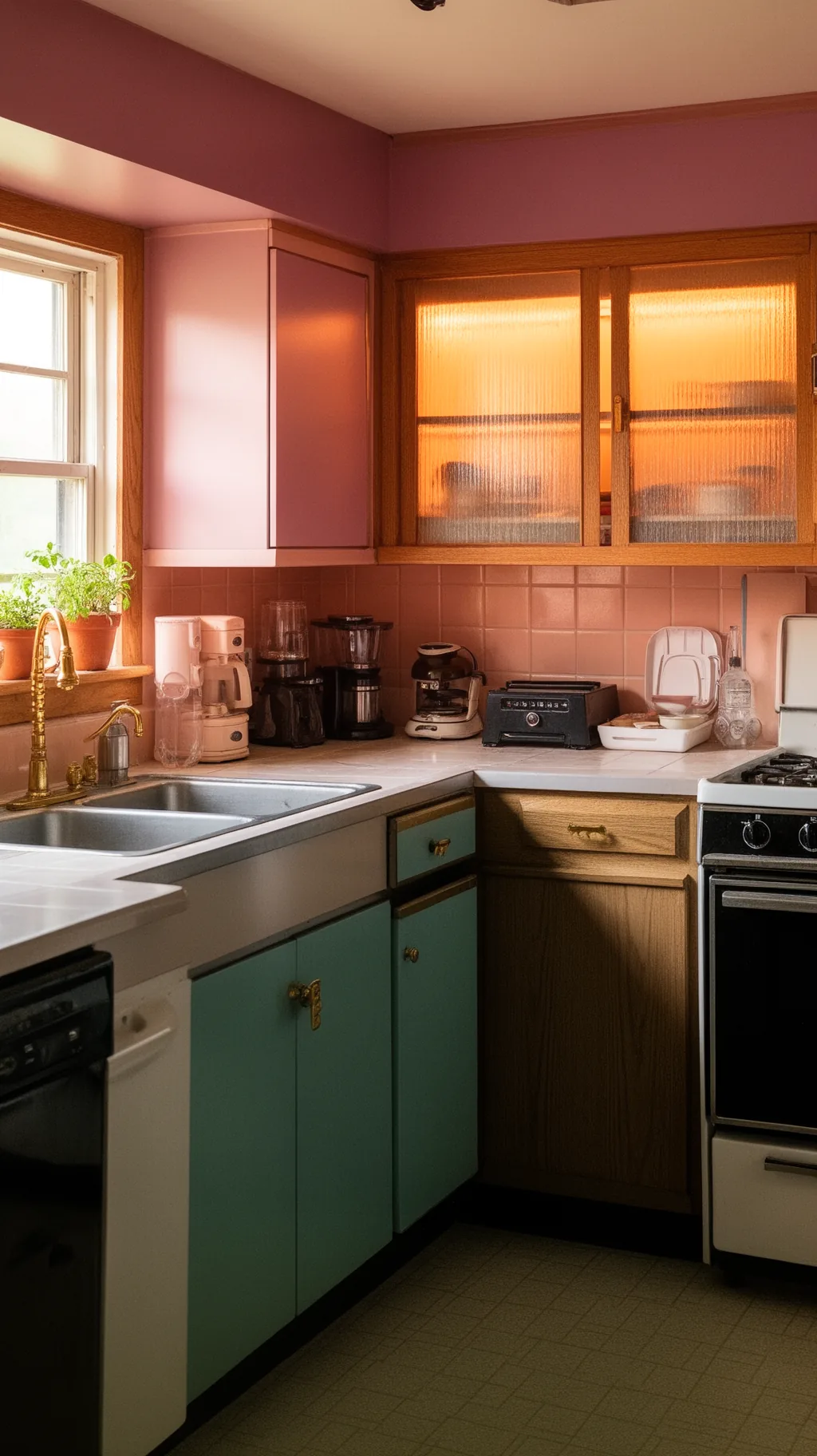 4 / 5
4 / 5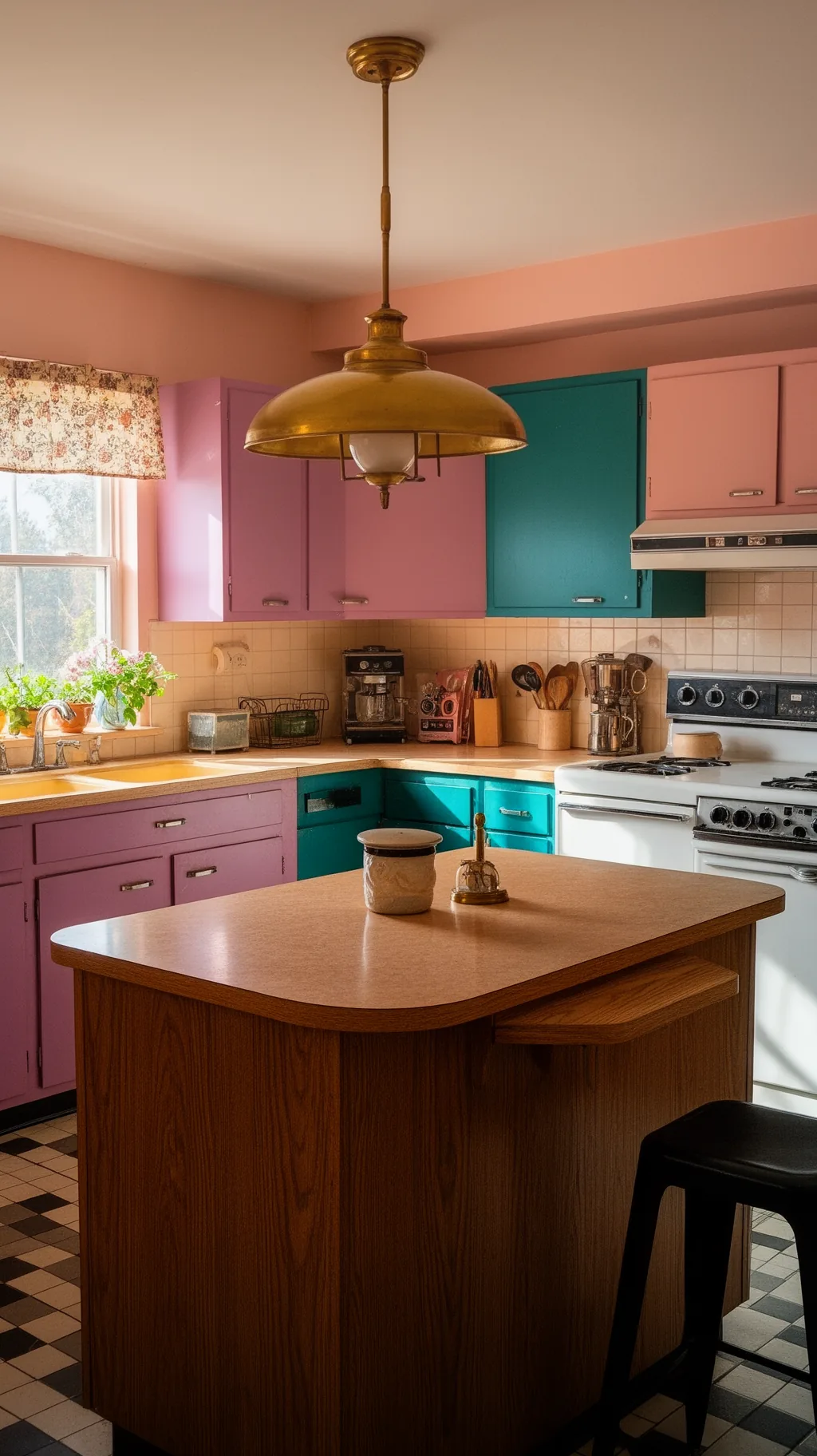 5 / 5
5 / 512. An 80s Kitchen Color Palette That Pops
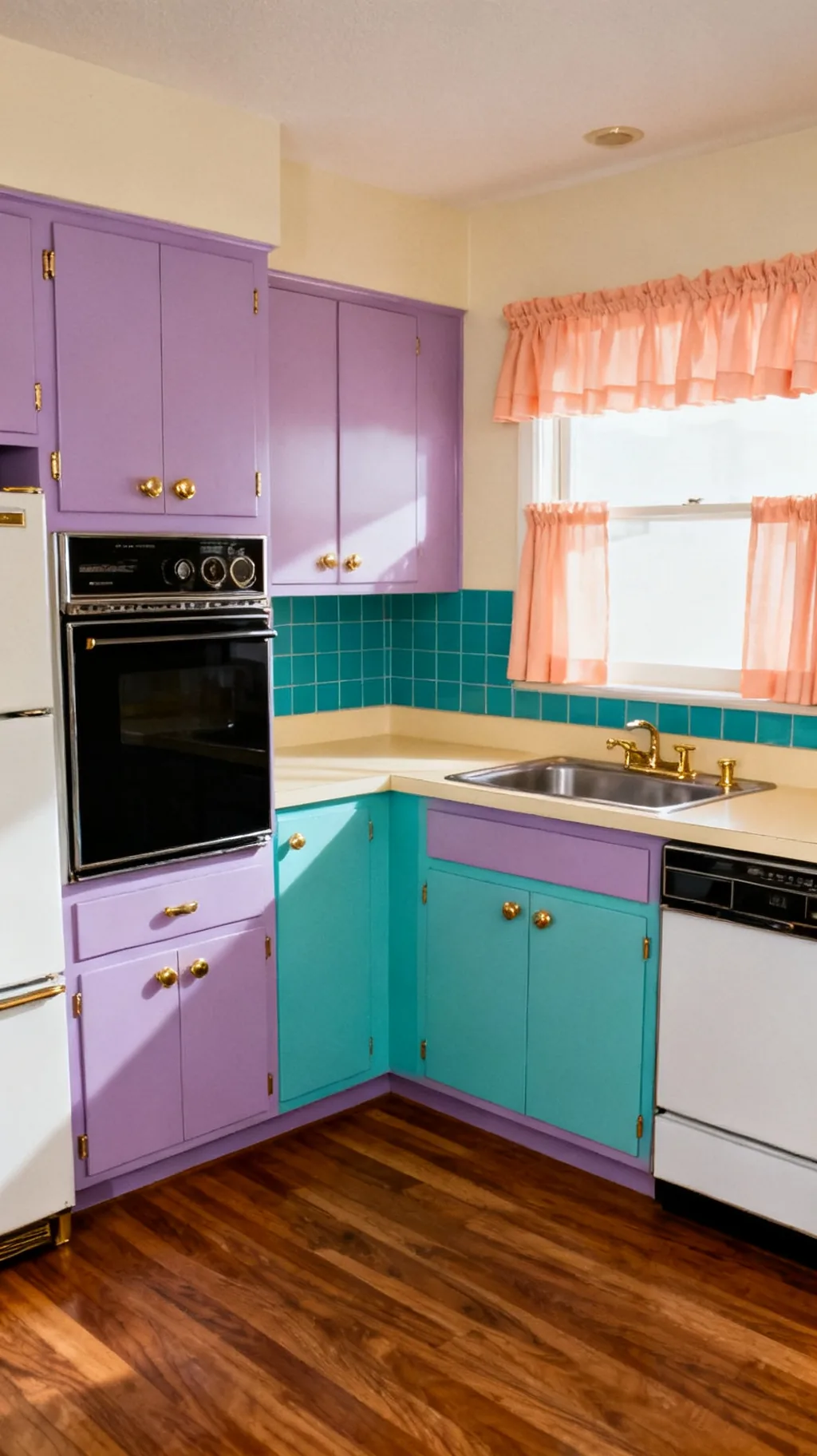
Building a cohesive 80s kitchen really starts with choosing your palette and sticking with it across the room. The era loved confident color, so pick two or three shades and repeat them in cabinets, textiles, and accents. I’ve seen this work beautifully in smaller kitchens where a tight palette keeps the boldness from feeling chaotic.
How to Pull It Together
- Three-color rule: choose one warm, one cool, and one neutral.
- Repeat on purpose: echo each color at least three times around the room.
- Test swatches: live with paint samples for a few days before committing.
A clear palette turns a few bold pieces into a real design.
13. Pastel Appliances as Statement Pieces
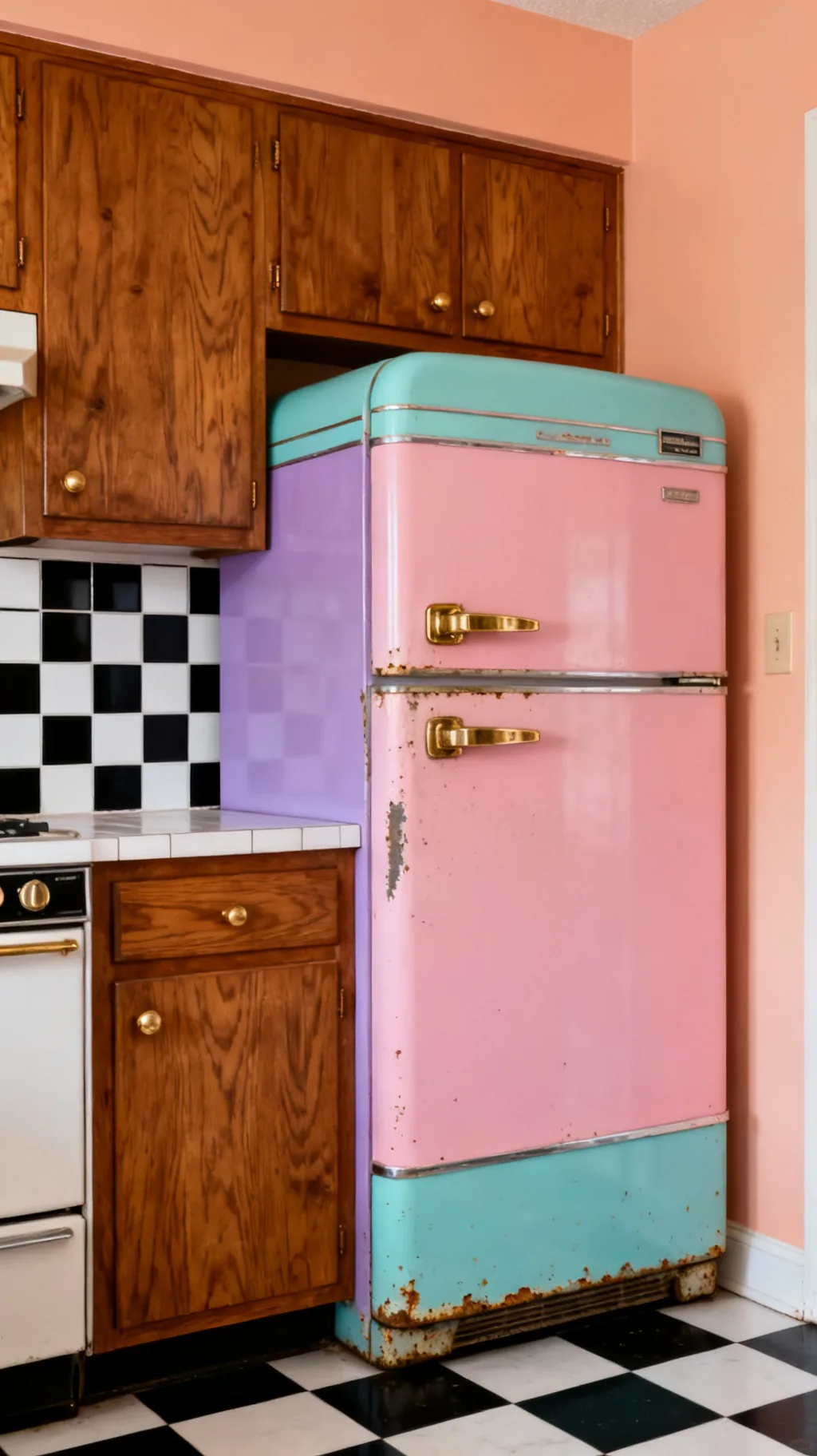
A soft pink fridge or a mint stand mixer can become the joyful centerpiece of the room. The 80s embraced colored appliances long before they came back into style, and they bring such a cheerful energy. Even one pastel appliance can set the whole tone.
What to Look For
- Soft hues: dusty pink, mint, and butter yellow feel period-correct.
- Matte finishes: a low-shine surface reads as retro rather than toy-like.
- Small swaps: a colored kettle or toaster is a low-cost way to start.
One cheerful appliance can carry the whole retro mood.
14. Frosted Glass Cabinet Fronts
 Shop this look: Lesnlok 24 x 36 Frosted Acrylic Sheet 1/8 inch… · Niviy Frosted Glass Window Privacy Film 24 x 36… · Dwersty Frosted Glass Window Privacy Film…
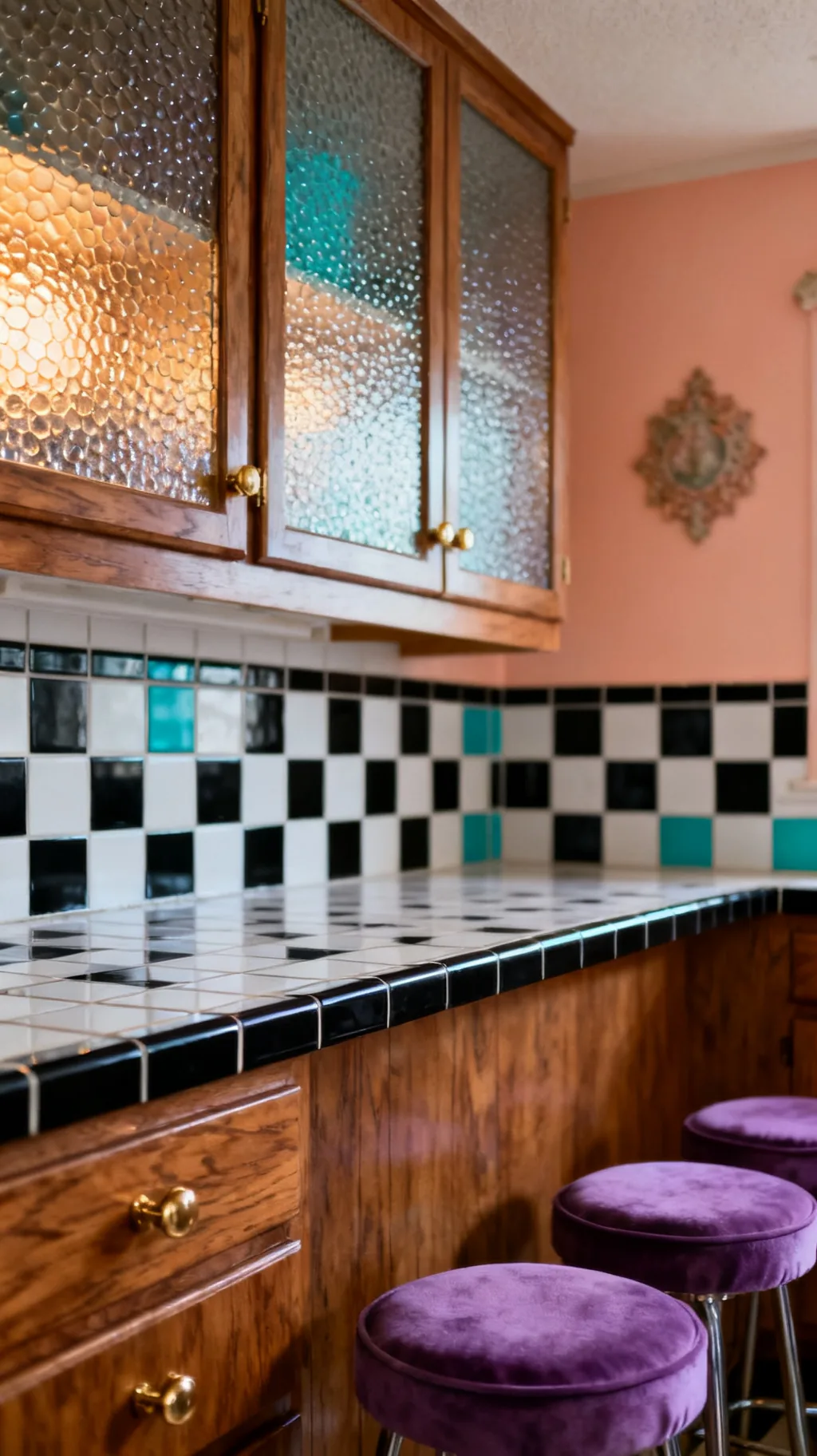
Frosted or pebbled glass cabinet doors were a soft, dreamy 80s touch that hid the clutter while still feeling open. They catch the light in a lovely way and break up a wall of solid cabinets. It is a small upgrade that adds a lot of texture.
Where to Start
- Upper cabinets: swap a few solid doors for frosted glass to lighten the room.
- Pebbled texture: reeded or pebbled glass feels especially retro.
- Backlight it: a small light inside the cabinet makes the glass glow.
Frosted glass adds softness without showing every dish.
15. Bold Floral Wallpaper Borders
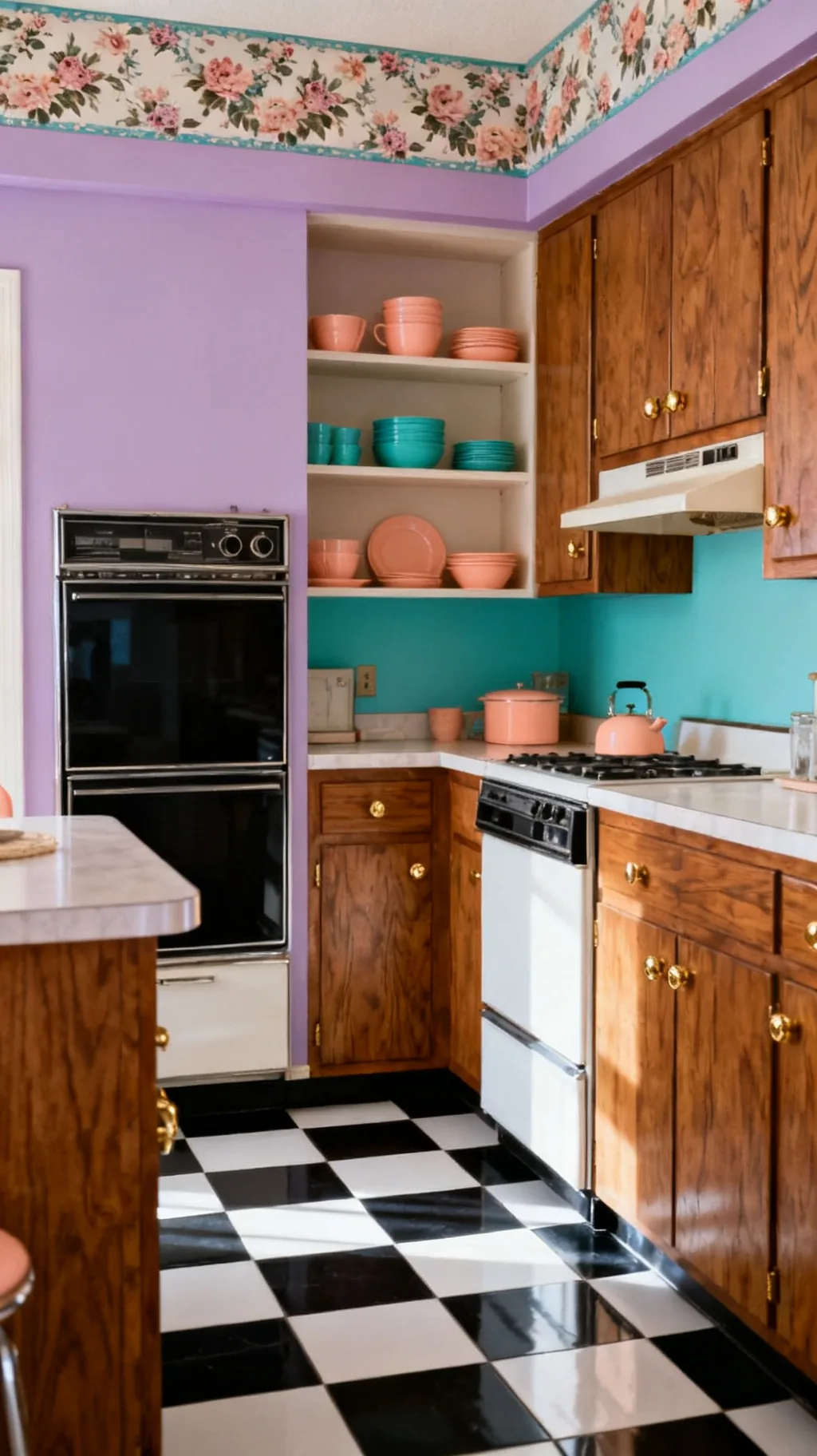
Wallpaper borders ran along the top of so many 80s kitchens, usually bursting with flowers, fruit, or geometric prints. They add a finishing ribbon of pattern that makes a room feel complete. A modern peel-and-stick border makes this trend easy to try and easy to change later.
How to Pull It Together
- Top border: run the border where the wall meets the ceiling for a classic look.
- Coordinate colors: pull one shade from the border into your textiles.
- Peel-and-stick: removable borders let you experiment with low risk.
A pretty border is the little detail that makes a kitchen feel finished.
16. Open Shelving with Colorful Dishware
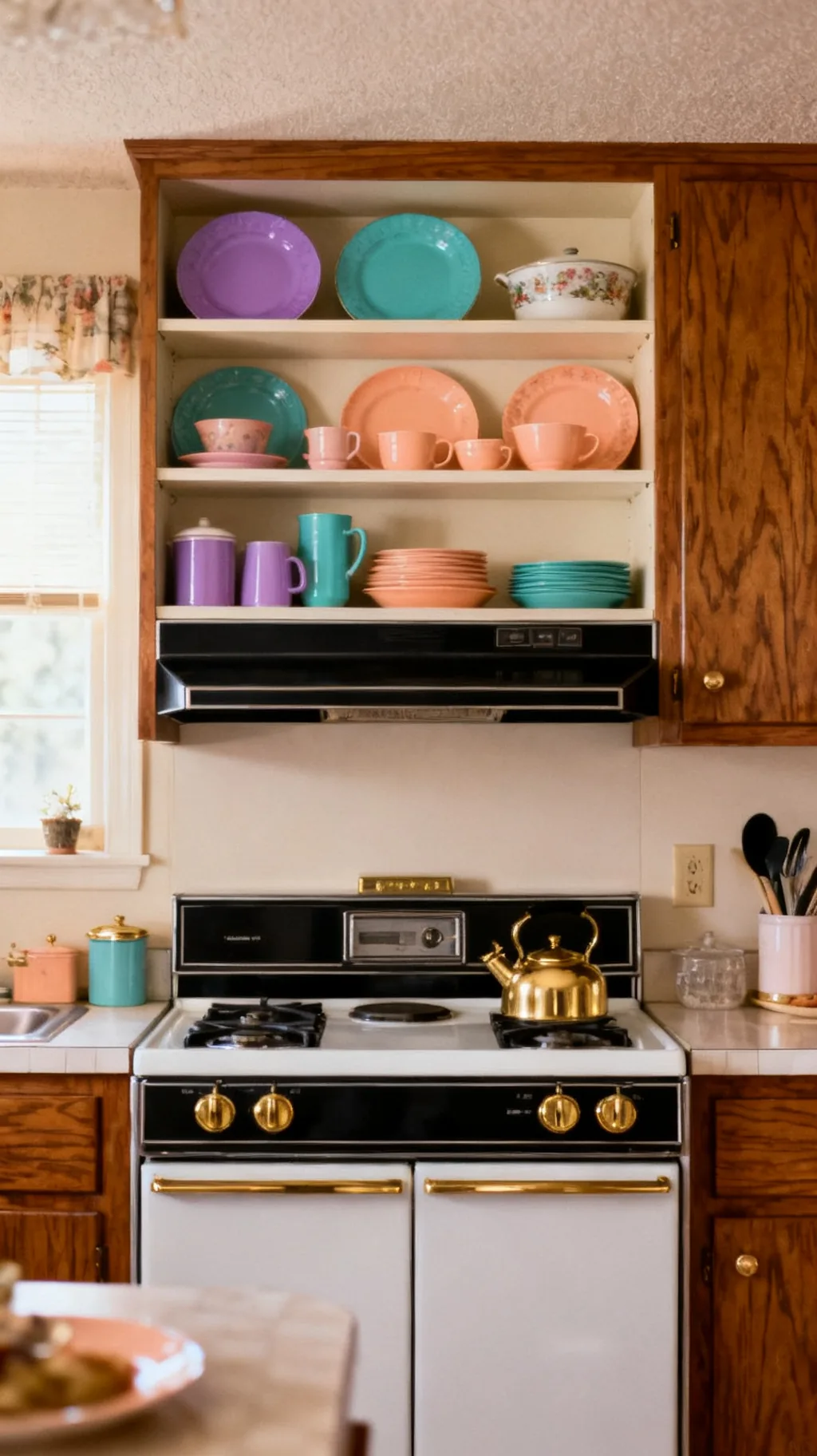
Open shelves filled with cheerful, mismatched dishware capture the relaxed, collected feeling of an 80s kitchen. It turns your everyday pieces into part of the decor. Estate sales and flea markets are great hunting grounds for that perfectly imperfect vintage glassware.
What to Look For
- Mixed colors: pastel and primary pieces together feel playful and curated.
- Vintage glass: ribbed or colored glassware adds authentic charm.
- Edit lightly: leave a little breathing room so it does not look cluttered.
Your dishes can be decor when you give them a stage.
Scroll through and see which one speaks to you.
 1 / 5
1 / 5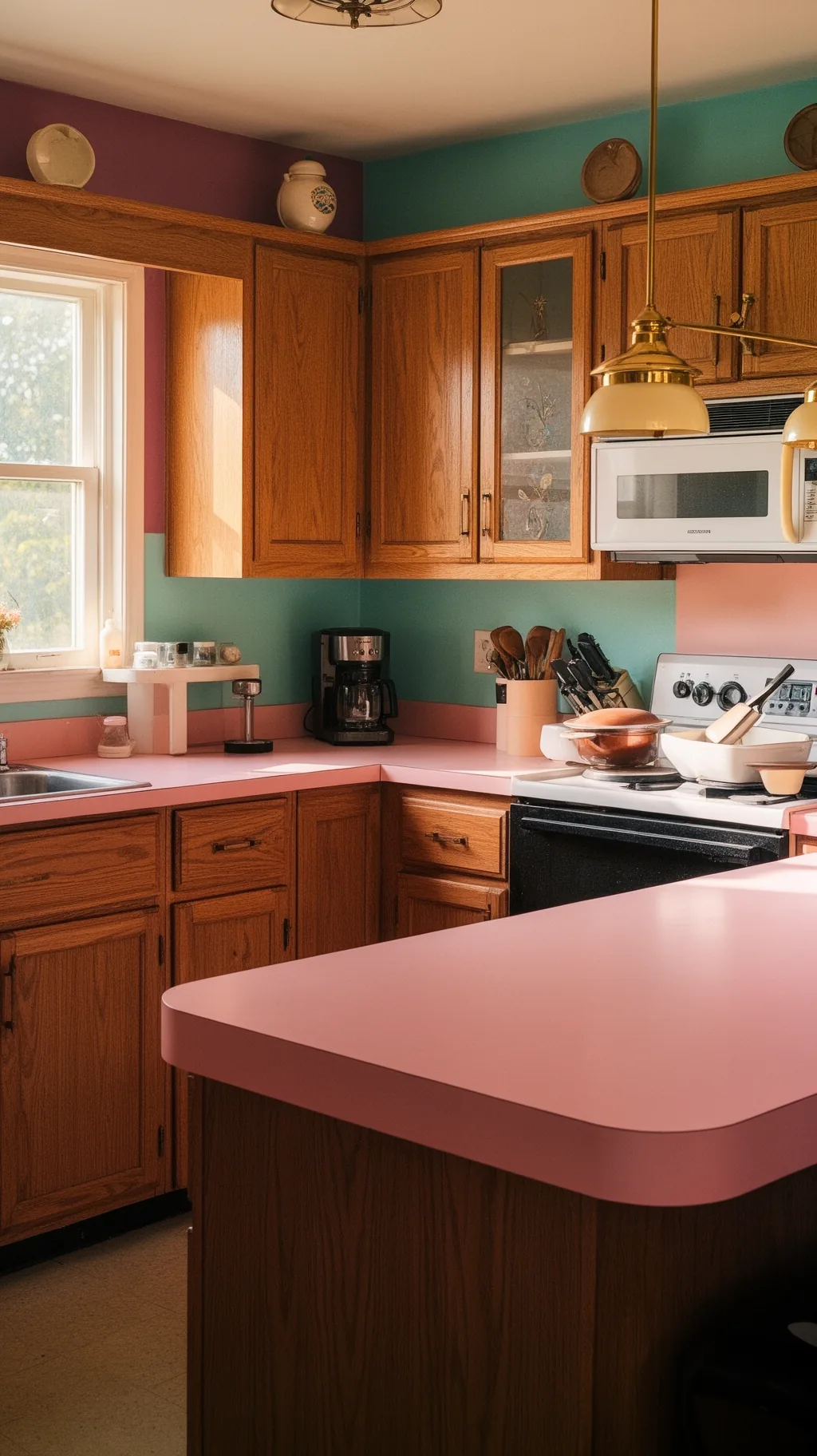 2 / 5
2 / 5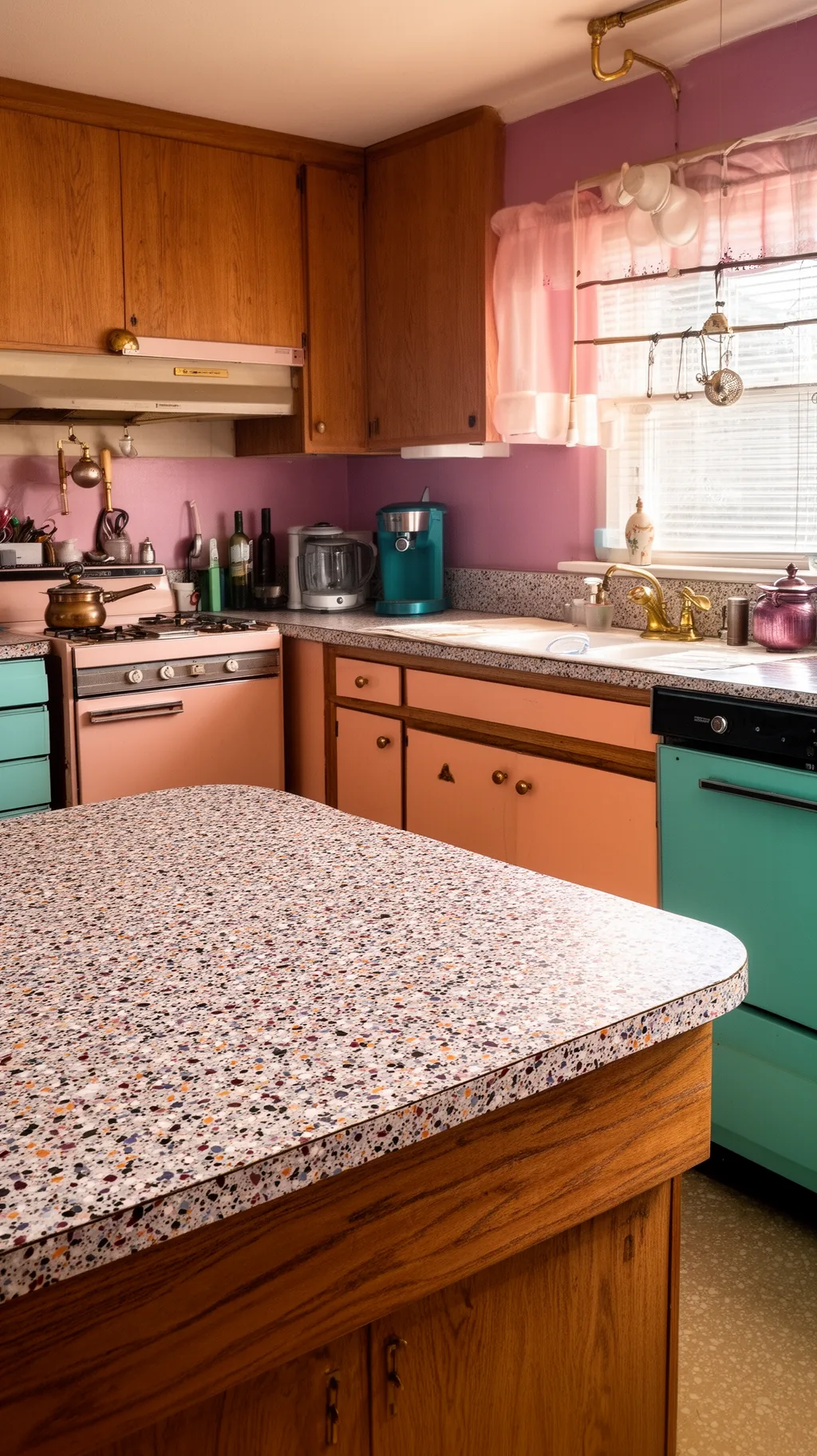 3 / 5
3 / 5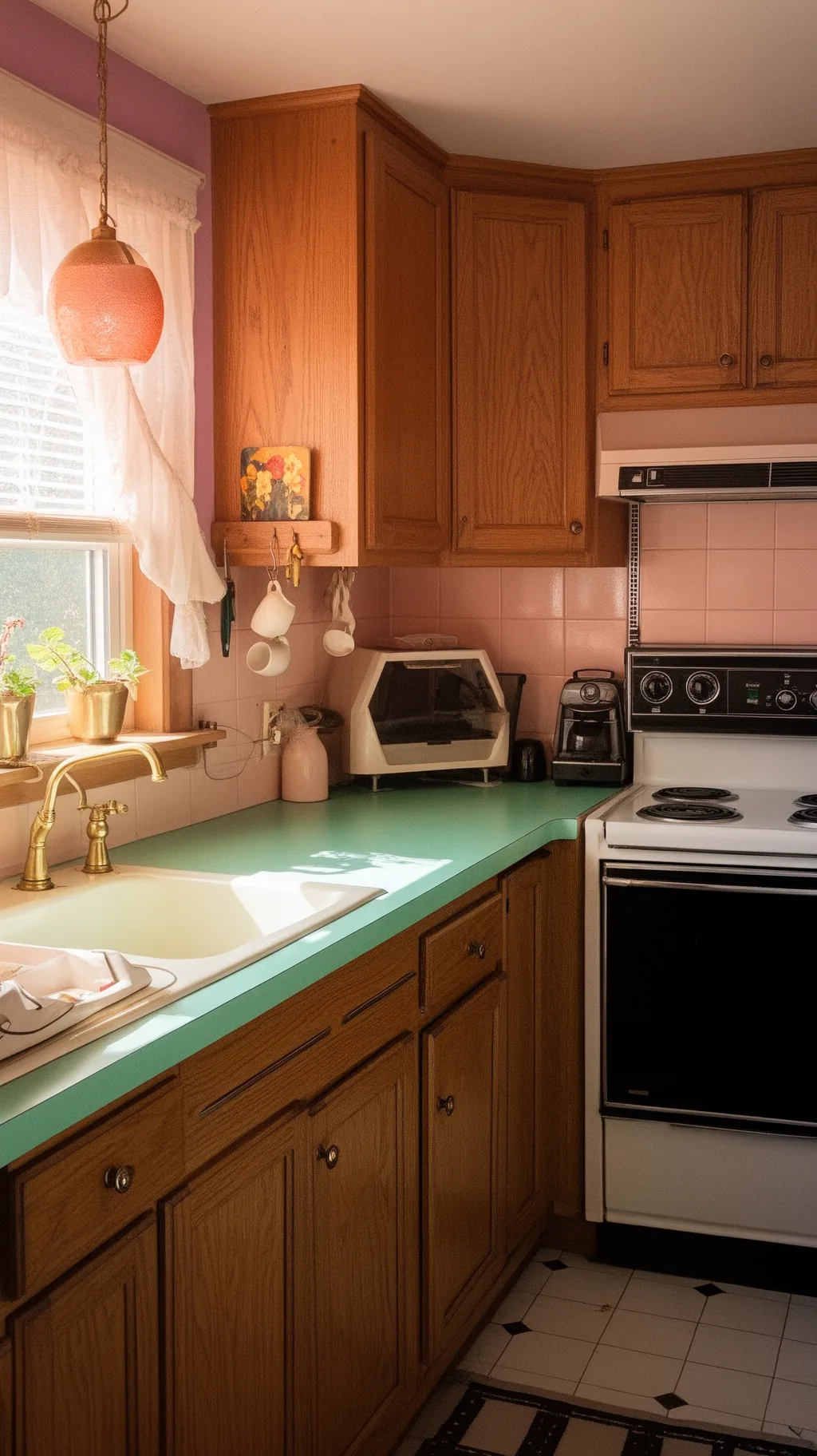 4 / 5
4 / 5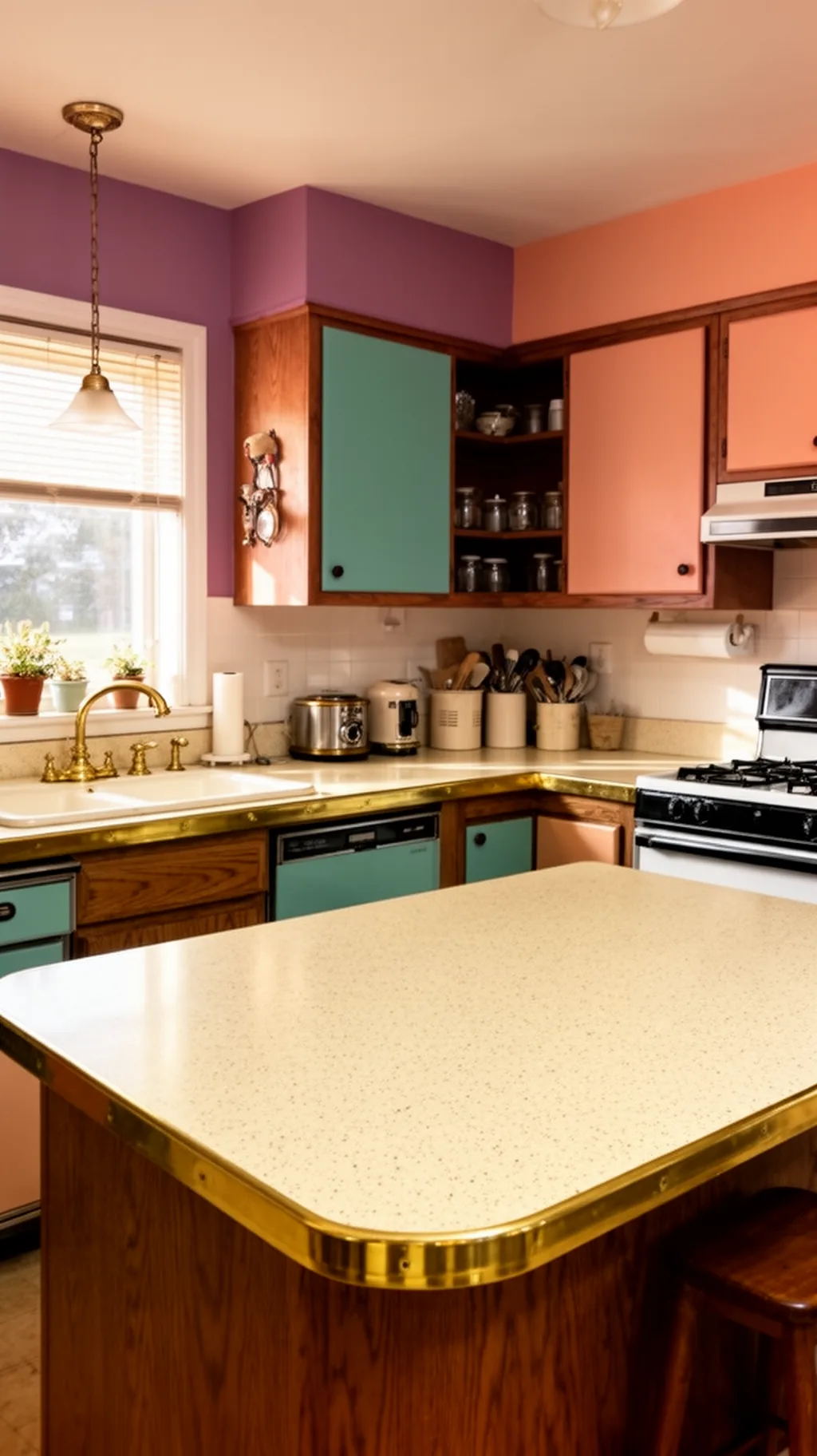 5 / 5
5 / 517. Terracotta and Saltillo Tile Floors
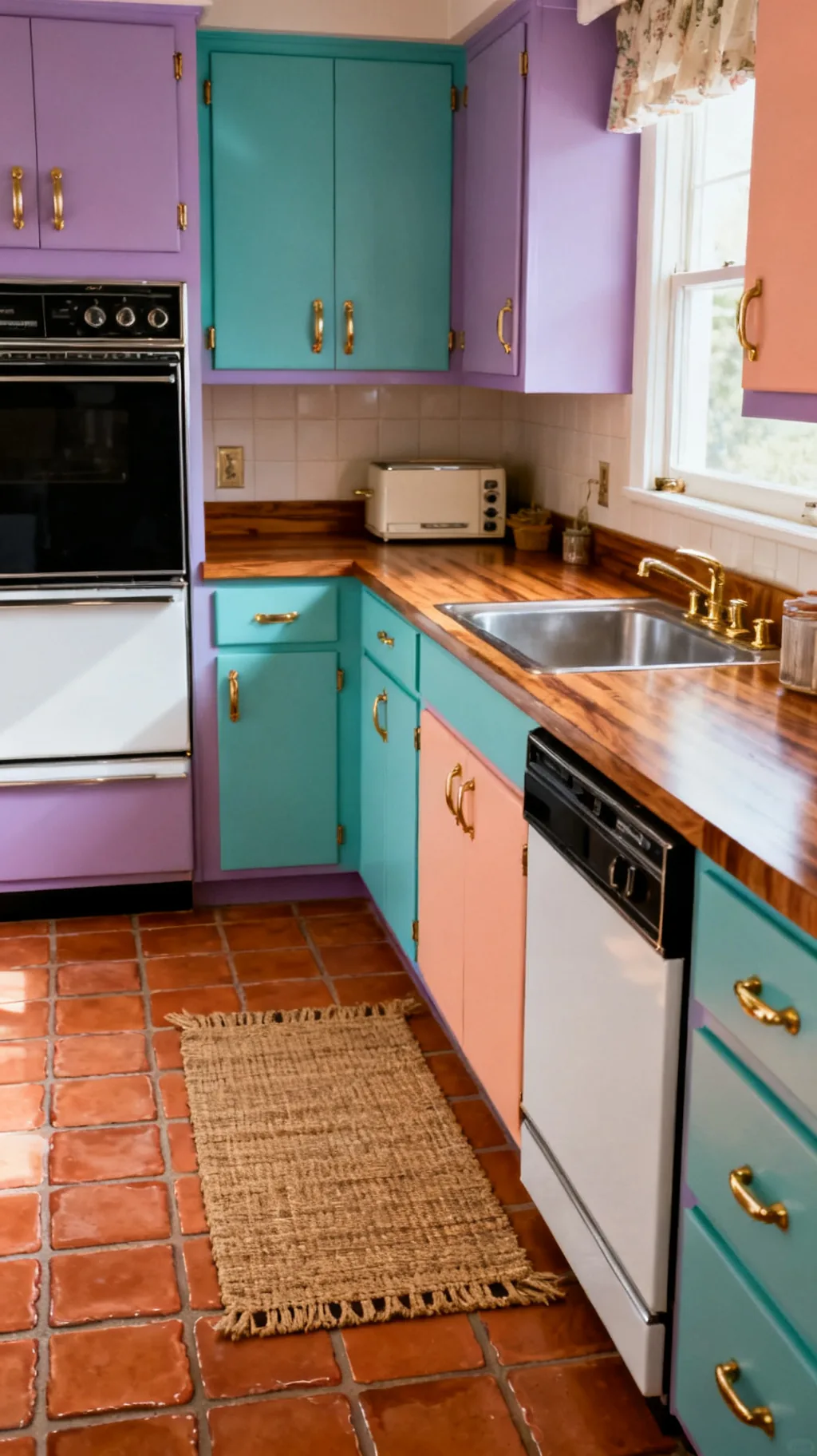
Warm terracotta and Saltillo tile floors brought an earthy, sun-baked feeling into 80s kitchens, especially in homes with a Southwestern lean. Those clay tones make a space feel grounded and cozy underfoot. They pair beautifully with both pastels and warm wood.
What to Look For
- Warm clay tones: orange and rust hues bring instant warmth.
- Matte sealant: a low-sheen seal keeps the rustic feeling intact.
- Soft rugs: a woven runner adds comfort over the hard tile.
Terracotta floors bring a sunny warmth no other material quite matches.
18. Bold High-Contrast Backsplashes
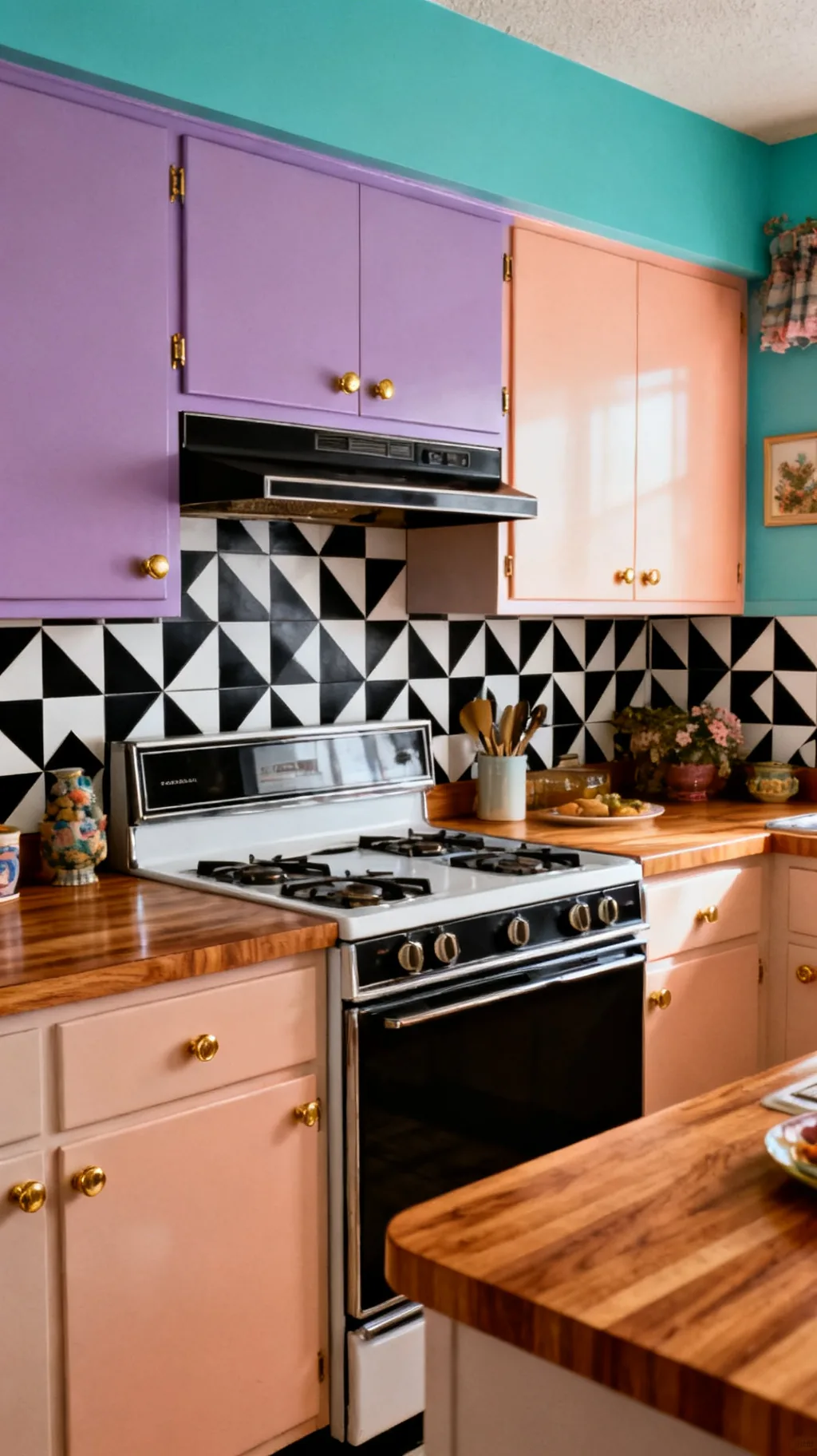
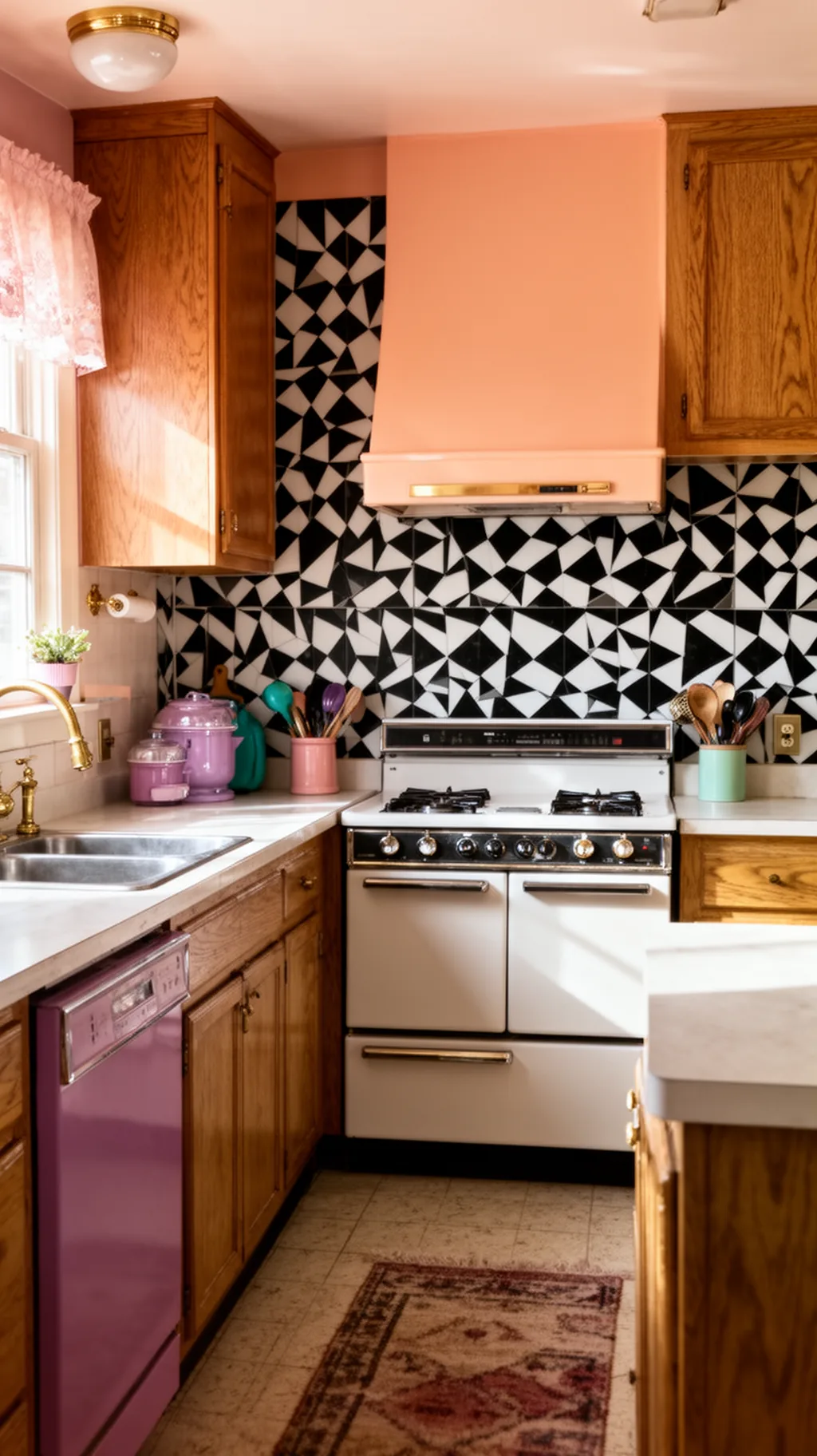
A high-contrast backsplash, think black and white or a bold color against pale cabinets, gives an 80s kitchen its graphic edge. It is the spot where you can be daring without taking over the whole room. Keep the surrounding surfaces calm and let this one area carry the drama.
How to Pull It Together
- Graphic tile: choose a bold pattern in two contrasting colors.
- Frame it: keep surrounding surfaces calm so the backsplash shines.
- Peel-and-stick option: removable tiles make this an easy trial.
The backsplash is your chance to make a bold, contained statement.
19. Tubular Steel and Chrome Bar Stools
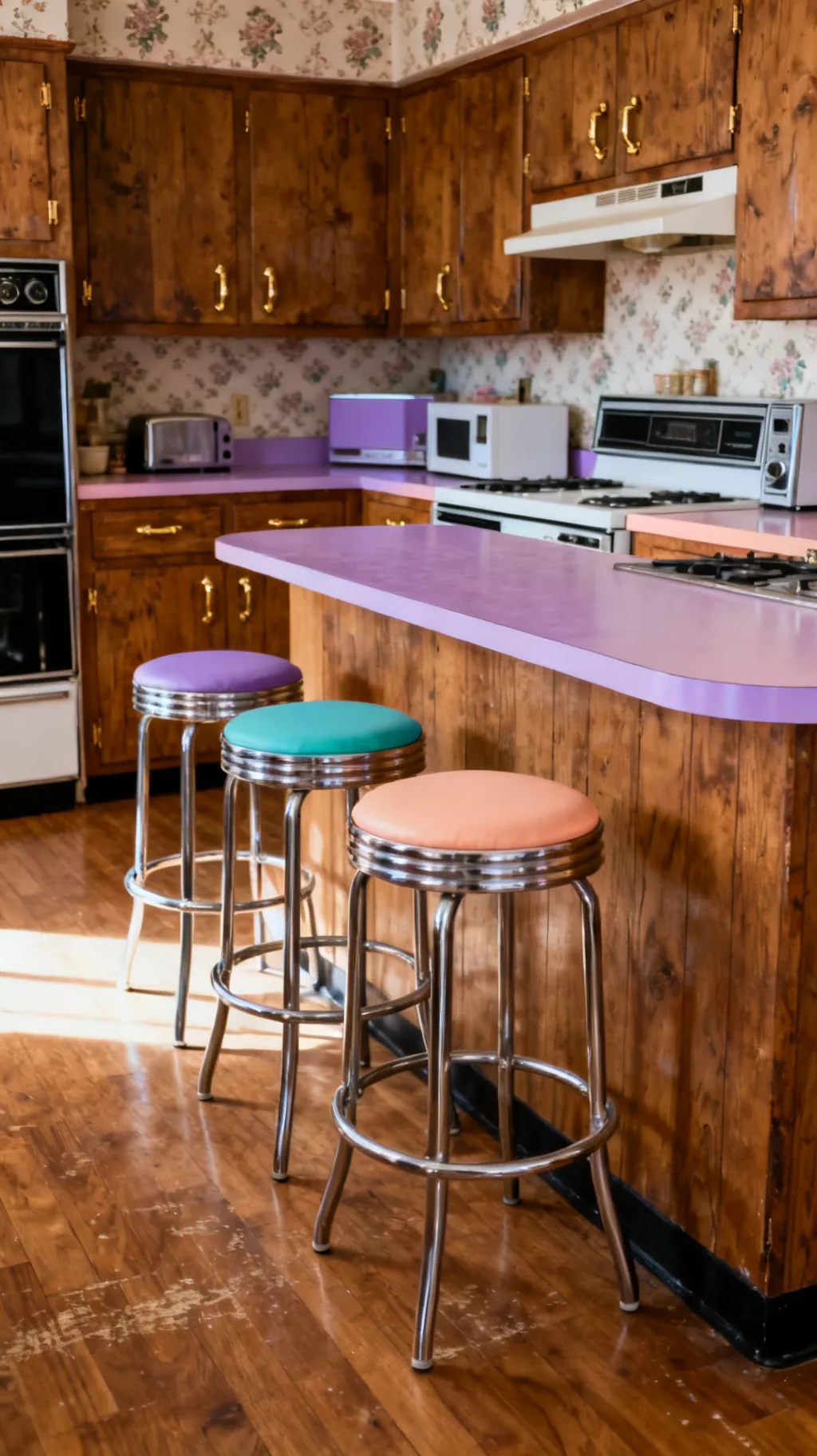 Shop this look: CONSDAN 9-Inch Round Step Stool for Adults &… · Lexicon Swivel Counter Stools,Faux Leather…
Sleek tubular steel and chrome bar stools were a cool counterpoint to all the warm wood and pastels of the era. Their shiny, simple lines feel a little futuristic in the best way. A pair at a counter instantly reads as retro without much effort.
What to Look For
- Curved frames: rounded tubular steel feels true to the decade.
- Bright finish: polished chrome catches the light beautifully.
- Soft seats: a padded pastel cushion ties them into your palette.
A couple of chrome stools add instant 80s cool to a counter.
&# 10024; Love a specific decade?see our 70s inspired kitchen ideas→20. Geometric and Confetti Patterns
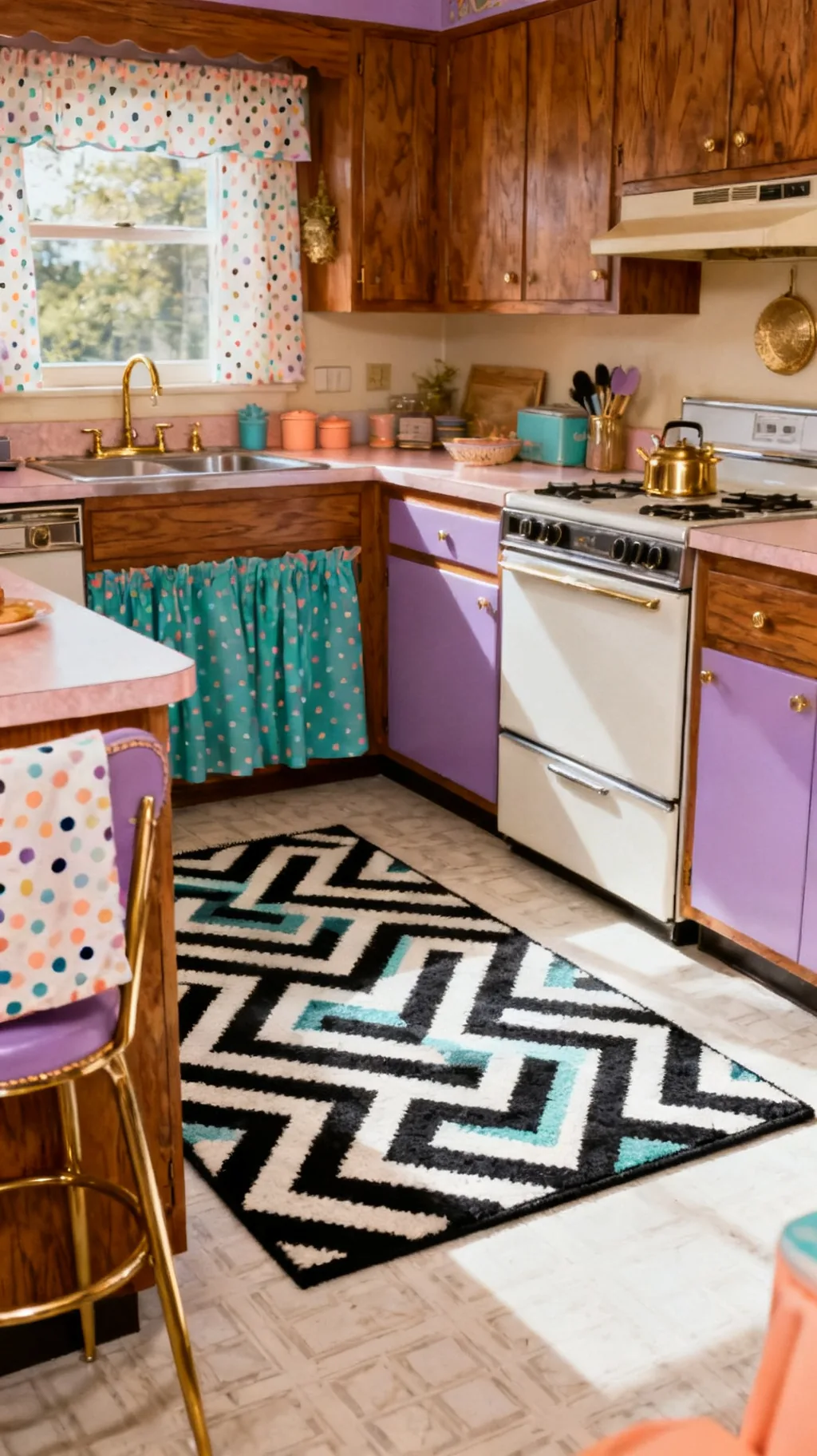
Triangles, zigzags, and confetti speckles showed up on everything from dish towels to wallpaper in the 80s. These patterns bring movement and a sense of fun to a room. You can sprinkle them in through small textiles before deciding whether to go bigger.
Where to Start
- Textile first: a zigzag rug or towel is an easy entry point.
- Confetti accents: speckled canisters or trays add subtle pattern.
- Repeat the motif: echo one shape in two or three spots for cohesion.
A little geometric play keeps the whole kitchen feeling lively.
21. Recessed Panel Cabinet Doors
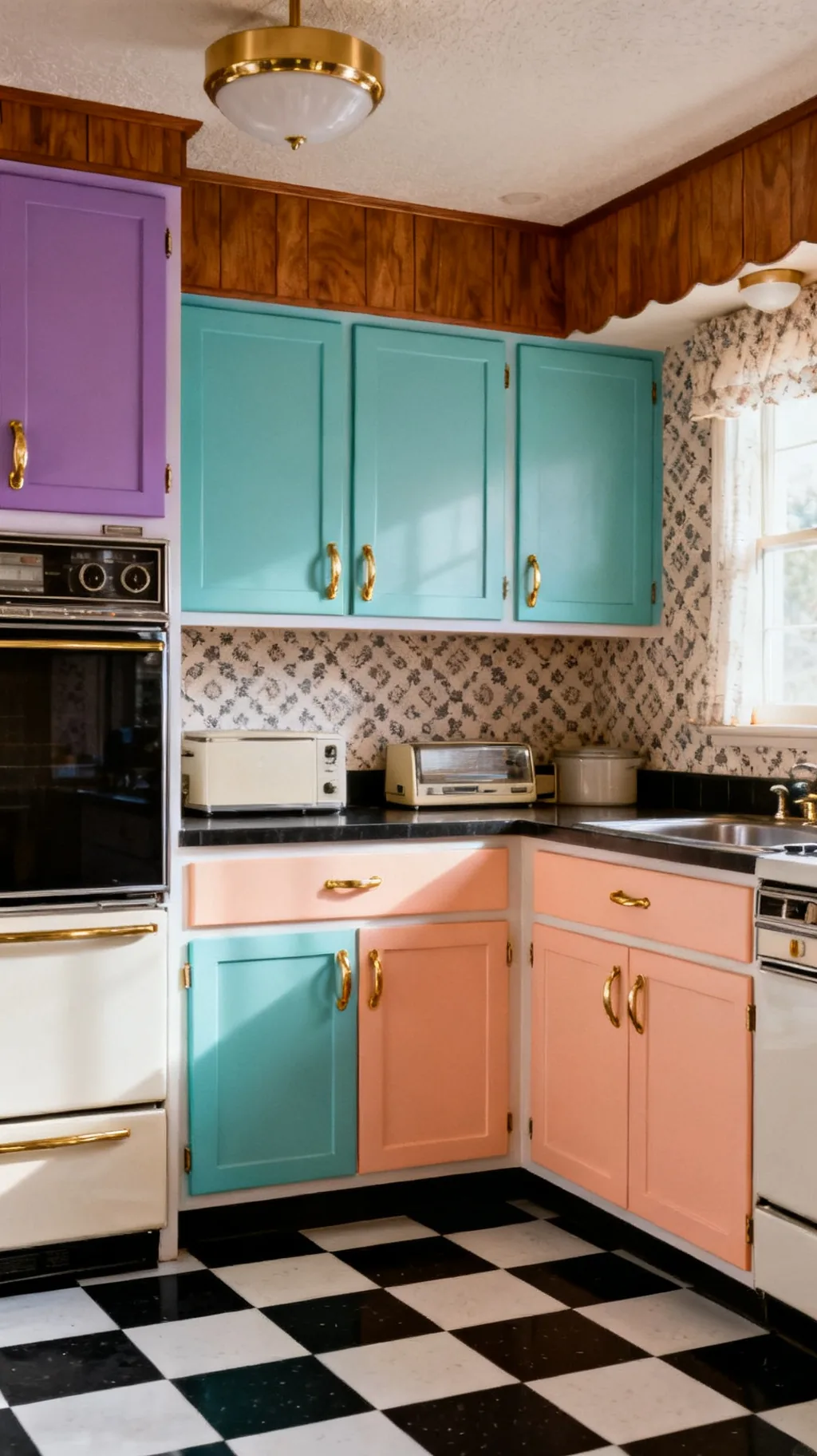
The simple recessed panel cabinet door was a quiet 80s staple, clean and unfussy without being stark. Its understated lines let the bolder colors and hardware take center stage. It is a great base if you want personality without a busy backdrop.
What to Look For
- Flat center panel: a recessed panel reads as period-correct and calm.
- Painted or stained: works equally well in oak or a soft pastel paint.
- Simple pulls: let the hardware add the personality.
A calm cabinet door lets your bold choices breathe.
A few more to spark your imagination.
 1 / 5
1 / 5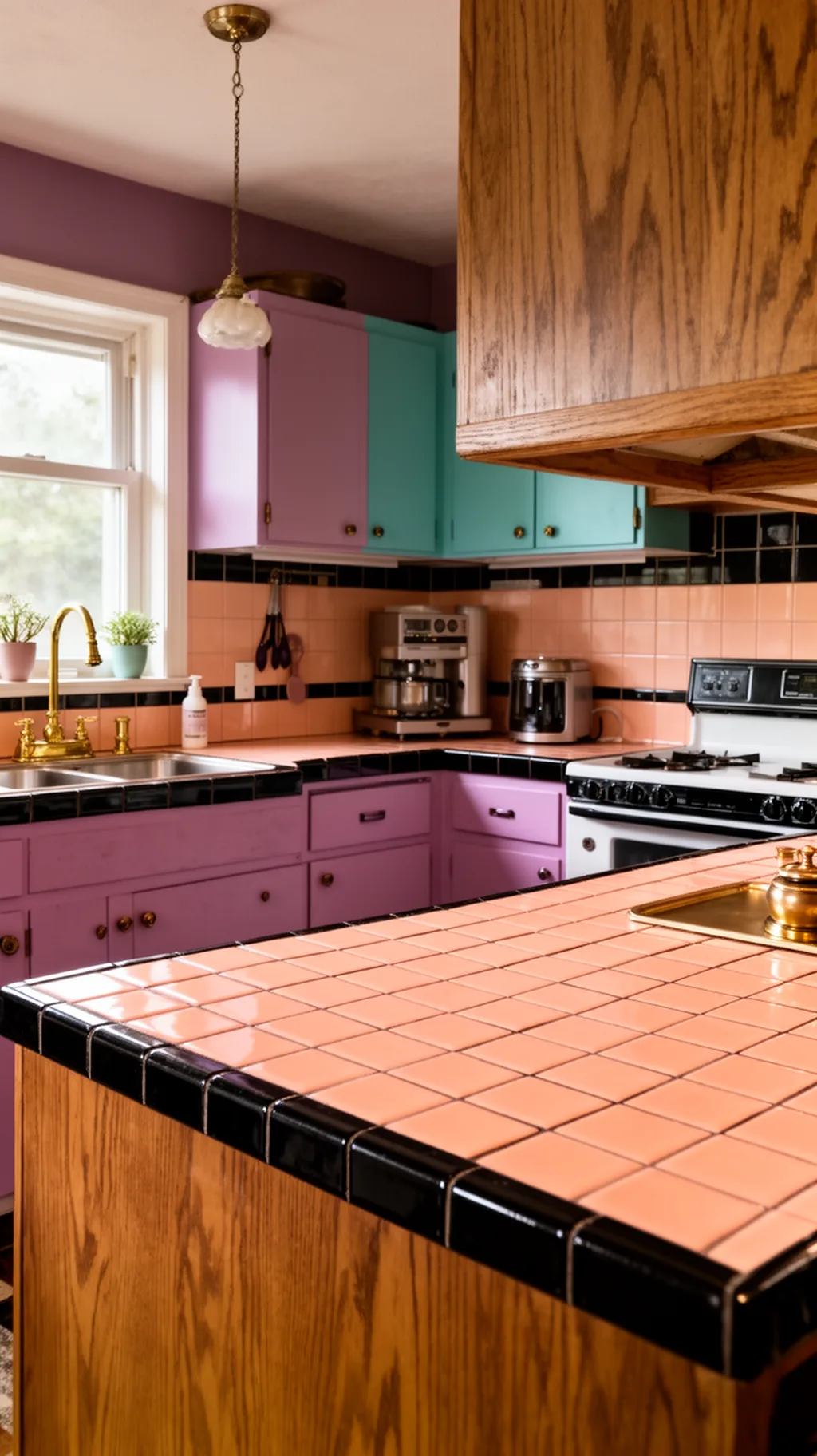 2 / 5
2 / 5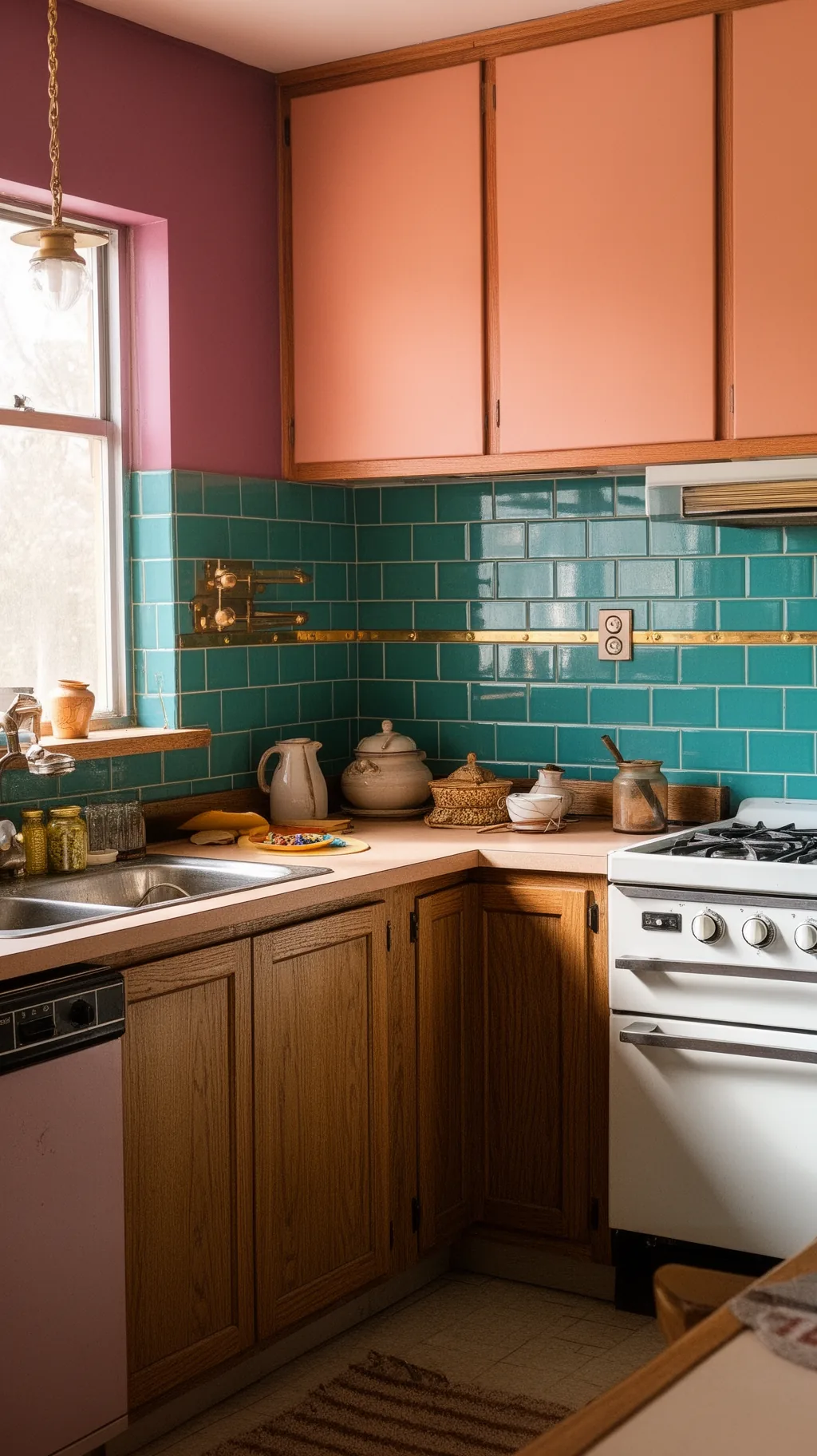 3 / 5
3 / 5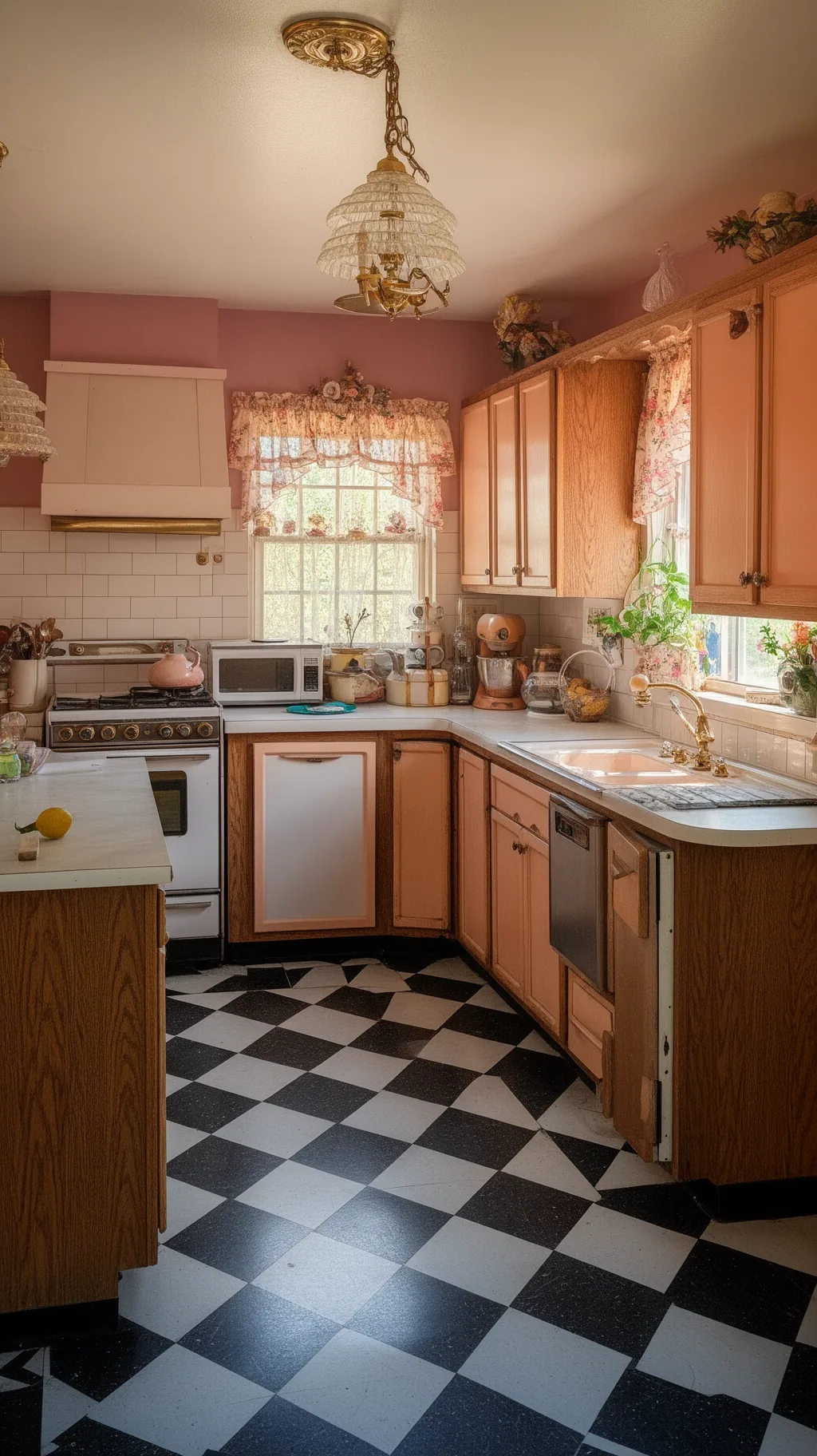 4 / 5
4 / 5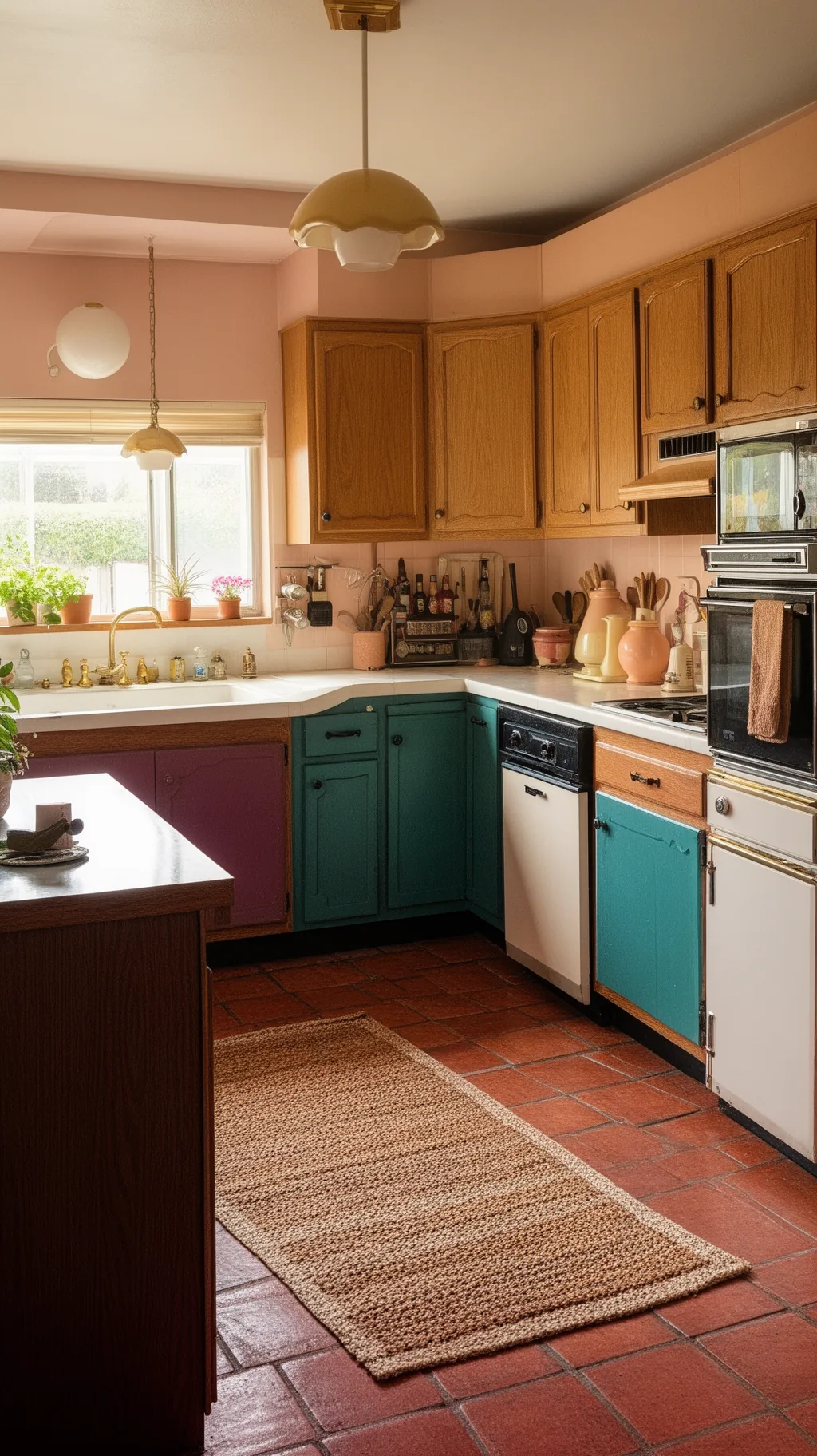 5 / 5
5 / 522. A Cozy Breakfast Nook with Built-In Seating
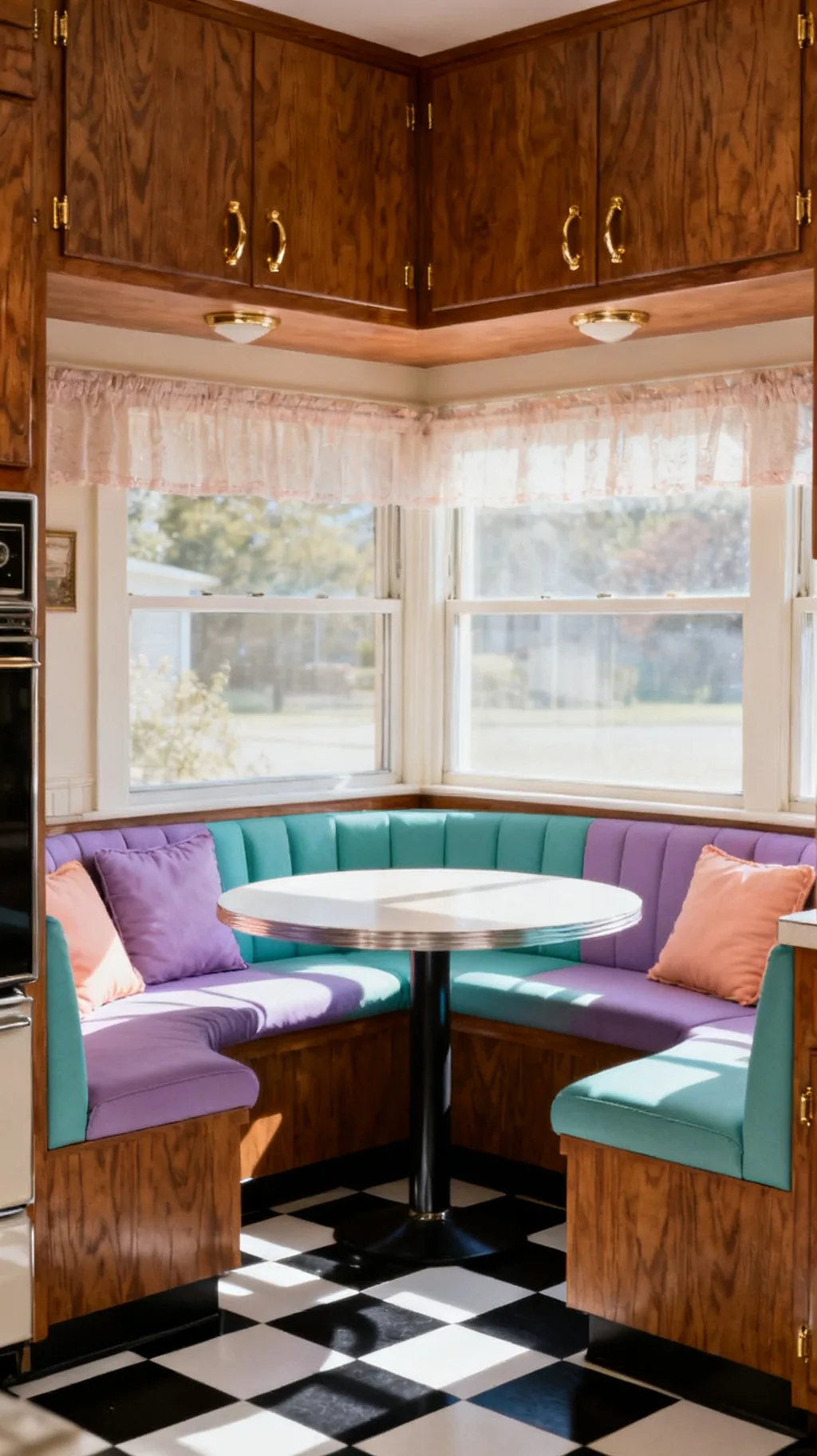
Built-in breakfast nooks were a beloved corner of the 80s kitchen, often wrapped in upholstered benches and warm light. They make even a small kitchen feel like it has a dedicated gathering spot. A tucked-away nook has a way of becoming the heart of the home.
How to Pull It Together
- Bench seating: an L-shaped built-in maximizes a corner.
- Soft cushions: pastel or patterned cushions add comfort and color.
- A round table: a rounded table keeps the curvy 80s spirit alive.
A good nook turns a corner into everyone’s favorite seat.
23. Hanging Pot Racks and Open Storage
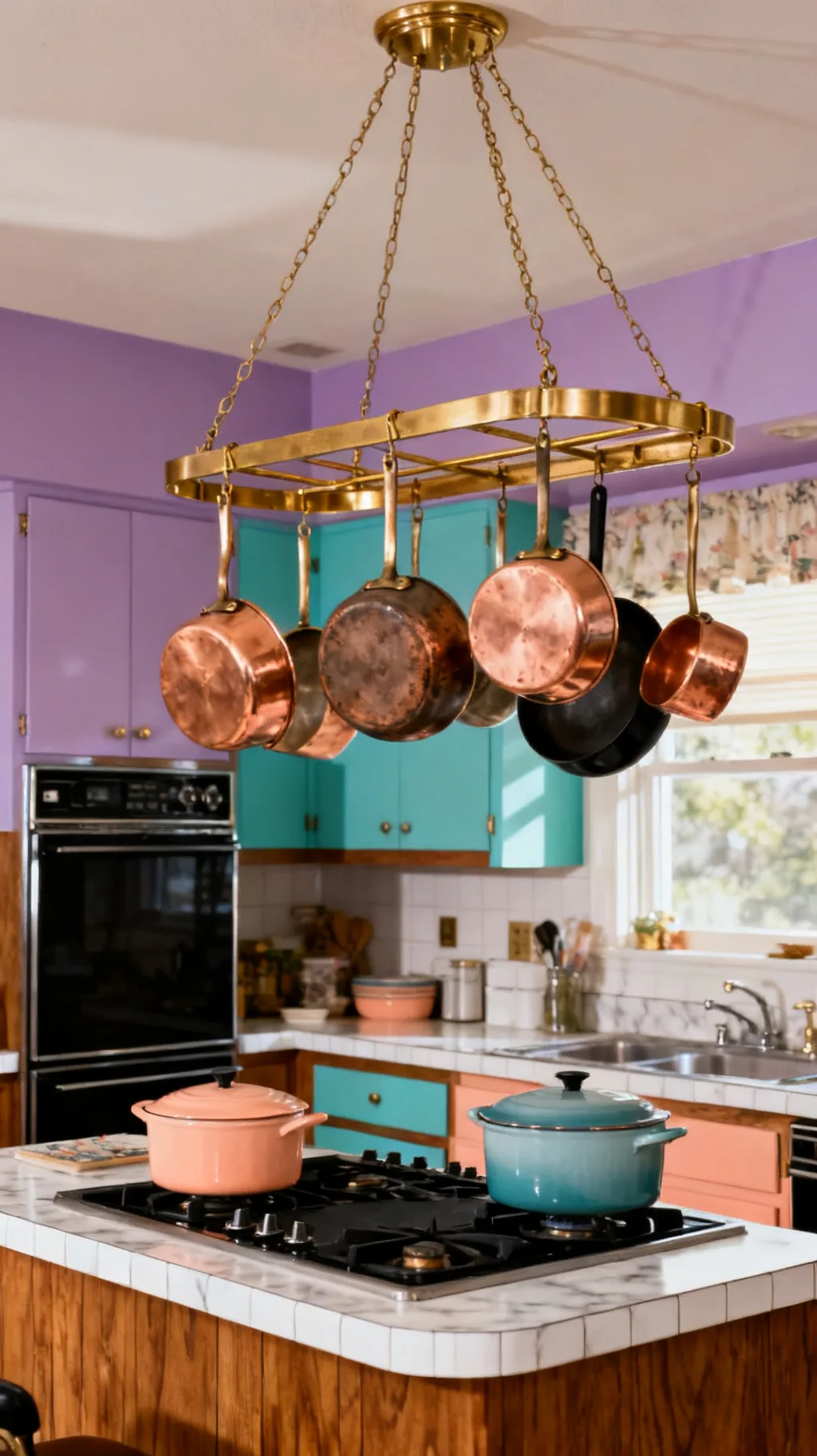
A hanging pot rack was both practical and decorative in the 80s, putting copper and enamel cookware on cheerful display. It frees up cabinet space and adds a homey, well-used feeling. Brass or black racks fit the era especially well.
What to Look For
- Sturdy mount: anchor the rack firmly into ceiling joists for safety.
- Warm metals: a brass or black rack ties into retro hardware.
- Curated pots: hang your prettiest pieces and store the rest.
A pot rack makes your cookware part of the room’s charm.
24. Potted Plants and Hanging Greenery
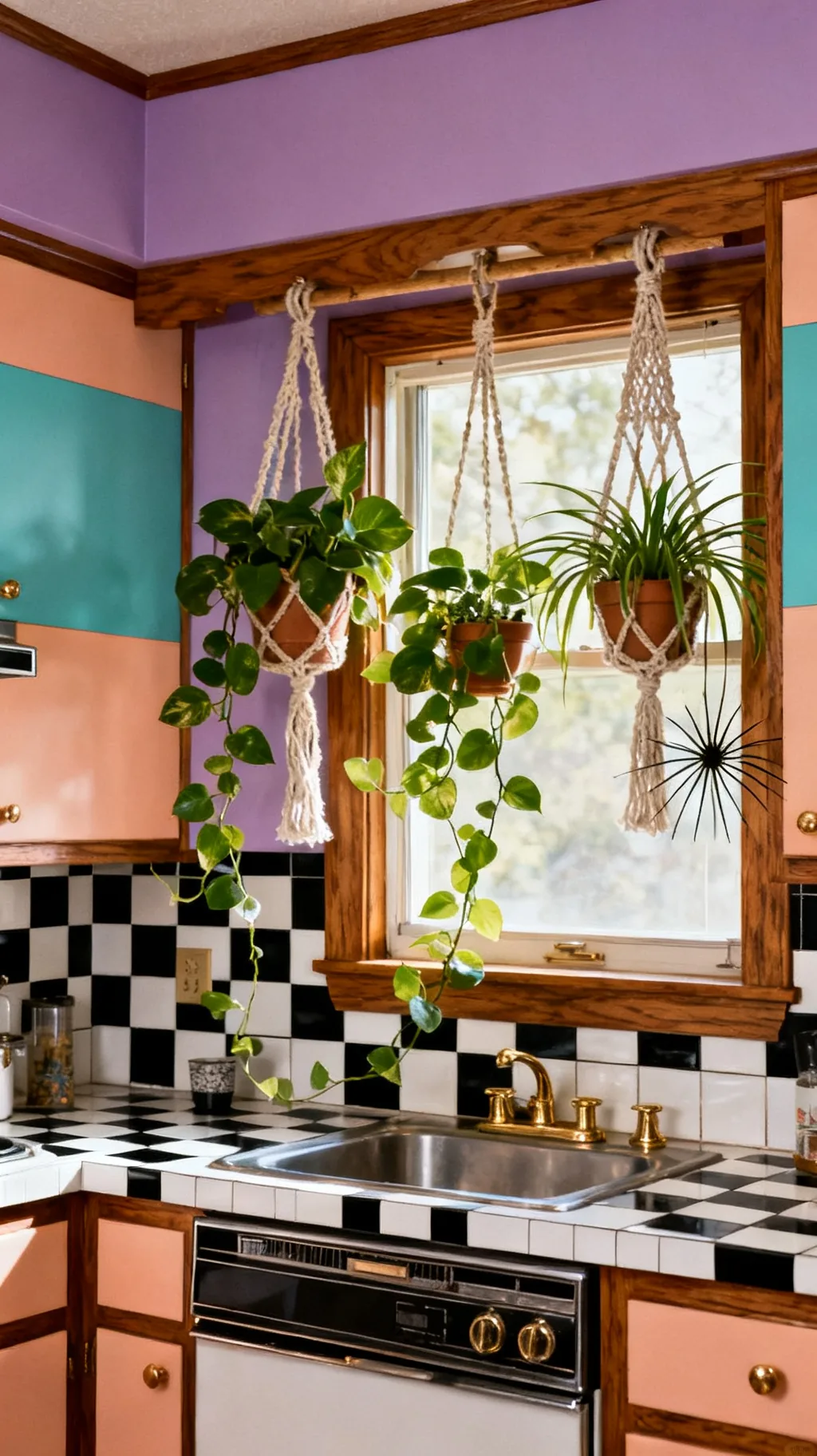
Trailing pothos, spider plants, and ferns brought the 80s love of indoor greenery right into the kitchen. Plants soften all the bold colors and add life to the room. From what I’ve gathered, the easiest approach is to start with one hardy hanging plant near a window and grow your collection from there.
Where to Start
- Hanging planters: macrame or brass hangers add a retro touch.
- Easy growers: pothos and spider plants forgive a busy schedule.
- Cluster them: group a few pots together for a fuller look.
A little greenery keeps even the boldest kitchen feeling fresh.
25. Warm Wood and Pastel Mix for a Modern 80s Kitchen
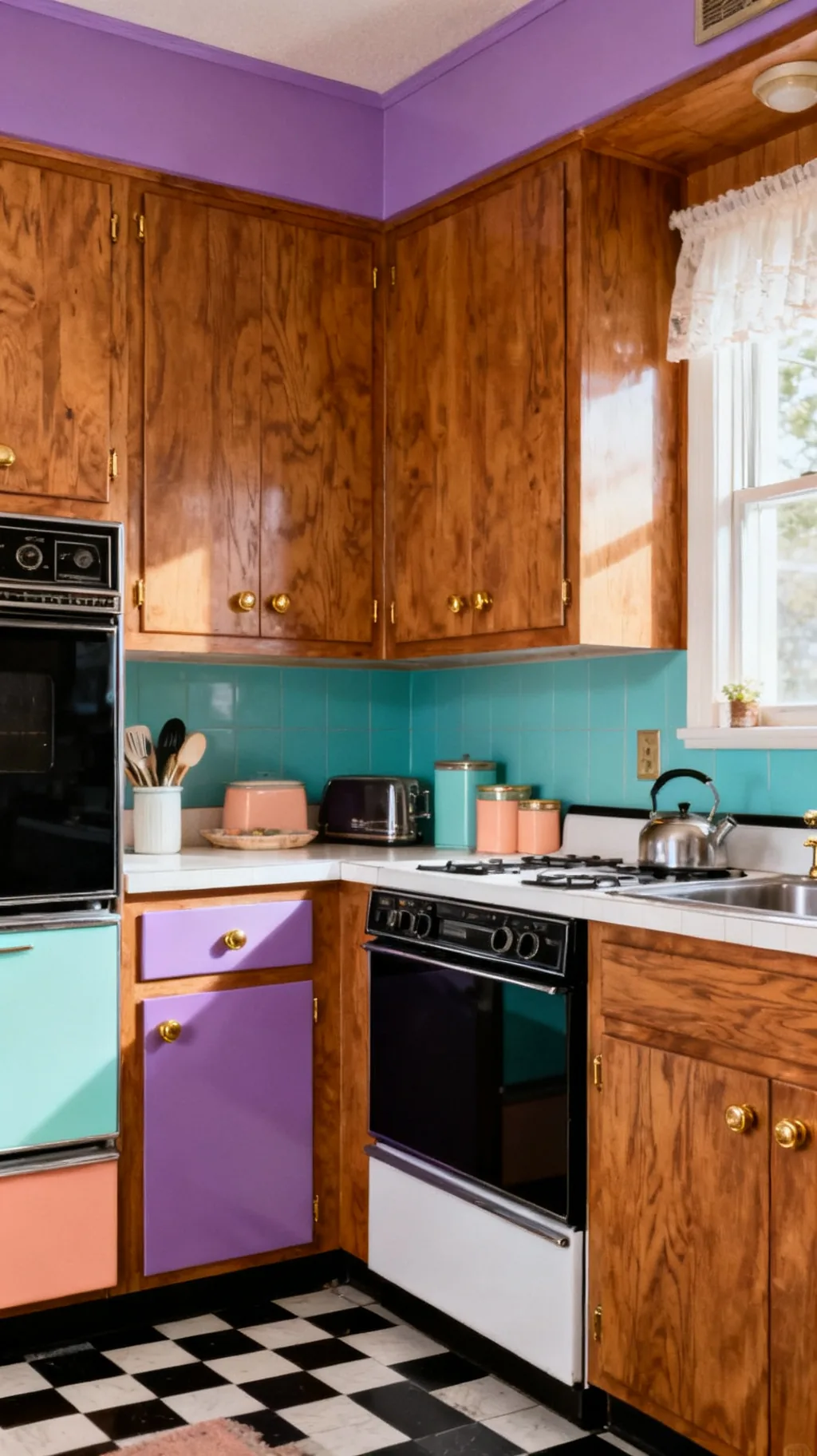
The freshest way to wear this trend is to blend warm oak with soft pastels so your space feels retro but still livable. This mix keeps the nostalgia while feeling current and calm. It is the perfect finish for a modern 80s kitchen that still feels like today.
How to Pull It Together
- Wood base: let oak cabinets or open shelves anchor the room.
- Pastel layers: add mauve, mint, or peach through paint and textiles.
- Brass to finish: warm hardware ties the wood and color together.
Blending wood and pastel gives you all the nostalgia with none of the dated feeling. Happy decorating!
Frequently Asked Questions
What colors define an 80s kitchen?
An 80s kitchen leans into bold yet soft colors like mauve, teal, peach, and mint, often paired with warm honey oak and crisp black and white contrast. Brass accents tie it all together. The key is choosing two or three confident shades and repeating them around the room.
How do I make my kitchen look 80s without a full remodel?
Start small with paint, hardware, and textiles. Swap in brass pulls, add a pastel accent wall, and bring in speckled canisters or a zigzag rug. These low-cost touches capture the retro feeling without major construction.
Are oak cabinets coming back in style?
Yes, warm honey oak cabinets are quietly returning as people crave coziness over cold gray tones. Their golden grain pairs beautifully with pastels and brass. If you already have oak, a good clean and a coat of oil can refresh them rather than replacing them.
What countertops fit an 80s kitchen look?
Patterned laminate and tile counters are the most authentic choice for an 80s kitchen. Look for speckled or confetti laminate in pastel tones, or square tile with contrasting grout. Both are budget-friendly and full of personality.
Is the 80s kitchen trend actually practical?
Many of these ideas are surprisingly livable. Track lighting points light where you need it, glass block lets in soft daylight, and laminate counters are durable and affordable. You get the playful retro charm with features that still work hard every day.
How do I keep an 80s kitchen from feeling dated?
Blend the retro elements with calm, current touches. Mix warm oak and pastels, keep a few surfaces neutral, and use removable options like peel-and-stick tile to test bold choices. A modern 80s kitchen feels nostalgic and fresh at the same time.
Final Thoughts
Bringing home a 80s kitchen look is really about capturing a feeling, warm, nostalgic, and full of personality. Start with one or two ideas that make you smile and let the rest grow from there. The best retro kitchens feel collected over time, so have fun with it and make it yours. Happy decorating!