
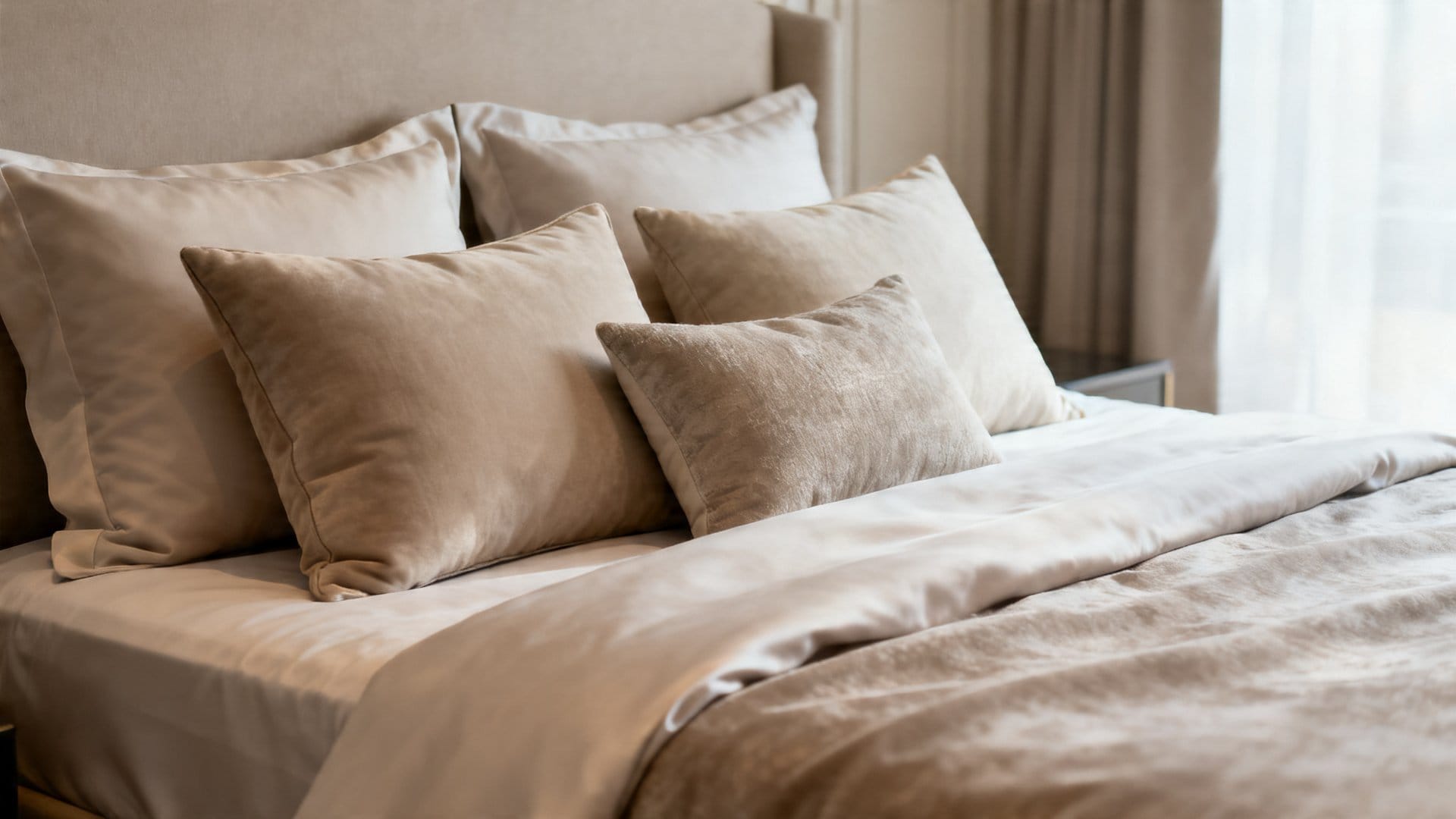
There’s something quietly satisfying about walking into a bedroom where the bed looks like it was styled with intention, pillows layered just right, textures playing off each other, the whole thing feeling cozy and pulled together at the same time. If your queen bed has been looking a little flat lately, you’re in exactly the right place. These queen bed decorative pillow arrangement ideas that wow are simpler than you might think, and they don’t require a design degree or a huge budget. Whether you love a clean, minimal look or you’re drawn to something lush and layered, there’s an approach here that will feel like yours.
What Is the Rule of Layers for Pillow Arrangements?
The rule of layers means dividing your bed into three zones, back, middle, and front, and filling each with pillows of decreasing size. When each zone plays its role, the whole arrangement looks intentional rather than random.
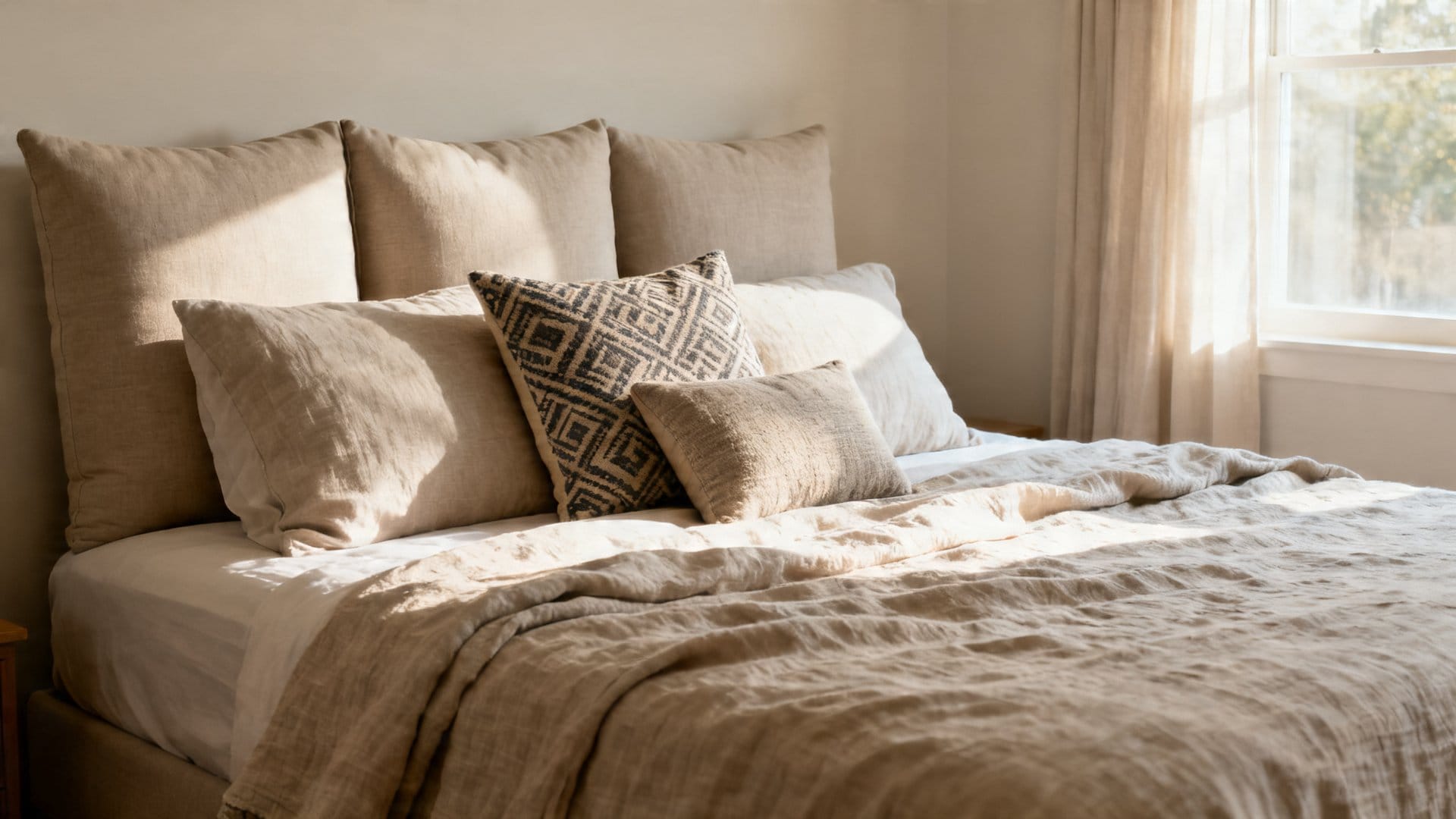 Shop this look: a bed pillow set on Amazon
Before you start stacking pillows in every direction, it helps to think about your bed as having three distinct zones, the back layer, the middle layer, and the front accent layer. Each zone plays a different role, and when they work together, the whole arrangement feels intentional rather than thrown together.
The back layer is your tallest and usually your most neutral starting point. These are typically your sleeping pillows in shams that match or complement your duvet. They set the tone without stealing the show. The middle layer brings in personality, decorative pillows in a coordinating color or pattern, and the front layer is where you get to have a little fun with a single lumbar pillow or a smaller accent piece.
Layout Ideas
For a queen bed, the most balanced back row uses two Euro shams (26×26 inches) standing upright side by side. They create a solid, generous backdrop that makes everything in front of them look more intentional. From there, you build forward with smaller sizes, stepping down in scale as you move toward the foot of the bed.
Why Does a Symmetrical Arrangement Always Look Polished?
A symmetrical queen bed arrangement works because perfect mirroring creates a sense of calm and order that reads as effortlessly put-together. It’s the same principle hotels rely on to make every bed look like a retreat.
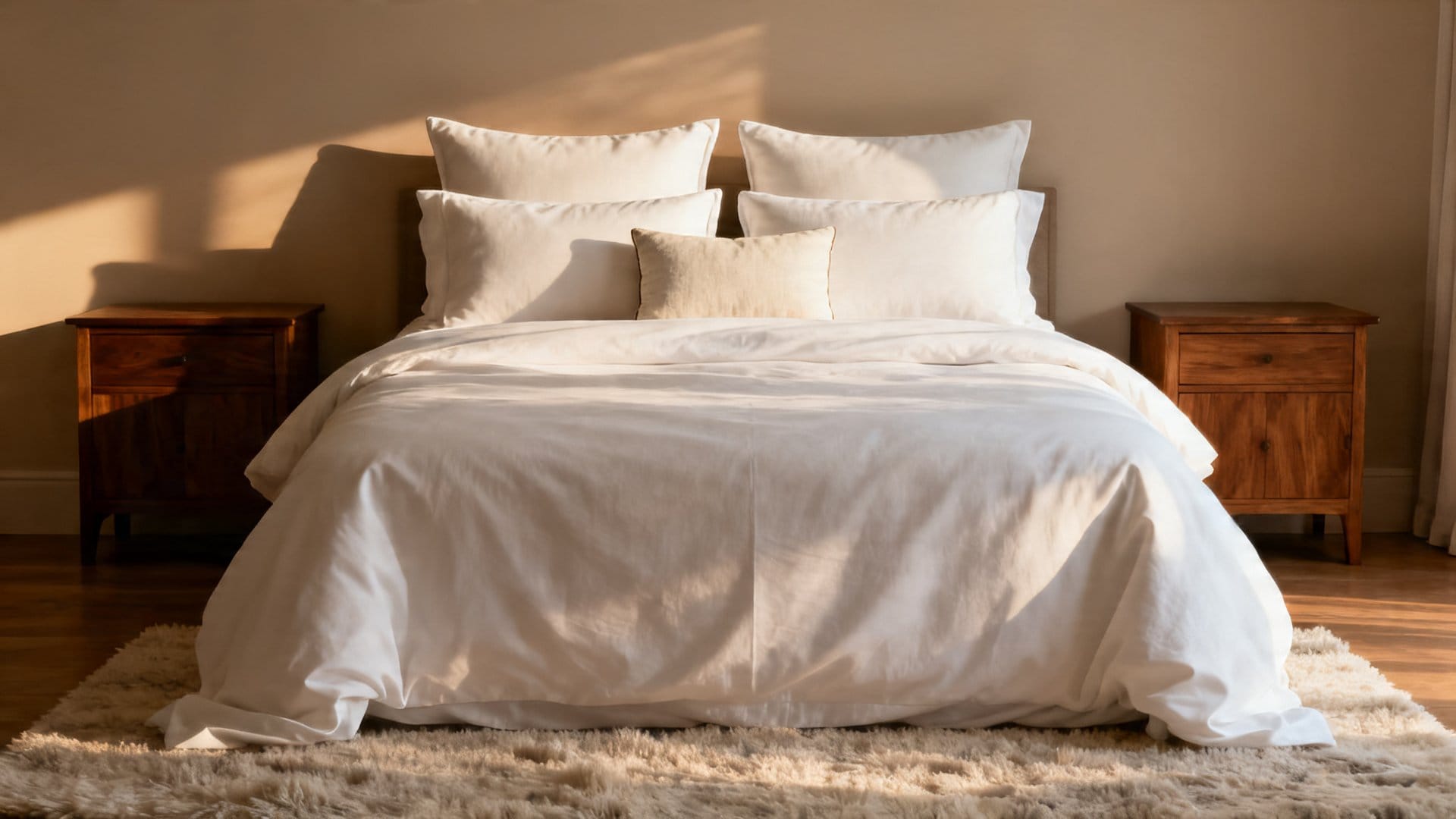 Shop this look: euro shams on Amazon
Symmetry is one of those things that just works in a bedroom. There’s a reason hotel beds always look so polished. They rely on perfect mirroring, and it reads as calm and put-together the moment you walk in. I love how this approach suits people who want their bedroom to feel like a retreat without a lot of visual noise.
For a symmetrical queen bed arrangement, start with two Euro shams at the back, then place two standard sleeping pillow shams in front of them. In the next row, add two matching 20×20 inch square decorative pillows in a coordinating fabric, think a subtle geometric or a tonal texture like a linen weave. Finish with a single lumbar pillow centered at the front. That’s five rows of visual interest, but because everything mirrors, it reads as effortless.
Pro tip: If your bedding is patterned, choose solid-colored Euro shams so the back layer grounds the arrangement instead of competing with it. A warm ivory or a soft charcoal works beautifully in almost any color scheme.
How Do You Mix Textures for a Layered, Lived-In Look?
Mix textures by pairing contrasting fabrics, velvet against linen, woven cotton beside silky jacquard, while keeping your color palette cohesive. The contrast between surfaces creates depth and warmth without making the arrangement feel busy.
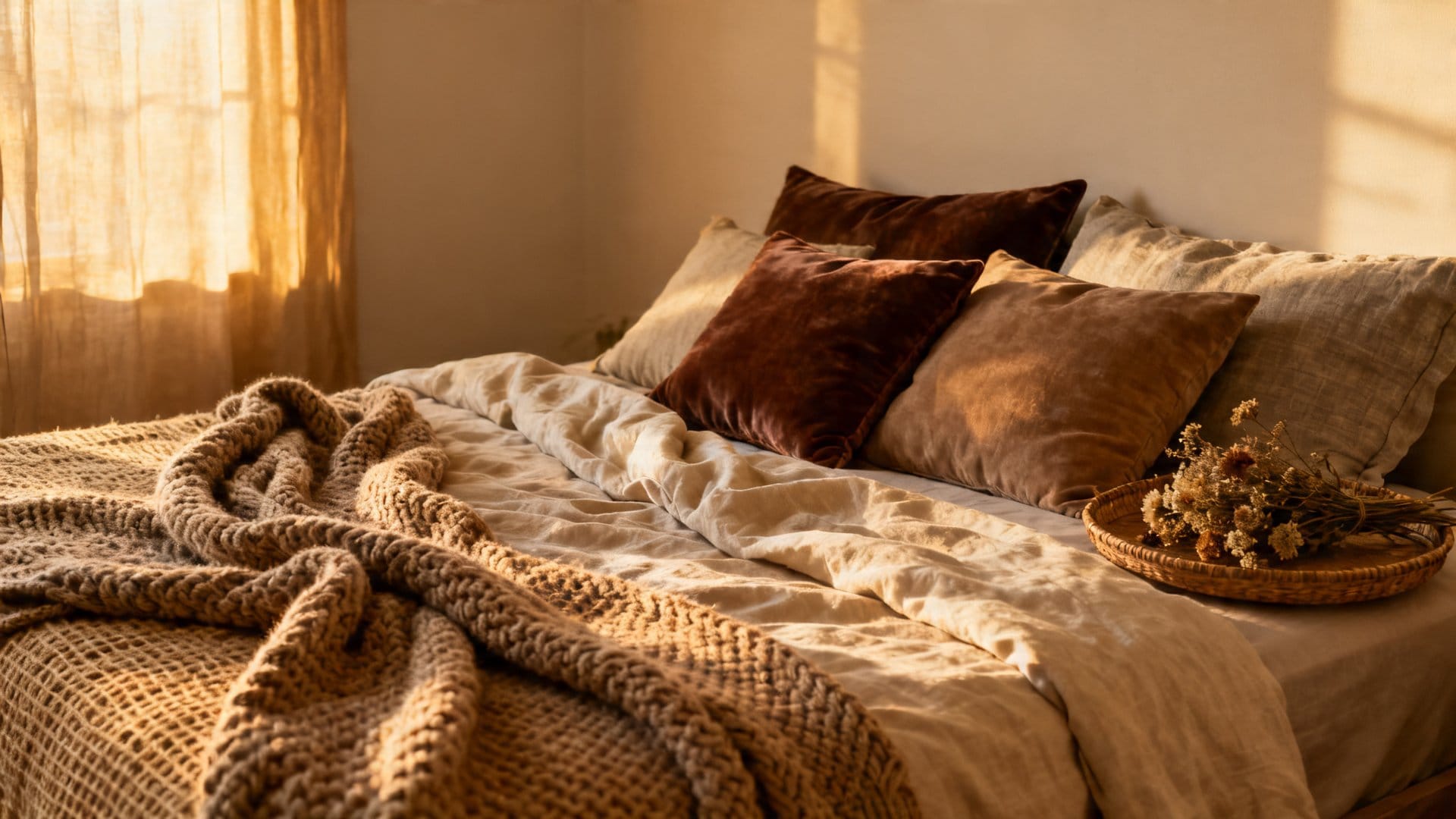 Shop this look: a lumbar pillow on Amazon
One thing I’ve noticed is that the most inviting beds aren’t always the most perfectly matched ones, they’re the ones where different textures create a sense of depth and warmth. Velvet against linen, a woven cotton next to a silky jacquard, a chunky knit accent pillow beside something smooth and structured. The contrast is what makes it feel rich.
For a queen bed, try pairing two linen Euro shams in a warm sand tone with two standard pillow shams in a soft cotton stripe. In front of those, place two velvet square pillows in a deeper shade, dusty rose, forest green, or a moody navy all work wonderfully here. Then finish with a lumbar pillow in a woven or embroidered fabric that ties the colors together. The key is keeping the color palette cohesive while letting the textures do the heavy lifting.
Materials That Work
Velvet holds its shape well and photographs beautifully, making it a reliable choice for front-row accent pillows. Linen has that naturally relaxed quality that keeps a layered arrangement from looking too stiff or formal. Chunky knit pillow covers add a tactile warmth that’s especially appealing in fall and winter, while lightweight cotton and chambray feel fresh and breathable for spring and summer swaps.
&# 128719; More bedroom pillow inspiration:Master Bedroom Decorative Pillows→
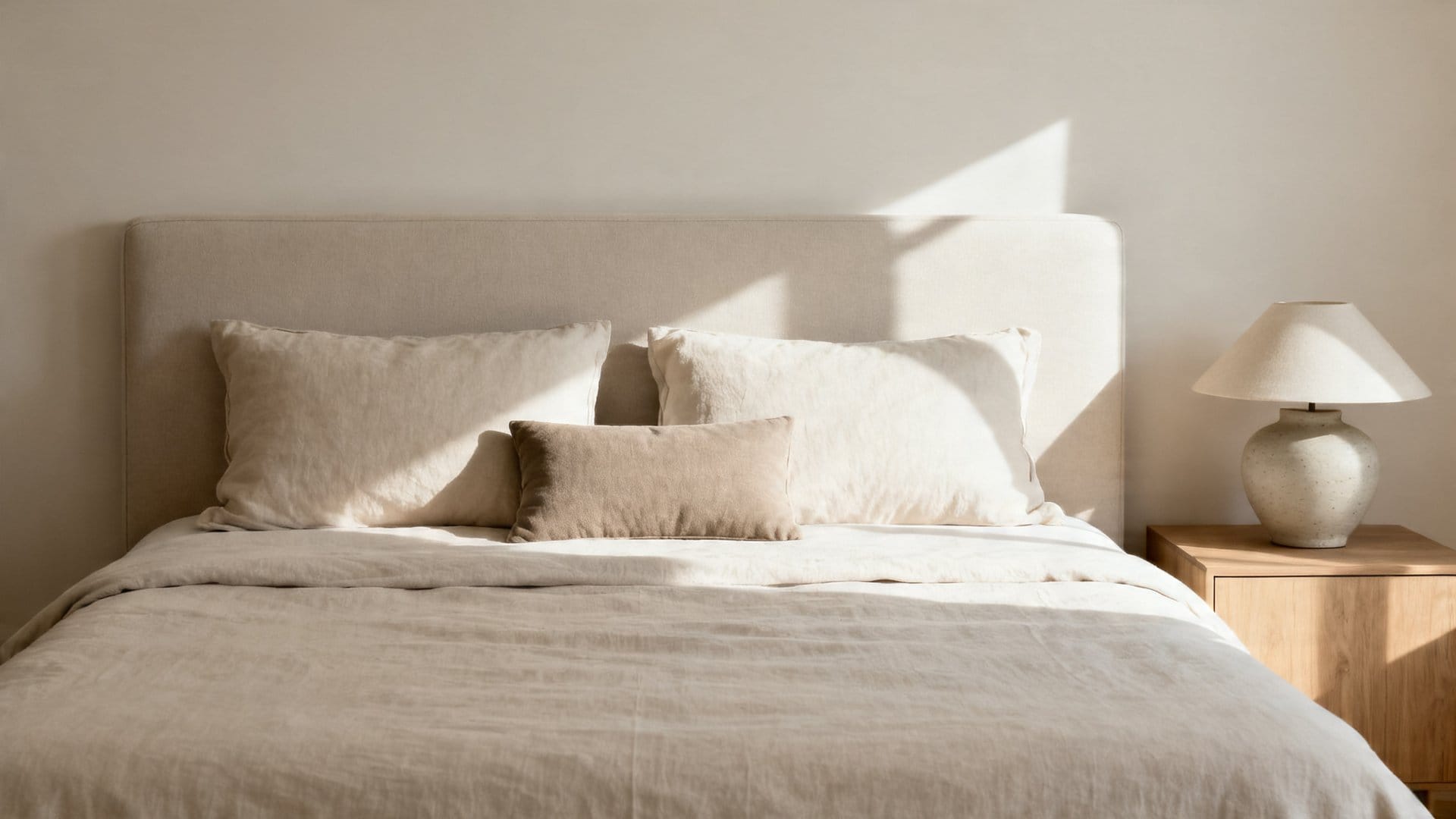
What Is the Best Pillow Arrangement for a Minimalist Bedroom?
For a minimalist bedroom, a three-pillow arrangement works best: two sleeping pillow shams at the back and a single centered lumbar pillow in front. The negative space on either side becomes part of the design, giving the bed a calm, airy quality.
 Shop this look: pillow covers on Amazon · 5 Pcs Babys Breath Artificial Flowers Bulk Real… · Dried Lotus Pods Bunch, Natural Beige,…
Not everyone wants to wrestle a mountain of pillows off the bed every night, and that’s a completely valid position. A minimal queen bed decorative pillow arrangement can look just as intentional as a layered one. It just takes a little more care with each piece you choose, since every pillow has to earn its place.
Pro tip: With a minimal arrangement, the quality of each pillow cover matters more. Look for covers with interesting details, a hand-stitched edge, a subtle embossed pattern, or a fringe trim, so the simplicity feels considered rather than unfinished.
Once you’ve nailed your texture combinations, the next step is thinking about how color can bring the whole arrangement, and the room, into harmony.
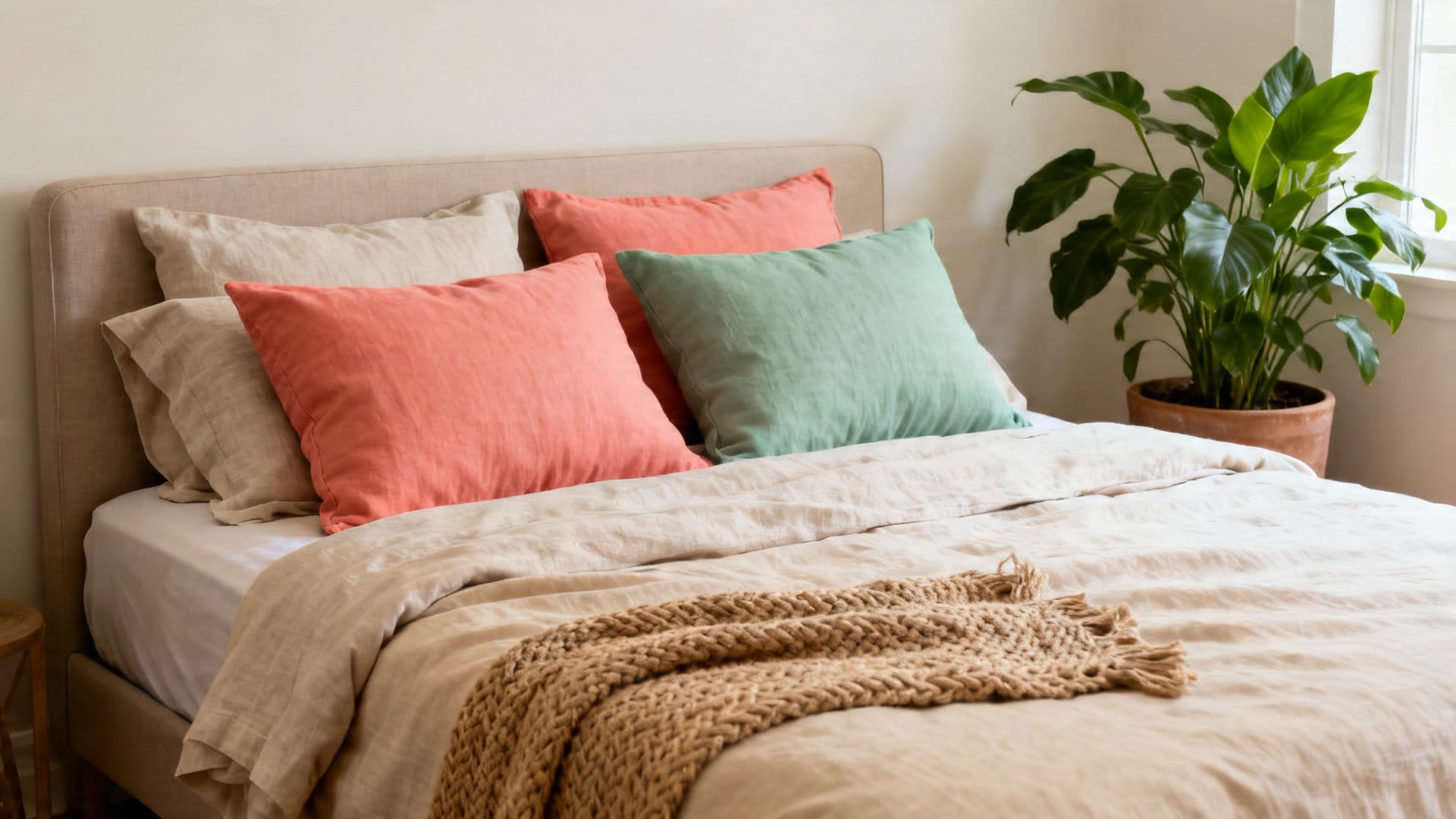
How Can You Use Pillows to Anchor a Room’s Color Palette?
Use your pillow arrangement to echo colors already present in the room, the rug, curtains, or wall art, rather than introducing something entirely new. This connects the bed to the rest of the space and makes the whole room feel cohesive.
 Shop this look: pillow inserts on Amazon · Set of 2 Chenille Throw Pillow Covers… · Luxury 3D Vintage Floral Throw Pillow Covers…
Pillows are one of the most affordable ways to introduce or shift the color story in a bedroom, and on a queen bed, you have enough real estate to really make a palette sing. The trick is using your pillow arrangement to connect the colors already present in the room, the rug, the curtains, the art on the wall, rather than introducing something completely new.
Color Combinations
- Warm neutrals with a single pop: Cream, taupe, and warm white pillows with one deep terracotta or rust lumbar at the front, grounded and cozy without being predictable.
- Tonal layering in one hue: Different shades of the same color, like blush, mauve, and dusty rose, create a sophisticated, effortless look that’s hard to get wrong.
- Contrast anchoring: If your duvet is light (white or cream), pull in two deeper-toned accent pillows in charcoal, navy, or sage to give the arrangement visual weight and definition.
- Pattern mixing made simple: Pair one large-scale pattern with one small-scale pattern in the same color family, a wide stripe with a small floral, for example, and keep everything else solid.
A friend of mine tried the tonal layering approach in her guest room using three shades of soft blue, and the result looked like something out of a coastal cottage catalog, calm, cohesive, and genuinely welcoming.
How Do Seasonal Pillow Swaps Keep Your Bedroom Feeling Fresh?
Swapping just two or three accent pillow covers each season shifts the entire mood of the room without a full redesign. Matching fabrics and tones to the season, rich velvets in winter, breezy cottons in summer, keeps the space feeling current and alive.

One of the easiest ways to keep your bedroom feeling alive throughout the year is to treat your decorative pillows like a seasonal wardrobe. You don’t need to overhaul everything, just swapping two or three accent pillow covers can shift the entire mood of the room from one season to the next.
In fall, reach for deeper, warmer tones and tactile fabrics, burnt orange velvet, a rust-and-cream woven stripe, or a dark olive linen all bring that rich, cozy feeling without relying on obvious seasonal motifs. For winter, layer in something with a bit of sheen or weight, a jacquard weave, a silver-threaded fabric, or a deep burgundy velvet lumbar feels luxurious against crisp white bedding. Spring calls for something lighter: a soft floral embroidery, a pale sage green, or a fresh white-and-yellow combination. Summer is the time for breezy textures, lightweight cotton, a relaxed chambray, or a casual stripe in sun-faded tones.
Pro tip: Store off-season pillow covers in a labeled fabric bin under the bed or on a closet shelf. Keeping the inserts year-round and only swapping covers saves space and makes the seasonal transition genuinely easy rather than a project.
With your layers, textures, and colors in place, there’s one final element that can make or break the entire arrangement.
&# 10024; Want a softer, cuter look?Cute Decorative Pillows for Bed→Why Do Lumbar Pillows Matter in a Bed Arrangement?
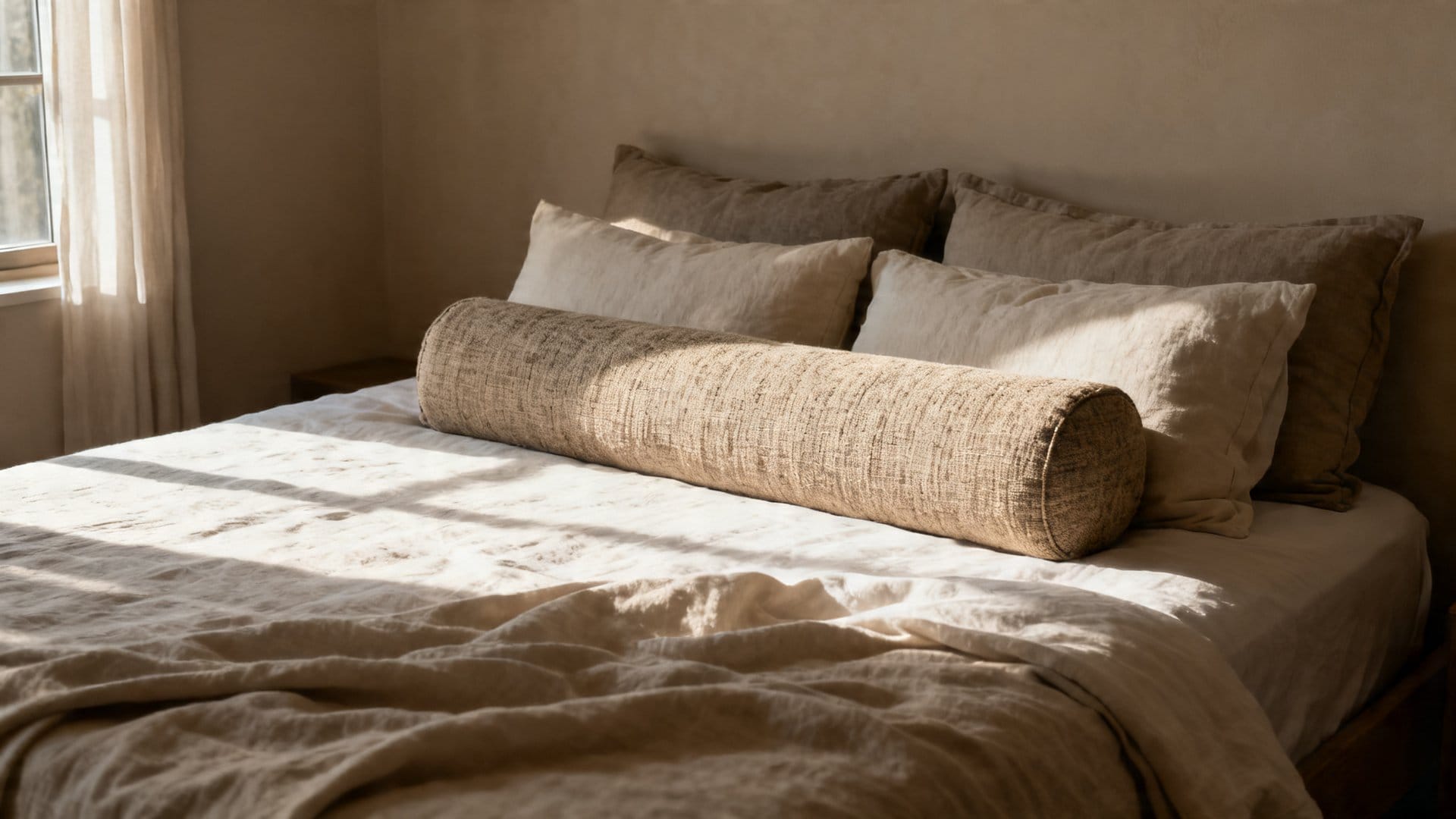
The lumbar pillow sits at the very front of the arrangement and is the first thing the eye lands on, so it carries significant visual weight for its size. It acts as the finishing touch that ties all the layers behind it together.
 Shop this look: 5 Pcs Babys Breath Artificial Flowers Bulk Real… · Dried Lotus Pods Bunch, Natural Beige,…
If there’s one element I keep coming back to in queen bed pillow arrangements, it’s the lumbar pillow. It’s the piece that ties everything together and gives the whole arrangement a finished, thoughtful quality. A lumbar sits at the very front of the arrangement, usually centered, and because it’s the first thing the eye lands on, it carries a lot of visual weight for its size.
Choose a lumbar that picks up at least one color from the layers behind it but adds something new, a different texture, a pattern, or a detail like fringe, tassels, or a button closure. A lumbar in a bold pattern can pull the whole arrangement together when the rest of the pillows are more subdued. Conversely, if your arrangement is already pattern-heavy, a solid lumbar in a rich, saturated color gives the eye a place to rest.
Styling Notes
Lumbar pillows come in a range of sizes, but for a queen bed, a 14×36 inch or 12×24 inch lumbar tends to look most proportionate, wide enough to feel substantial without stressing the arrangement. If you prefer a slightly relaxed, casual feel, let the lumbar lean very slightly forward rather than standing perfectly upright. It’s a small thing, but it softens the whole look.
Final Thoughts
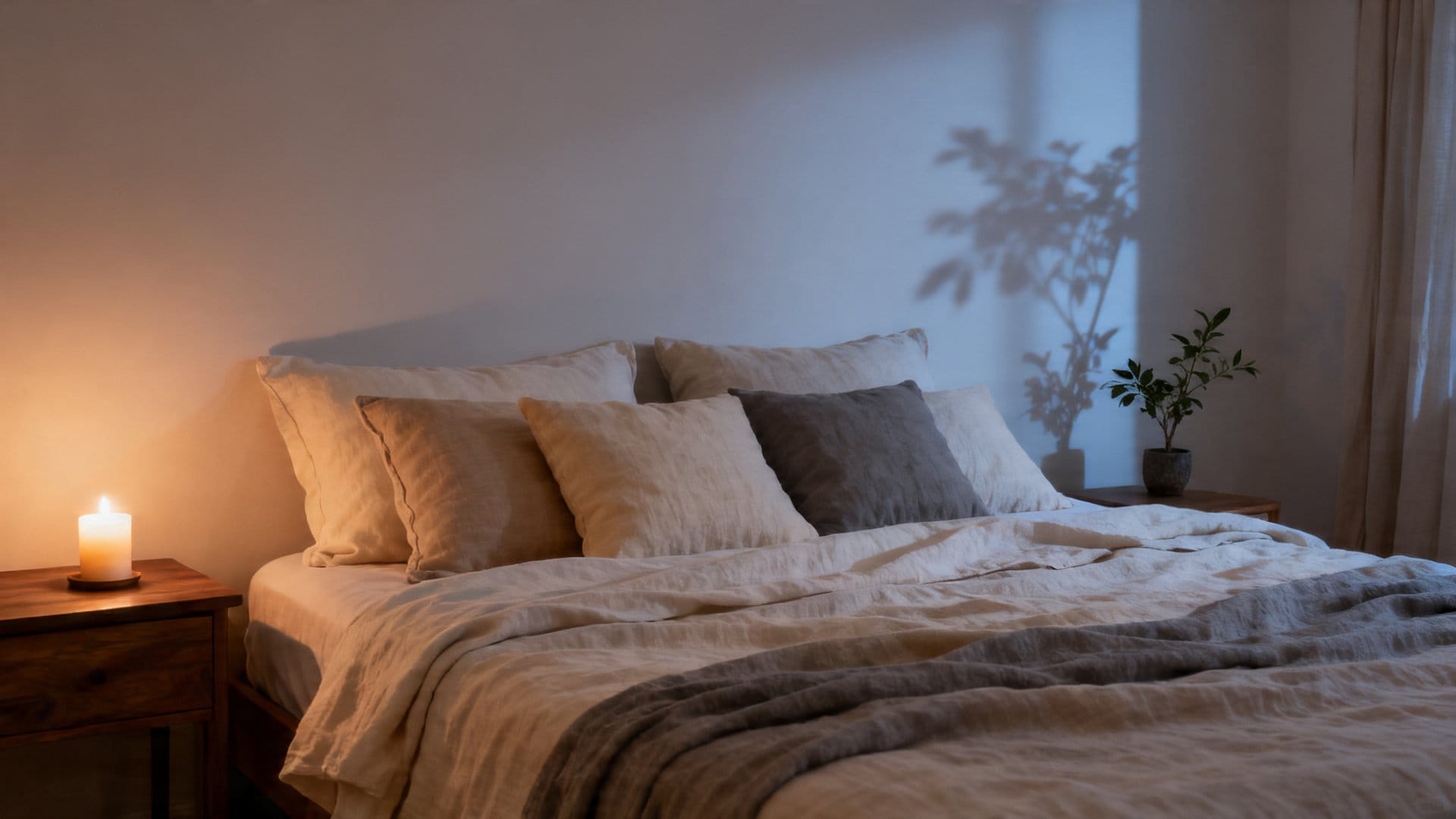
Your bedroom should feel like the most welcoming room in your home, a place that invites you to slow down, breathe, and rest. These queen bed decorative pillow arrangement ideas that wow aren’t about perfection; they’re about creating a look that reflects your taste and makes you smile every time you walk in. Whether you go for a lush, layered arrangement or a beautifully simple one, trust your instincts, play with texture and color, and remember that the “right” arrangement is simply the one that feels right to you. Happy decorating!
Frequently Asked Questions
For a queen bed, most well-balanced arrangements use between five and nine pillows total, including your sleeping pillows. A classic starting point is two standard sleeping pillows at the back, two Euro shams in front of those, and one to three accent pillows at the front, but you can scale up or down depending on whether you prefer a minimal or lush look.
For a clean and minimal aesthetic, stick to just three to five pillows using a simple back-to-front layering approach, two sleeping pillows or shams at the back and one or two accent pillows at the front in a complementary color or texture. Keeping shapes consistent and avoiding too many patterns helps the arrangement feel intentional without looking overdone.
A good rule of thumb is to graduate your pillow sizes from largest at the back to smallest at the front, which creates natural depth and visual interest. Euro shams at 26×26 inches work well as a middle layer behind standard or king-sized sleeping pillows, while 18×18 or lumbar pillows shine as front accent pieces that add a finishing touch without stressing the arrangement.
Absolutely, mixing patterns and textures is one of the best ways to make a pillow arrangement feel layered and designer-worthy, as long as you follow a few simple guidelines. Choose patterns that vary in scale (for example, a large geometric paired with a small floral), and anchor them with a shared color palette so the different elements feel connected rather than random.
Most people simply stack their decorative pillows on a nearby bench, chair, or the floor beside the bed each night, which is why having a stylish bedroom bench at the foot of the bed is such a practical and popular choice. If storage space is tight, a large decorative basket or a low ottoman can serve the same purpose while keeping your bedroom looking tidy even when the pillows are off the bed.