
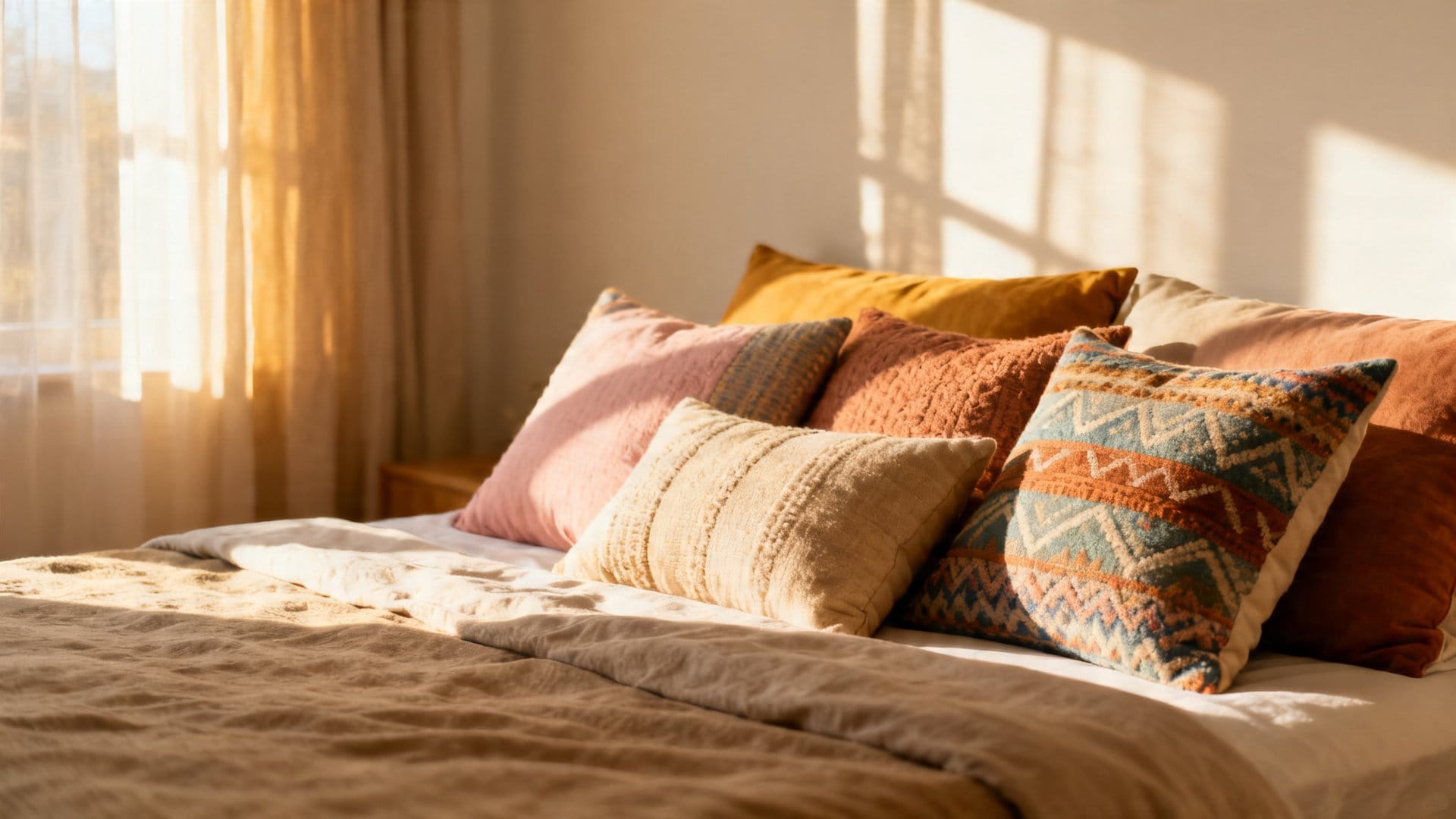
There is something quietly satisfying about walking into a bedroom where the pillows are just right — layered, textured, somehow both effortless and intentional at the same time. If you have ever stood in front of your bed wondering why it still looks a little flat no matter what you do, you are not alone. Cute decorative pillows for bed styling are one of those small details that genuinely shift the whole feeling of a room. This article is here to help you figure out which styles, shapes, textures, and arrangements actually work — and why — so your bed can finally look as cozy and considered as you have always imagined it.
Why Do Decorative Pillows Make Such a Big Difference in a Bedroom?
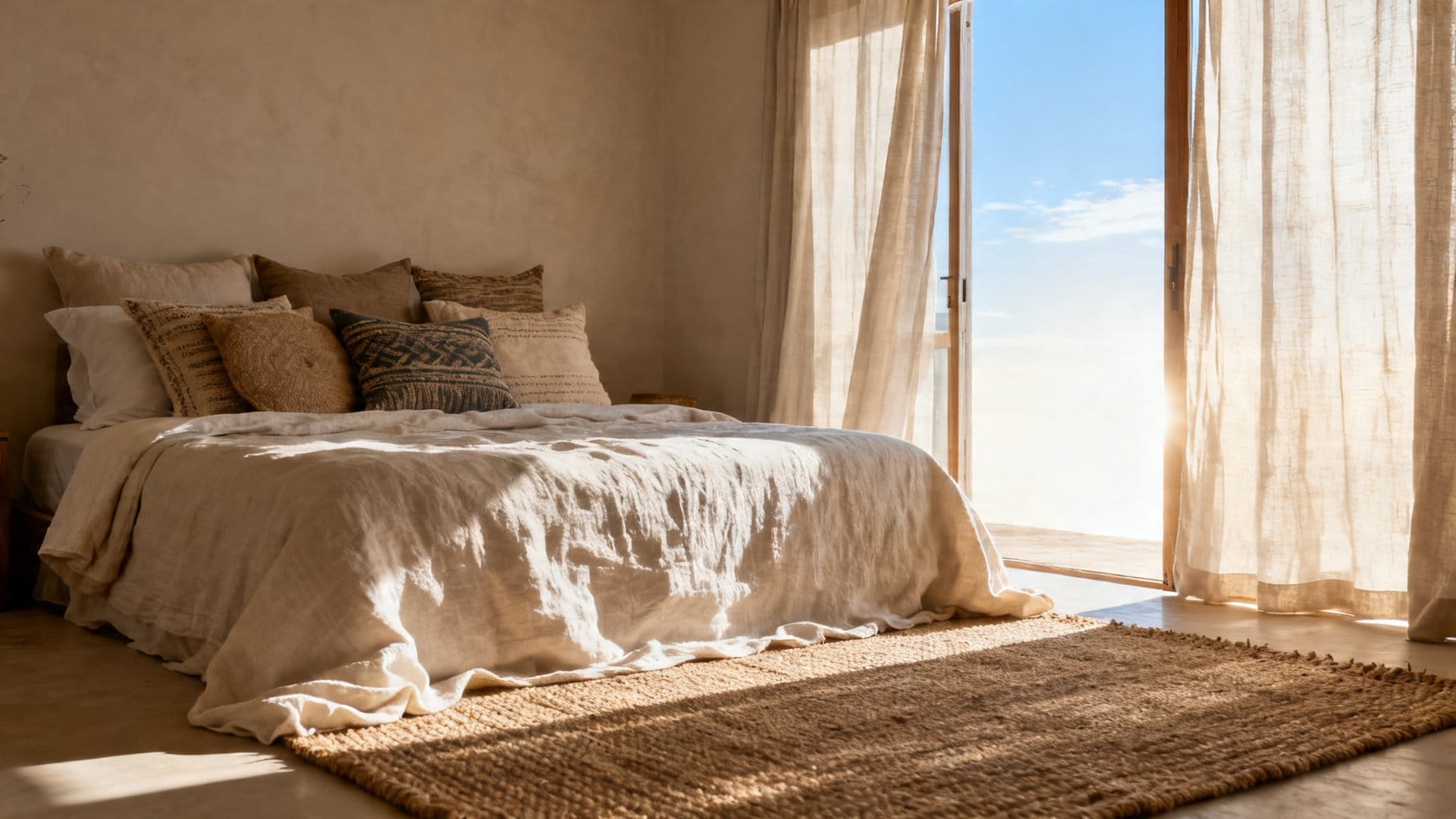
Decorative pillows instantly add softness, personality, and warmth to a bedroom — qualities that furniture and paint alone cannot provide. Even two well-chosen throw pillows can change a flat, unfinished-looking bed into a cozy, inviting space.
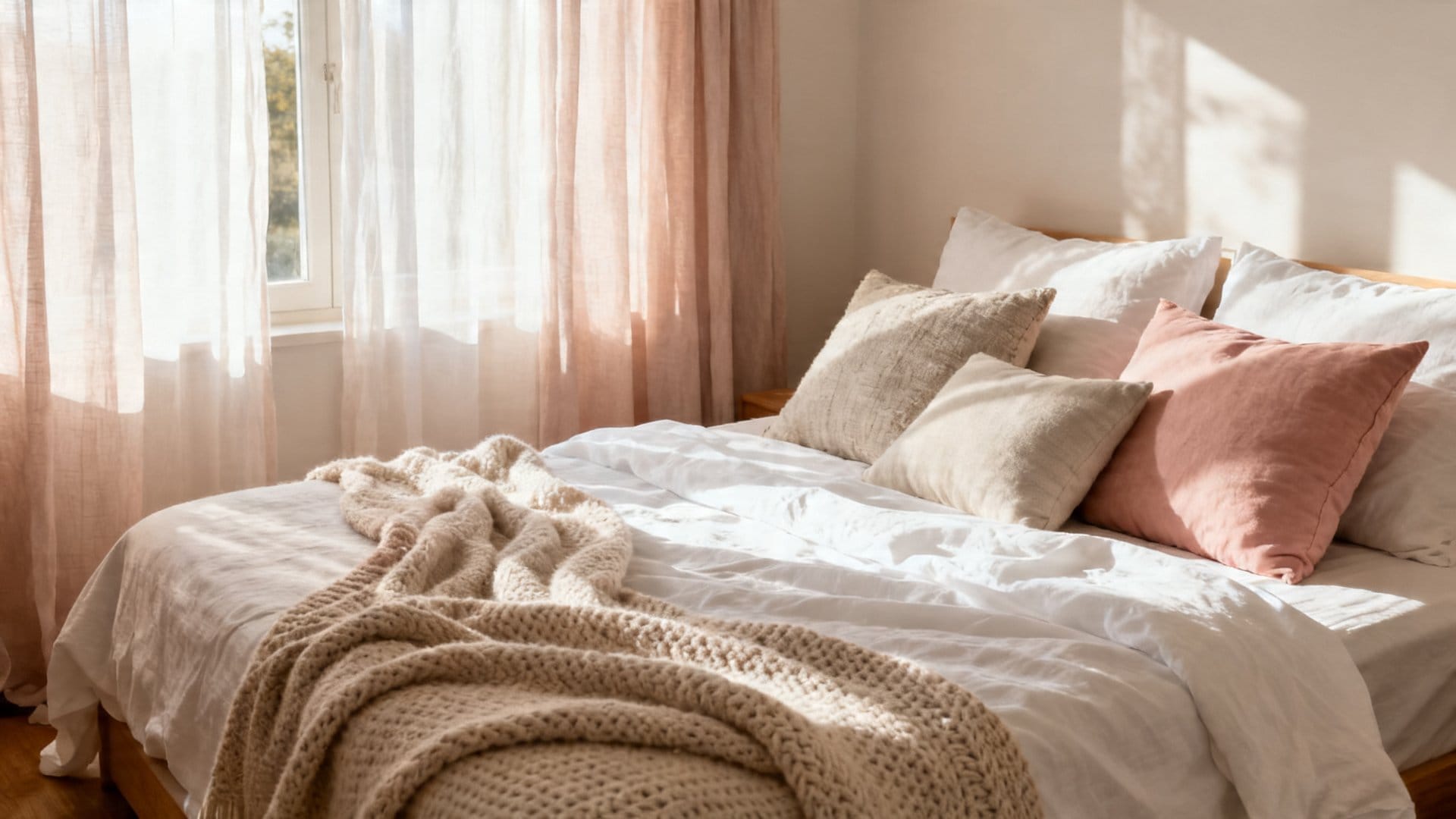 Shop this look: a bedding set on Amazon · decorUhome Oatmeal Textured Linen Throw Pillow… · AVOIN colorlife Red Boho Linen Throw Pillow…
Pillows do something that furniture and paint colors simply cannot: they bring softness, personality, and warmth all at once. A bed without decorative pillows often reads as unfinished, even if the sheets are beautiful and the headboard is stunning.
One thing I have noticed is that the moment you add even two well-chosen throw pillows, the bed starts to feel like a destination rather than just a place to sleep. There is a psychological warmth that comes from layering, from seeing different textures and shapes nestled together.
Why It Works
Decorative pillows create visual depth by breaking up the flat plane of a made bed. When you mix a lumbar pillow with a square and a round, your eye travels across the arrangement naturally, which makes the whole space feel more dynamic and alive.
How Do You Match Pillow Styles to Your Bedroom Aesthetic?
Start by identifying your room’s overall aesthetic — farmhouse, boho, modern, coastal, or cottagecore — then choose pillow textures, patterns, and colors that align with that style. Each aesthetic has a distinct pillow language, and matching it is what makes the whole bed feel cohesive.
 Shop this look: throw pillows on Amazon
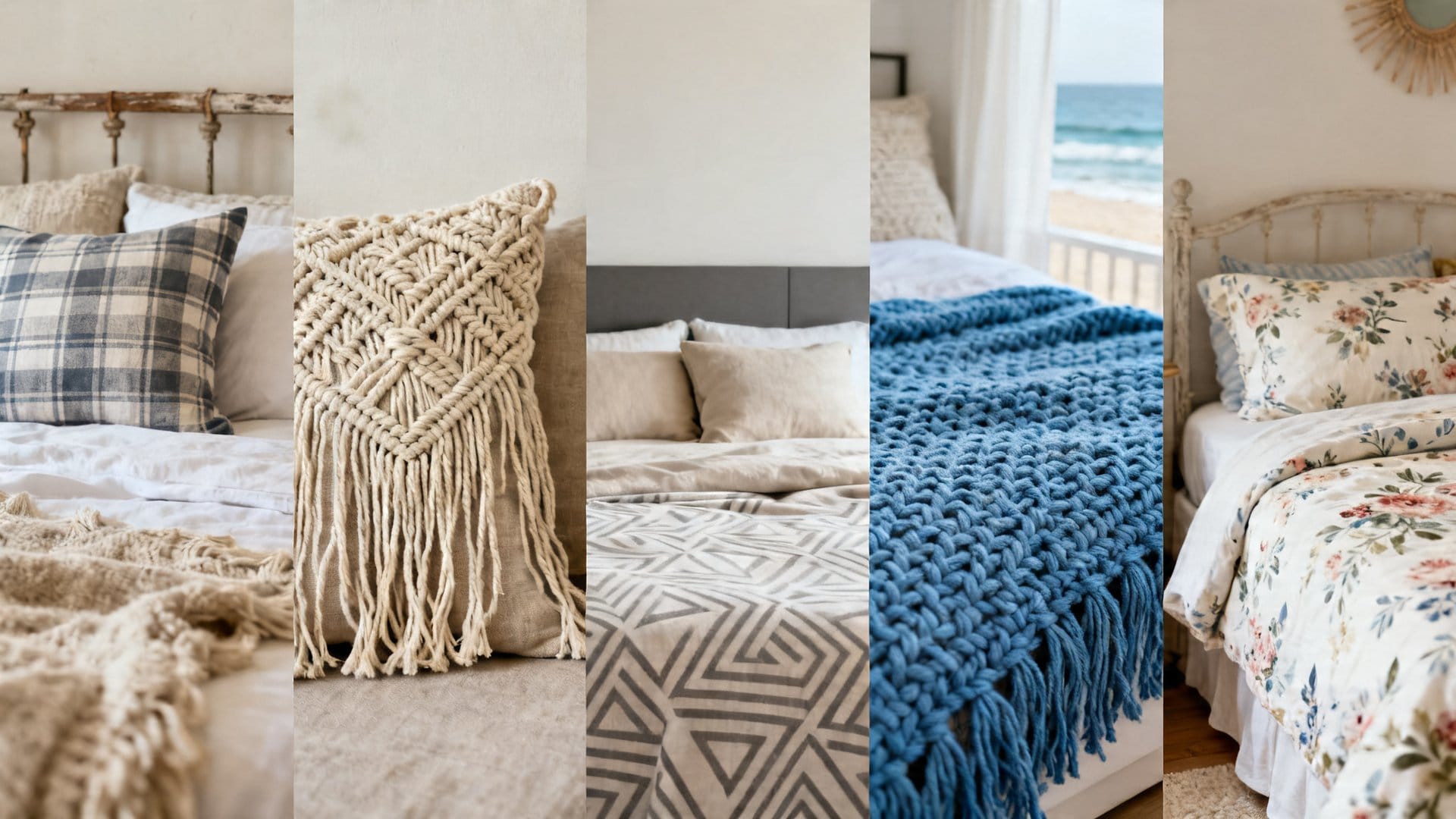
Before you start shopping or rearranging, it helps to know what aesthetic you are actually working with. Cute decorative pillows for bed styling look completely different depending on whether your room leans farmhouse, boho, modern minimalist, coastal, or cottagecore — and that is a good thing, because there is truly a perfect pillow for every style.
For a farmhouse or Midwest cozy aesthetic, look for pillows in buffalo check, ticking stripe, or simple linen textures in cream, warm white, and dusty sage. For a boho bedroom, layered macramé, tasseled edges, and earthy terracotta tones work beautifully. If your room is more modern or Scandi-inspired, you want clean geometric prints, muted palettes, and minimal embellishment. Coastal bedrooms love soft blues, sandy neutrals, and woven textures that feel relaxed and breezy.
Pro tip: Before buying anything new, pull out every pillow you already own and lay them on the bed together — you will often discover combinations you never tried before, and it costs nothing.
What Is the Art of Layering: How to Arrange Pillows Like a Pro?
Layering means arranging pillows from largest to smallest, back to front, so the arrangement builds visual depth and rhythm. It is less about the number of pillows and more about the intentional progression of size, shape, and texture.
 Shop this look: curtains on Amazon
Layering is the secret behind those beds that look like they belong in a cozy boutique hotel. It is not about having more pillows — it is about arranging them in a way that feels intentional but relaxed.
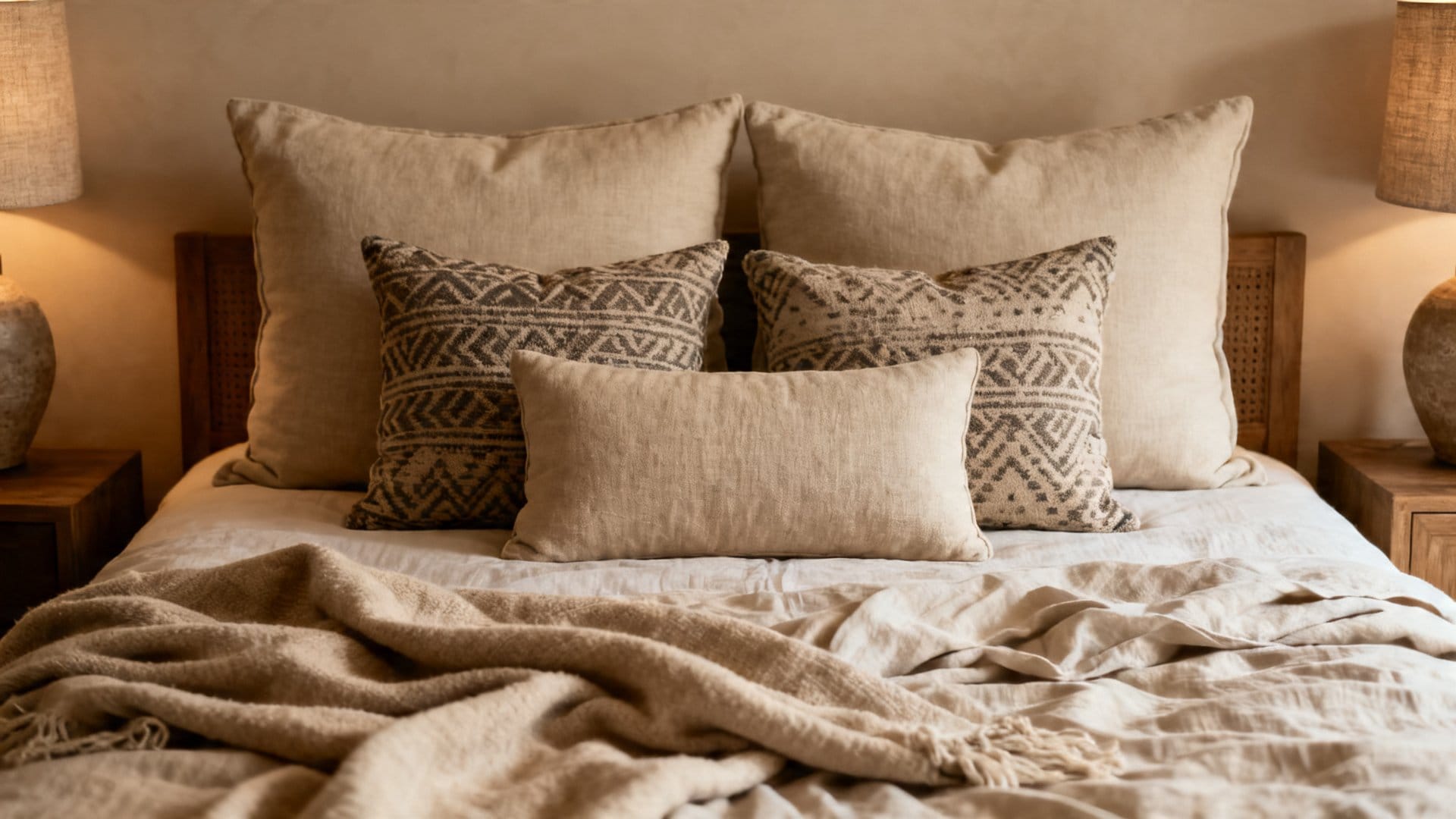
The classic approach starts at the back with your largest pillows — usually your sleeping pillows in shams — and works forward in decreasing size. Behind that logic is simple visual rhythm: tall to short, large to small, structured to soft. A lumbar pillow placed flat at the very front pulls the whole arrangement together and gives it a finished, grounded look.
Layout Ideas
For a queen bed, try two Euro shams (26×26 inches) at the back, two standard pillows in front of those, and one lumbar pillow centered at the front. This five-pillow arrangement works in almost any style and never feels overdone. For a king bed, simply swap the two standard pillows for three, or add a second lumbar in a contrasting texture.
Once you have your arrangement structure in place, the next layer of impact comes from the materials themselves.
Which Textures and Fabrics Feel as Good as They Look?
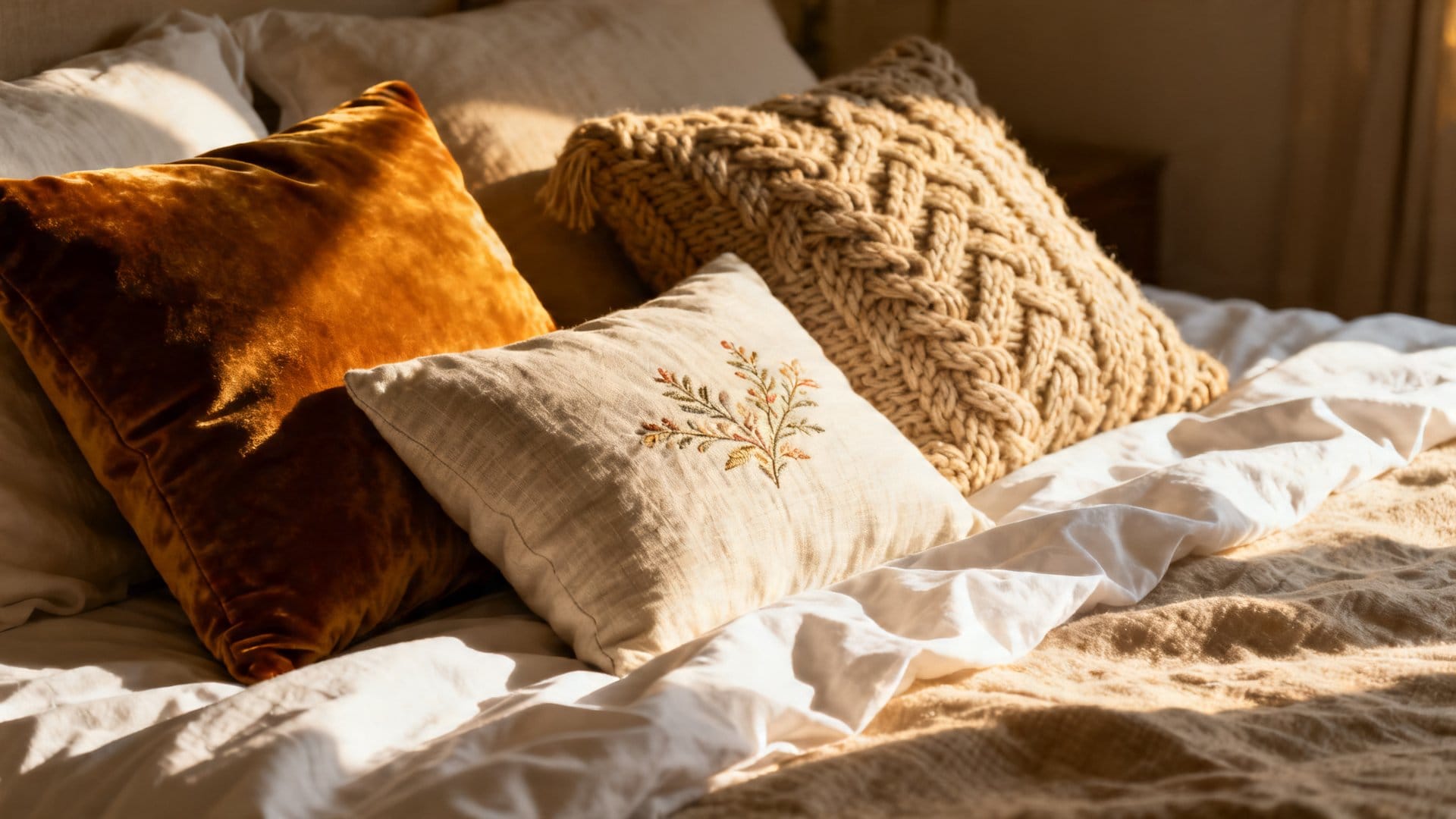
The best decorative pillow fabrics combine visual appeal with tactile comfort — think velvet, chunky knit, linen, and embroidered cotton. Mixing at least two contrasting textures in one arrangement is what gives a bed that rich, layered quality.
 Shop this look: an area rug on Amazon
Texture is where decorative pillows truly come alive. A pillow that only looks pretty in a photo is one thing, but a pillow that feels incredible under your hand when you reach across the bed — that is the one worth keeping.
I love how a chunky knit pillow cover adds warmth and dimension without needing any pattern at all. Velvet is another one I keep coming back to, especially in jewel tones like deep plum, forest green, or dusty rose — it catches light beautifully and feels genuinely luxurious. Linen and cotton canvas are the workhorses of the pillow world: breathable, casual, and endlessly versatile. For something a little more tactile, embroidered or appliquéd covers add handmade charm without looking busy.
A friend of mine layered a chunky cream knit pillow with a smooth sage velvet lumbar on her bed, and the contrast between the two textures made both pieces look more interesting than they would have alone. That kind of pairing — rough with smooth, matte with sheen — is one of the easiest ways to make your arrangement feel select.
Pro tip: Stick to a palette of two or three colors, but vary the textures freely. This gives you visual richness without the chaos of too many competing prints.
Cute Decorative Pillows for Bed: Aesthetic Picks by Color Palette
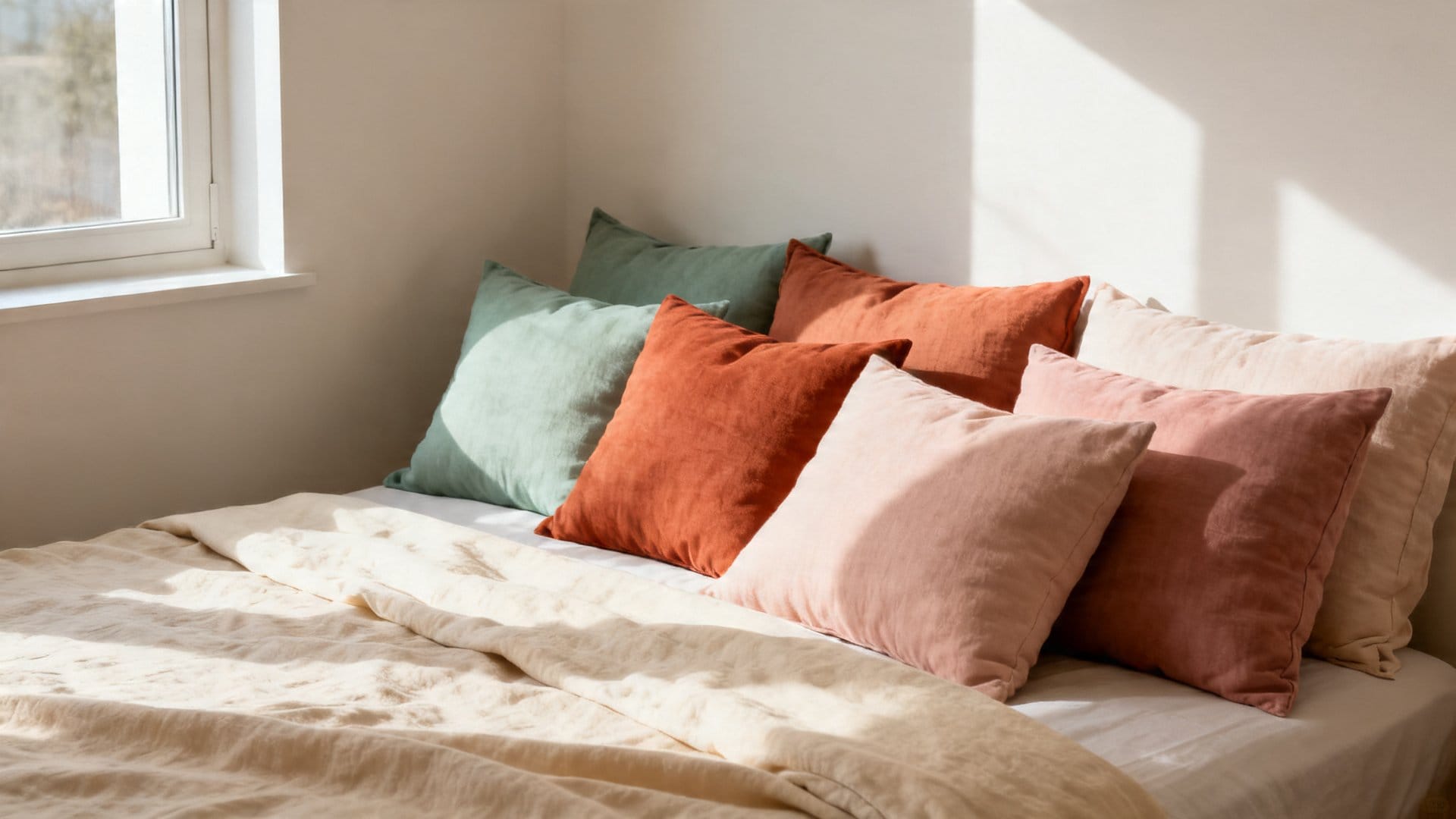
Color is often where people feel the most stuck, especially when they are trying to add pillows to a bed that already has a patterned duvet or a bold headboard. The good news is that you have more flexibility than you think.
 Shop this look: wall art on Amazon · decorUhome Oatmeal Textured Linen Throw Pillow… · AVOIN colorlife Red Boho Linen Throw Pillow…
Color Combinations That Work
- Cream, warm white, and dusty sage: endlessly versatile, works with wood tones, rattan, or white furniture equally well
- Terracotta, rust, and oatmeal: earthy and grounding, good for boho or cottagecore bedrooms with natural materials
- Soft blue, sandy beige, and white: a coastal palette that feels calm and airy without being cold
- Charcoal, blush, and gold: a modern romantic combination that reads sophisticated without trying too hard
- Lavender, soft green, and cream: a dreamy, feminine palette that suits cottagecore or vintage-inspired rooms beautifully
When your bedding already has a pattern, pull one color from it and build your pillow palette around that single tone. This simple trick ties everything together without making the bed feel too matchy-matchy.
With your colors and textures sorted, it is the finishing details that improve a good arrangement into a great one.
Which Small Details Make a Big Styling Difference?
The right pillow insert size and small embellishments like tassels, piping, or embroidery are what separate a polished bed from one that looks thrown together. These details are easy to overlook but immediately noticeable once you get them right.
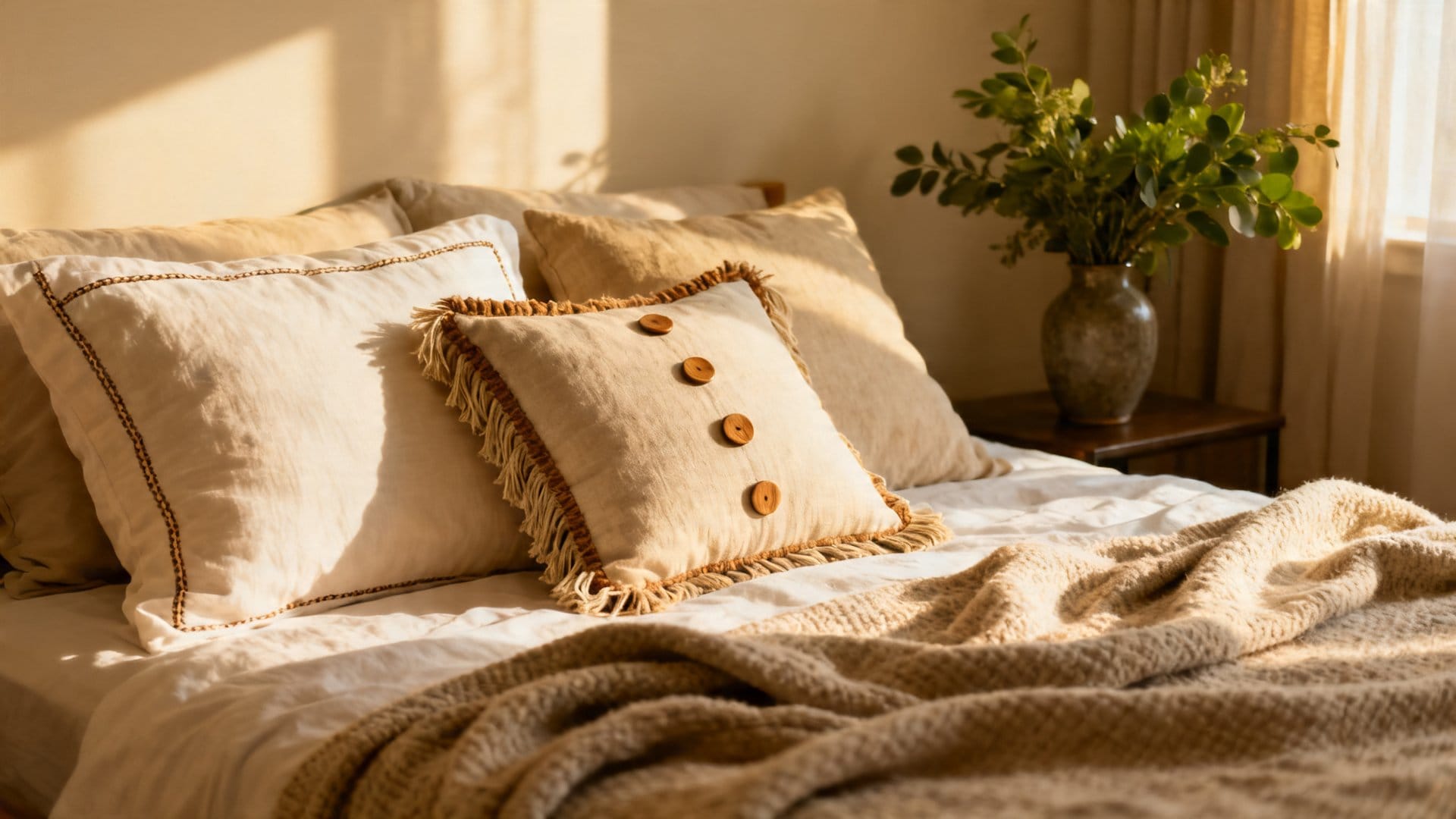
Sometimes the difference between a bed that looks styled and one that looks thrown together comes down to very small choices — the kind you might not notice consciously but that your eye picks up immediately.
Pillow inserts matter more than most people realize. A pillow cover stuffed with a flat or undersized insert looks deflated and sad, no matter how pretty the fabric is. Look for inserts that are one to two inches larger than the cover size — this creates that full, plush look you see in beautifully styled bedrooms. Down-alternative inserts tend to give a slightly softer, more relaxed shape, while feather inserts hold their structure a little better for a crisper look.
Piping, fringe, and tassels are the jewelry of the pillow world. A plain linen pillow with a simple knotted tassel at each corner suddenly has personality. Embroidered lettering, subtle woven patterns, and contrast-stitched edges all add quiet detail that rewards a closer look.
Finishing Touches
Consider mixing one patterned pillow with two solid ones rather than using all patterns. The solids give your eye a place to rest, which actually makes the patterned piece stand out more and feel intentional. This is something I keep coming back to because it works across every style, from modern to farmhouse to boho.
How Do Seasonal Swaps Keep Your Bed Feeling Fresh All Year?
Swapping pillow covers with the seasons is one of the simplest ways to refresh your bedroom without changing any furniture or paint. A shift in color and texture — from linen in summer to velvet in winter — signals the season and keeps the space feeling current.
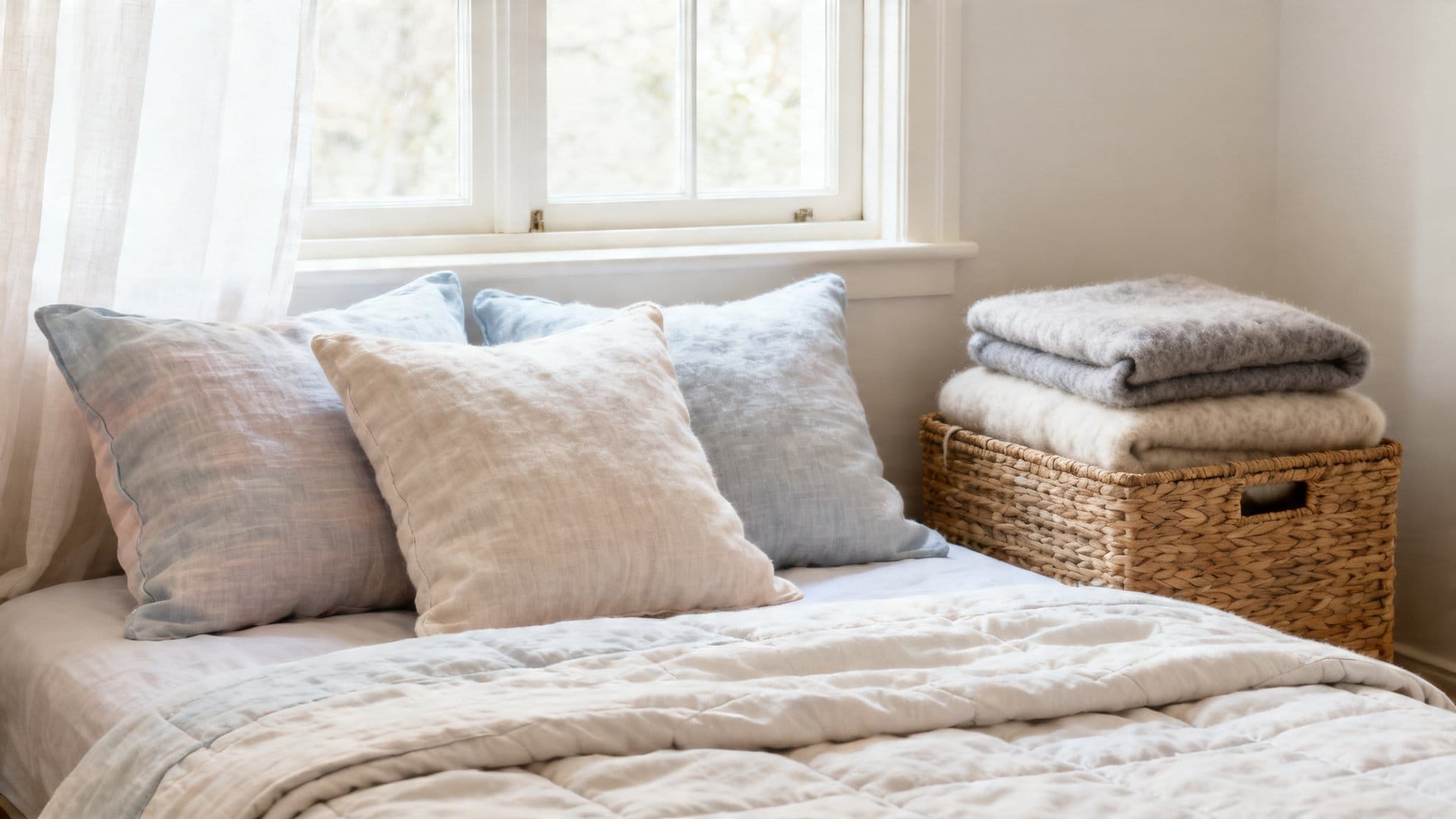
One of the most practical things about decorative pillows is how easily you can swap them out to shift the mood of your bedroom with the seasons — without touching the furniture, the paint, or the bedding underneath.
In fall, reach for pillows in amber, rust, deep burgundy, or warm plaid. The texture shift matters here too: moving from lightweight linen to heavier velvet or knit covers signals the season even before you notice the color. In winter, layering a faux fur or sherpa pillow into your arrangement adds that extra sense of warmth and shelter that feels so right when it is cold outside. Spring is a wonderful moment to introduce florals — not the loud, busy kind, but a delicate embroidered bloom or a watercolor-style print in soft pink or butter yellow. Summer calls for lighter textures again: woven cotton, thin linen, and cooler tones like pale aqua or warm white.
From what I have gathered, the easiest approach is to keep a small storage basket or bin in your closet with your off-season pillow covers. Since covers take up so little space, rotating them costs almost nothing and makes a genuine difference in how your room feels month to month.
Final Thoughts
Choosing cute decorative pillows for bed styling is one of the most rewarding and accessible ways to make your bedroom feel like a true retreat — a space that reflects your taste and wraps you in comfort the moment you walk in. Whether you are drawn to the clean lines of modern Scandi, the layered warmth of farmhouse, or the free-spirited texture of boho, there is a pillow arrangement waiting to make your bed look exactly the way you have always pictured it. Trust your instincts, play with what you already have, and remember that a little layering goes a very long way. Happy decorating!
Frequently Asked Questions
The ideal number of decorative pillows depends on your bed size and personal style, but a good general rule is two to three layers for a full or queen bed and three to four layers for a king. Start with your sleeping pillows, add a pair of euro shams behind them, and finish with one or two accent pillows in the front for a balanced, styled look. The goal is to create depth without making the bed feel overcrowded or impractical.
A mix of shapes is almost always more visually interesting than using all the same size, so consider combining large euro squares in the back, standard rectangles in the middle, and a smaller lumbar or round pillow in the front. The contrast in shapes creates layers and dimension that make a bed look intentionally styled rather than simply stacked. Lumbar pillows in particular are a popular finishing touch because they add a horizontal element that ties the whole arrangement together.
A reliable approach is to pull two or three colors directly from existing elements in your room, such as your bedding, curtains, or a piece of wall art, and use those as your palette for decorative pillows. You do not need everything to match perfectly — in fact, mixing a solid with a subtle pattern in the same color family often looks more sophisticated than a perfectly matched set. If your room feels neutral or lacks personality, decorative pillows are one of the easiest and most affordable ways to introduce a pop of color or a bolder pattern.
Texture is what gives a bed that layered, inviting quality that looks effortless in design photos, and some of the most popular options include velvet, boucle, linen, faux fur, and knitted or chunky woven fabrics. Mixing at least two different textures — for example, a smooth velvet lumbar paired with a nubby boucle euro sham — adds visual richness without requiring any additional color contrast. Seasonal swaps also work beautifully here, with lighter linen and cotton textures feeling fresh in spring and summer while velvet and faux fur add warmth in fall and winter.
The easiest way to maintain a styled pillow arrangement daily is to keep the system simple enough that putting it back together takes less than two minutes each morning. Sticking to a consistent layering order — euros in the back, standards in the middle, accent pillows in front — means you can reassemble the look quickly without overthinking it. Storing decorative pillows in a nearby basket or bench at night also helps protect them and makes the morning routine feel less like a chore.