

There’s something about walking into a beautifully made bed that just makes you want to sink right in. The pillows are plumped, the layers feel intentional, and somehow it looks both effortless and put-together at the same time. If you’ve ever wondered how to recreate that look at home, you’re in exactly the right place. These decorative bed pillow ideas will help you layer pillows like a designer, and the best part is, it’s so much simpler than it looks.
You don’t need a design degree or a huge budget to get this right. What you need is a basic understanding of scale, texture, and a little bit of confidence to trust your own eye. By the end of this article, you’ll have a clear, practical approach to building a pillow arrangement that feels personal, cozy, and genuinely beautiful.
Where Should You Start When Layering Bed Pillows?
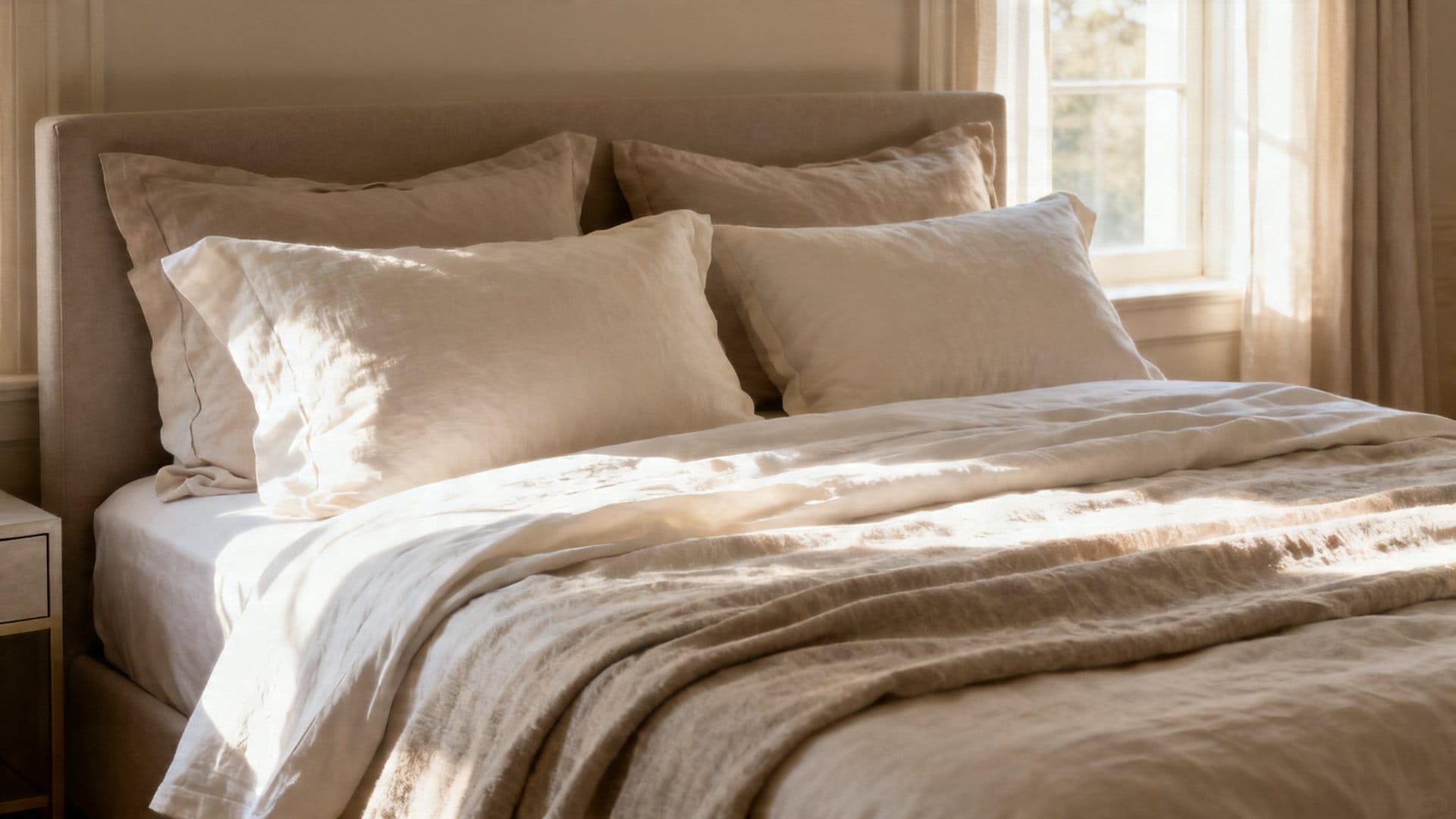
You should always start with your sleeping pillows as the back row foundation. They create the visual anchor that every decorative layer in front will lean against.
 Shop this look: a bedding set on Amazon · Set of 2 Chenille Throw Pillow Covers… · Luxury 3D Vintage Floral Throw Pillow Covers…
Every great pillow arrangement starts with the basics, your actual sleeping pillows. These are the workhorses of your bed, and they deserve a little attention before you start stacking decorative pieces in front of them.
For a king-size bed, use two king-size pillows in crisp white or neutral shams as your back row. For a queen, two standard or euro shams work beautifully. I love how a clean, simple back layer creates a strong visual anchor, it gives everything else something to lean against.
Choosing Your Sham Style
Opt for euro shams in a 26×26 inch size if you want that full, luxurious hotel look. Two or three euros lined up across the back of the bed immediately add height and substance. Choose a fabric that matches or subtly complements your duvet, a tone-on-tone linen works especially well here because it looks rich without competing with the layers in front.
What Is the Rule of Three in Pillow Layering?
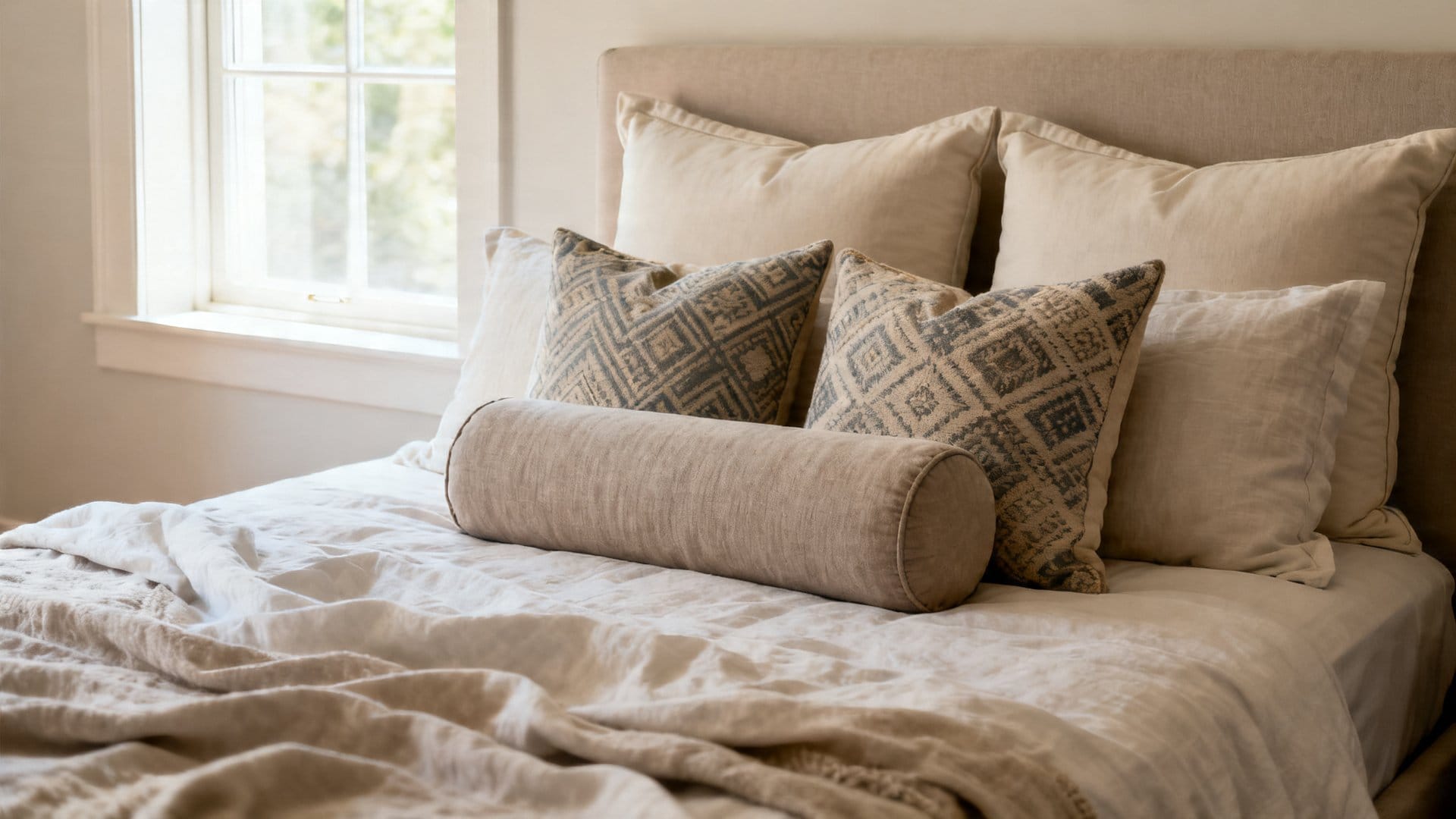
The rule of three means arranging your pillows in three distinct rows, back, middle, and front, each stepping slightly forward and shorter in height. This creates a natural cascade effect that looks balanced on any bed size.
 Shop this look: throw pillows on Amazon
Designers rely on the rule of three for a reason, it creates visual balance without making a bed look cluttered or overly symmetrical. When you think about decorative bed pillow ideas, this rule is your best friend.
Picture your bed in three rows: the back row (your euro shams or sleeping pillows), the middle row (your standard or king-size decorative pillows), and the front row (your accent or lumbar pillow). Each row steps slightly forward and slightly shorter in height, creating a gentle cascade effect. This is something I keep coming back to because it works on every bed size, in every style, from a minimal Scandinavian bedroom to a rich, layered cottagecore setup.
The middle row is where you can introduce a pattern or a slightly bolder color. Try two matching pillows in a textured fabric like a jacquard weave or a subtle stripe. They don’t need to scream for attention, they just need to add a little visual interest between the calm back row and the statement piece in front.
Pro tip: Keep your middle row pillows about two inches shorter than your back euro shams so each layer is clearly visible and the whole arrangement has a natural, stepped silhouette.
Once your layers are in place, the next step is making sure the colors across all three rows feel like they belong together.
How Do You Choose Colors That Actually Work Together?
Pull two or three colors directly from your existing bedding or room to build your palette. The goal is cohesion, not perfect matching, colors that share a common undertone will always feel intentional together.
 Shop this look: curtains on Amazon
Color is where a lot of people freeze up, and honestly, it’s easier than it seems once you have a simple framework. The goal isn’t to match everything perfectly, it’s to create a palette that feels cohesive and intentional.
Start by pulling two or three colors from your existing bedding or room. If your duvet is a soft sage green, look for pillows in warm cream, dusty terracotta, or even a muted blush. These colors don’t fight each other, they create a gentle, layered warmth that feels like it belongs together. One thing I’ve noticed is that adding one unexpected deeper tone, like a burnt sienna or a deep navy, gives the whole arrangement a grounded, finished quality that lighter palettes alone can’t achieve.
Color Combinations Worth Trying
- Warm white euro shams + dusty blue middle pillows + a rust-colored lumbar for a relaxed coastal bedroom feel
- Ivory linen euros + soft blush standard pillows + a deep burgundy velvet lumbar for a romantic, moody look
- Charcoal gray euros + cream textured middles + a mustard yellow lumbar for a modern, graphic pop of warmth
- Natural oatmeal euros + sage green standard pillows + a terracotta woven lumbar for an earthy, organic vibe
What makes these combinations work isn’t just the colors themselves, it’s the way different textures within those colors catch the light differently, adding depth without adding visual chaos.
Why Is Texture the Secret Ingredient in Pillow Styling?
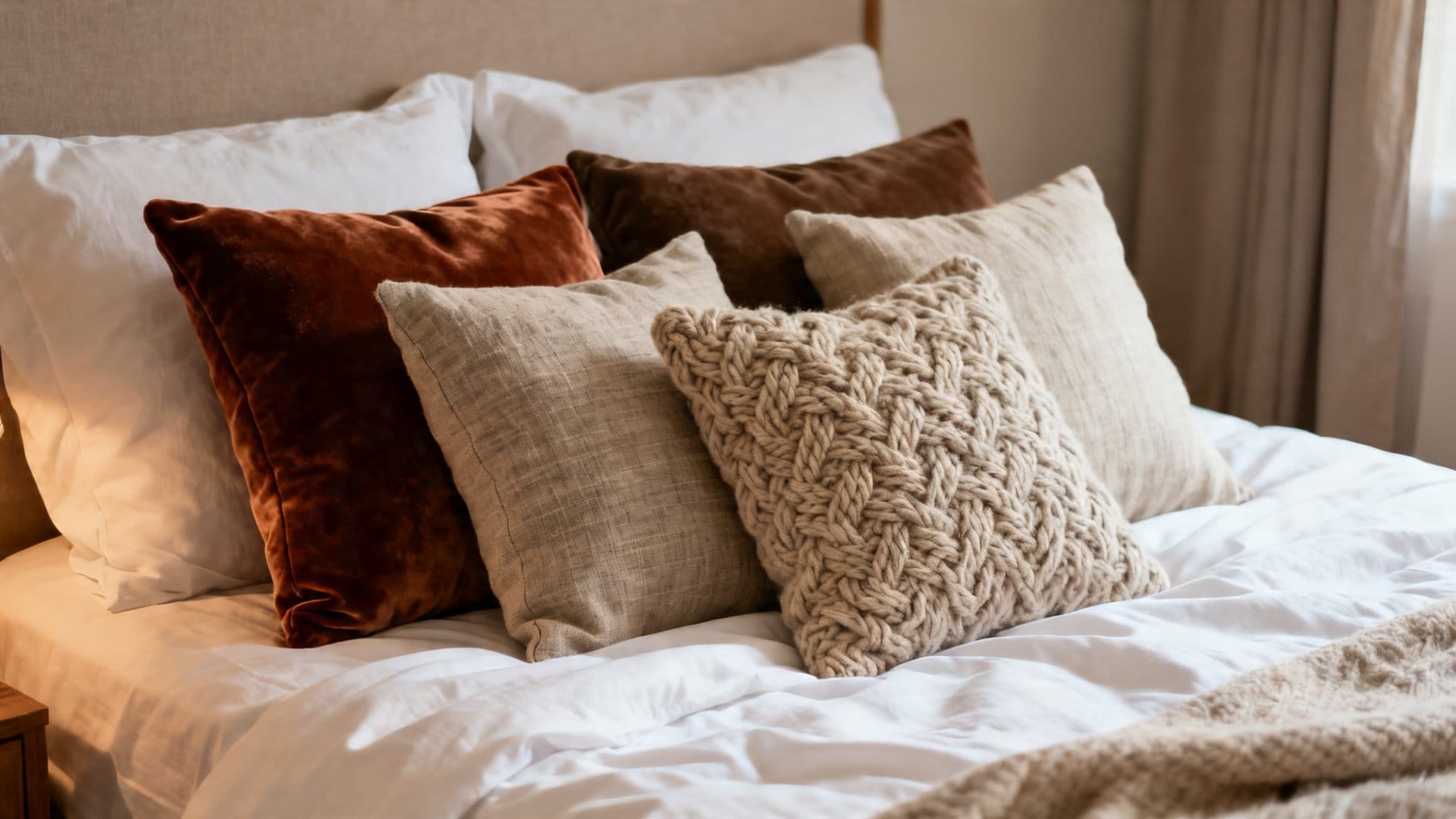
Texture adds depth and visual interest that color alone cannot achieve. Mixing fabrics like linen, velvet, and chunky knit makes a pillow arrangement feel layered and intentional rather than flat.
 Shop this look: an area rug on Amazon
If your pillow arrangement looks a little flat or forgettable, texture is almost always the missing piece. Mixing fabrics is one of the most powerful decorative bed pillow ideas you can put into practice, and it costs nothing extra if you’re thoughtful about what you already own.
Think about contrast: a smooth, cool cotton sham next to a nubby linen pillow next to a plush velvet accent. Your eye travels across the bed and finds something interesting at every stop. A chunky knit pillow cover in the front row adds that cozy, hand-crafted warmth that no smooth fabric can replicate. A friend of mine swapped out her standard decorative pillows for a mix of velvet and woven cotton, and she said it completely changed how her bedroom felt, suddenly it looked intentional and layered rather than just “nice.”
Textures that layer beautifully together: linen, velvet, waffle weave, jacquard, embroidered cotton, and chunky knit. Avoid using more than three or four different fabric types at once, or the bed starts to feel more like a texture experiment than a restful retreat.
Pro tip: If you want warmth and depth without adding more pillows, try a double-sided pillow cover where one side is velvet and the other is linen, you can flip it seasonally and get two looks from one piece.
With your color and texture choices sorted, there’s one final layer that ties the whole arrangement together.
What Makes the Lumbar Pillow So Important?
The lumbar pillow sits front and center, drawing the eye and setting the tone for the entire arrangement. Its small size means you can take a bold creative risk without stressing the bed.
 Shop this look: wall art on Amazon
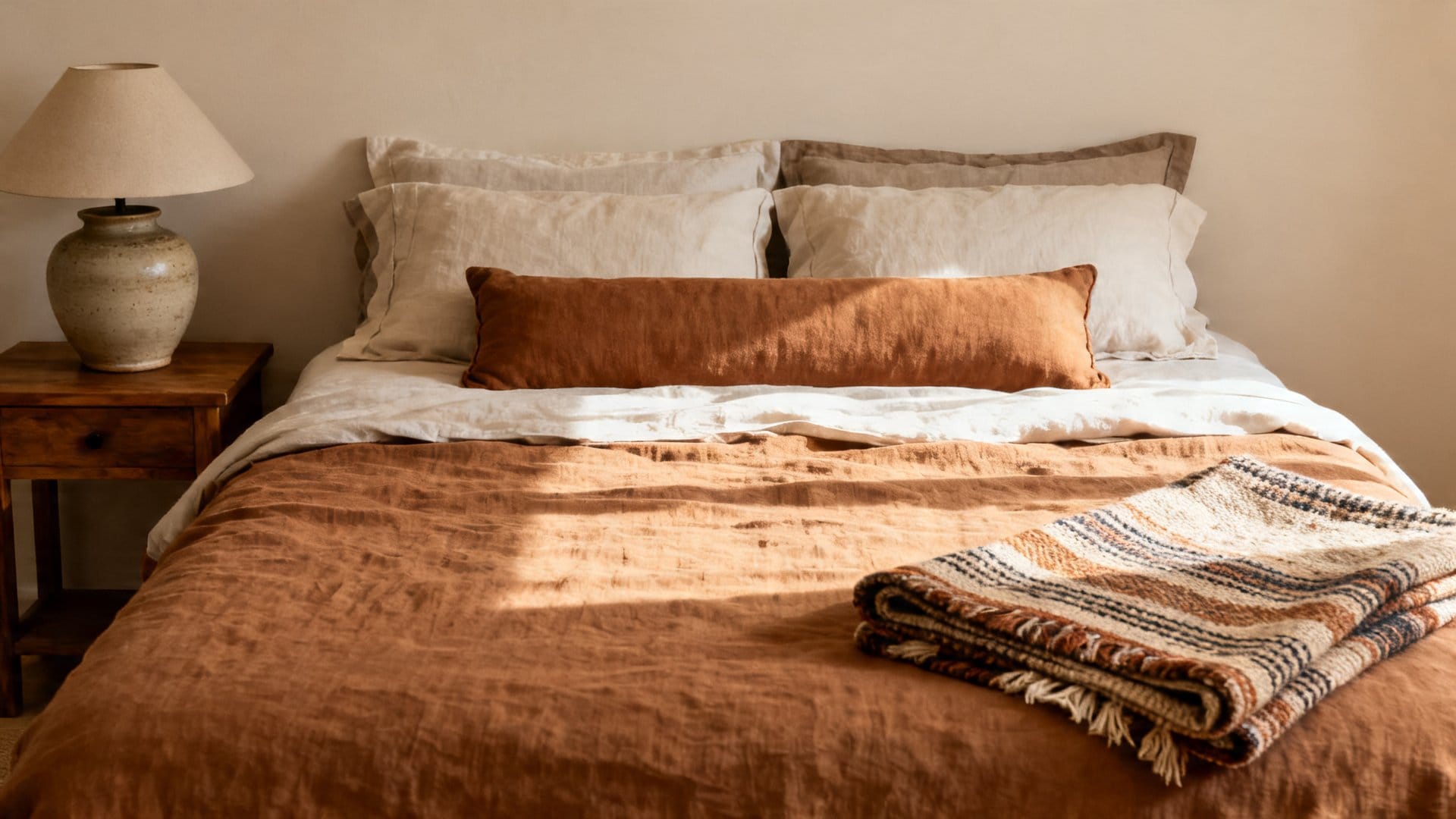
The lumbar pillow sits at the front of your arrangement, and it punches well above its weight. This long, narrow pillow, typically around 14×36 inches, is where you can take your biggest creative risk, because it’s small enough that it won’t overwhelm the bed if you go bold.
This is the spot for a beautiful embroidered detail, a geometric pattern, or a rich jewel-toned velvet. Because it sits front and center, it draws the eye and sets the tone for the entire arrangement. I love how a single well-chosen lumbar pillow can make a simple, neutral bed look like it was styled by someone with a very good eye. You don’t even need to change the rest of your pillows, just swap the lumbar seasonally and the whole bed feels refreshed.
Styling Notes for the Perfect Lumbar
Center your lumbar pillow for a symmetrical, polished look, or offset it slightly to one side for a more relaxed, casual feel. If your bed has a headboard with strong lines, centering tends to look more intentional. If your headboard is upholstered or curved, a slightly off-center placement feels natural and easy.
How Do You Scale Your Pillow Arrangement to Your Bed Size?
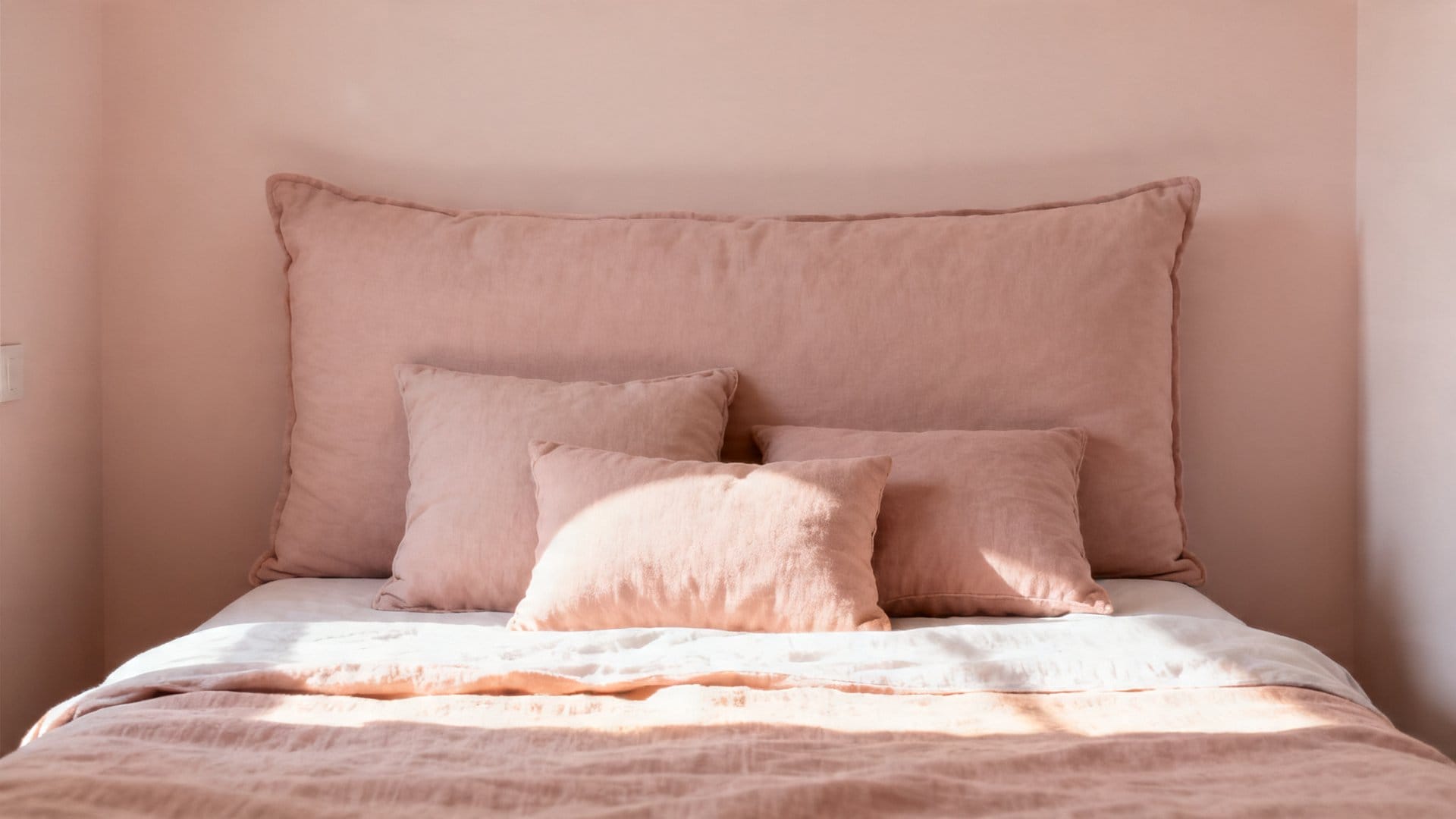
The number of pillows should match your bed size, too many on a small bed looks cluttered, too few on a large bed looks sparse. Matching pillow count to bed dimensions is the fastest way to make any arrangement look proportional.
 Shop this look: 5 Pcs Babys Breath Artificial Flowers Bulk Real… · Dried Lotus Pods Bunch, Natural Beige,…
One of the most common pillow layering mistakes is using the same number of pillows regardless of bed size. A twin bed with five pillows looks overwhelmed. A king bed with three pillows looks sparse. Scale matters, and getting it right makes the whole arrangement feel proportional and comfortable.
For a twin or full bed, two euro shams at the back, two standard decorative pillows in the middle, and one lumbar in front is plenty. For a queen bed, try two euro shams, two standard or king-size decorative pillows, and one lumbar. For a king bed, three euro shams across the back give you that full, generous look, then two or three standard decorative pillows in the middle, and one or two lumbars in front.
From what I’ve gathered, the easiest way to check your arrangement is to step back to the doorway and look at the bed from there. If the pillows look balanced from that distance, they’re going to look right from any angle. That ten-second check saves a lot of second-guessing.
Pro tip: If your king bed feels like it needs more visual weight in the middle row, try using three pillows instead of two, two matching ones on the outside and a slightly different coordinating pillow in the center. It fills the space beautifully without looking cluttered.
How Do You Keep Your Pillow Arrangement Fresh All Year?
You only need to swap one or two pillows per season to shift the entire mood of your bedroom. Changing your lumbar and one middle pillow is usually enough to make the bed feel completely refreshed.

One of the best things about building a layered pillow arrangement is how easy it becomes to refresh it with the seasons. You don’t need to replace everything, just one or two well-chosen swaps can shift the whole mood of your bedroom.
In fall, bring in a deep amber velvet lumbar and a warm plaid or houndstooth middle pillow. In winter, lean into soft textures, a faux fur or chunky knit lumbar adds incredible coziness without feeling over-decorated. Spring calls for something lighter: a soft floral embroidery or a pale blue woven cotton brings freshness without being predictable. In summer, swap to crisp white linens with a single bold stripe or a cool aqua accent pillow for a relaxed, airy feel.
This is the heart of what makes decorative bed pillow ideas so satisfying, the bed becomes a small canvas that shifts with the seasons and reflects how you’re feeling at any given time. You’re not locked into one look forever. The arrangement you build is a starting point, not a permanent installation.
&# 127807; Want arrangements by style?Bed Pillow Arrangement Ideas for Every Style→
Final Thoughts
Layering decorative bed pillows like a designer really comes down to a few simple principles: start with a strong back row, build in scale and height, mix textures with intention, and let one statement piece, usually that lumbar, do the talking. Whether you’re working with a neutral palette or something more colorful and expressive, these decorative bed pillow ideas give you the tools to create a bed that feels genuinely beautiful and uniquely yours. Trust your instincts, adjust as you go, and don’t be afraid to try something a little unexpected. Happy decorating!
Frequently Asked Questions
The ideal number of decorative pillows depends on your bed size and personal style. A queen bed typically looks best with 4–6 pillows arranged in layers, while a king bed can handle 6–8 for a full, luxurious look. Start with your sleeping pillows as the base and build forward in decreasing size, stopping when the arrangement feels balanced rather than overcrowded.
Designers typically work from back to front, starting with the largest pillows against the headboard and moving toward smaller, more decorative accents at the front. The standard layering sequence goes: Euro shams in the back, standard sleeping pillows in the middle, and smaller decorative or lumbar pillows in the front. This creates a sense of depth and dimension that makes the bed look intentionally styled rather than randomly assembled.
The key to mixing patterns successfully is to vary the scale of each print, pair a large bold pattern with a smaller geometric and a solid to give the eye places to rest. Stick to a cohesive color palette of two to four colors to tie everything together even when the patterns themselves are different. Adding texture through materials like velvet, linen, or knit can add visual interest without introducing more competing patterns.
You absolutely do not need to use matching pillow sets, in fact, mixing different styles often looks more select and intentional than buying a pre-packaged set. The goal is cohesion through color and texture rather than uniformity, so feel free to combine pillows from different collections or even different stores. As long as your choices share a common color thread or complementary aesthetic, the arrangement will look thoughtfully designed rather than mismatched.
A lumbar pillow is a long, rectangular pillow that typically sits at the very front of a bed pillow arrangement, serving as the finishing accent layer. While it is not strictly required, it adds a polished, designer-quality touch that ties the whole look together and gives the arrangement a professional sense of completion. It also works double duty as functional support when you are sitting up in bed reading or watching television.