
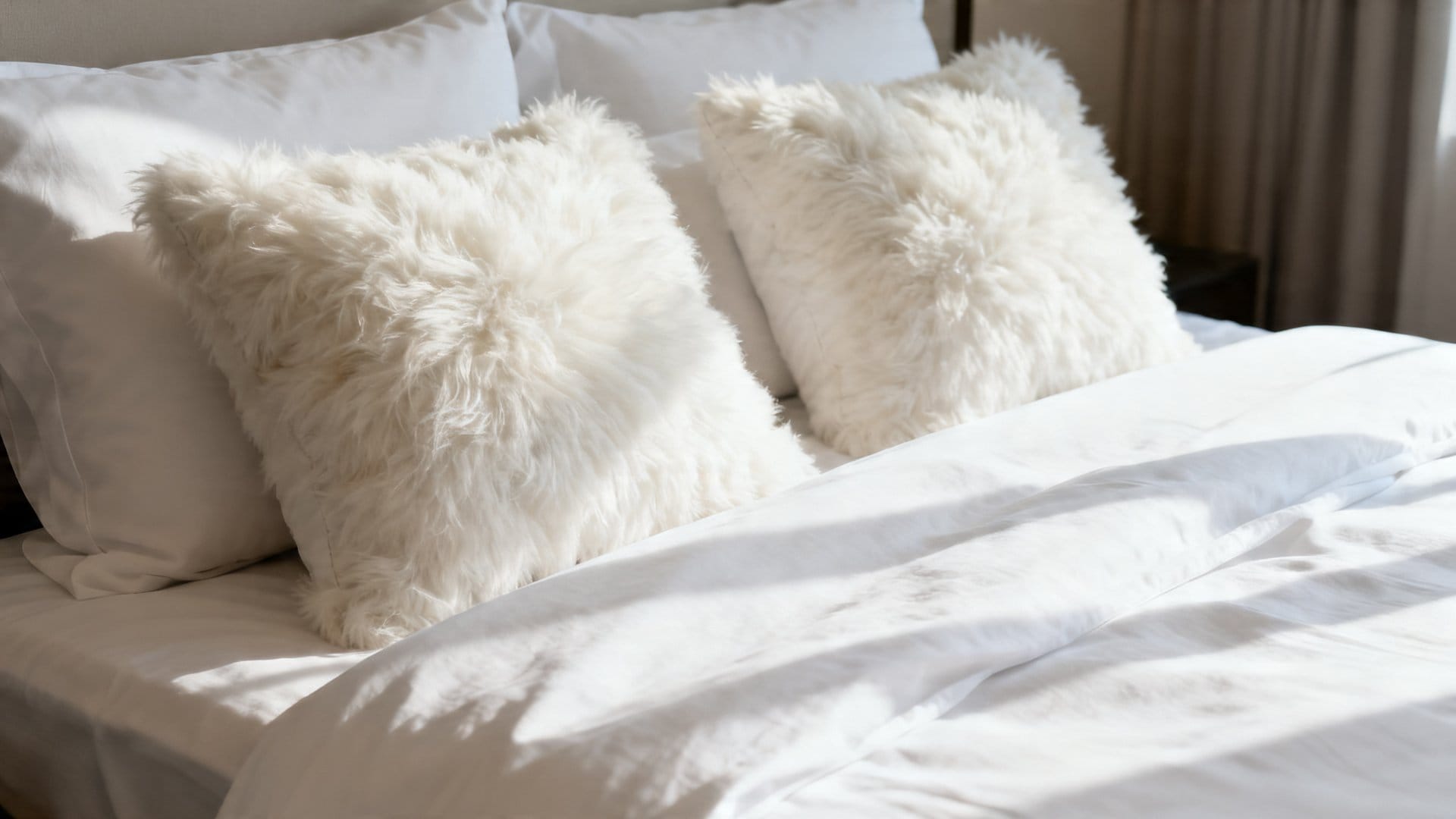
There is something almost meditative about a freshly made bed dressed in crisp white bedding — the way the light catches the folds, the quiet invitation to slow down and rest. If you have ever stood at the foot of your bed wondering why it still looks a little flat despite the beautiful white duvet, the answer is almost always in the pillows. Choosing the right decorative pillows for white bedding is one of those small decisions that makes a surprisingly big visual difference. This article will walk you through textures, color pairings, layering strategies, and arrangement ideas so your bed feels as considered and welcoming as you imagine it could be.
Why Is White Bedding the Perfect Canvas for Pillow Styling?
White bedding is the perfect canvas for pillow styling because it does not compete with any color, texture, or pattern you place on it. Every decorative element you add stands out clearly against the clean, neutral base.
 Shop this look: a bedding set on Amazon · Framed Abstract Canvas Wall Art Rustic Brown…
White bedding works the way a blank sketchbook does — it holds whatever you bring to it without competing. Unlike a patterned duvet that fights with bold pillows, white gives every decorative element room to breathe and be seen on its own terms.
One thing I have noticed is that people often worry white bedding will feel cold or sterile, but the opposite is true when you layer it thoughtfully. The warmth comes entirely from your pillow choices: their textures, their colors, their shapes. White is not the absence of personality — it is the best possible backdrop for it.
Why It Works
White reflects light beautifully, which means the textures on your decorative pillows — whether that is a ribbed velvet, a nubby linen, or a soft boucle — will catch the light and create visual depth. That contrast between the smooth, clean duvet and the richly textured pillows is exactly what makes a bed look layered rather than simply piled.
How Do You Build a Pillow Arrangement That Actually Makes Sense?
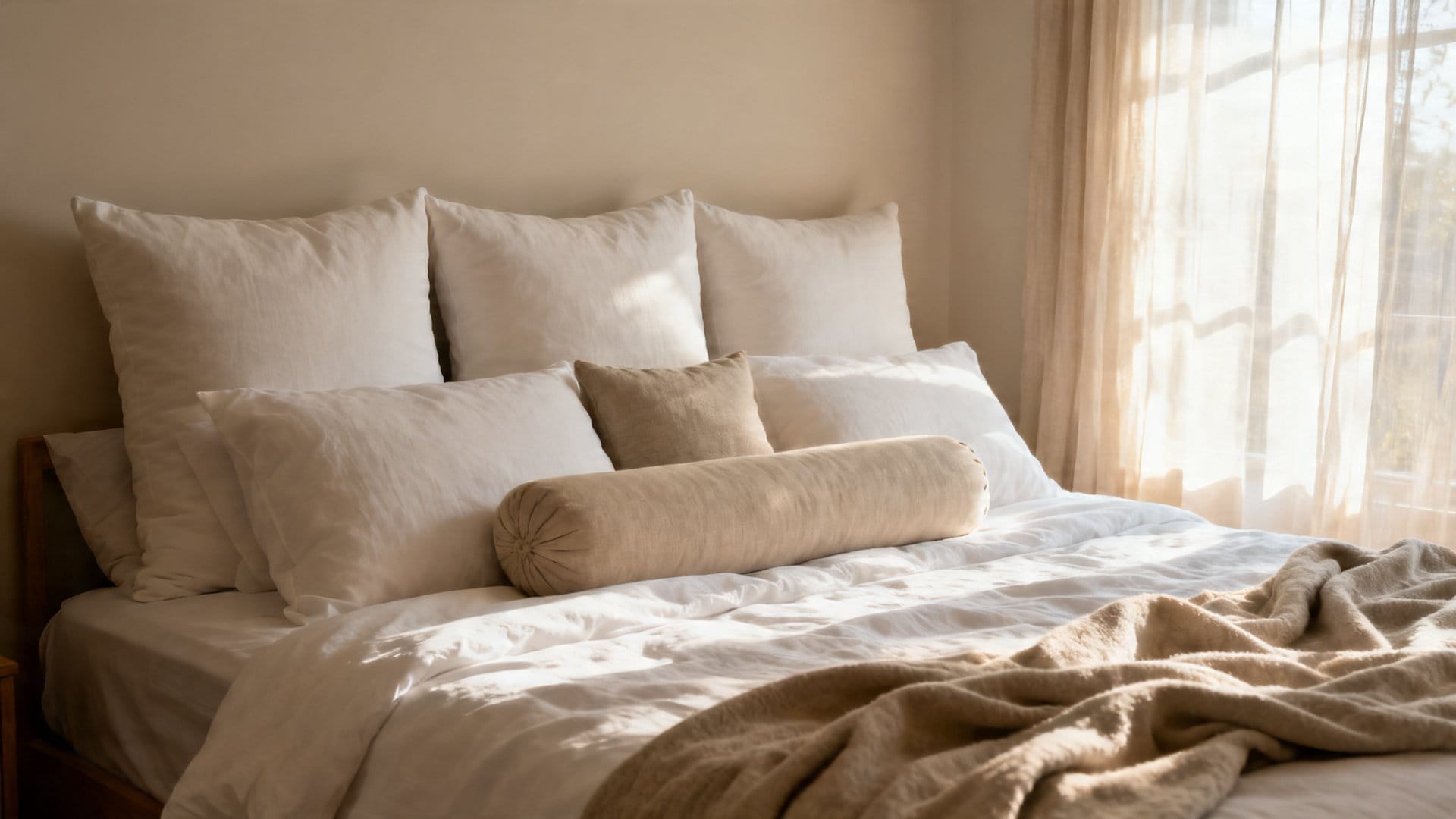
A well-structured pillow arrangement works in layers: large euro shams at the back, standard sleeping pillows in the middle, and decorative accent pillows in front, finished with a lumbar pillow. Following this simple sequence gives any bed an intentional, polished look.
 Shop this look: throw pillows on Amazon
A common mistake is buying pillows you love individually and then wondering why they do not look cohesive together. Pillow arrangement follows a loose logic that, once you understand it, makes everything click into place.
Think of your pillow layers the way you would think of a good outfit: you need a foundation, a middle layer, and a finishing accent. For a queen or king bed, start with two or three large euro shams (26-inch squares work beautifully) propped against the headboard. In front of those, place two standard sleeping pillows in matching shams. Then add two to three decorative pillows in front of those, finishing with one lumbar pillow laid across the center. That final lumbar pillow is the detail that pulls everything together — I love how it gives the whole arrangement a finished, intentional look without feeling overdone.
Pro tip: If your bed sits against a wall without a headboard, lean the euro shams directly against the wall at a very slight angle — it creates the same visual height and structure without needing the architectural support of a headboard behind them.
Once your arrangement has a solid structure, the next step is choosing the right materials to fill it.
Which Textures Shine Against White Bedding?
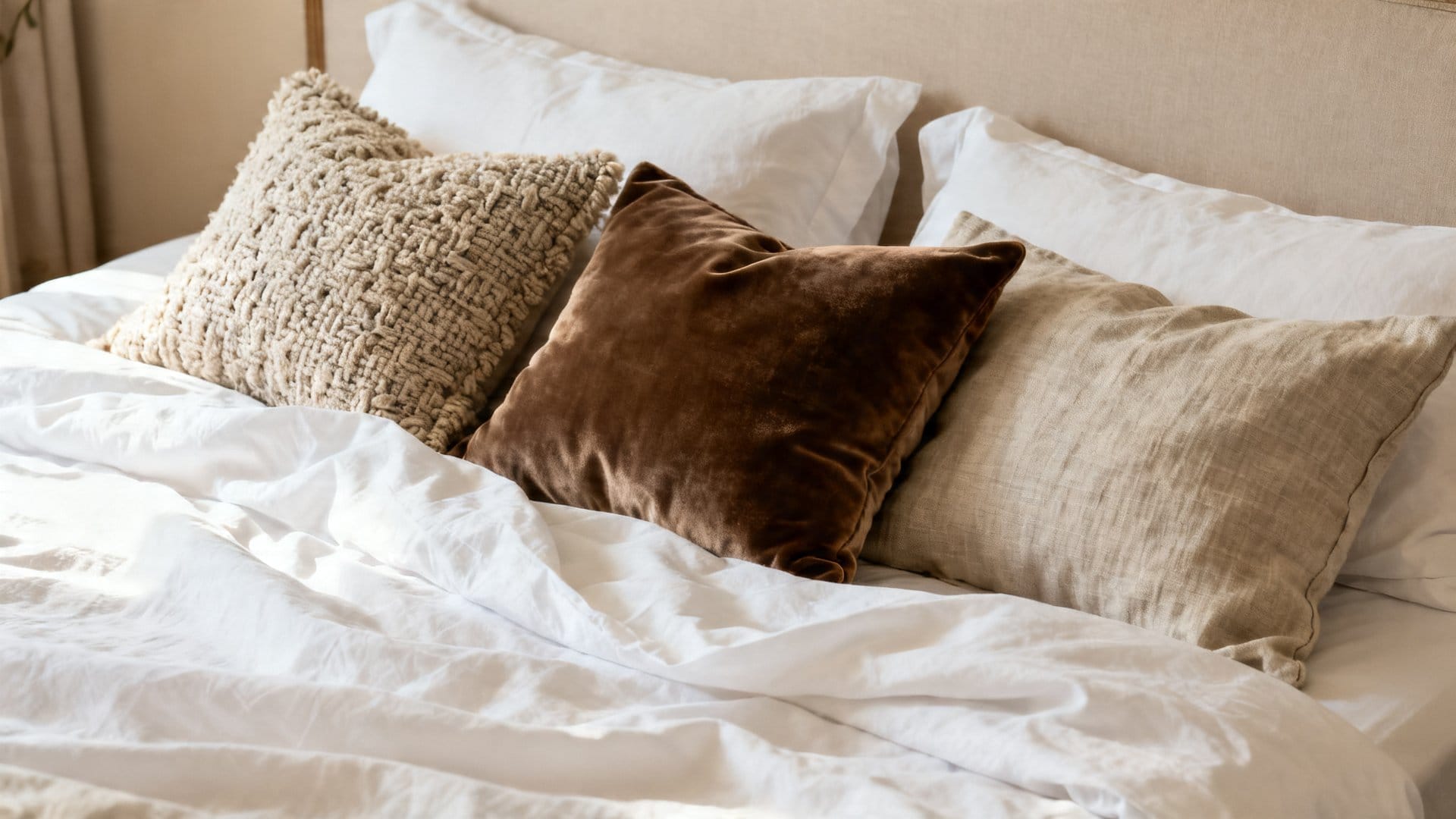
Boucle, velvet, washed linen, and chunky woven cotton all shine against white bedding because they create strong tactile contrast with a smooth duvet. Mixing at least two or three of these materials in one arrangement adds the depth that makes a bed look truly layered.
 Shop this look: curtains on Amazon · DAPU Linen Duvet Cover Set – French Linen… · DAPU 100% French Linen Sheets 4Pcs Set, 170GSM…
Texture is the secret ingredient that separates a flat, forgettable bed from one that looks genuinely inviting. When your base is white, texture becomes your primary design tool — even more than color.
Some of the most beautiful combinations I have seen pair a crisp cotton duvet with pillows in completely contrasting materials. Consider a chunky woven cotton pillow beside a smooth silk-blend cover — the roughness and the sheen play off each other in a way that feels luxurious without looking fussy. Boucle fabric (that loopy, cloud-like texture) is having a well-deserved moment right now, and it reads as incredibly soft and sophisticated against white. Linen pillows in a natural, slightly wrinkled state bring an effortless, lived-in quality that prevents a white bed from feeling like a hotel showroom.
Materials That Work
- Boucle covers in cream or warm ivory add cloud-like softness without straying far from the white palette
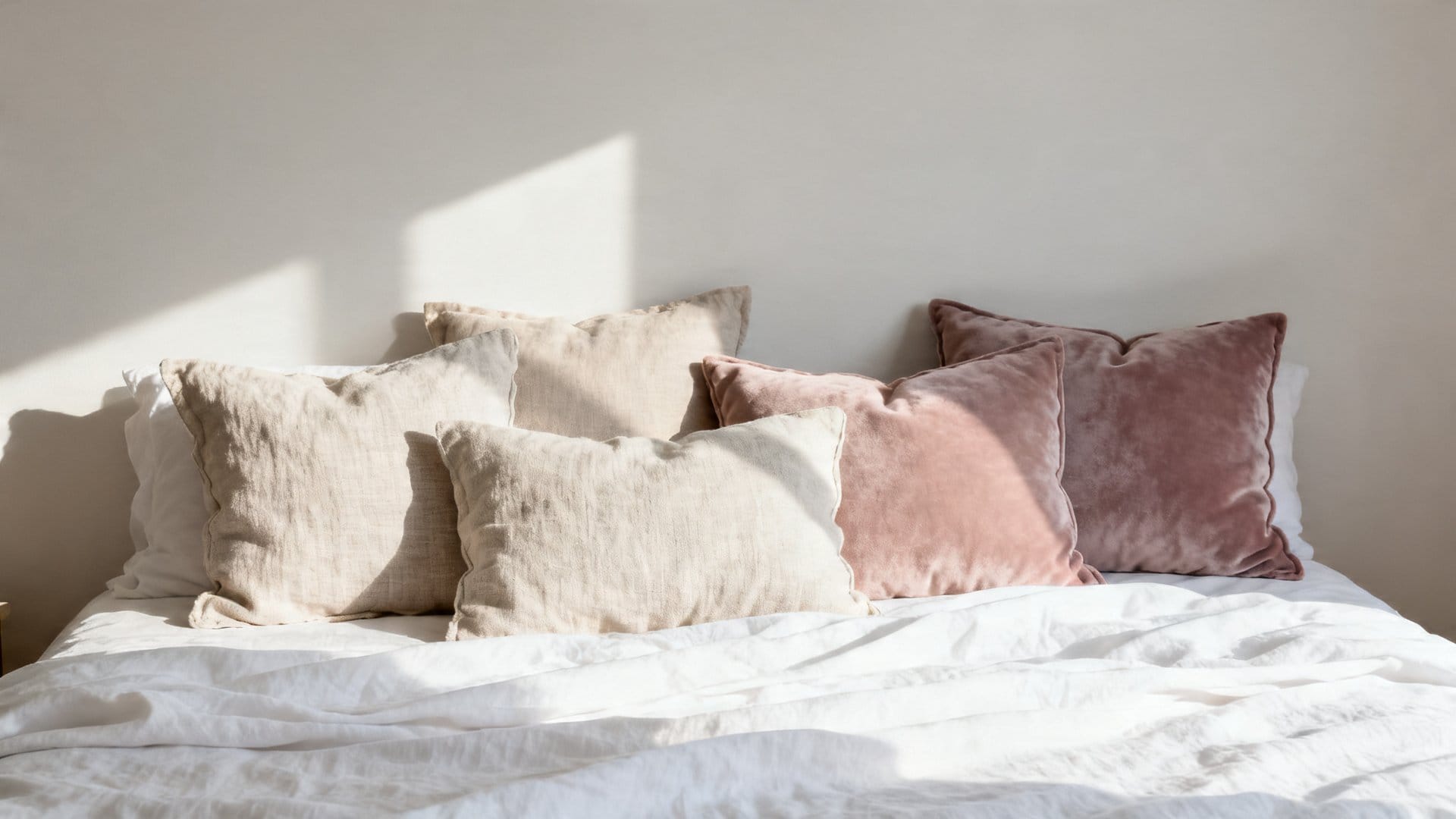
- Velvet pillows in dusty sage, warm terracotta, or deep navy bring color and a subtle shimmer that catches evening light beautifully
- Washed linen in warm sand or slate gray gives a relaxed, Scandi-inspired feel that pairs naturally with white cotton
- Embroidered cotton pillows with tone-on-tone white stitching add pattern and dimension while keeping the palette serene
- Faux fur accent pillows in soft oatmeal or warm taupe add tactile warmth that feels especially cozy in fall and winter months
Mixing at least three different textures within your pillow arrangement creates that layered, collected look that feels personal rather than catalog-perfect.
Which Color Palettes Feel Soft and Sophisticated?
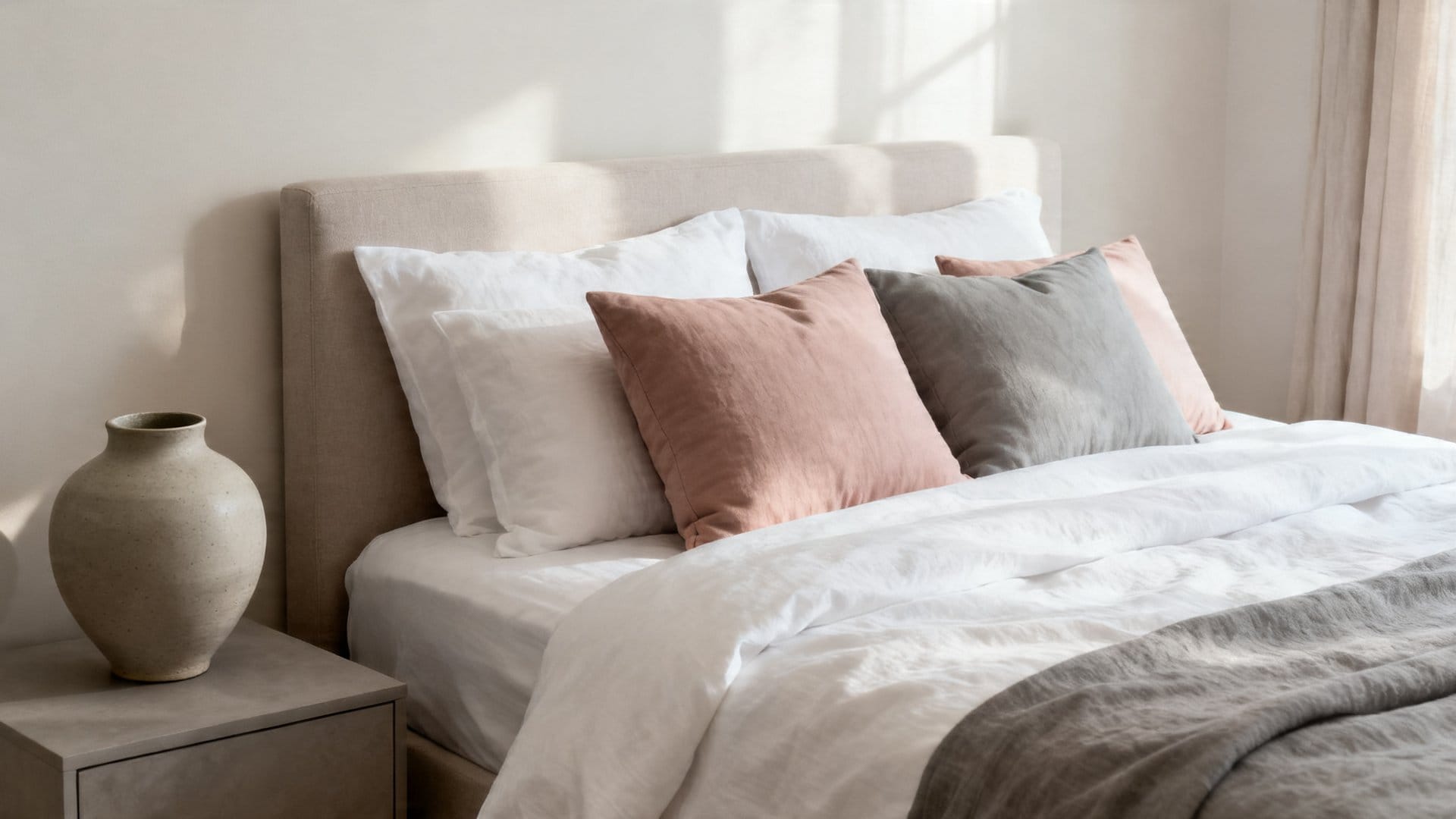
Soft neutrals like warm ivory, greige, and dusty blush feel effortlessly sophisticated against white bedding. For more contrast, deep navy, charcoal, or forest green anchor the look without stressing the clean base.
 Shop this look: an area rug on Amazon
White bedding is endlessly versatile, which means you have real freedom with color — but some combinations feel distinctly more sophisticated than others. The key is choosing a palette with intention rather than just grabbing whatever you love in the moment.
A soft, tonal approach works beautifully for bedrooms that need to feel calm and restful. Think warm whites, creamy ivories, and soft greiges layered together — this is the palette you often see described as “quiet luxury,” and it is genuinely lovely in person. If you want a little more contrast without going bold, dusty blush, muted sage, and warm caramel are all colors that feel sophisticated against white without shouting for attention. For something with a bit more drama, deep charcoal, inky navy, or a rich forest green will anchor a white bed and make it feel grounded and intentional.
A friend of mine recently redid her bedroom with all-white bedding and added a single pair of deep terracotta velvet pillows as her accent. The warmth of that earthy tone against the clean white was so striking — the whole room felt pulled together with just that one decision. Sometimes less really is more.
Pro tip: Pull your accent pillow color from something already in the room — a piece of art, a rug, even a plant pot — so the bed feels like it belongs to the space rather than sitting apart from it.
How Do You Mix Pillow Sizes and Shapes Well?
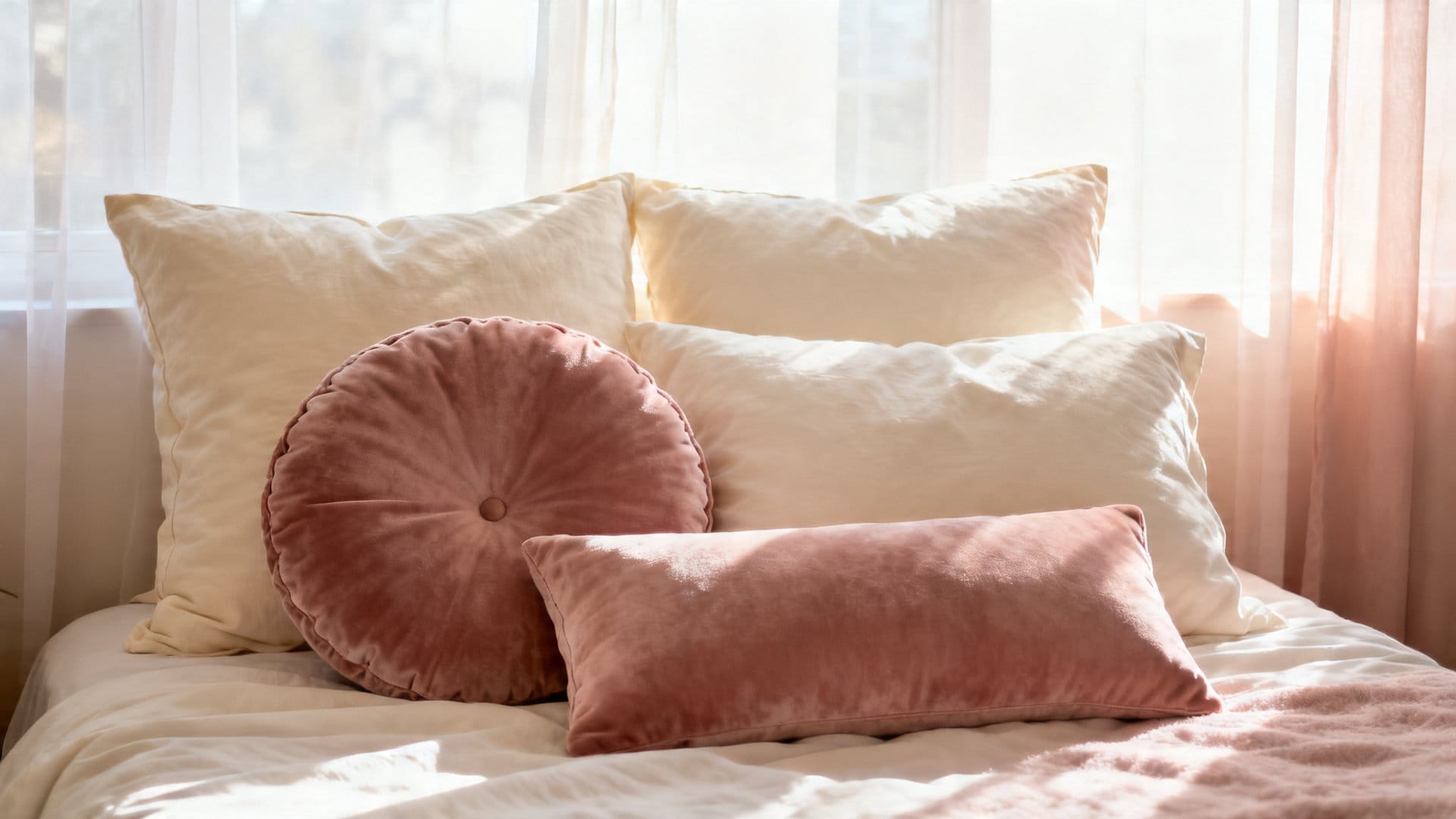
Mixing pillow sizes and shapes well means combining oversized euro squares at the back, mid-size squares in the middle, and a lumbar pillow at the front. This layered progression creates visual movement and prevents the arrangement from looking flat or rigid.
 Shop this look: wall art on Amazon
Size and shape variety is what gives a pillow arrangement visual movement. A row of perfectly matched square pillows, all the same size, tends to look rigid and a little uninspired. Mixing shapes creates a sense of ease and intention at the same time.
The lumbar pillow — that long, narrow rectangular shape — deserves special mention because it is one of the most useful tools in decorative bedding. Placed across the front of your arrangement, it grounds everything above it and adds a horizontal line that makes the whole bed feel wider and more balanced. You can find lumbars in almost every fabric and color, which makes them easy to swap seasonally without rearranging your whole setup. Oversized square pillows (24-inch or 26-inch) at the back give height and drama, while standard 18-inch or 20-inch squares in the middle layer create a natural transition. This is something I keep coming back to because it works in every style of bedroom — minimal Scandi, warm cottagecore, or clean modern.
With your core arrangement and color palette in place, it is worth thinking about how to keep things feeling fresh all year long.
How Do You Style Decorative Pillows for White Bedding Through the Seasons?
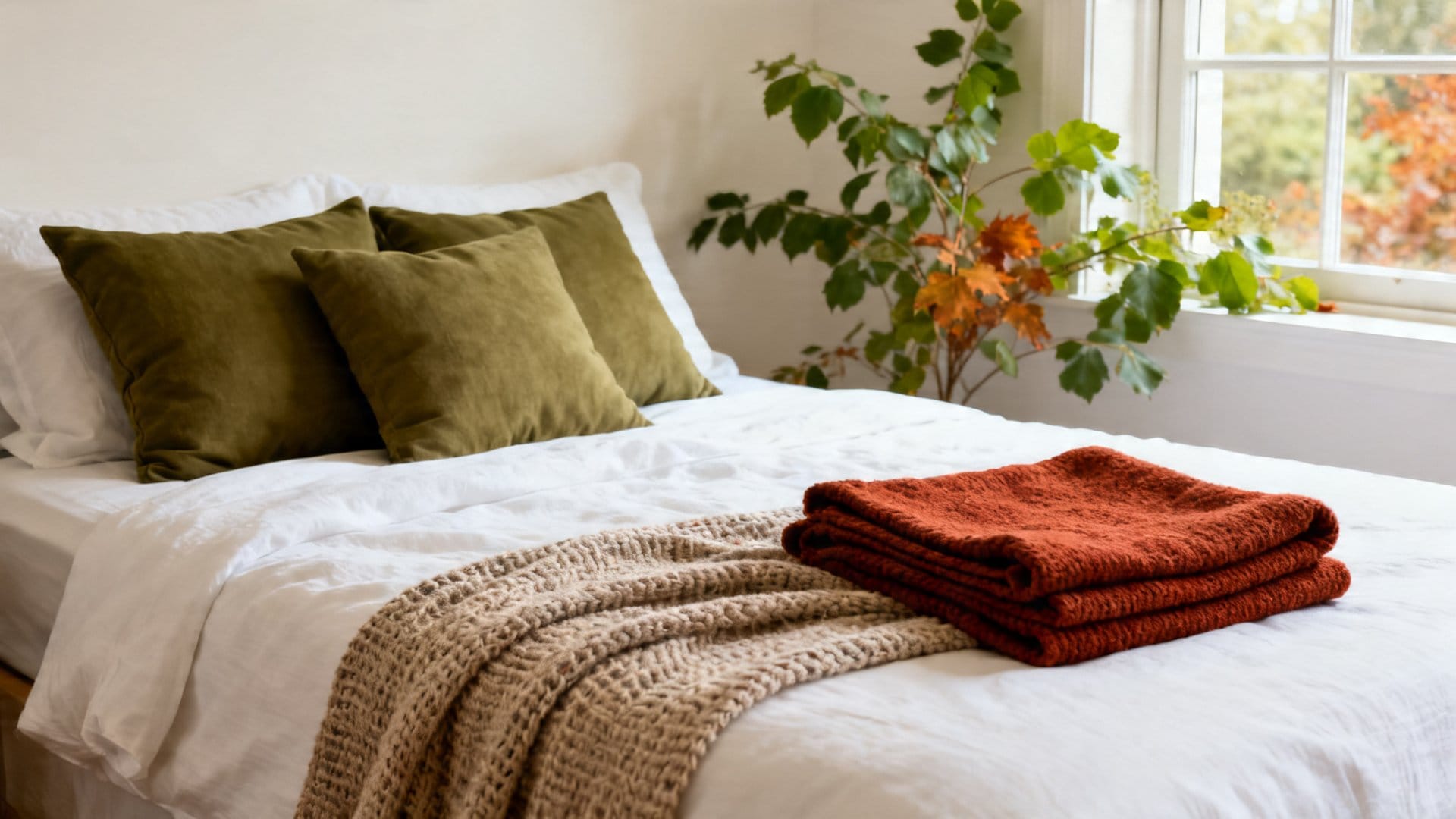
Styling decorative pillows for white bedding through the seasons is simple because the white base stays constant. Swapping just two or three pillows — lighter linens in summer, richer velvets in winter — is all it takes to refresh the whole room.
 Shop this look: Decorative Geo Pillowcase, Boho Colored Throw… · Pillowflex Synthetic Down Pillow Insert 18×26… · 12 x 20 Pillow Insert Set of 2 – Premium Soft…
One of the most practical things about building a decorative pillow collection for white bedding is how easily it adapts to the changing seasons. Because your base never changes, swapping just two or three pillows can completely shift the feeling of your bedroom.
In spring and summer, reach for lighter fabrics and fresher tones: soft linen in pale blue or warm white, embroidered cotton with botanical details, or a textured waffle-weave pillow that feels breezy and light. Fall and winter call for deeper colors and richer textures — a velvet pillow in burgundy or deep olive, a chunky knit cover in warm oatmeal, or a faux shearling accent that practically radiates warmth just by looking at it. You do not need a completely new set for every season; two or three seasonal swaps on top of your year-round foundation pillows is all it takes to make the room feel current and intentional.
Pro tip: Store your off-season pillows in a linen storage bag or a decorative basket in the closet — they stay clean, they stay accessible, and swapping them out takes about three minutes.
Even a well-planned arrangement can fall short if a few common pitfalls are overlooked — here is what to watch for.
What Are Common Pillow Styling Mistakes (and Easy Ways Around Them)?
The most common pillow styling mistakes are using too many pillows of the same size and choosing colors that do not connect to the rest of the room. Both are easy to fix with a little variety in shape and a color pulled from an existing element in the space.
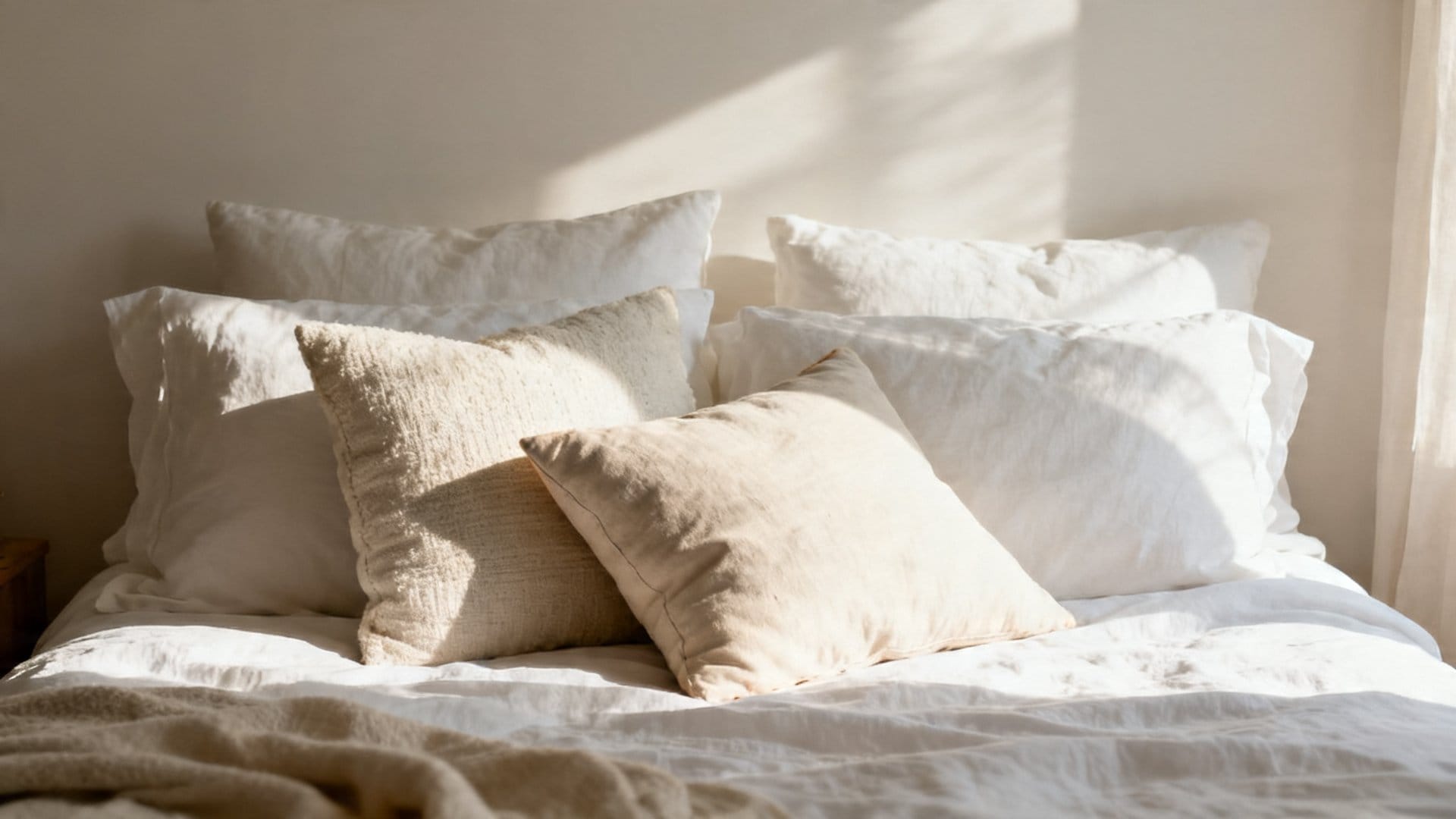
Even with the best intentions, a few common missteps can make a beautifully chosen pillow collection look less than its best. Knowing what to watch for makes styling so much easier.
The most frequent issue is using too many pillows in the same size and shape, which creates a flat, monotonous look regardless of how beautiful the fabrics are. The second most common mistake is choosing colors that do not connect to anything else in the room — your pillow palette should feel like a conversation with your walls, rug, and furniture, not a separate statement. From what I have gathered, the easiest way to avoid this is to bring a small swatch or photo of your existing room elements when you shop for pillows, whether in-store or online.
Quick Fixes
- If your arrangement looks too stiff, try slightly overlapping the front pillows rather than lining them up in a straight row
- If your pillows look flat and deflated, use an insert one size larger than the cover — a 20-inch insert in an 18-inch cover creates that full, plump look
- If your color palette feels disconnected, add one neutral pillow (warm white, oatmeal, or soft gray) that bridges your accent colors to the white bedding
- If the arrangement feels too “done,” remove one pillow — odd numbers often feel more natural and relaxed than even ones
Small adjustments like these can make an enormous difference without requiring you to start over from scratch.
Final Thoughts
Choosing the right decorative pillows for white bedding is truly one of the most rewarding small investments you can make in your bedroom — it costs relatively little, takes almost no time to change, and has an outsized effect on how the whole room feels. Whether you lean toward soft neutrals and quiet textures or prefer a bolder accent color to anchor your crisp white duvet, the approach is the same: layer with intention, mix your textures, and let the white do what it does best as a beautiful, calm foundation. Your bedroom deserves to feel like a place you genuinely look forward to coming home to, and a thoughtfully styled bed is a wonderful place to start. Happy decorating!

Frequently Asked Questions
White bedding acts as a neutral canvas, making it compatible with virtually any color palette. Soft neutrals like ivory, sand, and warm gray create a serene, cohesive look, while deeper tones like navy, forest green, or terracotta add rich contrast and visual interest. Bold accent colors such as mustard yellow or blush pink can also work beautifully when balanced with a mix of neutral pillows to keep the arrangement from feeling overwhelming.
The ideal number of decorative pillows depends on your bed size and the look you want to achieve — a queen bed typically looks best with four to six pillows, while a king bed can comfortably support six to eight. The key is to layer them in a way that feels intentional rather than cluttered, starting with larger Euro shams at the back and working forward with smaller accent pillows. Odd numbers often create a more relaxed, organic arrangement, while even numbers lend a more formal, symmetrical feel.
Texture is especially important on white bedding because it adds depth and dimension that color alone cannot provide on a monochromatic palette. Velvet, linen, chunky knit, and faux fur are all great choices that create tactile contrast against smooth cotton or percale duvet covers. Mixing two or three different textures within a single pillow arrangement — such as a linen lumbar pillow paired with a velvet square and a woven accent — gives the bed a layered, sophisticated look without relying on bold patterns.
Yes, patterned pillows can look stunning on white bedding as long as you balance them thoughtfully with solid or subtly textured options. A good rule of thumb is to let one or two patterned pillows serve as focal points while surrounding them with solid pillows in colors pulled directly from the pattern. Geometric prints, delicate florals, and classic stripes tend to complement white bedding particularly well because they read as intentional accents rather than visual clutter.
Using removable, washable pillow covers is the most practical way to keep your decorative pillows looking their best over time, as covers can be laundered regularly without disturbing the pillow inserts. Giving pillows a quick fluff and reshaping each morning helps them maintain their form and keeps the bed looking polished. For pillows with delicate fabrics like velvet or embroidered details, spot cleaning and occasional steaming are gentler alternatives to frequent machine washing that will extend the life of the fabric.