
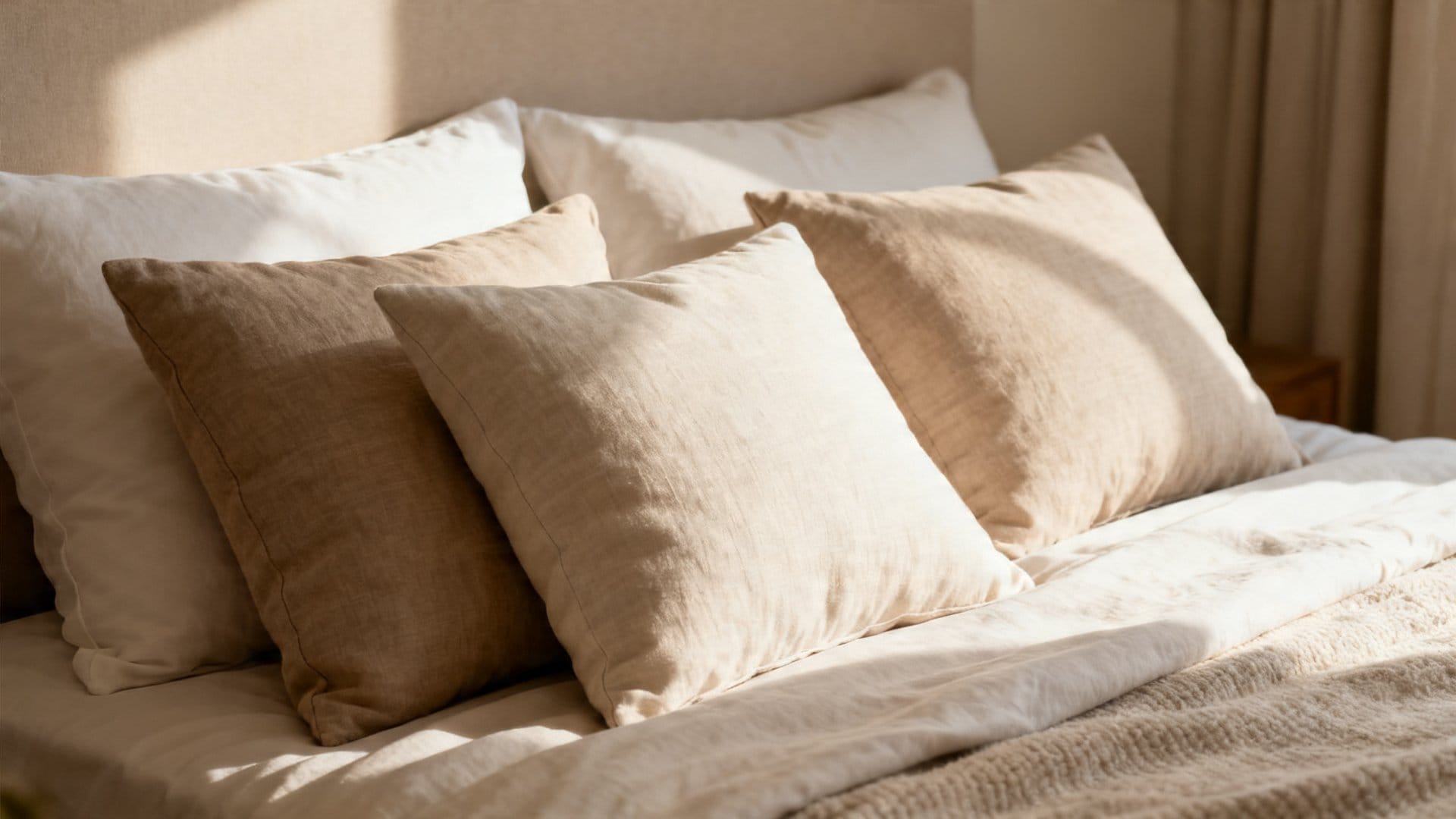
There’s something quietly satisfying about walking into a bedroom where the bed looks perfectly put together, pillows layered just right, textures playing off each other, the whole thing feeling both intentional and lived-in. If you’ve ever stood at the foot of your bed wondering why your arrangement never quite looks the way you picture it, you’re definitely not alone. Getting decorative pillows on bed arrangements right is one of those small things that makes a surprisingly big difference in how your whole room feels. These bed pillow arrangement ideas walk you through different styles, pillow counts, and room sizes, so you can finally create the look you’ve been reaching for.
How Do You Start with the Foundation of Pillow Layers?
The foundation of any great pillow arrangement is a simple back-to-front layering system. Start with your largest pillows at the back and work forward in decreasing size for a polished, dimensional look.
 Shop this look: a bed pillow set on Amazon
This guide focuses on matching the right arrangement to your room’s personality rather than the underlying mechanics. If you want the full layering technique, the rule of three, scale, and lumbar placement, our companion guide on how to layer pillows like a designer covers that in depth. Here, the goal is simpler: pick the look that fits your style and your bed size.
I love how this layering approach works for practically any bed size. A queen or king bed typically carries three layers well: the sleeping pillows at the back, a set of decorative Euro shams in the middle, and one or two accent pillows at the front. A full or twin bed usually does best with just two layers, sleeping pillows plus one row of accents, so the arrangement doesn’t overwhelm the mattress.
Layout Ideas
For a queen bed, try two stacked Euro shams (26×26 inches) against the headboard, two standard shams in front of those, and then one lumbar pillow centered at the front. For a king, simply scale up: three Euros, two or three standard shams, and a lumbar or two accent pillows. This formula is flexible enough to adapt to nearly any style you love.
&# 128719; Layer like a designer:Decorative Bed Pillow Ideas→
What Is the Classic Symmetrical Arrangement for Traditional and Transitional Styles?
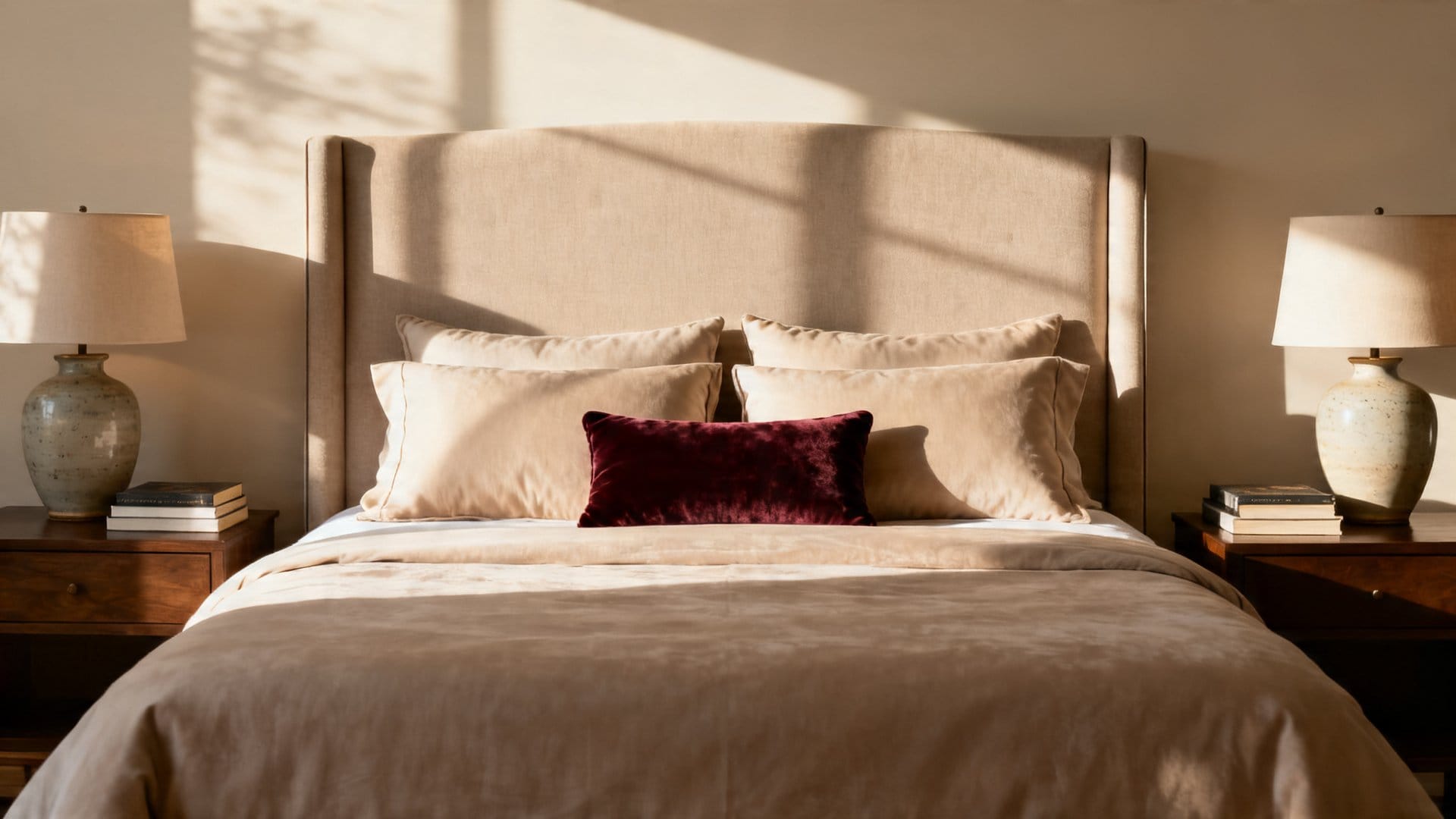
The classic symmetrical arrangement uses matching pairs of pillows mirrored on each side of the bed. This balanced, orderly approach instantly creates a polished, retreat-like feel suited to traditional and transitional bedrooms.
 Shop this look: euro shams on Amazon · 5 Pcs Babys Breath Artificial Flowers Bulk Real… · Dried Lotus Pods Bunch, Natural Beige,…
If your bedroom leans traditional, transitional, or somewhere in the Pottery Barn aesthetic territory, symmetry is your best friend. A balanced, mirrored arrangement instantly reads as polished and calm, the kind of bedroom that feels like a small retreat at the end of a long day.
The key here is matching pairs. Start with two Euro shams in a solid or subtle pattern against the headboard, then layer two standard shams in a coordinating fabric, think a soft linen or a tone-on-tone jacquard. Finish with a single centered lumbar pillow in a contrasting texture, like a velvet or a woven cotton, to give the eye a place to land. The contrast between the lumbar and the shams behind it is what keeps the arrangement from feeling flat.
Pro tip: Choose your lumbar pillow in a color that pulls from the room’s accent palette, a dusty blue, a warm terracotta, or even a deep olive, rather than matching your bedding exactly. That small pop of difference is what makes the whole arrangement feel select rather than matchy-matchy.
What Is the Relaxed and Layered Boho and Cottagecore Approach?
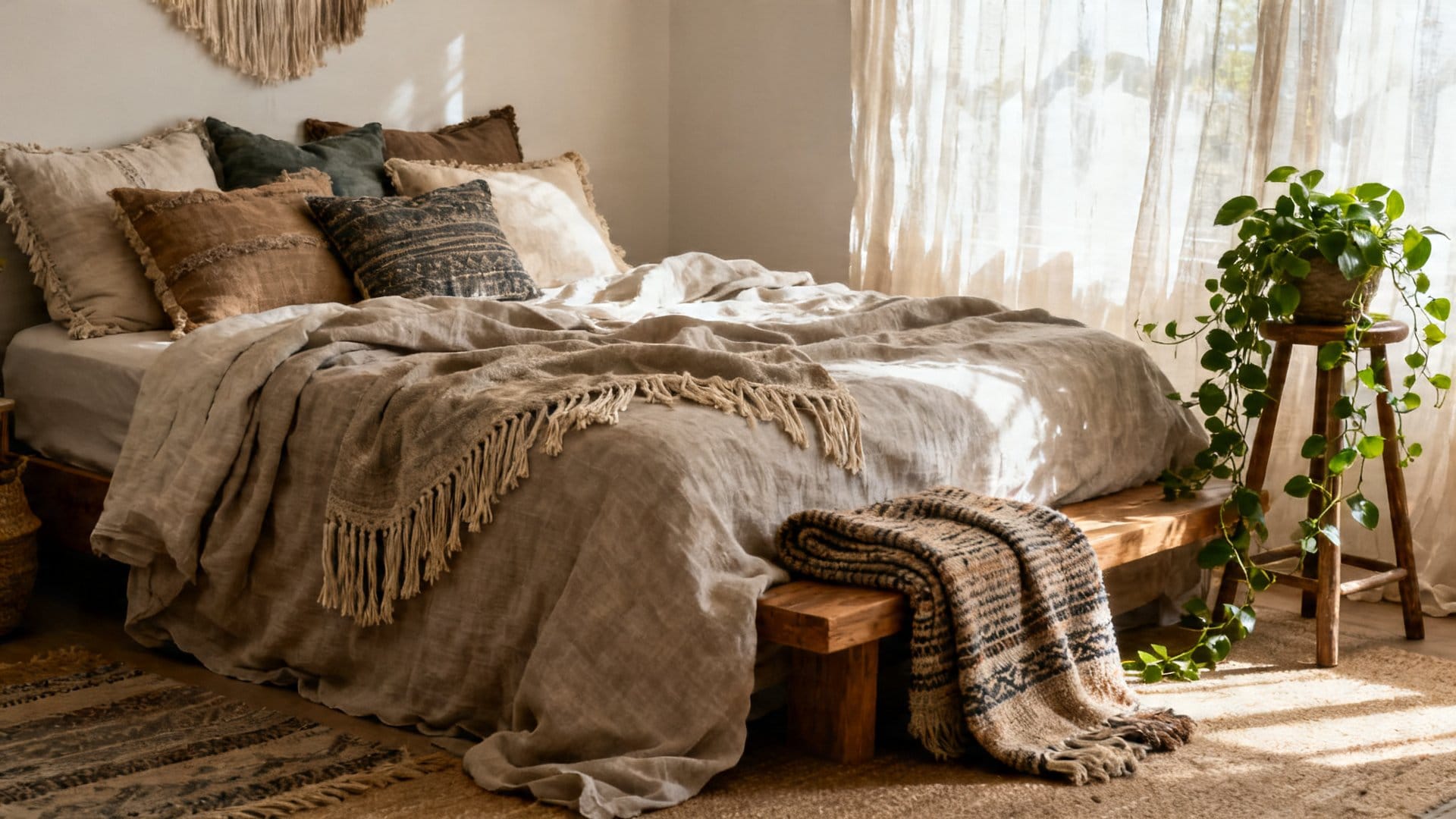
The boho and cottagecore approach layers mixed textures and patterns in an intentionally imperfect way. The key is keeping a consistent color story so that varied prints feel harmonious rather than chaotic.
 Shop this look: a lumbar pillow on Amazon
Not everyone wants a perfectly symmetrical bed, and honestly, some of the most inviting bedrooms I’ve seen lean intentionally imperfect. The boho and cottagecore approach to decorative pillows on bed arrangements is all about layering textures, mixing patterns, and letting things feel a little undone, in the best possible way.
Think macramé pillow covers next to a floral linen, a fringed edge pillow beside a crinkled cotton sham. The trick to making pattern mixing work is keeping a consistent color story. You might pull together three or four different prints, a small floral, a loose stripe, and an abstract mudcloth-style pattern, but if they all share the same warm cream, rust, and sage palette, they’ll feel harmonious rather than chaotic. One thing I’ve noticed is that odd numbers tend to work beautifully in this style: try three or five pillows in varying sizes rather than the standard pairs.
Styling Notes
Layer a chunky knit or crochet pillow at the very front of the arrangement, slightly off-center, as if it just landed there naturally. This small asymmetry is what gives the boho look its effortless, lived-in quality. It signals that the bed is actually slept in and loved, not just styled for a photo.
&# 128716; Styling a king bed?King Size Bed Pillow Arrangement→
When Does a Minimal and Modern Approach Work Best?
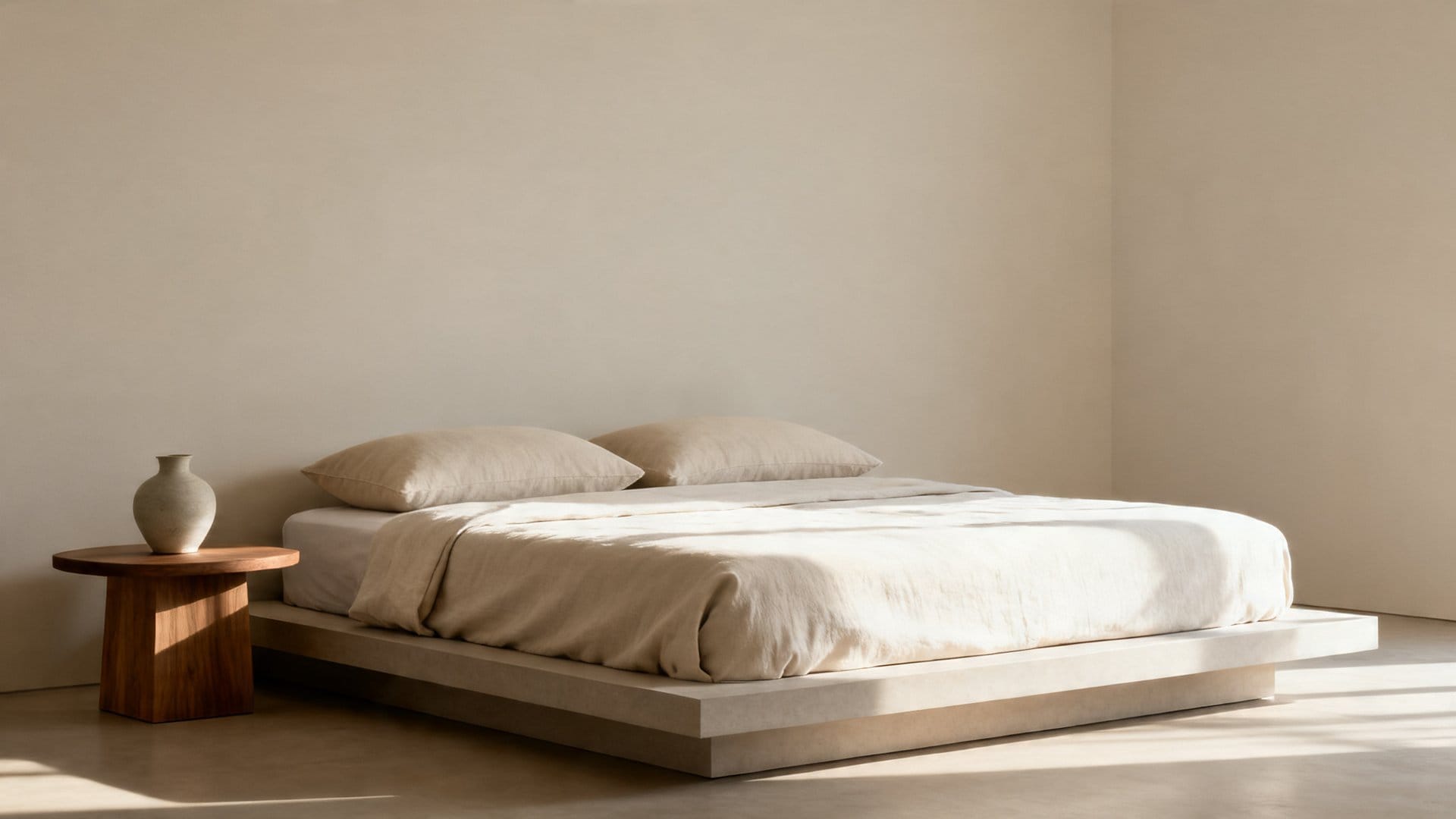
A minimal and modern pillow arrangement works best when you want a clean, uncluttered bedroom where every piece earns its place. Restraint is the whole point, fewer pillows, each chosen with care, create more visual impact than a crowded stack.
 Shop this look: bed throw pillows on Amazon
For those who love a clean, uncluttered bedroom, think Scandinavian minimalism or modern organic style, the decorative pillow arrangement takes a different approach entirely. Here, restraint is the whole point, and every pillow earns its place.
A modern minimal bed might feature just two sleeping pillows in crisp white or warm oatmeal linen cases, with a single oversized lumbar pillow in a muted graphic print or a subtle texture like bouclé or ribbed cotton. That’s it. No Euros, no stacking, no layering. The beauty of this approach is that each pillow actually gets noticed rather than blending into a pile. I keep coming back to this approach because it photographs beautifully in natural morning light and genuinely takes about thirty seconds to arrange each morning.
Pro tip: In a minimal arrangement, fabric quality becomes everything. Since you’re working with fewer pieces, invest in pillow covers with interesting texture, a waffle weave, a slubby linen, or a fine ribbed velvet, because the tactile detail does the visual work that more pillows would otherwise handle.
How Do You Create a Coastal and Airy Bedroom Feel with Pillows?
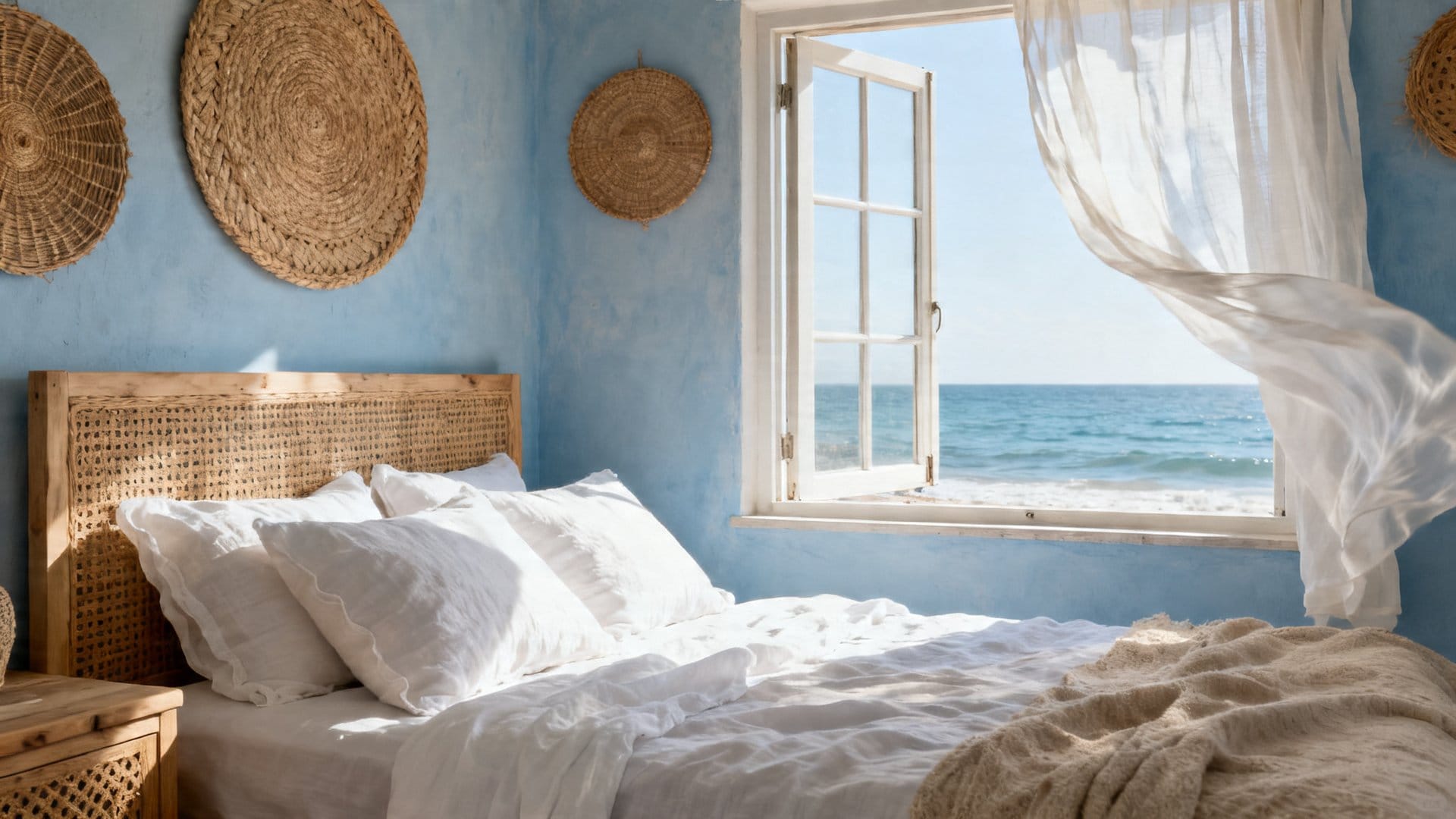
A coastal pillow arrangement relies on a soft, light palette and natural fiber textures to capture the breezy quality of rooms near water. Stick to washed linens, cotton gauze, and loosely woven covers in whites, sandy neutrals, and faded blues.
 Shop this look: pillow inserts on Amazon · Set of 2 Chenille Throw Pillow Covers… · Luxury 3D Vintage Floral Throw Pillow Covers…
Coastal style bedrooms have a wonderful way of feeling both relaxed and put-together, and the pillow arrangement plays a big role in that balance. The goal here isn’t nautical clichés, it’s more about capturing that light, breathable quality of rooms near water and open air.
Stick to a palette of soft whites, sandy neutrals, faded blues, and the occasional warm coral or sea glass green. For textures, look for natural fibers like cotton gauze, lightweight linen, and loosely woven jute-blend pillow covers. These materials catch light softly and feel airy rather than heavy. A coastal arrangement works beautifully with two Euro shams in a washed linen, two standard shams in a stripe or simple solid, and then one or two accent pillows in a loosely woven texture or a watercolor-style print at the front.
A friend of mine styled her beach house bedroom this way, mixing a pale blue stripe with a soft white gauze pillow and a single warm sand-toned lumbar, and the whole room felt like you could hear the ocean from it. Sometimes the right pillow arrangement does more for a room’s mood than a fresh coat of paint.
Once you’ve settled on a style direction, the next challenge most people face is combining different prints without the arrangement feeling overwhelming.
How Do You Mix Patterns Without the Panic?
Mixing patterns becomes manageable when you follow a few simple rules around scale and color. Pair prints that share at least one common color and vary their scale so they complement rather than compete with each other.
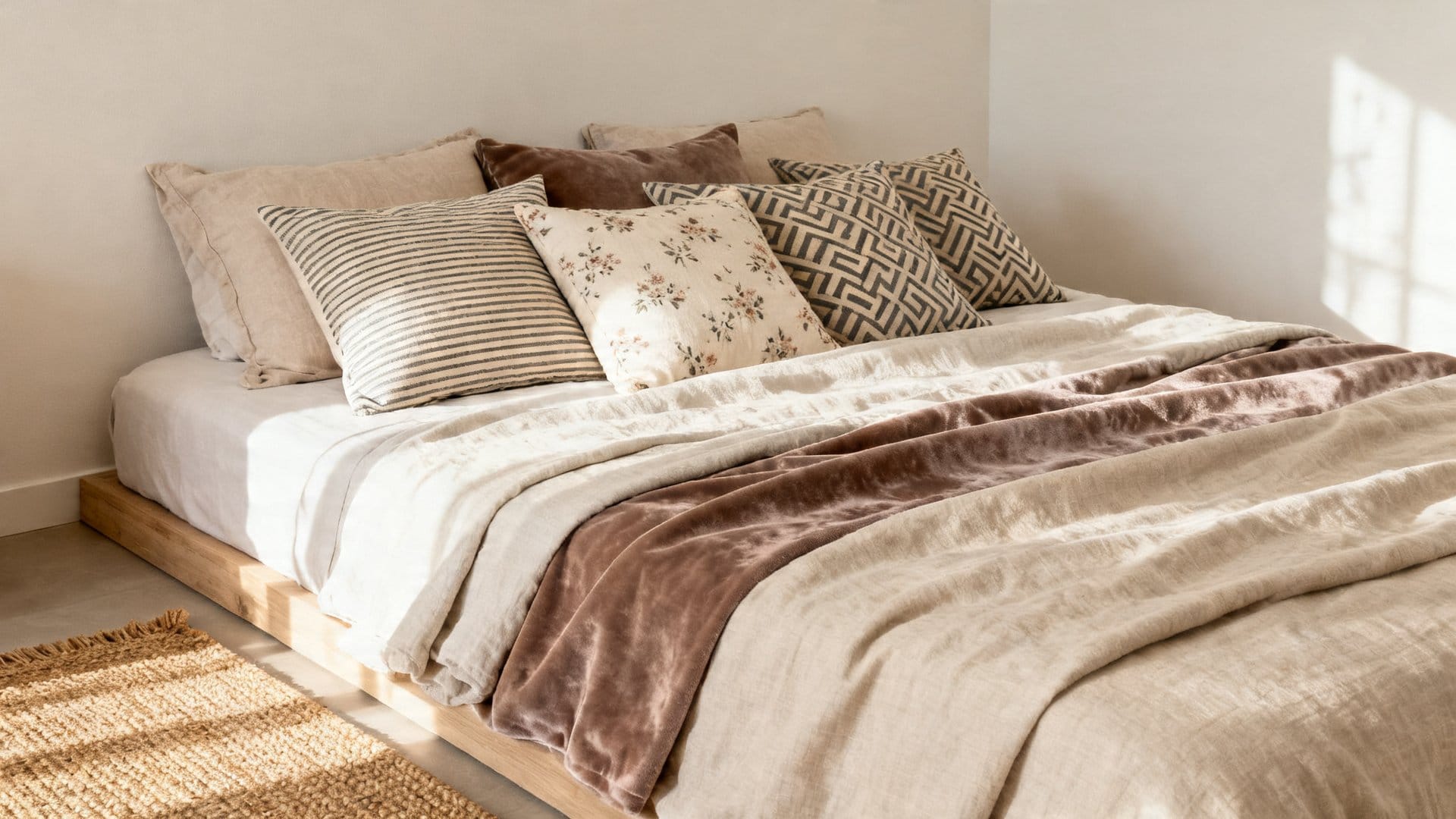
Pattern mixing is one of those things that sounds intimidating but becomes much more approachable once you understand a few simple rules. if you’re decorating a farmhouse-style bedroom or a maximalist-leaning space, knowing how to combine prints keeps your pillow arrangement feeling rich rather than restless.
Color Combinations
- Pair a large-scale floral with a small geometric in the same two-color palette, the scale contrast keeps them from competing
- Use a solid or near-solid pillow as a visual rest between two busy patterns, like a plain velvet between a stripe and a medallion print
- Mix a warm-toned print with a cool-toned solid to create tension that feels intentional rather than accidental
- Combine one organic pattern (floral, leaf, abstract) with one structured pattern (stripe, grid, chevron) for natural visual balance
- Repeat at least one color from your bedding in at least one pillow cover to tie the whole arrangement together
The real secret to confident pattern mixing is committing to it rather than hedging. A half-hearted mix of almost-matching prints reads as uncertain. A bold, intentional combination of clearly different patterns reads as styled.
With your core arrangement in place, the easiest way to keep your bedroom feeling fresh is to let the seasons guide small, intentional updates.
&# 10024; Want a softer, cuter look?Cute Decorative Pillows for Bed→How Do You Refresh Your Arrangement with Seasonal Swaps?
Seasonal swaps involve replacing just one or two accent pillow covers to shift the mood of your bed without redoing the whole arrangement. Keep your base Euro and standard shams consistent year-round and let the front accent pillows do the seasonal work.
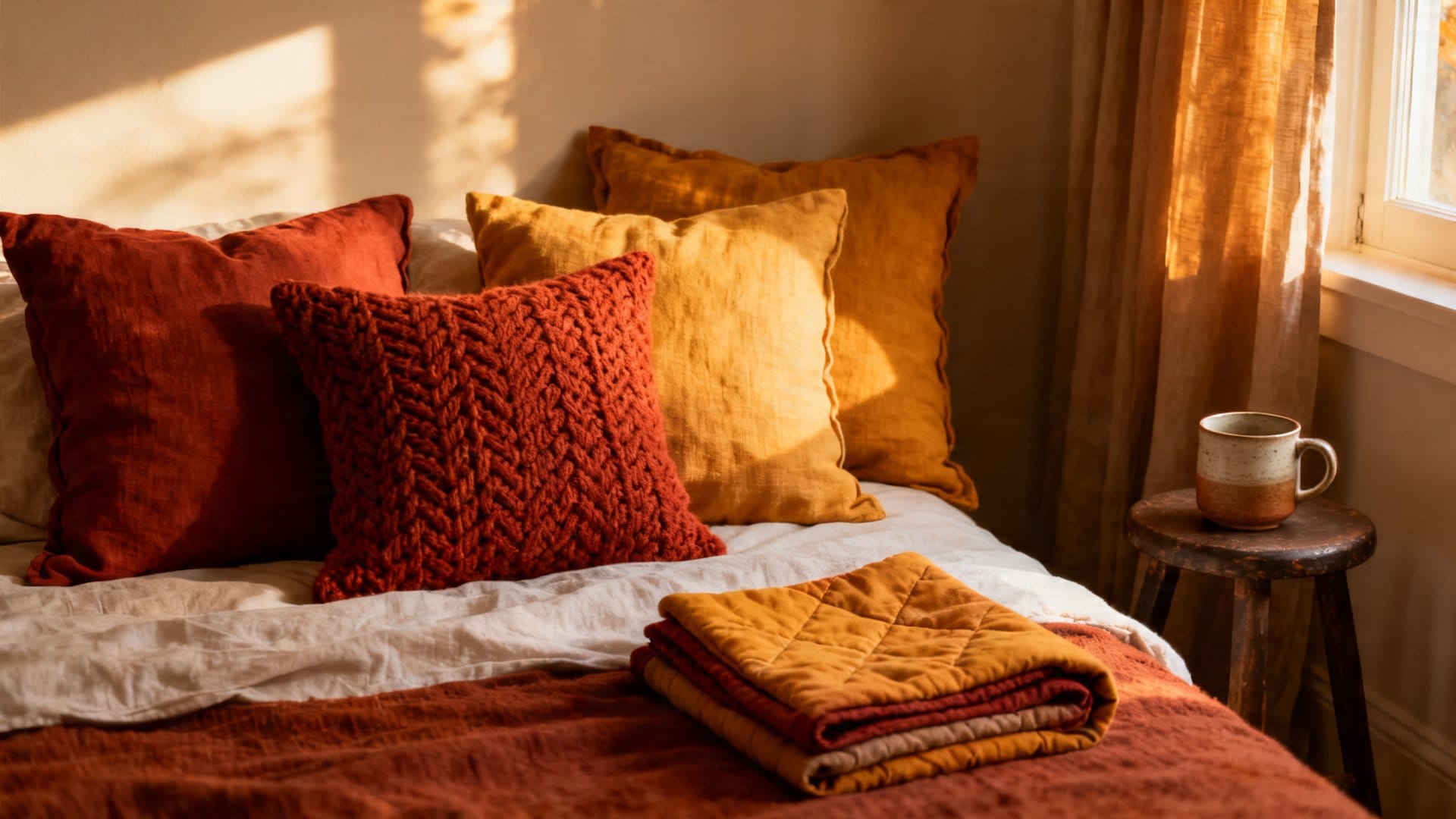
One of the most satisfying things about decorative pillows on bed arrangements is how easily they shift with the seasons, without requiring you to redo your whole bedroom. A few well-chosen pillow cover swaps can make a room feel completely different from January to July, while the base layering stays exactly the same all year.
In the colder months, layer in heavier textures: a velvet lumbar in a deep jewel tone, a faux fur accent pillow, or a chunky knit cover in a warm oatmeal or charcoal. In warmer months, swap those out for lighter fabrics, a crinkled cotton in a soft sage, a printed linen in a faded floral, or a simple washed percale cover in a pale blush. The base arrangement. Your Euros and standard shams, can stay the same year-round. It’s really just the one or two accent pieces at the front that do the seasonal heavy lifting.
Pro tip: Store off-season pillow covers flat in a linen closet or under-bed storage box rather than leaving them stuffed on pillows in a guest room. Covers stay fresher and you’ll actually remember what you have when the season rolls around again.
Final Thoughts
There’s no single right way to arrange decorative pillows on bed, the best arrangement is always the one that feels true to your style and makes you genuinely happy to walk into your room each day. Whether you love the clean lines of a minimal two-pillow setup or the layered, textural richness of a boho stack, the ideas here are meant to give you a starting point, not a rigid formula. Your bedroom is yours, and your pillow arrangement should feel like a small reflection of that. Happy decorating!
Frequently Asked Questions
The ideal number of decorative pillows depends on your bed size and personal style, a twin bed typically looks best with 2-3 pillows, while a queen or king can comfortably support 4-7 or more. The key is to build in layers, starting with your sleeping pillows at the back and adding decorative ones in front without making the bed feel overcrowded or impractical. Ultimately, the right number is whatever feels balanced and intentional to you without sacrificing comfort.
A well-layered pillow arrangement typically starts with the largest pillows at the back, usually your standard sleeping pillows in shams, followed by a middle layer of medium-sized decorative pillows, and finished with one or two smaller accent pillows or a lumbar pillow at the front. This graduated depth creates visual dimension and gives the bed that polished, designer-inspired look. Keeping each layer slightly shorter than the one behind it helps every pillow stay visible and contributes to the overall cohesive effect.
Start by identifying your room’s overall aesthetic, whether it’s modern, farmhouse, bohemian, or traditional, and choose pillow textures, patterns, and colors that complement your existing bedding and decor. For a cohesive look, stick to a palette of two to three colors and mix different textures like linen, velvet, or knit rather than using all the same fabric. Incorporating one patterned pillow alongside solid-colored ones is a simple way to add visual interest without stressing the space.
Absolutely, the trick with smaller beds like twins or full-size frames is to keep the pillow count low and intentional, typically no more than three to four pillows total. Opt for pillows that are proportionate to the bed size, avoiding oversized options that can make the mattress look swallowed up. Choosing a simple, simplified arrangement with clean lines and a limited color palette will keep the look tidy and stylish rather than chaotic.
Decorative pillows don’t need to match your comforter exactly, in fact, some contrast is what gives a bed arrangement its visual depth and personality. Instead of a perfect match, aim for pillows that coordinate with your bedding by pulling one or two colors from the comforter’s pattern or complementing its texture. Mixing complementary tones and varied fabrics creates a layered, select look that feels more intentional and stylish than a perfectly matched set.