
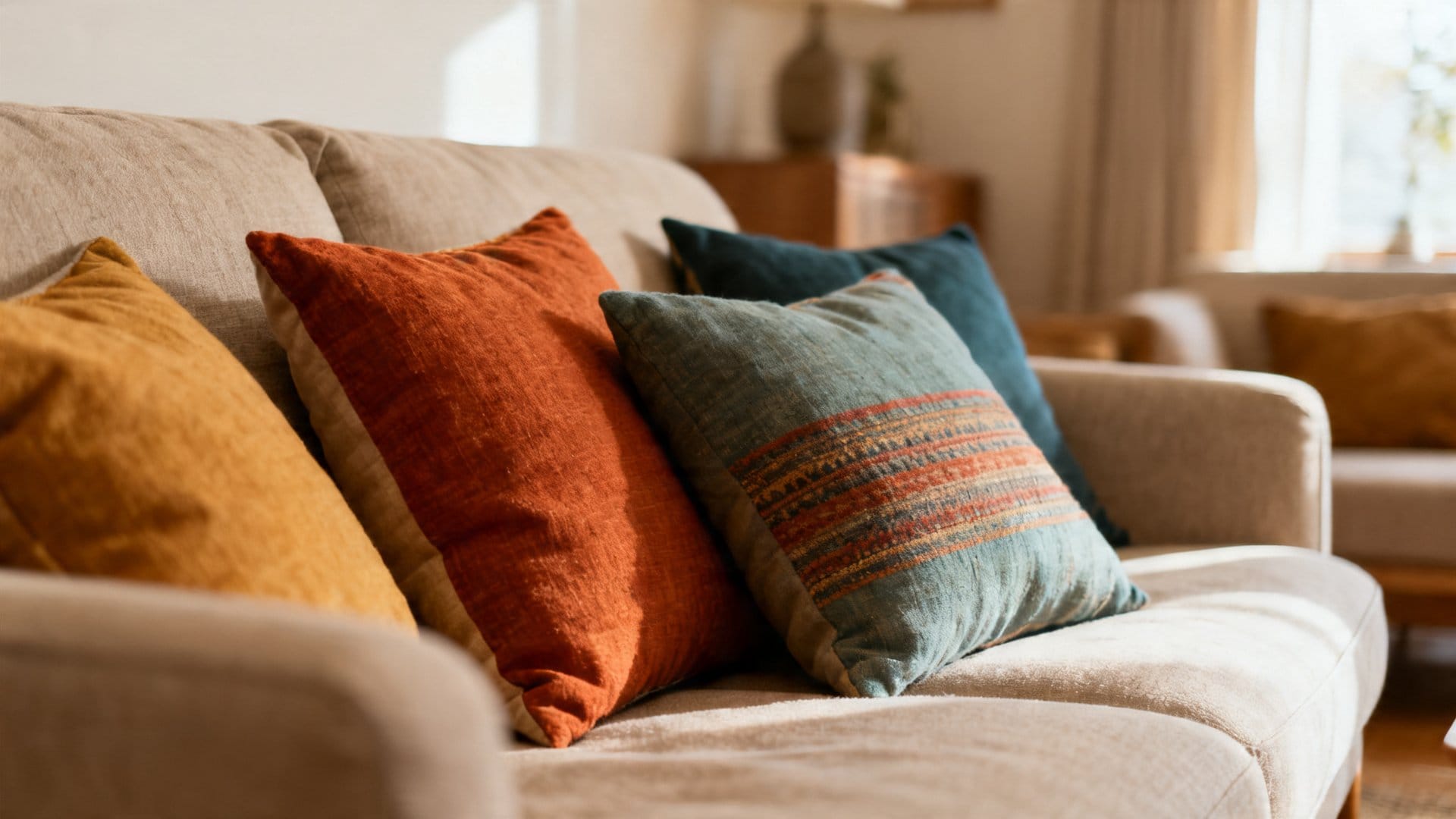
There’s something quietly satisfying about sinking into a sofa that feels just right — pillows stacked in a way that looks effortless but somehow perfectly put together. If you’ve ever stood in your living room staring at your couch and wondering why it doesn’t feel as inviting as you’d like, you’re not alone. Styling decorative pillows on a couch is one of those small details that makes a surprisingly big difference in how a whole room feels. This article is here to walk you through the ideas, combinations, and little tricks that turn an ordinary sofa into the coziest spot in the house.
How Do You Choose the Right Pillow Sizes for Your Sofa?
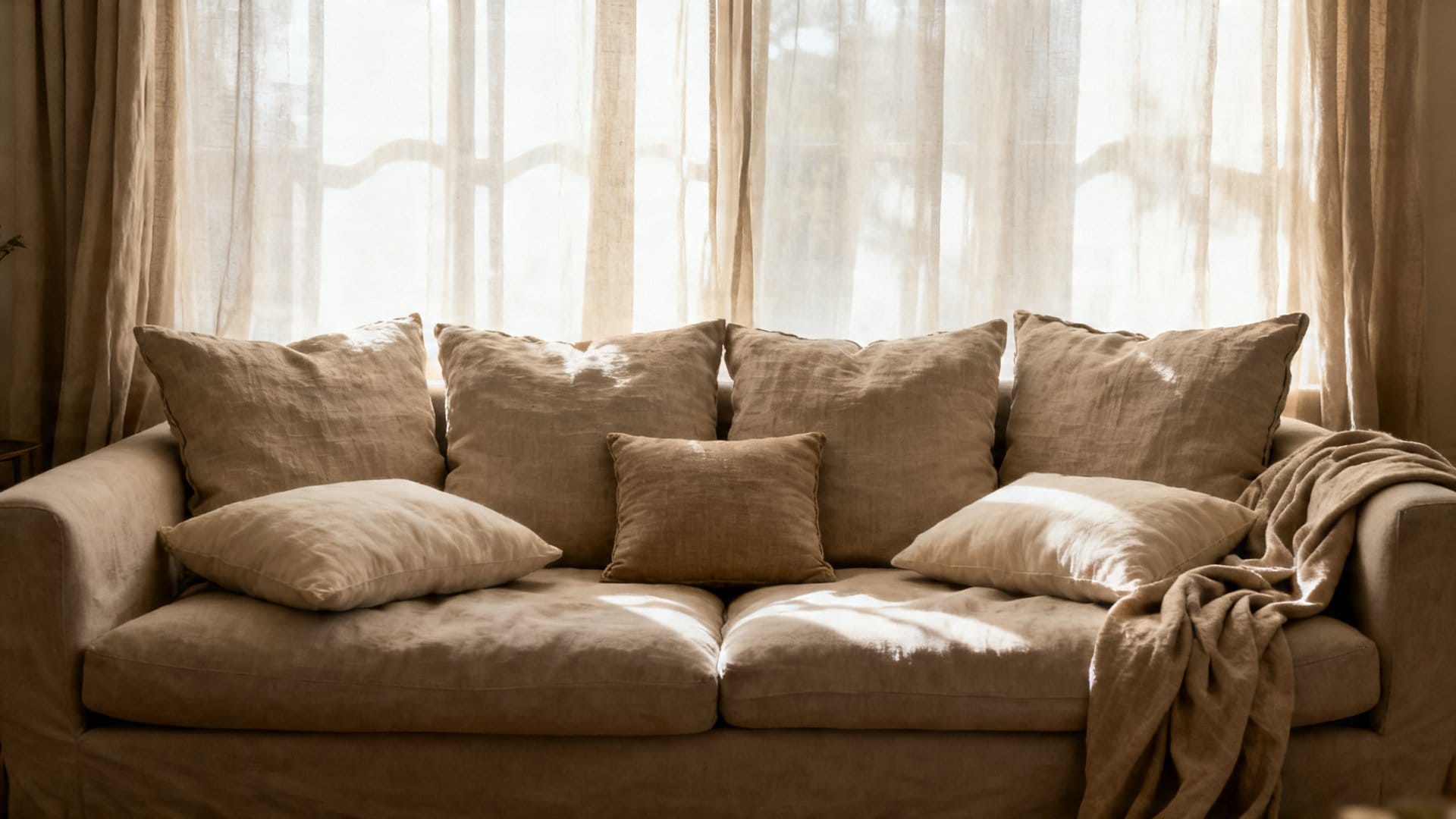
The right pillow sizes for a sofa depend on layering large to small — typically starting with 22–24 inch pillows at the back and working down to a lumbar or 16-inch accent in front. This graduated approach creates depth and proportion that makes any sofa look intentionally styled.
 Shop this look: throw pillows on Amazon
Before you think about colors or patterns, size matters more than most people realize. A sofa that looks flat and uninviting often just needs better pillow proportion — not more pillows, just the right ones in the right places.
The general approach that works beautifully is to layer from large to small, front to back. Start with two larger square pillows — usually around 22 to 24 inches — placed against the sofa back. Then layer in medium pillows at 18 to 20 inches in front of those, and finish with a smaller lumbar pillow or a 16-inch accent pillow in the center. This creates depth and that slightly relaxed, lived-in look that feels genuinely welcoming rather than staged.
Styling Notes
One thing I’ve noticed is that odd numbers tend to feel more natural than even arrangements. Three pillows on a loveseat, five on a larger sectional — there’s a looseness to it that reads as comfortable rather than formal. If symmetry is your thing, try matching the outer pillows but mixing the center one for balance with personality.
How Do You Mix Patterns on Couch Pillows Without the Chaos?
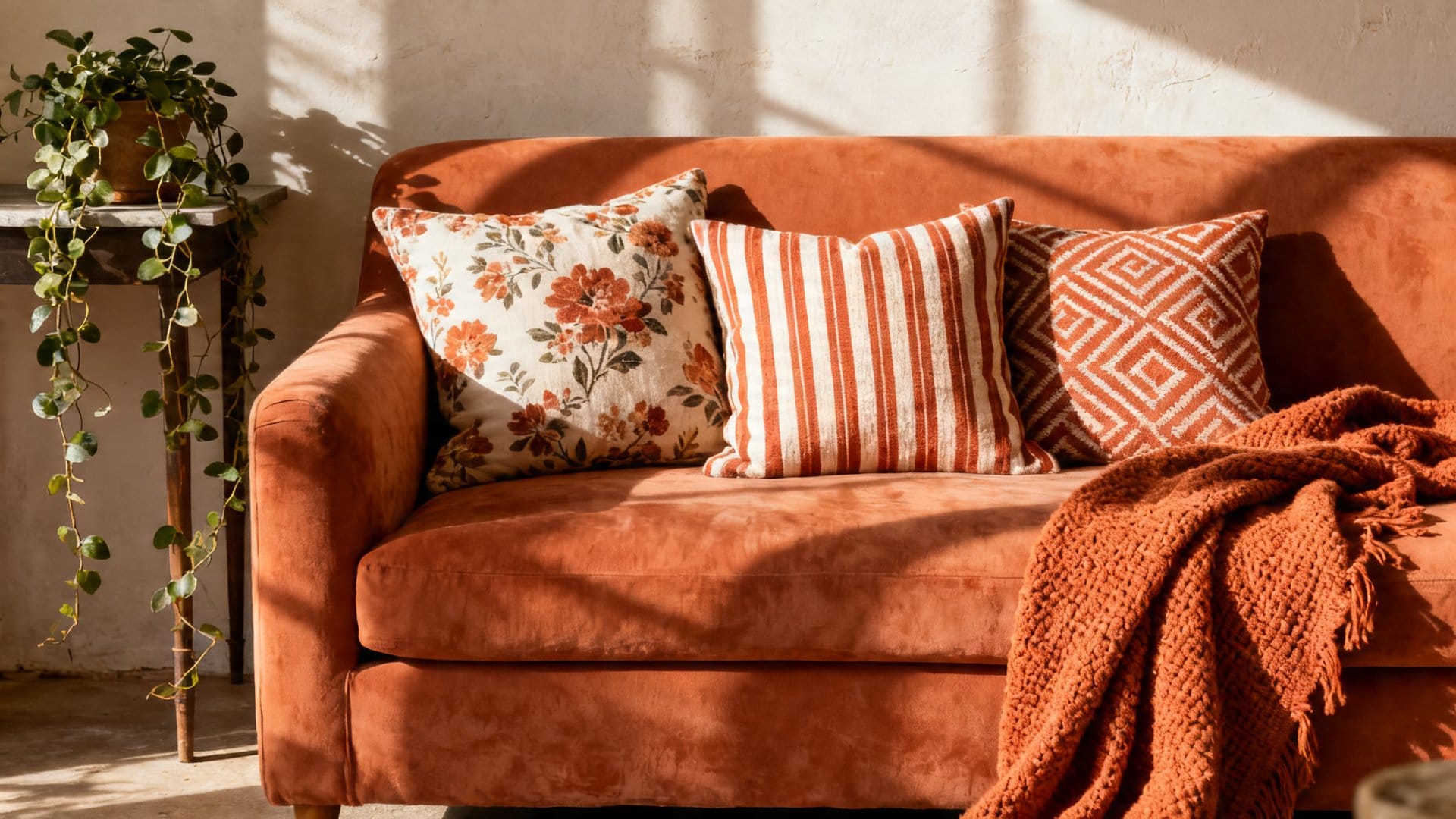
The key to mixing patterns without chaos is choosing one shared color that runs through all your pillows, then varying the scale of each pattern. A large bold print, a medium stripe, and a subtle texture can all coexist beautifully when they share a common color thread.
 Shop this look: a lumbar pillow on Amazon
Pattern mixing is where a lot of people get stuck, and honestly, it’s the part that makes the biggest visual impact when you get it right. The secret isn’t avoiding patterns — it’s giving them a common thread to share.
Pick one color that runs through all your pillows, even if the patterns themselves are completely different. A striped pillow, a floral, and a geometric can all live happily together on the same couch if they share, say, a dusty blue or a warm terracotta. Vary the scale of the patterns too — a large bold print paired with a small delicate one creates contrast without competition. I love how a classic ticking stripe grounds a more elaborate botanical print; they balance each other in a way that feels intentional without being matchy-matchy.
Pro tip: When mixing patterns, try the “three-pattern rule” — one large-scale print, one medium geometric or stripe, and one solid or subtle texture. This combination works across nearly every decor style, from modern farmhouse to coastal to boho.
Once you’ve nailed your pattern combinations, the next step is making sure your colors work just as hard.
Which Color Palettes Actually Work on a Sofa?
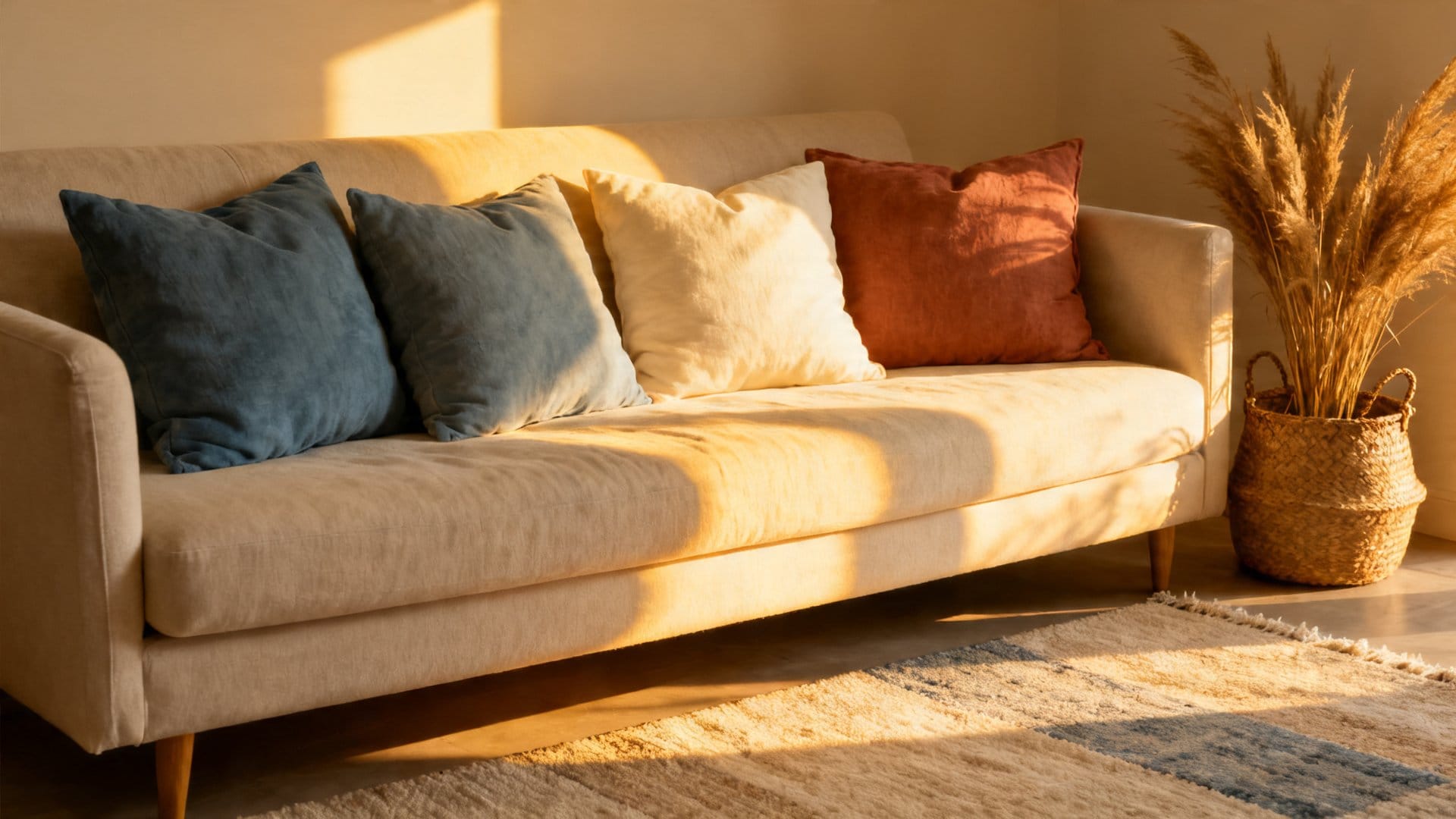
Color palettes that work best on a sofa follow a simple dominant-complementary-accent structure, such as the 60-30-10 rule applied to your pillow grouping. This gives the arrangement visual balance without making it feel too matchy or too random.
 Shop this look: pillow covers on Amazon
Choosing colors for your decorative pillows on a couch can feel overwhelming when you’re staring at a sea of options. Narrowing it down to a simple palette approach takes the pressure off and gives you a framework that’s easy to build on.
A reliable starting point is the 60-30-10 color rule applied to your pillow grouping. Sixty percent of your pillows should carry your dominant color (often pulling from your sofa or rug), thirty percent should introduce a complementary or contrasting color, and ten percent can be your accent — something a little unexpected that makes the whole arrangement pop. On a warm gray sofa, for example, you might use soft ivory as your dominant pillow color, add in a muted sage green for depth, and then bring in one small pillow in a deep rust or burnt orange as the accent.
Color Combinations Worth Trying
- Cream, warm taupe, and terracotta — earthy and grounding, works beautifully with wood-toned furniture and natural fiber rugs
- Navy, white, and a touch of brass-gold — crisp and classic, especially lovely on a linen or light gray sofa
- Dusty rose, sage green, and ivory — soft and romantic, good for a cottagecore or vintage-inspired living room
- Charcoal, warm white, and mustard yellow — modern and bold without feeling cold or sterile
- Slate blue, blush, and soft black — unexpected but surprisingly cohesive, great for a contemporary or Scandinavian-influenced space
The right color palette makes your sofa feel like it was designed that way from the start, not assembled piece by piece over time.
Why Is Texture the Secret Ingredient Most People Skip?
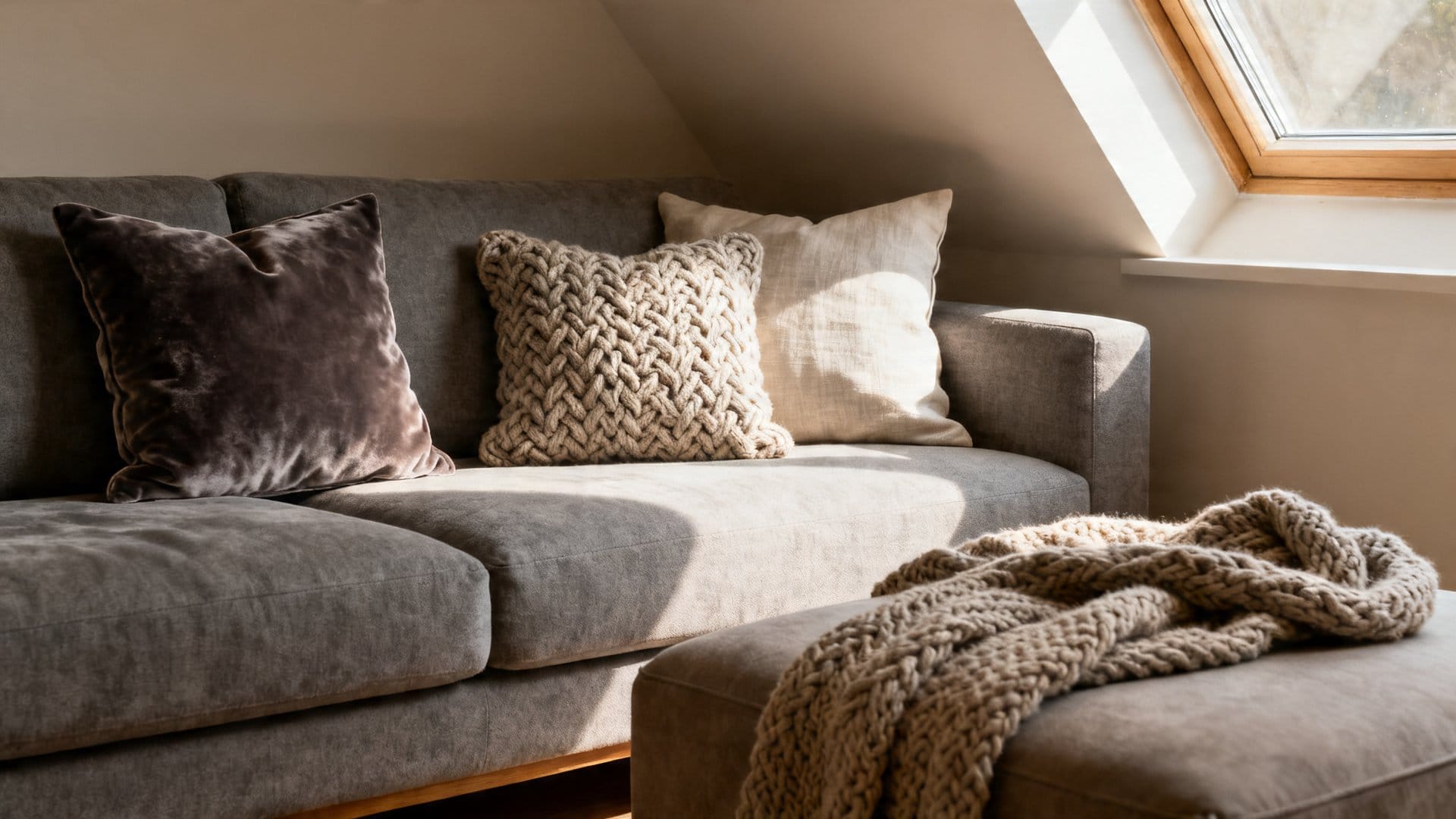
Texture adds warmth and visual depth that color alone cannot achieve — two pillows in the same color can still look flat if they share the same surface feel. Layering contrasting materials like velvet, boucle, and linen is what gives a sofa that irresistible, tactile quality.
 Shop this look: decorative pillows on Amazon
Here’s something worth knowing: two pillows can share the exact same color and still look completely flat together if they share the same texture. Texture is what gives a pillow arrangement its warmth, its depth, and that irresistible “I want to sit there” quality.
Think about layering materials that contrast in feel: a smooth velvet pillow next to a nubby boucle, a crisp linen beside a chunky knit. A chunky knit pillow draped alongside a silk-blend cover creates a wool-and-softness contrast that’s genuinely tactile — you want to reach out and touch it. This works especially well in living rooms that lean toward a cozy, Midwest-farmhouse or Scandinavian aesthetic, where warmth and simplicity go hand in hand.
From what I’ve gathered, the easiest way to add texture without starting over is to swap just one or two pillow covers at a time. Keep your base pillows and simply change the covers seasonally — heavier woven or knit textures for fall and winter, lighter linen or cotton for spring and summer. Same sofa, completely different feeling.
Pro tip: Don’t overlook the lumbar pillow as a texture moment. A single velvet or embroidered lumbar in the center of your sofa arrangement acts like a jewel — it draws the eye and adds richness without stressing the whole look.
With your colors and textures sorted, it’s worth thinking about how your sofa’s shape should influence the whole arrangement.
How Do You Style Decorative Pillows on a Couch for Different Sofa Shapes?
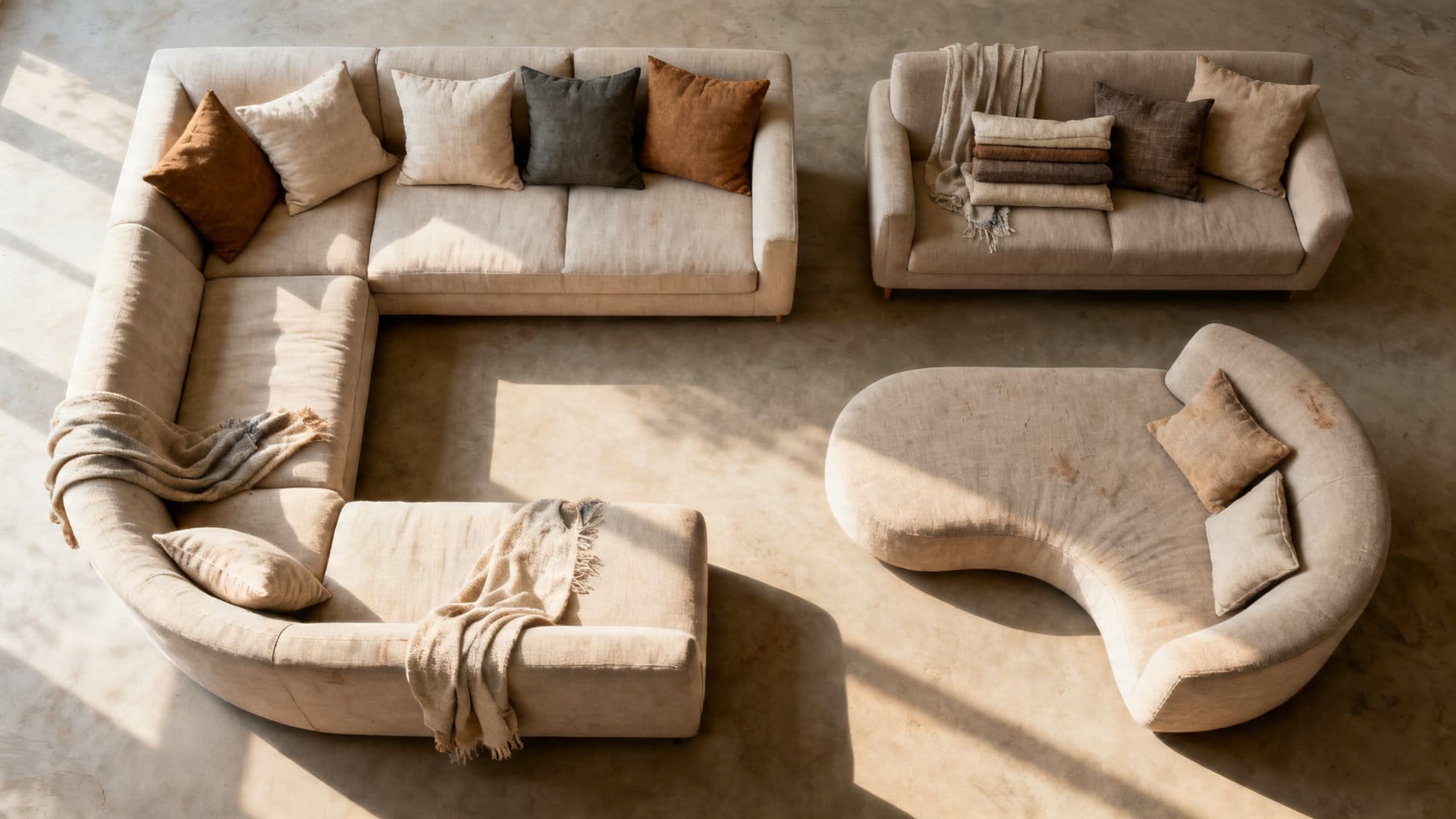
Each sofa shape calls for a slightly different pillow strategy — a sectional needs its largest pillows anchored at the corner, while a loveseat looks best with just two or three pillows maximum. Matching your approach to your sofa’s shape is what makes the arrangement feel cohesive rather than borrowed.
 Shop this look: velvet pillows on Amazon · Easy-Going Reversible Couch Cover for 3 Cushion… · ABHENG 31.5″ Large Square Storage Ottoman,…
Not all sofas are created equal, and the styling approach that works on a wide sectional won’t necessarily translate to a small loveseat or a curved vintage-style sofa. Matching your pillow strategy to your sofa’s shape makes the whole arrangement feel cohesive rather than borrowed from someone else’s living room.
For a standard three-cushion sofa, the classic approach of two large pillows on either end with one or two smaller ones layered in the center is tried and true. For a sectional, think of the corner as the anchor point — place your largest or most eye-catching pillows there and let the arrangement taper toward the ends. For a loveseat, less is genuinely more: two to three pillows maximum, or the sofa starts to feel swallowed up. And for a curved or barrel-style sofa, round pillows in varying sizes look particularly lovely — they echo the sofa’s own shape in a way that feels intentional and a little unexpected.
Small Space Tricks
In a smaller living room, keep your pillow palette light and your patterns subtle — this prevents the sofa from visually dominating the room. A pair of 20-inch pillows in a soft neutral with one textured lumbar is all you need to make a compact sofa look styled without feeling stuffed. A friend of mine tried this in her apartment with a small charcoal loveseat, and swapping out four mismatched pillows for two matching boucle squares and a simple linen lumbar made the whole room feel more intentional and twice as inviting.
How Do You Keep Your Sofa Styling Fresh All Year?
The easiest way to keep your sofa styling fresh is to swap pillow covers seasonally rather than replacing entire pillows. A small pillow cover wardrobe lets you shift the mood of your living room with minimal effort and cost.
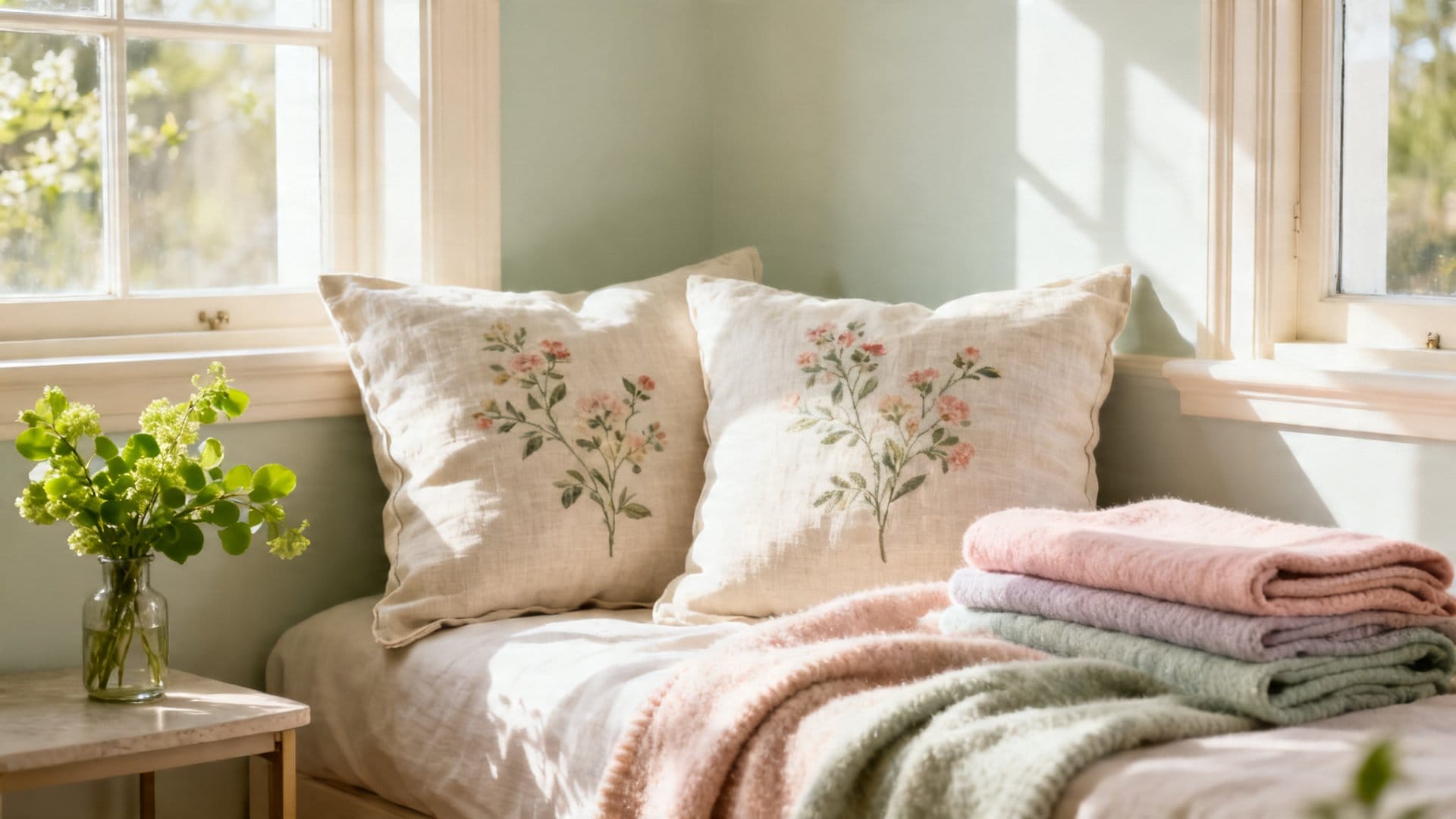
One of the most enjoyable things about styling decorative pillows on a couch is how easily you can shift the whole mood of a room just by swapping covers. You don’t need to redecorate seasonally — you just need a small pillow wardrobe.
For fall, reach for warm, layered textures: a deep amber velvet, a plaid or houndstooth in rust and cream, a woven pillow in caramel tones. In winter, lean into richness — jewel tones like deep teal, burgundy, or forest green feel cozy and grounding when the light outside goes flat and gray. Spring is a wonderful time to bring in something unexpected: a faded floral in blush and green, a linen stripe, or a hand-embroidered pillow with botanical details. Summer calls for lighter fabrics and breezy colors — think washed cotton in sandy beige, soft blue, or faded white.
I keep coming back to this approach because it’s genuinely low-effort for a high-impact result. Buying a few extra pillow covers and storing them by season means your living room always feels current without a major investment of time or money.
Pro tip: Store off-season pillow covers in a labeled fabric bin or basket. Keeping them neatly stored means they stay in good condition and you’ll actually look forward to rotating them in — it starts to feel like a little seasonal ritual rather than a chore.
Final Thoughts
Styling decorative pillows on a couch is one of the most accessible, genuinely enjoyable ways to make your living room feel more like you. There’s no single right answer — the best arrangement is the one that makes you want to curl up and stay a while. Whether you start with a new color palette, experiment with texture layering, or simply rearrange what you already own, small changes here really do add up to something that feels warm, intentional, and beautifully lived-in. Happy decorating!
Frequently Asked Questions
The ideal number of decorative pillows depends on the size of your sofa — a standard three-seat couch typically looks best with four to six pillows, while a loveseat works well with two to four. The key is to avoid overcrowding, which can make the sofa feel cluttered and uncomfortable to actually sit on. Aim for a balanced arrangement that still leaves plenty of usable seating space.
A layered approach using multiple sizes tends to create the most visually appealing result — start with larger pillows around 22 to 24 inches at the back, then layer medium 18-inch pillows in front, and finish with a smaller lumbar or accent pillow at the front. This graduated sizing creates depth and dimension that makes a sofa look intentionally styled rather than randomly assembled. Mixing sizes is one of the simplest tricks for achieving that polished, designer-inspired look.
The most reliable method is to choose one dominant color from your room and use it as the anchor for all your pillow selections, then vary the scale of your patterns — pairing a large bold print with a smaller geometric and a solid keeps things cohesive rather than overwhelming. A good rule of thumb is to stick to two or three colors across all your pillows and vary the textures and patterns within that palette. This approach gives your sofa a select, intentional look while still feeling layered and interesting.
Down or down-alternative inserts are widely considered the best choice for decorative pillows because they give covers that coveted plump, slightly overstuffed appearance that looks expensive and inviting. Choosing an insert one to two inches larger than your pillow cover is a popular trick that prevents the flat, deflated look that cheaper or same-sized inserts often create. Foam inserts tend to hold their shape more rigidly, which can work well for structured lumbar pillows but often lacks the soft, lived-in quality that makes a sofa feel truly cozy.
Neither a perfect match nor a stark contrast is necessary — the most visually interesting sofas typically feature pillows that complement the couch color while introducing one or two accent tones that tie into other elements in the room, such as a rug, curtains, or artwork. If your sofa is a neutral tone like gray, beige, or cream, you have the most flexibility to experiment with bolder pillow colors and patterns. For a sofa in a stronger color, pulling a shade from within that color family along with a neutral and one contrasting accent tends to create a balanced, harmonious look.