
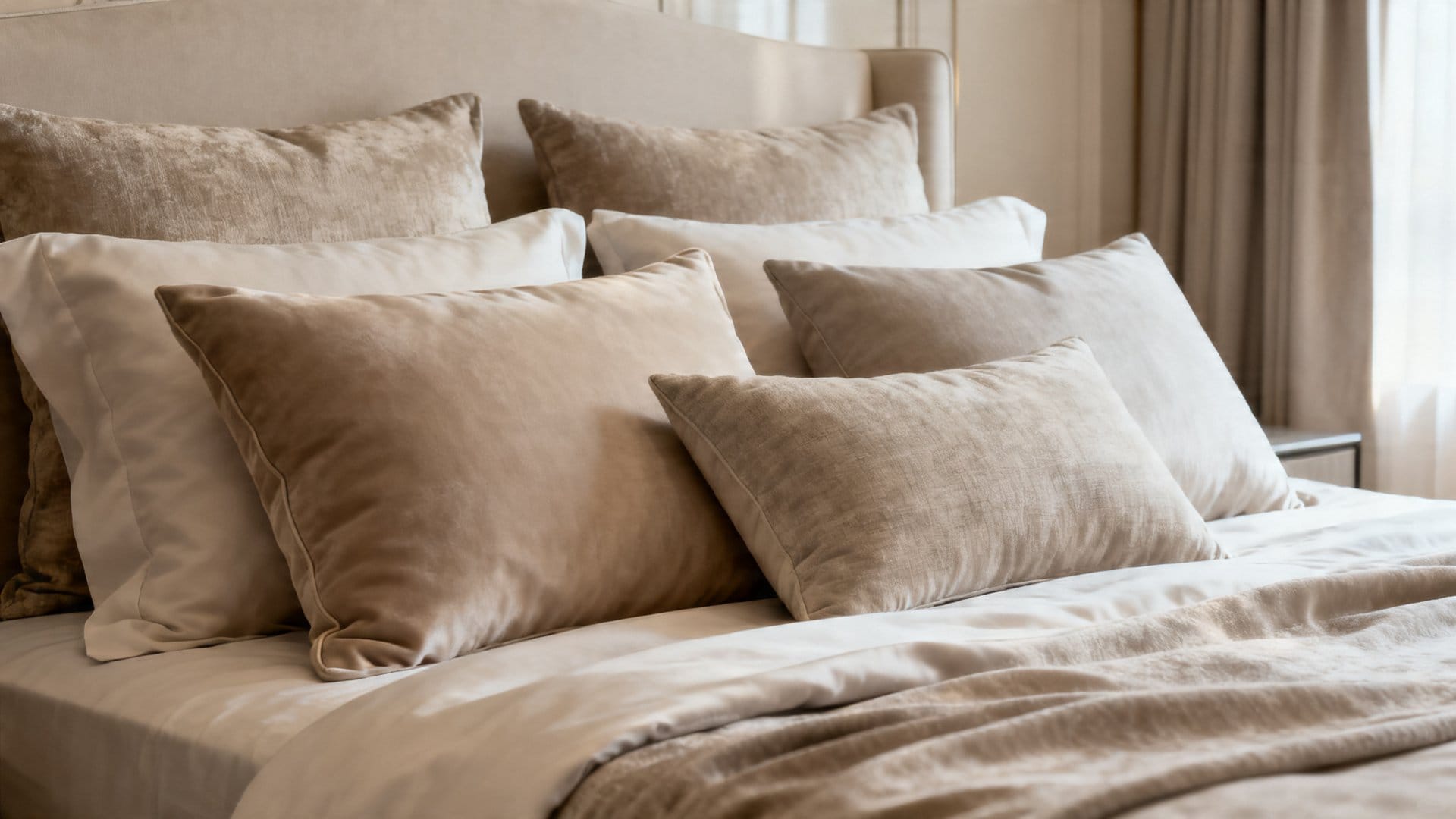
There’s a moment every morning when you pull back the covers, fluff a pillow, and think — this could look so much better. That small, quiet thought is actually the beginning of something lovely. Master bedroom decorative pillows are one of the simplest ways to shift the entire feeling of your room without touching a single wall or piece of furniture. In this article, I’ll walk you through some genuinely beautiful, practical ways to style your pillow arrangement so your bed becomes the restful, intentional space you’ve always wanted it to be.
Why Does Your Pillow Arrangement Set the Whole Mood?
Your pillow arrangement sets the mood because the bed is the visual anchor of the entire bedroom. When pillows look flat or randomly placed, the whole room feels off — even if you can’t pinpoint why.
 Shop this look: a bedding set on Amazon
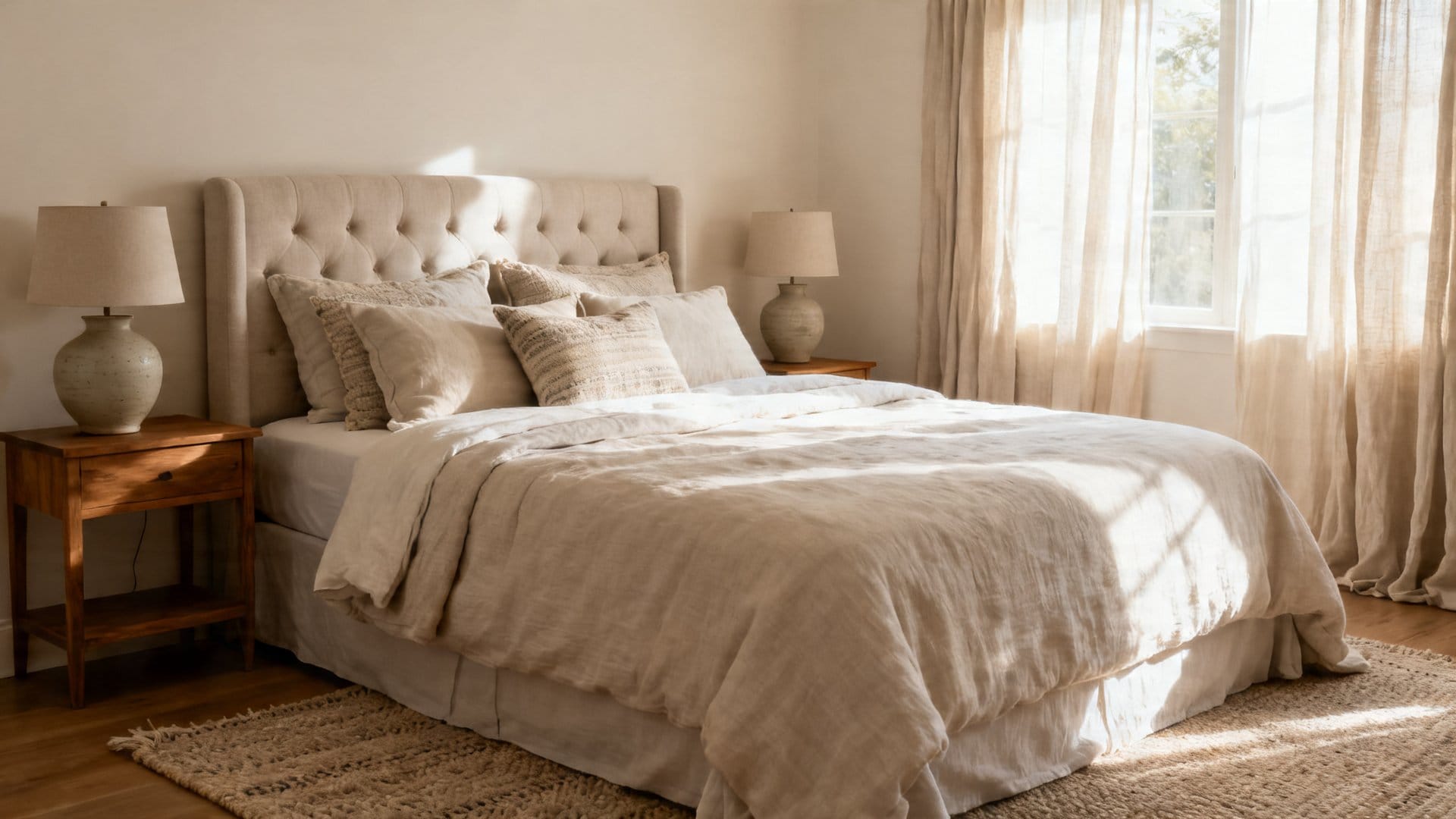
The bed is the anchor of any bedroom. Everything else — the nightstands, the rug, the curtains — orbits around it. So when your pillows look a little flat or randomly tossed, the whole room can feel off, even if you can’t quite put your finger on why.
One thing I’ve noticed is that people often underestimate how much visual weight pillows carry. A well-layered pillow arrangement creates depth, texture, and a sense of intention that makes even a simple bedroom feel thoughtfully designed. It’s not about perfection — it’s about purpose.
Why It Works
Pillows work in layers because they mimic the way our eyes naturally move through a scene — from large shapes in the back to smaller, more detailed ones in front. This layering creates a gentle visual journey that feels satisfying without being fussy or overdone.
What Is the Classic Layering Formula That Never Fails?
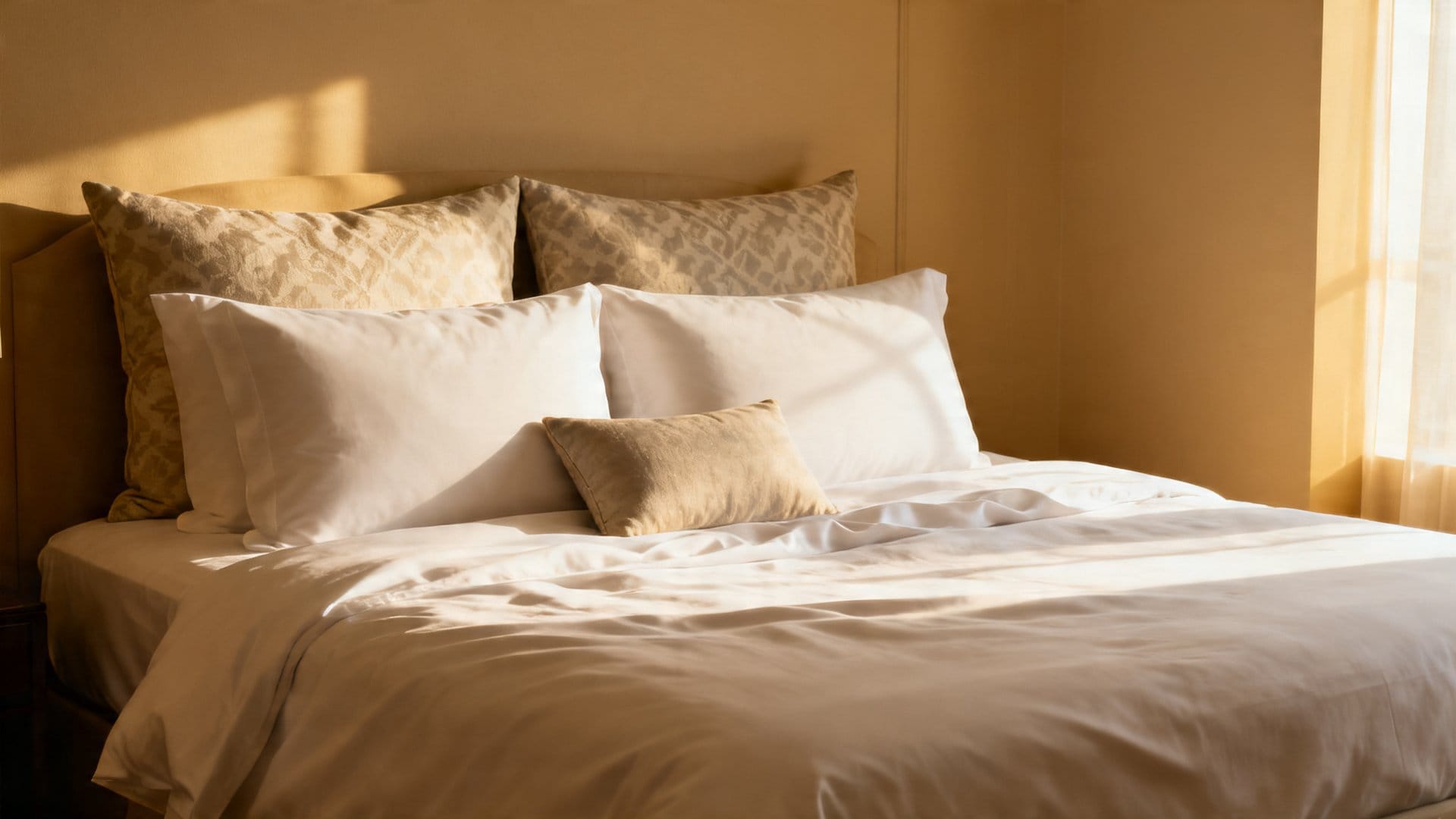
The classic layering formula starts with sleeping pillows at the back, adds Euro shams in the middle, and finishes with smaller accent pillows at the front. This stepped approach creates depth and a polished, hotel-quality look on any bed size.
 Shop this look: throw pillows on Amazon
If you’ve ever wondered how hotel beds manage to look so inviting, the answer is almost always in the pillow layering. There’s a simple formula that works beautifully for most bed sizes, and once you understand it, you’ll use it instinctively.
Start with your sleeping pillows in standard cases — these go at the very back and act as the foundation. In front of those, place two Euro shams (26×26 inches) in a fabric that complements your bedding. Then layer two standard or king-sized decorative pillows in a coordinating color or pattern. Finally, finish with one or two smaller accent pillows — think 18×18 inches or a lumbar pillow — in a bolder texture or print.
Pro tip: For a queen bed, three layers of pillows is the sweet spot. For a king bed, you can comfortably go four layers deep without it looking overcrowded — just keep the back layers taller and let each row step slightly forward.
Once you have your layering structure in place, the next step is choosing materials that make each layer feel distinct and intentional.
How Do You Choose Textures That Work Together?
Choose textures that contrast rather than match — pairing a smooth fabric with a rougher one creates visual richness without clutter. A simple rule is to combine one natural fiber with one slightly more refined material per layer.
 Shop this look: curtains on Amazon
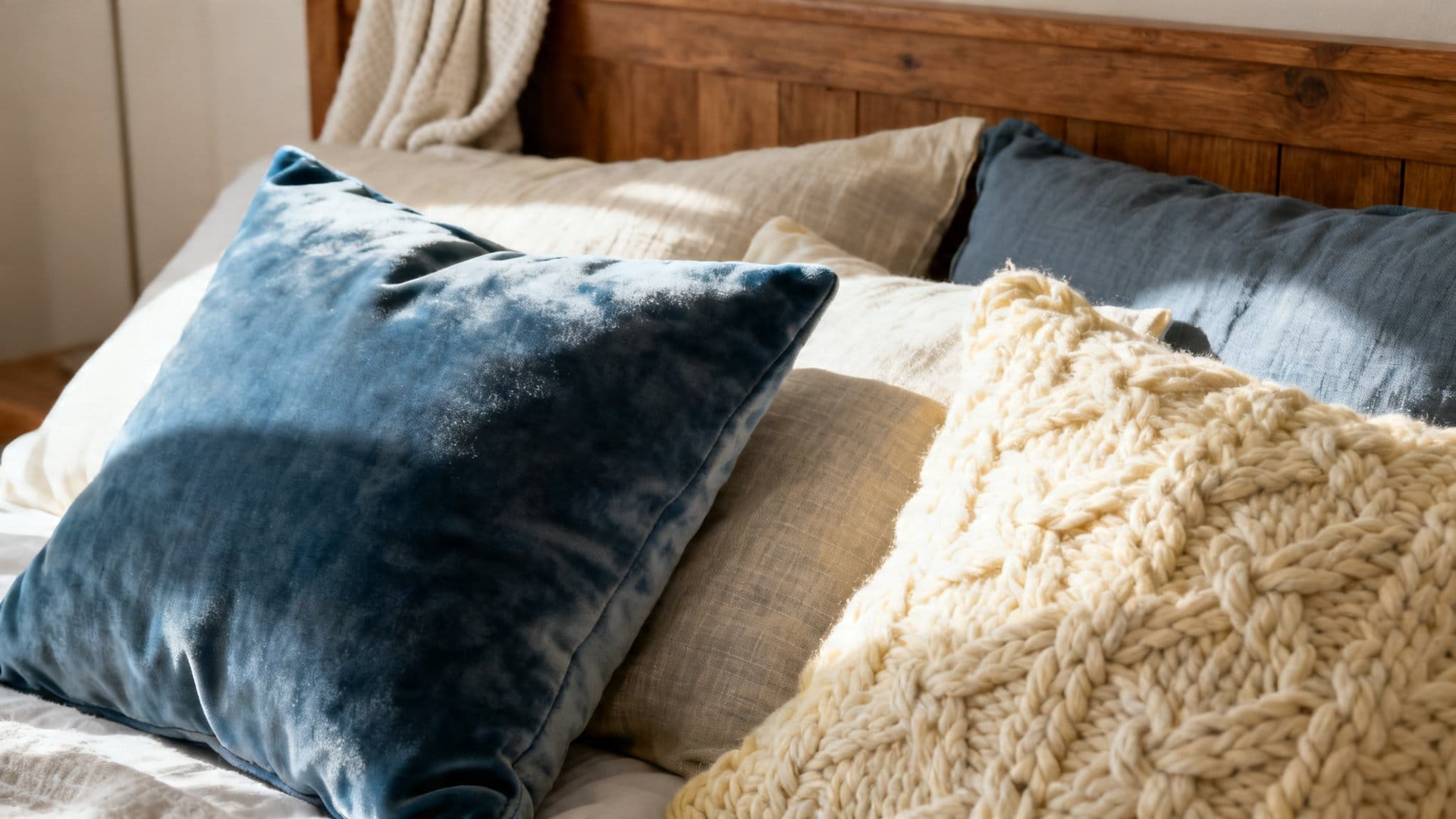
Color gets a lot of attention in decor conversations, but texture is honestly the secret ingredient in a beautiful pillow arrangement. Two pillows in the exact same shade of dusty blue can look completely different — and completely magical — when one is velvet and the other is woven linen.
I love how mixing materials adds a tactile richness that photographs well and feels even better in person. Some combinations that work especially well together: chunky boucle with smooth cotton sateen, raw linen with embroidered velvet, or a cable-knit pillow cover paired with a silk-blend lumbar. These contrasts keep the eye moving and make the bed feel layered without looking cluttered.
Materials That Work
For a cozy, lived-in feel, reach for natural fibers like linen, cotton, and wool-blend knits. If you want something with a little more polish, velvet and faux silk add a subtle richness without tipping into formal territory. Mixing one natural fiber with one slightly more refined material per layer is a reliable approach that most rooms respond well to.
What Are the Best Color Strategies for a Cohesive, Calming Look?
The most effective strategy is to pull two or three colors already present in your bedding and build your pillow palette around those. Staying within a narrow color range — usually three tones with one slightly deeper accent — keeps the arrangement calm and cohesive.
 Shop this look: an area rug on Amazon
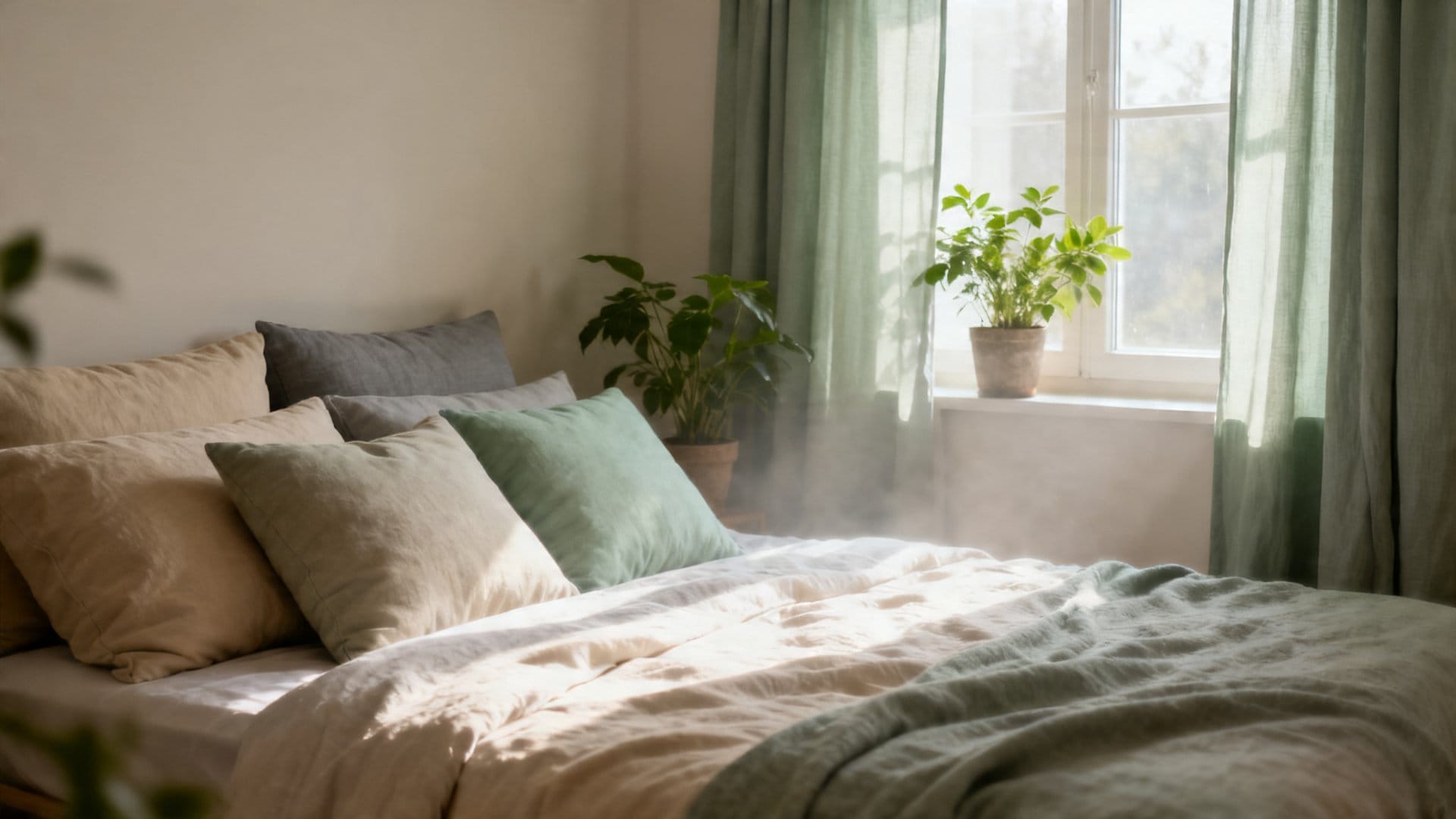
Choosing colors for your master bedroom decorative pillows doesn’t have to feel overwhelming. The easiest starting point is your existing bedding — specifically, pull two or three colors already present in your duvet or quilt and build your pillow palette around those.
From what I’ve gathered, the most calming bedroom pillow arrangements tend to stay within a narrow color range — usually three shades that sit close together on the color wheel, with one slightly deeper accent. For example, soft sage, warm cream, and a dusty terracotta work beautifully together without competing. Or consider a palette of slate blue, warm white, and a single pillow in deep navy for grounding.
Color Combinations Worth Trying
- Warm ivory, soft camel, and a single rust-toned lumbar pillow for an earthy, grounded feel
- Pale blush, dusty mauve, and cream with a subtle floral-embroidered accent pillow for romantic softness
- Charcoal gray, cool white, and a single sage green pillow for a modern, clean aesthetic
- Natural linen, warm sand, and a deep chocolate brown velvet pillow for a cozy, Midwest-cozy vibe
- Sky blue, soft white, and a weathered navy for a coastal or Hamptons-style feel
The key is restraint — when you limit yourself to three colors, the arrangement feels select rather than chaotic, and the bedroom stays a place your brain associates with rest.
With your colors and textures sorted, it’s worth thinking about how all of these choices come together within your specific bedroom style.
How Do You Style Pillows for Different Bedroom Aesthetics?
The best approach is to match your pillow choices to the style you’re already working with. Each aesthetic — farmhouse, minimalist, boho, or glam — has its own textures, patterns, and color cues that make the arrangement feel intentional.
 Shop this look: wall art on Amazon · Set of 2 Chenille Throw Pillow Covers… · Luxury 3D Vintage Floral Throw Pillow Covers…
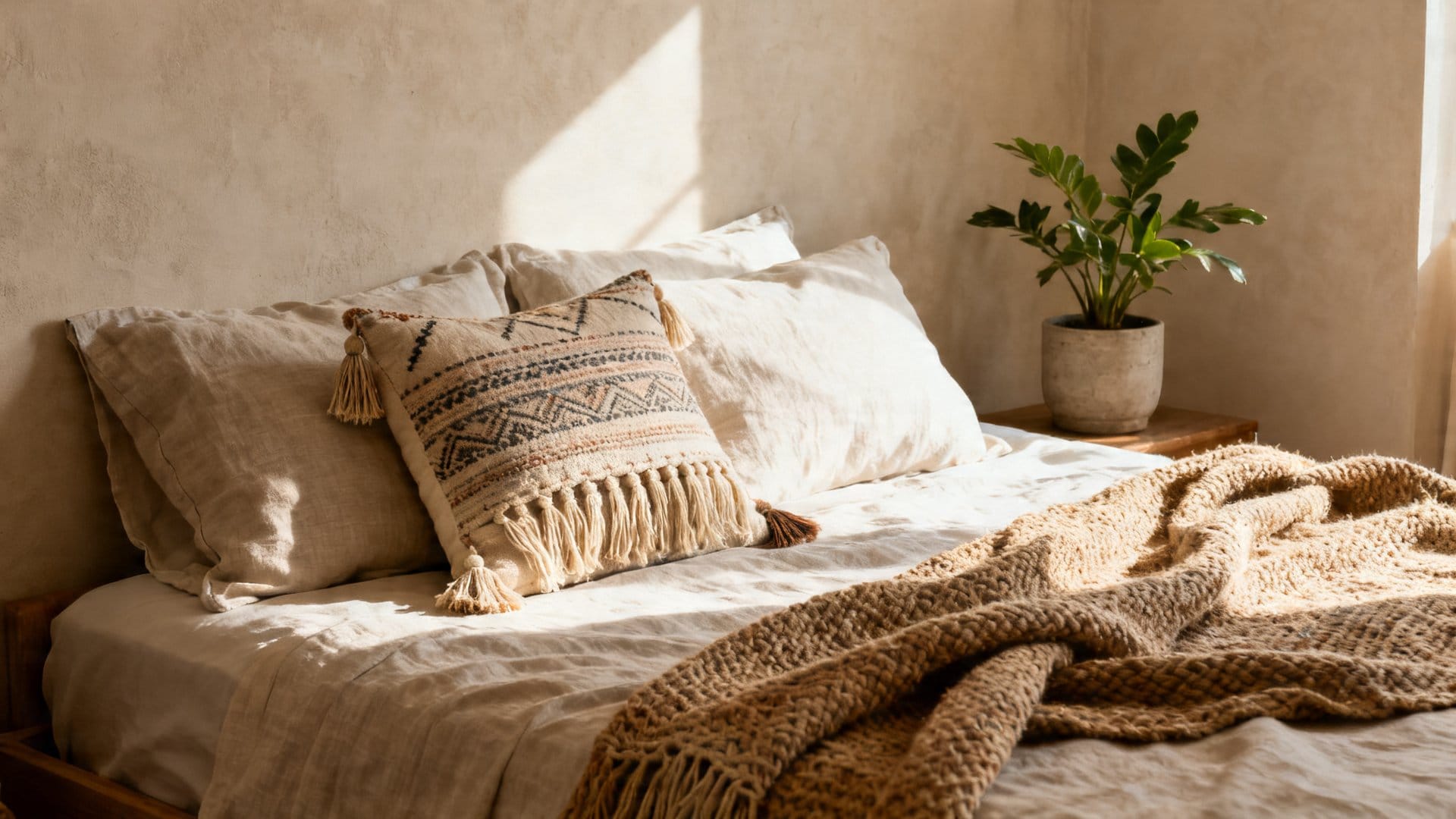
The best pillow arrangement for your bedroom is one that actually fits the style you’re already working with. A boho bedroom calls for a completely different approach than a modern farmhouse or a clean Scandinavian-inspired space.
For a farmhouse or cottagecore bedroom, lean into textured cotton, vintage-style embroidery, and muted florals. Mismatched but coordinated patterns — like a ticking stripe paired with a small floral — feel right at home here. For a modern or minimalist bedroom, fewer pillows with bolder, geometric shapes or solid-color boucle covers make a strong, unfussy statement. A boho space welcomes fringe, macramé details, and layered patterns in warm terracotta, rust, and cream. And for a glam or transitional bedroom, velvet pillows in jewel tones like deep emerald or rich plum add just enough drama without going overboard.
Pro tip: Whatever your style, always include at least one pillow with some kind of texture detail — embroidery, fringe, tufting, or a woven pattern. That small detail is what makes the arrangement feel intentional rather than assembled.
Why Is the Lumbar Pillow Small but Mighty?
The lumbar pillow is the single finishing touch that pulls an entire arrangement together. Its horizontal shape breaks up the roundness of other pillows and creates a visual anchor at the front of the bed.
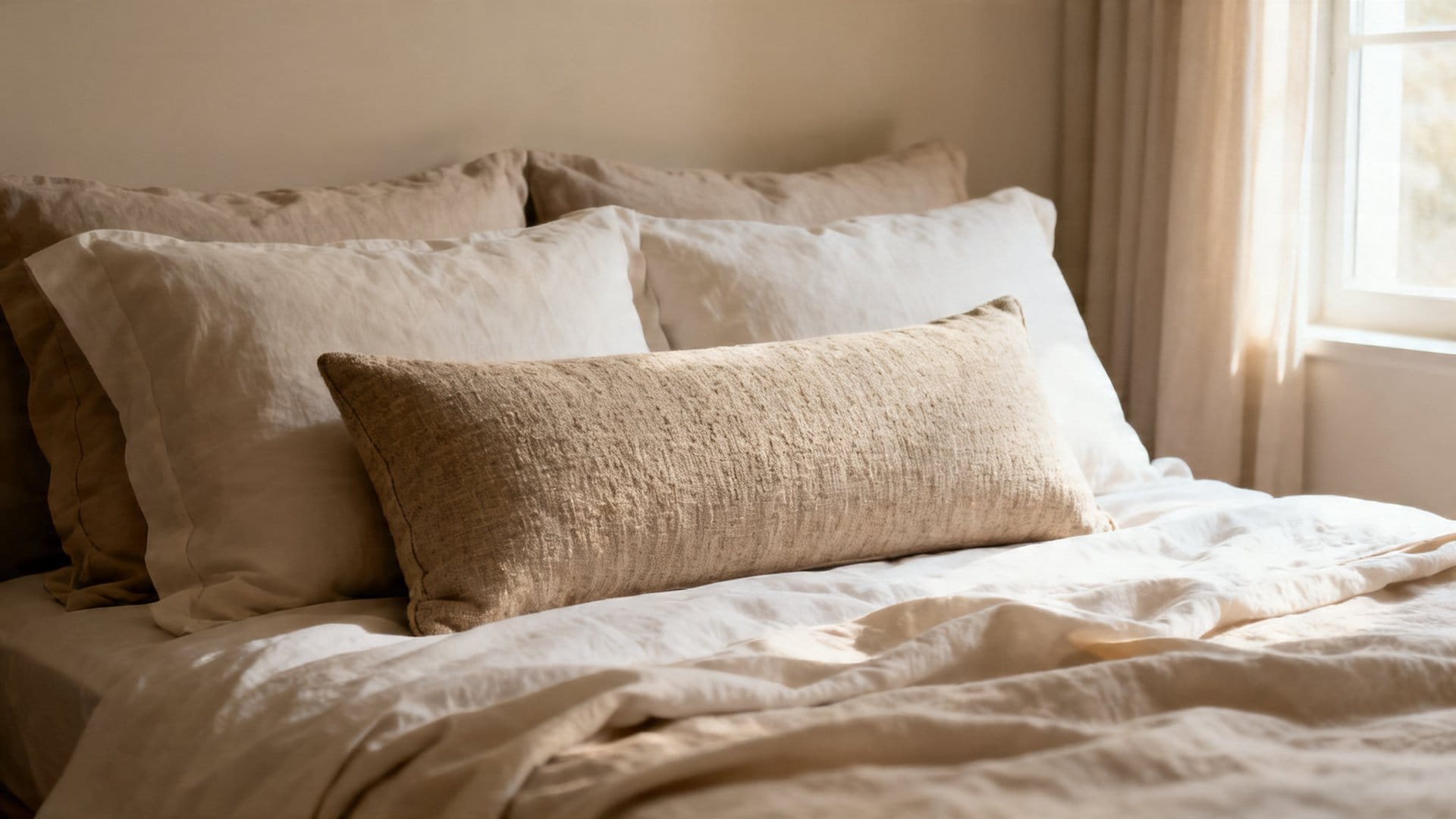
If there’s one pillow that does the most work for the least effort, it’s the lumbar. That long, rectangular pillow sitting front and center is often the finishing touch that pulls an entire arrangement together — and yet so many people skip it or treat it as an afterthought.
A friend of mine tried swapping out her standard accent pillow for a single linen lumbar with hand-stitched detailing, and it completely changed how her bed looked. The horizontal shape breaks up the roundness of the other pillows and creates a visual anchor at the front of the arrangement. It also photographs beautifully, which is why you see it on nearly every well-styled bed.
I keep coming back to this approach because it works in every style — a ruffled lumbar for a romantic bedroom, a printed block-print lumbar for boho, a sleek solid velvet one for modern spaces, or a cable-knit lumbar for cozy, hygge-inspired rooms. One lumbar, so many possibilities.
Pro tip: If you can only add one new pillow to your existing arrangement, make it a lumbar. It’s the single highest-impact change you can make to your bed styling.
Of course, even the most beautifully styled arrangement only works if it holds up to everyday life — so practicality matters just as much as aesthetics.
How Do You Keep Pillows Looking Good in Real Life?
The key is choosing the right inserts and covers from the start. Using an insert one size larger than your cover and opting for washable, removable covers makes daily upkeep fast and effortless.
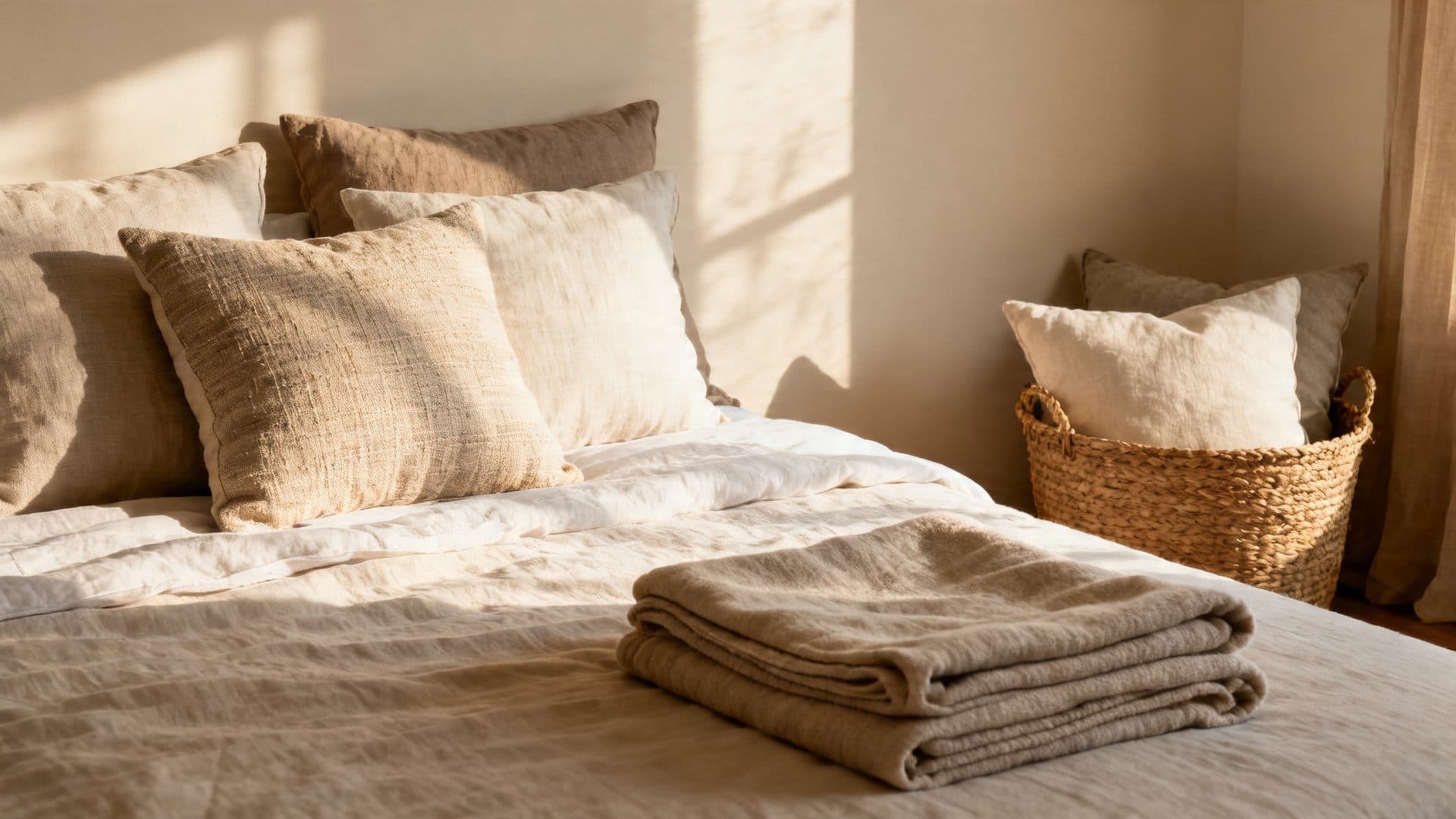
Beautiful pillows are only worth having if they’re manageable in real life. One of the most common complaints I hear is that decorative pillows are annoying to deal with every morning — they end up on the floor, they lose their shape, or they’re just too fussy to bother with.
The solution is choosing pillow inserts that are slightly larger than the cover — for example, an 20-inch insert inside an 18-inch cover gives that plump, full look without constant re-fluffing. Down-alternative inserts tend to hold their shape well and are easy to maintain. For covers, removable and washable options make a huge practical difference, especially if you have pets or kids who share the bed.
Quick Fixes for Everyday Pillow Struggles
- Store decorative pillows in a large fabric basket at the foot of the bed — it looks intentional and takes seconds to use
- Use a pillow cover with an envelope closure rather than a zipper for easier washing and a cleaner look
- If your pillows go flat quickly, try a down-alternative insert one size up from your cover for lasting fullness
- Rotate your pillow covers seasonally — lighter linen in spring and summer, richer velvet or knit in fall and winter — to keep the room feeling fresh
Keeping your pillow routine simple means you’ll actually maintain the look, and your bedroom will feel put-together on even the busiest mornings.
Final Thoughts
Styling master bedroom decorative pillows is one of those small acts of care that quietly makes your whole home feel more like you. You don’t need a lot of pillows, a big budget, or a design background — just a little thought about texture, color, and layering, and your bed can become the beautiful, restful focal point your bedroom deserves. Trust your instincts, start with what you already have, and add one thoughtful piece at a time. Happy decorating!
Frequently Asked Questions
The ideal number of decorative pillows depends on your bed size and personal style, but a queen bed typically looks best with 4 to 6 pillows while a king bed can comfortably support 6 to 8. A good rule of thumb is to layer sleeping pillows at the back, add standard Euro shams in the middle, and finish with one or two smaller accent pillows at the front. This creates depth and visual interest without making the bed feel cluttered or overwhelming.
The most popular and visually pleasing arrangement starts with your largest pillows at the back and gradually steps down in size toward the front of the bed, creating a layered, dimensional look. You can follow a symmetrical approach for a clean, classic feel or mix sizes and shapes asymmetrically for a more relaxed, bohemian aesthetic. The key is to vary textures and heights so each pillow has its own visual presence rather than blending into a flat, uniform row.
Start by identifying the two or three dominant colors already present in your bedroom through your bedding, curtains, or wall color, then use your decorative pillows to either complement or gently contrast those tones. A reliable approach is the 60-30-10 color rule, where 60 percent of your pillow palette matches your main color, 30 percent introduces a secondary tone, and 10 percent adds a bold accent for visual pop. If your room feels neutral or monochromatic, decorative pillows are a low-commitment way to introduce a new color without making permanent changes.
Absolutely — mixing patterns and textures is actually one of the best ways to make a pillow arrangement feel select and intentional rather than matchy and flat. The secret is to vary the scale of your patterns, pairing a large bold print with a smaller geometric or a subtle stripe so they complement rather than compete with each other. Anchoring the mix with at least one solid-colored pillow gives the eye a place to rest and ties the different elements together into a cohesive, stylish arrangement.
For a master bedroom, a combination of Euro shams, standard rectangular pillows, and smaller lumbar or square accent pillows tends to create the most versatile and visually balanced arrangement. Fabric choices like velvet, linen, and woven cotton add tactile richness and make the bed feel luxurious and inviting, while down or down-alternative inserts give pillows a full, plump shape that holds its form beautifully. Choosing pillow inserts that are one to two inches larger than your pillowcase will also give your decorative pillows that satisfying, hotel-quality fullness.