
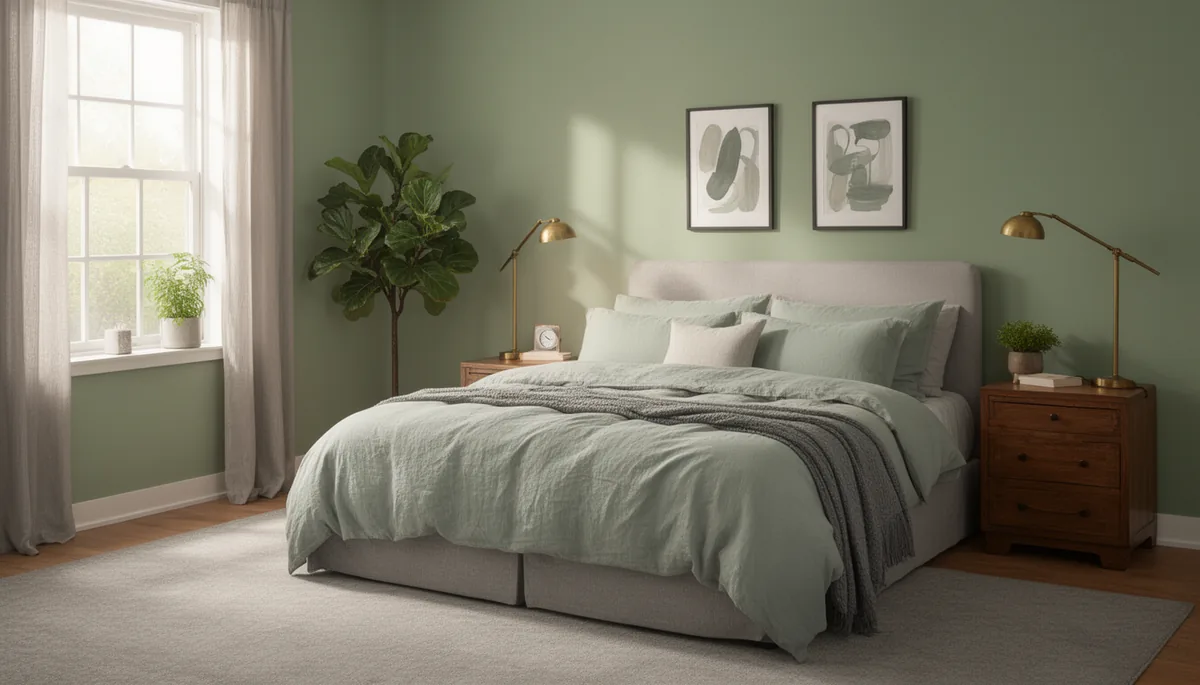
There is a certain kind of quiet you feel the moment you walk into a room where the colors are just right. Soft, grounded, easy to breathe in. That is exactly what a good sage green and grey bedroom gives you, and it is why this pairing keeps showing up in the homes people actually love to rest in.
A sage green and grey bedroom works because sage brings the calm of nature and grey brings a steady, modern base. Together they feel restful without being cold. Below are 30 ideas built around how the room actually feels to live in, sleep in, and wake up in, not how it photographs. Every idea stays on the same soft sage and grey palette, with only warm neutral supports like wood, warm white, and brass.
This is a palette I keep coming back to lately, because it holds up in real bedrooms and not just in pretty photos. Grab a cup of something warm and let’s walk through them, one cozy layer at a time.
1. The Exact Sage-to-Grey Ratio That Keeps the Room Warm, Not Cold
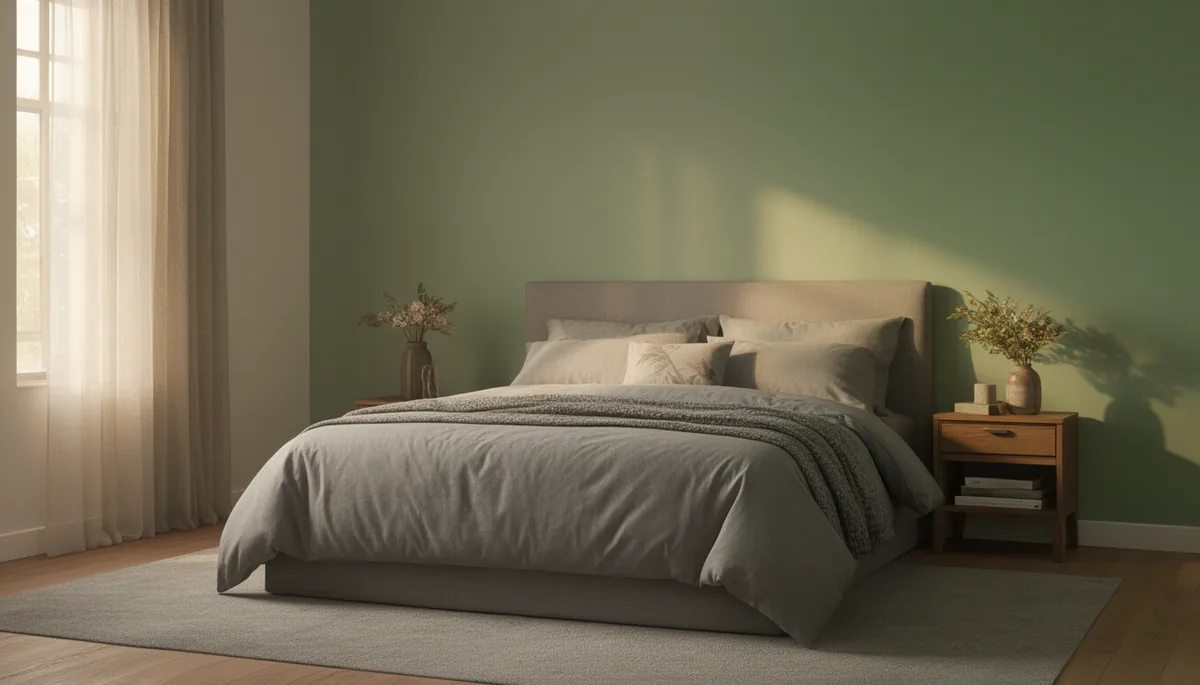
Why it works: When one color leads and the other supports, your eye relaxes instead of bouncing around. Roughly two-thirds grey and one-third sage keeps the base steady while the sage feels intentional, not scattered.
Picture this: A soft grey duvet and grey walls doing the heavy lifting, then sage arriving in the throw at the foot of the bed, one or two pillow covers, and a single piece of art. The room feels settled the second you walk in.
Pro tip: If the room ever feels chilly, you have too much grey and not enough sage warmth. Add one more sage textile before you touch the paint.
2. Which Grey Undertone to Pick So Your Sage Doesn’t Turn Muddy

The reason: Cool blue-grey next to sage can pull the green toward a dull, swampy tone. A warm grey with a whisper of beige or greige lets the sage read fresh and soft instead.
Imagine: Greige sheets and a warm dove-grey blanket layered on the bed, with sage pillows resting against them. In morning light the sage looks alive, like new eucalyptus rather than faded olive.
One small thing: Test your grey by holding it next to a real sage leaf or a sage swatch in daylight. If the green looks tired, warm up the grey.
3. The One Warm Metal That Makes Sage and Grey Feel Cozy, Not Clinical
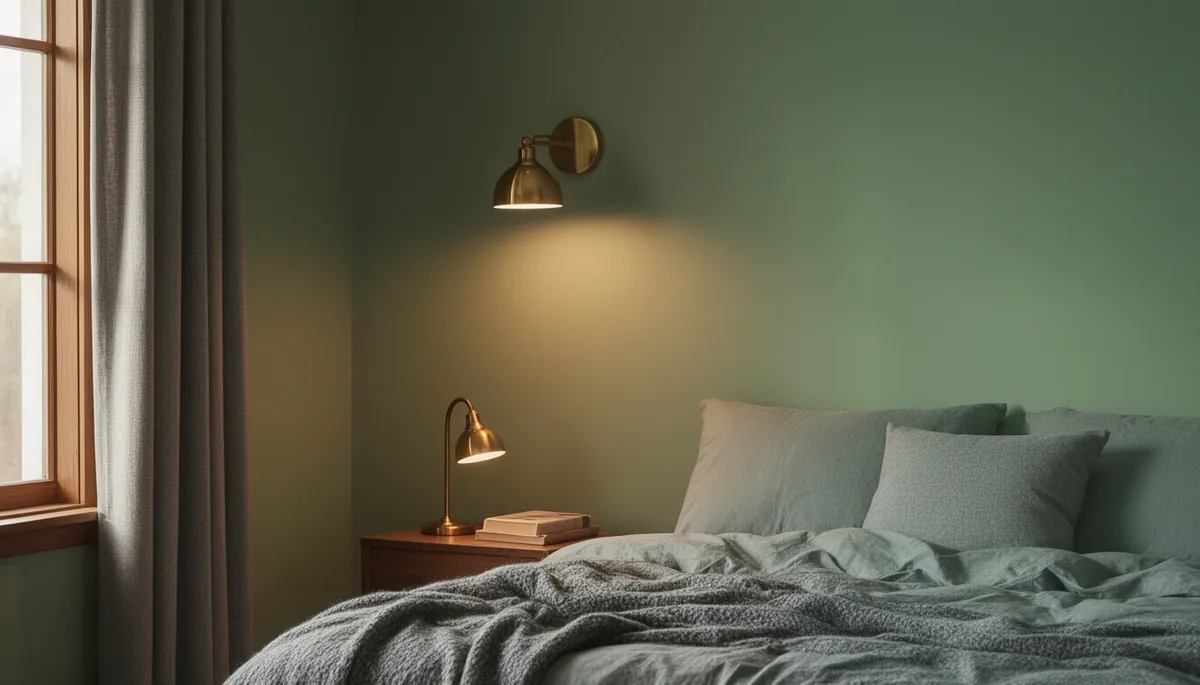
Here’s the thing: Sage and grey can drift toward a cool, showroom feel. A warm metal like brass or aged gold adds a little heat and softness that makes the whole room feel welcoming.
In practice: A small brass bedside lamp and a thin brass frame on the wall, catching the light beside your grey headboard and sage bedding. Suddenly the palette feels hugged, not sterile.
Quick tip: Keep the metal consistent. Mixing brass with cold chrome in the same small space is what makes a calm palette feel busy.
4. How to Layer a Grey Bed So It’s Actually Cozy to Sink Into
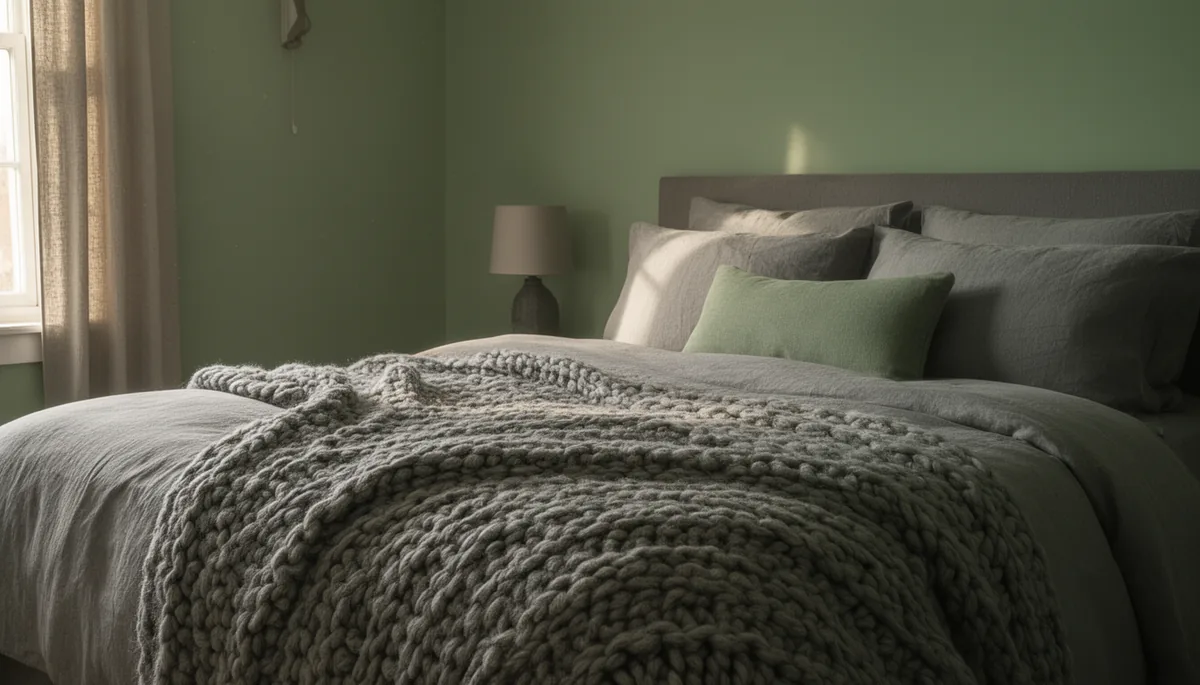
Why this helps: A bed that feels good to climb into has different weights and textures, not one flat comforter. Layers trap warmth and give your body something soft to settle against.
Here’s the feel: Crisp grey sheets, a lightweight blanket, then a heavier quilt folded at the bottom, topped with a chunky knit throw and a sage lumbar pillow. When you sit down, it gives a little. That is the feeling you want. If the layering is the part that trips you up, our bed pillow arrangement ideas walk through it slowly.
A little trick: Layer in odd numbers and vary the thickness. Three different weights feel far cozier than two matching ones.
5. Small Bedroom? The Wall Trick That Makes It Feel Calmer, Not Smaller
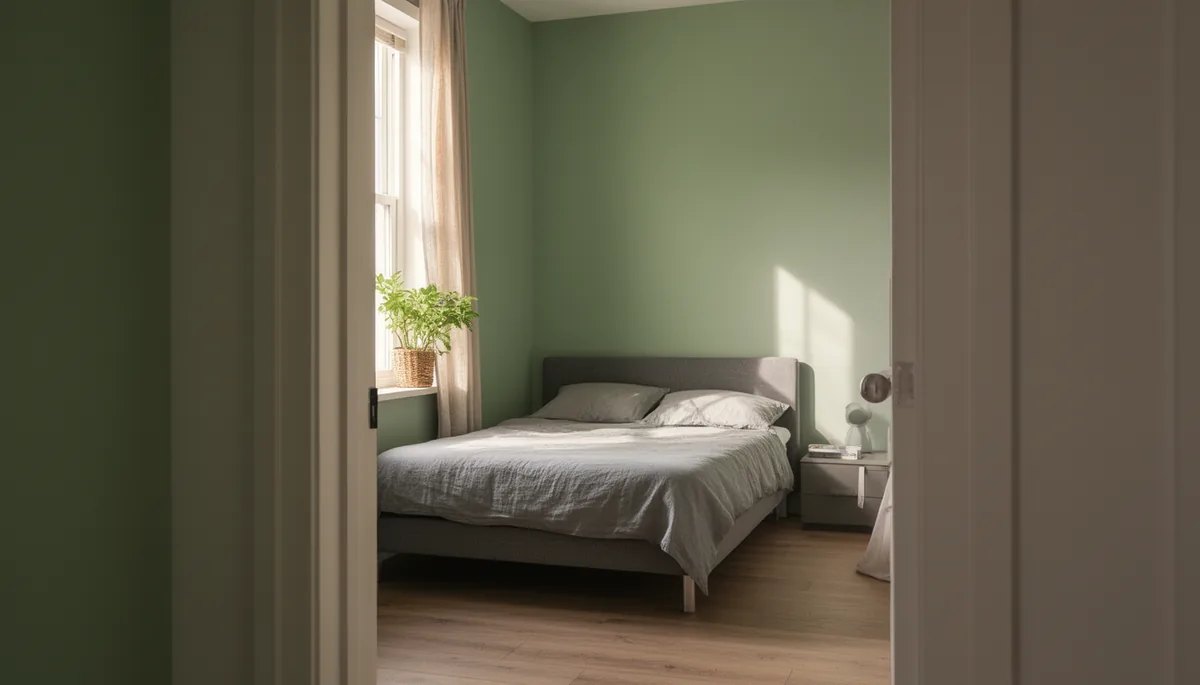
What’s going on: In a small room, a single soft sage wall gives your eye one calm place to land, which actually makes the space feel more restful than plain white walls that show every edge.
Picture it: The wall behind the bed painted a muted sage, grey bedding blending into light grey walls on the other sides, and nothing competing above the headboard. The room breathes.
Worth trying: Paint the wall the bed sits against, not the wall you face from the door. It adds depth without shrinking the room.
6. The Lighting Setup That Makes Sage and Grey Feel Restful at Night
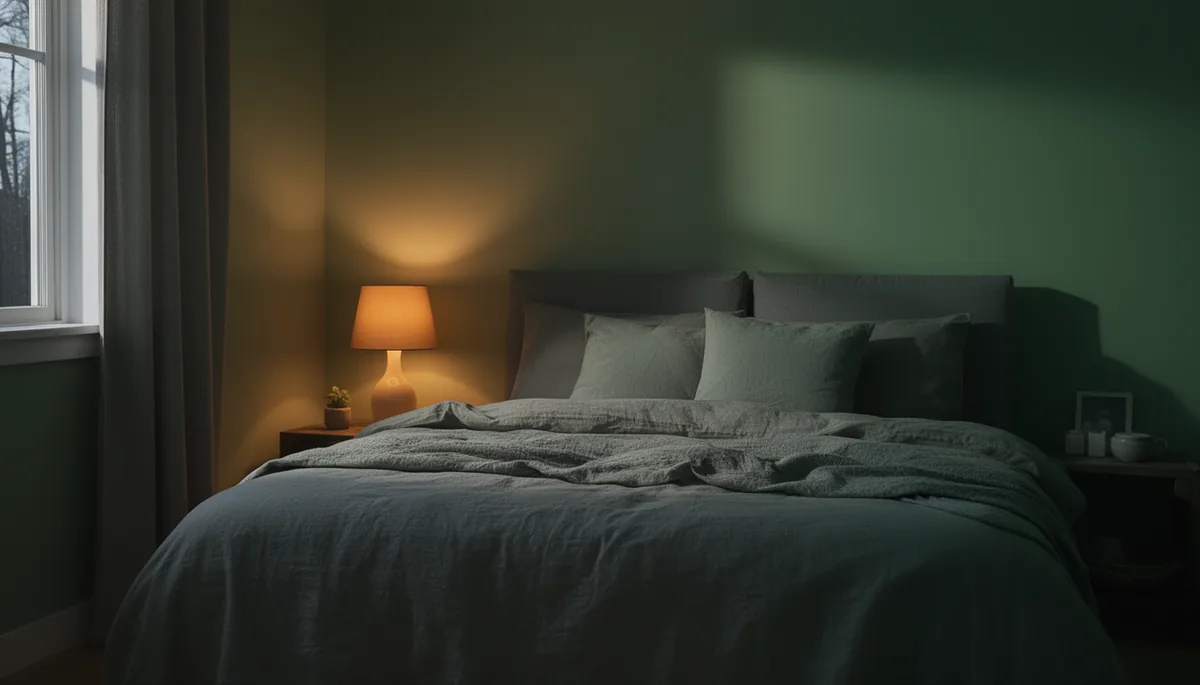
The idea: Sage and grey read beautifully in warm light and flat under cool white bulbs. Warm, low light at night tells your body the day is over.
So in the room: Two bedside lamps with warm bulbs, a small dimmable light in the corner, and no harsh overhead on after sunset. The grey turns soft charcoal and the sage goes deep and mossy.
Pro tip: Use 2700K bulbs or warmer at the bedside. Anything cooler makes a calm room feel like an office.
7. Where to Put Sage So It Relaxes You Instead of Feeling Flat

Why it works: Sage calms you most when it sits at eye level and near where you rest, not stranded on a far shelf. Placement is what turns it from a random accent into a soothing one.
What it looks like: Sage showing up right where your eyes land as you lie down: the pillows, the throw across your lap, a small plant on the nightstand. The color meets you where you actually relax. Still deciding which sage sits best next to grey? These color combos for grey narrow it down.
Keep in mind: Repeat sage in at least three spots so your eye reads it as intentional calm, not one lonely green thing.
8. The Bedding Texture Mix That Makes Grey Feel Soft, Not Chilly

The logic: Grey can feel cold when everything is smooth and matte. Mixing textures catches light differently and makes the same grey feel warm and touchable.
Picture this: A waffle-weave grey blanket, a linen sage pillow, and a soft brushed-cotton sheet all in one bed. Your hand wants to touch each one, and that tactile pull is what reads as cozy.
One more thing: Combine at least three textures in your greys: something woven, something knit, something smooth.
9. How Much Wood to Add So the Room Feels Grounded and Warm
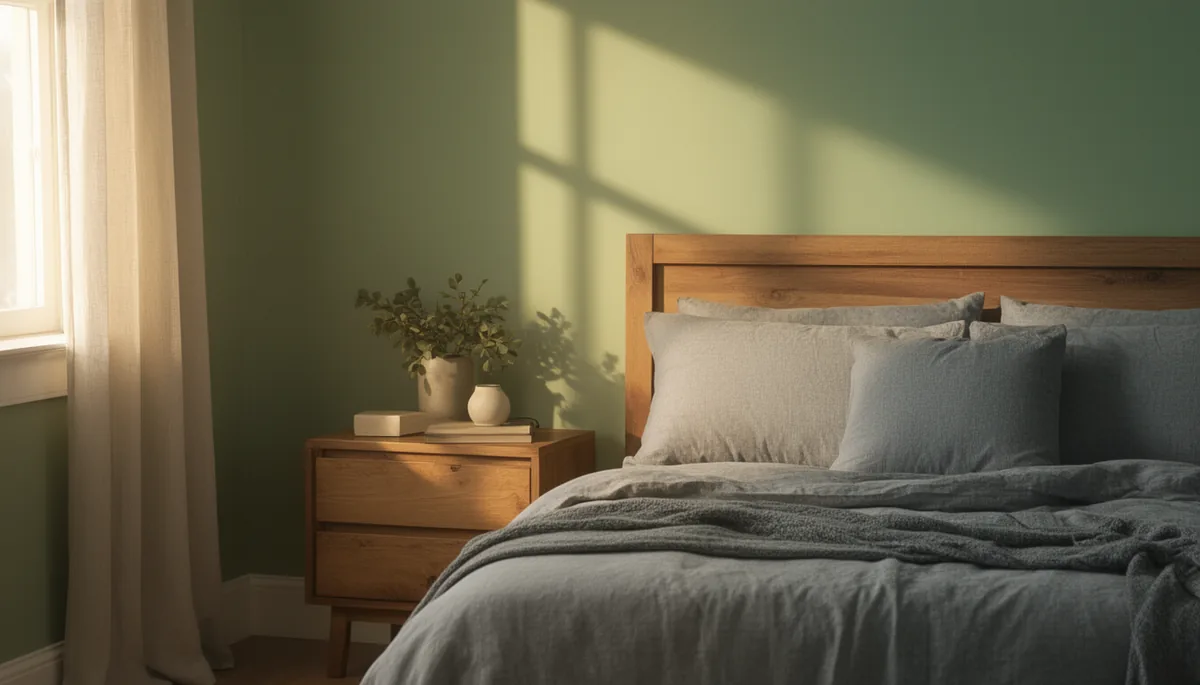
Why it works: Wood is the warm anchor that keeps sage and grey from floating into cool minimalism. It adds an organic, grounded feeling that makes a bedroom feel lived-in.
Picture this: A warm oak nightstand, a wood-framed headboard, and maybe a small wooden stool. Against the grey and sage they read like tree bark and moss, a pairing that feels naturally calming.
Pro tip: Choose warm-toned woods like oak or walnut over cool grey-washed wood, which just adds more cold to the room.
10. The Reading Corner Combo That Makes You Actually Want to Sit There
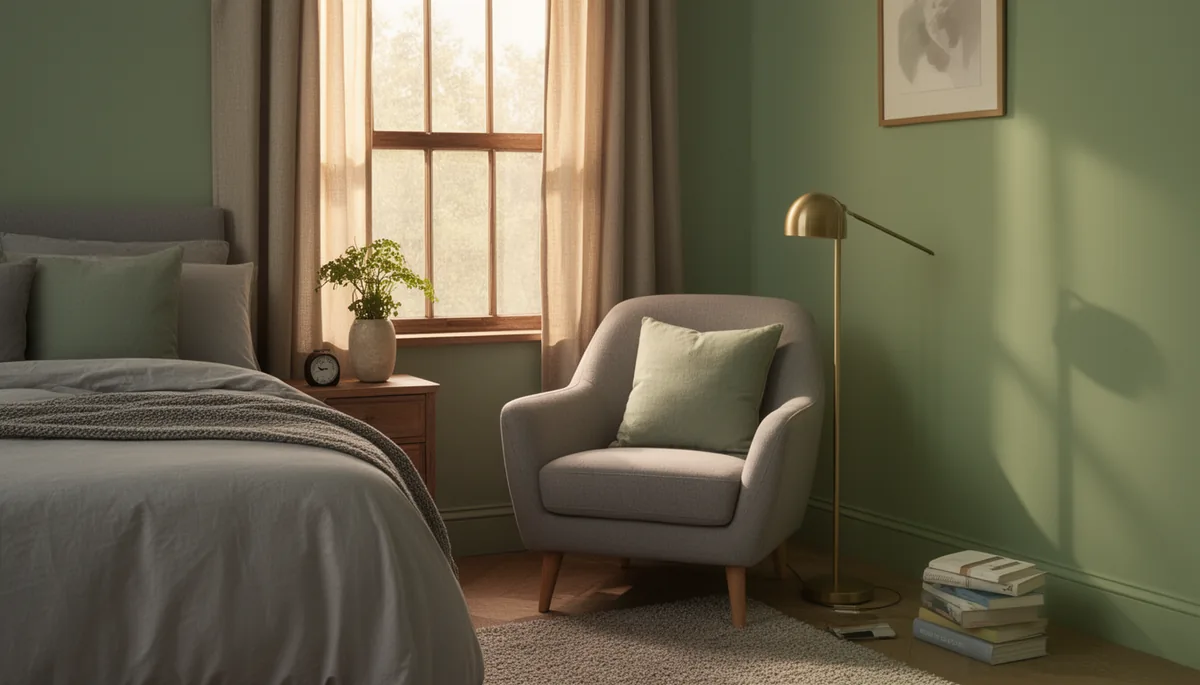
The reason: A reading corner gets used when it feels enclosing and warm, not when it just looks nice. The right chair, light, and softness invite you to stay.
Imagine: A soft grey armchair angled toward the window, a sage cushion for your back, a warm floor lamp, and a small stack of books within reach. It feels like the seat pulls you in after a long day. Building a corner like this? Borrow a few tricks from our cozy pillow styling ideas.
One small thing: A friend of mine set her lamp behind and to the side of the chair instead of in front, and it changed how long she actually sat there. Light over your shoulder is what makes reading comfortable.
11. Curtains That Keep Sage Calm in Harsh Morning Light
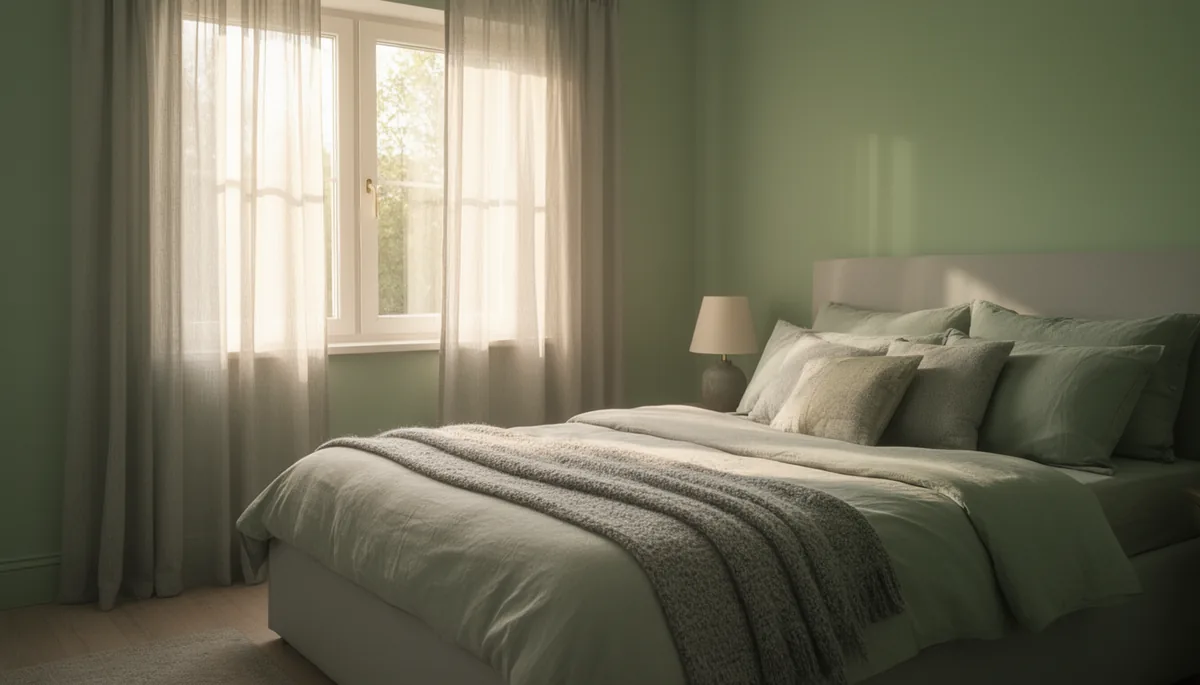
Here’s the thing: Direct morning sun can wash sage out and make grey glare. Soft, light-filtering curtains keep the color gentle and the wake-up softer.
In practice: Linen-look curtains in warm white filtering the sun into a soft glow, with the sage bedding staying muted and calm even at 7 a.m. You wake up eased into the day, not jolted.
Quick tip: Layer a sheer with a heavier warm-white panel so you can soften the light or block it fully on the mornings you want to sleep in.
12. The Rug Mistake That Makes the Room Feel Cold Underfoot
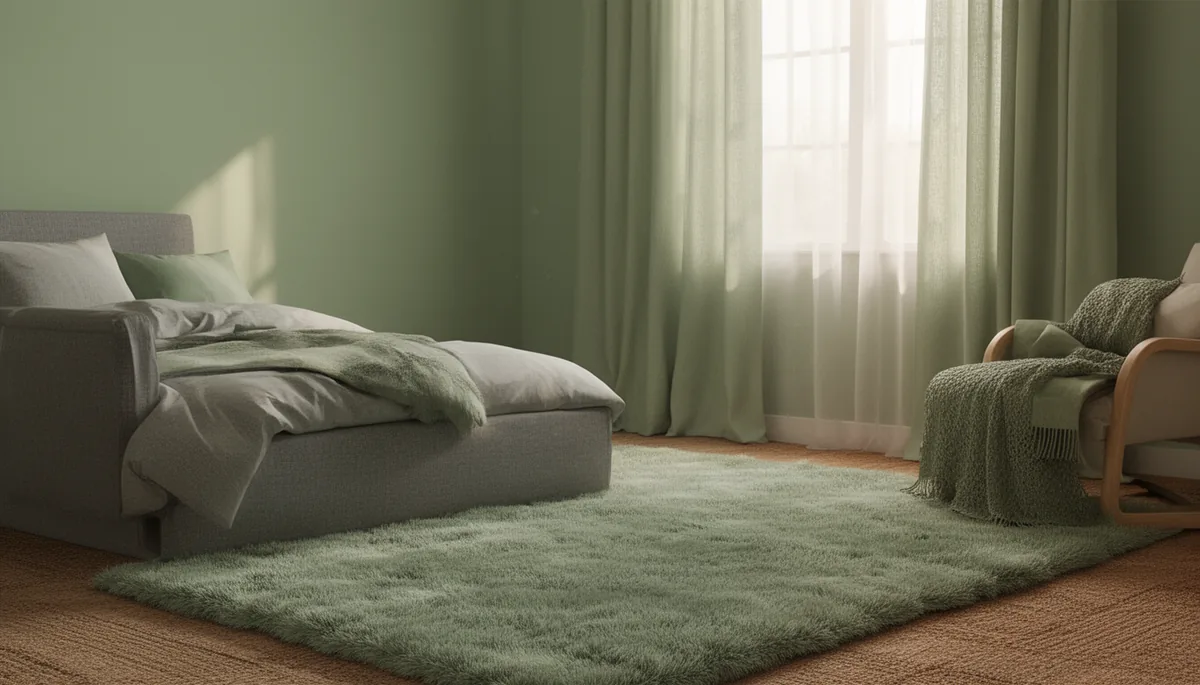
Why this helps: A hard floor or a thin, scratchy rug undoes all the warmth you built up. What your feet feel first thing in the morning sets the tone for the whole room.
Here’s the feel: Stepping out of bed onto a thick, soft rug in warm grey or oatmeal, not a cold plank floor. The room instantly feels kinder before you have even opened the curtains.
A little trick: Size up your rug so it extends at least 18 to 24 inches past the bed on the sides. A too-small rug leaves your feet on cold floor anyway.
13. How to Keep a Grey Room From Feeling Sad on Grey Days
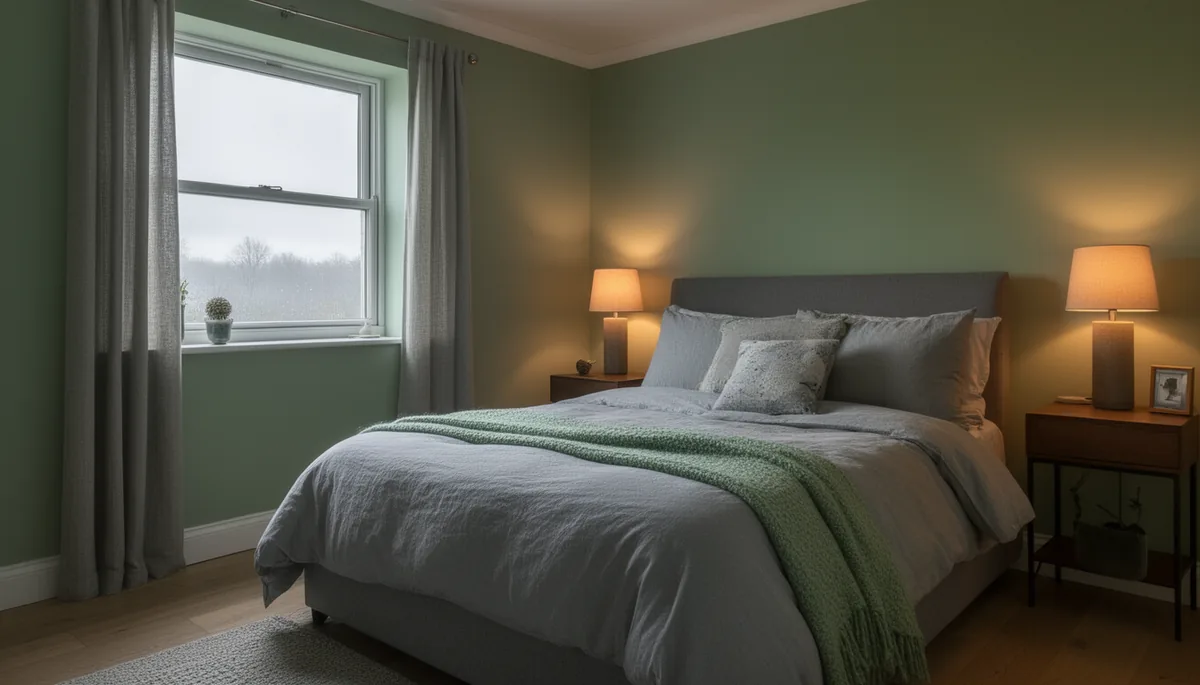
What’s going on: I remember walking into a grey bedroom on a rainy afternoon and it read more dreary than restful. Grey walls plus a grey sky can tip a room from calm to gloomy, so a little built-in warmth keeps it cozy even when the weather outside is flat.
Picture it: Two warm lamps glowing softly, a sage throw with a hint of golden undertone, and a warm wood surface catching the low light. On the greyest afternoon, the room still feels like a refuge.
Worth trying: Keep one warm light on a timer for dark afternoons. Walking into a pre-lit warm room beats flipping on a cold overhead.
More like this:See our master bedroom pillow styling ideas→14. The Nightstand Setup That Helps You Wind Down Before Sleep
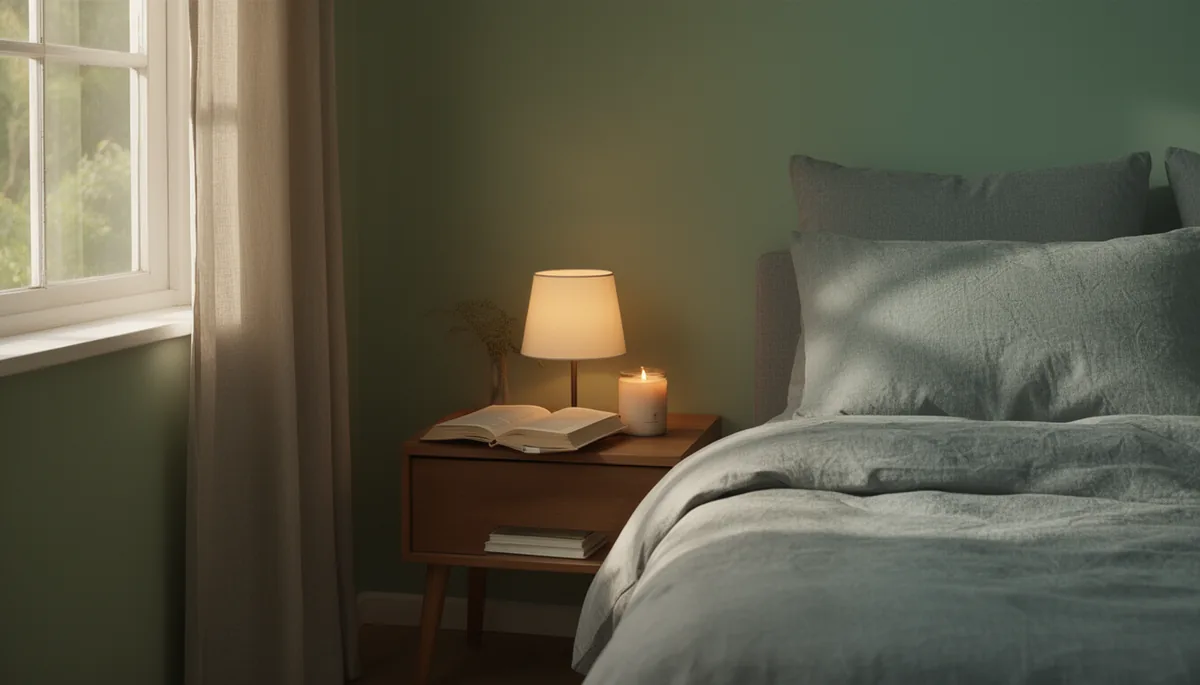
The idea: What sits on your nightstand quietly signals your brain to slow down. A calm surface makes winding down easier than a cluttered one.
So in the room: A small warm lamp, a book you are actually reading, a candle, and a little sage sprig in a bud vase. No charging cables in sight. Your last look before sleep is soft and uncluttered.
Pro tip: Move the phone charger to a drawer or across the room. A screen-free nightstand does more for your sleep than any color choice.
15. Adding Sage Without Repainting for Renters
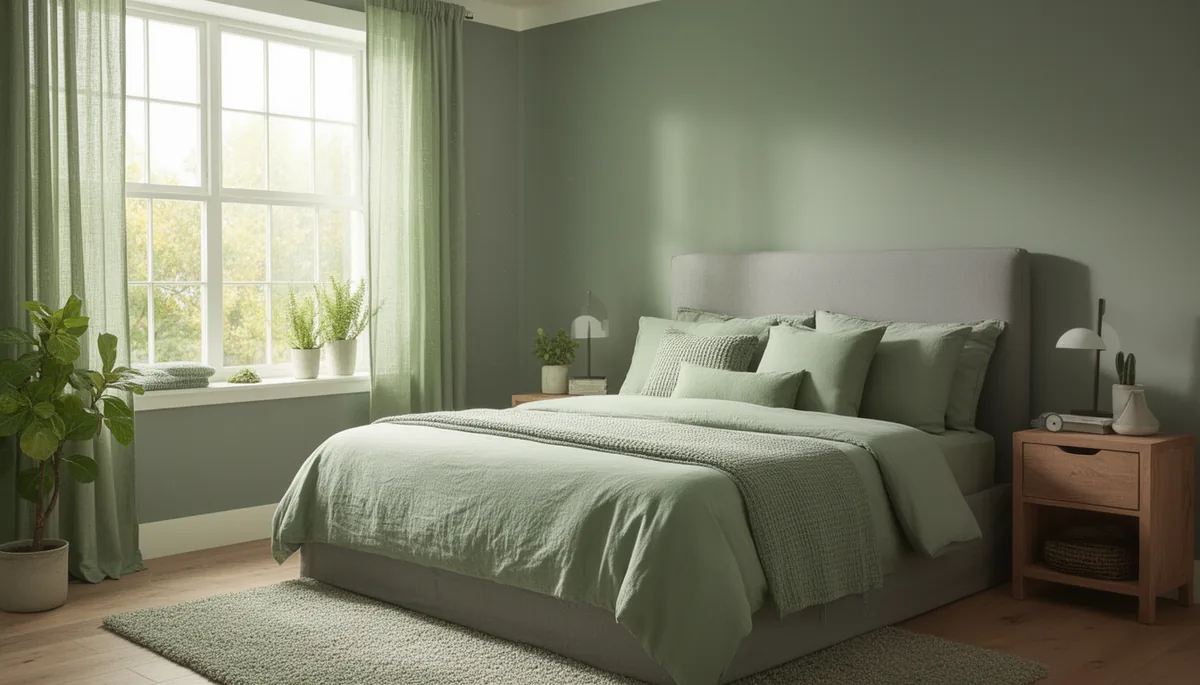
Why it works: You do not need paint to get the calm of sage. Textiles and decor carry the color just as well, and they move with you to the next place.
What it looks like: Sage pillow covers, a sage throw, a leaning framed botanical print, and a trailing plant, all against neutral grey bedding and landlord-white walls. It reads fully designed, zero paint. Want the pillows to look this intentional? Here is how we do it in our queen bed pillow arrangement post.
Keep in mind: A large sage duvet cover or a fabric headboard slipcover gives you the biggest color hit without a drop of paint.
16. The Plant That Keeps Sage and Grey Feeling Alive, Not Sterile
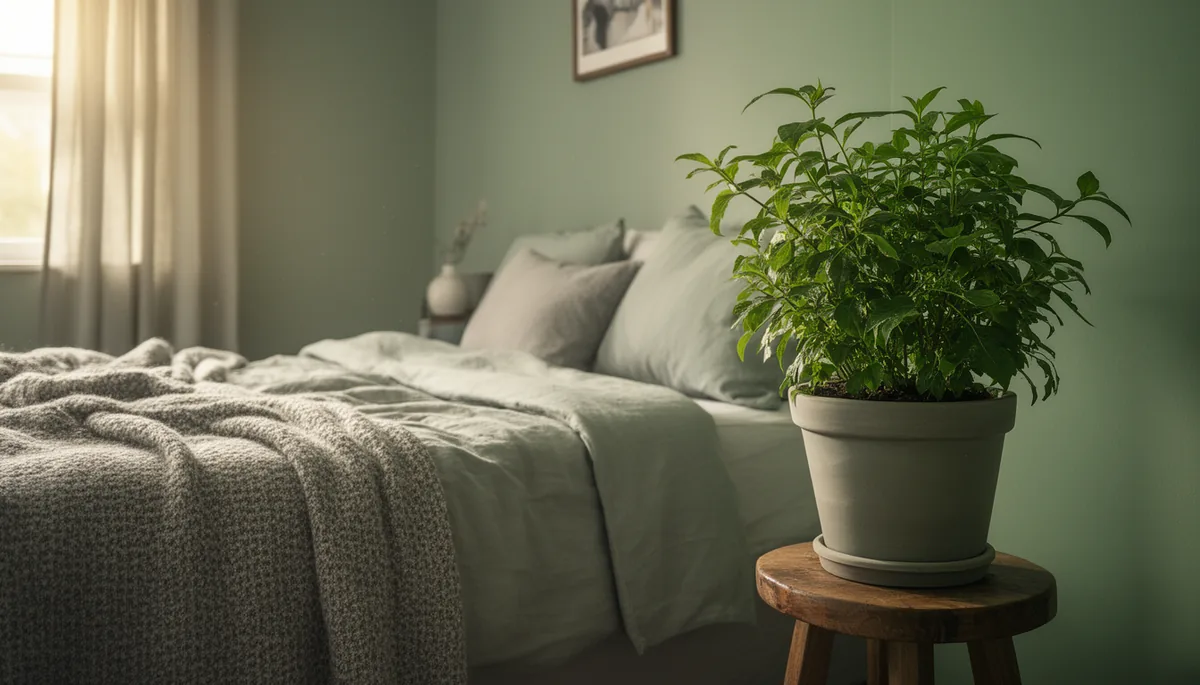
The logic: A living plant echoes the sage and adds gentle movement, which keeps a calm palette from tipping into a flat, staged feeling.
Picture this: A soft-leaved plant like a pothos or an olive tree in a warm terracotta or stone pot, its green picking up the sage and softening the grey around it. The room feels tended and alive.
One more thing: Match the plant to your light. A north-facing room wants a low-light plant like a snake plant or pothos, not a fussy sun-lover that will sulk.
17. How to Make a North-Facing Bedroom Feel Warmer
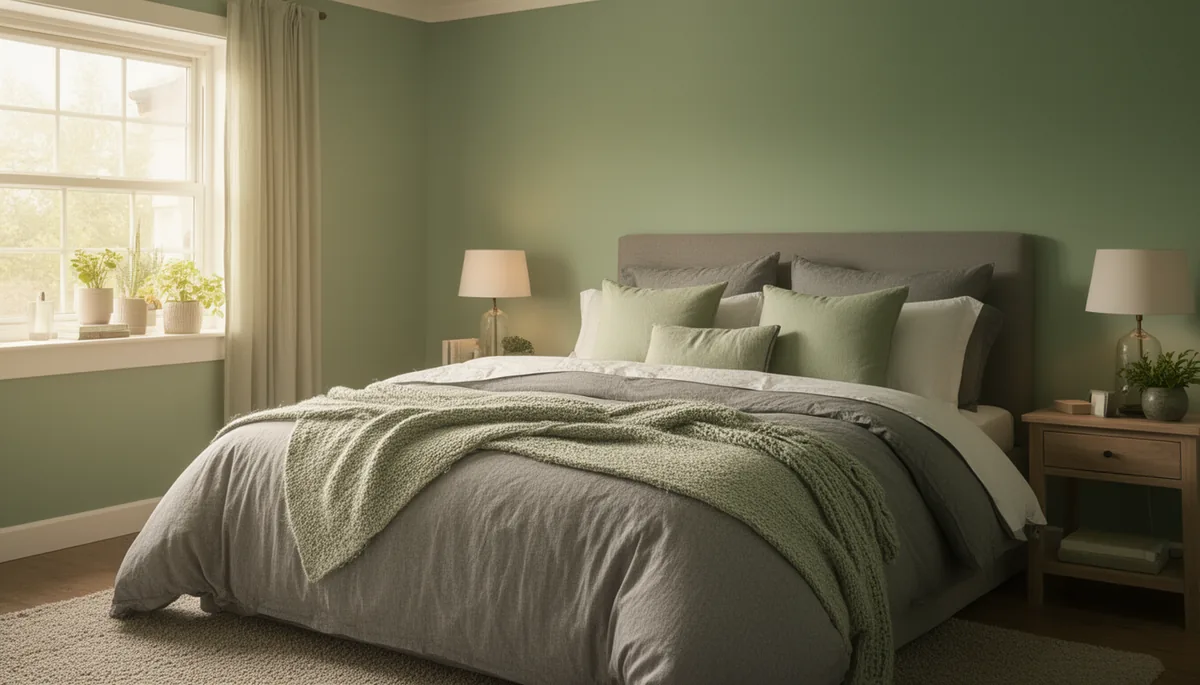
The reason it lands: North light is cool and steady, which can leave grey feeling icy. Leaning into warm-toned layers balances that cool cast so the room feels comfortable, not chilly.
See it in the room: Warm-white bedding, a greige blanket, sage pillows with a warm undertone, and a wood nightstand. The cool daylight softens against all that warmth and the room feels balanced.
Quick win: In a north room, skip cool blue-greys entirely. Every grey you choose should lean warm to counter the light.
18. Layering Greys So the Room Has Depth, Not a Washed-Out Look
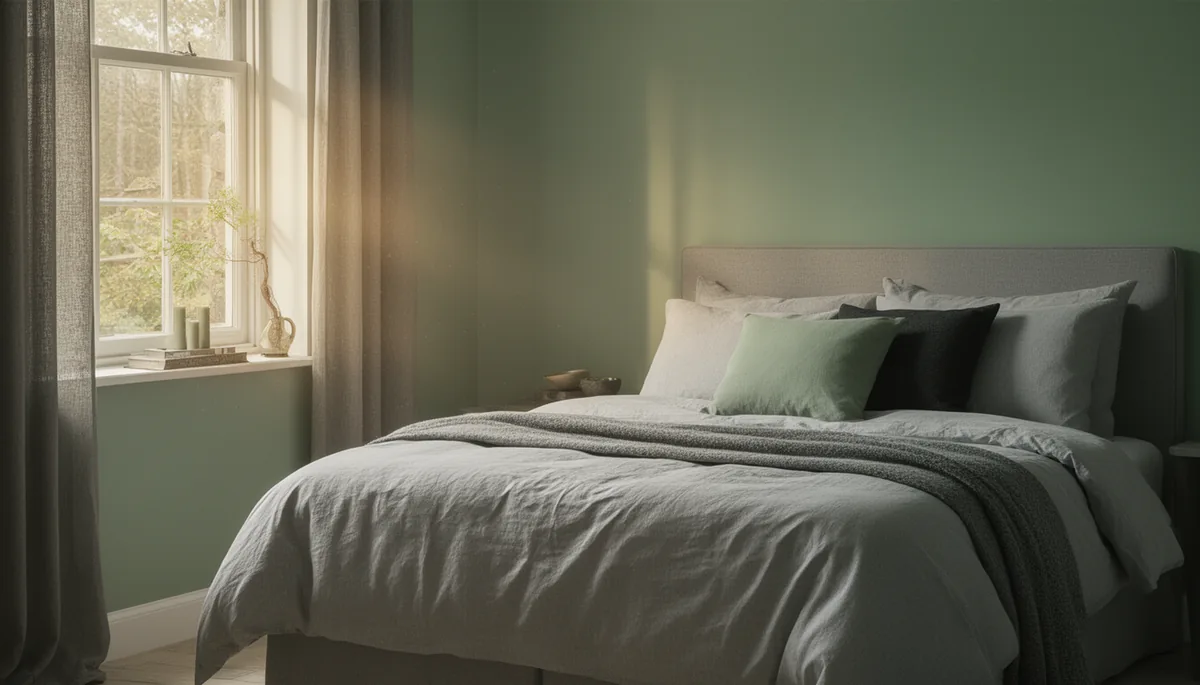
The reason: One flat grey everywhere reads dull and washed out. A few shades of grey create depth and quiet interest while staying perfectly calm.
Imagine: Light grey sheets, a mid-grey blanket, and a charcoal cushion stacked together, with sage tying them into the palette. The bed looks rich and considered instead of one blurry tone.
One small thing: Pick a light, a medium, and a deep grey and repeat that trio around the room. Three values are the sweet spot for depth without chaos.
19. The Headboard Choice That Makes the Bed Feel Like a Retreat
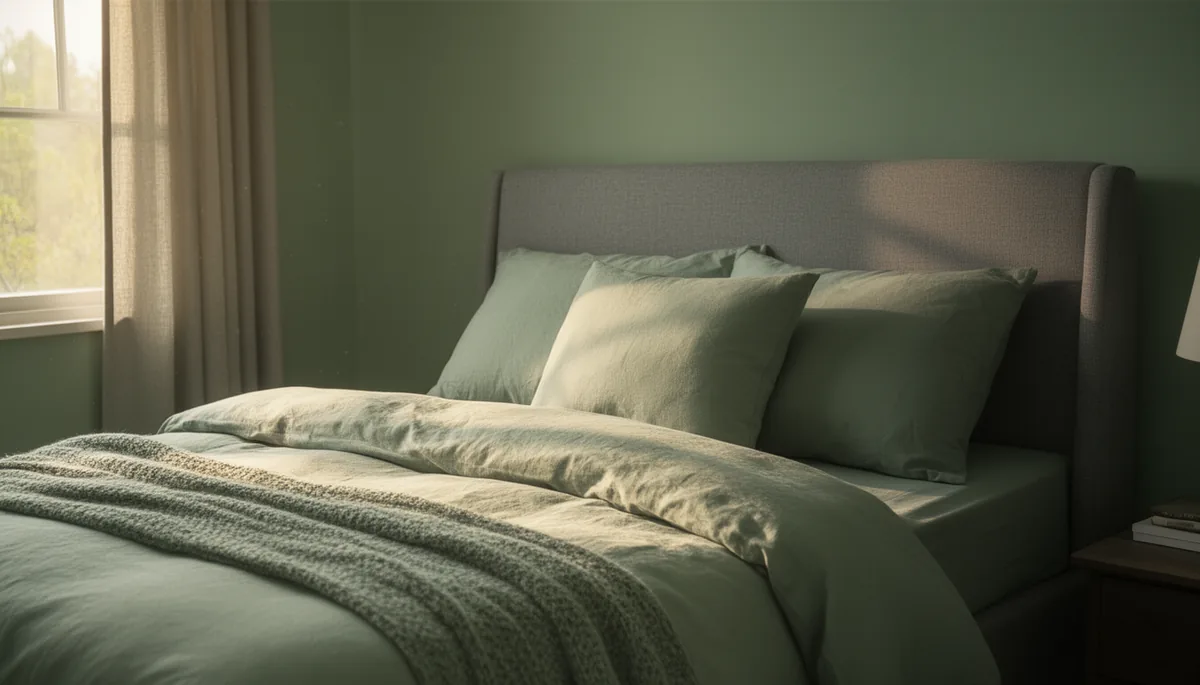
Here’s the thing: An upholstered headboard turns a bed into a soft, enveloping spot rather than a flat platform. It is the difference between a place to sleep and a place to retreat to.
In practice: A padded grey headboard you can lean back against with a book, sage and warm-white pillows piled in front. Climbing in feels like settling into a quiet cocoon.
Quick tip: Go taller than you think with the headboard. A low one leaves the bed feeling exposed and unfinished.
20. Soft Sage Accents That Calm a Busy Mind at Bedtime
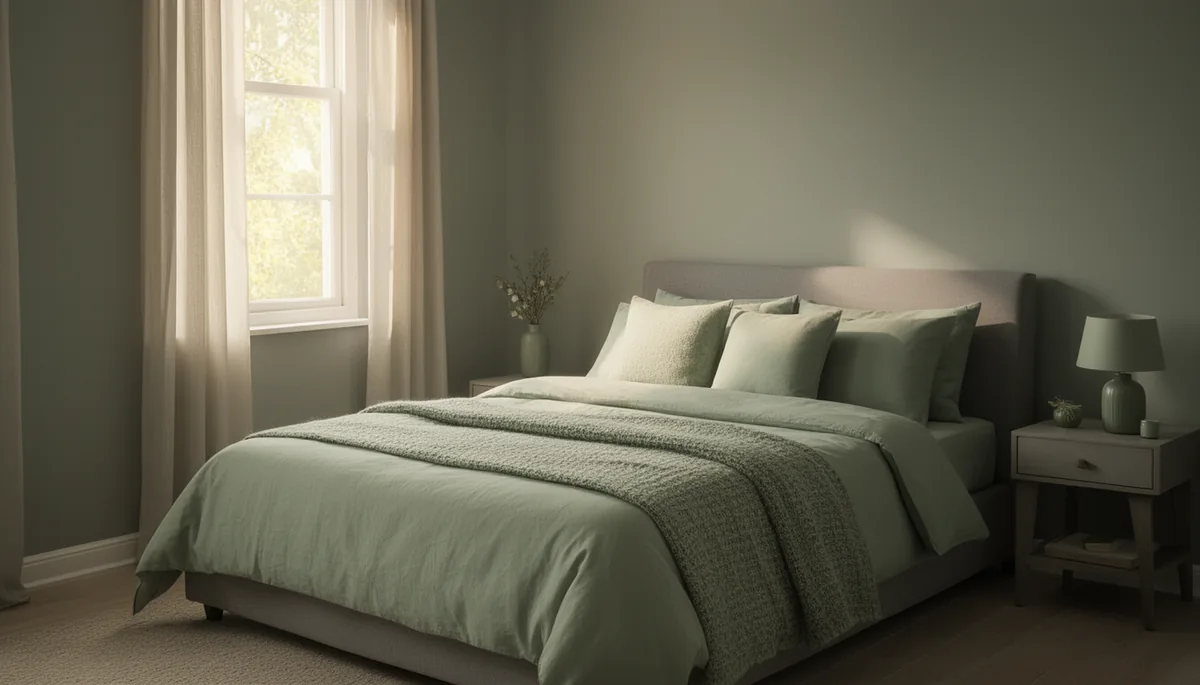
Why this helps: At bedtime, a busy, high-contrast room keeps your mind switched on. Soft, low-contrast sage against grey gives your eyes almost nothing to snag on, which helps you settle.
Here’s the feel: Muted sage and gentle grey with no sharp patterns or bright pops, just quiet tone-on-tone softness. Lying down, there is nothing loud for your brain to keep processing.
A little trick: Save bold patterns for a living space. In the bedroom, keep the sage and grey soft and low-contrast for the calmest sleep.
21. How to Mix Sage and Grey Without It Looking Like a Hotel Room
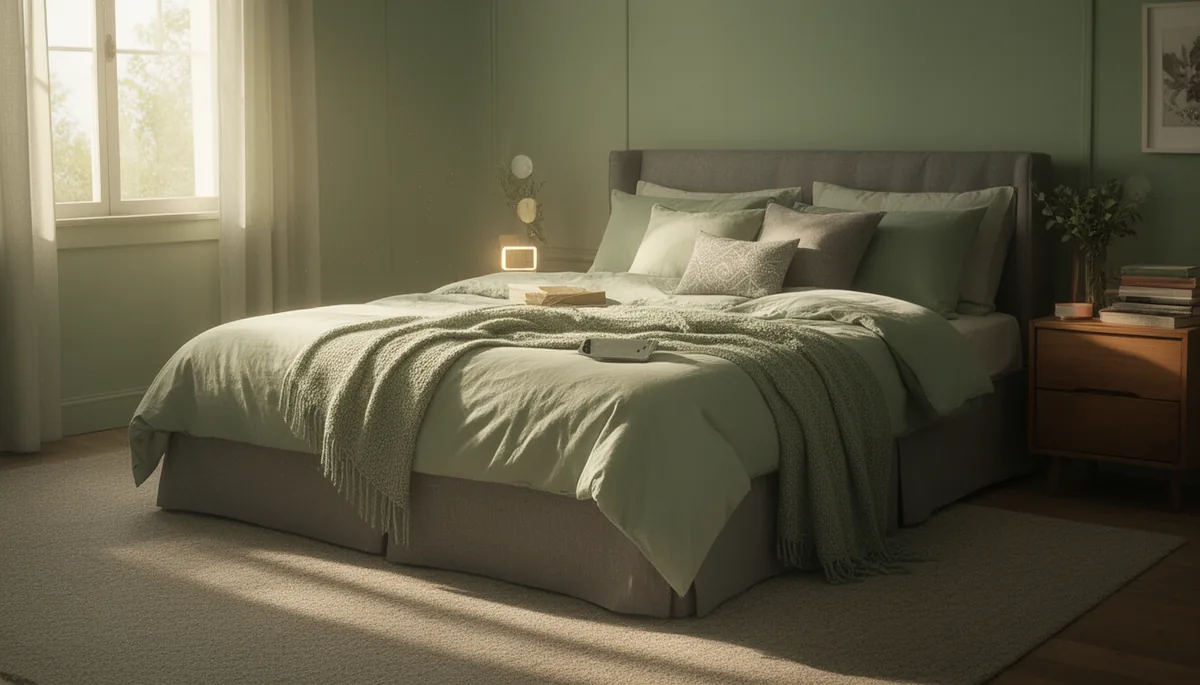
What’s going on: Hotel rooms are matched and empty of personality. A little intentional imperfection and a few personal pieces make the same palette feel like your home.
Picture it: The calm sage and grey base, then a stack of your own books, a slightly rumpled throw, a family photo in a warm frame, and a plant you have kept alive. It feels loved-in, not checked-in.
Worth trying: Break the matchy set on purpose. One pillow that does not match the rest instantly makes the room feel personal.
22. The Cozy Lighting That Signals Your Brain It’s Rest Time
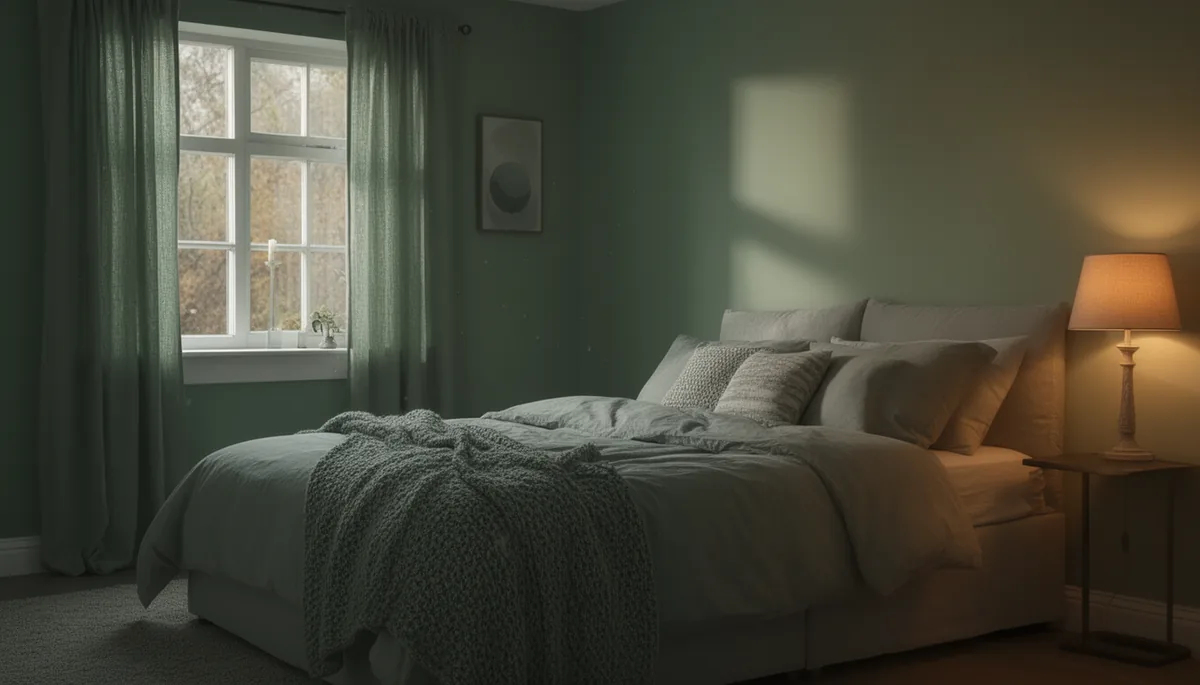
The idea: Warm, dim light in the evening cues melatonin and tells your body to wind down. It also happens to make sage and grey look their coziest.
So in the room: A single warm lamp glowing in the corner, the grey walls going soft and shadowy, and the sage bedding deepening in the low light. The room quietly says it is time to slow down.
Insider move: Put your bedroom lights on a dimmer or use smart warm bulbs. Dropping the brightness an hour before bed changes how the whole room feels.
23. Warm Whites That Stop Sage and Grey From Feeling Gloomy
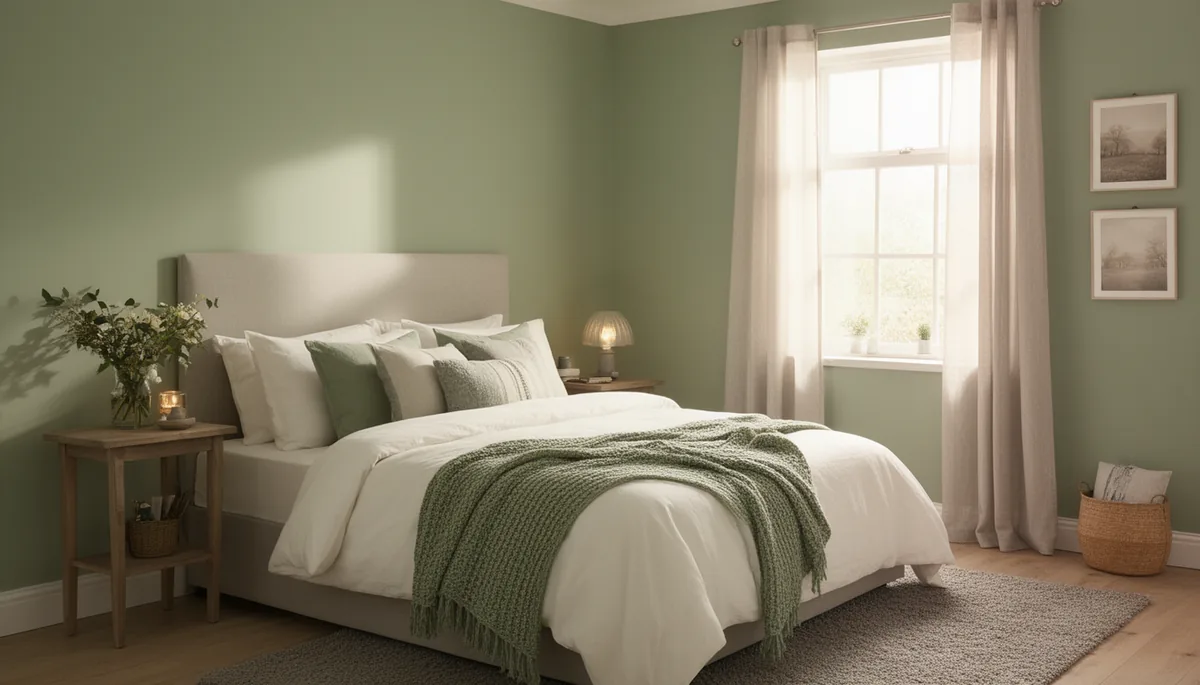
What makes it click: Bright stark white can make grey look cold and heavy. A warm, creamy white lifts the palette and keeps it feeling soft and sunny instead of gloomy.
What it looks like: Warm-white sheets and a cream lampshade brightening the space between your grey blanket and sage pillows. The whole room feels a shade warmer and more inviting.
Keep in mind: Choose warm whites with a hint of cream, never a cool blue-white, whenever they touch your greys.
24. The Throw Blanket Weight That Actually Feels Comforting
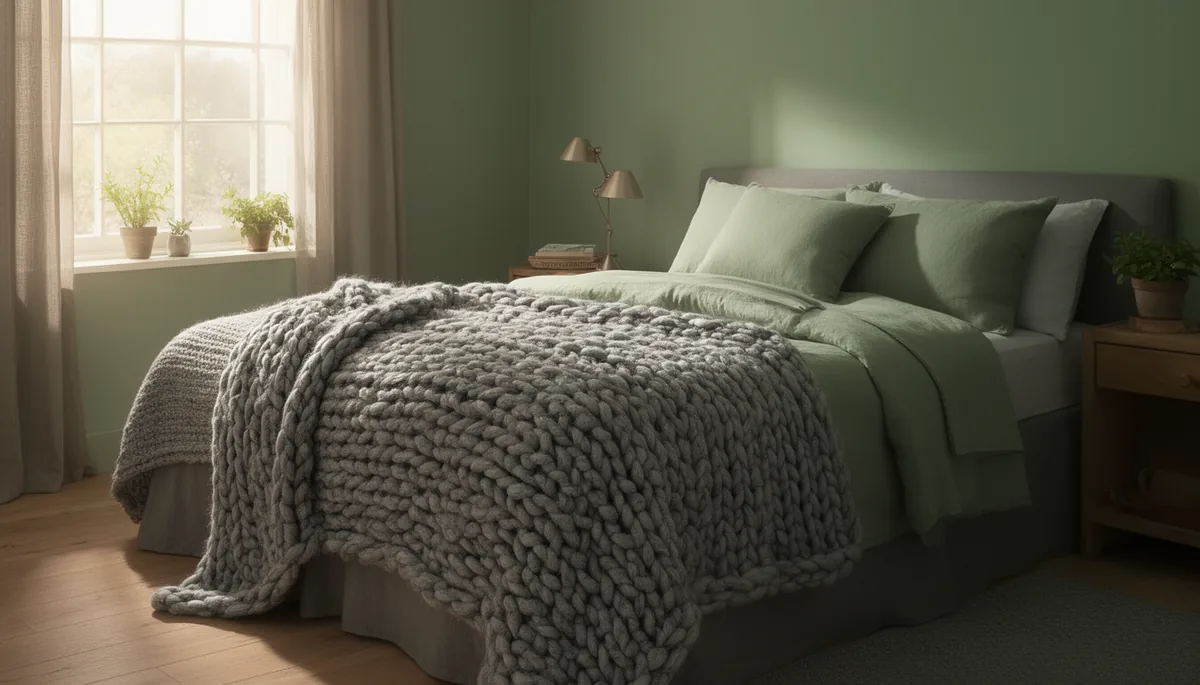
The logic: A thin decorative throw looks fine but does nothing for how the bed feels. A blanket with real weight gives that grounded, tucked-in comfort you actually reach for.
Set the scene: A chunky knit or a gently weighted throw in soft grey draped over the bed, heavy enough to feel like a hug when you pull it over your legs on a cool evening.
One more thing: I’ve seen a single weighty throw within arm’s reach of the bed do more for how cozy a room feels than any amount of styling. Comfort you can actually feel beats a throw that only sits there looking pretty.
25. How to Style a Dresser So Mornings Feel Calmer
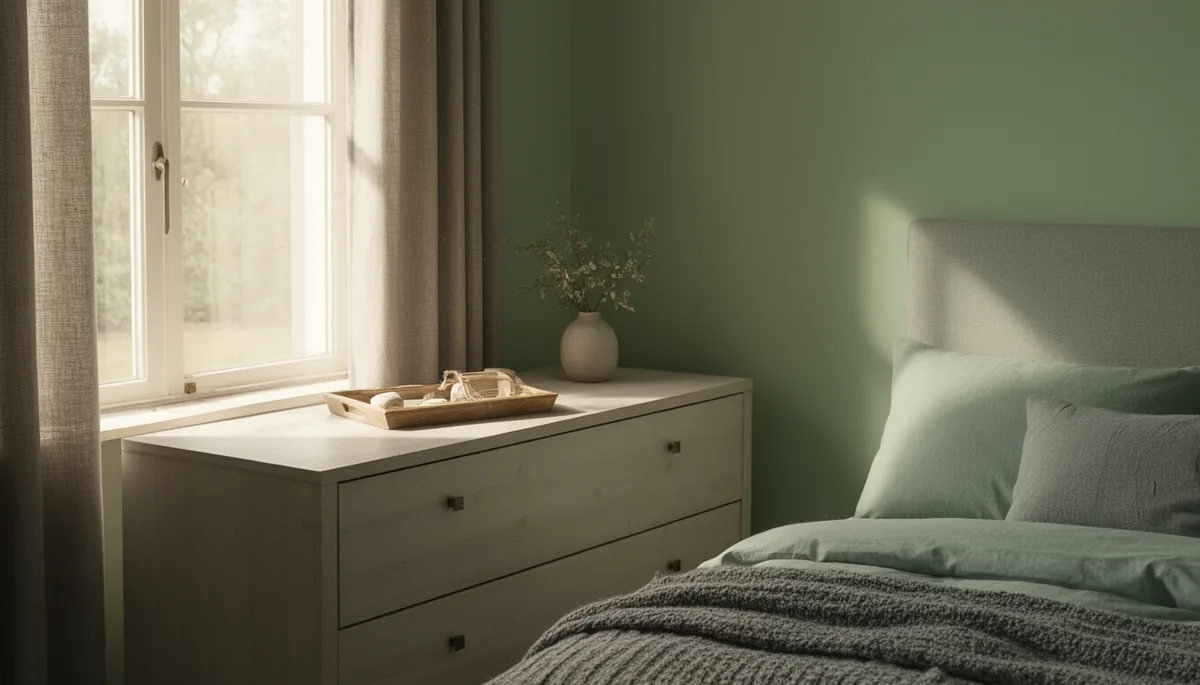
Why it holds up: The first surface you see in the morning sets your mood. A calm, uncluttered dresser makes getting ready feel unhurried instead of chaotic.
Here’s the visual: A warm wood or grey dresser with just a tray for your essentials, a small sage plant, and one framed piece leaning behind. Everything has a home, so mornings start settled.
A smart shortcut: Use a small tray to corral daily bits. Contained clutter reads as calm, loose clutter reads as stress.
26. Sage Bedding for Hot Sleepers, Cool and Cozy at Once
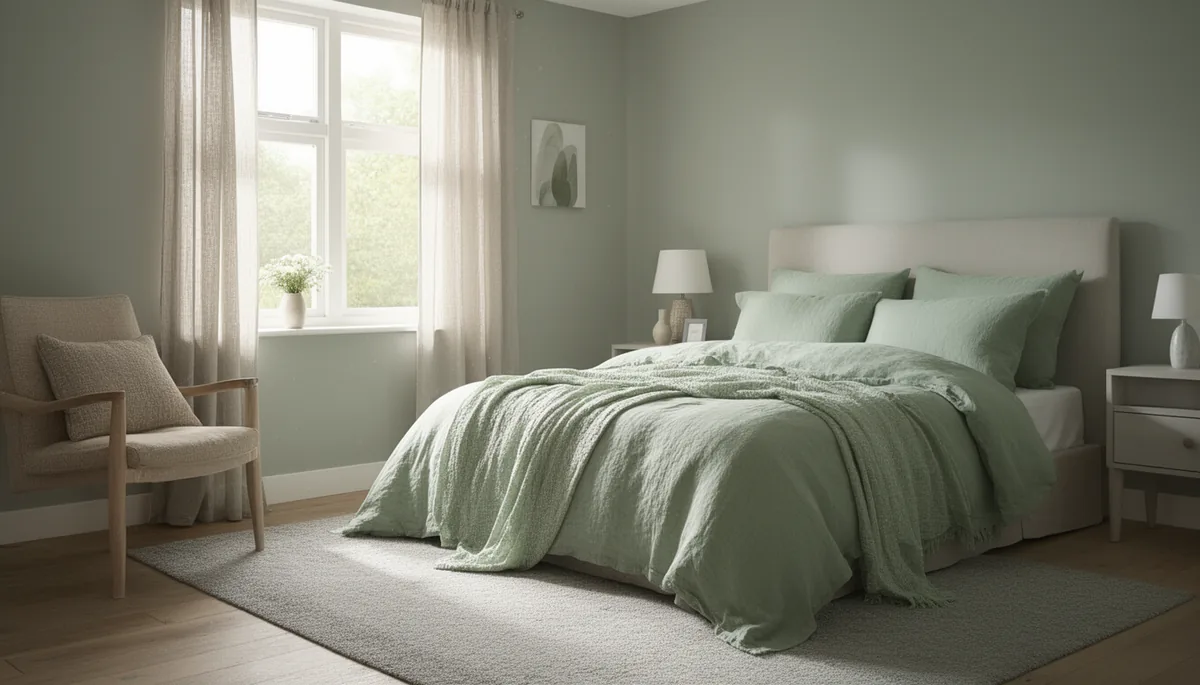
The reason: If you sleep hot, heavy bedding fights you all night. Breathable sage linen keeps the cozy look while actually letting you stay cool.
Imagine: Lightweight sage linen sheets and a light grey coverlet, airy and breathable, layered so you can peel back a layer when you warm up. It looks cozy and sleeps cool.
One small thing: Choose linen or cotton percale in your sage and grey layers. Both breathe far better than microfiber for hot sleepers.
Keep it calm:Browse more calm, modern decor ideas→27. The Scent and Color Pairing That Makes the Room Feel Restful
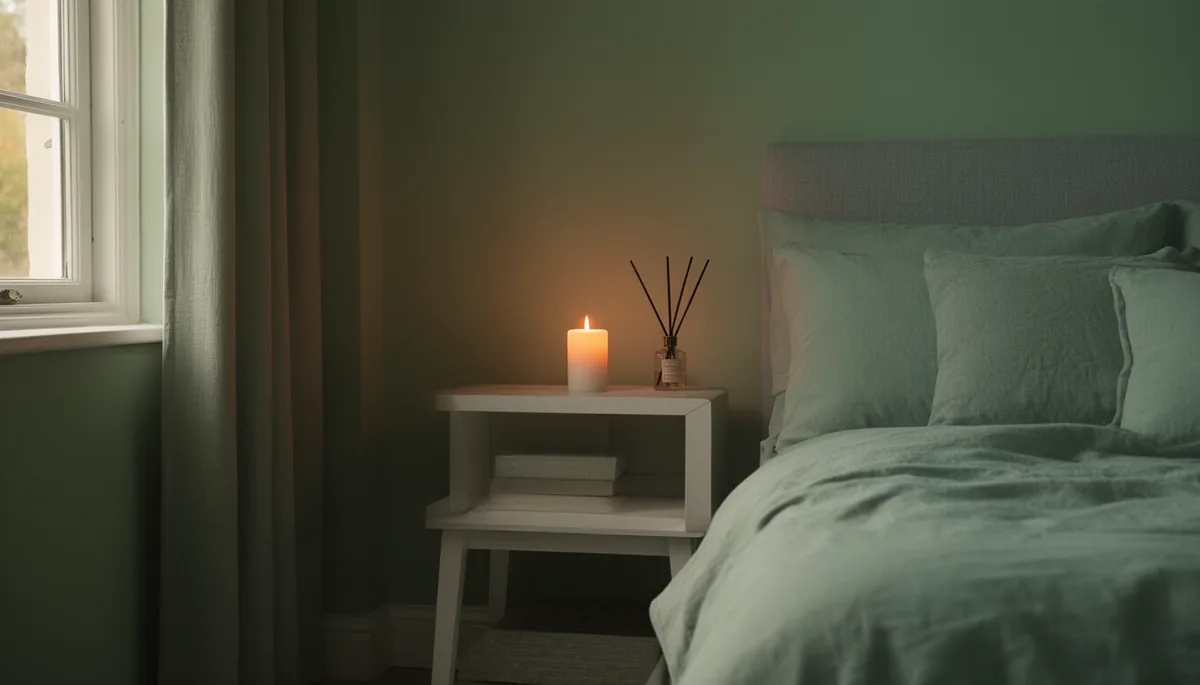
Here’s the thing: Calm is not only visual. A soft, natural scent paired with the sage and grey palette deepens the restful feeling and helps your brain associate the room with winding down.
In practice: A low candle glowing on the nightstand, a small diffuser with eucalyptus or lavender nearby, and the sage bedding just beyond. The room smells as calm as it looks.
Quick tip: Keep scents soft and green, like eucalyptus, sage, or lavender, to match the palette. Skip anything sharp or sweet in a sleep space.
28. How to Add Grey Without Making a Sunny Room Feel Cold
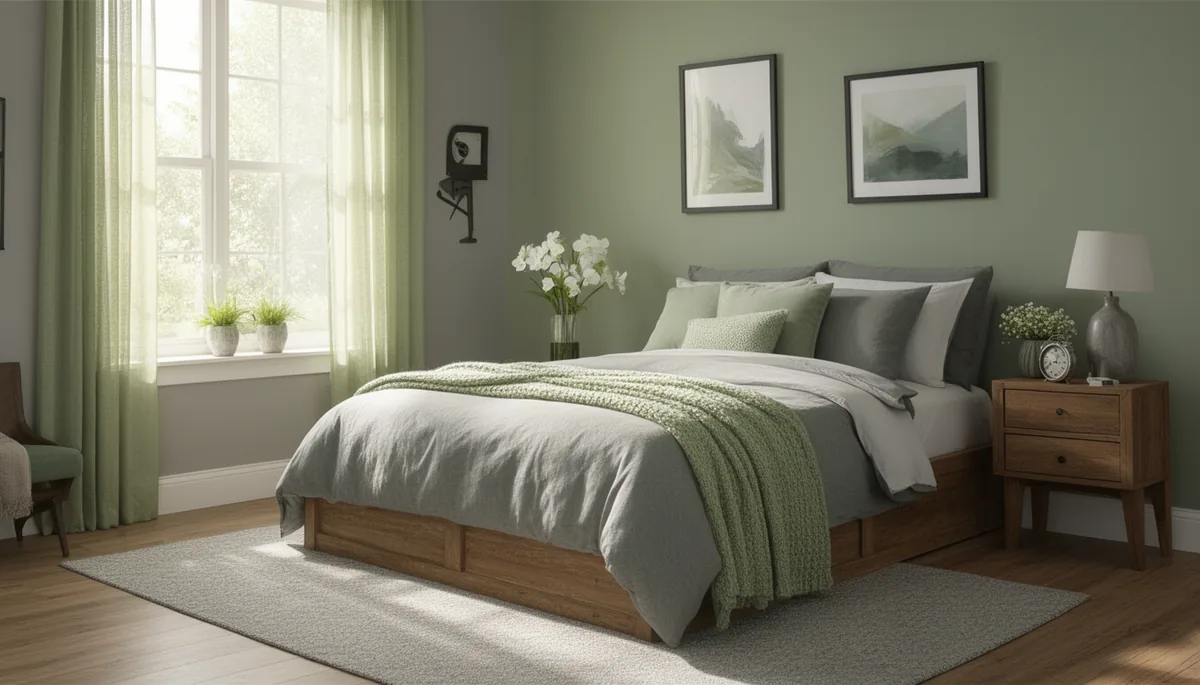
Why this helps: In a bright, sunny room it is easy to over-cool things with too much grey. Warming the greys and adding wood keeps all that lovely light feeling cozy.
Here’s the feel: Warm greige bedding soaking up the sunshine, sage pillows, and a wood bench at the foot of the bed. The room stays bright and cheerful instead of turning stark.
A little trick: In a sunny room you can go a touch deeper with sage since the light will keep it from feeling heavy.
29. The Corner Everyone Forgets That Makes the Room Feel Finished
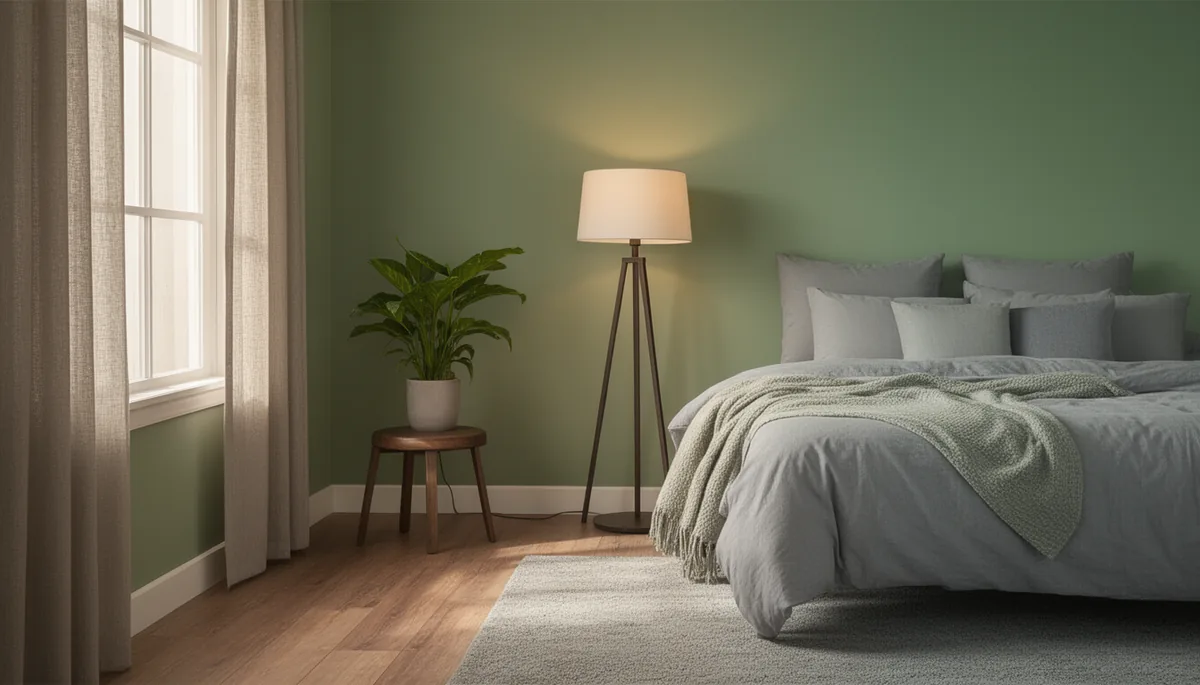
What’s going on: An empty corner quietly reads as unfinished, no matter how nice the bed looks. Filling it with something soft and useful makes the whole room feel complete and settled.
Picture it: A small stool, a trailing plant, and a slim floor lamp tucked into the corner beside the window. The room finally feels whole, like every part of it is being used. If you like this palette pushed a little warmer, our sage green and terracotta bedroom takes it there.
Worth trying: A corner needs three things to feel finished: something living, something light, and something with a little height. Sage and a warm bulb cover two of them.
30. Putting Together Your Calm Sage Green and Grey Bedroom, Step by Step
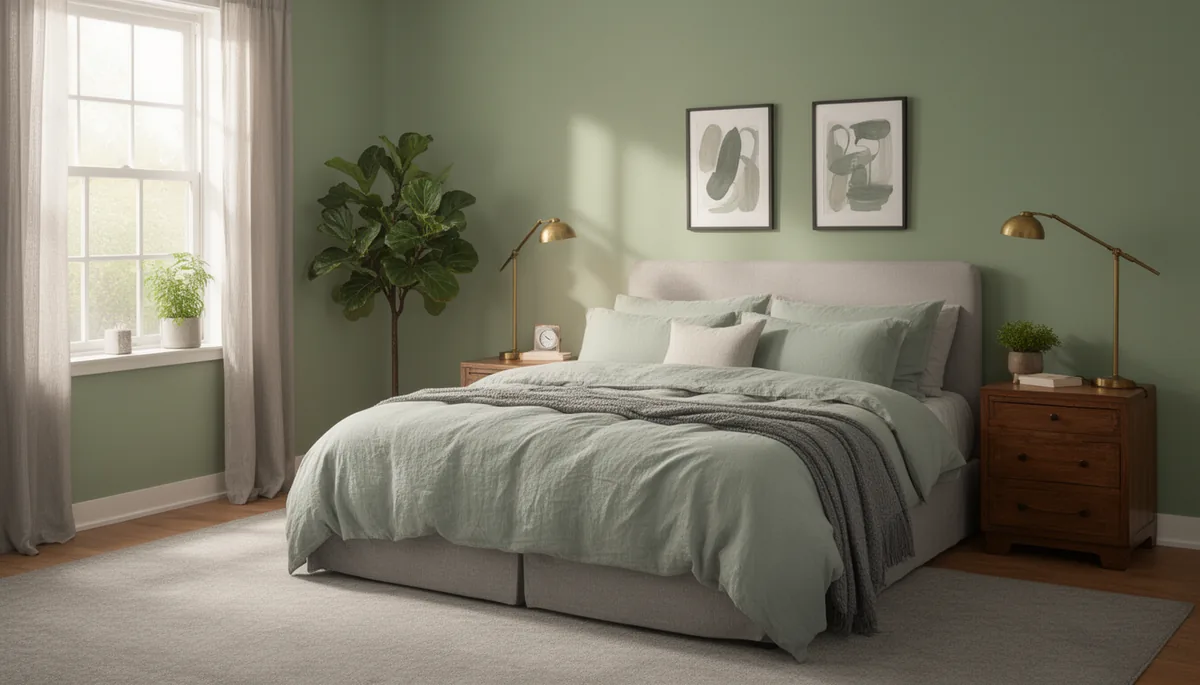
The idea: All the pieces work best as a system. Building the room in order, from the big surfaces down to the finishing touches, is what makes it feel intentional instead of collected.
So in the room: Starting with warm grey on the walls and bed, adding a sage accent wall or headboard, layering textured grey bedding, grounding it with warm wood and brass, then finishing with a plant, a soft rug, and warm lighting. That is a complete sage green and grey bedroom. The same calm palette carries over beautifully into our sage green fall mantel ideas.
Do this: Build from the biggest surface to the smallest detail, and stop adding once the room feels calm. Restraint is the last and most important step.
Final Thoughts
A sage green and grey bedroom is not about chasing a perfect look. It is about building a space that feels calm to walk into, warm to sink into, and easy to rest in. Start with the ratio, warm up your greys, layer in real texture, and let sage arrive where you actually relax.
Take one or two of these ideas this week, live with them, and add the next when the room tells you it is ready. That slow, feeling-led approach is what turns a nice bedroom into your favorite room in the house.
Frequently Asked Questions
Let grey lead on the big surfaces and bring sage in through textiles and accents, aiming for roughly two-thirds grey to one-third sage. Choose warm-toned greys with a hint of greige, add warm wood and a brass or gold metal, and keep your lighting warm. That combination keeps a sage green and grey bedroom feeling calm and cozy rather than chilly.
Stick to warm neutrals so the palette stays restful. Warm white and cream brighten it, natural wood grounds it, and brass or aged gold adds a cozy glow. Avoid adding a competing accent color, since sage and grey are most calming when they lead alone with only soft neutral support.
Yes. A single soft sage wall gives the eye one calm place to land, and layering light and mid greys adds depth without clutter. Keep contrast low and lighting warm, and a small sage green and grey bedroom will feel more restful and open, not smaller.
Carry the color with textiles instead of paint. A sage duvet or throw, a few sage pillow covers, a fabric headboard slipcover, framed botanical prints, and a trailing plant against neutral grey bedding give you the full calm look, and all of it moves with you.
Happy decorating!