
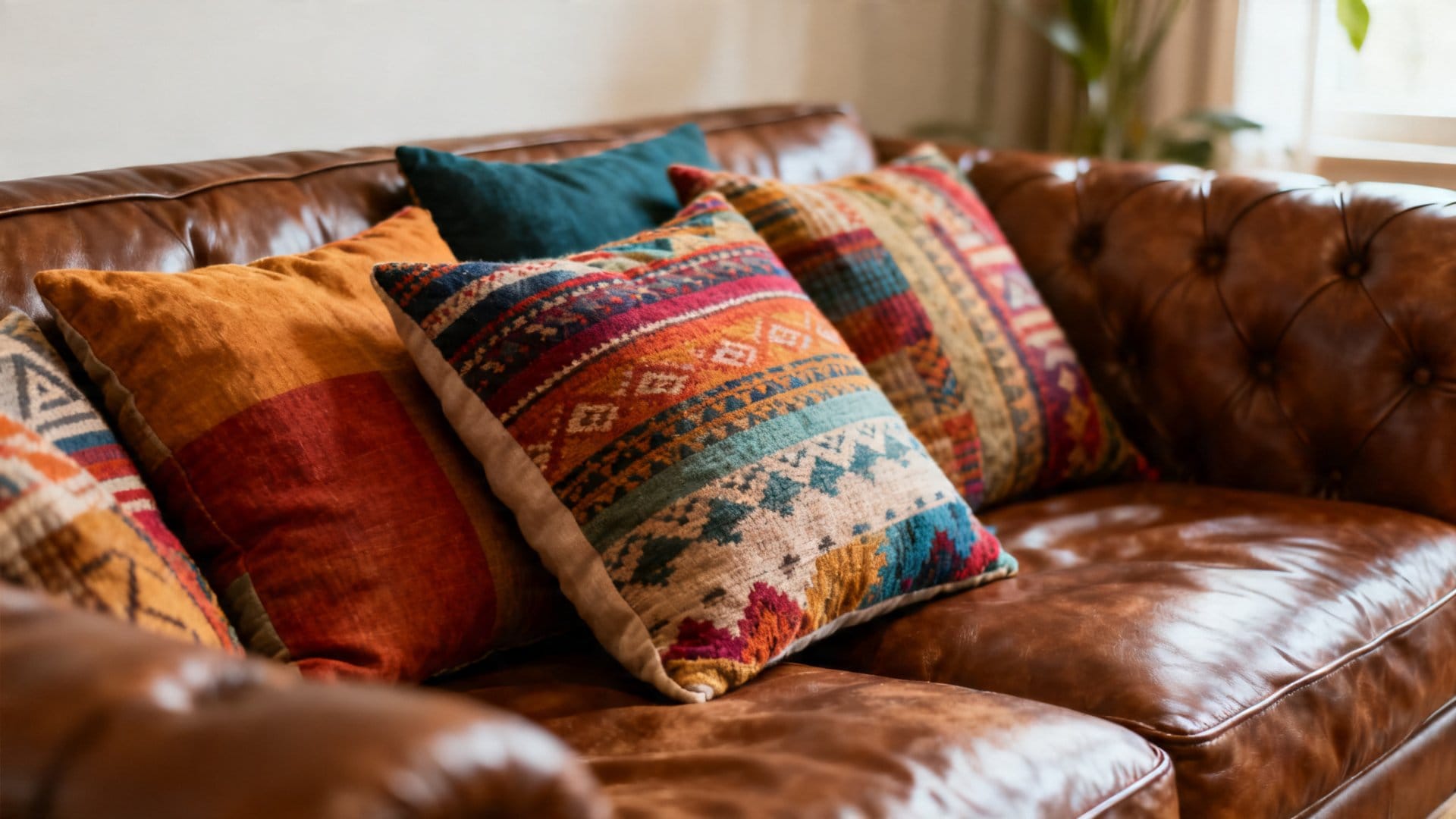
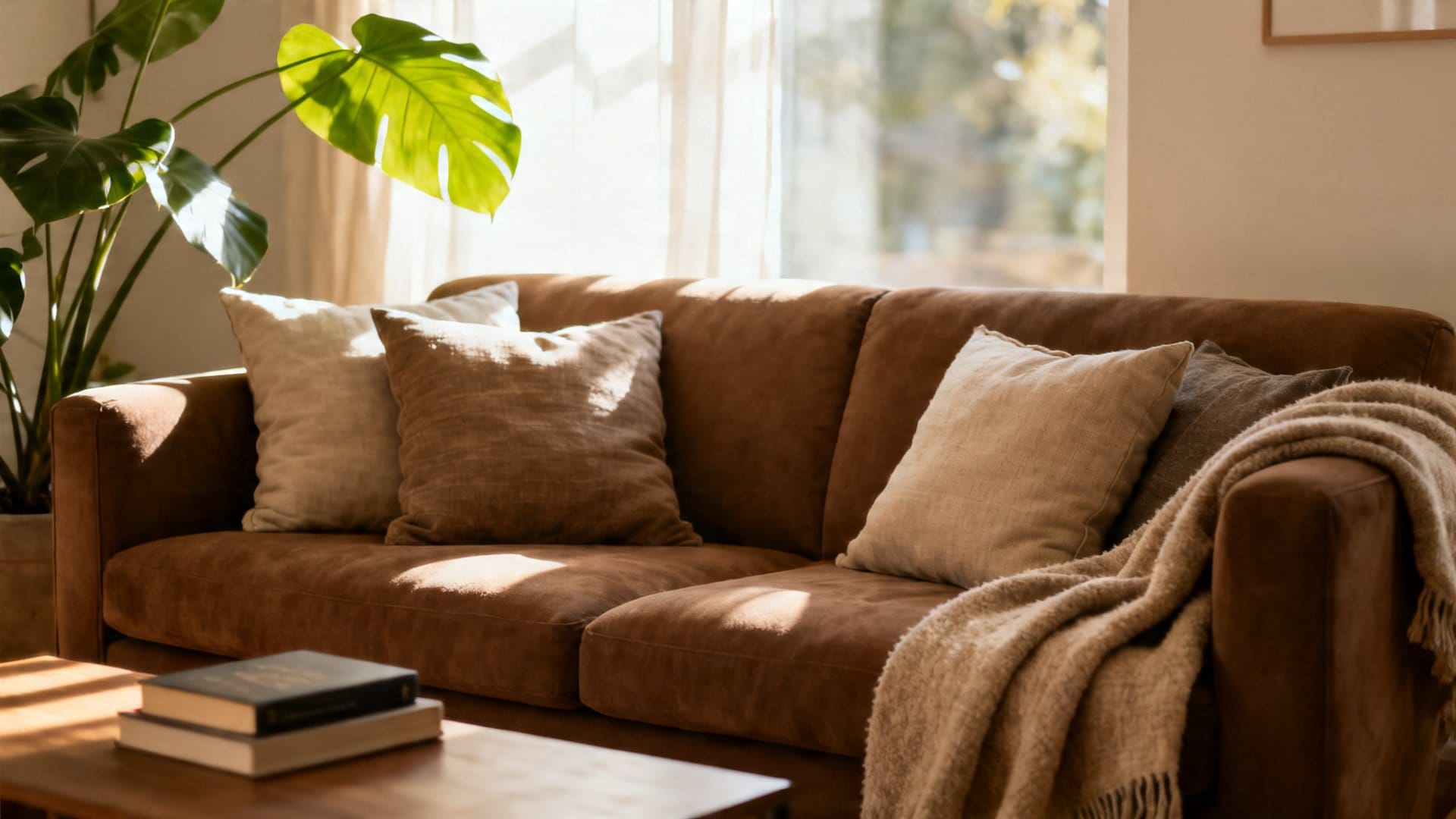
There’s something so grounding about a brown couch — it anchors a room the way a big oak tree anchors a backyard. But once you’ve moved in and settled the furniture, you might find yourself staring at that sofa wondering what on earth to put on it. Choosing the best decorative pillows for a brown couch is one of those small decisions that quietly shapes the entire feel of your living room. The right pairings can make your space feel pulled together, cozy, and completely yours. This article will walk you through color combinations, textures, and styling approaches that actually work — no design degree required.
Why Is Brown Actually the Most Versatile Sofa Color You Own?
Brown is one of the most versatile sofa colors because its natural warmth pairs well with both bold contrasts and soft harmonies. It behaves like a true neutral, making it easy to style across a wide range of color palettes and room aesthetics.
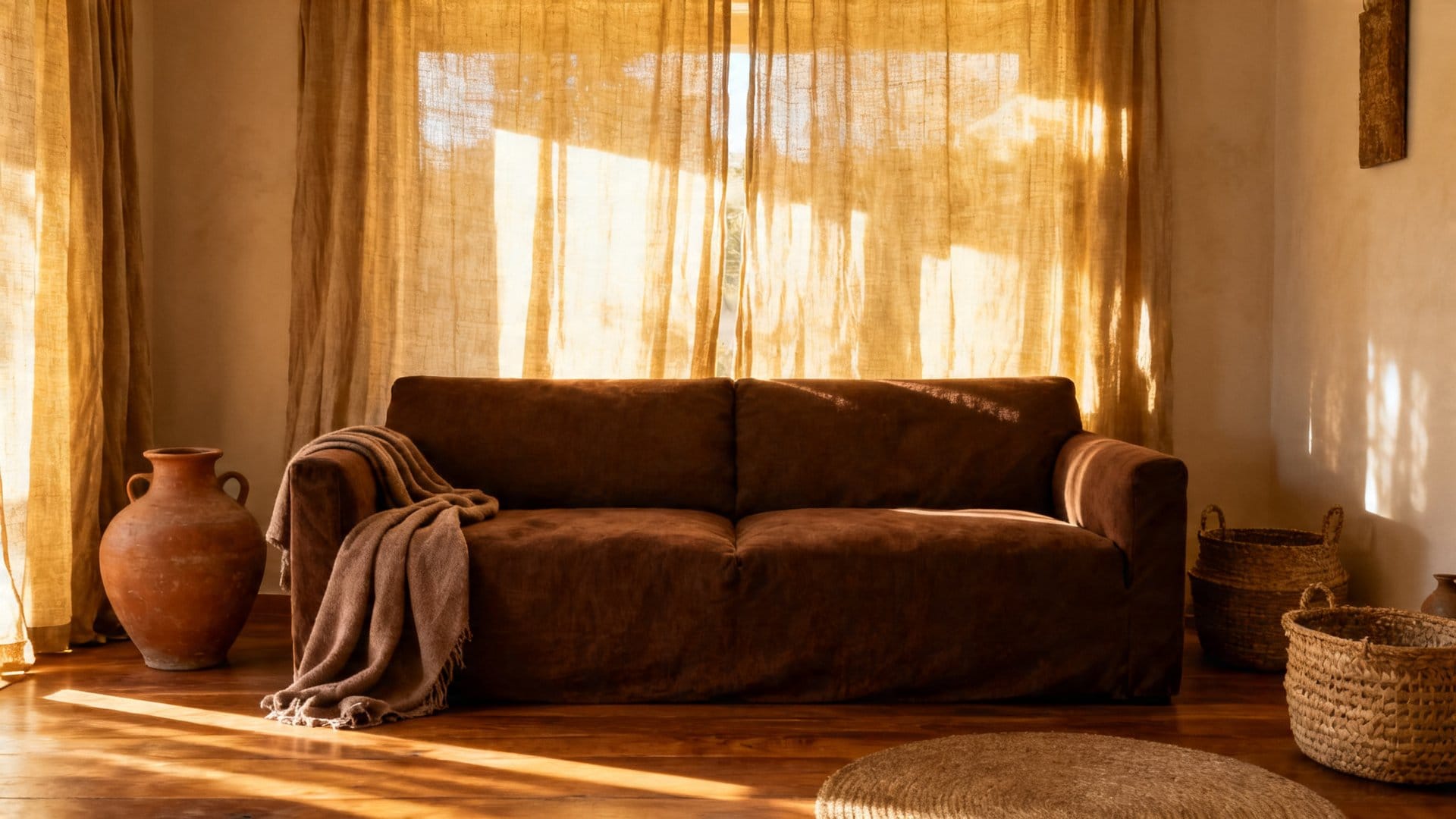
Brown gets a reputation for being “safe” or even boring, but I love how it behaves more like a neutral than people realize. Think about it — brown exists in nature everywhere: in tree bark, in warm soil, in leather-bound books. It carries an inherent warmth that cool grays and stark whites simply don’t.
That natural warmth means brown plays beautifully with a surprisingly wide range of colors. Whether your couch leans toward a rich chocolate, a warm caramel, a cool taupe, or a deep espresso, you’re working with a base that welcomes both bold contrast and soft harmony. One thing I’ve noticed is that people tend to either go too dark with their pillow choices — drowning the sofa in more brown — or too light, which can feel washed out. The sweet spot is almost always somewhere in the middle.
Identifying Your Brown’s Undertone
Before you start shopping, hold a white piece of paper next to your couch. If your brown looks warm and reddish, you have a red-toned brown — it pairs beautifully with terracotta, gold, and deep teal. If it looks cooler or grayish, you have a cool-toned brown — think dusty blue, sage green, and soft cream. Knowing this one detail will save you from bringing home pillows that clash in ways you can’t quite put your finger on.
What Color Combinations Work Best for a Brown Couch?
The best color combinations for a brown couch include rust orange with warm ivory, sage green with cream, and deep navy against caramel tones. These pairings consistently look beautiful because they either echo the couch’s warmth or provide a striking, balanced contrast.
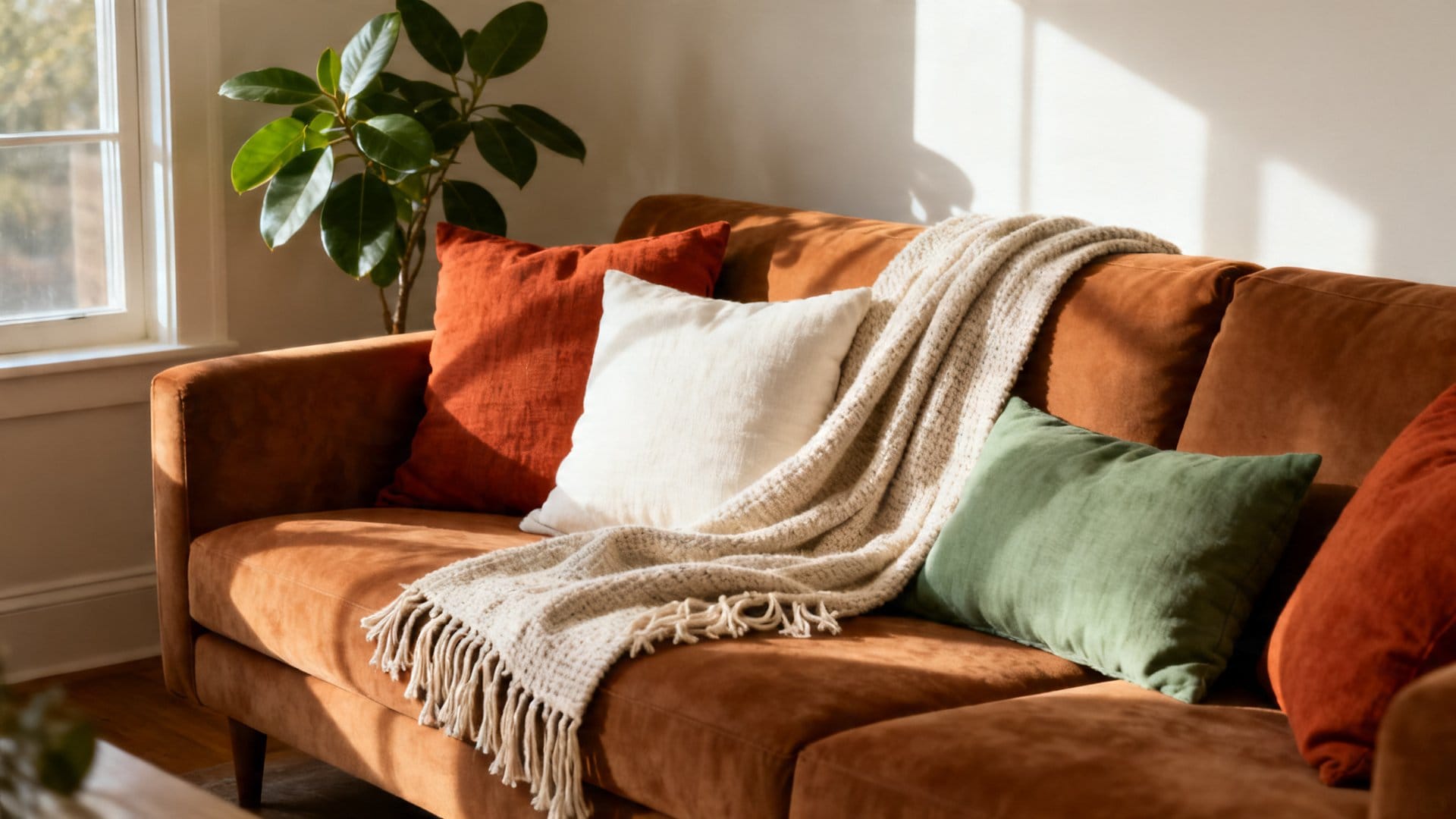
For the best decorative pillows for a brown couch, color is your most powerful tool. The good news is that several tried-and-true combinations consistently look beautiful without requiring much effort to pull off.
Rust orange and warm ivory is one of the most satisfying combinations for a brown sofa. The rust echoes the warm undertones in most brown furniture while the ivory keeps things from getting too heavy. Sage green and cream is another pairing that feels fresh and organic — it brings in that earthy, cottagecore quality that’s been so popular lately. For something bolder, consider a deep navy or cobalt blue against a caramel or tan couch; the contrast is striking without feeling jarring. And if your space leans more glam or modern, dusty pink or blush alongside a warm gold accent pillow creates a surprisingly sophisticated look.
Pro tip: Choose one dominant pillow color, one accent color, and one neutral. For example: sage green as your main, rust as your accent, and an ivory lumbar pillow to anchor the arrangement. This three-color rule keeps things cohesive without looking matchy-matchy.
Once you’ve settled on a color palette, the next step is thinking about how different materials and surfaces will interact with your couch.
Which Textures Make a Brown Couch Come Alive?
Soft, tactile textures like chunky knit, velvet, and woven linen make a brown couch feel rich and layered. They work by providing contrast against the couch’s surface — especially effective on leather sofas.
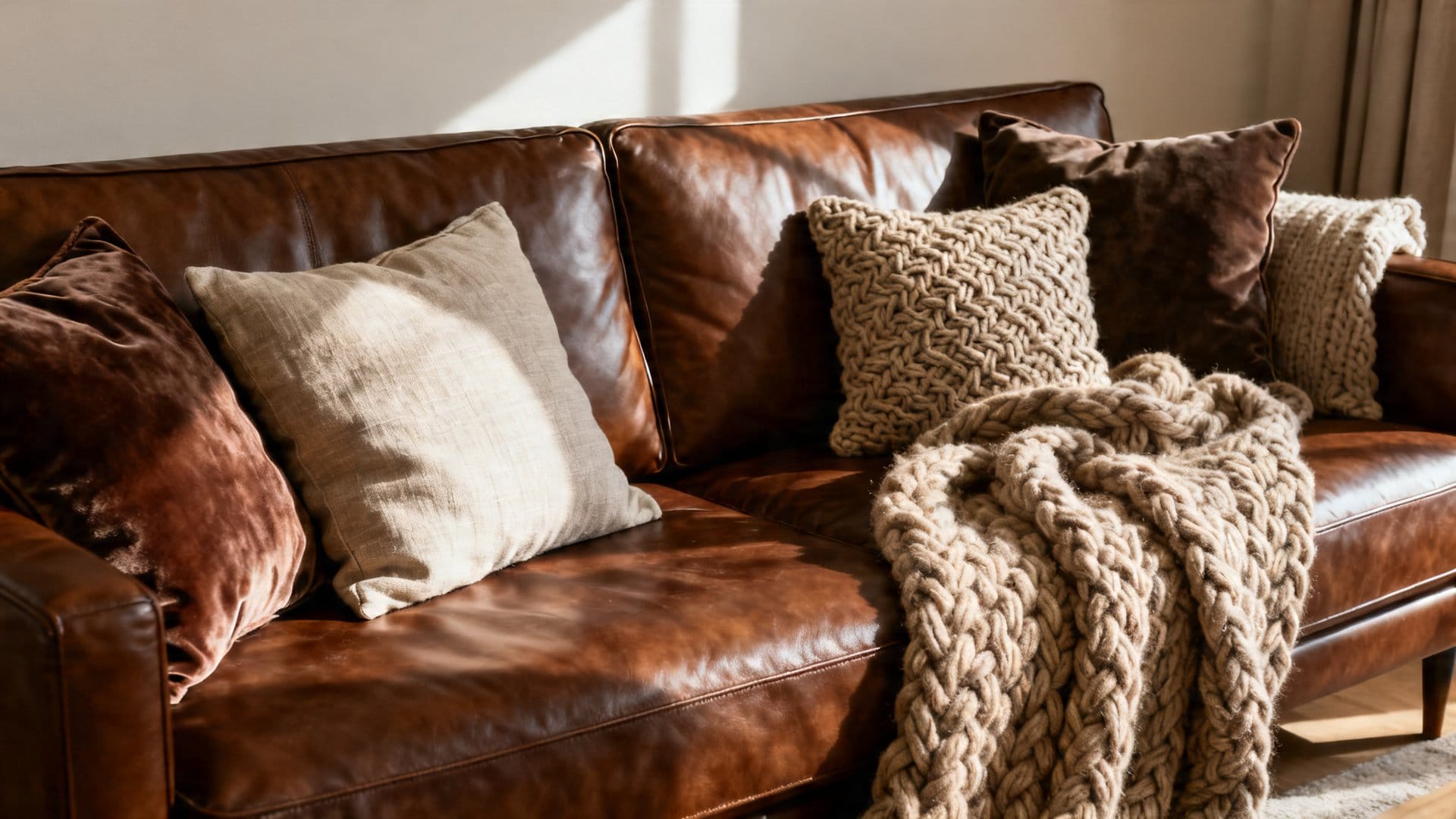
Color gets all the attention, but texture is really what makes a pillow arrangement feel rich and layered. A brown leather couch especially benefits from soft, tactile contrast — something that breaks up that hard, smooth surface and invites you to actually sit down.
A chunky knit pillow cover draped against a leather sofa creates an instant wool-and-leather contrast that feels cozy and intentional. Velvet pillows in jewel tones — think deep plum, forest green, or amber — add a luxurious softness against the matte or glossy surface of a fabric couch. Linen and cotton blends in natural, undyed tones give a more relaxed, lived-in vibe that works especially well in casual family rooms or boho-inspired spaces. Woven or macramé-style pillow covers bring in a handcrafted quality that softens a very structured sofa.
Layering Textures Without Overdoing It
The key to texture layering is variety without chaos. Aim for no more than three different textures in one pillow arrangement — for example, velvet, linen, and a woven accent. If every pillow has a different texture, the arrangement starts to feel busy rather than select. I keep coming back to this approach because it’s the easiest way to make a sofa look like it was styled by someone with a real eye for detail.
Which Pillow Sizes and Arrangement Styles Actually Look Good?
The best pillow arrangements combine two larger square pillows at each end with a smaller lumbar pillow in the center. Varying sizes and using an odd number of pillows creates a natural, intentional look.
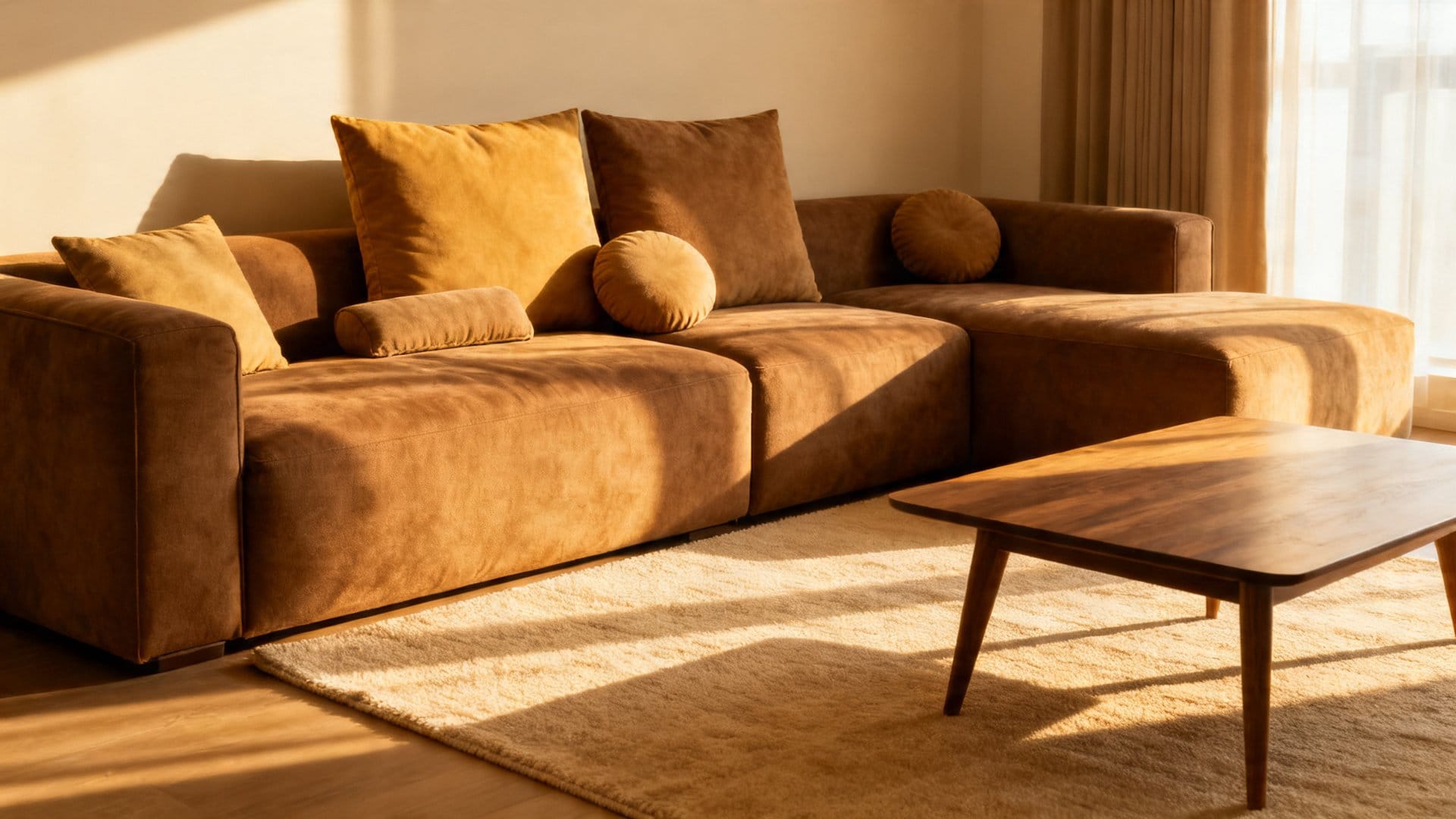
Even the most beautiful pillows can look awkward if they’re the wrong size or arranged without intention. This is the part most people skip over, and it makes such a visible difference.
Layout Ideas for Different Sofa Sizes
- Two-cushion sofa: Two 20-inch square pillows at each end, plus one 14×20-inch lumbar pillow centered between them — this creates balance without overcrowding the seating area.
- Three-cushion sofa: Four square pillows (two on each side in slightly different sizes — a 22-inch behind a 18-inch) plus a lumbar pillow in the center for a layered, intentional look.
- Sectional: Use larger 24-inch pillows at the corners and mix in smaller 18-inch pillows toward the middle — vary the colors and textures as you move along the sectional to keep it interesting.
- Odd numbers rule: When in doubt, an odd number of pillows almost always looks more natural and relaxed than an even number.
A good arrangement creates depth — you want pillows that lean slightly forward rather than sitting perfectly flat. Don’t be afraid to karate-chop the top of a square pillow to create that soft indent; it’s one of those small styling tricks that makes a real difference.
How Do You Mix Patterns for a Brown Couch?
Mix patterns on a brown couch by pairing a large-scale print with a smaller-scale pattern in the same color palette. Always include at least one solid pillow to give the eye a place to rest.
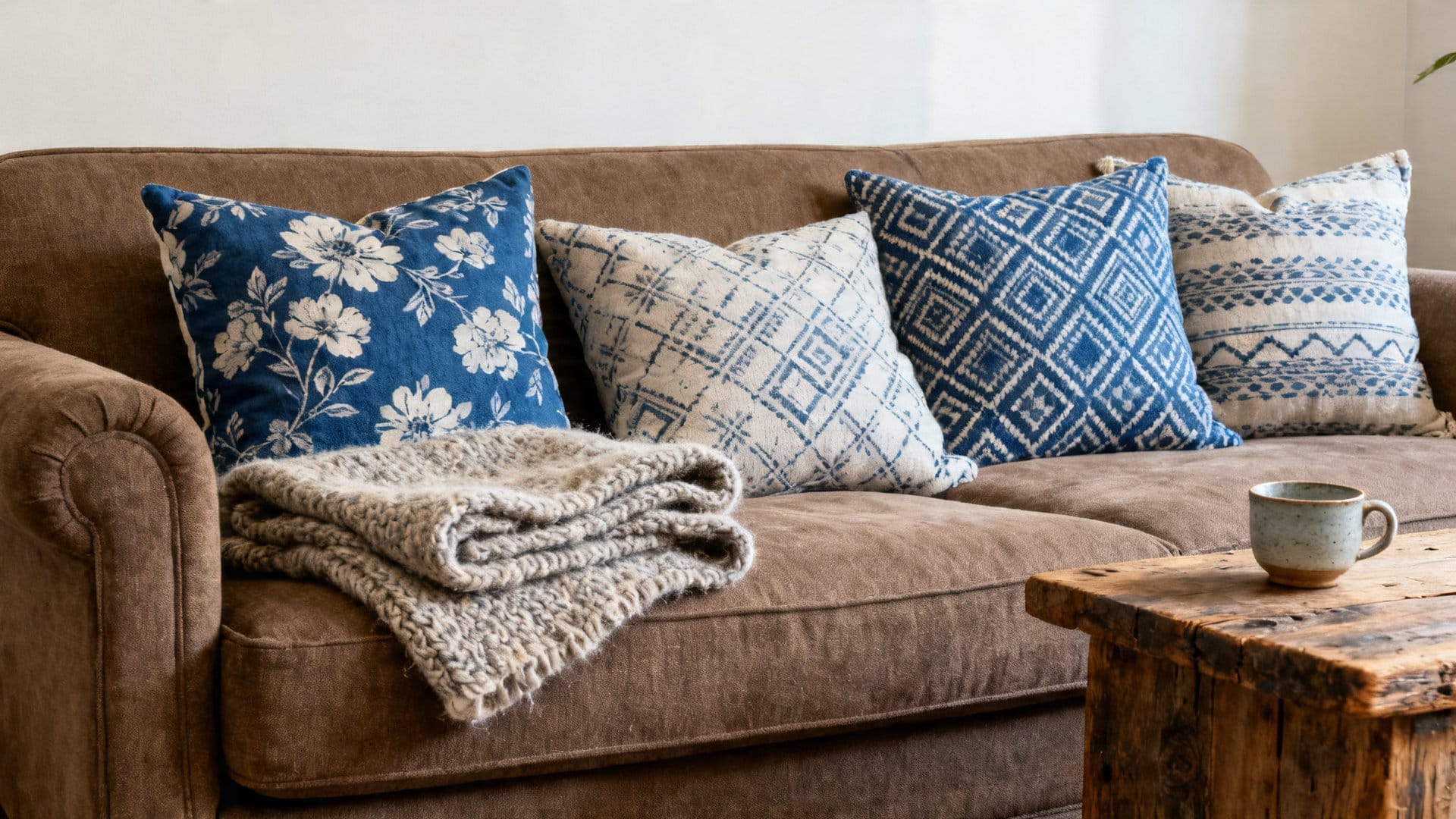
Mixing patterns is one of those things that sounds complicated but follows a few simple principles once you understand them. A brown couch is actually a fantastic backdrop for pattern play because its solid, earthy tone grounds whatever you put against it.
The trick is to vary the scale of your patterns. Pair a large-scale geometric or botanical print with a smaller-scale stripe or subtle check. Keep the color palette consistent across the patterns — if your large print uses rust, cream, and sage, your smaller pattern should pull from at least one of those same colors. This visual thread is what makes mixed patterns look intentional rather than random. A friend of mine tried something similar in her living room — mixing a large floral in warm terracotta tones with a smaller buffalo check in the same rust and cream palette — and it completely changed the energy of her space from flat to full of personality.
Pro tip: Always include at least one solid pillow in your arrangement to give the eye a place to rest. Even one plain velvet or linen pillow in a coordinating color will keep a patterned grouping from feeling overwhelming.
Beyond color, texture, and pattern, timing also plays a role in keeping your sofa looking its best throughout the year.
How Do Seasonal Pillow Swaps Keep Your Brown Couch Feeling Fresh?
Swapping pillow covers with the seasons is one of the easiest ways to refresh your living room without buying new furniture. A brown couch serves as a constant anchor while the colors and textures around it shift.
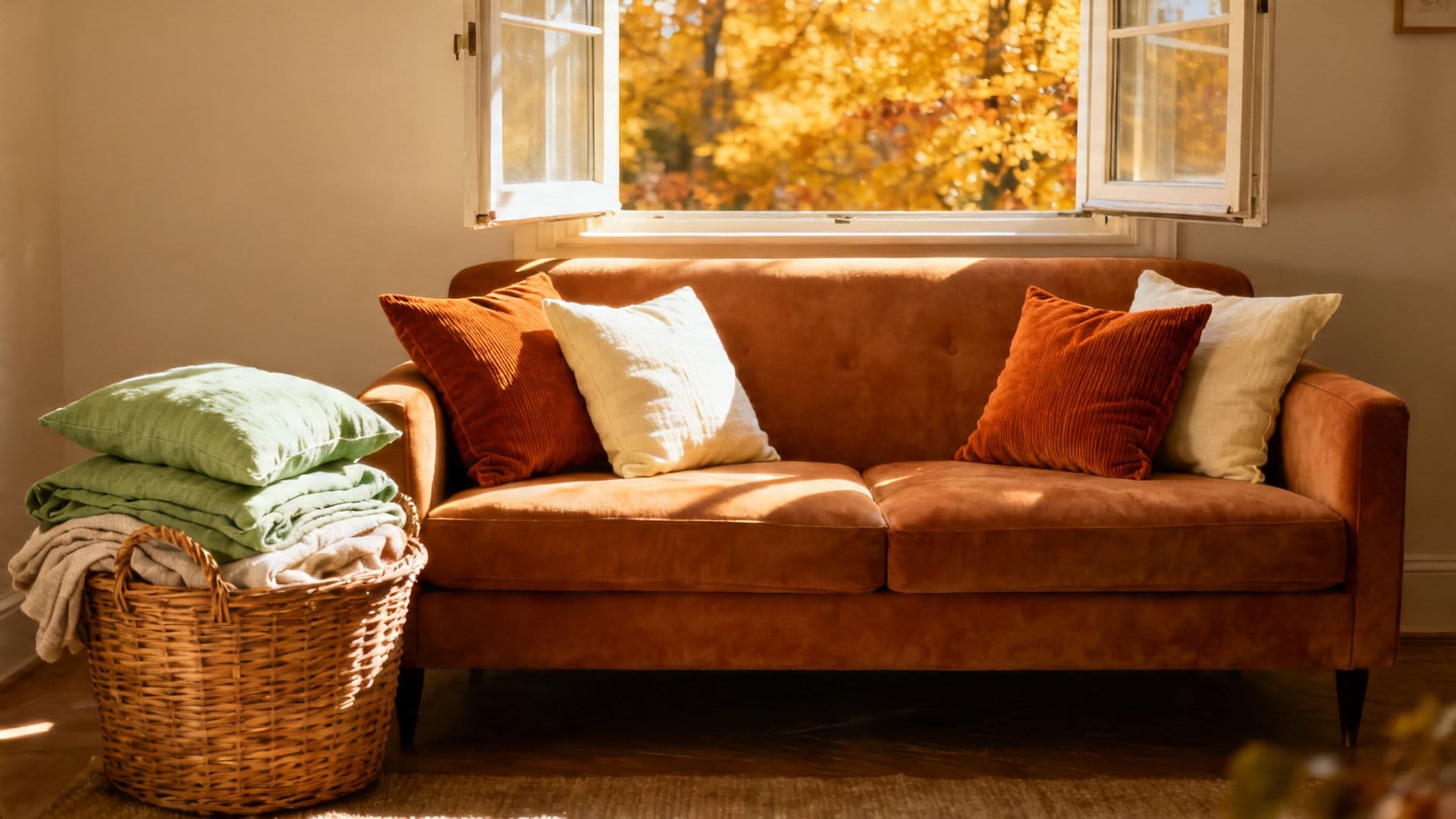
In fall, lean into the natural warmth of your brown sofa with pillow covers in deep amber, burnt sienna, and forest green. The couch and the pillows will feel like they belong to the same warm palette. As winter arrives, shift toward rich jewel tones — burgundy, navy, and deep plum — paired with a chunky knit or velvet cover to add that sense of warmth and weight. Spring calls for something lighter: dusty pink, soft sage, and warm white bring a fresh, airy quality without abandoning the cozy foundation. Summer is a great time to bring in unexpected combinations — a pop of coral, a stripe in cobalt and cream, or even a bold tropical print if your space can handle it.
From what I’ve gathered, the easiest way to do seasonal swaps is to invest in a few high-quality pillow inserts and simply rotate the covers. You can often find beautiful pillow covers at home goods stores, online marketplaces, and even thrift shops — and storing a small collection takes up far less space than you’d think.
What Are the Best Style-Specific Pillow Ideas for Your Brown Couch?
The best pillow ideas for a brown couch depend on your room’s overall aesthetic. Farmhouse, boho, modern, cottagecore, and coastal styles each call for different textures, patterns, and color palettes.
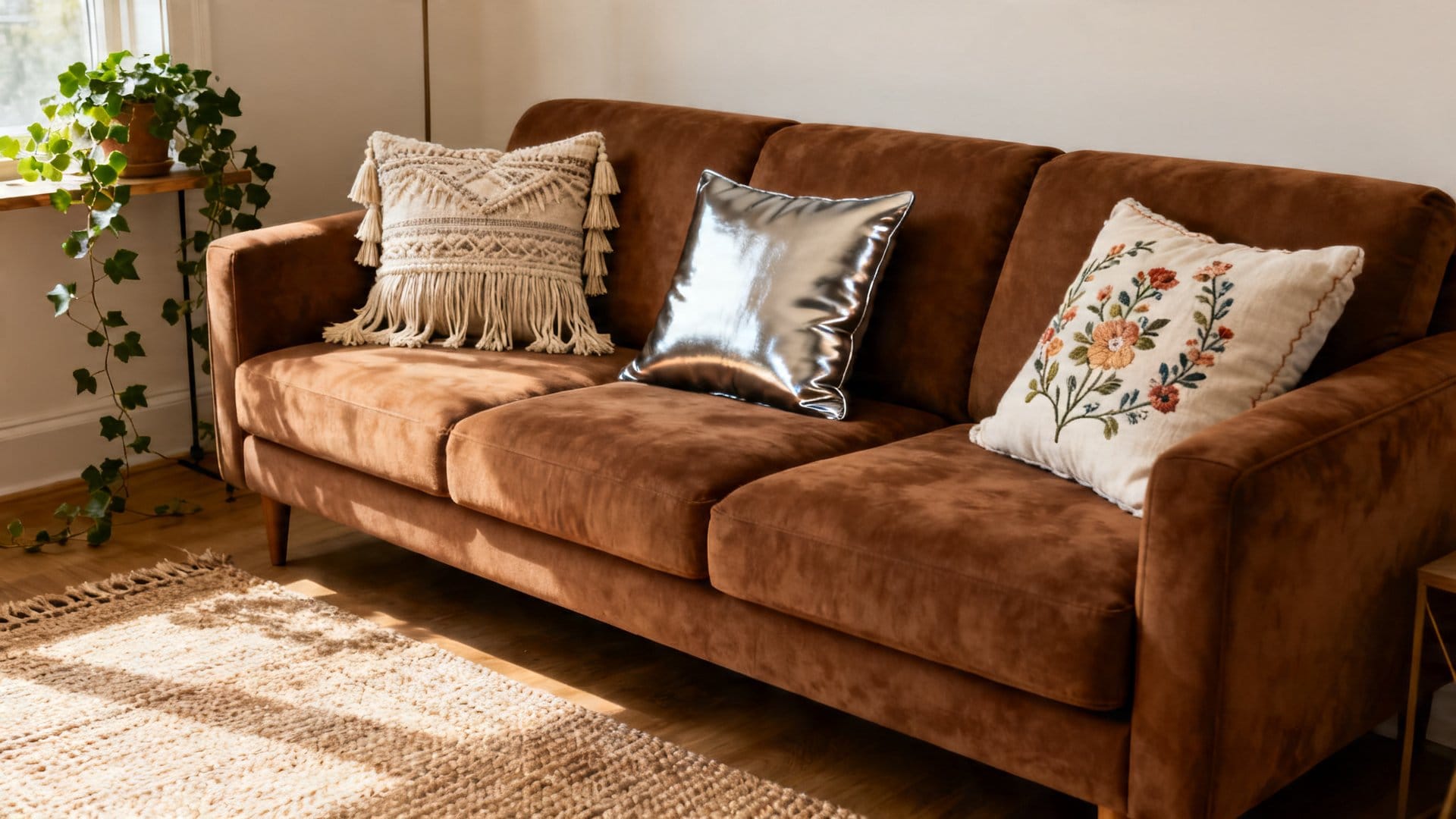
Your overall room style should guide your pillow choices as much as color or texture. The best decorative pillows for a brown couch will look different in a farmhouse living room than they will in a boho apartment or a sleek modern space.
Styling Notes by Room Aesthetic
- Farmhouse style: Cream and black buffalo check, simple ticking stripes in neutral tones, and a solid rust linen lumbar — clean, unpretentious, and warm.
- Boho or eclectic: Woven pillow covers with fringe or tassels, a mix of mudcloth-inspired patterns, warm terracotta and mustard tones — layered and full of handcrafted texture.
- Modern or minimalist: Two to three pillows maximum in muted tones — charcoal, warm white, and a single muted olive — with clean geometric prints and smooth velvet or linen textures.
- Cottagecore or vintage: Floral prints in dusty pinks and sage, embroidered pillow covers, and soft antique-white linen — romantic and a little nostalgic.
- Coastal or relaxed: Faded blue and white stripes, natural jute-textured covers, and sandy neutrals — breezy and unhurried without leaning too heavily into nautical clichés.
This works especially well in rooms where the furniture is already doing a lot of heavy lifting — a brown couch with strong style-specific pillows can define the whole aesthetic of the space without needing much else to change.
Final Thoughts
Styling a brown couch with the right decorative pillows is one of those small acts of home love that makes a room feel completely different — warmer, more personal, and more inviting. Whether you’re drawn to bold jewel tones, soft earthy neutrals, or playful pattern mixing, the best decorative pillows for a brown couch are ultimately the ones that reflect your taste and make you want to sink in and stay awhile. Trust your instincts, don’t overthink the rules, and remember that your home is allowed to evolve with you. Happy decorating!
Frequently Asked Questions
Brown couches pair beautifully with a wide range of colors, including warm creams, burnt orange, terracotta, mustard yellow, and deep teal. Earthy tones create a cozy, grounded look, while jewel tones like emerald green or sapphire blue add a bold, sophisticated contrast. Soft neutrals like ivory and beige are always a safe bet if you prefer a more understated, cohesive aesthetic.
For most standard sofas, a grouping of four to six pillows strikes the right balance between cozy and cluttered. A common approach is to use two larger pillows on each end and one or two smaller accent pillows in the middle to create visual depth. The key is to vary the sizes and shapes slightly so the arrangement feels intentional rather than overly uniform.
For a brown leather couch, soft and tactile textures like chunky knit, velvet, or faux fur create a pleasing contrast against the smooth, cool surface of the leather. If your couch is a fabric or microfiber style, mixing textures such as linen, woven cotton, and embroidered materials adds visual interest without stressing the space. Layering different textures is one of the easiest ways to make a pillow arrangement feel designer-select.
Absolutely — patterned pillows are a fantastic way to inject personality into a brown couch setup. Geometric patterns, botanical prints, and classic stripes all complement brown tones without clashing, especially when the pattern incorporates at least one color already present in your room’s palette. A good rule of thumb is to mix one bold pattern with one subtle pattern and one solid pillow to keep the look balanced and visually engaging.
Start by identifying your room’s existing design style — whether that’s bohemian, modern farmhouse, mid-century modern, or traditional — and select pillow styles that reinforce that aesthetic. For example, a boho-inspired room benefits from macramé or globally-inspired printed pillows, while a mid-century modern space looks sharp with clean geometric patterns in mustard or olive tones. Pulling colors from existing elements like your rug, curtains, or wall art is the simplest way to ensure your pillow choices feel cohesive and intentional.