
📌 Love these ideas? Follow us on Pinterest for daily home decor inspiration! Follow @SeasonalHomeMagic →
Sage Green Bedroom Aesthetic Decor: Stylish Ideas to Try Now
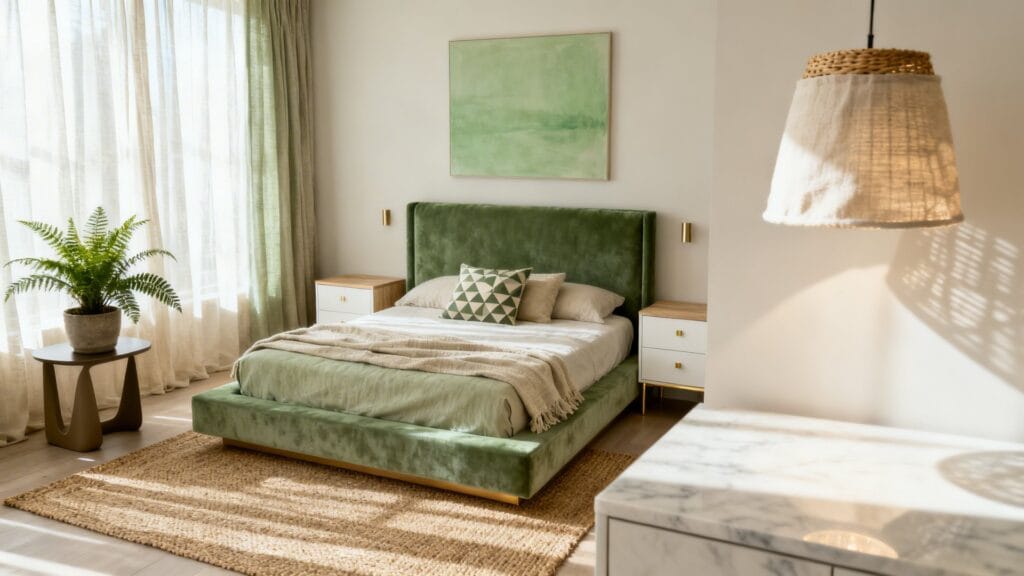
Sage green has a way of quieting a room without draining its personality. It’s soft and herbal, like eucalyptus steam on a slow morning. If you’re considering Sage Green Bedroom Aesthetic Decor: Stylish Ideas to Try Now, think of it as the backdrop for a calm-with-a-touch-of-glam retreat—restful, layered, and subtly polished.
Below, I’m sharing the most practical, pretty ways to bring sage into your space, whether you’re working with a tiny studio nook or a sunlit primary bedroom. Expect tactile textures, warm metals, and a few renter-friendly tricks that feel pulled together without trying too hard.
Why Sage Works: Tone, Mood, and Pairing Basics
Sage green sits in the sweet spot between gray and green. It plays well with warm woods, stony neutrals, matte blacks, and muted blues. On the wall, it wraps a room in a hush; in textiles, it reads airy and natural, like fresh sprigs in a ceramic vase.
To start, choose your base palette. For a light, spa-like vibe, pair sage with creamy white, pale taupe, and oiled oak. For a moodier, modern look, partner it with charcoal accents, walnut, and antique brass. Both directions land you in the same place—serene, but not sleepy.
Paint or Not? Wall Strategies for Every Space
When it comes to Sage Green Bedroom Aesthetic Decor: Stylish Ideas to Try Now, paint is the most transformative move. But it’s not the only one. Let your room’s size and natural light guide you.
- All-over wash: In airy suites with good daylight, an all-over sage (think soft eucalyptus or misty olive) creates a continuous, soothing shell. Choose an eggshell finish for gentle sheen that bounces light.
- Accent wall + trim: In smaller rooms or rentals (with permission), paint just the headboard wall in sage and keep the rest warm white. For a polished look, match the baseboards and window trim to the wall color.
- Color-drenched headboard: If painting walls isn’t an option, upholster a wide channel-tufted headboard in sage linen or velvet. It acts like a “color field” behind the bed.
- Temporary panels: Frame peel-and-stick sage wallpaper in simple molding to create renter-friendly panels. Two or three large panels behind the bed can mimic a boutique-hotel finish.
Beginner mistake to avoid: picking a sage that’s too saturated for dim rooms. Test swatches from morning to evening—what reads soft at noon can turn murky at dusk. Aim for a gray-leaning sage in low-light spaces.
Bedscape Layers: Textures That Do the Heavy Lifting
The bed is where sage gets to shine. Think breathable, touchable, and layered. You want a mix that looks pulled together without trying too hard.
- Linen duvet in muted sage: Linen brings a natural rumple that never feels fussy. Pair with crisp percale sheets in ivory for contrast, or pale gray sateen for a slight sheen.
- Quilt or matelassé: Add a light quilt folded at the foot in a tonal sage or soft mushroom. The extra layer reads luxurious but practical for seasonal shifts.
- Pillows with intention: Start with two Euro shams in sage, two standard pillows in white, then one lumbar in an earthy pattern (think taupe-and-ivory block print). Stop there—restraint keeps it elegant.
- Throws with character: A chunky knit in oatmeal, a thin cashmere in driftwood gray, or a waffle weave in muted clay warms up the palette.
For small beds in studios, edit down: one duvet, one throw, one lumbar. Fewer, better pieces help a tight footprint feel calm, not cluttered.
Warm Woods, Soft Metals: Furniture That Grounds the Green
Sage sings when it has solid company. Choose furniture that feels warm to the touch—literally and visually.
- Nightstands in oak or ash: Light-toned woods keep things airy. Look for slim profiles in small rooms; waterfall edges or rounded corners help tight walkways feel smoother.
- Walnut with brass: For a richer mood, walnut nightstands with brass pulls add a quiet-glam wink. Top with a petite alabaster lamp for soft diffusion.
- Upholstered bed frames: Sage linen or pebble-gray boucle works beautifully. In tight spaces, choose legs you can see under—visual lift keeps the room open.
- Vintage touches: A mid-century dresser, a farmhouse bench, or a weathered stool adds soul. Let the patina stand; it keeps the palette from feeling too “new.”
Budget swaps: paint a thrifted nightstand in soft mushroom, switch basic knobs for aged brass, and lay a marble-look tray on top for an elevated bedside landing zone.
Lighting the Mood: Layered, Diffused, and a Little Glam
Good lighting is the secret to a restful sage bedroom. The color softens under warm, dispersed light—think candlelit, but practical.
- Warm temperature: Choose 2700K to 3000K bulbs. Sage can skew cool; warm bulbs keep it cozy.
- Brass sconces: Swing-arm sconces in satin brass or aged bronze add gentle gleam against sage walls. Perfect for small spaces—free up the nightstand surface.
- Fabric shades: A drum pendant or tapered bedside lamps with linen shades softly diffuse light. In large rooms, a double-drum ceiling fixture layers brightness without glare.
- Dimmer switches: If you do one electrical upgrade, make it this. The shift from bright morning to evening glow feels like a spa ritual.
Renter trick: plug-in sconces with cord covers painted to match your wall. You get the tailored look, no electrician required.
Textiles Underfoot: Rugs That Quiet the Echo
Rugs are where the sensory magic happens—soft under bare feet, a low rustle when you turn in the night. They also anchor sage and tie your palette together.
- Vintage Turkish or Persian rugs: Look for faded terracotta, misty teal, and taupe threads. The whisper of color in an antique rug flatters sage without competing.
- Natural fiber base: In beachy or minimalist rooms, a chunky jute or sisal adds texture. Layer a smaller patterned rug at the side of the bed for interest.
- Size matters: In queens and kings, aim for at least 8×10 or 9×12 so the rug extends around the bed. In small rooms, two runners on either side can be more flexible than one big rug.
Luxe option: a low-pile wool rug in a tonal stripe. Budget option: a machine-washable vintage-print rug—perfect for pet households and studios.
Art, Mirrors, and the Finishing Layer
Art above a sage bed should feel airy, textural, or slightly moody—nothing too high-contrast unless you’re going for a gallery punch.
- Botanical prints: Oversized eucalyptus or fern studies in thin oak frames nod to the palette without going literal.
- Textile art: A simple wall hanging in ivory, sand, and sage threads adds softness and subtle movement.
- Antiqued mirror: A foxed mirror over a dresser bounces light back into a darker sage room. Choose a thin brass frame to echo hardware.
- Ceramics and vessels: Stoneware vases, marble catch-alls, and matte candleholders bring weight and ritual to nightstands.
Keep negative space. Two to three pieces per wall are plenty—let the sage breathe.
Window Treatments: Diffuse, Don’t Block
Windows determine how your sage reads. Dress them to soften daylight and invite evening privacy, not to smother the light.
- Sheer linen panels: In off-white or natural, they wash the room in a gentle glow. Mount high and wide to make small rooms feel taller and brighter.
- Roman shades: A textured weave in flax or a slender stripe is timeless. Add blackout lining if you’re light-sensitive.
- Layering: Sheer panels by day, lined drapes by night. Choose drapes in dusty taupe or tonal sage for a cocoon effect.
For tight corners or odd windows, inside-mount shades keep sightlines clean and space efficient.
Storage, Minimal but Warm: Pieces That Disappear
Sage bedrooms look best when surfaces are calm. Aim for closed storage with simple lines, then add one sculptural piece for personality.
- Under-bed drawers: Especially good in studios. Store bulky linens and off-season clothes out of sight.
- Floating shelves: Keep finishes soft—oak or painted in wall color—so books and objects seem to hover.
- Bedside baskets: Woven seagrass or rattan for nightly reads and cords. Tuck a slim charger inside to reduce visual clutter.
Beginner mistake: too many “pretty little things” on nightstands. Limit to a dish, a lamp, and one living element—a sprig in a bud vase or a low succulent.
Metal Moments: Brass, Bronze, and Black Accents
Sage and brass are longtime friends. A few metallic notes lift the palette and add a touch of glam.
- Hardware harmony: Choose one hero finish (satin brass, aged bronze, or matte black) and repeat it in small ways—lamp bases, drawer pulls, frames.
- Mixed, but restrained: You can mix brass and black if one is clearly in charge. For example, brass sconces with black-framed art.
- Reflective restraint: A single lacquered tray or polished knob is enough shine—keep the rest matte to maintain calm.
Green on Green: Plants and Natural Elements
Live elements keep sage from feeling flat. Aim for a few sculptural greens rather than a jungle.
- Olive tree or rubber plant: Tall, elegant, and architectural. Place in a stone or terracotta pot for earthy grounding.
- Eucalyptus stems: Fresh or faux in a ceramic cylinder vase on the dresser. The scent is a quiet luxury if you go real.
- Wood accents: A live-edge tray, walnut picture ledge, or teak stool brings warmth and texture to cool corners.
Small room tip: wall-mount a plant shelf above the headboard instead of using floor space. Keep foliage clear of pillows.
Layouts for Real Rooms: From Tiny Nooks to Airy Suites
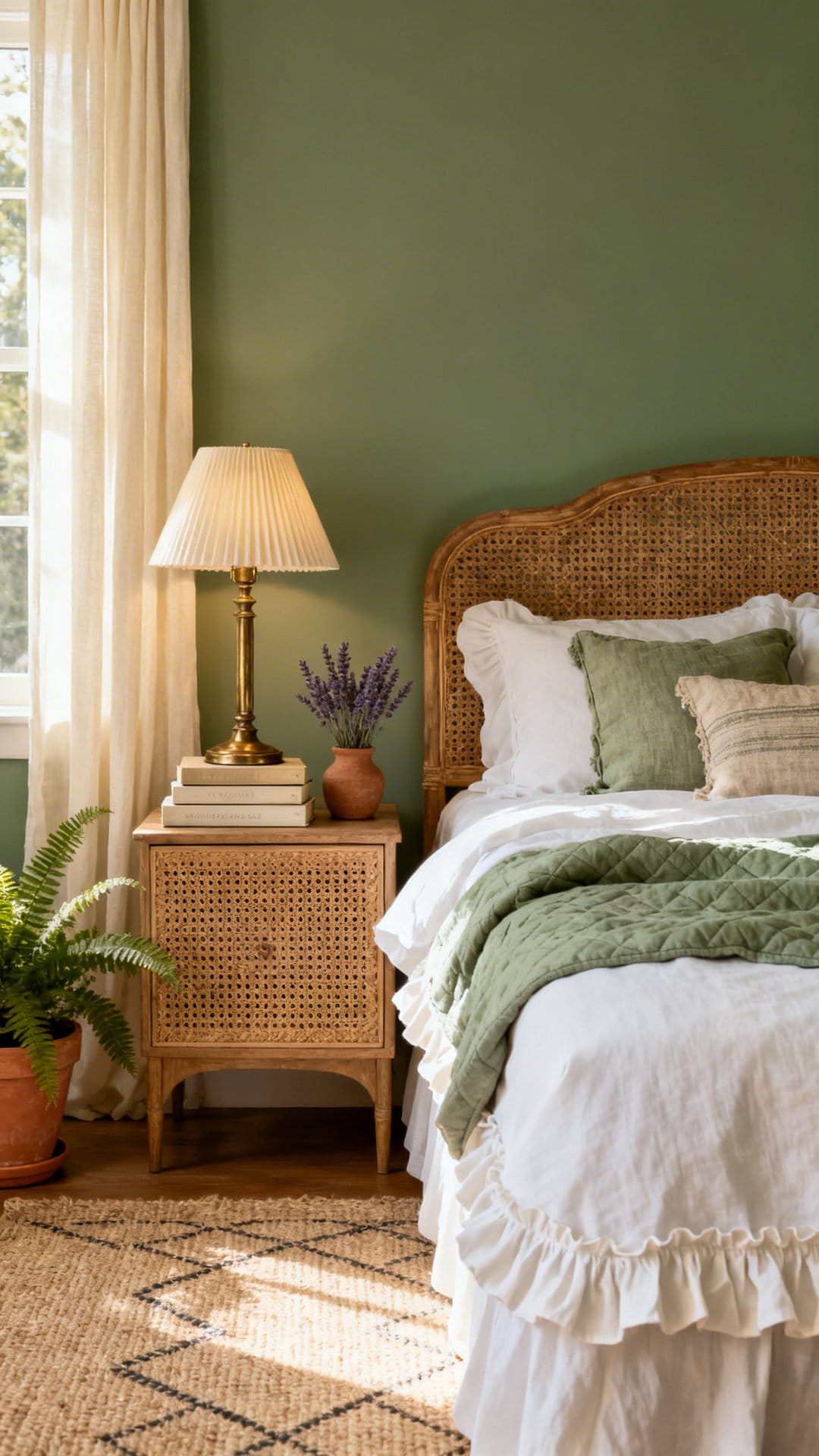
Every space has quirks. These layout moves make sage feel intentional anywhere.
- Tiny studios: Zone the bed with a 5×7 rug tucked under the front legs and a slim partition—rattan screen or curtain—that echoes your sage palette. Choose a narrow, high headboard to draw the eye up.
- Awkward corners: Float the bed away from a slanted wall and center it on the rug; paint a sage rectangle behind it to create a visual “headboard.”
- Large suites: Color-drench the room with sage walls and tonal drapes, then break it up with a sitting nook—two slipper chairs in oatmeal and a brass floor lamp.
- Low ceilings: Keep walls light sage and paint the ceiling a shade lighter, almost milky green-gray. Use vertical stripe bedding or tall mirrors to stretch the eye.
Renter-Friendly Moves with Big Impact
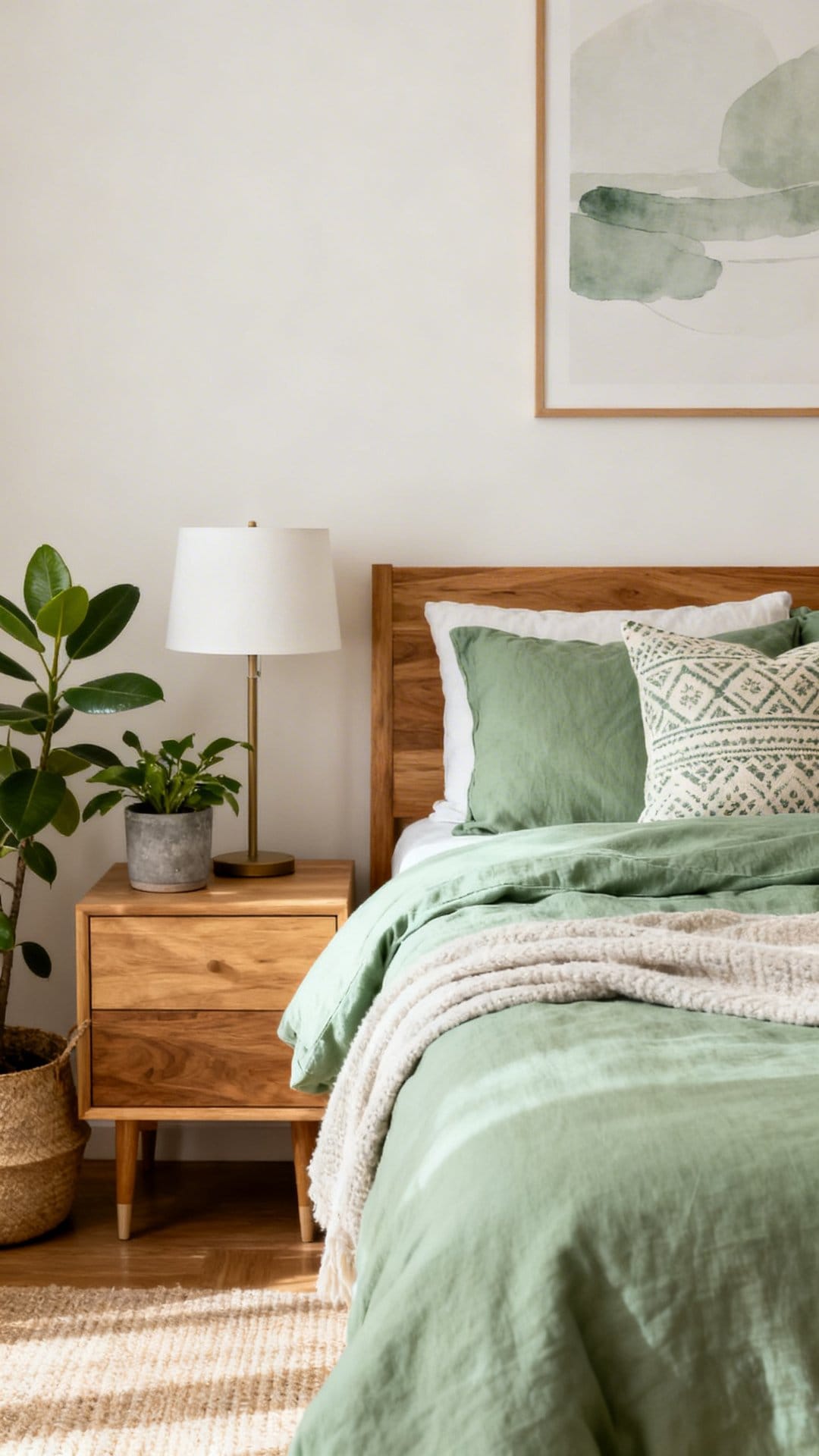
You don’t need to repaint the whole place to feel the vibe. Try these quick wins:
- Peel-and-stick headboard decals in sage linen texture—instant focal point.
- Swap lamp shades to pleated linen or parchment; add warm bulbs.
- Change hardware on dressers and nightstands to aged brass.
- Use a sage bed skirt to hide storage and introduce color without commitment.
- Lay a washable vintage-print rug and coordinate one sage pillow—cohesion without overhauling.
Scent, Sound, and Ritual: The Invisible Layer
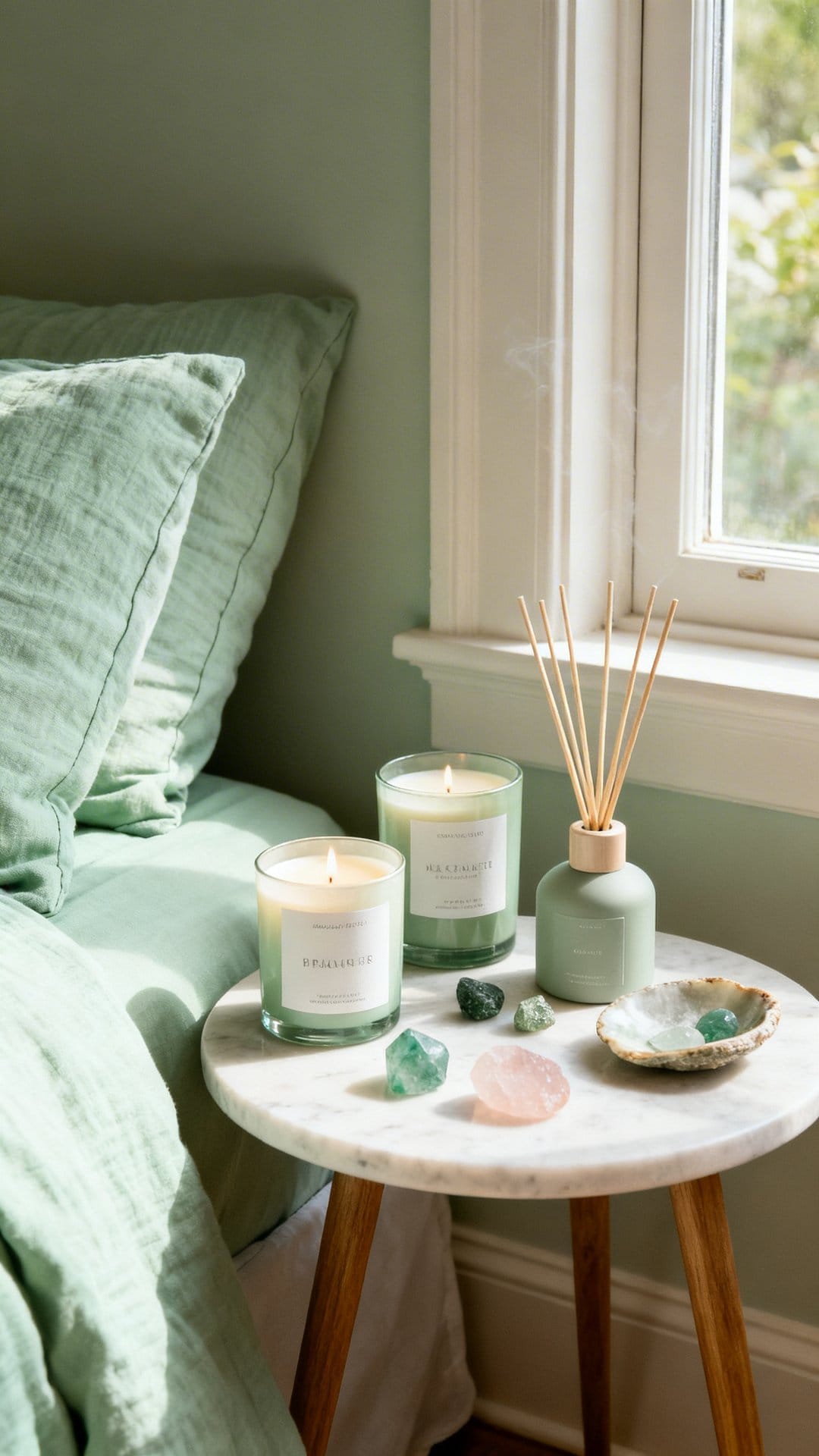
A truly restful bedroom goes beyond what you see. Build small rituals that echo the mood of sage.
- Scent: Eucalyptus, cedar, or bergamot candles. Keep fragrance light; you want a hint, not a cloud.
- Sound: A small speaker tucked on a shelf for soft playlists; hide cords in a linen cable sleeve.
- Nighttable ritual: A stone coaster, a small ceramic dish for jewelry, and a slim carafe. Routine equals rest.
Seasonal Shifts: Keep the Core, Swap the Accents
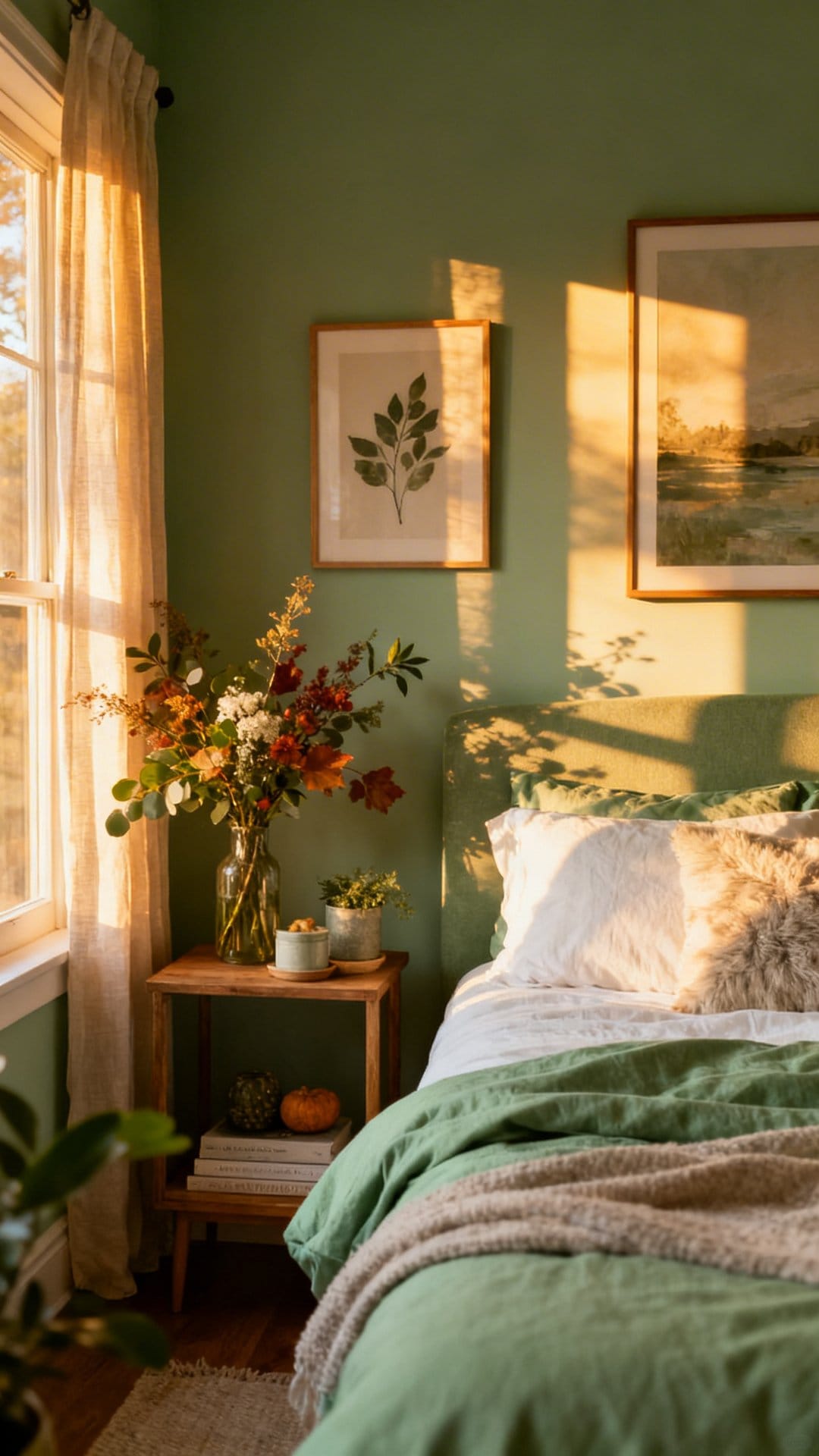
Sage is seasonless, but accents can move it from breezy to cocoon with minimal effort.
- Spring/Summer: Crisp percale sheets, airy linen curtains, a basket of light throws. Add a sea-salt or citrus diffuser.
- Fall/Winter: Flannel or sateen sheets, a wool throw in heathered charcoal, and thicker drapes. Swap in a darker vintage rug for depth.
Keep foundational pieces neutral so you can switch textures without redoing the room.
Putting It All Together: A Few Ready-to-Try Combos
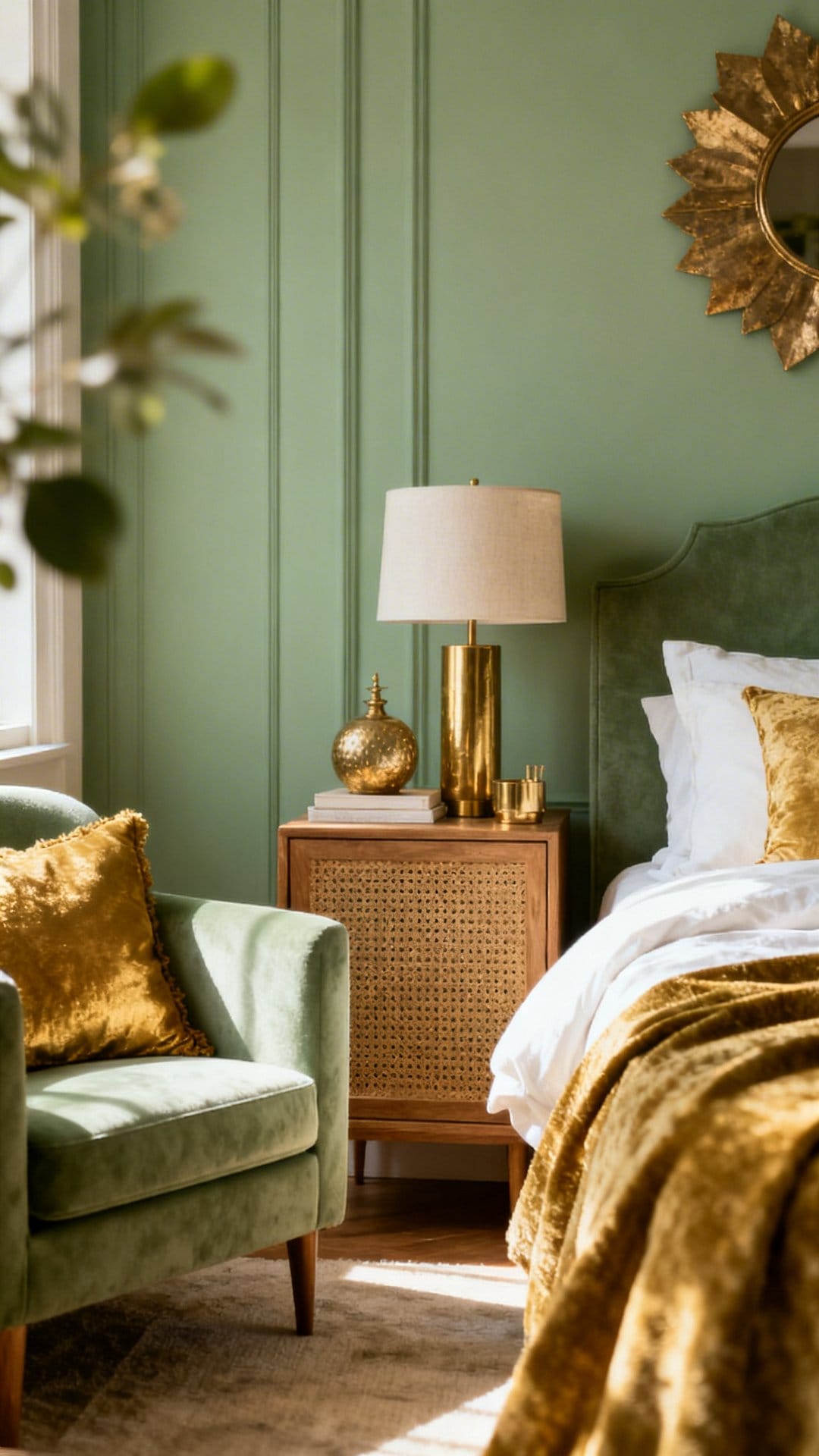
If you like clear starting points, try one of these palettes and layouts.
- Calm Coastal: Sage linen duvet, oak nightstands, alabaster table lamps, jute rug, botanical line art in thin oak frames, sheer linen panels.
- Modern Classic: Sage accent wall, walnut bed, brass sconces, low-pile wool rug in gray, black-framed abstract print, flax Roman shades.
- Soft Rustic: Sage walls, slipcovered headboard, vintage Turkish rug with terra accents, ceramic table lamps, rattan bench, stoneware vases.
- Studio Chic: Peel-and-stick sage panel behind bed, narrow black metal nightstands, pleated parchment shades, washable vintage rug, one statement lumbar pillow.
Conclusion
Sage Green Bedroom Aesthetic Decor: Stylish Ideas to Try Now isn’t about a single paint swatch—it’s about layers that breathe: touchable linen, warm woods, diffused light, and a few glints of brass. Whether you’re color-drenching an airy suite or creating a calm nook in a small apartment, sage offers that pulled-together, quietly luxurious feel.
Start with one move—a sage linen duvet, a pair of brass sconces, or a vintage rug with green threads—and build slowly. Edit as you go. With each layer, you’ll find the rhythm of your space: calm with a touch of glam, ready to find your favorite every time you step inside.
Frequently Asked Questions
Sage green is a soft, muted hue that calms a space without feeling flat. It pairs easily with warm woods, stony neutrals, matte black, and muted blues, creating a restful, polished backdrop.
Try warm wood tones, cream and greige, charcoal or matte black accents, and soft blues. Brass or brushed gold metals also add a subtle glam contrast to sage’s earthy vibe.
Use removable peel-and-stick wallpaper, linen or cotton bedding, throw pillows, and curtains in sage tones. Layer in art prints, rugs, and ceramic decor to build the palette without permanent changes.
Mix nubby linens, boucle, woven jute, and matte ceramics for tactile depth. Balance them with smooth finishes like lacquered trays or brushed metal lamps for a refined, layered look.
Vary the shades of sage from pale to mid-tone and add contrast with black or brass hardware. Introduce natural wood, stone neutrals, and patterned textiles to break up the color and add dimension.