

There is something almost magical about stepping outside on a warm July morning and catching the first wave of rose fragrance drifting across the yard. If you have ever stood in a neighbor’s garden, completely charmed by a climbing rose tumbling over a wooden arch, you already know the feeling that a summer rose garden can create. This article walks you through the essential design and care ideas that make the difference between a garden that struggles and one that genuinely blooms with personality. Whether you are starting from scratch or refreshing an existing bed, these ideas are approachable, practical, and full of the kind of detail that actually helps.
&# 128218; Start here:our complete guide to beautiful outdoor garden styling→How Do You Choose the Right Roses for Your Summer Garden Design?
Choosing the right roses starts with matching varieties to your climate and available space. Heat tolerance, bloom habit, and your USDA hardiness zone are the three factors that matter most.
 Shop this look: rose plant food on Amazon →
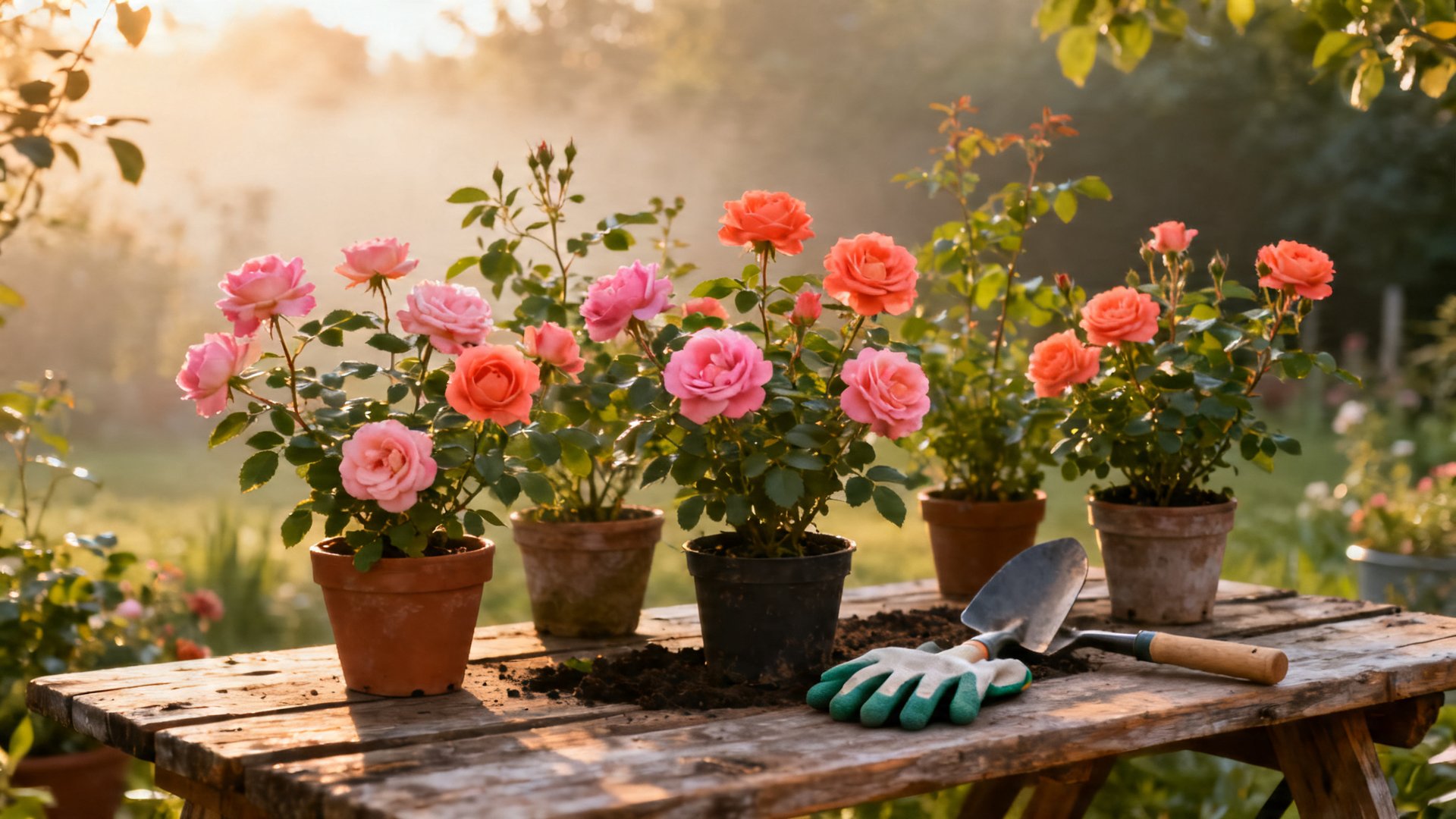
Not all roses behave the same way in summer heat, and choosing the right varieties for your climate and space is honestly the most important decision you will make. Some roses love the full blaze of afternoon sun, while others need a little shelter to keep their blooms from fading too quickly.
I love how certain old-fashioned varieties like David Austin shrub roses hold their color even through a humid Midwest summer, while modern hybrid teas tend to give you that classic high-centered bloom that looks so lovely in a formal bed. Knowing your USDA hardiness zone and your average summer temperatures will help you narrow down the field considerably. If you are still planning the wider bed, it helps to look at which summer flowers pair well with roses before you finalize your variety list.
Varieties Worth Considering
Climbing roses like ‘New Dawn’ or ‘Zephirine Drouhin’ are wonderful for adding vertical interest along fences or trellises, and they tend to be more forgiving of heat than some delicate hybrid varieties. For smaller spaces, miniature shrub roses or groundcover roses give you that lush, full look without stressing a compact garden bed.
What Design Principles Make a Rose Garden Layout Feel Natural?
A natural-feeling rose garden layout relies on layering plants by height and grouping varieties in odd numbers. These two principles alone create depth and an effortless, abundant look without any formal structure.
 Shop this look: a garden trellis on Amazon →
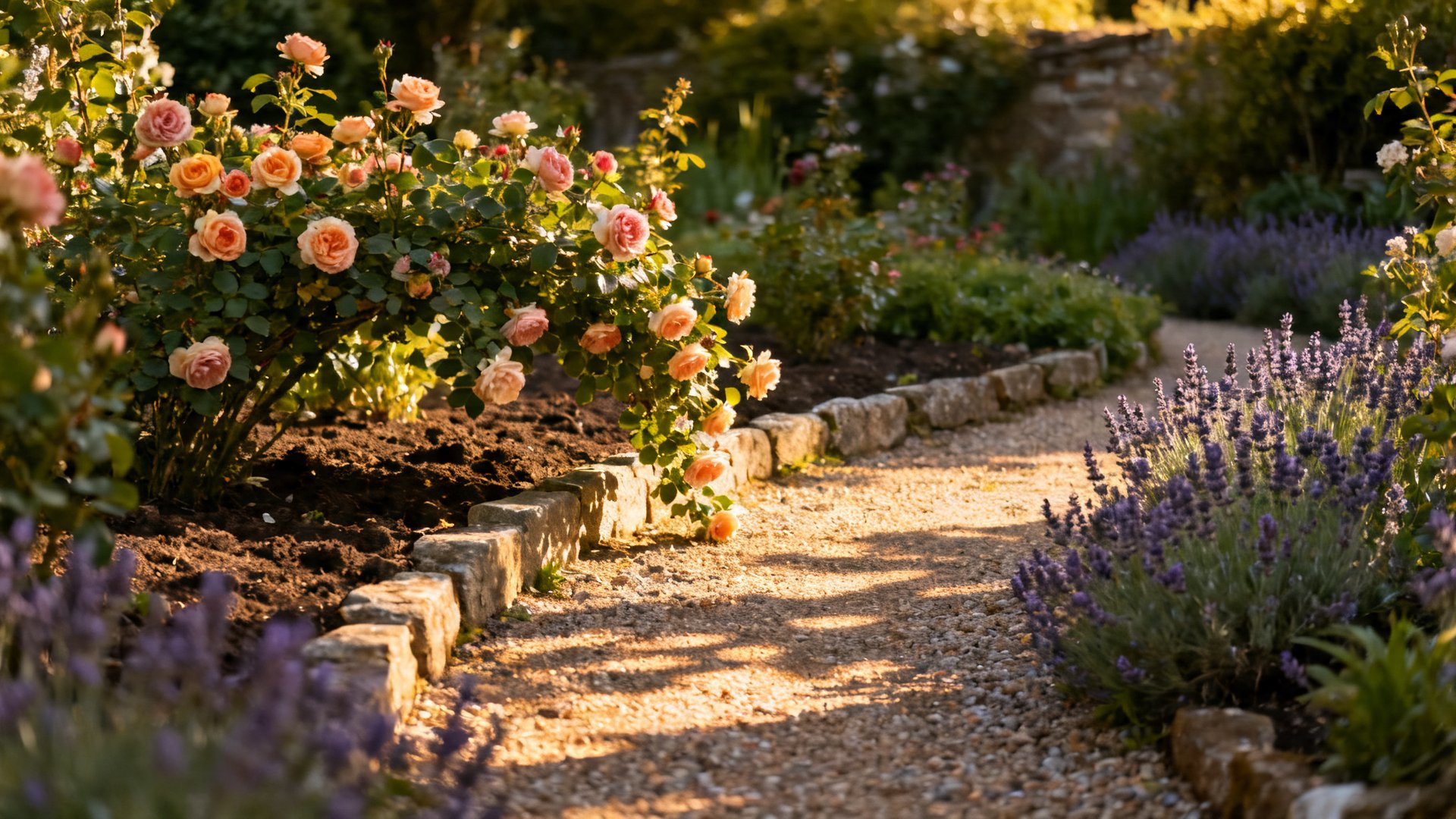
A well-designed summer rose garden does not need to look like a formal estate planting to be beautiful. In fact, some of the most inviting rose gardens I have come across feel almost effortless, with roses spilling gently over low stone borders and companion plants softening every edge.
Think about your garden in layers. Place taller shrub roses or climbers toward the back of a border, mid-height varieties in the center, and low-growing roses or companion plants like lavender, catmint, or salvia along the front edge. This layered approach creates depth and makes the whole space feel intentional without looking stiff.
One thing I have noticed is that odd-numbered groupings of the same rose variety always look more natural than planting in pairs or straight rows. Three or five of the same rose planted together creates that lush, abundant look that photographs so beautifully and feels genuinely welcoming in person.
Vertical structure is what gives a rose garden its sense of romance, and a well-placed arch does a lot of quiet work. A climbing rose trained over a metal arch frames a path or a gate and instantly makes a flat bed feel layered and full. If you want that cottage-garden height without waiting years for a shrub to fill in, a sturdy arch is one of the simplest ways to get there.
Pro tip: Leave more space between rose plants than you think you need. Most shrub roses want at least three feet of breathing room on all sides, which improves air circulation and significantly reduces fungal disease through the humid summer months.
Once your layout is in place, the focus shifts to the ongoing care that keeps your roses performing at their best through the heat of summer.
How Do You Care for a Summer Rose Garden with Watering, Feeding, and Mulching?
Summer rose garden care comes down to three consistent habits: deep watering at the base, regular feeding on a timed schedule, and a thick layer of organic mulch. Together, these practices keep roses healthy and blooming through the hottest months.
 Shop this look: a soaker hose on Amazon →
Caring for a summer rose garden involves a rhythm that, once you settle into it, becomes almost meditative. The three pillars of summer rose care are consistent watering, regular feeding, and a good layer of mulch that does a surprising amount of heavy lifting for you.
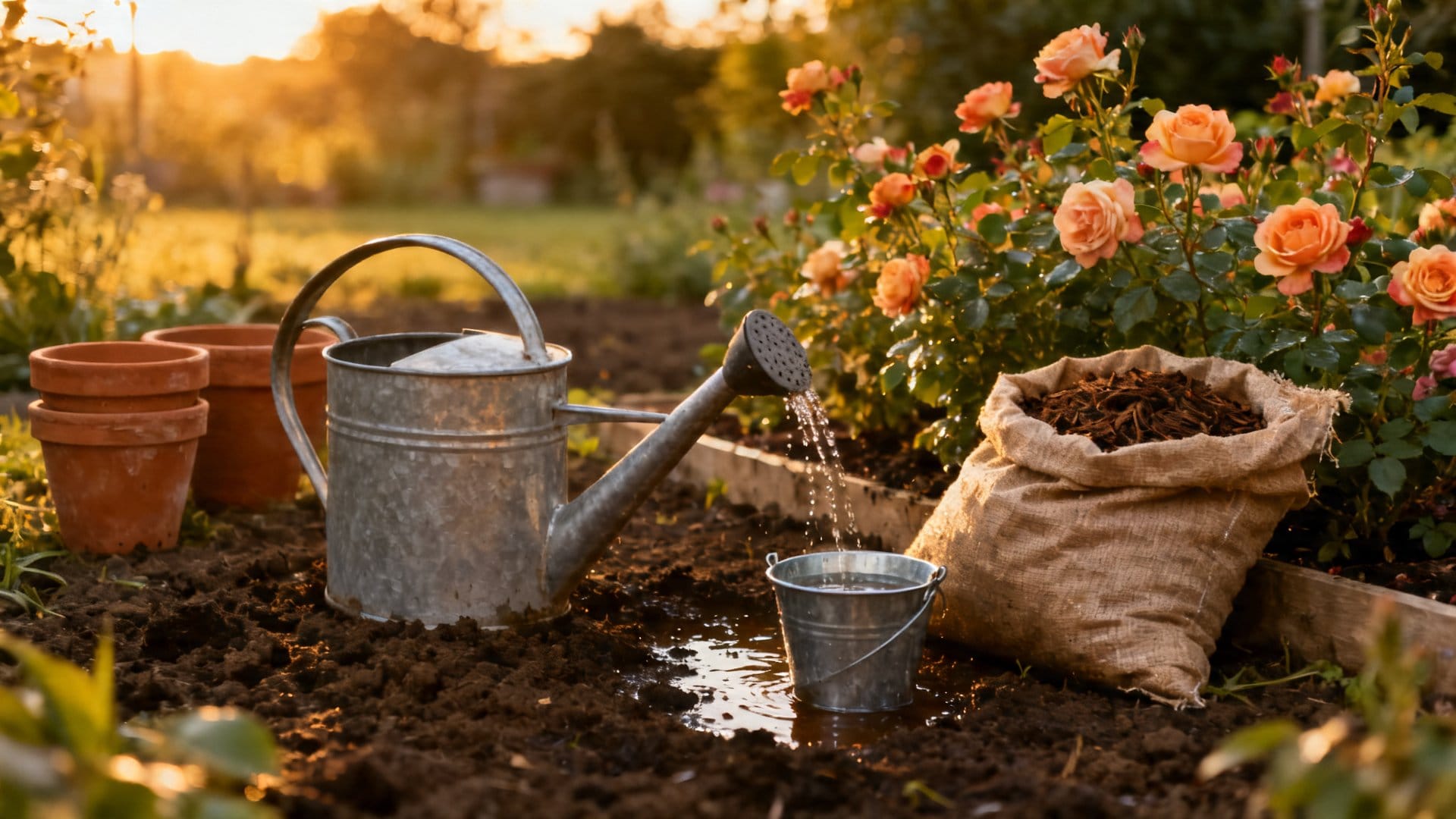
Roses are thirsty plants, especially in July and August when temperatures climb. Deep, infrequent watering is far more effective than a quick daily sprinkle, so aim for about an inch of water per week, delivered slowly at the base of the plant rather than overhead. Overhead watering in the evening is one of the fastest ways to invite black spot and powdery mildew into your garden.
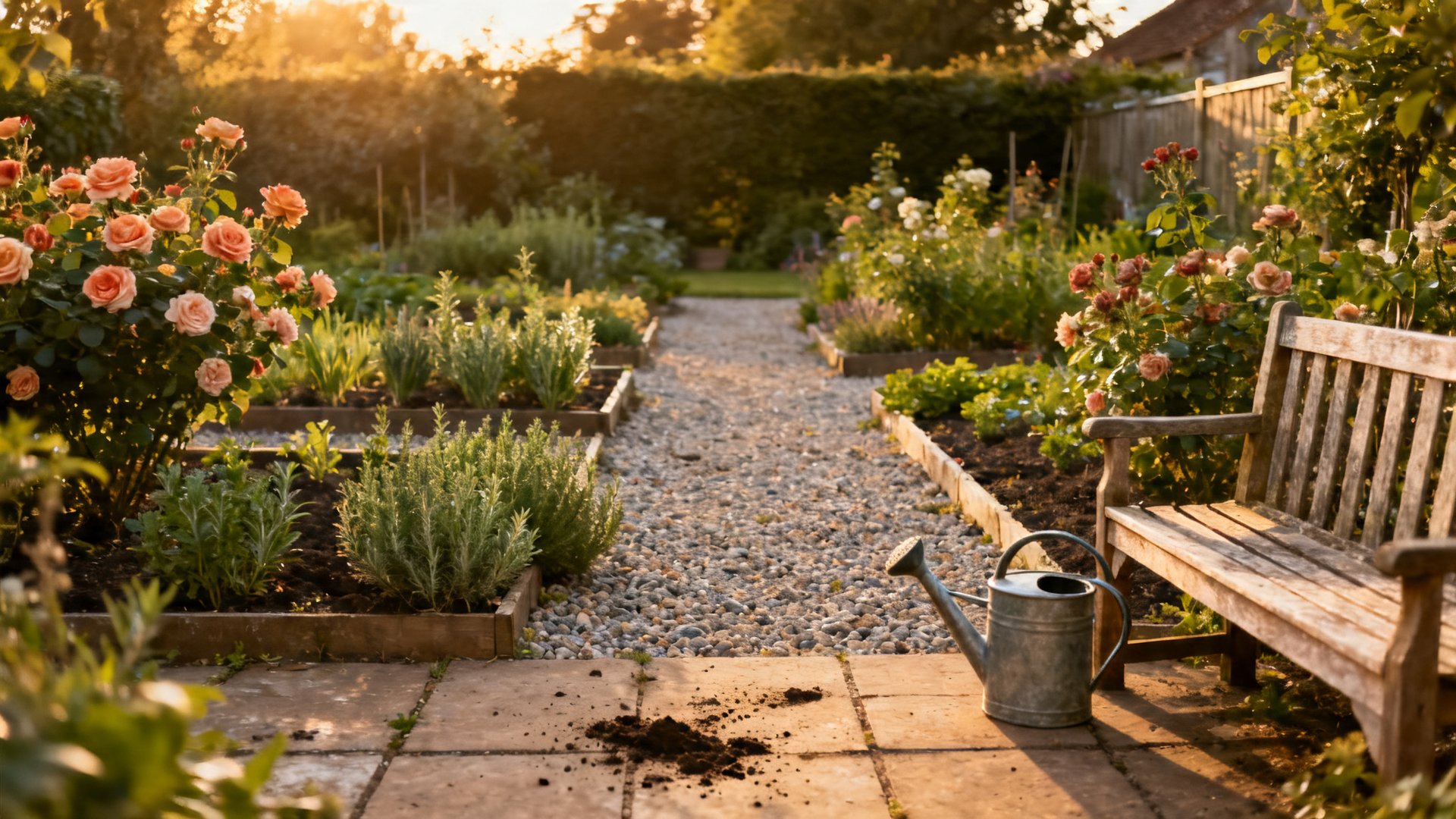
For hand watering the base of individual plants, or for topping off containers on a hot afternoon, a simple long-spout watering can gives you far more control than a hose nozzle. It lets you direct water right to the soil and skip the foliage entirely, which is exactly what keeps fungal problems at bay.
Feeding Schedule That Works
- Apply a balanced rose fertilizer in late spring and again in early summer, about six weeks apart, to fuel the main flush of blooms
- Switch to a low-nitrogen, high-phosphorus formula in midsummer to encourage continued blooming rather than leafy growth
- Stop feeding entirely by late August so the plant can begin hardening off before fall arrives
- A two-to-three inch layer of organic mulch around the base of each rose retains moisture, regulates soil temperature, and suppresses weeds all at once
From what I have gathered, gardeners who mulch consistently tend to spend far less time watering and weeding, which leaves more time for the best part, actually enjoying the blooms.
&# 10024; You might also love:these enchanting summer fairy garden ideas→What Should You Grow Alongside Your Roses for Companion Planting?
The best companion plants for roses are those that deter pests, attract beneficial insects, and fill visual gaps at the base of the plants. Lavender, catmint, and alliums are among the most effective and beautiful choices.
 Shop this look: thorn-proof gardening gloves on Amazon →
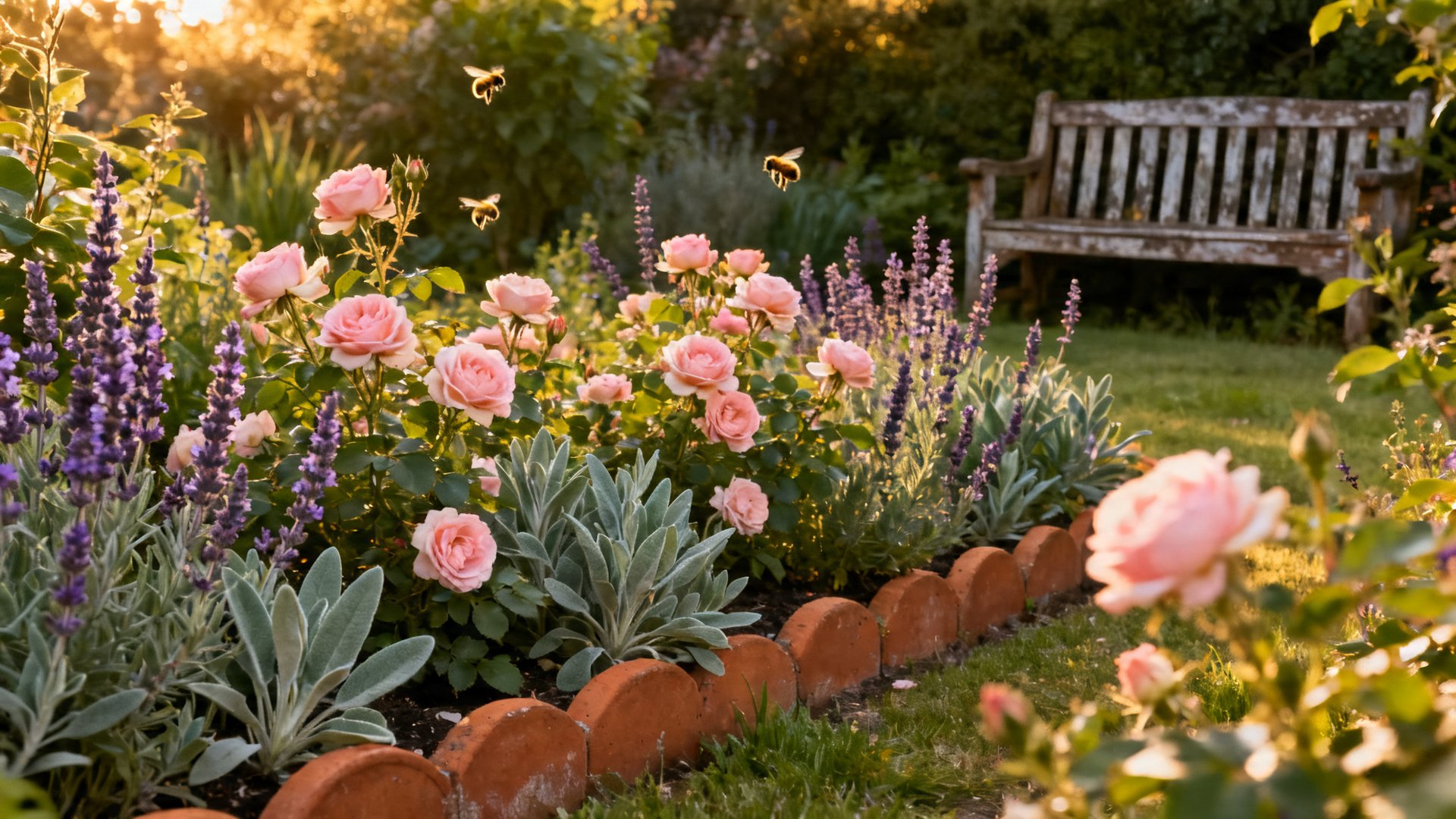
Roses are genuinely beautiful on their own, but pairing them with the right companion plants creates that layered, cottage-garden richness that makes a summer garden feel truly special. The right companions can also deter pests, attract beneficial insects, and fill in the visual gaps between rose stems, which tend to be a little leggy toward the base.
Lavender is perhaps the most classic rose companion, and for good reason. Its silver-green foliage and purple flower spikes complement almost every rose color, and its strong scent is said to deter aphids. Catmint works similarly, with soft blue-purple blooms that repeat throughout the season and a sprawling habit that hides bare rose canes beautifully. For a warmer color palette, try pairing deep red or coral roses with the feathery golden plumes of lady’s mantle or the soft apricot tones of achillea.
A friend of mine planted alliums, those tall, globe-headed ornamental onions, among her rose beds, and the combination looked wonderful in late spring and early summer. The alliums bloom just as the first roses open, and their structural round heads add a completely different texture to the planting.
Working closely around thorny rose canes is where a good pair of gauntlet-style gloves earns its keep. Long-cuff, puncture-resistant gloves let you reach in to weed, tuck in companion plants, and tie up climbers without ending the afternoon covered in scratches.
Pro tip: Avoid planting roses near fennel or other strongly allelopathic plants, which can inhibit rose root growth, and stick to herbs like thyme, chives, and parsley, which are genuinely beneficial neighbors.
Even the most thoughtfully planted and well-fed rose garden will eventually encounter a few unwanted visitors, so knowing how to respond quickly is an essential part of summer care.
How Do You Manage Pests and Disease in a Rose Garden?
The most effective approach is prevention through good garden hygiene, proper spacing, and choosing disease-resistant varieties. Catching problems early, before they spread, makes management far simpler and less stressful.
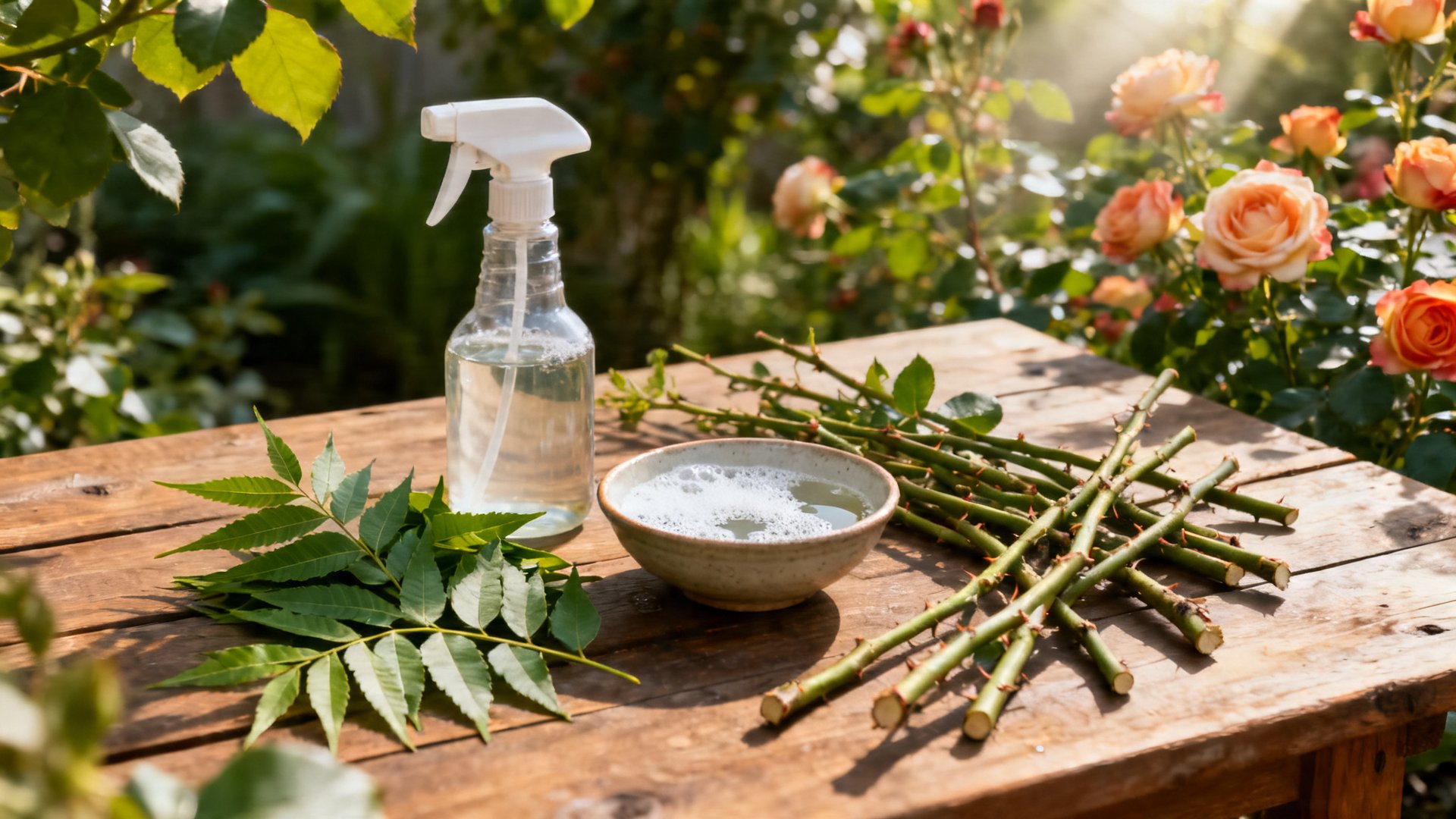 Shop this look: Black spot fungus
Every rose gardener eventually faces aphids, black spot, or Japanese beetles, and the key is catching problems early rather than waiting until they spiral. A healthy, well-fed rose in good soil with proper air circulation is naturally more resistant to most common issues, which is why all that design and care groundwork pays off so directly.
For aphids, a strong spray of water from the hose knocks them off effectively, and introducing ladybugs or planting flowers that attract them nearby creates a natural balance. Black spot fungus is best managed by removing and disposing of affected leaves immediately (never composting them), keeping foliage dry, and choosing disease-resistant varieties from the start.
Why It Works
The most sustainable approach to pest management in a summer rose garden is building a diverse ecosystem rather than reaching for chemical sprays at the first sign of trouble. Diverse plantings attract predatory insects, birds, and pollinators that naturally keep pest populations in check, which means less work for you over time and a garden that genuinely feels alive. It is the same low-effort philosophy behind so many easy-care home garden ideas.
How Should You Prune and Deadhead Roses Through the Summer Season?
Regular deadheading is the single most impactful summer pruning habit for repeat-blooming roses. Removing spent flowers every few days redirects the plant’s energy into producing the next flush of blooms.
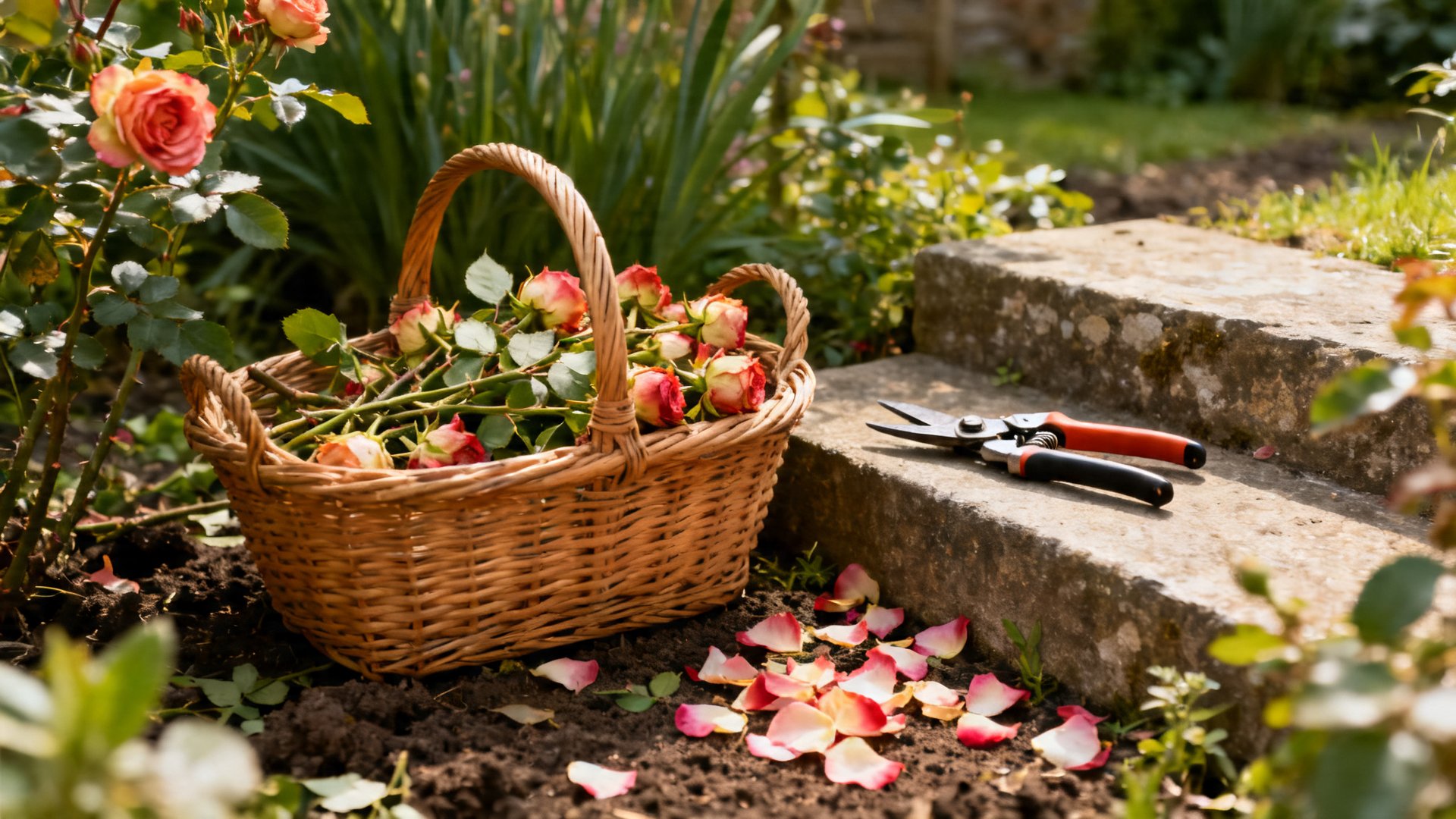 Shop this look: bypass pruning shears on Amazon →
One of the most satisfying parts of tending a rose garden in summer is the simple act of deadheading, snipping off spent blooms to encourage the next flush of flowers. For repeat-blooming roses, this one habit makes a big difference in how long and how abundantly your plants flower through the season.
When deadheading, cut the stem back to just above the first set of five leaflets, angling your cut slightly away from an outward-facing bud. This directs the plant’s energy outward and keeps the overall shape open and airy. I keep coming back to this approach because it takes only a few minutes every few days, and the reward, a constant rotation of fresh blooms from June through September, is so immediately satisfying.
Light shaping cuts through midsummer also help keep shrub roses from becoming too leggy or top-heavy. Avoid heavy pruning in summer, which is better saved for late winter or early spring, but do not hesitate to remove crossing branches or any canes that look weak or diseased. If your knees protest after a long session at the beds, a padded kneeler with side handles takes the strain out of all that bending and makes deadheading rounds far more comfortable.
Pro tip: Always use clean, sharp bypass pruners rather than anvil-style cutters, because a clean cut heals faster and reduces the risk of introducing disease into the stem.
How Can You Use Roses to Create Atmosphere in Your Outdoor Space?
Roses create atmosphere when they are used to define space, framing entrances, lining pathways, and surrounding seating areas with fragrance and color. Thoughtful placement of arches, trellises, and benches turns a rose garden into a true outdoor destination.
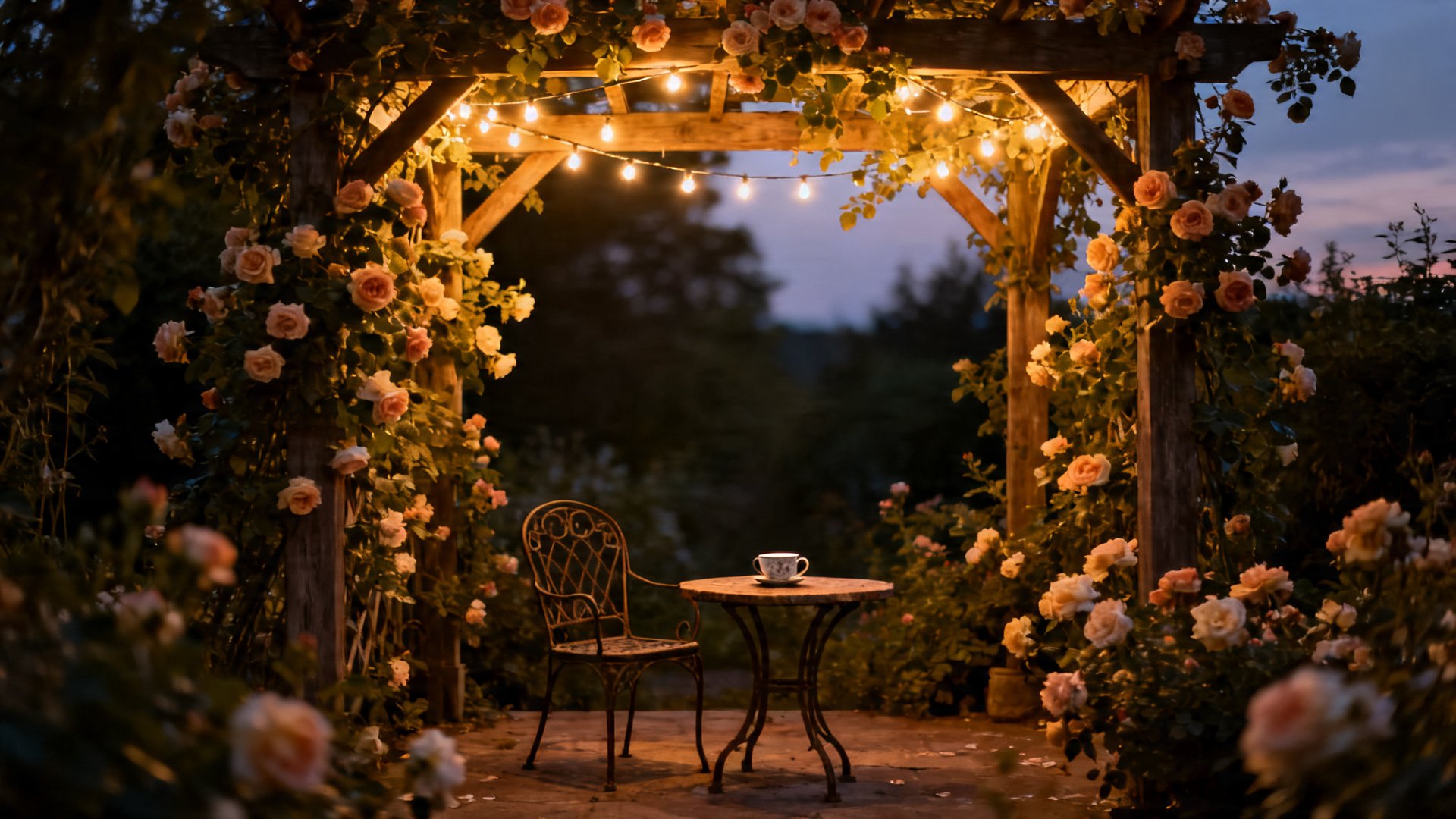 Shop this look: an outdoor garden bench on Amazon →
Beyond the individual plants, a thoughtfully designed summer rose garden creates an atmosphere, a feeling of enclosure, fragrance, and color that makes your outdoor space genuinely feel like a destination rather than just a yard. This is where design choices like arches, trellises, pathways, and seating placement come into play.
A simple wooden arch draped with a climbing rose frames a garden entrance in a way that feels almost storybook. Pair it with a gravel or flagstone path leading through the garden, and you have created a space that draws people in and invites them to slow down. This works especially well in smaller gardens where a single well-placed arch can make the space feel larger and more intentional than it actually is.
Consider where you sit and where you walk when planning your layout. Placing fragrant roses near a seating area, whether a bench, a bistro table, or even a simple garden chair, means you experience the scent at its best, right where you linger. A tucked-away bench framed by climbing roses quickly becomes the spot everyone gravitates toward on a warm evening.
As the light fades, a little low-level glow keeps the garden feeling inviting well into the evening. Solar pathway lights tucked along a walkway or around a seating area let you enjoy the scent of roses after dark without running any wiring, and they charge themselves through the long summer days.
Varieties like ‘Gertrude Jekyll’ or ‘Munstead Wood’ have that deep, old-rose fragrance that carries beautifully on a warm evening breeze, so plant them where you will actually notice it.
Final Thoughts
A summer rose garden built on solid design principles and consistent, thoughtful care is one of the most rewarding things you can create in your outdoor space, and it is far more achievable than it might seem at the start. Whether your garden is a sprawling side yard or a handful of raised beds along a fence line, the essential design and care ideas in this article give you a real foundation to work from, season after season. Your roses will reflect the attention you give them, and there is something deeply satisfying about watching a summer rose garden you have tended come into full bloom. Happy gardening!
Frequently Asked Questions
Heat-tolerant varieties such as Knock Out roses, Drift roses, and many hybrid tea roses thrive in full summer sun and humid or arid conditions. Choosing roses that are specifically bred for your hardiness zone will reduce stress on the plant and result in more consistent blooming throughout the season. Always check the plant label or nursery description for heat tolerance ratings before purchasing.
Most roses need deep watering at least once or twice per week during summer, delivering roughly one to two inches of water directly to the root zone rather than overhead. Drip irrigation or soaker hoses are ideal because they keep foliage dry, which significantly reduces the risk of fungal diseases like black spot and powdery mildew. Mulching around the base of each plant helps retain soil moisture and keeps roots cooler during heat waves.
Layering roses by height creates depth and drama, with tall climbers or shrub roses at the back, mid-sized hybrid teas in the middle, and low-growing ground cover or miniature roses along the front border. Repeating colors or alternating complementary hues such as soft pinks with deep purples creates a cohesive and eye-catching design. Incorporating a focal point like a wooden arch, obelisk, or garden bench gives the eye a place to rest and adds structural interest beyond the blooms themselves.
Deadheading, which means removing spent blooms promptly, encourages the plant to redirect its energy into producing new flower buds rather than setting seed. Feeding roses with a balanced fertilizer every four to six weeks through midsummer provides the nutrients needed for continuous bloom cycles. Choosing repeat-blooming varieties, sometimes labeled as remontant roses, is also essential since once-blooming varieties will only flower for a single flush regardless of how well they are maintained.
Black spot, powdery mildew, aphids, and Japanese beetles are among the most frequent challenges rose gardeners face during the summer months. Preventative measures include planting disease-resistant varieties, ensuring good air circulation between plants, watering at the soil level rather than on the leaves, and inspecting plants weekly for early signs of pest activity. Organic solutions such as neem oil sprays and insecticidal soap are effective for mild infestations, while severe cases may require targeted fungicides or pesticides applied according to label instructions.