
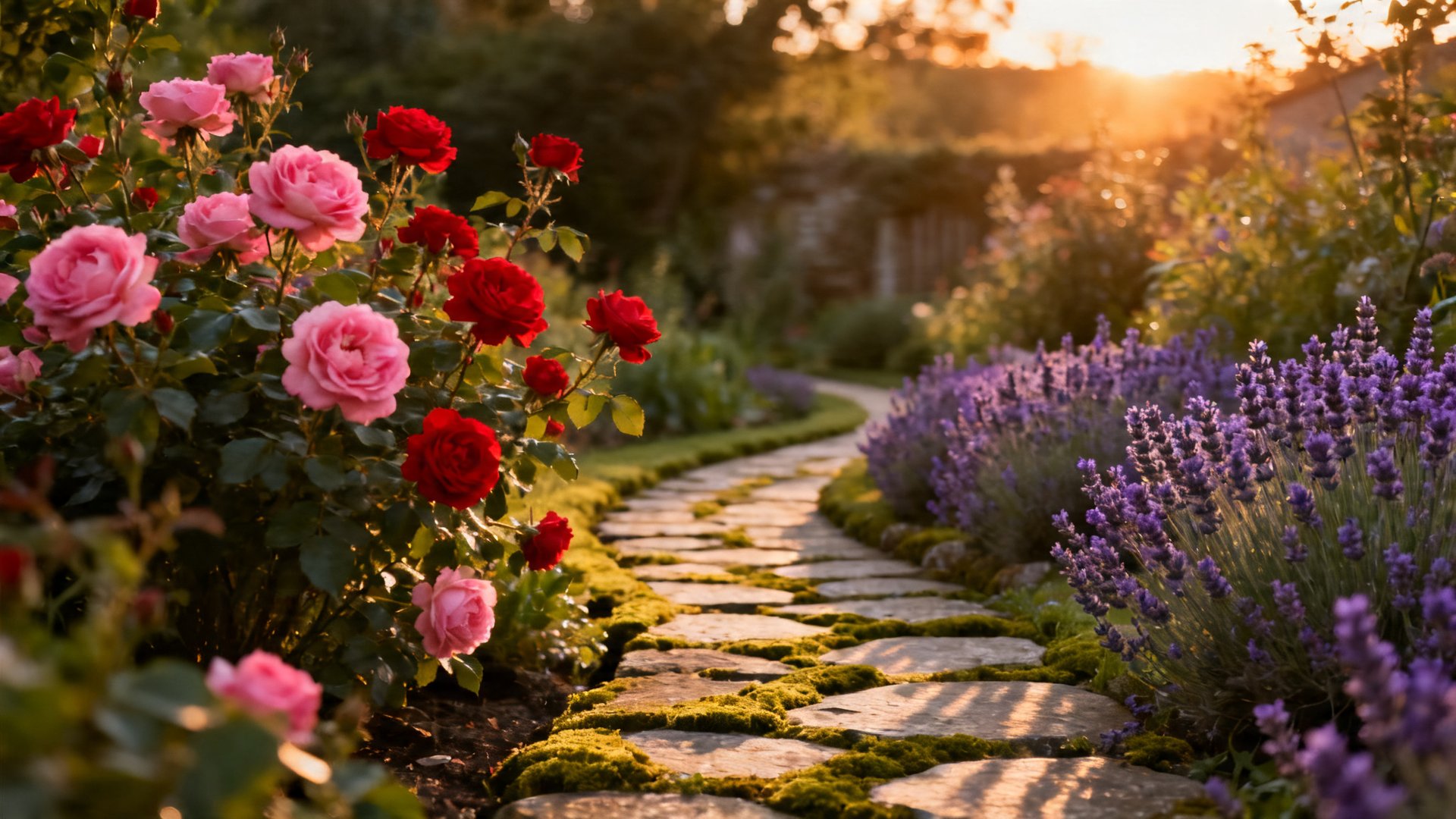
There’s something about stepping into a garden bursting with climbing roses, lavender hedges, and foxgloves swaying in a warm breeze that makes you want to slow down completely. That dreamy, slightly wild, deeply romantic feeling is exactly what cottage summer garden ideas with English countryside charm are all about. This article will walk you through the key elements that bring this beloved aesthetic to life, from plant choices and pathways to garden furniture and those irresistible little finishing touches. Whether you have a sprawling backyard or a modest patch beside your front door, this approach is absolutely worth trying.
What Is the Heart of the English Cottage Garden Look?
The heart of the English cottage garden look is layered, abundant planting that feels naturally wild yet quietly intentional. It combines plants of different heights, textures, and bloom times to create a lush, romantic effect that flows from late spring through fall.
 Shop this look: garden decor on Amazon
The English cottage garden style has a wonderfully deceptive quality. It looks effortless and even a little untamed, but there’s a quiet logic underneath all that lush abundance. The key is layering plants of different heights, textures, and bloom times so something is always flowering from late spring straight through to fall.
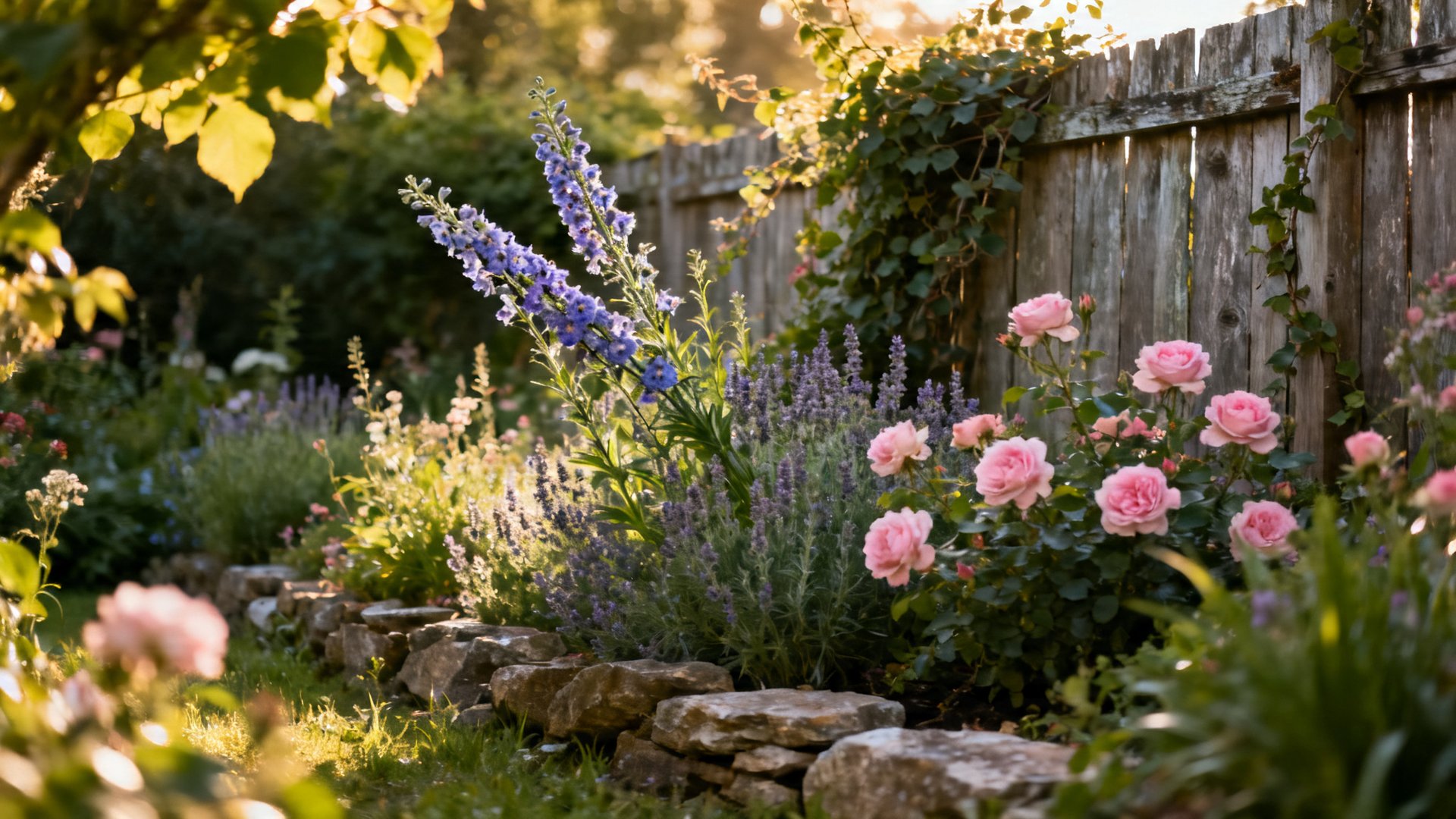
I love how this style embraces what many gardeners call “controlled chaos.” Nothing is perfectly symmetrical, and that’s entirely the point. Tall delphiniums lean gently toward shorter catmint, while climbing roses scramble over a fence with no apologies. The whole composition feels lived-in and loved rather than manicured and stiff, much like the relaxed spirit behind classic country garden decor.
Design Details
Start by thinking in soft color families: blush pinks, dusty purples, creamy whites, and touches of deep burgundy work beautifully together. Avoid planting in rigid rows; instead, scatter groups of three to five plants of the same variety in loose clusters throughout your beds for a natural, drifting effect.
Which Plants Best Capture That Countryside Feeling?
The plants that best capture the English countryside feeling are heritage and heirloom varieties like foxgloves, hollyhocks, climbing roses, lavender, and sweet peas. These classic bloomers create the lush, romantic abundance that defines the cottage garden style.
 Shop this look: plant supports on Amazon
Plant selection is where your cottage garden truly comes alive. The English countryside look leans heavily on heritage and heirloom varieties, plants that feel like they’ve been growing in the same garden for generations. If you want a deeper look at the blooms themselves, this guide to summer flowers for your garden is a lovely companion read.
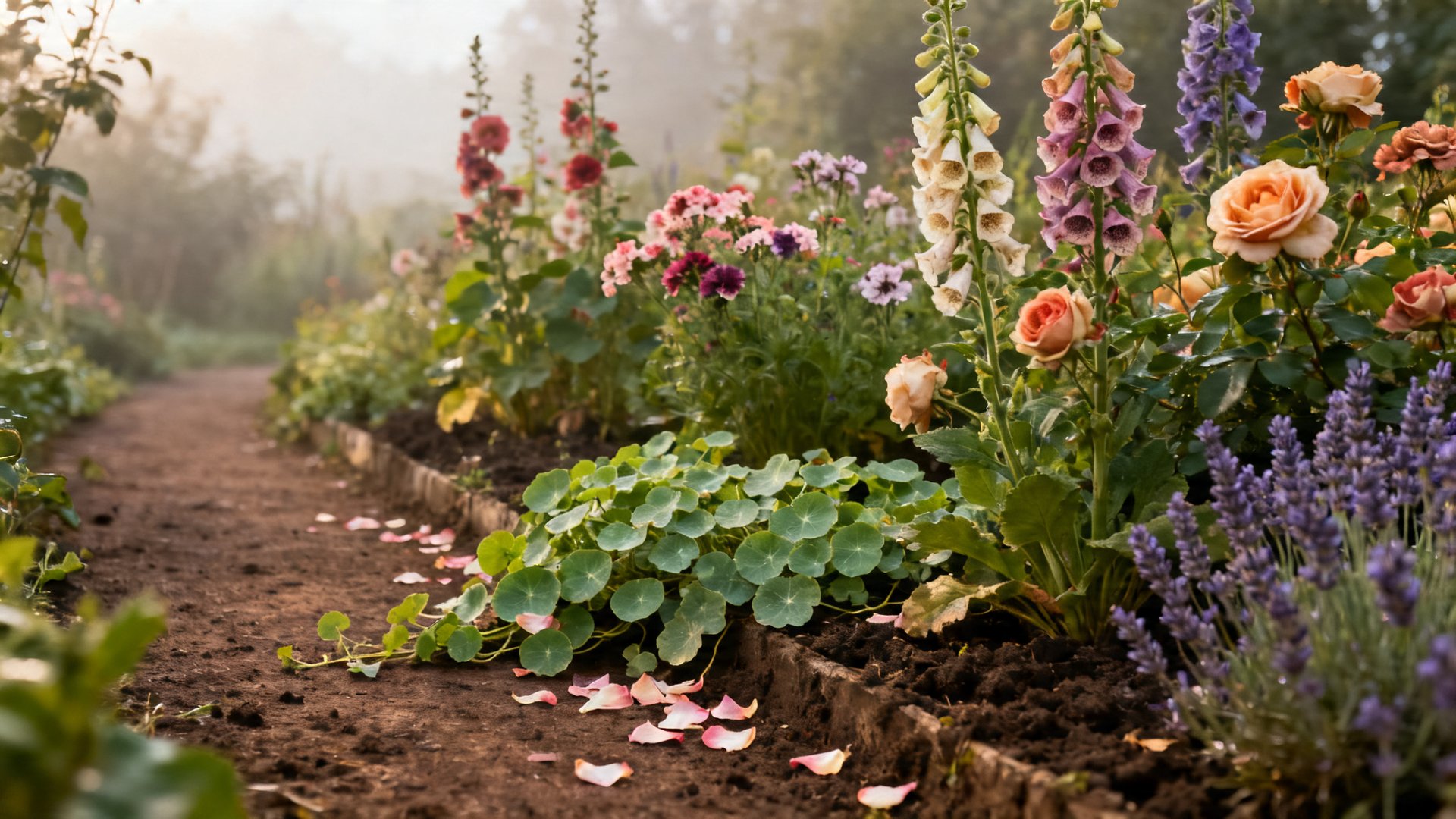
Some of the most essential cottage garden plants include foxgloves, hollyhocks, sweet William, larkspur, and old-fashioned roses. These tall, statement bloomers form the backbone of the look. Beneath them, you’ll want soft fillers like lady’s mantle, which spills over path edges beautifully, and sweet alyssum, which releases a faint honey scent on warm afternoons. One thing I’ve noticed is that adding at least one fragrant plant near a seating area completely changes how the space feels, and suddenly the garden becomes a full sensory experience, not just a visual one.
Pro tip: Don’t overlook herbs as design elements. Lavender, rosemary, and tall fennel add structure, fragrance, and a wonderfully rustic texture that ties the whole cottage garden palette together without requiring much effort to maintain. And if roses are calling your name, these summer rose garden design and care ideas will help you keep them thriving all season.
Once your plant palette is in place, the way you connect and frame those beds becomes just as important to the overall feel.
What Pathways and Borders Feel Genuinely Old-World?
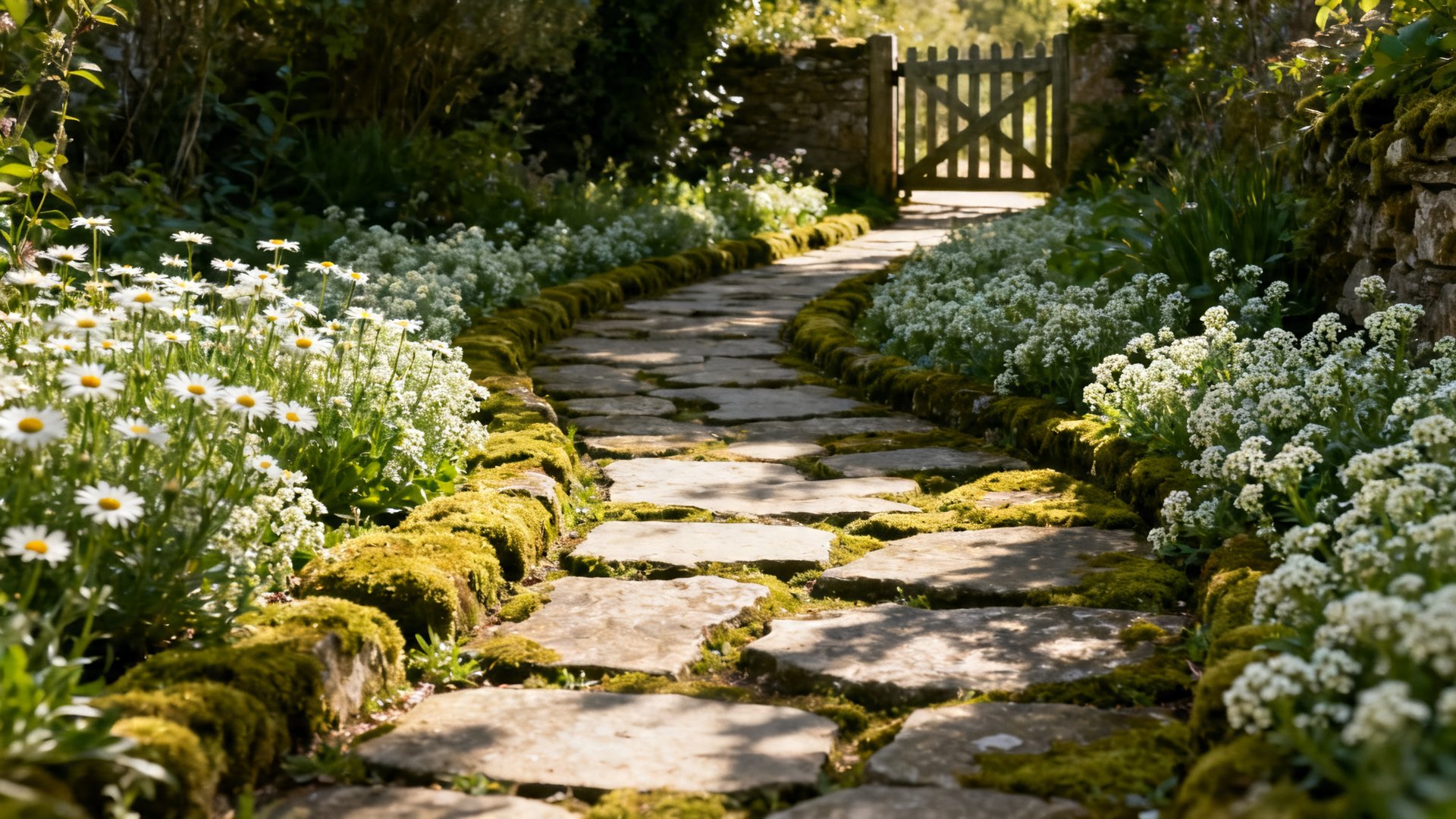
Pathways made from worn brick, tumbled stone, or irregular flagstone feel most authentically old-world in a cottage garden. Their aged, mossy quality suggests decades of history and blends naturally with soft, spilling plantings on either side.
 Shop this look: stepping stones on Amazon
A cottage garden path should feel like a quiet invitation rather than a direct route. The materials you choose for walkways and borders set the tone for everything around them, so it’s worth thinking carefully about texture and color here.
Worn brick pavers, tumbled stone, and irregular flagstone are the gold standard for this look. They have an aged, mossy quality that feels like they’ve been there for decades. Gravel paths edged with low boxwood hedges or sprawling thyme also work wonderfully, and the thyme releases a gentle herbal scent when brushed against, which adds another layer of that countryside magic. A friend of mine lined her garden path with mismatched vintage terracotta pots overflowing with trailing nasturtiums, and it became the most photographed corner of her entire yard.
Pro tip: Allow moss and low-growing creeping plants to settle into the cracks of stone or brick paths rather than pulling them out. That soft, slightly weathered look is exactly what gives an English cottage garden its authentic, unhurried character.
&# 127803; Keep reading:Farmhouse garden decor ideas for rural outdoor living→
Which Garden Structures Add Storybook Character?
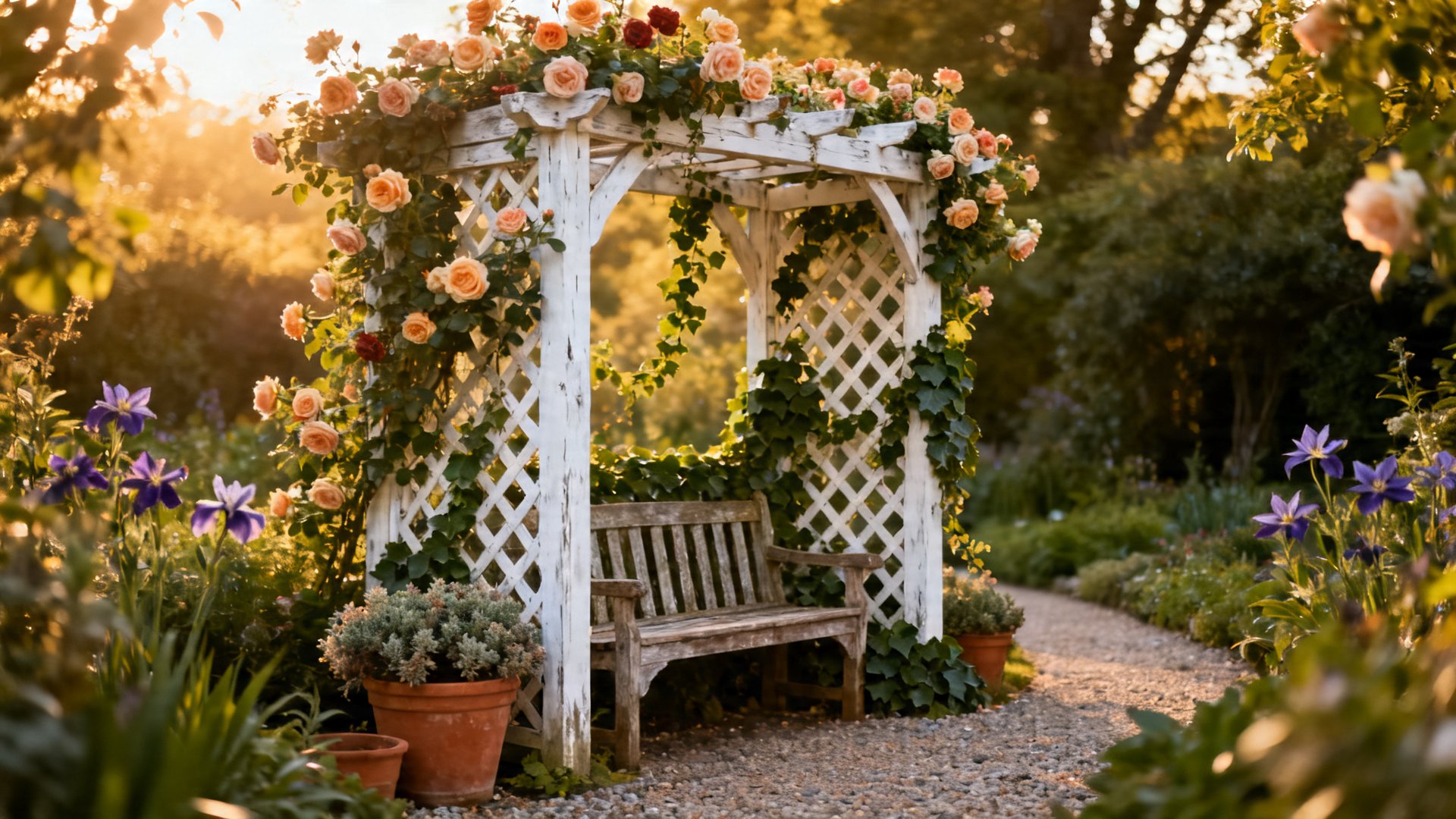
Arched trellises draped in climbing roses, weathered wooden gates, and rustic pergolas covered in wisteria are the structures that add the most storybook character to a cottage garden. Even a single rose arch over an entrance instantly changes the atmosphere.
 Shop this look: a garden statue on Amazon
Vertical elements are one of the most underused tools in cottage garden design, and they make an enormous difference to the overall atmosphere. Think about the classic images of English countryside gardens; they almost always feature an arch dripping with roses, a weathered wooden gate, or a rustic pergola draped in wisteria, much like the timeworn pieces you would find in rustic garden decor.
Adding a simple arched trellis over a garden entrance and training a climbing rose or clematis up it instantly gives your space that storybook quality. You don’t need a large garden for this; even a small side gate with a modest arch and a few climbing stems creates a genuine sense of arrival and romance.
Materials That Work
Painted timber, wrought iron, and reclaimed wood are the most authentic choices for cottage garden structures. Soft sage green, chalky white, or faded black paint on wooden structures blends beautifully into the planting rather than competing with it. Look for these pieces at salvage yards, estate sales, or flea markets, since a slightly imperfect, paint-chipped gate is far more charming than a brand-new one.
How Should You Design Cottage Summer Garden Seating and Gathering Spaces?
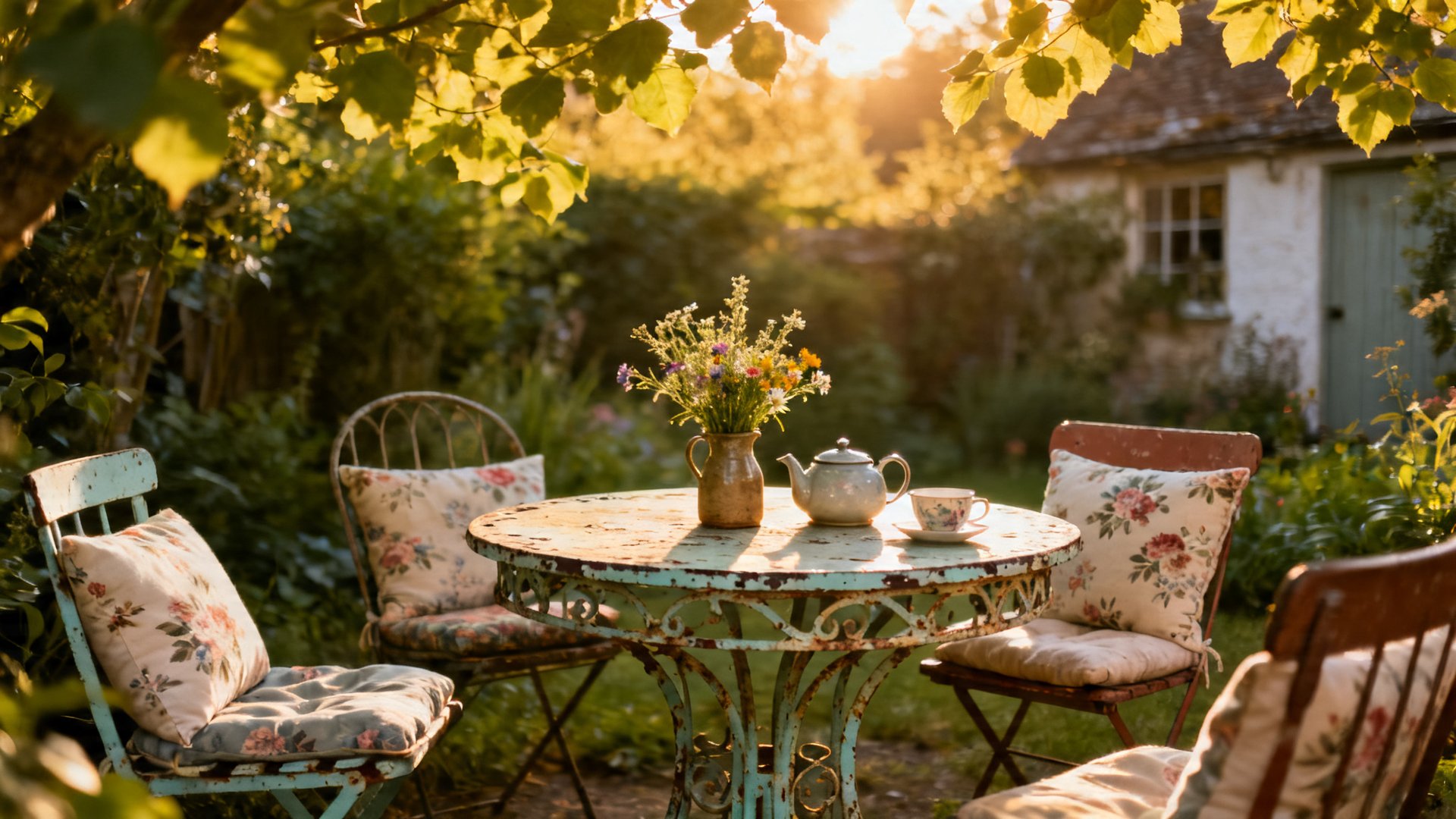
Cottage summer garden seating should feel as though it belongs naturally within the planting rather than placed as an afterthought. Choose weathered or vintage-inspired pieces like cast iron bistro chairs or a wooden bench tucked beneath a rose-covered pergola.
 Shop this look: lanterns on Amazon
A cottage garden without a place to sit and breathe it all in is a missed opportunity. The seating in an English-style garden should feel as though it belongs there naturally, not dropped in as an afterthought.
Cast iron bistro chairs with a small round table, a wooden bench with peeling paint tucked beneath a rose-covered pergola, or even a simple wooden swing hung from a sturdy tree branch all capture that countryside spirit perfectly. I keep coming back to this approach because the seating area becomes the emotional center of the garden, the spot where those slow summer garden mornings with a cup of tea actually happen, not just get imagined.
Layer in soft textiles to make the space feel genuinely inviting. A weather-resistant cushion in a faded floral or ticking stripe, a lightweight cotton throw draped over the back of a bench, and a small lantern on the table for evening use; these small details make an outdoor corner feel as warm and intentional as any indoor room.
Pro tip: Position your seating so it faces into the garden rather than away from it. Sitting with a view of your borders, even a small one, makes the space feel far more immersive and connected to the planting around you.
With your plants, paths, structures, and seating in place, it’s the smaller decorative details that truly bring the cottage garden to life.
&# 128214; You might also love:Garden decor: the complete guide to beautiful outdoor styling→What Finishing Touches Make the Whole Garden Sing?
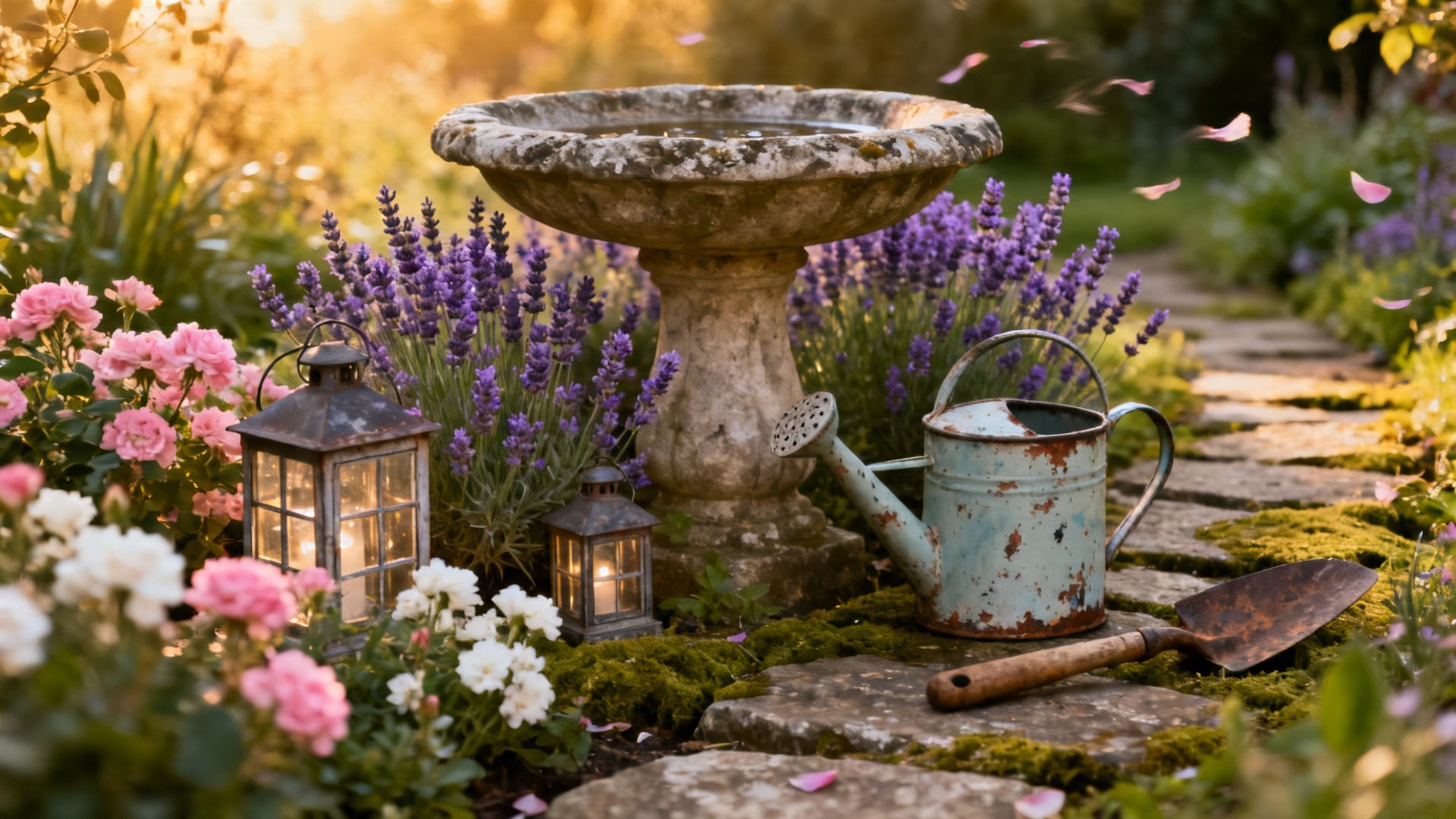
The finishing touches that make a cottage garden truly enchanting are small, personal details like vintage watering cans used as planters, mismatched terracotta pots, and string lights woven through climbing roses. These elements give the garden a sense of being genuinely loved.
 Shop this look: a vintage watering can on Amazon
The details that complete a cottage summer garden are often the most personal and playful part of the whole process. These are the elements that take a garden from simply pretty to genuinely enchanting.
Finishing Touches
- Vintage watering cans in aged copper or galvanized metal make beautiful planters for trailing petunias or small ferns near a doorstep
- A collection of mismatched terracotta pots grouped at different heights creates an informal, layered display that feels collected over time, not purchased all at once
- A simple wooden bird bath or stone basin placed among the borders adds a focal point and attracts wildlife, which feels deeply in keeping with the countryside spirit
- String lights woven through a climbing rose or along a fence line extend the magic into summer evenings with the softest, warmest glow
- A hand-lettered plant marker or two tucked among the beds adds a charming, personal touch that invites guests to lean in and look closer
These small additions are what make a cottage garden feel like it belongs to someone who genuinely loves it, and that sense of personal care is the true heart of this whole aesthetic. Many of these accents echo the timeworn pieces you would gather for vintage garden decor.
How Can You Bring Cottage Summer Garden Ideas Into a Small Space?
You can bring cottage summer garden ideas into a small space by focusing on height, fragrance, and one or two signature plants like roses and lavender. Vertical surfaces, tall containers, and low lavender edging can suggest the full cottage garden language in just a few square feet.
One of the most encouraging things about cottage summer garden ideas with English countryside charm is how beautifully they scale down. You absolutely do not need acres of land to capture this feeling; a narrow border, a small courtyard, or even a generous balcony can carry the spirit of it, especially when paired with the soft, romantic touches of shabby chic garden decor.
In a compact space, focus on height and fragrance above all else. A single climbing rose trained up a wall, a tall container planted with foxgloves and sweet William, and a low edging of lavender along a path edge can suggest the whole cottage garden language in just a few square feet. This works especially well in urban gardens where horizontal space is limited but vertical surfaces are plentiful. From what I’ve gathered, the easiest approach in a small space is to choose one or two signature plants that really define the look, like roses and lavender, and build everything else around them in supporting roles.
Pro tip: In small cottage gardens, scent does the heavy lifting that scale cannot. Prioritize fragrant plants like sweet peas, stocks, and old roses near your seating or entryway so the atmosphere feels rich and layered even when the planting itself is modest.
Final Thoughts
There’s a reason so many of us are drawn to cottage summer garden ideas with English countryside charm; they speak to something deeply human about wanting beauty, softness, and a little wildness in our everyday surroundings. Your garden doesn’t need to be perfect or large or expertly planted to carry this spirit; it just needs to feel loved and layered and alive. Start with a handful of your favorite cottage plants, add one meaningful structural element, and let the rest grow organically from there. Happy gardening!
Frequently Asked Questions
The most iconic plants for an English cottage summer garden include climbing roses, lavender, foxgloves, delphiniums, hollyhocks, and sweet peas, all of which contribute to that lush, romantic abundance the style is known for. Layering plants of varying heights and bloom times ensures continuous color and texture throughout the summer season. Mixing perennials with self-seeding annuals also helps maintain that beautifully wild, effortless appearance that defines the English countryside aesthetic.
Absolutely, the English cottage garden style is wonderfully adaptable and works beautifully in modest spaces, including small side patches, front yards, and even container arrangements near a doorway. The key is to pack in plants generously, allow some to spill over edges, and use vertical elements like climbing roses or sweet peas on trellises to maximize impact without needing a large footprint. Even a narrow border filled with lavender, foxgloves, and trailing geraniums can evoke genuine English countryside charm.
Winding, informal pathways made from natural materials such as worn brick, irregular flagstone, or gravel are ideal for capturing the relaxed, timeless feel of an English cottage garden. These materials age beautifully and blend smoothly with soft plantings that are encouraged to spill over the edges, softening the lines further. Avoid overly straight or modern paving options, as they tend to work against the organic, slightly untamed quality that gives this garden style its distinctive charm.
Vintage-inspired or weathered garden furniture suits the English cottage aesthetic perfectly, with options like wrought iron bistro sets, wooden benches with a distressed finish, and wicker chairs all complementing the romantic, lived-in atmosphere. Neutral tones such as faded white, sage green, or soft grey tend to harmonize well with the abundant floral palette without competing for attention. Adding cushions in floral or botanical prints and placing furniture beneath a rose-covered arch or beside a lavender hedge enhances the overall charm considerably.
While the English cottage garden is meant to look naturally abundant and slightly wild, a little regular maintenance goes a long way in keeping it beautiful rather than chaotic, since deadheading spent blooms, dividing overcrowded perennials, and lightly trimming hedges are simple tasks that preserve the style’s lush but intentional appearance. Allowing self-seeders like foxgloves and aquilegias to spread naturally adds to the organic feel, but thinning them out occasionally prevents any single plant from overwhelming its neighbors. The goal is to guide the garden’s natural tendencies rather than rigidly control them, which is precisely what gives this style its enduring, effortless appeal.