
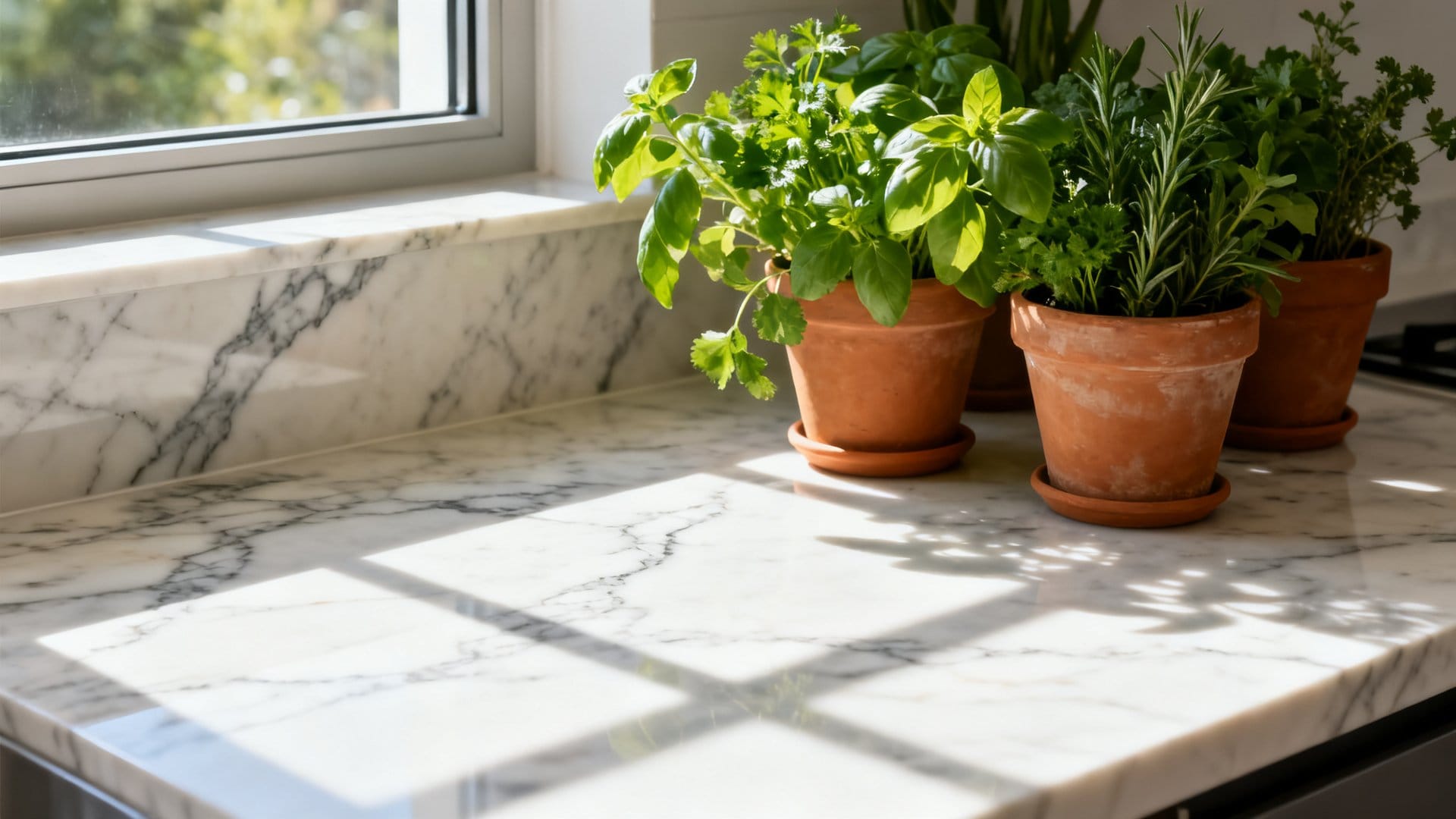
There is something about the long, golden hours of summer that makes you want to spend more time in the kitchen, windows cracked open, something citrusy on the counter, bare feet on cool tile. If your kitchen has been feeling a little flat lately, you are not alone. The summer kitchen design trends you need to know this year are all about bringing that breezy, sun-warmed energy indoors, and the good news is that most of these changes are surprisingly approachable. Whether you are planning a full refresh or just looking for a few thoughtful touches, this guide will walk you through what is resonating right now, and why it actually works.
Are Warm Whites and Soft Earthy Tones Taking Over?
Yes, warm whites and soft earthy tones are the dominant color story in summer kitchens this year. Creamy linens, warm sands, muted terracottas, and soft sages are replacing the cooler, starker whites that defined the previous decade.
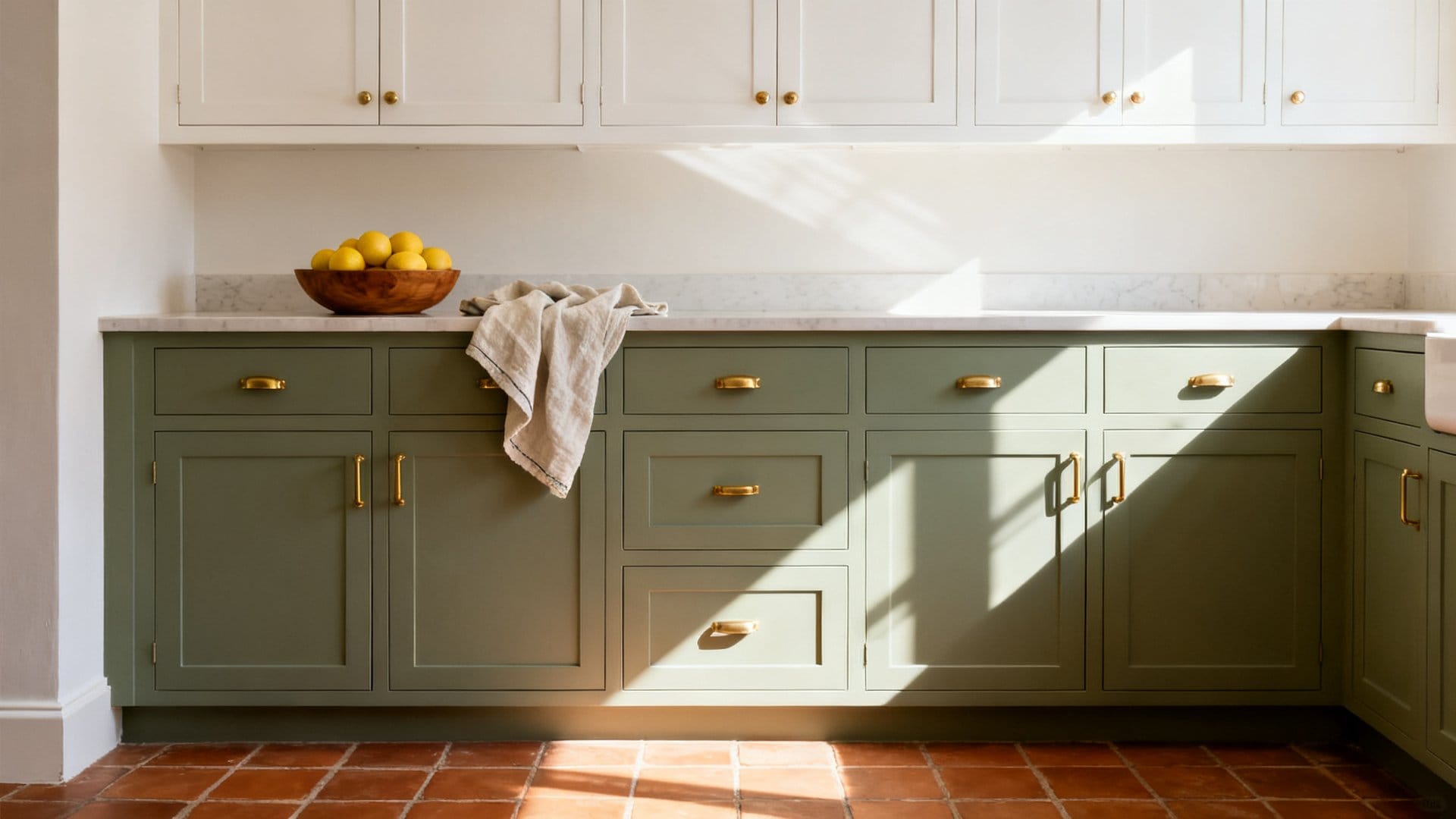
The all-white kitchen had its moment, and it was beautiful, but this summer, designers and homeowners alike are leaning toward something with a little more warmth and soul. Think creamy linen whites, warm sand, muted terracotta, and soft sage tones that feel like they were pulled directly from a sun-drenched space.
I love how these shades shift throughout the day as natural light moves through a room. A cabinet painted in warm white with just a hint of yellow undertone looks completely different at 7 a.m. versus 6 p.m., and that kind of living quality is exactly what makes a kitchen feel inviting rather than sterile.
Color Combinations That Work Right Now
One of the most beautiful pairings this season is warm white upper cabinets paired with a deeper sage or clay lower cabinet, it grounds the space without making it feel heavy. Pair that with unlacquered brass hardware and you have something that feels both current and timeless. Natural wood open shelving, a favorite in mid-century modern kitchens, adds another layer of warmth that no amount of painted cabinetry can replicate on its own.
&# 128218; More kitchen inspiration:See how a retro kitchen table and chairs set the tone for a whole space→
Why Are Natural Materials the Heart of the Summer Kitchen?
Natural materials are central to summer kitchen design because they bring warmth, texture, and a sense of the outdoors inside. Raw linen, rattan, stone, and unfinished wood create a layered, lived-in quality that feels genuinely inviting rather than assembled.
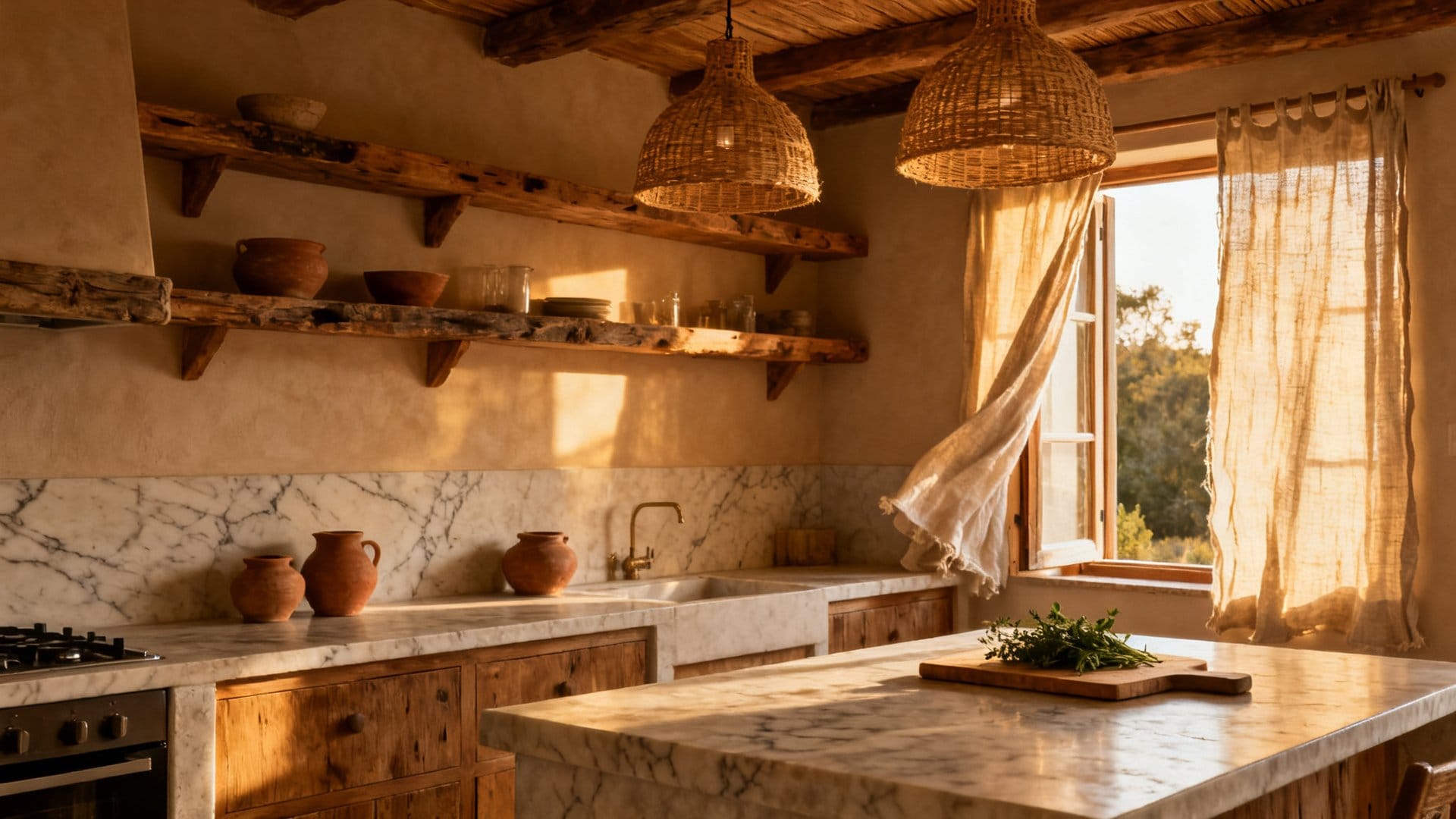
If there is one thread running through all the summer kitchen design trends you need to know this year, it is this: nature is the starting point. Raw linen curtains, rattan pendant shades, stone countertops with visible veining, unfinished wood cutting boards left out on the counter, these are the details that make a kitchen feel genuinely lived-in and lovely.
One thing I have noticed in kitchens that feel especially welcoming is that they rarely rely on just one natural material. It is the layering that does the work. A honed marble countertop next to a rough-hewn wooden shelf, softened by a loosely woven dish towel in a muted stripe, that combination of textures is what makes you want to linger.
Materials That Work
Honed stone surfaces (rather than polished) are having a real moment because they feel less precious and more tactile. Soapstone, honed quartz, and leathered granite all bring that understated, earthy quality that works beautifully with summer’s relaxed energy. For flooring, terracotta tile, whether original vintage or a modern reproduction, adds warmth and a handmade quality that no porcelain lookalike quite matches.
How Do You Do Open Shelving Thoughtfully, Not Perfectly?
Thoughtful open shelving starts with genuinely useful items and layers in one or two purely decorative pieces. The goal is a shelf that looks like someone actually cooks there, not a flawless, staged display.
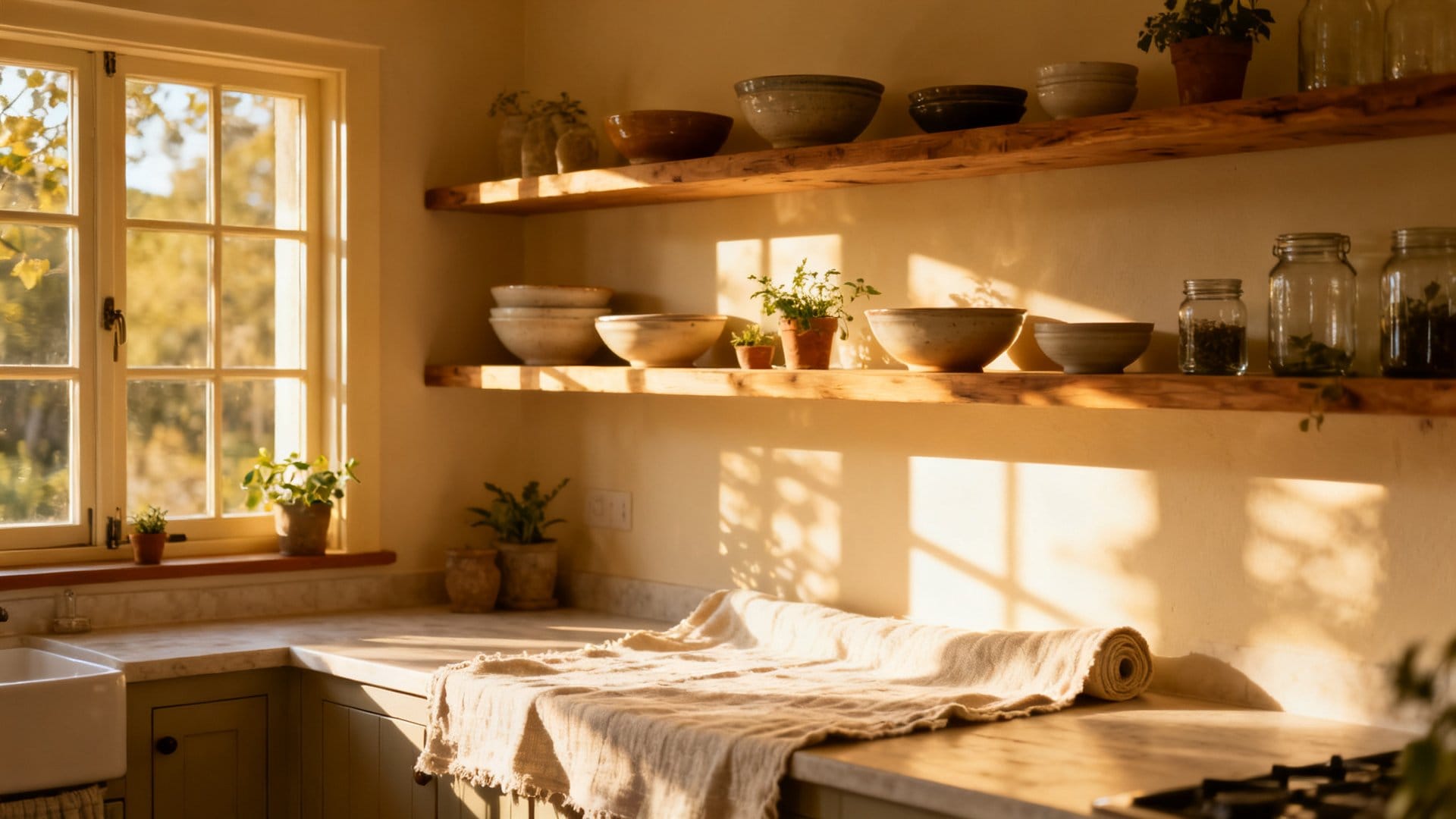
Open shelving has been a trend for years, but this summer it is shifting away from the hyper-select, Instagram-perfect version toward something more relaxed and personal. The goal is not a flawless display, it is a shelf that looks like someone actually cooks there.
From what I have gathered, the easiest way to get this right is to start with a base of genuinely useful items: a stack of ceramic bowls, a few glasses, a small pitcher. Then layer in one or two things that are purely beautiful, a piece of pottery you love, a small bunch of dried botanicals, a vintage bread board, the kind you might also use in a soft pastel kitchen. The mix of functional and decorative is what keeps it from feeling either too sterile or too cluttered.
Pro tip: Leave a little breathing room between items rather than packing the shelf edge to edge. That negative space is what makes the whole arrangement feel intentional rather than chaotic, and it is much easier to keep clean when the season gets busy.
Beyond the surfaces and shelves, the way you light your kitchen can change the entire atmosphere of the space.
What Lighting Feels Like Summer Itself?
Warm, layered light sources that mimic natural sunlight are the defining lighting choice for summer kitchens this year. Rattan pendants, under-cabinet warm-white strips, and Edison-style bulbs all contribute to a kitchen that glows rather than just illuminates.
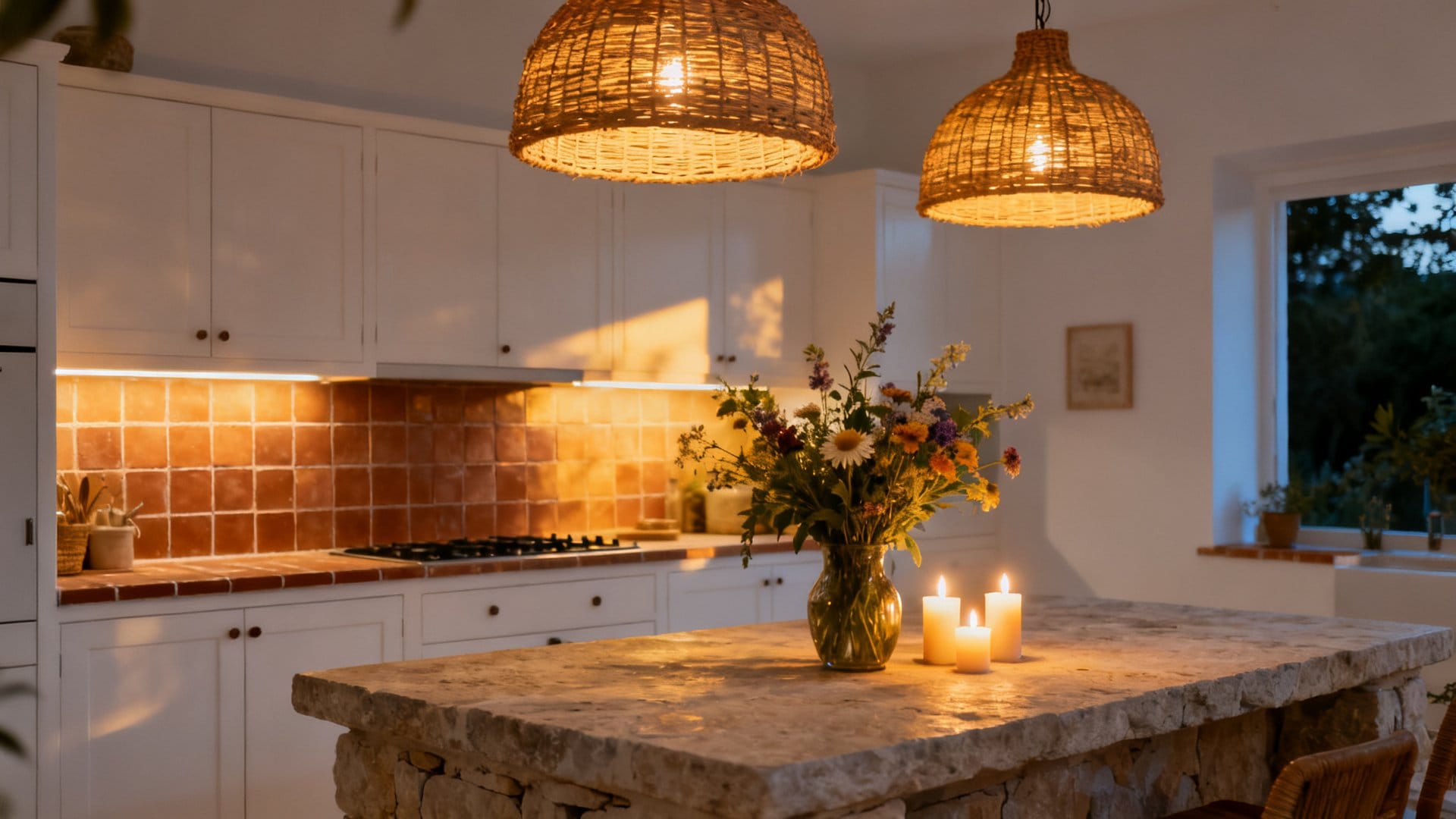
Lighting is one of the most overlooked elements of kitchen design, and it might be the single fastest way to shift the entire mood of a space. This summer, the focus is on warm, layered light sources that mimic the quality of natural sunlight rather than the harsh overhead brightness most kitchens default to.
Rattan or woven pendant lights over an island or dining nook cast the most beautiful dappled shadows, I have seen this work especially well in smaller kitchens where a single statement pendant becomes almost sculptural. Pair that with under-cabinet lighting in a warm white tone (not the cool blue-white that makes everything look clinical), and you suddenly have a kitchen that glows rather than just illuminates.
A friend of mine tried swapping her overhead fluorescent fixture for two smaller pendants with warm Edison-style bulbs, and it changed the entire personality of her kitchen without a single cabinet being touched. Sometimes the simplest swaps carry the most weight.
Pro tip: If you cannot change your overhead fixture, try adding a small table lamp or a plug-in sconce to a corner of the kitchen, even one warm, lower light source softens the room considerably in the evenings.
Why Is the Herb Garden Coming Inside?
Bringing the herb garden indoors is one of the most functional and beautiful summer kitchen trends right now. A windowsill of living herbs adds scent, color, and a connection to the garden that no accessory can replicate.
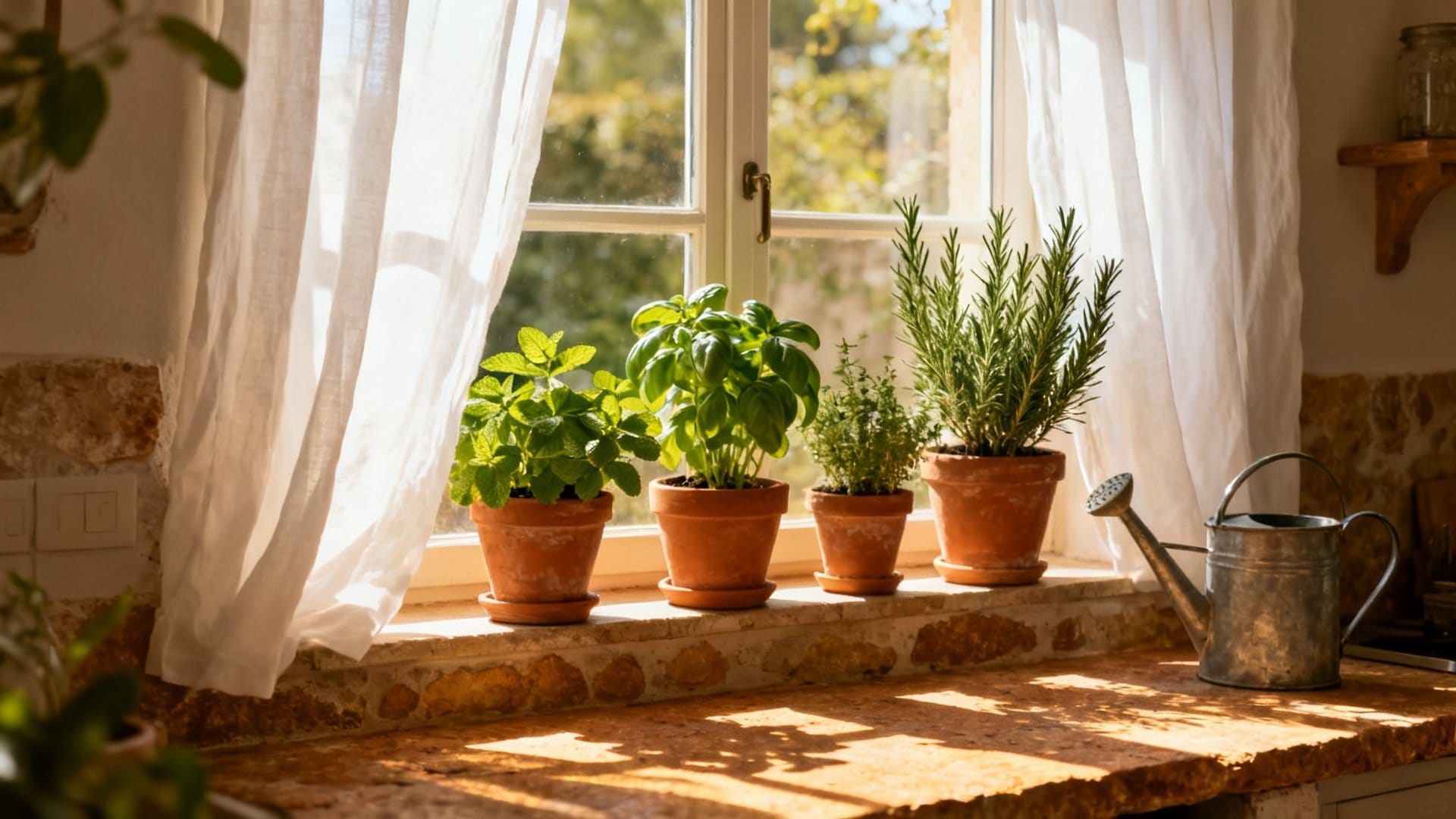
One of the most charming summer kitchen design trends gaining traction right now is bringing the garden right into the kitchen itself. Not as a decorative afterthought, but as a genuinely functional and beautiful part of the space.
A row of terracotta pots along a windowsill planted with basil, rosemary, thyme, and mint does something no piece of art or accessory can quite replicate, it makes the kitchen smell alive. The visual effect is equally appealing: varying heights, different shades of green that echo a relaxed outdoor summer kitchen, the slight imperfection of real growing things.
Layout Ideas for Small Spaces
- Line a deep windowsill with three to five small terracotta pots in graduating sizes, staggered slightly rather than perfectly aligned for a relaxed, organic look
- Hang a simple wooden wall-mounted planter near the window for herbs that need good light but where counter space is tight
- Use a small wooden tray to corral a cluster of mismatched pots, it keeps things tidy while still feeling casual and collected over time
- Choose one or two trailing herbs like thyme or oregano to spill gently over the edge of a shelf, adding softness to hard surfaces
The beauty of this approach is that it is endlessly adjustable, you can start with a single pot of basil and grow from there as the season unfolds.
Once the larger elements are in place, it is the smaller, more personal details that truly bring a summer kitchen to life.
&# 128064; Take it outside:Browse breezy Florida outdoor kitchen ideas for hot-climate cooking→How Do Vintage and Handmade Touches Tell a Story?
Vintage and handmade pieces give a kitchen genuine character by introducing pieces that feel personal and unhurried. They create the kind of contrast, a hand-thrown bowl beside a modern faucet, that makes a space feel select by a real person rather than assembled from a catalog.
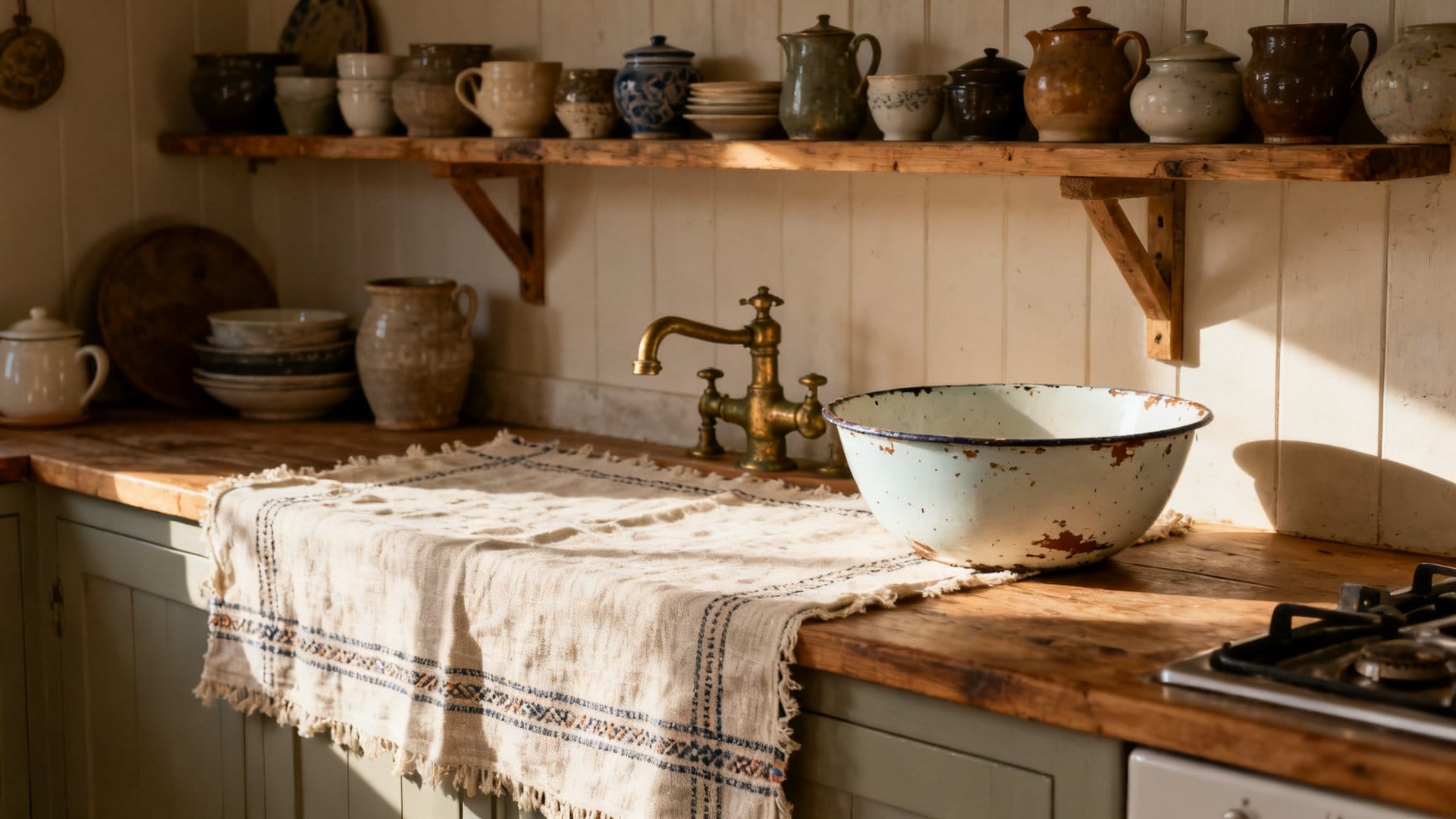
Something that keeps coming up in conversations about summer kitchens this year is a real hunger for pieces that feel personal and unhurried, the opposite of everything mass-produced and matching. Vintage ceramic canisters and vintage kitchen wall decor, handmade pottery mugs, a worn wooden utensil holder that has clearly lived a good life, these are the details that give a kitchen genuine character.
I keep coming back to this approach because it solves a problem that perfectly coordinated kitchens often create: they look beautiful in photos but feel a little cold in real life. A hand-thrown ceramic bowl sitting next to a sleek modern faucet creates exactly the kind of contrast that makes a space feel select by a real person rather than assembled from a catalog.
Estate sales, flea markets, and thrift stores are wonderful hunting grounds for this kind of piece. You are not looking for matching sets, you are looking for things with good bones and a little history. A mismatched collection of ceramic pitchers in similar tones, for example, looks far more interesting on a shelf than six identical ones.
Pro tip: When mixing vintage and modern in a kitchen, keep one element consistent, whether that is a color palette, a material like wood or clay, or a general shape. That thread of continuity is what keeps the collected look from tipping into cluttered.
Final Thoughts
The summer kitchen design trends you need to know this year share one beautiful quality: they all invite you to slow down and actually enjoy the space where so much of daily life happens. Whether you start with a new coat of warm paint, a rattan pendant, a windowsill full of herbs, or a single piece of handmade pottery, every small change adds up to a kitchen that feels more like you. Your kitchen does not need to look like a magazine spread, it just needs to feel good to be in, and that is always within reach. Happy decorating!
Frequently Asked Questions
This year’s summer kitchen design trends center on warm, earthy tones like creamy whites, soft sage, and muted terracotta that bring a sun-warmed, breezy energy indoors. Designers are also emphasizing approachable, tactile updates such as natural textures, open shelving, and citrus-inspired accents that feel fresh without requiring a full renovation. The overall goal is creating a space that feels relaxed, inviting, and connected to the season.
While the all-white kitchen remains a timeless classic, it is gradually giving way to warmer, more soulful alternatives this summer. Homeowners and designers are gravitating toward creamy linen whites, warm sand tones, and soft earthy palettes that feel more lived-in and inviting than a stark, cool white. These warmer shades still offer a bright, airy feel while adding depth and personality to the space.
Not at all, many of this year’s most popular summer kitchen trends are surprisingly approachable and budget-friendly. Simple updates like swapping out cabinet hardware, adding a few natural-texture accessories, or introducing a warm paint color can dramatically shift the feel of your kitchen without a costly full remodel. Even small, thoughtful touches such as open shelving displays or citrus-inspired decor can bring the season’s energy into your space.
The most resonant summer kitchen palettes this year lean into warm neutrals and nature-inspired hues, including soft sage greens, muted terracotta, warm sand, and creamy off-whites that evoke sun-drenched, organic environments. These tones work beautifully together or as standalone accent colors against more neutral backdrops, creating a cohesive look that feels both fresh and grounded. Pairing these shades with natural materials like wood, linen, or stone enhances the overall breezy, seasonal effect.
Absolutely, the beauty of this year’s summer kitchen trends is that they are designed to enhance character rather than require a blank-slate, brand-new space. Warm earthy tones and natural textures can actually make older kitchens feel more intentional and charming, while strategic updates like new lighting or open shelving can visually open up a smaller footprint. Focusing on a few well-chosen changes rather than overhauling everything is often the most effective approach for compact or vintage kitchens.