
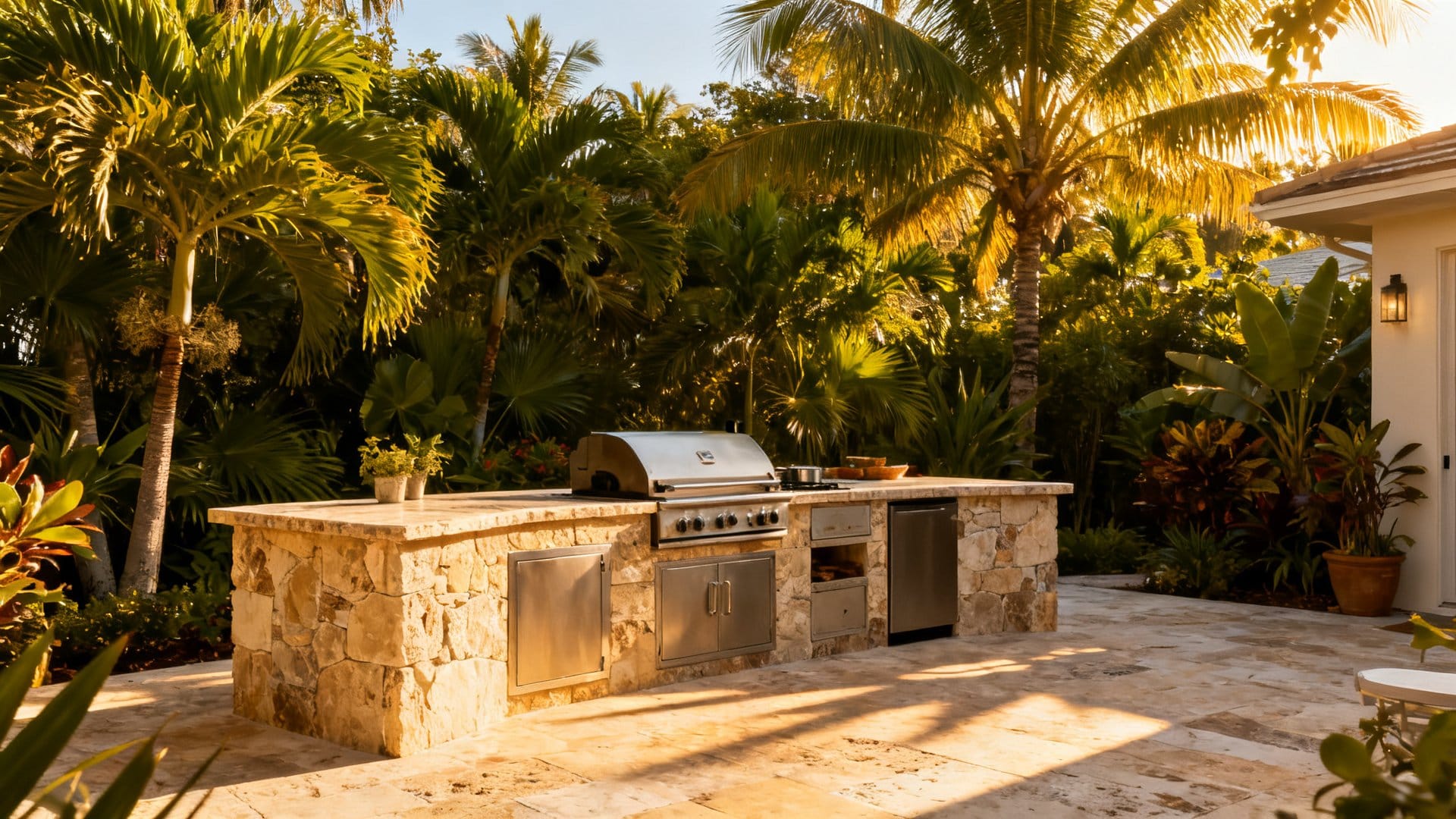
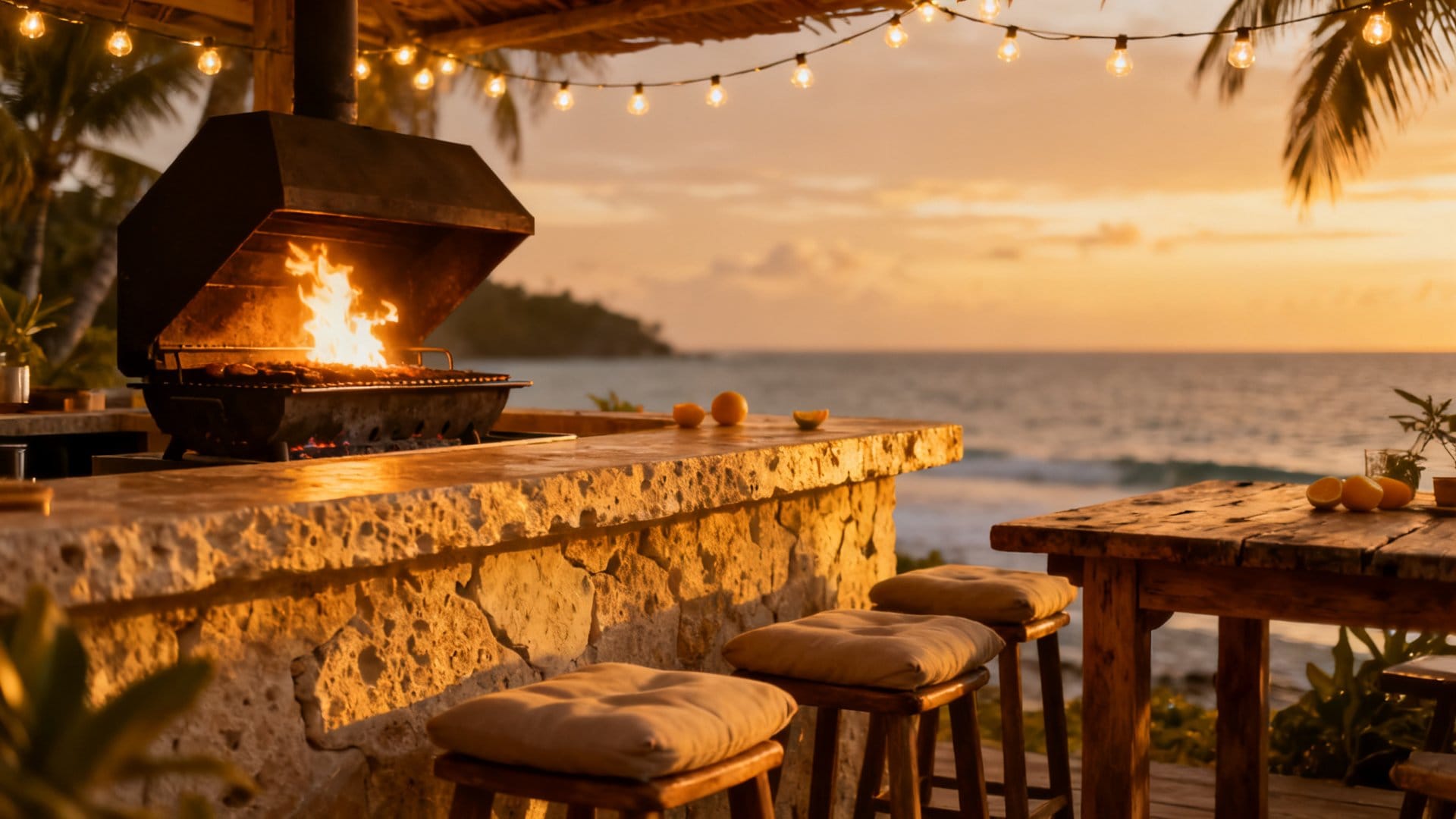
There’s something magical about stepping outside on a warm Florida evening, the air still carrying that familiar mix of jasmine and sea salt, and firing up a grill surrounded by a kitchen that feels just as functional as the one inside your home. If you’ve been dreaming about creating that kind of outdoor cooking sanctuary, you’re in exactly the right place. For more inspiration, our roundup of outdoor summer kitchen ideas pairs perfectly with a Florida setup. Florida outdoor kitchen ideas for hot climate cooking are a whole different category from what you’d find in a northern backyard guide, the heat, humidity, and sunshine here demand smarter choices, better materials, and layouts that actually keep you comfortable. This article walks you through everything worth knowing, from shade solutions to appliance picks, so your outdoor kitchen becomes the heart of your home rather than a sweaty afterthought.
Why Do Florida Outdoor Kitchens Deserve Their Own Design Playbook?
Florida outdoor kitchens deserve their own design playbook because the state’s extreme heat, persistent humidity, and salt air create challenges that standard outdoor kitchen guides simply don’t address. Getting the design right from the start means your space stays comfortable, durable, and genuinely enjoyable year-round.
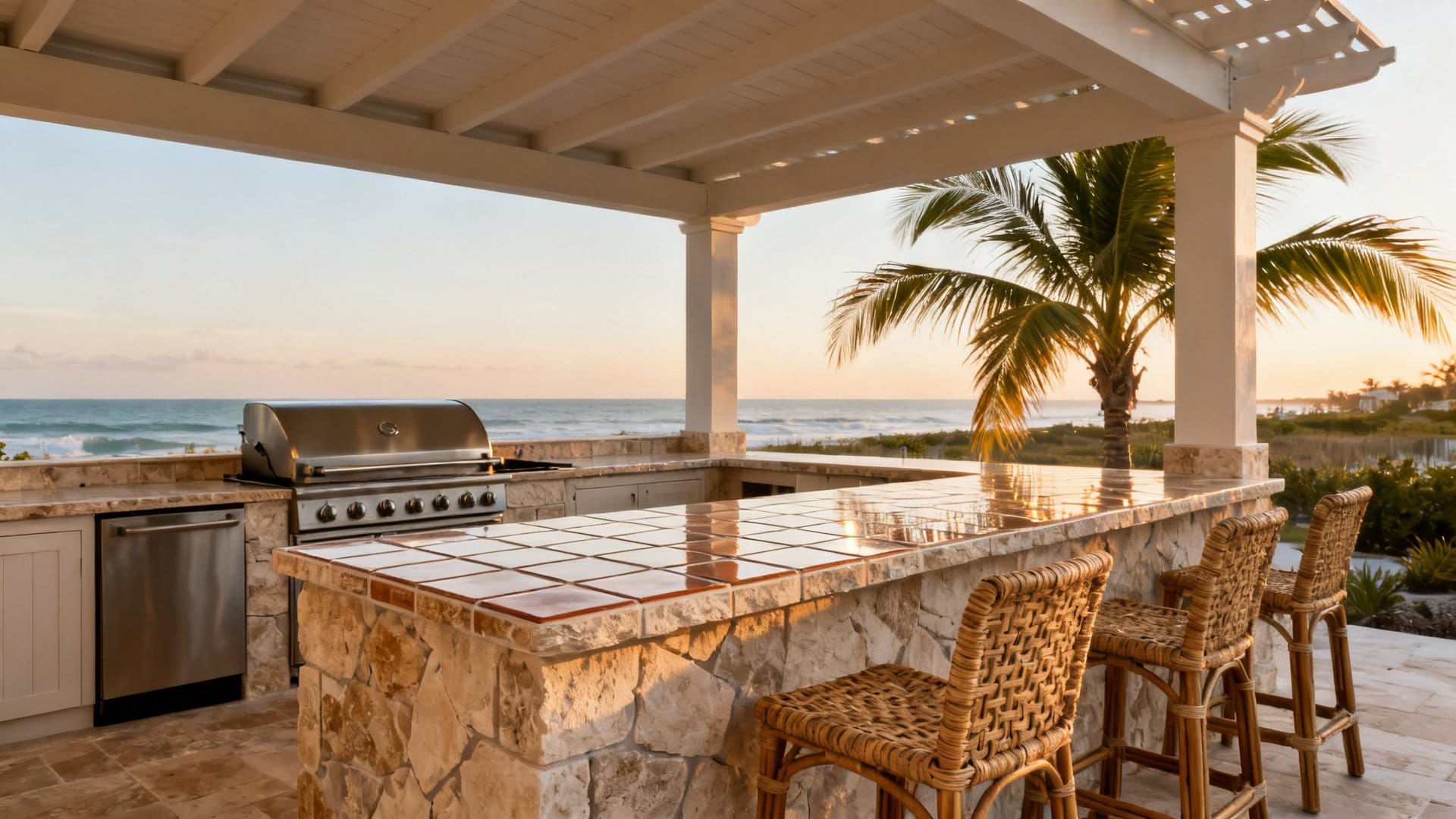
Designing an outdoor kitchen in Florida isn’t the same as designing one in, say, Colorado or Michigan. The climate here is relentless, summer temperatures regularly push past 90°F, humidity sits heavy in the air, and afternoon thunderstorms can roll in without much warning. Any outdoor kitchen that doesn’t account for these realities will feel uncomfortable to cook in and deteriorate faster than you’d expect.
One thing I’ve noticed when looking at the best Florida outdoor kitchen ideas is that the most successful ones treat shade as a non-negotiable foundation, not an afterthought. They’re also built with materials that laugh in the face of salt air and moisture. The good news? When you get these basics right, Florida outdoor cooking is genuinely one of life’s great pleasures, there’s nothing quite like grilling fresh grouper while the sun sets behind the palms.
Why It Works
Florida’s near-year-round outdoor living season means your investment in a well-designed kitchen pays off across twelve months, not just three. A thoughtfully planned space can add real value to your home while giving your family a reason to gather outside almost every single day.
What Shade Structures Make Hot Climate Cooking Bearable?
The shade structures that make hot climate cooking most bearable in Florida are pergolas with shade sails, fully covered lanais, screened enclosures, and motorized pergola louvers. Each option reduces direct sun exposure and keeps the cooking zone significantly cooler during Florida’s intense afternoon heat.
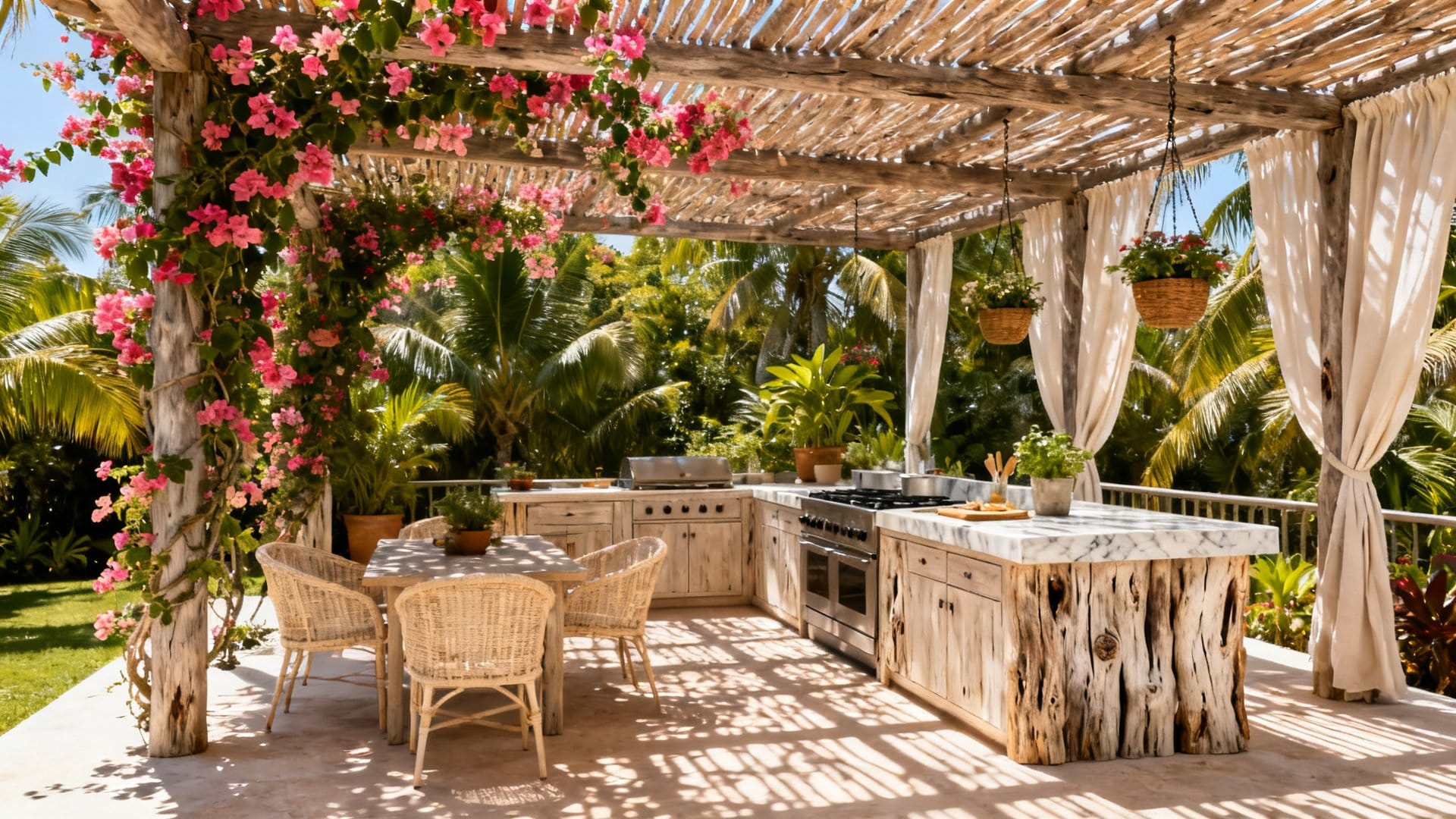
If there’s one design element that separates a Florida outdoor kitchen you’ll actually use from one that collects dust, it’s a solid shade structure. Standing over a hot grill in direct Florida sun is a quick way to lose enthusiasm for outdoor cooking entirely. Fortunately, there are beautiful and functional options that keep the space cool without closing it off.
Pergolas with shade sails or polycarbonate roofing panels are a popular choice because they offer protection from both sun and rain while still letting in light and airflow. A fully covered lanai or screened enclosure takes things a step further, giving you protection from afternoon downpours and keeping the mosquitoes at bay, which, let’s be honest, is a serious quality-of-life upgrade in Florida. For a more open-air feel, retractable awnings or motorized pergola louvers let you adjust coverage based on the time of day and weather conditions.
Pro tip: Orient your shade structure so it blocks the intense western afternoon sun, which is typically the harshest between 2 p.m. and 6 p.m. in Florida, exactly when most people are prepping dinner. A west-facing shade wall or solid pergola panel on that side makes an enormous difference in comfort. If shade is your priority, these covered patio ideas for shade and style are worth a look.
Once your shade structure is in place, the next critical decision is choosing materials that can stand up to Florida’s demanding climate without constant maintenance.
What Are the Best Materials for Florida’s Heat, Humidity, and Salt Air?
The best materials for Florida’s outdoor kitchens are porcelain tile or concrete countertops, marine-grade polymer or stainless steel cabinetry, and textured porcelain pavers for flooring. These choices resist moisture, UV exposure, and salt air corrosion far better than wood or standard ceramic alternatives.
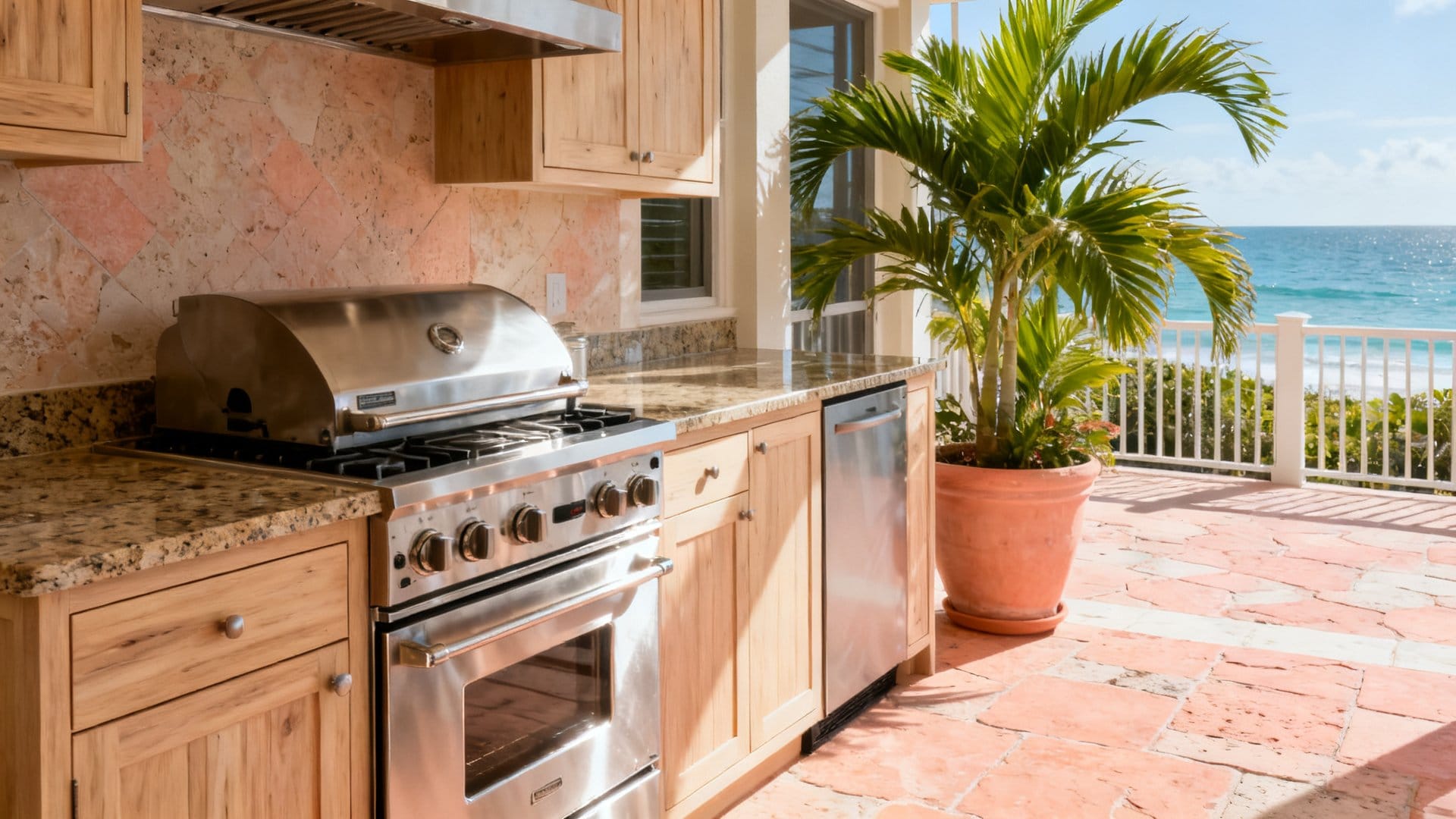
Florida’s climate is tough on materials. Salt air near the coast accelerates rust and corrosion, humidity warps wood and encourages mold, and intense UV exposure fades and cracks surfaces that weren’t designed for it. Choosing the right materials from the start saves you from a cycle of repairs and replacements that quickly adds up. It also helps to stay current with the latest summer kitchen design trends before you commit.
For countertops, porcelain tile and concrete are consistently strong performers in Florida outdoor kitchens. Both handle heat, moisture, and UV exposure beautifully. Granite is another classic choice, though it does require sealing to prevent moisture absorption. Avoid natural wood countertops outdoors in Florida, even treated wood struggles with the constant humidity cycle of wet and dry. For cabinetry and base structures, marine-grade polymer or stainless steel are the gold standards. Marine-grade polymer is particularly impressive, it doesn’t rust, doesn’t warp, resists mold, and comes in a range of colors that work well with coastal and tropical aesthetics.
I love how marine-grade polymer cabinets have come so far in terms of style, early versions looked purely utilitarian, but now you can find options with clean lines that work beautifully in modern or coastal-style outdoor spaces.
Materials That Work for Flooring
For flooring, textured porcelain pavers are the smart pick, they’re slip-resistant when wet, stay cooler underfoot than concrete in direct sun, and come in gorgeous stone and wood-look finishes that tie the whole space together. Avoid standard ceramic tile outdoors; it can crack under Florida’s freeze-thaw cycles during rare cold snaps and becomes dangerously slippery when wet.
What Are the Smartest Appliance Choices for Florida Outdoor Kitchen Ideas for Hot Climate Cooking?
The smartest appliance choices for Florida outdoor kitchens are built-in gas grills with stainless steel burners and cast aluminum housings, outdoor-rated refrigerators, and side burners, all selected for corrosion resistance in heat and humidity. If you live within 20 miles of the coast, look specifically for appliances rated for marine or coastal environments.
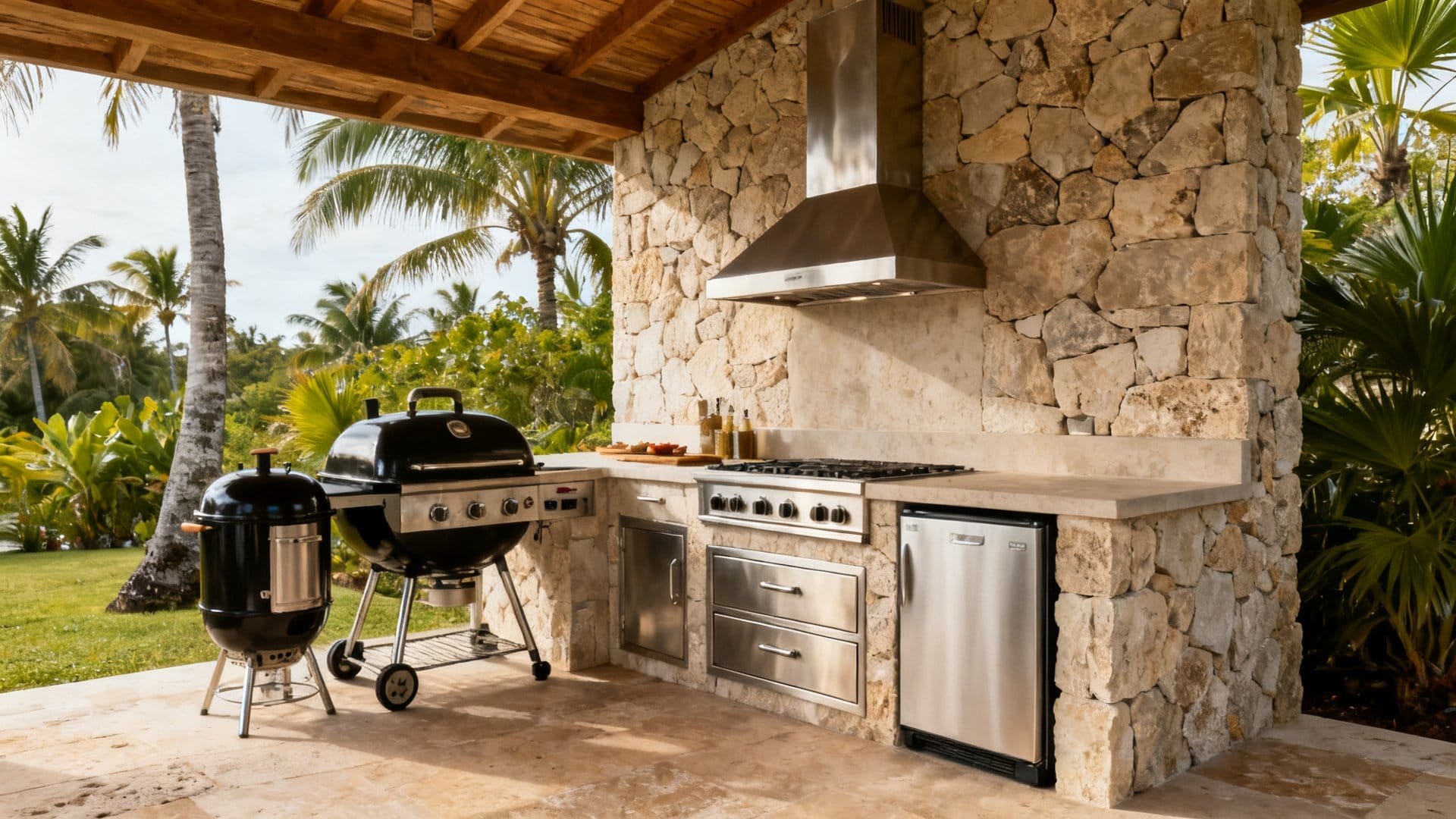
Choosing the right appliances for a Florida outdoor kitchen is about more than just cooking power, it’s about durability, efficiency in heat, and practicality given how often you’ll actually use the space. The good news is that the outdoor appliance market has grown significantly, and there are genuinely good options designed with hot, humid climates in mind. On a tighter budget, you can even build a small DIY outdoor kitchen and add appliances over time.
A built-in gas grill is the cornerstone of most Florida outdoor kitchens, and for good reason, it gives you precise heat control, heats up fast, and handles everything from a quick weeknight dinner to a weekend fish fry. Look for models with stainless steel burners and a cast aluminum housing, which resists corrosion far better than standard steel. Beyond the grill, a built-in side burner opens up a world of possibilities: you can keep sauces warm, sauté vegetables, or boil a pot of shrimp without running back inside. An outdoor-rated refrigerator is another feature that feels like a luxury until you have one, then it feels essential, especially in Florida where keeping drinks cold is practically a cultural institution.
A friend of mine added a small outdoor pizza oven to her Naples lanai kitchen, and she said it completely changed how her family uses the space, suddenly weeknight dinners moved outside four or five nights a week.
Pro tip: If your outdoor kitchen is within 20 miles of the coast, look specifically for appliances rated for marine or coastal environments. The added corrosion protection is worth every penny and will extend the life of your appliances by years.
Which Layout Ideas Maximize Airflow and Comfort?
Layouts that maximize airflow place the grill at the far end of the cooking zone so heat and smoke flow away from guests, and orient open sides of the structure to catch Florida’s prevailing southeast breezes. An L-shaped or U-shaped configuration also keeps the cook comfortable by minimizing unnecessary movement in the heat.
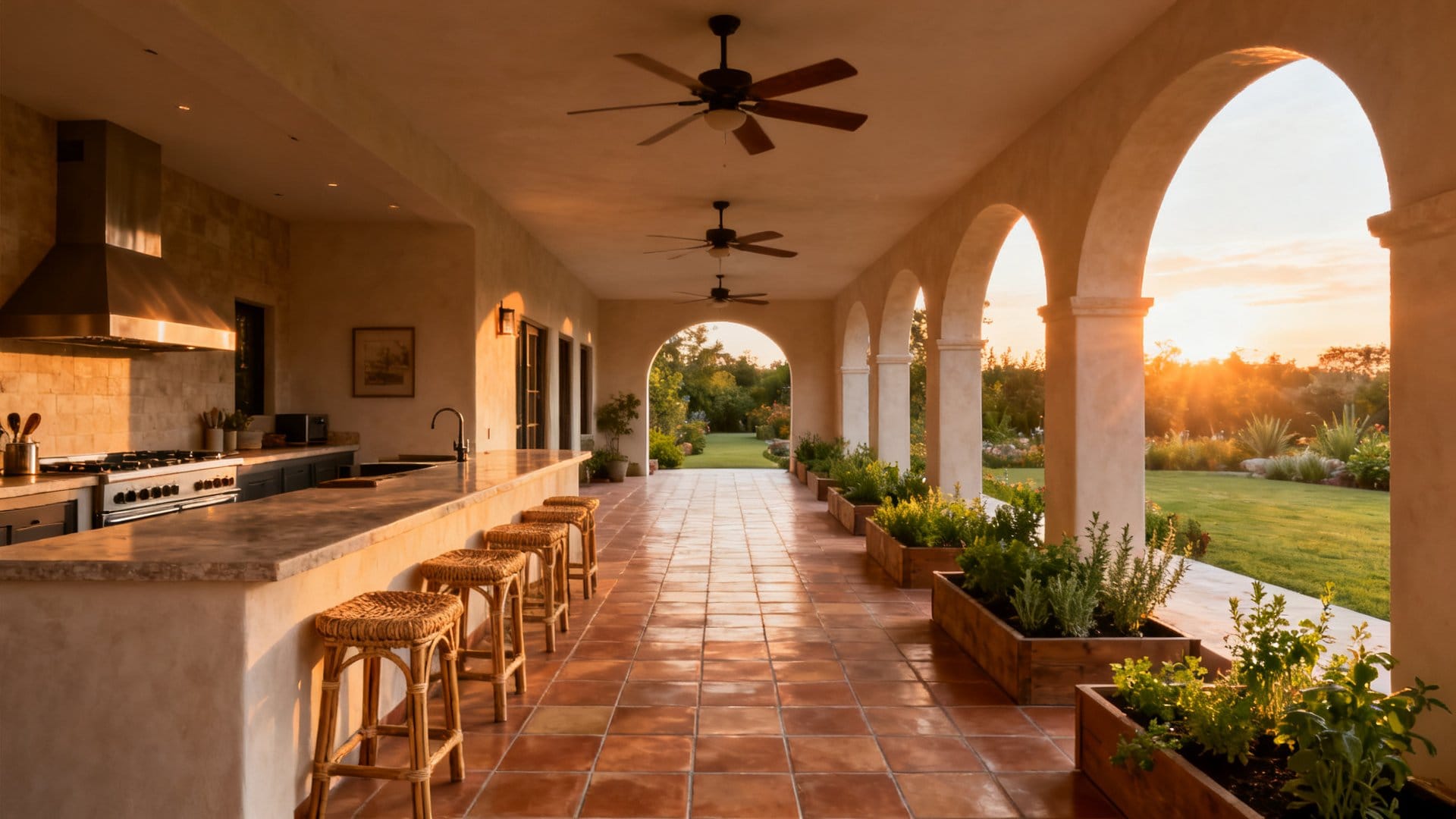
The layout of your outdoor kitchen directly affects how comfortable it is to cook and entertain in Florida’s heat. A poorly planned layout can trap heat, block airflow, and leave the cook sweating while guests stay cool, not exactly the vibe you’re going for.
&# 128218; Keep reading:21 natural jacuzzi outdoor ideas to blend spa into nature→Layout Ideas
- Place your grill at the far end of the cooking zone so smoke and heat flow away from the main gathering and seating area rather than through it
- Use an L-shaped or U-shaped layout to create a natural workflow between prep, cooking, and serving stations without requiring the cook to walk long distances
- Leave at least 4 feet of clearance between the cooking station and any overhead structure to allow heat and smoke to dissipate safely and comfortably
- Position the kitchen to take advantage of prevailing breezes, in most of Florida, breezes tend to come from the southeast, so orient open sides of your structure to catch that natural airflow
- Consider a pass-through counter or bar-height ledge that faces the seating area, so the cook stays connected to guests without the kitchen feeling crowded
Getting the layout right from the beginning is so much easier than trying to reconfigure things later, this is one area where spending time with a sketch or a simple floor plan pays off enormously.
Which Tropical and Coastal Style Ideas Feel Right at Home in Florida?
Coastal Florida outdoor kitchens look most at home with crisp white or sand-toned cabinetry, blue or gray mosaic tile backsplashes, and natural textures like rattan, teak, and woven lighting. For a tropical feel, deep green cabinetry against warm terracotta tile creates a lush, layered look that complements the surrounding space beautifully.
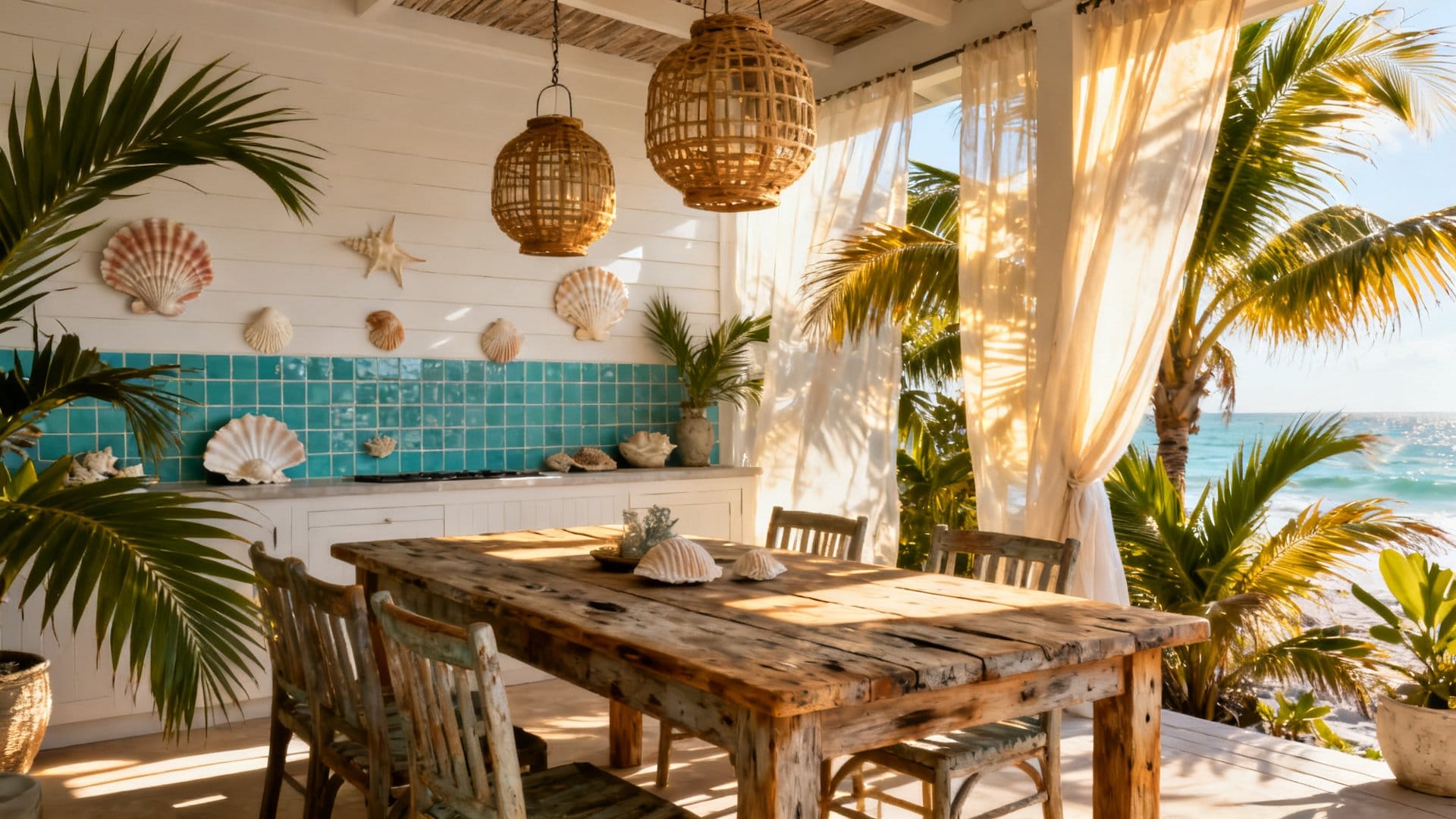
Florida outdoor kitchens have a wonderful opportunity to lean into the natural beauty of the state’s space and coastal character. The best-designed spaces feel like they belong exactly where they are, not like a generic outdoor kitchen dropped into a tropical backyard.
For a coastal Florida aesthetic, think about crisp white or soft sand-toned cabinetry paired with blue or gray mosaic tile backsplashes that echo the colors of the Gulf or Atlantic. Natural textures like rattan bar stools, teak accents, and woven pendant lights add warmth without fighting the climate. For a more lush, tropical feel, deep green cabinetry against warm terracotta tile creates a rich, layered look that plays beautifully against the backdrop of palm fronds and bougainvillea.
I keep coming back to the idea of layering textures in outdoor kitchen spaces, rough stone, smooth concrete, woven seating, and potted tropical plants all working together create something that feels genuinely inviting rather than just functional. Lighting matters enormously here too: warm Edison-style string lights overhead and low-voltage space lighting along the perimeter turn a daytime cooking space into an evening destination that you’ll want to linger in long after dinner is done. For more glow ideas, browse these patio string light ideas, and lean into a relaxed coastal summer decor palette.
Finishing Touches
Outdoor-rated rugs in natural or tropical patterns anchor the seating zone and visually separate it from the cooking area, making the whole space feel more like an outdoor room than just a patio with appliances. Look for rugs made from polypropylene or recycled plastic fibers, they handle rain, humidity, and foot traffic without fading or growing mold.
With your style and layout sorted, the final piece of the comfort puzzle is active cooling, something Florida outdoor kitchens genuinely can’t afford to overlook.
How Do Ventilation, Fans, and Misting Systems Keep Your Kitchen Cool?
Outdoor-rated ceiling fans create a consistent breeze that makes 90°F feel genuinely comfortable, while misting systems can drop the perceived temperature by 10 to 20 degrees Fahrenheit in open or partially covered spaces. Together, these active cooling tools are often what separates a Florida outdoor kitchen you use all summer from one you abandon until fall.
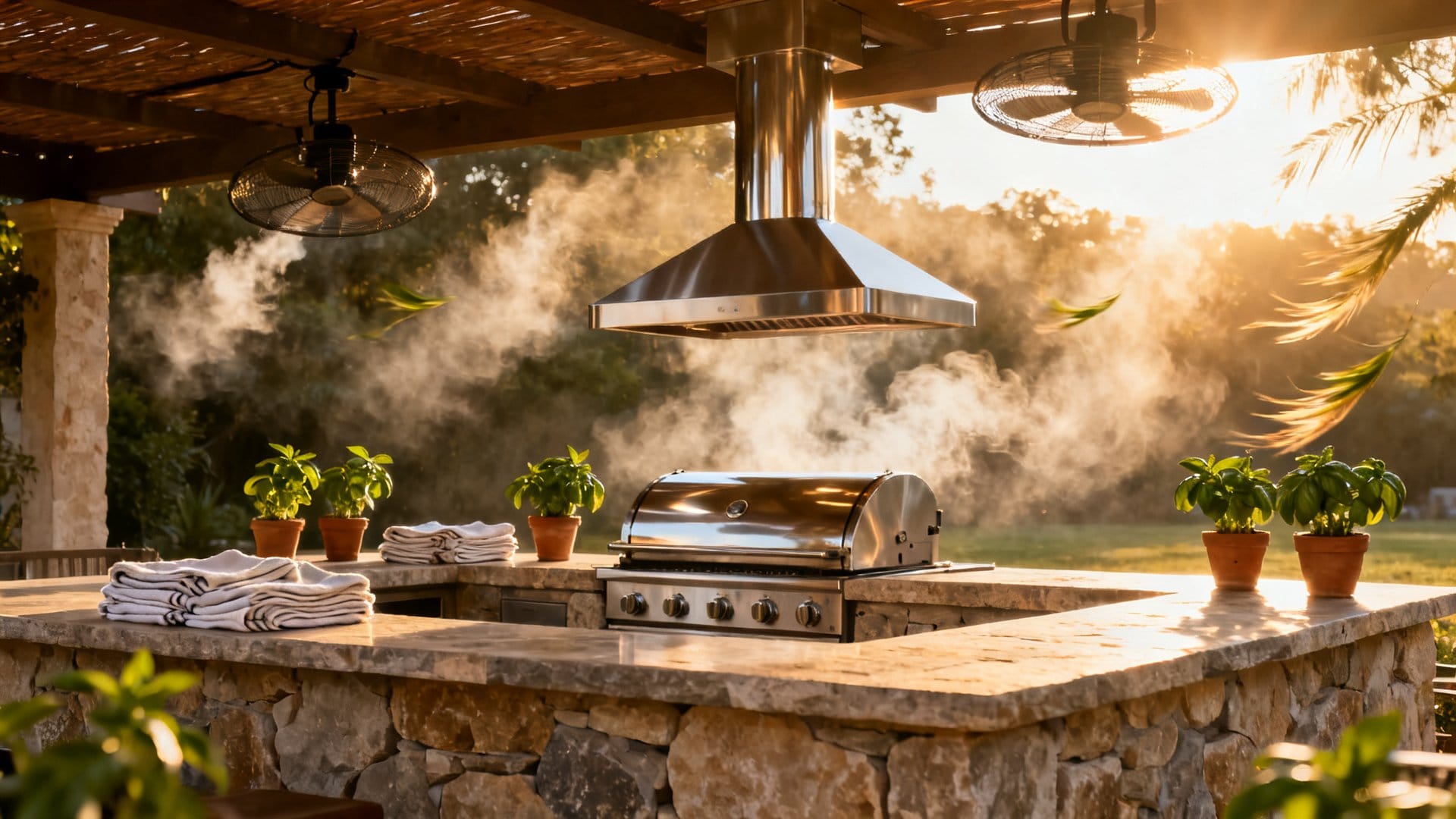
Even with great shade, Florida outdoor cooking can feel oppressive during the peak summer months. The difference between a space you use all summer and one you abandon until October often comes down to how well you’ve addressed active cooling.
Ceiling fans designed for outdoor use are one of the most cost-effective upgrades you can make to a covered outdoor kitchen. They create a consistent breeze that makes 90°F feel genuinely comfortable, and they also help with smoke management around the grill area. Look for fans rated for wet or damp outdoor environments, standard indoor fans will deteriorate quickly in Florida’s humidity. For open or partially covered spaces, outdoor misting systems are surprisingly effective at dropping the perceived temperature by 10 to 20 degrees Fahrenheit. They attach to your existing water line and can be set on a timer, making them a hands-off solution for those brutal August afternoons.
Pro tip: When installing a ceiling fan in your outdoor kitchen area, position it so it’s not directly over the grill, you want airflow through the space without fanning flames or blowing ash onto your food. A placement of 6 to 8 feet to the side of the cooking station hits the sweet spot.
Final Thoughts
Creating a beautiful, functional outdoor cooking space in the Sunshine State is one of the most rewarding home projects you can take on, and the right Florida outdoor kitchen ideas for hot climate cooking make all the difference between a space you love and one you avoid. Whether you’re starting from scratch or refreshing an existing patio setup, focus on shade, durable materials, smart layout, and the little sensory details that make the space feel like yours. Your outdoor kitchen should feel like an extension of your home’s personality, warm, welcoming, and perfectly suited to the Florida lifestyle. Happy cooking!
Frequently Asked Questions
In Florida’s climate, you’ll want materials that can withstand intense heat, high humidity, and frequent rain without warping, rusting, or deteriorating. Stainless steel appliances, concrete or porcelain tile countertops, and marine-grade polymer or teak cabinetry are among the top choices because they resist moisture, UV rays, and salt air. Avoid wood cabinets or laminate surfaces that are not specifically rated for outdoor use, as Florida’s humidity will cause them to swell, crack, and fail within just a few seasons.
Shade is your single most important tool for staying comfortable while cooking outdoors in Florida, and options like pergolas with shade sails, solid roof extensions, or retractable awnings can dramatically reduce the temperature in your cooking area. Adding ceiling fans rated for outdoor wet environments helps move air and makes even muggy evenings feel significantly more bearable. Strategically positioning your kitchen to take advantage of natural breezes, planting shade trees nearby, and incorporating misting systems are additional layers that serious Florida outdoor kitchen owners often use together.
Yes, Florida’s combination of intense sun, salt air in coastal areas, and persistent humidity means you should prioritize appliances with stainless steel ratings of 304 or higher, as lower grades will begin to rust and pit much faster than expected. Look for grills, refrigerators, and side burners that are specifically marketed as outdoor-rated and, ideally, built to handle coastal or marine environments if you live near the beach or a waterway. It’s also worth investing in appliances with UV-resistant finishes and tight-sealing doors or covers to prevent moisture from working its way into electrical components during Florida’s frequent afternoon thunderstorms.
A smart Florida outdoor kitchen layout minimizes the time you spend standing directly in the sun by placing your primary cooking stations, grill, burners, and prep surfaces, under the deepest part of your shade structure, while positioning the refrigerator and serving areas where guests can access them without crowding the cook. Keeping your layout compact reduces the number of steps you take in the heat and makes it easier to cool the entire space with fans or a misting system. Many Florida homeowners also design their outdoor kitchens with a pass-through window or close proximity to the indoor kitchen, so trips back inside for forgotten ingredients are quick and the transition between spaces feels smooth.
Porcelain tile with a textured, slip-resistant finish is widely considered the gold standard for Florida outdoor kitchen flooring because it handles moisture, heat, and heavy foot traffic without fading, cracking, or becoming slippery when wet from rain or spills. Travertine and natural stone are also popular choices that look beautiful and stay cooler underfoot than darker materials, though they do require sealing to prevent staining and moisture absorption in Florida’s wet season. Avoid smooth ceramic tiles, untreated wood decking, or any surface that becomes slick when wet, since Florida’s afternoon storms can leave your outdoor space soaked in minutes and safety should always be a top priority.