
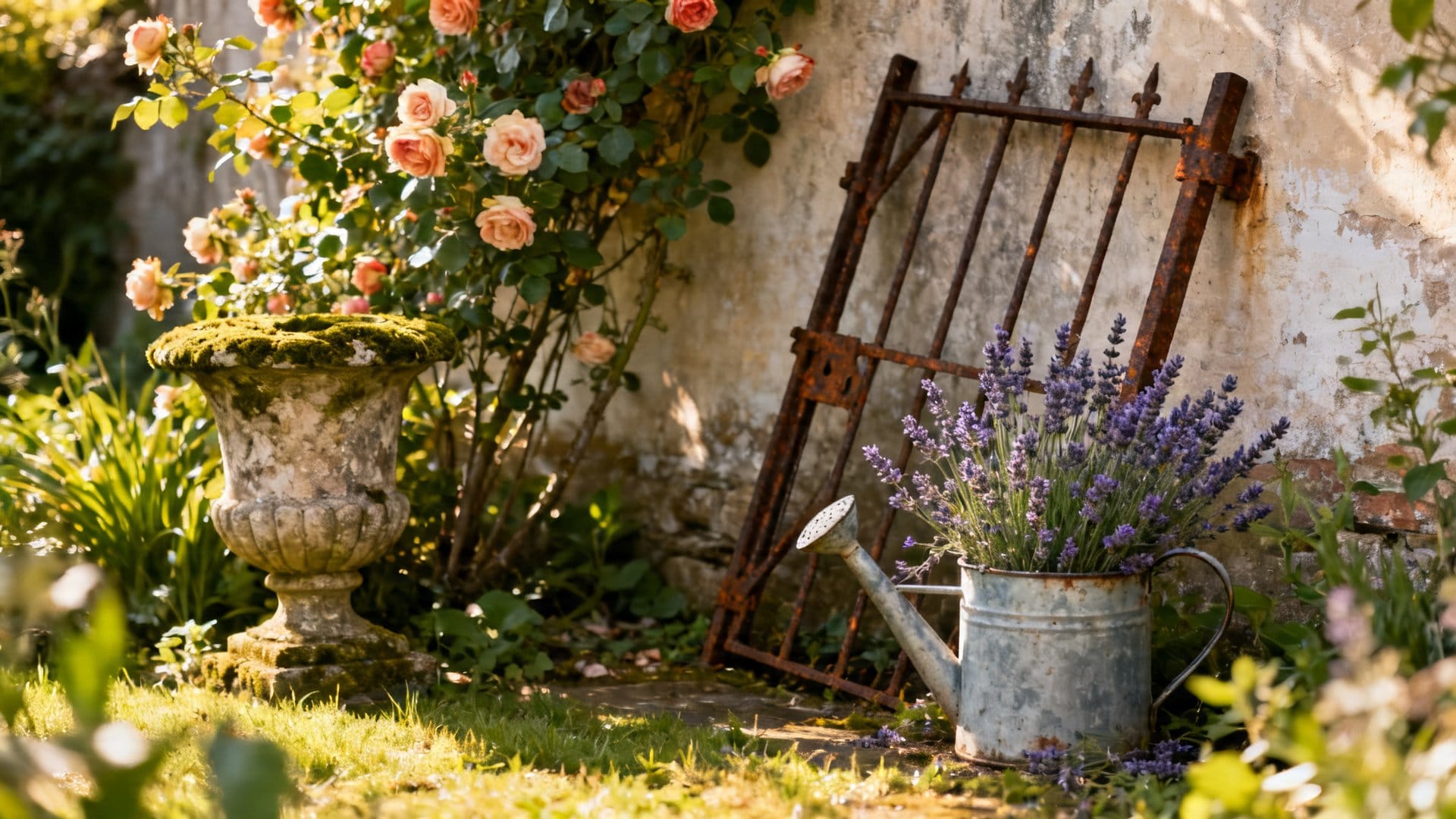
There is something quietly magical about stepping into a garden where old things have found new purpose, like a weathered iron gate leaning against a stone wall, a chipped enamel watering can spilling over with lavender, a wooden bench worn smooth by years of summer afternoons. Vintage garden decor brings exactly that kind of timeless charm to your outdoor space, and it does so without demanding perfection. This article will walk you through the most beautiful ways to layer vintage pieces into your garden, patio, or backyard, whether you are starting from scratch or simply want to add a little more soul to what you already have, the way a few rustic vintage touches can warm up a room indoors. Trust me, this approach is worth every bit of the effort, and it is far more accessible than it looks.
Why Does Vintage Style Feel So Right in the Garden?
Vintage style feels so right in the garden because it mirrors the natural rhythm of outdoor spaces. The patina, rust, and faded finishes of aged pieces echo the slow passage of seasons and growth that gardens already embody.
Gardens are already places where time moves differently. Plants grow slowly, seasons cycle, and nothing stays exactly the same from one year to the next. Vintage decor fits naturally into this rhythm because it carries its own history. The rust, the patina, the faded paint all tell a quiet story that brand-new pieces simply cannot replicate.
I love how a single aged piece can anchor an entire garden bed and make everything around it feel more intentional. A moss-covered stone urn does not need to be filled with anything to make a statement. It earns its place just by existing.
Why It Works
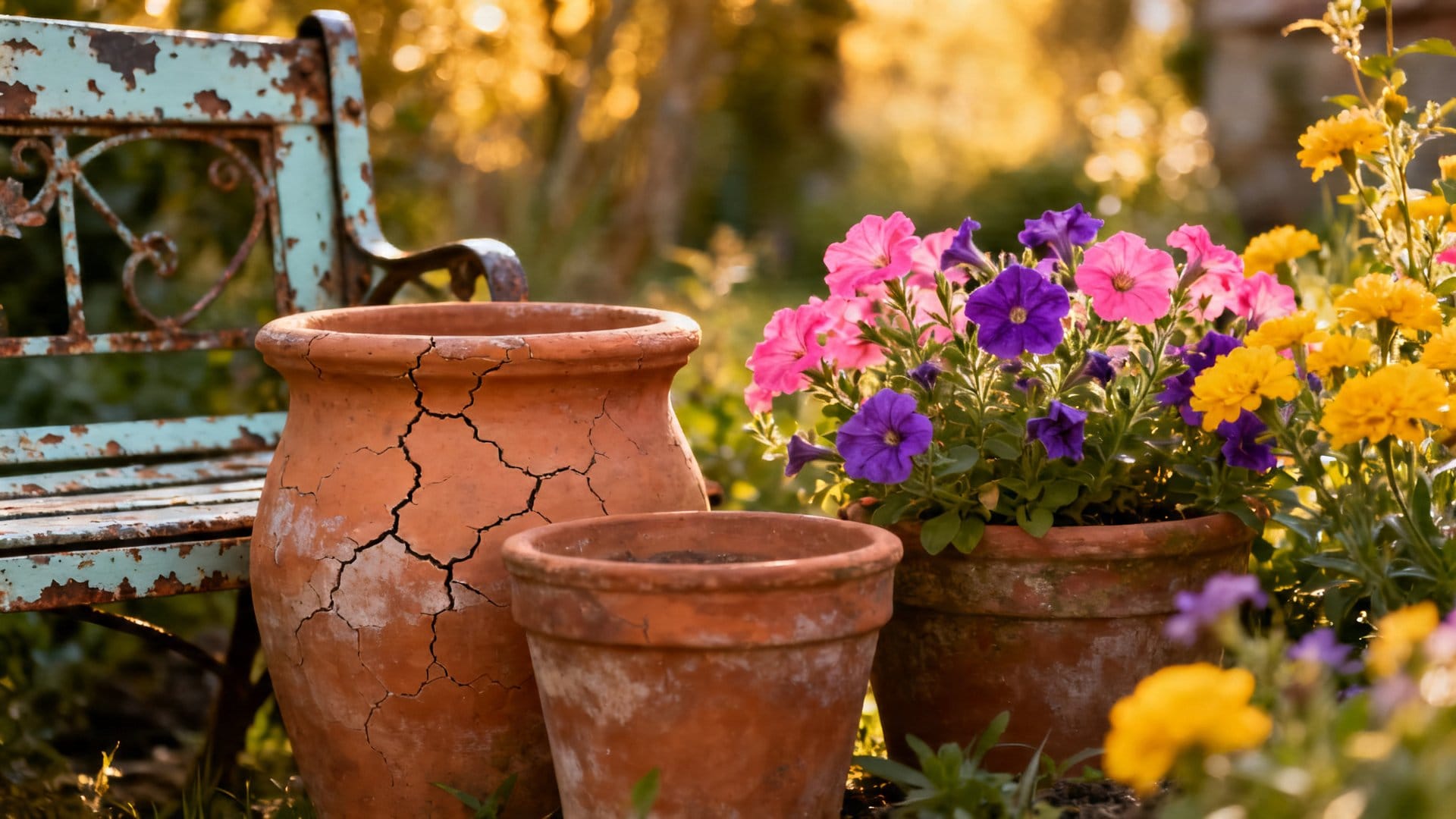
Vintage pieces tend to have irregular shapes and textures that contrast beautifully with the organic softness of plants. A straight-edged modern planter competes with a garden; an old terracotta pot with a cracked rim becomes part of it. That visual harmony is what makes the vintage garden style feel so effortlessly put-together, much like the layered look behind these rustic garden decor ideas.
Where Can You Find Vintage Garden Pieces Without the Overwhelm?
The best places to find vintage garden pieces include estate sales, flea markets, antique malls, and thrift stores near older neighborhoods. Because rust, chips, and fading are features rather than flaws, condition is almost never a dealbreaker with this style.
One of the most common questions people have about this style is where to actually find the pieces. The good news is that vintage garden decor is one of the most forgiving styles to shop for, because condition is almost never a dealbreaker. Rust, chips, and fading are features, not flaws.
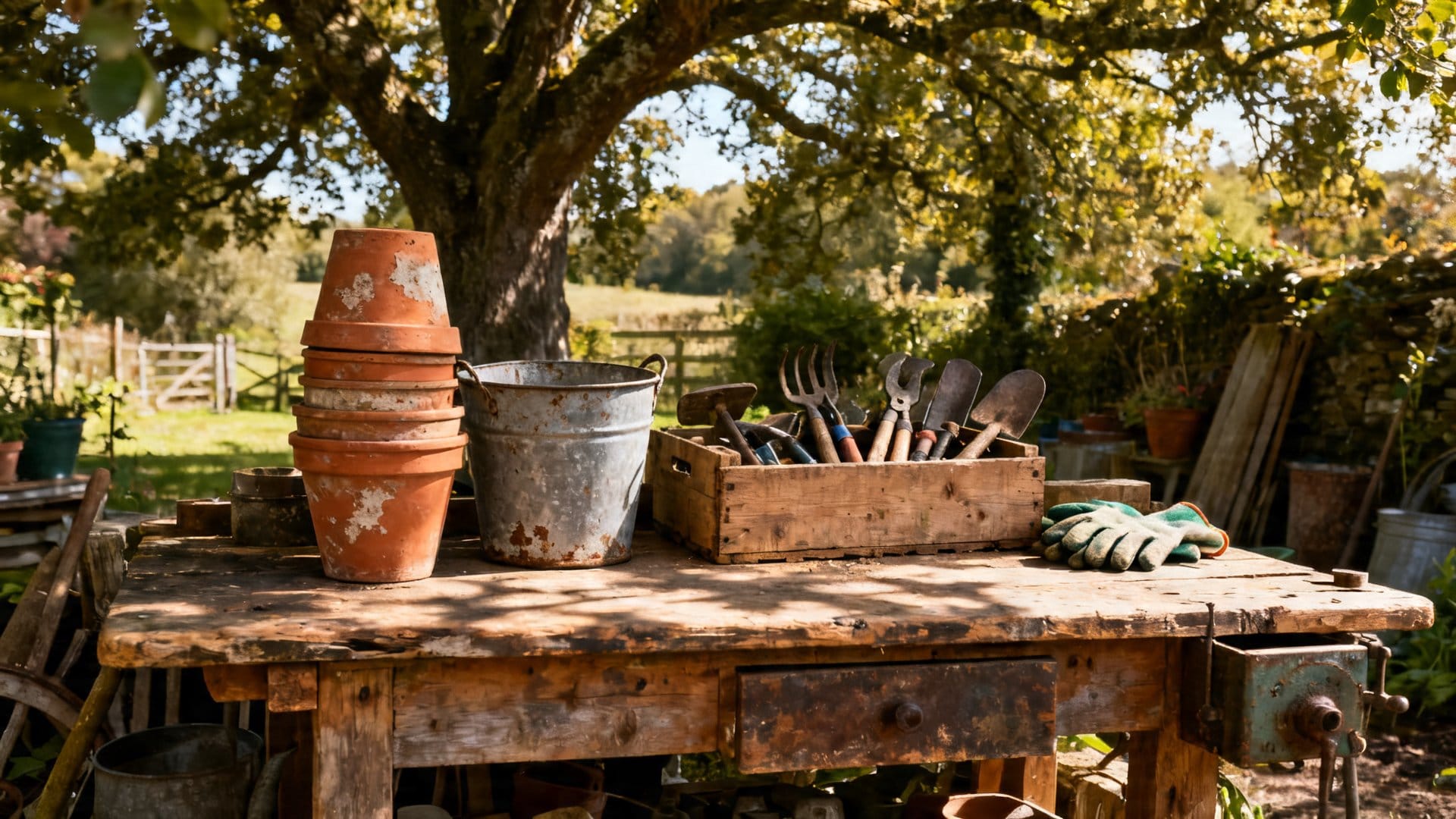
Estate sales and farm auctions are some of the richest hunting grounds, especially in the spring and early fall when people are clearing out their own outdoor spaces. Flea markets and antique malls often have dedicated outdoor sections with iron garden furniture, old clay pots, and architectural salvage pieces like window frames or wrought iron fencing. Thrift stores near older neighborhoods are also worth a visit, since you might find an enamel bucket or a set of mismatched garden tools that are just waiting for a second life, perfect for dressing up an outdoor gathering later in the season.
Pro tip: When you find a piece you love but are unsure how to use it, buy it anyway. Vintage garden items are incredibly versatile. An old colander becomes a hanging planter, a wooden ladder becomes a trellis, and a cracked birdbath becomes a succulent dish garden. The “how” usually reveals itself once the piece is in your space.
Once you have sourced a few pieces you love, the next step is learning how to combine them in a way that feels intentional and harmonious.
How Do You Layer Textures and Materials for a Collected Look?
The secret to a layered vintage garden look is mixing materials, such as iron, wood, terracotta, stone, and enamel — rather than sticking to just one throughout the space. This combination of textures creates depth and warmth that makes a garden feel genuinely collected rather than staged.
The secret to a vintage garden that feels select rather than cluttered is in the layering of materials. Think of it the way you would layer textiles inside your home, where different textures working together create depth and warmth.
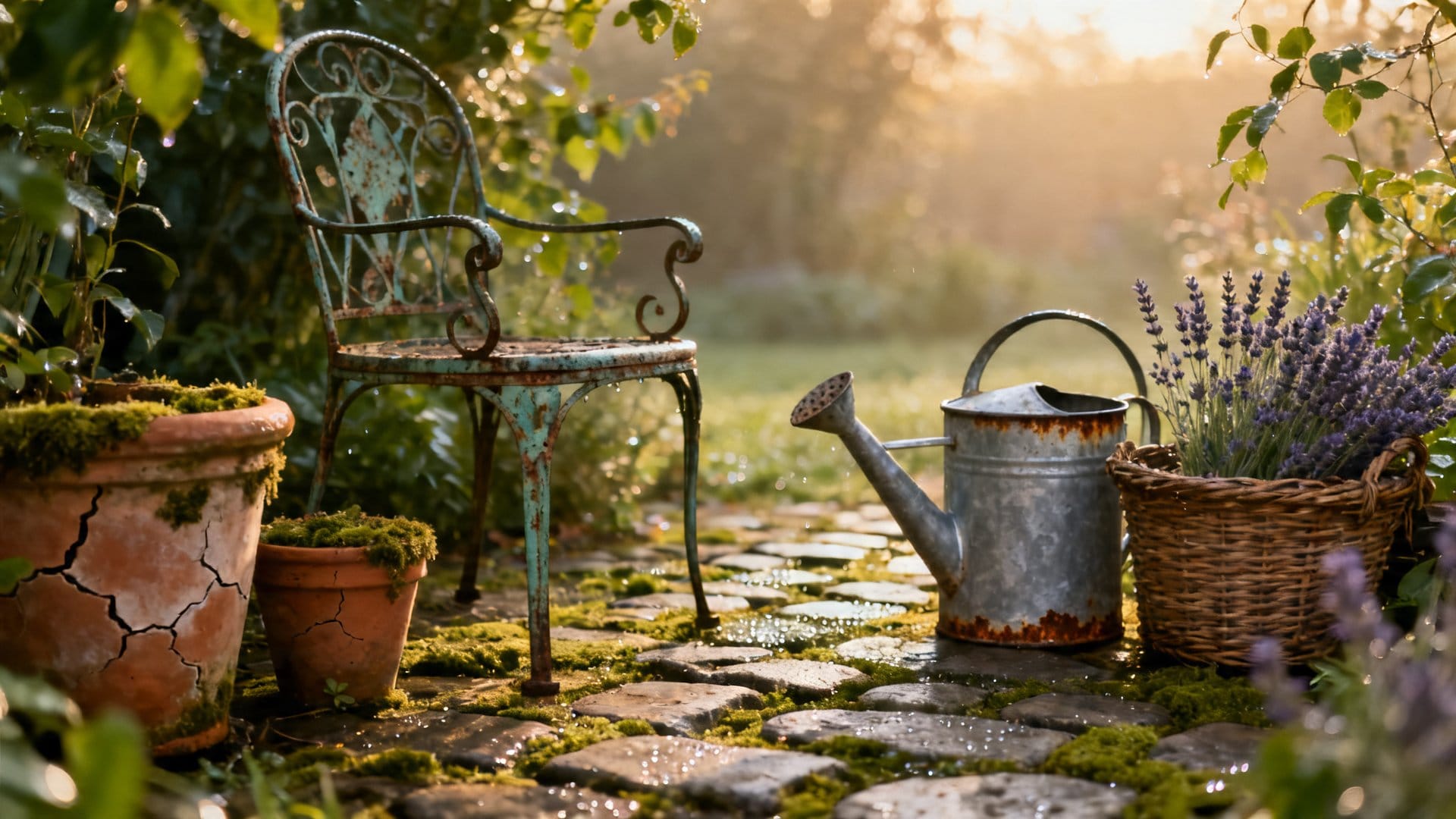
In the garden, this means mixing iron, wood, terracotta, stone, and enamel rather than sticking to one material throughout. A cast iron urn next to a weathered wooden planter box, softened by a trailing vine and surrounded by river stones. That combination creates the kind of scene that makes people stop and linger. One thing I have noticed is that gardens with only one or two materials, no matter how beautiful those materials are, tend to feel a little flat. The mix is what gives it life, and the same layering trick works beautifully on a cozy patio too.
Materials That Work
Some of the most reliable materials for a vintage garden aesthetic include aged cast iron for urns, benches, and gates; reclaimed wood for raised beds and trellises; unglazed terracotta for pots of all sizes; and galvanized metal for buckets, watering cans, and tubs. Aged copper is a wonderful accent material, since a copper sundial or a set of copper plant markers adds warmth and a slightly romantic quality that pairs especially well with cottage-style plantings like roses, foxglove, and sweet peas.
How Do You Style Vintage Decor Around Your Garden’s Natural Features?
Vintage garden decor works best when it feels discovered rather than placed. Anchor pieces near existing natural features, like a mature tree, a worn stone path, or a fence draped in climbing plants, so they appear to have always belonged there.
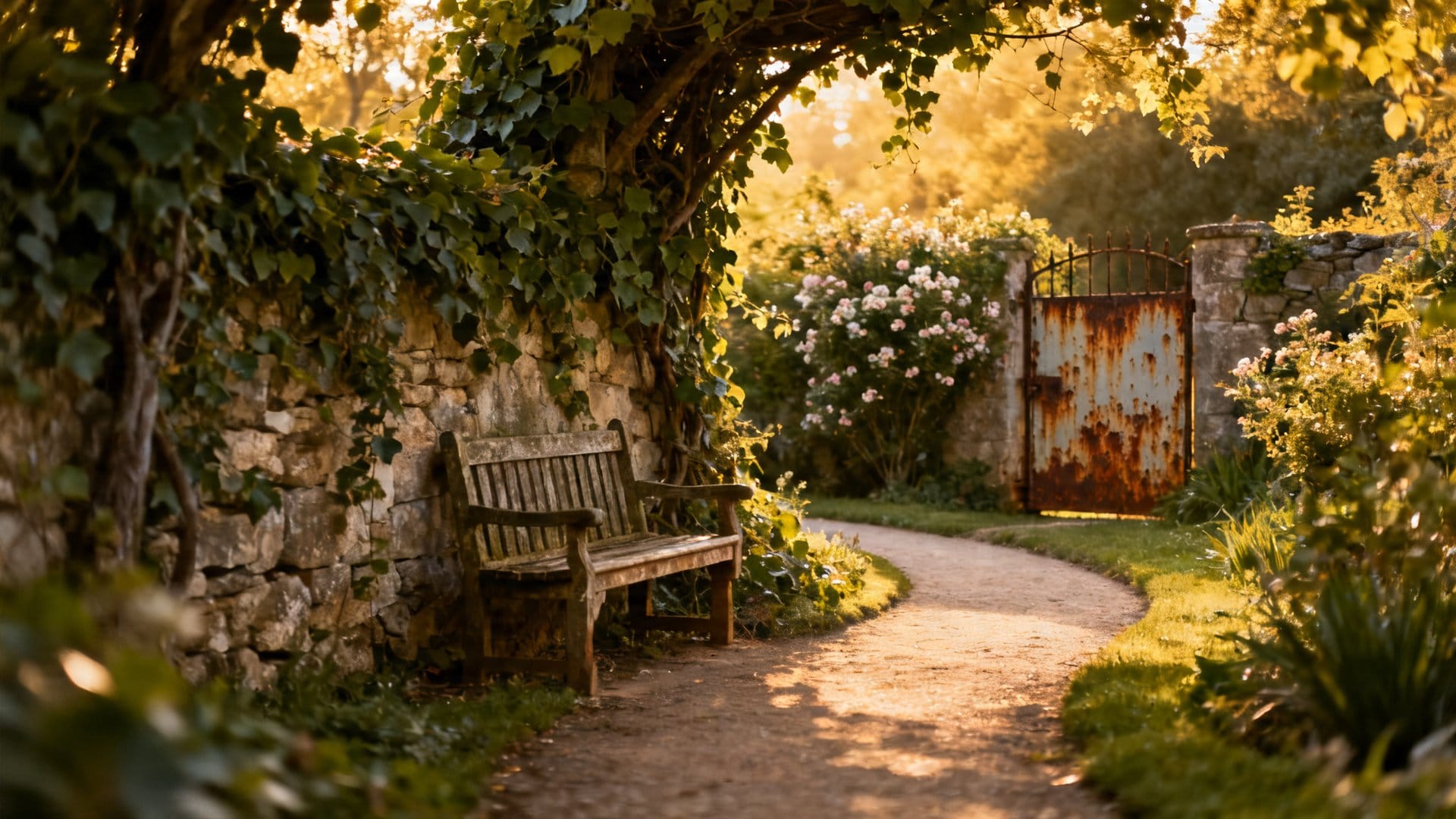
Vintage garden decor works best when it feels discovered rather than placed. The goal is for a visitor to wonder whether that old iron gate has always been there, leaning just so against the garden wall, or whether someone put it there last Tuesday.
To achieve this, anchor your vintage pieces near existing natural features. Tuck a mossy stone trough at the base of a mature tree. Lean a wooden ladder against a fence already draped in climbing hydrangea. Set an old milk jug near a garden path where it will catch the afternoon light. This works especially well in gardens that already have a little age to them, since established hedges, mature trees, and worn stone paths give vintage pieces the perfect backdrop to settle into.
A friend of mine tried something similar in her backyard by placing an old iron park bench under a sprawling oak tree, surrounded by nothing but wild violets and a few scattered ferns. It looked like it had been there for a hundred years, and the whole corner of her yard became the most peaceful spot on the property, almost like a tucked-away fairy garden nook.
Pro tip: Resist the urge to center and symmetrize your vintage pieces. Slightly off-center placement, a gentle lean, or an unexpected corner location reads as more authentic and less staged.
What Are the Best Vintage Garden Decor Ideas by Space Type?
The best vintage garden decor ideas depend on your specific outdoor space. From a single stone pedestal on a small patio to repurposed tools along a garden border, vintage pieces can be scaled and adapted to suit any size or layout.
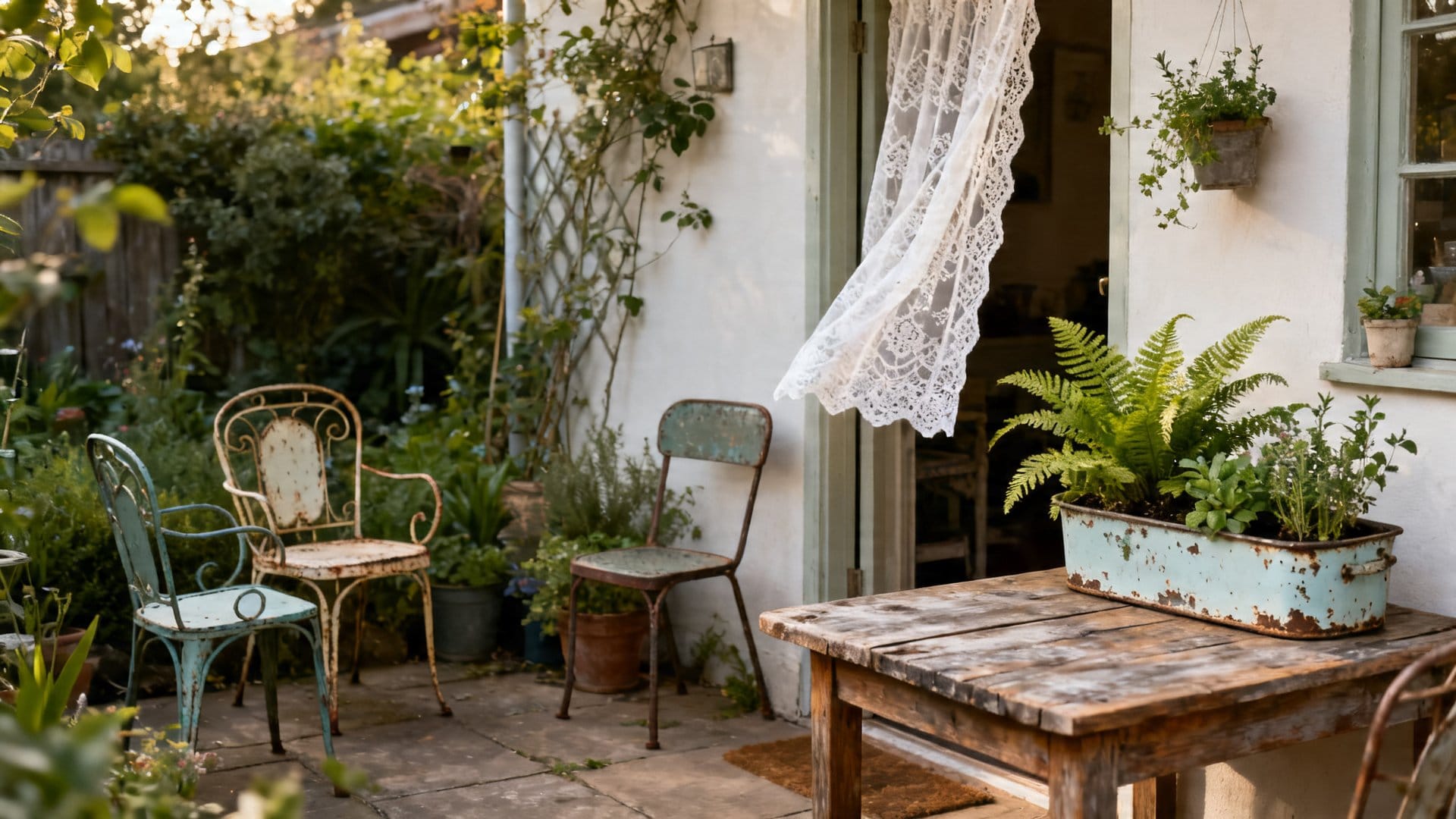
Not every outdoor space is a sprawling cottage garden, and vintage decor adapts beautifully to smaller or more structured spaces. Here are some ideas organized by the type of outdoor area you are working with.
Layout Ideas
- Small patios: Use a single large vintage piece as a focal point. An old stone pedestal with a trailing plant on top reads as intentional even in a tight space of 10 by 12 feet.
- Front porches: A pair of mismatched vintage lanterns flanking the front door adds character without requiring any major changes to the space.
- Garden borders: Repurposed vintage tools, such as old rakes, pitchforks, or hand trowels, mounted vertically along a fence line make charming and unexpected border art.
- Raised bed gardens: Vintage enamel signs, old seed packets framed behind glass, or antique garden markers tucked between rows of vegetables add personality to a working kitchen garden.
- Balconies and small terraces: A single vintage iron planter stand holding three or four terracotta pots of varying heights creates the layered look without taking up floor space, a smart move for small patio setups on a budget.
The key across all of these spaces is choosing pieces that feel proportionate. One well-chosen vintage piece in a small space is always more effective than five competing ones.
With your vintage pieces thoughtfully placed and styled, a little ongoing care will ensure they continue to look their best year after year.
How Do You Care for Vintage Garden Pieces Through the Seasons?
Caring for vintage garden pieces means protecting their structure while allowing natural aging to continue. A few simple seasonal treatments, including linseed oil on iron, wood sealant on timber, and frost protection for terracotta, will keep your pieces looking beautifully weathered for years.
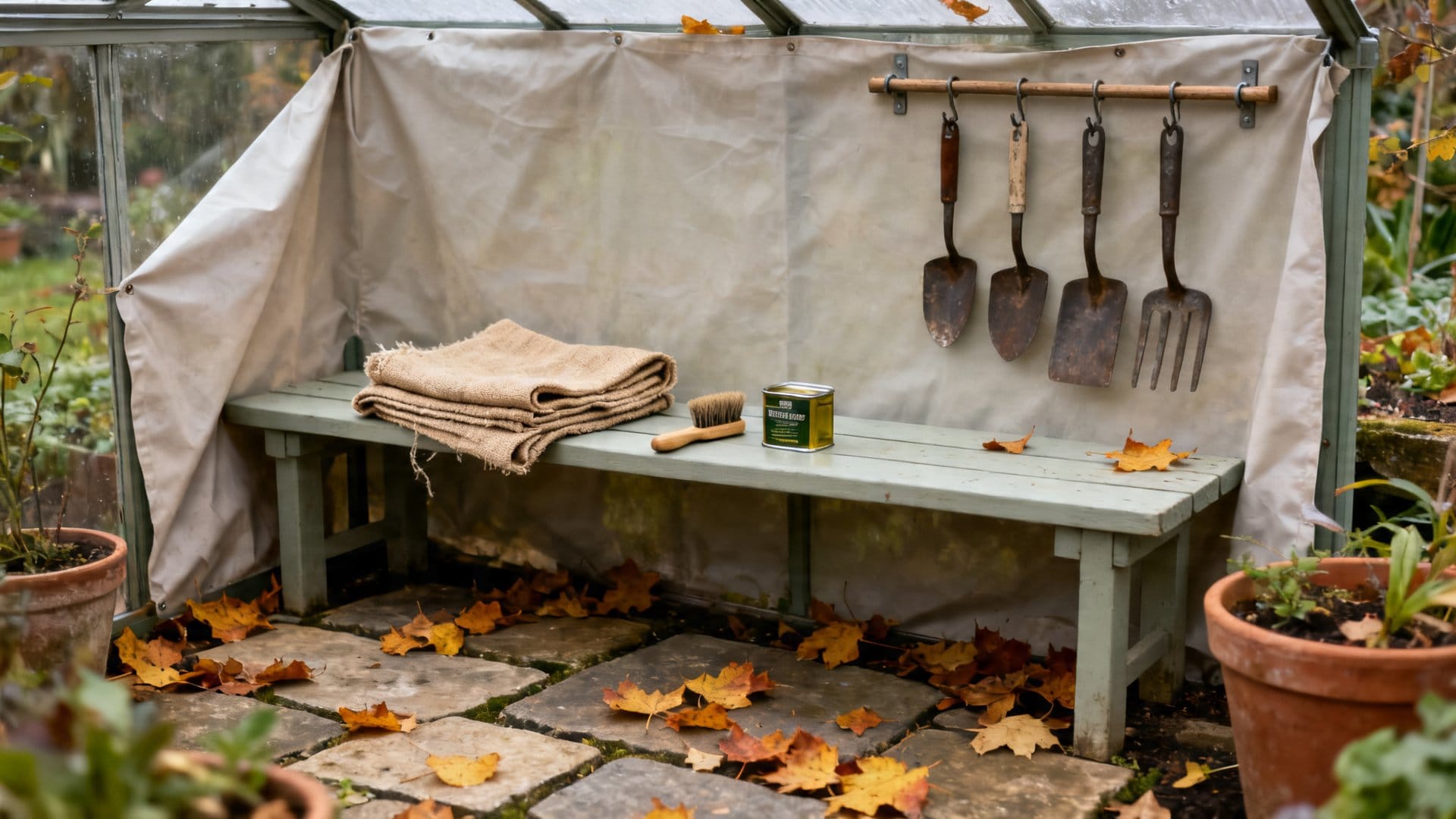
One of the loveliest things about vintage garden decor is that it tends to get better with age and exposure to the elements. That said, a little seasonal care goes a long way toward keeping your pieces looking beautifully weathered rather than simply neglected.
Cast iron pieces benefit from a light coat of linseed oil at the start of each season to slow further rusting without removing the patina. Wooden pieces, including benches, trellises, raised bed frames, should be checked for soft spots or rot each spring, and a coat of raw linseed oil or a natural wood sealant will extend their life considerably. Terracotta pots, while charming in their cracked and weathered state, can be brought indoors or covered during hard freezes if you want to preserve them longer. From what I have gathered, the easiest approach is to embrace a little natural aging while protecting the structural integrity of your pieces so they can last for many more years.
Pro tip: If you want to encourage moss growth on stone or terracotta pieces for a faster aged look, brush the surface with a thin layer of plain yogurt or buttermilk and keep it in a shaded, moist spot. Moss will begin to establish within a few weeks in humid conditions.
How Do You Bring Color Into a Vintage Garden Palette?
You can bring color into a vintage garden palette by choosing faded, chalky, sun-bleached tones rather than bright saturated hues. These gentler colors sit harmoniously with the natural greens and browns of a real garden without making the space feel like a showroom.
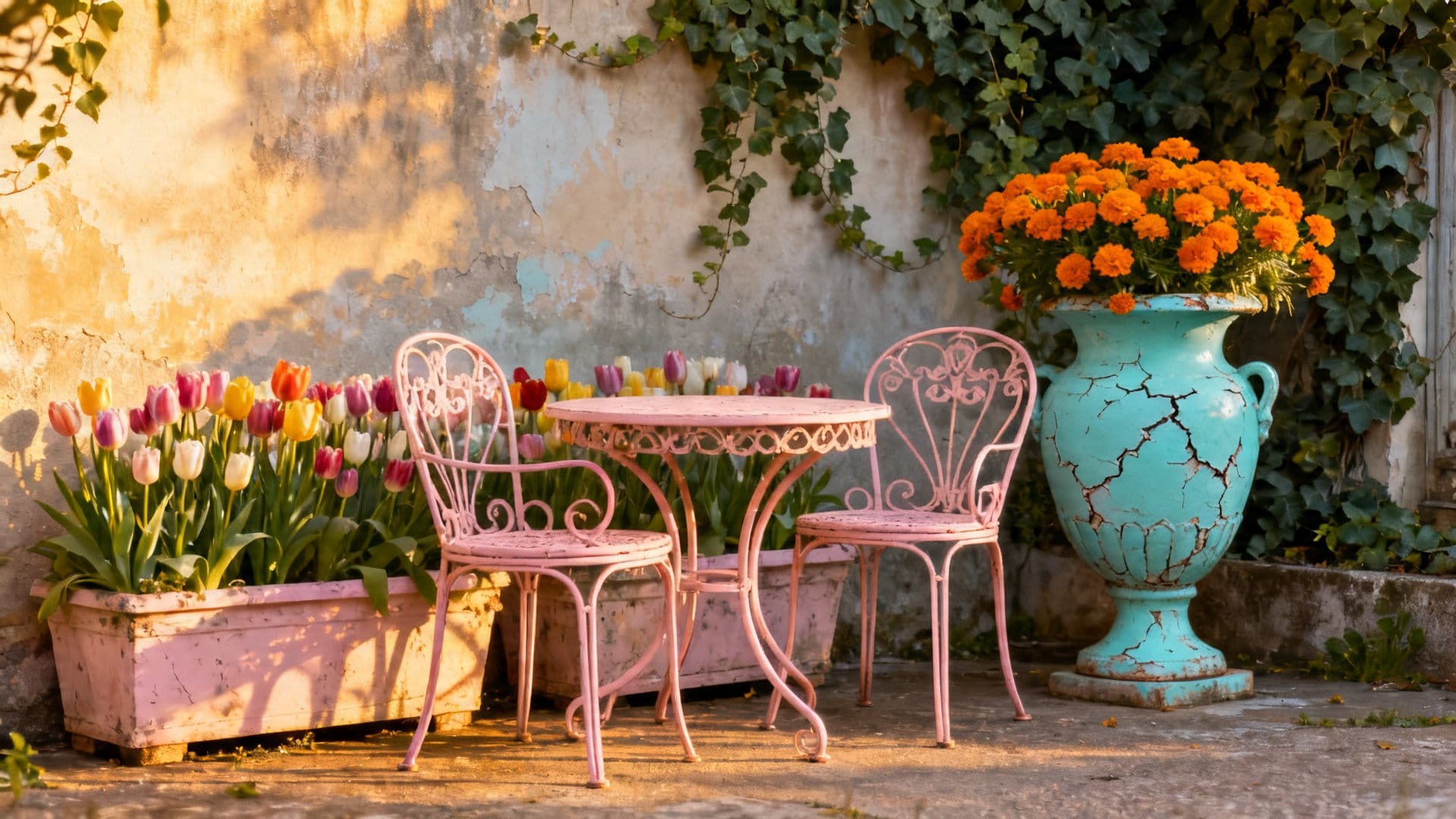
Vintage garden decor does not have to mean muted and monochrome. In fact, some of the most beautiful vintage-inspired outdoor spaces use color in a very deliberate and joyful way. Faded, chalky, sun-bleached color that feels like it has been there for decades.
Think of the dusty sage green of an old French garden chair, the soft terracotta of a sun-faded Italian pot, or the chalky white of a painted iron bench peeling at the edges. These are not the bright, saturated colors of new outdoor furniture. They are gentler, more complex tones that sit harmoniously with the greens and browns of a real garden. I keep coming back to this approach because it solves one of the trickiest problems in garden styling: how to add color without making your outdoor space feel like a showroom. Faded, vintage-toned color always feels like it belongs, the same gentle palette you might pull indoors with a touch of cottage interior decor.
Color Combinations
Some of the most effective vintage garden color combinations include dusty sage green with aged terracotta for a Mediterranean feel, chalky white with soft rust for a French country look, and faded cobalt blue with warm stone tones for a more eclectic, collected aesthetic. If you are painting a vintage piece to refresh it, look for chalk-finish outdoor paints in muted tones, since they dry to a flat, aged finish that looks far more authentic than glossy paint.
Final Thoughts
Vintage garden decor is one of those rare approaches to outdoor styling that only gets better the longer you live with it. Pieces settle in, plants grow up around them, and the whole space takes on a warmth and character that no catalog could ever replicate. Whether you are working with a wide backyard or a narrow patio, there is always room to bring a little timeless charm to your outdoor space through a thoughtfully chosen vintage piece or two. Trust your instincts, shop slowly, and let your garden tell its own story. Happy decorating!
Frequently Asked Questions
Some of the best sources for genuine vintage garden pieces include estate sales, farm auctions, flea markets, antique shops, and online marketplaces like eBay or Etsy. You can also check salvage yards and architectural reclamation centers, which often carry old iron gates, stone planters, and weathered wood elements at reasonable prices. Thrift stores and yard sales in older neighborhoods are also surprisingly rich hunting grounds for enamel pieces, terracotta pots, and rustic garden tools.
While a little natural patina is part of the charm, you can slow significant deterioration by applying a clear rust-inhibiting sealant or a coat of outdoor wax to metal pieces each season. For items like iron planters or old watering cans, lining the interior with a plastic insert or pot can prevent moisture from accelerating rust from the inside out. Bringing especially delicate pieces indoors during harsh winters will also dramatically extend their lifespan.
Absolutely, blending vintage pieces with modern design is one of the most visually interesting approaches you can take in an outdoor space. A single weathered stone urn or antique wrought-iron bench can serve as a striking focal point against clean-lined contemporary landscaping, creating a pleasing tension between old and new. The key is to be intentional about placement and let the vintage piece act as an accent rather than overwhelming the overall aesthetic.
If you are new to vintage garden styling, old terracotta pots, enamel watering cans, and wooden crates are great starting points because they are widely available, affordable, and very easy to style. Repurposed ladders used as plant stands or vintage window frames mounted on a fence are also simple, low-commitment ways to introduce character without a large investment. These items require little to no restoration and immediately add warmth and personality to any outdoor space.
Vintage garden decorating can be as budget-friendly or as indulgent as you choose to make it, which is one of its greatest appeals. Many of the most charming pieces, like chipped enamel buckets, old clay pots, worn wooden signs, cost just a few dollars at flea markets or thrift stores. Even larger statement pieces like antique garden benches or stone troughs can be found at accessible price points if you are patient and willing to shop around at estate sales and salvage yards.
You Might Also Like



Get cozy seasonal ideas in your inbox
Seasonal decor, recipes & home inspiration — straight to you. No spam, unsubscribe anytime.