
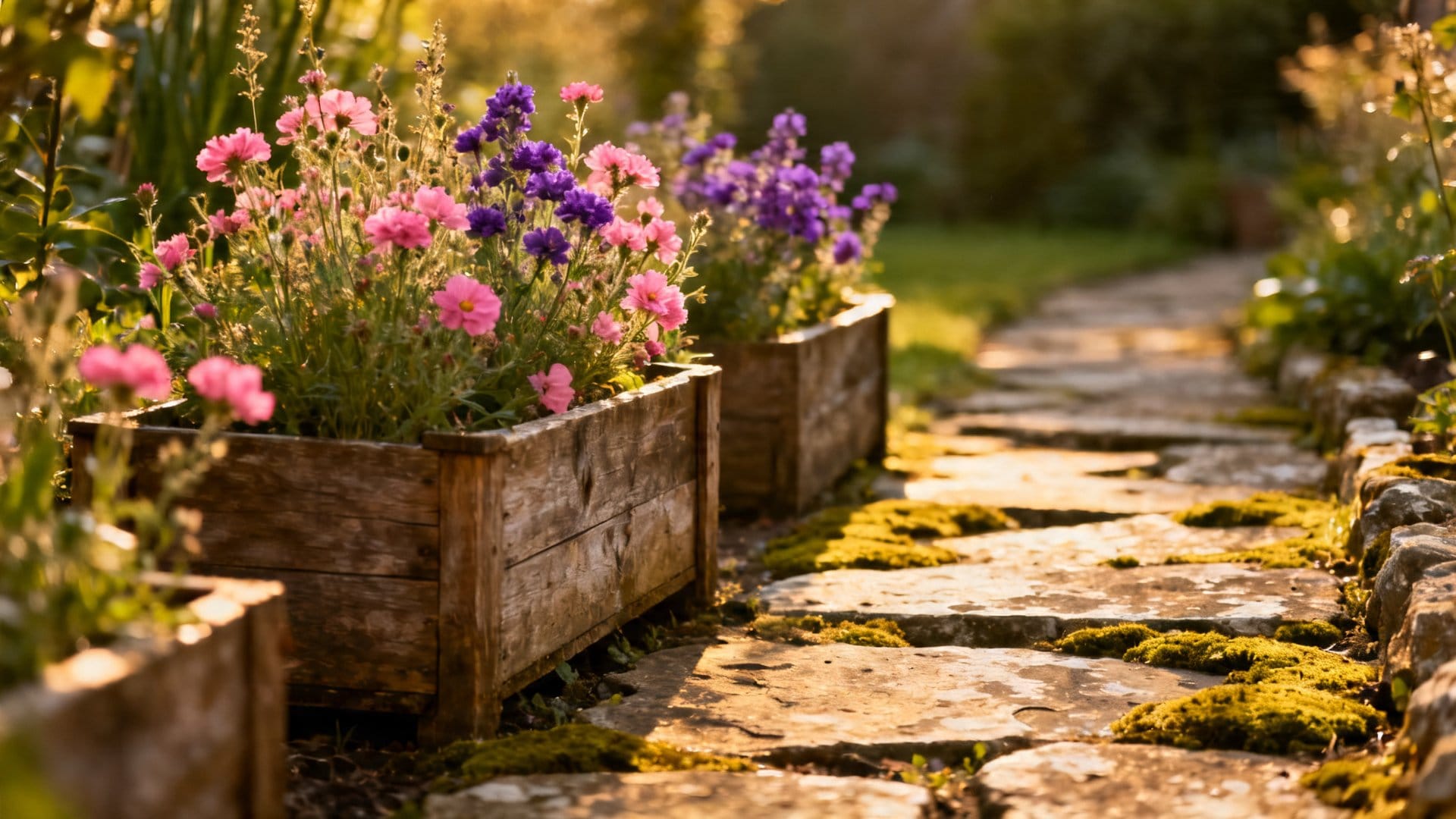
There’s something about stepping into a garden that feels a little wild, a little worn, and completely alive, where moss creeps along old stone and wooden planters have silvered with age, that makes you want to pull up a chair and stay for hours. That feeling doesn’t happen by accident, but it also doesn’t require a designer’s budget or a perfectly manicured yard. Good rustic garden decor is really about working with what already exists in your space, layering in textures and materials that feel like they belong to the land. In this article you’ll find practical, beautiful ways to bring that unhurried, earthy warmth to your own outdoor space, whether you have a sprawling backyard or a modest patio tucked behind a fence. If you want the bigger picture first, our complete guide to beautiful outdoor styling is a lovely place to start.
Why Are Weathered Materials the Heart of Rustic Garden Style?
Weathered materials are the heart of rustic garden style because they age gracefully and honestly, growing more beautiful over time rather than looking worn out. Wood, stone, terracotta, and wrought iron all develop character with exposure to the elements, giving your garden that authentic, lived-in warmth.
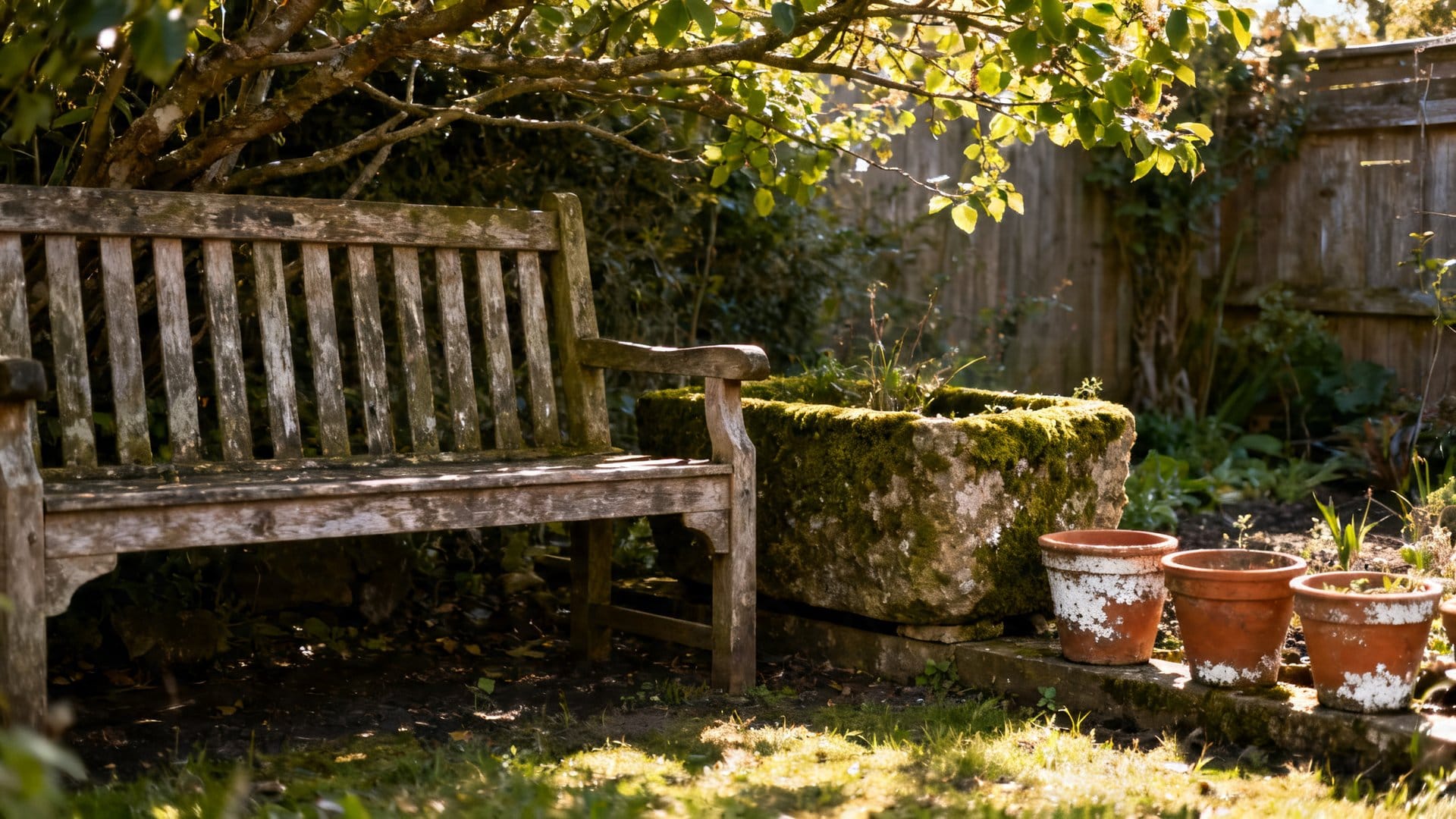
The secret to a genuinely rustic garden isn’t buying things that look old; it’s choosing materials that age gracefully and honestly. Wood, stone, terracotta, wrought iron, and woven natural fibers all share one quality: they look better with time, not worse. A brand-new cedar planter box will weather into a soft gray within a season or two, and that change is exactly the point.
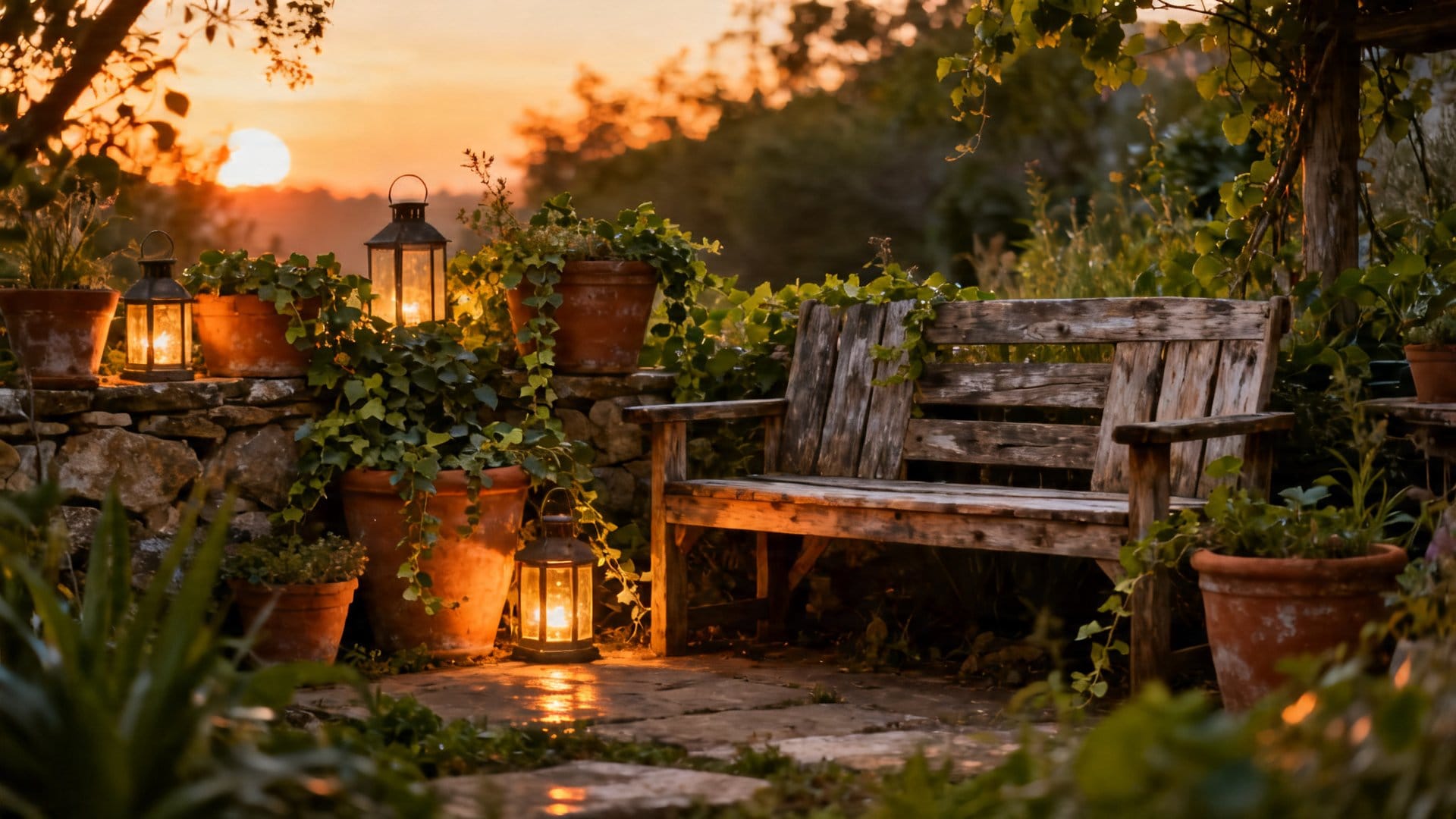
I’ve seen how a simple reclaimed wood bench, slightly rough at the edges and maybe missing a coat of stain, can anchor a whole corner of a garden and make it feel like it’s been there forever. That sense of permanence is deeply comforting. This same honest, aged quality is what gives vintage garden decor its timeless charm, so the two styles layer together beautifully.
Materials That Work
Reclaimed wood is one of the most versatile materials you can bring into a rustic outdoor space; look for it at salvage yards, architectural antique shops, or even old fencing that’s been pulled down. Aged terracotta pots, especially those with a bit of white mineral crust along the rim, add that same honest, lived-in quality. Wrought iron plant stands and lantern holders develop a beautiful patina over time, and their weight gives them a permanence that lightweight plastic pieces simply can’t replicate.
If you love this honest, hardworking aesthetic indoors too, the same palette carries over into farmhouse garden decor and its relaxed, rural feel. When you’re ready to shop the weathered look, a few well-chosen pieces go a long way.
How Do You Create a Cozy Seating Area With Natural Texture?
You create a cozy rustic seating area by mixing different natural materials, wood, stone, wicker, and soft fabric, rather than buying a matching furniture set. The layering of textures is what gives the space its irresistible, gathered-over-time warmth.
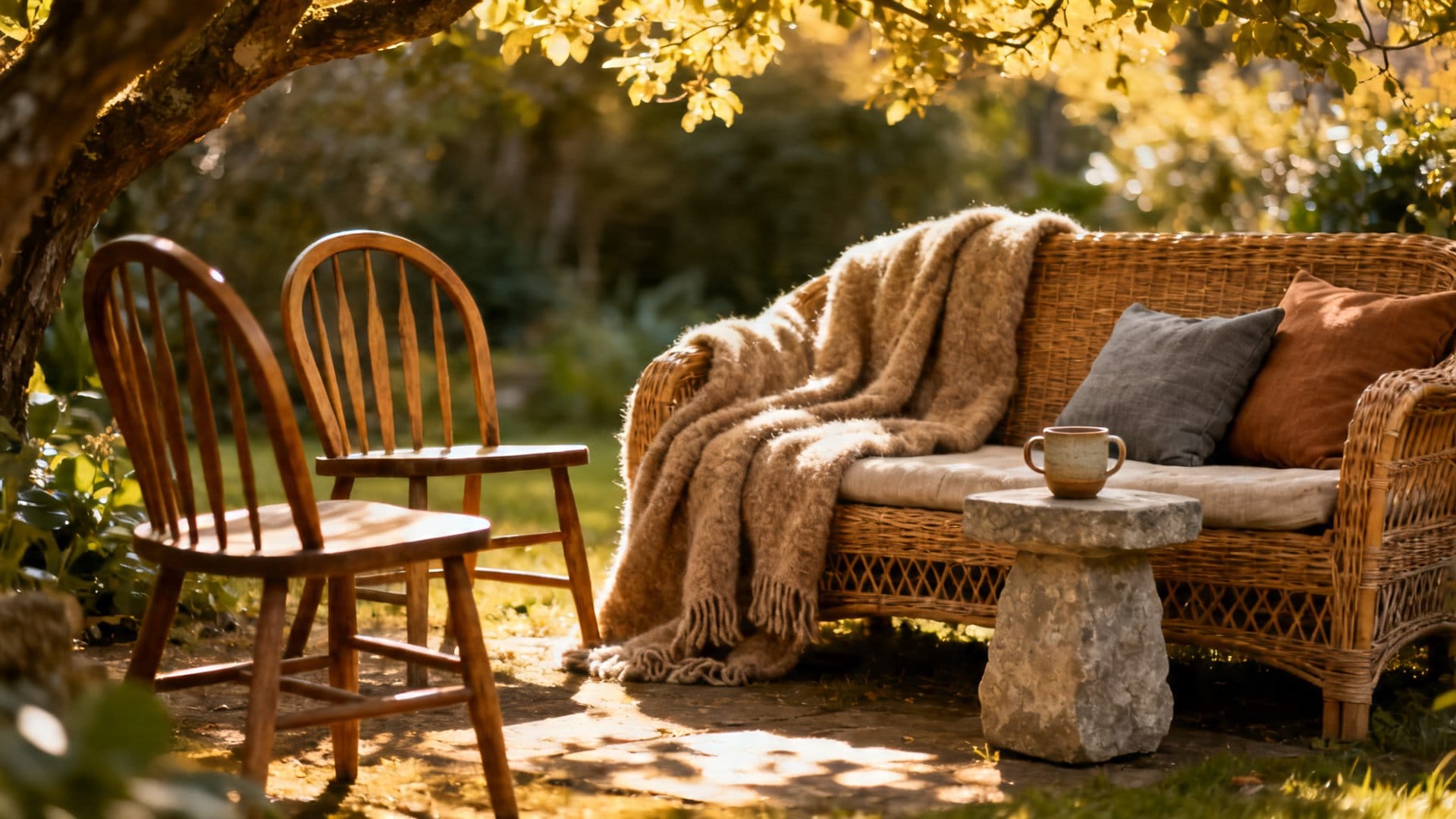
A rustic garden doesn’t feel complete without a place to actually sit and breathe it in. The goal isn’t a matching outdoor furniture set; it’s a gathering of pieces that feel collected and comfortable, like they came together naturally over time.
Think about mixing a wooden Adirondack chair with a small stone side table, a wicker loveseat with linen cushions in muted earth tones, or even a vintage metal garden bench softened with a folded wool blanket. The layering of different textures, rough wood, smooth stone, woven wicker, soft fabric, is what gives the space that irresistible coziness. This works especially well in smaller garden corners where you want the seating area to feel intentional but not overdone. A few of the same ideas show up in our cozy patio decor ideas if your seating lives closer to the house.
Pro tip: Look for outdoor cushion covers in natural, undyed linen or faded stripe patterns rather than bright solids. They fade beautifully in the sun and actually improve with a season or two of wear, perfectly complementing the rustic aesthetic.
To anchor the whole grouping, a generously sized natural planter does double duty as a side feature and a home for a trailing plant.
How Can You Use Vintage Finds and Repurposed Objects as Garden Decor?
You can use vintage finds and repurposed objects as garden decor by sourcing pieces from flea markets, estate sales, and thrift shops, then giving them new life as planters, birdbaths, or display risers. These objects carry a story that adds depth and personality no new purchase can replicate.
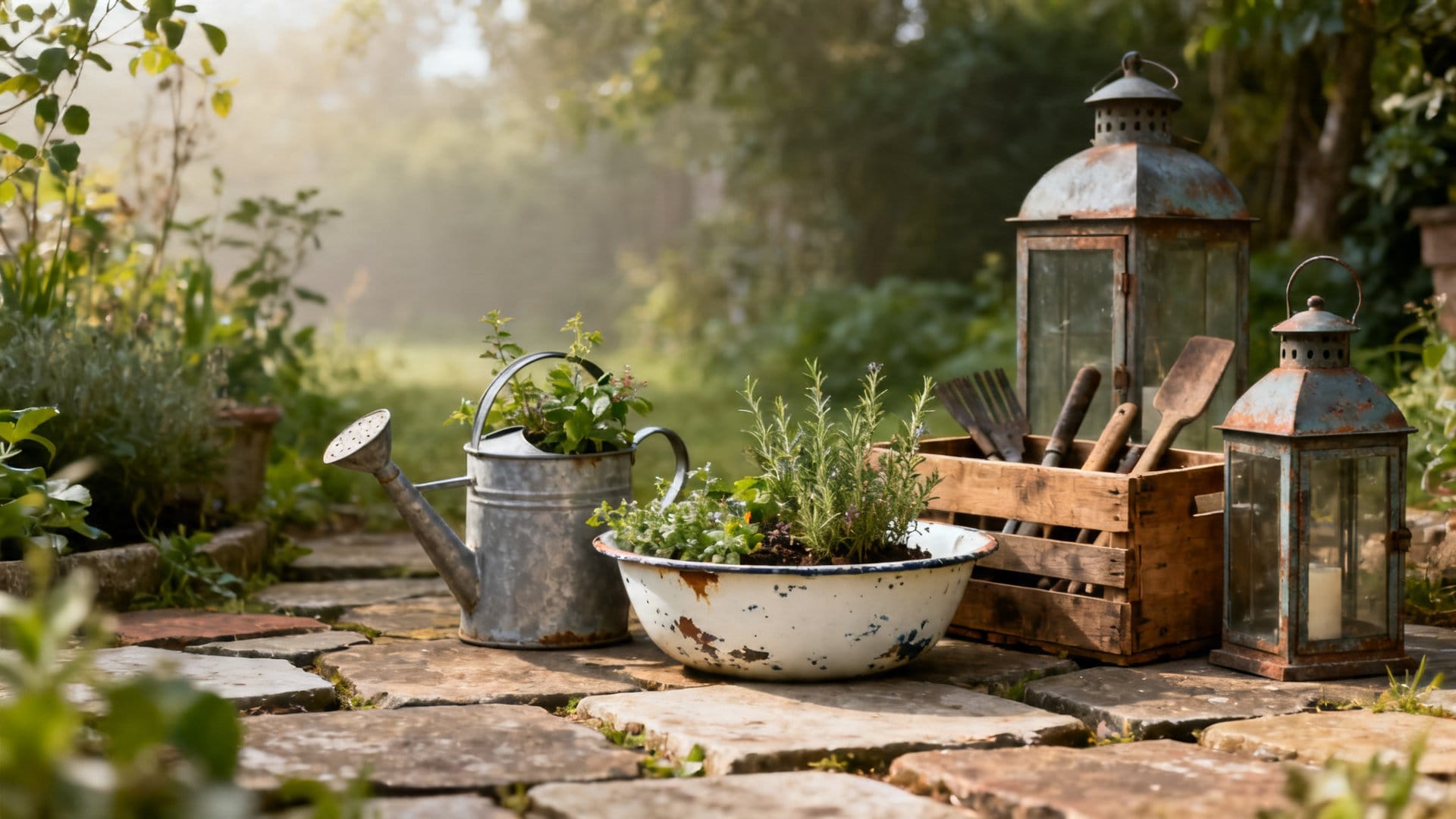
One of the most joyful parts of building a rustic outdoor space is the treasure-hunting element. Flea markets, estate sales, and thrift shops are genuinely wonderful hunting grounds for the kinds of pieces that make a rustic garden feel personal and layered.
A friend of mine found an old galvanized watering can at an estate sale for almost nothing, planted it with trailing nasturtiums, and it became the most-commented-on feature of her entire backyard. That’s the magic of repurposed objects: they carry a story, and that story adds depth to a space that no new purchase can quite replicate. Old wooden crates stacked as plant risers, a cast-iron urn used as a birdbath, a worn ladder leaned against a fence and hung with small potted herbs are the details that make a garden feel collected rather than decorated. The same thrifted spirit drives our simple home garden ideas for beginners, where found objects do most of the styling.
Styling Notes
When you group vintage finds together, use the rule of odd numbers; three objects feel more natural than two or four. Vary the heights significantly: a tall lantern, a medium-height pot, and a low trailing plant create a visual rhythm that feels organic. Grouping by material rather than by matching style, all terracotta, or all aged metal, helps mismatched pieces feel intentional. Galvanized metal pieces are some of the easiest to find and the most forgiving to style.
Rustic Garden Decor Ideas for Pathways and Borders
The bones of a rustic garden, its paths, edges, and borders, do more than you might think to set the overall mood. Perfectly straight brick edging and uniform pavers feel formal and controlled. But irregular flagstone paths with thyme or creeping chamomile growing in the gaps? That’s the kind of detail that makes a garden feel like it’s been lovingly tended for decades.
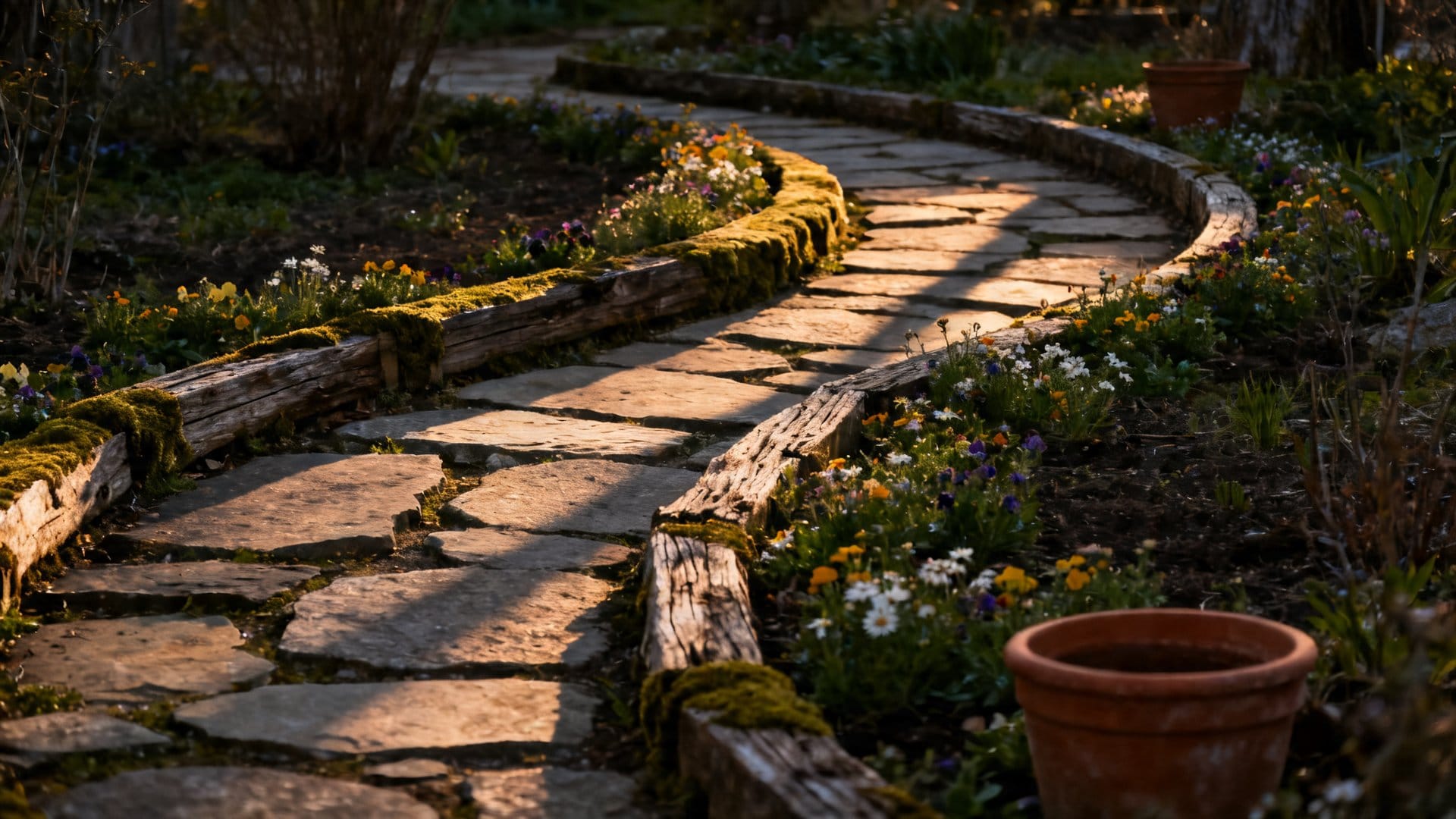
Exploring rustic garden decor ideas for pathways often leads to the most interesting solutions. Gravel paths edged with rough-cut timber or stacked fieldstone have a wonderful informality. River rock borders around planting beds add texture at ground level. Even something as simple as a row of terracotta pots placed along a path edge, each slightly different in size and age, can guide the eye while adding warmth. For tighter footprints, our tiny patio decorating ideas show how the same path-and-border tricks scale down.
Layout Ideas
- Use irregular stepping stones set into ground cover plants like creeping thyme, allowing a soft green to fill the gaps naturally
- Stack flat fieldstones into low dry-stack borders around raised beds with no mortar, just careful placement and gravity
- Line a gravel path with lanterns in aged bronze or blackened iron at irregular intervals, not evenly spaced
- Plant low-growing herbs like chamomile or corsican mint between pavers so the path releases fragrance when walked on
- Use reclaimed brick in a herringbone pattern for a small patio area, leaving some joints unsealed so moss can establish itself
The common thread in all of these is that nature is invited in rather than held back, and that’s exactly what makes a rustic garden feel so alive. A pair of weatherproof lanterns lining the path makes the effect glow after dark.
Once your seating area and pathways are in place, the right lighting will bring the whole space to life after dark.
What Lighting Feels Like Fireflies and Candlelight?
Soft, warm-toned string lights and collections of mismatched lanterns holding pillar candles create that firefly-and-candlelight effect in a rustic garden. The key is layering light at different heights rather than relying on a single bright overhead source.
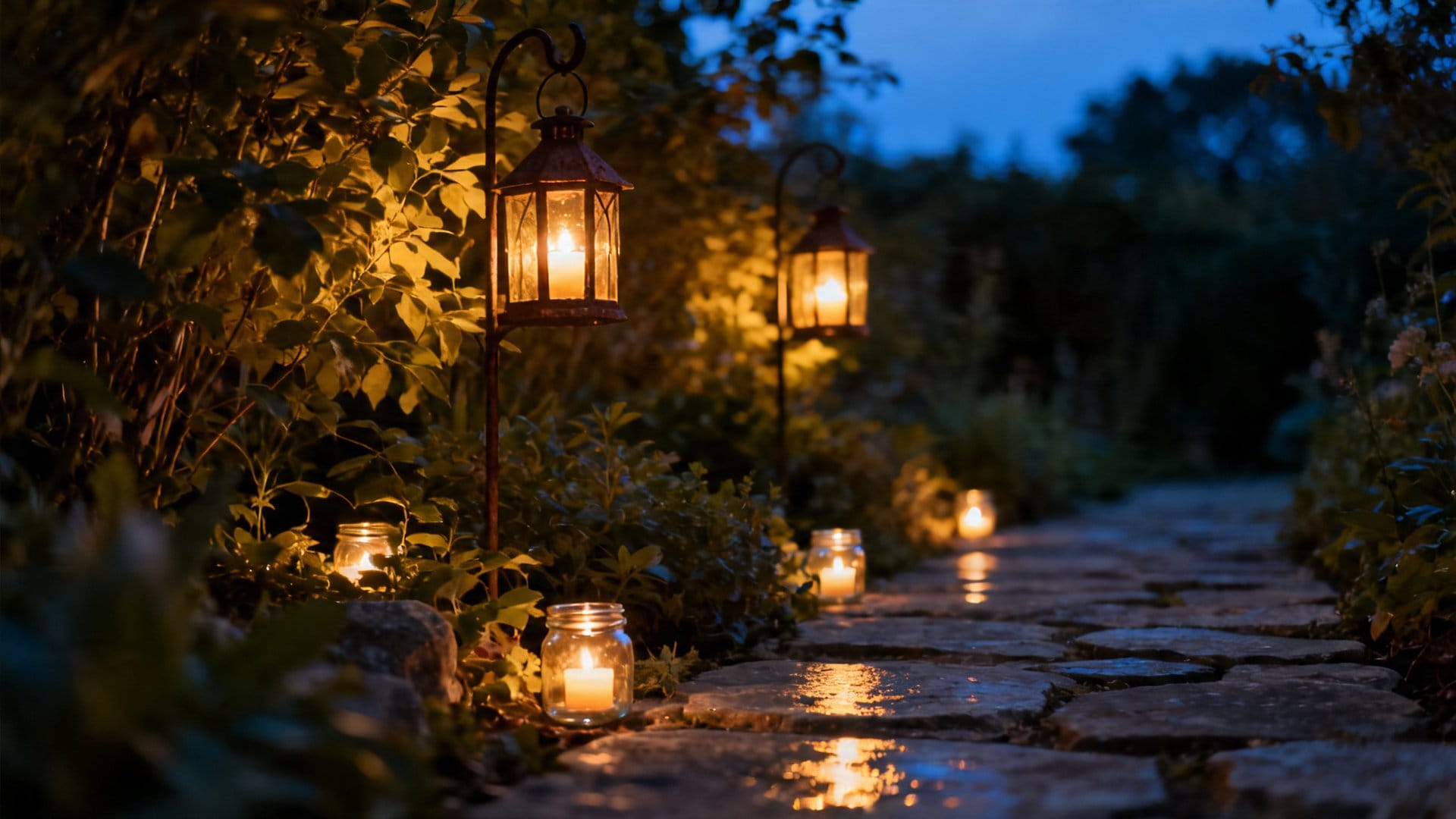
Lighting can completely change how a garden feels once the sun goes down, and in a rustic space the goal is warmth over brightness. Harsh overhead lighting kills the mood immediately. What you want instead is the kind of soft, flickering glow that makes everyone look a little golden and feel a little more relaxed.
String lights with warm-toned bulbs draped loosely through an arbor or along a fence line are a classic choice for good reason: they work. But I keep coming back to the idea of lanterns as the real workhorse of rustic outdoor lighting. A collection of mismatched lanterns in varying heights, holding pillar candles or battery-operated flame-effect candles, creates a warmth that string lights alone can’t quite match. Place them at different levels: on the ground, on a low wall, hung from a shepherd’s hook, and tucked into a planting border. Our patio string light ideas are full of layouts worth borrowing here.
Pro tip: Solar-powered lanterns have come a long way in quality. Look for ones with a warm amber tone rather than cool white, and tuck them into plantings during the day so they charge while looking decorative, then glow beautifully at night without any wiring.
A set of warm-glow string lights is the easiest first purchase for instant atmosphere.
Which Plants Feel Wild and Abundant in a Rustic Garden?
Plants that self-seed, sprawl, and spill over their containers feel most at home in a rustic garden. Lavender, foxglove, climbing roses, and herbs like rosemary and thyme all bring that sense of joyful, slightly unruly abundance the style calls for.
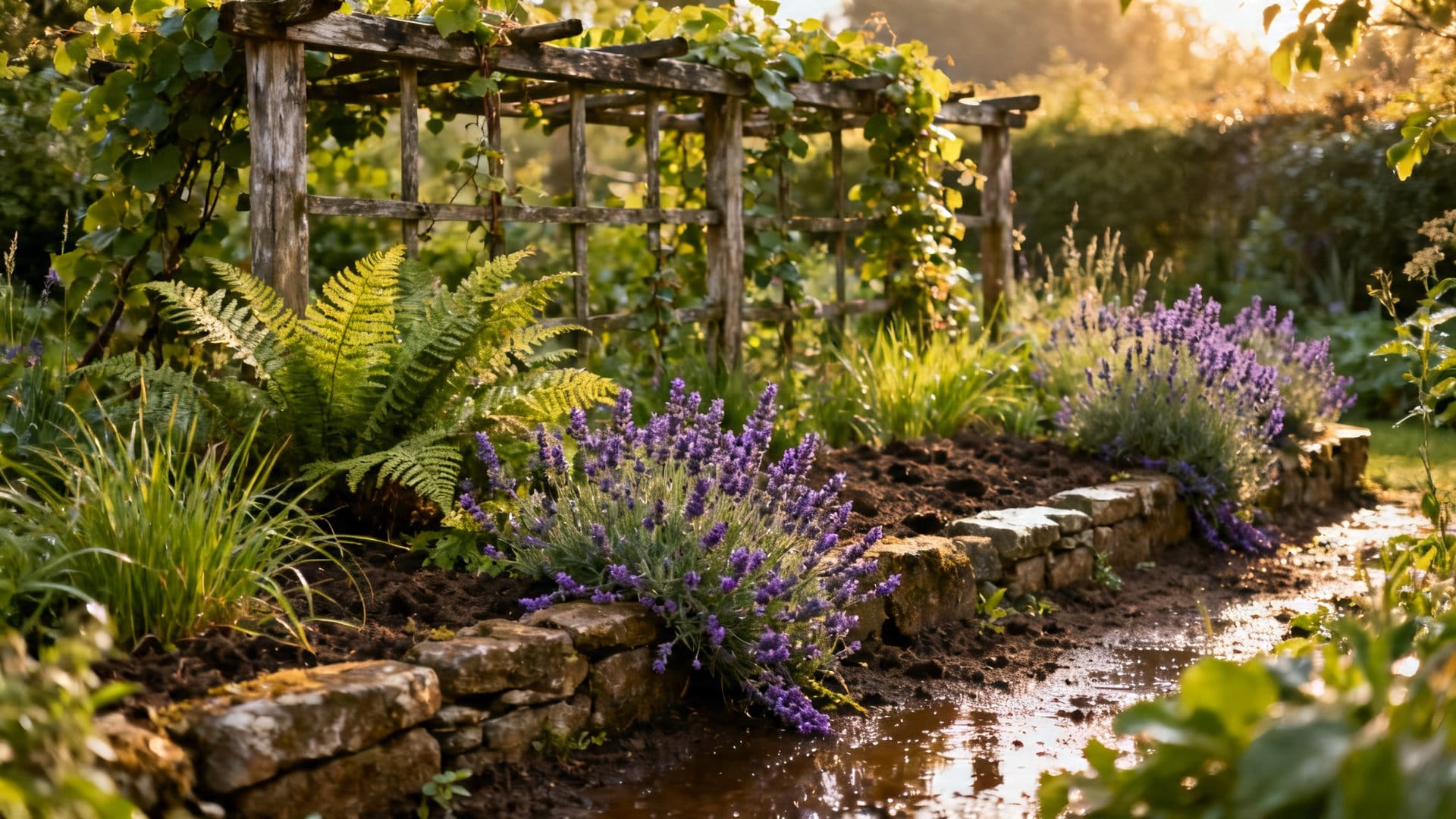
A rustic garden isn’t a formal one, and the planting style should reflect that. The plants you choose, and how you let them grow, do as much for the aesthetic as any decor piece you add. The goal is lush, slightly unruly abundance rather than clipped perfection.
One thing I’ve noticed in the most beautifully rustic gardens is that they lean heavily on plants that self-seed, sprawl, and spill over their containers. Lavender tumbling over a stone wall, foxglove rising tall and slightly unpredictable among lower perennials, climbing roses allowed to wander freely over an old wooden trellis: these are the plants that give a rustic garden its sense of joyful abundance. Herbs like rosemary, sage, and thyme double as both functional and beautiful, especially when planted in aged terracotta or tucked between stones. For a softer, more romantic take on the same idea, our shabby chic garden decor leans into all those tumbling blooms.
Pro Tips
Let some of your annuals go to seed at the end of the season rather than pulling them immediately; many will self-sow and return next year, which adds to that sense of a garden that tends itself. Mixing edible and ornamental plants in the same beds or containers is very much in the spirit of rustic style, where beauty and practicality coexist without apology. Give your climbing roses and trailing vines something handsome to scramble over.
With your planting style established, it’s the small finishing touches that improve a rustic garden from pleasant to truly memorable.
What Small Details Tie the Whole Rustic Look Together?
Small, thoughtful details, a weathered wooden sign, smooth river stones on a low wall, or a single candle in a mason jar, are what make a rustic garden feel genuinely loved rather than simply assembled. These finishing touches reward a slow, close look and cost very little to add.
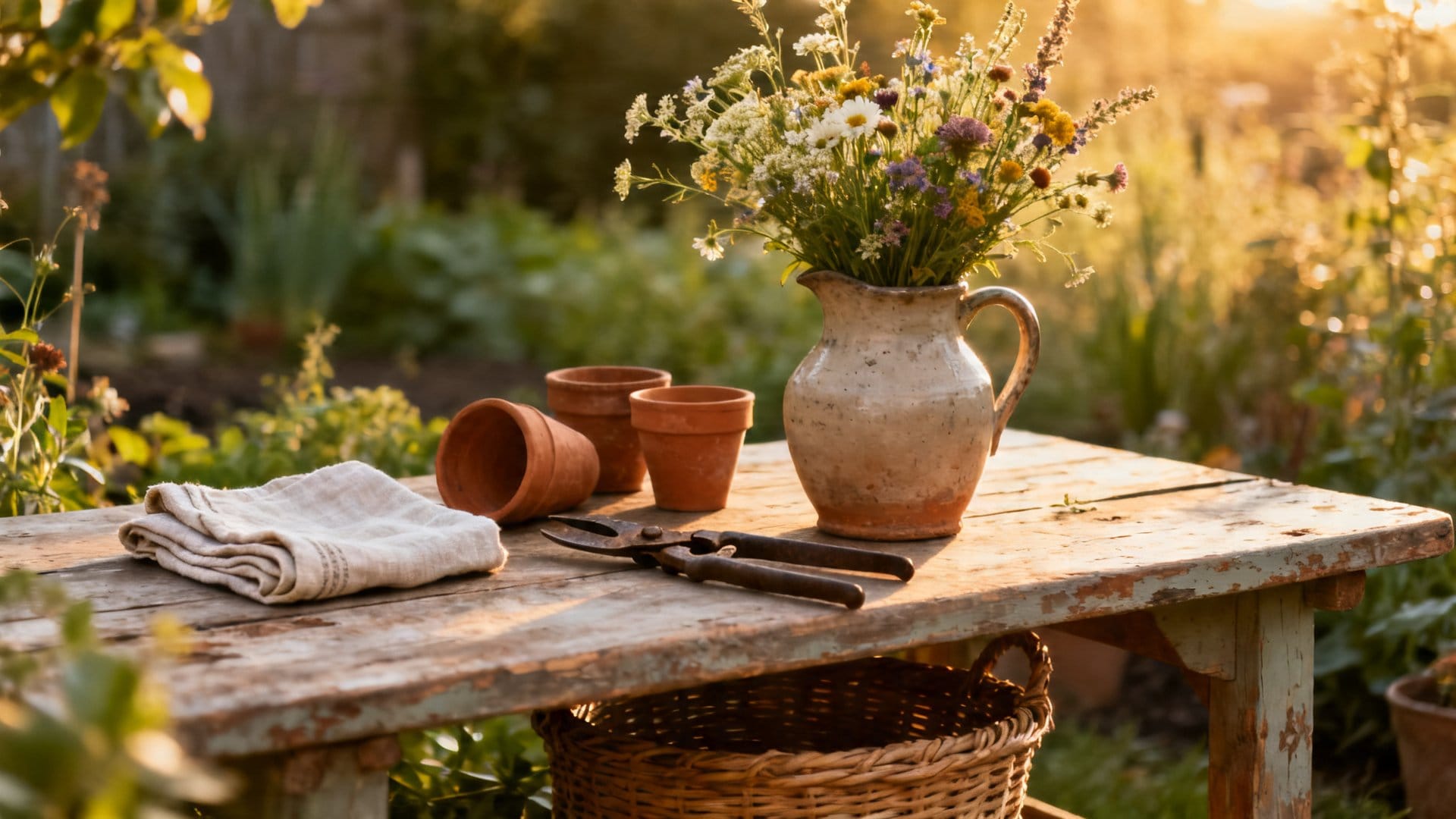
In any well-styled outdoor space, it’s the small, thoughtful details that make the difference between a garden that looks assembled and one that feels genuinely loved. These finishing touches don’t need to be expensive or elaborate; they just need to feel considered.
A weathered wooden sign with a simple phrase near the garden gate, a collection of smooth river stones arranged on a low wall, a small birdbath tucked into a planting bed where birds actually visit: these are the kinds of details that reward a slow, close look. From what I’ve gathered, the easiest way to approach these finishing touches is to think about what you’d notice if you were visiting someone else’s garden and feeling completely at ease. Usually it’s the unexpected small thing: a single candle in a mason jar on the edge of a raised bed, a handful of wildflowers in an old milk bottle on the outdoor table, a worn doormat made of natural coir placed in front of a garden shed. If you love a more playful version of these touches, our whimsical garden decor ideas are full of unexpected little moments.
Pro tip: Wind chimes made from natural materials like driftwood, shells, or hammered copper add sound to your garden’s atmosphere, which is a dimension of coziness that purely visual decor can’t provide. A weathered decorative garden sign is a quiet, charming way to finish the look.
Final Thoughts
Building a rustic garden that feels genuinely natural and cozy is less about following rules and more about trusting your instincts: choosing things that feel honest, layering textures that invite touch, and leaving room for nature to do some of the decorating herself. These rustic garden decor ideas are really just a starting point; your own space, your own collected pieces, and your own sense of what feels restful will take them somewhere completely personal. Whether you’re working with a sun-drenched backyard, a shaded side yard, or a small patio just big enough for two chairs and a potted herb garden, the warmth and character of rustic garden decor can find its way into any outdoor space. Happy decorating!
Frequently Asked Questions
The best materials for a rustic garden are those that age naturally and develop character over time, such as untreated wood, natural stone, terracotta, wrought iron, and galvanized metal. These materials weather beautifully with exposure to the elements, developing patinas, moss, and textures that give your garden that authentic, lived-in charm. Avoid synthetic or overly polished alternatives, as they tend to look out of place in a space meant to feel connected to the natural world.
Not at all, a rustic garden style works just as well on a small patio, balcony, or compact yard as it does on a sprawling property. The key is focusing on layering textures, using reclaimed or natural materials, and choosing plants that spill and grow loosely rather than in rigid, formal arrangements. Even a few weathered wooden planters, some trailing vines, and a vintage lantern can change a modest outdoor space into a cozy, earthy retreat.
While weathering is part of the rustic charm, you can extend the life of wooden garden decor by choosing naturally rot-resistant woods like cedar, teak, or black locust for pieces that will be in constant contact with soil or moisture. Applying a natural linseed oil or beeswax finish can also protect the wood while still allowing it to develop that beautiful silvery-gray patina over time. Improve planters slightly off the ground and ensuring good drainage will also significantly reduce the risk of premature rot.
Plants that look effortless, slightly wild, and textural are ideal companions for rustic garden decor, including lavender, echinacea, yarrow, ornamental grasses, climbing roses, and herbs like rosemary and thyme. Moss, ferns, and creeping ground covers are also wonderful for softening hard surfaces like stone paths and old wooden structures, making them look like they’ve been part of the space for decades. The goal is to choose plants that feel like they chose to grow there rather than ones that look carefully placed and maintained.
Absolutely, rustic style is one of the most budget-friendly garden aesthetics because it celebrates imperfection, repurposing, and found objects rather than expensive new purchases. Thrift stores, estate sales, salvage yards, and even your own garage can yield incredible finds like old crates, vintage watering cans, weathered ladders, and worn clay pots that fit perfectly into a rustic scheme. You can also create natural, cozy atmosphere simply by letting certain areas of your garden grow a little freely and adding inexpensive touches like gravel paths, stacked stone borders, or hand-painted wooden signs.