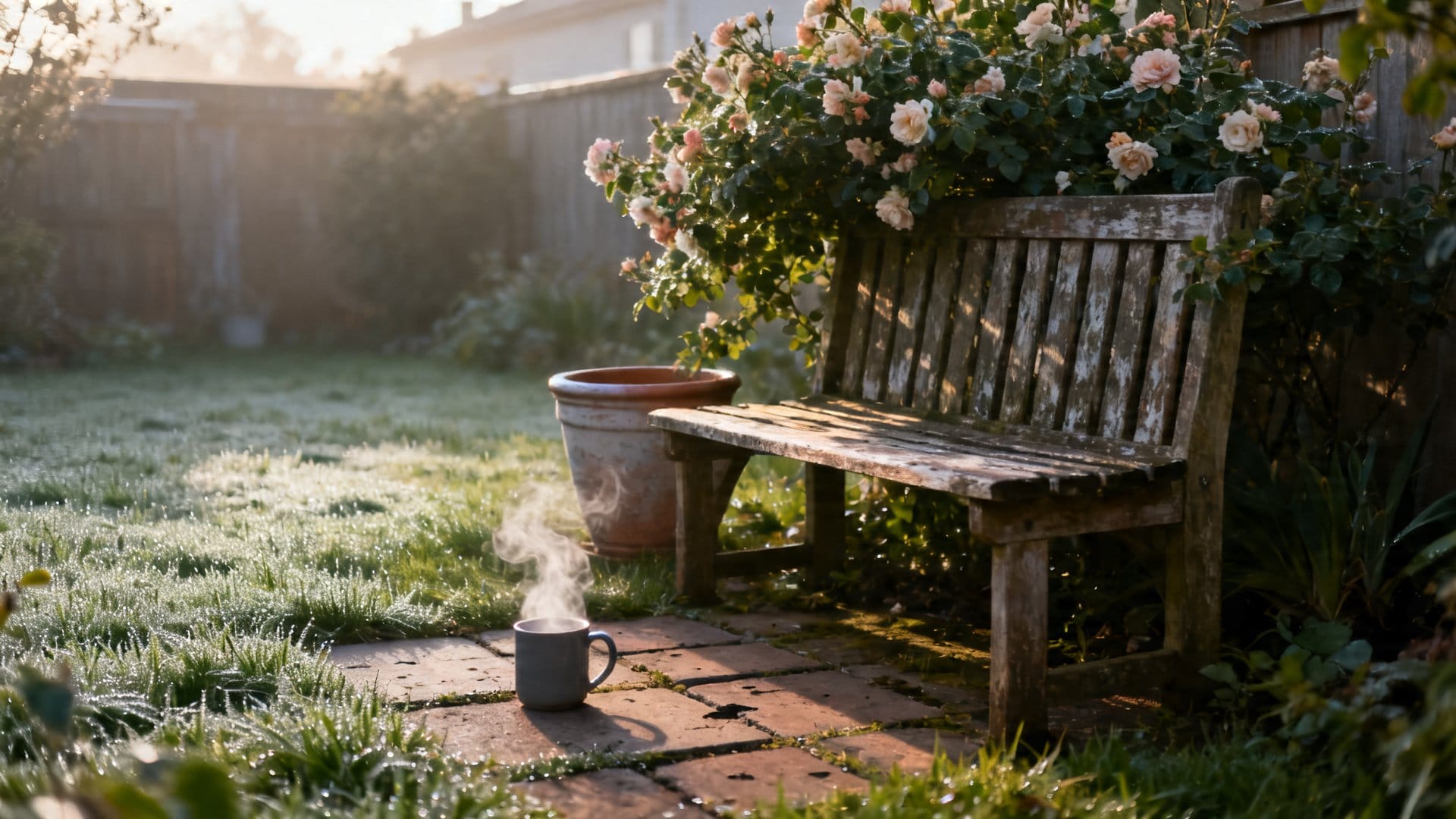
There is something quietly magical about stepping outside on a warm morning, coffee in hand, and looking at a patch of outdoor space that feels entirely your own. Whether you have a sprawling backyard, a modest side yard, or a tiny patio tucked between fences, the urge to make it beautiful is real and worth following. These home garden ideas can help you reshape your outdoor space into something that genuinely reflects your personality and invites you to linger. The best part? You do not need a space design degree or a big budget to make meaningful changes, just a little inspiration and a willingness to start small. If you are brand new to all this, our simple home garden ideas for beginners is a gentle place to begin.
Where Should You Start With Your Outdoor Space?
The best place to start is a slow, observant walk around your existing space before spending a single penny. Most outdoor areas already have good bones, you just need to see what is there before deciding what to add or change.
Before buying a single new plant or piece of furniture, take a slow walk around your outdoor space and really look at it. Notice where the light falls in the morning versus the afternoon, which corners feel forgotten, and what is already growing that you might be overlooking.
One thing I have noticed is that most outdoor spaces already have good bones, a solid fence line, an interesting paved area, or a mature shrub that just needs a little shaping. Working with what is already there almost always feels more natural than starting from scratch, and it saves you from making expensive mistakes. For a full season-by-season plan, our complete beginner’s guide to starting a summer garden walks you through the early steps.
What to Consider Before You Begin
Think about how you actually want to use the space. Do you want a quiet reading nook, a spot for weekend gatherings, a kitchen herb garden, or all three? Mapping out your intentions first helps every decision that follows feel purposeful rather than random.
How Does Layering Plants Add Depth and Visual Interest?
Layering plants by height, texture, and bloom time creates a sense of depth that makes any garden bed feel intentional and full. Think tall plants at the back, mid-height plants in the middle, and low or trailing plants at the front edge.
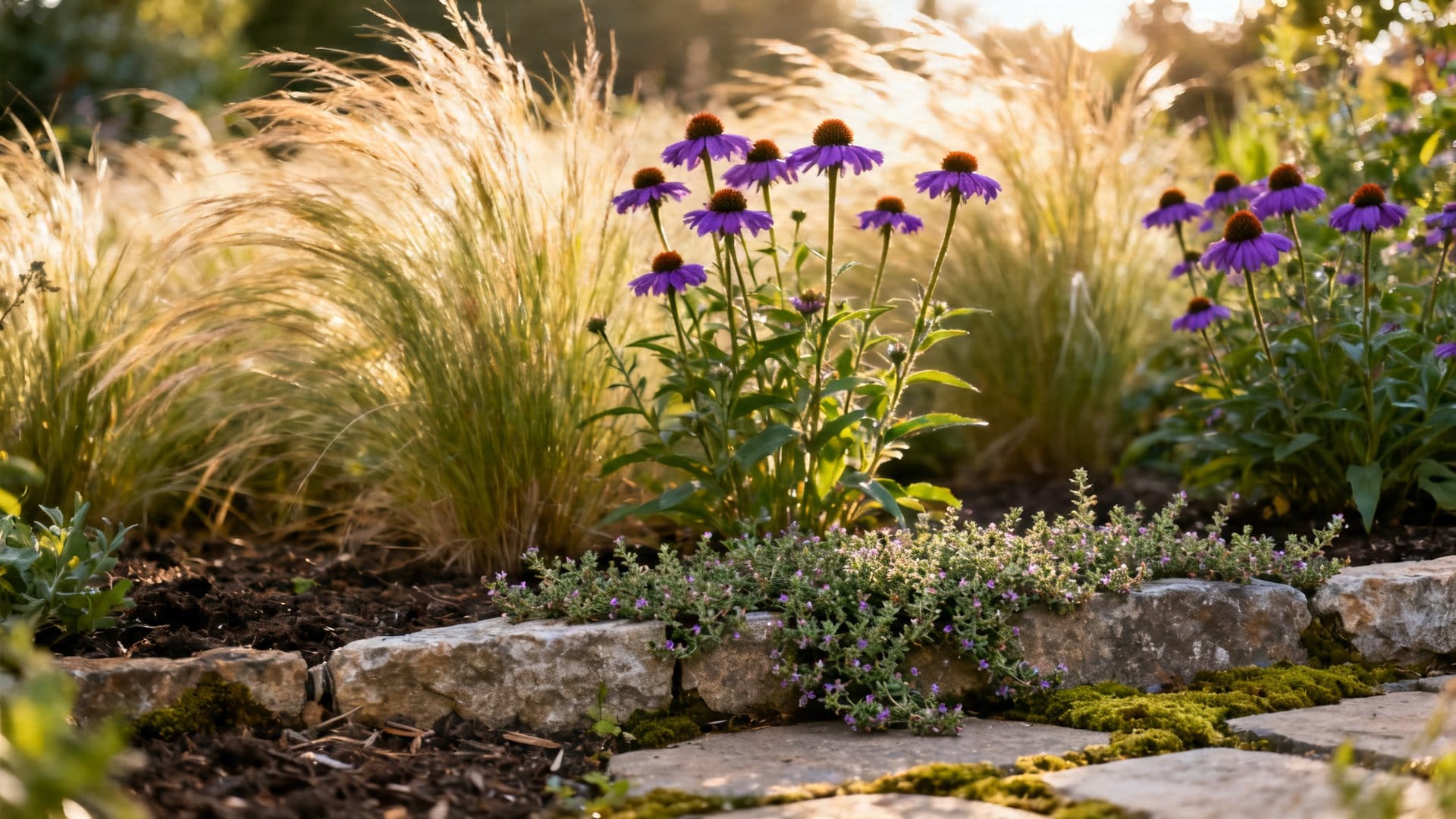
One of the most effective home garden ideas for reshaping an outdoor space is learning to layer plants by height, texture, and bloom time. Think of it like decorating a room: you need something tall in the back, something mid-height in the middle, and something low and trailing at the front.
Tall ornamental grasses or flowering shrubs like butterfly bush anchor the back of a border beautifully. In the middle layer, perennials like coneflowers, black-eyed Susans, or salvias bring color from late spring through fall. At the front edge, creeping thyme or low-growing sedums spill softly over the border, softening the hard line between garden bed and path.
Pro tip: Choose at least one plant in each layer that offers something in winter, whether it is interesting seed heads, evergreen foliage, or striking bark texture. A garden that looks good in December feels like a real achievement. If you lean toward a softer, time-worn look, our vintage garden decor ideas pair beautifully with layered borders.
How Do You Create a Cozy Outdoor Seating Area?
Creating a cozy outdoor seating area starts with defining a spot, even a small one, with a couple of weather-resistant chairs, a side table, and an outdoor rug to anchor the space. That simple combination gives you a reason to go outside and actually stay there.
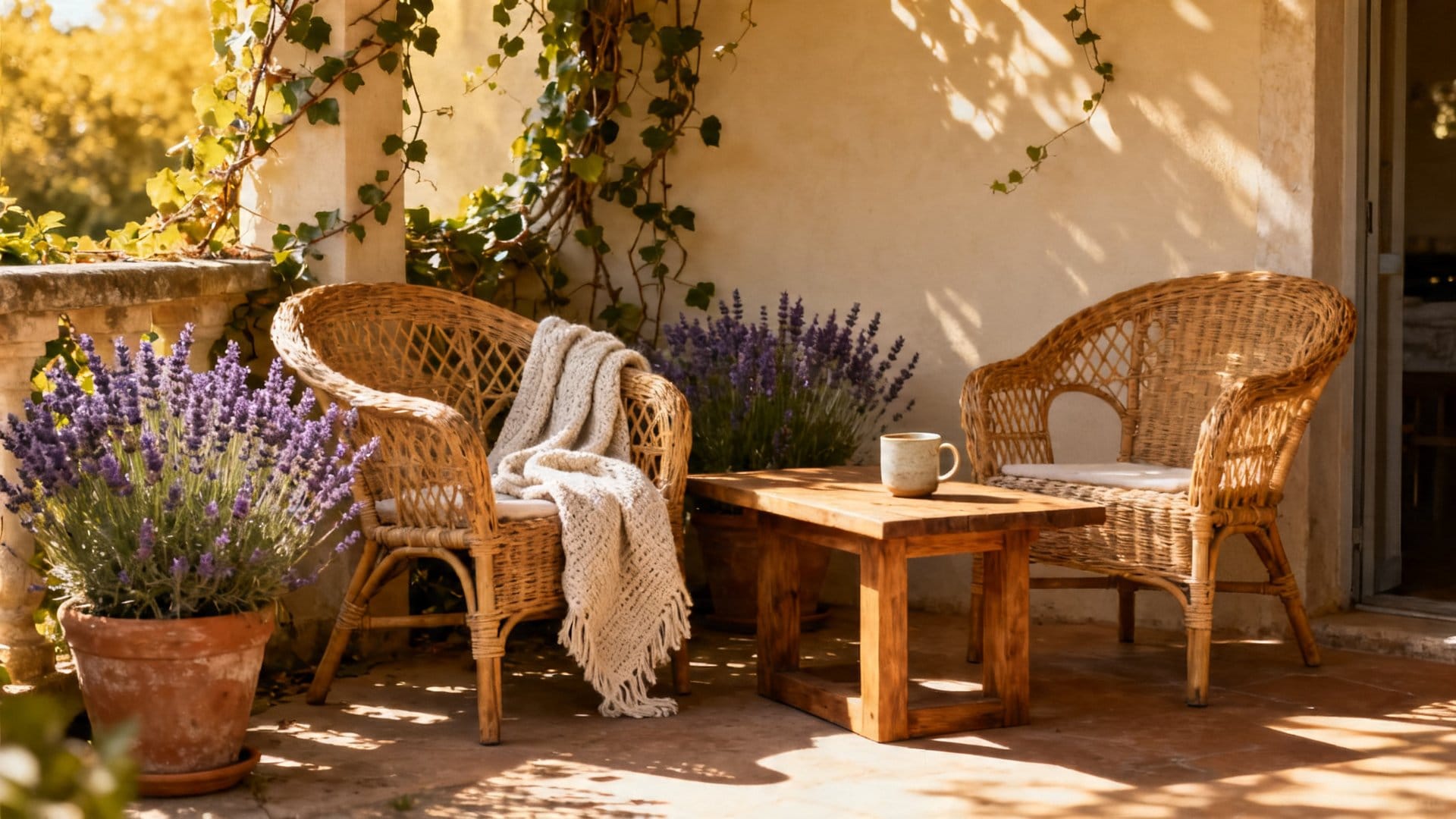
A garden without somewhere to sit is just a pretty view you never quite enjoy. Creating a defined seating area, even a small one, completely reshapes how you relate to your outdoor space. It gives you a reason to go outside and stay there.
You do not need a full patio set to make this work. A pair of weather-resistant chairs in a warm terracotta or deep forest green, a small side table for your coffee cup, and a simple outdoor rug to anchor the space can do the job beautifully. I love how a rug instantly makes an outdoor area feel like a room, it draws the eye down and creates a sense of intention. For more ways to make a small spot feel finished, browse our cozy patio decor ideas.
Finishing Touches That Make It Feel Complete
String lights looped through nearby branches or draped along a fence add warmth once the sun goes down, extending the hours you actually spend outside. A few weather-resistant throw pillows in earthy linen or woven cotton textures make the seating feel genuinely inviting rather than purely functional.
Can You Grow Edibles Alongside Ornamentals?
Yes, mixing vegetables, herbs, and edible flowers into your ornamental beds is both practical and surprisingly beautiful. Plants like purple basil, nasturtiums, and curly parsley hold their own visually alongside roses and zinnias.
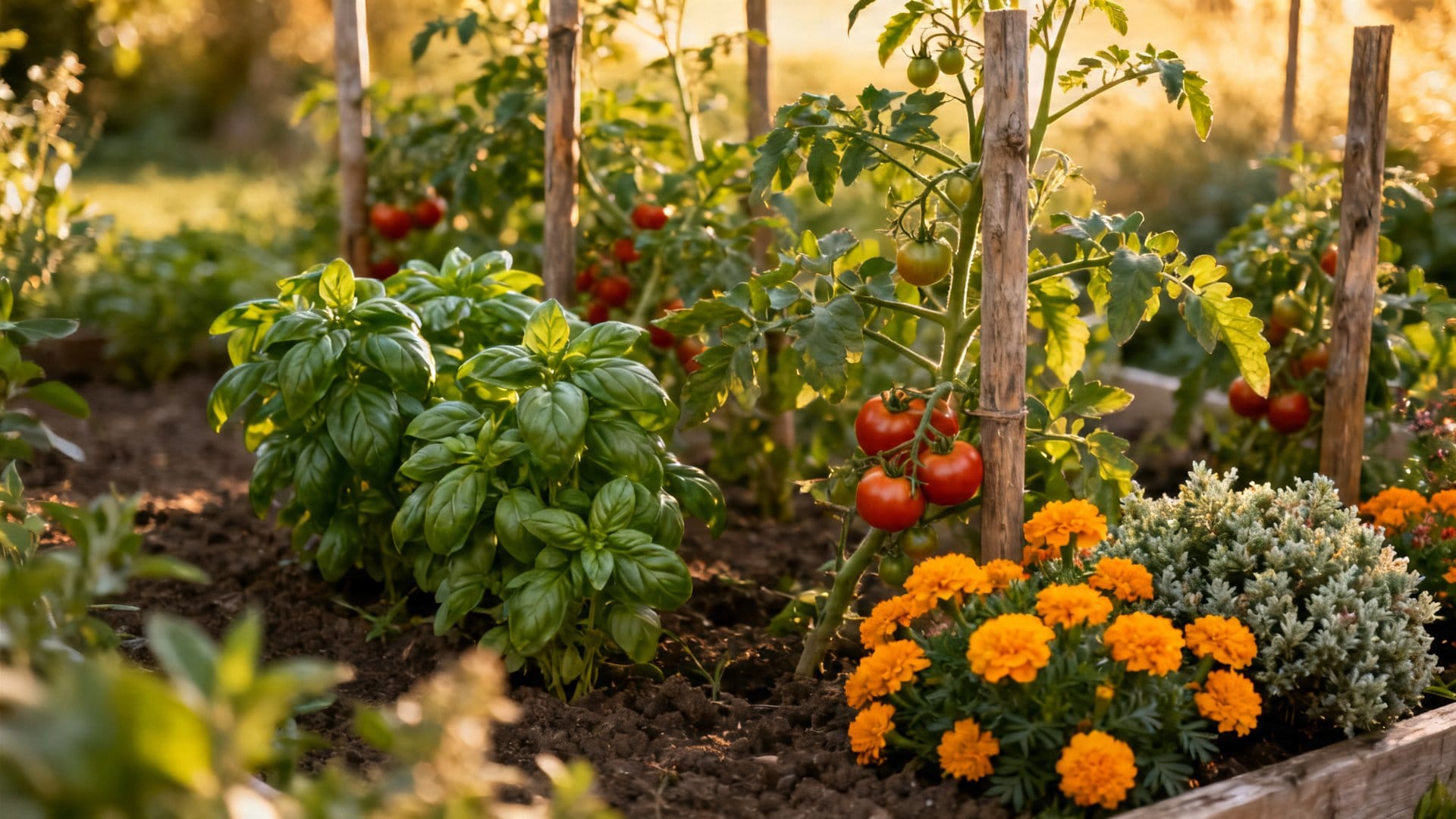
Mixing vegetables, herbs, and edible flowers into your garden beds is one of those home garden ideas that feels both practical and surprisingly beautiful. The old habit of keeping the vegetable patch hidden away in a back corner is worth rethinking entirely.
Imagine deep purple basil tucked between pale pink roses, or a border of curly parsley edging a bed of zinnias. Climbing beans on a simple bamboo teepee structure become a vertical focal point. Nasturtiums, which are fully edible, flowers and leaves both, tumble over the front of a border in shades of orange, red, and gold that no ornamental annual can quite match.
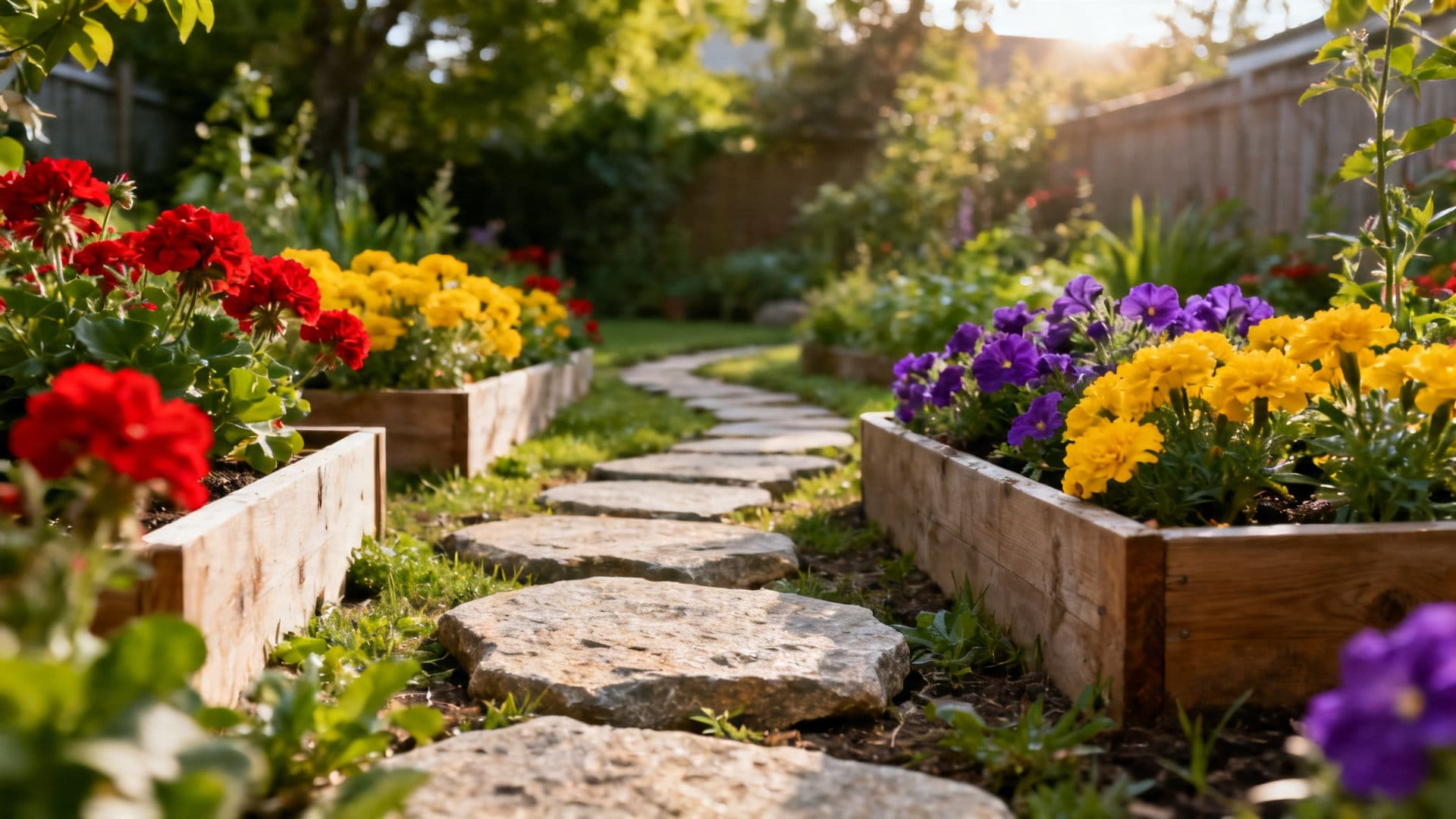
A friend of mine tried planting a small raised bed of mixed lettuces, herbs, and marigolds right outside her kitchen door, and she told me it completely changed how she cooked. Having fresh ingredients within arm’s reach made her feel more connected to her meals and her garden at the same time. If cooking outside appeals to you, our outdoor summer kitchen ideas take that idea even further.
Pro tip: Marigolds planted near tomatoes and peppers genuinely help deter certain pests, so mixing flowers and edibles is not just pretty, it is smart gardening.
&# 10024; You might also love:25 enchanting summer fairy garden ideas for your yard→
Once your planting layers and seating area are taking shape, containers offer an easy way to keep refining and refreshing the look throughout the season.
How Can Containers Add Flexibility and Color to Your Garden?
Containers let you move color around freely, fill gaps in the garden, and experiment with plants that might not survive your winters in the ground. They are one of the most flexible and forgiving tools in any gardener’s toolkit.
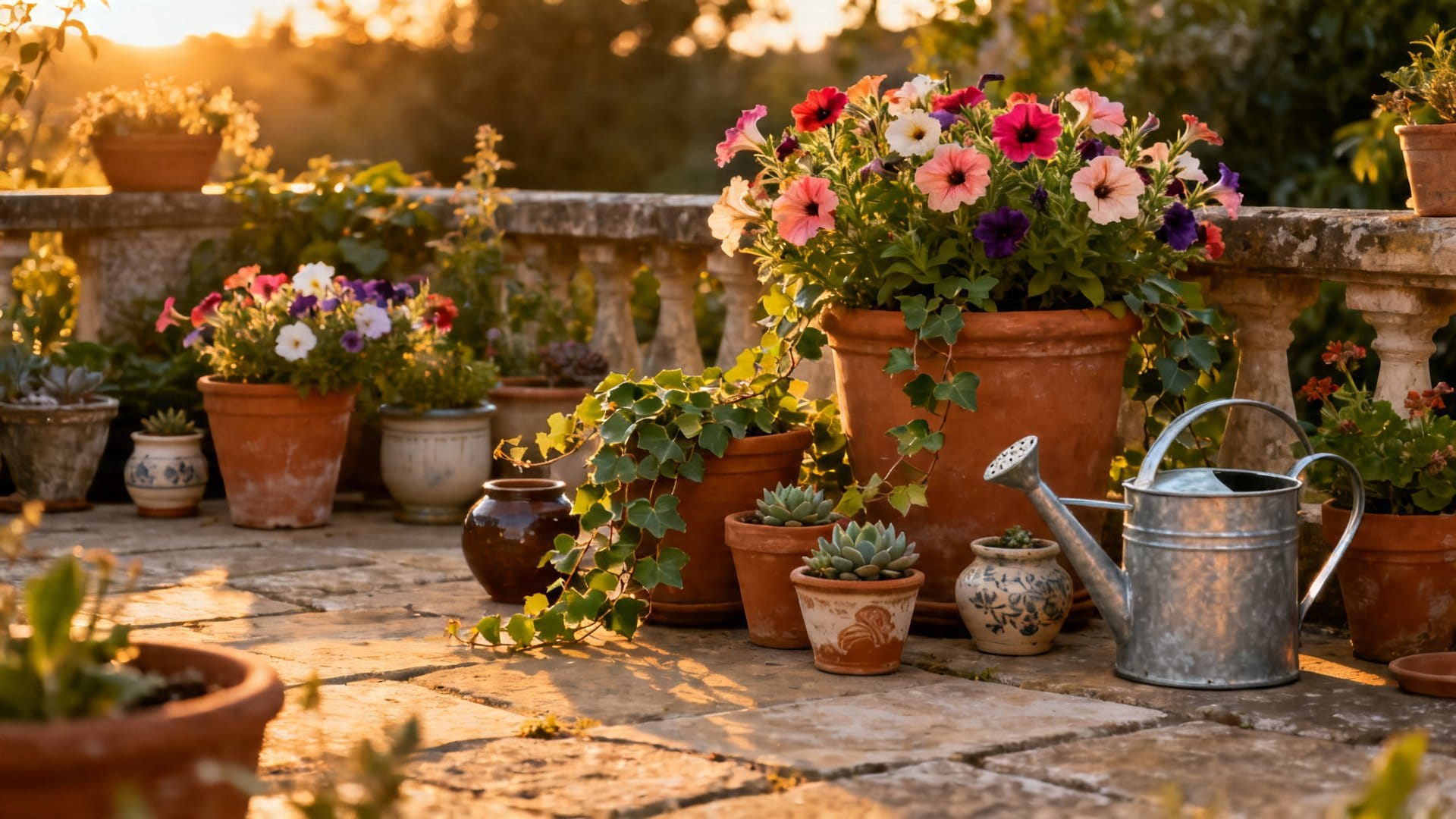
Layout Ideas for Container Groupings
- Group containers in odd numbers, three or five, and vary the heights using pot risers or upturned pots hidden underneath for a layered, intentional look.
- Pair a tall, spiky plant like a cordyline or tall grass with a mounding plant like petunias or calibrachoa, then add a trailing plant like sweet potato vine to spill over the edge.
- Use containers in a consistent material, all terracotta, all weathered concrete, or all woven basket-style, to create visual cohesion even when the plants inside vary widely.
- Place a single large, dramatic pot at the end of a garden path or beside a gate to act as a natural focal point that draws the eye forward.
The beauty of containers is that they let you be bold without permanent commitment, if something is not working, you can simply move it.
How Do Paths, Borders, and Vertical Elements Bring Structure?
Structure is what makes a garden feel designed rather than accidental. A simple path, a defined border, or a vertical element like a trellis gives the eye somewhere to travel and the space a clear sense of intention.
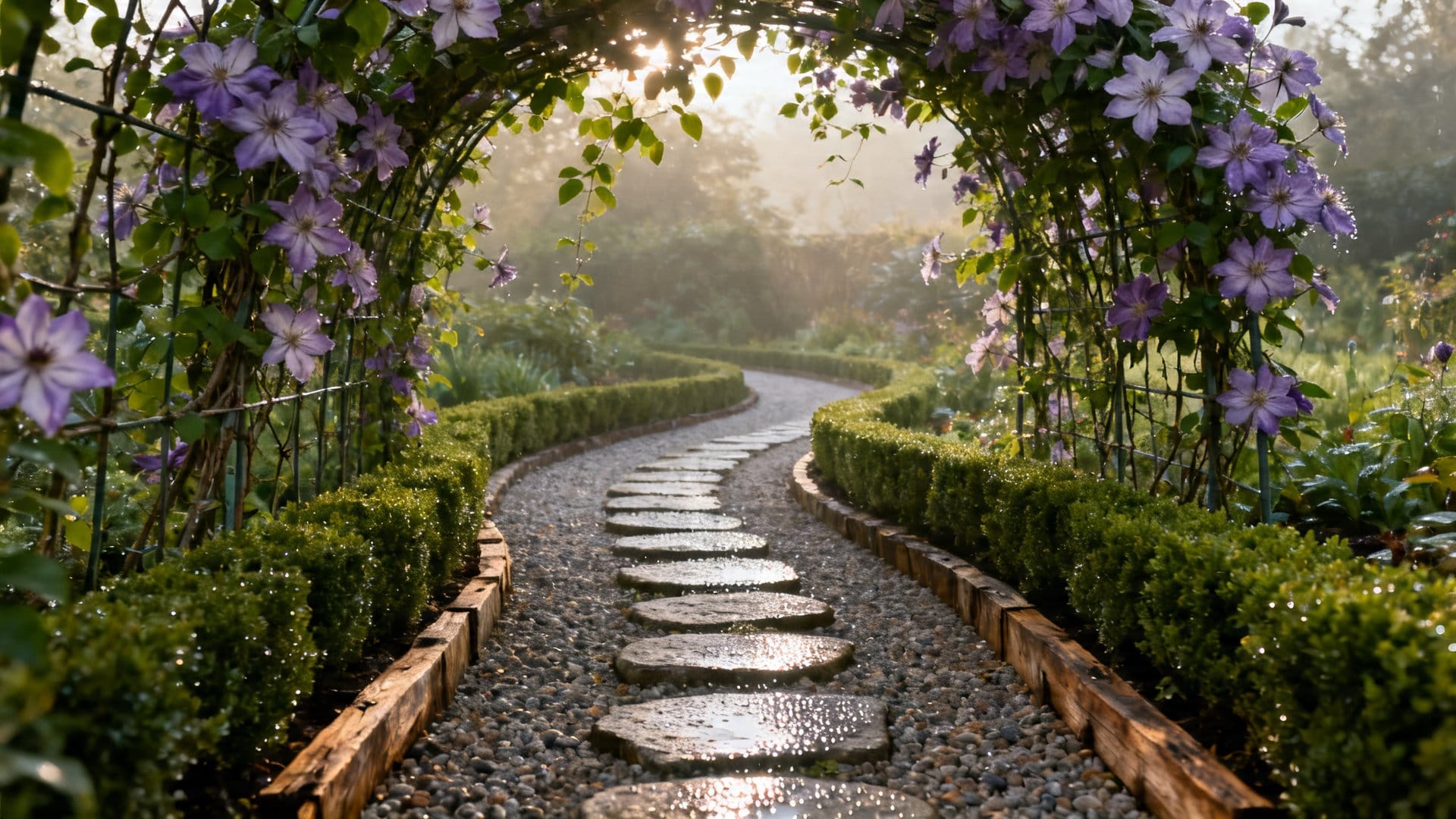
Plants alone do not make a garden feel designed, structure does. Adding a simple path, a defined garden border, or a vertical element like a trellis or arbor gives your outdoor space a sense of intention that even the most beautiful plants cannot achieve on their own.
A gravel path edged with low bricks or natural stone creates a satisfying crunch underfoot and naturally guides visitors through the garden. Even a short path, just eight or ten feet long, makes a garden feel more considered and complete. I keep coming back to this approach because it works in gardens of every size: a path gives the eye somewhere to travel and the feet somewhere to go.
Vertical elements are especially valuable in smaller spaces, where ground-level planting room is limited. A simple wooden trellis painted in a soft sage green or warm charcoal, covered in climbing roses or clematis, adds height and romance without taking up any square footage. An old wooden ladder leaned against a fence and hung with small potted herbs is another approach that feels charming and handmade without requiring any actual construction skills.
Pro tip: When choosing materials for paths and borders, pick something that already appears elsewhere in your outdoor space, the same brick as your house exterior, or stone that echoes your patio, to create a sense of visual flow rather than a patchwork of unrelated materials.
With your planting, seating, and structure in place, the final layer that truly completes an outdoor space is light.
How Can You Light Your Garden for Evening Magic?
Thoughtful garden lighting extends how much time you spend outside and reshape how the space feels after dark. Even a few solar path lights or a lantern or two can completely shift the atmosphere of an outdoor area at night.
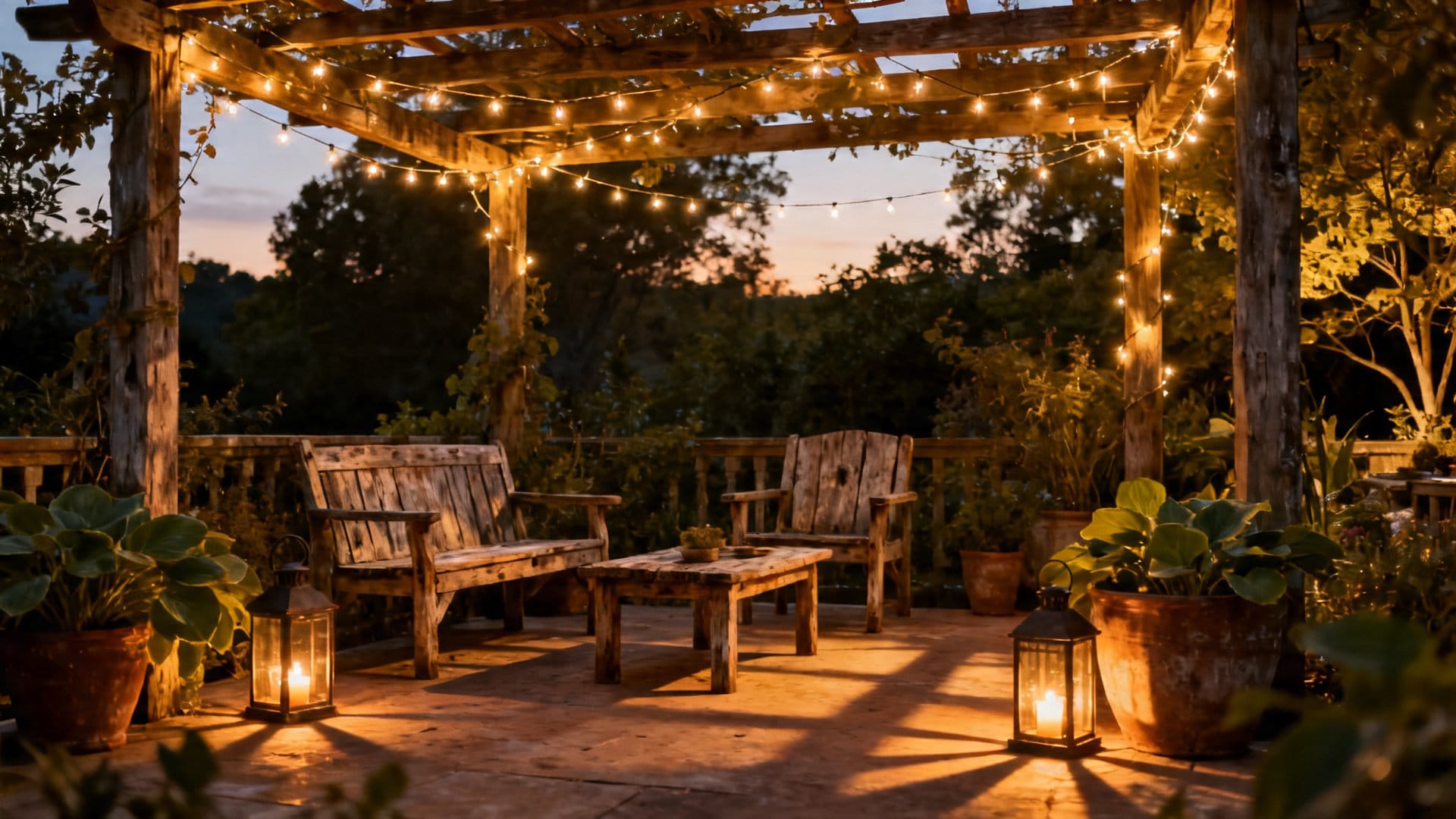
Most gardens are designed entirely for daytime enjoyment, which means they go dark and unused for a good portion of the year. Adding thoughtful lighting is one of the simplest home garden ideas that genuinely extends how much time you spend outside and how beautiful the space feels after sunset.
Solar-powered path lights tucked along a garden border cast a soft glow without any wiring. Lanterns placed on steps or set among container plants add a warm, flickering quality that electric lights rarely replicate. For more glow after dark, our patio string light ideas are full of cozy options. One thing I have noticed is that low lighting placed at ground level, rather than bright overhead fixtures, creates a far more atmospheric and inviting feel, almost like candlelight for the garden.
Uplighting a single beautiful tree or a dramatic shrub creates a focal point that is genuinely striking from inside the house too, turning your garden into a view you enjoy even from the sofa on a cool evening. From what I have gathered, the easiest approach is to start with just one or two lighting elements and see how they shift the feel before adding more.
Final Thoughts
Your outdoor space, whatever its size or shape, holds so much quiet potential, and the best home garden ideas are the ones that feel personal, livable, and true to how you actually want to spend your time outside. You do not need to do everything at once; even one new planting layer, one cozy seat, or one string of lights can shift the whole feeling of a garden. Start with what excites you most, build slowly, and let the space evolve with you. Happy gardening!
Frequently Asked Questions
No, you do not need a large budget to create a beautiful outdoor space. Many meaningful garden refreshes start with small, low-cost changes like rearranging existing plants, adding inexpensive containers, or repurposing items you already own. Starting small and building gradually is often the most rewarding and budget-friendly approach.
The best way to choose the right plants is to first observe your space carefully, paying attention to how much sunlight different areas receive throughout the day and what your soil conditions are like. Plants suited to your specific light and moisture levels will thrive with far less effort than those fighting against their environment. Starting with what is already growing successfully in your yard can also give you valuable clues about what will work well.
Absolutely, small outdoor spaces like patios, balconies, and side yards can be turned into charming, functional gardens with the right approach. Vertical gardening, container planting, and carefully chosen furniture can make even the most compact space feel inviting and lush. The key is to work with the space you have rather than wishing for something larger.
The best starting point is to take a slow, unhurried walk around your outdoor space before making any purchases or changes, simply observing what is already there and what the space needs. Identifying one or two specific problem areas or goals, such as adding shade, creating a seating nook, or reviving a neglected corner, gives you a manageable place to begin. Taking things one step at a time prevents overwhelm and helps you make intentional choices you will be happy with long term.
No professional skills or space design knowledge are required to meaningfully improve your outdoor space. Most successful home gardens are built on simple principles like observing your space, choosing plants suited to your conditions, and adding personal touches that reflect your style. A willingness to experiment, learn as you go, and start small is far more valuable than any formal training.