
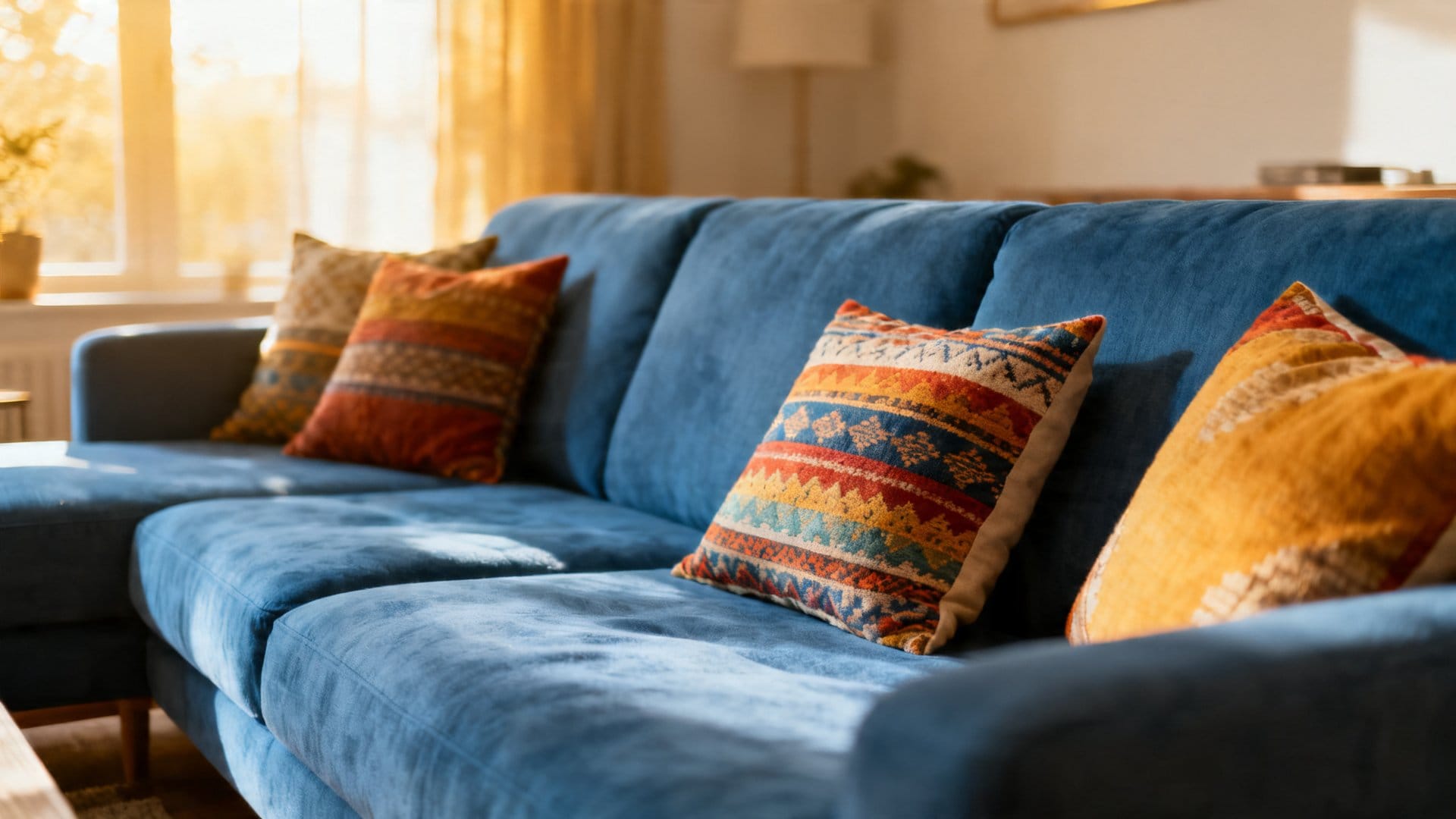
There is something quietly satisfying about sinking into a sofa that feels just right, not just comfortable, but visually settled, like every pillow belongs exactly where it landed. If you have a blue couch or a leather sofa at home, you already have a beautiful foundation to work with. Choosing the right decorative pillows blue couch leather sofas deserve can feel overwhelming at first, but once you understand a few simple principles, the whole process starts to feel more like play than pressure. This article walks you through color pairings, textures, layering strategies, and styling tricks that will help your sofa feel like the most inviting spot in the house.
Why Are Blue Couches and Leather Sofas Such a Rewarding Starting Point?
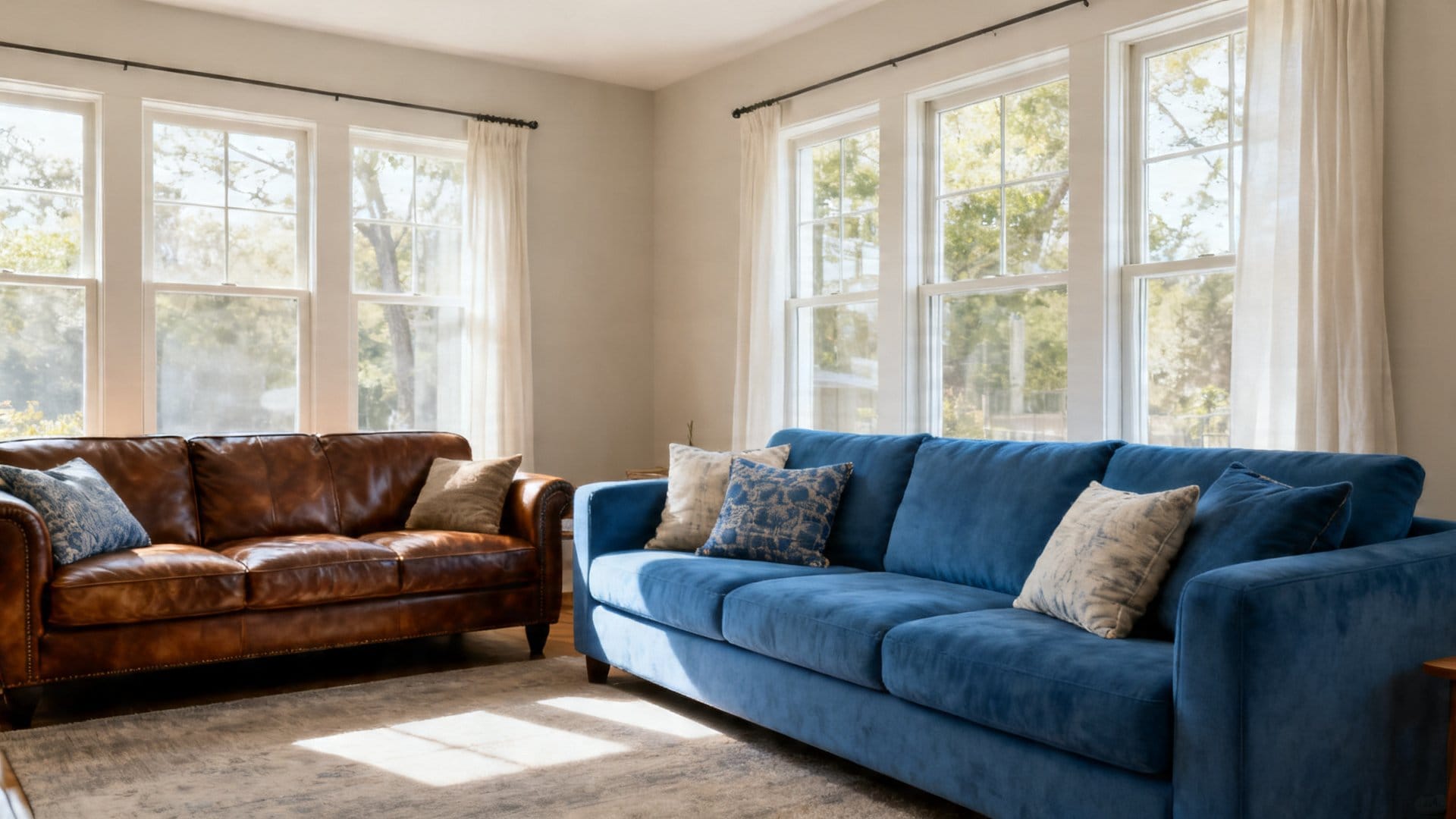
Blue couches and leather sofas are rewarding starting points because both offer strong visual character that pairs naturally with a wide range of pillow colors and textures. Their distinct surfaces, rich leather and bold blue upholstery, give you a versatile foundation that makes pillow styling feel creative rather than restrictive.
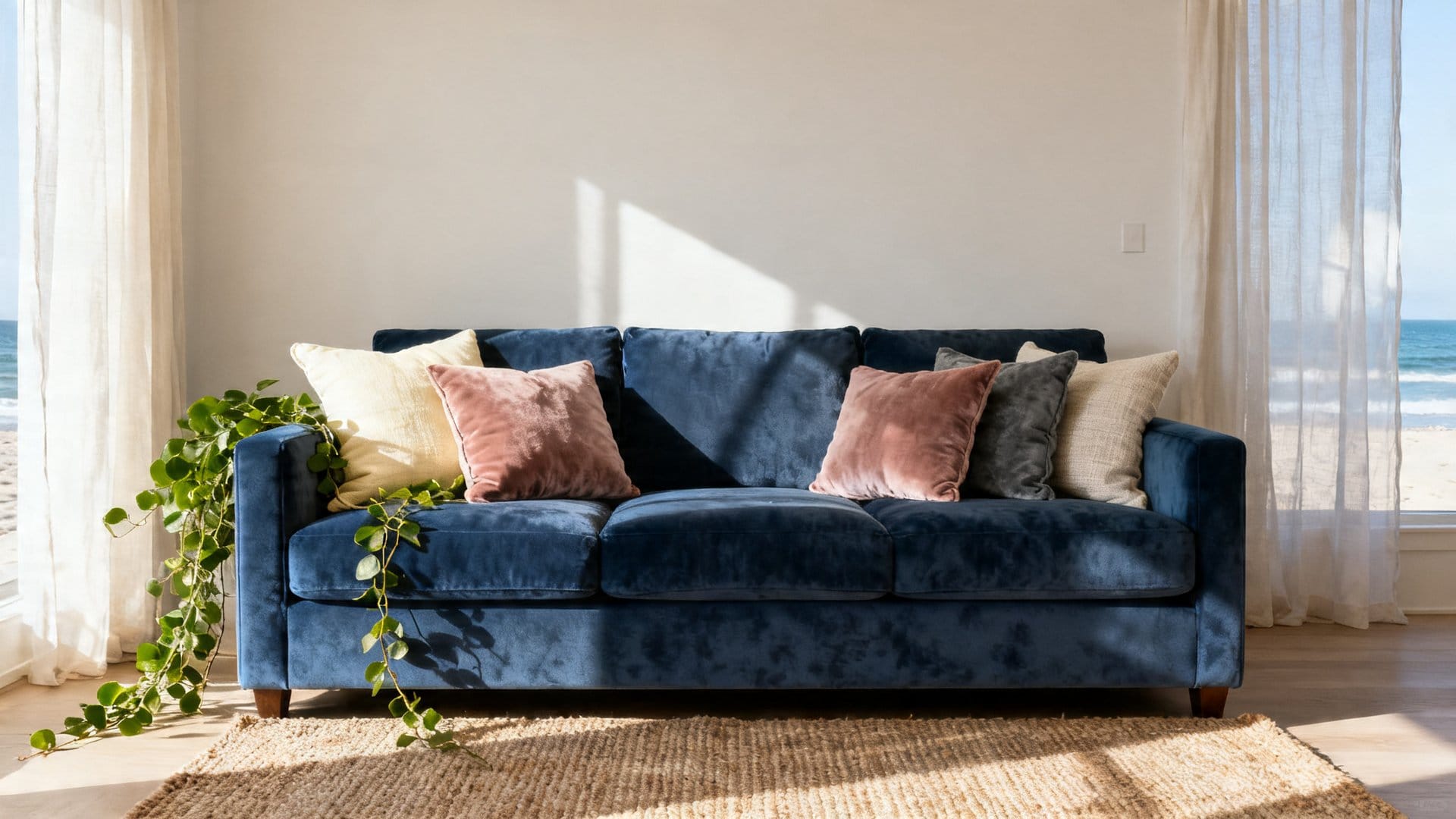 Shop this look: pillows for a blue couch on Amazon · Easy-Going Stretch Couch Covers for Sofa… · WEERRW 4 Pieces Couch Cover for Sofa Velvet…
Blue is one of those rare furniture colors that works in almost every direction. It can lean coastal and breezy, deep and moody, or soft and romantic depending on the shade. Navy, slate, cobalt, dusty blue, and teal each call for slightly different pillow pairings, which is part of what makes styling a blue couch such a satisfying creative exercise.
Leather sofas bring their own energy. Whether yours is a warm caramel, a cool charcoal, or a classic chocolate brown, leather has a natural richness that actually benefits from soft, textured pillow covers. The contrast between a hard, smooth leather frame and a chunky, tactile pillow creates exactly the kind of visual tension that makes a room feel layered and intentional rather than flat.
Why It Works
Leather and fabric have opposing textures, which means they naturally complement each other without much effort. A velvet pillow on a leather sofa, for example, creates a sensory contrast that draws the eye and makes the whole seating area feel more considered. I love how this pairing manages to feel both casual and polished at the same time.
What Color Pairings Bring Out the Best in a Blue Couch?
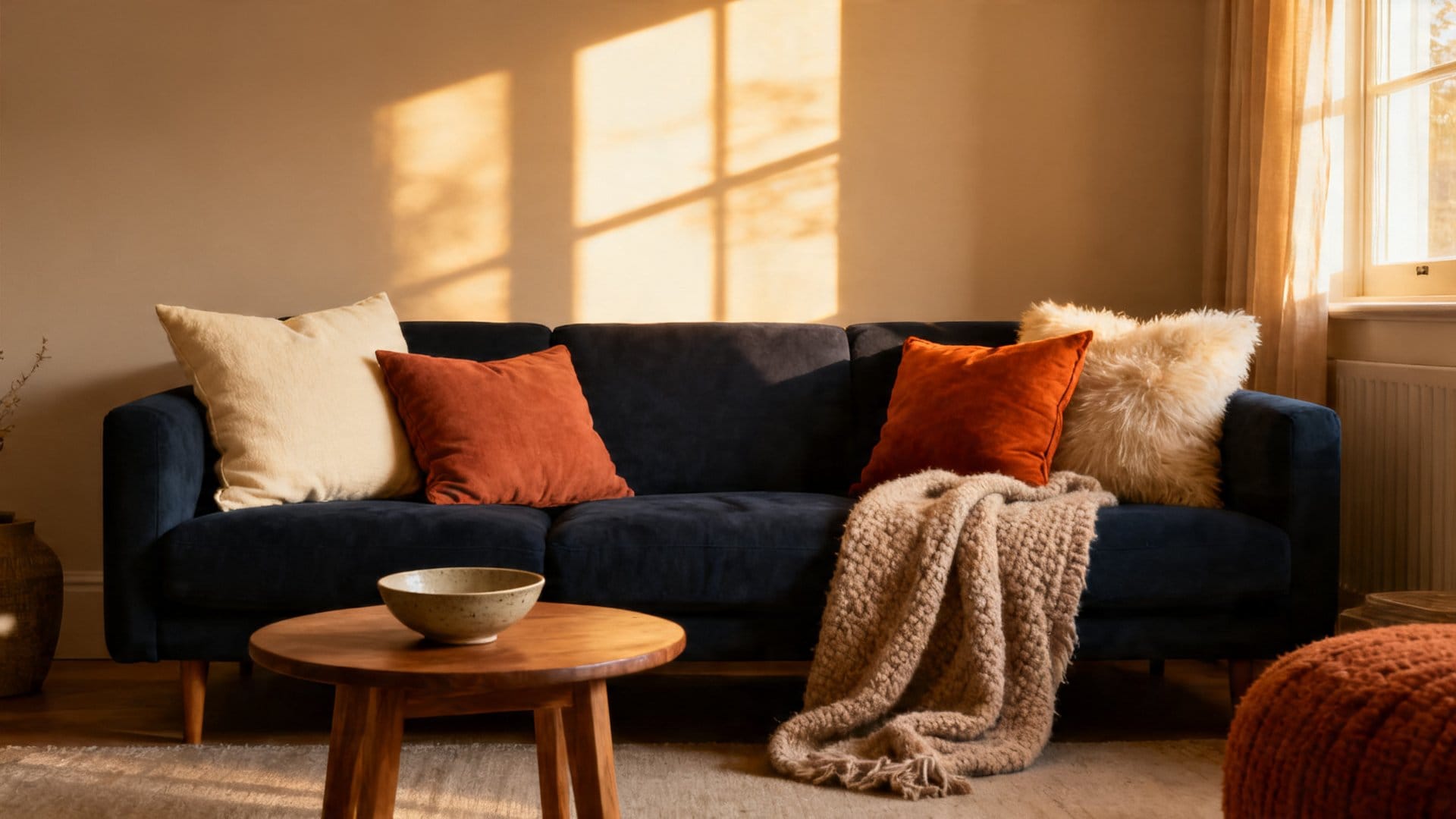
The best color pairings for a blue couch depend on its shade: warm neutrals like cream and sand work beautifully with navy, while blush, sage, and soft gold complement lighter dusty blue sofas. Earthy tones like terracotta and burnt orange are especially satisfying partners for deep blue upholstery.
 Shop this look: pillows for a leather sofa on Amazon
Color is where most people either get it exactly right or second-guess themselves into paralysis. The good news is that blue is genuinely one of the most versatile furniture colors, and it plays well with a wide range of pillow tones.
For a navy or deep blue couch, think about warm neutrals like cream, sand, and warm white. These soften the intensity of the blue without washing it out. Terracotta and burnt orange are unexpected but deeply satisfying partners for navy; the warmth of those earthy tones makes the blue feel richer rather than cold. For a lighter, dusty blue sofa, try blush pink, sage green, or soft gold for a palette that feels airy and collected rather than matchy-matchy.
Pro tip: Pull one accent color from the room, a rug pattern, a piece of artwork, even a plant pot, and repeat it in at least one pillow. This small trick creates visual continuity without requiring you to start from scratch with your whole room palette.
&# 128715; Different couch color?Best Decorative Pillows for Grey Couch→
What Are the Best Textures and Fabrics for Leather Sofa Pillows?
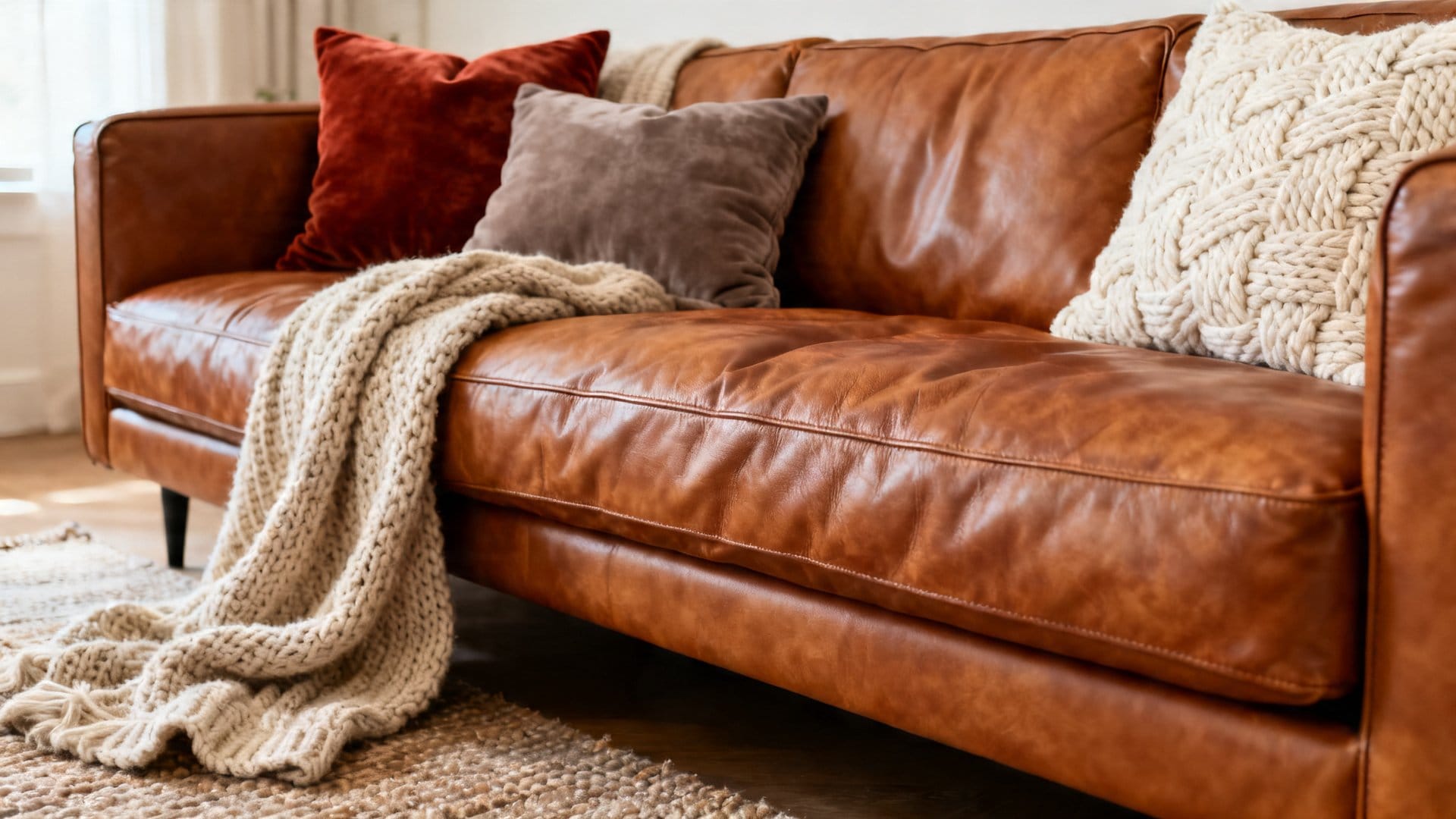
The best fabrics for leather sofa pillows are those that contrast with leather’s smooth surface, velvet, boucle, chunky knit, and linen all create the tactile contrast that makes a leather sofa feel layered and inviting. Choosing at least two different fabric types in your pillow grouping ensures the arrangement feels rich rather than flat.
 Shop this look: neutral pillows on Amazon
One thing I’ve noticed again and again when looking at well-styled leather sofas is that the texture of the pillow cover matters just as much as the color. Smooth fabrics like satin or polished cotton can sometimes look a little lost against leather because they share a similar surface quality. The magic happens when you introduce contrast.
Velvet is probably the single most satisfying fabric choice for leather sofas. It catches light differently throughout the day, shifting from matte to luminous depending on the angle, and the softness against leather is genuinely tactile and inviting. Chunky knit pillow covers add a cozy, handcrafted warmth that instantly softens a hard leather frame. Linen and cotton canvas bring a relaxed, lived-in quality that works especially well in casual or farmhouse-leaning spaces. Boucle. That nubby, looped fabric that has become such a beloved interior staple, adds beautiful visual interest and a soft, cloud-like quality that feels wonderful next to leather.
Materials That Work
Velvet, boucle, and chunky knit are your best allies on a leather sofa because they create the most contrast in texture. Woven jacquard and embroidered linen also work beautifully if you want pattern without stressing the space. From what I’ve gathered, the easiest approach is to choose at least two different fabric types among your pillow grouping so the arrangement feels layered rather than uniform.
How to Style Decorative Pillows on a Blue Couch Like a Pro?
To style decorative pillows on a blue couch like a pro, use the 2-2-1 rule: two large pillows at the outer edges, two medium pillows layered in front, and one lumbar or accent pillow in the center. This creates depth and intention without looking overly staged.
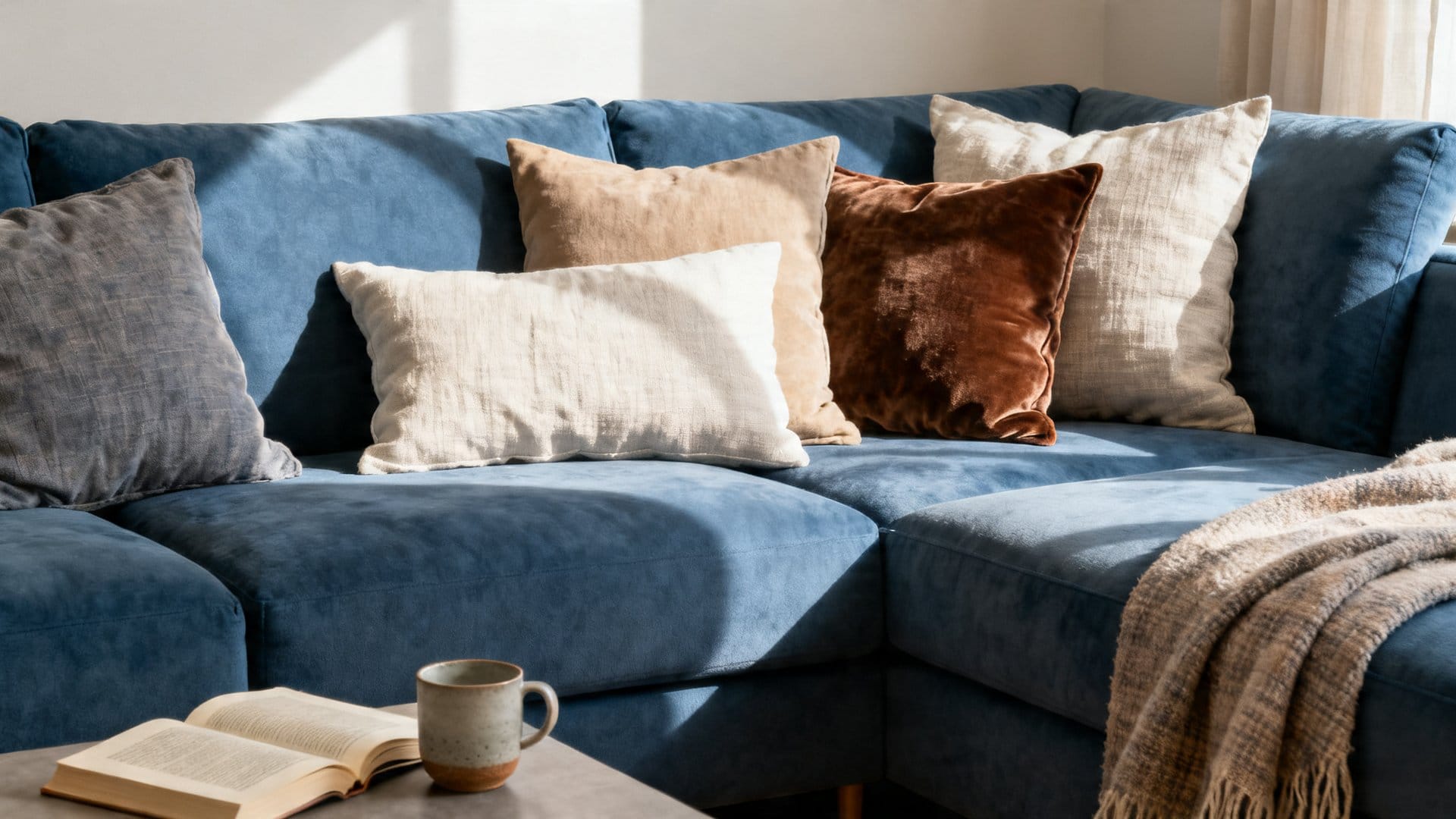 Shop this look: navy pillows on Amazon
Styling pillows on a sofa is one of those things that looks effortless when done well and slightly chaotic when approached without a loose plan. The goal is an arrangement that feels comfortable and inviting, not a showroom display that no one dares to touch.
Pro tip: Odd numbers tend to feel more natural and casual than even arrangements. If your sofa is smaller, a grouping of three pillows, one large, one medium, one lumbar, can be more than enough.
With your textures sorted, the next layer to consider is pattern, and this is where your sofa’s personality really starts to emerge.
&# 127912; Warm-toned sofa?Best Decorative Pillows for a Brown Couch→Which Patterns and Prints Play Well With Blue and Leather?
Geometric prints, subtle stripes, and botanical motifs in complementary tones all play well with blue couches and leather sofas. The key is to mix one or two patterned pillows with solid-colored ones so the arrangement feels balanced rather than busy.
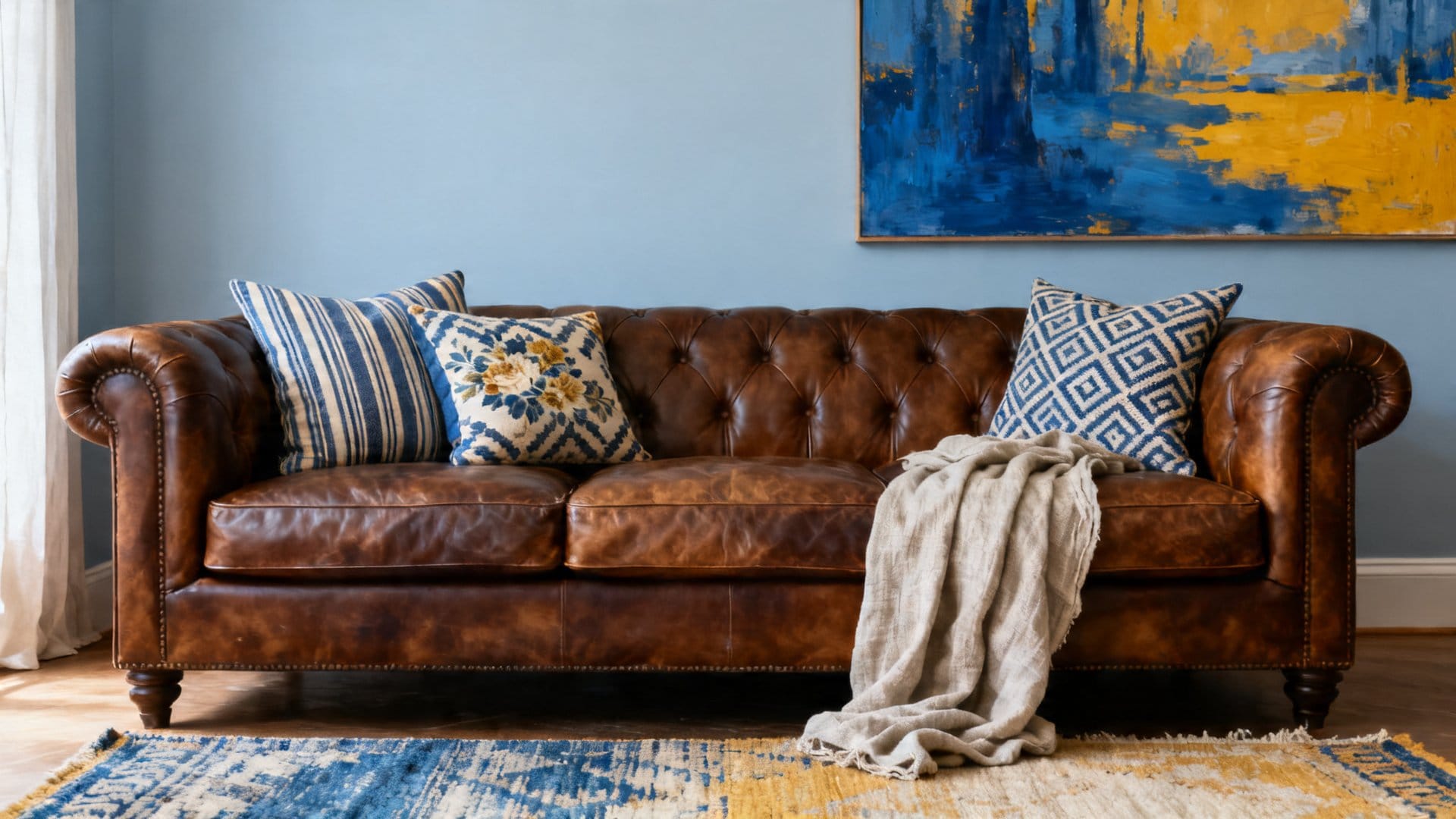 Shop this look: a lumbar pillow on Amazon
Choosing patterns for a blue couch or leather sofa can feel like a high-stakes decision, but it doesn’t have to be. The key is to let the sofa itself be the visual anchor and let the pillows add personality in measured doses.
Color Combinations
- Geometric patterns in cream and navy on a blue couch add structure without competing with the furniture’s color
- Botanical or leaf prints in muted greens and terracotta bring an organic, earthy feel to a leather sofa
- Subtle stripes in warm sand and white work beautifully on both blue couches and leather sofas, especially in coastal or Hamptons-style rooms
- Abstract watercolor-style prints in soft blush or dusty gold add artsy personality without stressing a blue couch
- Moroccan tile-inspired patterns in rust and cream feel especially rich against dark leather or deep navy upholstery
The general principle is to mix one or two patterned pillows with solid-colored ones so the arrangement feels balanced rather than busy. I keep coming back to this approach because it gives you enough visual interest to feel intentional without making the sofa look like it’s trying too hard.
How Do Seasonal Pillow Swaps Keep Your Sofa Feeling Fresh?
Seasonal pillow swaps let you shift the entire mood of a room simply by changing your pillow covers, no furniture rearranging required. Rotating colors and textures with the seasons keeps your blue couch or leather sofa feeling current and intentional all year long.
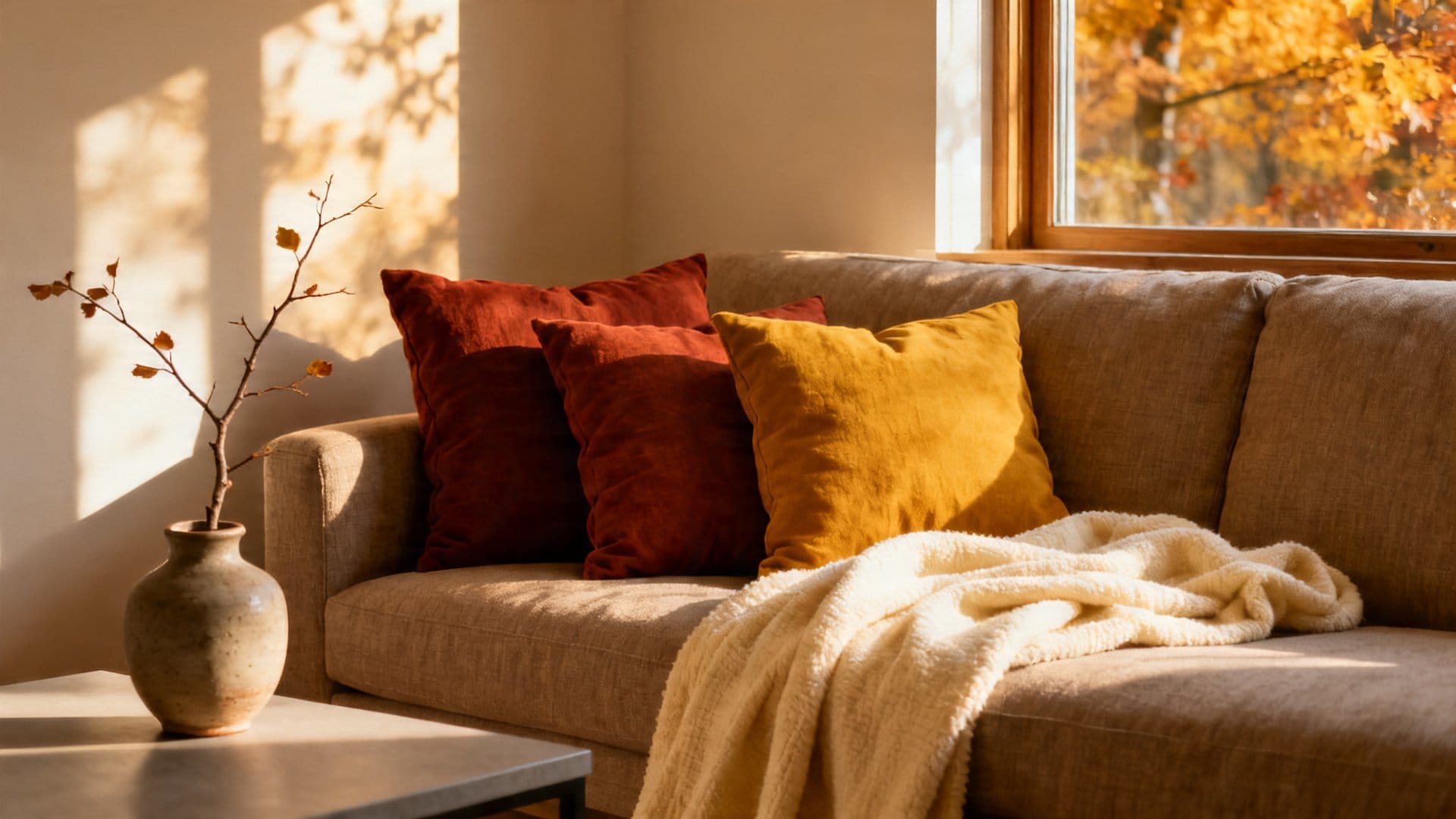
One of the most underrated things about decorative pillows is how easily they let you shift the whole mood of a room with the seasons, without moving a single piece of furniture. Your blue couch or leather sofa stays exactly where it is, but the pillow covers you choose can make it feel like a completely different space.
In fall, swap in pillows in deep rust, warm amber, and forest green. These tones wrap around a blue couch beautifully and make the whole room feel grounded and warm. For winter, think about adding a faux fur or sherpa pillow cover alongside deep jewel tones like emerald or plum; the combination feels genuinely luxurious against leather. Spring calls for lighter linen covers in soft sage, blush, or pale yellow that lift the room without losing the cozy quality you’ve built. Summer is a great time to lean into the blue of your couch with coastal-adjacent accents, sandy neutrals, woven textures, and soft white give the room a breezy, unhurried feel.
Pro tip: Invest in high-quality pillow inserts once and simply swap the covers seasonally. This approach is far more budget-friendly over time and lets you build a small collection of covers that rotate through the year.
Beyond color, texture, and pattern, it is often the smallest finishing choices that separate a well-styled sofa from a truly memorable one.
Which Small Details Make a Big Difference?
The details that make the biggest difference are pillow insert quality, arrangement technique, and the addition of a single lumbar pillow as a finishing accent. These small choices improve a sofa from simply styled to genuinely polished.
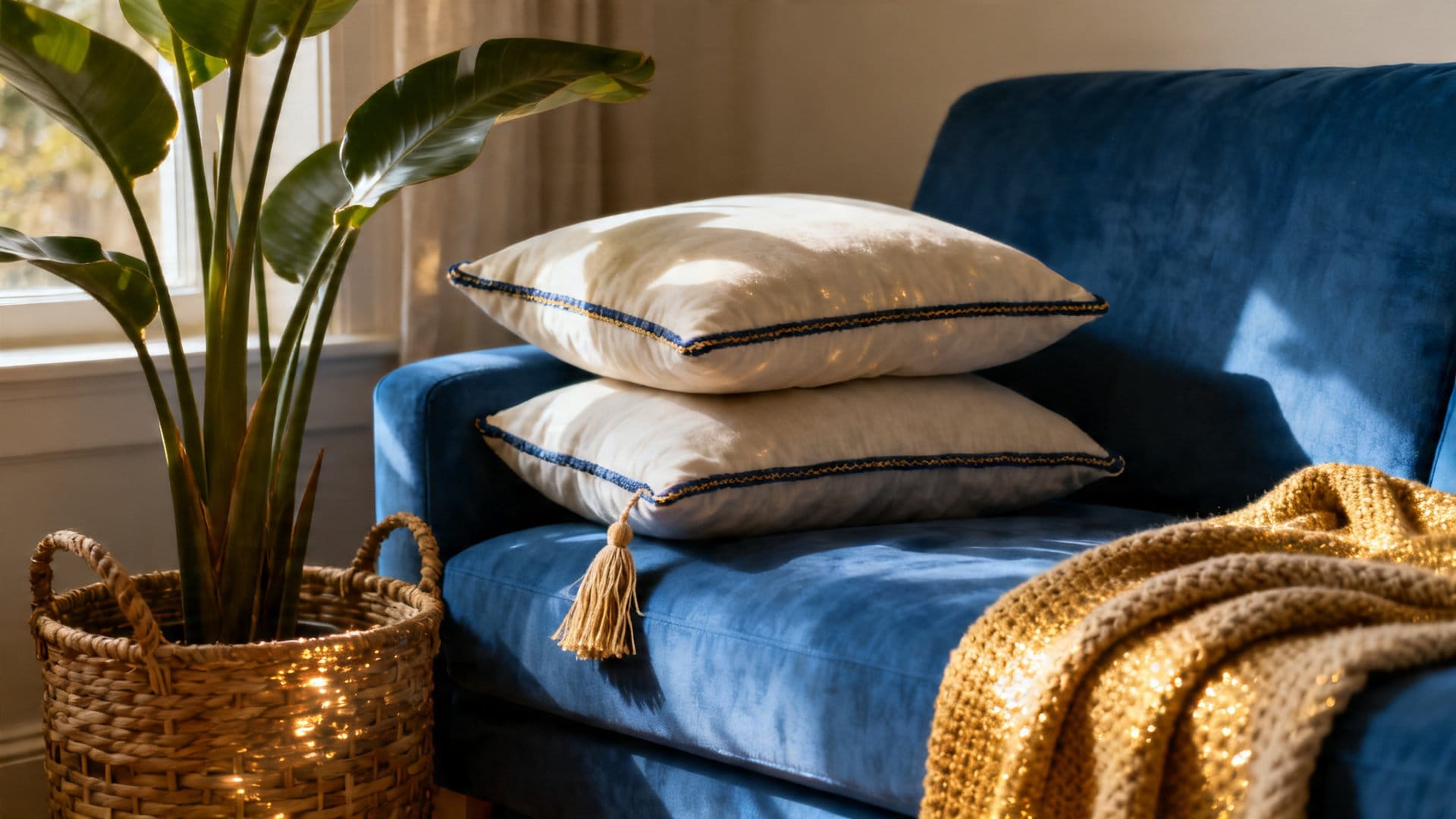
Once you have your colors, textures, and arrangement in place, a few finishing touches can take the whole look from “nice” to genuinely inviting. These are the small details that most people overlook but that seasoned decorators always pay attention to.
Pillow inserts matter more than most people realize. A pillow stuffed with a limp, flat insert looks deflated and sad no matter how beautiful the cover is. Look for down or down-alternative inserts that are slightly larger than the cover, a 20-inch insert in an 18-inch cover creates that full, plump look that photographs beautifully and feels wonderful to lean against. The “karate chop”, a gentle press down the center of a square pillow, is a small styling trick that gives pillows a relaxed, editorial quality without looking too fussy. And don’t underestimate the power of a single lumbar pillow in a contrasting color or texture; it acts like punctuation at the end of a sentence, pulling the whole arrangement together.
Finishing Touches
A light throw draped casually over one arm of the sofa ties the pillow arrangement into the broader room without requiring any additional purchases. Choose a throw in a color that echoes one of your pillow tones, perhaps that terracotta accent or the sage green, and let it drape naturally rather than folding it too neatly. This works especially well in living rooms where you want the space to feel lived-in and genuinely welcoming.
Final Thoughts
Styling a sofa with the right pillows is one of those small, joyful acts of home-making that pays off every single day, every time you walk into the room, every time you settle in with a cup of coffee, every time a guest sinks into the cushions and sighs. The best decorative pillows for blue couch and leather sofas are the ones that reflect your taste, work with your existing room palette, and make you feel genuinely at home every time you sit down. Trust your instincts, mix your textures, and don’t be afraid to try an unexpected color combination. Your sofa is a beautiful canvas, and you already have everything you need to make it shine. Happy decorating!
Frequently Asked Questions
Blue couches pair beautifully with a wide range of pillow colors, including warm neutrals like cream, ivory, and camel, which create a balanced contrast without competing with the sofa. Depending on the shade of blue, you can also layer in mustard yellow, terracotta, blush pink, or soft white for a rich yet cohesive look. Deep navy couches tend to welcome richer, jewel-toned accents, while lighter dusty or powder blue sofas shine alongside softer, more muted palettes.
For a standard two-seat leather sofa, two to four pillows is generally the sweet spot, providing visual interest without making the seating feel cluttered or impractical. A three-seat or larger leather sofa can comfortably accommodate four to six pillows, especially when mixed in different sizes such as 20×20 squares paired with a lumbar pillow. The key is to leave enough visible sofa surface so the leather itself remains a featured element of the design.
Leather has a naturally smooth and sleek surface, so introducing contrasting textures through decorative pillows adds warmth and visual depth to the overall look. Great choices include chunky knit covers, velvet, linen, faux fur, and woven cotton, all of which soften the stiffness that leather can sometimes project. Mixing two or three different textures across your pillow arrangement creates a layered, lived-in feel that makes a leather sofa look both stylish and inviting.
Yes, mixing patterns is not only allowed but encouraged, as long as you follow a few simple guidelines to keep the arrangement from looking chaotic. The most reliable approach is to vary the scale of your patterns, for example, pairing a large geometric print with a smaller floral or a subtle stripe, while keeping them within a shared color family. Anchoring your mix with at least one solid-colored pillow gives the eye a place to rest and ties the varied patterns together harmoniously.
While most pillow materials work fine on leather sofas, very rough or heavily embellished covers, such as those with sharp beading, sequins, or coarse burlap, can scratch or scuff the leather surface over time with regular use. It is also worth being cautious with very dark pillow dyes on light-colored leather, as some fabric dyes can transfer onto the sofa surface, particularly in warm or humid conditions. Opting for pillow inserts with a high-quality down or down-alternative fill is also recommended, as they hold their shape better and look more polished against the clean lines of leather furniture.