
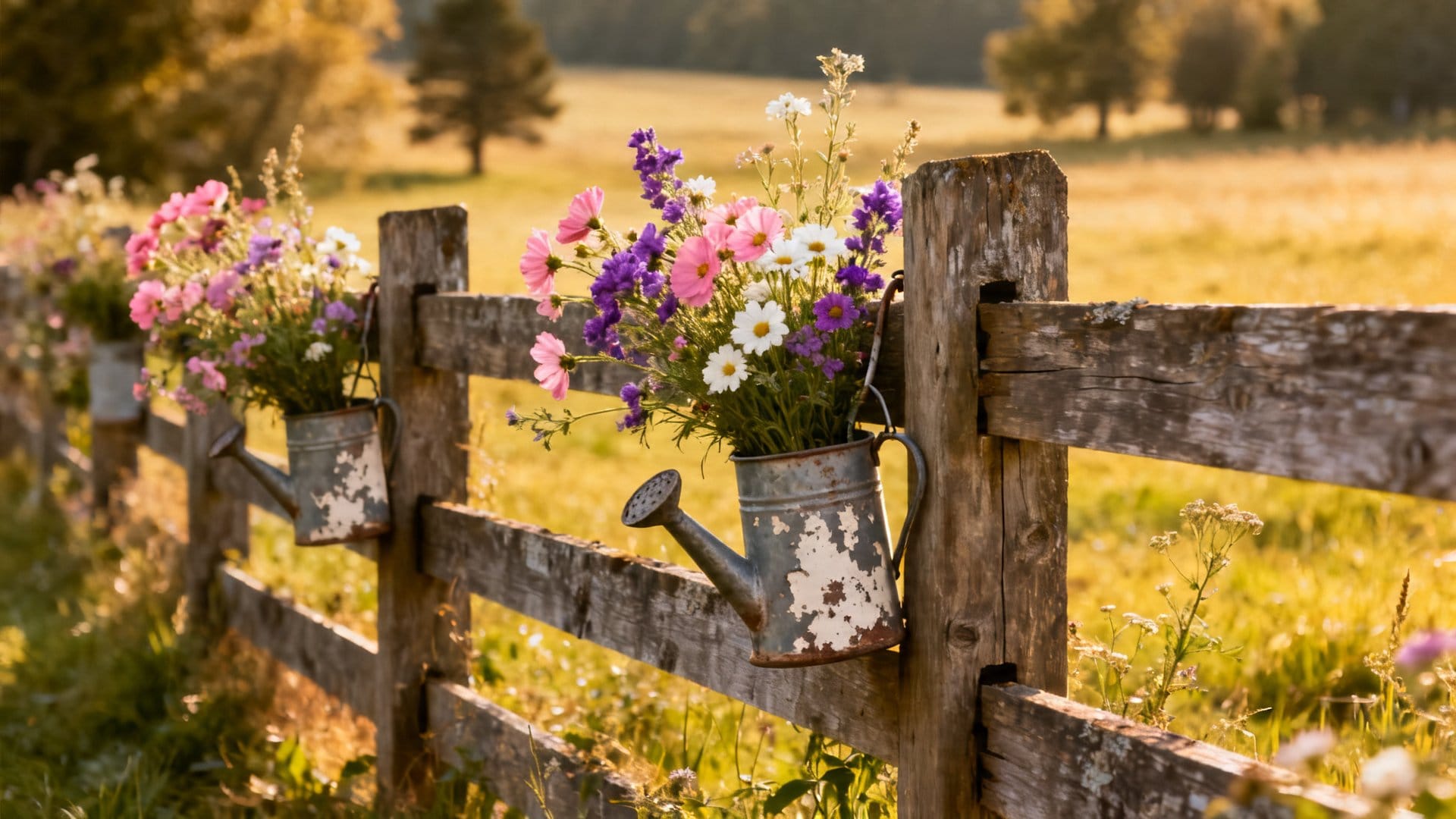
There’s something about stepping into a yard that feels genuinely lived-in and loved. A weathered wooden bench sits beneath a climbing rose, a cluster of mismatched terra cotta pots lines a sun-warmed path, and suddenly you want to slow down and stay a while. That feeling doesn’t happen by accident, but it also doesn’t require a designer’s eye or a big budget. Country garden decor is all about layering simple, heartfelt touches that feel rooted in real life rather than a catalog page. In this article, you’ll find ideas for bringing that down-home charm to every corner of your yard, whether you’re working with a sprawling backyard or a modest front stoop.
&# 128218; Start here:Our complete guide to garden decor→What Makes Country Garden Decor Feel So Inviting
Country garden decor has a specific kind of warmth that’s hard to pin down but instantly recognizable. It leans into imperfection. Think of the chipped paint on an old gate, the slightly uneven row of sunflowers, and the hand-painted sign that’s seen a few seasons of rain. That lived-in quality is what separates a country garden from a perfectly staged outdoor space.
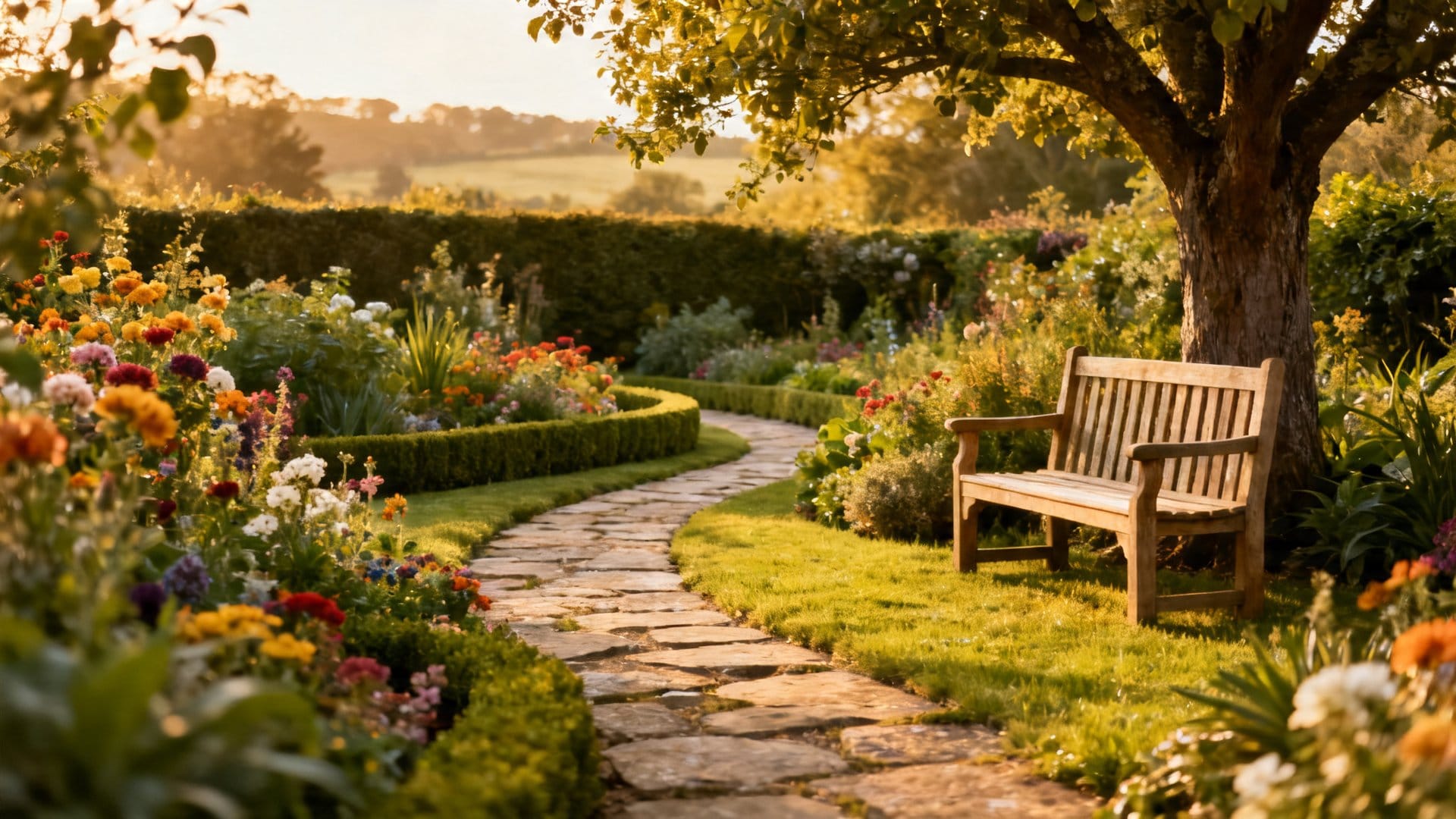
One thing I’ve noticed is that the most inviting country-style yards tend to mix textures freely. You’ll see rough-hewn wood alongside smooth river stones, and wrought iron next to soft cotton bunting. The combination creates visual interest without feeling fussy. It’s approachable and real, which is exactly the mood you’re going for. If you’re drawn to that same easygoing feel indoors, the cottage interior look carries the spirit straight through the front door.
Why It Works
Country garden style works because it mirrors the natural world. Nothing in nature is perfectly symmetrical or color-matched, and our eyes actually relax when we see that reflected in a garden space. Leaning into organic shapes, aged finishes, and natural rustic materials gives your yard an authenticity that polished, trend-driven decor often lacks.
What Anchor Pieces Set the Tone for a Country Garden?
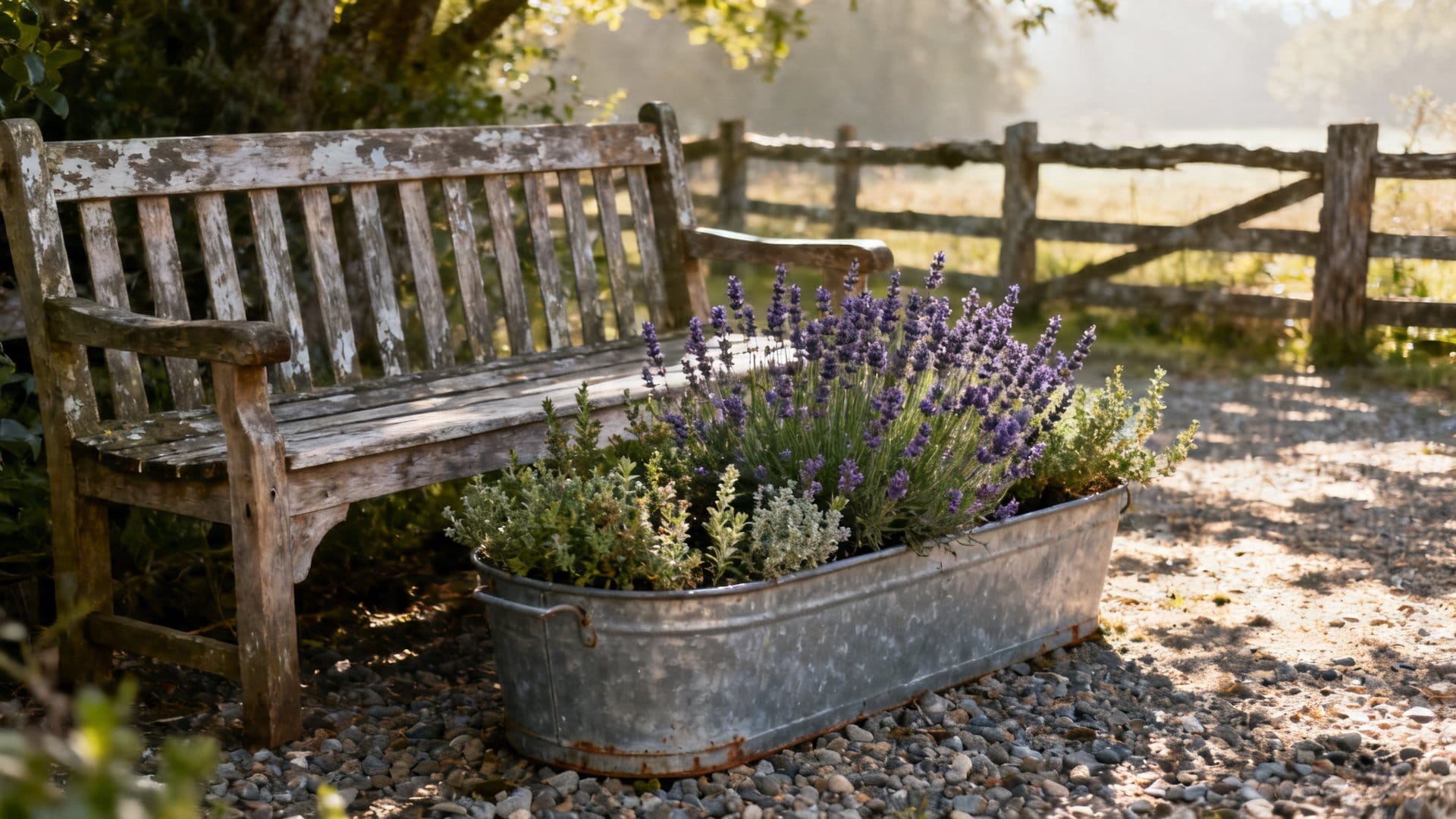
Anchor pieces are the larger, mood-setting elements that define your country garden’s character at a glance. A distressed wooden bench, a vintage watering can used as a planter, or a repurposed ladder draped with trailing vines can each establish the entire aesthetic on their own.
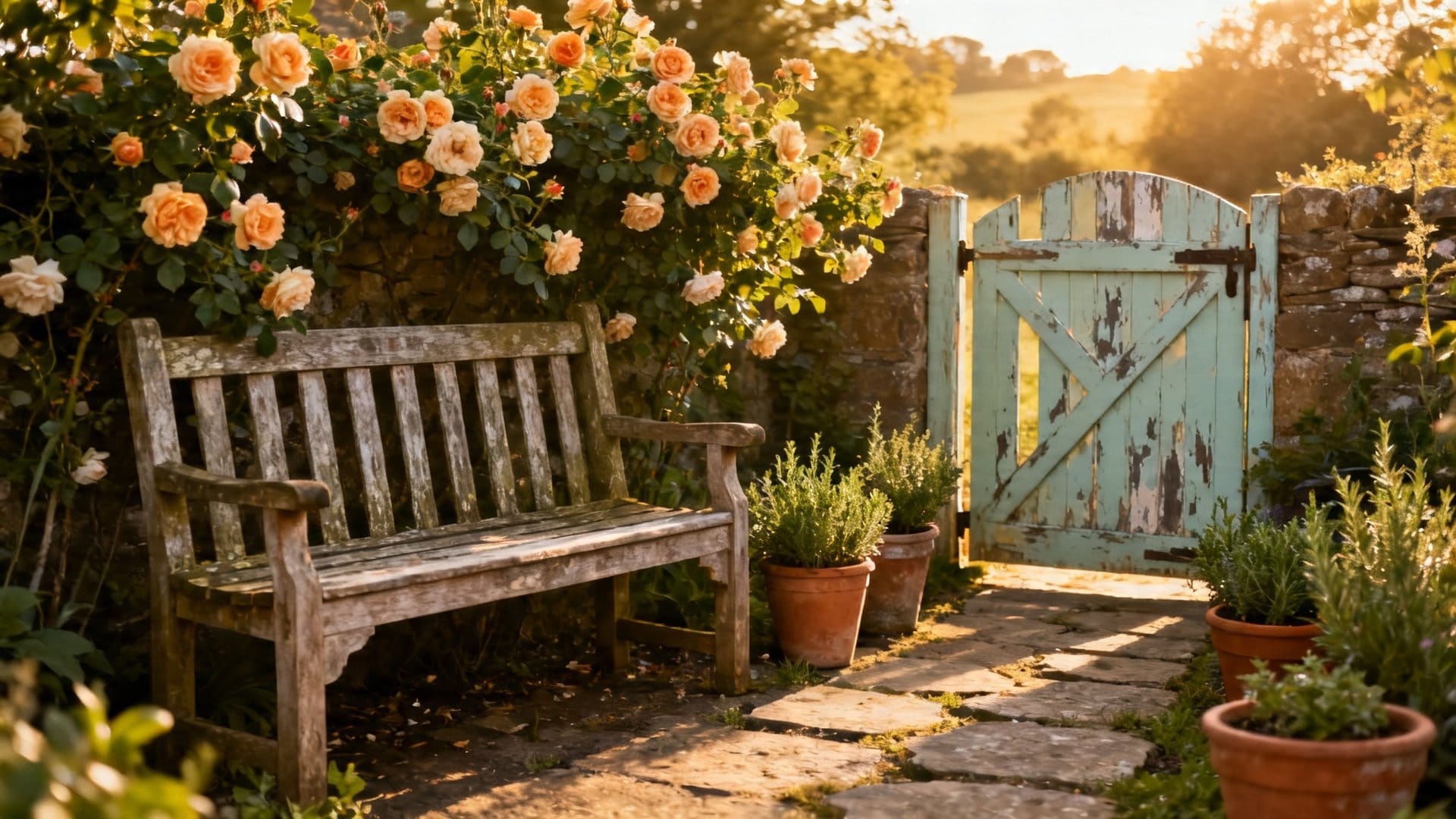
Every well-styled country garden has a few anchor pieces. These are the larger elements that establish the mood before you even notice the smaller details. Think of them as the bones of your outdoor space. A classic wooden bench with a slightly distressed finish, a vintage-style watering can used as a planter, or a repurposed ladder leaning against the fence draped with trailing vines can all serve this purpose beautifully.
I love how a single well-chosen piece can do the heavy lifting for an entire yard. A large galvanized metal trough planted with lavender and trailing herbs is a staple of farmhouse garden decor, and it instantly signals “country garden” without any additional styling. Place it near your front gate or along a garden path where it greets visitors before anything else catches their eye. Pair it with a simple wooden sign, even a rough-cut board with painted letters, and you’ve established an entire aesthetic in just two elements.
Pro tip: Look for anchor pieces at estate sales, farm auctions, and flea markets rather than big-box stores. A genuinely aged piece with real wear and history will anchor your space far more convincingly than a brand-new item designed to look old.
How Do You Plant for Country Garden Charm?
Planting for country garden charm means choosing abundant, slightly wild-looking plants and letting them grow with minimal interference. Cottage perennials like hollyhocks, black-eyed Susans, and climbing roses mixed with herbs create that effortlessly lush, lived-in look the style is known for.
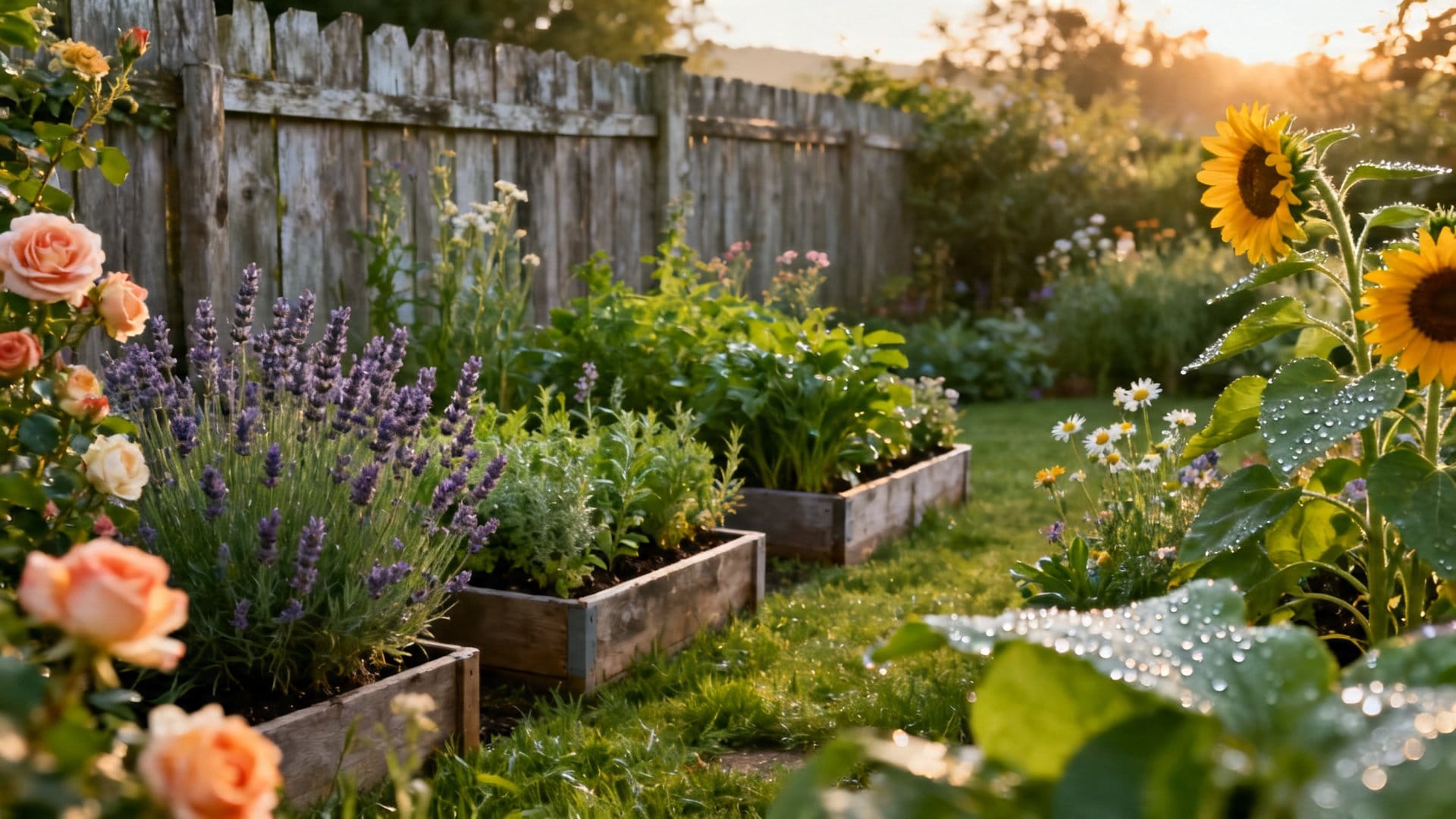
The plants you choose are just as much a part of your decor as any physical object you place in the yard. Country gardens lean toward abundance, the kind of planting that looks like it’s been growing happily for years without too much interference. This is genuinely good news if you’re not a master gardener, because “a little wild” is actually the goal.
Cottage-style perennials are your best friends here. Think hollyhocks growing tall along a fence line, black-eyed Susans spilling over a pathway edge, and climbing roses winding up a trellis or arbor. Herbs like rosemary, thyme, and lavender do double duty, since they look beautiful and fill the air with scent on warm afternoons. Mixing edible plants with ornamental ones is deeply in the spirit of country garden decor, and it gives your yard a sense of purpose beyond pure aesthetics.
Layout Ideas
Rather than planting in rigid rows, try clustering plants in loose groupings of three or five. Odd numbers feel more natural and less formal. Let taller plants drift toward the back of a bed, but don’t be too strict about it. A single tall foxglove poking up unexpectedly among shorter plants has its own kind of charm. Repeat two or three plant varieties throughout the garden to create visual cohesion without stiffness. A few playful, whimsical touches tucked among the beds keep the whole thing feeling joyful rather than rigid.
With your plants and anchor pieces working together, it’s time to turn your attention to the smaller touches that give a country garden its true personality.
What Charming Details Make the Biggest Difference?
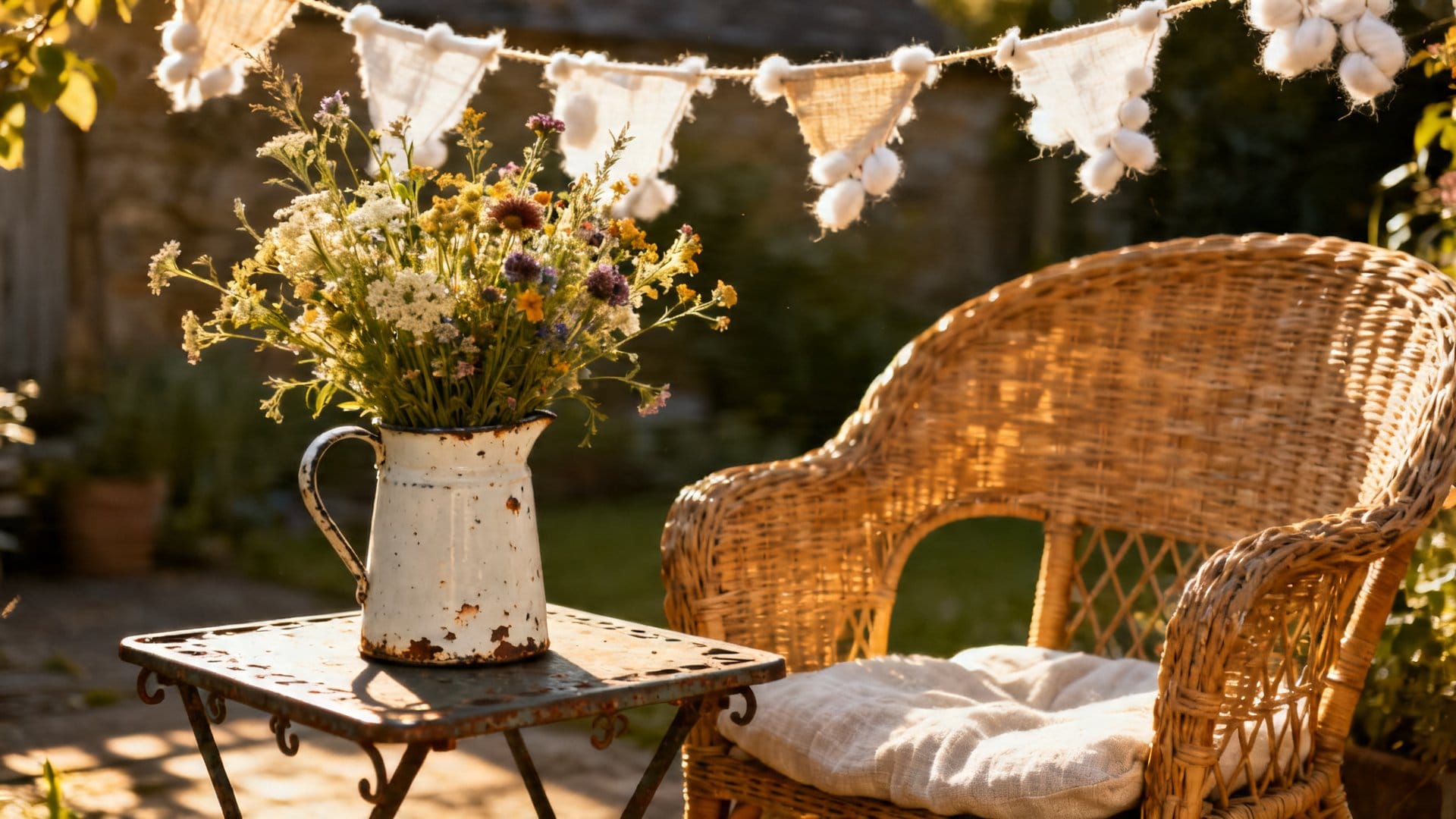
Small, layered details are what give a country garden its personality and depth. Items like vintage lanterns, birdhouses in chalky tones, mismatched terra cotta pots, and simple cotton twine strung between fence posts add character without requiring a large investment.
Once your anchor pieces and plantings are in place, the smaller details are where the real personality comes through. This is the part of country garden decor that I keep coming back to, because it’s endlessly customizable and surprisingly affordable.
Finishing Touches Worth Trying
- Hang a vintage-style lantern from a shepherd’s hook near the garden gate to add warm light at dusk and a focal point during the day
- Tuck a small birdhouse or two into the garden bed, painted in faded, chalky tones like sage green or barn red for a genuinely rustic feel
- Use old wooden crates stacked at different heights as a display shelf for potted herbs or trailing succulents near a porch or fence
- String simple cotton twine between fence posts and clip seed packets, dried herb bundles, or small handmade flags for a soft, textile element
- Place a stone birdbath in a slightly unexpected spot, tucked among tall grasses rather than centered on a lawn, for an organic, discovered-by-chance feeling
- Layer mismatched terra cotta pots of varying heights along steps or a garden wall, letting them spill over with different plants for an effortlessly collected look
None of these details cost much individually, but together they build a layered, story-rich yard that feels like it has years of love behind it. A little vintage garden charm goes a long way here, since those weathered, secondhand finds are exactly what give the look its soul.
How Do Fencing, Gates, and Garden Structures Add Country Style?
In a country garden, structural elements like fences, gates, and arbors serve as both functional boundaries and decorative backdrops. They define zones, support climbing plants, and create a sense of arrival that makes the space feel intentional and inviting.
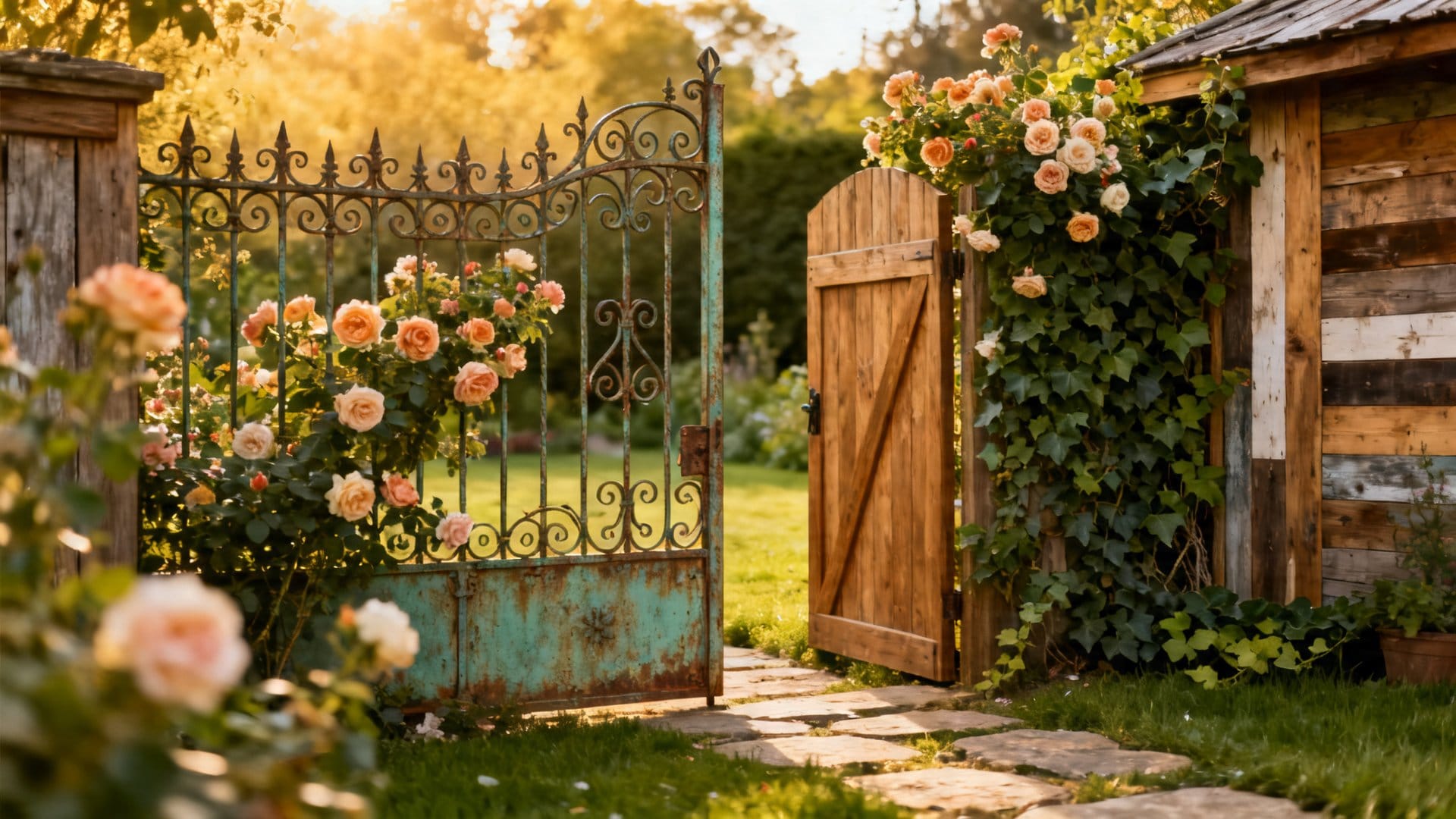
In a country garden, the structural elements like fences, gates, arbors, and trellises aren’t just functional. They’re part of the decor. A simple picket fence painted in a creamy white or left to weather naturally becomes a backdrop for climbing plants and hanging details. A wooden arbor draped in wisteria or climbing hydrangea creates a sense of entry and arrival that feels genuinely magical on a summer morning.
A friend of mine added a simple arched gate to her yard. It was nothing elaborate, just painted wood with a simple latch, yet it completely changed the feeling of approaching her front garden. Suddenly there was a sense of threshold, of entering somewhere special. That’s the power of garden structures in country-style spaces. They define zones, create intimacy, and give climbing plants a purpose. Even a short section of post-and-rail fencing along a path can frame your garden and give it a sense of intention without feeling formal.
Pro tip: If you want the look of aged wood without waiting years for weathering, look for reclaimed lumber at salvage yards or architectural antique shops. The real thing always looks better than faux-distressed new wood, and it often costs less than you’d expect.
&# 10024; You might also love:Cottage garden ideas with English countryside charm→
How Do You Bring Country Charm to Small Spaces and Front Yards?
You don’t need a large yard to achieve country garden decor. The key is thinking vertically and layering thoughtfully within a compact footprint. Even a single window box, a wooden sign, and a pair of mismatched pots can carry the full spirit of the style.
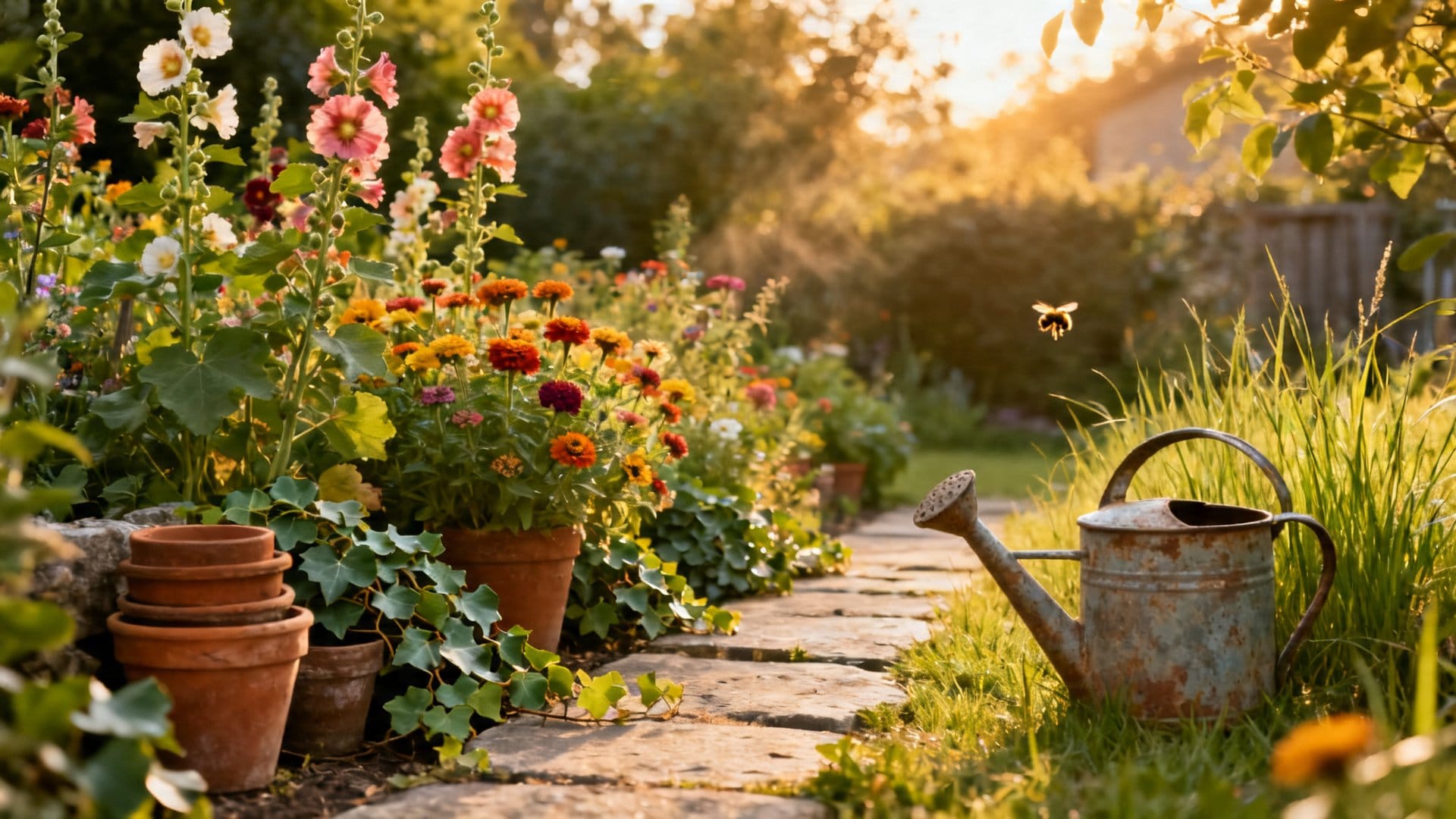
You don’t need a rambling half-acre to pull off country garden decor. Some of the most charming examples I’ve seen exist in small front yards, narrow side passages, and compact urban gardens. The key is to think vertically and layer thoughtfully rather than spreading things out horizontally.
A single window box overflowing with trailing petunias, herbs, and a pop of bright zinnias can carry the entire spirit of a country garden in just a few square feet. Pair it with a simple wooden sign on the front door, a small wreath made from dried lavender or wheat stalks, and a pair of mismatched terra cotta pots flanking the entrance. That’s all it takes. This works especially well in townhomes and older craftsman-style houses, where the architecture already lends itself to a cottage-garden feeling.
For a side yard or narrow passage, consider a vertical herb garden made from a repurposed wooden pallet or a series of wall-mounted planters. Add a simple hanging lantern overhead and a small bistro chair tucked into a corner, and you’ve created a genuine garden nook. It’s a tiny retreat that feels miles away from the busy world.
Beyond the fixed elements and plantings, one of the greatest strengths of country garden style is how gracefully it adapts as the year unfolds.
How Do You Use Seasonal Layering to Keep the Charm Year-Round?
Seasonal layering means keeping your permanent base elements in place and swapping in simple, season-appropriate touches on top. This approach lets your country garden feel fresh and alive in every season without requiring a full redesign.
One of the most rewarding things about country garden decor is how naturally it shifts with the seasons. The base elements like your wooden structures, stone paths, iron lanterns, and established plantings stay in place year-round, and you simply layer seasonal touches on top.
In spring, add fresh bundles of pussy willow branches in a galvanized bucket by the gate. In summer, let the garden go a little wild with tall dahlias and sunflowers filling every gap. As fall arrives, swap in dried corn stalks, millet sprays, and clusters of ornamental gourds in unexpected spots. Try not just by the door, but tucked into garden beds and hanging from fence posts. In winter, bare branches wrapped in simple twinkle lights and a wreath made from cedar boughs and dried orange slices keep the space alive and welcoming even when nothing is blooming.
Pro tip: Keep a small collection of weather-resistant decor pieces like a galvanized tub, a few iron hooks, and some wooden crates that can be reused and re-styled season after season. Building a flexible base means seasonal updates stay easy and affordable.
Final Thoughts
Country garden decor is one of those rare decorating approaches that rewards imperfection, celebrates history, and grows more beautiful with time, which makes it a perfect fit for real yards and real lives. Whether you’re starting from scratch or simply refreshing a space that’s lost a little of its spark, the down-home charm at the heart of this style is always within reach. Trust your instincts, collect pieces that genuinely speak to you, and let your yard tell its own story one season at a time. Happy decorating!
Frequently Asked Questions
Country garden decor is a relaxed, heartfelt approach to outdoor decorating that embraces imperfection, natural materials, and a lived-in aesthetic rather than polished, catalog-perfect design. It typically features elements like weathered wood, mismatched terra cotta pots, climbing roses, hand-painted signs, and vintage or repurposed items that give a yard a warm, personal character. Unlike formal or contemporary garden styles, country garden decor prioritizes charm and authenticity over symmetry and precision.
Not at all, country garden decor is one of the most accessible and budget-friendly styles you can pursue, since it actually celebrates imperfect, secondhand, and repurposed items rather than expensive new purchases. Even a modest front stoop or small patio can be refreshed with a few well-chosen touches like a cluster of mismatched pots, a vintage watering can, or a simple wooden bench. Thrift stores, flea markets, and even your own garage can be great sources for the kinds of weathered, character-rich pieces that make this style feel authentic.
Country gardens tend to favor plants that feel natural, abundant, and a little wild rather than rigidly manicured, with popular choices including sunflowers, lavender, climbing roses, hollyhocks, black-eyed Susans, and cottage-style herbs like thyme and sage. These plants thrive with relatively low maintenance and contribute to that effortlessly lush, overgrown-in-the-best-way aesthetic that defines the country garden style. Mixing edible plants like vegetables and herbs alongside flowers also adds to the down-home, practical charm that makes country gardens feel genuinely lived in.
Some of the simplest DIY projects include painting old wooden crates or pallets to use as planters, repurposing vintage kitchenware like colanders or enamel buckets as flower pots, and creating hand-lettered signs using reclaimed wood. You can also string up weathered lanterns or mason jar lights along a fence or pergola to add a warm, rustic glow in the evenings. The beauty of DIY country garden decor is that slight imperfections in your craftsmanship actually enhance the charm rather than detract from it.
The key to striking the right balance is layering your decor thoughtfully, grouping items together in clusters, repeating certain colors or materials throughout the space, and ensuring that even your most ‘worn’ pieces are clean and structurally sound rather than truly falling apart. A weathered pot is charming; a cracked, crumbling one can tip the look into neglect, so it’s worth doing a seasonal walkthrough to assess what’s adding character versus what needs to be replaced. Keeping pathways clear, maintaining your plants with basic pruning and deadheading, and anchoring the space with a few larger focal points like a bench or a trellis will help the overall design feel select and intentional.