
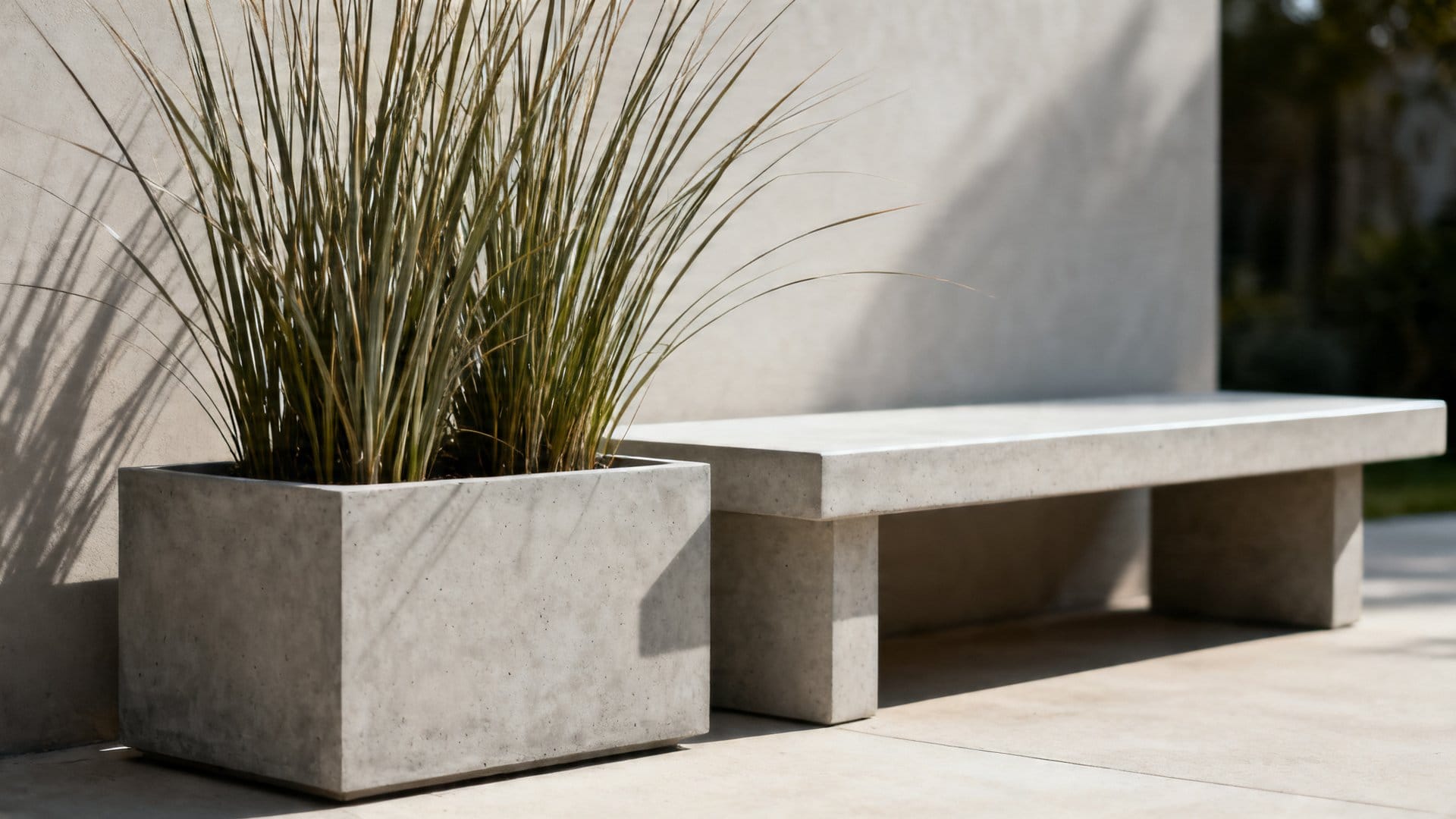
There’s something quietly thrilling about stepping into a backyard that feels intentional, where every stone, plant, and seat seems to belong exactly where it is. If you’ve been dreaming about refreshing your outdoor space with a cleaner, more polished look, modern garden decor might be exactly the direction your yard has been waiting for. This article walks you through sleek contemporary outdoor design ideas that are surprisingly approachable, even if your space is small or your budget is modest. You don’t need a space architect or a total overhaul, just a clear vision and a few smart choices.
What Makes a Garden Feel Truly Contemporary?
A garden feels truly contemporary when every element is chosen with intention, fewer pieces, placed thoughtfully, with clean lines and a restrained palette. The defining quality is editing: removing what doesn’t serve the space so that what remains can breathe.
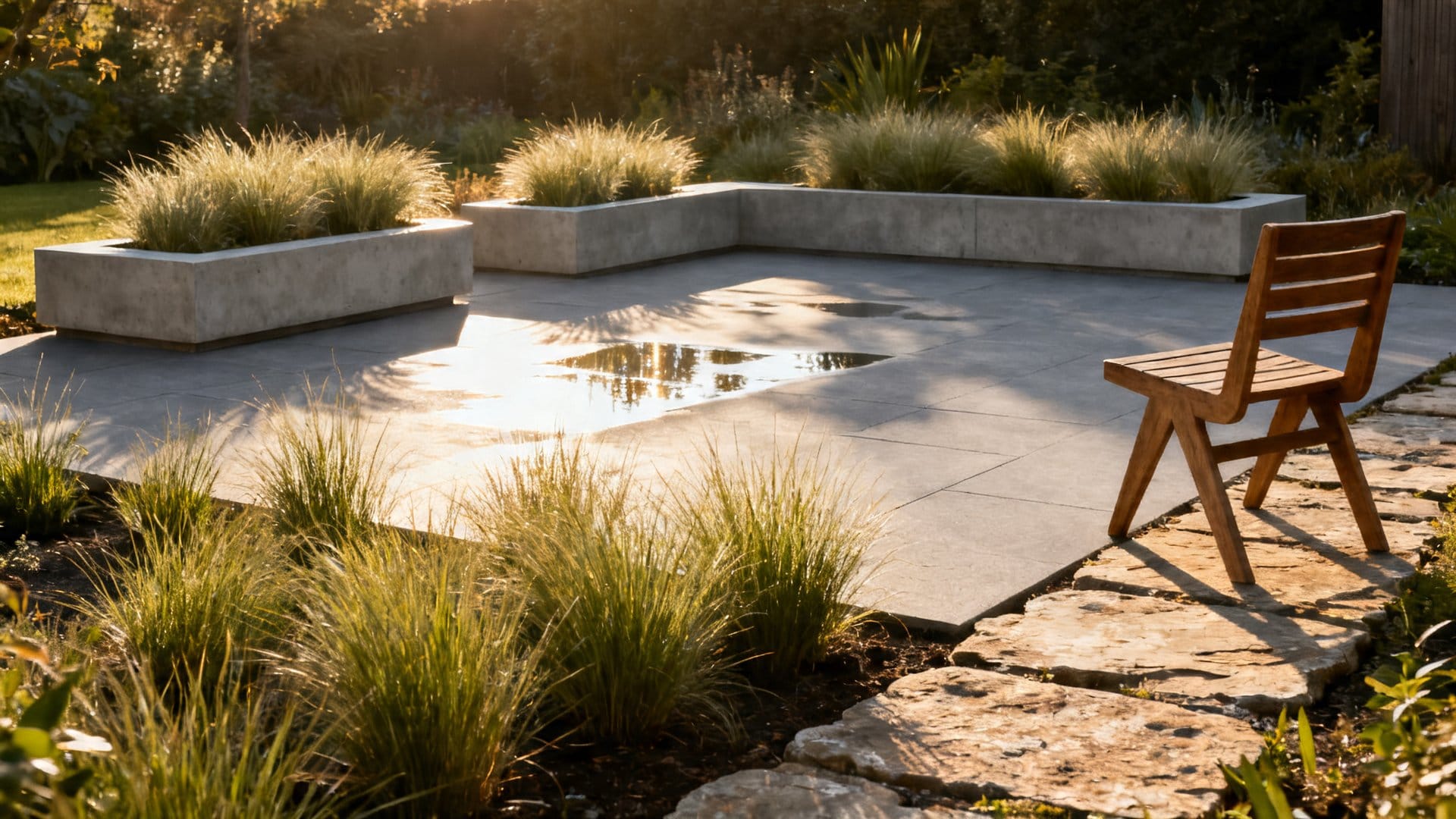
Contemporary outdoor design isn’t about making your yard look cold or minimalist to the point of feeling empty. It’s about intention, choosing fewer elements, but choosing them well. The difference between a cluttered garden and a modern one often comes down to editing: removing what doesn’t serve the space and letting the pieces that remain breathe.
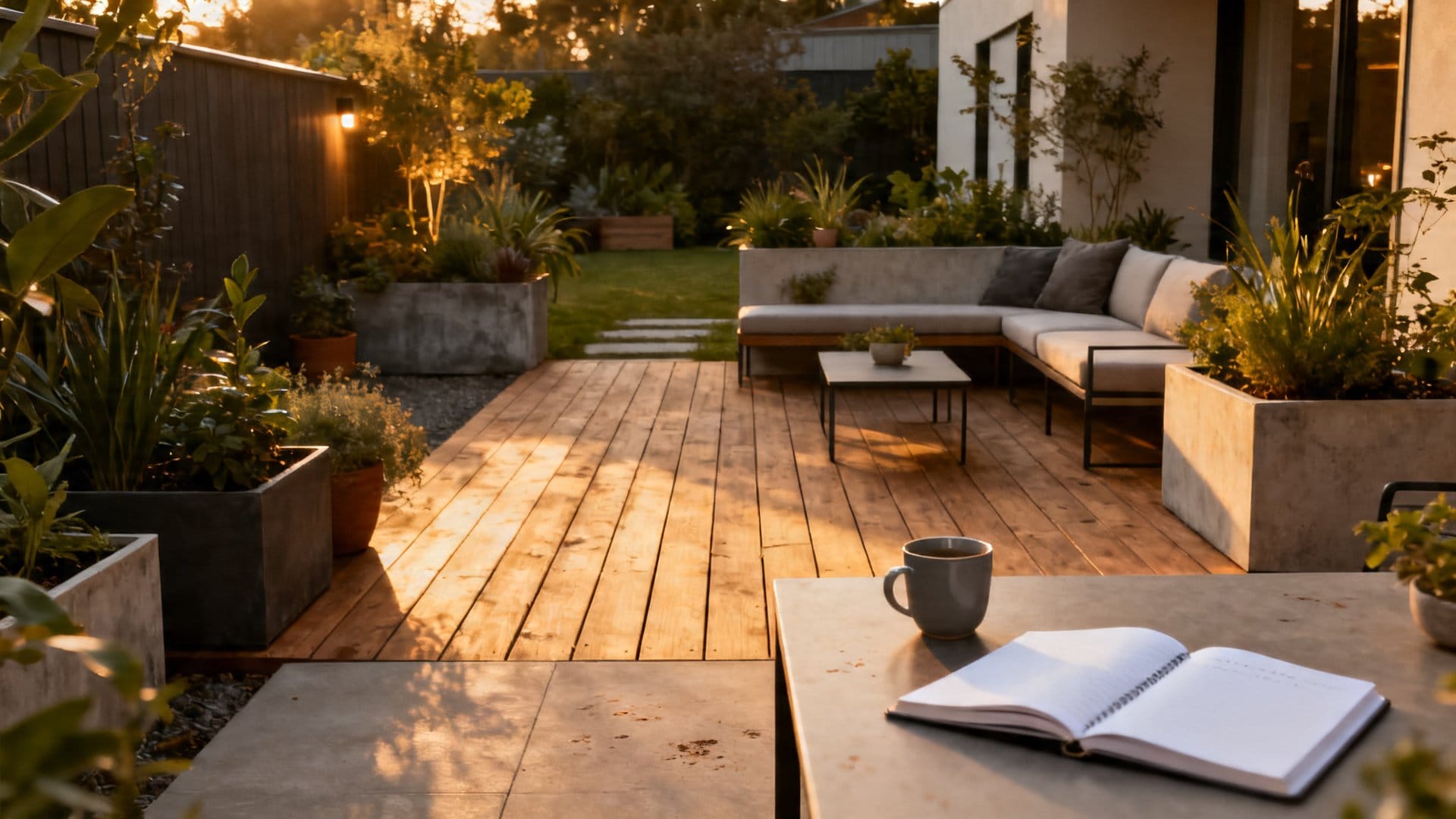
I love how a well-placed concrete planter or a single architectural plant like a tall ornamental grass can do more for a yard’s personality than a dozen mismatched pots ever could. The contemporary style leans into natural materials, stone, wood, metal, but pairs them with clean geometry and a restrained color palette. Think charcoal, warm white, muted sage, and natural wood tones working together rather than competing.
Design Details
One of the most defining features of contemporary garden design is the use of strong horizontal lines, low-profile furniture, flat-topped hedges, and wide stone pavers that draw the eye outward and make even a modest yard feel expansive. Pair these with vertical interest from tall grasses or slim-trunked trees, and you’ve got a composition that feels balanced without being stiff. Once you nail that sense of editing, the rest of your modern garden decor choices fall into place naturally.
Which Materials Work Best for Contemporary Outdoor Spaces?
The best materials for contemporary outdoor spaces are concrete, natural stone, corten steel, and powder-coated metal, all of which offer clean aesthetics and strong durability. Limiting your selection to three materials keeps the space cohesive and avoids visual clutter.
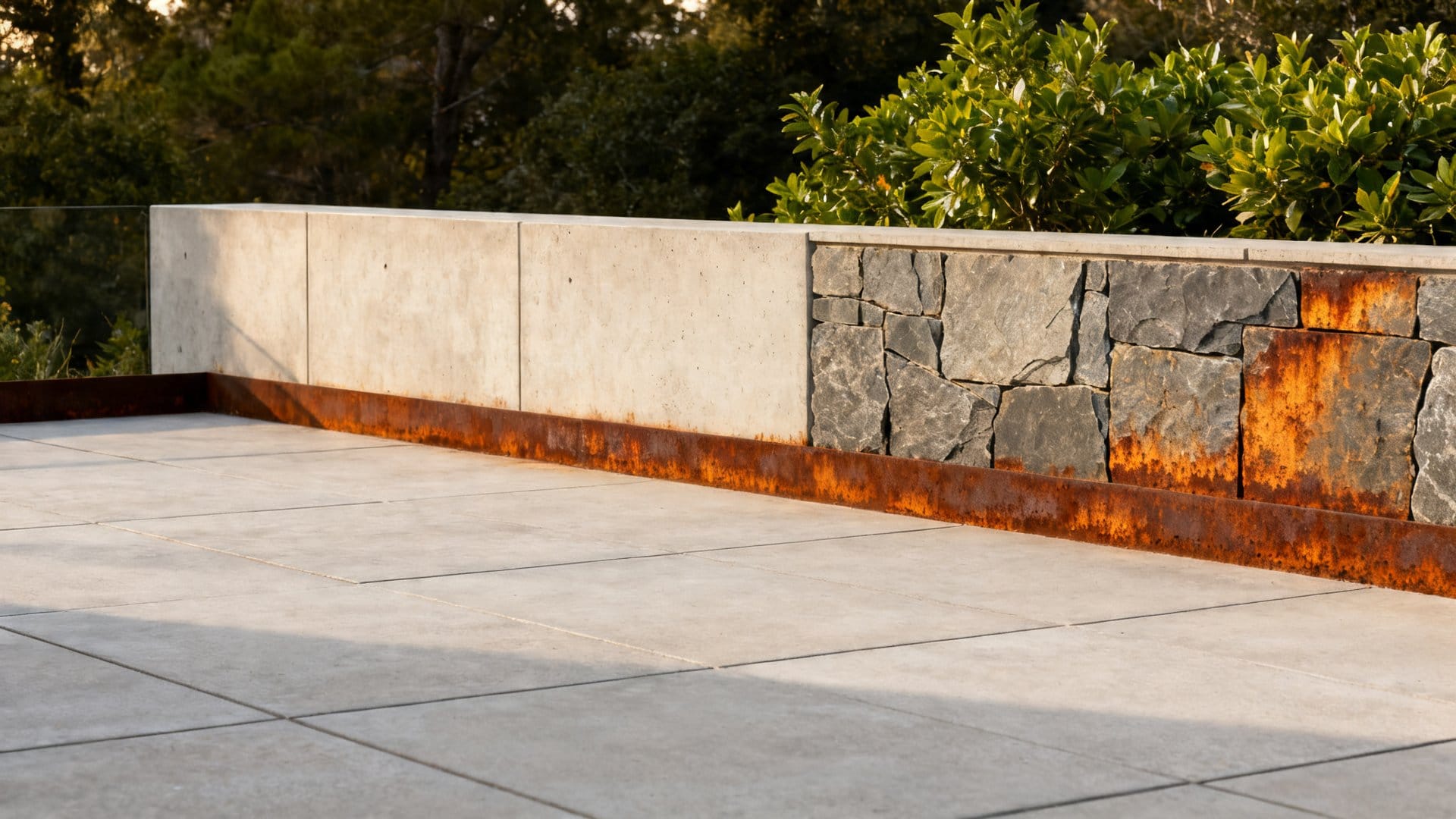
In a contemporary outdoor space, materials aren’t just functional, they’re the design statement. The surfaces you choose set the tone for everything else that follows, so it’s worth thinking carefully about what you’re working with before adding any decorative layers on top.
Concrete pavers are a go-to for good reason: they’re durable, easy to source, and look genuinely sharp in large-format tiles laid with tight, even joints. Natural stone, particularly slate or limestone in cool grey tones, brings texture without fuss. For vertical surfaces like raised beds or low walls, weathered steel corten panels age beautifully over time, shifting from bright orange to a warm, rusty brown that actually complements green plantings in a really striking way.
Pro tip: When mixing materials, limit yourself to three maximum, one for the ground plane, one for vertical elements, and one accent material. More than three and the space starts to feel busy, which works against the clean contemporary aesthetic you’re going for.
What Furniture Works Best in a Modern Garden?
Modern garden furniture works best when it features clean lines, slim profiles, and weather-resistant finishes like matte powder-coated aluminum. The goal is pieces that look like they were designed for the space, not pulled from storage or chosen at random.
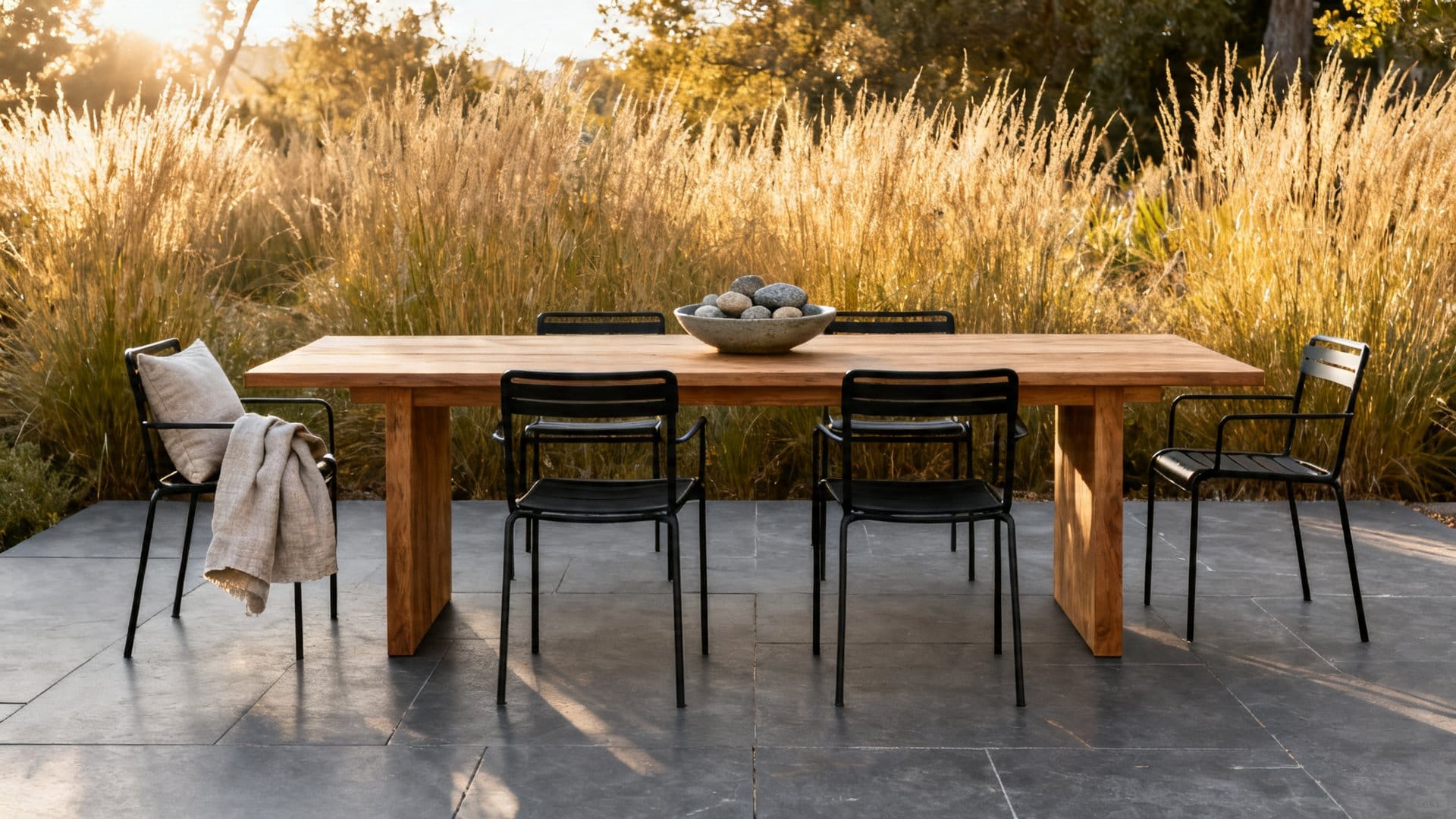
Outdoor furniture in a contemporary garden should feel like it was designed for that exact spot, not dragged out of a garage or chosen because it was on sale. The good news is that sleek, modern outdoor pieces are more widely available now than ever, and you can often find options that look expensive without being an enormous investment.
Look for pieces with powder-coated aluminum frames in matte black, warm charcoal, or brushed bronze. These finishes resist rust, stay cool in sun, and photograph beautifully against stone or wood decking. Pair metal frames with woven rope cushion seats in neutral tones, oatmeal, stone grey, or deep olive, and you get that perfect balance of structure and softness that defines the contemporary outdoor look. A low-slung sectional sofa with clean lines works especially well on a patio that opens directly from the living room, blurring the line between inside and out.
One thing I’ve noticed in well-designed outdoor spaces is that the dining table often anchors the whole scene. A rectangular concrete-top table with slim metal legs is a beautiful, long-lasting choice that holds up against weather and still looks polished years down the line.
Small Space Tricks
If your outdoor space is compact, choose furniture with a lighter visual weight, pieces with open frames and slim profiles rather than bulky, upholstered sets that overwhelm a small patio. A bistro-style table with two chairs can feel just as intentional as a full dining set if the materials are right and the placement is deliberate. If shade is a concern on a compact patio, these covered patio ideas pair well with a sleek seating setup.
How Do You Plant for a Sleek Contemporary Outdoor Look?
For a sleek contemporary look, choose plants with strong architectural shapes and repeat them across the garden for visual cohesion. Species like ornamental grasses, agave, and lavender bring structure and texture without stressing the design.
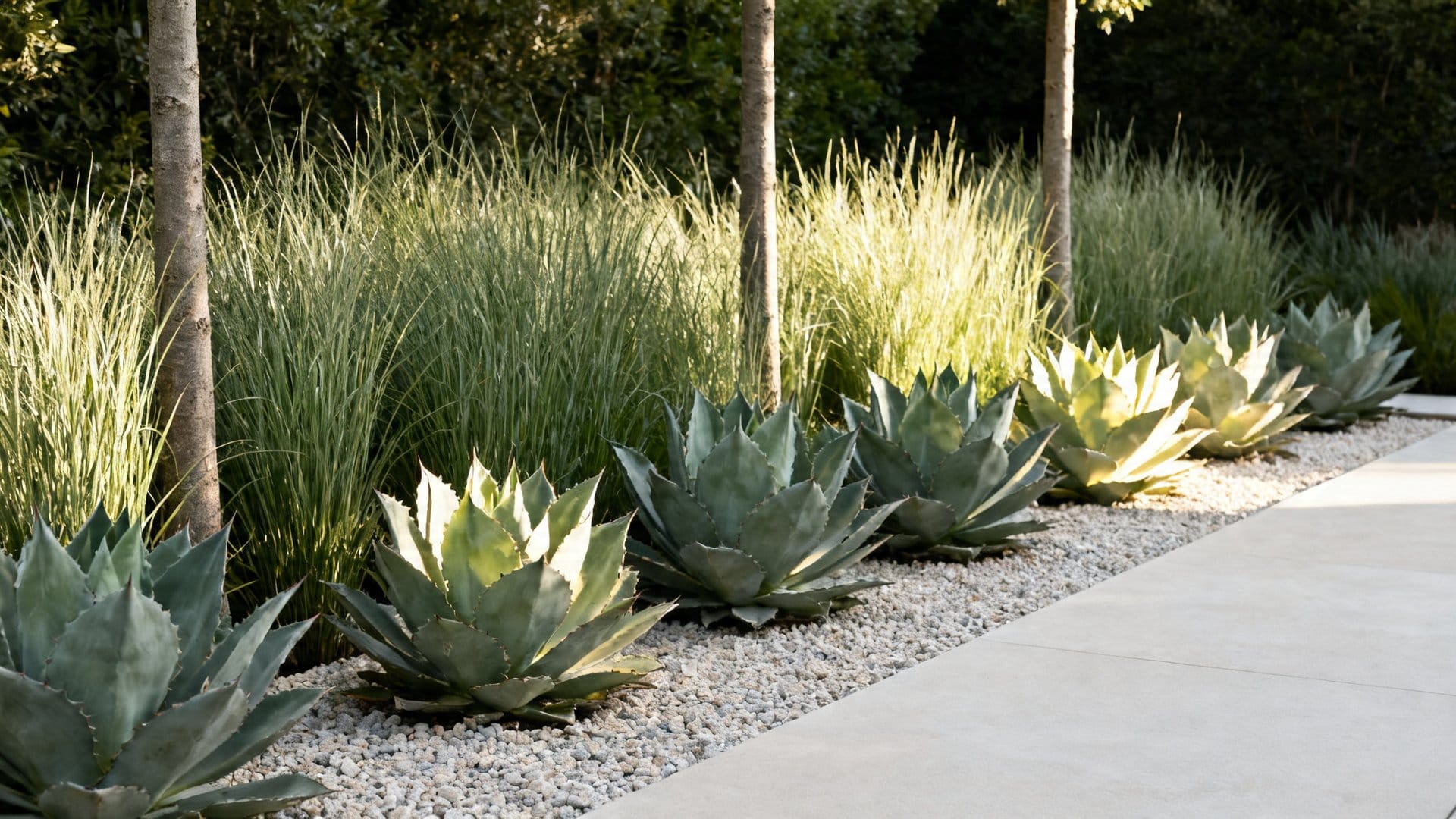
Plants are where contemporary garden decor gets its soul. The key is choosing species that have architectural presence, plants with strong shapes, interesting textures, or dramatic height that contribute to the design rather than just filling gaps.
Some of the most effective plants for a modern garden aesthetic include ornamental grasses like feather reed grass or blue oat grass, which sway gently in the breeze and add movement without chaos. Agave and yucca bring bold, sculptural form that reads beautifully against a flat concrete wall or a gravel bed, a look that overlaps nicely with Mediterranean garden decor and its drought-tolerant palette. For softer texture, lavender in long drifts along a path gives both visual rhythm and scent, and that sensory layer is something I keep coming back to as an underrated element in outdoor design.
Pro tip: Plant in odd-numbered groupings and repeat the same species in multiple spots across the garden. Repetition is one of the oldest tricks in space design, and it creates a sense of cohesion that makes a space feel select rather than collected.
Once your planting scheme is in place, the next layer that truly improves a contemporary garden is how it looks after the sun goes down.
How Does Lighting Change a Contemporary Garden After Dark?
The right lighting change a contemporary garden after dark by adding depth, drama, and warmth without visual clutter. Low-profile directional fixtures, rather than string lights or lanterns, keep the aesthetic sleek and intentional.
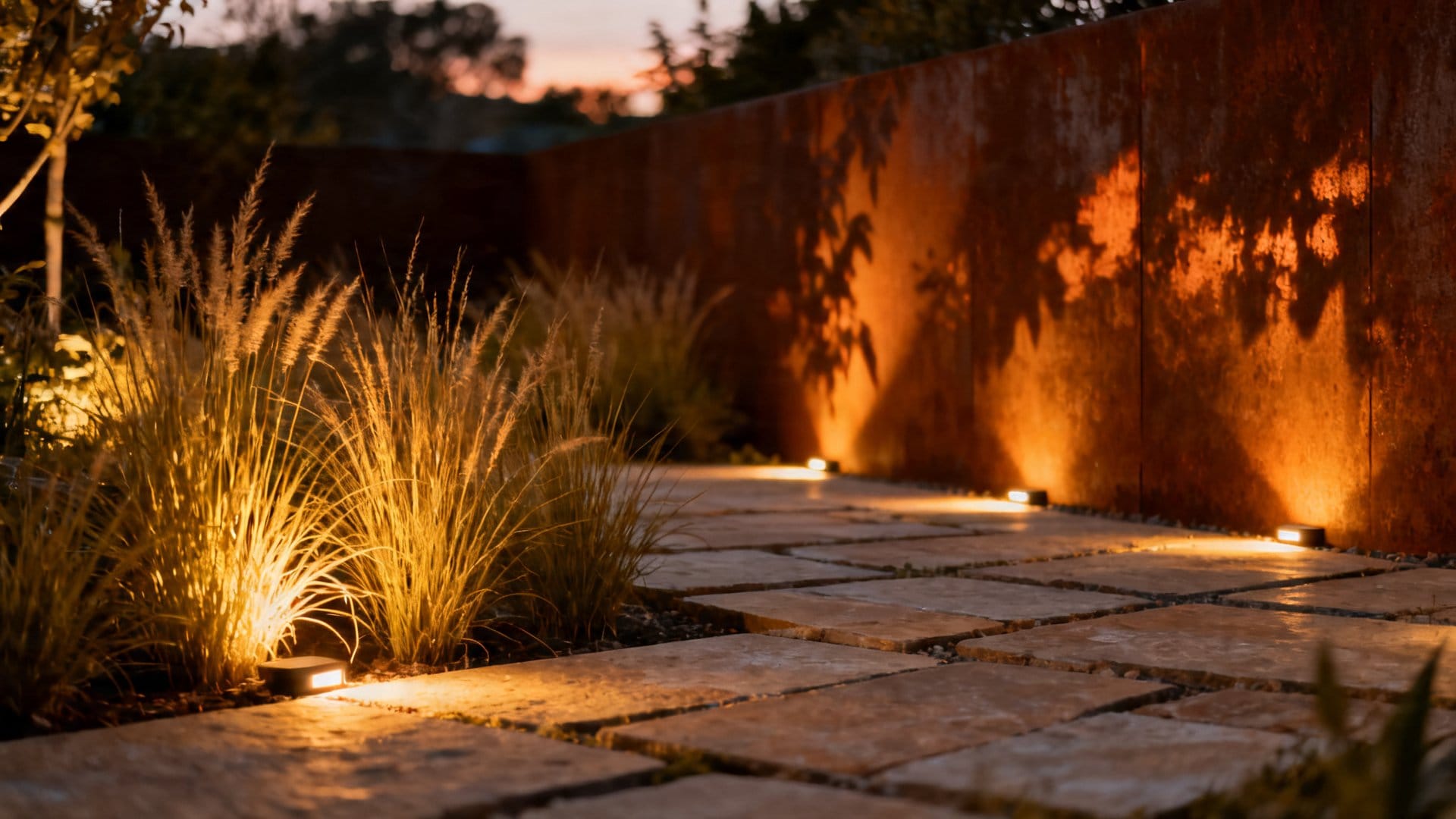
Daytime garden design is only half the picture. The way your outdoor space looks at dusk and into the evening is just as important, especially if you spend time outside in warmer months after the sun goes down.
Contemporary outdoor lighting tends to favor low, directional fixtures rather than overhead string lights or lanterns, which can lean more rustic or romantic than sleek. Ground-level uplighting aimed at the base of a feature tree or an architectural plant creates dramatic shadows and depth that change the garden after dark. Recessed step lights along a pathway add safety and a quiet elegance that feels very considered. For the seating area, a single pendant light hung from a pergola or a freestanding outdoor floor lamp in a matte finish brings warmth without visual clutter. And if you want a softer glow over the dining zone, these patio string light ideas layer in beautifully without overwhelming the clean lines.
A friend of mine tried adding solar-powered stake lights along her garden path and was surprised by how much it changed the whole atmosphere of her backyard in the evenings, it went from a space she rarely used after 6pm to one she genuinely lingered in.
How Do You Get Outdoor Accessories Right in a Modern Garden?
Getting accessories right in a modern garden means choosing fewer pieces and making sure each one earns its place. Restraint is the guiding principle, every item should feel like it belongs to the space, not like it was added as an afterthought.
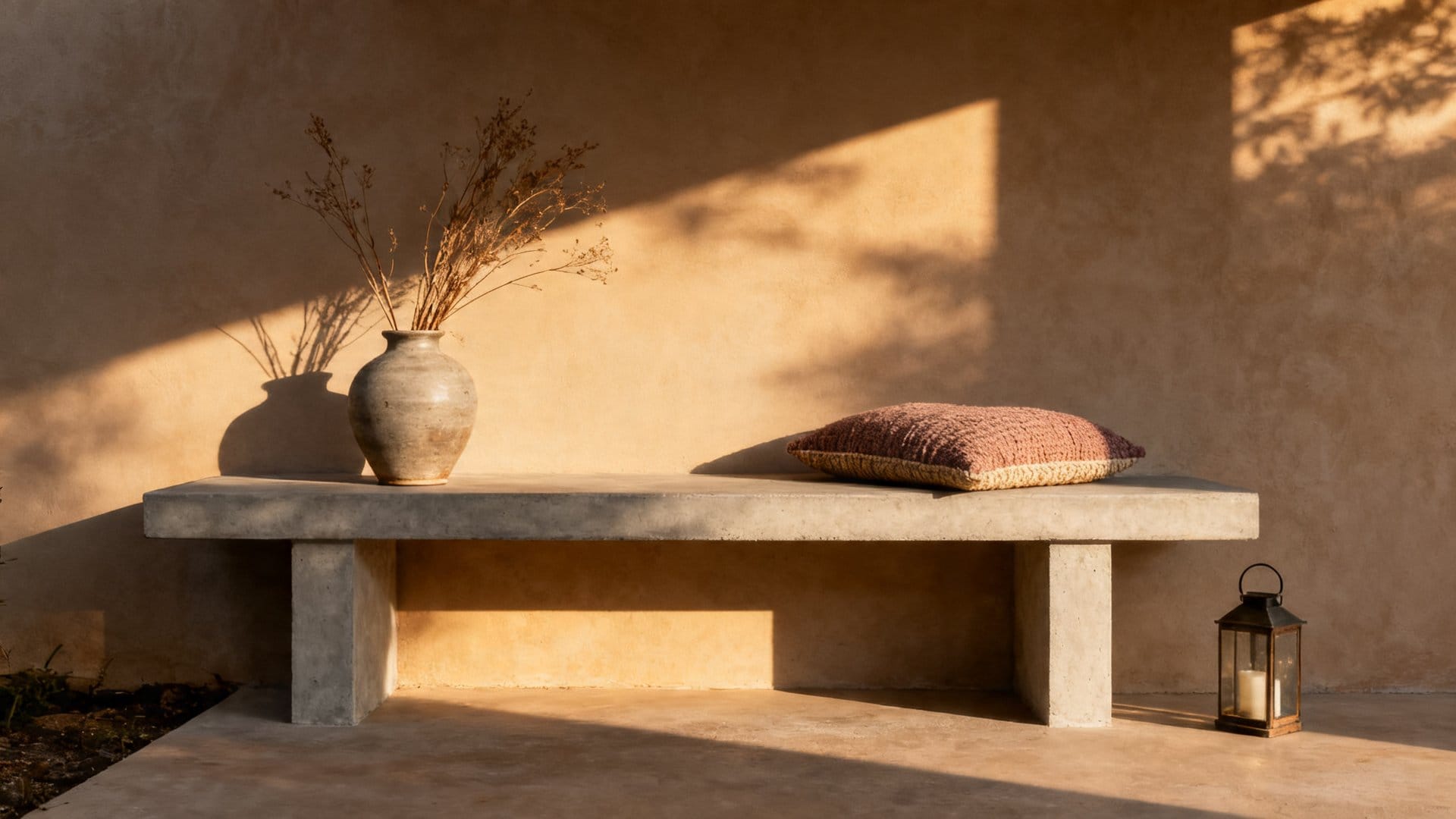
Accessories are where many outdoor spaces go wrong, too many, too mismatched, too seasonal in a way that quickly looks dated. In contemporary garden decor, restraint is the guiding principle.
Finishing Touches
- A single large ceramic bowl filled with water and smooth river stones creates a focal point that’s calming and visually grounding near a seating area
- Outdoor throw pillows in a textured weave, think boucle or a tight linen blend, add softness to rigid furniture without looking fussy
- A weather-resistant outdoor rug in a simple geometric pattern, like a wide stripe or a subtle grid, anchors a seating area and defines the space without adding visual noise
- One or two sculptural pots in matte concrete or unglazed terracotta, planted with a single species, look far more intentional than a cluster of varied containers
- A simple metal fire bowl or a low rectangular fire pit table brings warmth and becomes an instant gathering point on cool evenings
The goal with accessories is to choose things that feel like they belong to the space, not items that were brought out from inside or picked up impulsively. When every element earns its place, the whole garden feels more alive.
With your accessories in place, it’s worth turning your attention to the surfaces that frame the whole space, because vertical elements can be just as impactful as anything on the ground.
How Can You Use Walls, Fences, and Vertical Space Creatively?
Vertical surfaces offer some of the most striking design opportunities in a contemporary garden. Wall planters, living wall panels, and bold paint colors can turn a bare fence into a focal point that adds depth and character to the whole space.
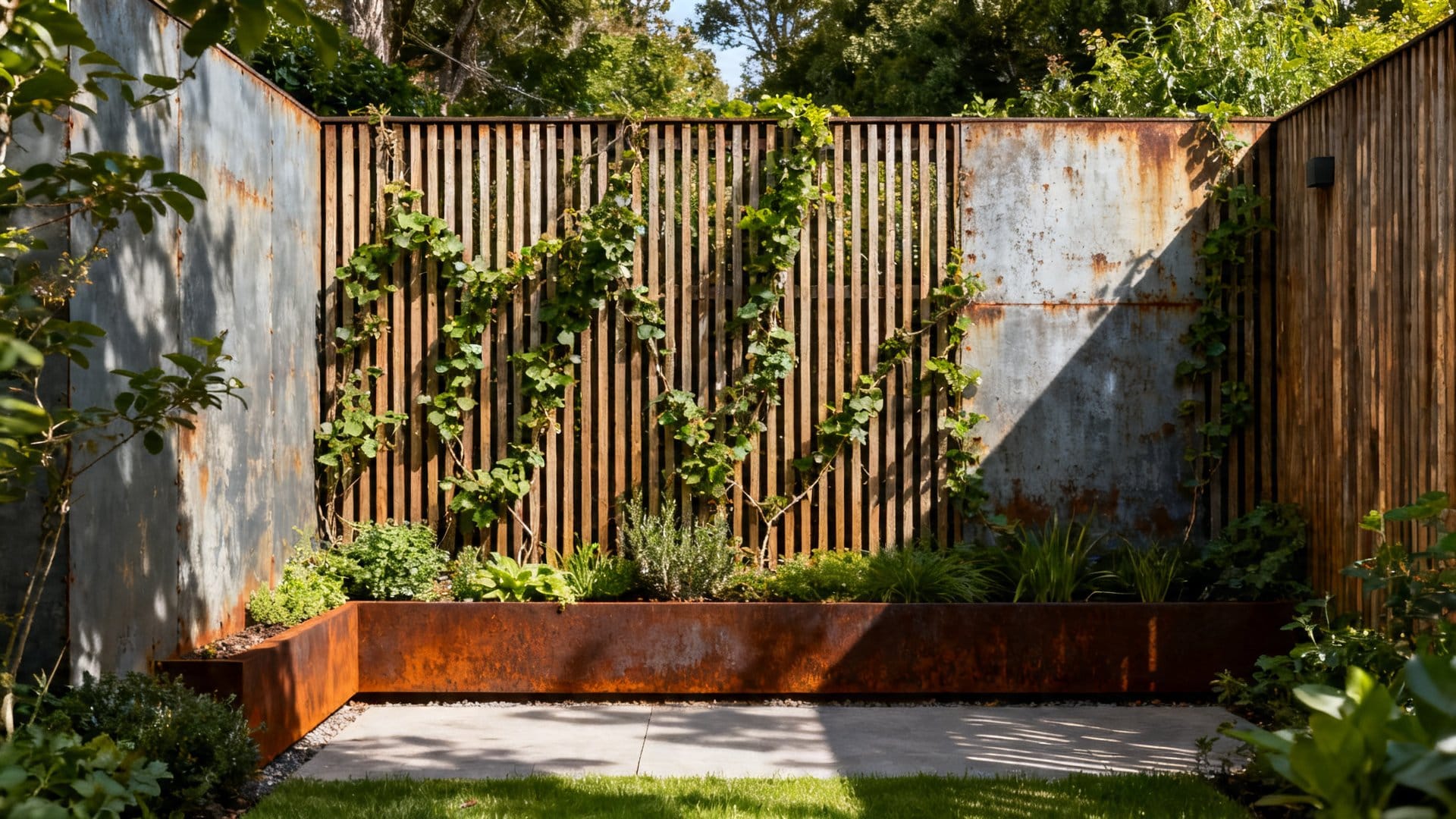
Vertical surfaces are one of the most underused opportunities in outdoor design, and in a contemporary garden, they can become some of the most striking features in the whole space.
A bare fence doesn’t have to stay bare. Consider mounting a series of simple wall planters in uniform matte black metal, filled with trailing plants like string of pearls or compact herbs. The repetition creates a gallery-like effect that’s distinctly modern. Alternatively, a living wall panel, a pre-planted vertical garden frame, installed against a painted concrete wall makes an immediate impact and softens the hard lines of a contemporary design in a way that feels lush rather than overdone.
This works especially well in narrow side yards or courtyard-style gardens where horizontal space is limited but vertical space is wide open. From what I’ve gathered, the easiest approach is to start with a single wall treatment rather than trying to address every vertical surface at once, pick the one that gets the most foot traffic or sightlines, and let that be your statement piece.
Layout Ideas
If your garden backs onto a solid fence or wall, consider painting it in a deep, matte color, a charcoal grey or a warm dark green, to create a backdrop that makes plants and furniture pop. This simple change costs very little and has an outsized effect on how polished and intentional the whole space looks.
Final Thoughts
Creating a space that reflects modern garden decor doesn’t require a complete renovation or a designer’s eye, it requires a willingness to slow down, choose thoughtfully, and let quality speak louder than quantity. Whether you’re starting with a small patio or a sprawling backyard, the principles of sleek contemporary outdoor design give you a clear, beautiful framework to work within. Trust your instincts, edit generously, and remember that the spaces we love most are the ones that feel genuinely lived in. Happy decorating!
Frequently Asked Questions
Not at all, contemporary garden design is more about thoughtful editing and smart choices than expensive overhauls. You can achieve a sleek, polished look by focusing on a few key elements like clean-lined furniture, strategic lighting, and a restrained plant palette, all of which can be done gradually and affordably. The key is intentionality rather than spending power.
Modern gardens typically favor plants with strong architectural shapes, clean lines, and a restrained color palette, such as ornamental grasses, boxwood hedges, lavender, and succulents. The goal is to choose fewer plant varieties and repeat them for a cohesive, deliberate look rather than mixing many different species. This approach creates visual calm while still bringing life and texture to the space.
Absolutely, in fact, small spaces often benefit the most from contemporary design principles because the emphasis on simplicity and editing prevents the area from feeling cramped or chaotic. Using multi-functional furniture, vertical elements like tall planters or trellises, and a consistent material palette can make even a compact patio feel intentional and stylish. Limiting clutter and sticking to two or three design materials goes a long way in a smaller footprint.
Contemporary outdoor spaces typically feature materials like concrete, corten steel, natural stone, composite decking, and powder-coated metal, all of which offer clean aesthetics and strong durability. These materials are often used in combination to create contrast, for example, pairing smooth concrete pavers with warm wood accents to soften the overall look. The consistency of materials throughout the space is what ties a modern garden together visually.
Lighting is one of the most impactful and often overlooked elements of modern garden design, capable of completely changing the atmosphere of an outdoor space after dark. Contemporary gardens typically use low-profile, architectural lighting such as recessed ground lights, slim pathway fixtures, or uplighting to highlight sculptural plants and hardscape features. The goal is to create subtle, layered illumination that feels sophisticated rather than relying on a single overhead light source.