
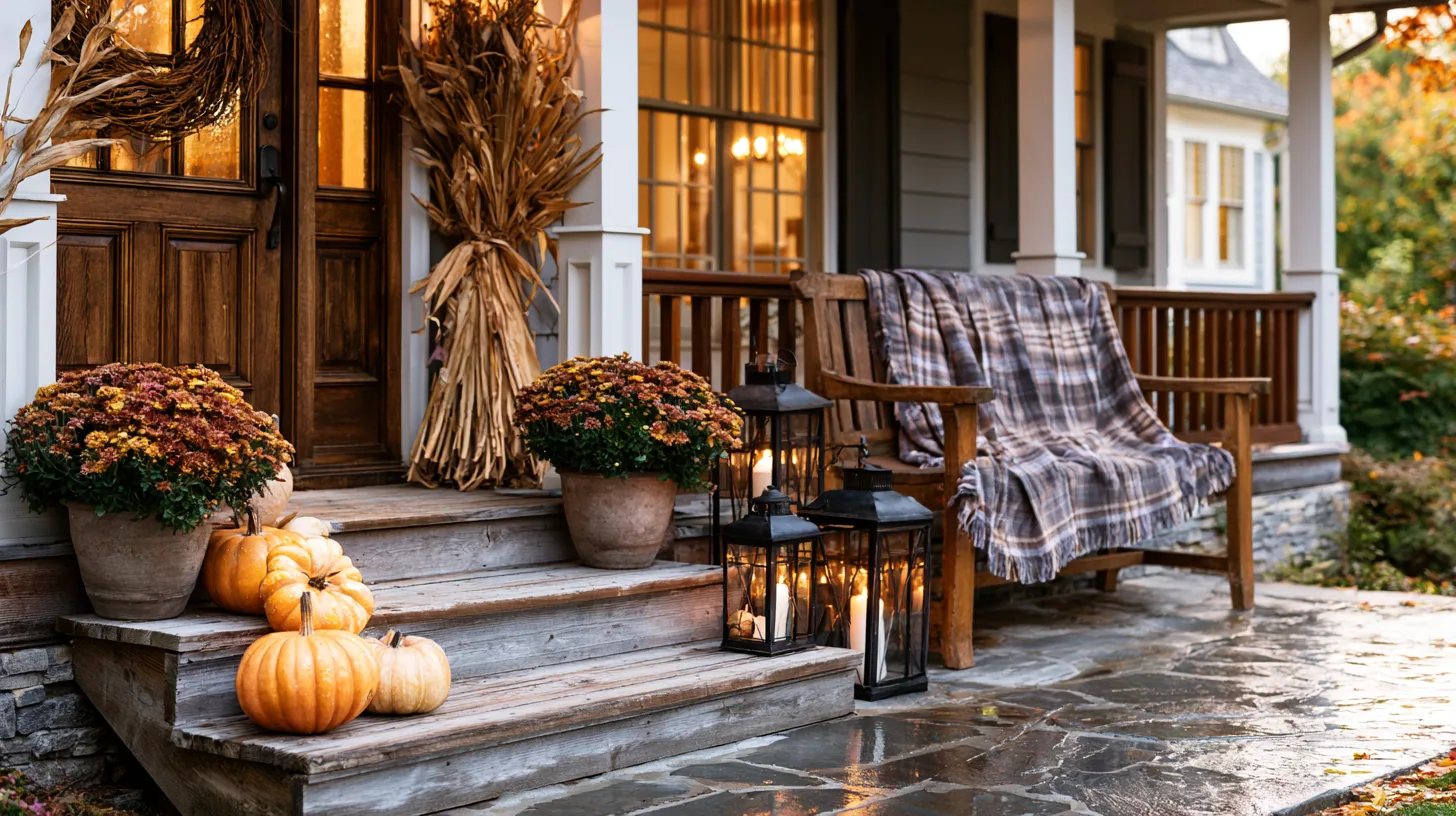
Fall porches look their best for about ten minutes before the first gust of wind flips a wreath sideways or a rainstorm turns a paper garland into pulp. If you have ever come inside from a storm to find your pumpkins tipped into the flower bed, you already know why 29 Fall Outdoor Decorating Ideas That Actually Survive Wind and Rain exists. These fall outdoor decorating ideas are built around one simple rule: anything you put outside in October needs to survive actual October weather, not a single still, sunny afternoon. Below are 29 specific, photographable projects, from anchored hay bales to weighted garlands, each chosen because it holds up once the weather turns.
1. Anchor a Hay Bale Stack With Rebar Stakes
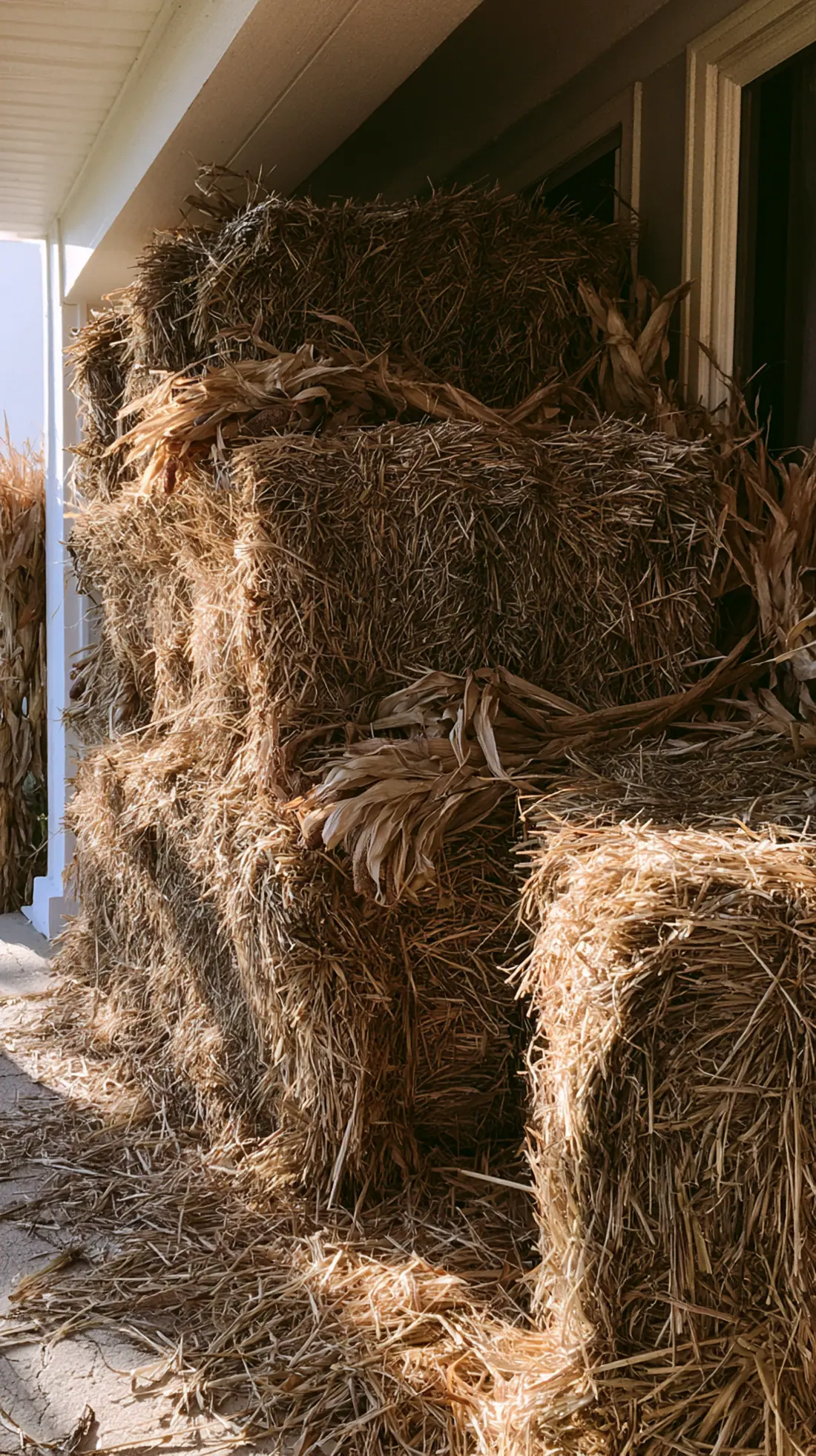
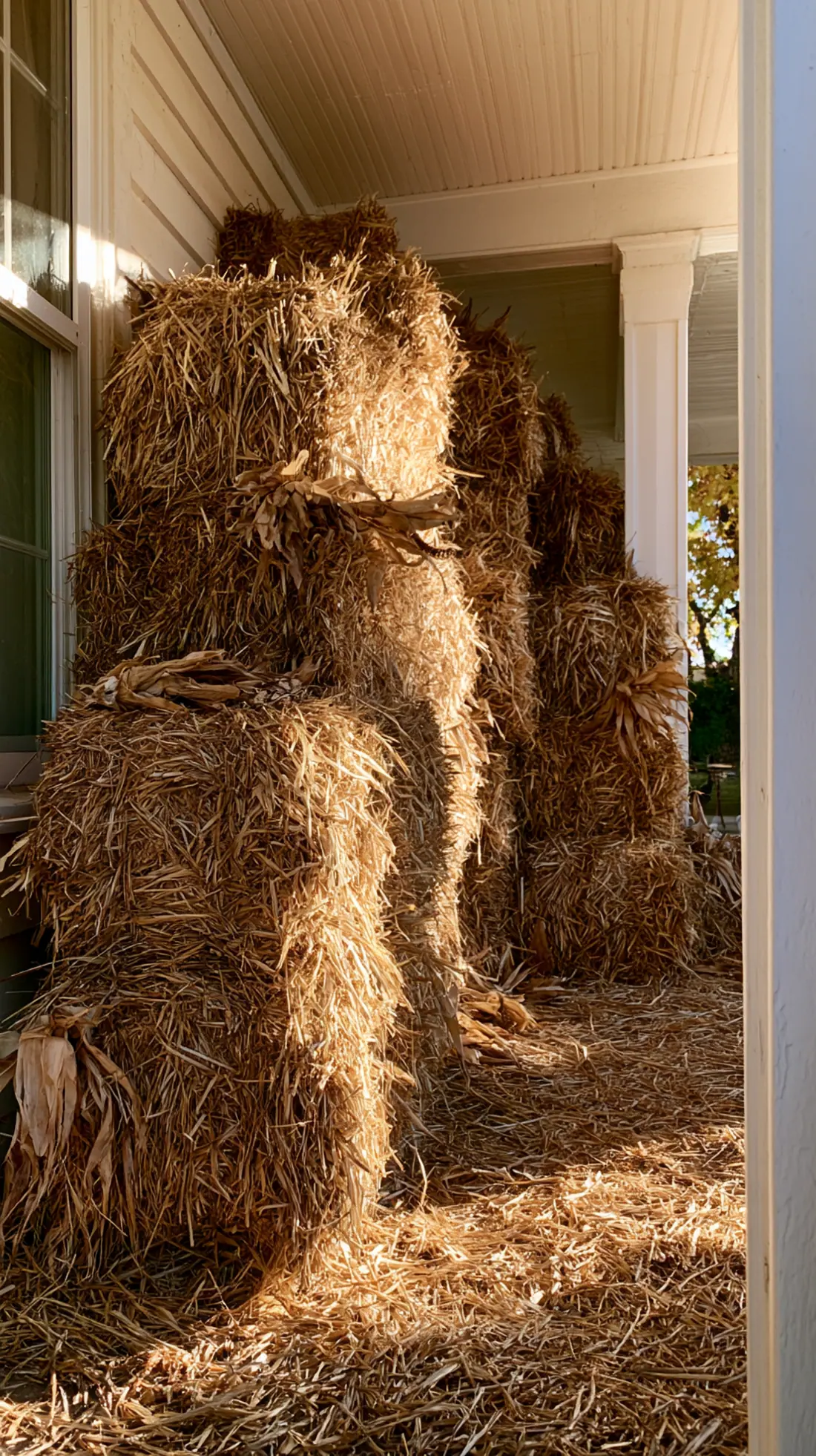
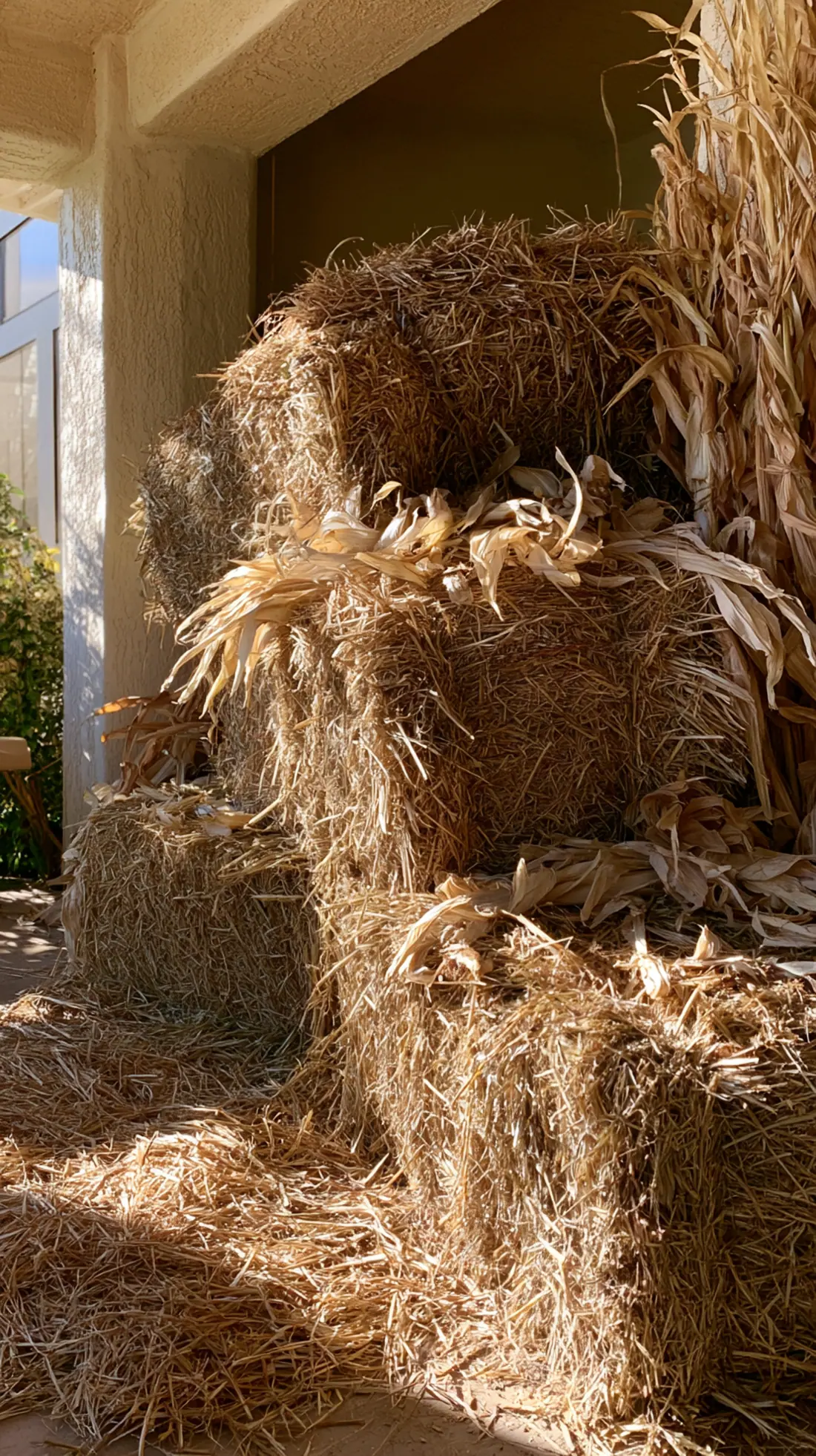
A stacked hay bale display fills an empty porch corner with real fall texture fast, and it holds its shape through wind that would flatten a paper decoration in seconds. Two or three bales at graduated sizes read as intentional, not accidental.
Drive a length of rebar or a metal step stake straight down through the center of each bale before stacking the next one on top, so the whole tower pins to the ground instead of just balancing. If your porch sits on concrete or wood decking where you cannot drive a stake, run heavy twine from bale to bale and tie it off to a railing post. Keep the stack off standing water on a pallet or a few bricks, since a soaked bale gets heavy fast and starts to mold within a week or two.
Quick Tips
- Use straw bales for a lighter, less brittle base
- Wrap the twine bands in burlap ribbon to hide store tags
- Set bales on pavers instead of wet grass to slow decay
2. Seal Painted Pumpkins So Rain Can’t Ruin Them
 11.75 Gallon Vintage Zinc Metal Watering Can · Shop on Amazon2Orange Artificial Pumpkins Set of 8 · Shop on Amazon1/4
 2/4
2/4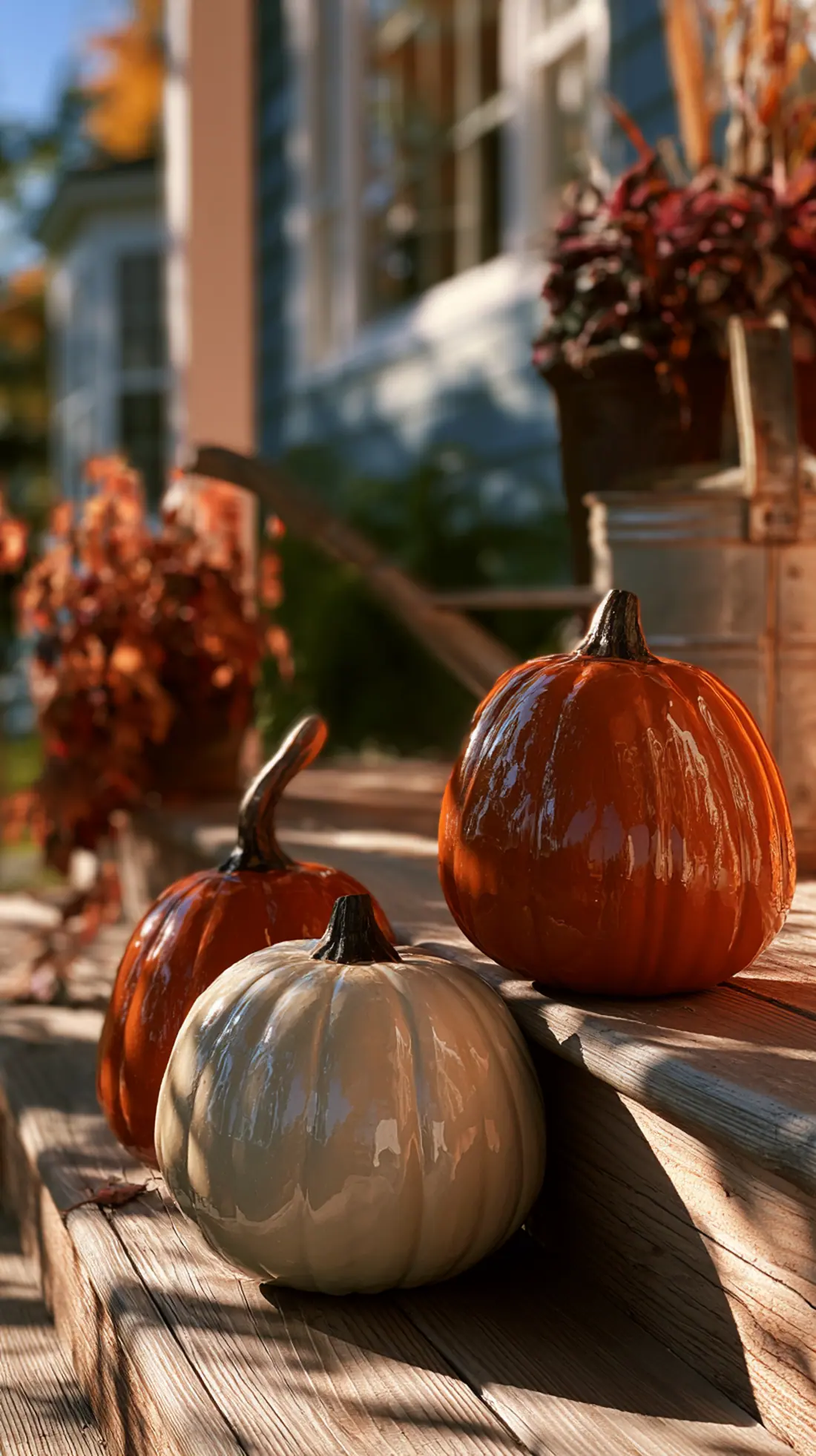
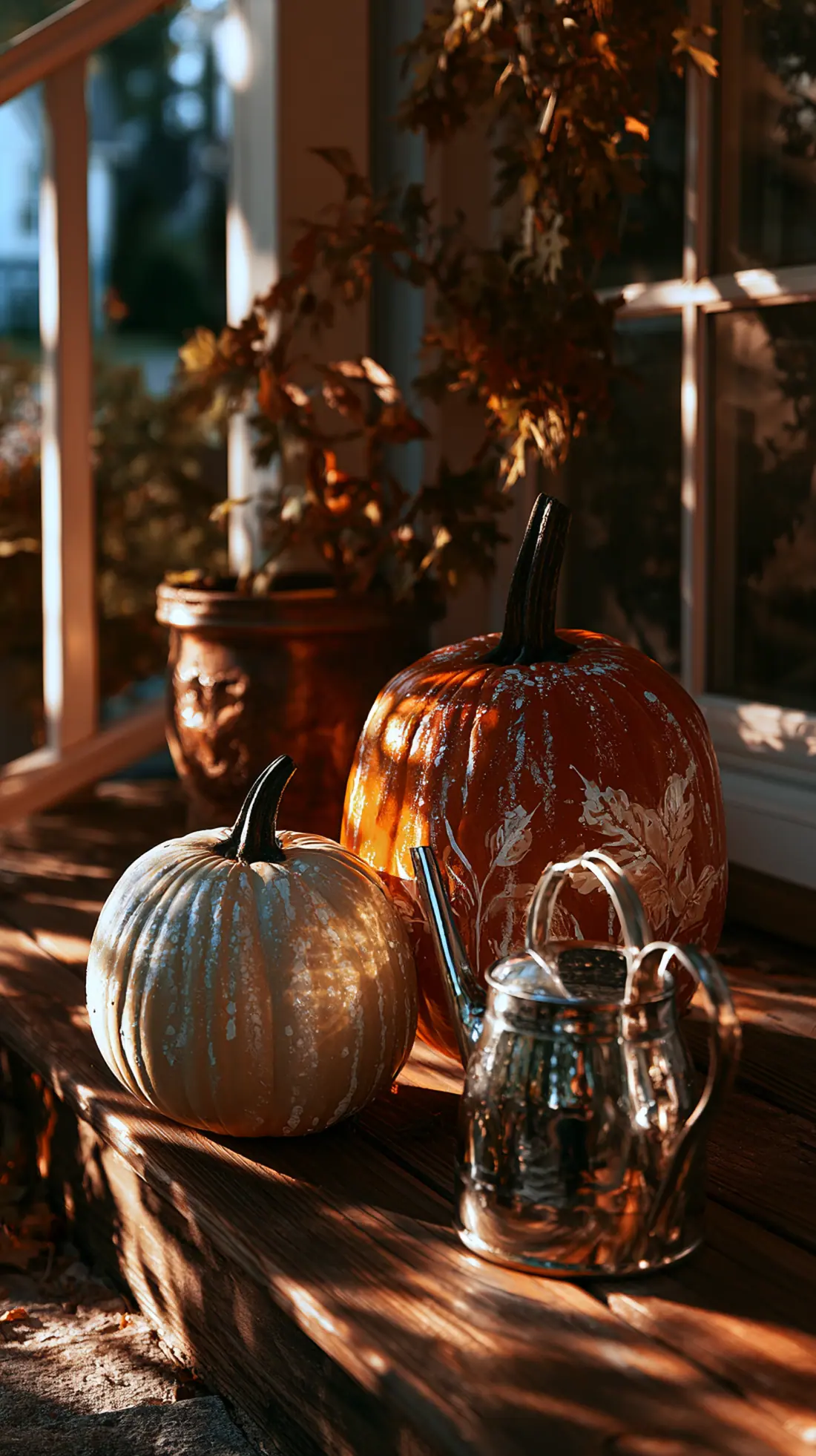
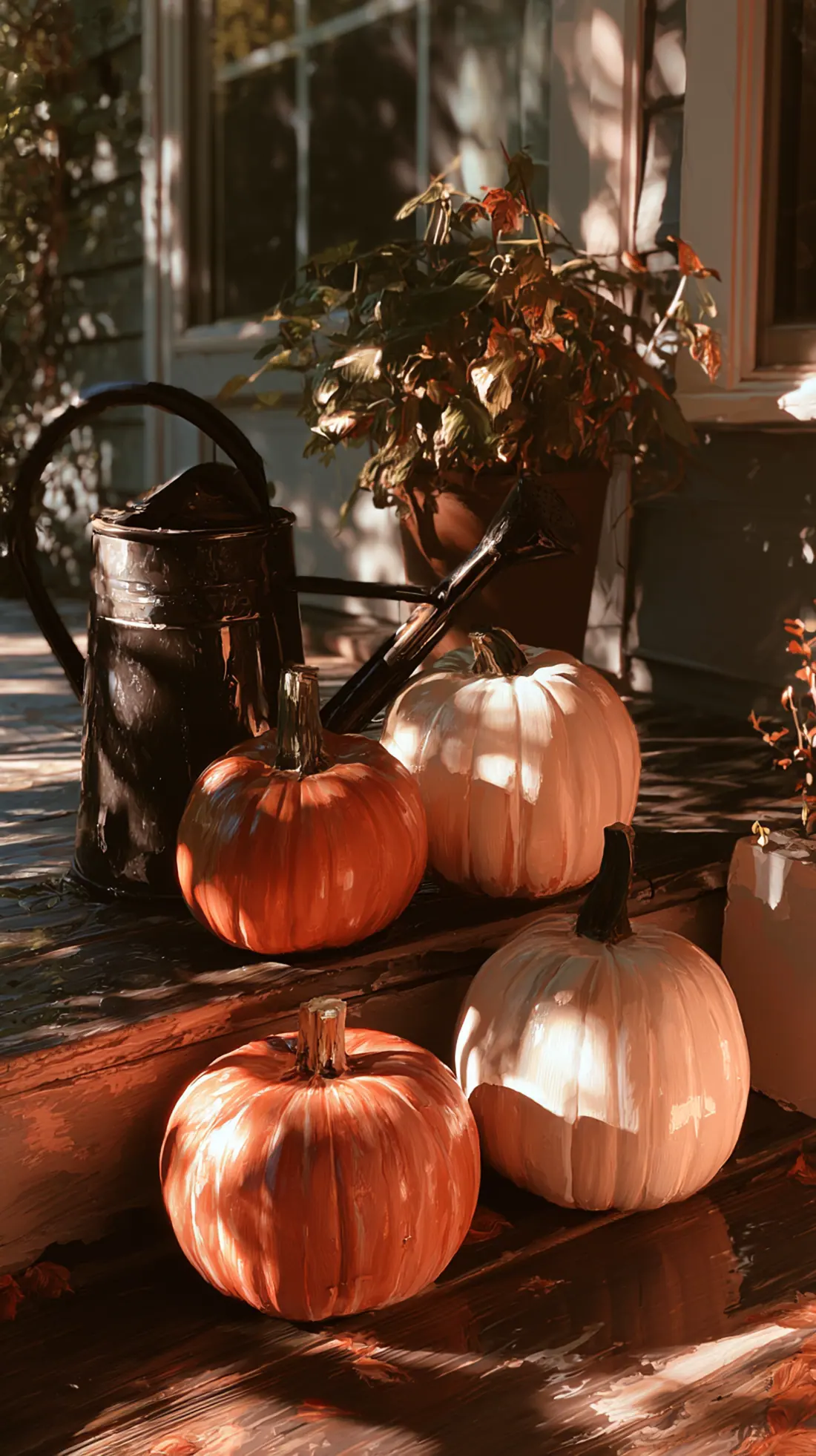
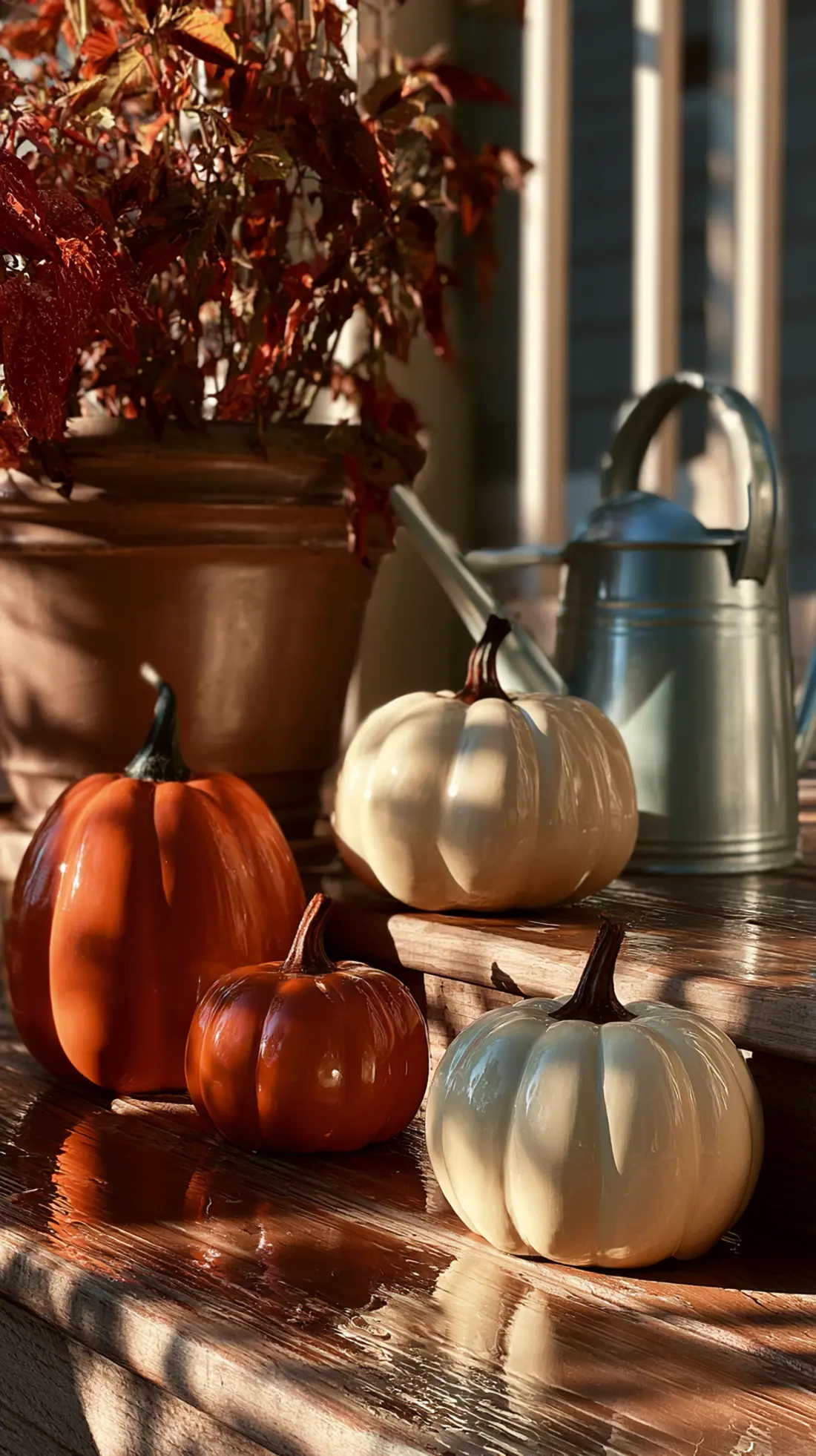
Painted pumpkins are one of the most rewarding fall outdoor decorating ideas because a plain gourd becomes a whole color story in an afternoon. The catch is that unsealed craft paint streaks the moment it meets a real storm.
Let paint cure fully, then coat the whole pumpkin, top and bottom, in two thin layers of a clear outdoor sealant rather than one heavy coat, which tends to trap moisture and speed up rot underneath. Faux foam or plastic pumpkins take sealant even better than real ones and can be reused for years, which matters if you are painting a large grouping. Bring real painted pumpkins in or trash them once they start to soften at the base, since a sealed shell still hides rot happening inside.
Quick Tips
- Test sealant on the bottom of the pumpkin first
- Choose matte spray sealant to avoid a plastic-looking sheen
- Reseal faux pumpkins yearly if stored outdoors between seasons
3. Hang a Porch Garland on Outdoor Hooks, Not Nails
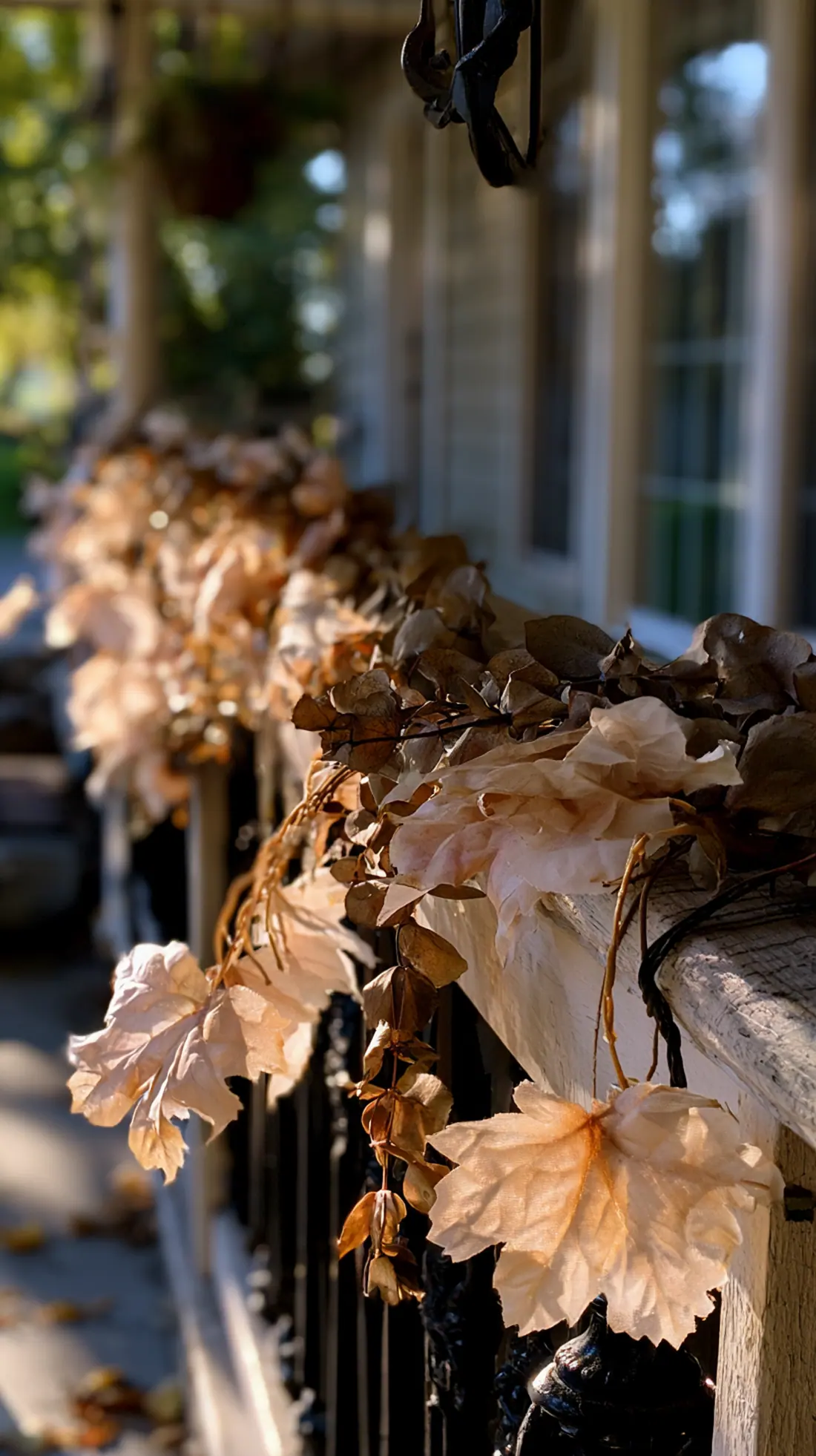
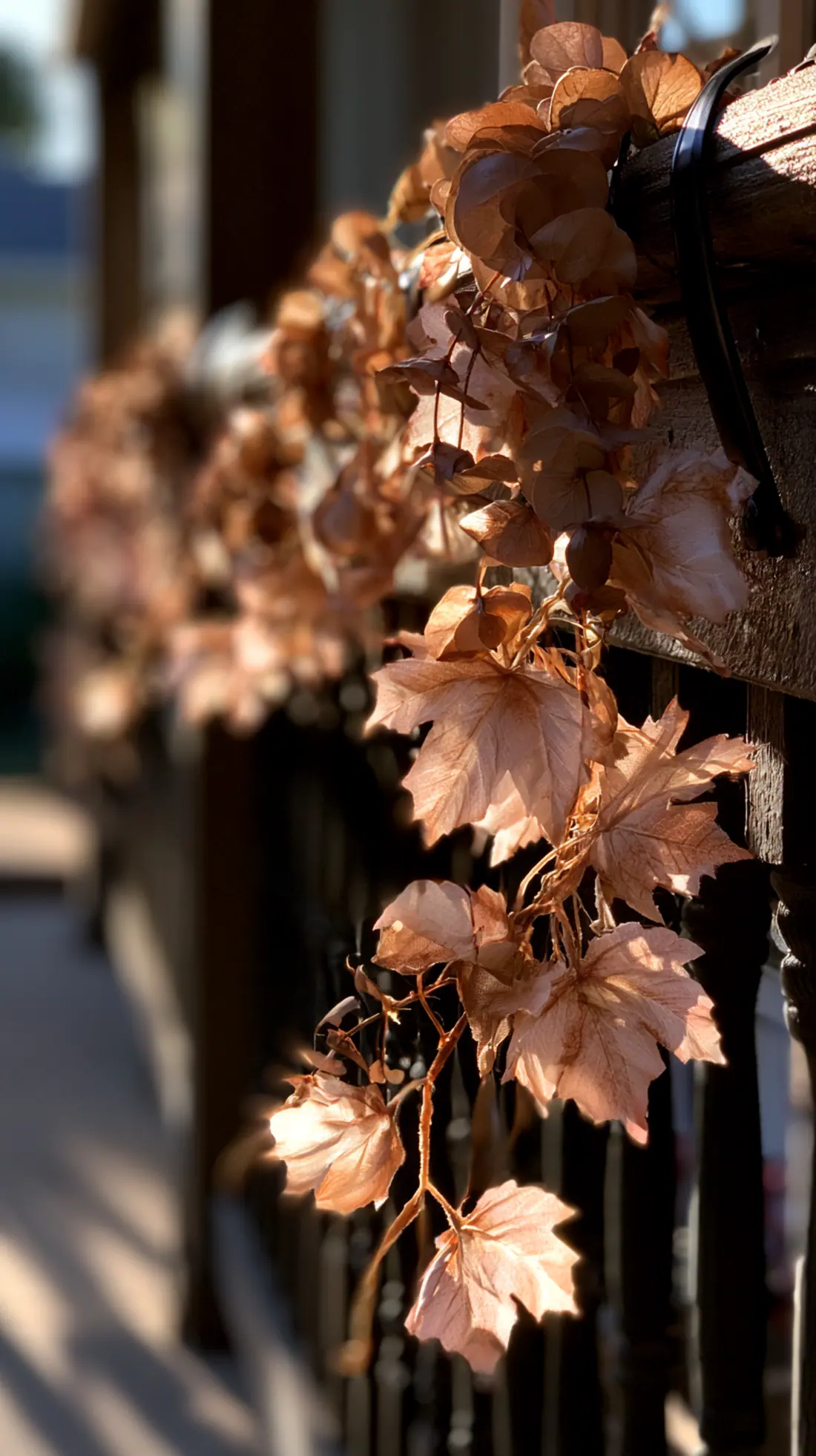
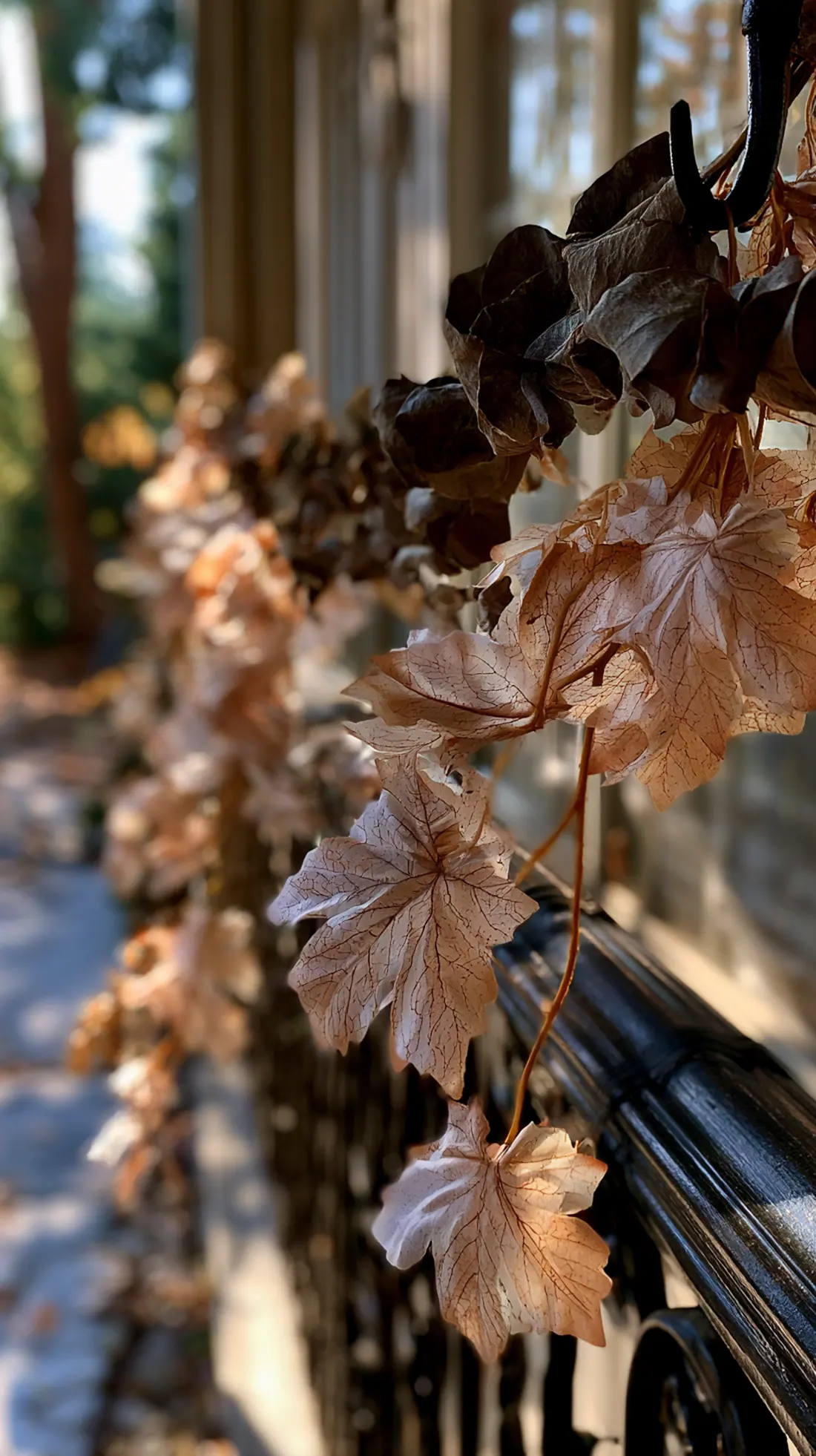
A garland draped across a porch beam or railing is one of the simplest fall outdoor decorating ideas to pull off, but a garland hung on nails or tape rarely survives its first real wind event.
Screw-in outdoor hooks rated for exterior use give the garland something to actually hold onto, and they let you take the whole thing down in seconds before a storm instead of watching it rip loose. Space hooks closer together than feels necessary, roughly every twelve to eighteen inches, so the garland cannot swing hard enough to snap a single connection point. Choose a garland built on wire stems rather than string, since wire holds its shape and does not sag into a puddle after rain.
Quick Tips
- Use cup hooks for a low-profile, removable install
- Avoid nailing directly into painted trim to prevent cracking
- Take the garland down before high-wind forecasts, not after
4. Weight a Corn Stalk Bundle With a Buried Bucket
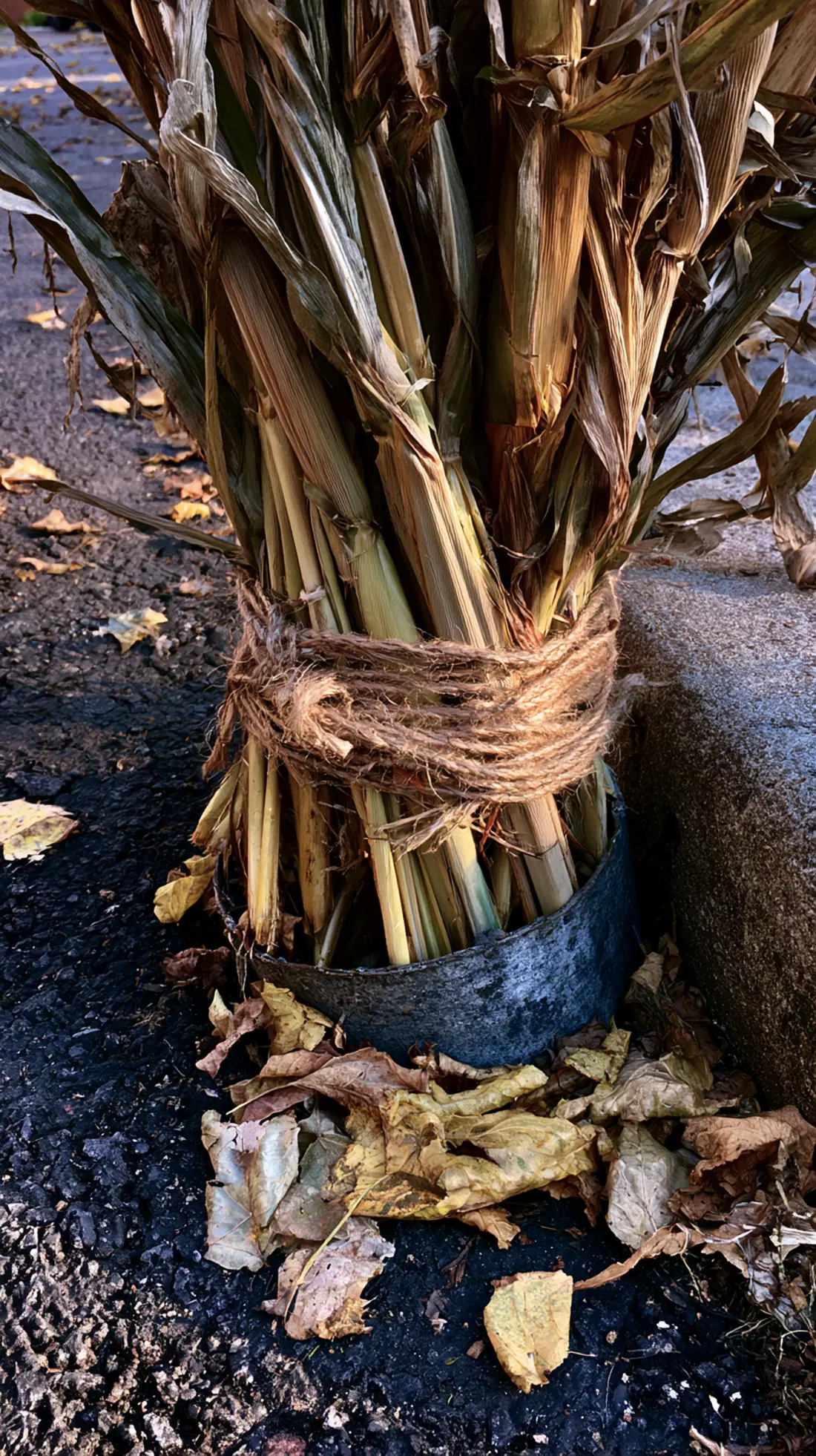
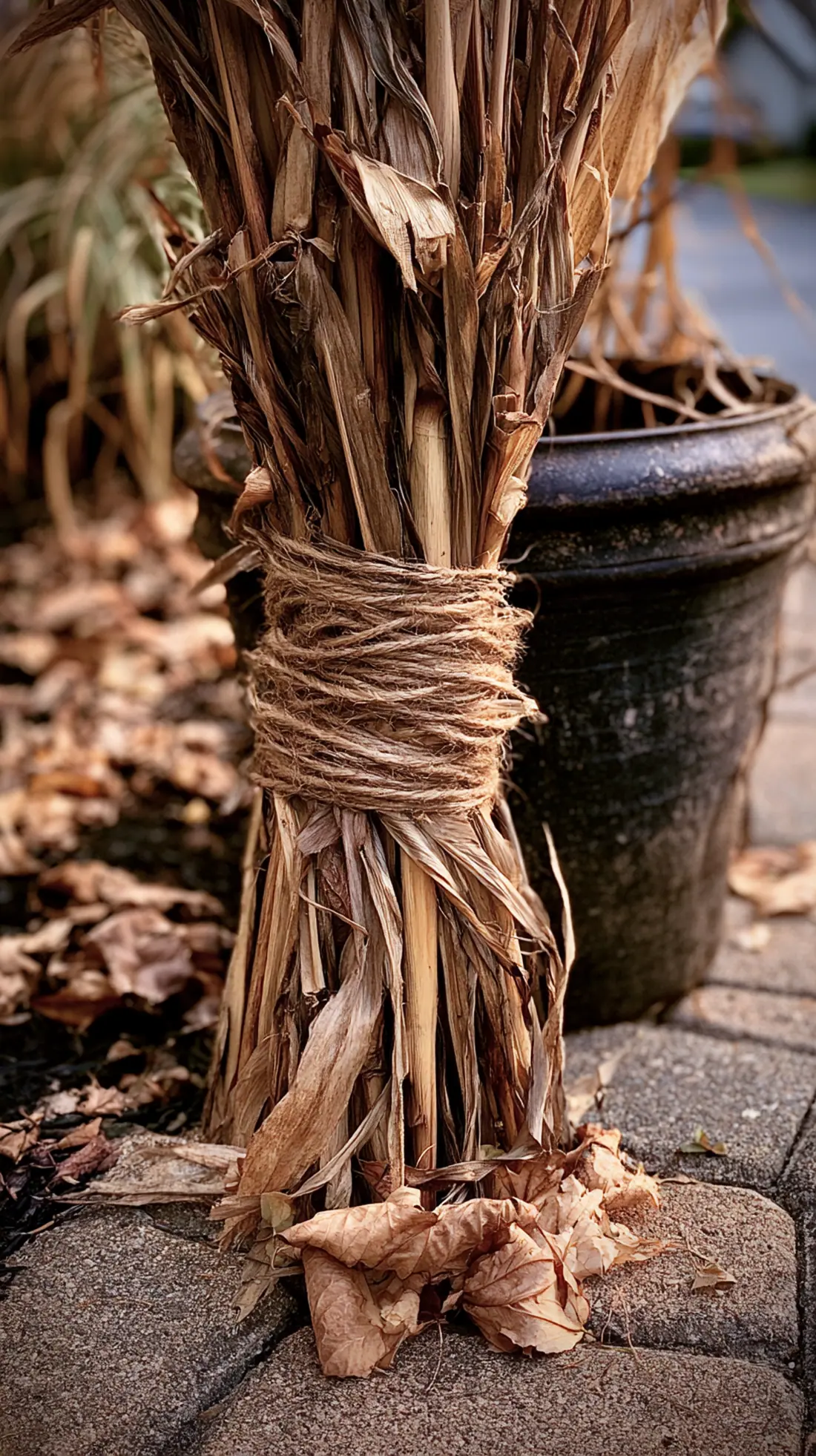
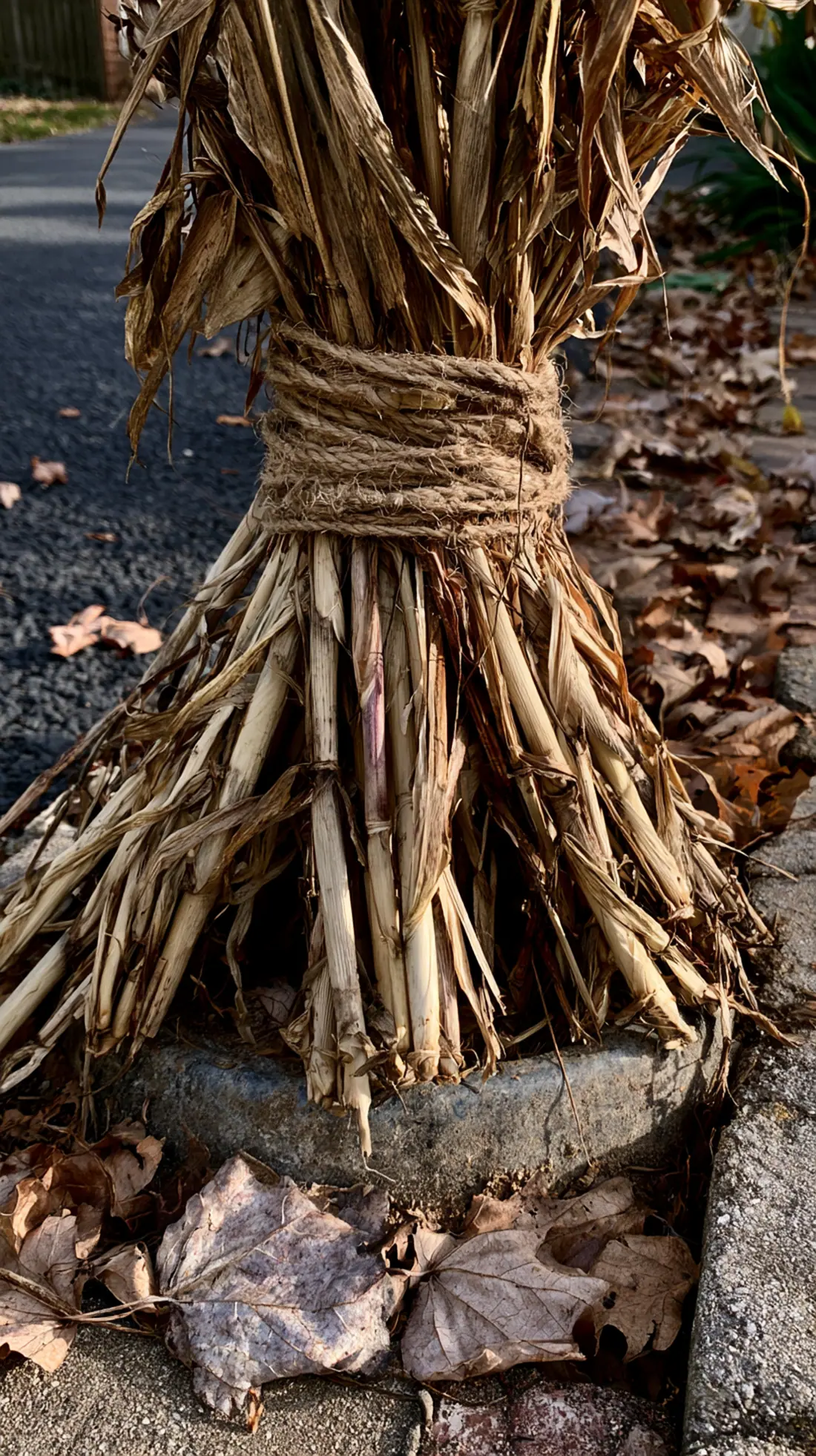
Tall corn stalks flanking a doorway are a classic look, and I’ve seen the same bundle stay upright through a full season when it is set into a hidden weighted base instead of just leaned against a post.
Set a five-gallon bucket filled with sand or gravel into the ground so the rim sits flush with the soil, then stand the stalks inside and pack more sand around the base to lock them in place. A bucket this heavy does not tip in gusts that would send a freestanding bundle sideways. Trim the roots flat before bundling so the stalks sit evenly, and tie the bundle at two heights, not just one, so it holds its column shape as it dries out over the weeks ahead.
Quick Tips
- Bury the bucket near a downspout so it drains, not floods
- Use jute twine at two heights for a sturdier bundle
- Swap dried stalks once they turn brittle and brown
5. Build a Weatherproof Fall Wreath for the Front Door
 1/4
1/4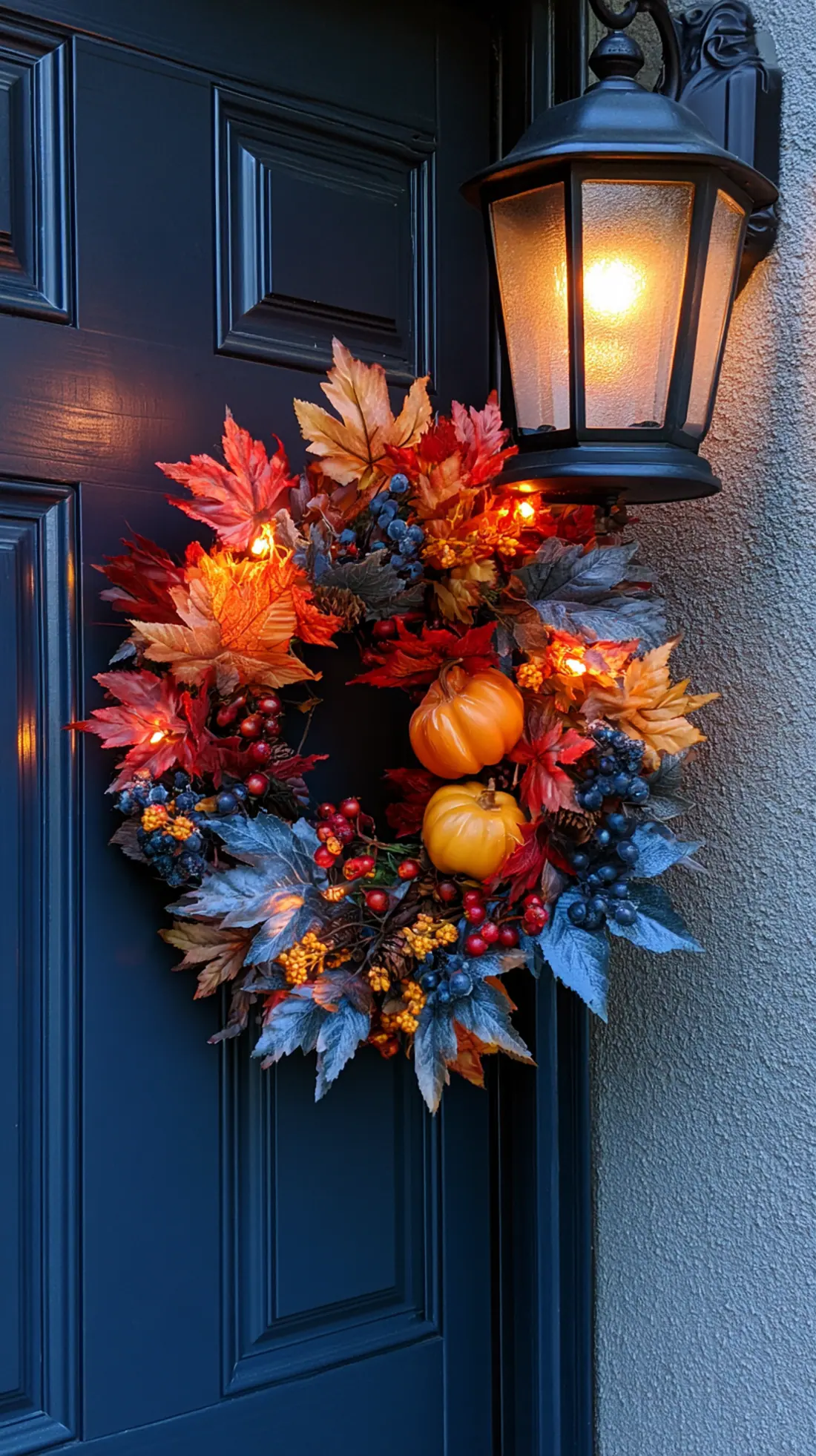 2/4
2/4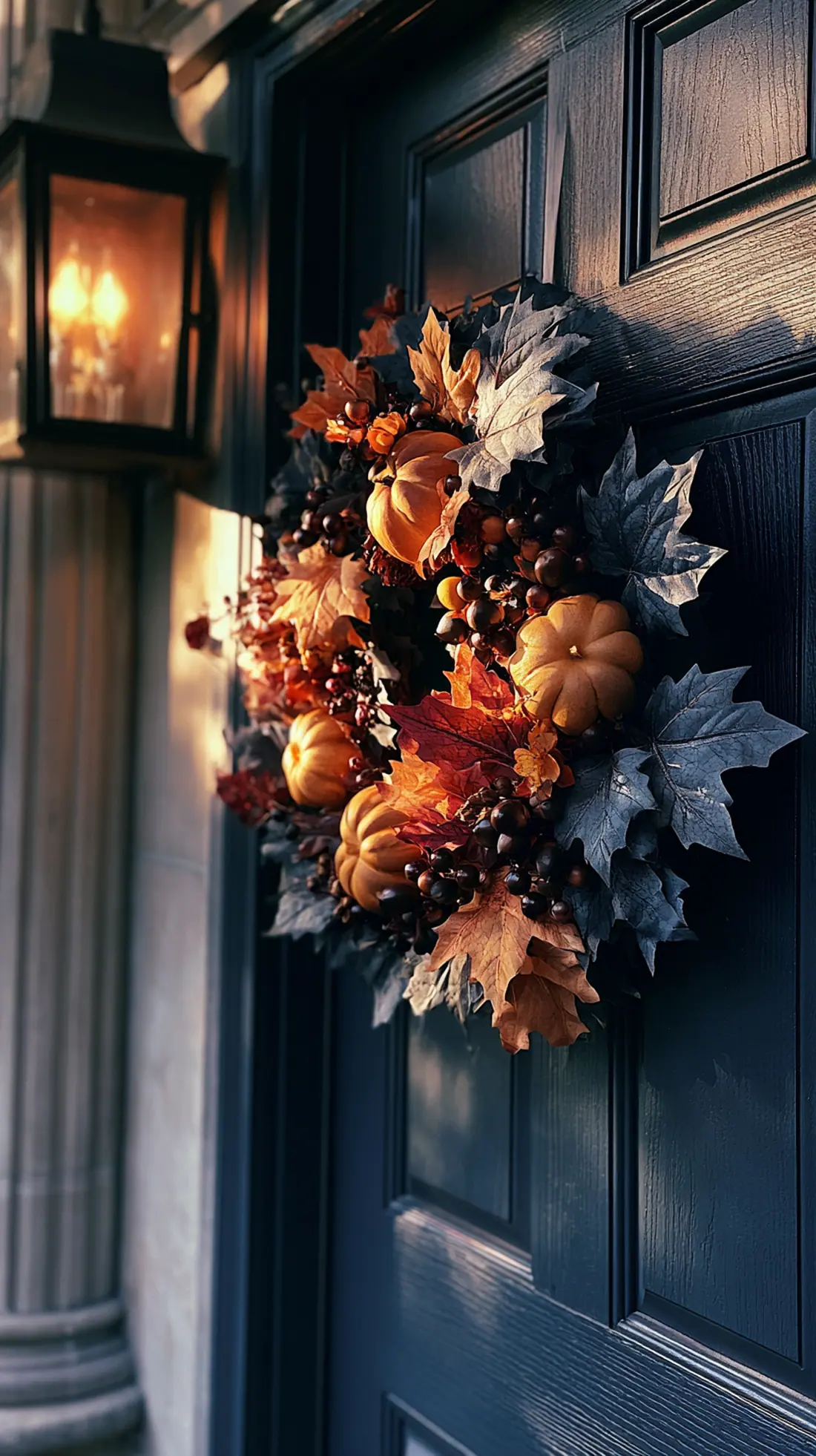 3/4
3/4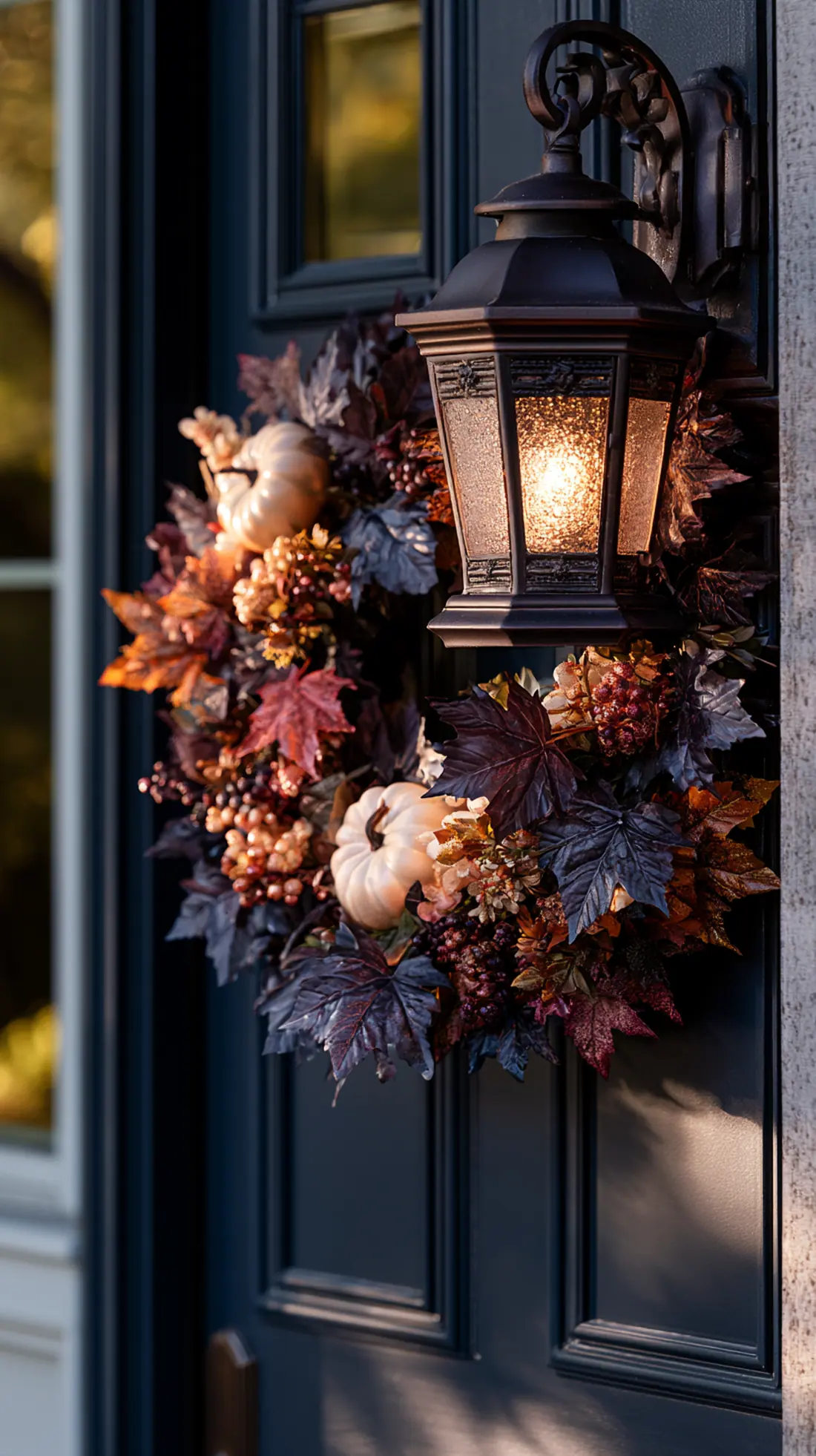 4/4
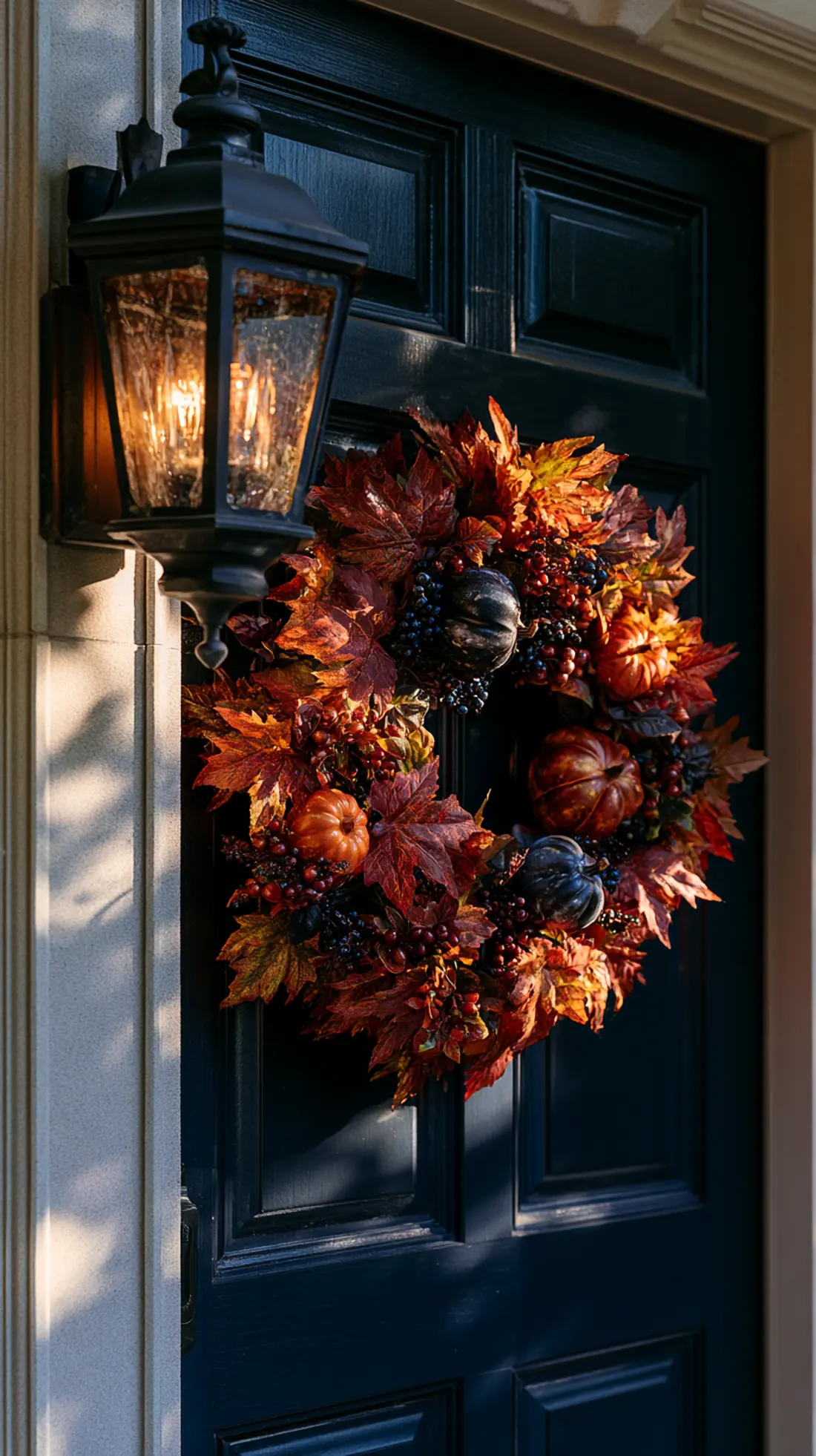
4/4A front door wreath sets the tone for the whole porch, and a faux-foliage build holds its color through months of direct sun and rain in a way that dried florals simply cannot.
Start with a grapevine or wire base, then work in faux maple leaves, small faux gourds, and a few sprigs of artificial wheat, wiring each piece on rather than gluing, since hot glue lets go in humidity. Hang the wreath from a wreath hanger that hooks over the top of the door frame instead of a nail through the door itself, which keeps the door usable and the wreath level. Rotate the wreath a quarter turn every few weeks if it hangs in direct afternoon sun, so fading happens evenly instead of on one bleached side.
Quick Tips
- Choose UV-resistant faux foliage for a south-facing door
- Wire pieces onto the base instead of hot-gluing them
- Use an over-the-door hook to skip drilling into trim
6. Ground the Porch With a Rust-Toned Outdoor Rug
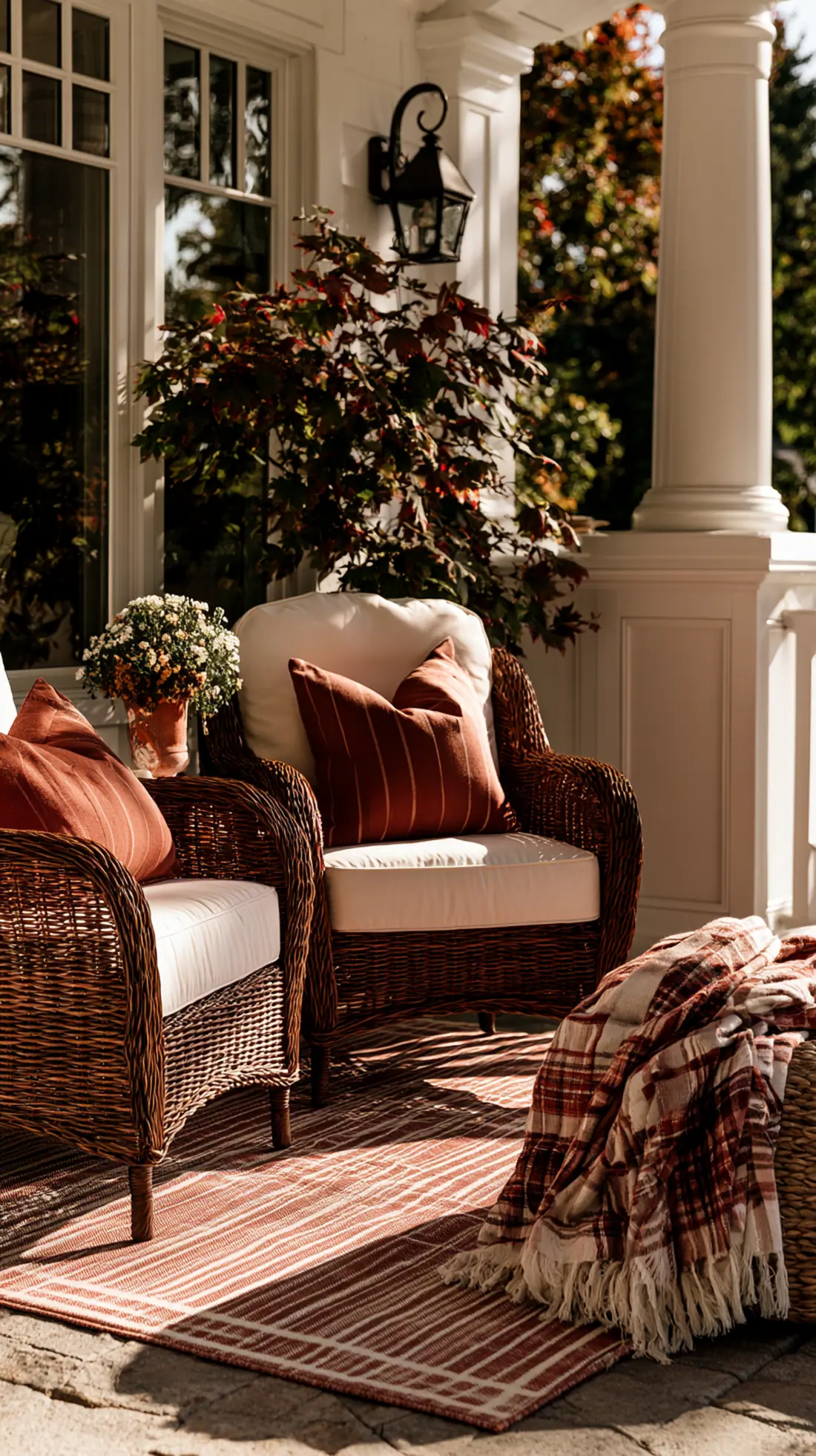
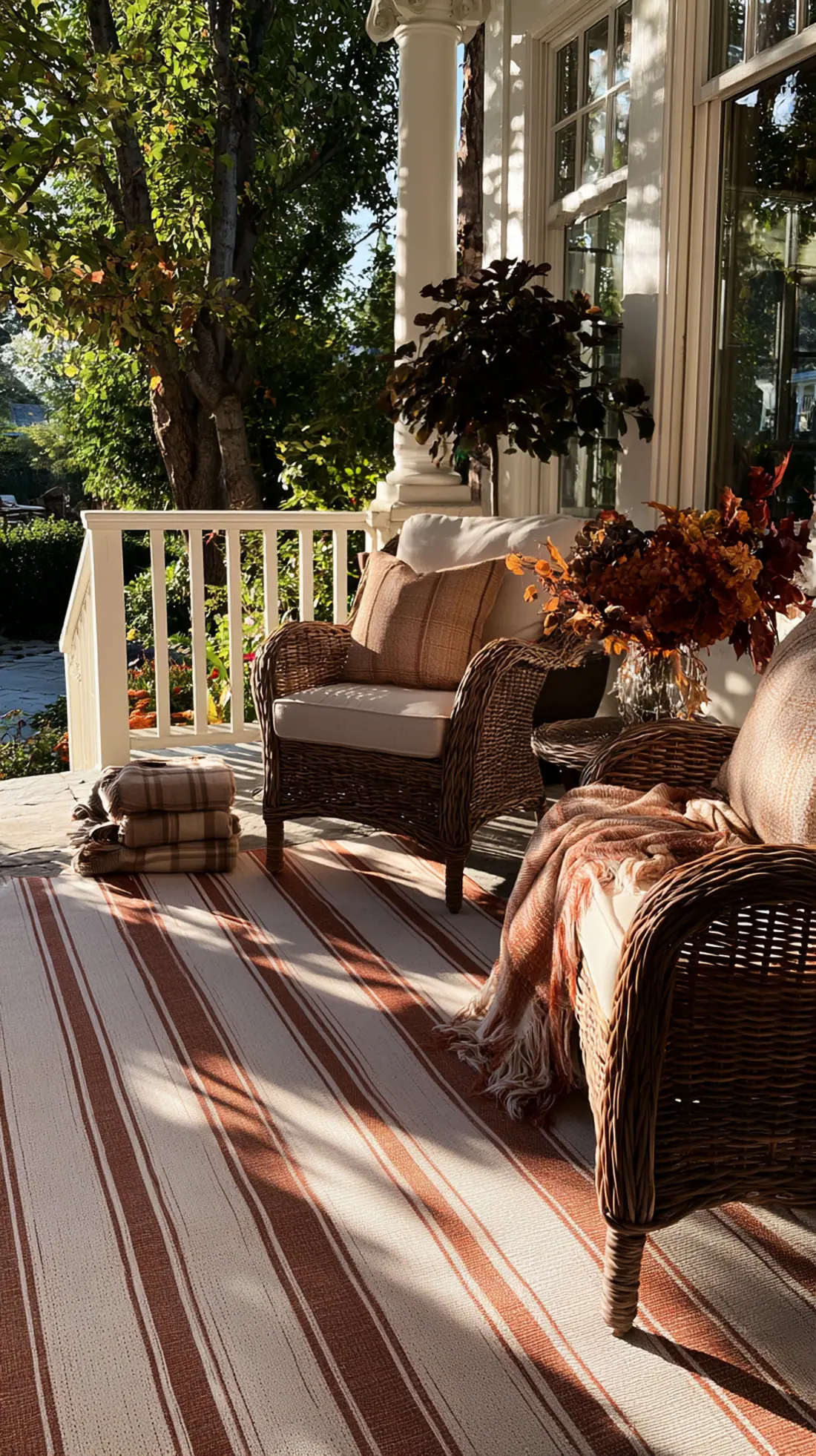
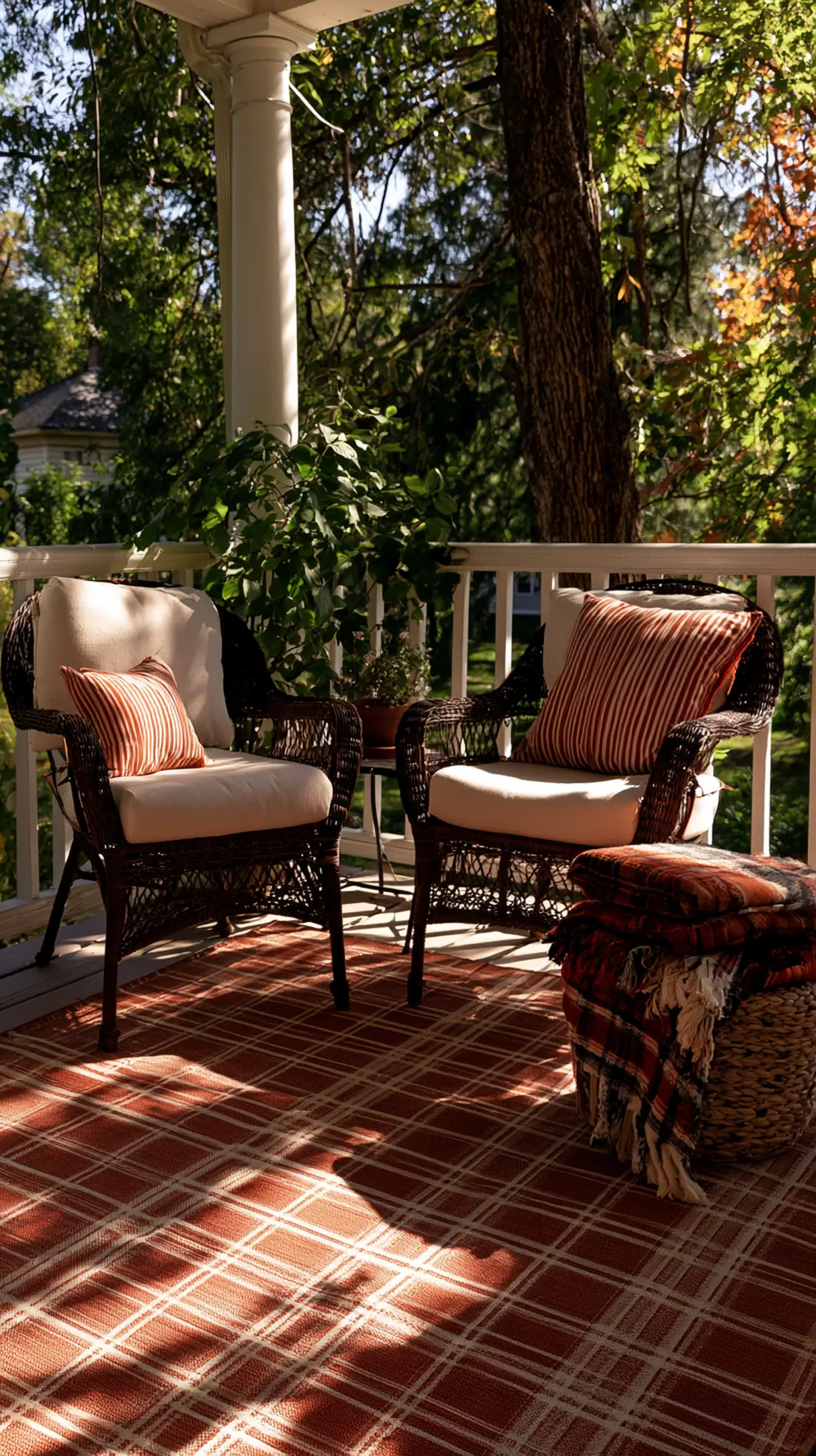
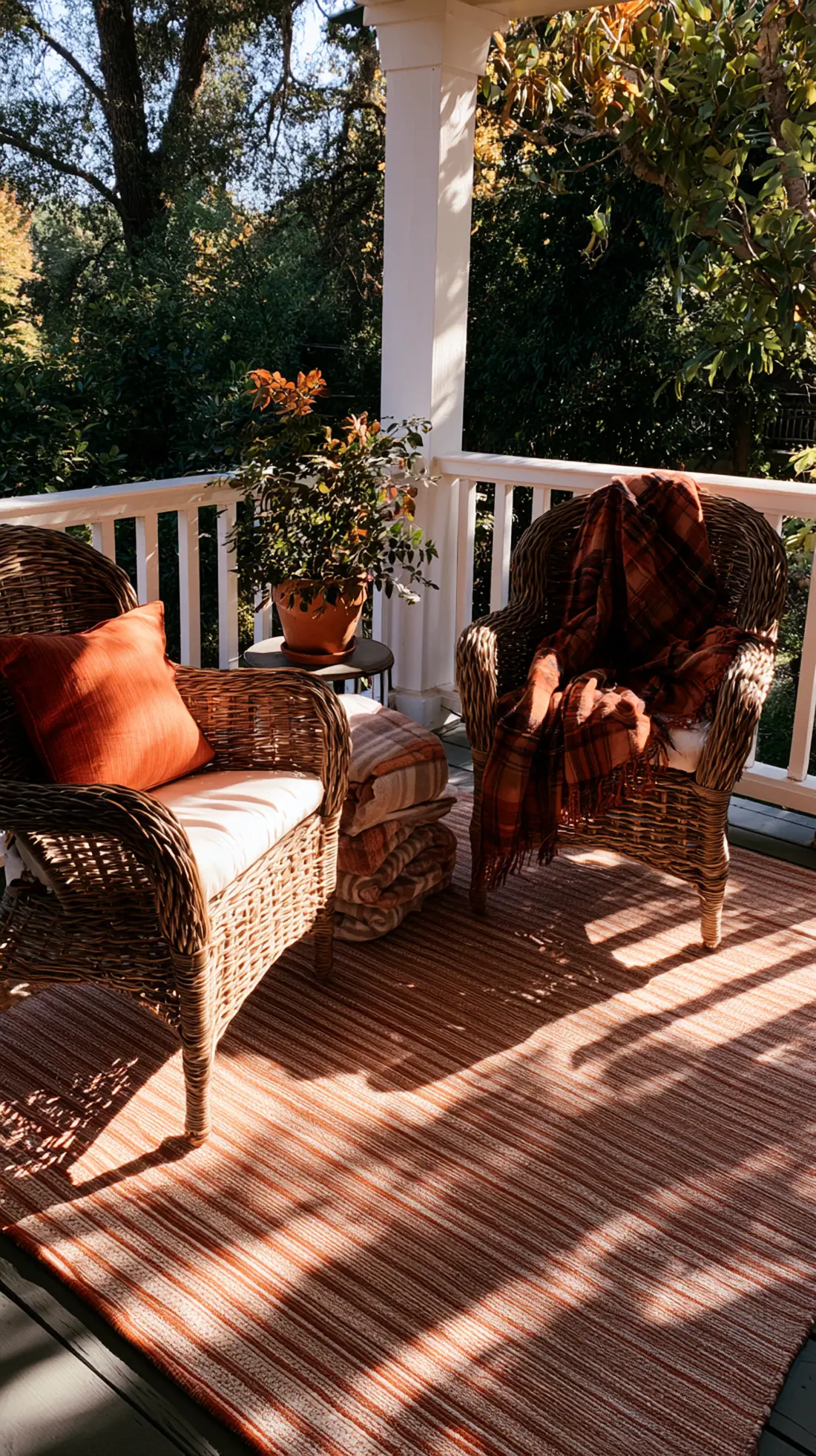
An outdoor rug in rust, cream, or deep olive does more to warm up a porch than almost any single decoration, and a rug rated for outdoor use will not mildew the way an indoor rug does the first time it gets rained on.
Look for a flat-weave polypropylene rug, which sheds water instead of absorbing it, and choose a size that leaves a few inches of decking or concrete visible around the edges so it does not trap moisture underneath. If your porch is exposed to driving rain rather than just covered overhead, roll the rug up and store it during the worst weeks instead of leaving it to sit wet. This is the same swap that makes a porch feel finished during a 30 Late Summer Decorating Ideas Living Room transition into cooler months, just moved outside.
Quick Tips
- Choose flat-weave over shag for faster drying
- Hose the rug down monthly to clear grit and pollen
- Store it rolled, not folded, to prevent permanent creases
7. Stake Mums in Terracotta Pots So Wind Can’t Tip Them
 1/4
1/4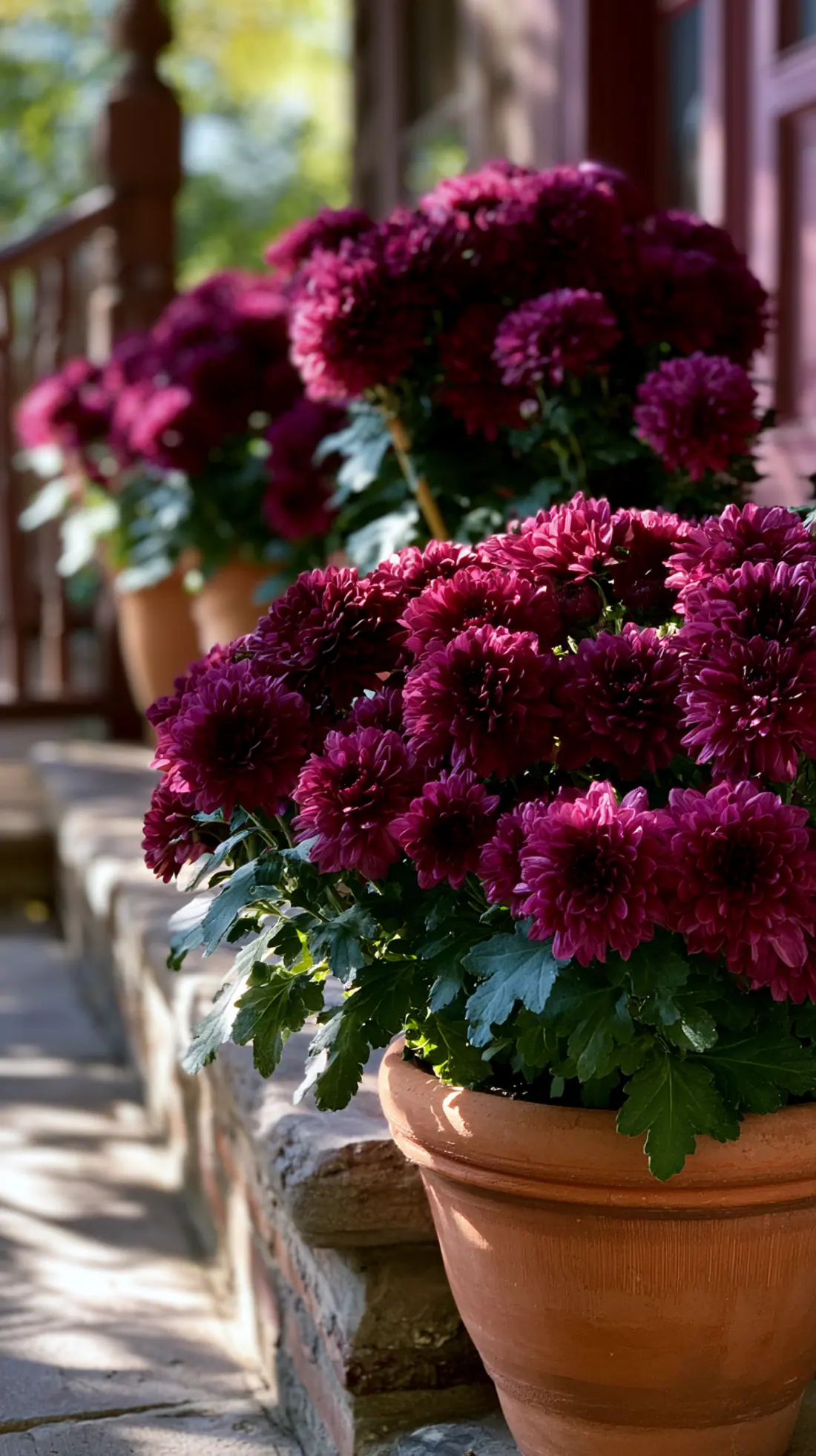 2/4
2/4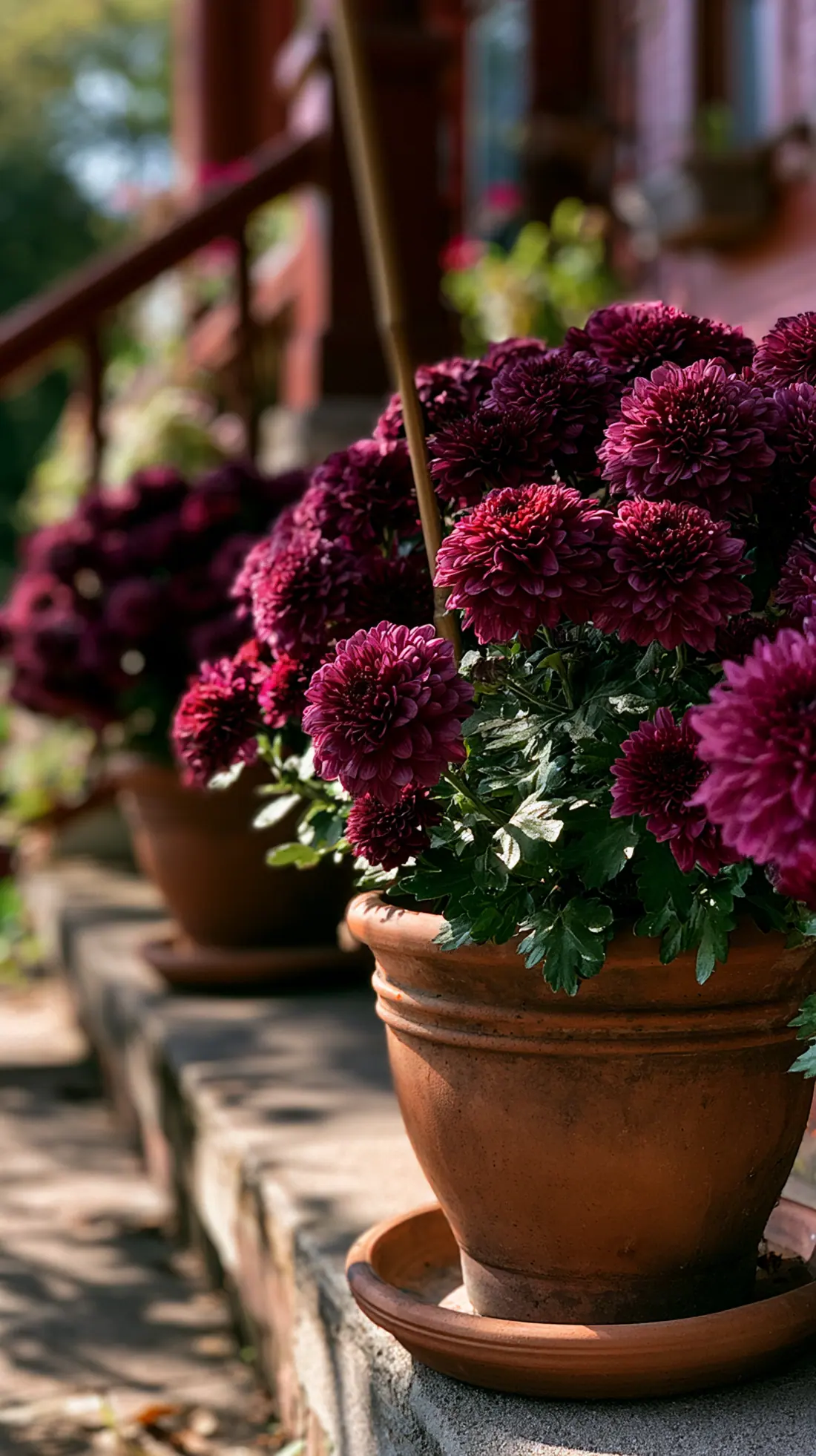 3/4
3/4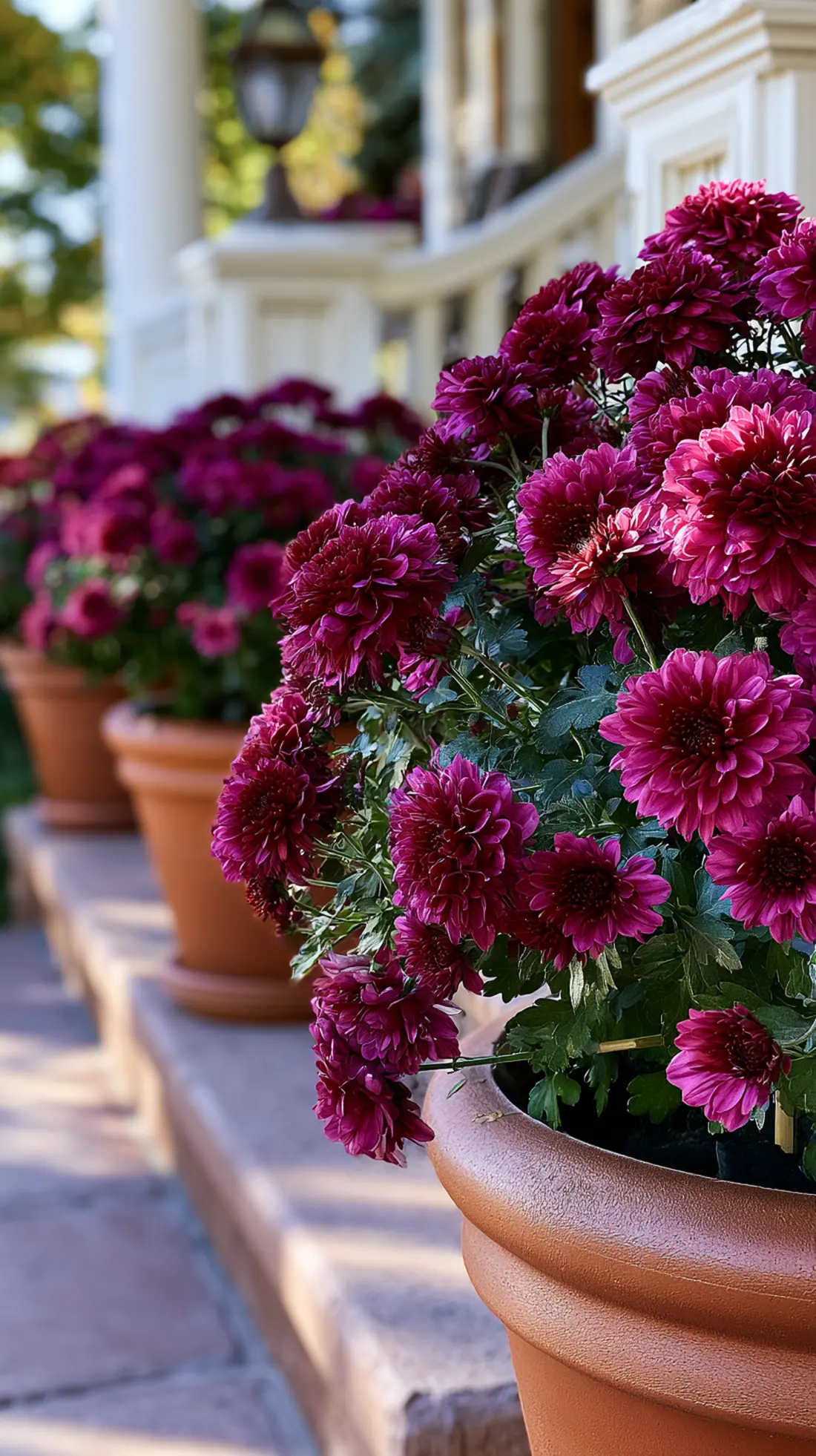 4/4
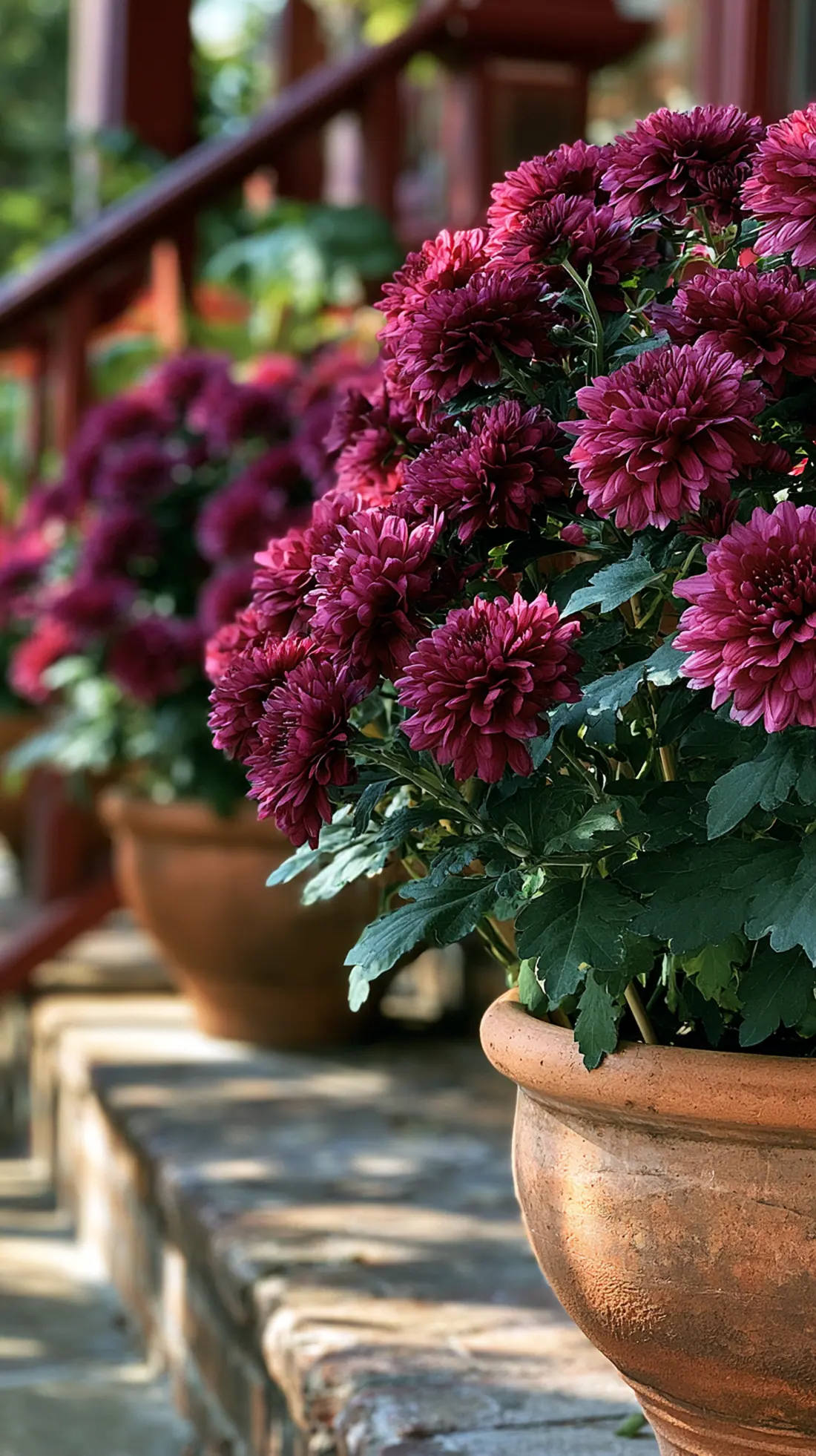
4/4Mums are one of the most reliable fall outdoor decorating ideas because they are inexpensive, widely available, and hold color for weeks, but a top-heavy pot in bloom is an easy target for wind.
Push a slim bamboo or metal garden stake into the soil at the back of the pot, then loosely tie the main stem to it with a stretchy plant tie so the mum can still move without snapping or tipping the whole container. Terracotta pots are heavier than plastic ones and sit lower to the ground, both of which help with stability, so it is worth the extra weight if you are placing pots on open steps. Water in the morning rather than the evening so the soil is not saturated and extra heavy right before an evening storm.
Quick Tips
- Group two or three pots together for added wind resistance
- Use a stretchy tie, not wire, to avoid stem damage
- Move pots against the house wall before a windy forecast
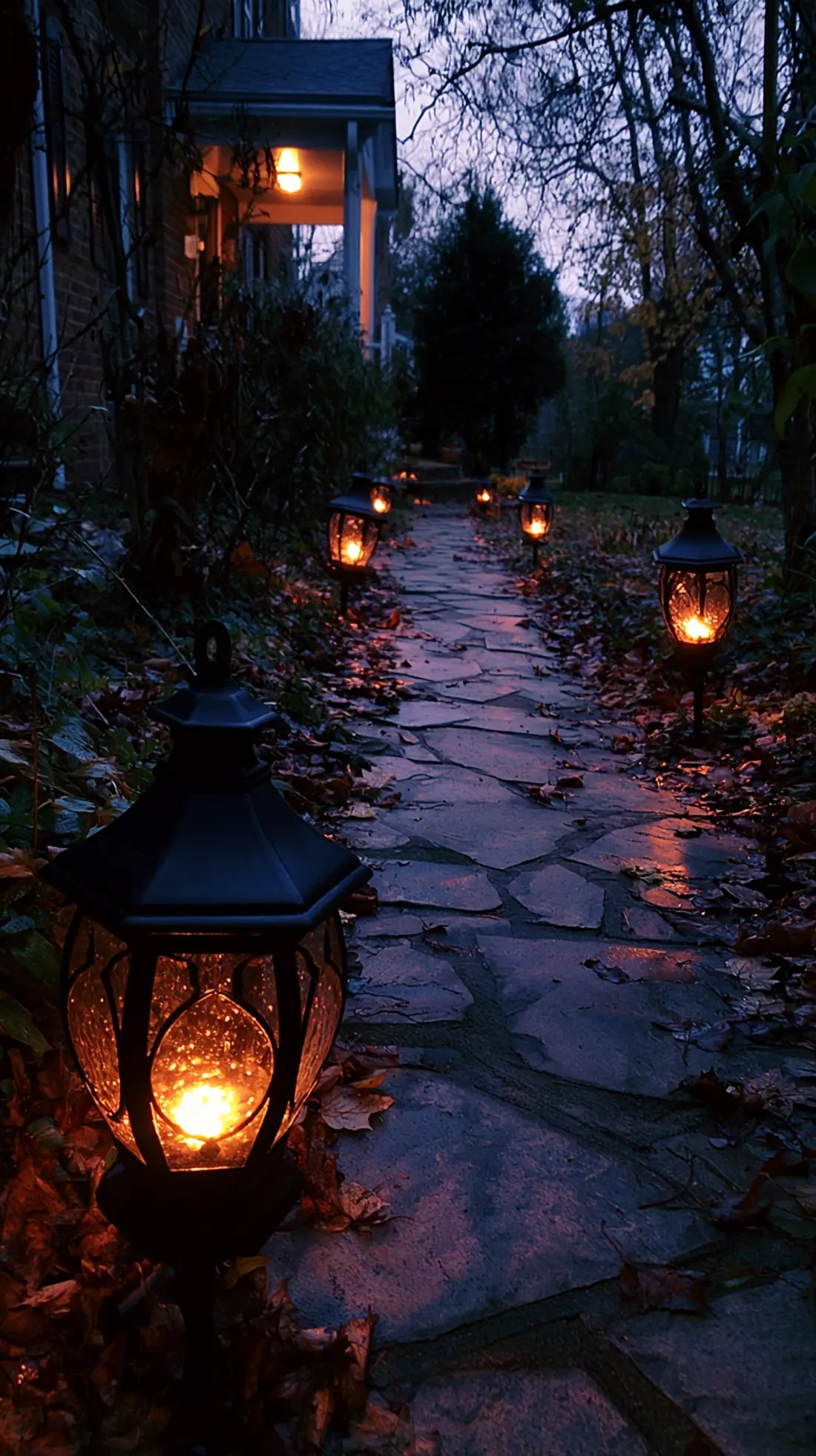
8. Line the Walkway With Solar Stake Lanterns
 1/4
1/4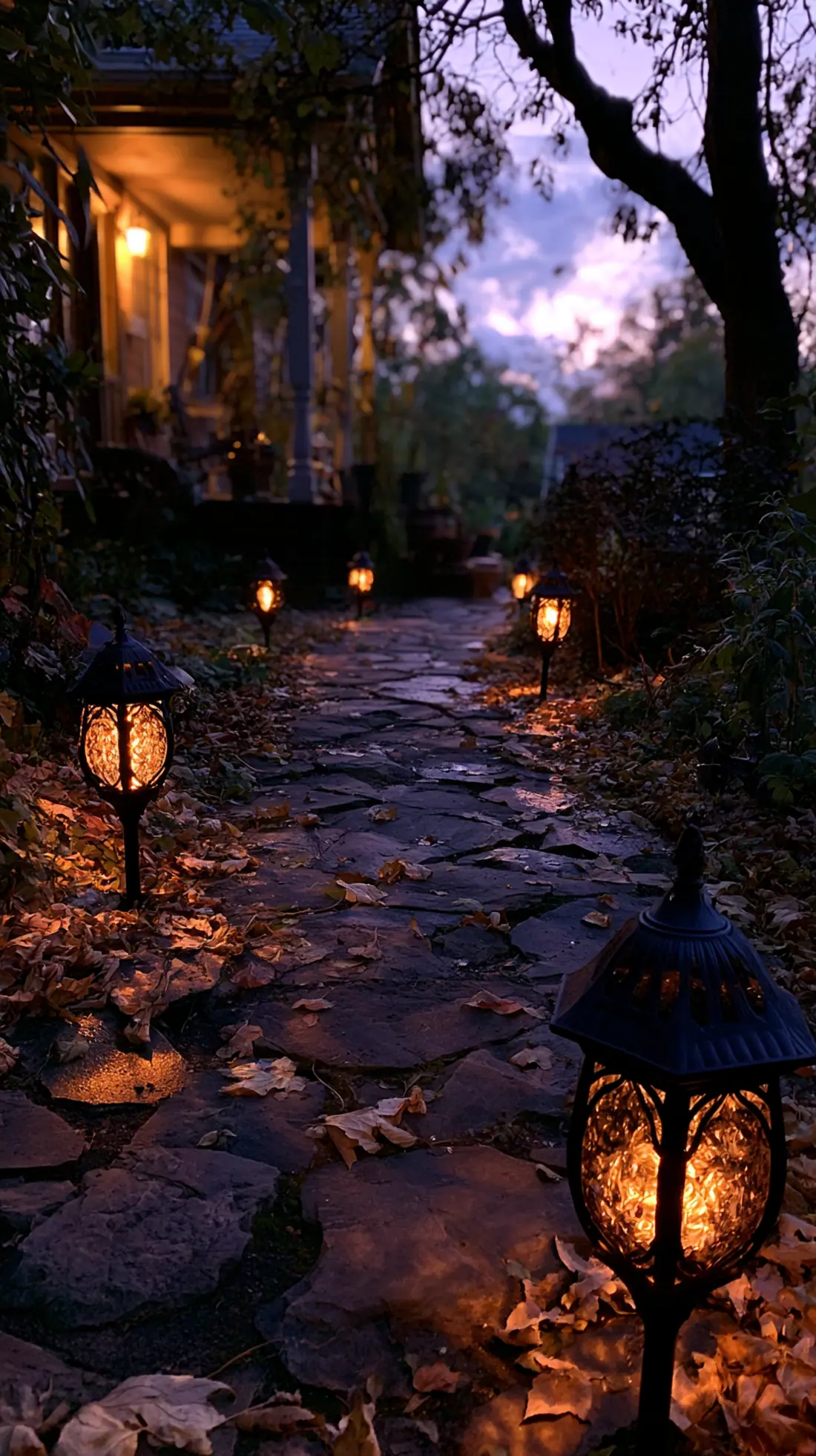 2/4
2/4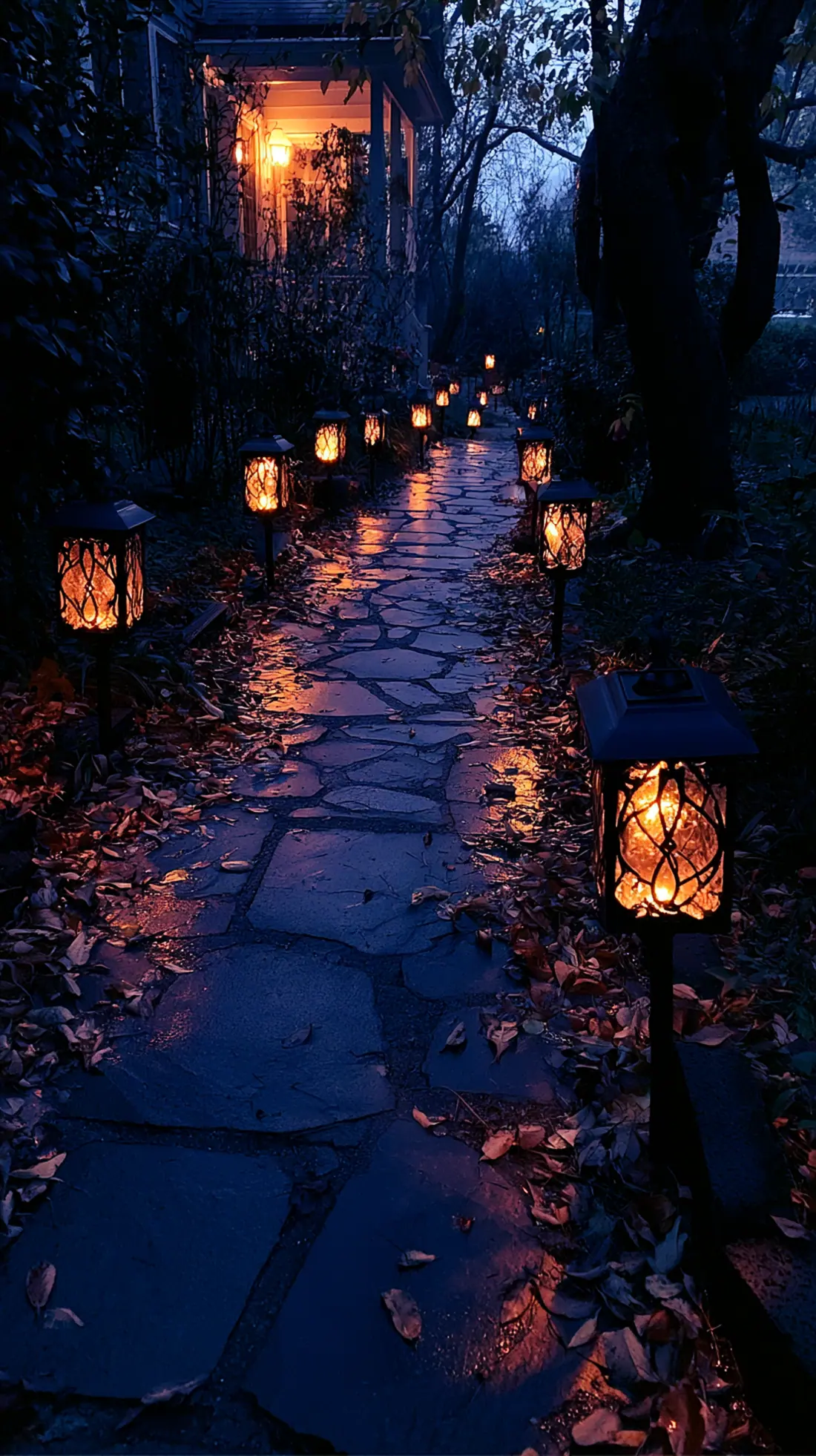 3/4
3/4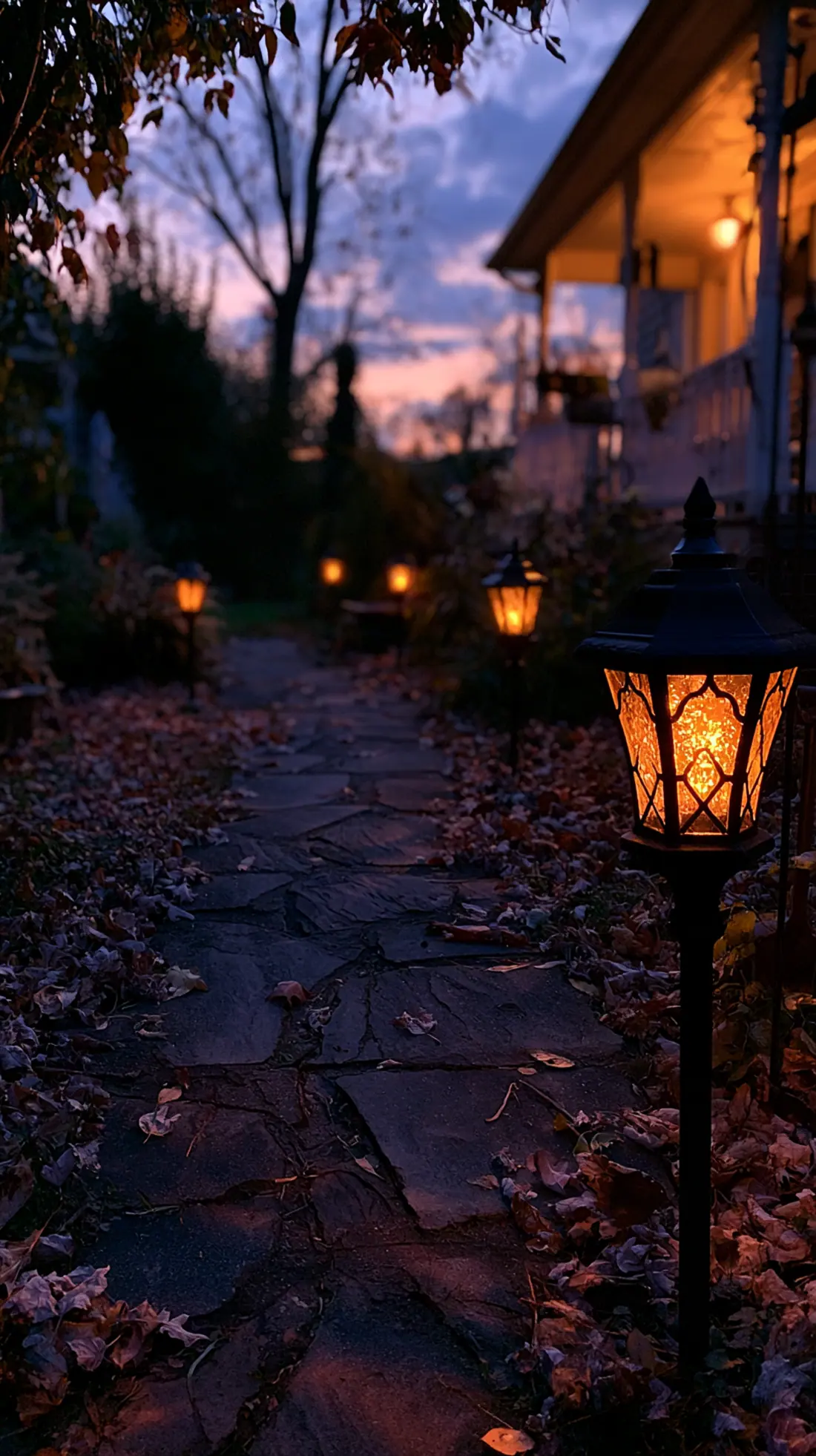 4/4
4/4A row of solar stake lanterns along a front walkway is one of the fall outdoor decorating ideas that works just as hard after dark as it does in daylight photos, and it needs no cords running across wet grass.
Space the lanterns evenly, roughly three to four feet apart, and push each stake fully into the soil so it cannot lean or rattle loose in wind. Choose lanterns with a frosted or amber glass panel rather than clear plastic, since the warmer glow reads more like candlelight and hides the solar panel less awkwardly. Wipe the solar panels clean once a month, since a layer of dust or fallen leaves cuts the charge and dims the light noticeably by the second week.
Quick Tips
- Push stakes in at a slight angle for extra grip in soft soil
- Wipe panels weekly during heavy leaf drop
- Choose amber glass over clear for a warmer glow
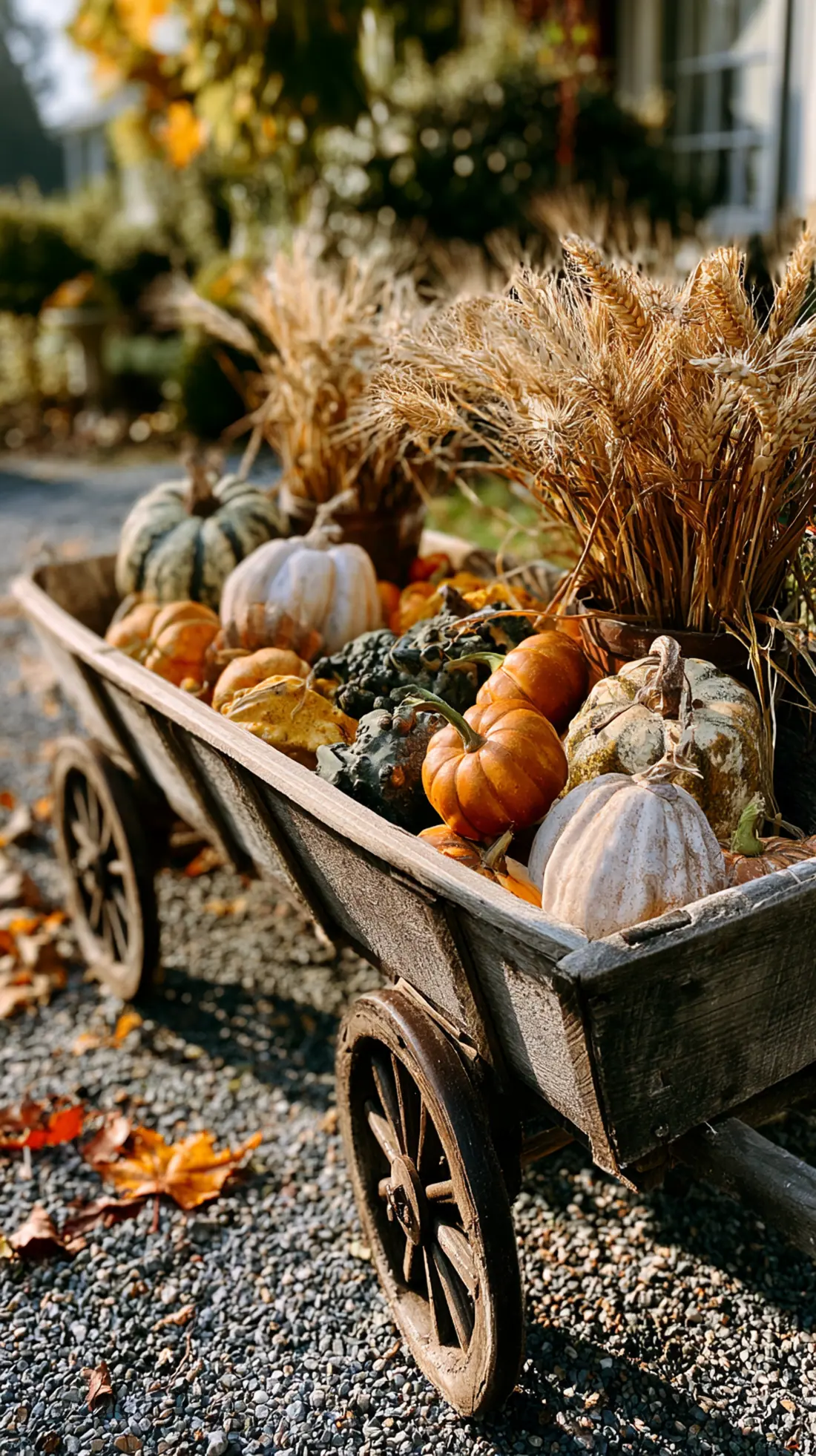
9. Fill a Wagon With Waterproof Faux Gourds
 1/4
1/4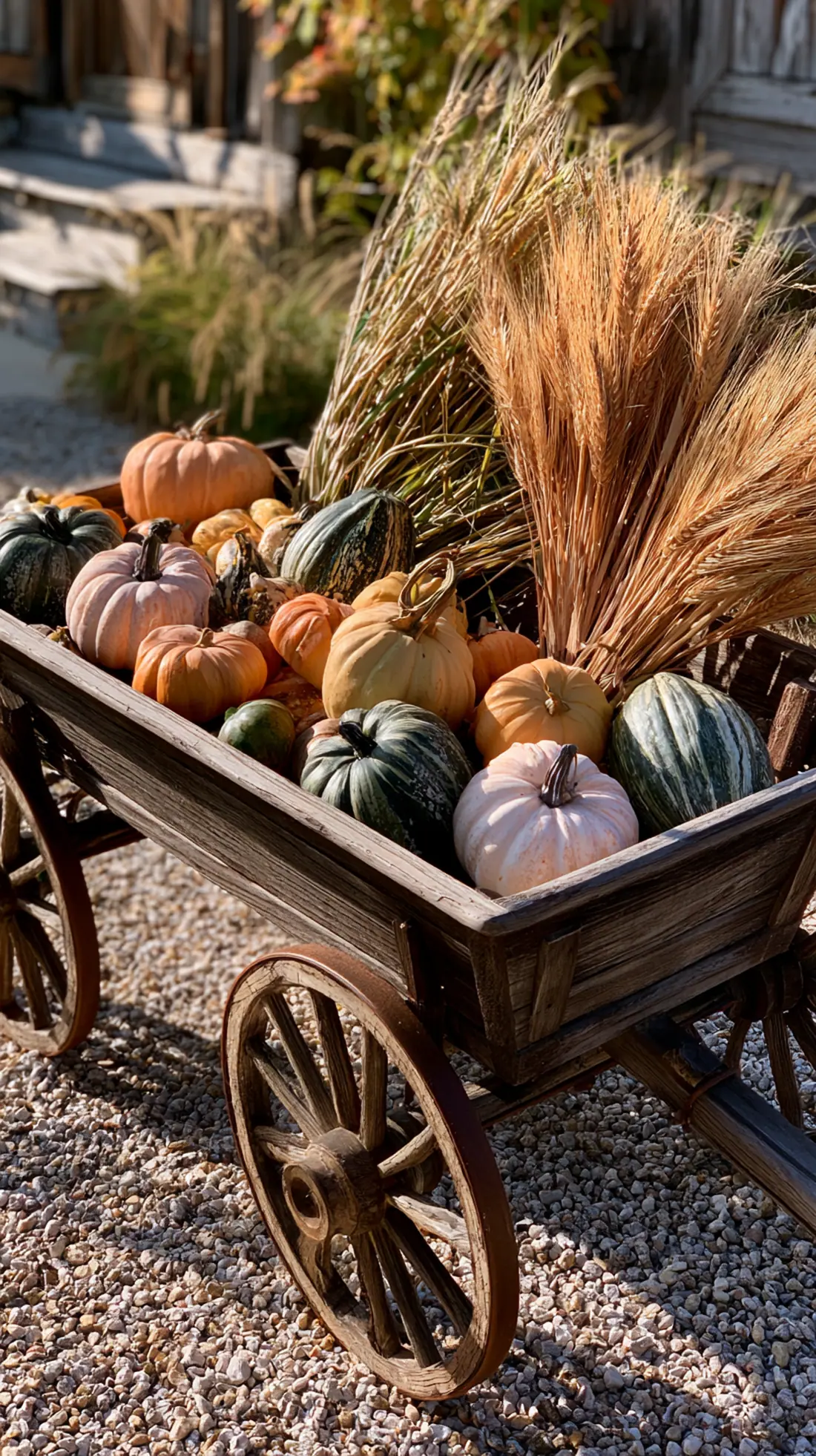 2/4
2/4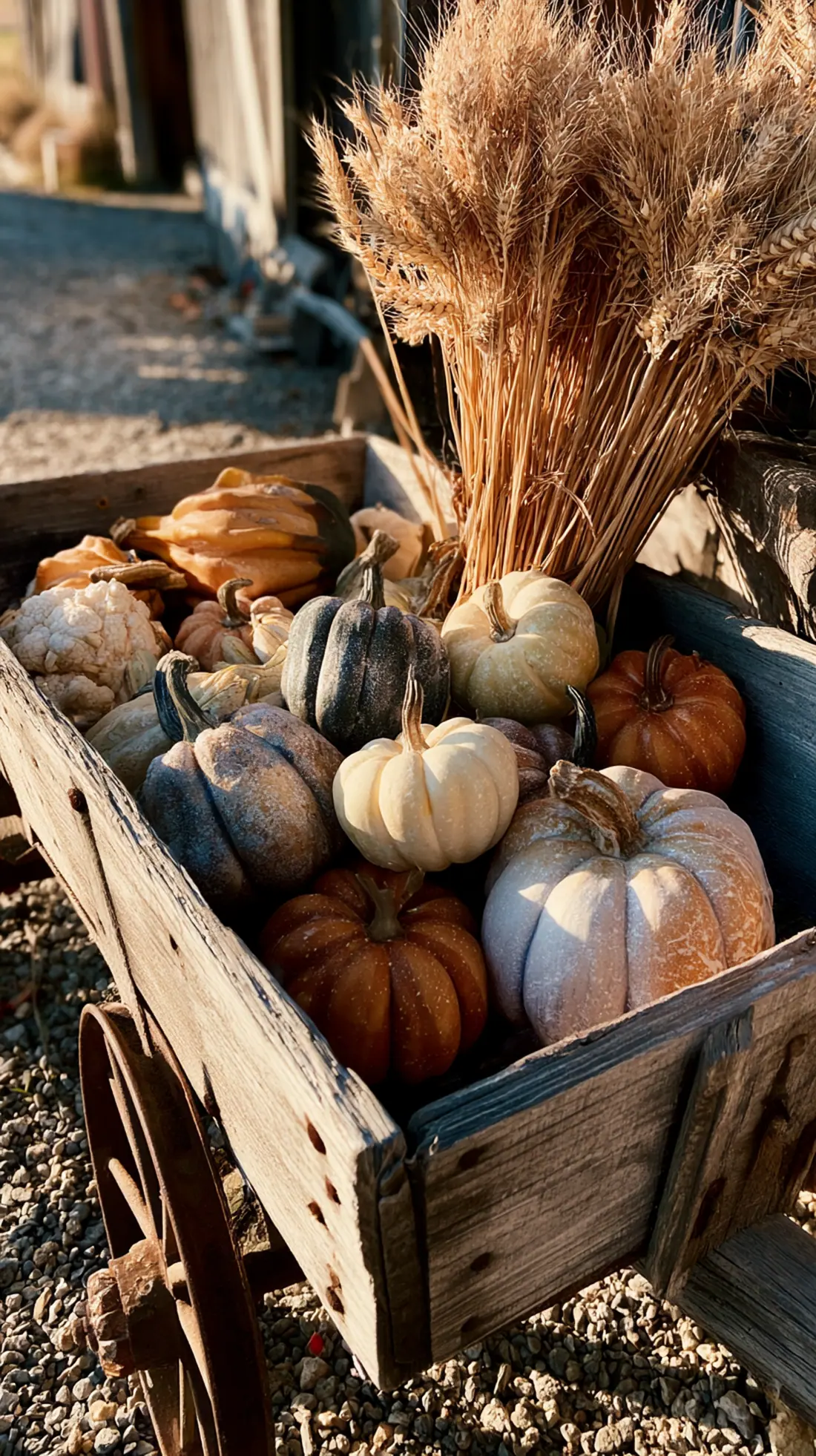 3/4
3/4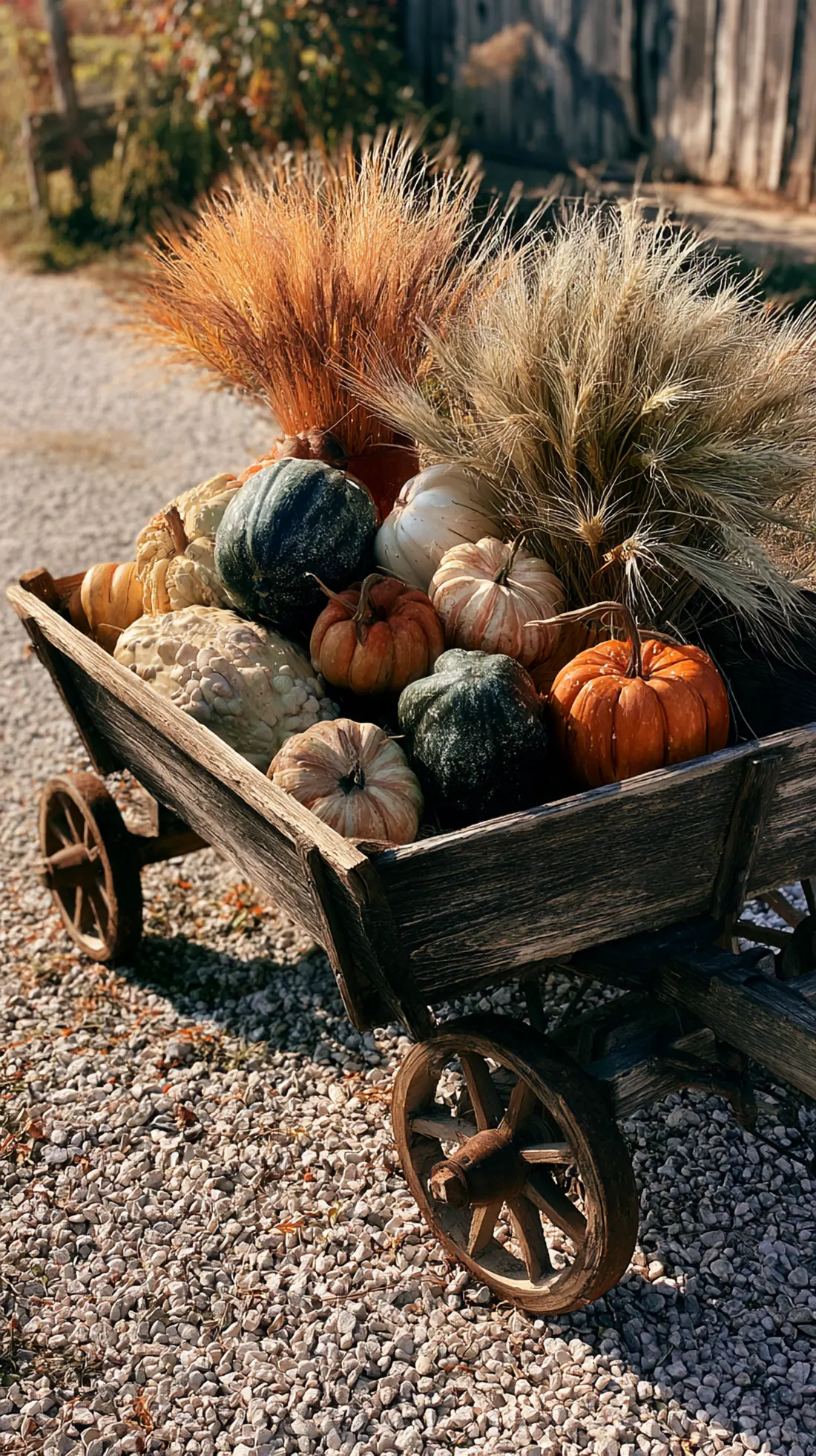 4/4
4/4An old wagon or wheelbarrow piled with gourds is a porch classic, and I’ve found that swapping real gourds for a faux mix keeps the display looking full from the first week of September straight through Thanksgiving.
Layer the gourds by size, largest on the bottom and smallest tucked into gaps, so the pile holds its shape instead of rolling apart every time the wind picks up. A wagon with slatted wood sides drains naturally, but check that the wagon bed itself has drainage holes or a slight tilt, since standing water under a gourd pile invites mildew fast. Anchor the wagon by parking one wheel against a porch post or a brick, which keeps a lightweight wagon from rolling in gusty weather.
Quick Tips
- Mix in real mini pumpkins for texture, swap them out monthly
- Check the wagon bed drains before loading it up
- Wedge a wheel against a post so it cannot roll
10. Dress the Mailbox Post With a Wired Ribbon Swag
 1/4
1/4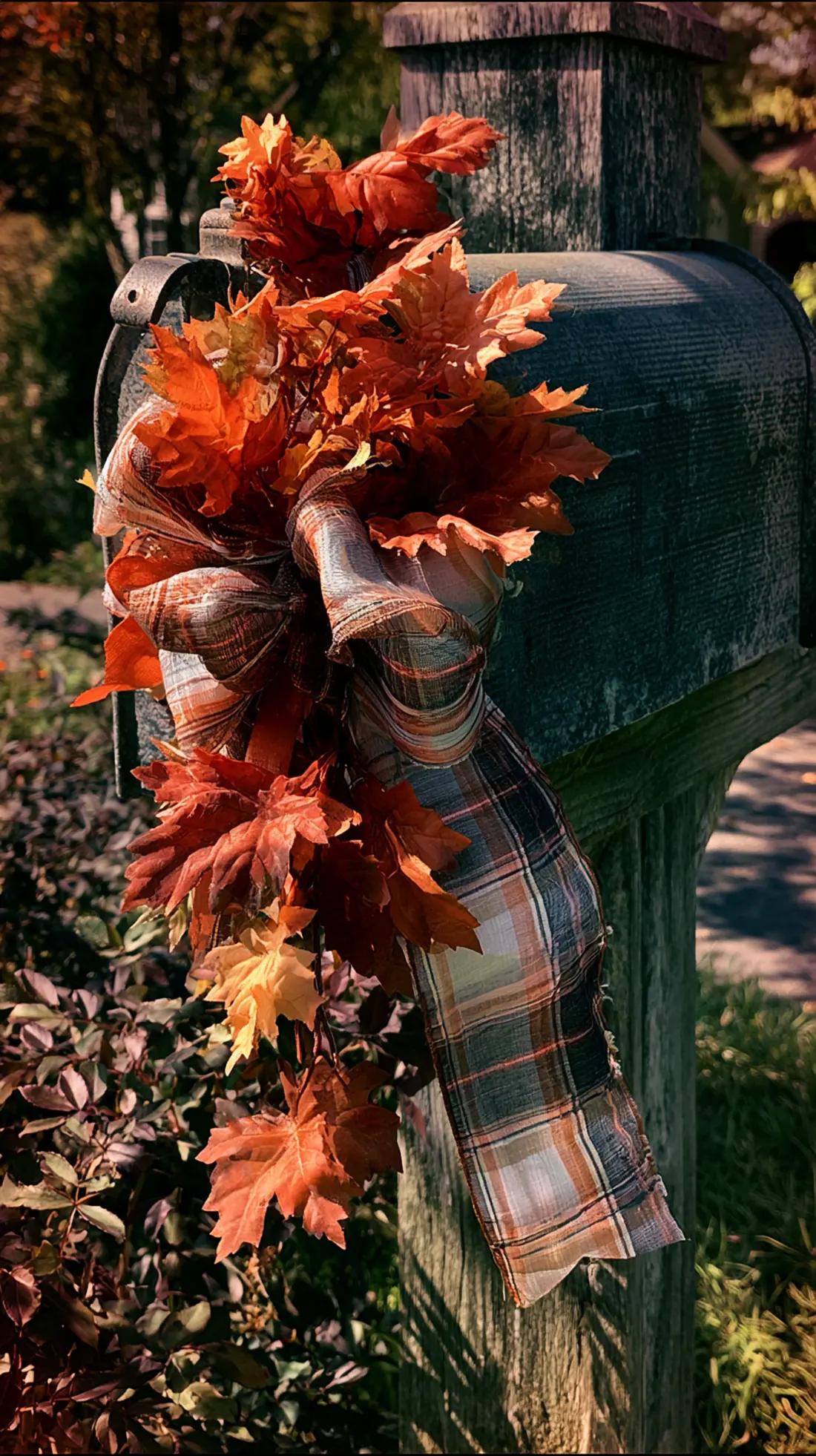 2/4
2/4 3/4
3/4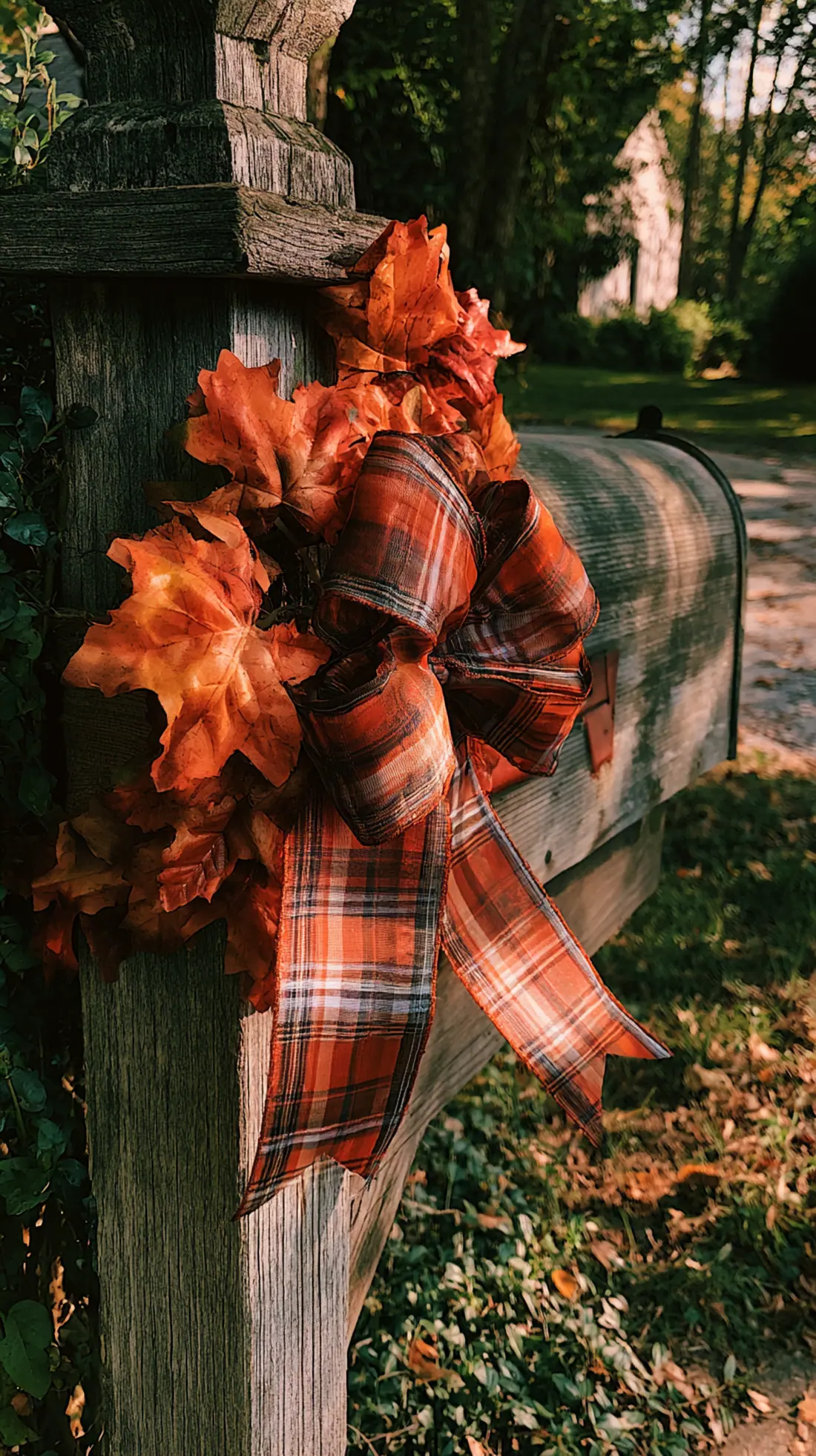 4/4
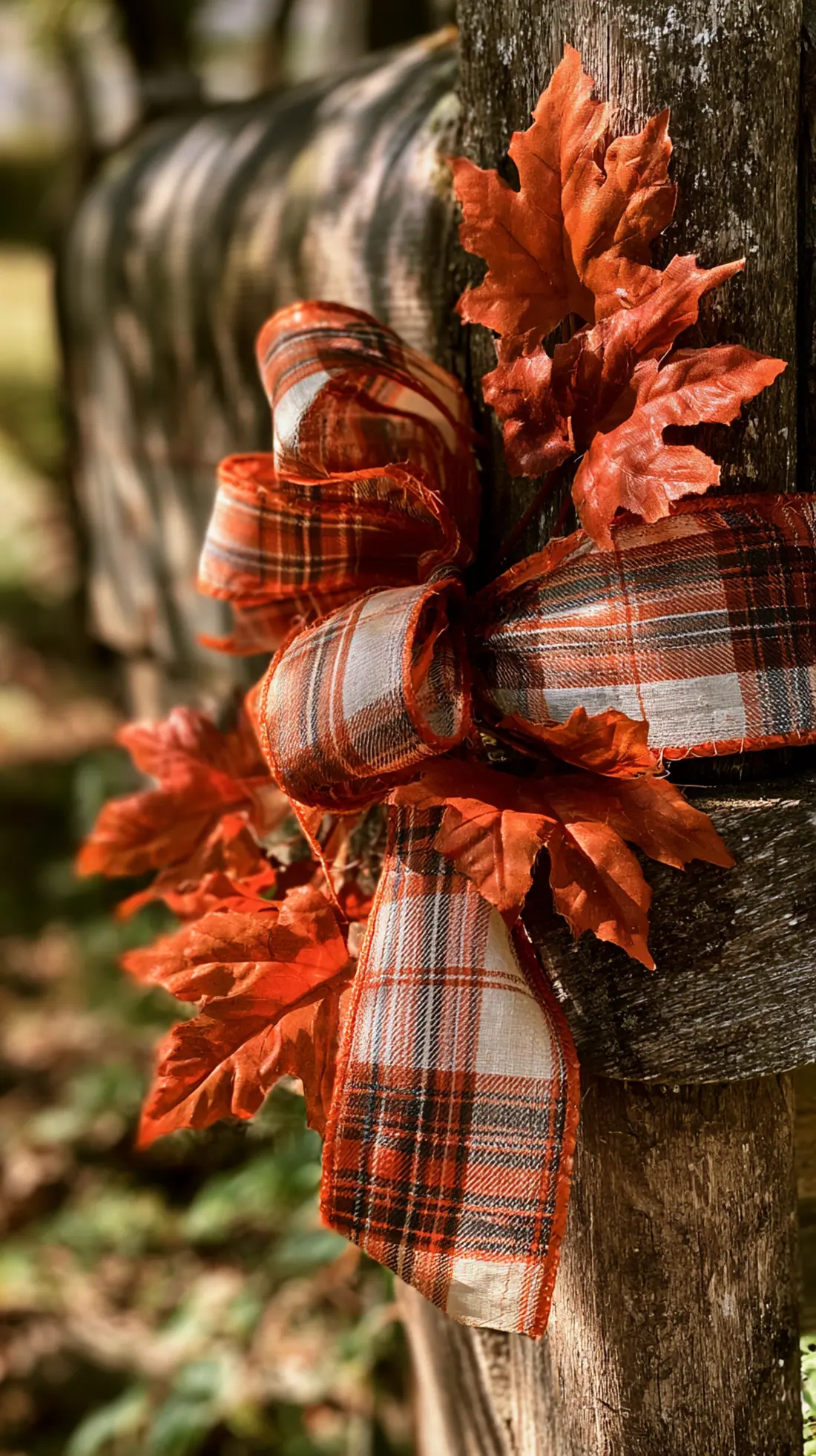
4/4A mailbox post is easy to overlook, but a small wired swag there stretches your fall outdoor decorating ideas all the way to the curb, which is often the first thing a photo of your yard actually captures.
Wired-edge ribbon holds a bow shape through wind in a way that plain fabric ribbon cannot, since the wire lets you reshape crushed loops back into place after a storm rather than replacing the whole thing. I’ve noticed that mixing in a few stems of faux berries or wheat gives the swag more visual weight without adding real bulk to blow around. Tie it on with the ribbon itself rather than floral wire alone, since a full loop around the post holds even if one knot slips.
Quick Tips
- Choose wired-edge ribbon for reshapeable bows
- Add faux berry or wheat stems for texture
- Reknot after storms rather than replacing the whole swag
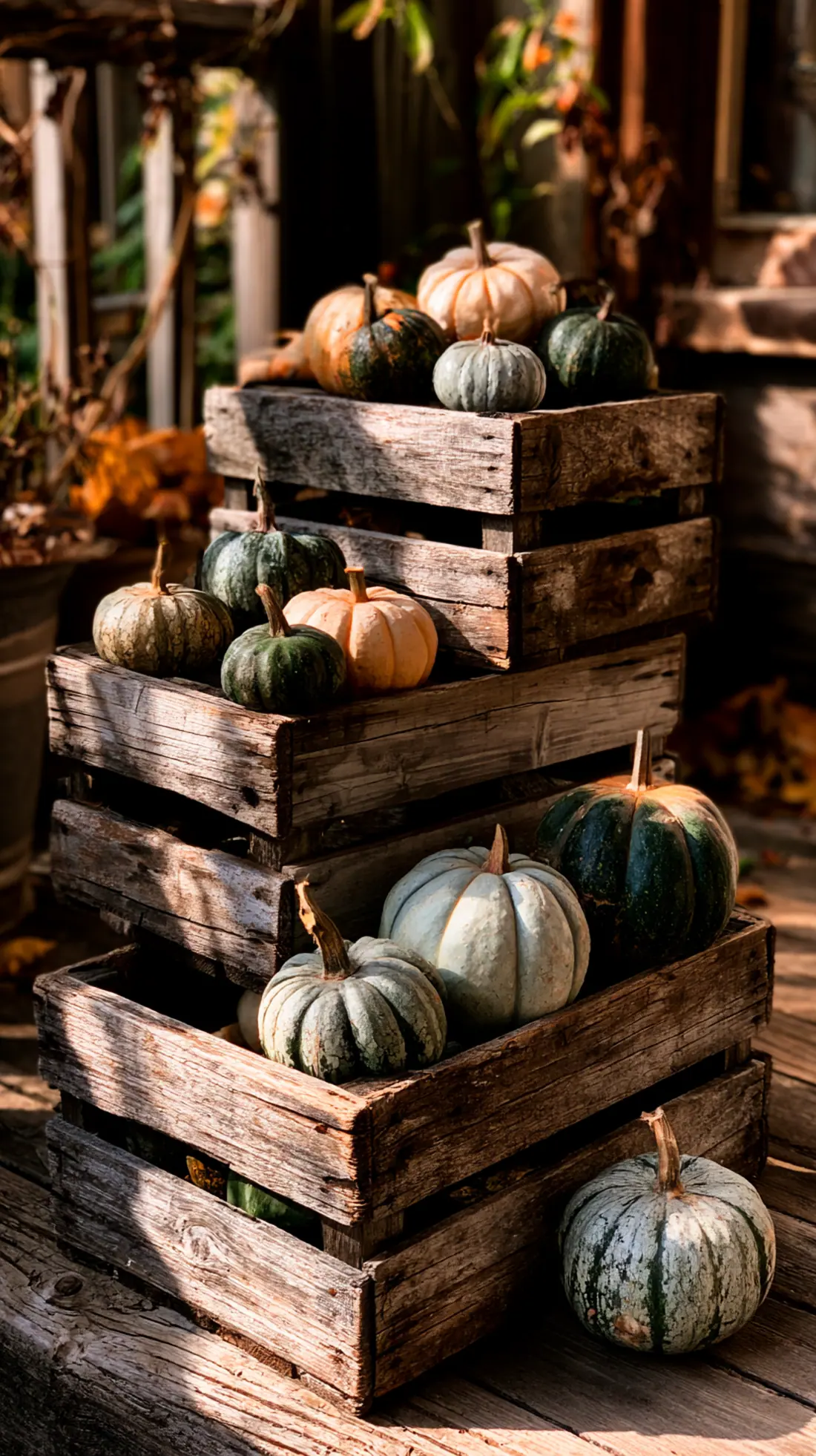
11. Stack Wood Crates Into a Tiered Pumpkin Stand
 1/4
1/4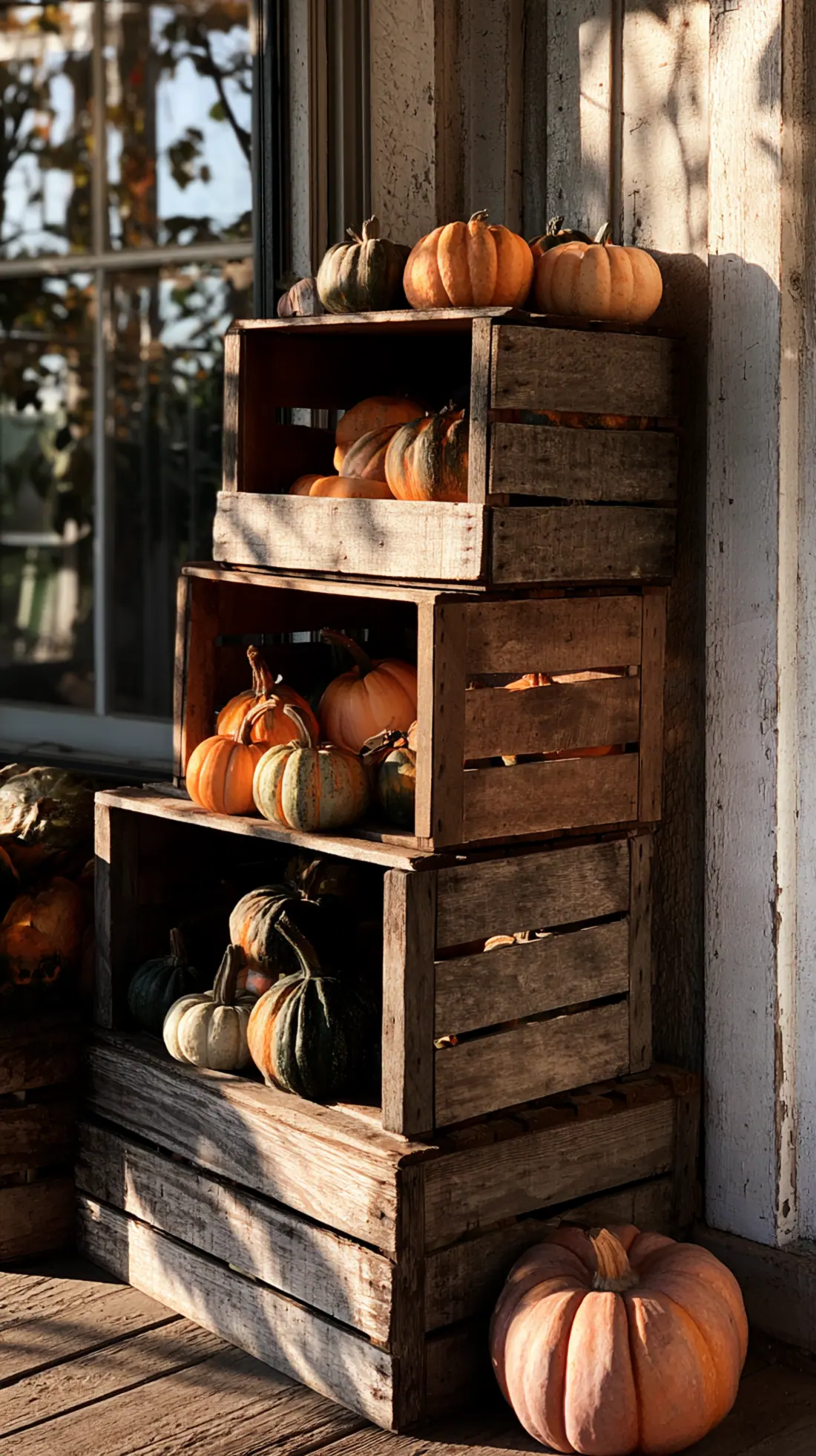 2/4
2/4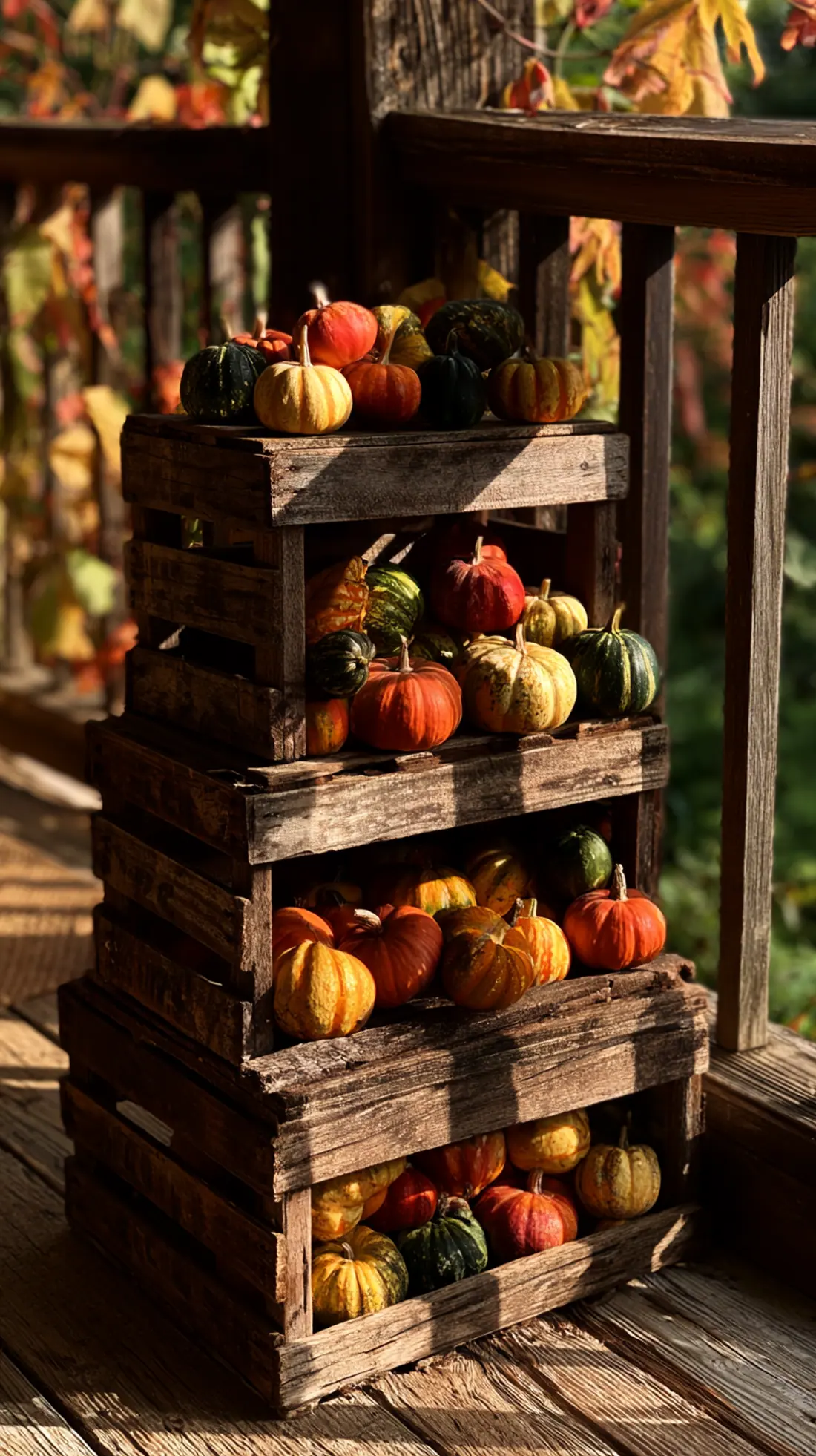 3/4
3/4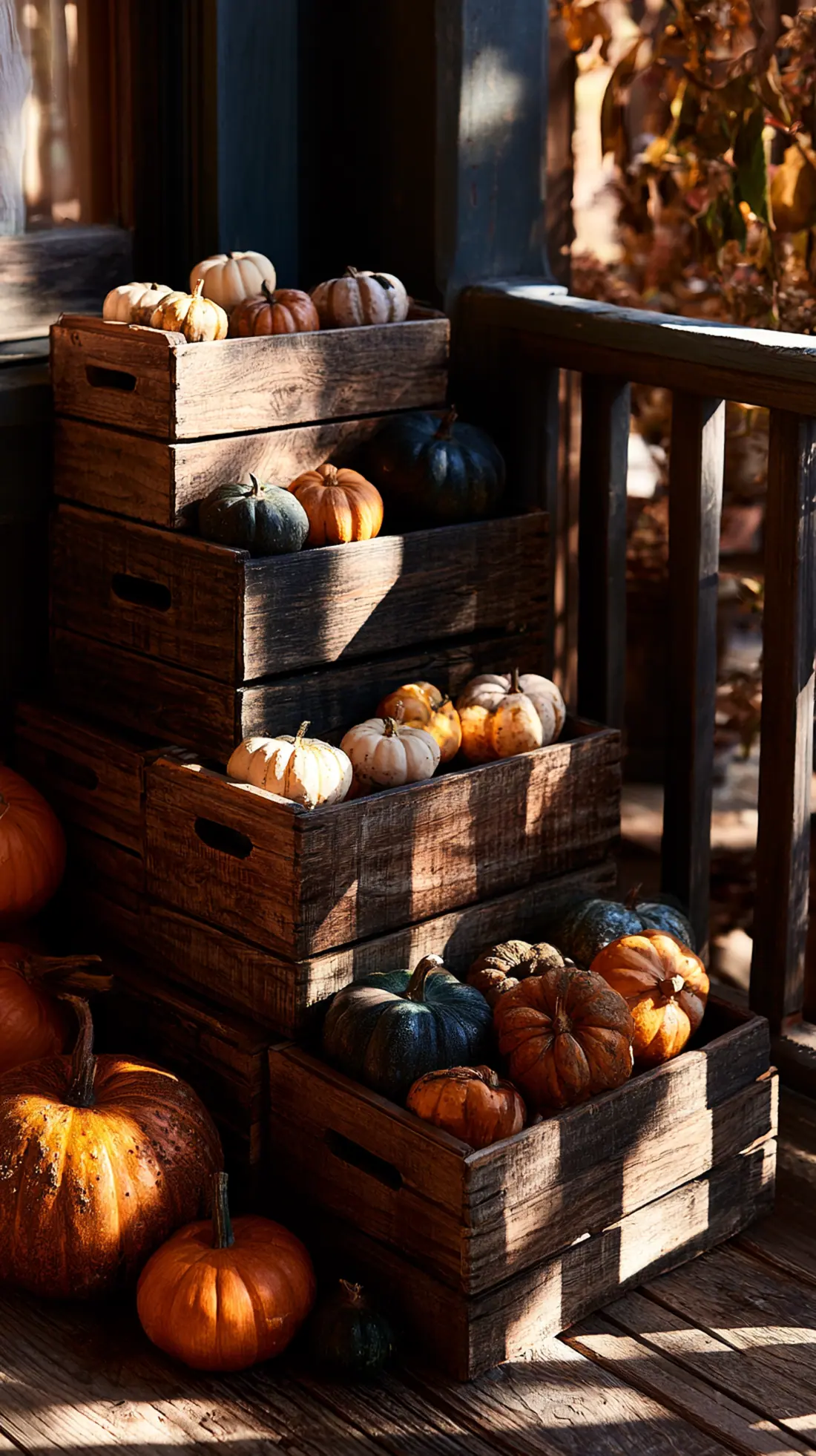 4/4
4/4Stacking two or three wood crates at different heights turns a flat porch step into a tiered display, and it gives every pumpkin its own visible spot instead of one crowded pile on the ground.
Choose crates built from cedar or treated pine, both of which resist rot far longer than untreated softwood left directly on wet concrete. Screw the crates together at the corners where they stack, since an unsecured crate can slide off its base in wind and take a pumpkin down with it. Set a thin rubber mat or a few pennies under each corner to lift the crate slightly off standing water and slow the wood from cupping over the season.
Quick Tips
- Choose cedar or treated pine crates for longevity
- Screw stacked crates together at the corners
- Lift crates off wet concrete with small feet or a mat
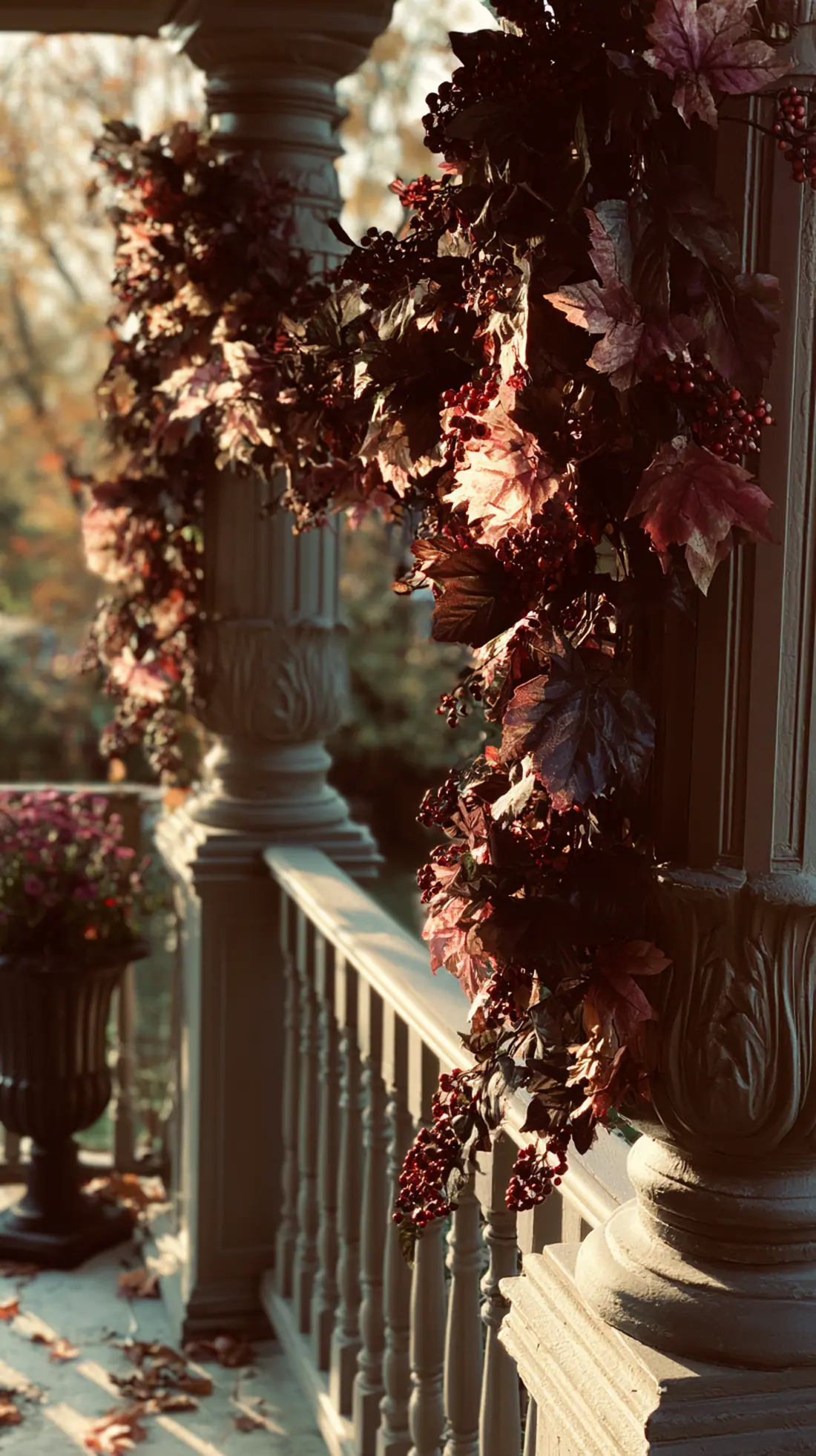
12. Wrap the Porch Railing With a Weighted Garland Swag
 1/4
1/4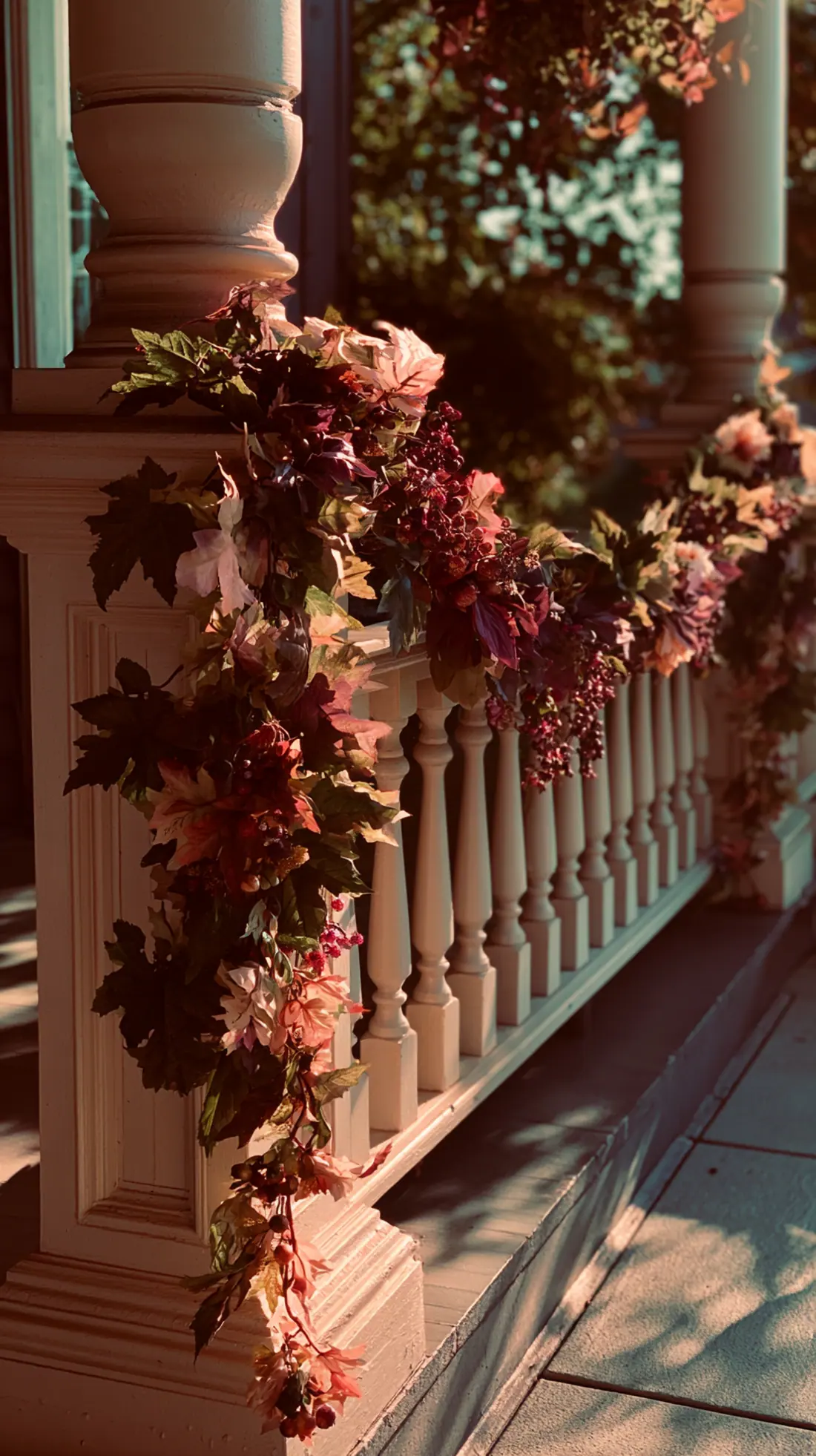 2/4
2/4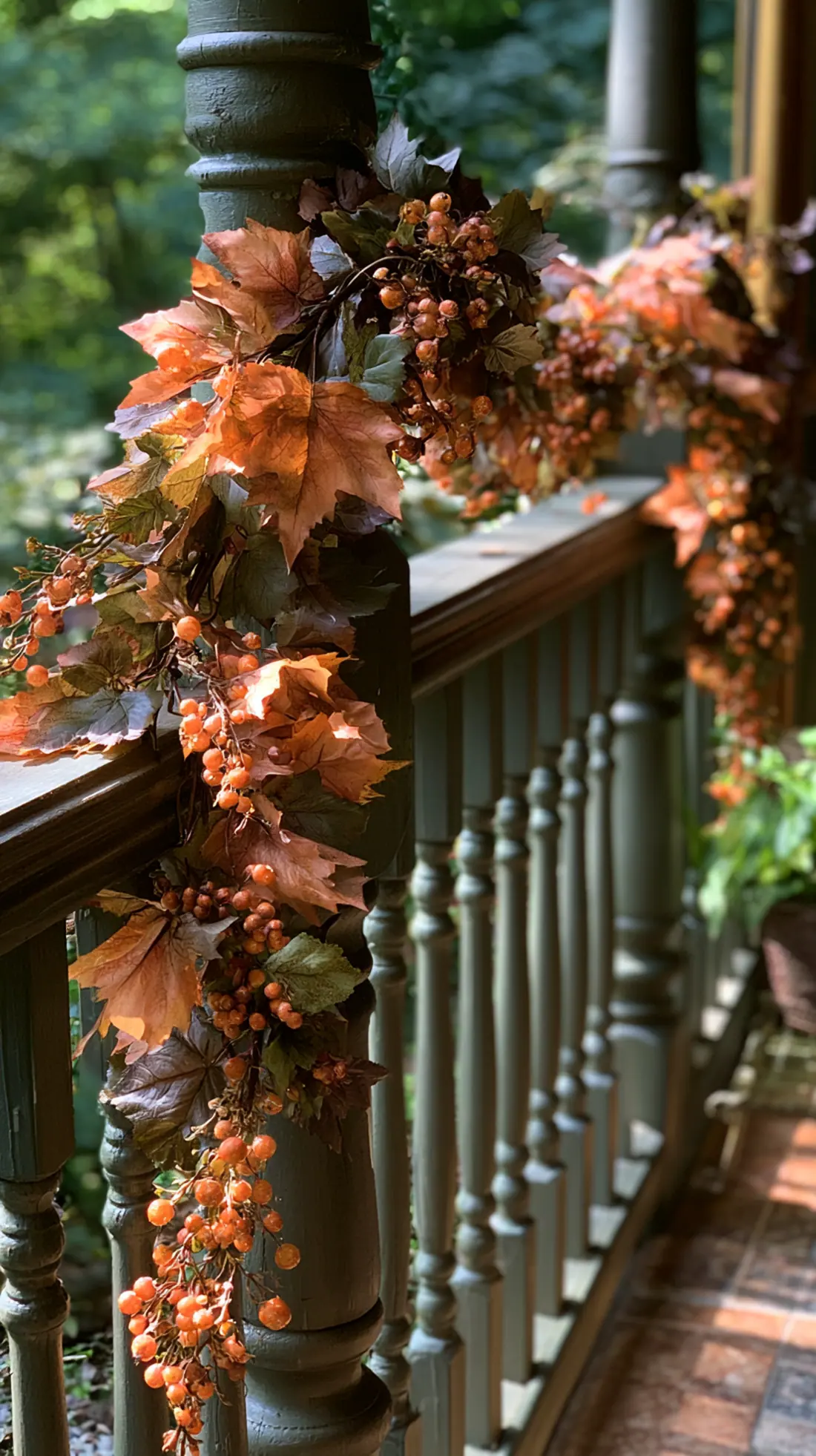 3/4
3/4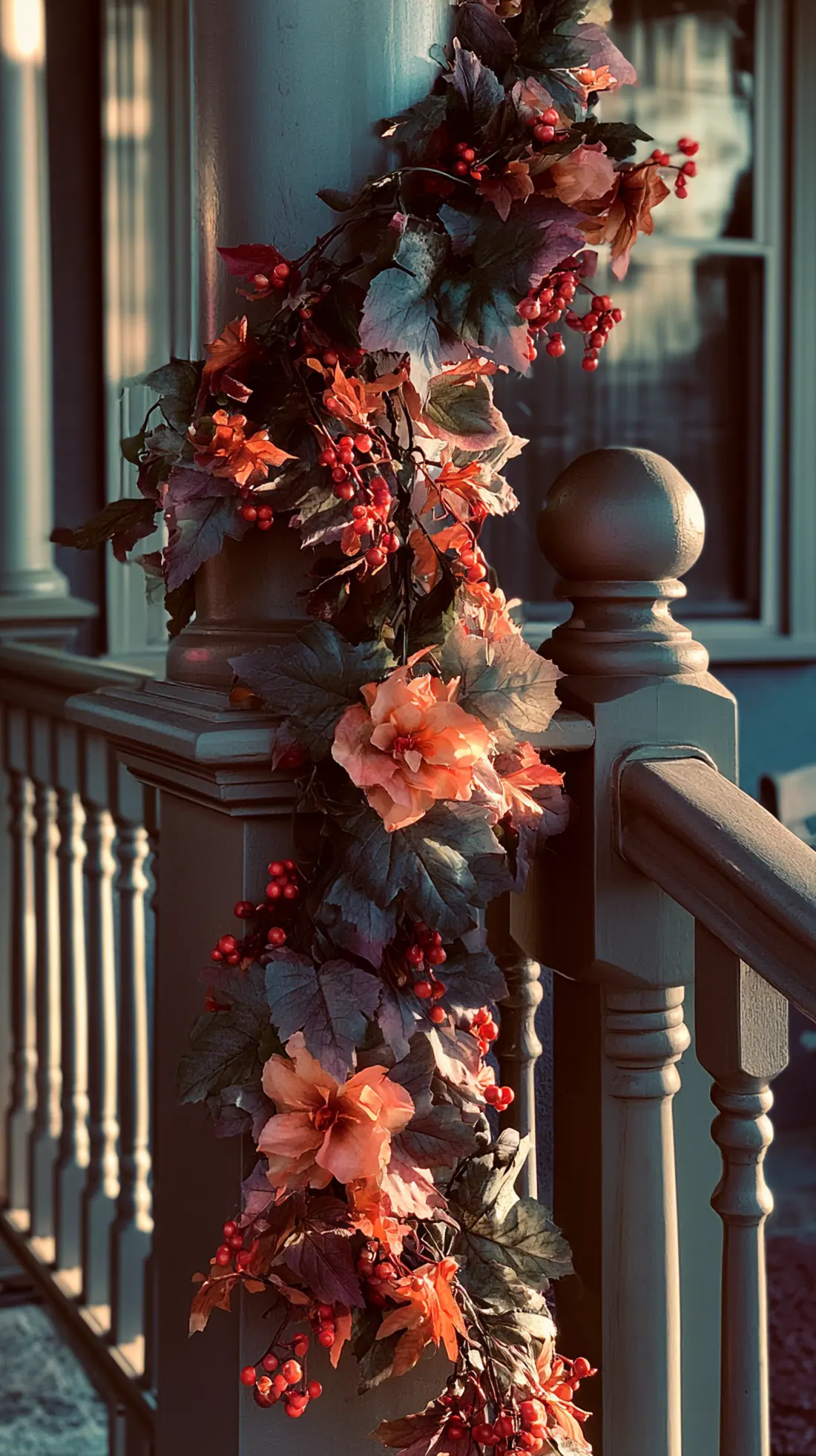 4/4
4/4Swagging a garland between porch posts instead of running it straight along the top rail gives it depth and movement, and a small weight sewn into the low point of each swag keeps that shape through wind instead of letting it flatten out.
Zip tie the garland to the railing at each post first, then let the middle section dip naturally, tucking a small fishing weight or a few washers into the garland’s center where it will not show. This keeps the swoop looking deliberate even after a gusty afternoon, rather than blown flat against the railing. Check zip ties monthly, since sun exposure makes plastic ties brittle, and a snapped tie mid-season means a garland dragging on the ground.
Quick Tips
- Hide small weights inside the lowest point of each swag
- Use UV-rated zip ties, they last longer in direct sun
- Recheck ties monthly through the season
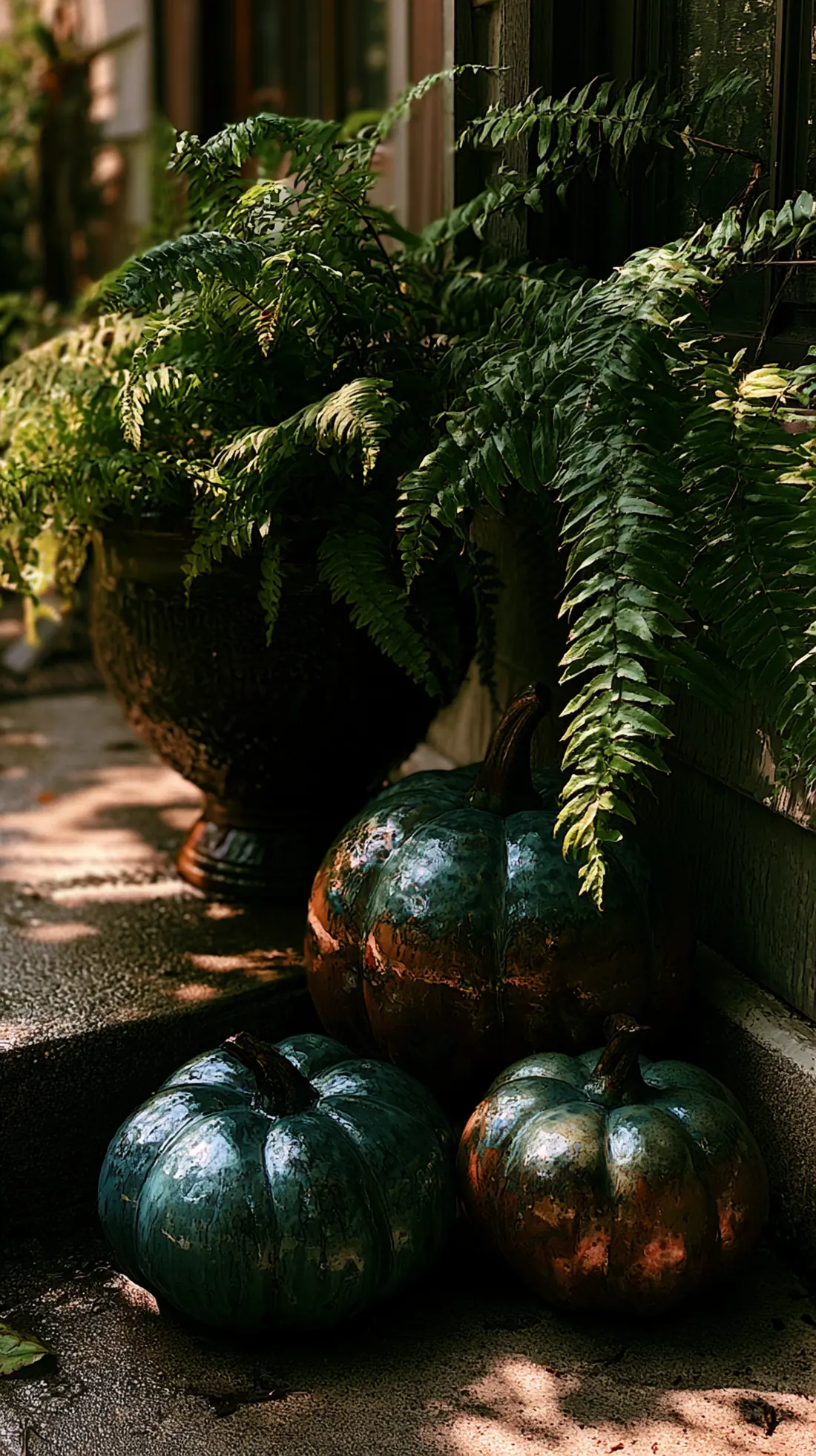
13. Set Ceramic Pumpkins Where Real Ones Would Rot
 1/4
1/4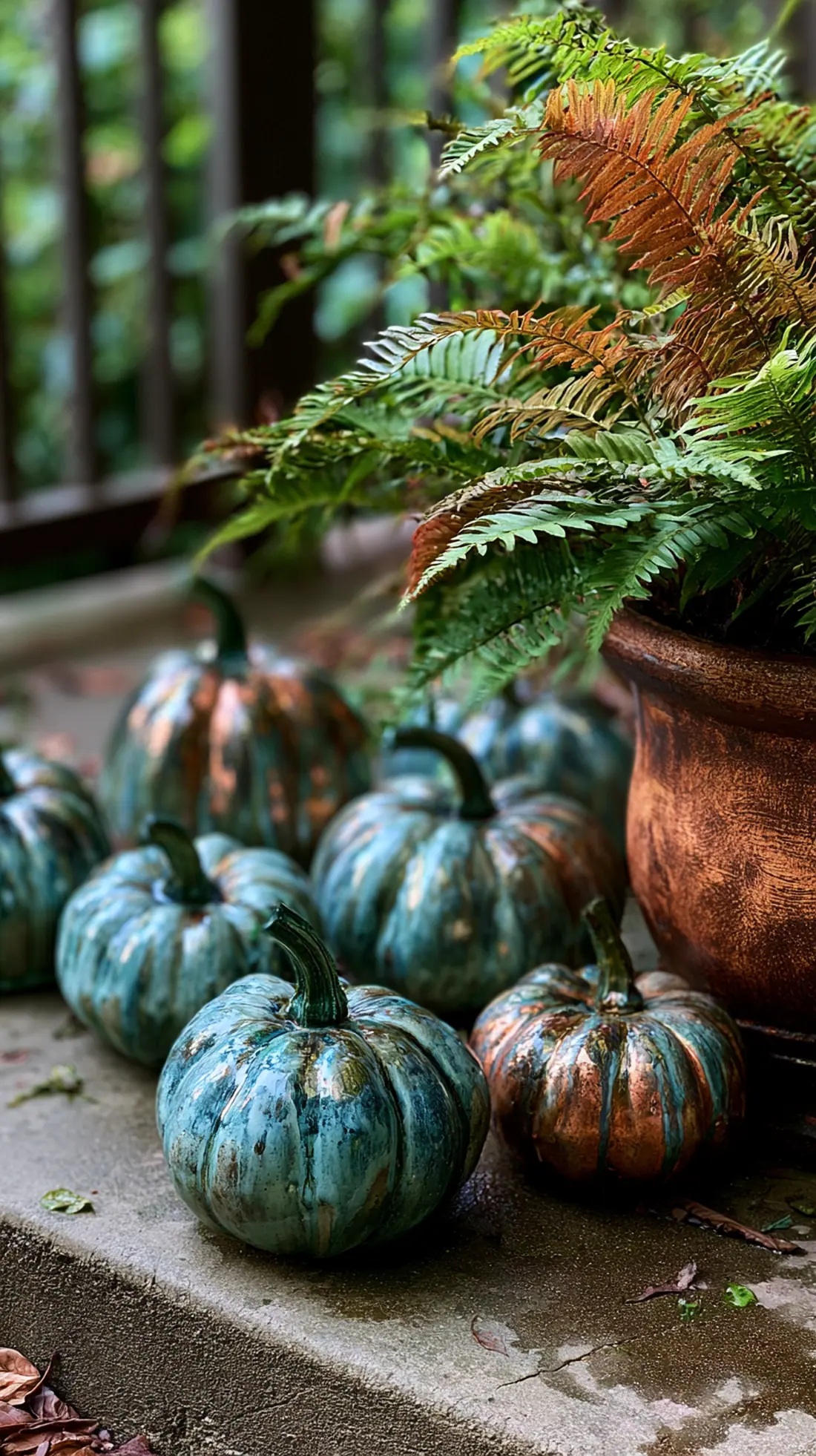 2/4
2/4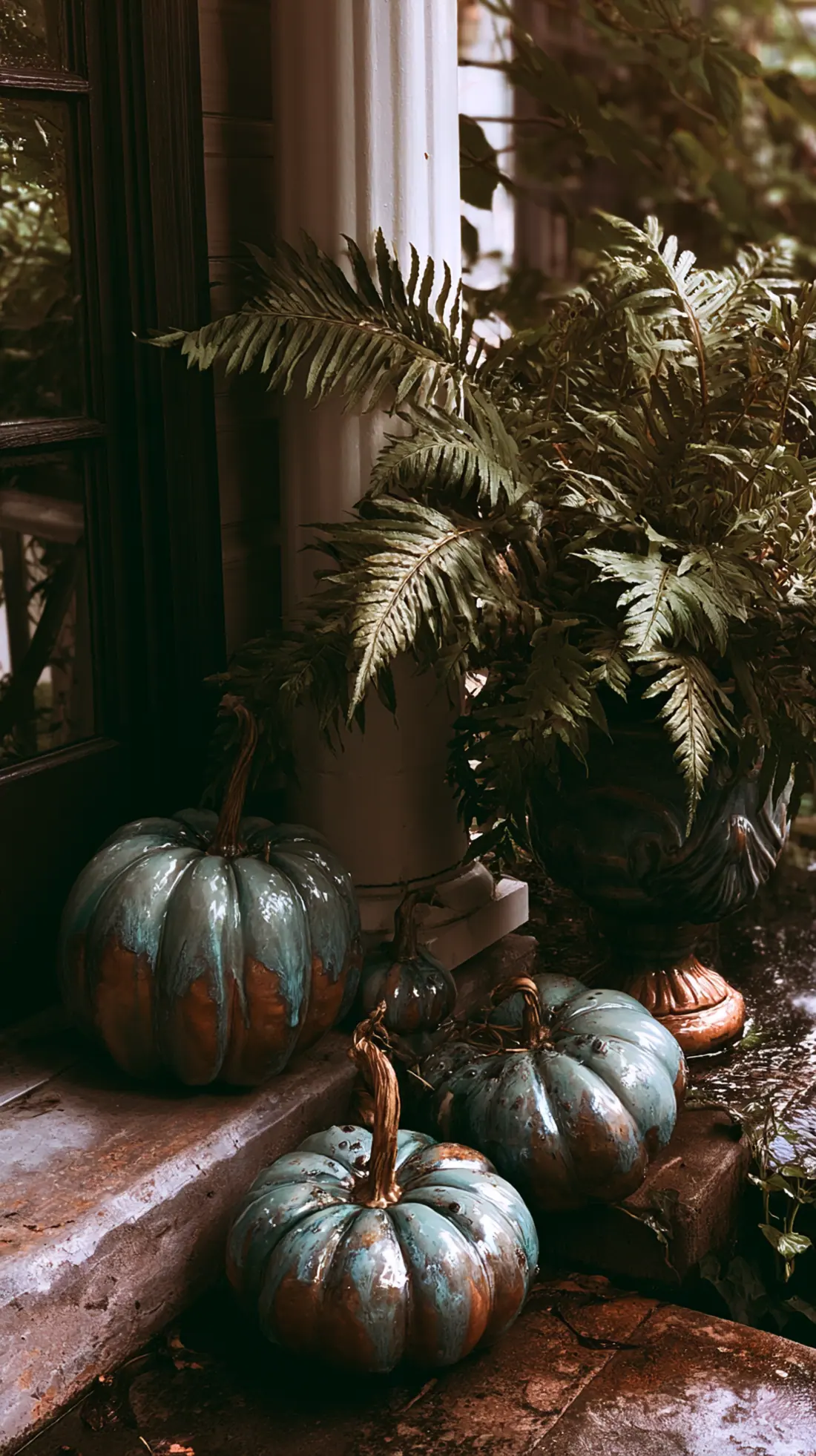 3/4
3/4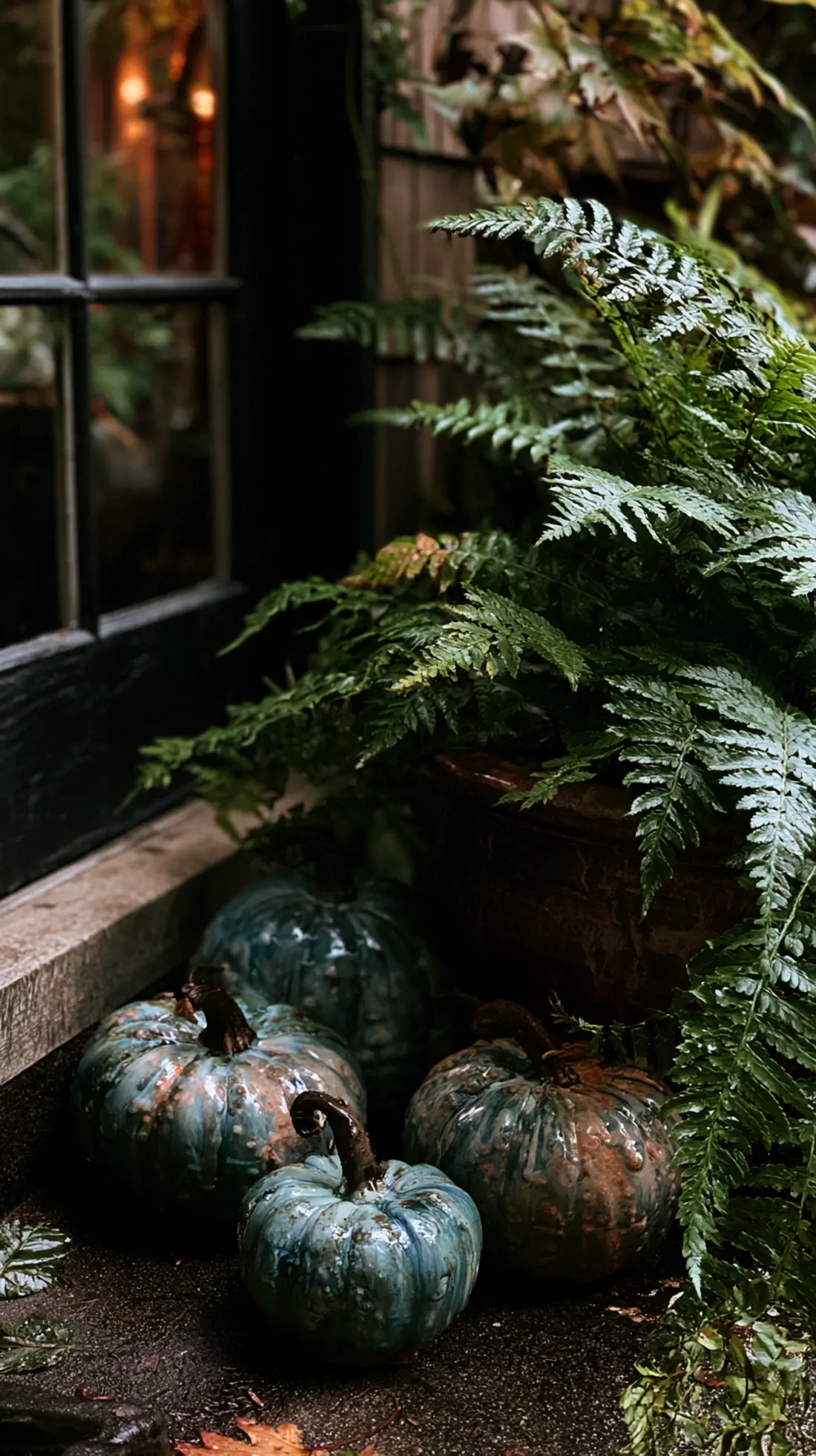 4/4
4/4Every porch has a shaded, damp corner where real pumpkins soften within a couple of weeks, and that is exactly the spot where glazed ceramic pumpkins earn their keep, since they hold color and shape no matter how little sun that corner gets.
Group ceramic pumpkins in odd numbers, three or five, at slightly different heights using a small stand or a stack of books hidden underneath, which reads more intentional than a flat row. Ceramic is heavy enough to resist wind on its own, so this is one of the fall outdoor decorating ideas that needs almost no extra anchoring. If you also decorate indoors for the season, the same layered grouping trick works well on a mantel, similar to the styling in 29 Halloween Mantel Decor Ideas That Solve Real Decorating Problems.
Quick Tips
- Group in odd numbers at varied heights
- Hide a riser underneath for instant height variation
- Wipe with a damp cloth, ceramic collects grime over weeks
14. Anchor a Scarecrow to a Buried Fence Post
 1/3
1/3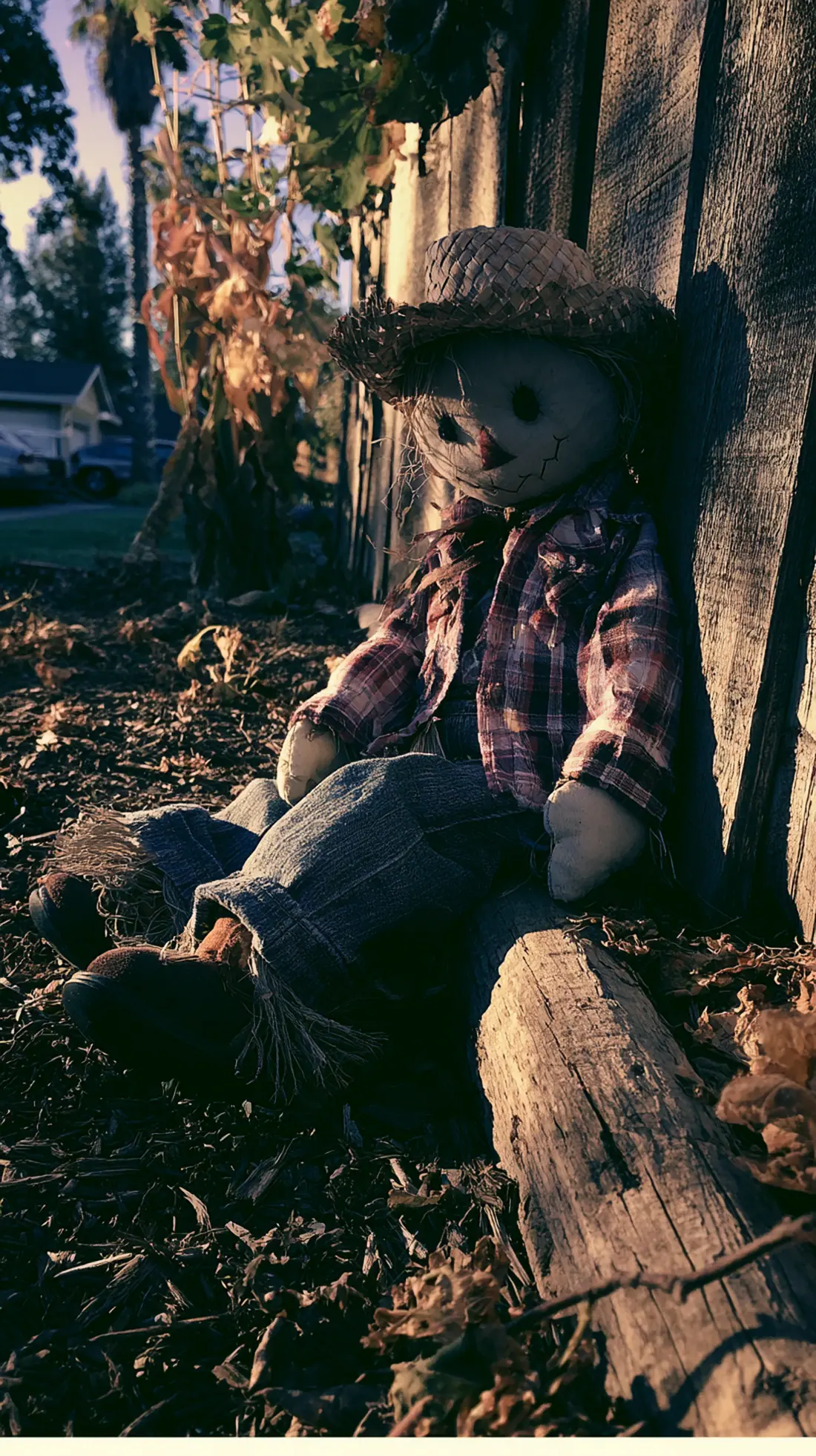 2/3
2/3 3/3
3/3A scarecrow leaning against a porch rail looks charming until the first real wind knocks it flat, so building the frame around a fence post sunk a foot or more into the ground is what actually keeps it standing all season.
Use a treated wood or metal post as the spine, sink it well below the frost line if your ground freezes, and build the scarecrow’s stuffed frame around that post rather than propping loose clothing on top of it. Stuff the body with straw packed tightly at the joints, since loose stuffing sags and lets the figure slump within days. For more full-figure builds that hold up outdoors through wind and rain, 29 Halloween Decoration Ideas Outdoor DIY That Actually Survive the Weather covers several sturdy framing methods worth borrowing.
Quick Tips
- Sink the post at least a foot into the ground
- Pack straw tightly at joints so the figure holds its pose
- Bring fabric clothing in during heavy, sustained rain
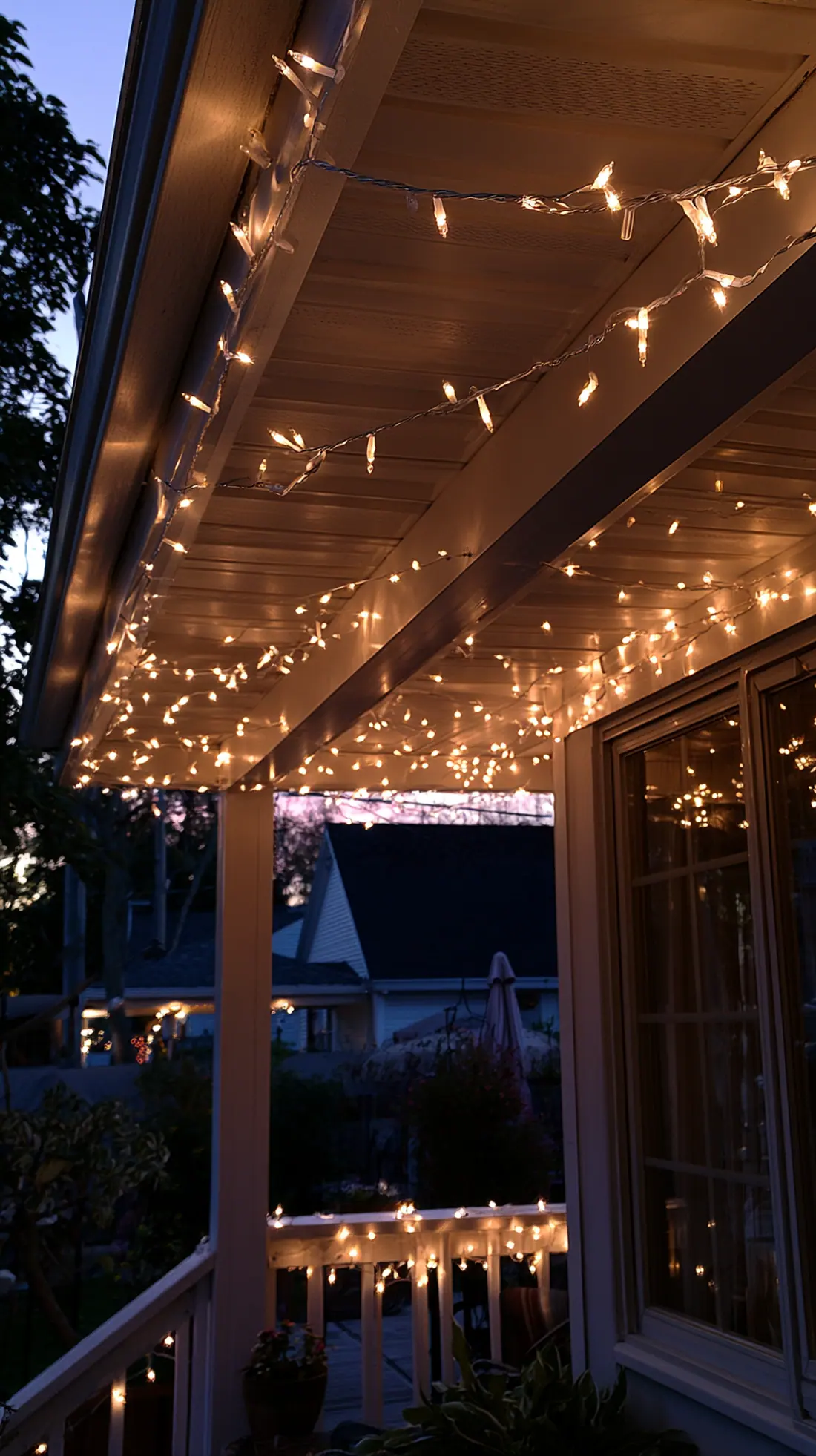
15. Hang String Lights on Galvanized Wire, Not Tape
 1/4
1/4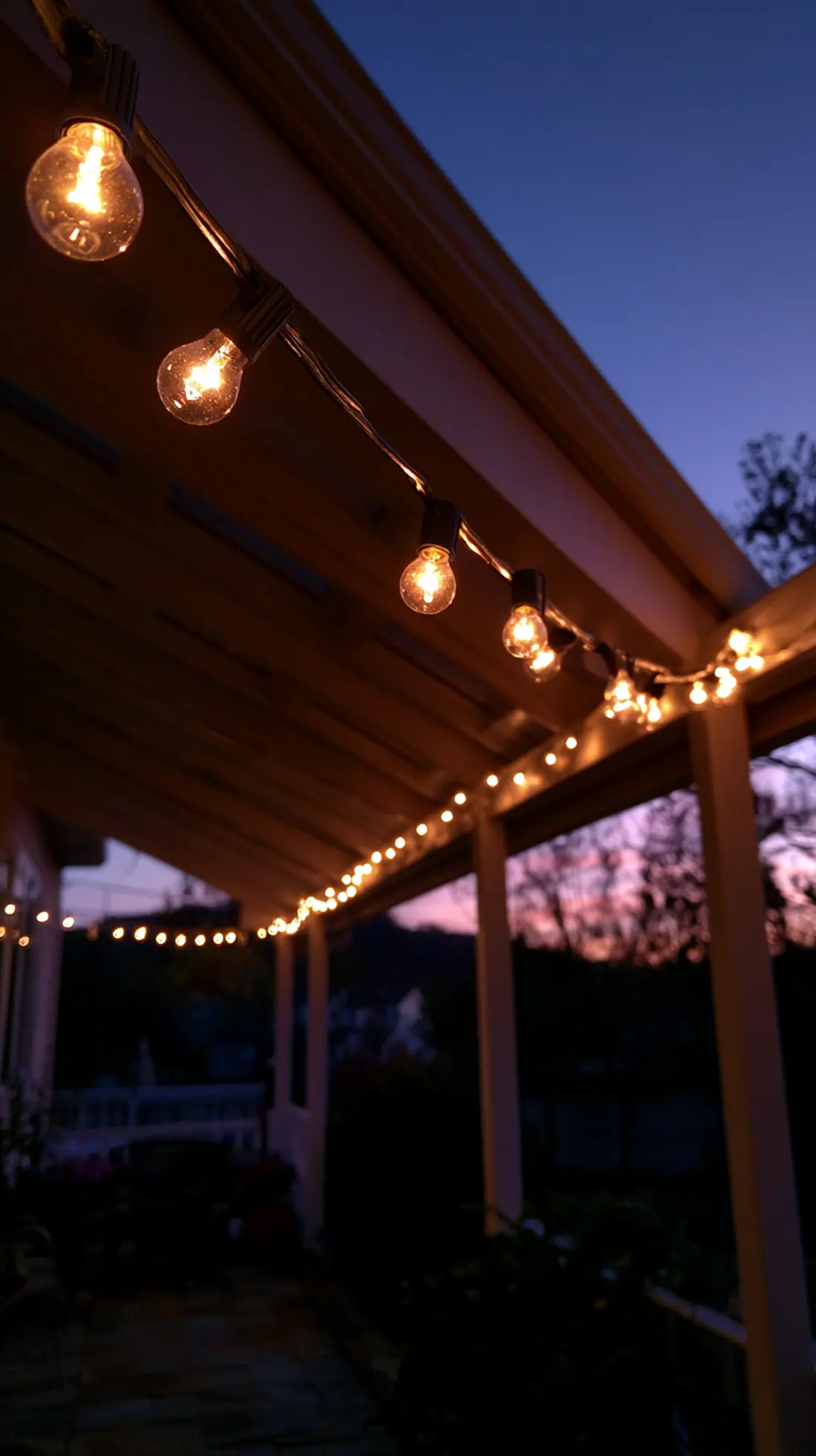 2/4
2/4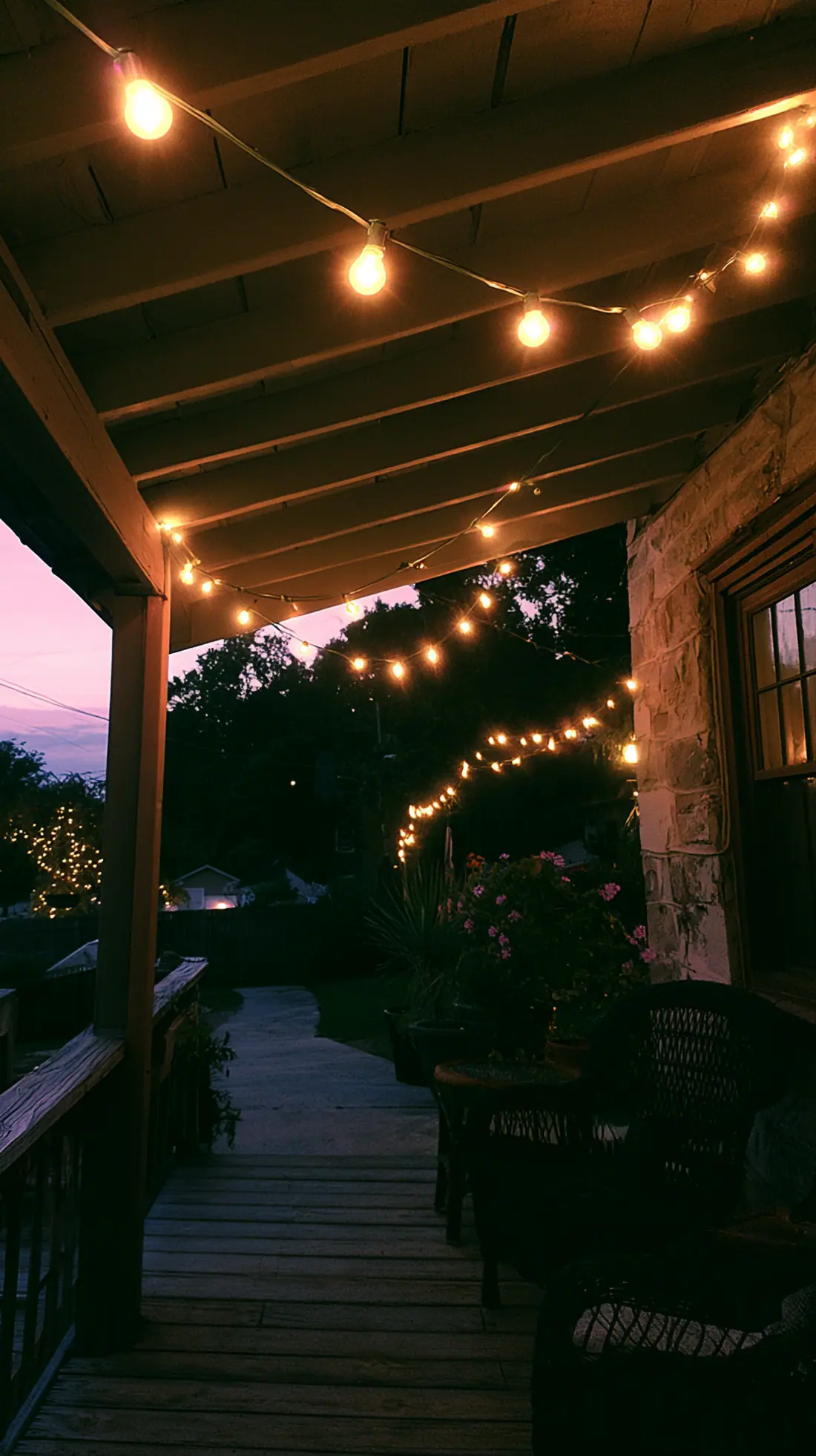 3/4
3/4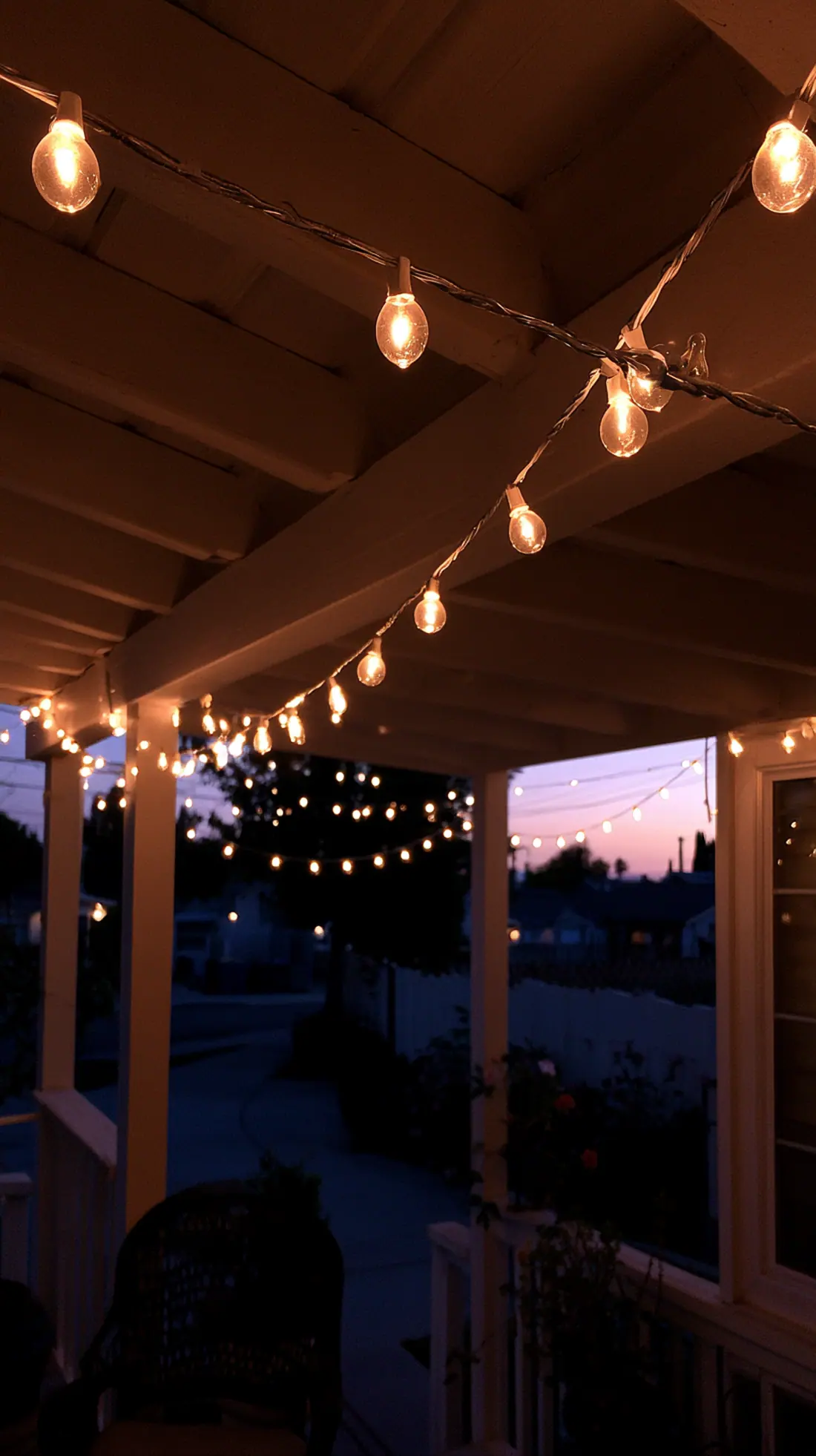 4/4
4/4Warm string lights strung along a porch overhang stretch the season into the evening, and running them along a taut galvanized wire instead of taping them to trim means they will still be up there in January.
Screw eye hooks into the porch structure at each end, run galvanized wire between them pulled tight, then clip the string lights to the wire with small cable clips rather than resting the bulbs directly on tape or staples, which fail as soon as they get wet or cold. Choose lights rated for outdoor use specifically, since indoor-rated strings degrade fast in damp air even if they technically still light up. Unplug and cover the transformer end during heavy storms if it is not fully weather-sealed.
Quick Tips
- Use outdoor-rated string lights, check the tag before buying
- Clip to wire instead of taping bulbs to trim
- Cover the transformer end from direct rain
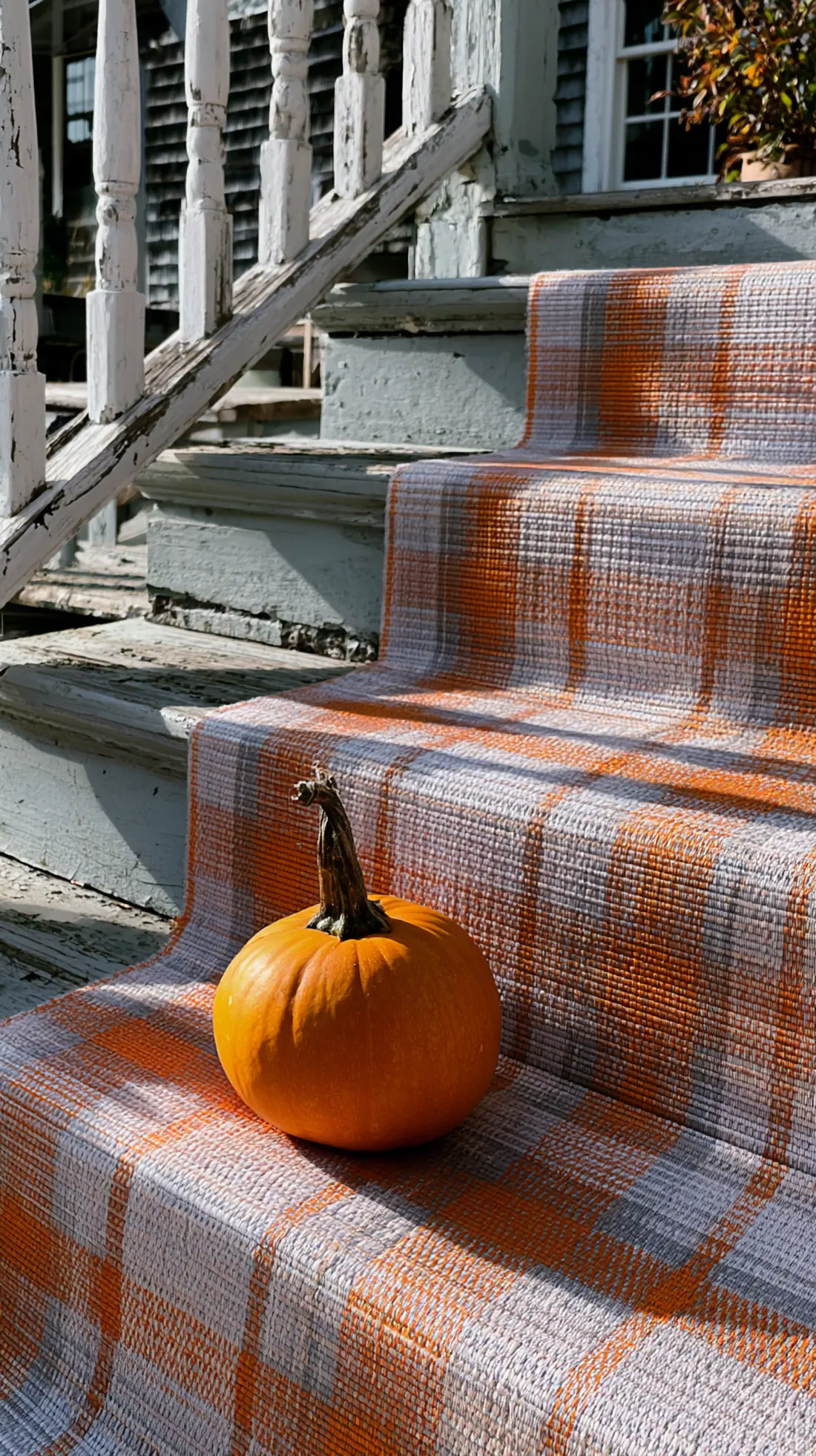
16. Layer Stair Risers With Non-Slip Fall Runners
 1/4
1/4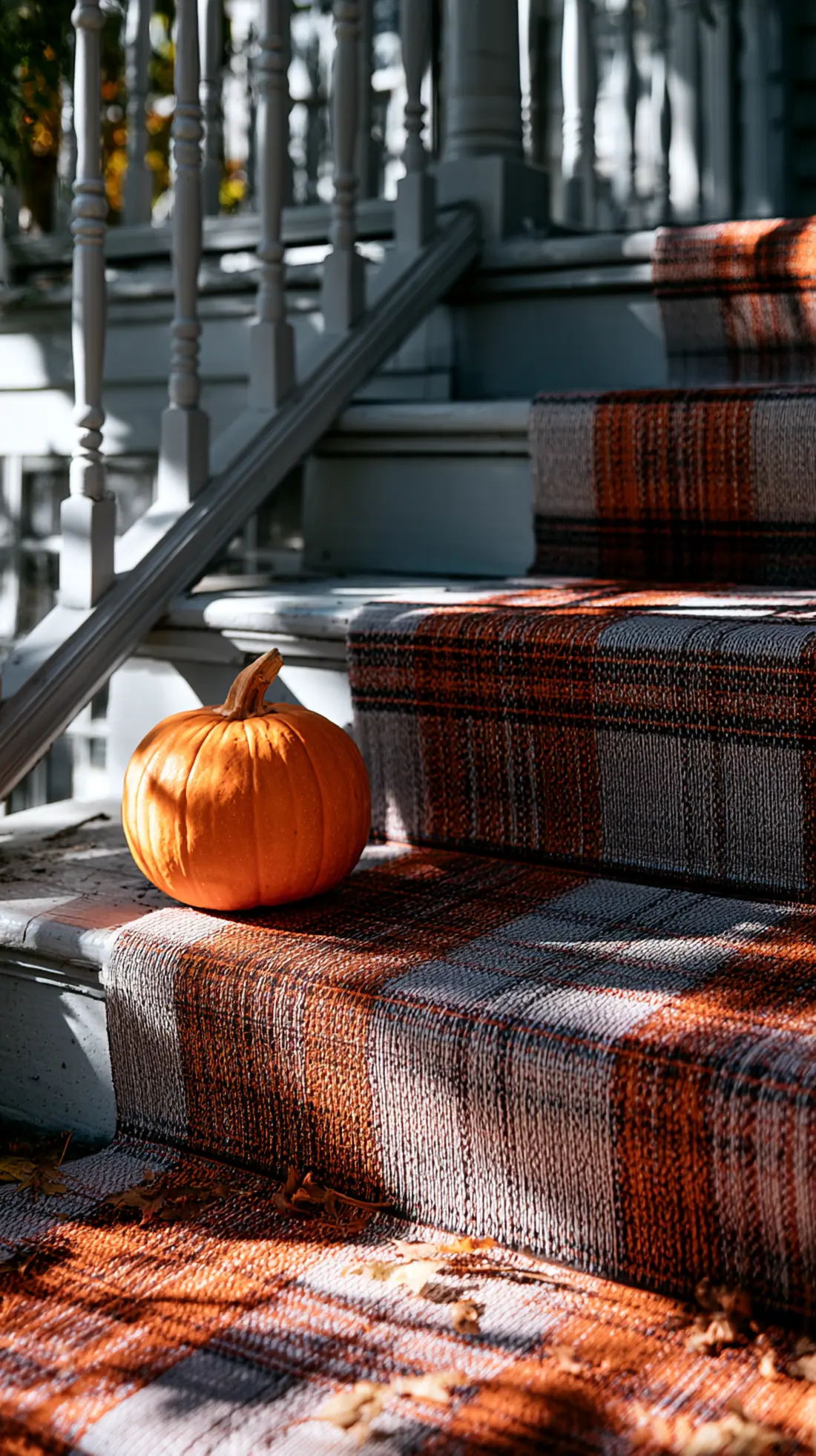 2/4
2/4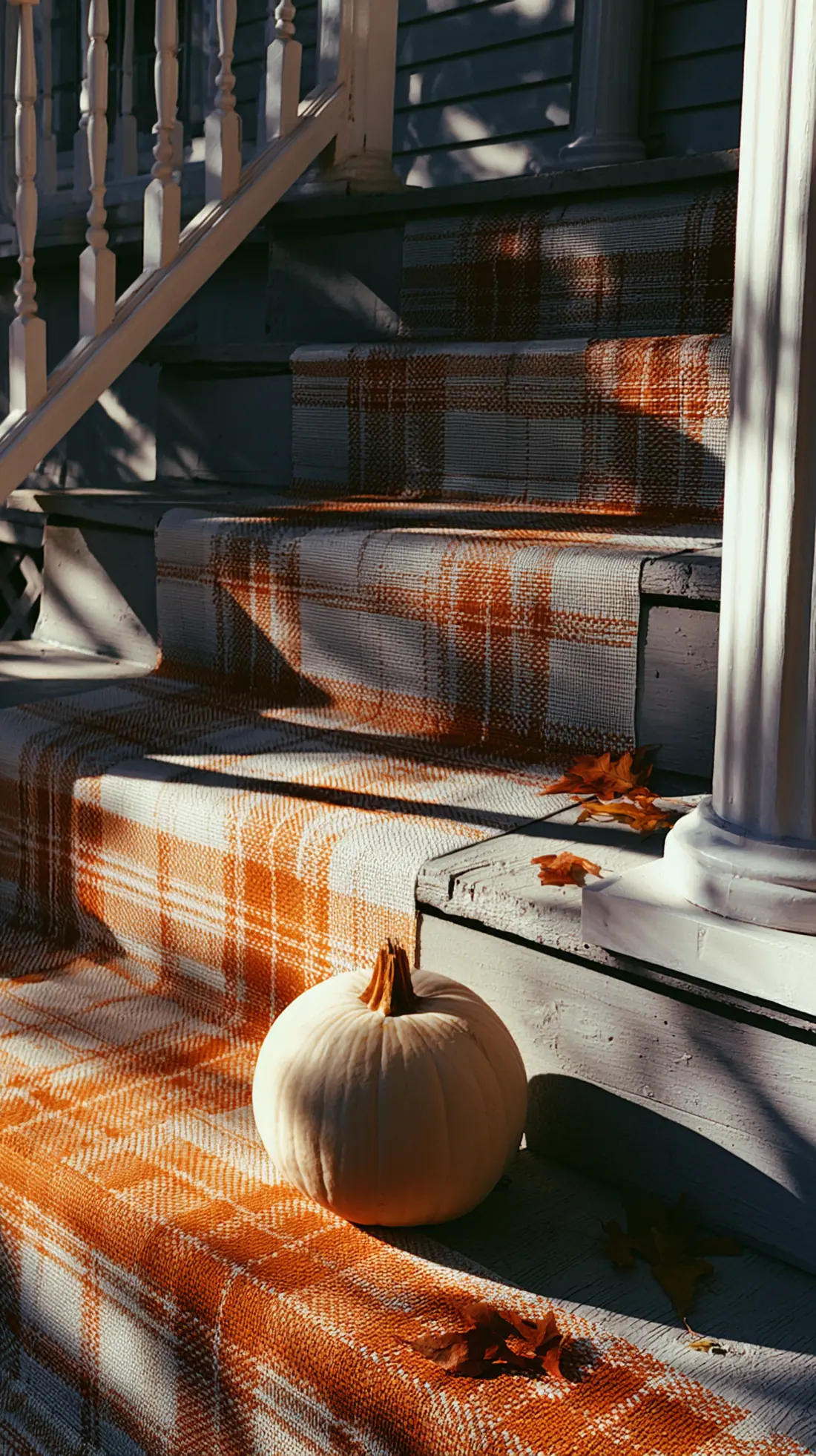 3/4
3/4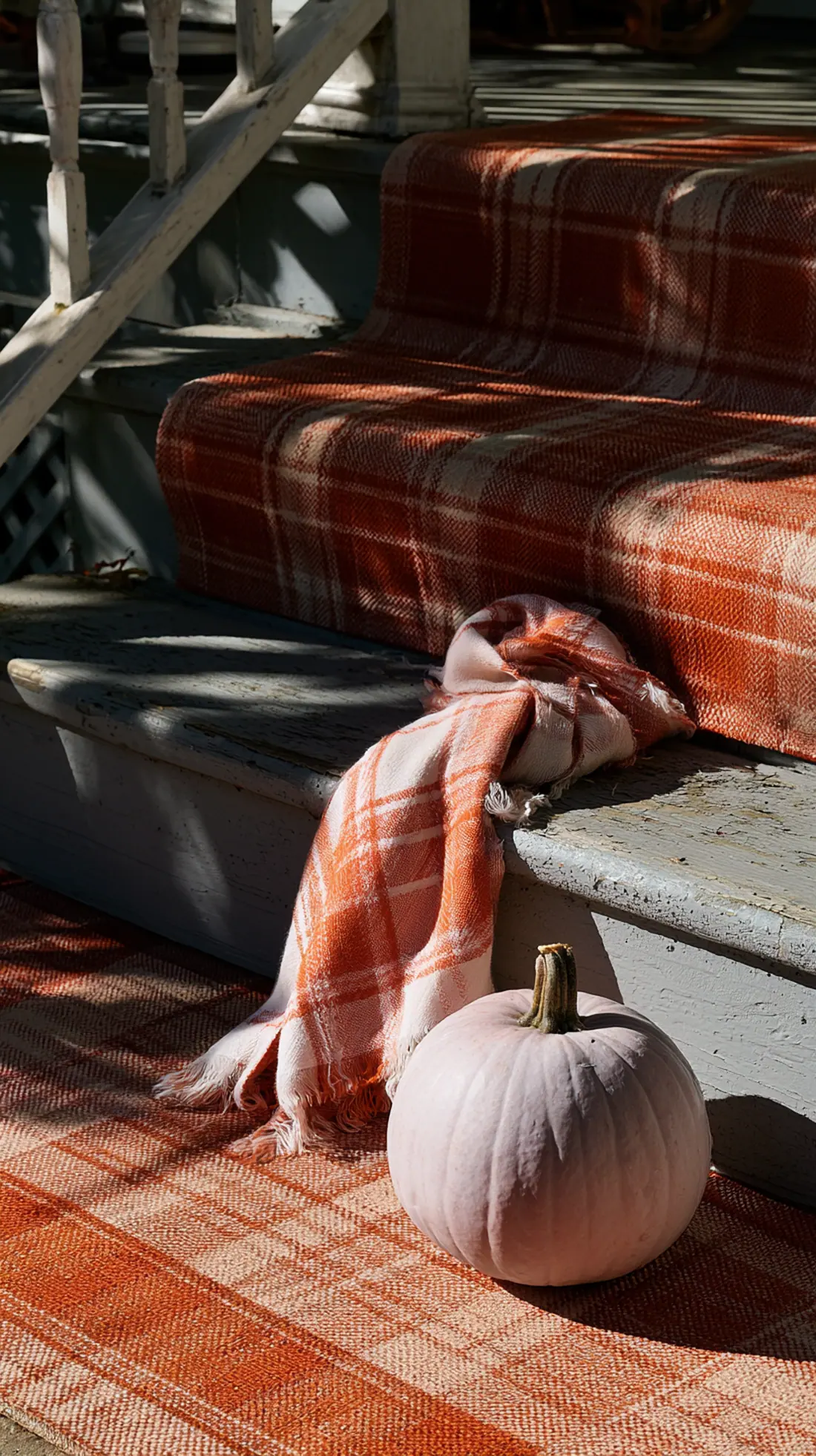 4/4
4/4Stair runners in a fall print add color exactly where visitors look first walking up to your door, and choosing a non-slip, rubber-backed version means they double as safety on wet steps, not just decoration.
Cut runners to the exact width of each tread rather than one long piece down the whole staircase, since individual pieces can be pulled up and dried indoors after a storm while a single long runner has to come off entirely. Adhere them with outdoor-rated double-sided tape at the back edge of each tread only, leaving the front free, so water can run off instead of pooling under a fully sealed mat. Replace runners once the rubber backing starts to curl, since a curled edge becomes a trip hazard fast.
Quick Tips
- Cut runners per tread instead of one long piece
- Tape only the back edge so water drains forward
- Replace once rubber backing starts curling
17. Plant a Fall Window Box With Weather-Hardy Foliage
 1/4
1/4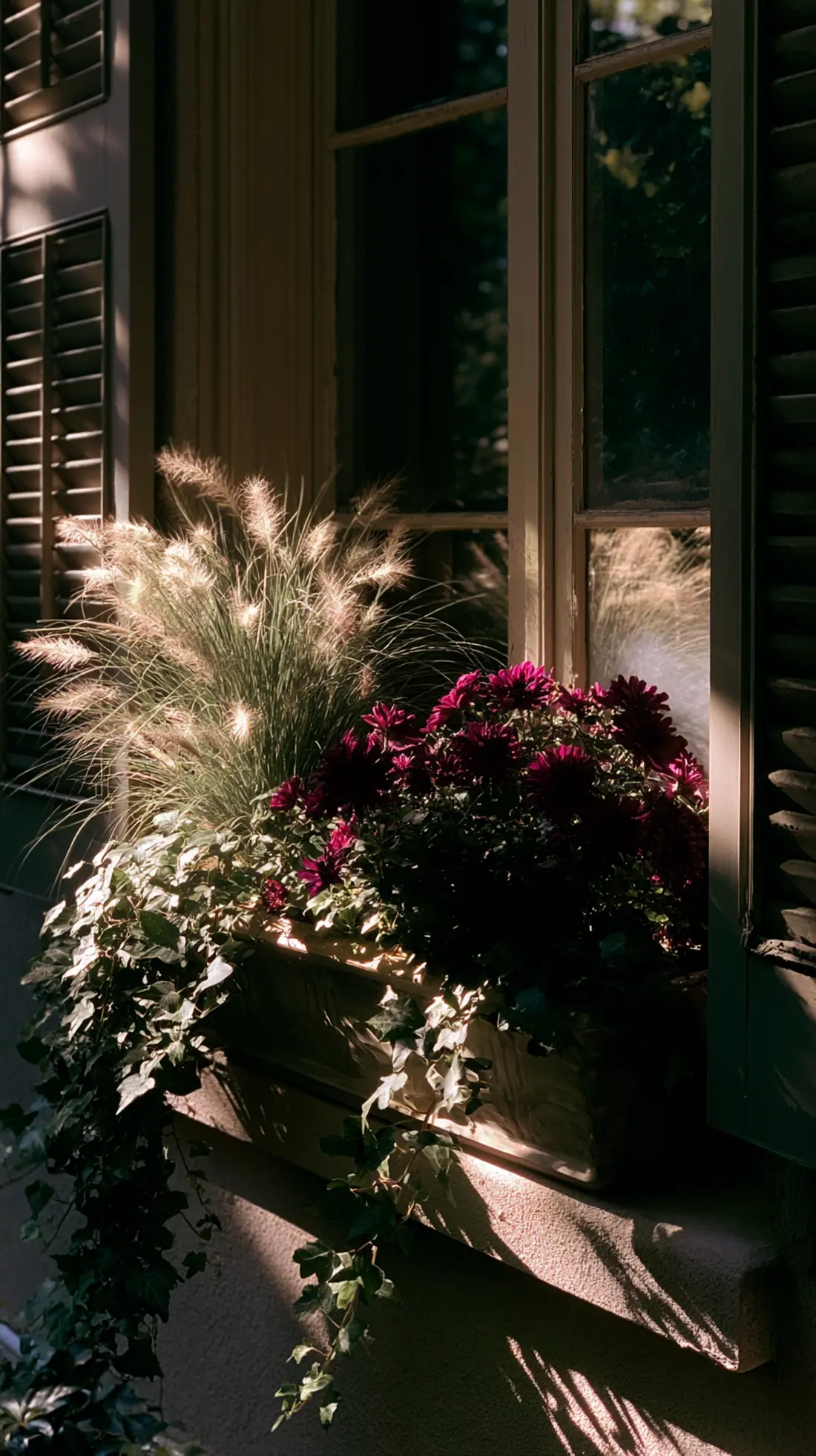 2/4
2/4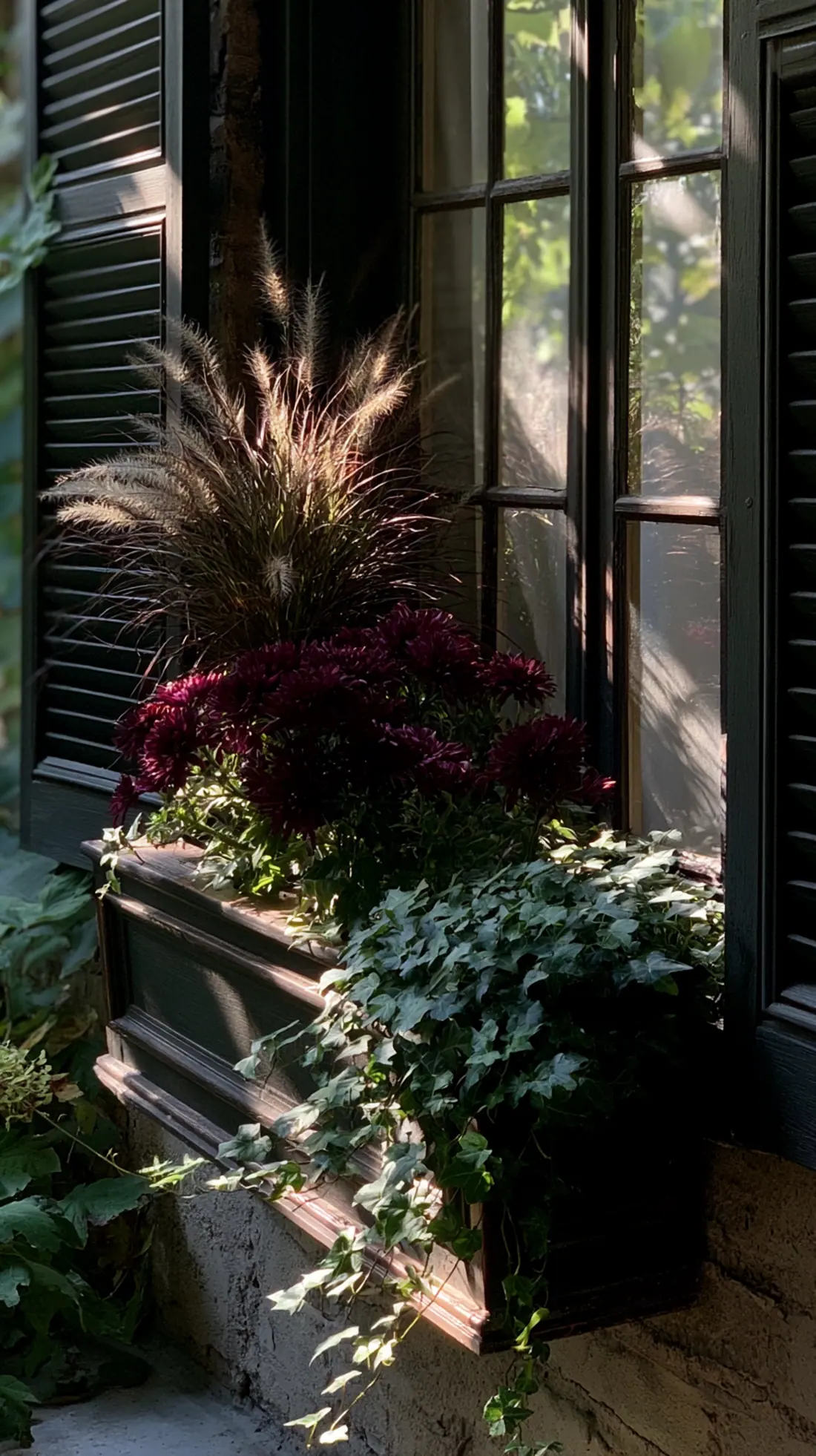 3/4
3/4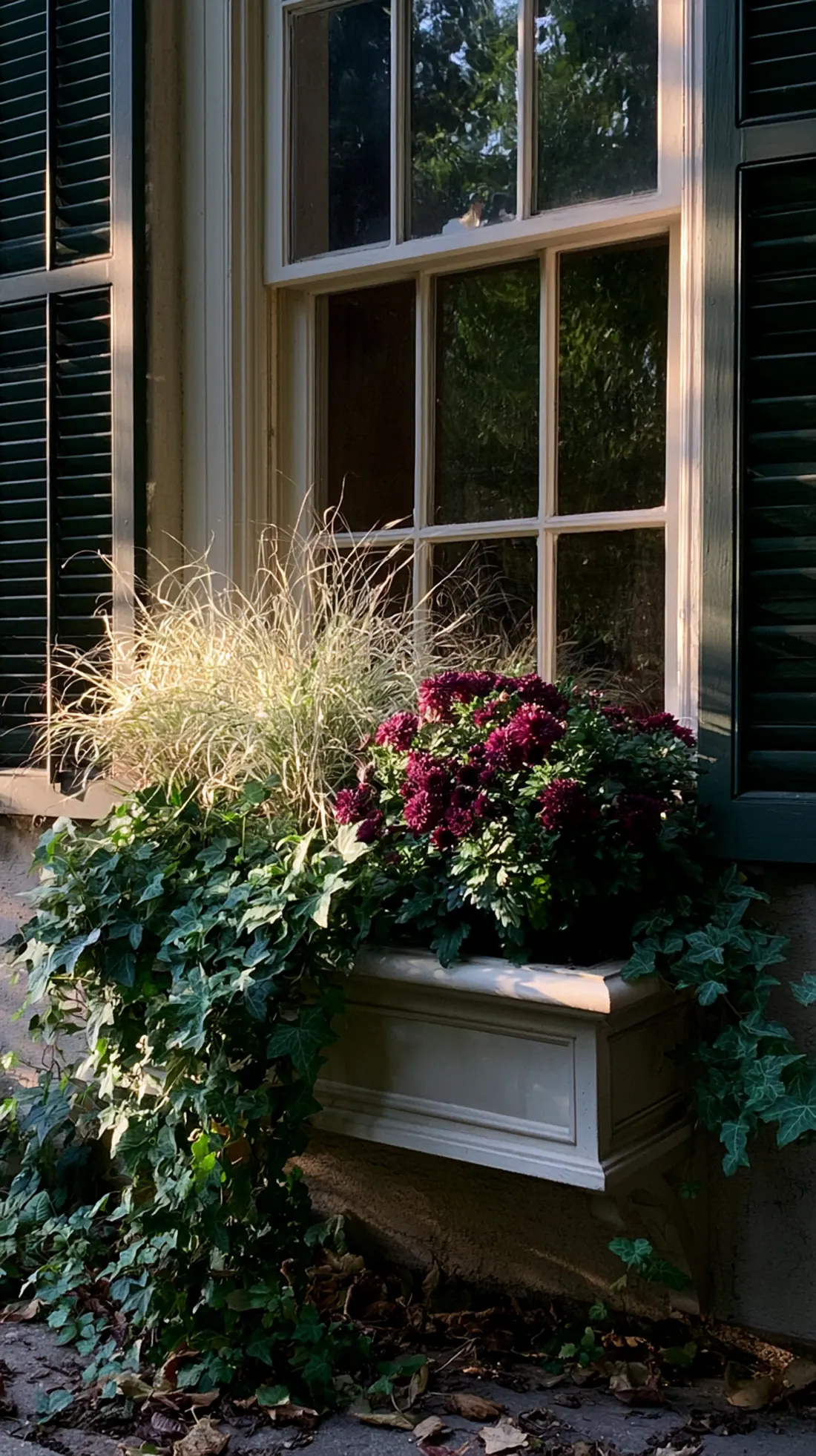 4/4
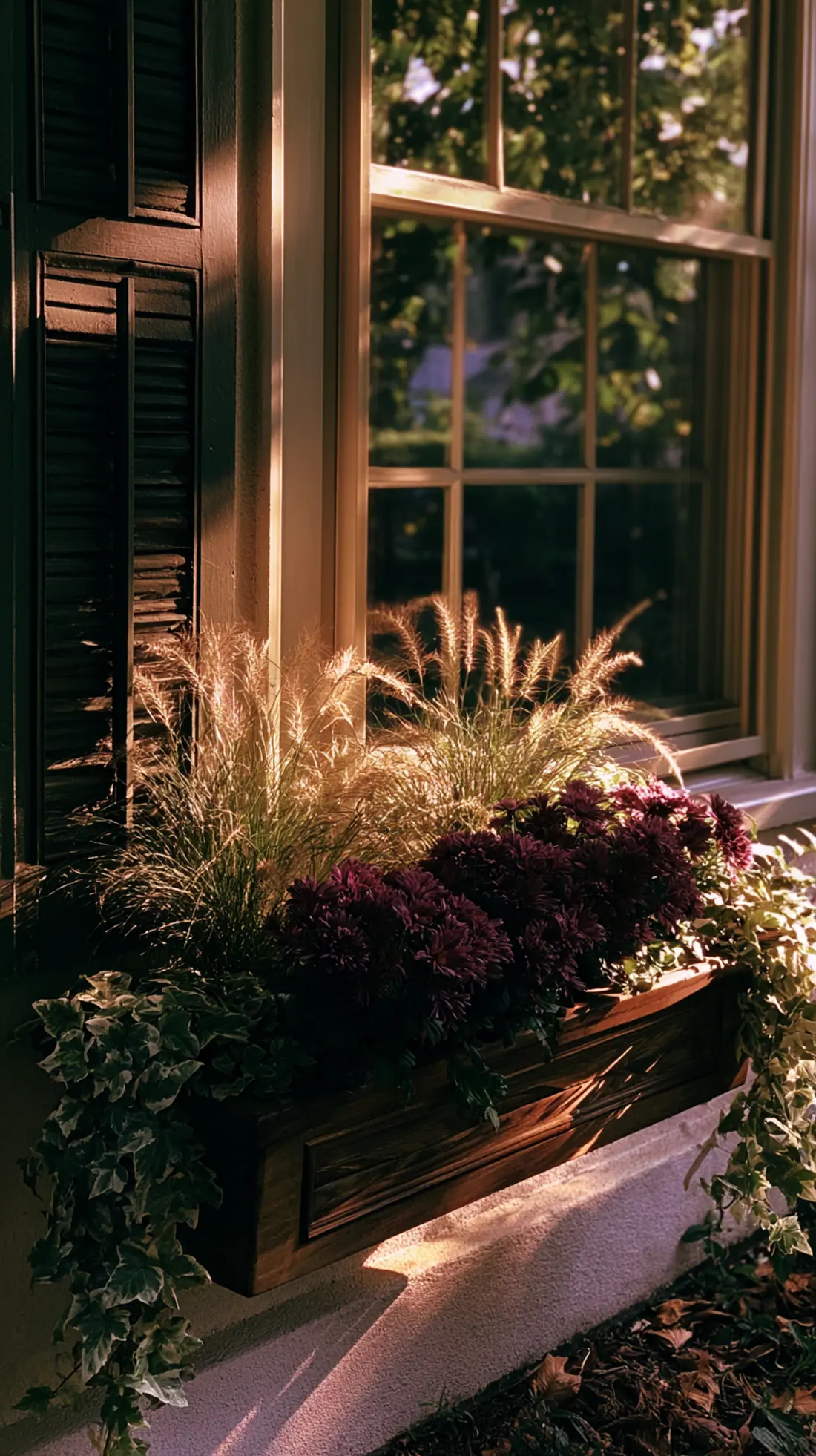
4/4A window box is one of the fall outdoor decorating ideas that keeps working for months instead of days, as long as it is planted with foliage that can actually take wind and cold rather than delicate annuals left over from summer.
Combine a tall ornamental grass for movement, a mound of mums or pansies for color, and a trailing vine like sweet potato vine or ivy to soften the box edge, which gives the arrangement structure that holds even as individual blooms fade. Make sure the box has real drainage holes, not just decorative slats, since a waterlogged box in a cold snap can crack. For a broader range of plant and color combinations built specifically for this format, 21 Fall Window Box Ideas for a Cozy, Colorful Autumn is worth a look before you plant.
Quick Tips
- Mix grass, mounding color, and a trailing vine for structure
- Confirm real drainage holes before planting
- Deadhead mums weekly to keep color going longer
18. Fill Metal Buckets With Firewood and Bittersweet Vine
 1/4
1/4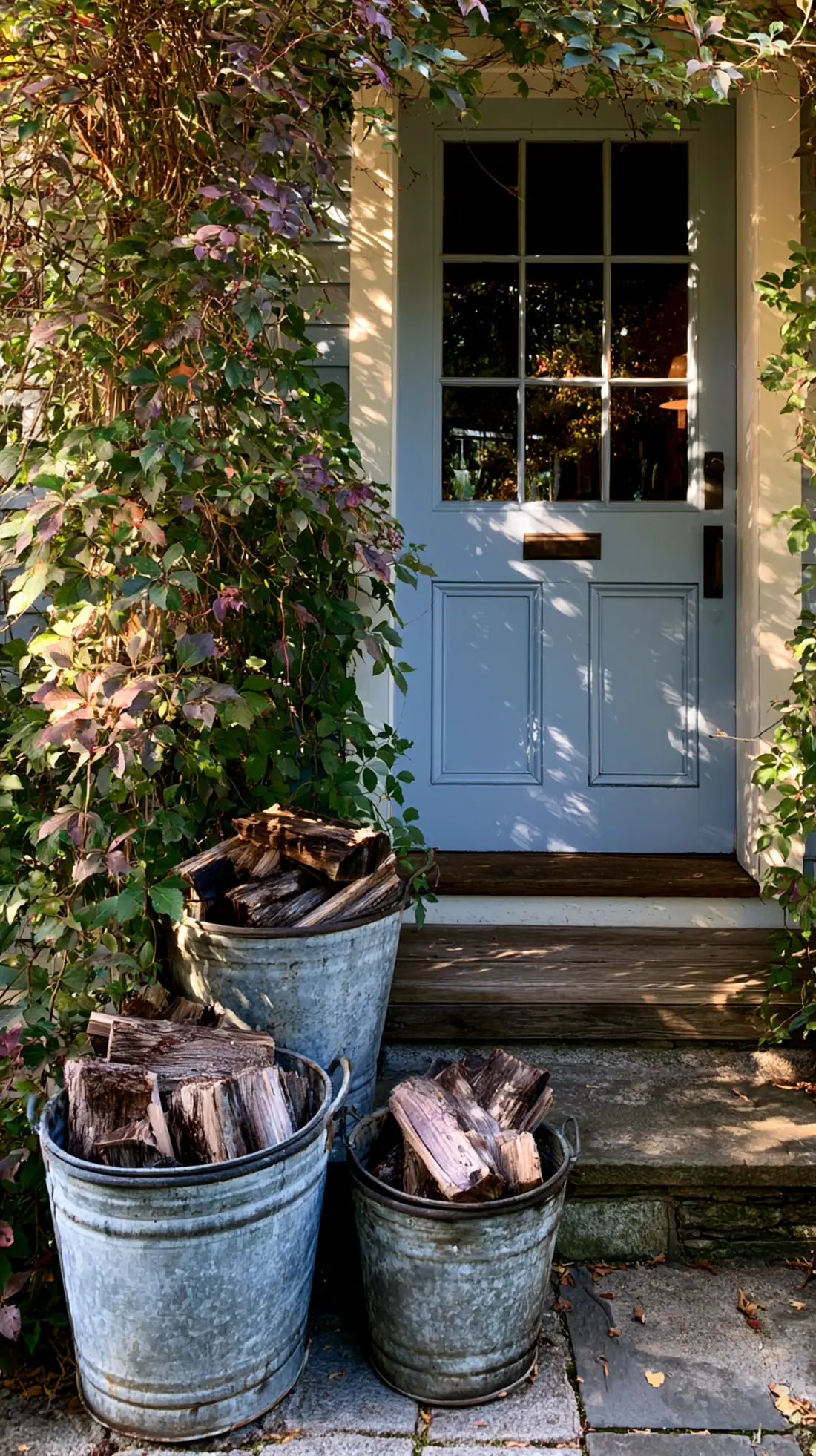 2/4
2/4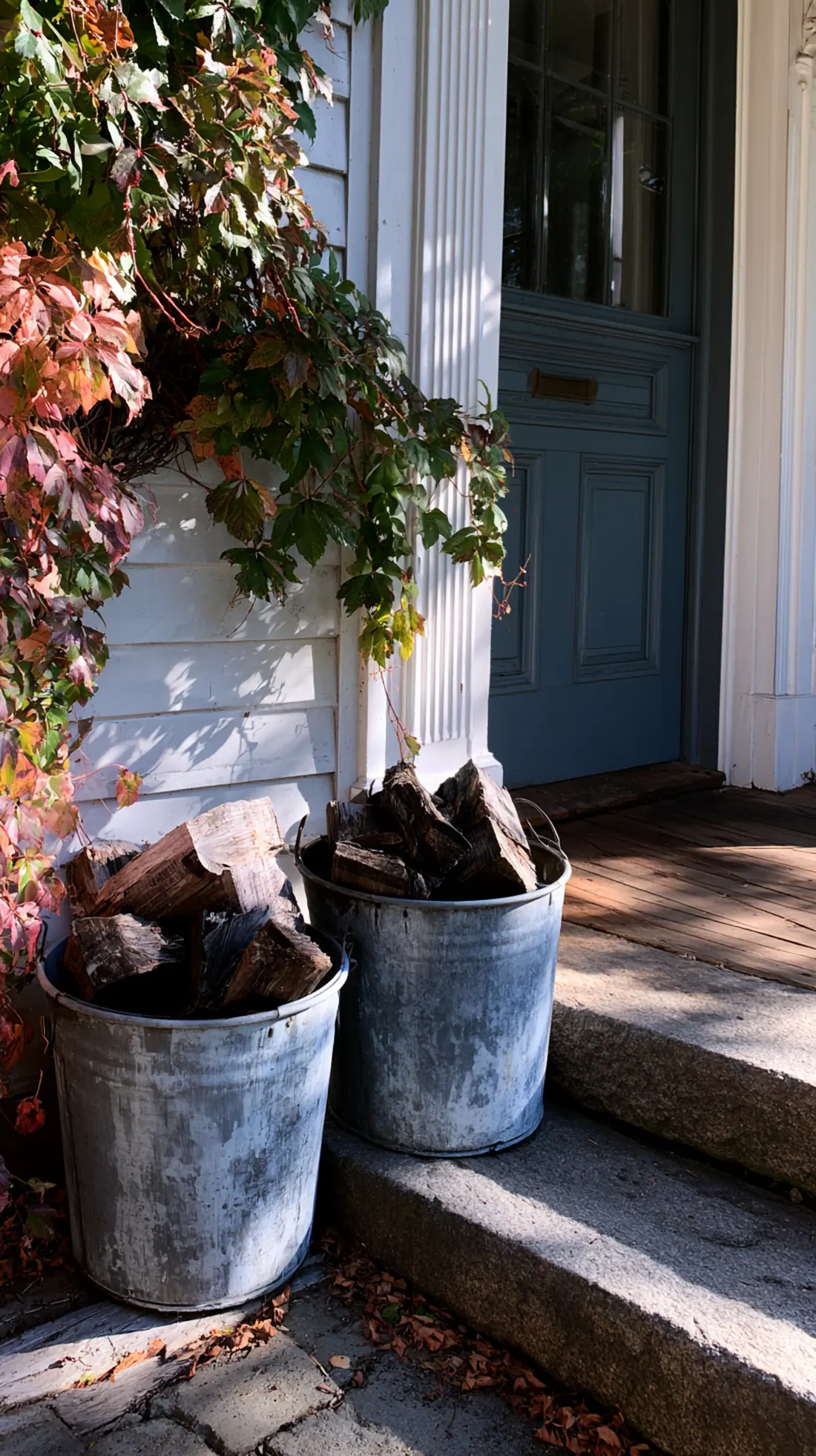 3/4
3/4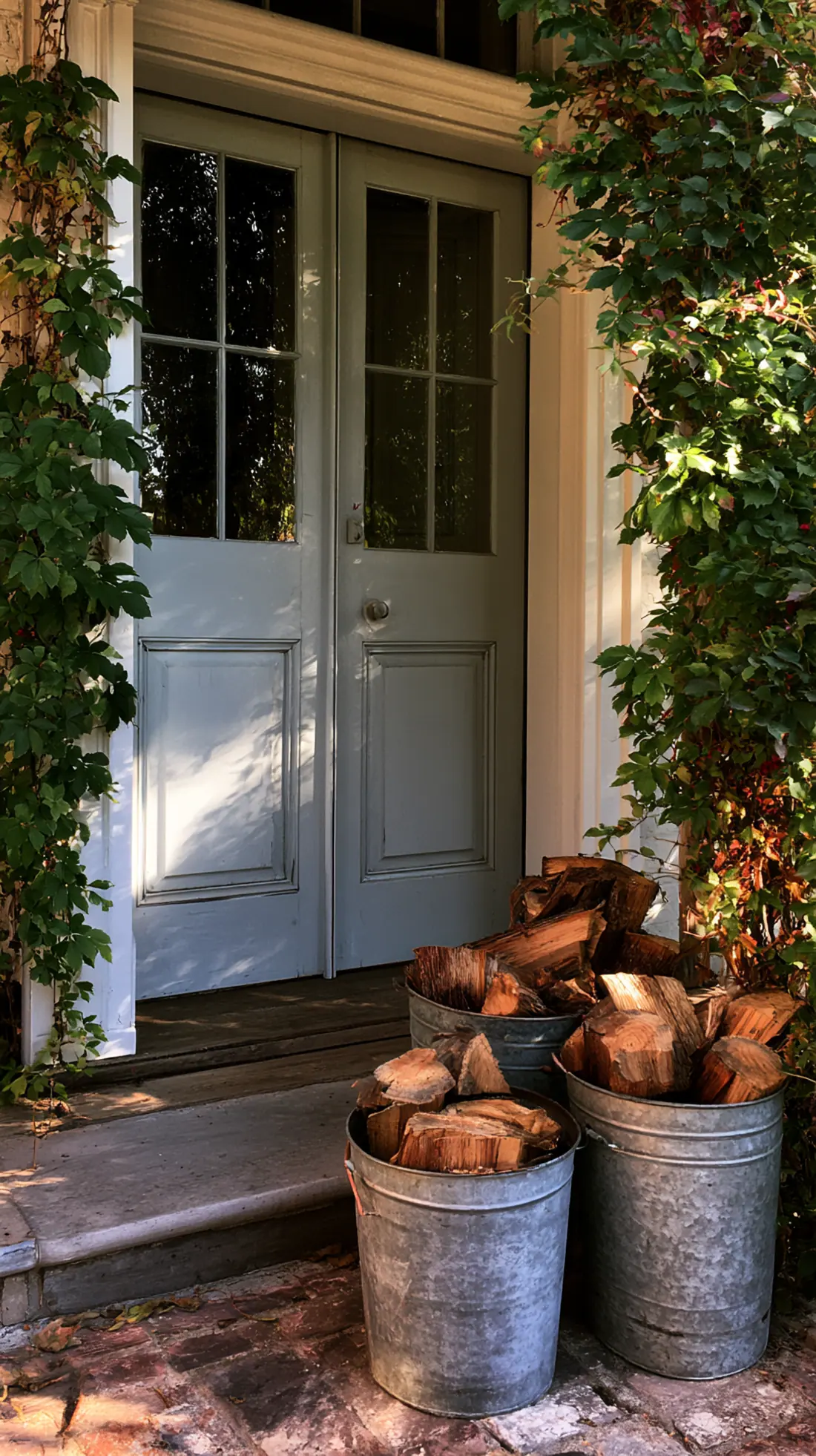 4/4
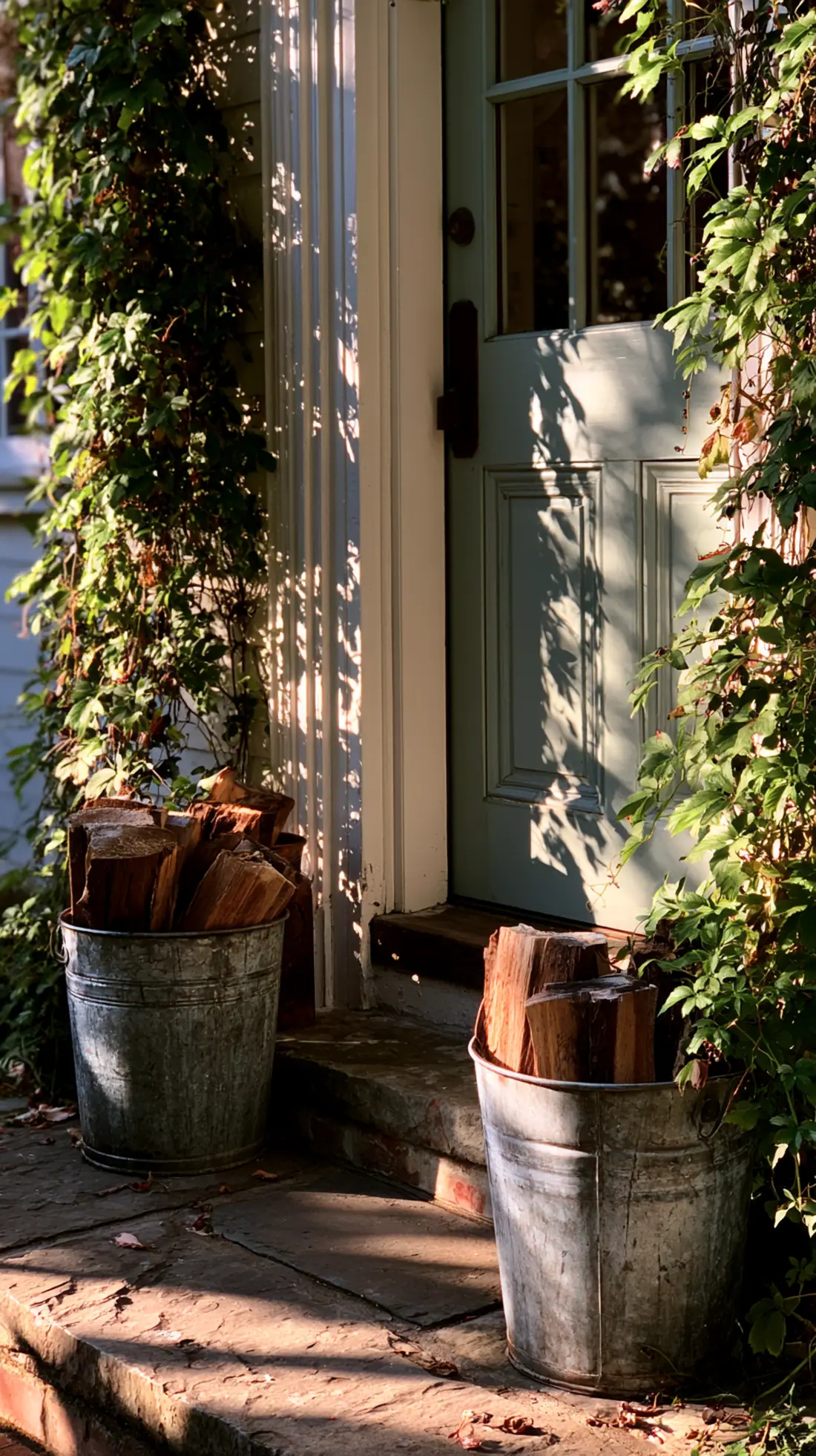
4/4A galvanized bucket stacked with firewood and a trailing sprig of bittersweet vine looks purposeful rather than staged, since it reads as something you would actually use, not just something set out for the season.
Metal buckets shrug off rain in a way that wicker or fabric baskets cannot, so this is a low-maintenance option for a porch corner that gets direct weather. Stack the wood in a loose crisscross pattern rather than a tight bundle, which lets air circulate and keeps the wood from staying damp against itself. If you cannot source real bittersweet vine locally, a faux stem tucked in among the logs reads almost identically in photos and never needs replacing.
Quick Tips
- Stack wood loosely so it can dry between rains
- Choose galvanized metal over wicker for weather resistance
- Tuck in a faux vine stem if real bittersweet is out of season
19. Bolt a Fall Garden Flag to a Steel Ground Spike
 1/4
1/4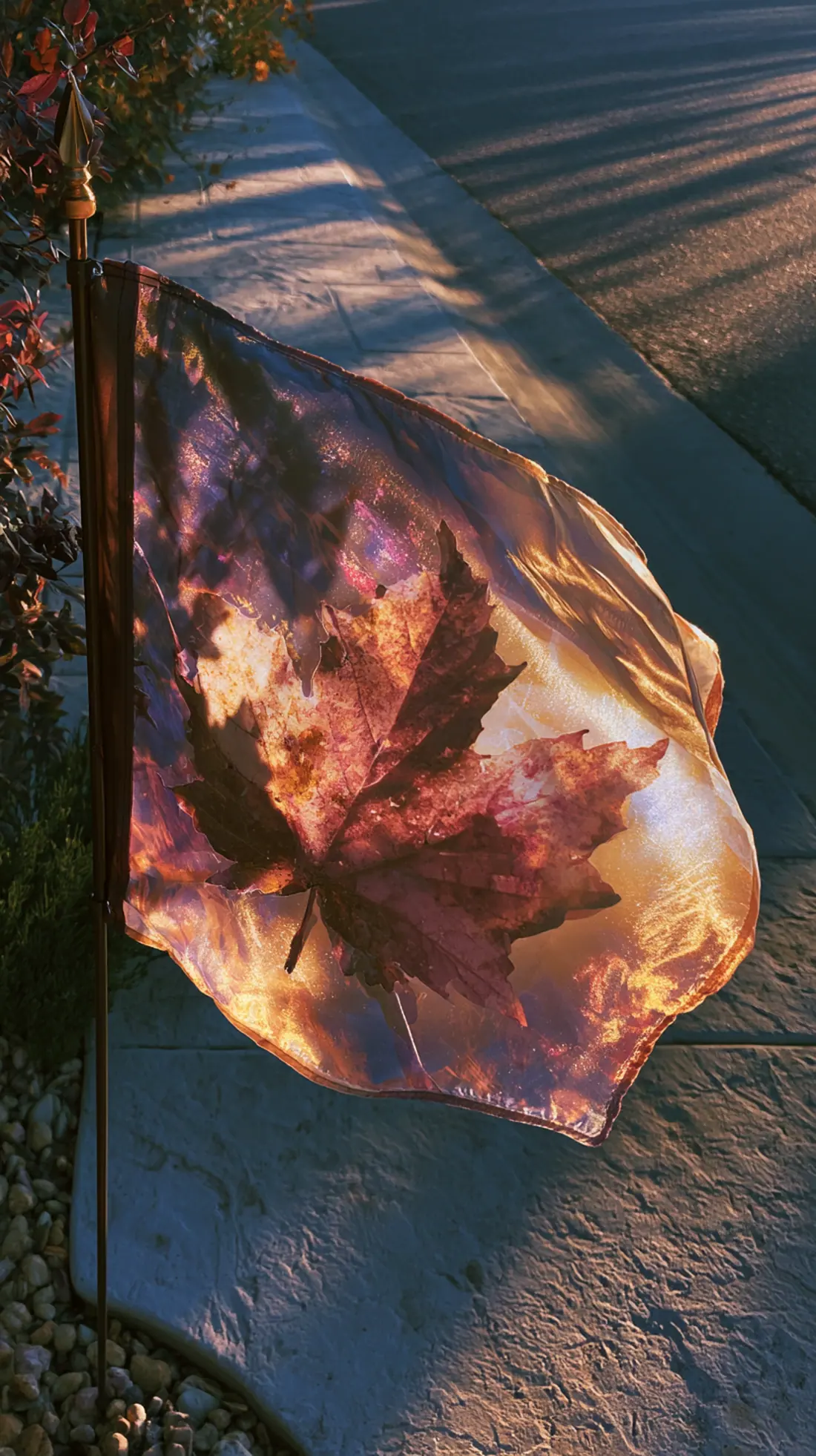 2/4
2/4 3/4
3/4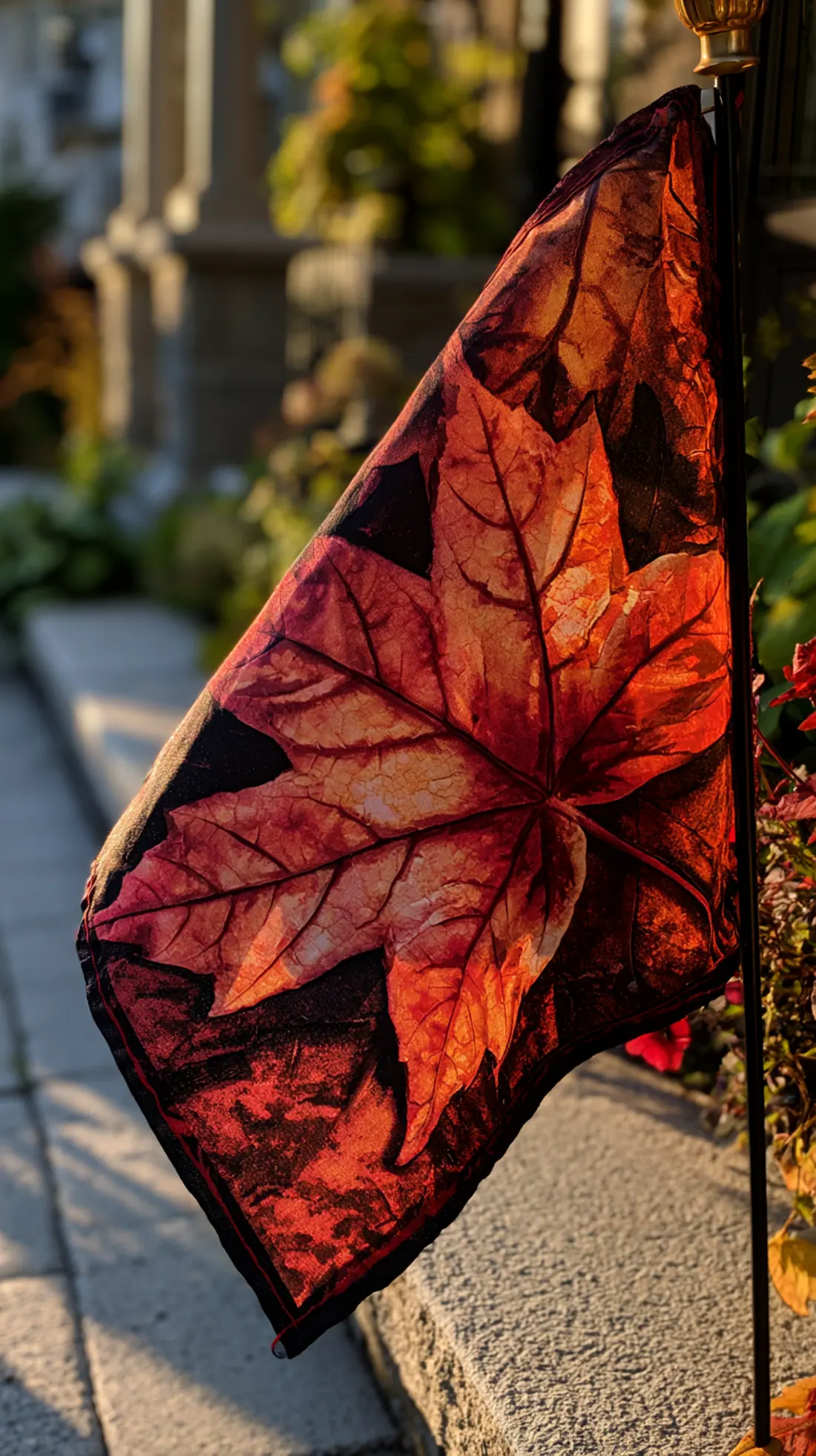 4/4
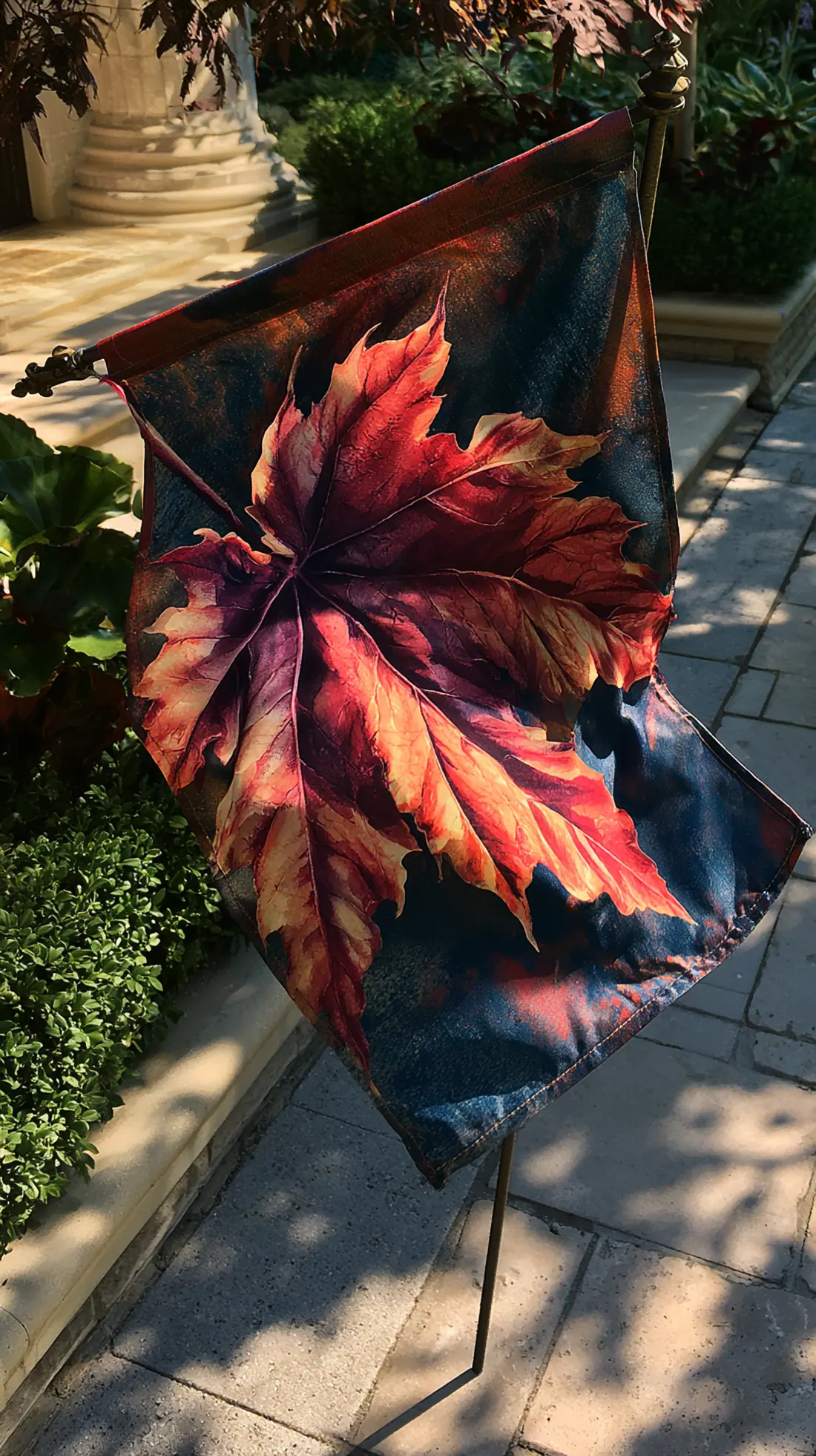
4/4A garden flag by the front walk is a small, easy update, and a steel spike base instead of the flimsy plastic stand that comes in most kits is the difference between a flag that stays put and one you find three yards away after every storm.
Push the spike in at a slight backward lean into the prevailing wind direction, so gusts push the flag more upright instead of snapping the pole forward. Choose a flag made from a heavier polyester weave, since thin fabric flags fray at the edges within a season of steady wind. For more pattern and color options built for this exact display format, 24 Fall Garden Flag Ideas for a Warm, Welcoming Yard has a wide range worth browsing.
Quick Tips
- Lean the spike back slightly against prevailing wind
- Choose heavier polyester weave over thin fabric
- Bring the flag in during severe storm warnings
20. Group Pumpkins by Size on a Concrete Slab, Not Grass
 1/4
1/4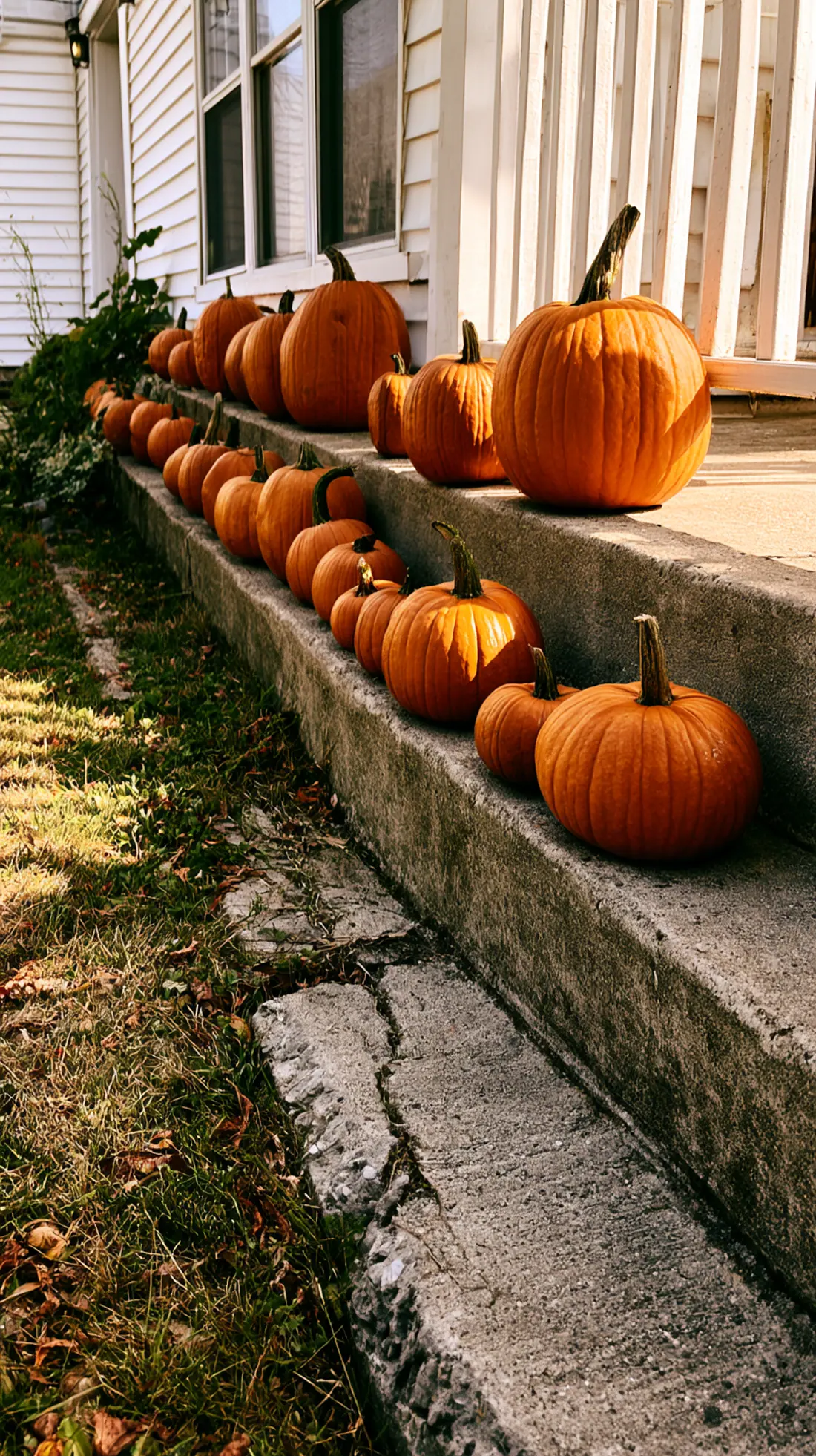 2/4
2/4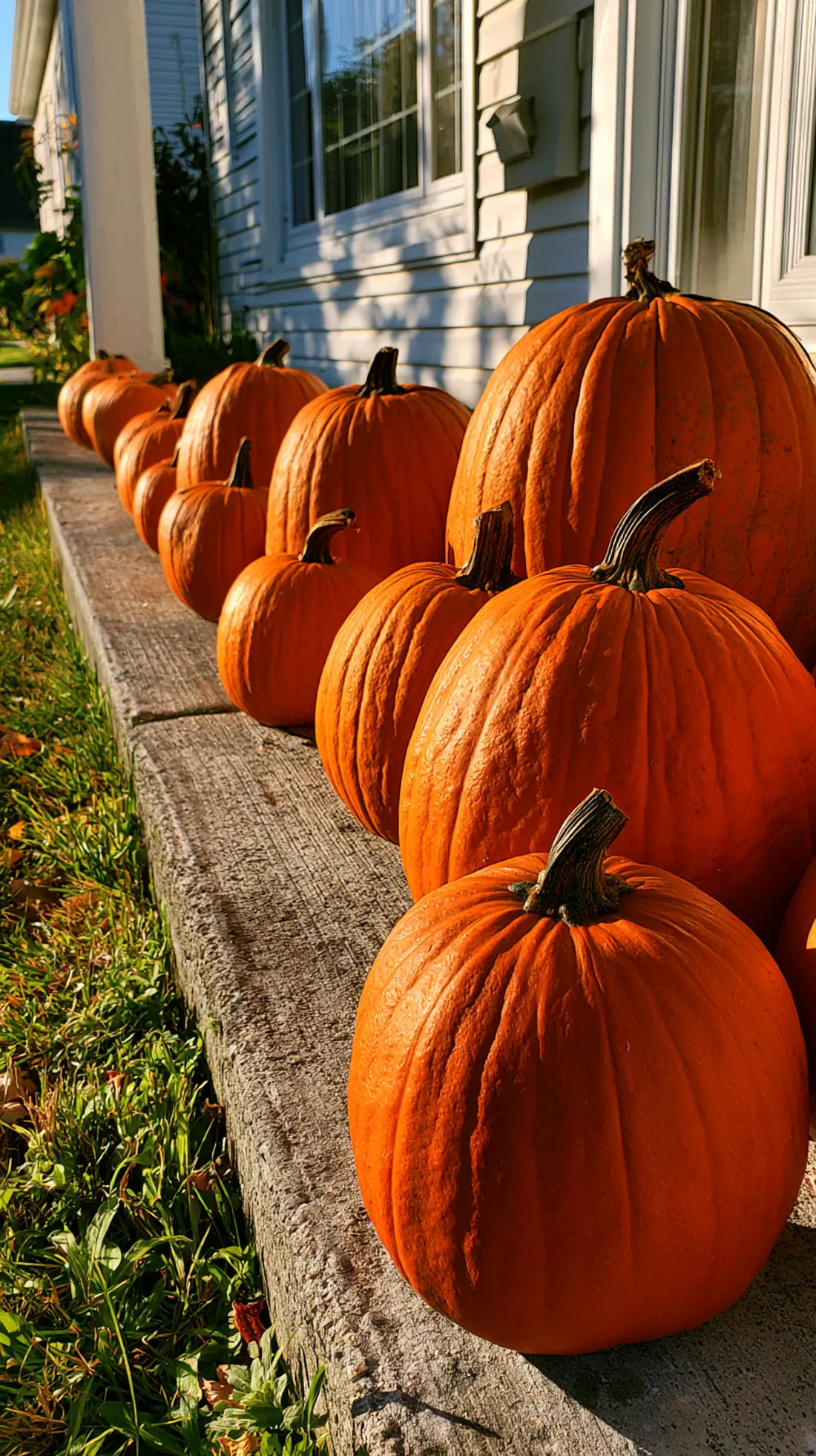 3/4
3/4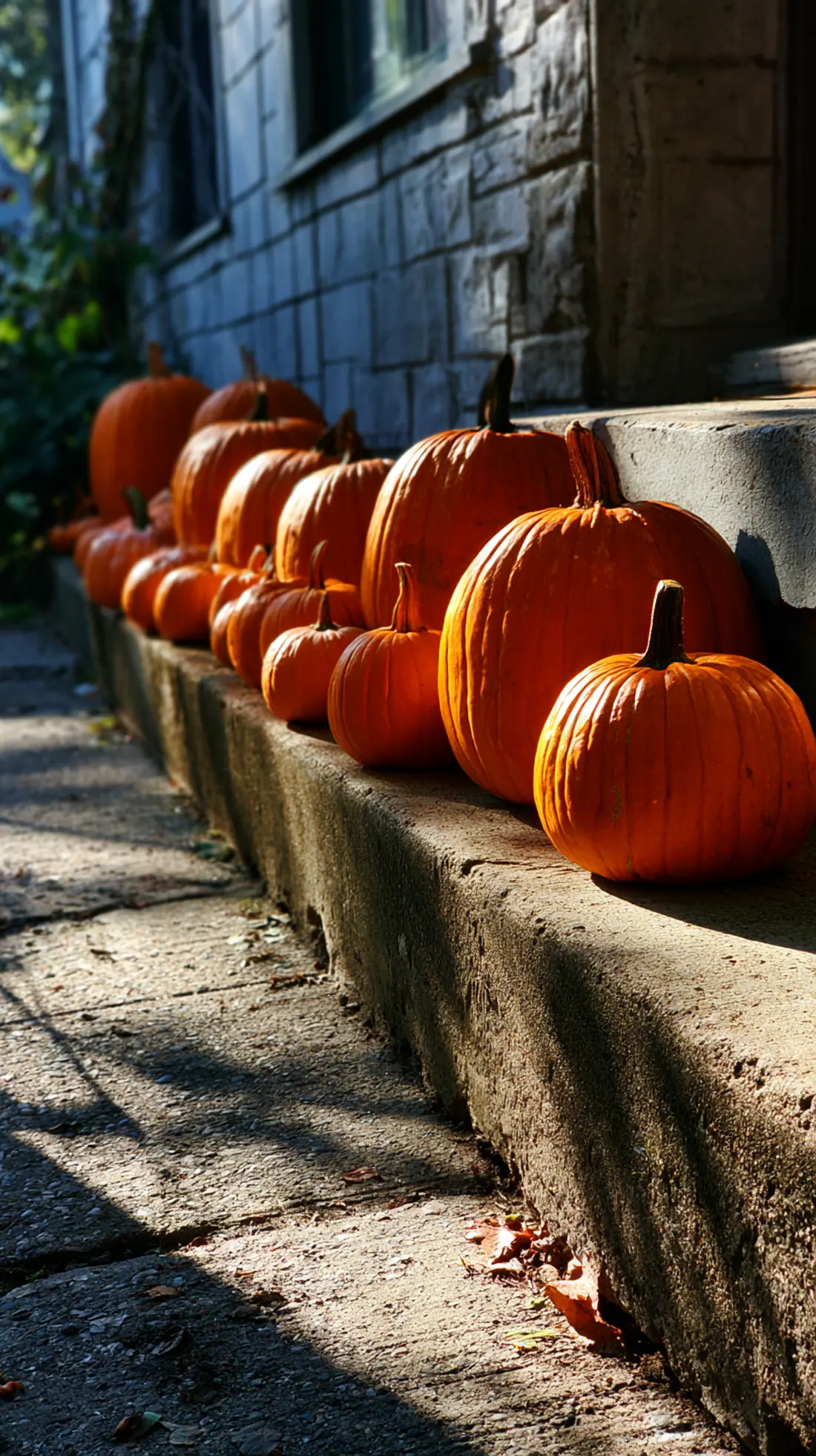 4/4
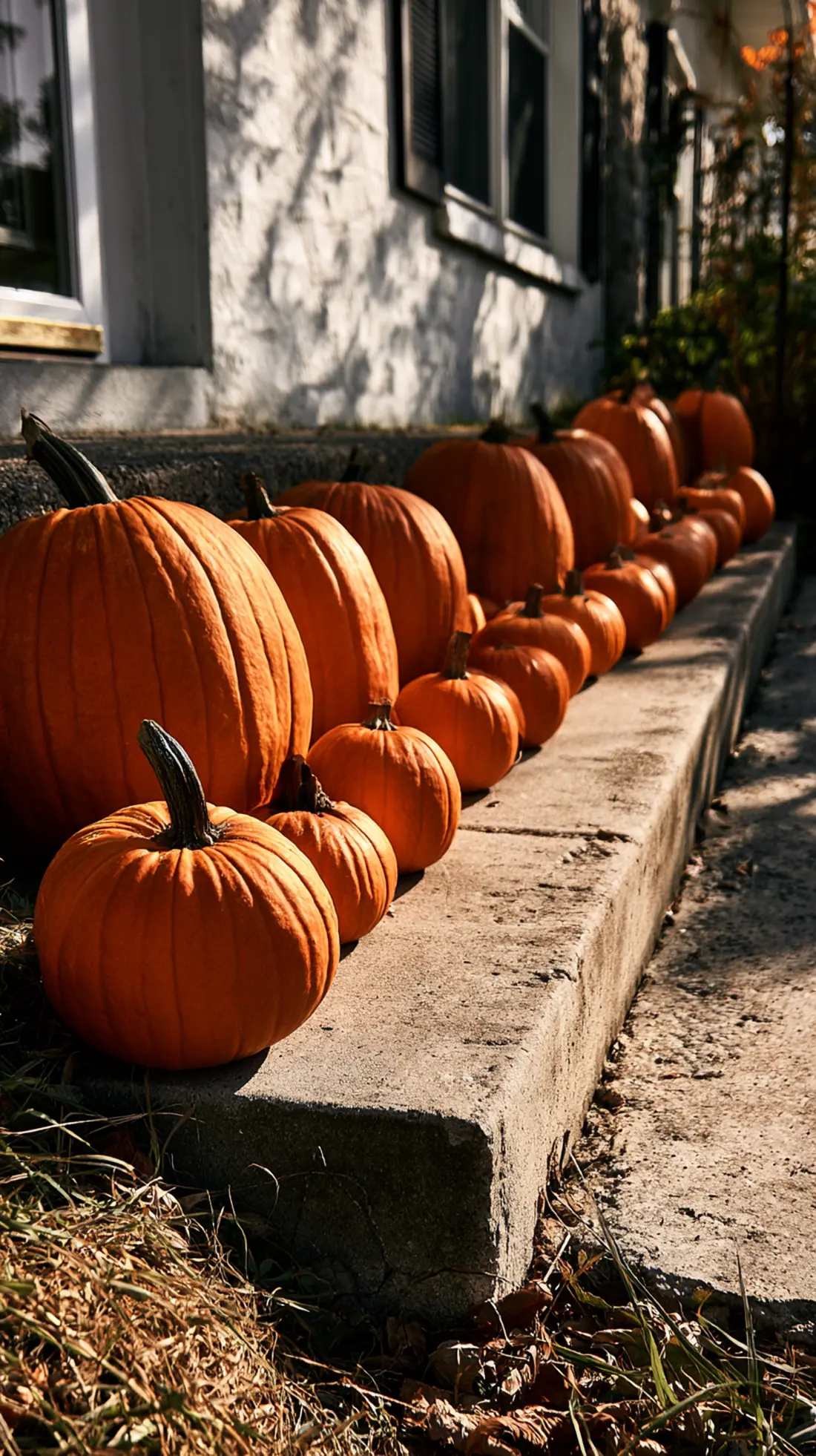
4/4One of the simplest fall outdoor decorating ideas is also the most overlooked: pumpkins set directly on grass rot from the bottom within days, while the same pumpkins on a concrete step or slab stay firm for weeks longer.
Arrange them largest to smallest working up the steps or across a porch landing, which creates a natural sightline that photographs well from the front walk. Rotate each pumpkin a quarter turn every week or so, since the side sitting against the concrete stays damp and starts to soften first if it never moves. Pull real pumpkins in or discard them the moment you see soft spots forming, since one rotting pumpkin can mold the ones stacked near it.
Quick Tips
- Set pumpkins on concrete, pavers, or a mat, never bare grass
- Rotate weekly to slow soft spots
- Remove any pumpkin showing mold right away
21. Hang a Wind Chime That Won’t Rattle Loose in Gusts
 1/3
1/3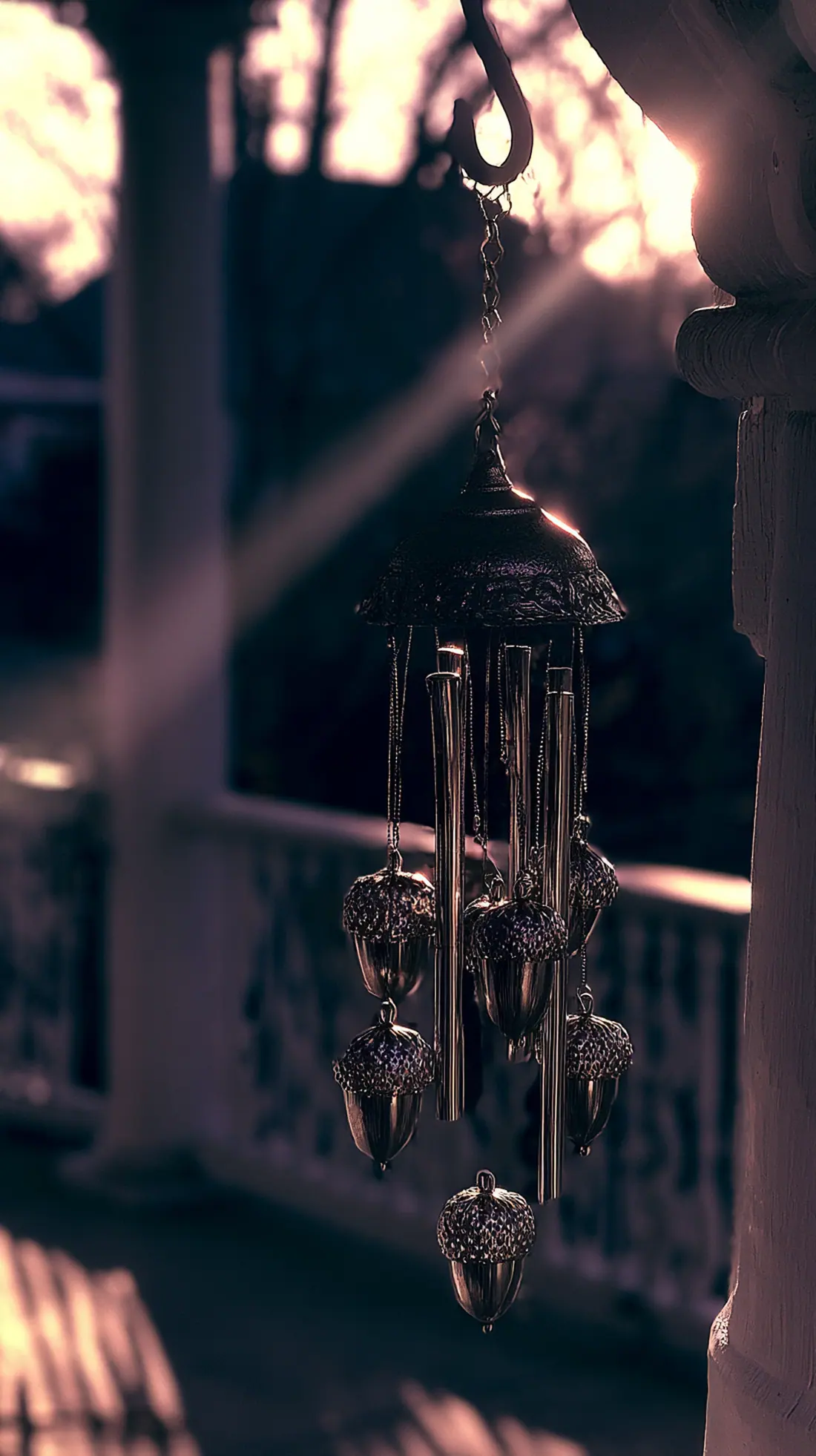 2/3
2/3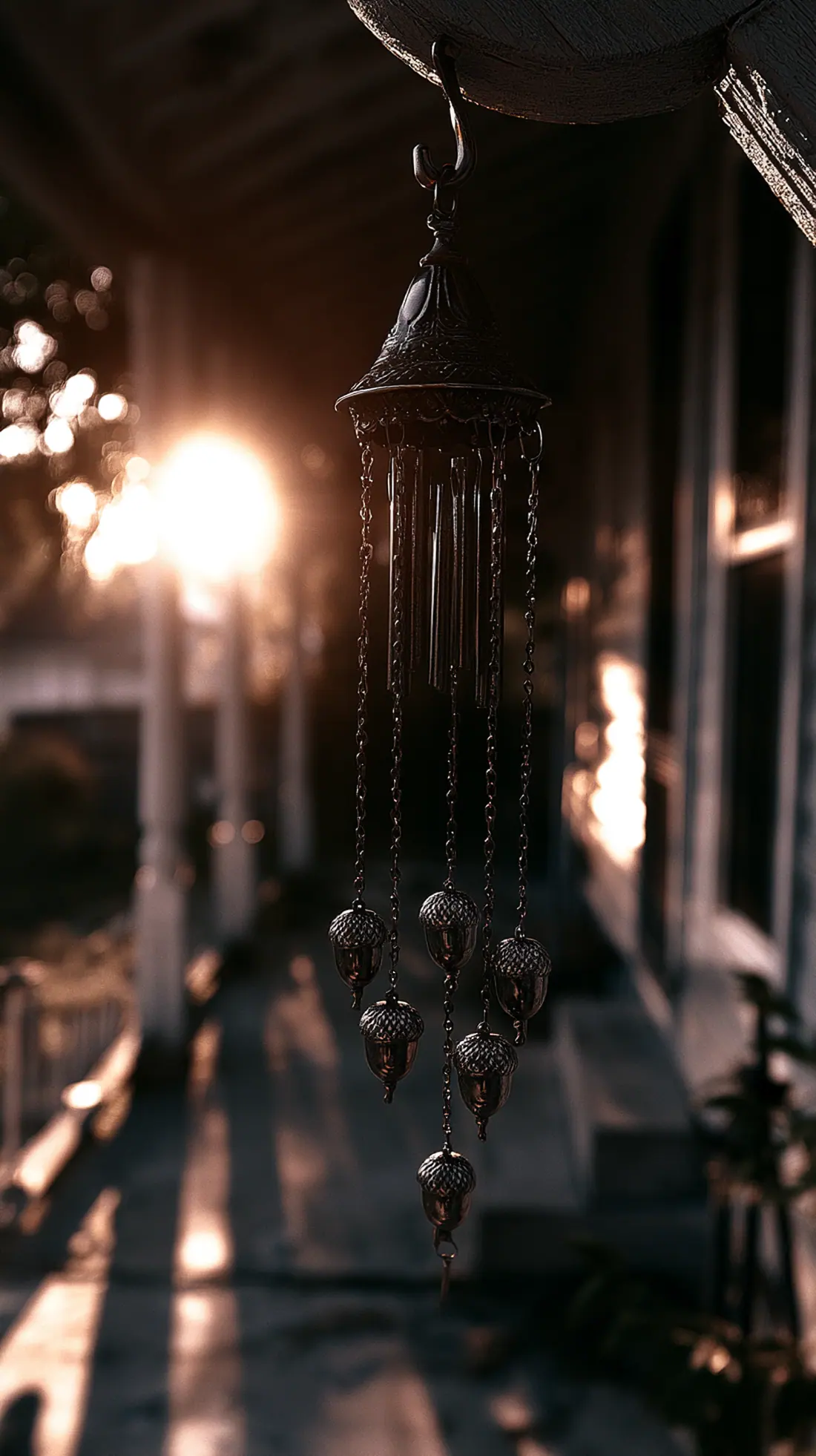 3/3
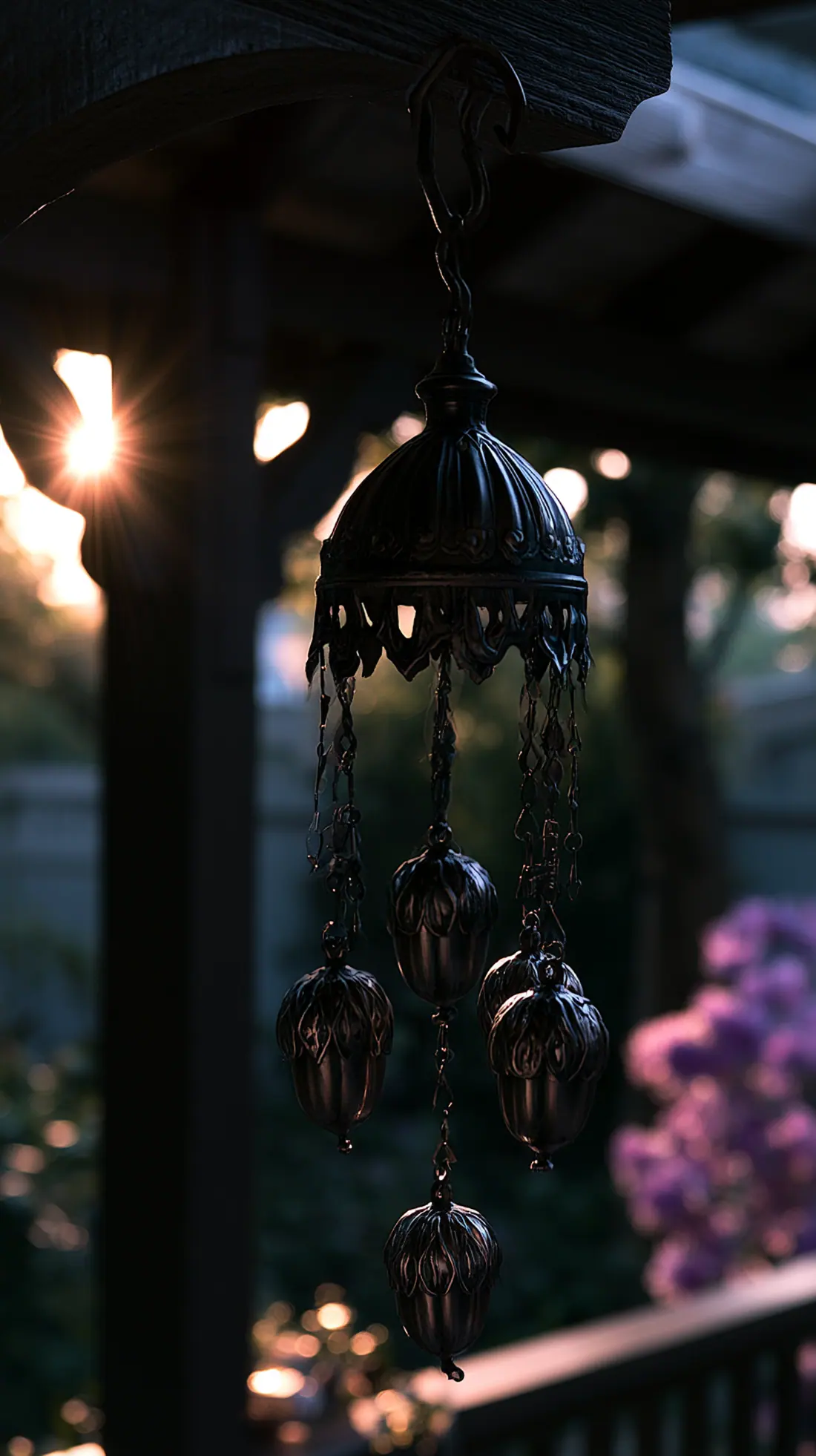
3/3A fall-themed wind chime, often with acorn or leaf details cast into the metal, adds sound and movement to a porch that would otherwise be purely visual, and a friend of mine learned the hard way that a chime hung on a thin string will not survive its first real windstorm.
Hang the chime from a solid S-hook rated for the chime’s actual weight, not the small hook it often ships with, and attach that hook to an eye screw driven into a structural beam rather than gutter trim, which can bend or tear loose. Give the chime enough clearance from the wall or railing that it can swing freely without clanging against siding in strong gusts, which both sounds harsh and can chip paint over time.
Quick Tips
- Hang from a structural beam, not gutter trim
- Use a weight-rated S-hook instead of the included hardware
- Leave clearance so it cannot knock against siding
22. Dress an Outdoor Bench With Waterproof Throw Pillows
 1/4
1/4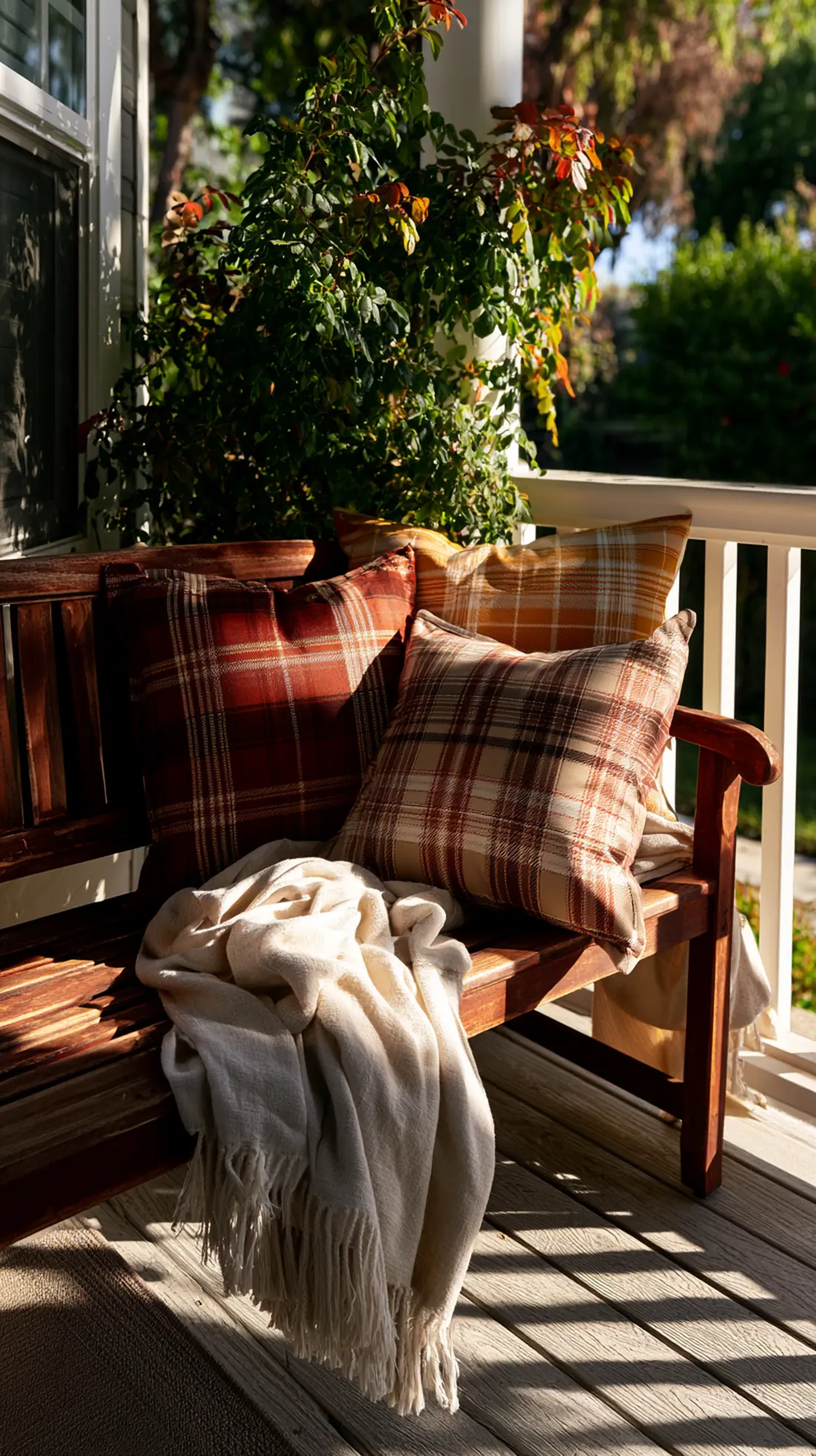 2/4
2/4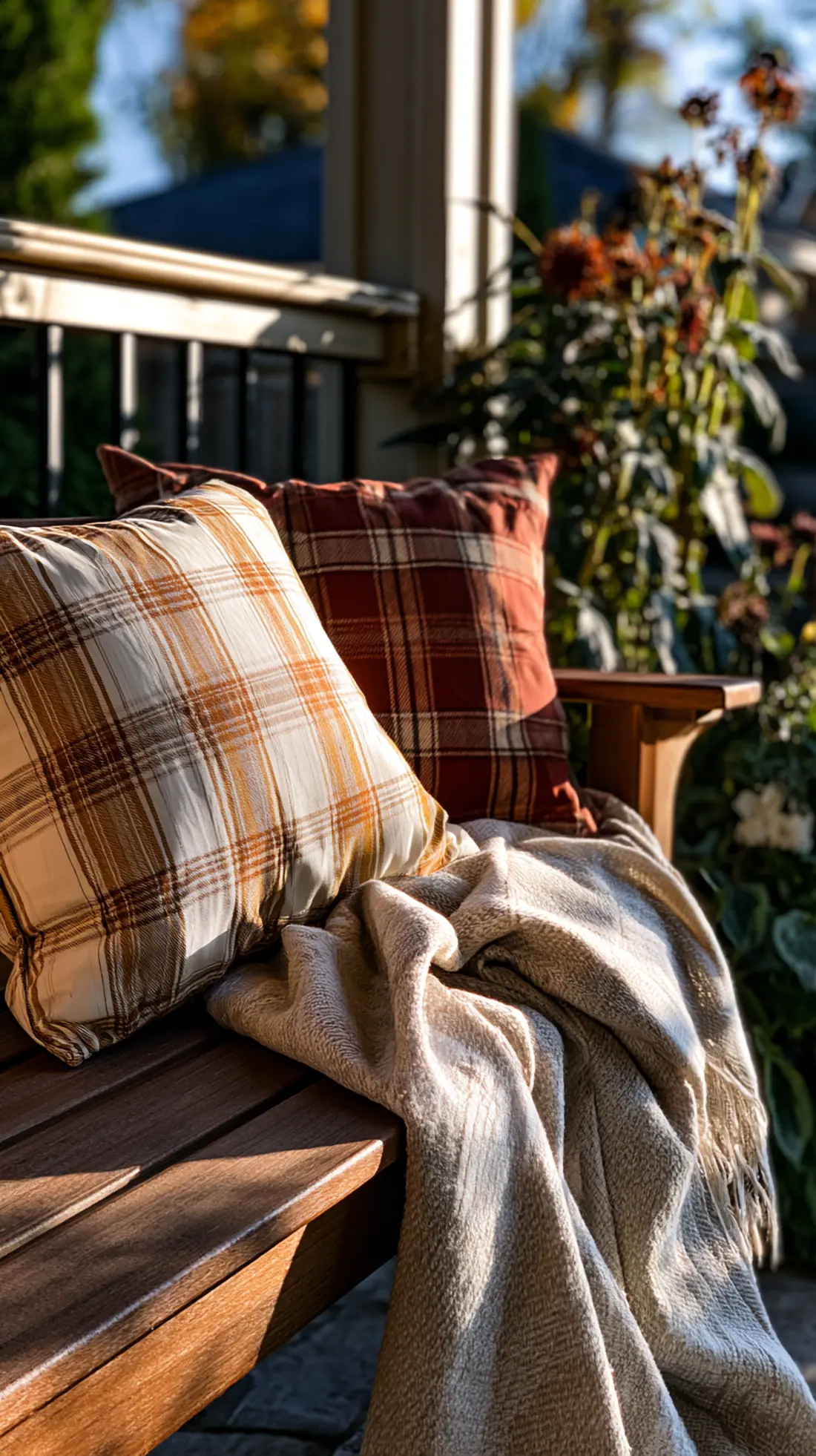 3/4
3/4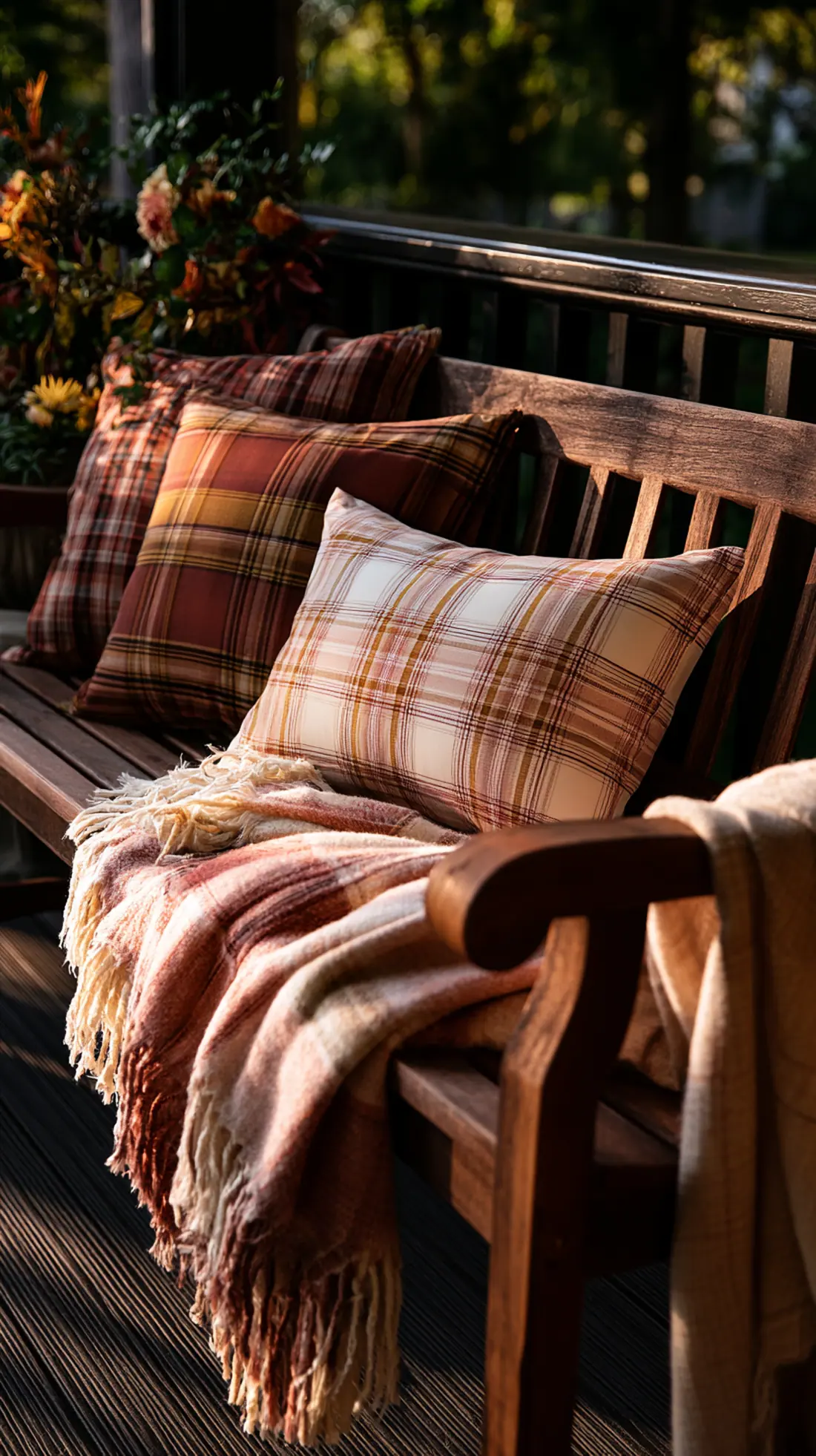 4/4
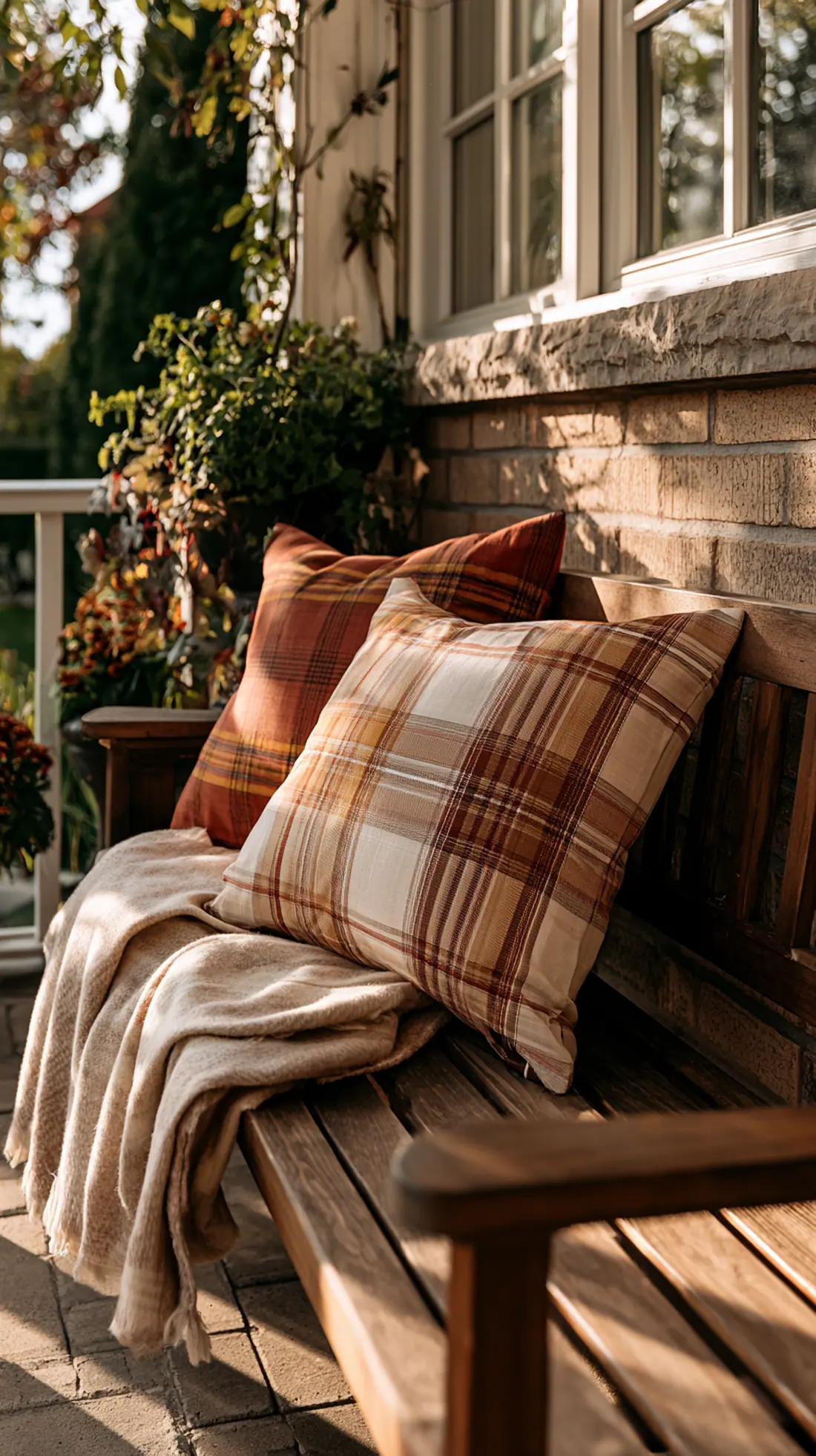
4/4A bare porch bench looks unfinished, and a pair of pillows in a fall color palette makes it feel like a real seating spot rather than a place to set boots down, as long as the fabric is rated for outdoor use.
Look for pillows filled with quick-dry foam and covered in solution-dyed acrylic fabric, which resists both fading in direct sun and staining from rain, unlike cotton or polyester blends made for indoor sofas. Stand pillows on their edge, tucked against the bench arm, when you know rain is coming, so water runs off the fabric instead of pooling on a flat top surface. This kind of small upgrade is exactly the territory covered in 15 Modern Patio Decorating Ideas to Elevate Your Outdoor Space, if you want to build the whole seating area out further.
Quick Tips
- Choose solution-dyed acrylic fabric, not cotton blends
- Prop pillows on edge before rain to help them drain
- Bring pillows in during extended wet stretches to prevent mildew
23. Build a Corn Husk Topiary Around a PVC Frame
 1/4
1/4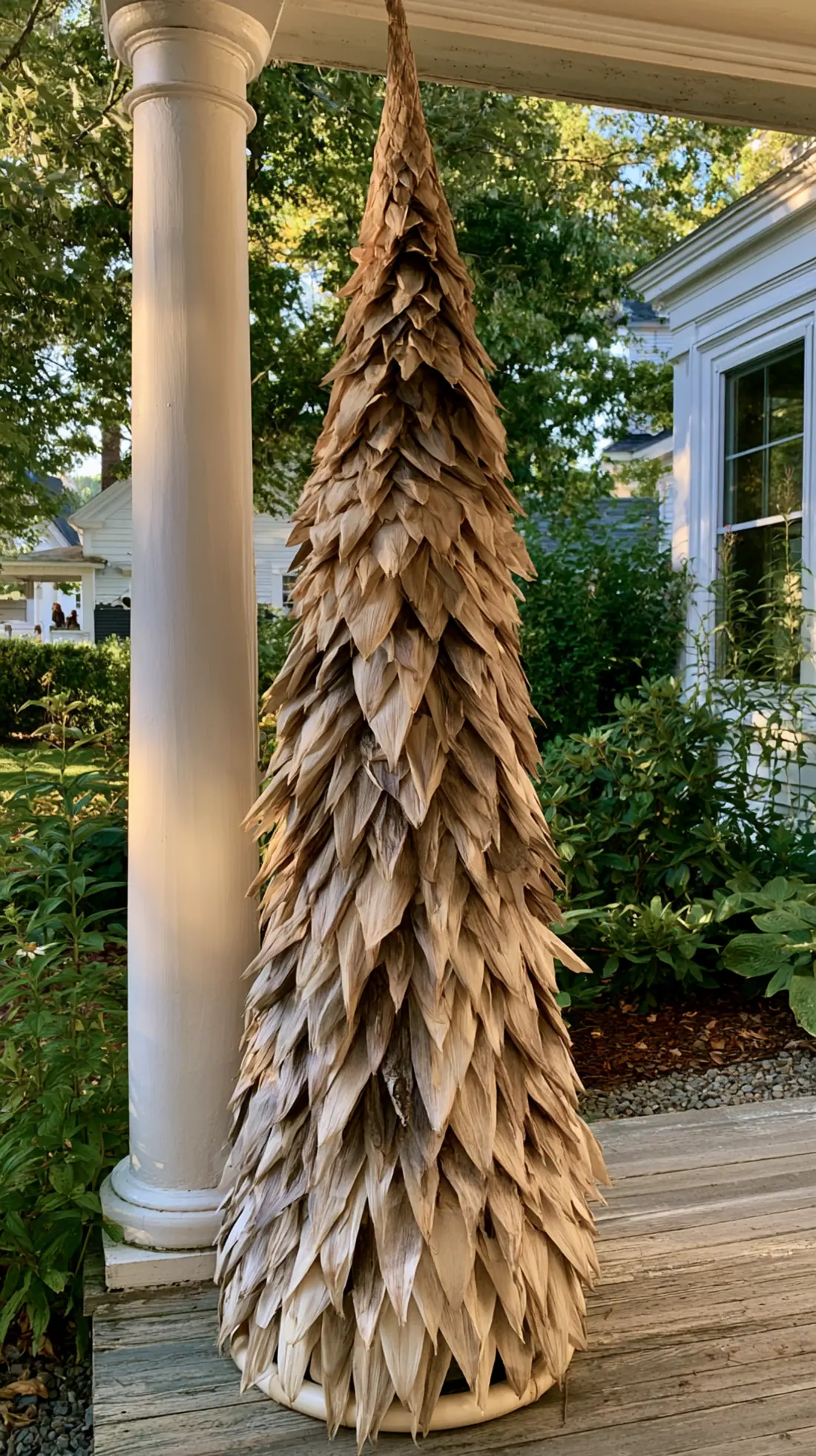 2/4
2/4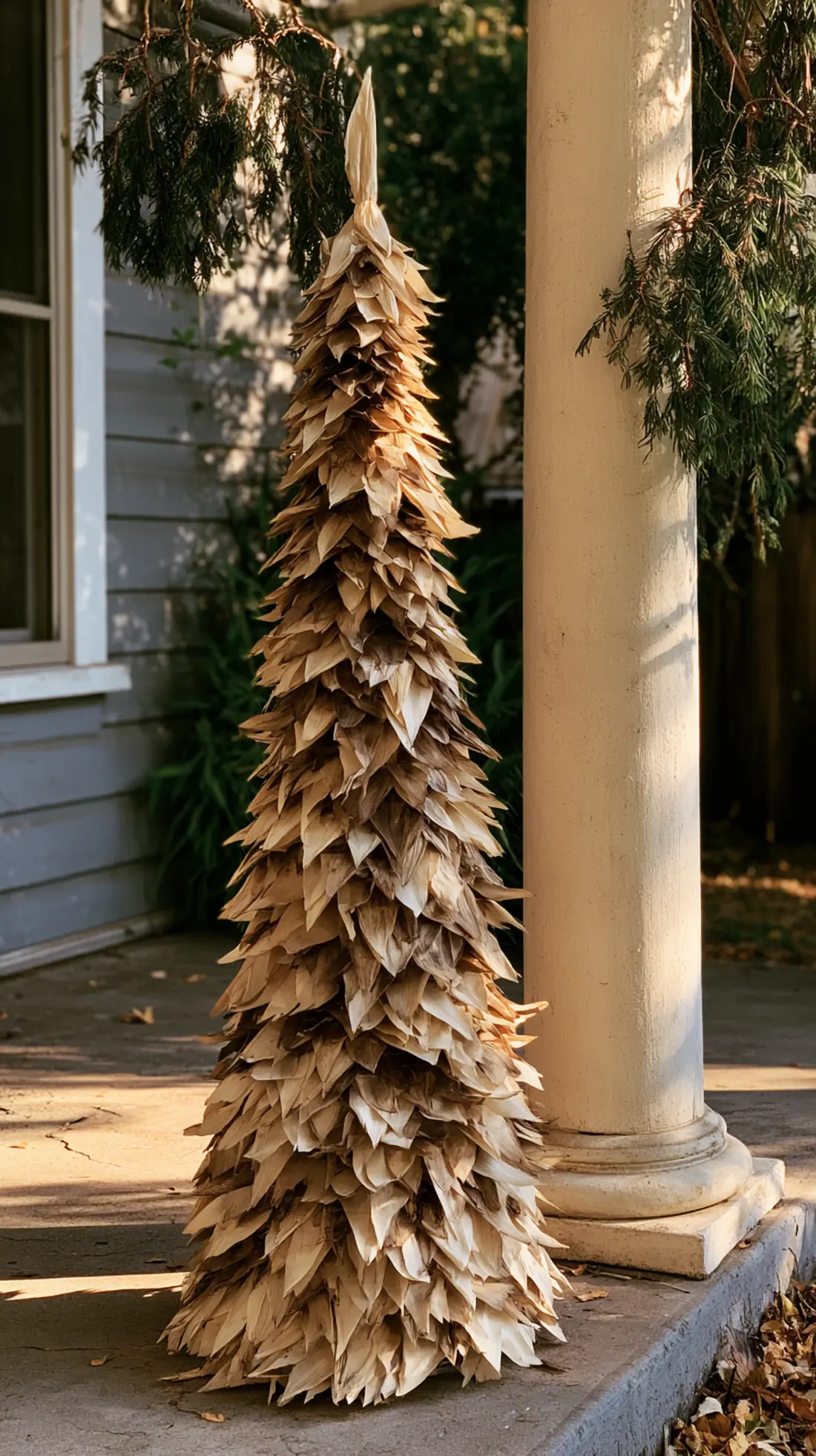 3/4
3/4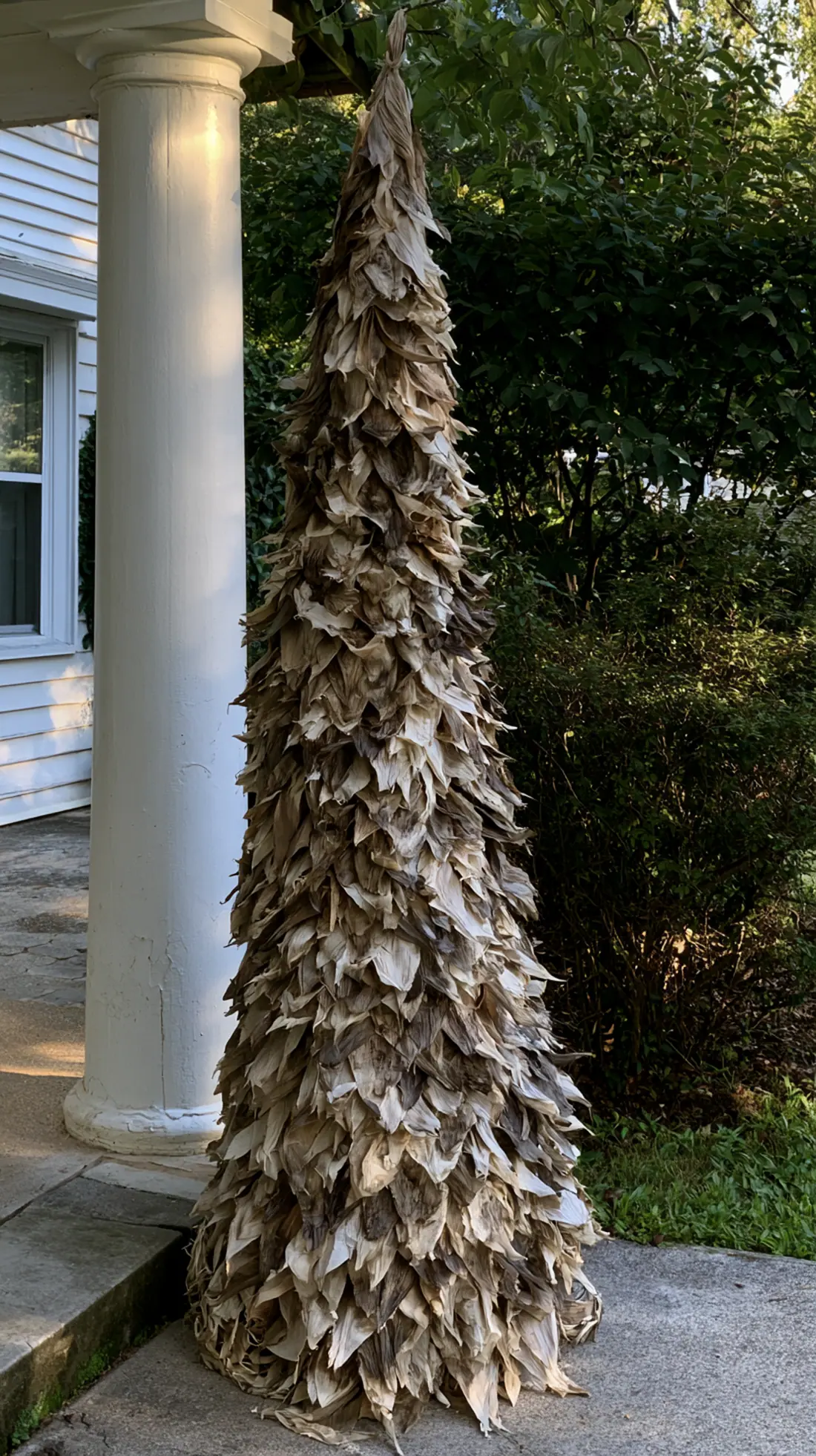 4/4
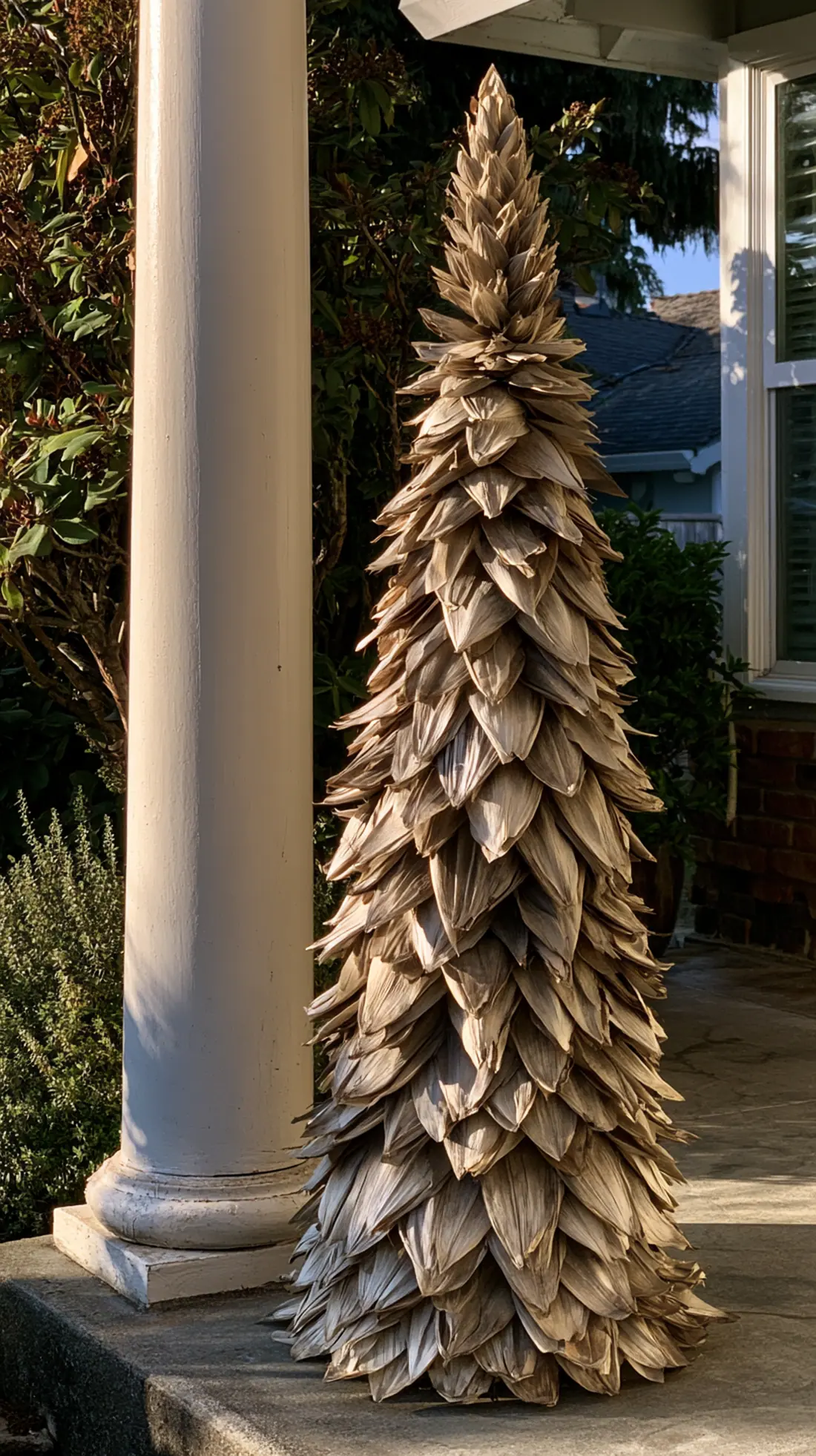
4/4A corn husk topiary shaped into a tidy cone is a striking porch statement piece, and building it around a lightweight PVC frame instead of a floral foam cone keeps it from collapsing the first time it gets rained on.
Cut a length of PVC pipe as the center pole, then build a simple wire cone frame around it using chicken wire or hardware cloth, giving the husks something rigid to attach to with hot glue or floral wire. This structure sheds water instead of absorbing it, which is the main reason floral foam versions fail within a season outdoors. Weight the base with a filled pot or a bag of sand so the finished topiary cannot tip over in wind despite its tall, narrow shape.
Quick Tips
- Use chicken wire, not floral foam, as the frame core
- Weight the base pot heavily for a tall, narrow shape
- Wire husks on rather than relying only on glue
24. Frame the Door With Weatherproof Pumpkin Urns
 1/2
1/2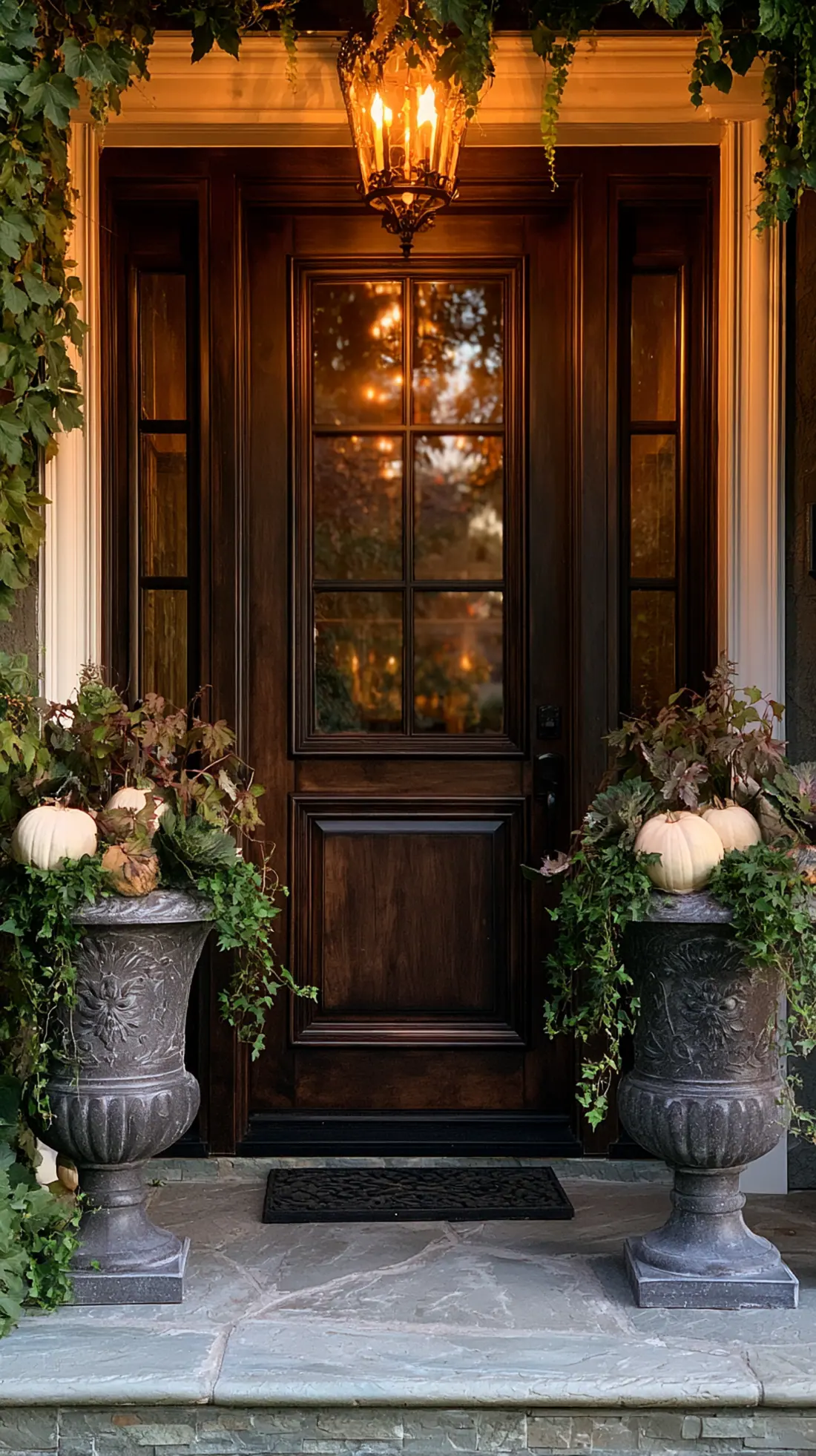 2/2
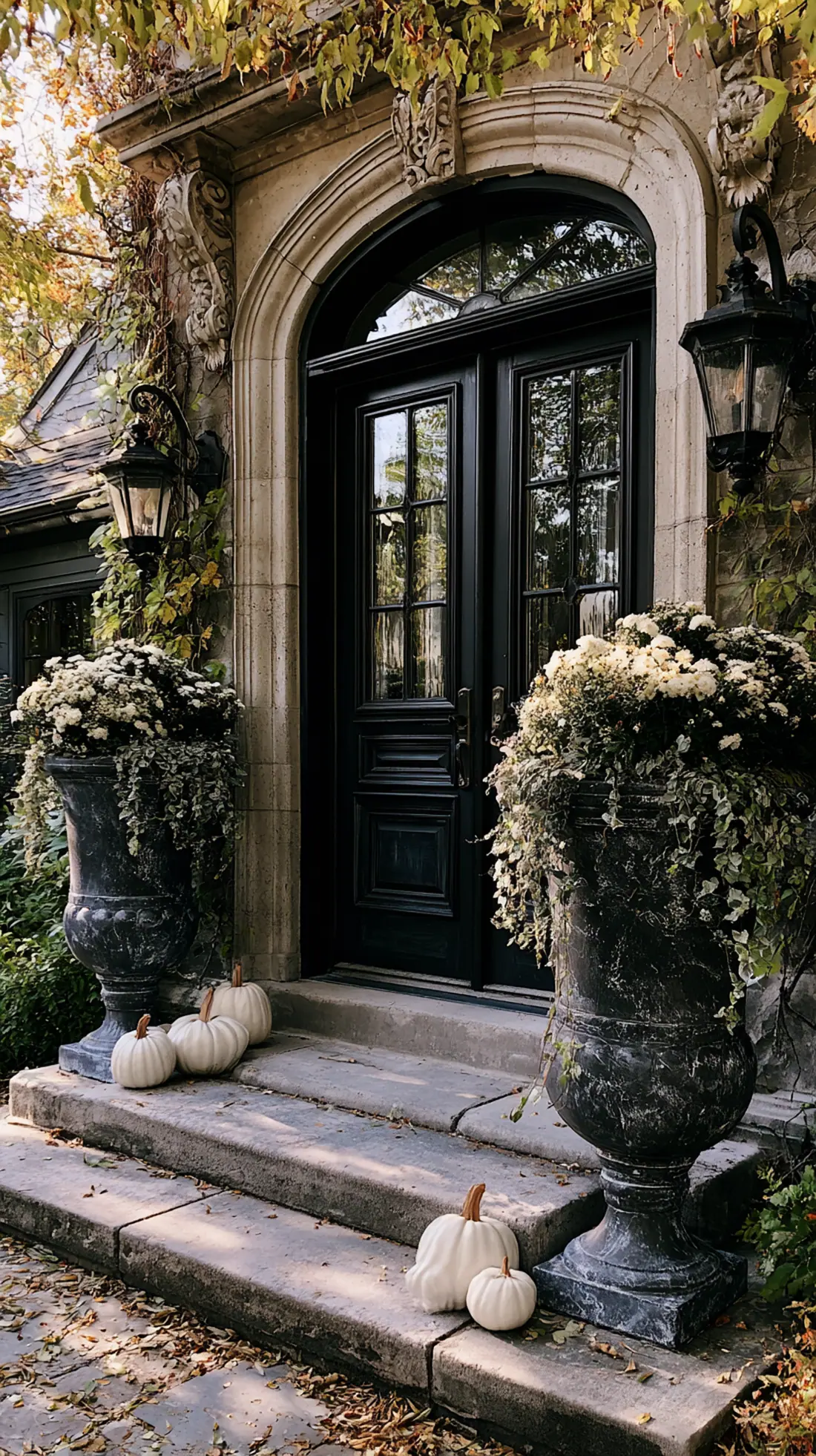
2/2A matching pair of urns on either side of the front door gives a porch symmetry that reads as put-together the moment someone walks up, and resin or fiberglass urns handle temperature swings and rain far better than ceramic ones prone to cracking.
Fill each urn with a mix of real or faux pumpkins nestled into faux moss or excelsior filler, which hides the gap between the pumpkins and the urn rim and keeps everything from shifting when the wind picks up. Check that each urn has a drainage hole if you are layering in any real greenery, since standing water at the base speeds up rot in whatever is sitting closest to it. Keep both urns identical in height and fill, since a mismatched pair undercuts the whole symmetry the look depends on.
Quick Tips
- Choose resin or fiberglass urns over ceramic
- Fill gaps with moss or excelsior for a finished look
- Keep the pair matched in height and contents
25. Line the Fence With Battery Lanterns in Glass Jars
 1/4
1/4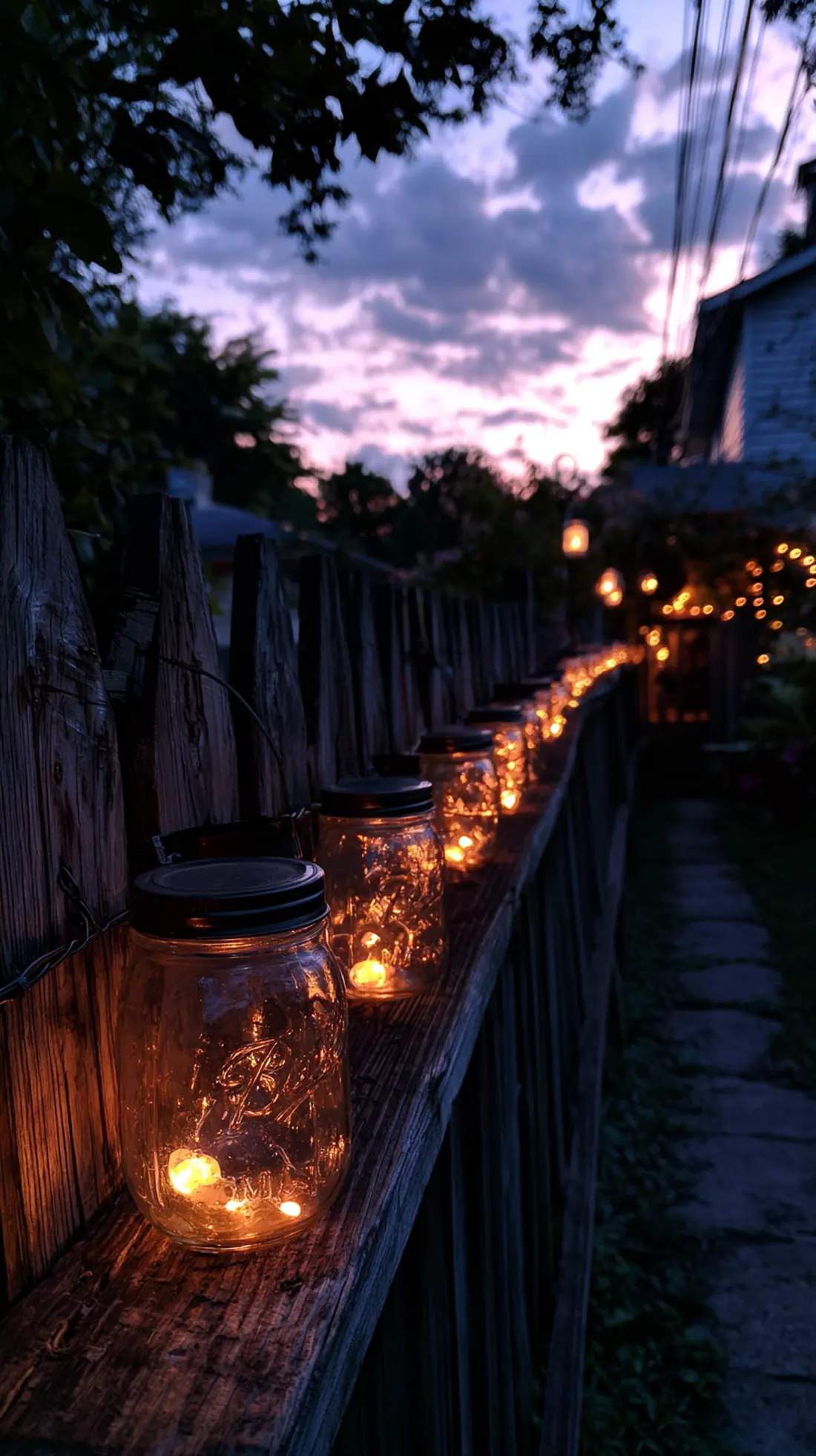 2/4
2/4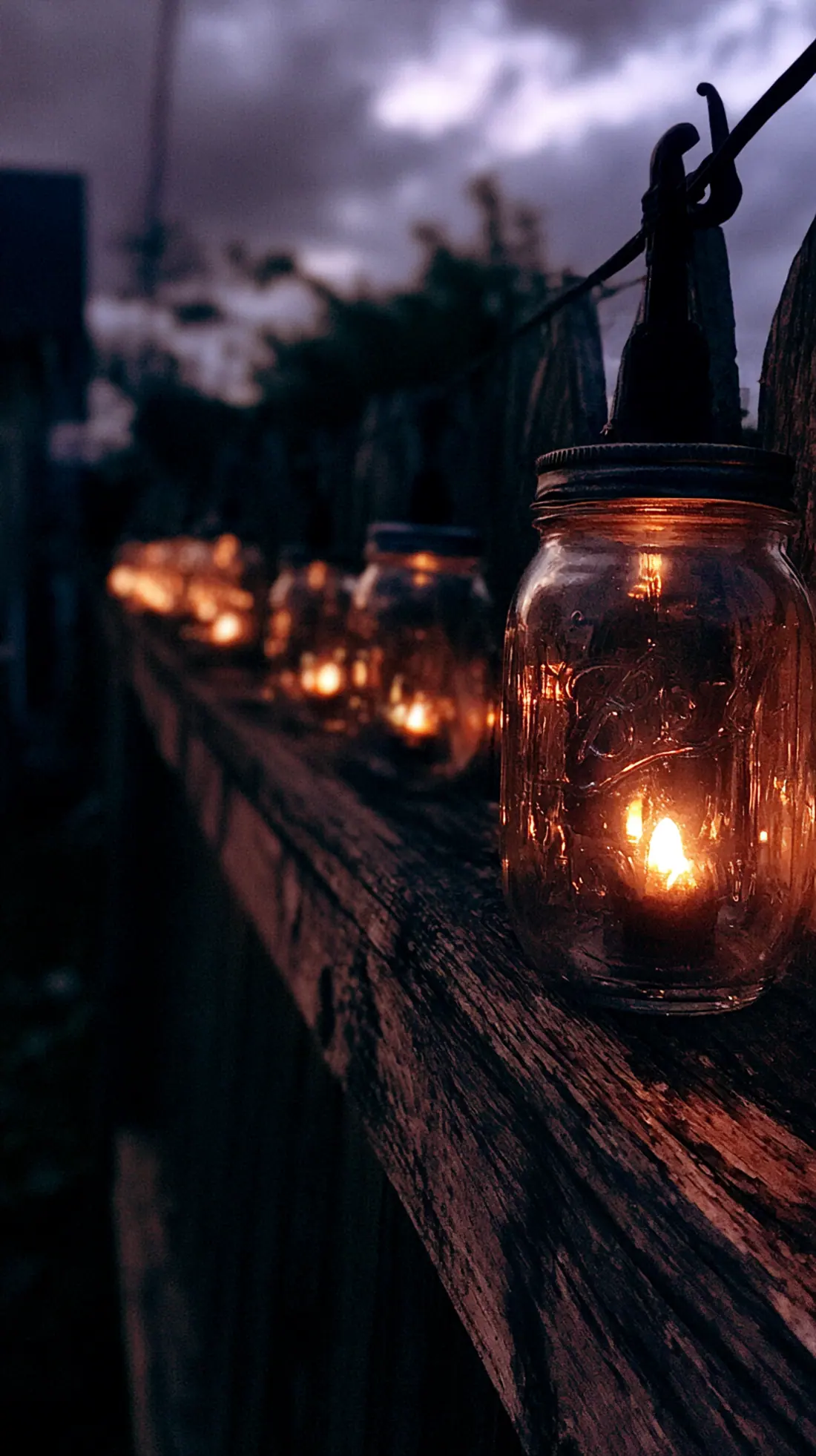 3/4
3/4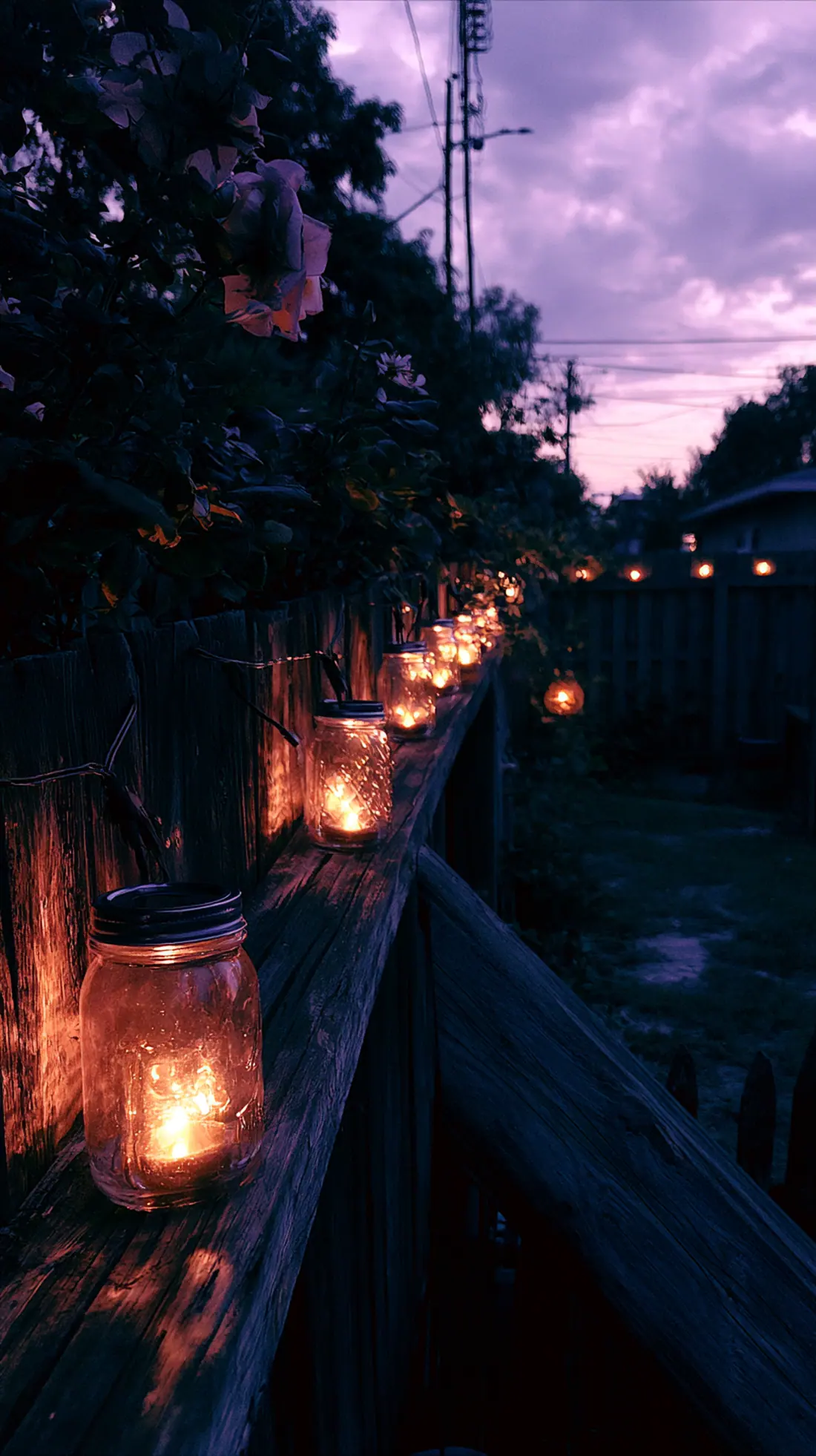 4/4
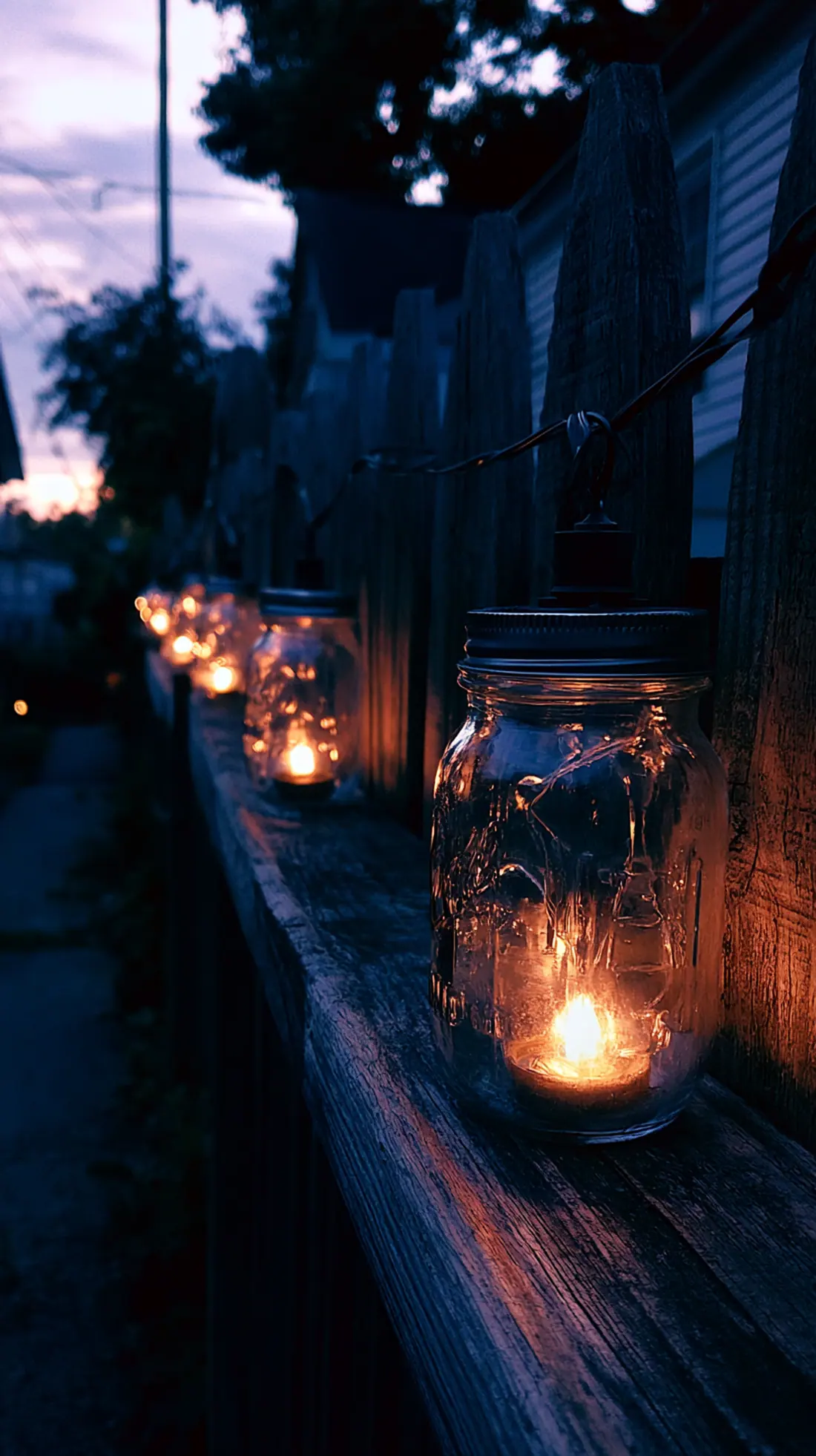
4/4A row of glass jars along the top of a fence, each holding a small battery lantern, throws warm light across a backyard gathering without a single extension cord in sight, and I remember how much more finished a plain wood fence line looks once those small points of light are added.
Choose flameless battery lanterns with a flicker setting over real candles, since wind snuffs out open flame constantly and a knocked-over candle in dry fall leaves is a real fire risk. Secure each jar to the fence with a simple wire hanger wrapped around the jar’s neck rather than balancing jars loose on the rail, where a gust can send glass shattering onto a patio below. Check batteries every few weeks, since cold nights drain them faster than most people expect.
Quick Tips
- Use flameless battery lanterns, not real candles, near dry leaves
- Secure jars with wire hangers instead of balancing them loose
- Check batteries every few weeks as nights get colder
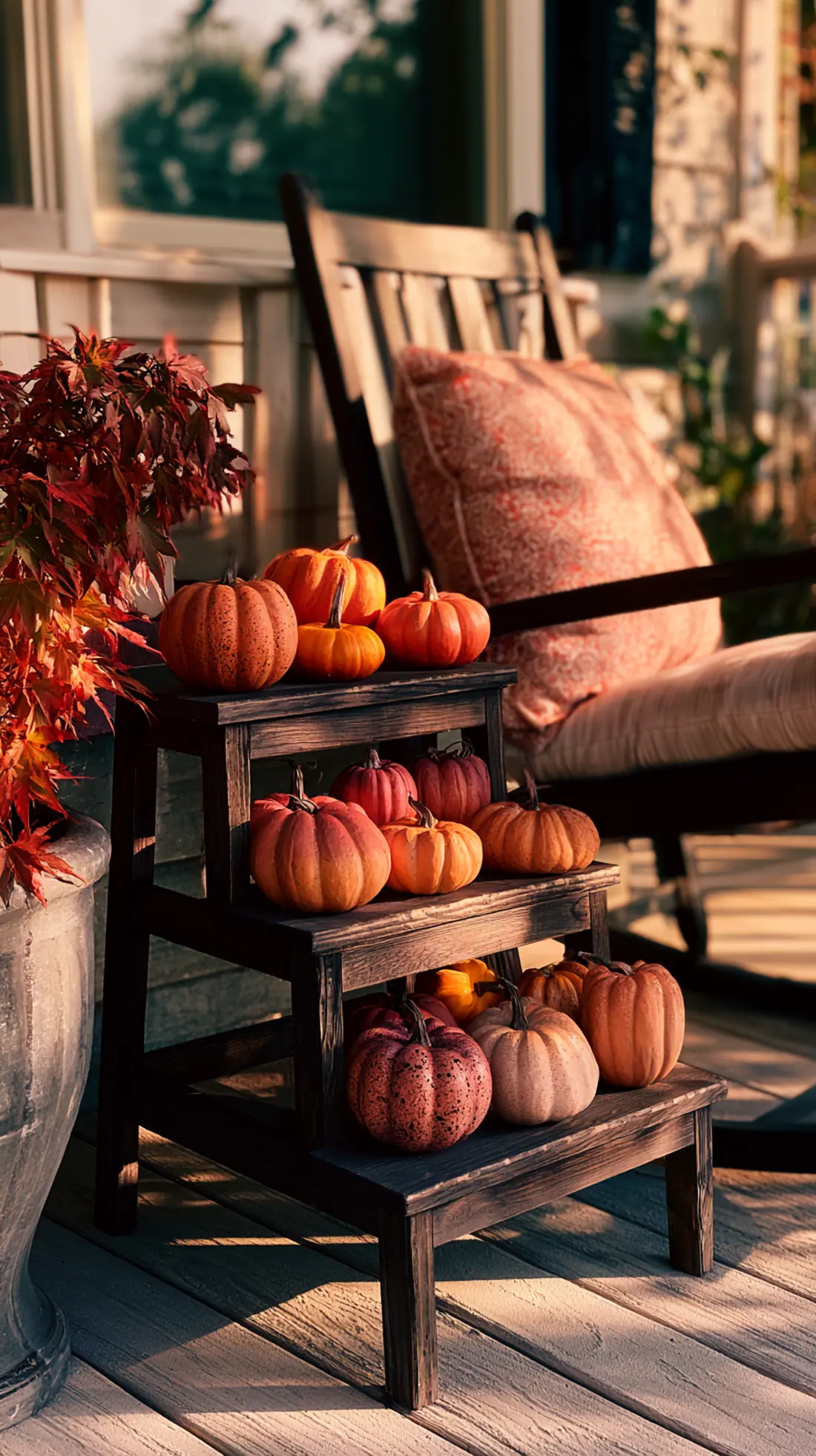
26. Set a Tiered Stand of Painted Mini Pumpkins on the Porch
 1/4
1/4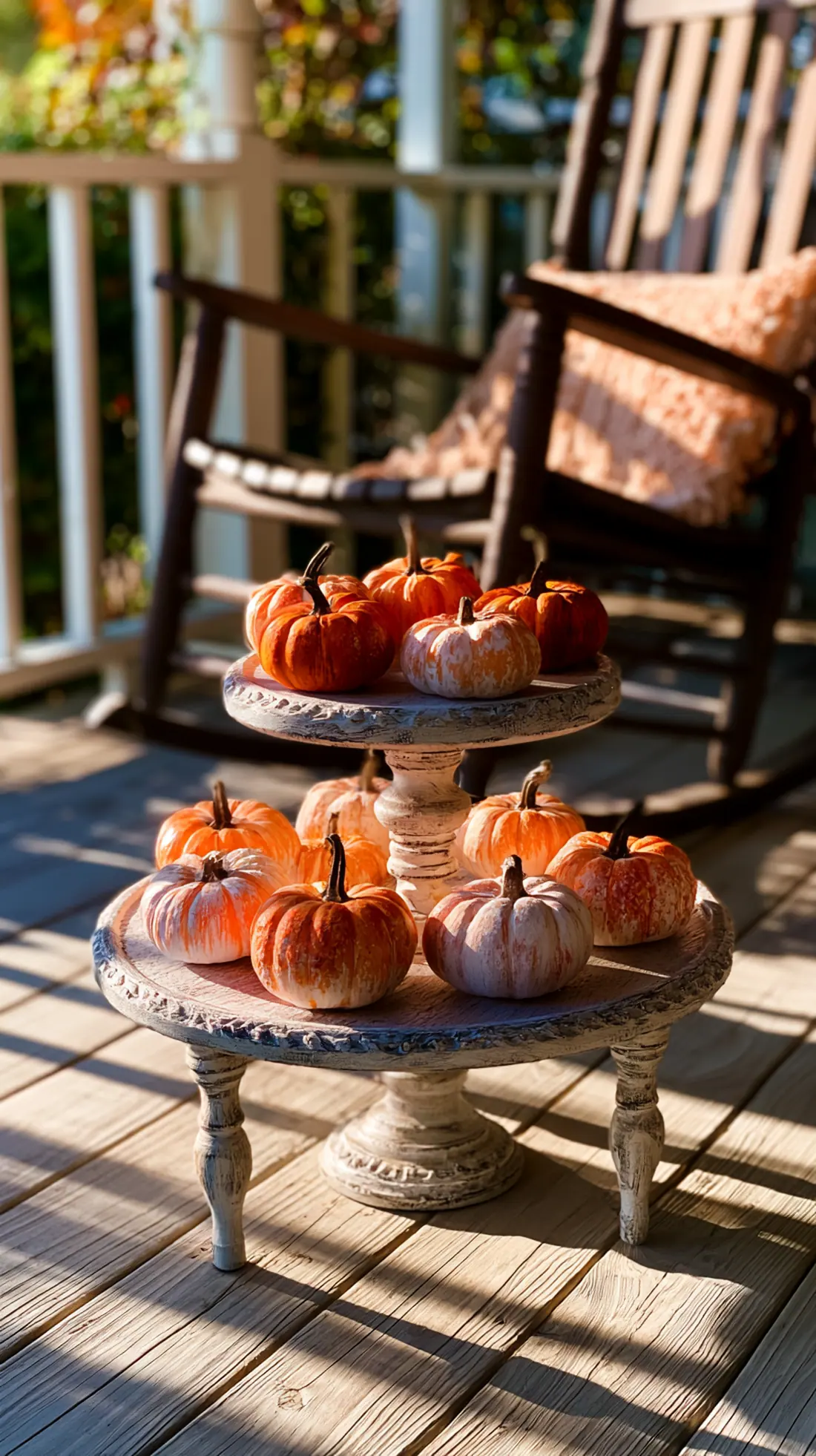 2/4
2/4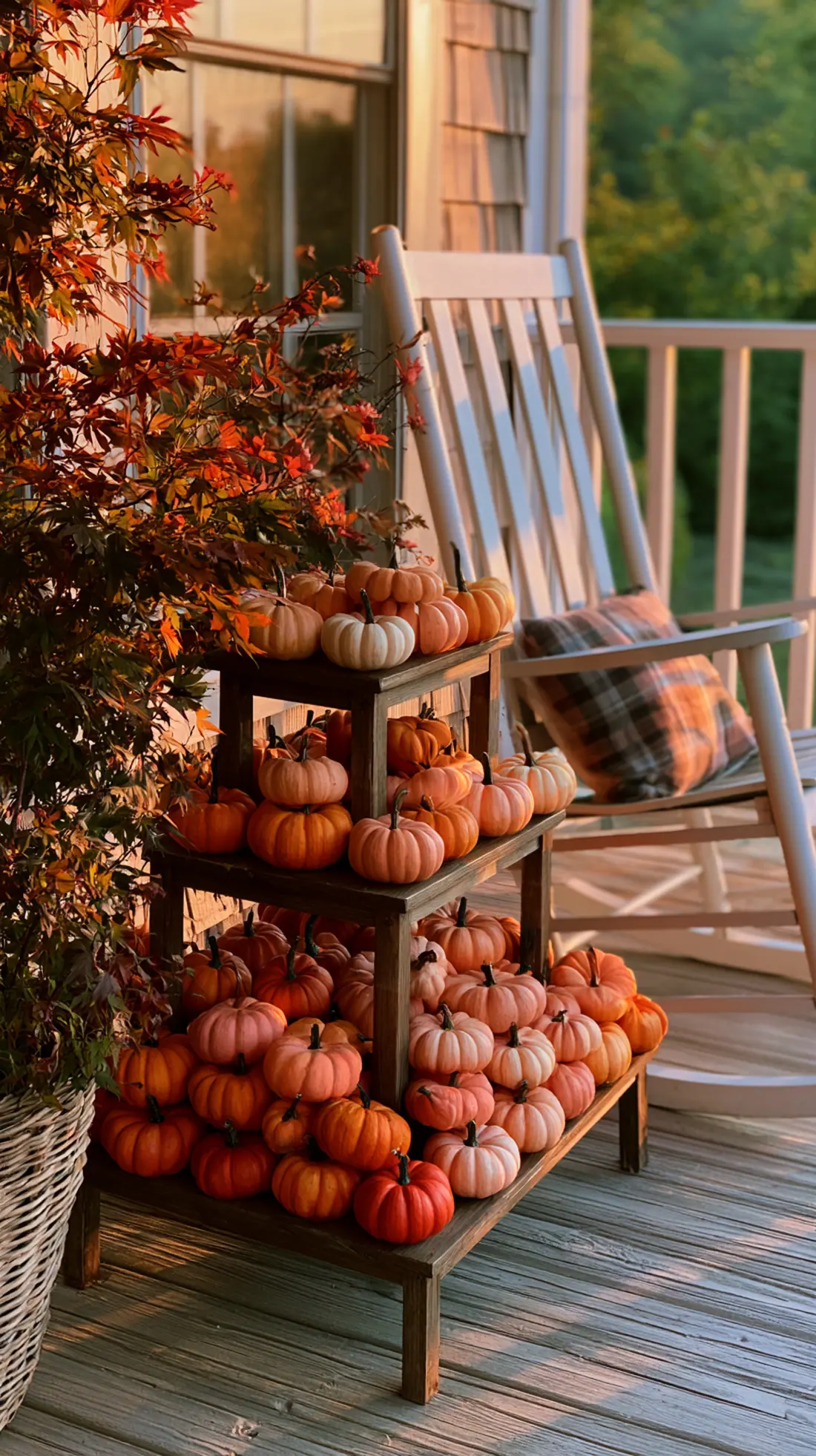 3/4
3/4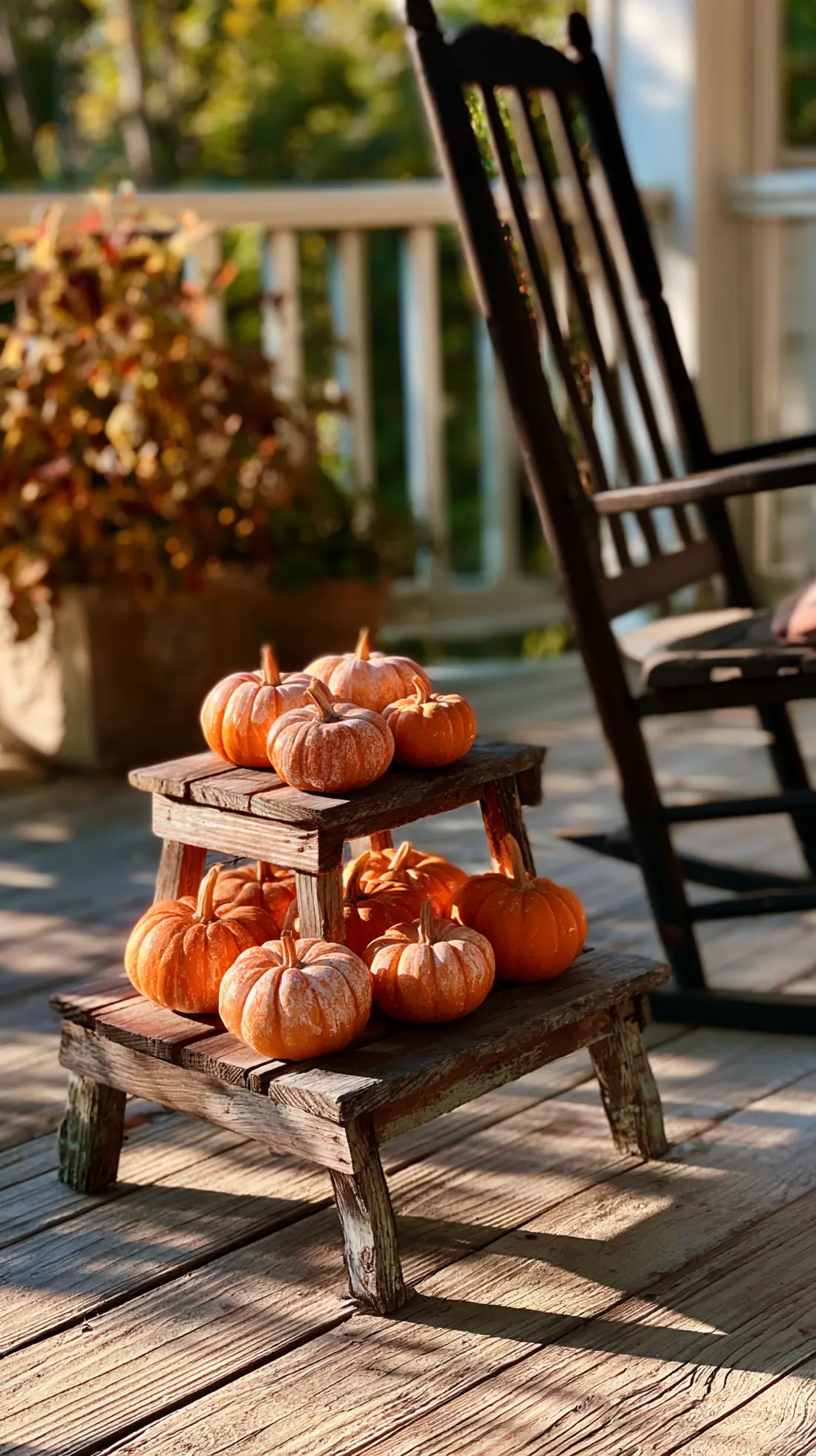 4/4
4/4A tiered stand, similar to what you might use for cupcakes, turns a handful of mini pumpkins into a real centerpiece by giving each one its own visible level instead of letting them roll together in a pile.
Choose a stand built from metal or sealed wood rather than raw, unfinished wood, which warps and stains after just a few damp mornings. Paint mini pumpkins in a coordinated palette, two or three shades at most, so the tiered display reads as one cohesive piece rather than a random assortment. Bring the stand under cover, even just tucked against the house wall, during heavy rain, since the tiers can trap water at each level if the pumpkins are not sealed.
Quick Tips
- Choose a metal or sealed-wood tiered stand
- Limit your paint palette to two or three shades
- Move the stand closer to the house before heavy rain
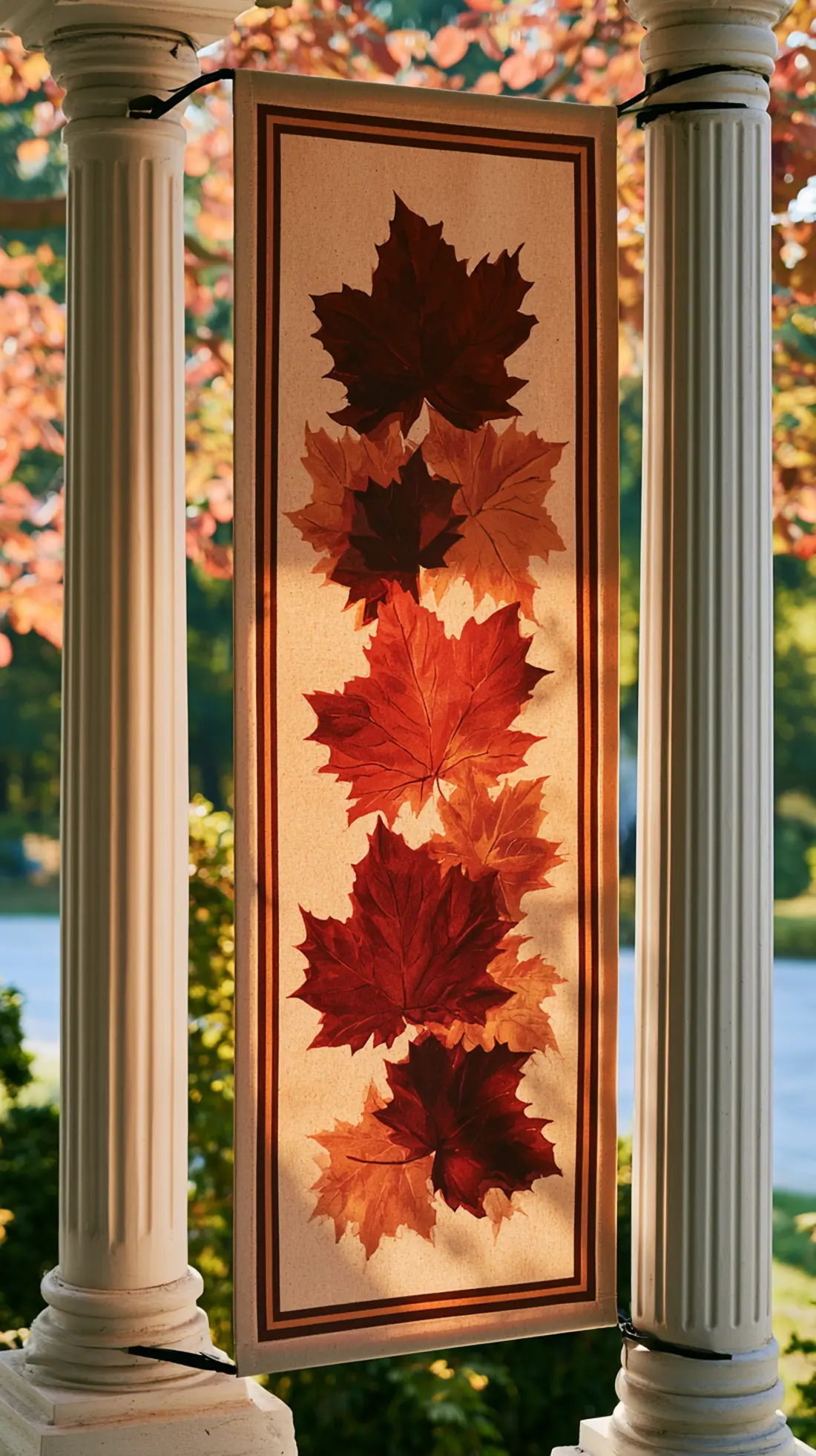
27. Anchor a Fall Banner to the Porch Posts With Zip Ties
 1/4
1/4 2/4
2/4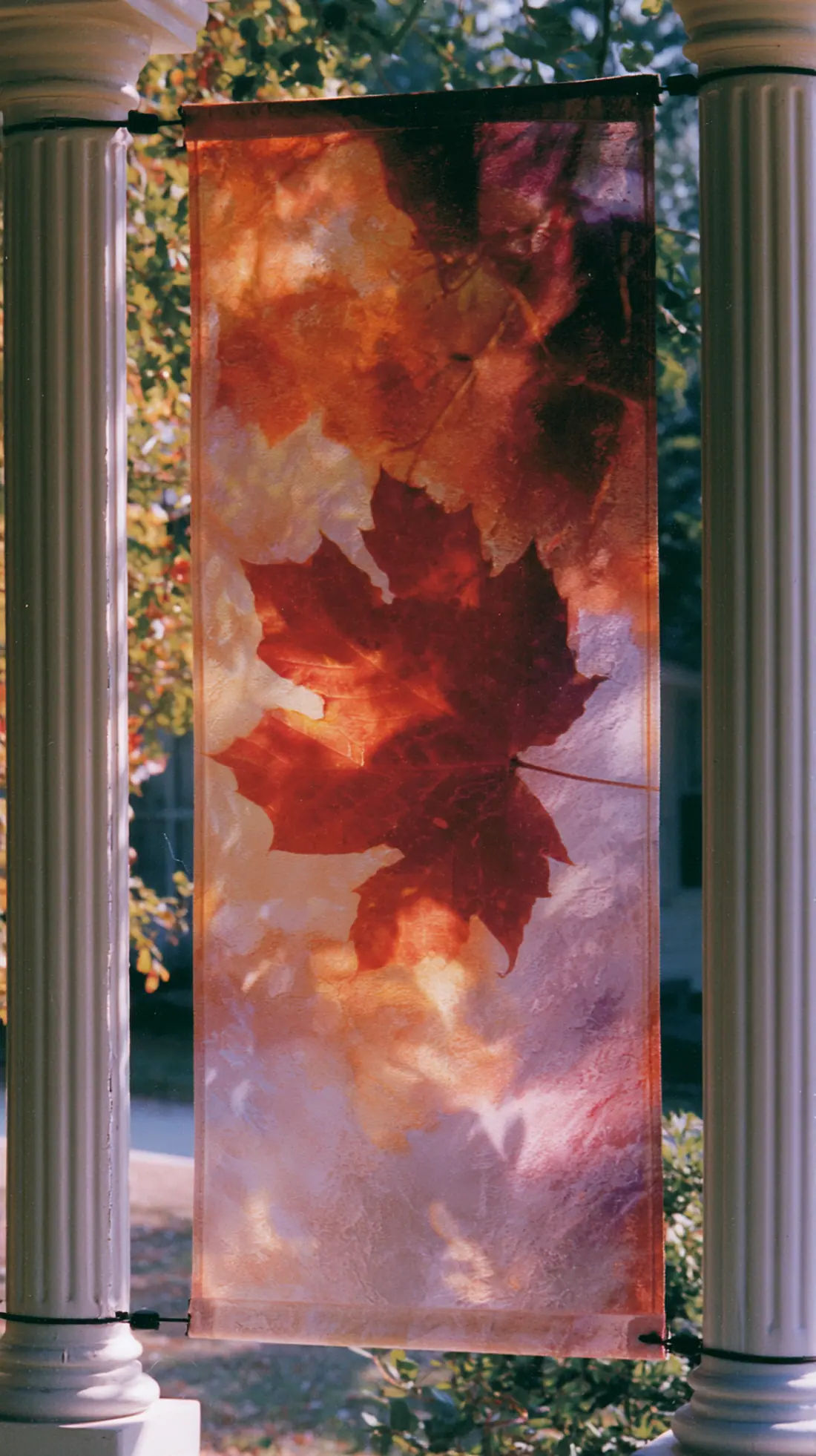 3/4
3/4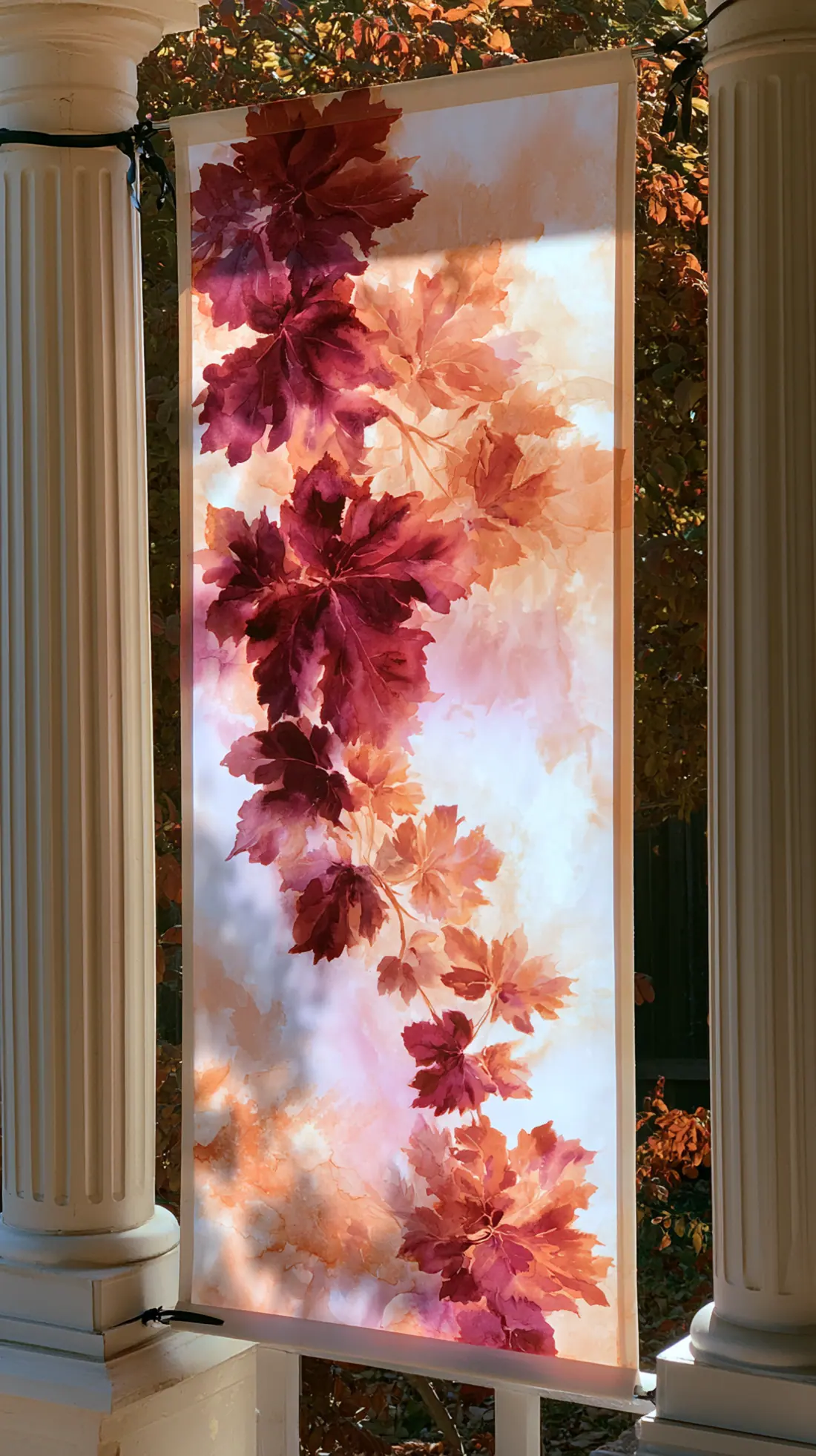 4/4
4/4A canvas banner strung between two porch posts adds a bold graphic moment to your fall outdoor decorating ideas, and grommets paired with zip ties hold that banner flat and taut in a way that string or ribbon simply cannot match in real wind.
Choose a banner with reinforced metal grommets at each corner and along the top edge, then thread a zip tie through each grommet and around the post, pulling it snug so the fabric cannot billow and catch wind like a sail. Canvas or heavy polyester holds up far better than thin vinyl banners, which crack and fade within a single season outdoors. Trim excess zip tie length so it does not flap or scratch the post finish over time.
Quick Tips
- Choose a banner with reinforced metal grommets
- Pull zip ties snug so fabric cannot billow
- Trim excess zip tie tails after installing
28. Fill a Rain-Safe Planter With Ornamental Kale and Cabbage
 1/3
1/3 2/3
2/3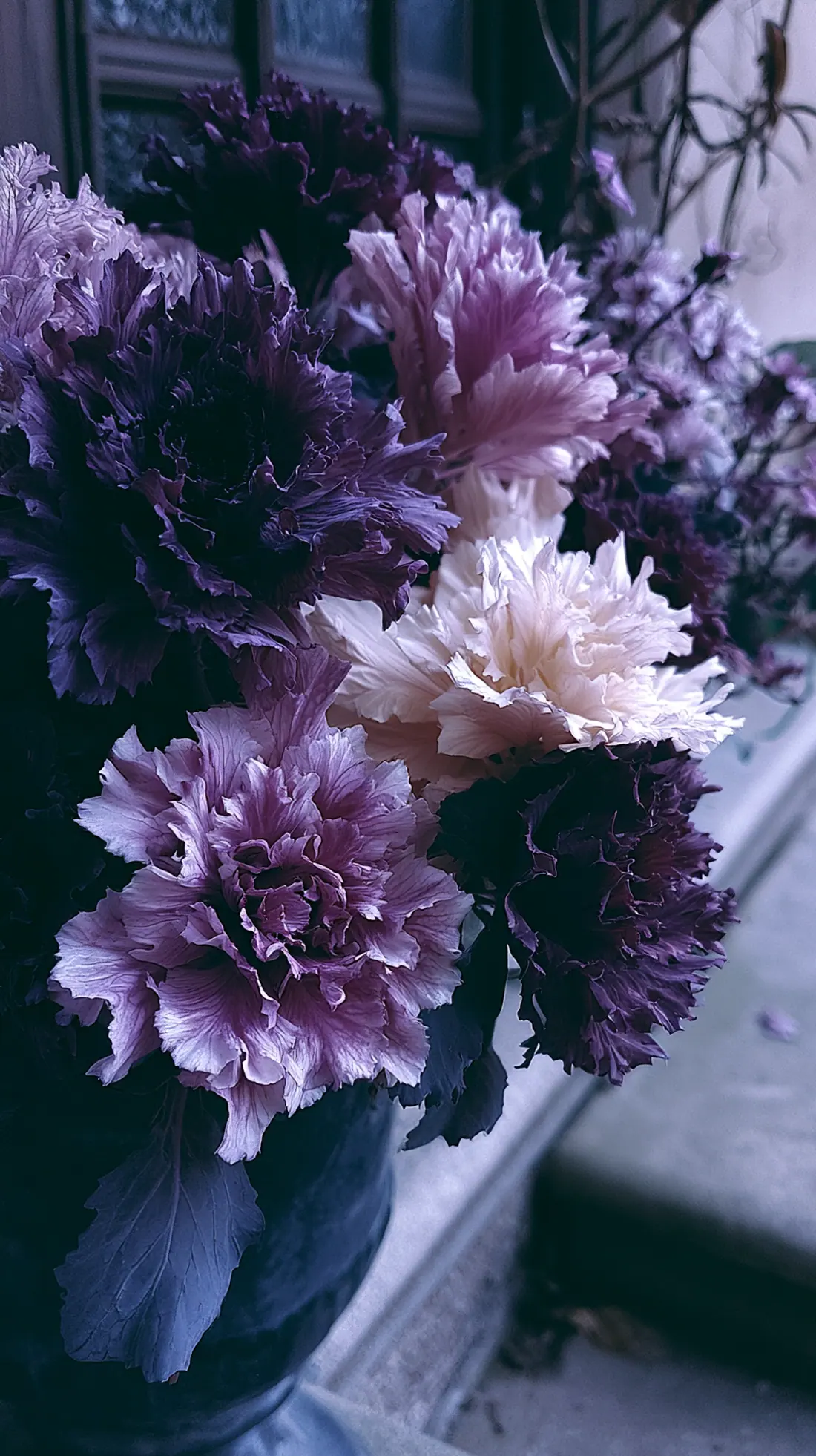 3/3
3/3Ornamental kale and cabbage are some of the most rain-tolerant plants you can put in a fall planter, since cool, wet weather actually deepens their purple and cream coloring instead of damaging it the way it would a tender annual.
Plant them in a container with generous drainage holes and a well-draining potting mix, since even rain-loving kale sits poorly in standing water for days on end. Combine a few heads of kale with a mounding grass and a trailing vine for a fuller look, following the same layered structure that works so well in 26 Fall Planter Ideas for Your Porch and Steps. These plants tend to hold their shape and color right through the first hard frosts, longer than almost anything else on this list.
Quick Tips
- Choose a container with generous drainage holes
- Pair kale with a grass and trailing vine for fullness
- Expect color to deepen, not fade, after cold rain
29. Finish the Steps With a Doormat That Grips in Rain
 1/3
1/3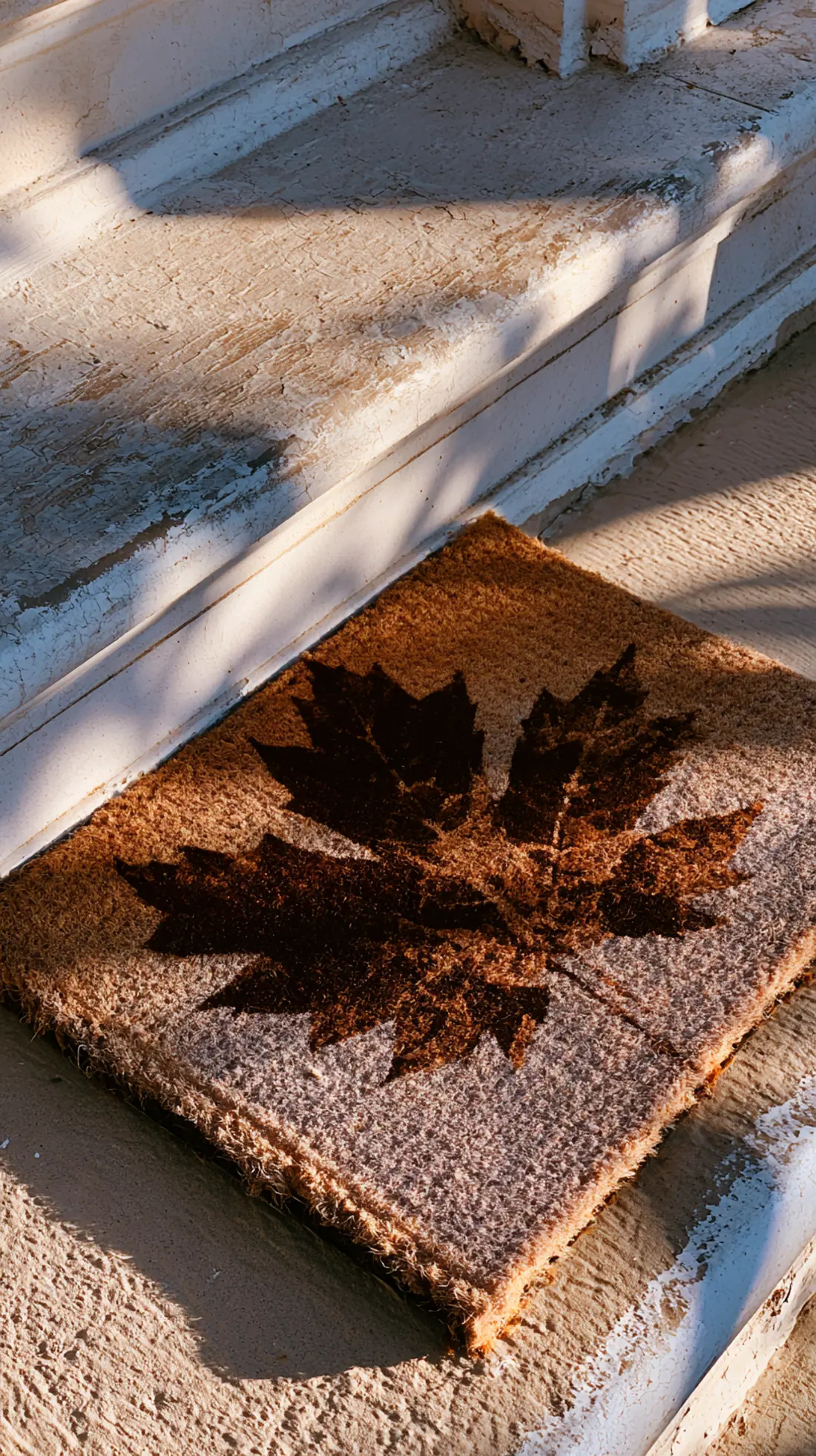 2/3
2/3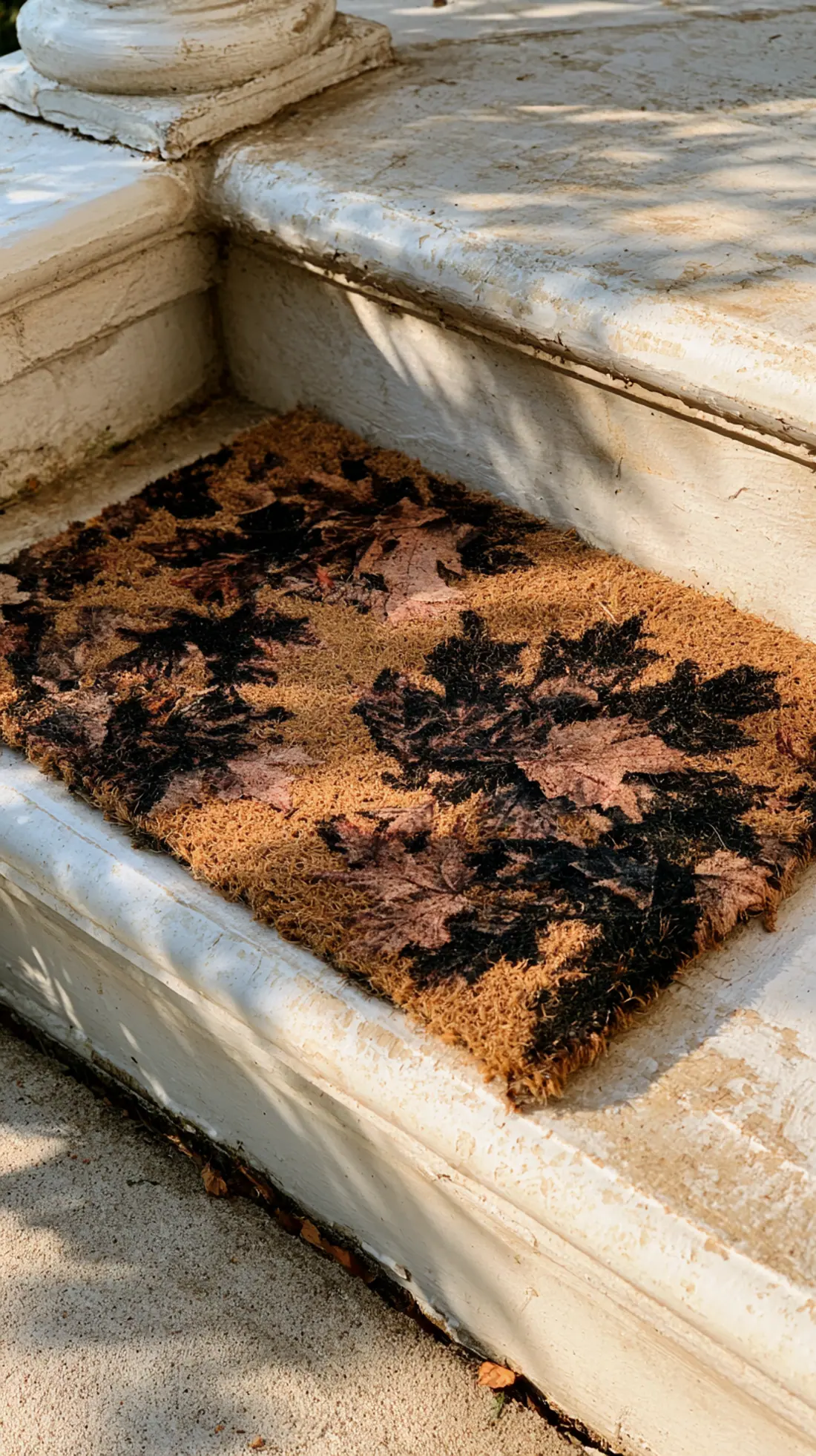 3/3
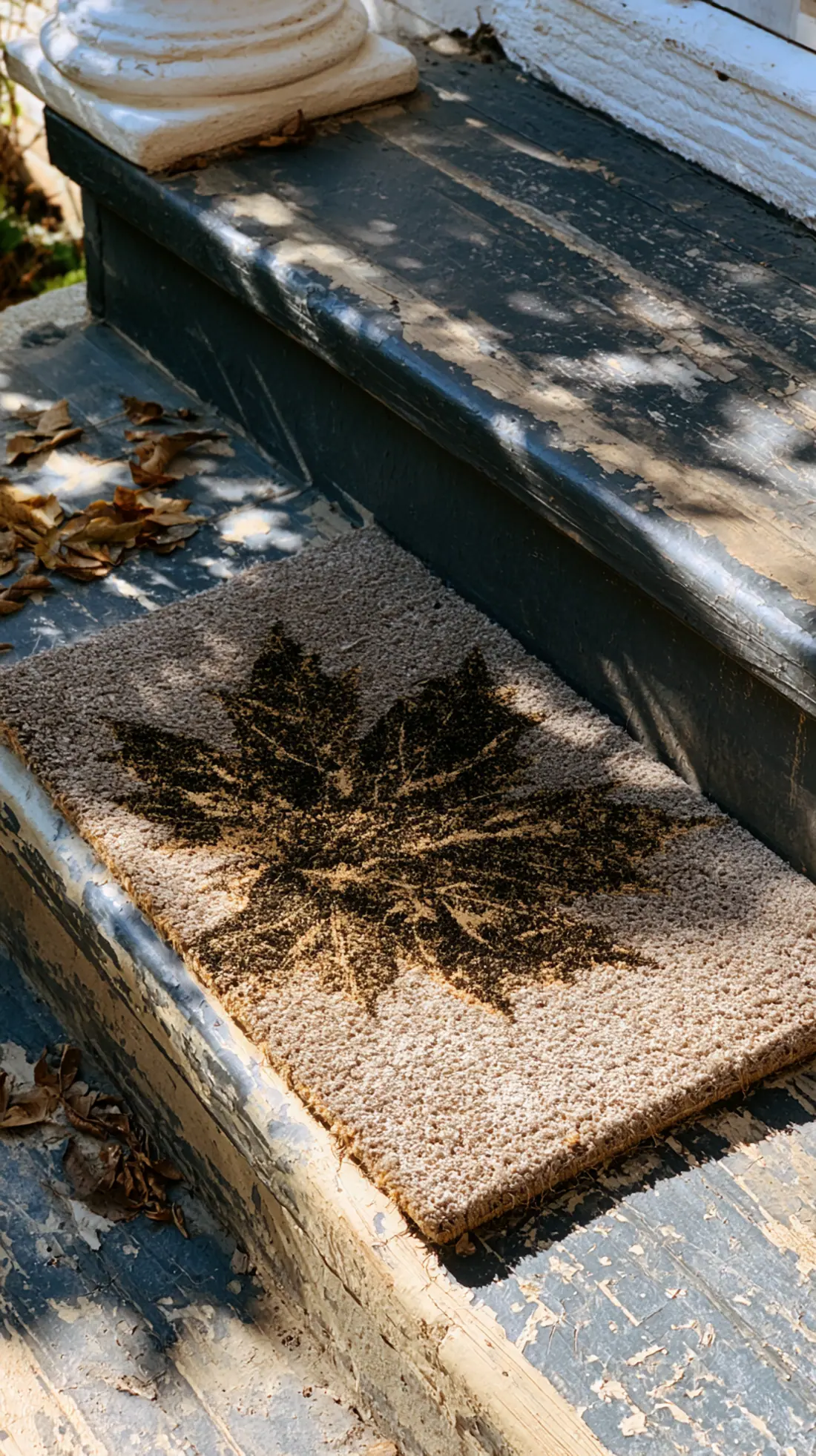
3/3The doormat is the last thing anyone touches before walking into your home, and a coir mat with a rubber non-slip backing is both the most practical and one of the easiest fall outdoor decorating ideas to update in five minutes.
Coir fiber scrapes mud and wet leaves off shoes far more effectively than a thin printed mat, and a rubber backing keeps the whole thing from sliding on smooth concrete or tile once it gets wet. Choose a fall leaf or plaid print stamped rather than painted onto the fibers, since a painted design wears off within a season of regular foot traffic. Shake the mat out weekly through peak leaf drop, since a buildup of wet leaves underneath keeps the step below it damp longer than it needs to be.
Quick Tips
- Choose coir fiber with a rubber non-slip backing
- Pick a stamped design, which wears better than a painted one
- Shake it out weekly during heavy leaf drop
Final Thoughts
None of these fall outdoor decorating ideas require anything fancy, just a bit of attention to how each piece actually meets wind, rain, and cold once it is out of the store and sitting on your porch. Start with two or three that fit the spots you already know take the worst weather, then build outward as you see what holds up through your first real storm. When the season turns again, a lot of the same anchoring and weighting tricks carry straight over into 10 Christmas Outdoor Decorating Ideas Your Neighbors Will Copy.
Frequently Asked Questions
What holds up best outdoors when fall weather turns rough?
Anything with real weight or a physical anchor, like a staked hay bale, a weighted garland, or a resin urn, tends to outlast decorations that rely on tape, glue, or their own light weight to stay put.
Do I need to bring pumpkins inside when it rains?
Sealed faux pumpkins can stay out through almost any weather. Real pumpkins do fine in light rain but soften faster once they sit in standing water, so setting them on concrete or a stand instead of bare grass makes a real difference.
What is the most weather-resistant material for outdoor fall decor?
Resin, treated wood, galvanized metal, and solution-dyed outdoor fabric all handle sun and rain far longer than untreated wood, ceramic, or standard indoor textiles.
How do I keep string lights working through fall storms?
Choose lights rated specifically for outdoor use, run them along a taut wire instead of taping them to trim, and cover or unplug the transformer end during heavy rain if it is not fully sealed.
Are these fall outdoor decorating ideas budget-friendly?
Most of them reuse materials you may already have, like buckets, crates, or fence posts, and add a small hardware upgrade such as stakes, hooks, or ties, which usually costs far less than replacing decorations that blow away every season.
How early can I put fall decorations outside?
Early September works for foliage-based pieces like wreaths and window boxes, while pumpkins and gourds hold up better if you wait until closer to late September or October, when the worst summer heat has passed.