
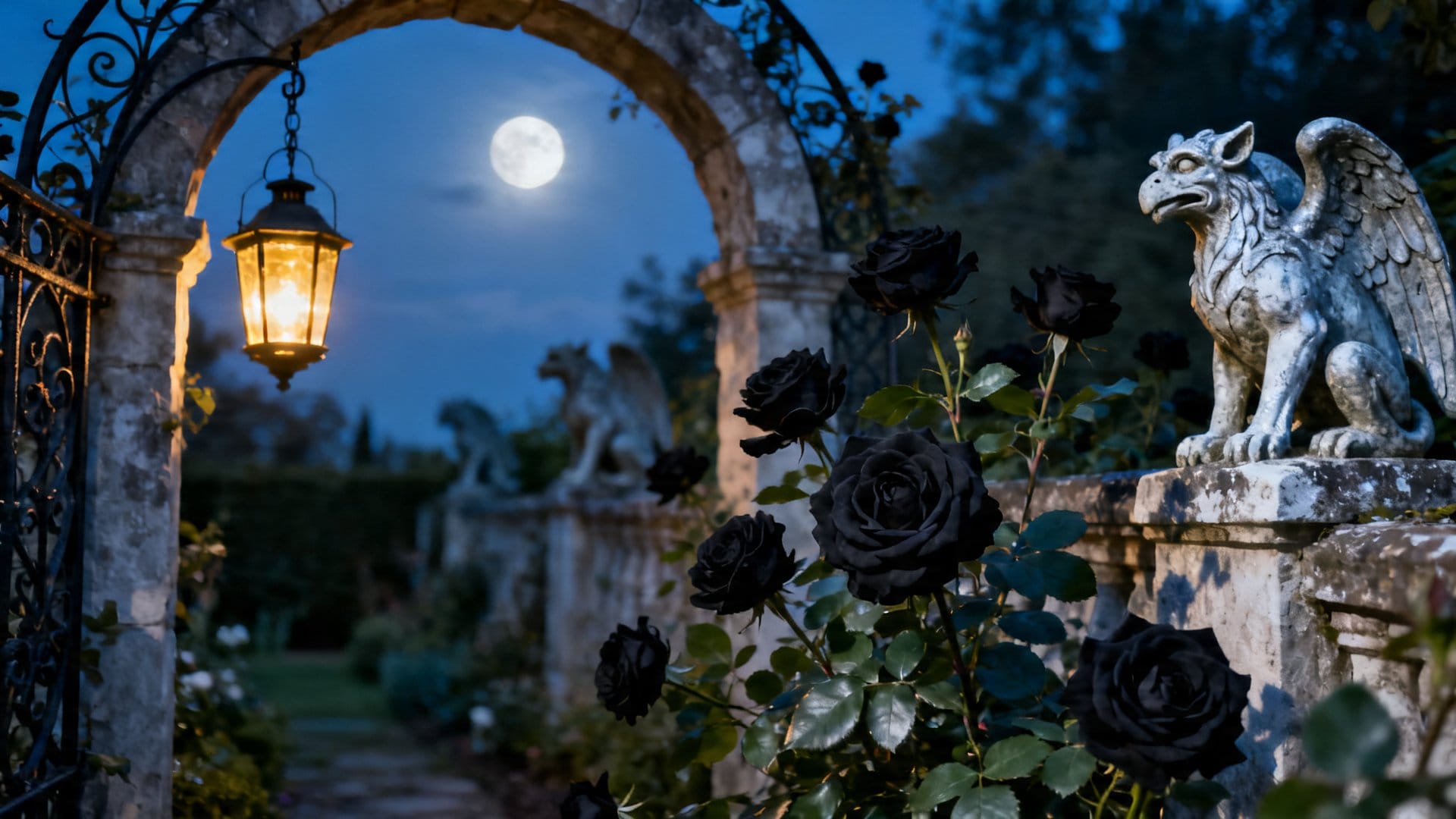
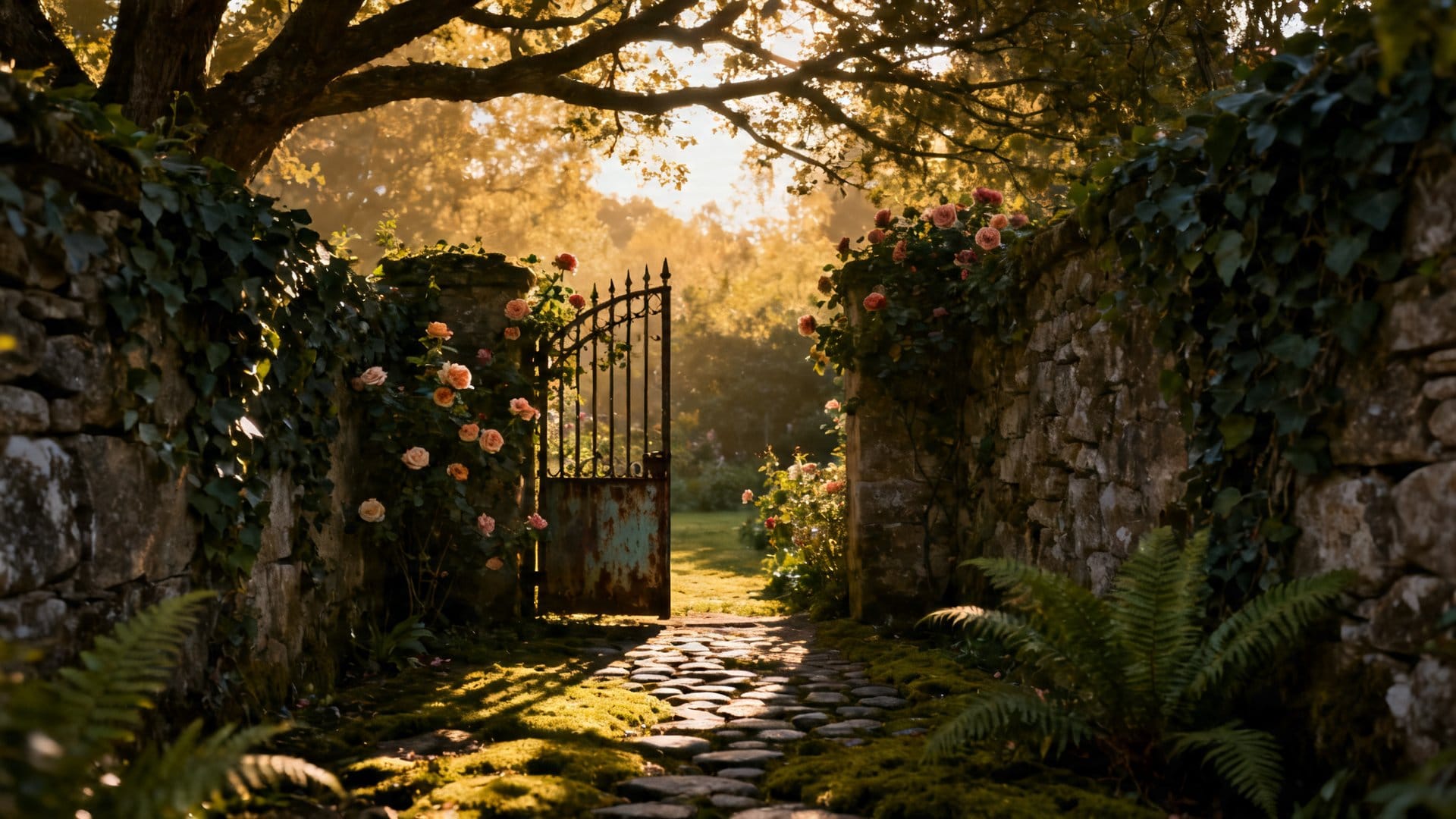
There’s something about a garden draped in deep shadows, trailing vines, and the soft flicker of candlelight that feels genuinely enchanting, like stepping into a scene from a beloved novel. If you’ve ever paused at an old iron gate covered in climbing roses and felt a pull toward that moody, mysterious atmosphere, you’re not alone. Gothic garden decor taps into that same feeling, blending dark beauty with living, breathing nature in a way that’s surprisingly lush and welcoming. In this article, you’ll discover how to bring that shadowy, romantic charm to your own outdoor space, whether you have a sprawling backyard or a small courtyard tucked behind your home.
What Is the Gothic Garden Aesthetic?
The gothic garden aesthetic is a design philosophy rooted in romanticism, medieval architecture, and dramatic beauty. It combines dark foliage, aged stone, ornate ironwork, and moody lighting to create an outdoor space that feels layered, mysterious, and deeply atmospheric.
 Shop this look: garden decor on Amazon
Gothic garden decor isn’t about plastic skeletons and Halloween props, it’s a genuine design philosophy rooted in romanticism, medieval architecture, and a deep appreciation for the dramatic. Think crumbling stone textures, deep jewel tones, unexpected silhouettes, and plants that seem to reach toward the sky like they have somewhere important to be.
One thing I’ve noticed about truly well-done gothic gardens is that they feel layered. There’s always something to discover, a mossy urn half-hidden behind a fern, a wrought iron lantern glowing faintly through the leaves, a stone face peeking out from a tangle of ivy. That sense of mystery is intentional, and it’s entirely achievable without a dramatic budget or a massive space.
Design Details
The core palette leans into blacks, deep purples, charcoal grays, and forest greens, punctuated occasionally by the dusty white of aged stone or the warm amber of candlelight. This contrast is what gives the gothic garden its visual tension, dark and light, wild and structured, ancient and alive.
Which Plants Work Best in a Dark and Moody Garden?
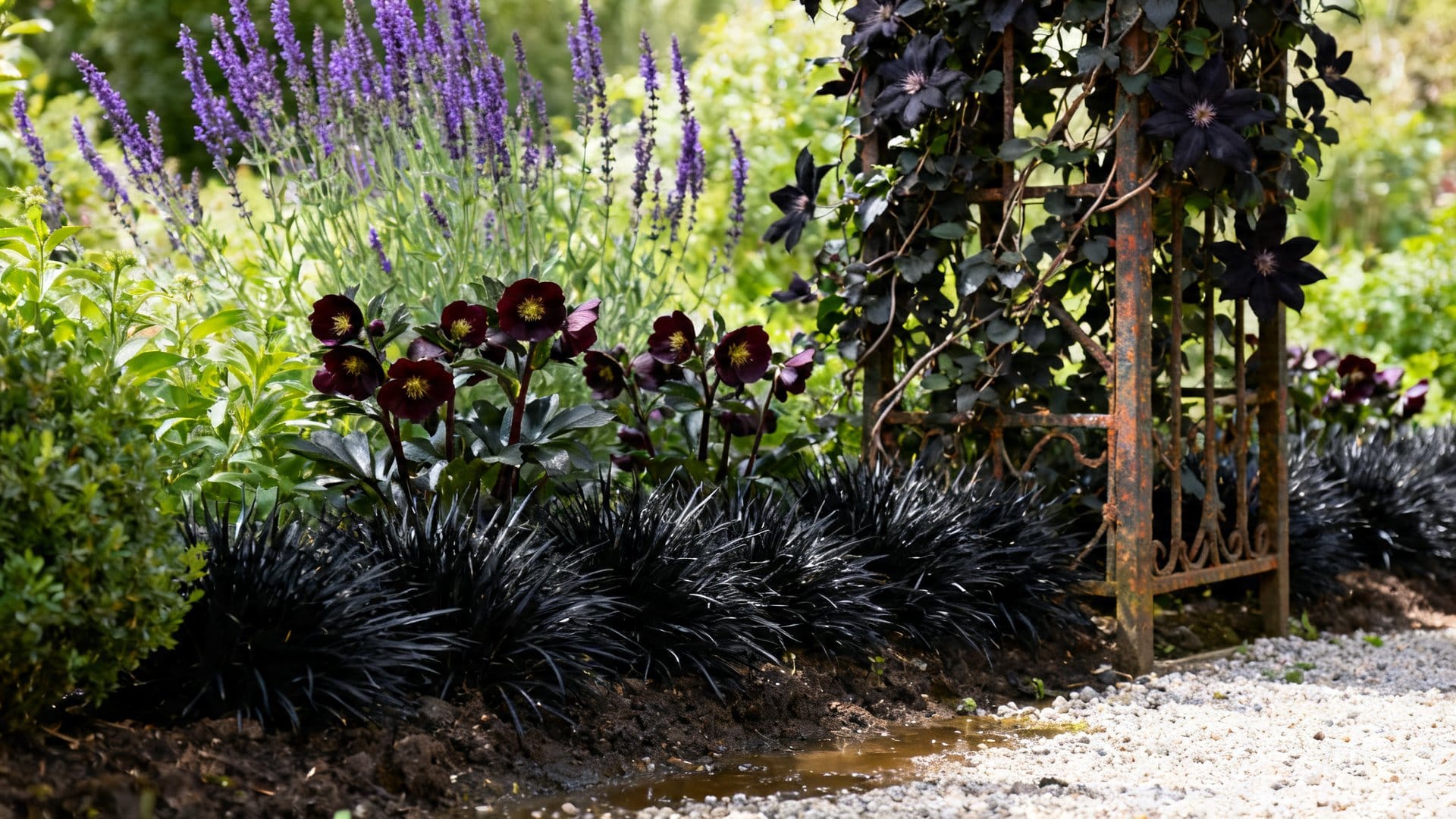
The best plants for a gothic garden offer deep, moody colors and sculptural forms, think black mondo grass, dark-leaved dahlias, hellebores, and climbing clematis in deep jewel tones. These choices create the dramatic, shadowy depth that defines the gothic aesthetic.
 Shop this look: a gothic gargoyle statue on Amazon
Plants are the soul of any gothic garden, and choosing the right ones makes all the difference between “slightly spooky” and genuinely atmospheric. You want foliage that feels dramatic, sculptural, or delightfully unusual, plants that earn a second glance.
Black mondo grass is a personal favorite in this style because it holds its deep, near-black color all season long and creates a striking ground-level contrast against pale stone or gravel paths. Hellebores, sometimes called Lenten roses, bloom in deep burgundy and near-black shades and thrive in the shadier corners that gothic gardens tend to favor. Dark-leaved dahlias, black-eyed Susans, and deep purple salvia all add height and movement. For climbing drama, consider dark-flowered clematis varieties that can wind their way up iron trellises or stone walls with very little encouragement.
Pro tip: Mix textures as much as colors, pair the feathery softness of dark fennel with the bold, waxy leaves of a dark-leaved canna lily for a combination that looks intentional and lush without feeling over-planted. And don’t be afraid to tuck a weathered statue among the foliage, a mossy gargoyle peeking out from between the leaves gives your planting that layered, storybook feeling.
&# 128218; More garden inspiration:See how a Mediterranean garden creates a sun-drenched outdoor style→
How Do You Use Stone, Iron, and Aged Materials in Gothic Garden Decor?
Gothic garden decor relies on materials that carry a sense of age and permanence, primarily cast iron, rough-hewn stone, and weathered concrete. Pieces that show patina, rust, or moss read as authentically aged and reinforce the Victorian-meets-medieval atmosphere central to the style.
 Shop this look: a weathered stone urn planter on Amazon
Materials matter enormously in gothic garden decor, and the ones that work best are those that carry a sense of age, weight, and permanence. This is a style that rewards patience and a good eye for the weathered and worn.
Cast iron is practically the signature material of the gothic garden. Ornate iron plant stands, arched trellises, lantern holders, and garden benches with scrollwork details all contribute to that Victorian-meets-medieval feeling. If you can find pieces that are already showing a little rust or patina, even better, that oxidized finish reads as authentically aged rather than freshly purchased. Complement iron with rough-hewn stone or concrete: birdbaths with mossy surfaces, garden statuary like gargoyles or angels, and stone planters that look like they’ve been sitting in the same spot for a century.
A friend of mine styled a small corner of her backyard with nothing more than a cracked concrete urn, a trailing dark-leaved sweet potato vine, and a single iron shepherd’s hook holding a lantern. It looked like a scene from a Gothic novel, and the whole setup cost almost nothing because she sourced the urn from an estate sale.
Materials That Work
Slate, flagstone, and dark gravel pathways reinforce the moody atmosphere underfoot and lead the eye through the space in a way that feels deliberate. Aged copper accents, like a verdigris-finished birdbath or copper plant markers, add a beautiful green-gray tone that complements deep purple and black plantings perfectly. A single weathered stone urn, planted with something trailing and dark, anchors a corner and reads as though it has been there for generations.
Once your plants and materials are in place, the right lighting is what truly brings the gothic garden to life after sunset.
What Lighting Sets the Mood in a Gothic Garden After Dark?
The most effective gothic garden lighting mimics the soft, flickering quality of candlelight using warm amber-toned lanterns and copper-wire string lights. Avoid bright white modern fixtures, which feel clinical and out of place in this moody, atmospheric style.
 Shop this look: warm copper-wire string lights on Amazon
If there’s one element that can make or break a gothic garden, it’s lighting. The right lighting turns a moody daytime garden into something genuinely magical after sunset, and it’s worth thinking about carefully.
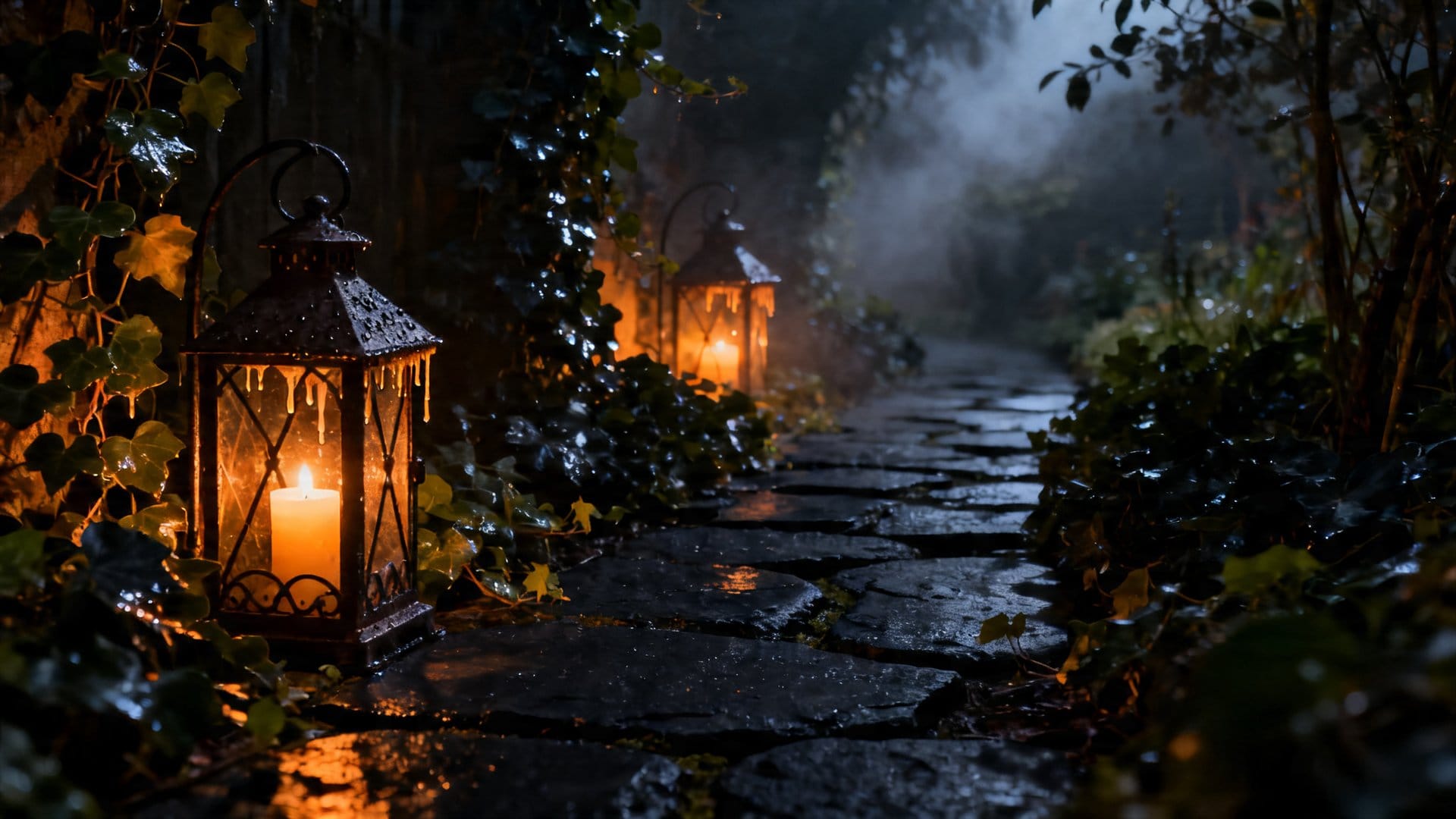
Avoid bright, white, modern solar lights that feel clinical and out of place. Instead, look for warm amber-toned lanterns, the kind with aged metal frames and glass panels that cast a soft, flickering glow. Hanging lanterns from iron shepherd’s hooks at varying heights creates a layered effect that feels like candlelight scattered through a fog. Battery-operated candles inside weatherproof lanterns are a practical solution that still delivers that warm, wavering light without the fire risk. For a particularly dramatic touch, string lights in a deep copper or bronze wire (rather than silver) along a garden wall or through the branches of a dark-leaved tree, the warm tone disappears into the shadows beautifully.
I love how a well-placed uplight at the base of a sculptural plant or garden statue creates long, dramatic shadows that shift as the breeze moves through the garden. It’s the kind of detail that stops guests mid-conversation.
Pro tip: Place lanterns at ground level along a stone path rather than only at eye level, low lighting creates a mysterious, almost otherworldly atmosphere that overhead lighting simply can’t replicate. And if you want that scattered-firefly glow winding through the branches, reach for warm copper-wire string lights rather than cool white ones.
What Furniture and Seating Suits a Gothic Garden?
Gothic garden seating should have visual weight, interesting silhouettes, and materials that age gracefully, wrought iron benches and chairs with scrollwork details are the good choice. Stone stools and benches also work beautifully, lending a sense of permanence that fits the ancient, romantic mood.
 Shop this look: dark outdoor pillow covers on Amazon
Seating in a gothic garden should feel like it belongs to the space, not like patio furniture that happened to wander in from a big-box store. The goal is pieces that have visual weight, interesting silhouettes, and materials that age gracefully.
Wrought iron garden chairs and benches with arched backs and scrollwork details are the obvious choice, and for good reason, they look beautiful surrounded by dark foliage and they hold up to the elements without losing their character. If you find a set that’s a little rusty, a quick coat of matte black spray paint refreshes them without erasing their age. For softer seating, a dark velvet outdoor cushion in deep plum or charcoal adds a surprising touch of luxury against the iron frame. Stone garden stools or benches work beautifully as side tables, and their permanence feels right in a space that’s meant to look ancient.
Styling Notes
Drape a dark wool throw over the back of an iron bench for cool evenings, a deep charcoal or forest green works perfectly and adds a layer of texture that softens the hard lines of the metal. Tuck a stack of weathered books or a single oversized pillar candle on a nearby stone surface to make the seating area feel genuinely lived in and inviting. A weatherproof cushion or pillow cover in charcoal or deep plum is the easiest way to warm up cold iron without breaking the mood.
Can You Create a Gothic Garden in a Small Space?
Yes, a small courtyard or balcony can absolutely carry a gothic garden atmosphere. The key is choosing fewer pieces with stronger visual impact and using vertical elements like iron trellises and tall planters to add drama without consuming floor space.
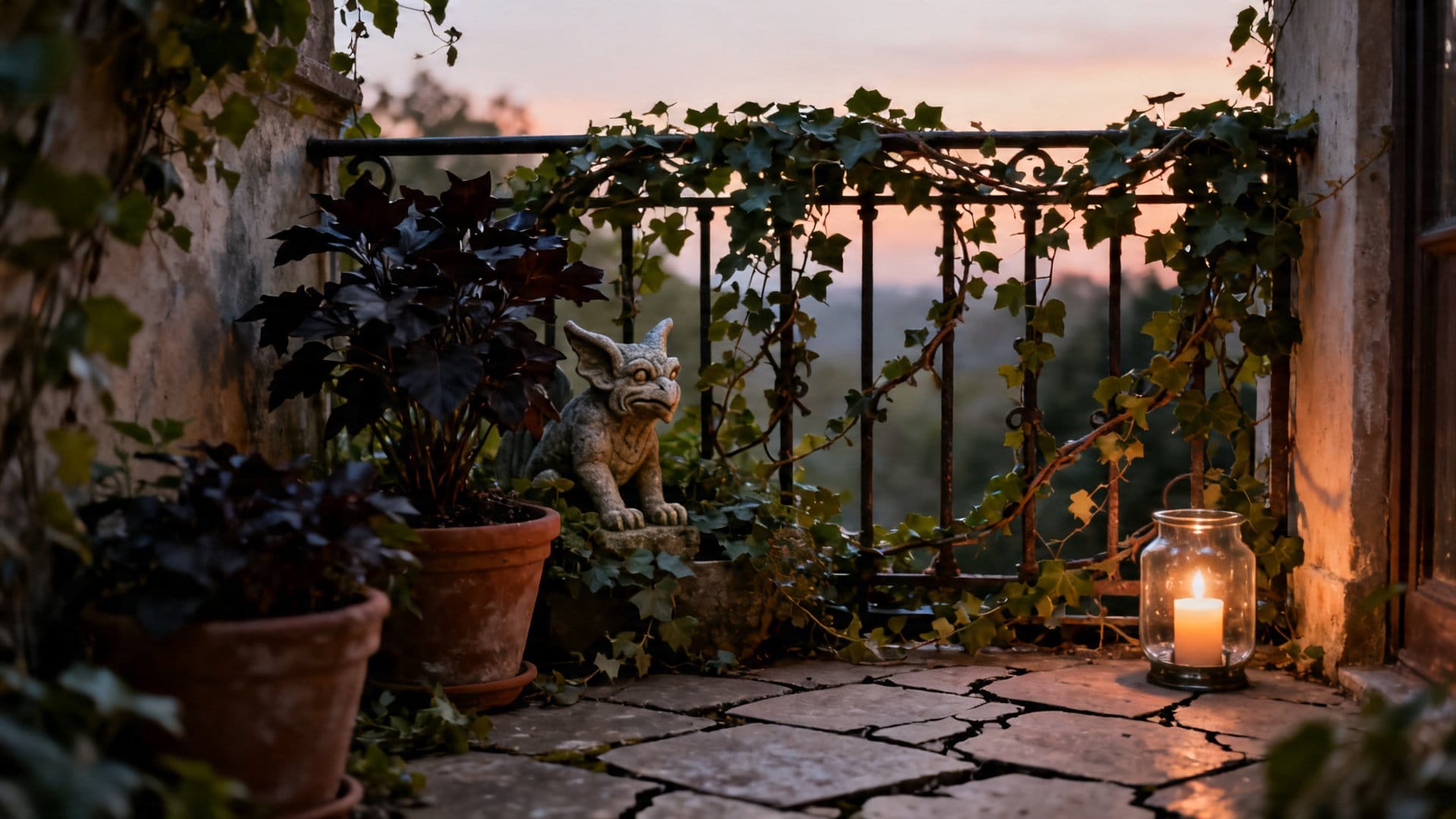 Shop this look: tall black outdoor planters on Amazon · SunnyTong Galvanized Metal Watering Can 1…
You don’t need an acre of land to create a gothic garden atmosphere. Some of the most compelling versions of this style I’ve come across have been in tiny urban courtyards and apartment balconies where every inch was used with real intention.
Small Space Tricks
- Use tall, narrow planters in dark stone or matte black ceramic to add vertical drama without taking up precious floor space
- Hang a single ornate iron mirror on an exterior wall, the reflection adds depth and makes even a small courtyard feel layered and mysterious
- Train a dark-flowered climbing rose or clematis up a slim iron obelisk for a sculptural focal point that takes up almost no footprint
- Line a balcony railing with trailing black mondo grass in small iron window boxes for a dramatic, cohesive look
- Replace standard outdoor string lights with copper-wire Edison bulbs hung at irregular heights for warmth without brightness
The key in small spaces is to choose fewer pieces with stronger visual impact rather than filling every corner, restraint is actually a gothic virtue, and a single well-chosen gargoyle planter says more than a dozen generic pots ever could. A pair of tall, narrow black planters flanking a doorway or corner does a lot of the heavy lifting on their own.
&# 10024; Set the mood after dark:Get 21 garden party lighting ideas for warm evenings outdoors→
With your furniture and lighting in place, it’s worth thinking about how to evolve the space as the year progresses.
How Do You Keep a Gothic Garden Fresh Through the Seasons?
Gothic garden decor shifts naturally with the seasons because its core elements, iron, stone, and dark foliage, stay in place year-round. Small seasonal additions like dried seedheads in fall, early hellebores in spring, and black dahlias in summer keep the space feeling alive without changing its character.
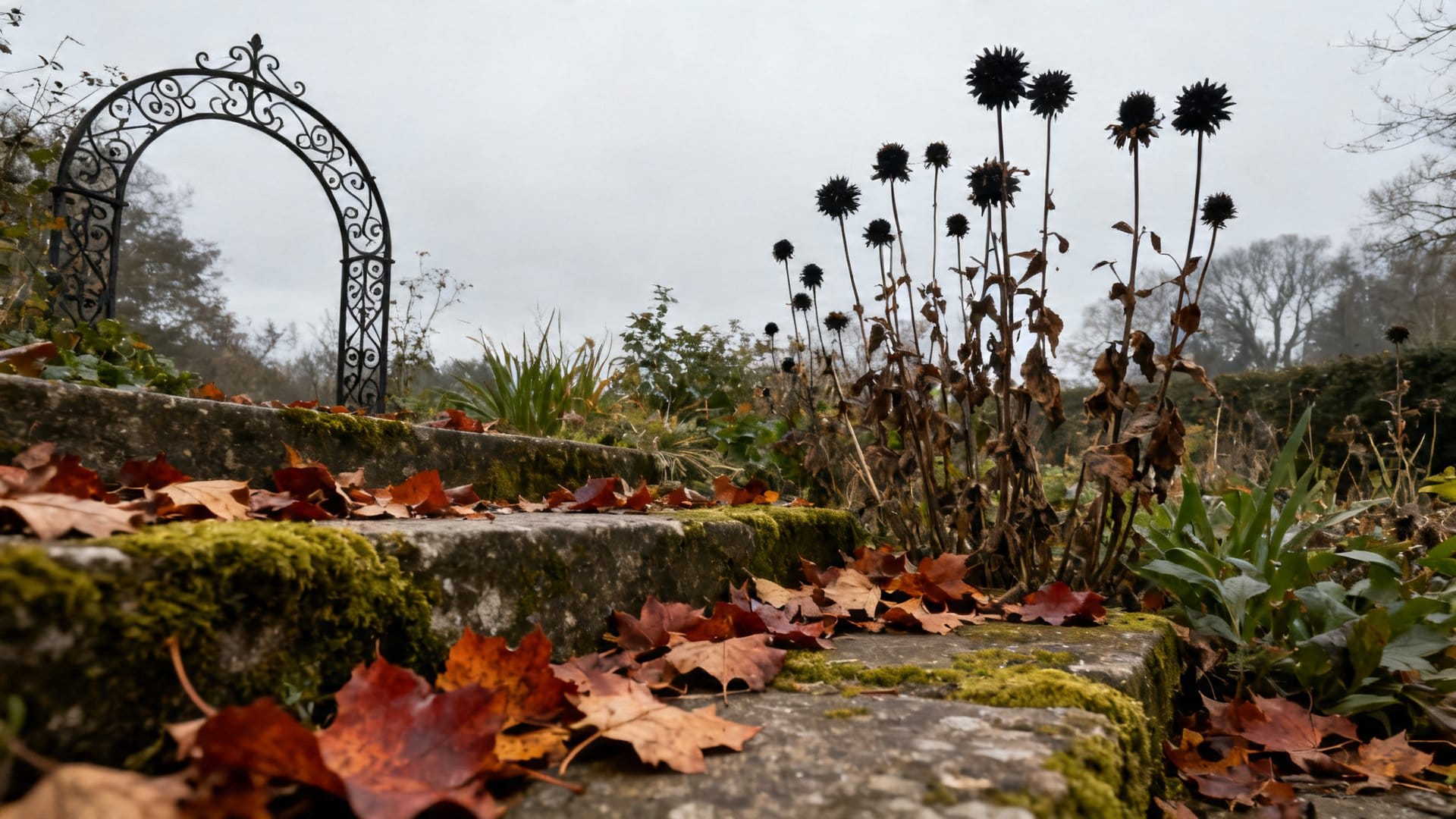
One of the beautiful things about gothic garden decor is that it shifts naturally with the seasons without losing its character. The bones of the style, iron, stone, dark foliage, stay in place year-round, but small seasonal additions keep the space feeling current and alive.
In fall, swap in dried seedheads and dark-toned mums in deep burgundy and near-black shades. Let ornamental grasses go to their feathery, straw-colored plumes, the contrast against dark iron and evergreen foliage is genuinely striking. In winter, a dusting of frost on stone statuary and bare iron trellises looks more atmospheric than any deliberate decoration could. Spring brings the hellebores and early dark tulips, and summer is peak season for black dahlias, deep purple alliums, and the full drama of a climbing dark clematis in bloom. I keep coming back to this approach because it proves that gothic gardens are a year-round pleasure, not just a fall novelty.
Pro tip: Add a few white or pale cream elements, a white marble urn, cream-colored candlesticks, or a pale stone path, to prevent the space from feeling heavy or oppressive. That contrast is what makes the dark elements feel intentional rather than gloomy.
Final Thoughts
Gothic garden decor is one of those styles that rewards curiosity and a willingness to look past the expected, it’s romantic, layered, and deeply personal in a way that few outdoor aesthetics manage to be. Whether you’re working with a sprawling backyard or a tiny balcony corner, the principles stay the same: choose materials with age and texture, plant with drama and shadow in mind, and light the space like you’re setting a scene. Your outdoor space deserves that same thoughtful, mysterious beauty, and you have everything you need to create it. Happy decorating!

Frequently Asked Questions
Not at all. Gothic garden decor is a year-round design philosophy rooted in romanticism, medieval aesthetics, and dramatic beauty rather than holiday themes. It focuses on elements like wrought iron structures, deep-colored plants, stone textures, and trailing vines that look beautiful in every season. Think of it as a permanent, atmospheric garden style rather than a temporary decoration.
Gothic gardens thrive with plants that offer deep, moody colors and dramatic forms, such as black dahlias, dark purple salvia, ornamental grasses, climbing roses, and shade-loving ferns. Trailing vines like ivy or wisteria are especially popular for draping over iron structures and stone walls to enhance that mysterious, overgrown atmosphere. Mixing textures and layering plants of varying heights also helps create the lush, shadowy depth that defines the gothic aesthetic.
Absolutely. A small courtyard can actually be ideal for gothic garden decor because the enclosed space naturally amplifies the moody, intimate atmosphere the style is known for. Focus on vertical elements like climbing plants, tall iron trellises, and wall-mounted gargoyle sculptures to maximize drama without requiring a large footprint. Strategic lighting with lanterns or candles can further change even the most compact space into a hauntingly beautiful retreat.
Wrought iron, aged stone, and weathered wood are the cornerstone materials of gothic garden design, lending an authentically antique and dramatic quality to outdoor spaces. These materials appear in elements like ornate iron gates, moss-covered stone statues, crumbling-look planters, and rustic wooden benches. The key is choosing pieces that look as though they have history and patina, whether genuinely aged or artificially distressed.
The best lighting for a gothic garden mimics the soft, flickering quality of candlelight, so lanterns, candelabras, and string lights with warm amber tones are all great choices. Solar-powered lanterns shaped like vintage iron fixtures offer a practical option that still maintains the aesthetic, while strategically placed uplighting can cast dramatic shadows on statues and stone walls. Avoiding bright white or LED spotlights is essential, as softer, dimmer light sources preserve the mysterious and romantic mood central to the gothic style.