
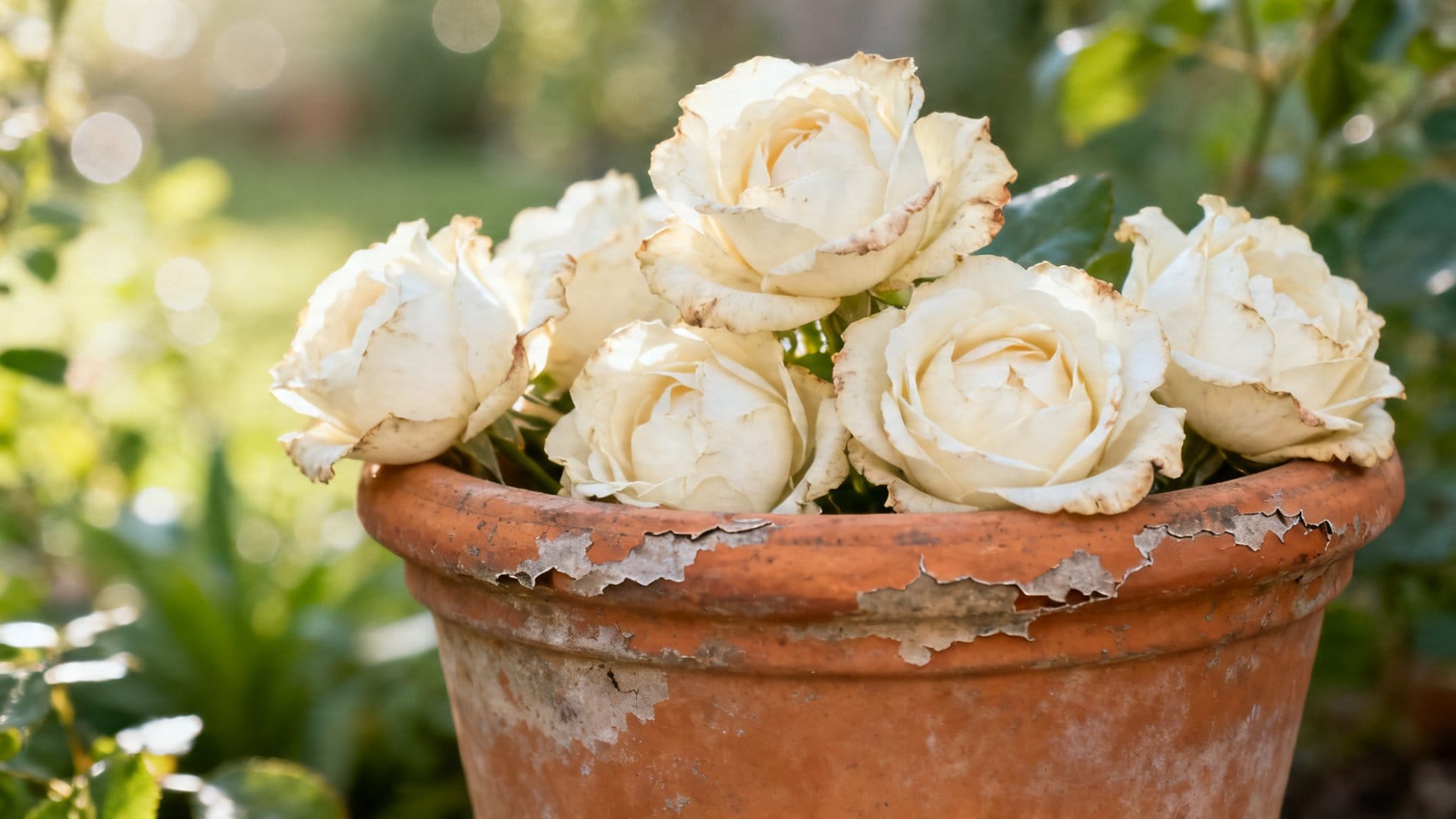
There’s something about stepping into a garden filled with soft whites, weathered wood, and climbing roses that makes you want to slow down and breathe a little deeper. That feeling, romantic, unhurried, gently beautiful, is exactly what shabby chic garden decor brings to an outdoor space. This style has a way of making even the most modest backyard feel like a secret hideaway from the world. In this article, you’ll find everything you need to create your own romantic feminine outdoor style, from choosing the right furniture to layering in the details that make a space feel truly alive.
What Makes Shabby Chic Garden Decor So Irresistible?
Shabby chic sun-drenched garden style is irresistible because it blends worn, vintage charm with soft femininity to create outdoor spaces that feel warmly lived-in rather than perfectly staged. It’s a style that welcomes imperfection and turns weathered textures into something genuinely beautiful.
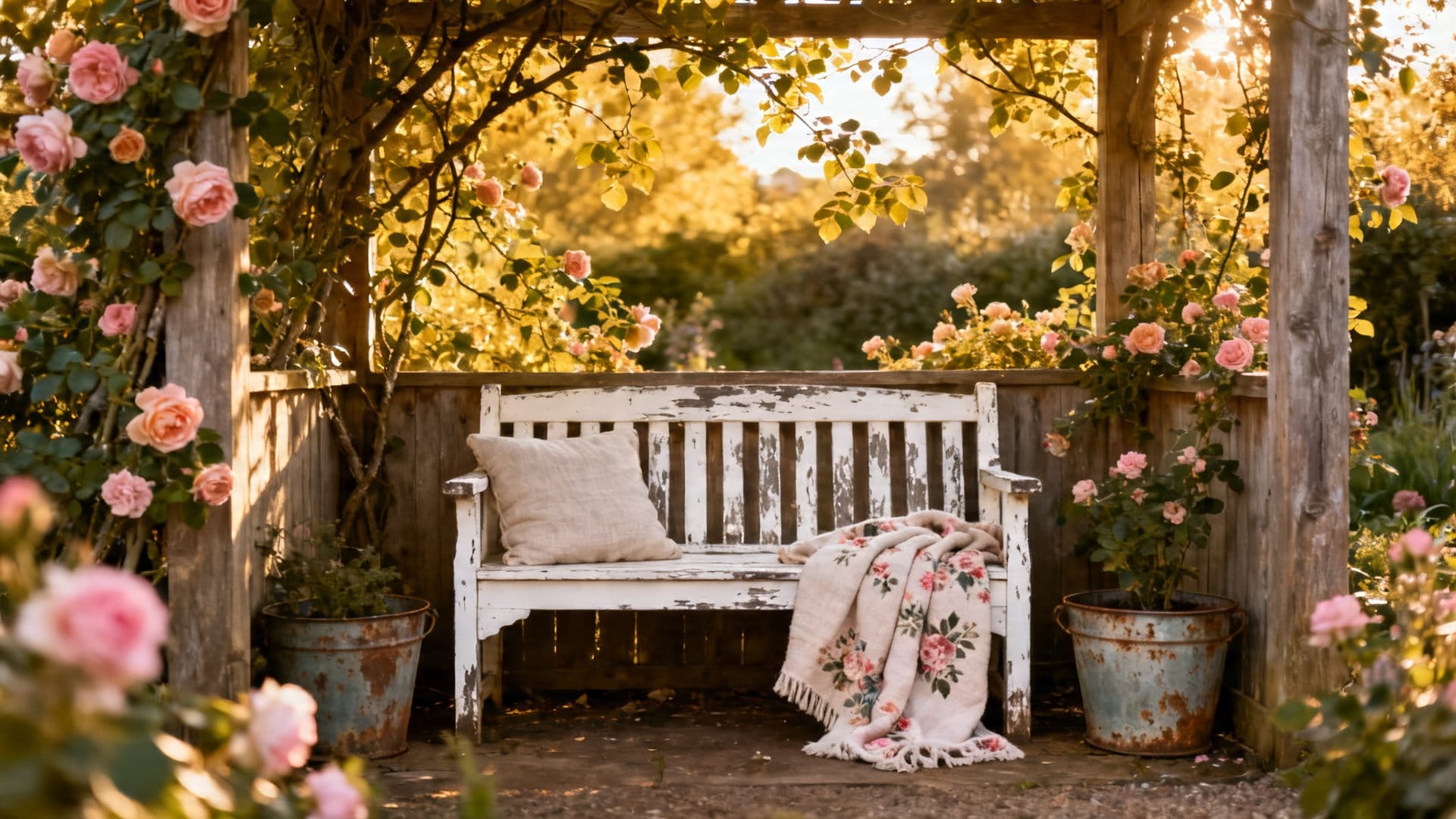 Shop this look: shabby chic garden decor on Amazon
Shabby chic is one of those styles that feels instantly familiar, like a place you’ve been before even when you’re seeing it for the first time. It blends the worn and the beautiful, with chipped paint, soft linen, and vintage ironwork, in a way that feels collected over time rather than purchased all at once.
What sets it apart from other garden styles is its warmth and femininity. This isn’t a stark, architectural outdoor space. It’s a garden that invites you to linger, to sit with a cup of tea, to feel wrapped in something soft and lovely. I love how this style manages to feel both nostalgic and fresh at the same time, like a love letter written on old stationery.
Why It Works So Well Outdoors
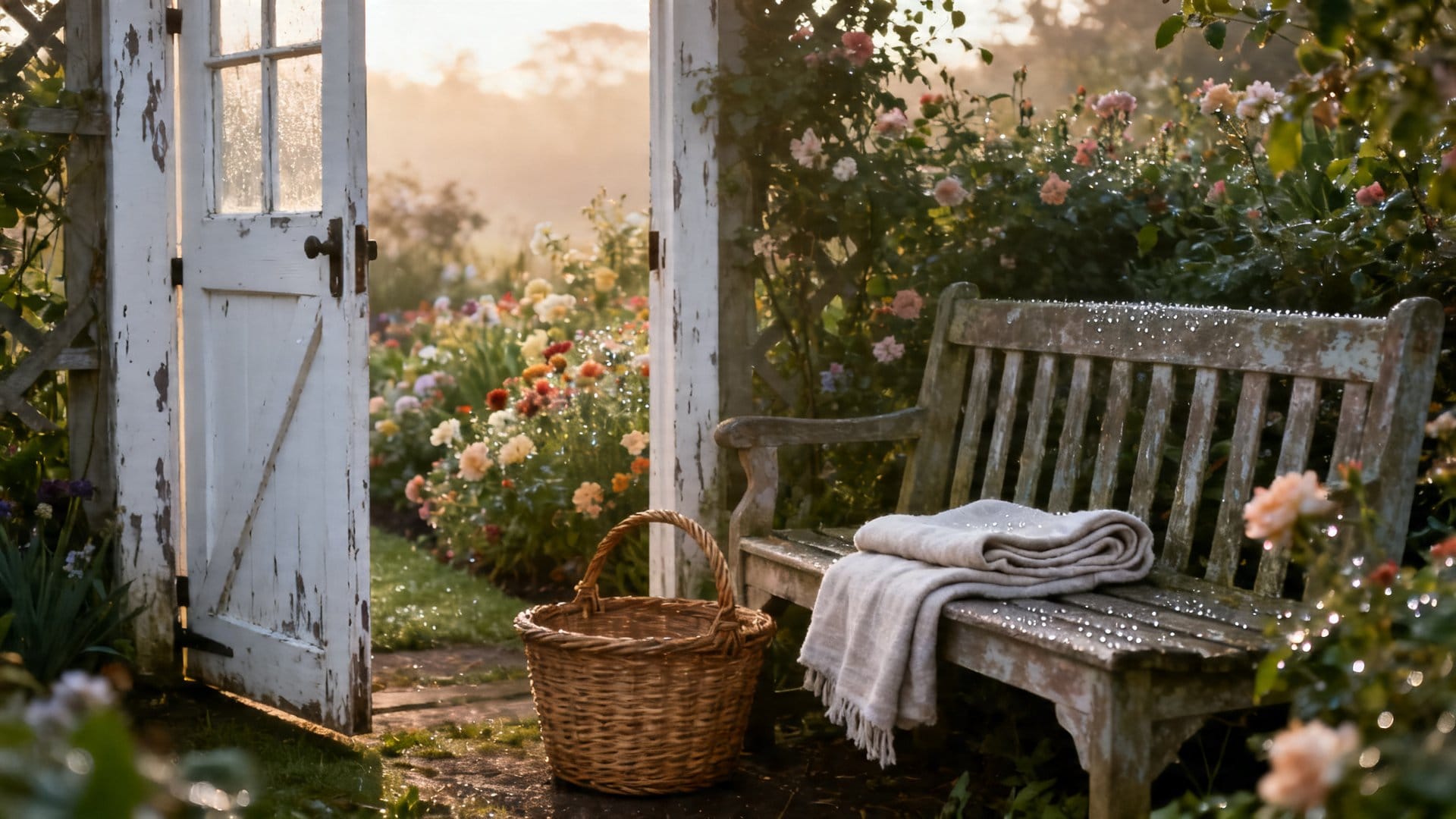
The outdoors is actually the perfect canvas for shabby chic because nature does half the work for you. Weathering, moss, and patina all happen naturally outside, and in this style, they’re not problems to fix. They’re the whole point. A rusted garden gate or a sun-bleached wooden bench only becomes more beautiful with age.
What Is the Shabby Chic Color Palette for Your Garden?
The shabby chic garden color palette centers on soft, faded tones such as chalky whites, dusty roses, sage greens, lavender, and cream. These muted hues work together to create a dreamy, romantic atmosphere that feels gently sun-bleached and effortlessly cohesive.
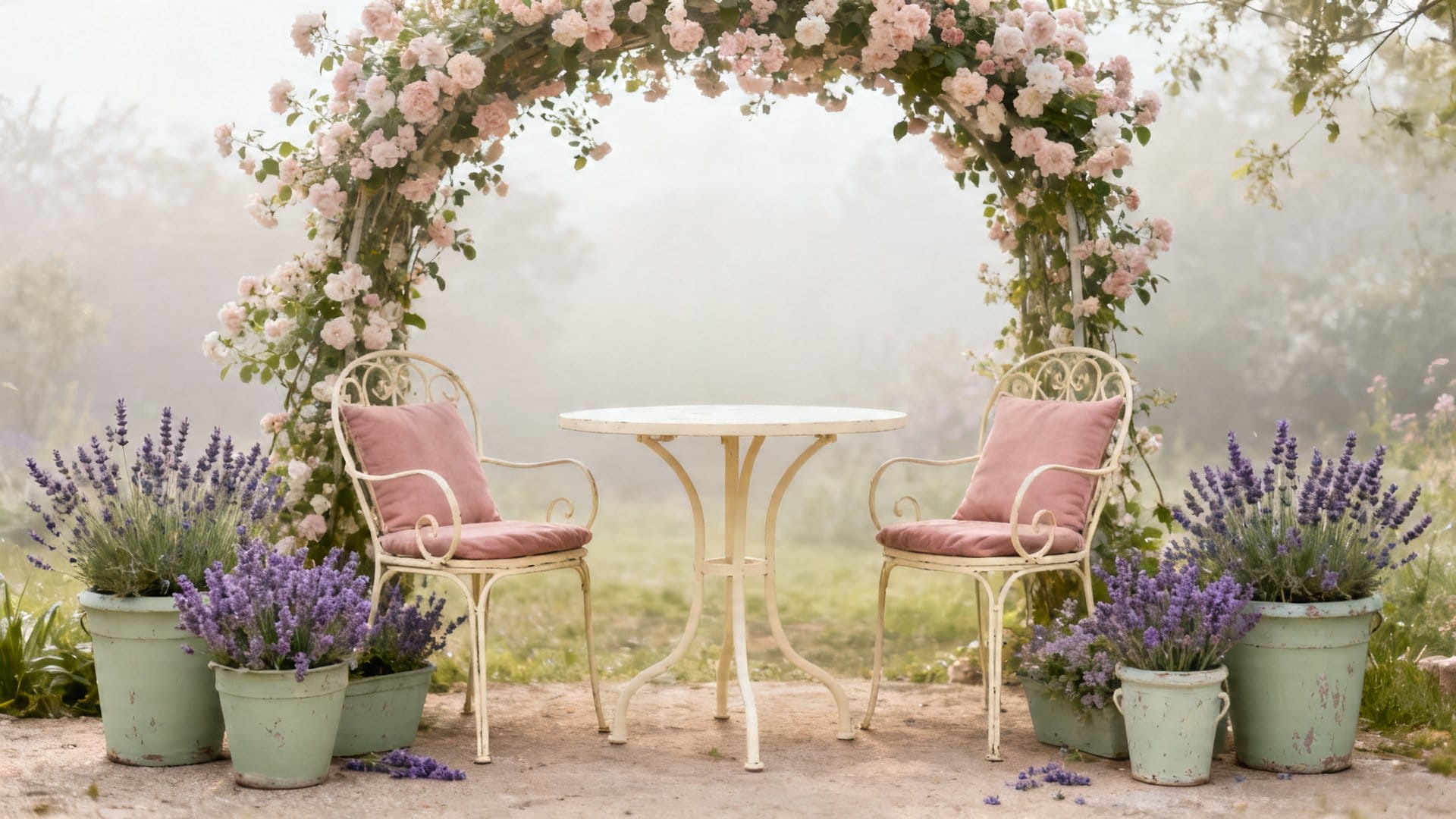 Shop this look: soft floral cushions on Amazon
Color is the first thing that sets the mood in any outdoor space, and in shabby chic garden decor, the palette is soft, faded, and dreamy. Think chalky whites, dusty roses, sage greens, lavender, and cream. These are colors that look like they’ve been gently bleached by years of afternoon sunlight.
One thing I’ve noticed is that the magic happens when you layer these tones rather than using just one. A cream-painted iron bistro table paired with a dusty rose cushion and a sage green planter creates a palette that feels cohesive without being matchy-matchy. Add in the natural greens of your plants and you have something that looks effortlessly put together, much like a well-chosen garden color palette.
Pro tip: If you’re painting furniture or pots for this look, choose chalk-finish paint in soft whites or muted pastels, then lightly sand the edges after it dries. That subtle distressing gives you an authentic aged appearance without waiting years for nature to do it.
What Furniture Sets the Romantic Tone in a Shabby Chic Garden?
Vintage wrought iron chairs, slatted wooden benches with peeling paint, and round bistro tables with a worn charm are the ideal furniture choices for a shabby chic garden. Pieces that look collected over time, rather than bought as a matching set, create the most authentic romantic atmosphere.
 Shop this look: a vintage bistro set on Amazon
The furniture you choose is the backbone of your outdoor shabby chic aesthetic. You’re looking for pieces that feel like they have a story, such as vintage wrought iron chairs, slatted wooden benches with peeling paint, a round bistro table with a slightly wobbly charm. These are the kinds of pieces that flea markets, estate sales, and thrift stores were made for, and they work just as beautifully in a cozy patio retreat.
Don’t feel like every piece needs to match. In fact, a mix of materials such as iron, wood, and wicker creates that layered, collected-over-time feeling that’s central to this style. A mismatched set of garden chairs painted in the same chalky white can pull everything together beautifully. A friend of mine tried something similar with three completely different chairs she found at yard sales, painted them all the same soft ivory, and the result was absolutely charming, perfectly pulled together yet relaxed.
Styling Notes
Cushions and seat pads in floral linen, ticking stripe, or faded toile fabrics are your best friends here. Look for outdoor-safe fabrics in these patterns so they hold up through the season. Layering a small linen throw over the back of a chair adds softness and texture even when no one’s sitting there.
Which Flowers, Climbing Vines, and Plants Complete the Shabby Chic Look?
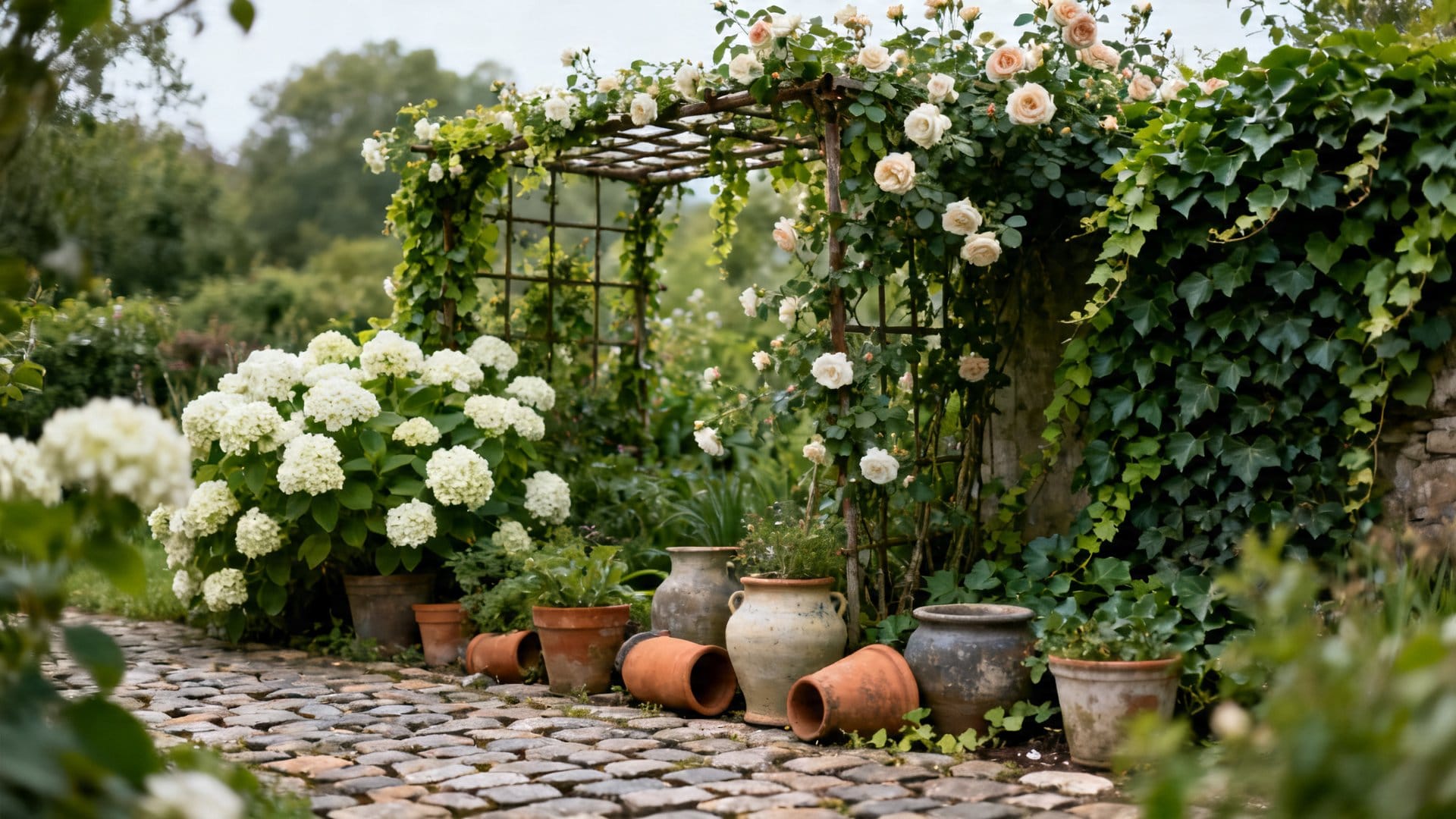
Old-fashioned climbing roses in soft pink or creamy white are the signature plant of the shabby chic garden, trained over trellises and arbors for a romantic, abundant effect. Lavender, sweet peas, hydrangeas, foxgloves, and wisteria all complement this look beautifully.
 Shop this look: a rose arbor on Amazon · 2 Pack Small Artificial Lavender Plant in Pots… · Grunyia 16 Bundles Artificial Fall Flowers for…
No shabby chic garden is complete without the right plants, and here the choices matter as much as the furniture. This style calls for flowers that feel romantic and a little wild, not rigidly pruned, but gently abundant. Roses are the obvious star, especially old-fashioned climbing varieties in soft pink or creamy white that you can train up a trellis or over an arbor, the heart of any romantic rose garden.
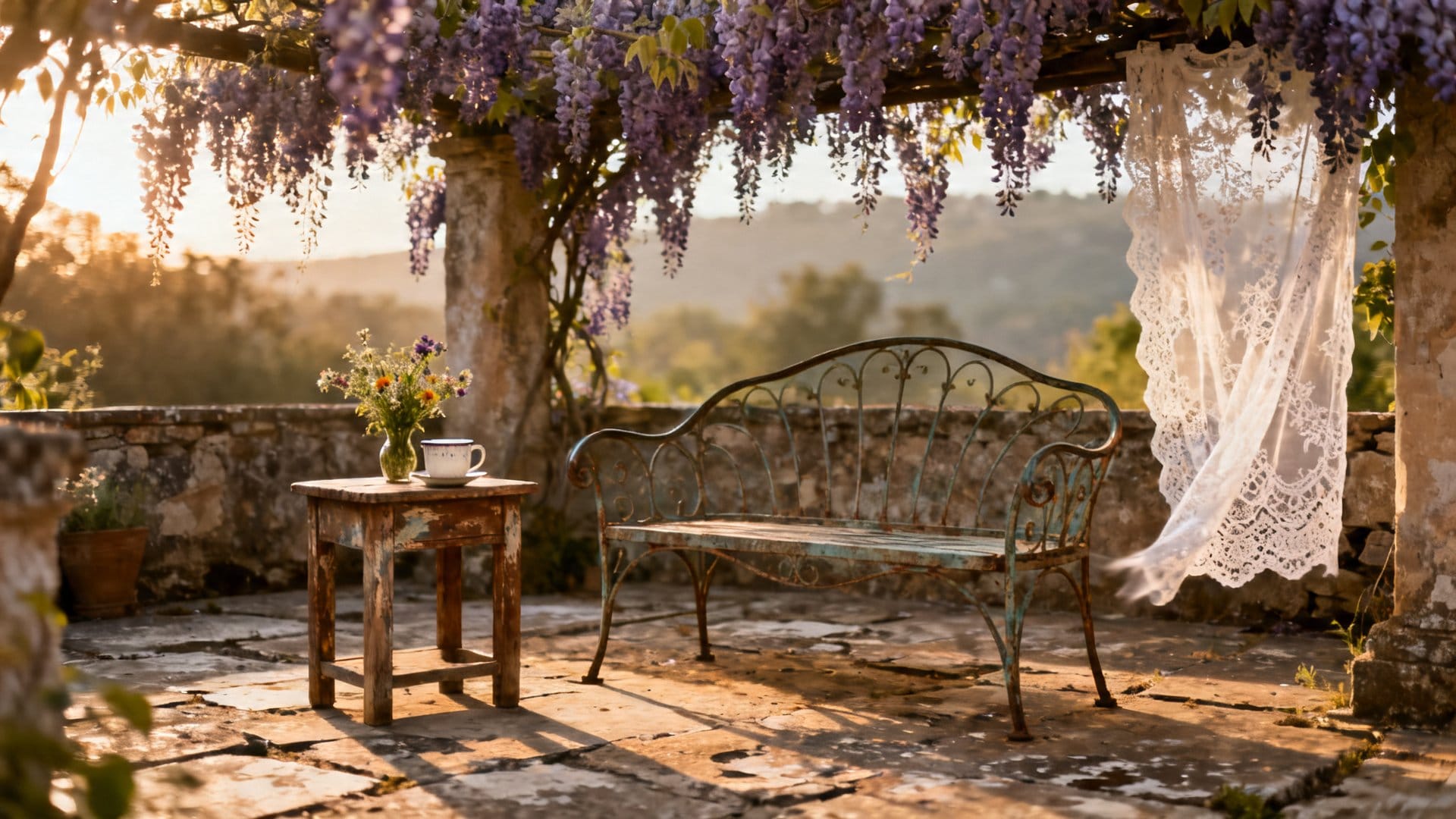
Beyond roses, consider lavender for its soft purple hue and heavenly scent, sweet peas trailing up a fence, hydrangeas in dusty blue or blush, and foxgloves standing tall in the back of a border. Wisteria climbing over a pergola creates an almost theatrical romantic effect that perfectly suits the shabby chic garden decor aesthetic. I keep coming back to this approach because the plants themselves do so much of the decorating, and you’re simply framing them beautifully.
Herbs like rosemary and sage add a soft silvery-green texture and a gentle fragrance that drifts through the air on warm evenings. Tuck them into vintage terracotta pots or old enamel colanders for a look that’s both practical and pretty.
Pro tip: Don’t deadhead your roses too aggressively. Allowing a few spent blooms to remain adds to that romantic, slightly wild quality that makes this style feel authentic rather than overly polished.
&# 128218; Keep reading: Love this look? See ourcottage summer garden ideas with English countryside charm→
Once your plants are in place and your furniture is arranged, it’s the smaller details that truly complete the picture.
What Vintage Accessories and Found Treasures Bring the Style to Life?
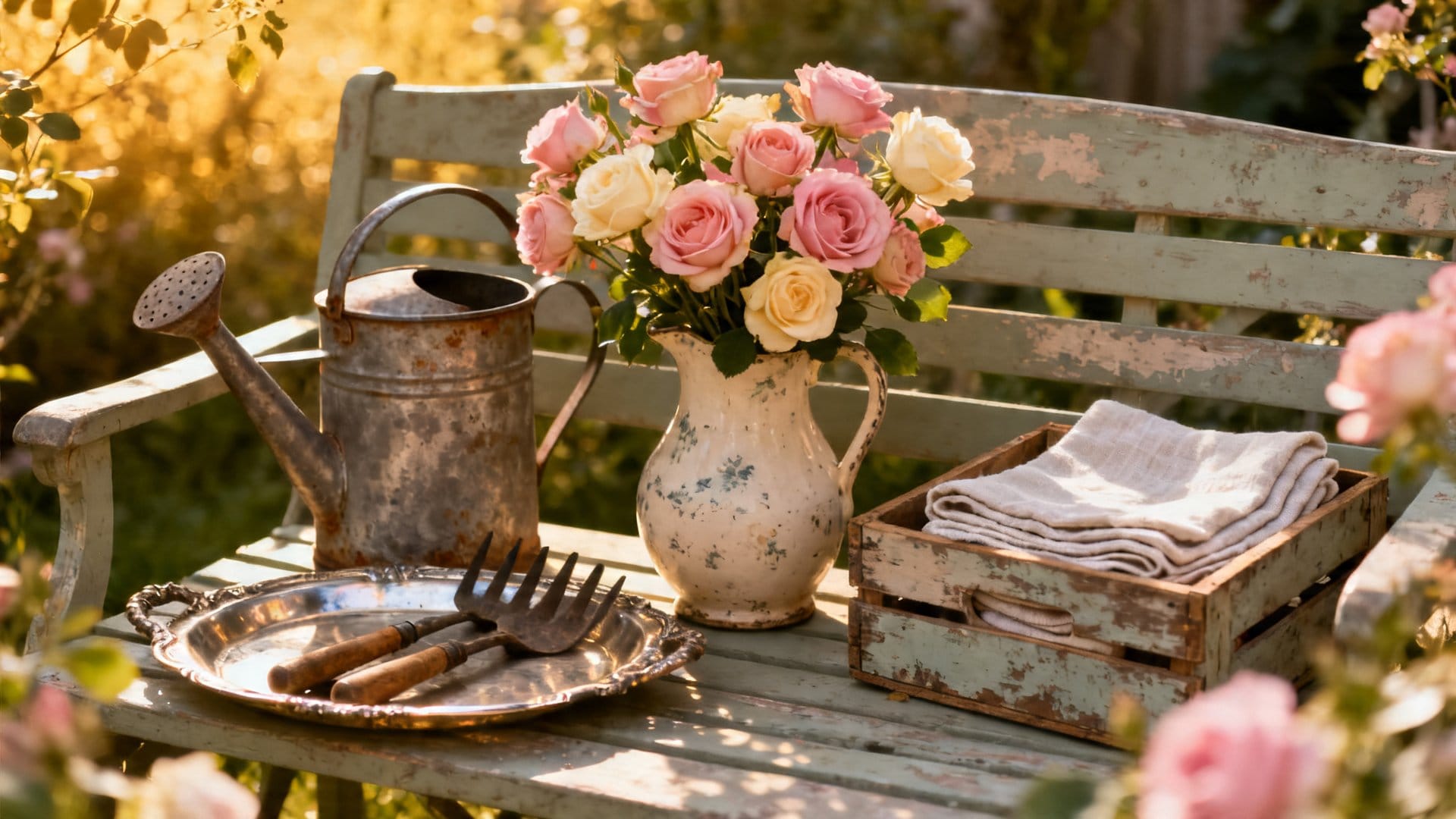
Vintage birdcages, old enamelware, distressed wooden crates, antique mirrors, and aged lanterns are the kinds of found treasures that give a shabby chic garden its personality and soul. The best pieces have visible texture and age, sourced from estate sales, flea markets, and antique shops.
 Shop this look: a vintage birdcage on Amazon
This is where shabby chic garden decor really comes alive, and honestly, it’s the most fun part of the whole process. The accessories are what give your outdoor space personality and soul, the same vintage decorating touches that make an indoor mantel feel collected too.
What to Look For
- Vintage birdcages hung from tree branches or set on a table, filled with trailing ivy or small ferns instead of birds
- Old enamelware such as pitchers, colanders, and buckets, repurposed as planters for herbs or trailing flowers
- Distressed wooden crates or ladders used as plant stands to create height variation in a corner arrangement
- Antique mirrors with ornate frames mounted on a garden wall or fence to reflect light and make the space feel larger
- Vintage lanterns and candleholders in aged brass or wrought iron, clustered on a table or along a garden path
- Old watering cans in soft green or cream, planted with trailing nasturtiums or lobelia for a charming vignette
The key is to look for pieces that have texture and age to them. Estate sales, flea markets, and antique shops are goldmines for this kind of thing, and half the pleasure is in the hunting.
With your daytime garden taking shape, it’s worth thinking about how the space will feel once the sun begins to set.
How Does Lighting Turn Your Garden Into an Evening Sanctuary?
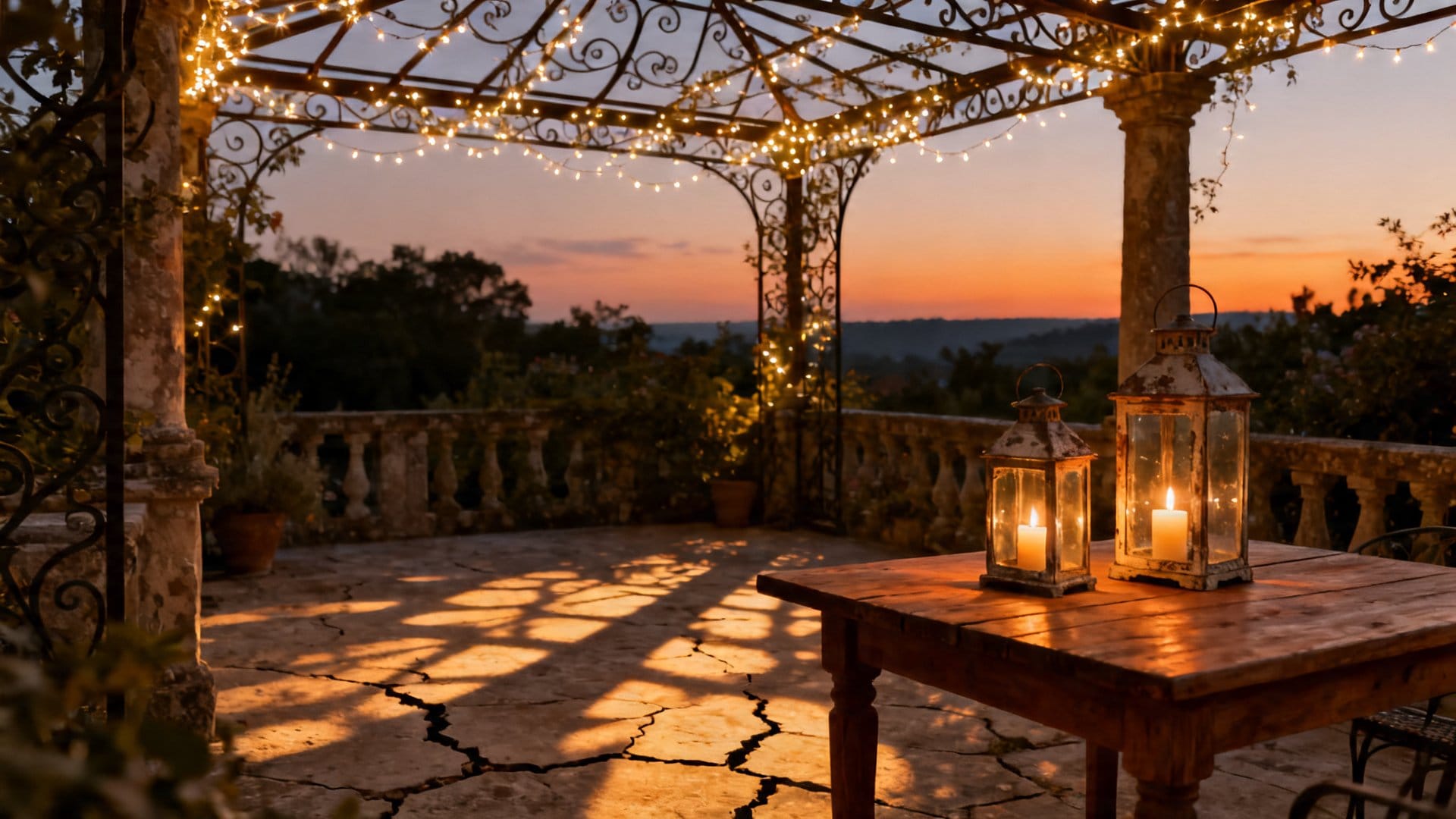
Soft string lights draped loosely through tree branches, paired with pillar candles in glass hurricanes, change a shabby chic garden into a glowing evening retreat. Layering warm light at different heights creates the romantic, flickering atmosphere this style is known for.
 Shop this look: outdoor string lights on Amazon
What happens to a shabby chic garden after the sun goes down? It becomes even more magical, but only if you’ve thought about lighting. The right lighting is what change a daytime garden into an evening sanctuary that glows with warmth.
String lights are a natural choice here, but the way you use them matters. Rather than stringing them in a straight line across a fence, drape them loosely through the branches of a tree or along the top of a pergola so they fall in soft, uneven loops. The effect is far more romantic than a tidy grid. Pair them with pillar candles in glass hurricanes placed on tables and along pathways, and you create layers of warm light at different heights.
One thing I’ve noticed is that solar-powered fairy lights have improved enormously in recent years. You can now find them in warm amber tones that look genuinely lovely rather than that cold blue-white that always looked a little clinical. Tuck them into a vintage lantern or wrap them around a garden post for a soft, flickering glow.
Pro tip: Place a cluster of three mismatched candleholders in different heights and materials at the center of your garden table. The asymmetry feels more natural and interesting than a matched set, and the candlelight reflected off the glass creates a beautiful effect on warm evenings.
&# 10024; You'll love this too: For evening glow ideas, browse oursummer garden party lighting ideas→
Can You Achieve Shabby Chic Style in Small Spaces and Tiny Gardens?
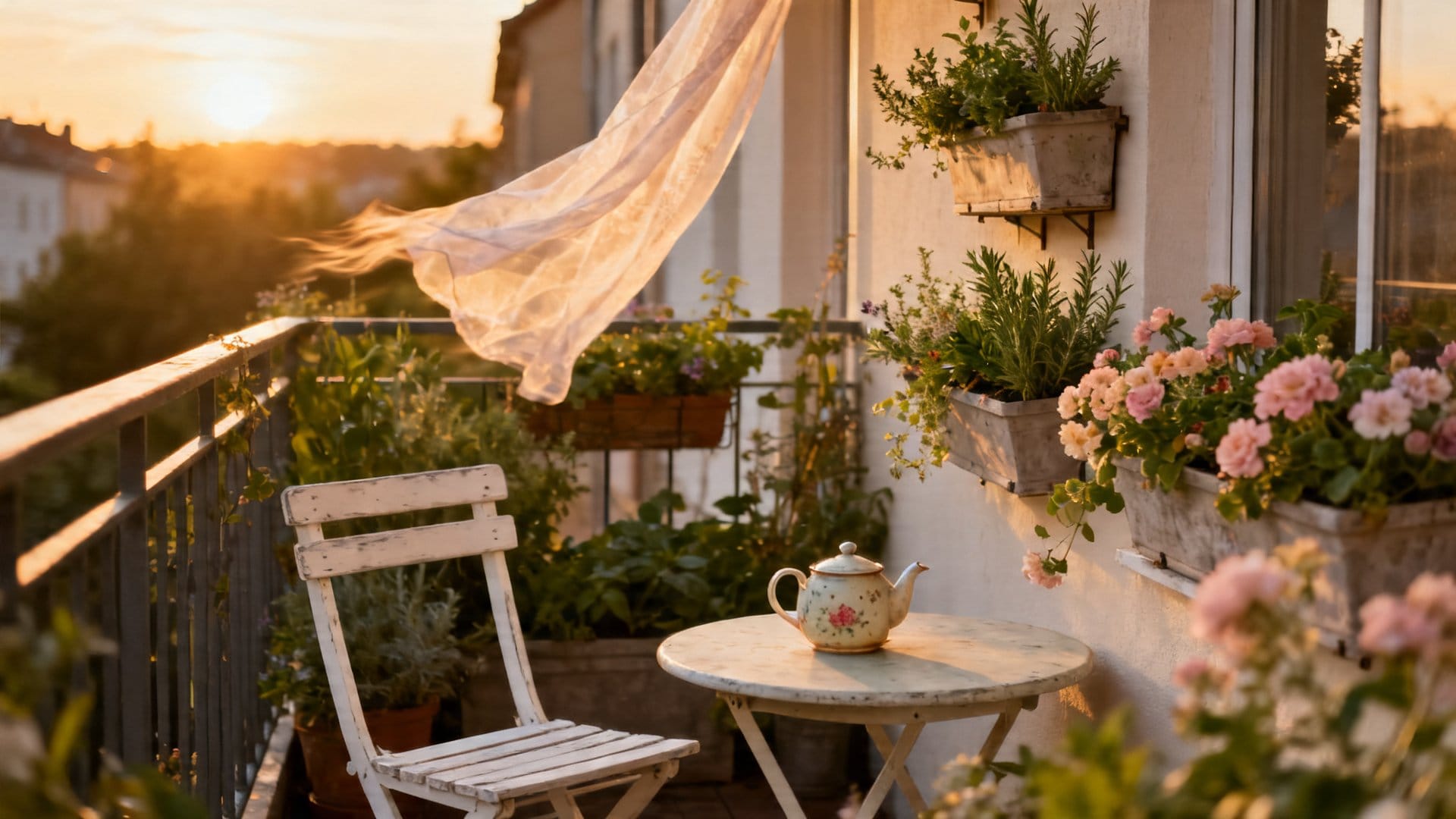
Yes, a small balcony or compact patio can absolutely carry the full spirit of shabby chic style. Vertical space, a single bistro table, and a few well-chosen vintage details are all you need to create a genuinely romantic outdoor retreat.
 Shop this look: a wooden ladder plant stand on Amazon · SunnyTong Galvanized Metal Watering Can 1…
You absolutely don’t need a sprawling country garden to pull off this romantic feminine outdoor style. Some of the most beautiful shabby chic spaces I’ve seen have been tiny urban balconies or compact back patios that used every inch wisely.
Vertical space is your greatest asset in a small outdoor area. A wooden trellis or simple ladder leaned against a wall and hung with trailing plants, vintage frames, and small potted flowers creates enormous visual interest without taking up floor space. A single bistro table and two chairs in chalky white, paired with a small planter overflowing with roses and lavender, is genuinely all you need to create the feeling of a romantic garden retreat.
Small Space Tricks
- Use a vintage ladder as a vertical plant stand, placing small pots on each rung for a layered, lush effect in just two square feet
- Hang a small ornate mirror on a fence or wall to visually double the sense of space and reflect your plants back at you
- Choose a round table over a rectangular one, since it takes up less visual space and feels more intimate for two
- Stack vintage suitcases or wooden crates as a side table, adding height and character without permanent furniture
Even the smallest balcony can carry the full spirit of shabby chic garden decor when you focus on texture, softness, and those signature vintage details.
Final Thoughts
Creating a shabby chic garden decor space with a romantic feminine outdoor style is less about perfection and more about intention, choosing pieces that feel meaningful, layering textures that invite you to slow down, and letting a little natural beauty and imperfection be part of the charm. Your garden doesn’t need to be large or expensive to feel genuinely lovely; it just needs those soft colors, those worn and weathered textures, and a few flowers nodding gently in the breeze. Whether you’re starting from scratch or simply adding a few new touches to what you already have, trust your instincts and let the space evolve at its own pace. Happy decorating!
Frequently Asked Questions
Shabby chic garden decor is a romantic, feminine outdoor style that combines weathered textures, soft color palettes, and vintage-inspired elements to create a space that feels beautifully lived-in rather than perfectly polished. Unlike modern or minimalist garden styles that prioritize clean lines and new materials, shabby chic embraces chipped paint, distressed wood, and antique ironwork as intentional design choices. The result is a garden that feels warmly nostalgic and collected over time, like a secret hideaway filled with climbing roses and soft linens.
Shabby chic gardens thrive on soft, muted tones such as whites, creams, blush pinks, sage greens, and dusty lavenders that feel gentle and romantic rather than bold or saturated. These colors work beautifully on painted furniture, ceramic pots, and decorative accents, and they complement the natural tones of weathered wood and aged metal. Layering several of these soft hues together creates depth and visual interest without ever feeling loud or jarring.
The ideal furniture for a shabby chic garden includes vintage or vintage-inspired pieces like wrought iron bistro sets, distressed wooden benches, whitewashed garden chairs, and old-fashioned settees that can be dressed with floral cushions or linen throws. Pieces that show natural wear and aging, such as slightly chipped paint or weathered finishes, are especially prized in this style because they add authenticity and charm. Thrift stores, flea markets, and antique shops are great sources for finding the kind of characterful furniture that makes a shabby chic garden feel collected over time.
Creating a shabby chic garden on a budget is very achievable because the style actually celebrates imperfection and repurposed items rather than expensive new purchases. Scouring flea markets, garage sales, and thrift stores for old furniture, mismatched pots, and vintage accessories is not only budget-friendly but also produces the most authentic results. You can also distress or whitewash inexpensive new pieces yourself, repurpose old teapots and colanders as planters, and grow affordable climbing plants like roses or clematis to add that signature romantic softness.
Climbing roses are perhaps the most iconic plant in a shabby chic garden, valued for their romantic blooms and their ability to drape beautifully over fences, arches, and trellises. Other popular choices include lavender, foxglove, wisteria, peonies, sweet peas, and cottage garden favorites that have a soft, loose, and slightly wild appearance rather than a formal, manicured look. The goal is to choose plants that feel abundant and gently untamed, as though the garden has been lovingly tended but also allowed to grow in its own natural way.