When I first bought my tiny camper, I thought I was being practical. I imagined cozy nights, minimal clutter, and perfect little road trips. But then I took my first long trip and quickly learned that small spaces can start to feel suffocating if you don’t think them through. Figuring out how to make a small camper feel bigger and more spacious took experimentation, frustration, and a few accidental bruises from bumping into corners. Over time, I found techniques that really do change how a camper feels. It is not about adding square footage, but about shaping how you use and see the space you already have.
Clear the Visual Noise First
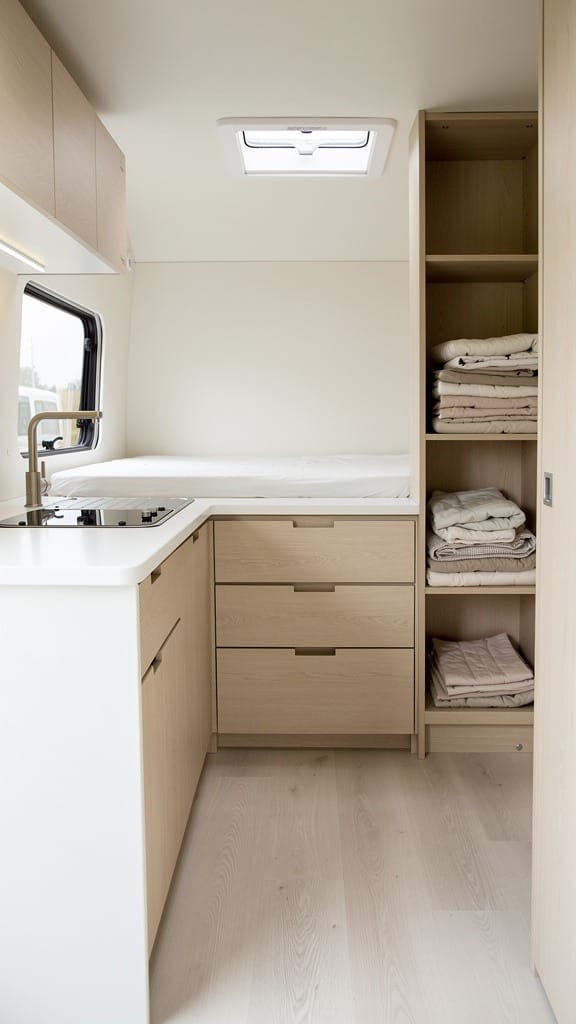 Shop this look: RV storage organizers on Amazon
Before you buy fancy organizers or add mirrors, clear the clutter. I once thought I needed every gadget that claimed to be “essential for RV life.” A few months in, my countertops were buried under utensils, spice racks, and knickknacks. The camper looked like a thrift store exploded. The truth is, visual clutter makes a tiny camper feel smaller than it actually is. When the surfaces are busy, your eyes can’t rest on anything clean, and everything starts to look cramped. Removing half of what’s visible immediately adds mental breathing room, and decluttering is the fastest way to make small camper feel bigger before you change anything else.
One trick I still swear by is the “one clean surface” rule. No matter what, one area, maybe a table or a counter, stays completely clear. Even on messy days, that empty space fools the brain into feeling like the whole place is more open. The day I started doing this, my camper felt twice as peaceful. It’s such a small thing, but visually it changes everything.
Rethink Storage: Hide It, Stack It, Shrink It
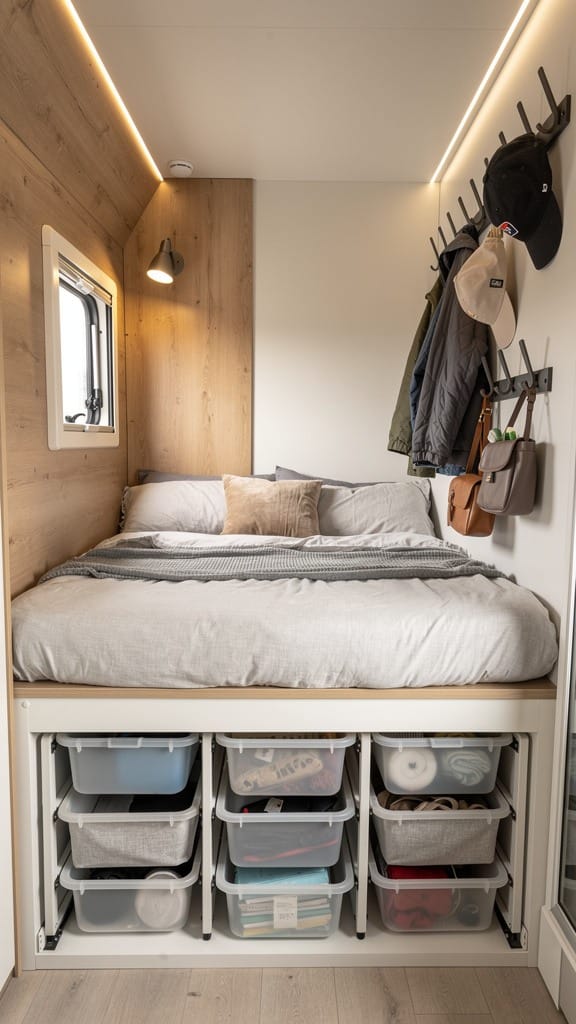 Shop this look: LED strip lights on Amazon
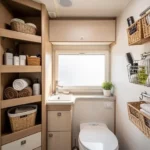
Storage in small campers isn’t just about fitting more stuff; it’s about giving the illusion of space by keeping things tucked away. When everything has a home, the area feels intentional rather than overcrowded. I learned this the hard way after stacking shoes beside the door and tripping over them one too many times. The best storage ideas come from looking at every surface and asking, “Can this hold something?” Often, the answer is yes.
Some of the smartest adjustments I made were tiny:
- Installing shallow bins under the bed for seasonal clothes.
- Mounting magnetic strips on the wall for kitchen tools instead of using bulky containers.
Storing vertically also helps more than most realize. Hooks, hanging baskets, and narrow shelving draw the eye upward and make the walls feel taller. Even a net strung across the ceiling corner for lightweight items can free up huge amounts of floor space. If you want a full breakdown of clever stash spots, these small camper storage ideas squeeze use out of every inch. The key is keeping storage visually calm, with matching colors, clean lines, and no overstuffing. The tidier it looks, the roomier it feels.
Use Light Like a Designer
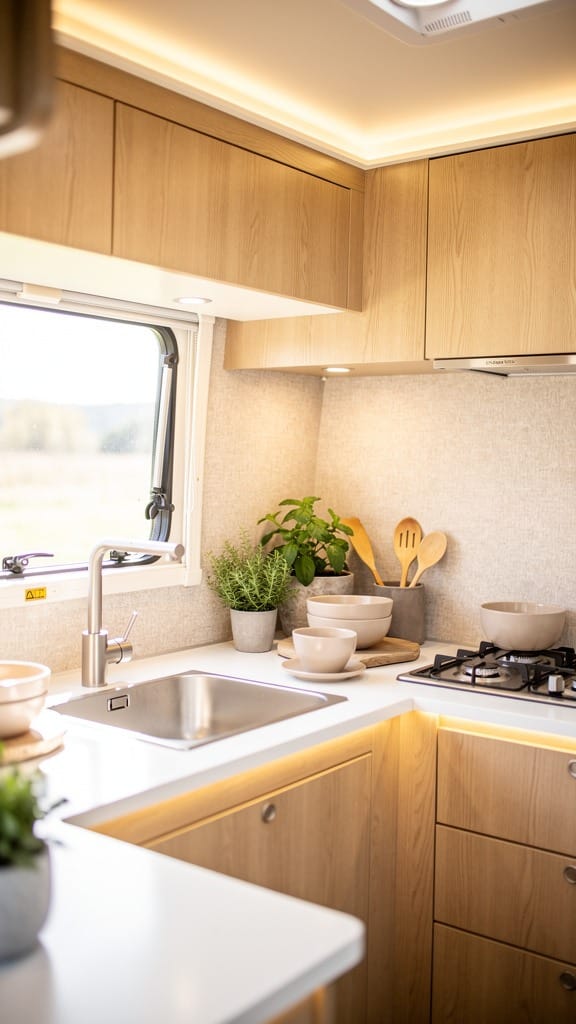 Shop this look: camper curtains on Amazon
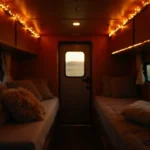
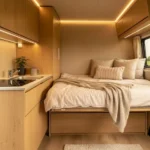
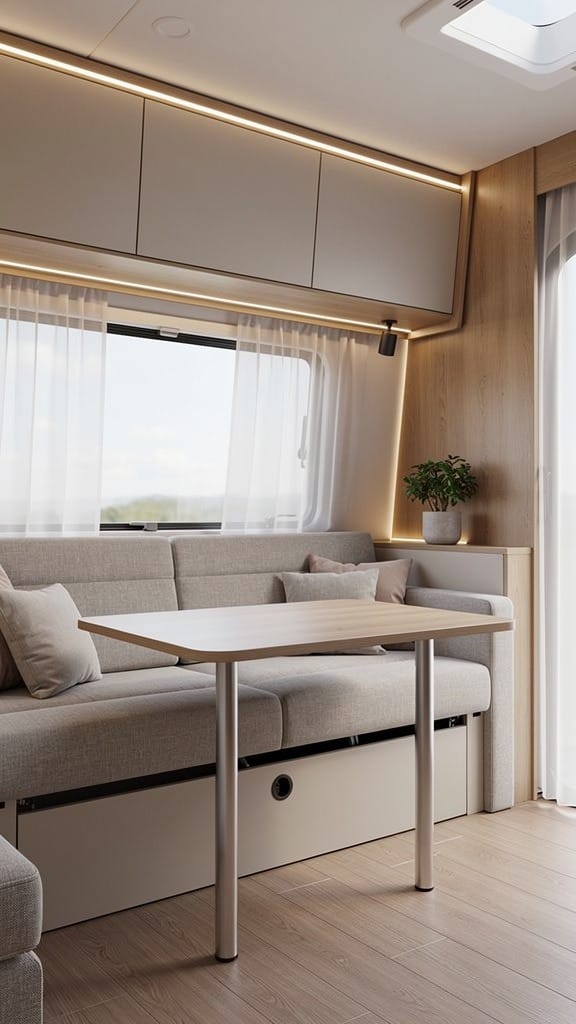
Light is the cheating trick that never fails. A small camper will always feel smaller in dim lighting. The difference between a yellowish bulb and a bright, cool-toned one can change the entire atmosphere. I used to rely on one overhead light. Big mistake. It left the corners shadowy, and even though the camper was tidy, it still looked tight. Once I added LED strips under cabinets and soft accent lights in the corners, it suddenly felt as if the walls had moved outward. Layered lighting is one of the simplest tricks to make small camper feel bigger after dark.
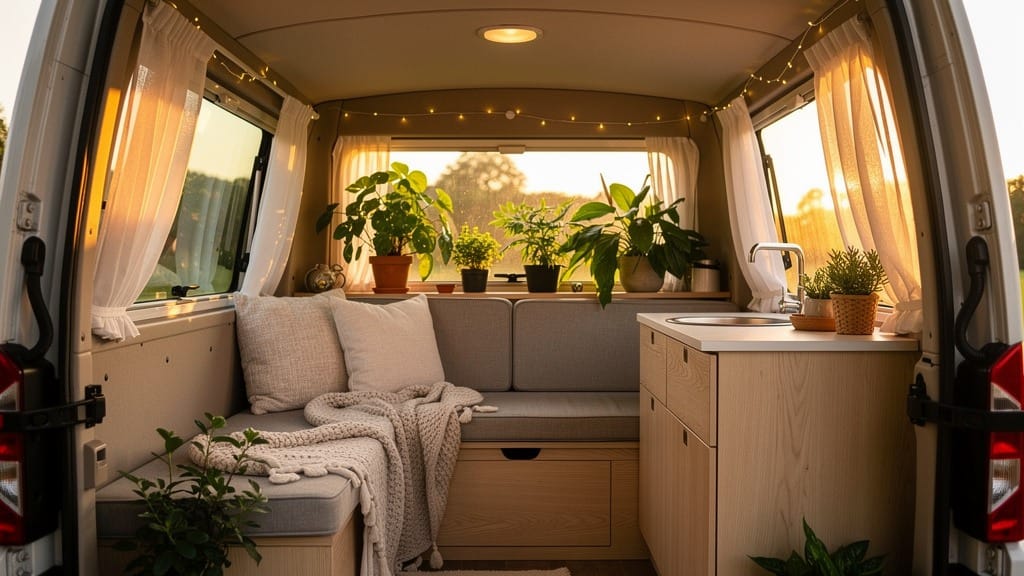
Natural light is even more valuable. Avoid heavy curtains or dark privacy screens. I switched from opaque shades to light-filtering blinds, and honestly, this one surprised me because it not only made the camper feel larger but also lifted my mood. I also keep the windows spotless. A little dust or smudge dulls more light than people realize, and in small quarters, that matters. For more ways to brighten things up, take a look at these small camper lighting ideas.
&# 10024; While you’re here:Small Camper Interior Ideas to Make Tiny Spaces Feel Bigger→
Play With Color and Texture
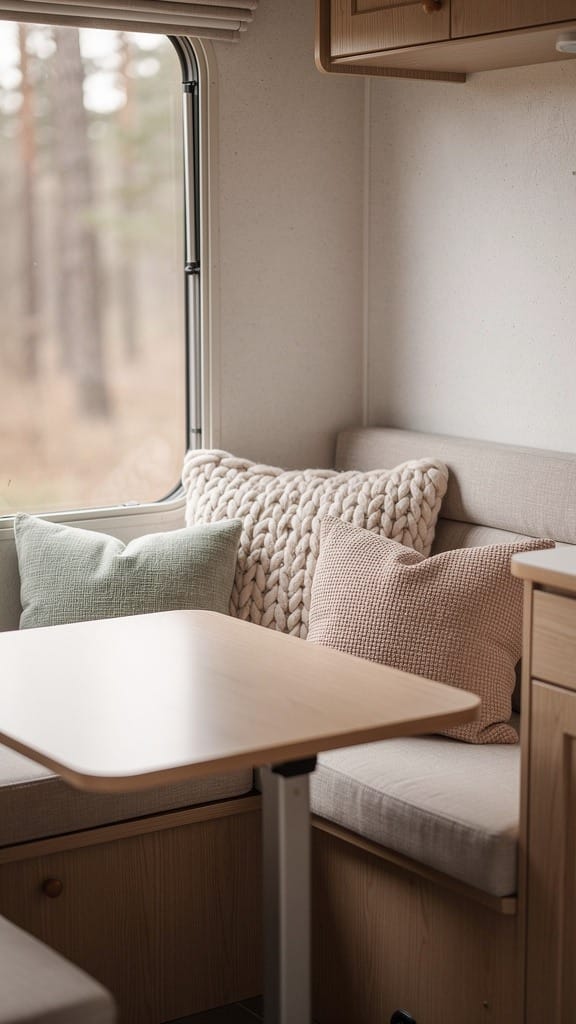 Shop this look: peel-and-stick wallpaper on Amazon
Color changes perception faster than almost anything else. When I first painted my interior warm grey, thinking it would be cozy, the room ended up feeling like a cave. A few months later I repainted everything in soft whites and pale neutrals, and it was like adding an extra window. Light colors reflect, while darker tones absorb. In a small camper, reflection is your best friend, and a pale palette does more to make small camper feel bigger than almost any other change. That doesn’t mean everything needs to be clinical white. You can mix in natural tones like blonde wood, sand, or pale sage to keep it inviting without closing it in.
Texture plays a subtler role. Too many heavy fabrics or shiny surfaces can make things look smaller or busier. Balanced textures, such as linen curtains, woven baskets, or matte finishes, give the eye variation without adding visual clutter. I had a glossy countertop before that constantly reflected everything on it; switching to a matte finish softened the whole space. It’s strange how these details, which sound minor, can shift how your brain reads room size. A bright, pared-back scheme like these white camper interior ideas can make the whole space breathe.
Flexible Furniture: The Secret Weapon
 Shop this look: RV kitchen organizers on Amazon
The most significant shift for me came when I stopped thinking of furniture as fixed. Every item inside a small camper has to earn its keep, preferably by doing two jobs. For months, I had a solid wooden table that could only be a table, beautiful but heavy and awkward. Replacing it with a folding table I can use as a desk, kitchen prep station, or outdoor picnic surface was life-changing. Suddenly, floor space appeared. There are loads of multi-functional furniture ideas worth borrowing when every piece has to pull double duty.
There are clever setups made just for small campers: ottomans with storage inside, benches that extend into beds, or pull-out counters that slide away when not needed. Even something as simple as collapsible stools creates breathing room when stored. These space-saving camper furniture ideas are full of pieces built for tiny floor plans. I still struggle with balancing comfort and practicality — those plush chairs are tempting, but every time I prioritize multi-use pieces, the camper rewards me with extra freedom to move.
&# 128064; Worth a look:Minimalist Camper Interior Ideas→
Trick the Eye With Design
There’s a bit of visual psychology behind making tight spaces appear bigger. Mirrors are the oldest trick, but they truly work. I added a narrow mirror panel beside my door, and the reflection doubled the sense of width. Just one mirror can make a cramped area feel open if placed opposite a window or light source. The goal isn’t vanity; it’s optical expansion.
Patterns also deserve attention. I once bought a bold zigzag rug that visually chopped the floor into sections. It made the camper look tiny. Switching to a lighter, plain runner stitched the space together and pulled the eye lengthwise. Vertical patterns on curtains or wall panels can heighten the feeling of space in a similar way. Soft transitions, continuous lines, and symmetry calm the mind, and a calm mind reads space as bigger than it is.
&# 128218; Related idea:How to Decorate a Small Camper→
Keep the Layout Fluid
Most small campers were designed with a specific layout in mind, but that doesn’t mean you have to stick to it. Rearranging furniture, removing unnecessary dividers, or even just changing where you store daily-use items can dramatically improve flow. When movement feels natural, the space feels generous. There was one season where I had my cooking gear stowed near the bathroom. Every meal turned into a comedy sketch of bumping into things. Moving them closer to the door area reduced my steps and made cooking feel less confined. Sometimes, perceived space is about motion, not measurement. If you are starting from scratch, this guide on how to decorate a small camper pairs layout with style.
Remember to keep the pathways open. Even a small box in a walkway changes how spacious the camper feels. When everything has room to “breathe,” both physically and visually, the atmosphere lightens. It’s like rearranging your brain as much as your furniture. I’ve found that every time I adjust my layout to match how I actually live — not how the camper designer imagined I would, the space feels new again.
Let the Outside Extend Inside
One trick that often gets overlooked is how you transition between the camper and the outdoors. If you treat your campsite setup as part of your home, your living area effectively doubles. I now set up my seating just outside the door with a small rug to connect it visually to the interior. When the door is open, it feels like one continuous space. Even on cooler days, keeping the door open for a few minutes in the morning brings in fresh air and light that make the whole camper seem more open.
I learned this habit after camping near the coast one summer. Opening the door to watch the sunrise made my compact camper feel expansive. It reminded me that even though the walls are fixed, the boundaries of how you experience space are flexible. A few cozy touches go a long way too, the way these tips on how to make a camper feel like home show. The outdoors can do what no amount of organizing or painting ever could. It makes the walls feel irrelevant for a moment.
Conclusion
Making a small camper feel bigger is part design, part mindset. You don’t actually change the square footage, you change how you interact with it. Learning how to make small camper feel bigger came down to design choices and mindset, not renovation. After years of mistakes and adjustments, I’ve come to appreciate the creative limits. They force you to be intentional, thoughtful, and adaptable. And when you finally step inside and everything feels open, light, and calm, it’s proof that space isn’t always measured in feet. Sometimes it’s measured in how you feel within it.
Frequently Asked Questions
Start by decluttering and removing items you rarely use. Keeping surfaces clear and simplifying your decor instantly creates an airy, open feeling without any construction work.
Choose multi-functional or foldable furniture, such as tables that convert into beds or seats with hidden storage. These pieces make your camper more efficient and free up valuable floor space when not in use.
Yes, lighting can dramatically impact how spacious your camper feels. Use bright, warm LED lights, maximize natural light with sheer window coverings, and add mirrors to reflect light and create the illusion of a larger interior.
Use labeled bins, drawer dividers, and wall-mounted storage to keep essentials tidy. Regularly reassess what you actually use and store less-used items in harder-to-reach spaces to maintain a clutter-free environment.
Stick to a light color palette for walls and fabrics, and keep patterns minimal. This makes surfaces appear more continuous and open, while vertical lines or tall decor draw the eye upward, giving a sense of height and space.