
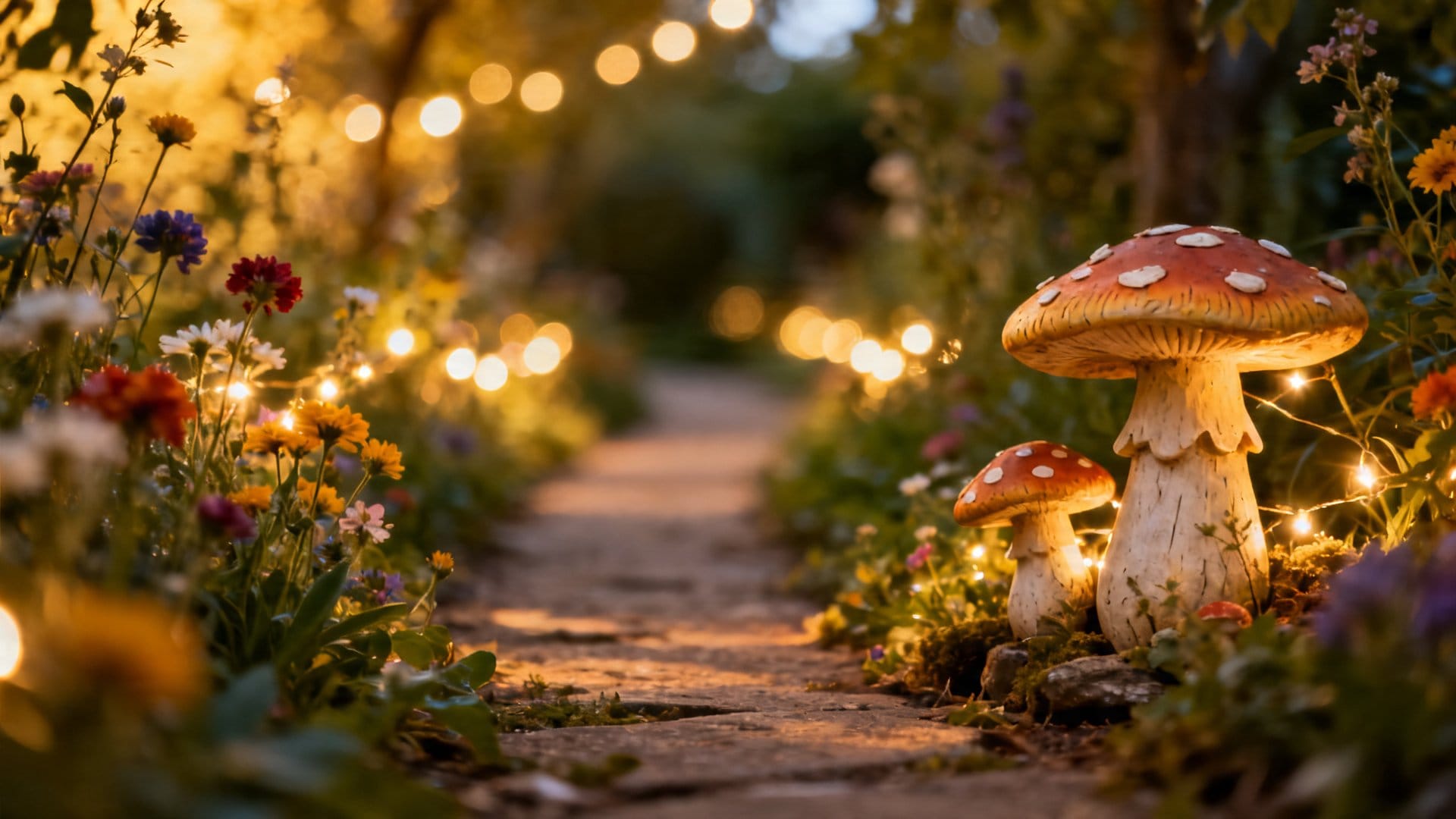
There’s something about stepping into a garden that feels like it has a secret: a little lantern tucked between the ferns, a mossy stone face peeking from behind a rosebush, a string of lights catching the breeze at dusk. That feeling is exactly what whimsical garden decor is all about, creating an outdoor space that surprises you, delights you, and feels like it belongs in a storybook. This article is here to help you bring that kind of playful, magical energy into your own yard or patio, no matter the size. Whether you’re working with a sprawling backyard or a tiny balcony, there’s a version of this that’s just right for you. If you want the bigger picture first, our complete guide to garden decor is a lovely place to wander before you explore the playful details below.
Why Does Whimsical Garden Decor Feel So Good Right Now?
Whimsical garden decor feels so resonant right now because people are craving outdoor spaces that feel personal and imaginative, not just tidy and functional. It taps into a desire to make the garden an extension of your inner world rather than simply a yard you maintain.
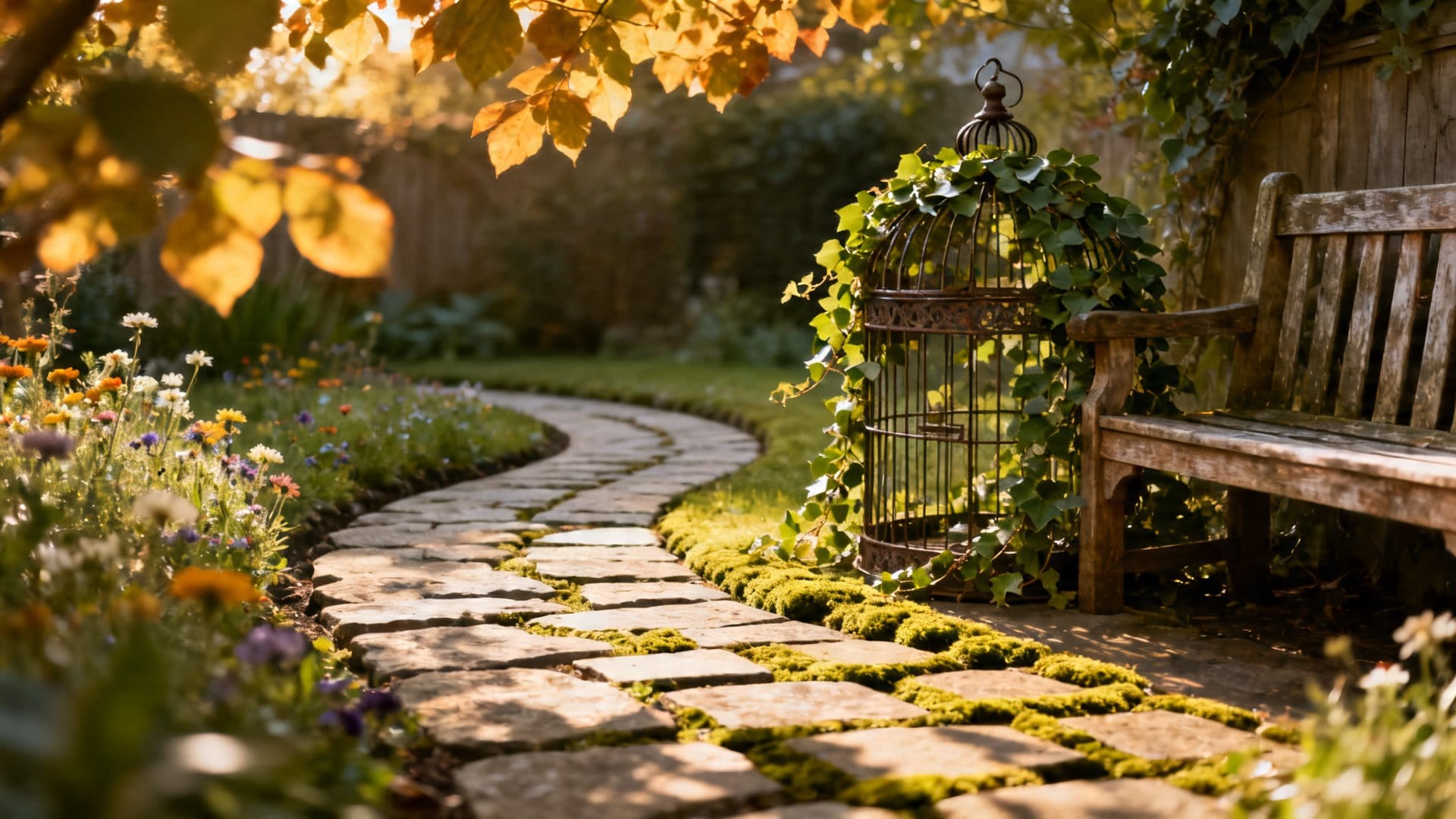
There’s a quiet shift happening in how people think about their outdoor spaces. Gardens used to be about neat rows and tidy edges, impressive, sure, but not exactly inviting. Now, more and more people are leaning into something softer, stranger, and more personal. Whimsical garden decor taps into that desire to make the outdoors feel like an extension of your inner world, not just a yard you mow on weekends.
I’ve seen this style break all the “rules” of traditional landscaping in the best way. You can mix a vintage iron birdcage with trailing ivy next to a modern stone path, and somehow it works beautifully. If that magpie-magic appeals to you, a similar charm runs through vintage garden decor too. The key is that whimsy doesn’t mean chaotic, it means intentional playfulness, where every unexpected element feels chosen with care.
Why It Works
Whimsical outdoor spaces tend to feel more lived-in and personal than perfectly manicured ones. When guests wander through a garden filled with little surprises, a painted stepping stone, a fairy door at the base of a tree, they slow down, look closer, and feel genuinely charmed. That’s the magic you’re going for.
How Do Fairy Lights and Lanterns Create the Perfect Outdoor Glow?
Fairy lights and lanterns create the perfect outdoor glow by placing warm, flickering light in unexpected pockets throughout the garden rather than flooding the space with brightness. The result is a layered, atmospheric effect that makes the garden feel alive and magical after dark.
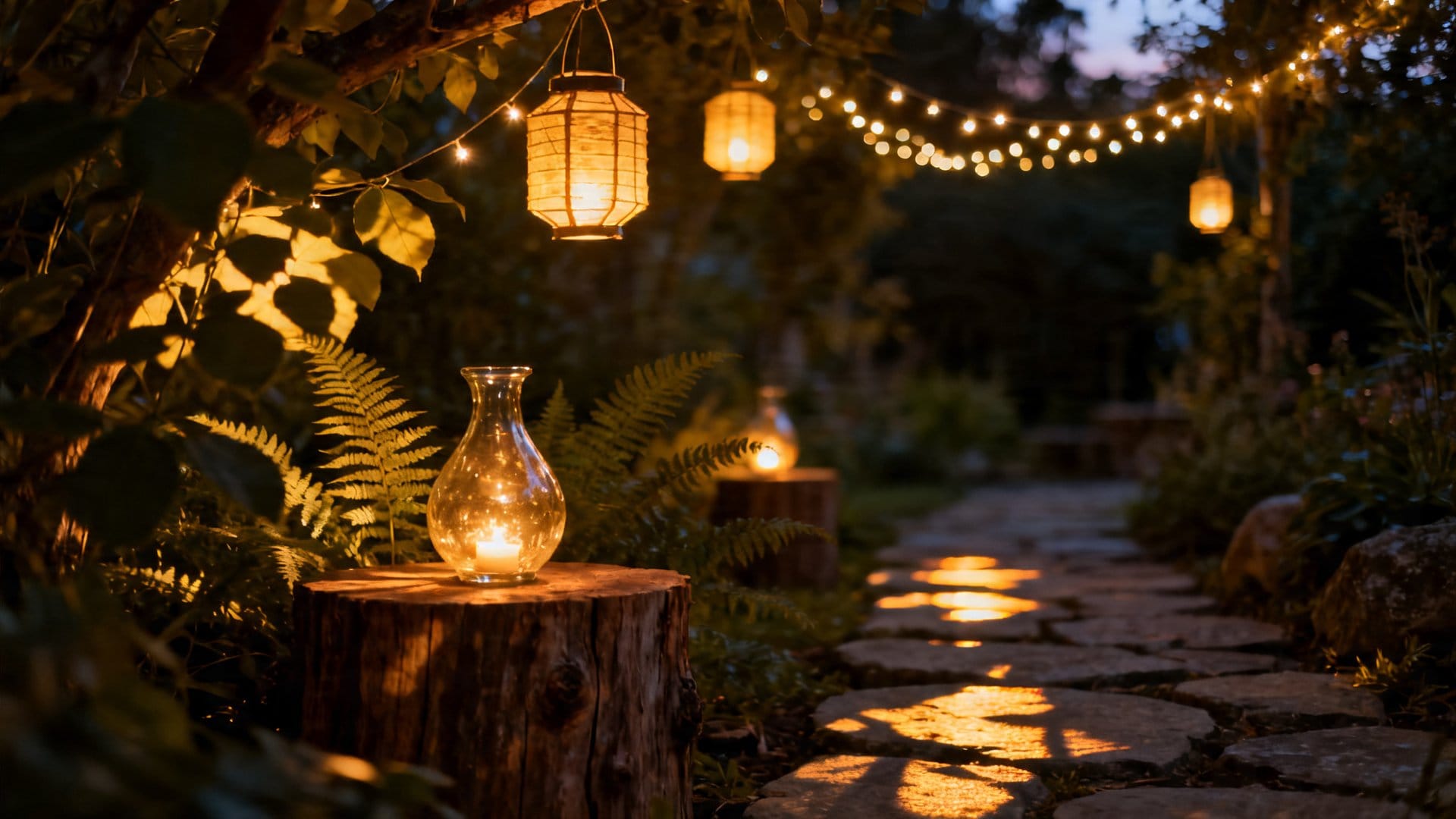
Lighting is the single most powerful tool in a whimsical garden, and it costs far less effort than most people expect. The goal isn’t to flood the space with brightness, it’s to create pockets of warm, flickering glow that make the garden feel alive after dark. Think of it as painting with light.
Solar-powered fairy lights woven through a trellis or draped loosely over a pergola create a canopy effect that feels genuinely dreamy. Vintage-style Edison bulb string lights hung between two fence posts add a warm amber glow that flatters every plant and surface around them. If you love that hung-overhead look, you’ll find plenty more inspiration in these patio string light ideas. Lanterns placed at varying heights, one on a stump, one hanging from a shepherd’s hook, one nestled at ground level among the hostas, create visual rhythm without feeling rigid. Battery-operated candles inside glass hurricane vases are another favorite trick for pathways; they flicker like real flames but won’t blow out in the breeze.
Pro tip: Cluster three lanterns of different heights and finishes, say, one brass, one matte black, one aged copper, near a garden bench for a layered, collected look that feels like it evolved naturally over time rather than being placed all at once.
If you want that whimsical glow without running electrical lines, solar string lights are the easiest place to start. They charge by day, switch on automatically at dusk, and weave just as happily through a trellis as they do along a fence rail.
Once your lighting is in place, the next layer of whimsy comes from the plants themselves, or more precisely, what you choose to plant them in.
How Can Unexpected Planters Tell a Story in Your Garden?
Unexpected planters tell a story by turning the container itself into a decorative element with personality and history. When a worn leather boot or a cracked ceramic teapot holds a plant, it sparks curiosity and gives your garden a one-of-a-kind, collected character.
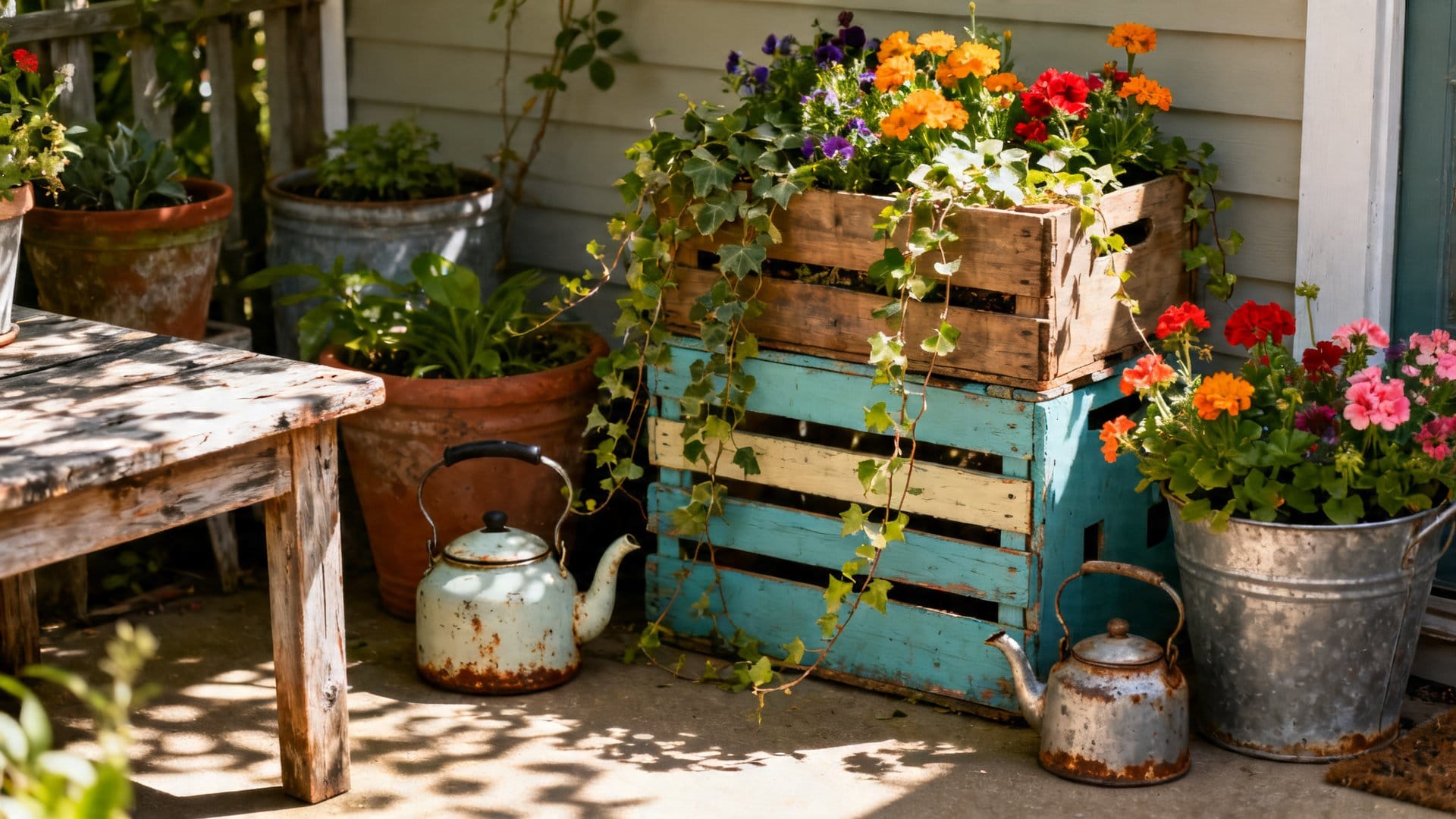
One of the easiest ways to bring whimsical garden decor to life is through your choice of containers. A standard terracotta pot is lovely, but a worn leather boot spilling over with purple verbena? That’s a conversation starter. The planter itself becomes part of the story your garden tells.
Old wooden crates with chipped paint make beautiful raised herb gardens near a kitchen door. A cracked ceramic teapot can become home to a trailing sedum. Vintage colanders with their built-in drainage holes are practically made for planting. Even an old wheelbarrow, left intentionally weathered and filled with a cascading mix of petunias and sweet potato vine, becomes a focal point rather than a forgotten tool. One thing I’ve noticed is that mixing the unexpected with the natural (like a rusted metal bucket planted with soft, feathery grasses) creates a tension that feels genuinely artistic. The same loose, collected spirit shows up beautifully in boho garden decor, where mismatched pieces are part of the charm.
Styling Notes
When grouping unusual planters, stick to a loose color palette for the plants themselves even if the containers are wildly different. A cluster of mismatched pots all planted with shades of blush, white, and soft lavender will look cohesive and intentional rather than scattered.
If you’d rather start with one or two characterful containers instead of hunting thrift shops, decorative outdoor planters with a vintage or storybook shape give you that collected look right away, especially grouped in odd numbers at different heights.
What Garden Art and Sculpture Will Make You Smile?
The best garden art for a whimsical space is anything that surprises you and makes you look twice: a fairy door at the base of a tree, a gazing ball in a jewel tone, or a hand-painted river rock tucked among the ferns. These pieces change a garden from a collection of plants into a place with genuine personality.
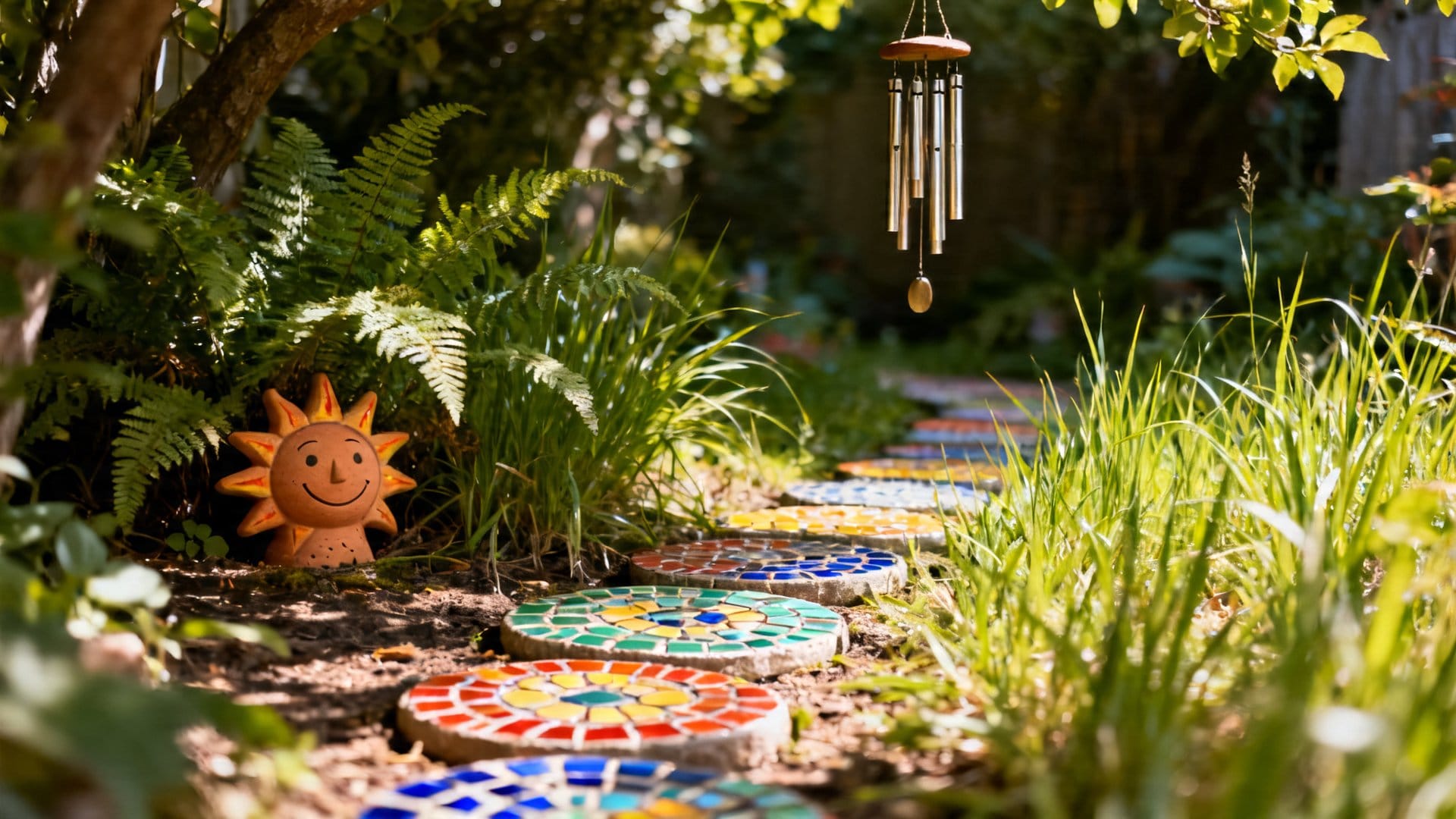
A garden without art is just plants. A garden with art is a place. The beauty of the whimsical approach is that “art” can mean almost anything: a hand-painted river rock, a metal dragonfly staked into the soil, a mosaic stepping stone made from broken china, or a driftwood sculpture propped against the garden wall.
Fairy doors attached to the base of old trees are endlessly charming and especially magical if you have children around. If tiny enchanted scenes pull at your heart, you’ll love these summer fairy garden ideas for miniature magical worlds. Gazing balls in jewel tones, deep cobalt, forest green, burnished gold, catch the light and create reflections that make the garden feel larger and more mysterious. Garden gnomes have had a full style renaissance lately; the newer ones lean sculptural and artful rather than kitschy, and placed thoughtfully among ferns or at the edge of a path, they add genuine personality.
Pro tip: Look for garden art at estate sales, flea markets, and thrift stores rather than big-box home improvement stores. The pieces you find there will have actual history and texture, which makes them feel far more at home in a whimsical, layered garden than something fresh off a shelf.
When you do want to add a piece quickly, a sweet fairy door or a small whimsical garden figurine is an easy, low-commitment way to spark that storybook feeling, tuck one at the base of a tree and watch how every visitor slows down to find it.
How Do You Create Cozy Nooks and Secret Corners?
You create cozy nooks and secret corners by using trellises, tall plants, or screens to carve out a sense of enclosure within your garden, then furnishing the space with a bench, soft cushion, and a hanging lantern. Even a small patio can have a spot that feels discovered rather than displayed.
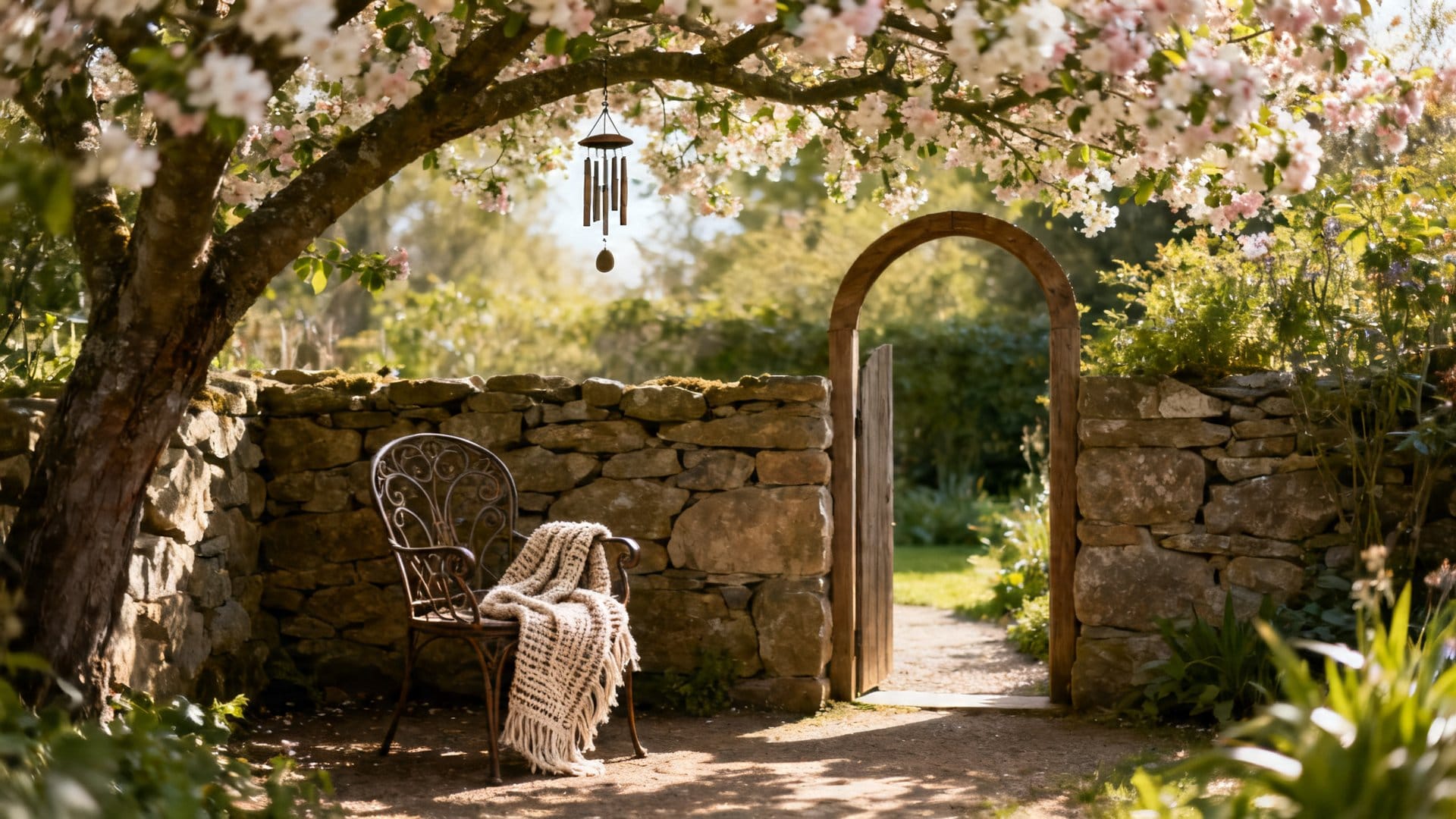
The most magical gardens have a sense of discovery, the feeling that there’s always something more to find just around the next bend. You don’t need a large yard to create this effect. Even a modest patio can have a “secret corner” that feels separate and special.
A simple wooden bench tucked behind a trellis covered in climbing roses instantly becomes a hideaway. Add a small side table, a weather-resistant cushion in a faded floral print, and a hanging lantern overhead, and you have a reading nook that feels genuinely enchanted. A friend of mine created something similar in her narrow side yard; she lined the path with potted lavender, hung a few vintage frames (emptied and left to weather) on the fence, and placed a single bistro chair at the end. It became her favorite spot in the whole house. For more ways to carve out a private corner outdoors, our small backyard oasis ideas are full of inspiration.
For larger spaces, consider using tall ornamental grasses or bamboo screens to create a sense of enclosure around a seating area. The goal is to make the space feel discovered, not displayed.
Small Space Tricks
Vertical elements do double duty in tight spaces. A tall obelisk trellis planted with a climbing vine creates height, structure, and a sense of garden “architecture” without taking up precious square footage. Pair it with a small stool and a potted fern at its base for an instant vignette.
A single hanging lantern or a spinning wind spinner above a tucked-away bench is the finishing touch that turns a plain corner into a destination. Look for weatherproof finishes so your secret nook stays magical season after season.
With your nooks and focal points established, it’s time to think about the visual energy that ties the whole garden together: color and pattern.
How Can Color and Pattern Bring Joy to Your Outdoor Space?
Color and pattern bring joy outdoors by turning furniture, cushions, and even fence panels into bold, expressive design choices that complement the natural palette around them. Whimsical garden decor practically invites you to be braver with color outside than you might ever be indoors.
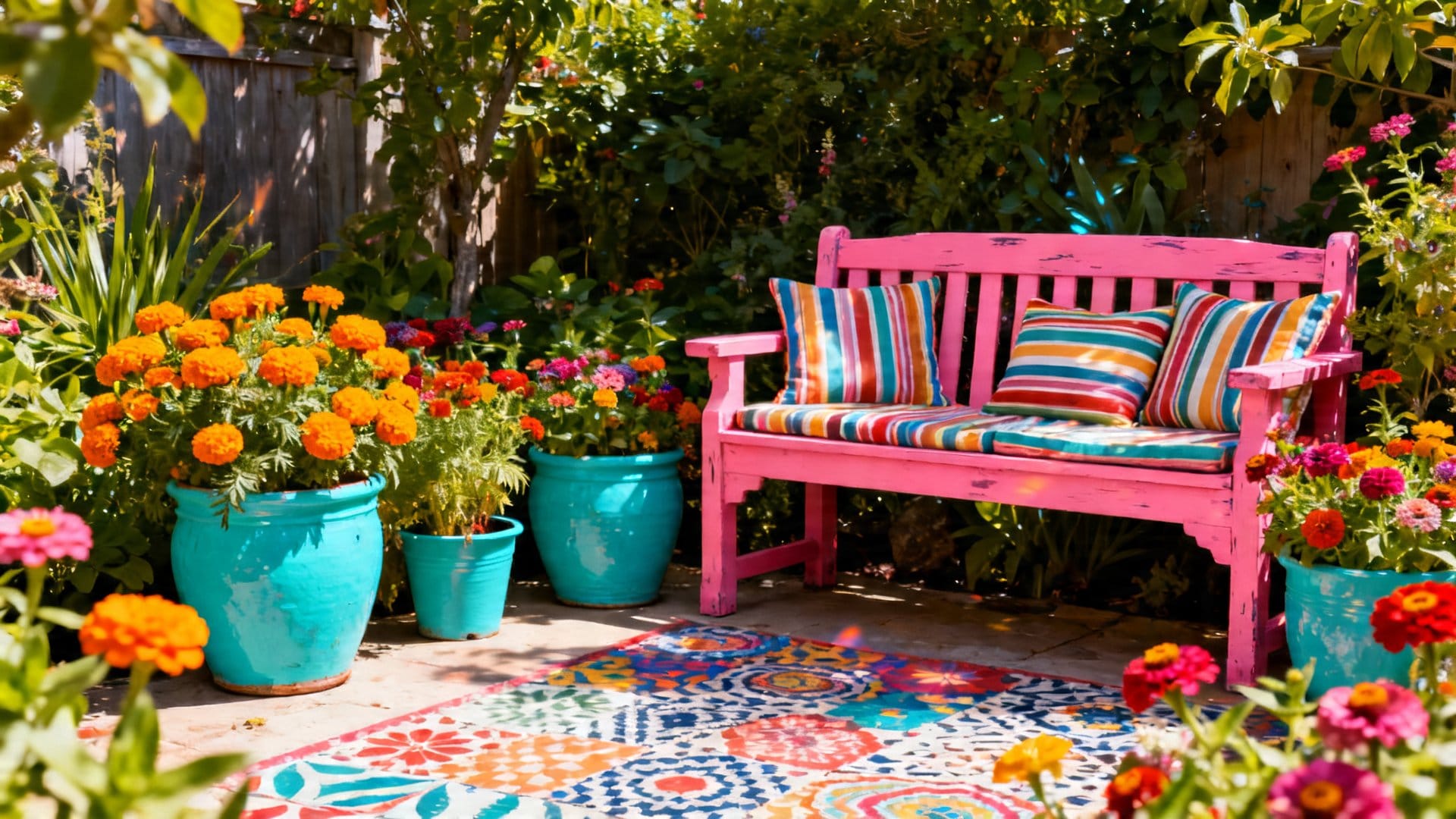
Indoors, many people play it safe with color. Outdoors, the sky (literally) is the limit, and whimsical garden decor practically demands a little bravery with your palette. Nature itself is already full of color, your decor choices can either echo it or contrast with it in delightful ways.
Painted furniture is one of the most impactful and budget-friendly moves you can make in a garden. A bench painted in deep teal against a backdrop of green foliage creates a jewel-box effect that photographs beautifully and looks even better in person. Outdoor cushions in bold botanical prints, mismatched patterns, or unexpected color combinations like rust and blush bring the layered, collected feel of an indoor living room outside. Even painting the inside of a garden gate or fence panel in a cheerful color, a sunny mustard yellow, a soft sage, a faded coral, adds a pop of unexpected delight that makes the whole garden feel more alive. If you’re drawn to softer, sun-faded palettes, you’ll find that same warmth in cottage summer garden ideas.
Pro tip: When mixing patterns in outdoor cushions and textiles, keep the scale varied, one large floral, one small geometric, one solid, and pull one shared color through all three to keep the look cohesive rather than chaotic.
A few bold outdoor throw pillows in playful botanical or mismatched prints are the fastest way to test a brave color story before you commit to painting anything. Swap them out seasonally and your garden seating gets a fresh personality every few months.
Beyond color and decorative pieces, some of the most grounding moments in a whimsical garden come from the raw materials nature provides for free.
Which Natural Elements Add Texture and Depth to a Whimsical Garden?
Natural elements like river stones, weathered wood, creeping moss, and driftwood add texture and depth by creating sensory contrast that makes a garden feel genuinely alive. These materials also age beautifully, developing more character over time rather than looking worn out.

Whimsical doesn’t have to mean purely decorative. Some of the most magical garden moments come from leaning into natural materials and letting them do the heavy lifting. Texture, in particular, is wildly underused in outdoor spaces.
Mixing smooth river stones with rough bark mulch, soft moss patches with spiky ornamental grasses, and weathered wood with polished metal creates a sensory richness that makes a garden feel genuinely alive. I keep coming back to this approach because it ages beautifully; natural materials develop character over time rather than looking worn out. A stepping stone path made from irregular flagstone, with creeping thyme planted in the gaps, is both practical and enchanting. The thyme releases a gentle herbal scent when you walk across it, which adds a whole layer of sensory magic that purely decorative elements simply can’t. For a softer, more romantic take on this same idea, the summer garden party color palettes guide pairs beautifully with a textured, natural setting.
Driftwood, gnarled branches, and weathered stumps are free or nearly free and bring an organic sculptural quality that no purchased item can quite replicate. Use a large, interestingly shaped branch as a natural trellis, or stack a few smooth river stones into a small cairn along a path. It’s the kind of quiet detail that makes visitors feel like they’ve stumbled into somewhere truly special.
Final Thoughts
Creating a space full of whimsical garden decor doesn’t require a big budget, a large yard, or a background in landscape design. It just requires a willingness to follow what delights you and trust that the result will feel uniquely, beautifully yours. Every lantern you hang, every unexpected planter you fill, every secret corner you create adds another layer to a garden that tells your story. Start with one small corner, one string of lights, one painted bench, and let the magic of whimsical garden decor grow from there. Happy decorating!

Frequently Asked Questions
Whimsical garden decor is all about creating an outdoor space that feels magical, playful, and full of surprise: think fairy lights strung through hedges, mossy stone faces peeking out from flower beds, or tiny lanterns tucked between ferns. Unlike traditional garden decoration, which often focuses on symmetry, neatness, and formal aesthetics, whimsical decor leans into the unexpected, the personal, and the storybook-like. It’s less about impressing visitors and more about creating a space that genuinely delights anyone who wanders through it.
Absolutely, whimsical garden decor is not reserved for sprawling backyards, and some of the most charming examples happen in the smallest spaces. A tiny balcony can be transformed with a string of warm fairy lights, a couple of mismatched potted plants, a small decorative lantern, and maybe a quirky garden figurine or two. The key is layering textures and small details that catch the eye and create that sense of stumbling into something magical, even within just a few square feet.
Great starting points for beginners include hanging a string of solar-powered fairy lights along a fence or trellis, placing a few mossy or weathered garden figurines among your plants, and repurposing old teapots or boots as quirky planters. You can also paint terracotta pots in bright, mismatched colors or add a small wind chime to bring movement and sound into the space. These simple touches are low-cost, easy to swap out seasonally, and instantly give your garden that playful, storybook quality without requiring any major landscaping changes.
The secret to a whimsical garden that feels enchanting rather than chaotic is intentional placement and a sense of discovery, each decorative element should feel like it belongs naturally in its spot, as if it grew there. A good rule of thumb is to introduce pieces gradually, stepping back after each addition to see how it reads from a distance and from different angles within the garden. Grouping items in odd numbers, varying heights, and leaving plenty of breathing room between pieces will help everything feel chosen and magical rather than cluttered.
For long-lasting whimsical garden decor, look for materials like cast iron, weather-resistant resin, sealed ceramic, galvanized metal, and treated or naturally rot-resistant wood such as teak or cedar. Solar-powered lights are a great weather-friendly option for adding a magical glow without worrying about electrical exposure to rain. If you fall in love with a piece that isn’t fully weatherproof, like a painted wooden sign or a delicate mosaic, consider bringing it indoors during harsh seasons or applying a protective sealant to extend its outdoor life.
You Might Also Like



Get cozy seasonal ideas in your inbox
Seasonal decor, recipes & home inspiration — straight to you. No spam, unsubscribe anytime.