There’s something about stepping outside on a quiet morning, coffee in hand, and feeling like your garden actually reflects the life you’re living, unhurried, rooted, and full of character. If your outdoor space sits on a stretch of land surrounded by fields, trees, or open sky, you already have the most beautiful backdrop imaginable. Farmhouse garden decor ideas for rural outdoor living are all about honoring that setting rather than competing with it. In this article, you’ll find thoughtful ways to style your outdoor spaces with warmth, texture, and that unmistakable sense of lived-in charm that makes a rural garden feel like a true extension of your home.
What Makes Weathered Wood and Aged Metal the Foundation of Farmhouse Outdoor Style?
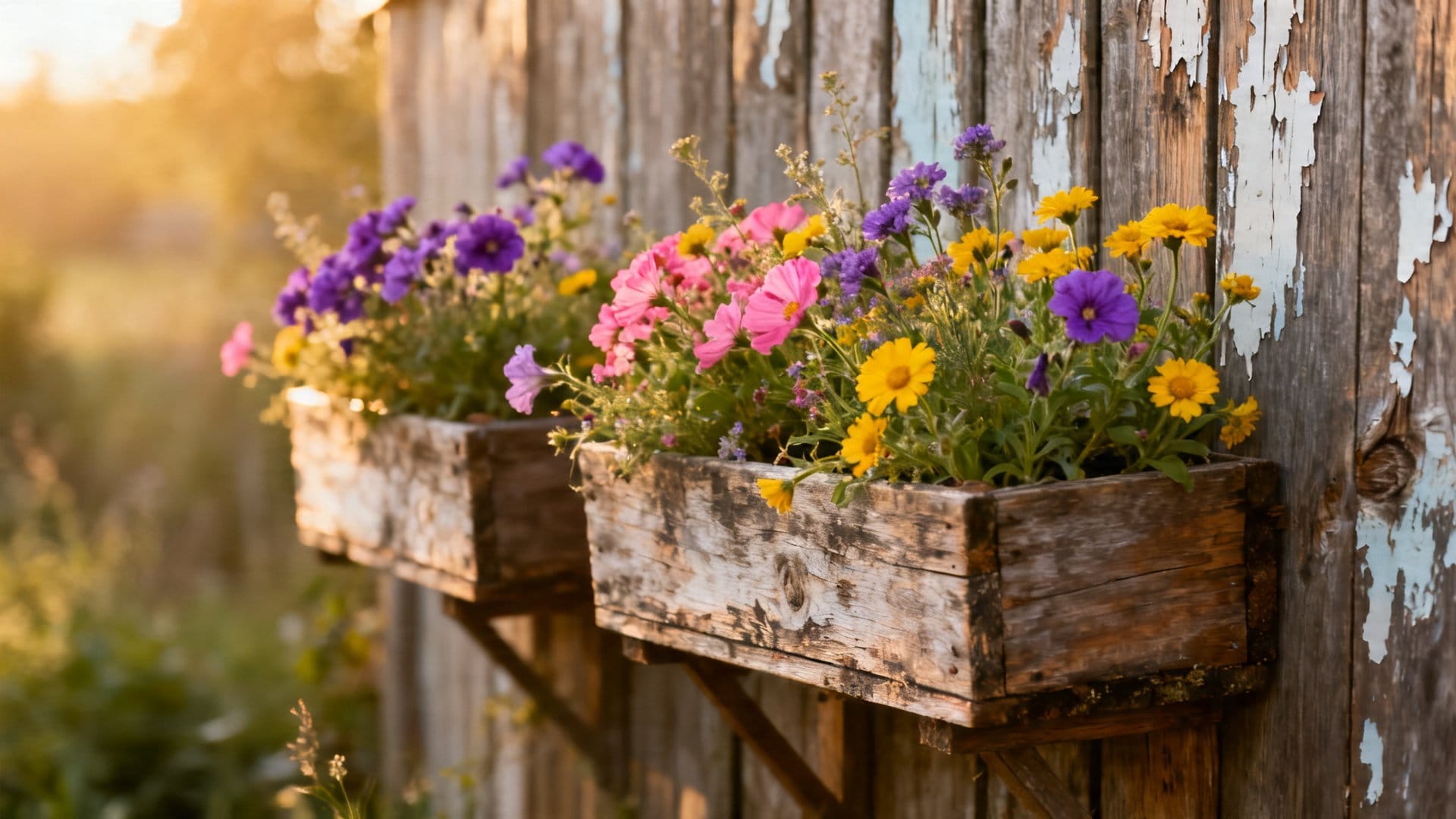
Weathered wood and aged metal form the foundation of farmhouse outdoor style because they echo the natural textures already present in a rural setting. These honest, time-touched materials create an instantly cohesive look that feels rooted rather than decorated.
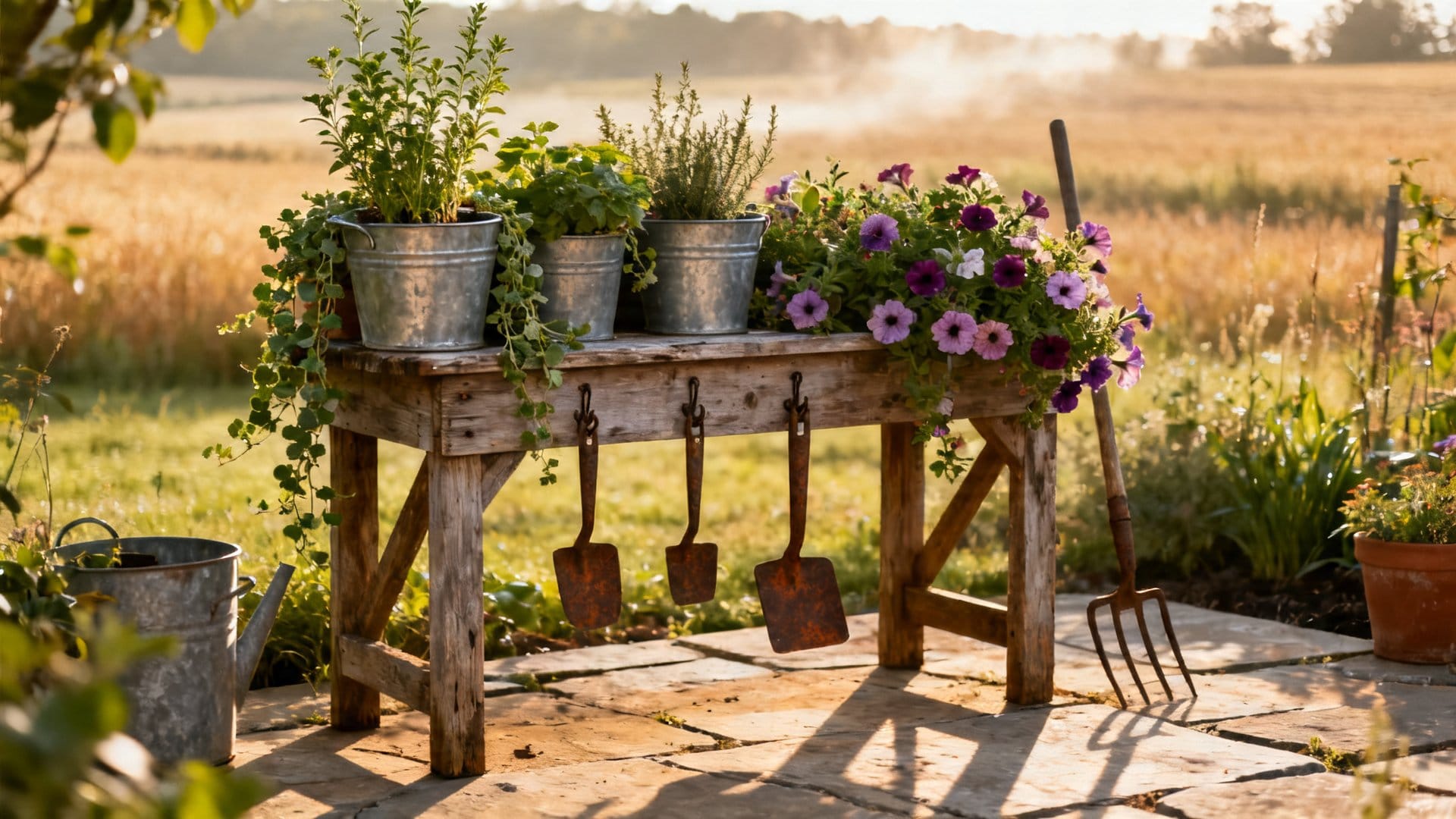
If there’s one thing that defines the farmhouse aesthetic outdoors, it’s the honest beauty of natural materials that have been touched by time. Weathered wood and aged or galvanized metal aren’t just trendy, they feel completely at home in a rural setting because they echo what’s already around you: old fence posts, barn siding, rusted garden tools hanging in the shed.
I love how a simple wooden potting bench with a worn finish can anchor an entire garden corner. Pair it with a few galvanized metal buckets planted with trailing herbs like thyme or cascading petunias, and suddenly you have a vignette that looks like it’s been there for decades. The key is choosing pieces that look imperfect on purpose, slight cracks in the wood, a little rust on the metal edges, surfaces that tell a story.
Materials That Work
Reclaimed barn wood makes beautiful raised bed borders, garden signs, and even simple benches. Galvanized steel watering cans, old milk jugs, and vintage enamelware work beautifully as planters. Look for these at estate sales, farm auctions, or antique markets, the hunt is half the fun, and these finds sit right at the heart of rustic garden decor, and the pieces you find will have genuine age rather than a manufactured one.
How Do You Layer Greenery the Farmhouse Way?
Layering greenery the farmhouse way means mixing practical edible plants with cottage-style flowers in an abundant, slightly wild arrangement. The goal is organic depth, tall plants behind shorter ones, herbs beside blooms, rather than a neat, manicured display.
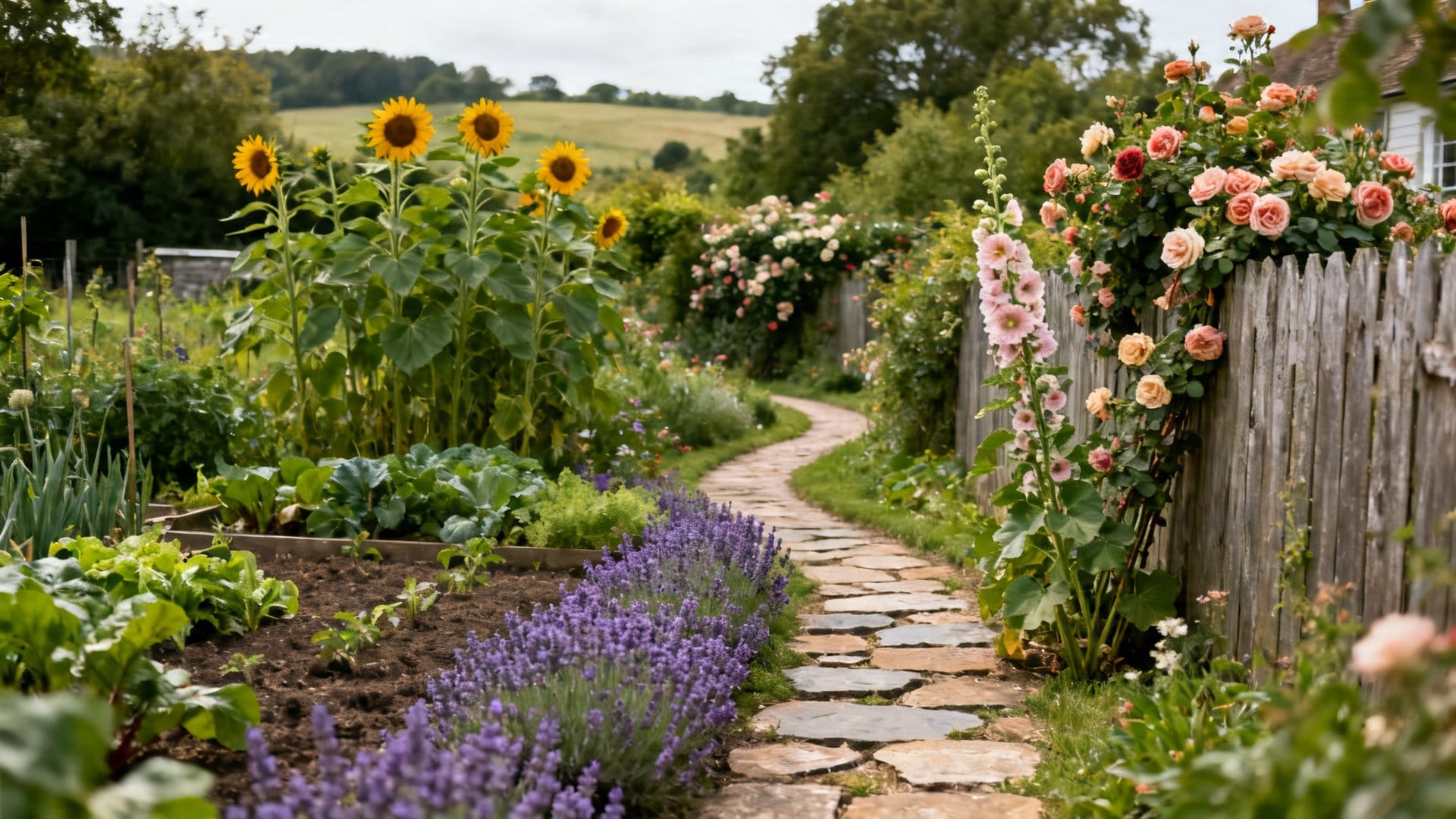
A farmhouse garden doesn’t look like a perfectly manicured showpiece, and that’s exactly what makes it so inviting. The planting style leans toward abundance: full, slightly wild, layered with texture and height. Think of it less like a formal garden and more like a kitchen garden that got wonderfully out of hand in the best possible way.
One thing I’ve noticed about the most charming rural gardens is that they mix the practical with the pretty without apology. Tall sunflowers grow alongside climbing roses. Lavender borders a vegetable patch. Hollyhocks lean casually against a wooden fence. This combination of edible plants, the kind of cottage-style flowers you see in classic country garden decor, and trailing greenery creates a layered, organic depth that no amount of perfectly placed annuals can replicate.
Consider planting in drifts rather than rows, clusters of the same plant that flow into each other naturally. This approach softens the overall look and makes even a large rural garden feel cohesive rather than scattered.
Pro tip: Plant fragrant herbs like rosemary, lavender, and lemon balm along pathways and near seating areas so that every time someone brushes past, the air fills with scent, it’s one of the most effortless sensory touches you can add to a farmhouse outdoor space.
How Do You Create a Gathering Spot That Feels Like an Outdoor Room?
Creating a farmhouse outdoor room means defining a sheltered, intentional space with mismatched wooden furniture, warm lighting, and layered textures. The result should feel cozy and lived-in, a place people naturally want to linger.
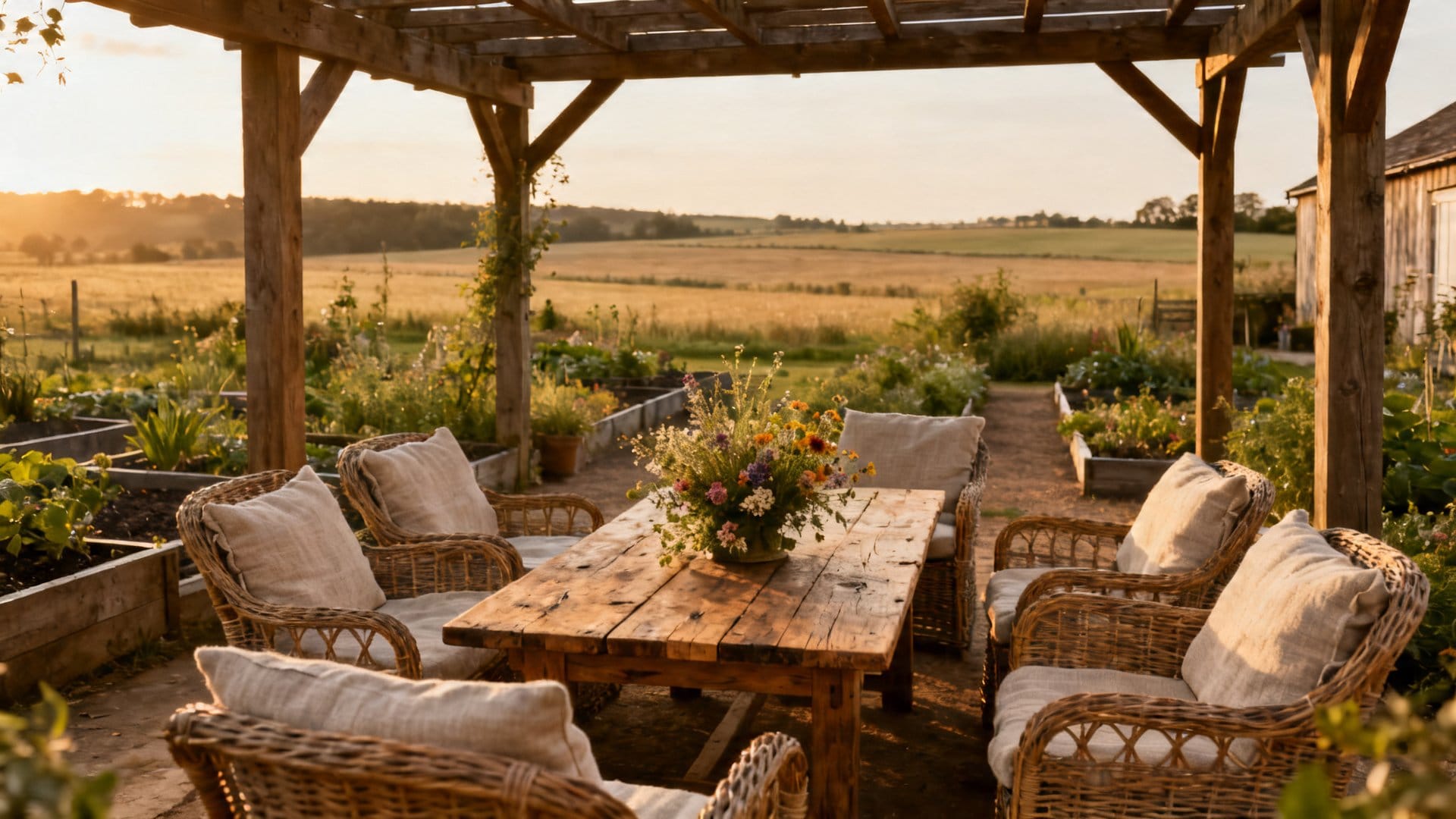
Even if you are working with a more compact corner, the same warmth applies, and our guide to small patio ideas on a budget shows how a tiny footprint can still feel generous. Rural properties often have the luxury of space, but that doesn’t mean outdoor seating areas should feel sprawling or disconnected. The most welcoming farmhouse gardens have a defined gathering spot, a place that feels intentional, sheltered, and warm enough to linger in long after dinner.
A simple wooden picnic table with mismatched chairs pulled around it has far more character than a matching patio set. Layer in a natural jute rug underneath to define the space, hang a string of warm Edison bulbs overhead between two wooden posts or a pergola, and add a few lanterns at varying heights for soft evening light. If you have an old oak tree nearby, a simple swing hung from a sturdy branch instantly becomes the most-loved spot in the yard.
Finishing Touches
Bring in texture through outdoor-safe throw blankets in neutral linen or faded cotton stripes, drape them over the backs of chairs so guests can reach for them as the evening cools. A chunky wooden centerpiece on the table, like a simple trough planted with succulents or a cluster of mismatched candle holders, pulls the whole scene together without looking overdone. The goal is comfort, not perfection.
&# 10024; Keep reading:Our complete guide to beautiful outdoor garden styling→
What Are the Best Farmhouse Garden Decor Ideas for Fences, Gates, and Entryways?
The best farmhouse decor for fences, gates, and entryways combines functional structure with natural charm, think wooden gates with hand-painted details, climbing roses on picket fences, and galvanized planters hung along fence panels. These entry points set the mood for the entire garden.
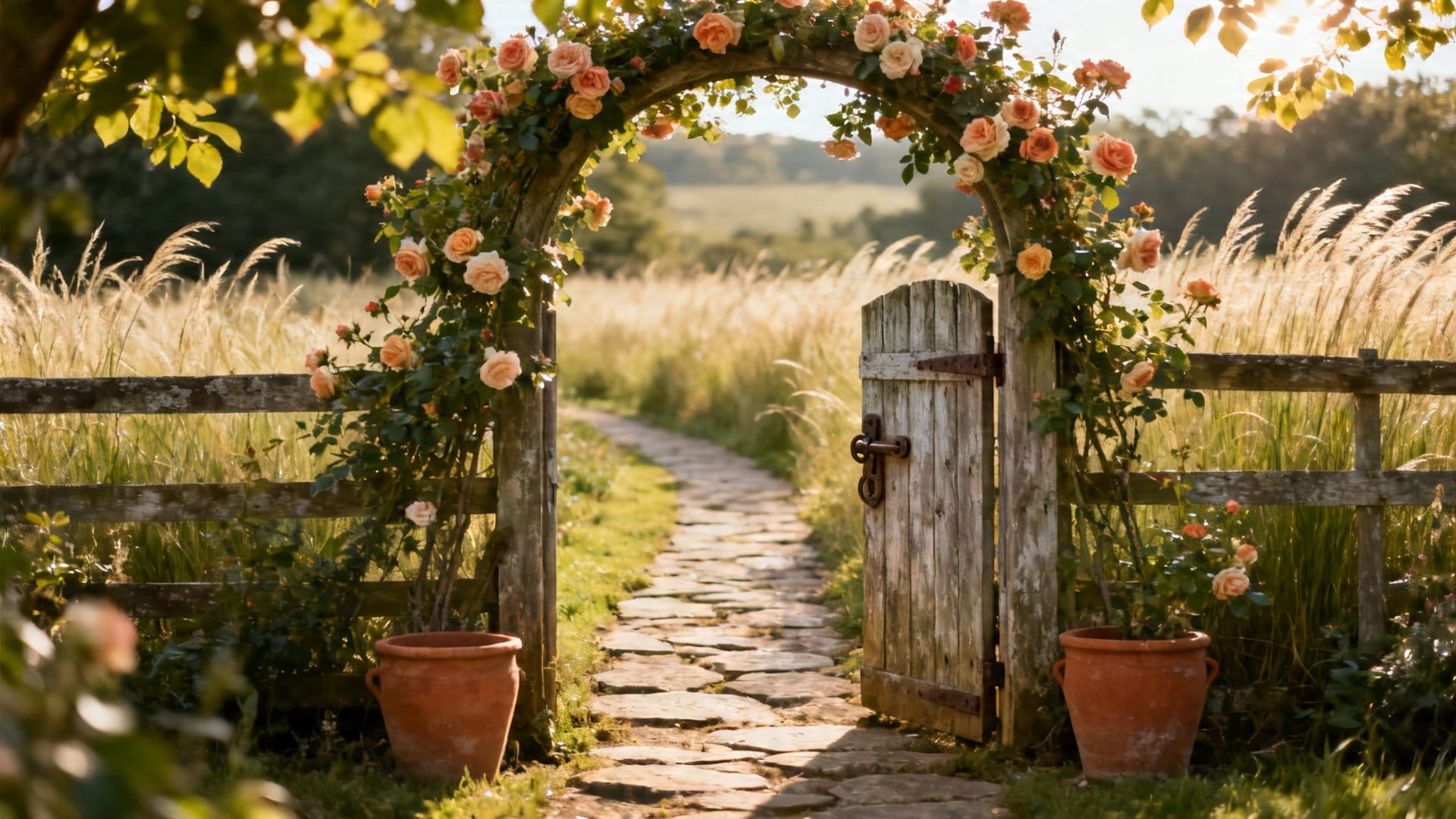
Your garden’s entry points are the first impression, and in a rural setting, they have incredible potential to set the entire mood. A simple wooden gate with a hand-painted house number, flanked by two tall urns planted with something architectural like ornamental grasses or rosemary topiaries, signals warmth and care from the moment someone arrives.
Fences in a farmhouse garden shouldn’t just be functional, they should feel like part of the decor. A classic white picket fence draped with climbing roses or morning glories is a timeless choice. But I keep coming back to the look of a natural split-rail fence with wildflowers growing freely along its base, it feels deeply rooted in rural American tradition and requires almost no maintenance once established.
Consider adding simple hooks or wire along fence panels to hang small galvanized planters, old lanterns, or even a vintage wooden sign with a garden quote. These small additions turn a plain fence into a layered, story-telling backdrop without any major renovation.
Pro tip: A garden arch or arbor covered in climbing vines like clematis or wisteria creates a natural doorway between garden zones and adds incredible vertical interest, especially beautiful when it frames a view of open fields or a distant tree line.
Beyond plants and furniture, the objects you choose to display are what give a farmhouse garden its most personal, story-rich quality.
How Do Repurposed and Vintage Finds Add Soul to Your Outdoor Space?
Repurposed and vintage finds add soul because they carry history and character that new items simply cannot replicate. An old wheelbarrow turned planter or a worn wooden ladder used as a vertical herb display tells a story that makes a garden feel genuinely lived-in.
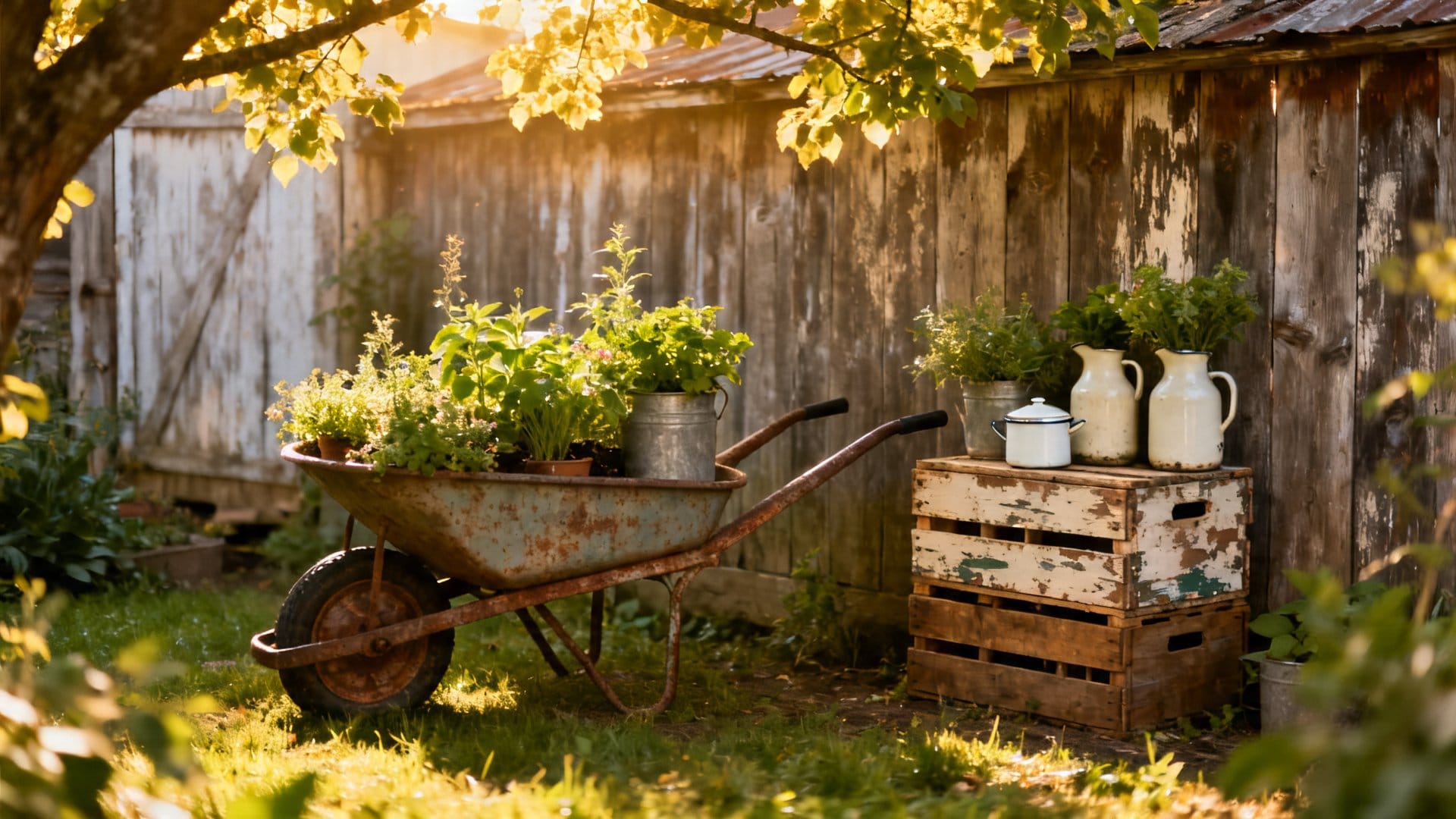
This is where farmhouse garden decor, with its leanings toward vintage garden decor, really comes alive, through the art of repurposing. A rural property almost always has something waiting to be reimagined: an old wheelbarrow, a wooden ladder, a collection of mismatched terracotta pots, a worn watering can that no longer holds water.
Layout Ideas
- An old wooden ladder leaned against a garden shed makes a beautiful vertical planter, hang small pots from each rung with trailing ivy or herbs
- A vintage wheelbarrow filled with seasonal flowers and tucked near the front gate becomes an ever-changing garden focal point
- Cracked terracotta pots can be stacked and planted together in a cluster, turning a flaw into a layered, textural arrangement
- An old iron bed frame repurposed as a garden trellis adds whimsy and height while supporting climbing beans or sweet peas
- Wooden crates stacked at different heights create a rustic plant display stand that’s easy to rearrange with the seasons
A friend of mine tried something similar with an old wooden cider press she found at a farm sale, turning it into a planter base surrounded by wildflowers, and it became the most photographed corner of her entire property. The soul is in the story these objects carry.
How Can Lighting Turn Your Garden Into an Evening Retreat?
Warm, layered lighting change a farmhouse garden into an evening retreat by creating a soft, inviting glow that extends time spent outdoors. Solar lanterns, pillar candles, and Edison-style string lights work together to give the space a golden, candlelit atmosphere.
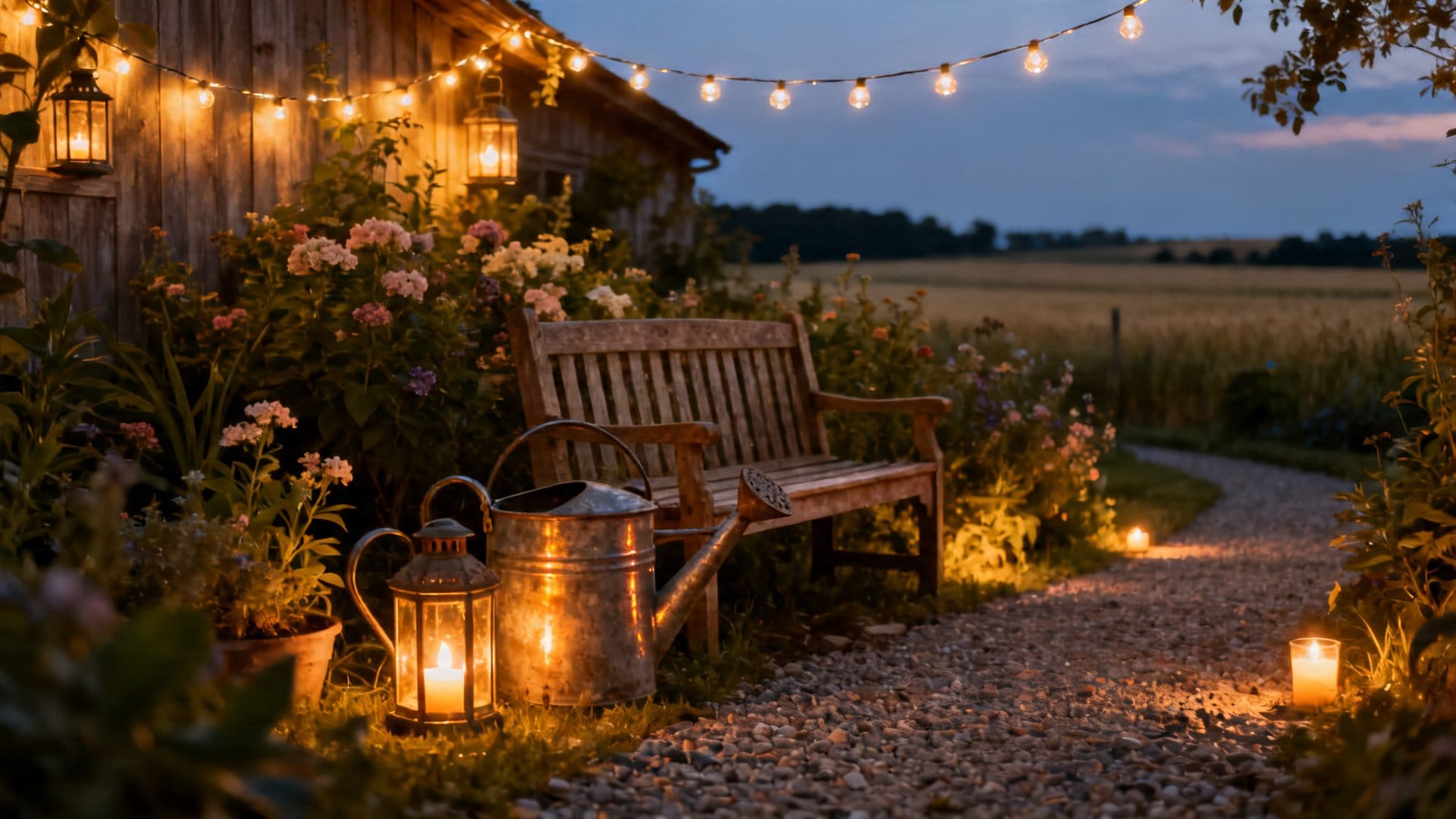
Outdoor lighting in a farmhouse garden should feel warm, gentle, and a little magical, like candlelight spilling out of a cottage window. Harsh overhead lighting or modern spotlights will immediately break the spell, so it’s worth being thoughtful about how you layer light across your outdoor space as the sun goes down.
Solar-powered lanterns placed along pathways give a soft, guiding glow without any wiring. Pillar candles in hurricane glass holders clustered on a wooden table create an intimate atmosphere for outdoor dinners. String lights, the warm white, Edison-style bulbs rather than cool white LED, draped loosely between fence posts or wrapped around a pergola give the whole garden a golden hue that feels completely at home in a rural setting.
This works especially well in late summer and early fall when evenings are still warm enough to sit outside but the light fades earlier. For more ways to work with the after-dark hours, our summer garden party lighting ideas pair beautifully with this look. A few well-placed light sources can extend your time outdoors by hours and make your farmhouse garden feel like a destination rather than just a yard.
Pro tip: Place a cluster of three or five lanterns at varying heights near your main seating area, odd numbers always feel more natural and balanced than pairs, and the height variation creates a layered, intentional look without any effort.
With your lighting and gathering spaces in place, the final layer is letting the rhythm of the seasons guide your decor choices throughout the year.
&# 128064; You might also like:French country garden decor with Provence-inspired charm→What Seasonal Touches Keep Your Farmhouse Garden Fresh Year-Round?
Keeping a core collection of neutral farmhouse elements, wooden crates, galvanized containers, and simple lanterns, and swapping what goes inside them each season is the easiest way to stay fresh year-round. The bones remain constant while the personality shifts with the weather.
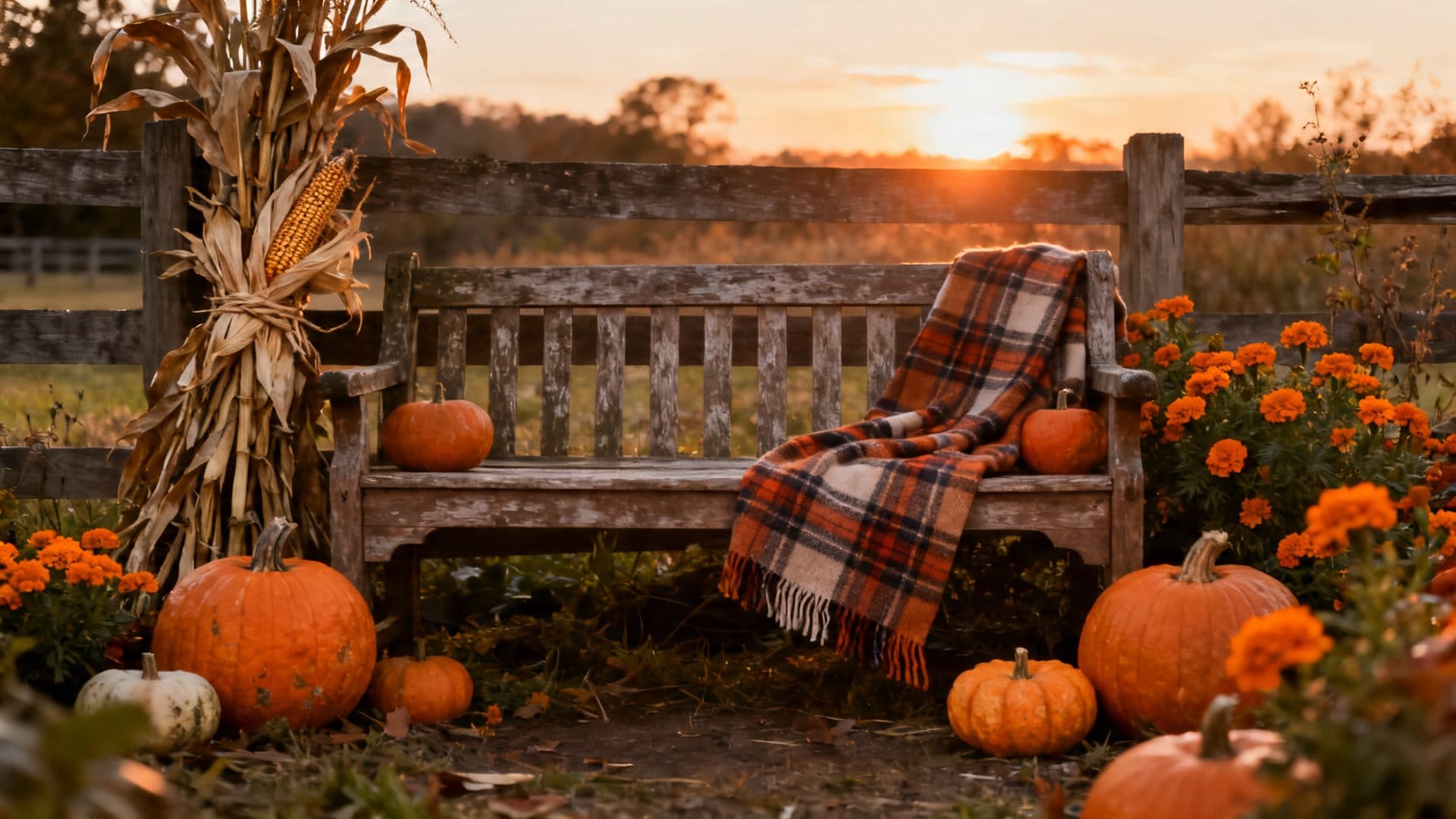
One of the joys of farmhouse garden decor ideas for rural outdoor living is that the seasons do most of the decorating work for you, your job is simply to lean into each one with small, thoughtful additions that feel fitting rather than forced.
In spring, bring in galvanized buckets overflowing with tulips and daffodils, and hang simple wreath-style bundles of fresh eucalyptus on the garden gate. Summer calls for abundance, let the garden grow full and lush, add a hammock between two trees, and set out a simple lemonade station on a wooden side table for casual afternoons. As fall arrives, swap out summer blooms for dried wheat stalks, ornamental kale, and clusters of dried hydrangeas in faded lavender and cream, these look far more interesting than the obvious orange palette and hold up beautifully through cool weather. In winter, evergreen boughs tucked into galvanized planters, a simple wreath of magnolia leaves on the gate, and a few lanterns with pillar candles keep the garden looking intentional even when nothing is growing.
From what I’ve gathered, the easiest approach is to keep a small collection of neutral, durable farmhouse elements, wooden crates, galvanized containers, simple lanterns, and simply swap out what goes inside them with each season. The bones stay the same; the personality shifts.
Final Thoughts
There’s a quiet joy in creating an outdoor space that feels genuinely connected to the land around it, whether your taste runs toward weathered farmhouse or softer shabby chic garden decor, and farmhouse garden decor ideas for rural outdoor living give you the perfect framework to do exactly that. You don’t need a big budget or a designer’s eye, you need an appreciation for natural materials, a love of layered texture, and a willingness to let things be a little imperfect and wonderfully lived-in. Your rural property is already full of beauty; these ideas are simply a way to honor it and make it feel even more like home. Happy decorating!
Frequently Asked Questions
The most authentic farmhouse garden decor relies on natural materials that age beautifully over time, particularly weathered wood and galvanized or aged metal. These materials feel genuinely at home in a rural setting because they echo the textures already found in the surrounding space, such as old fence posts, barn siding, and worn farm equipment. Incorporating these elements through raised garden beds, planters, signage, or furniture creates a cohesive, lived-in look that complements rather than competes with the natural backdrop.
One of the greatest advantages of the farmhouse garden style is that it actually celebrates repurposed, salvaged, and secondhand items, making it one of the more budget-friendly outdoor aesthetics to achieve. Old wooden crates, worn watering cans, salvaged window frames, and weathered pallets can all be change into charming planters, trellises, or decorative accents with minimal investment. Visiting local flea markets, estate sales, or even repurposing items already on your rural property is one of the most authentic ways to build this look.
Farmhouse gardens tend to favor plants that feel natural, abundant, and slightly wild rather than overly manicured or exotic, with cottage-style flowers, herbs, and heirloom vegetables being especially fitting choices. Lavender, sunflowers, black-eyed Susans, hollyhocks, and climbing roses all contribute to that relaxed, pastoral character that defines rural farmhouse outdoor living. Mixing edible plants like herbs and vegetables alongside ornamental flowers also reinforces the working-garden spirit that is central to the farmhouse aesthetic.
Creating a cozy outdoor living area in the farmhouse style is largely about layering textures, adding warm lighting, and arranging furniture in a way that encourages people to slow down and linger. Wooden benches or rocking chairs paired with durable outdoor cushions, string lights or lanterns hung from pergolas or old tree branches, and a simple gathering table styled with potted herbs or wildflowers can change any outdoor space into an inviting retreat. Anchoring the space with a natural focal point, such as a stone fire pit, a water trough repurposed as a planter, or a vintage farm table, helps give the area a sense of purpose and warmth.
Farmhouse garden decor is absolutely adaptable to smaller rural properties and does not require sprawling acreage to feel authentic or visually impactful. In a more compact space, the key is to focus on a few well-chosen statement pieces, such as a single weathered wood raised bed, a galvanized metal tub overflowing with flowers, or a simple wooden arbor draped with climbing vines, rather than trying to fill every corner. Keeping the palette natural, the materials honest, and the overall feel uncluttered allows even a modest yard to capture the warmth and character of the farmhouse outdoor living style.