
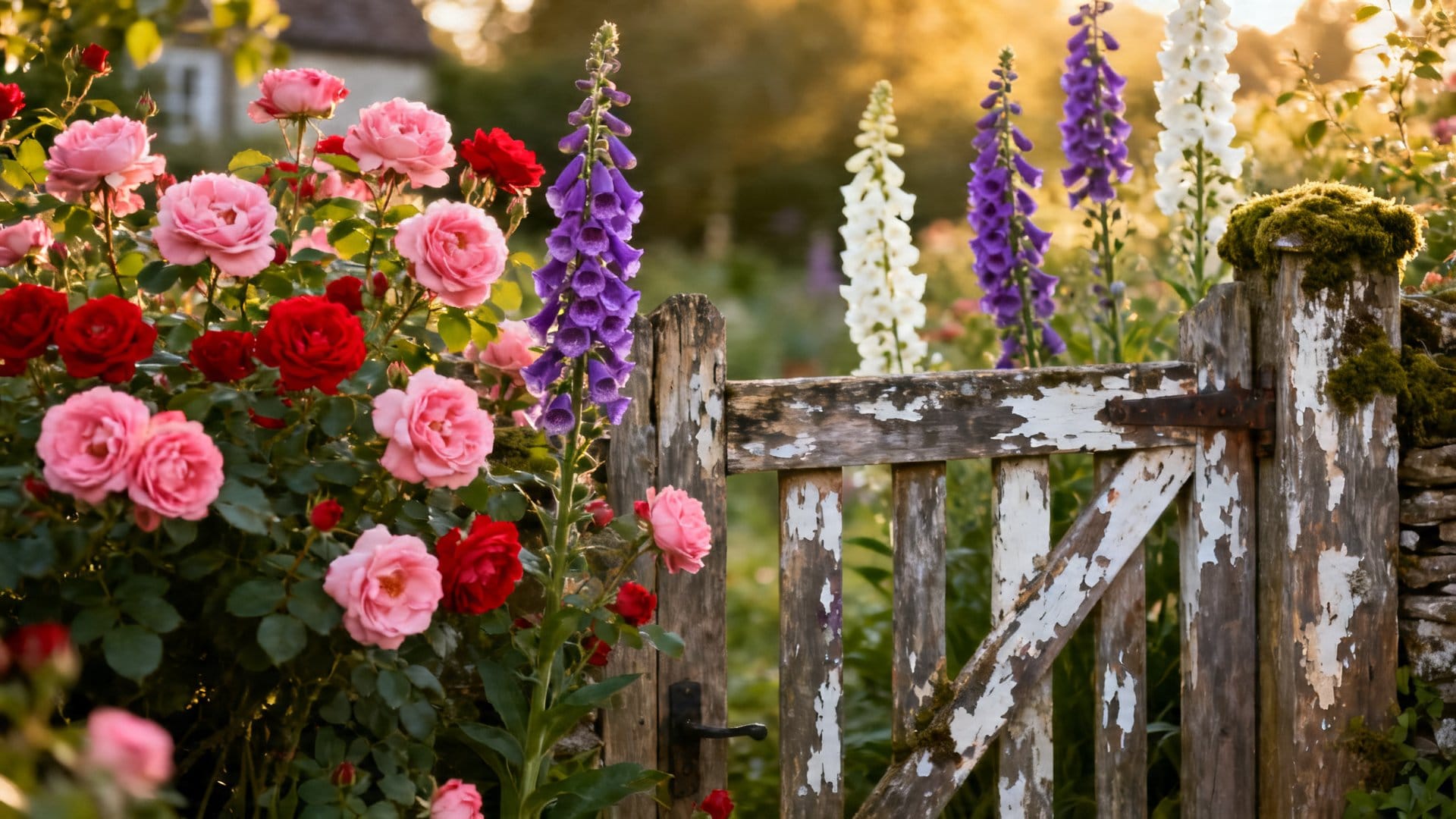
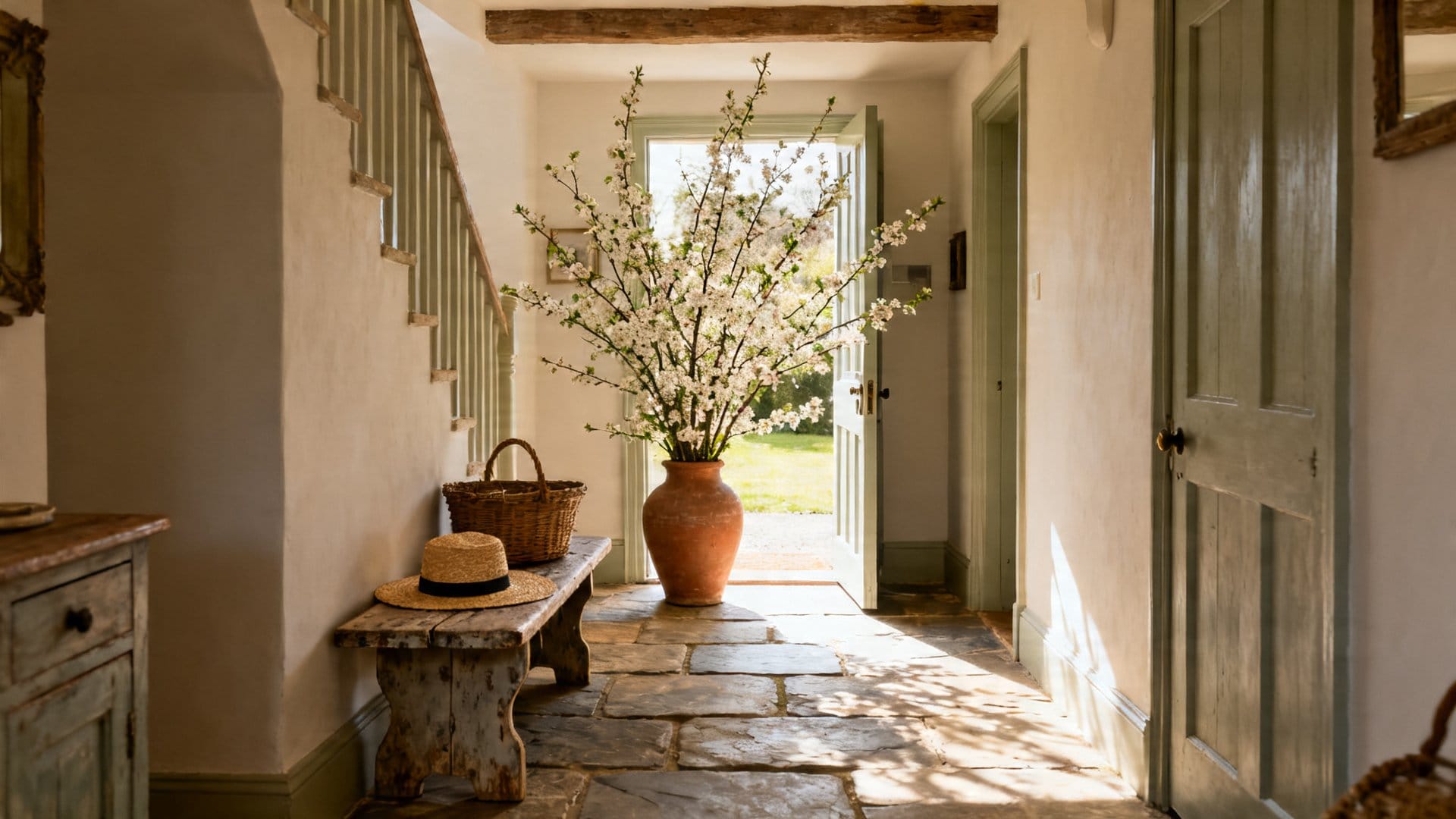
Cottage interior decor captures the soft, layered charm of the English countryside. It is not about perfection. It is about creating a home that feels warm, lived-in, and deeply personal.
This style blends cozy textures, muted colors, and natural elements in a way that feels effortless. Think linen fabrics, vintage furniture, and small details that look collected over time. Instead of matching everything, cottage interior decor celebrates imperfection and character.
In this guide, you will learn how to bring English cottage style into your home. From color palettes to furniture and styling tips, every element works together to create a calm and inviting space. Whether you live in a farmhouse or a small apartment, this look is easy to adapt and surprisingly forgiving.
What Defines English Cottage Interior Style?
The soul of the cottage interior decor look is a sense of organic, unhurried growth, a home that looks as though it has been lovingly gathered over decades rather than decorated all at once. Every object has a story, and nothing matches too perfectly.
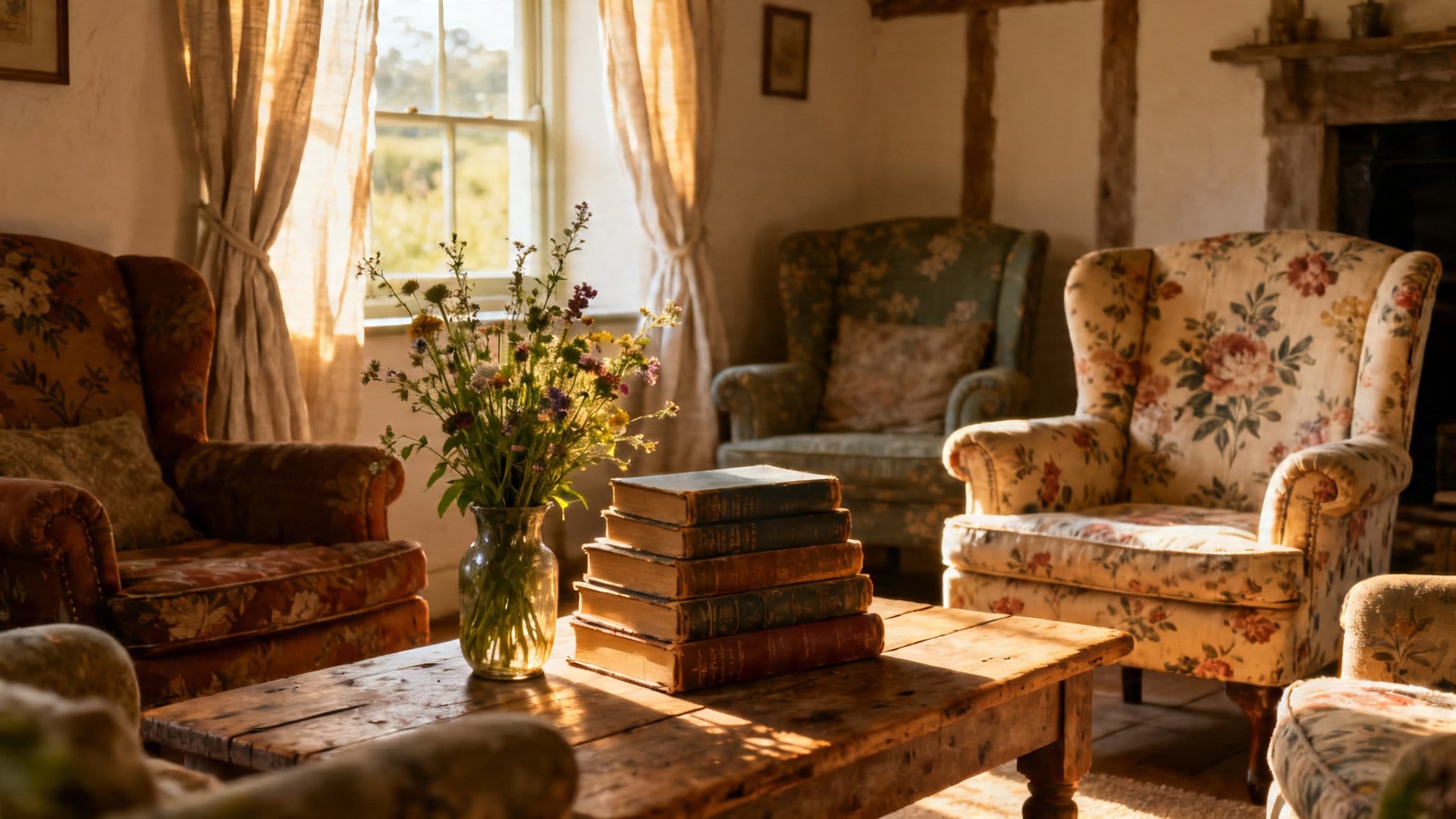
Before you start rearranging furniture or shopping for new pieces, it helps to understand what actually makes this style feel the way it does. The English cottage aesthetic is not about perfection or matching sets. It is about the feeling of a home that has grown organically over time, where every object has a story and nothing looks like it was ordered from a catalog on the same afternoon.
I love how this style leans into abundance rather than minimalism. Where a modern Scandinavian room might breathe with empty space, a cottage-style room breathes with life: clustered bud vases on a windowsill, a worn linen armchair next to a stack of well-read books, botanical prints tucked into mismatched frames along a hallway. If you enjoy that gathered, characterful feeling, you will probably also love the warmth of rustic vintage mantel styling, which works on the same collected-over-time principle. The visual richness is intentional, but it never feels cluttered because everything feels chosen with affection.
Why It Works
The secret behind cottage interior decor is that it mirrors nature’s own layering, with multiple heights, varied textures, and soft color gradients that feel cohesive without being uniform. Think of a garden border where foxgloves stand tall behind low-growing catmint, all in shades of purple and pink. Bring that same principle indoors, and your rooms will have that same effortless depth.
&# 128218; Keep reading:See how cottagecore layering translates to a seasonal mantel→
Best Color Palette for Cottage Interior Decor
The cottage color palette draws from an English summer garden: dusty rose, sage green, soft lavender, creamy white, warm butter yellow, and occasional deep plum or cornflower blue. These tones are always muted and slightly faded, never sharp or bright. A soft sage paired with terracotta is a particularly easy place to start, and you can see it work beautifully in these sage green and terracotta bedroom ideas.
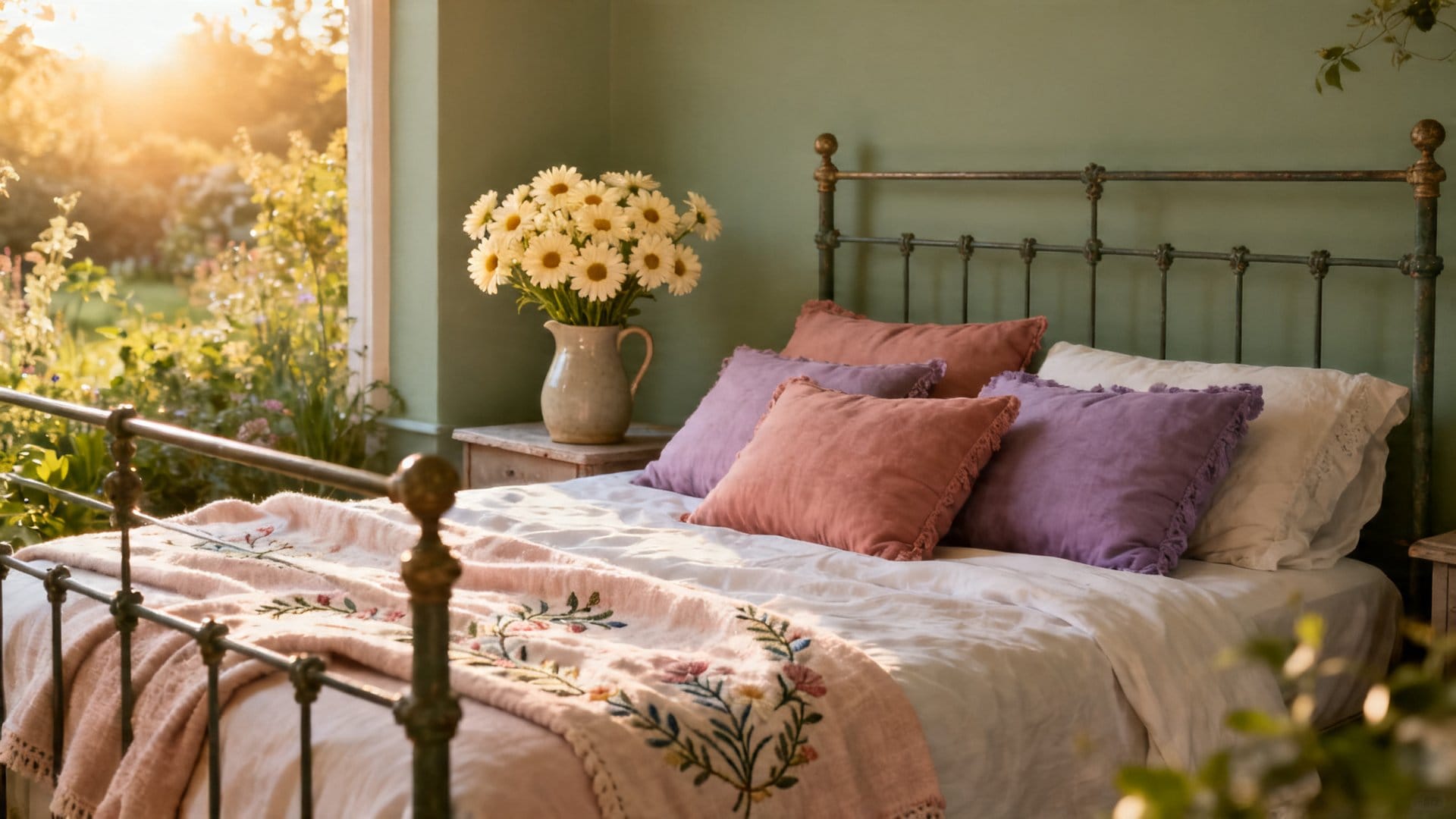
On walls, soft whites and warm off-whites work beautifully as a base, letting the colors in your textiles and botanicals do the talking. If you are feeling bolder, a muted sage green on a kitchen wall or a dusty blue in a bedroom creates an instant sense of being wrapped in a garden. Layer these hues through cushions, throws, ceramics, and artwork rather than committing to one dominant color. A simple seasonal trick is to swap your soft furnishings as the year turns, much like these spring to summer pillow swaps that keep a room feeling fresh. One thing I’ve noticed is that rooms styled in this palette feel genuinely restful, because there is a softness to these tones that modern, high-contrast palettes simply cannot replicate.
Pro tip: When mixing patterns, and you absolutely should mix patterns in this style, keep them united by color temperature. A floral cushion, a ticking stripe, and a small geometric can all live together peacefully if they share the same dusty, muted undertones.
For soft accents that pull the whole palette together, floral cushions are the easiest entry point of all.
How to Bring Cottage Garden Elements Into Your Home
Bringing the garden indoors means prioritizing abundance over formal arrangement, like a loose handful of sweet peas in a ceramic pitcher rather than a structured centerpiece. Fresh flowers, dried botanicals, and cottage-appropriate potted plants all work beautifully.
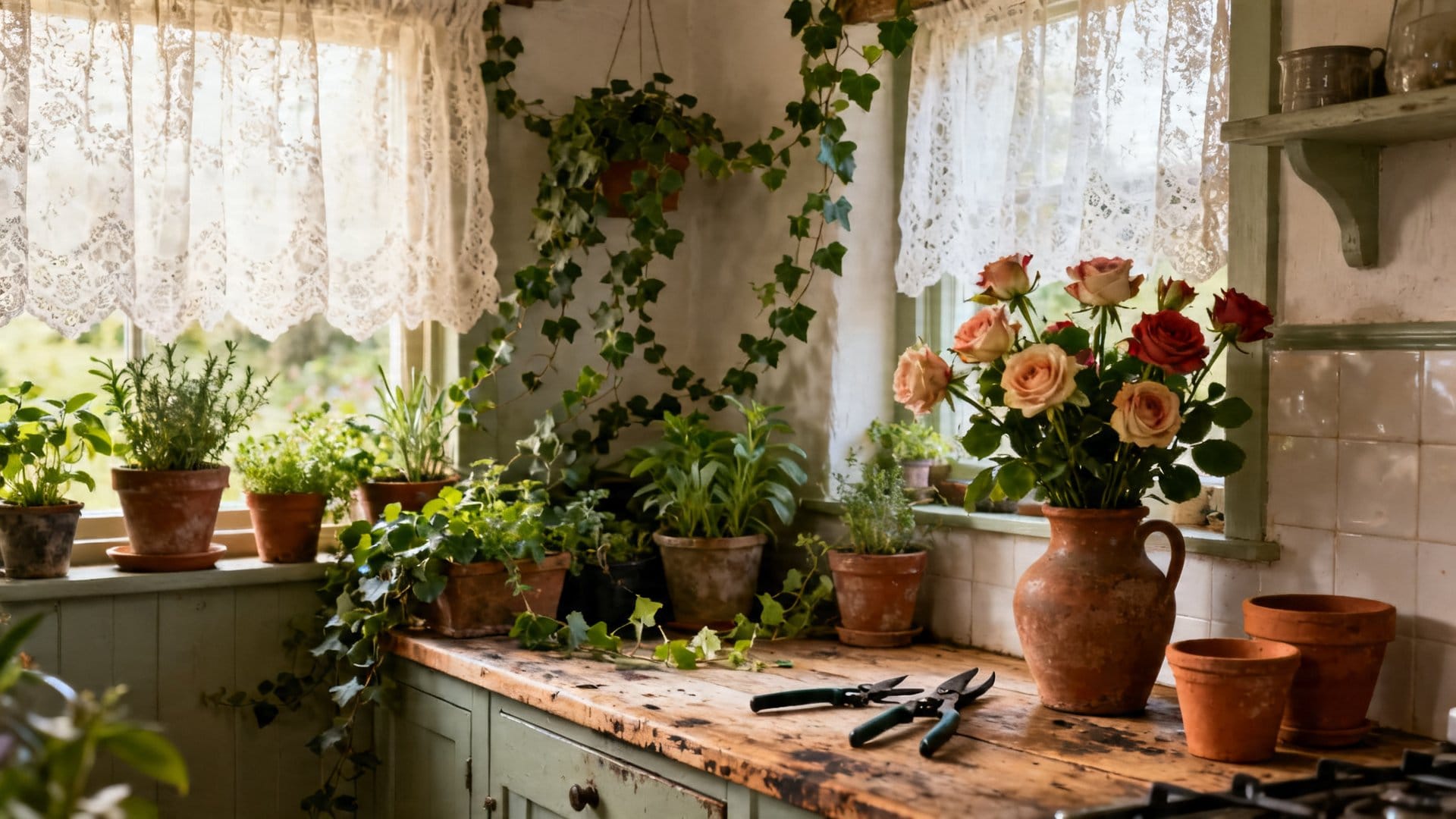
No element does more heavy lifting in cottage interior decor than actual greenery and flowers. This is where the English countryside charm truly comes alive, because you are literally importing the garden into your living spaces. The goal is abundance over arrangement, so think a loose handful of sweet peas in a ceramic pitcher, not a formal centerpiece. If outdoor styling pulls at you too, the same gathered spirit shows up in this vintage garden decor guide.
Fresh flowers are the ideal, of course, but dried botanicals work just as beautifully and last far longer. Dried lavender bundled with twine and hung from a kitchen beam, pressed fern fronds in simple frames, or a wreath of dried rosebuds on a bedroom door all carry that same garden-gathered feeling. For living plants, choose varieties that feel cottage-appropriate: trailing ivy, rosemary in a terracotta pot on a kitchen windowsill, or a compact hydrangea in a stone-effect planter.
Styling Notes
Cluster your vessels rather than spacing them evenly. Three mismatched vases of varying heights grouped together on a mantel or sideboard will always look more intentional and organic than three identical vases placed at regular intervals. Mix your containers too: a blue-and-white transferware jug next to a small amber glass bottle next to a stoneware crock creates exactly the kind of collected-over-time look that defines this style.
To carry the garden theme onto your walls without fresh stems, a small grouping of botanical prints does wonderful work, and these vintage kitchen wall decor ideas show how to arrange them with a relaxed, collected feel.
With your color palette and botanicals in place, the next step is choosing furniture and fabrics that anchor the whole look.
What Furniture and Fabrics Feel Like They Belong in the Countryside?
Cottage-style furniture should feel comfortable and lived-in above all else. Think overstuffed armchairs, painted wooden dressers, and scrubbed pine tables with mismatched chairs. A little patina and history is exactly right for this style.
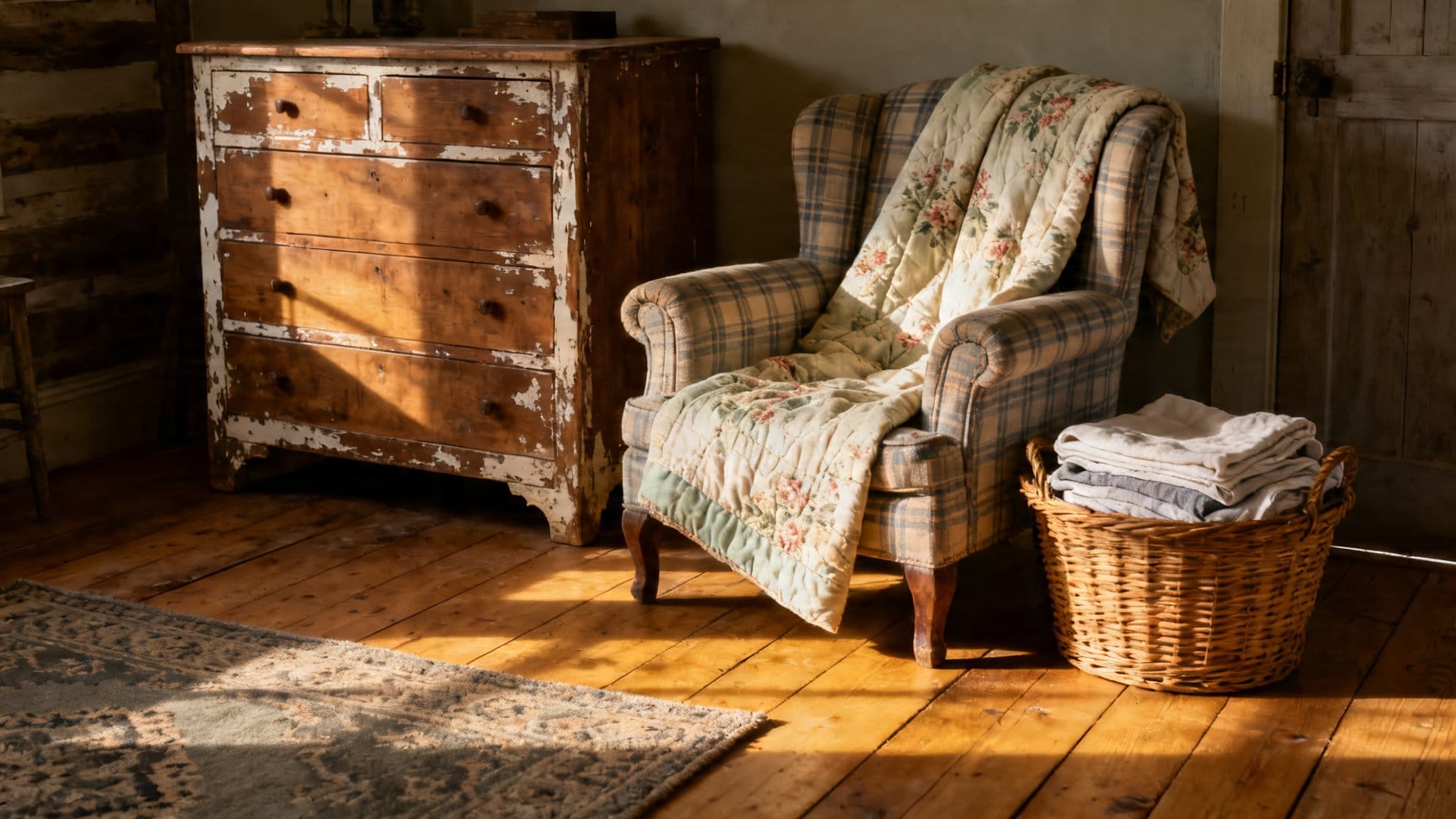
The furniture in a cottage-style room should feel comfortable above all else. Overstuffed armchairs with slightly worn upholstery, painted wooden dressers with porcelain handles, a scrubbed pine kitchen table with mismatched chairs: these are the pieces that give a room its soul. You are not looking for pristine showroom condition. A little patina, a little wobble, a little history is exactly right. The same forgiving, rustic-elegant attitude runs through these French country mantel ideas if you want to see the look applied to a single focal point.
Fabrics are where this style truly sings. Linen and cotton are your foundation materials, loose, slightly rumpled, and breathable. Layer them with florals, which are non-negotiable in cottage interior decor. Look for floral prints that feel botanical rather than graphic: watercolor-style roses, trailing vines, scattered wildflowers. A floral linen cushion on a plain linen sofa, a floral tablecloth under simple white crockery, a floral curtain panel in a bedroom, each one adds a note to the garden melody without stressing the room. If pillows are your starting point, these decorative living room pillow ideas pair well with a cottage palette.
A friend of mine tried layering a vintage floral quilt over a plain cream sofa, and it completely changed the energy of her living room. What had felt modern and a little cold suddenly felt like a place you wanted to curl up in for an entire afternoon.
Pro tip: Look for furniture and fabric pieces at estate sales, antique markets, and thrift stores rather than buying everything new. The mix of eras and origins is part of what gives cottage style its authenticity, and you will often find genuinely beautiful pieces at very affordable prices.
When you do want to add something new and ready-made, botanical wall art is an easy, low-commitment way to reinforce the look.
Which Small Details Make a Big Difference?
In cottage interior decor, it is the small, considered additions that push a room from pleasant to genuinely charming. Details like clustered vintage books, botanical prints in mismatched frames, and loosely draped throws create the layered, unhurried atmosphere this style is known for.
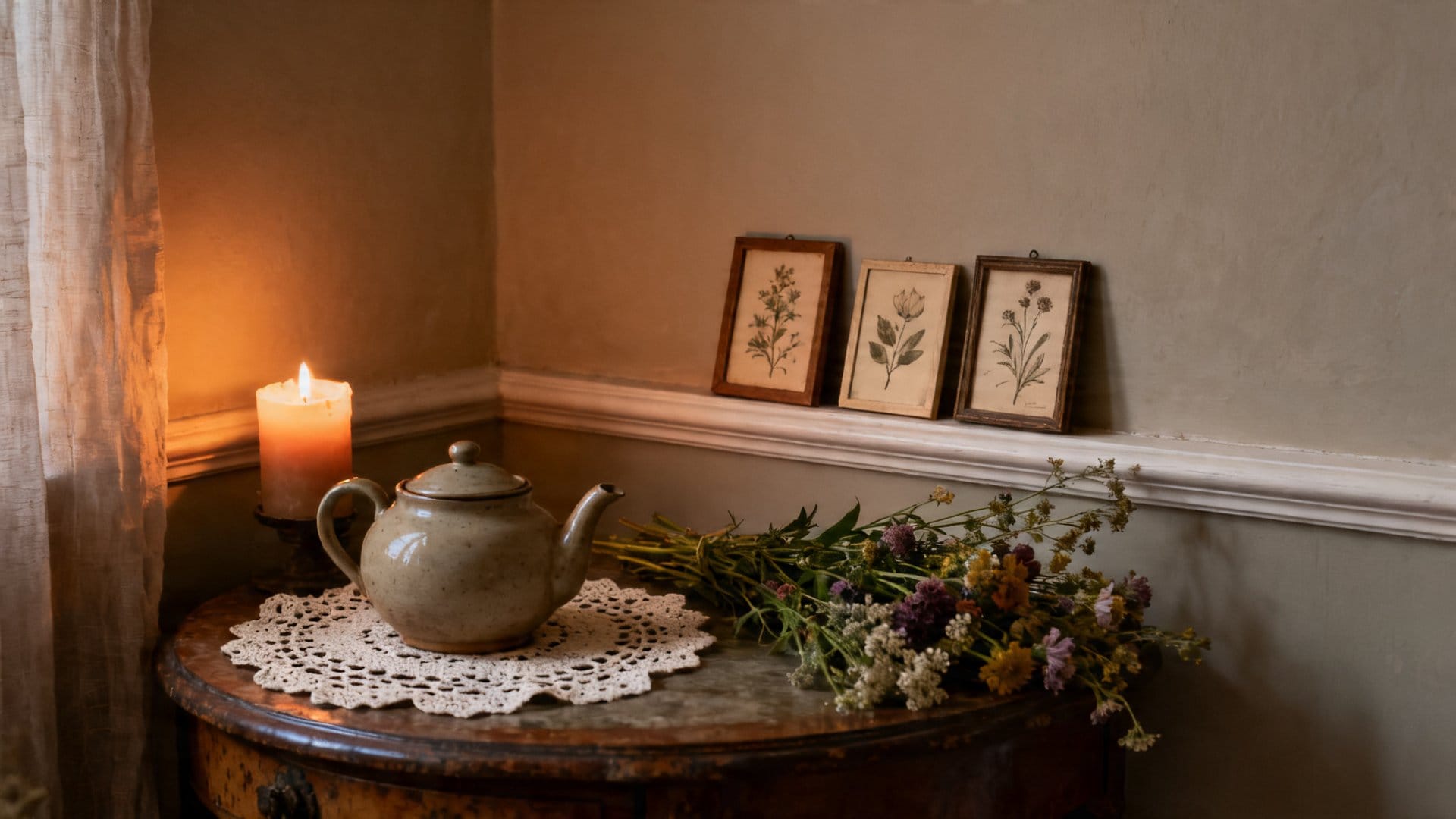
The cottage look lives and dies in the details. Once your larger pieces are in place, it is the small, considered additions that push a room from “nice” to genuinely charming. This is also where you get to have the most fun, because these touches are easy to change with the seasons, the same way you might refresh a coffee table vignette as the year turns.
Finishing Touches
- Stack vintage hardcover books with beautiful spines on a side table, using them as a riser for a small vase or candle
- Hang a collection of botanical prints in mismatched gilded or painted frames along a staircase wall for an instant gallery garden effect
- Place a worn wooden tray on a kitchen counter filled with small terracotta pots of herbs, with thyme, mint, and basil all feeling perfectly cottage-appropriate
- Drape a loosely crocheted or linen throw over the back of a chair rather than folding it neatly, letting it fall in a natural, lived-in way
- Use beeswax or pillar candles in warm cream or sage tones rather than white, placed in mismatched candlesticks of varying heights on a dining table
- Line a windowsill with small amber or green glass bottles filled with single stems, one rose, one sprig of lavender, one wildflower per bottle
Each of these details is small on its own, but together they create that layered, unhurried atmosphere that is the heart of cottage interior decor.
Soft, gauzy curtains are one finishing touch that pays off in almost every room, so they are worth seeking out.
How Do You Adapt the Cottage Look for Different Rooms and Spaces?
The cottage aesthetic adapts to any room or home size by focusing on what you bring into the space rather than the architecture itself. A modern apartment, a ranch house, or a traditional colonial can all absorb cottage touches beautifully through textiles, botanicals, and warm lighting.
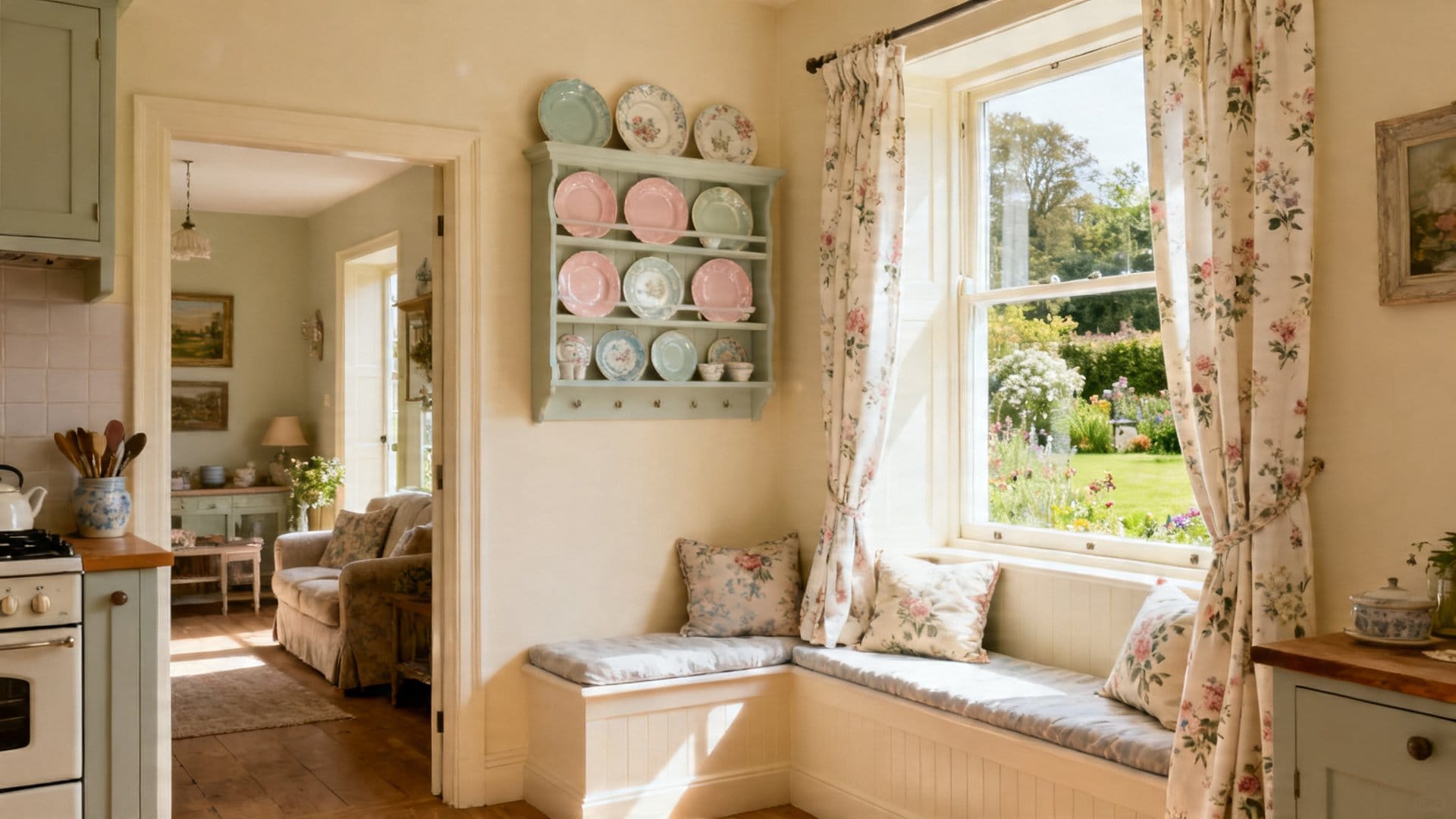
One of the most appealing things about the English countryside charm aesthetic is how adaptable it is. You do not need a full renovation or a particular architectural style to make it work. A modern apartment, a suburban ranch house, or a traditional colonial can all absorb cottage touches beautifully, because it is really about what you bring into the space, not the bones of the building itself.
In a kitchen, focus on open shelving styled with mismatched ceramics, a crock of wooden spoons, and a small pot of herbs on the windowsill. In a bedroom, layered bedding in floral and stripe combinations, a painted wooden nightstand, and a botanical print above the headboard will do most of the work. For a living room, it is about the upholstered pieces, the gathered botanicals, and the warm lighting. A mix of table lamps with fabric shades rather than harsh overhead lighting gives the room that golden, late-afternoon-in-the-garden glow that makes cottage interiors so irresistible.
I keep coming back to this approach because it scales so naturally. Even a single corner of a room, an armchair with a floral cushion, a small side table with a lamp and a vase of flowers, a soft throw, can carry the whole spirit of the style without requiring you to redo the entire room at once.
&# 128247; You might also like:More rustic, gathered styling ideas for a single focal wall→
Beyond what you can see and touch, two often-overlooked elements can make or break the cottage atmosphere entirely.
What Role Do Scent and Light Play in Cottage Charm?
Scent and lighting are invisible but essential layers of the cottage garden experience. Dried lavender, beeswax candles, and warm-toned bulbs recreate the sensory atmosphere of an English countryside home in a way that purely visual decor cannot.
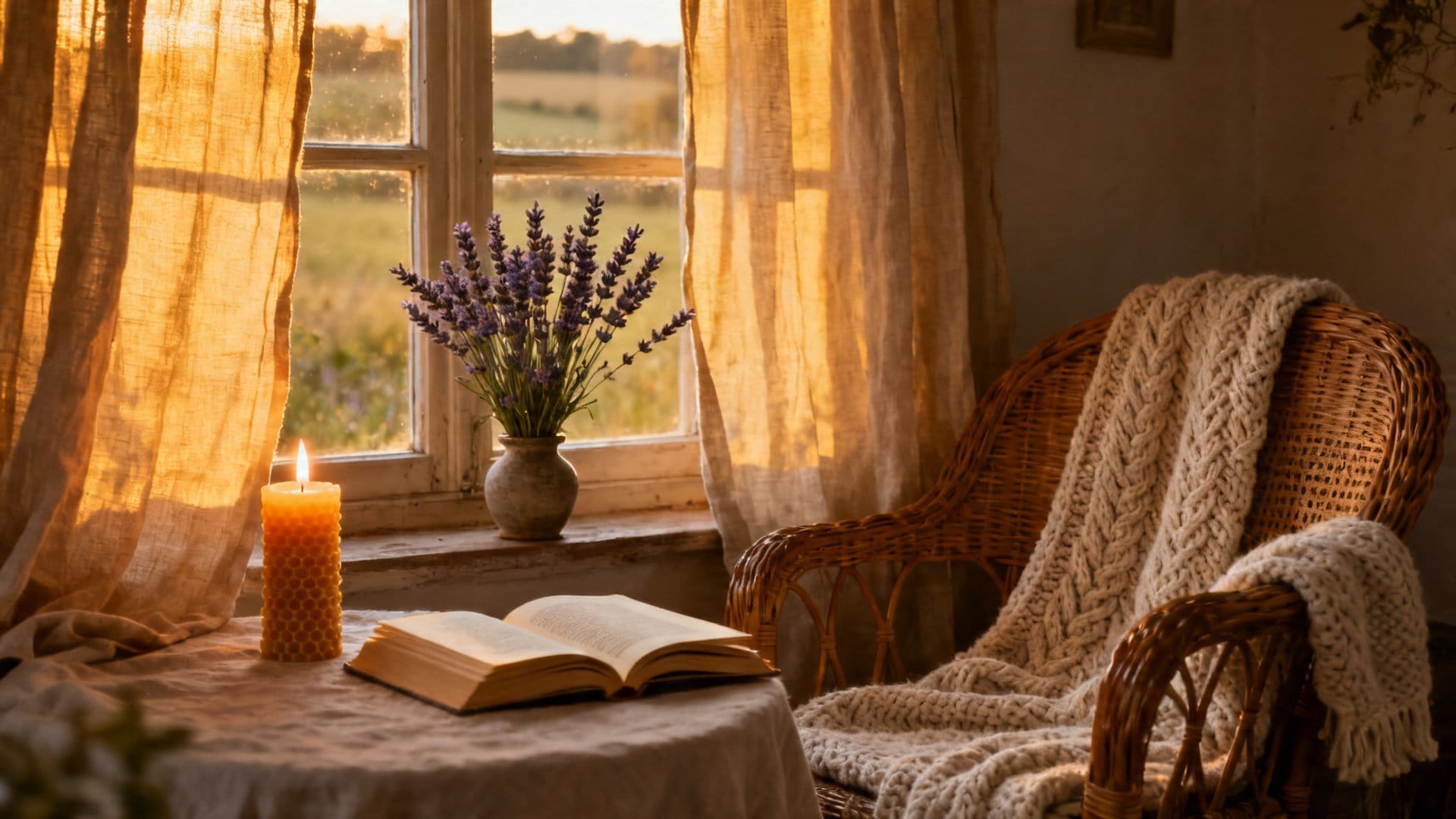
This is something that often gets overlooked in decor conversations, but scent and lighting are genuinely part of the cottage garden experience. The English countryside has a very particular smell, with warm earth, cut grass, roses, lavender, and wood smoke, and you can bring that sensory layer into your home in surprisingly simple ways.
Dried lavender sachets tucked into linen closets, a beeswax candle with a floral or herbal scent burning on the kitchen table, a small dish of potpourri made from dried rose petals and herbs on a bathroom shelf, none of these are complicated, but all of them add an invisible layer of atmosphere that makes a room feel deeply considered. For lighting, lean toward warm-toned bulbs throughout, and prioritize lamps over overhead fixtures wherever possible. Candlelight in the evening is especially effective, because it casts that soft, flickering warmth that no electric light can fully replicate, and it makes any room feel instantly more intimate and welcoming.
Pro tip: In rooms with good natural light, keep window treatments light and gauzy. Unlined linen or cotton voile panels let the light filter in softly and billow gently in a breeze, which is one of the most romantic and cottage-appropriate effects you can create without spending much at all.
For evening warmth, mismatched candlesticks and a few good candles do most of the heavy lifting.
Final Thoughts
Cottage interior decor is one of those rare styles that genuinely rewards you for being yourself: for collecting the things you love, for embracing a little imperfection, and for bringing the beauty of the natural world into your everyday spaces. Whether you go all-in with floral wallpaper and painted furniture or simply add a jug of garden flowers and a linen throw to what you already have, the English countryside charm aesthetic is always within reach. Your home does not need to look like a magazine spread to feel wonderful, it just needs to feel like yours. Happy decorating!
Frequently Asked Questions
Not at all, because cottage interior decor translates beautifully into any size space, including small apartments with just a single sunny windowsill. The style is built around layering textures, soft colors, and personal touches like vintage finds and potted herbs, none of which require square footage to pull off. Even a cozy studio can feel like an English countryside retreat with the right fabrics, a few trailing plants, and some well-chosen accessories.
Cottage decor leans heavily on soft, nature-inspired hues such as dusty rose, sage green, lavender, cream, butter yellow, and faded cornflower blue. These colors mimic the gentle, sun-washed tones you would find in an English garden at its peak bloom. The key is to keep the palette muted and layered rather than bold and matchy, allowing colors to feel like they evolved naturally over time rather than being deliberately coordinated.
Absolutely, because mixing old and new is one of the defining characteristics of authentic cottage style. A brand-new linen sofa pairs beautifully with a worn wooden side table or a collection of mismatched vintage floral china displayed on open shelves. The goal is to create a space that looks lovingly gathered over years rather than purchased all at once, so blending eras and origins is not just acceptable but actively encouraged.
Roses, lavender, sweet peas, foxgloves, and peonies are classic cottage garden flowers that look lovely in loose, informal arrangements indoors. For living plants, trailing ivy, potted herbs like rosemary and thyme, and climbing jasmine near a window all reinforce the lush, overgrown spirit of an English cottage garden. The arrangement style matters just as much as the plant choice, so aim for loosely gathered bunches in earthenware jugs or vintage pitchers rather than stiff, formal floral displays.
Cottage interior decor is actually one of the more budget-friendly interior styles because it actively celebrates imperfection, age, and the charm of secondhand finds. Thrift stores, estate sales, flea markets, and even your own attic are ideal sources for the worn wooden furniture, mismatched china, vintage textiles, and quirky accessories that make this look feel authentic. Rather than buying expensive matching sets, the style rewards patience and a good eye for character pieces, meaning you can build a beautiful cottage interior gradually without a large upfront investment.