
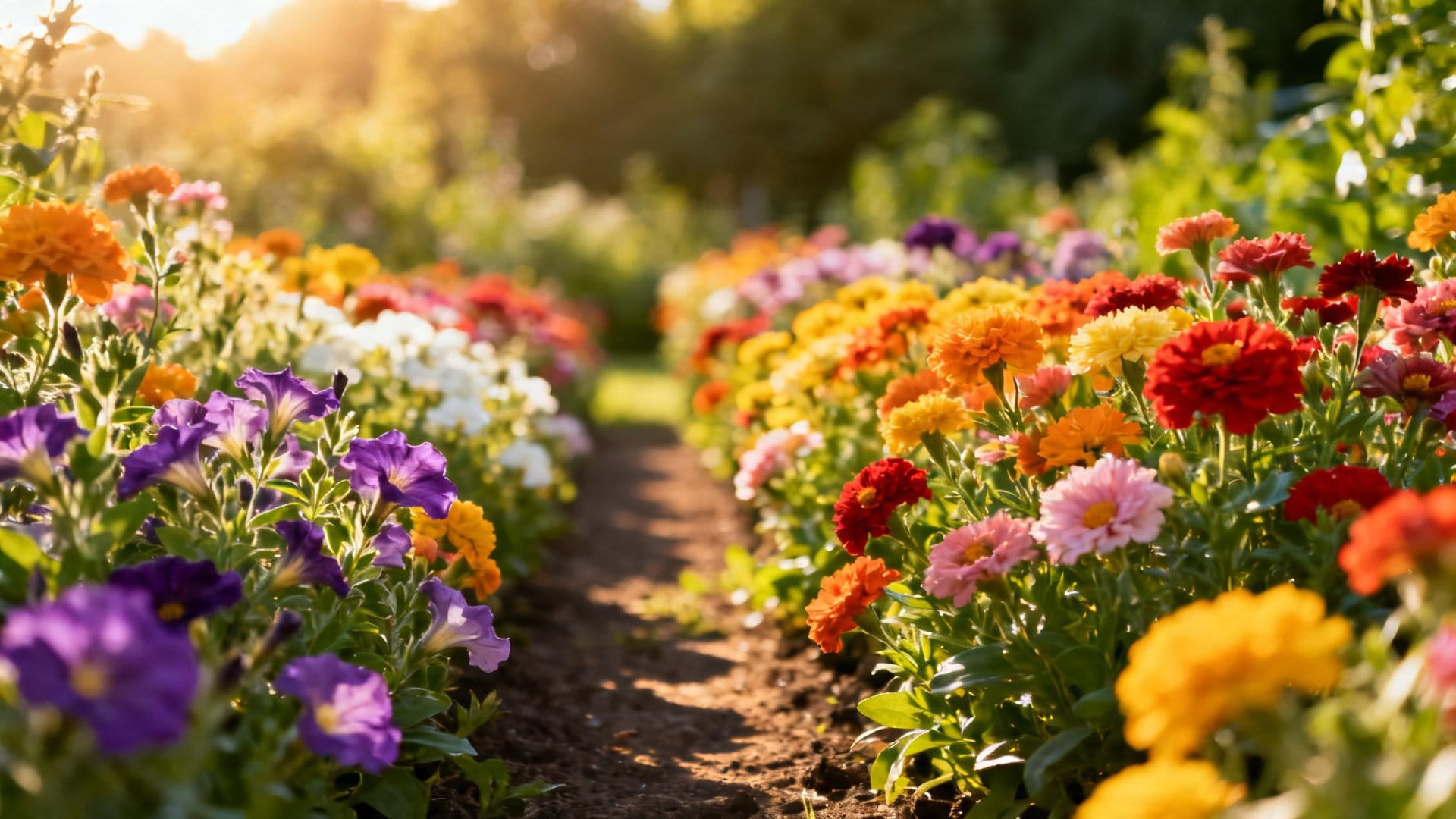
There is something about stepping outside on a warm June morning and realizing your garden could be so much more than a patch of green. Maybe you have a few bare beds just waiting for color, or perhaps you have been planting the same petunias in the same row for years and quietly wondering if there is a better way. A beautiful summer flower garden layout can shake things up and help you fall back in love with your outdoor space. Whether you have a sprawling backyard or a tiny corner to work with, the right layout can make every bloom feel intentional and alive.
Why Does Layout Matter More Than the Flowers You Choose?
Layout matters more than flower selection because it creates the rhythm, depth, and visual flow that make a garden feel intentional. Even simple flowers arranged thoughtfully will outperform rare blooms planted without structure. If you are planting from scratch, this complete beginner’s guide to starting a summer garden covers the groundwork first.
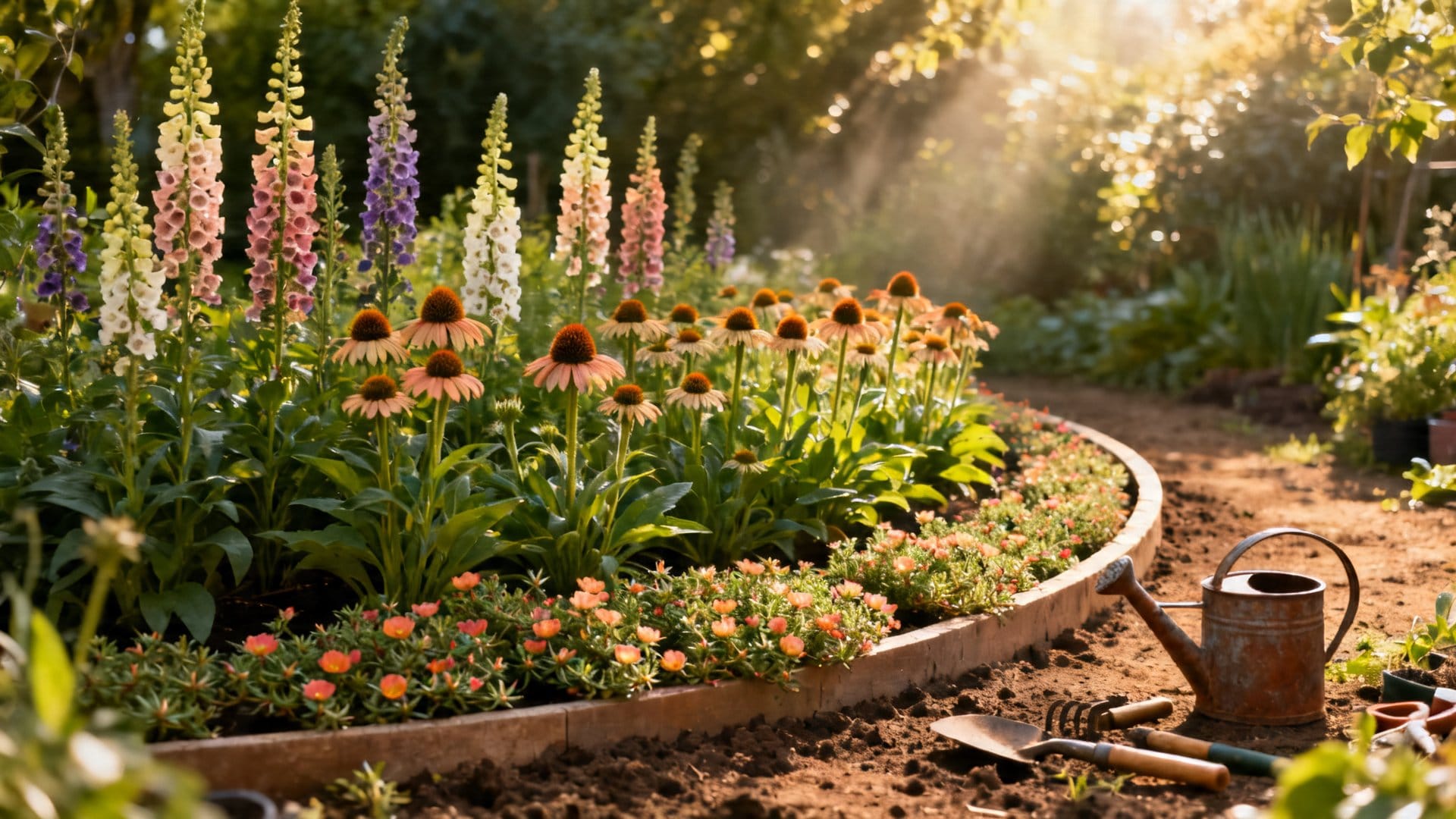
Most gardeners spend hours choosing the perfect flowers, then plant them in straight rows and wonder why the garden feels flat. The truth is, layout does more heavy lifting than almost any single plant selection. A thoughtful arrangement creates rhythm, depth, and a sense of discovery that keeps the eye moving through the space.
One thing I’ve noticed is that gardens with even a little structural planning, a curve here, a height shift there, feel completely different from ones that were just filled in randomly. The flowers themselves can be simple. It is the relationship between them that creates the magic.
Why It Works
When you layer plants by height, texture, and bloom time, you essentially create a living painting that changes week by week throughout summer. Tall spiky flowers like salvia or foxglove at the back, mid-height zinnias or coneflowers in the middle, and low creeping portulaca or lobelia at the edges gives the garden a sense of depth that photographs and feels beautiful in real life.
What Is the Cottage Garden Overflow Look?
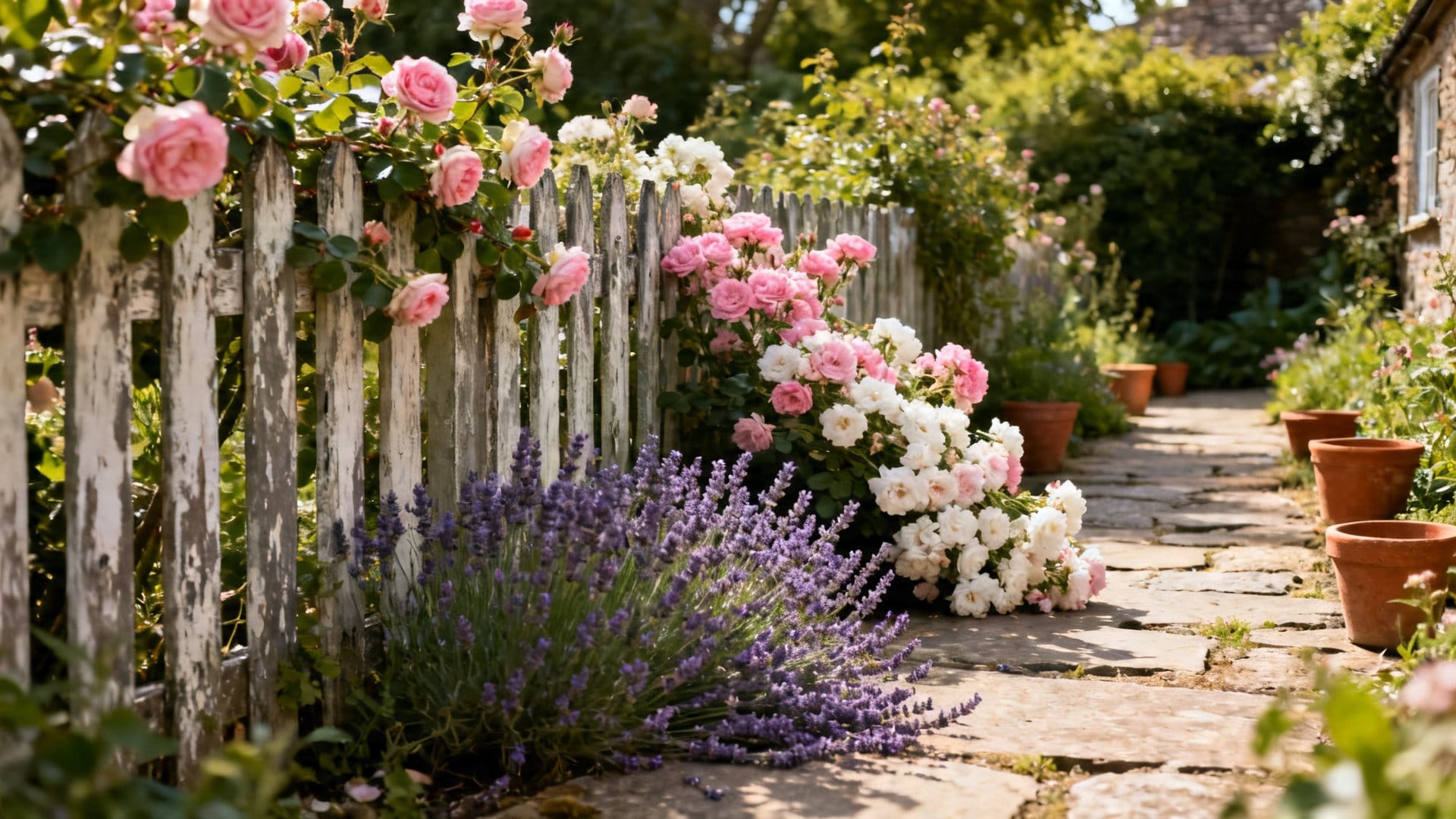
The cottage garden overflow look is a lush, abundant planting style where flowers spill over paths, lean into each other, and fill every gap with color. It appears effortless but relies on clustered planting and a limited color palette to stay cohesive.
 Shop this look: a garden trellis arch on Amazon
If you have ever walked past a front yard that looked like it was bursting at the seams with color, roses tumbling over a fence, lavender spilling onto a stone path, sweet William peeking through everything, that is the cottage garden style, and it is one of the most beloved summer flower garden layout ideas out there. The secret is that it looks effortless but actually requires a little planning to pull off beautifully.
I love how this style rewards imperfection. You do not need perfectly edged beds or matching containers. In fact, a slightly unruly, abundant feel is the whole point. Plant in clusters rather than single specimens, let some flowers self-seed, and allow neighboring plants to lean into each other a little. If this relaxed look speaks to you, these cottage summer garden ideas with English countryside charm are worth a slow read. The result feels genuinely romantic without a single fussy detail.
Pro tip: Choose a palette of three to four colors that repeat throughout the bed, such as soft pinks, creamy whites, and lavender purples that work beautifully together, so even the wildest-looking cottage garden feels cohesive rather than chaotic.
What Is the Circular Island Bed for a Show-Stopping Focal Point?
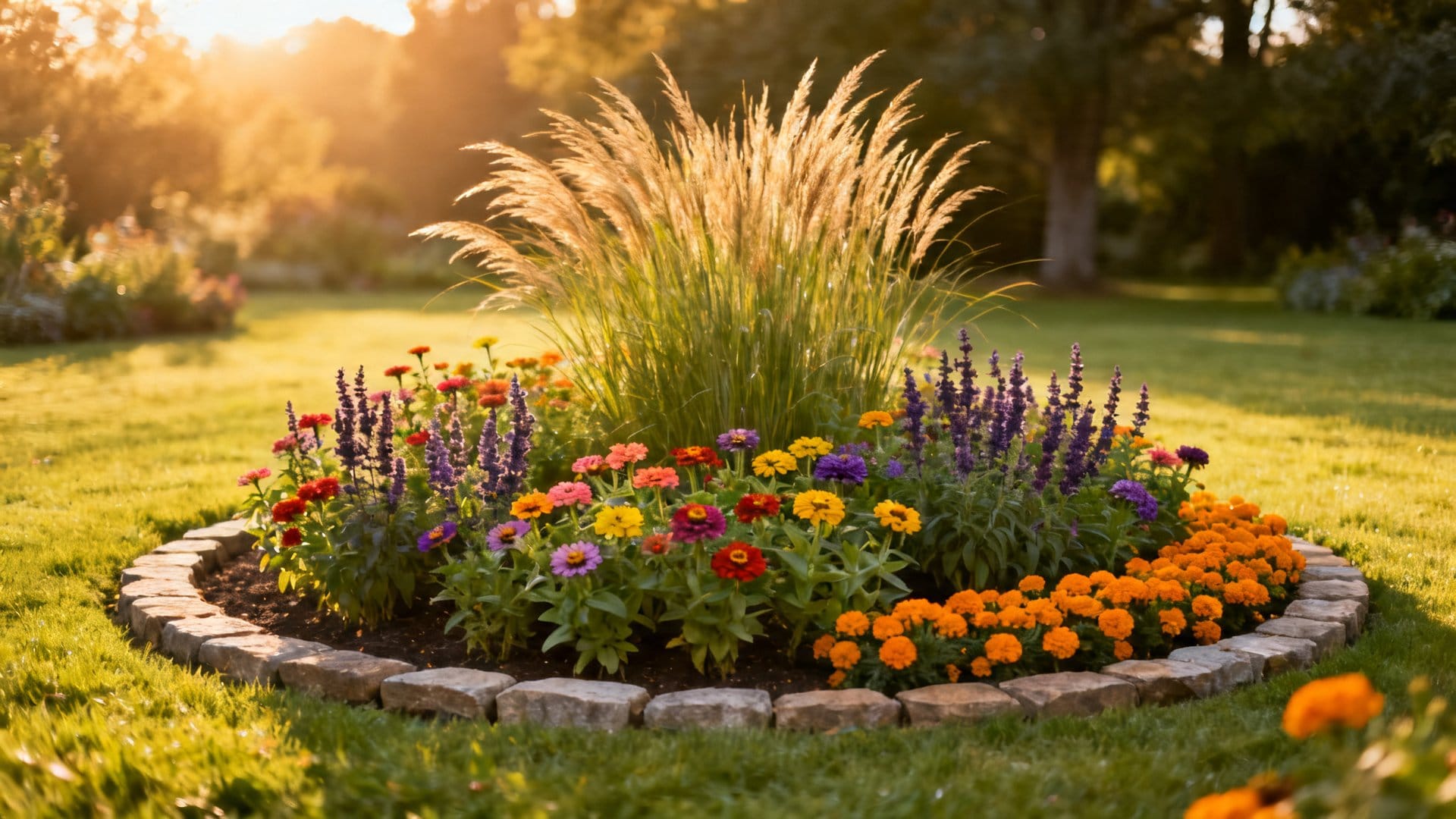
A circular island bed is a round or oval planting area set into a lawn, designed to be viewed from all sides. It anchors a yard visually and creates a dramatic focal point using layered heights from center to edge.
 Shop this look: a focal-point planter on Amazon
A circular island bed is one of those layout ideas that looks impressive but is actually very approachable. You carve a round or oval shape out of your lawn, plant it with a mix of heights and textures, and suddenly you have a feature that anchors the whole yard. This works especially well in the center of a backyard or at the end of a long garden path where you want the eye to land somewhere satisfying.
The classic approach is to plant your tallest flowers, think ornamental grasses, tall dahlias, or bright rudbeckia, right in the center, then work outward in rings of decreasing height. Finish the outer edge with something low and spreading like alyssum or creeping thyme, which softens the transition between the bed and the lawn. The circular shape means the garden looks beautiful from every angle, not just head-on.
Color Combinations
For a summer island bed that really pops, try a warm palette of deep orange marigolds, golden black-eyed Susans, and burgundy dahlias at the center, ringing out to coral zinnias and finishing with soft yellow alyssum at the edge. This creates a sunset gradient that practically glows on a long summer evening. If you are still deciding which blooms to plant, this guide to summer flowers for your garden walks through the best performers for each spot.
How Do Raised Bed Gardens with Defined Sections Work?
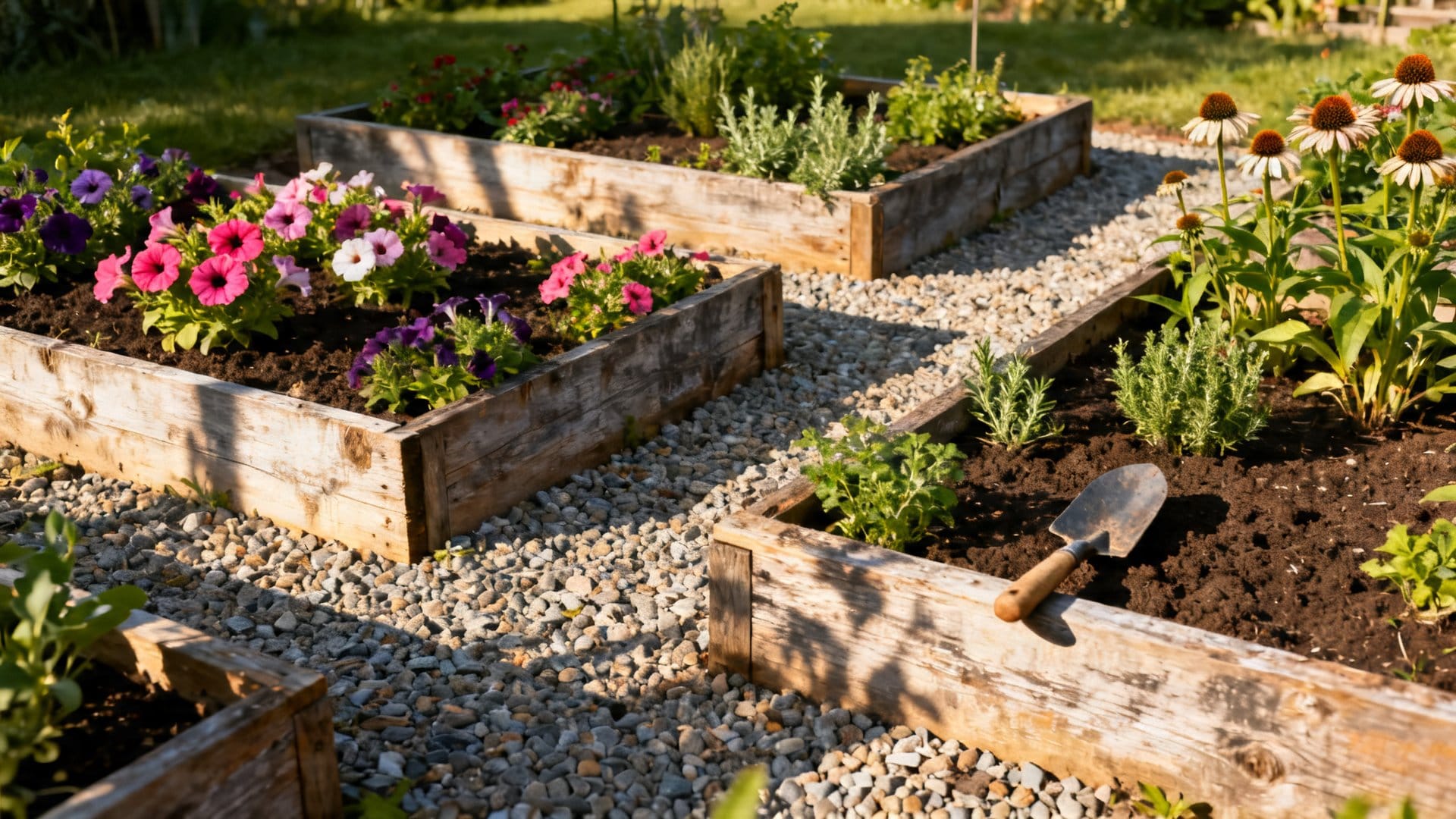
Raised bed gardens with defined sections use physical dividers or color-grouped planting zones to organize flowers within a single bed. This approach gives you clean edges, better soil control, and a structured look that keeps colors distinct and visually striking.
 Shop this look: a raised garden bed kit on Amazon
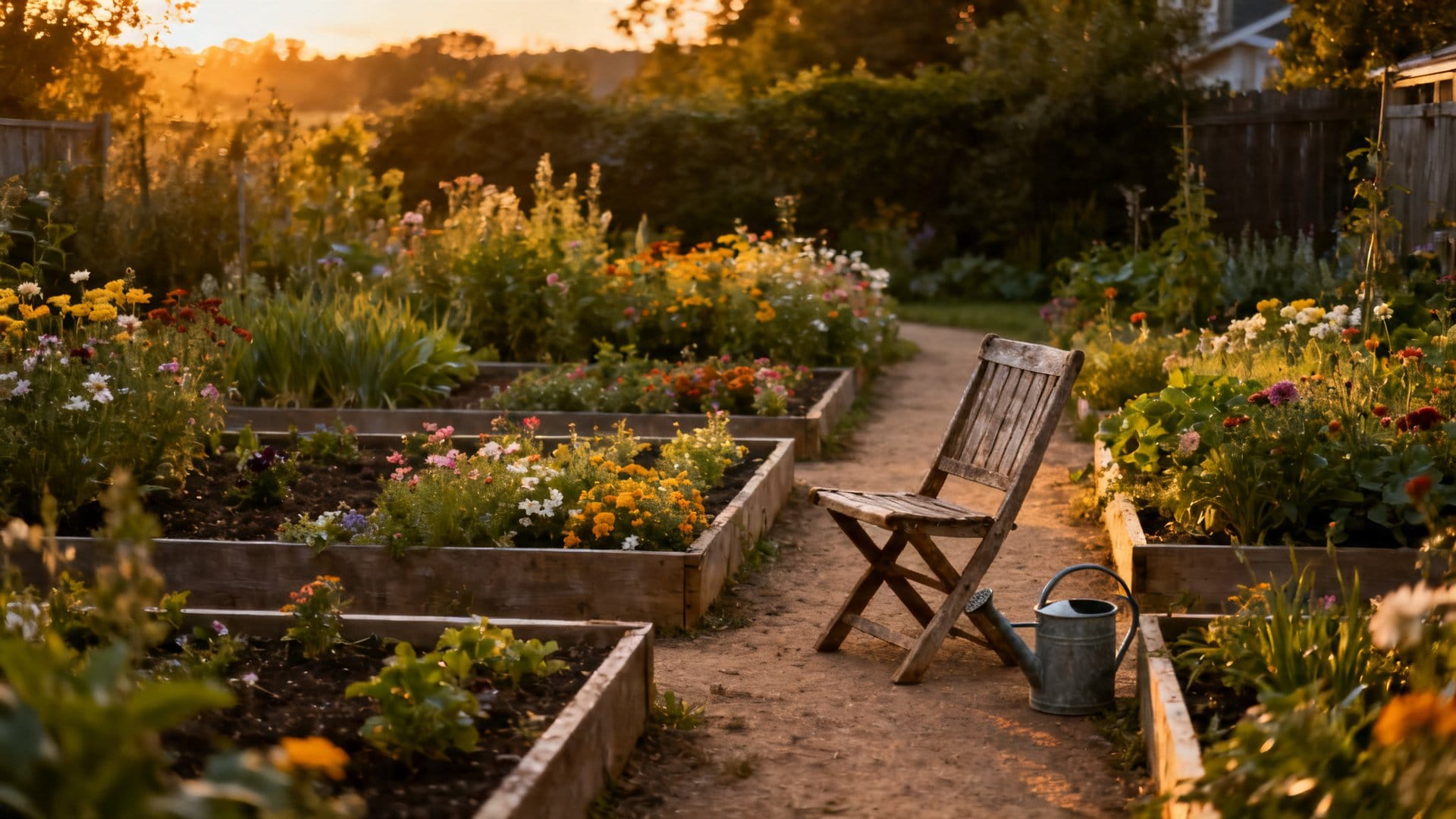
Raised beds are not just for vegetables. They are one of the most practical and visually satisfying ways to organize a summer flower garden layout. They give you clean edges, better drainage, and the ability to customize your soil, which means your flowers will genuinely thrive rather than just survive.
A friend of mine tried something similar last summer, dividing one long raised bed into three sections using small wooden dividers. She planted each section in a different color family, one in cool purples and blues, one in warm oranges and yellows, and one in white and pale pink. The result looked like something from a European cutting garden, and she had fresh flowers for the house all season long. The defined sections kept the colors from bleeding into each other in a way that felt muddled.
Pro tip: If you build or repurpose a raised bed for flowers, aim for a width of no more than four feet so you can reach the center without stepping in and compacting the soil. This keeps maintenance easy and the bed looking tidy all summer.
What Is the Pollinator Pathway Garden Layout?
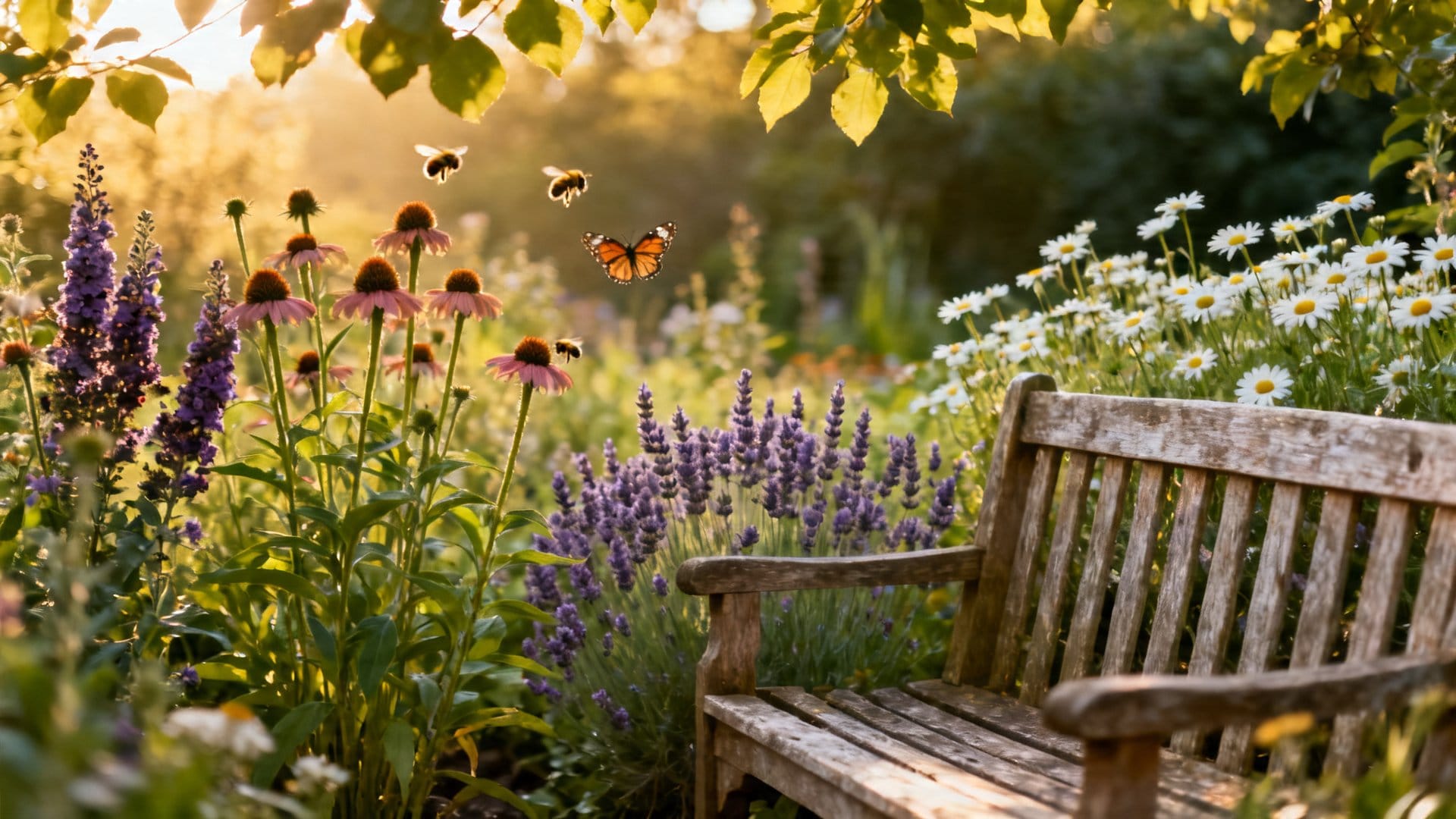
The pollinator pathway layout is a garden designed specifically to attract bees, butterflies, and hummingbirds by combining native plants, successive bloom times, and grouped plantings. It functions as a small ecosystem while remaining one of the most visually dynamic summer garden styles.
 Shop this look: a bee bath for pollinators on Amazon
One of the most rewarding summer flower garden layout ideas you can try is designing a garden specifically to attract pollinators like bees, butterflies, and hummingbirds. Beyond being genuinely good for the environment, a pollinator garden is almost always buzzing with movement and life, which makes it endlessly interesting to spend time near. It also pairs naturally with broader home garden ideas to transform your outdoor space if you want the whole yard to feel alive.
Layout Ideas
- Plant in large drifts of single species rather than one of everything, since bees work through more efficiently when flowers are grouped, and it looks more intentional visually
- Include a mix of bloom times so something is always flowering from early June through late August, keeping pollinators coming back consistently
- Add a flat, shallow water dish with pebbles in it near the garden, because butterflies and bees need water and will visit far more regularly if you provide it
- Use native plants like purple coneflower, bee balm, and black-eyed Susan alongside annuals like zinnias and cosmos for the most effective and low-maintenance mix
- Leave a small patch of bare soil at one edge of the bed, since ground-nesting bees actually need exposed earth to build their homes
This kind of garden rewards you with more than beauty. It becomes a small ecosystem that hums with activity on every warm summer day.
&# 128218; Plan the whole season:Read our complete summer garden guide for your best season yet→
If bold color combinations are not quite your style, a more restrained approach can be just as striking.
What Are Monochromatic Beds and Why Do They Work?
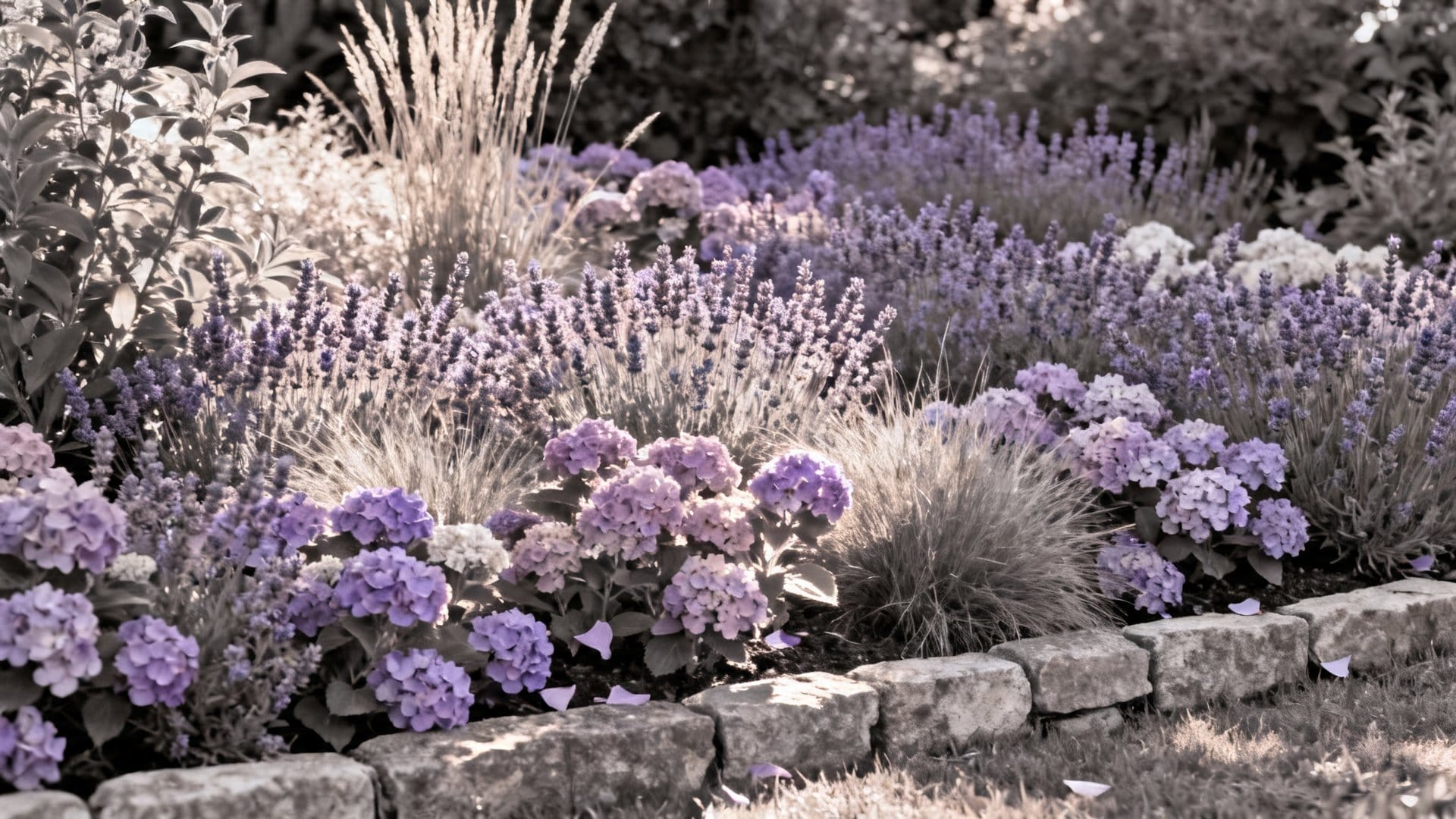
Monochromatic beds are flower gardens planted entirely within one color family, relying on varied textures and forms rather than color contrast for visual interest. They work because the restraint in color forces you to focus on plant shape and structure, creating a sophisticated, cohesive result.
 Shop this look: a padded garden kneeler and seat on Amazon
There is something quietly sophisticated about a garden planted entirely in one color family, and it is one of those ideas that always surprises people with how much visual interest it can hold. A white garden at dusk feels almost luminous. An all-blue and purple bed, filled with agapanthus, salvia, catmint, and delphinium, has a calming, almost meditative quality that a rainbow garden simply cannot replicate.
The key to making a monochromatic layout work is to vary the texture and form of the flowers rather than relying on color contrast for interest. Pair spiky flowers with round ones, feathery ones with bold flat-faced blooms. I keep coming back to this approach because it teaches you to really look at the shape and structure of plants, not just their color. That knowledge makes you a better gardener across the board. A single-color rose planting is a lovely place to practice, and these summer rose garden design and care ideas show how far one bloom can carry a bed.
Pro tip: In a monochromatic summer bed, include at least one plant with interesting foliage, such as silvery lamb’s ear, dark-leafed basil, or chartreuse sweet potato vine, to add contrast without introducing a competing color.
&# 10024; Want a little magic?Try these summer fairy garden ideas for miniature magical worlds→
Not every garden has the luxury of space, but a limited footprint does not have to mean a limited impact.
How Does the Winding Path Garden Work for Small Spaces?
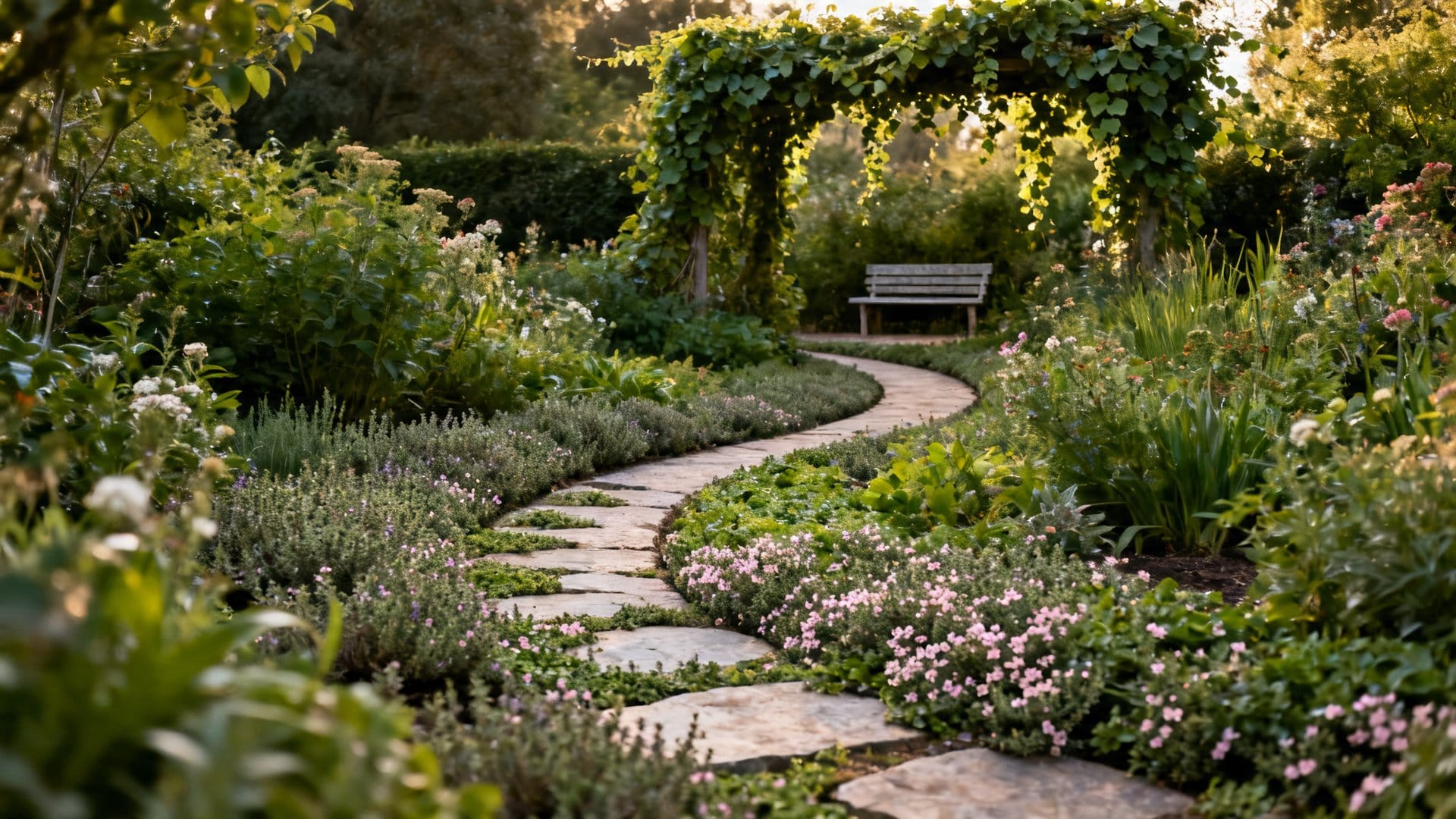
A winding path garden uses a curved walkway through planting beds to trick the eye into perceiving more space than exists. Flowers planted densely along both sides of the path create an immersive, lush feeling even in very compact yards.
 Shop this look: warm-white solar pathway lights on Amazon
If your outdoor space is on the smaller side, a straight-line layout can make it feel even more cramped. One of the smartest summer flower garden layout ideas for compact yards is to create a winding or curved path through the planting area, which tricks the eye into perceiving more space than actually exists.
Lay a simple path of stepping stones, gravel, or even just mown grass through your flower beds, and plant generously on both sides so the flowers crowd the edges of the path. This creates an immersive, almost tunnel-like feeling as you walk through, even in a garden that is only twelve or fifteen feet long. I’ve seen this work beautifully in narrow side yards that people had previously written off as unusable, and suddenly they became the most charming part of the whole property.
Small Space Tricks
Use tall, narrow flowers like cleome, verbena bonariensis, or tall snapdragons along the path edges to add height without bulk. These airy, vertical plants create a sense of enclosure and lushness without physically blocking the path or overwhelming a small space. The same make-it-feel-bigger thinking shows up in these small patio ideas on a budget if your outdoor nook is tight.
Final Thoughts
No matter the size of your yard or the scale of your ambitions, there is a summer flower garden layout idea on this list that will feel right for your space and your style. The most important thing is simply to start, to get your hands in the soil and let the season do what it does best. These beautiful summer flower garden layout ideas are meant to inspire you, not overwhelm you, so pick one that excites you and run with it. Your garden is a reflection of your creativity, and it deserves to bloom as fully as you do. Happy gardening!
Frequently Asked Questions
For small backyard spaces, a layered or tiered layout works exceptionally well, placing taller flowers like sunflowers or dahlias at the back and shorter blooms like marigolds or petunias at the front to create depth without requiring a lot of square footage. Curved borders and circular island beds also help small spaces feel larger and more intentional. Choosing a cohesive color palette further prevents the garden from feeling cluttered or overwhelming.
The best flower pairings consider both aesthetic and practical factors, including bloom time, height, color compatibility, and sunlight requirements so that plants thrive together and look visually harmonious. For example, pairing tall, airy cosmos with low-growing zinnias creates natural contrast while ensuring both plants receive adequate light. Consulting a color wheel can also help you decide whether you want complementary contrasts or a soothing monochromatic scheme.
Not necessarily, since many perennial flowers like coneflowers, black-eyed Susans, and lavender return each season and can serve as the permanent backbone of your layout. However, you can refresh the look annually by rotating or adding annual flowers such as petunias, marigolds, or impatiens into open spots within the existing framework. This approach saves time and money while still giving your garden a fresh, updated appearance each summer.
The most common mistake is planting flowers in rigid, straight rows, which creates a flat and monotonous look that lacks visual interest and depth. A well-designed layout uses curves, varied plant heights, and clustered groupings of three to five plants of the same variety to create rhythm and a more naturalistic feel. Taking time to sketch a rough plan on paper before planting can help you avoid this pitfall and visualize the finished garden more clearly.
Absolutely, because many of the most visually impactful summer flowers, including zinnias, sunflowers, and marigolds, are inexpensive and easy to grow directly from seed. Focusing on layout principles like layering heights, using repetition, and choosing a simple two- or three-color palette can make even budget-friendly plants look intentional and professionally designed. Dividing perennials from existing plants or swapping seeds and cuttings with neighbors are also great ways to expand your garden without significant expense.